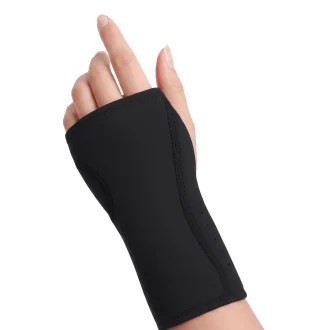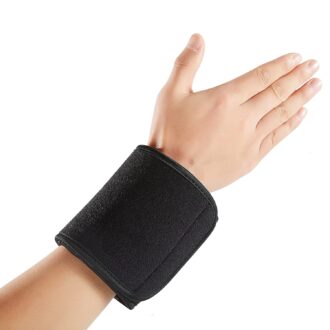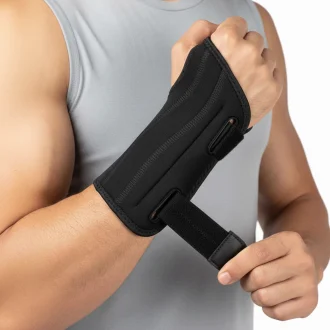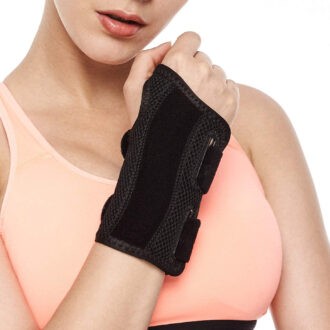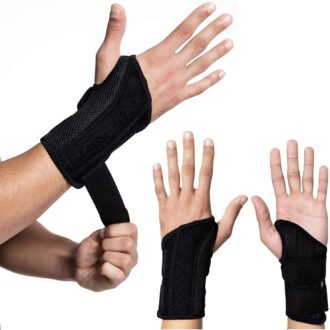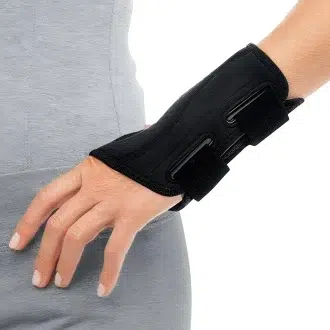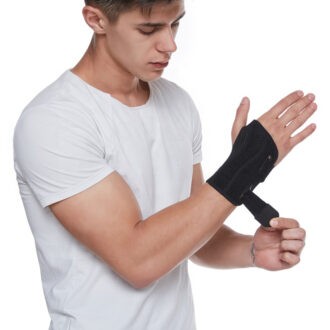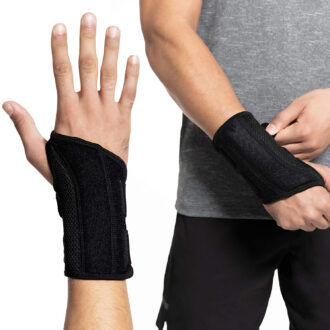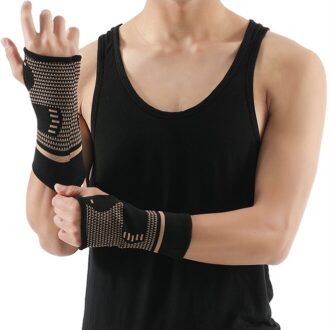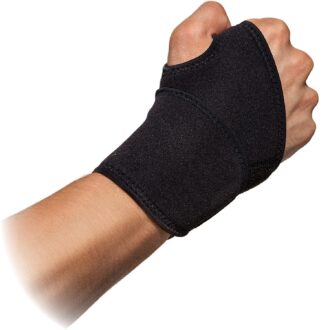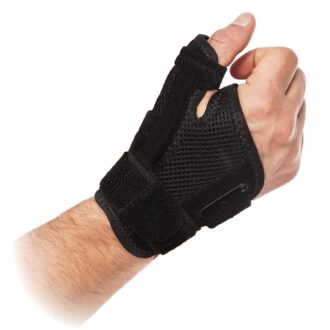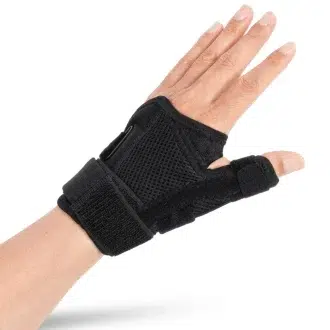
Wrist Supports

When Wrist Pain Starts Getting In The Way

Your wrists and hands are involved in almost everything you do — gripping, lifting, typing, or pushing up from a chair. When pain, stiffness, or weakness sets in, even simple actions can start to feel much harder than usual. Many people ignore early wrist symptoms at first, hoping they’ll ease on their own, until they begin to interfere with work, daily tasks, or sleep.

Sometimes the pain comes on suddenly after a fall or awkward twist, with sharp pain and swelling that can point to a sprain or fracture. In other cases, an ache builds gradually during or after gripping, lifting, or twisting — often a sign that tendons or joints are being overworked. Tingling or numbness at night, especially if the wrist bends while you sleep, can be due to pressure on a nerve in the wrist. These are the kinds of symptoms clinicians see often in sprains, fractures, tendon irritation, nerve compression, and different forms of arthritis. If symptoms carry on, change quickly, or start to limit what you can do, it’s worth getting them checked so the cause can be identified and a plan agreed.

What’s Going On Inside The Wrist

The wrist is compact but remarkably strong and complex. Inside it are eight small carpal bones, the lower ends of the radius and ulna (the forearm bones), strong ligaments that hold them together, the tendons that move your fingers and thumb, smooth layers of cartilage that let the bones glide easily, and important nerves and blood vessels. Together, these parts allow the wrist to bend, straighten, move side to side, rotate the forearm, and transfer force safely from the hand into the arm.

When you grip, push, or lean on your hand, pressure passes through the cartilage‑covered bone surfaces and along the ligaments and tendons. A sudden overload — such as falling onto an outstretched hand — can overstretch ligaments or crack bone, leading to sharp pain, swelling, and difficulty using the hand. Repeated gripping, twisting, or lifting, especially when the wrist is bent or twisted to its limit, can irritate tendons and their sheaths, causing local pain and sometimes a catching or creaking feeling. Holding the wrist bent for long periods, or swelling inside the wrist, can increase pressure on nerves such as the median or ulnar nerve. That often shows up as tingling, numbness, or weakness in parts of the hand. In arthritis, the cartilage and joint lining (synovium) can become inflamed and gradually wear down, so even everyday movement can feel sore or stiff.

Once you know which part of the wrist is irritated, and which movements or positions strain it most, you start to see why your symptoms act the way they do. For instance, pain after a fall that worsens when you twist or bear weight often points to bone or ligament injury. Tingling at night in the thumb, index, and middle fingers more often reflects pressure on the median nerve. Knowing these signs helps guide which type of wrist support — and how firm it should be — is likely to be most useful.

Why Wrist Supports Are Often Part Of Treatment

Clinicians often recommend wrist supports or splints as part of treatment that doesn’t involve surgery. Bracing or splinting helps protect injured tissues, limit painful movement, and support a gradual return to activity. It’s usually combined with rest, graded exercise, and any other treatments advised by your clinician. The aim is to keep the wrist in positions that place less strain on healing or irritated tissues, while allowing you to continue as much of your normal routine as possible.

How Wrist Supports Change Wrist Mechanics

A wrist support changes two main things — how far the joint moves and how the force spreads through the tissues. By keeping the wrist closer to a straight, middle position (neutral), it stops you moving fully into bending up, bending down, or large side‑to‑side movements. Those fully bent or twisted positions place extra stretch on ligaments and tendons and increase pressure in the small spaces between the wrist bones. By limiting those movements, you take pressure off healing ligaments and the smooth cartilage that lines the wrist bones. That can make pain easier to manage and help the wrist stay better aligned when you grip, lift, or push.

When tissues swell, they take up more space — pressing on nearby structures and making the wrist feel tight and sore. Most supports give steady, even pressure around the wrist. A snug but comfortable brace can help limit extra fluid build‑up and support the body in clearing swelling, easing that pressure so movement feels less stiff. Feeling the support against the skin also makes you more aware of how the wrist is positioned, which helps you avoid the bent or twisted positions that usually set symptoms off. It’s surprising how much difference a small change in position can make.

In short, a wrist support keeps you out of the positions that tend to cause the most trouble.

When A Wrist Support Is Most Useful

  • Soon after injury: for sprains and fractures, once a clinician has checked and supported the wrist, a firmer brace is often worn for much of the day to protect healing bone and ligaments. It’s usually removed only briefly for washing and specific exercises.
  • During flares of arthritis or gout: when joints are hot, swollen, and painful, a support can limit painful movement, provide gentle pressure, and allow short periods of rest while inflammation settles.
  • For nerve problems around the wrist: such as Carpal Tunnel Syndrome or Ulnar Tunnel Syndrome, keeping the wrist nearer to straight — especially at night — reduces pressure on the affected nerve and often lessens tingling or numbness. A slim, lightweight support may also help during the day for tasks that you know tend to trigger symptoms.
  • With tendon‑related and overuse problems: such as De Quervain’s Tenosynovitis or general wrist tendinitis, a support can be worn during the specific activities that bring symptoms on, keeping the wrist in a safer range while strength and control are rebuilt.

A support is not a replacement for urgent care. If you suspect a major fracture, dislocation, or serious infection, a brace on its own is not enough — urgent medical assessment is needed.

Choosing A Wrist Support That Fits Your Situation

When choosing a wrist support, start by thinking about when your symptoms appear and what tends to bring them on. The aim is to match how firm the support is and how it’s built to the part of the wrist that needs protection, then plan to use it less as pain and control improve. It’s normal to feel unsure about which type to choose at first — that’s something your clinician can help with.

Matching Support To Your Wrist Problem And Stage

For milder pain without a recent major injury, a lighter support that holds the wrist near straight can reduce strain during everyday tasks without feeling too restrictive. This level of support is often used for ongoing tendon irritation, mild arthritis, or early nerve symptoms and can be worn mainly when you expect symptoms to flare or during particular activities.

After a sudden injury or a procedure — such as a significant sprain, fracture, or ligament repair — a firmer support is usually needed at first to control movement and protect healing structures. In these situations, your clinician will advise which type of immobilisation to use and for how long. If you think you may have a fracture or dislocation, it’s important to be assessed before applying strong bracing, as alignment and the need for reduction or surgery must be checked. As pain eases and healing progresses, you can usually step down from a firmer brace to a lighter support over a few weeks, with wear time reducing under clinical review.

Thumb Involvement And Which Side Of The Wrist Hurts

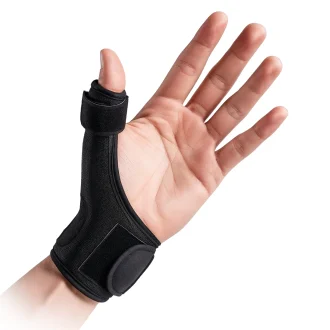
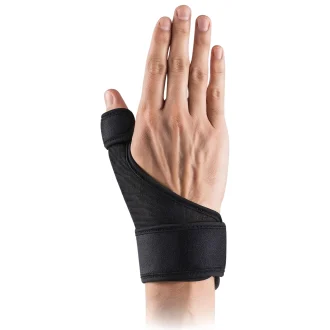
Where you feel pain is a useful guide to the style of support. If discomfort sits on the thumb side of the wrist, around the base of the thumb, or along the tendons that lift and straighten the thumb, a design that includes a thumb piece (a thumb‑spica support) is often more helpful. It gently keeps the thumb closer to the hand and limits large movements away from the hand, which reduces strain on irritated tendons and small joints when you pinch, grip, or lift.

When symptoms are more central or towards the little‑finger side and the thumb itself moves comfortably, a standard wrist‑only design is usually enough. Matching the style of brace to the side and pattern of pain helps protect the structures under the most stress without restricting movement that isn’t causing trouble.

Day‑Time, Night‑Time, And Task‑Based Use

Many wrist problems behave differently across the day, so how you use a support may change. In nerve compression problems such as Carpal Tunnel Syndrome, symptoms often worsen at night when the wrist naturally bends and fluid shifts. Most people don’t realise how much the wrist curls during sleep until this is pointed out. A support that helps prevent the wrist from curling at night can make a noticeable difference to night‑time tingling and morning numbness.

During the day, some people with nerve or tendon problems find a lightweight support useful for tasks that keep the wrist bent for long periods, involve forceful gripping, or combine grip with vibration — for instance, long periods of typing, tool use, or cycling. After injury or surgery, a firmer support may be worn through most waking hours at first, particularly for activities that put more load through the wrist, then gradually reserved for heavier jobs as strength and control return. In sport and other demanding activities, supports are most often used in the early stages of returning to play to keep the wrist out of vulnerable positions and support safe movement.

In practice, that means using the brace when you know your wrist is most at risk — and giving it a break when it’s not.

Fit, Comfort, And Handedness

Fit is central to both comfort and how well a brace works. Many designs are made separately for the left and right hand, so choosing the correct side matters. The support should be snug enough to limit unwanted movement but not so tight that it causes tingling, colour change, or cold fingers. Those signs suggest that blood flow or nerve function is being compressed and mean the straps or size need to be reviewed.

Details such as breathable linings, soft edges, and carefully placed seams help reduce rubbing, especially if you have sensitive skin or plan to wear the support for longer stretches. Adjustable straps that are easy to manage allow you to fine‑tune the fit through the day, for example if swelling varies. Taking a few minutes to get the fit right makes it more comfortable — and more likely you’ll keep using it when it helps most.

Common Wrist Problems These Supports Are Used For

Different wrist conditions tend to cause pain in slightly different places, at different times of day, and with different types of tasks, even though there is a lot of overlap. The sections below describe common patterns, what is happening at tissue level in simple terms, how symptoms often behave, and how wrist supports are usually used alongside other care.

If you already have a diagnosis, you can go straight to the relevant section. If you simply recognise a usual pattern but have not yet seen a clinician, these overviews may give you some background to discuss at an appointment. They are not a substitute for individual assessment, and similar symptoms can arise from different underlying causes.

In short, wrist supports do not fix the underlying problem on their own, but by changing position and load at the right times, they can make the rest of your treatment plan easier to follow.

For Wrist Sprains – Ligament Injury

Wrist Sprains

A wrist sprain often follows a twist or a fall onto an outstretched hand. When the wrist bends sharply or twists under load, the ligaments that hold the small wrist bones together can stretch or tear. Pain and swelling usually appear soon after, and gripping or twisting may feel unsteady. Because some movement is often still possible, it’s easy to underestimate a sprain at first.

How The Injury Happens And What’s Damaged

The wrist is stabilised by a network of ligaments linking the small carpal bones to each other and to the radius and ulna. A sudden force or twist can:

  • Stretch ligaments without tearing them (a mild sprain).
  • Partially tear some fibres (a moderate sprain).
  • Fully tear one or more ligaments (a severe sprain).

These injuries are common after slips or trips where you reach out to break a fall, or after a forceful twist in sport. When ligaments are stretched or torn, they can no longer guide and control the small movements between the wrist bones. As a result, the bones shift slightly more than they should, which irritates the surrounding tissues and makes the wrist feel sore and less stable during daily use. That’s why even simple actions like turning a door handle or pushing up from a chair can suddenly feel painful.

What You Tend To Feel

Typical signs of a wrist sprain include pain that increases when you move, swelling over the joint, tenderness, and sometimes bruising that becomes more visible over the first couple of days. Many people describe the wrist as unreliable when lifting, carrying, or pushing up from a surface because the damaged ligaments can’t hold the bones firmly in place. The pain often sharpens when the wrist bends or twists in the same direction as the original injury.

It’s important to have the wrist assessed if pain is severe or the wrist looks misshapen, if you can’t use the hand for basic tasks, or if tenderness is marked in the hollow at the base of the thumb (the anatomical snuffbox), as this can indicate a scaphoid fracture rather than a simple sprain. Numb, pale, or cold fingers are also a reason for urgent assessment.

How A Brace Supports Healing Ligaments

After a sprain, the injured ligaments are sensitive to the small, repeated shifts that occur every time you bend or twist the wrist. Each of these tiny movements can pull on healing fibres and delay recovery. A brace that keeps the wrist in a straight, middle position helps by:

  • Limiting bending up, bending down, and side‑to‑side movement so the carpal bones move less relative to each other, reducing strain on the healing ligaments.
  • Reducing sudden wobble when you grip, lift, or push, so painful micro‑shifts across damaged ligaments are lessened.
  • Providing steady, even pressure that helps limit swelling and gives the joint a steadier feel.

Feeling the brace on your skin also increases awareness of wrist position, helping you avoid angles that you already know are sore. Combined with short rest from aggravating tasks and a gradual build‑up in movement and strength, this supports safer, more complete healing. It’s often the first few turns of a jar lid or pushing up from a chair that remind you the wrist isn’t ready yet — the brace helps prevent those sharp reminders.

Using A Support In The Early And Later Stages

In the early stage, a firmer support is often worn for most daytime activities, and sometimes at night if rolling onto the wrist is painful. It’s usually removed for washing and for any specific exercises your clinician has set, such as gentle bend‑and‑straighten movements within a comfortable range. The goal is to protect the ligaments while they knit and to prevent repeated stretching that could slow recovery.

As pain and swelling settle and you can use the wrist more confidently, you can normally move from a rigid brace to a more flexible support, reduce how many hours per day you wear it, and increase movement and strengthening exercises, guided by symptoms. If pain or instability persists, it’s sensible to be reviewed in case further imaging or a different approach is needed. It’s normal for the wrist to feel stiff and weak at first — that stiffness usually improves as movement returns.

Choosing A Brace From This Range For Sprains

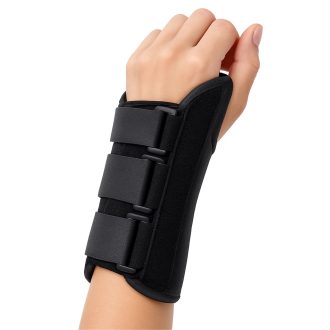
For a recent sprain, a brace that keeps the wrist in a straight, neutral position with a shaped stay on the palm or back of the wrist; has firm straps that wrap fully around the wrist and forearm without being overly tight; and is easy to put on and adjust with one hand is often the most useful starting option. Later on, when the wrist is less painful, a lighter support with more flexible material can be used for heavier tasks or sport while you rebuild strength and control. Braces here provide a firmer hold than unstructured elastic sleeves, which is often what’s needed early after injury. Supports in this range include options at both levels, so you can move gradually from stronger to lighter supports as the ligament heals and your confidence returns.

A wrist sprain can turn everyday actions into a challenge, but prompt, consistent management and the right level of support can help the ligaments heal and reduce the risk of longer‑term problems. If you’re unsure how severe the sprain is, or if symptoms aren’t settling, speak to a clinician. If you’ve been advised to use a brace, this range lets you choose a support that fits the current stage of your recovery.

For Wrist Fractures – Broken Bones

Wrist Fractures

Wrist fractures are common after a fall onto an outstretched hand. When the hand hits the ground, the force travels up through the palm into the wrist bones. If that force exceeds what the bone can absorb, it breaks. Pain is usually sudden and severe, swelling appears quickly, and moving or using the hand becomes very difficult. A break in one of the wrist bones needs to be ruled out or confirmed as soon as possible.

How Wrist Fractures Usually Happen

Most fractures involve the distal radius, the larger forearm bone near the wrist. The ulna or one of the small carpal bones, such as the scaphoid, can also be involved. A fall from standing height, sport collisions, or uneven ground can all lead to a fracture, especially if bone strength is reduced (for example, with osteoporosis) or if balance and protective reactions are slower. When the wrist bends back sharply on impact, the radius takes the full load and can crack or break. The harder the fall or the weaker the bone, the more likely the break will shift out of position.

Some breaks are non‑displaced, meaning the pieces remain in good alignment. Others are more obviously out of place or involve the smooth cartilage‑covered surfaces of the wrist bones, which can affect long‑term movement and comfort if not corrected.

What You Might Notice

Common signs include sudden, sharp wrist pain after a fall or direct blow, rapid swelling and bruising, and difficulty or inability to move or use the wrist and hand. In some fractures there’s a visible change in wrist shape or angle. Because some fractures, especially scaphoid injuries, can appear subtle at first, any persistent wrist pain with tenderness over bone after a fall should be assessed, even if the first X‑ray looks normal. The pain comes from movement at the break and from swelling within the tight tissues around the bone. That’s why even small movements can feel sharply painful until the bone is stabilised.

Why Position And Protection Matter

When a bone is broken, the main goals are to restore and keep good position while it heals, allow the bone to knit strongly so it can take normal load later, and prevent stiffness while still protecting the break. If the fracture heals out of position, the wrist’s normal angles change, altering how forces pass through the joint. This can lead to ongoing pain, reduced grip, and limited movement. That’s why getting the position right early on is so important. Some carpal bones, such as the scaphoid, have a delicate blood supply, so unstable fractures here are at particular risk if not immobilised correctly. Early assessment, correction when needed, and proper immobilisation are essential to protect healing and blood flow.

How A Brace Helps Once The Fracture Is Stabilised

Once a fracture has been properly assessed and stabilised — whether in a cast, removable splint, or after surgery — a wrist support becomes useful when you move into a stage of controlled mobilisation. At that point, a support can:

  • Keep the wrist in a straight, middle position, reducing bending and twisting that could stress the healing bone or any internal fixation.
  • Limit fully bent or twisted positions that might disturb alignment during daily tasks such as lifting or pushing.
  • Provide light, consistent pressure to ease swelling and improve comfort.

As the fracture unites, the role of the support shifts from firm protection to lighter reassurance while you regain movement and strength under guidance. The brace helps the bone adapt to gradual load without risking re‑injury. It’s normal for the wrist to feel stiff and weak at first — that stiffness usually improves as movement returns.

Using A Support As Healing Progresses

How and when to use a wrist support after a fracture should follow the plan you and your orthopaedic or fracture‑clinic team have agreed. In broad terms, the brace is usually worn for most daily activities in the early mobilisation stage and removed only for hygiene and specific exercises. As pain settles and imaging shows good progress, you can usually move from a rigid brace to a more flexible support, then reduce wear time step by step as strength and control improve. If pain suddenly worsens, swelling increases, or you develop new numbness, colour change, or locking, it’s important to be re‑assessed rather than simply tightening the brace.

Braces In This Range For Fracture Recovery

After a cast or rigid splint comes off, a support that keeps the wrist in a straight, middle position with a firm stay, wraps fully around the wrist and lower forearm, and is easy to put on and adjust with one hand is often the most useful option. As healing progresses, a slimmer support that still guides you towards a straighter wrist but allows more movement can be helpful for returning to lighter work and daily tasks. There are braces in this range to suit both of these stages, including designs commonly used as step‑downs after plaster or rigid surgical splints, so you can move from stronger to lighter supports as your clinicians advise.

For Carpal Tunnel Syndrome – Median Nerve Compression

Carpal Tunnel Syndrome

Carpal Tunnel Syndrome is a common cause of tingling, numbness, and weakness in the hand. It develops when the median nerve, which runs through a narrow space in the wrist called the carpal tunnel, becomes compressed. Many people notice symptoms most at night or during tasks that keep the wrist bent for long periods because these positions increase pressure inside the tunnel.

Where You Feel It And Why

The median nerve supplies feeling to the thumb, index, middle, and part of the ring finger. When this nerve is squeezed, signals are disrupted, leading to tingling or pins and needles in those fingers, night‑time waking with a numb or burning hand (often relieved by shaking it out), clumsiness with fine tasks, and sometimes aching that travels into the forearm. In longer‑standing cases, the muscles at the base of the thumb can start to thin and feel weaker because the nerve can no longer fully activate them.

The tunnel is bounded by wrist bones and a strong band of tissue over the top. Inside, there is very little spare room. If the tendon linings inside the tunnel become irritated and swollen, or if fluid retention increases the volume in the tunnel, pressure on the median nerve rises. Holding the wrist bent forwards or backwards for long periods narrows the tunnel further, which is why symptoms often appear during sleep or repetitive tasks. Over time, this pressure affects how the nerve sends signals, first causing intermittent tingling, then more constant numbness and weakness if not addressed.

Why Night‑Time And Certain Tasks Make It Worse

At night, many people naturally sleep with the wrist curled, which narrows the tunnel and raises pressure on the nerve. Fluid shifts into the hand and wrist when you lie flat can add to the problem, so symptoms often wake people in the early hours. During the day, tasks that combine sustained wrist bending with forceful or repetitive gripping or vibration — such as prolonged typing without support, manual work, or use of vibrating tools — keep the nerve under pressure for longer, which is why tingling and numbness often worsen with activity. That’s why getting the wrist position right is one of the simplest and most effective first steps.

How A Neutral‑Hold Splint Changes Tunnel Pressure

In Carpal Tunnel Syndrome, the goal is to lower pressure around the median nerve. A wrist splint that keeps the wrist in a natural resting position works by:

  • Stopping you from curling the wrist fully forwards or backwards during sleep, when you are less aware of positions.
  • Reducing the time spent in fully bent or twisted positions during the day, particularly in tasks that have been linked to symptoms.
  • Providing a steady reminder of wrist posture so you are less likely to rest in positions that narrow the tunnel.

Keeping the wrist straight reduces compression on the nerve and allows blood flow and nerve signals to improve. Steady, even pressure from the splint can also help limit swelling in and around the tunnel. For many people with mild to moderate symptoms, night‑time splinting is one of the first measures suggested, often together with task changes and exercises. That’s why splinting is often the first step before any other treatments are considered.

Using Supports At Night And During The Day

Night‑time is often the first focus. Wearing a splint that keeps the wrist in a natural resting position overnight can reduce how often you wake with tingling or numbness and make morning stiffness and tingling shorter and less intense. During the day, a slimmer support can be used for tasks that repeatedly trigger symptoms — such as long periods at a keyboard, some types of manual work, or use of vibrating tools — usually in short spells rather than constantly, so that muscles stay active. It’s often the first few minutes of a repetitive task that bring symptoms on, and the brace helps prevent that early flare.

If, despite splinting, task changes, and exercises, symptoms continue to progress, numbness becomes constant, or thumb weakness is more obvious, further options may be needed. A clinician can then talk you through those. Bringing symptoms under control early gives a better chance of avoiding long‑term nerve damage.

Choosing Night‑Time And Day‑Time Supports From This Range

For Carpal Tunnel Syndrome, priorities are:

  • A night‑time splint that keeps the wrist in a natural resting position without forcing it into an awkward angle, usually with a palmar stay that stops you curling the wrist while asleep.
  • Enough padding where the splint rests on the palm and forearm so it is comfortable for long‑term wear.
  • A slimmer daytime support that fits under clothing and allows free finger movement while still reminding you not to rest in very bent positions.

This range includes both firmer night‑time splints and lighter daytime supports that reflect how Carpal Tunnel Syndrome is often managed. Several splints in this range use wrist positions similar to those often suggested in NHS guidance for Carpal Tunnel Syndrome. If splinting is recommended, you can then choose a support that matches the way your symptoms behave at night and in the day.

How Bracing Fits Into The Bigger Picture

Carpal Tunnel Syndrome can disturb sleep, reduce hand function, and gradually weaken grip if nerve pressure is not reduced. Keeping the wrist in a natural resting position, especially at night, is a simple but important way of easing that pressure. An appropriate wrist splint can help with this while you and your clinician address other factors such as task load and any underlying health issues. If this pattern of symptoms sounds familiar, book an appointment with a GP or physiotherapist. If splinting is advised, you can then select a wrist support from this range that keeps the wrist in a natural resting position.

For Wrist Tendinitis – Irritated Tendons

Wrist Tendinitis

Wrist tendinitis often causes pain that appears during specific movements or tasks rather than constant pain at rest. When the wrist aches or feels sharp while gripping, twisting, or lifting, and eases once you stop, one or more tendons or their tunnels (sheaths) are likely irritated. Pain develops when repeated movement through an inflamed sheath increases friction and pressure on the tendon. It can be discouraging when familiar tasks suddenly hurt, especially when the wrist has always felt reliable before.

Movements And Areas Commonly Affected

Different tendons around the wrist control different movements, so the location of pain depends on which tendon is overloaded. Pain on the thumb side (radial side) often follows lifting with the thumb pointing up or away from the hand. Pain in the centre or palm side tends to come from repeated gripping or bending the wrist down, while discomfort on the little‑finger side (ulnar side) is usually aggravated by repeated side‑bending or twisting. Many people notice a small, tender area, a sense of tightness or catching with movement, and sometimes a faint creaking along the tendon. That happens because the irritated tendon no longer glides smoothly through its sheath.

What’s Happening In The Tendon And Sheath

Each wrist tendon runs through a narrow tunnel lined with a smooth sheath that allows it to slide freely. With repeated or forceful use, especially in awkward positions or without enough rest, the sheath becomes inflamed and thickened, and the tendon itself becomes more sensitive. This inflammation increases friction each time the tendon moves, and swelling around it further reduces space inside the tunnel. Pain occurs when the tendon works hard or moves quickly through this restricted space. If the same movements continue, the tendon keeps rubbing against the tight sheath, staying irritated for weeks or months and making it harder to rebuild strength. The more the tendon moves through an inflamed tunnel, the more irritation builds.

How A Support Changes Tendon Load

In tendinitis, a brace helps by limiting how far and how fast the tendon moves through its sheath in painful directions, keeping the wrist in a natural resting position for most tasks, and still allowing enough movement to prevent stiffness. A wrist support works to:

  • Hold the joint nearer to straight, so large or sudden movements in the direction that hurts most are less likely.
  • Reduce how far the tendon slides under strain, especially in fully bent or twisted positions.
  • Provide steady, even pressure to ease swelling around the sheath and reduce the feeling of tightness.

Because the brace limits the range that causes friction, the tendon can move more smoothly and recover more easily. Feeling the brace on the skin also increases awareness of wrist position, helping you avoid angles that overload the tendon. In practice, that’s often when people first notice the pain easing — once the tendon is no longer being pulled through the same irritated path.

Wearing A Support While You Adjust Activity And Exercise

At first, wearing the support during the tasks that trigger pain can help — for example, repetitive lifting, long periods of typing, or certain sports movements. Taking regular breaks from those tasks gives the tendon time to settle. The support can be removed for gentle movement and, later, strengthening exercises. That balance between rest and controlled movement allows the tendon to heal without becoming stiff. As pain reduces, you can step down to a more flexible support, use it only for higher‑demand activities, and build up load gradually with exercises and monitored activity. If pain doesn’t ease, or the wrist becomes stiffer or weaker, it’s best to have it assessed, as other causes such as joint or nerve problems may be contributing.

Supports In This Range For Tendon Problems

For general wrist tendinitis, a support that keeps the wrist in a natural resting position without locking it completely, is slim enough to allow a normal grip on tools or equipment, and can be easily adjusted to feel firm during tasks and looser when resting is often practical. Where tendons on the thumb side are mainly involved (as in De Quervain’s Tenosynovitis), a thumb‑spica style support may be more suitable (see the De Quervain’s section for more detail). This range offers both simple sleeves and structured braces, so you can choose the level that matches how irritable your wrist is and how much movement control you need.

For Wrist Arthritis – Joint Wear And Inflammation

Wrist Arthritis

Wrist arthritis causes a mix of stiffness, aching, and occasional sharp pains that make everyday activities harder. Many people notice stiffness first thing in the morning or after rest, then a deeper ache if they’ve used the hand more later in the day. These patterns occur because inflamed or worn joint surfaces stiffen when still and become sore again when loaded. Flares can appear without much warning, which can make planning your day difficult. That mix of stiffness after rest and aching after use is what makes arthritis so frustrating to live with.

How Wrist Arthritis Behaves Over The Day

The wrist is made up of several small joints between the radius, ulna, and eight carpal bones. In arthritis, one or more of these joints develop thinning and roughening of cartilage on the bone ends, inflammation of the joint lining (synovitis), and sometimes laxity or damage in the ligaments that normally keep the bones aligned. As cartilage thins, bone surfaces lose their smooth glide and start to catch slightly when you move, which increases friction and triggers inflammation. This can develop gradually (osteoarthritis), after injury (post‑traumatic arthritis), or as part of inflammatory conditions such as rheumatoid or psoriatic arthritis. Stiffness after rest, especially in the morning, often eases with gentle movement as the joint warms up. Later in the day, after heavier use, aching or sharper pains can return as irritated joint surfaces and soft tissues are stressed again.

Why Certain Tasks Hurt

Activities that involve strong or repeated gripping, twisting, or weight‑bearing through the hand — such as using tools, typing with the wrists bent, lifting objects with the wrist turned, or pushing up from a chair — place extra load on the wrist joints and surrounding ligaments. In arthritis, where cartilage is thinner and the lining is inflamed, these loads increase pressure on sensitive joint surfaces, especially at the junctions between the radius and scaphoid and in the midcarpal joints. The uneven surfaces then rub against each other, causing pain and swelling. Repeated strain can also stretch weakened ligaments, allowing small, painful shifts between bones and triggering flares where the joint becomes more swollen and warm. Many people describe a grating or catching feeling with movement when these changes are more advanced. The more the wrist is pushed in these positions, the more likely a flare becomes.

How A Brace Eases Joint Stresses

A brace helps by limiting painful extremes of movement, reducing repeated small shifts between irritated joint surfaces, and supporting the wrist during heavier or sustained tasks. It keeps the wrist in a natural resting position that still allows comfortable movement. This position lowers peak contact pressures on sensitive joint areas and reduces small shearing movements between loosened ligaments when you grip or push. Steady, even pressure can ease swelling and make the joint feel more supported. By easing the strain that sets off inflammation, the brace helps calm the joint and makes daily tasks more manageable. Clinically, that’s often when people notice they can use the hand more confidently again.

Using A Support During Flares And Between Them

When a flare occurs, wearing a brace during the day — and at night if pain is waking you — can reduce movements that repeatedly pinch or shear inflamed joint surfaces. It also provides steady support that makes it easier to continue simple hand movements such as dressing, writing, or using utensils. As the flare settles, you can usually step down from a firmer brace to a more flexible support, wearing it mainly for tasks that put more load through the wrist, such as carrying or pushing. Gentle movement and strengthening can then be increased under guidance. It’s still essential to follow your treatment plan, especially in inflammatory arthritis, as braces manage the mechanical strain but not the underlying condition.

Braces In This Range For Arthritic Wrists

Many people find it useful to have a firmer brace for flares or tasks that involve sustained gripping or pushing through the wrist, which keeps the wrist in a natural resting position and limits extremes of bend, and a lighter, more flexible support for everyday actions like typing or light lifting when pain is lower but some reassurance is helpful. If the base of the thumb or radial‑side joints are particularly involved, a design with thumb support may be beneficial. Supports in this range are designed to be comfortable for longer wear during flares without digging into the skin. Since arthritis is ongoing, it helps to choose a brace that remains comfortable during both flare and recovery periods.

For Ganglion Cyst – Fluid‑Filled Lump

Ganglion Cysts

A ganglion cyst often appears as a soft or firm lump just under the skin on the back or front of the wrist or hand. It may change size over time and can be painless, but in some people it causes aching, pressure, or discomfort with movement. The lump forms when joint or tendon fluid collects in a small pouch that balloons outward. It can be concerning when a cyst seems to grow and shrink without warning, even if it isn’t always painful. Most ganglion cysts are harmless, though they can still be uncomfortable.

What You Notice And Where It Comes From

Ganglion cysts are fluid‑filled sacs that develop from a joint capsule or tendon sheath. They most often appear on the back of the wrist, on the palm side near the wrist crease, or around the base of the fingers. The fluid inside is similar to the synovial fluid that lubricates joints. The cyst connects to the joint or sheath by a narrow stalk — a small channel that lets fluid move one way more easily than the other. Each time you bend or lean on the wrist, pressure inside the joint rises and pushes more fluid into the cyst, which is why the lump may get bigger after a busy day and smaller after rest.

When They Cause Problems

Most ganglion cysts cause little trouble and can be safely monitored. They tend to cause problems when they sit where pressure is applied — for example, on the back of the wrist when pushing up from a chair or when using a walking aid — press on a nearby nerve, causing aching, tingling, or weakness, or restrict movement or catch under tendons. The discomfort comes from pressure on nearby tissues or nerves rather than from the cyst itself. You should have it checked if the lump is painful, growing quickly, changing in character, or affecting hand function. This helps confirm that the swelling is a ganglion and not a different kind of lump that may need other treatment.

Why Repeated Joint Strain Can Affect A Cyst

The cyst develops from a small pouch in the joint capsule or tendon sheath. Each time the wrist is loaded in certain positions, joint or tendon pressure pushes more fluid along the stalk into the cyst. Because fluid enters more easily than it leaves, the lump gradually enlarges. The more often the wrist is bent or loaded in these positions, the more pressure builds, which is why many people find the cyst larger and more uncomfortable after a day of repeated pushing, gripping, or leaning through the wrist.

How A Support Can Help Manage Symptoms

A wrist support won’t remove the cyst, but it can make symptoms easier to manage by keeping the wrist in a natural resting position, reducing repeated fully bent or twisted movements at the joint or sheath where the cyst arises. It also lowers peaks of pressure within that joint or tendon tunnel during tasks such as pushing up, lifting objects with the wrist turned, or leaning through the palm, and provides a soft layer between the lump and pressure points so contact is spread over a wider area rather than directly over the cyst. By easing strain on the joint or tendon beneath, a brace can lessen aching and the sense of fullness, particularly on active days.

When A Support Is Useful For Cysts

A support is most useful when the cyst becomes painful with certain wrist positions, when you’re waiting to see whether it will settle, or after aspiration or surgery while tissues recover. It’s usually unnecessary for small, painless cysts that aren’t affected by wrist movement or loading.

Choosing A Support From This Range

For a painful ganglion cyst, a suitable support should keep the wrist in a natural resting position to reduce strain across the underlying joint or tendon sheath, use soft, padded materials over the area of the lump to reduce direct pressure, and be slim enough to fit comfortably under clothing so you’re more likely to keep using it when needed. This range includes supports with these features at different levels of firmness. A firmer brace may be used during more painful phases or when lifting or pushing, while a lighter support can help with day‑to‑day protection if discomfort is mild.

Ganglion cysts are common and usually harmless, though they can be uncomfortable when they sit over areas that are regularly loaded or where they press on nerves. A wrist support helps reduce strain and makes symptoms more manageable while you and your clinician decide whether observation, aspiration, or surgery is appropriate. If you notice a new or changing lump, it’s best to have it checked. If a support is recommended, you can then choose a brace from this range that matches where the cyst is and how it affects your wrist.

For Kienböck's Disease – Lunate Bone Damage

Kienböck’s Disease

Kienböck’s disease is an uncommon condition in which a small central wrist bone called the lunate (one of the eight carpal bones) loses some of its blood supply. Over time, this can weaken the bone and change how the wrist moves and bears load. Because it’s uncommon, Kienböck’s disease isn’t always the first thing people — or even clinicians — consider. Recognising persistent deep wrist pain early can make a real difference.

Deep Central Wrist Pain And Stiffness

People with Kienböck’s disease often notice deep, central pain on the back of the wrist, especially when pushing through the hand; stiffness and reduced ability to bend the wrist backwards; a weaker grip; and sometimes swelling and tenderness directly over the lunate area. Symptoms can develop gradually, so they’re sometimes first put down to a simple sprain or overuse. Because early changes can be subtle, Kienböck’s disease is sometimes only picked up on imaging once persistent deep pain in the centre of the wrist has been recognised.

What Is Happening In The Lunate And Surrounding Bones

The lunate sits in the middle of the proximal carpal row and helps transfer force between the forearm and hand. In Kienböck’s disease, limited blood flow to the lunate causes weakening of the bone. In later stages, the lunate can flatten, crack, or fragment, and neighbouring bones can shift position. This changes how load is shared across the wrist and can lead to secondary joint wear if not addressed. Factors such as previous injury, natural differences in bone length between the radius and ulna, and repeated heavy use of the wrist — such as pushing, gripping, or twisting — may play a part.

Stages, Options, And The Place Of Bracing

Management depends on the stage of the disease and symptoms. In earlier stages, options often include reducing activities that put high load through the wrist, especially when bending it backwards; periods of immobilisation or bracing to limit motion and loading through the lunate; and pain‑relief and anti‑inflammatory strategies as advised. In more advanced stages, procedures aimed at changing how forces pass through the wrist, or dealing with secondary arthritis, may be discussed. Throughout, a wrist support is one part of a wider plan, not a stand‑alone treatment.

How A Brace Protects The Lunate Day To Day

The key idea is to reduce the pushing and shearing forces going through the lunate. A firm wrist brace can keep the wrist in a natural resting position and reduce backward bending, which lowers peak pressure through the central carpal area when you push up from a chair with weight through the palm, use your hands to get out of bed, or lean on the wrist; reduce side‑to‑side and twisting movements that might stress weakened bone and surrounding joints when you grip, carry, or twist; and provide steady support during everyday actions like turning taps, opening jars, or typing so you can continue essential tasks with less aggravation of the lunate and neighbouring joints. Reducing these pressure peaks can make symptoms more manageable while treatment decisions are made and implemented.

Supports In This Range For Kienböck’s Disease

For Kienböck’s disease, a suitable support will typically offer firmer stabilisation with a shaped stay that limits wrist extension and flexion, wrap comfortably around the wrist and lower forearm to control movement, and be designed so that you can put it on and adjust it without twisting the wrist excessively. As you move further into rehabilitation or longer‑term management, you may be advised to step down to a more flexible support for tasks that require stronger wrist movement, such as lifting or pushing. This range includes both firmer and lighter options so your choice can be adjusted as your plan evolves.

Kienböck’s disease can significantly affect how your wrist works, particularly when loading through the hand. Protecting the lunate by controlling motion and load is an important part of management. An appropriate wrist brace can help with this, alongside activity changes and any procedures or therapies recommended by your specialist. If you have persistent central wrist pain, especially after an injury, seek assessment. Once Kienböck’s disease is diagnosed and a brace is advised, you can choose a support from this range that keeps the wrist in a natural resting position and matches the level of stabilisation you’ve been told to use.

For Wrist Bursitis – Inflamed Bursa

Wrist Bursitis

Wrist bursitis involves inflammation of a small fluid‑filled sac known as a bursa. Bursae sit between tendons, ligaments, and bone and help tissues glide more easily. When a bursa is irritated, it can become swollen, tender, and warm, making nearby movement uncomfortable. Needing to avoid leaning on the hand for even simple tasks can be surprisingly limiting. It’s surprising how much difference avoiding a single pressure point can make when the wrist is sore.

Localised Pain And Swelling

Around the wrist, bursitis can develop after repeated friction or pressure, such as leaning on the heel or back of the hand for long periods, a direct blow, or overuse alongside tendon or joint problems. Symptoms often include a localised area of pain, swelling, and warmth. Pressing on the spot or moving the wrist so that tissues slide across the inflamed bursa can increase discomfort. Some people notice that pain is mild at the start of the day, then builds if they spend long periods resting on that area or doing a task that repeatedly presses or leans on it.

Why Reducing Friction And Pressure Helps

When a bursa is inflamed, it tends to fill with extra fluid and thicken, so it takes up more space in an already tight area. The overlying skin, tendon, or soft tissue then has to glide over a raised, sensitive point. Each time you lean, push, or move the wrist in a way that increases friction or pressure over the bursa, pain can flare again. In other words, the more you lean on the sore spot, the more it tends to complain. Early steps to reduce repetitive pressure and friction — especially in the positions you know aggravate symptoms — usually help the area settle more quickly.

How A Brace Can Calm Irritation

A wrist support can assist by keeping the wrist in a natural resting position, reducing bending, twisting, or leaning that increases friction across the inflamed area; helping you avoid positions that put direct pressure on the sore spot, particularly when combined with softer or padded material over that region; and providing steady, even pressure around the joint, which can help ease swelling and give the area a sense of support. For example, if leaning on the palm to get up from a low chair consistently aggravates pain, a brace that keeps the wrist a bit straighter and adds padding across the heel of the hand can reduce that repeated loading of the bursa.

Using A Support While Symptoms Settle

In the early phase of bursitis, it may help to wear the support during activities that press on or move the wrist over the irritated area, avoid prolonged leaning on the palm or back of the wrist, and take regular breaks from repetitive or forceful tasks. As pain settles and swelling reduces, you can usually step down from a firmer brace to a more flexible support, reserve the support for tasks that you know are more likely to aggravate symptoms, and build up comfortable range of motion and strength under guidance.

If redness spreads, the wrist becomes very hot and painful, or you develop a fever, seek urgent assessment as these features can suggest infection rather than simple bursitis.

Supports In This Range For Bursitis

For wrist bursitis, it is often helpful to choose a support that keeps the wrist in a natural resting position without feeling too bulky, uses softer or padded material over the area most likely to be leant on, and is quick to remove so you can check the skin and adjust fit as swelling changes. Supports in this range include options with different levels of firmness and padding so you can match the design to where your bursitis sits and how sensitive it is.

For Triangular Fibrocartilage Complex (TFCC) Tear

Triangular Fibrocartilage Complex (TFCC) Tears

TFCC tears are a frequent cause of pain on the little‑finger side of the wrist, especially with twisting and side‑bending movements. They can make turning keys, pouring from containers, or pushing up from a chair uncomfortable. Feeling or hearing a click with twisting can be unsettling but is not always a sign of major damage. It’s often the twisting and side‑bending together that make TFCC pain flare.

Little‑Finger‑Side Wrist Pain With Rotation

The Triangular Fibrocartilage Complex (TFCC) sits on the ulnar (little‑finger) side of the wrist and includes a fibrocartilage disc between the ulna and carpal bones, ligaments that stabilise the distal radioulnar joint (where the two forearm bones meet), and attachments into the joint capsule and surrounding structures. The TFCC helps cushion load between the ulna and wrist bones, supports turning movements of the forearm (palm up and palm down), and guides side‑bending of the wrist towards the little finger. A tear can occur after a fall, a sudden twist, or gradually with repeated use in certain positions.

What You Tend To Notice

People with a TFCC tear often notice pain on the little‑finger side of the wrist that is worse with turning and side‑bending; discomfort when pouring from a bottle, turning a doorknob, or using tools that demand rotation; occasional clicking or catching with twisting movements; and a sense that the wrist is less stable. If symptoms are persistent, interfere with daily tasks, or there is a clear history of injury, assessment is important so that the extent and exact location of damage can be clarified and other causes of ulnar‑side wrist pain can be ruled out.

How Rotational Load Affects The TFCC

The TFCC sits in line with the axis of forearm rotation. When you rotate the forearm under load — for example, when turning a tight lid — shear forces act across the TFCC disc and its ligament attachments. Side‑bending the wrist towards the little finger (ulnar deviation) at the same time increases pressure in the ulnar‑carpal joint. A tear in the TFCC can make these combined movements painful and can allow slight excess motion at the distal radioulnar joint, adding to the feeling of instability. Not surprisingly, twisting tasks such as turning jars or keys tend to bring this on.

How A Brace Supports The TFCC

In TFCC tears, the brace’s job is to cut down the twisting and side‑bending that strain this area. A wrist support helps by keeping the wrist in a natural resting position and limiting twisting and side‑bending towards the little finger. This reduces shear forces and pressure across the TFCC and distal radioulnar joint when you grip, twist, or bear weight. Steady, even pressure can also help ease swelling and improve your awareness of the positions that tend to provoke pain, so you naturally avoid them.

Choosing The Right Level Of Control From This Range

Non‑surgical management often includes a period of activity modification (especially for tasks involving repetitive rotation and ulnar deviation), bracing or splinting to control painful movements, and exercises to restore strength and control once pain allows. For TFCC problems, a support that offers firmer control of side‑to‑side movements, feels secure around the wrist and lower forearm, and is comfortable enough to wear during tasks that involve repeated twisting or turning of the wrist is often a good match in the early stage. As symptoms settle and control improves, a lighter support can be used for more demanding activities only. This range includes braces that provide these levels of steady support in several directions, reflecting how TFCC problems are usually managed.

TFCC tears can make twisting and side‑bending movements of the wrist painful and reduce confidence in using the hand. Reducing shear and load across the ulnar‑side structures while they heal or adapt is a key part of care. A well‑fitted wrist support can assist with this, alongside activity changes and any exercises or procedures suggested by your clinician. If this pattern of symptoms sounds familiar, arrange an assessment. When bracing is advised, you can then select a support from this range that provides the level of control your clinician has suggested.

For Carpal Instability – Unreliable Wrist Joints

Carpal Instability

Carpal instability describes a situation where the small wrist bones do not move together in a well‑controlled way. This can cause sharp or unpredictable pain, clicking, and a sense that the wrist may suddenly give way under load. Losing confidence in the wrist can be as limiting as the actual pain. It’s often the unpredictability of movement, rather than constant pain, that makes instability so frustrating.

How An Unstable Wrist Feels In Daily Tasks

People with carpal instability often report pain with gripping, lifting, pushing up from a chair, or twisting; clicking, clunking, or catching inside the wrist during movement; episodes where the wrist feels as if it shifts or gives way; and swelling or aching after activity. Sometimes there is a known history of ligament injury or fracture; in other cases, the problem develops more gradually, particularly in very flexible joints or after repeated heavy use of the wrist.

What Is Happening Between The Carpal Bones

The carpal bones are linked by ligaments that normally keep their movements coordinated. If key ligaments are stretched, torn, or weakened — such as those between the scaphoid and lunate, or the lunate and triquetrum — then the affected bones can tilt or shift abnormally, load is no longer shared evenly across the joint surfaces, and some areas experience higher stress and may become painful or worn over time. Muscles around the wrist may then work harder to stabilise the area. That extra effort can lead to fatigue and a dull, tired ache after use.

How A Brace Helps While You Rebuild Control

A wrist brace can support improved control by reducing extreme movements that tend to provoke giving‑way or clicking; giving steady external support during tasks that put more load through the wrist; and helping you feel more confident to perform the exercises needed to strengthen the wrist. By keeping the wrist in a natural resting position, the brace reduces shear between the small bones and lessens strain on stretched or sensitive ligaments. It does not replace the need for strengthening and control exercises. It can, however, make it more practical and comfortable to carry them out.

Bracing Alongside Exercises And Task Adjustments

Management often includes targeted exercises to build strength in the muscles that support the wrist, practice of controlled movements to improve joint awareness, and adjusting tasks or technique to avoid repeatedly loading the wrist in its weakest positions. Over time, as strength and control improve, it is usually possible to reduce how long you wear the brace each day and keep it mainly for tasks that require stronger wrist movement, such as lifting or pushing, or times when the wrist feels more vulnerable. In some cases, where there is clear ligament damage or deformity, a specialist may discuss surgical options. Bracing usually still plays a part before and after any operation.

Supports In This Range For Carpal Instability

For carpal instability, a suitable support will generally provide full, wrap‑around support of the wrist and lower forearm; include a stay that limits extremes of bend without completely immobilising the joint; and be comfortable enough for use during the activities that most challenge your wrist. This range includes braces designed with these needs in mind, as well as lighter supports that can be used later when symptoms are calmer but some reassurance is still helpful for tasks that require stronger wrist movement, such as lifting or pushing.

Carpal instability can undermine both strength and confidence in the wrist, making routine tasks feel uncertain. Limiting the movements that provoke pain or giving‑way, while you steadily strengthen and retrain the wrist, is a common way of managing the problem. A well‑fitted wrist support can help you do this, particularly during tasks that put more load through the wrist. If your wrist regularly feels as if it might give way, seek assessment. When a brace is advised, you can then select a support from this range that keeps the wrist in a natural resting position and matches how much extra stability you need.

For Carpal Boss – Bony Bump On The Back Of The Wrist

Carpal Boss

Carpal Boss is a bony thickening on the back of the wrist where the long hand bones meet the small wrist bones, most often at the base of the index or middle finger. It feels like a solid, fixed bump rather than a soft lump. Noticing a hard bump in this area can be unsettling, especially if you are not sure what it is. It’s often the solid, fixed nature of the bump that makes it feel more concerning than it usually is.

Recognising Carpal Boss And How It Feels

People with Carpal Boss typically notice a hard, unmoving bump on the back of the wrist near the base of the index or middle finger; pain or tenderness when bending the wrist backwards under load, such as during push‑ups or pushing up from a chair; discomfort when gripping, especially with the wrist bent backwards; and sometimes irritation of the extensor tendons that run over the bump. The lump is usually due to localised joint wear at the dorsal carpal‑metacarpal joint (where the base of the metacarpal meets the carpal bone) or an extra small bone in that region. Examination and imaging can help distinguish it from other causes of lumps, such as ganglion cysts.

Why Bending The Wrist Backwards Under Load Hurts

The bony prominence at the back of the wrist can be compressed when the wrist is bent backwards and weight is taken through the hand. Extensor tendons that straighten the fingers glide over this area; when you do a movement such as a push‑up or pushing up from the floor, they are pulled tightly over the bump. This can irritate both the joint below and the tendon above, particularly if these movements are repeated often or under high load. That is why bending the wrist backwards under load is usually the most uncomfortable.

How A Support Can Ease Pressure On The Bump

A wrist brace can help by keeping the wrist in a natural resting position to limit backward bending, so the bony lump is not forced as far into contact with external surfaces; reducing repeated or forceful backward bending under load that increases tendon strain over the bump; and distributing pressure more evenly across the back of the wrist if the brace design and padding spread contact over a wider area. For example, when pushing up from a low seat, a brace that keeps the wrist a bit straighter and adds padding across the back of the wrist can reduce both joint compression at the carpal‑metacarpal region and tendon strain over the bony boss.

Choosing A Support From This Range For Carpal Boss

For Carpal Boss, a support that limits backward bending but still allows comfortable movement for light tasks; uses padded or softer material over the back of the wrist where the bump lies; and is compact enough to wear under clothing or sports equipment without extra pressure on the lump is often helpful. In this range you will find braces that combine extension control with extra padding, as well as lighter supports that can be used for specific activities known to provoke symptoms.

Carpal Boss can make certain wrist positions and weight‑bearing activities uncomfortable, particularly those involving strong backward bending. Limiting those extremes and cushioning the area can help reduce symptoms and protect the irritated joint and tendons. A suitable wrist support can assist with this while you and your clinician discuss other options, which may range from observation and task changes to procedures in selected cases. If a firm bump on the back of your wrist is causing symptoms, arrange an assessment. When bracing is part of the plan, you can then select a support from this range designed to limit backward bending and distribute pressure more evenly over the affected area.

For Wrist Dislocation – Joint Out Of Place

Wrist Dislocation

A wrist dislocation is a serious injury where one or more of the small wrist bones move out of their normal positions relative to each other or to the radius and ulna. It usually follows high‑energy trauma and needs urgent medical care. Feeling or seeing the wrist out of place is understandably frightening. Because dislocations are high‑energy injuries, careful staged recovery is essential for long‑term wrist stability.

Why It Is An Emergency

Signs that may point to a dislocation include severe, immediate wrist pain after a fall, impact, or crush injury; a clear deformity or very abnormal wrist position; inability to move or use the wrist and hand; and possible numbness, tingling, or weakness in the hand or fingers with changes in finger colour or temperature. If a dislocation is suspected, urgent assessment is required. The priority is to realign the joint (reduction), protect nerves and blood vessels, and identify any associated fractures or ligament tears. Trying to pull the wrist back into place yourself can cause further damage and should be avoided.

Where A Brace Fits After Reduction

Once a dislocation has been reduced and stabilised — either with a splint, cast, or internal fixation — bracing can help as part of ongoing care. At this stage, a wrist support helps keep the wrist in its realigned position while ligaments and soft tissues heal; limits bending, twisting, and side‑to‑side movements that could stress repairs; and provides steady, even pressure that can help ease swelling. Your orthopaedic or hand‑surgery team will decide how long the wrist should be immobilised, and when movement can safely be introduced.

Bracing Through The Recovery Stages

Recovery after a dislocation often involves several stages. In the early protection stage there is firm immobilisation in a cast or rigid splint, sometimes followed by a strong brace. In the early movement stage, controlled exercises are introduced to restore range while a brace continues to protect against sudden or extreme positions. In the strengthening and return‑to‑activity stage, brace use is usually reduced gradually as muscles strengthen and control improves, with possible use during tasks that put more load through the wrist. Throughout, it is important to follow specific instructions from your surgical and therapy team. If pain suddenly increases, the wrist feels unstable, or new numbness or colour change in the fingers appears, seek prompt review.

Supports In This Range After Dislocation

After a dislocation, you will usually need a brace that offers steady support in several directions; has straps that fasten around the wrist and lower forearm for a secure hold; and is compatible with the position and level of movement your clinician has advised. As recovery progresses and more movement is allowed, you may be advised to step down to a more flexible support while you build strength and return to heavier activities. This range includes braces at both levels, so the choice can be updated as your recovery progresses.

Wrist dislocations are emergencies that require prompt medical treatment. Once the joint has been realigned and stabilised, an appropriate wrist brace can help protect healing tissues and support a structured return to movement and activity. If you have had this kind of injury, follow the plan given by your treating team and ask which type of support is suitable at each stage. When bracing is recommended, you can then select a support from this range that matches the amount of control you need.

For Ulnar Tunnel Syndrome – Ring And Little Finger Numbness

Ulnar Tunnel Syndrome

Ulnar Tunnel Syndrome occurs when the ulnar nerve is compressed as it passes through a narrow space on the little‑finger side of the wrist, known as Guyon’s canal (the ulnar nerve tunnel at the wrist). It can cause tingling, numbness, and weakness that particularly affect the ring and little fingers. Tingling in these fingers often makes people worry about nerve damage straight away. It’s often the pressure at the base of the palm, rather than wrist movement itself, that keeps symptoms going.

Where You Feel It And How It Differs From Carpal Tunnel

The ulnar nerve supplies sensation to the little finger and part of the ring finger, and powers many of the small muscles that control fine hand movements. When compressed in the ulnar tunnel, symptoms often include tingling, numbness, or burning in the ring and little fingers; aching or discomfort at the base of the palm on the little‑finger side; reduced grip strength or difficulty with precise finger control; and a tendency to drop objects or struggle with fine or precise tasks.

This differs from Carpal Tunnel Syndrome, where the thumb, index, and middle fingers are more commonly affected because a different nerve (the median nerve) and tunnel are involved. This finger pattern helps clinicians separate ulnar tunnel problems from Carpal Tunnel Syndrome.

Common Triggers Around The Base Of The Palm

Ulnar Tunnel Syndrome is more likely if your activities regularly involve direct pressure on the base of the palm — for example, leaning on the base of the palm on handlebars or tools — prolonged or repeated wrist bending forwards or backwards, or regular use of vibrating tools. Ganglion cysts or other swellings near Guyon’s canal, previous wrist injuries, and natural narrowing of the tunnel can also increase risk by taking up space or altering how the nerve sits.

How A Brace Helps Reduce Nerve Pressure

In Ulnar Tunnel Syndrome, the focus is on taking pressure off the ulnar nerve at the base of the palm. A wrist support contributes by keeping the wrist in a natural resting position so the tunnel is not repeatedly narrowed by full flexion or extension; discouraging positions where you lean heavily on the base of the palm by changing how your weight is distributed between hand and forearm; and providing steady, even pressure to help ease local swelling. For example, when using handlebars or certain tools, a brace that keeps the wrist in a natural resting position and spreads pressure slightly further up the forearm can help take repeated pressure off the exact area where the nerve passes.

Using A Support Alongside Task Changes

Management usually also includes changing how you rest on your hands or grip equipment to take pressure away from the base of the palm, breaking up tasks that irritate symptoms into shorter periods, and doing exercises to maintain wrist and finger movement and strength. If symptoms persist or worsen despite these changes and appropriate brace use, further options may be considered, especially if a structural cause such as a cyst or bony change is identified. These decisions are best made with a clinician who knows your case well.

Supports In This Range For Ulnar Tunnel Syndrome

For Ulnar Tunnel Syndrome, a support that keeps the wrist in a natural resting position without pressing directly over the ulnar tunnel region at the base of the palm; is slim enough to allow normal finger movement for everyday tasks; and can be comfortably worn during periods when pressure or bend at the wrist is likely to be higher is often appropriate. This range includes slimmer supports suitable for day‑time wear under clothing, as well as slightly firmer designs that can be used at night or during more demanding tasks, in line with your clinician’s advice.

Ulnar Tunnel Syndrome can interfere with both grip strength and fine hand control. Reducing pressure and extreme positions at the little‑finger side of the wrist is central to easing nerve irritation. A well‑selected support can help with this while you adjust tasks and follow any exercise or treatment plan agreed with your clinician. If this pattern of symptoms sounds familiar, seek assessment. When a brace is recommended, you can then choose a wrist support from this range that keeps the wrist in a natural resting position and reduces pressure on the nerve.

For Intersection Syndrome – Tendon Cross‑Over Pain

Intersection Syndrome

Intersection Syndrome is a form of tendon sheath irritation that causes pain a few centimetres up the back of the forearm, just above the wrist. It is often linked to repetitive wrist extension — bending the wrist backwards — combined with thumb movement. It’s often the combination of bending the wrist backwards and strong thumb movement that brings the pain on.

Where The Pain Sits And What Brings It On

People with Intersection Syndrome usually notice aching or sharp pain on the back of the forearm, 4–8 centimetres above the wrist joint; pain that worsens with repeated bending of the wrist backwards and thumb use; local swelling and tenderness in that region; and sometimes a creaking or squeaking feeling when moving the wrist. This condition is seen in activities that use repeated wrist extension with thumb involvement, such as some rowing, racket sports, and tasks that involve gripping and lifting, such as using tools.

What Is Happening At The Tendon Cross‑Over

Intersection Syndrome affects the point where two sets of tendons cross — the tendons that move the thumb (abductor pollicis longus and extensor pollicis brevis) and the tendons that extend the wrist (extensor carpi radialis longus and brevis). With repeated use, friction at this crossing point can inflame the tendon sheaths (the tunnels that surround the tendons), leading to swelling, thickening, and pain.

Each time you bend the wrist backwards or move the thumb forcefully in this region, the irritated sheaths rub across each other. If these movements are repeated often, especially under load, the friction and swelling tend to build, which explains why symptoms can sharpen over a busy day or week of heavy wrist use.

How A Support Reduces Friction At The Crossing Point

In Intersection Syndrome, a brace is used to limit how much and how quickly you bend the wrist backwards, especially when the thumb is working hard, while still allowing enough gentle motion to prevent stiffness. A wrist support helps by keeping the wrist in a natural resting position, so large backward movements are less likely, and by reducing the speed of movement that pulls one tendon group over the other. This reduces how far and how quickly the crossing tendons move over each other, giving inflamed sheaths a chance to settle. Steady, even pressure can also help ease local swelling.

Using A Support While Adjusting Activity

Care usually includes reducing or temporarily stopping the activity that triggers pain, wearing the support during tasks that involve bending the wrist backwards and thumb use while symptoms are active, and carrying out gentle, pain‑free movement and, later, progressive strengthening as advised. As symptoms improve, brace use can be reduced gradually as activity increases. If irritation persists despite these steps, further assessment is recommended.

Supports In This Range For Intersection Syndrome

For Intersection Syndrome, a support that limits backward bending but still allows comfortable movement; sits comfortably a short way up the forearm where the tendons cross; and is slim enough to be worn under clothing or sports equipment is often most practical. This range includes supports that offer that balance, so you can reduce aggravating movements while you adjust training or work demands and follow your exercise plan.

For Wrist Synovitis – Inflamed Joint Lining

Wrist Synovitis

Wrist synovitis is inflammation of the joint lining (synovium) within the wrist. It can cause swelling, warmth, pain, and stiffness that make everyday tasks such as lifting, typing, or gripping more difficult. It can be hard to accept that a joint can feel both stiff and sore at the same time. It’s often the combination of swelling and stiffness that makes synovitis feel so restrictive.

What The Inflamed Joint Lining Does

The synovium lines the inside of joints and produces fluid to lubricate and nourish cartilage. When it becomes inflamed, it thickens and produces more fluid. That extra fluid raises pressure inside the joint, which is why it feels swollen and stiff. The lining also becomes more sensitive to stretch and pressure, so even small movements can feel uncomfortable. Synovitis can occur with repetitive overload, after injury, or as part of wider conditions affecting the whole body, such as rheumatoid or psoriatic arthritis. It is a major driver of pain and stiffness in many inflammatory joint diseases.

How It Feels Across The Day

People with wrist synovitis often experience pain or a feeling of fullness around the wrist, worse with movement or load; swelling and warmth over the joint; and stiffness after rest, especially in the morning, improving somewhat with gentle movement. As the day goes on, heavier use can bring back aching or sharp pain as the inflamed lining and joint surfaces are stressed again. Grip strength can be reduced, so tasks such as opening containers, carrying shopping, or using tools feel more effortful. This is why joints can feel worst first thing and then again after a busy day.

How A Support Helps Protect The Joint Lining

A wrist support helps by limiting the large, repeated movements that stretch the inflamed lining. By keeping the wrist in a natural resting position, it prevents painful extremes of bend and twist. The steady, even pressure also helps the tissues settle and the swelling ease, so the joint feels less tight and sore. For example, when pushing up from a low chair, a brace that keeps the wrist straighter and adds light, steady pressure can reduce how much the synovial lining is stretched and how much pressure rises inside the joint.

Bracing Within A Wider Treatment Plan

Managing synovitis usually also includes medical treatment to control underlying inflammation in whole‑body conditions, changes to tasks or workload to ease repeated stress on the joint, and gentle mobility and strengthening exercises to maintain function without overloading the joint. During a flare, a firmer brace may be worn more often to limit painful motion. As symptoms settle, a more flexible support can offer reassurance during heavier tasks while exercises are progressed. Bracing does not replace medical treatment where that is needed. It can, however, make it easier to manage daily activities and keep up with exercises.

Supports In This Range For Synovitis

In wrist synovitis, it may be helpful to have a firmer brace for flare periods that limits extremes of bend; a more flexible support for use between flares or for specific tasks; and soft inner materials that are kind to warm, possibly tender skin. There are supports in this range that match these needs, allowing you and your clinician to align the level of support with your symptom pattern.

For Dupuytren's Contracture – Bending Fingers Into The Palm

Dupuytren’s Contracture

Dupuytren’s Contracture causes one or more fingers, most often the ring and little fingers, to gradually bend towards the palm. It is due to thickening and tightening of the connective tissue in the palm (palmar fascia). Realising that a finger will no longer lie flat can be worrying, even if it is not painful to start with. Because the process develops slowly, small changes in finger position can make a big difference to daily comfort.

What You Notice In The Palm And Fingers

The condition often starts with a firm, sometimes tender nodule in the palm, usually near the base of a finger. Over time, a cord of tissue may develop running from the palm towards the finger. As the cord shortens, it physically pulls the finger down, which is why it becomes harder to straighten. Everyday tasks such as placing the hand flat on a table, putting on gloves, or reaching into a pocket can become harder as the contracture progresses. Even though Dupuytren’s isn’t usually painful, the loss of finger movement can be surprisingly limiting.

What Is Happening In The Palmar Fascia

Dupuytren’s affects the palmar fascia, a layer of tissue just under the skin of the palm. In some people, this tissue thickens and forms nodules; develops cords that run from the palm into the fingers; and shortens over time, pulling the finger joints into a bent position. The process is not fully understood, but it is seen more often in people of Northern European ancestry, in men, and in those with a family history of the condition. It is not caused by overuse, and the affected tissue is different from tendons. Not all palmar nodules go on to cause a major contracture, but it is sensible to keep an eye on them.

Treatment Options And The Role Of Splinting

Mild, non‑progressive contractures may simply be monitored. When the finger bend begins to interfere with function, options may include needle release of the cord through the skin; enzyme injection (where available) to weaken the cord before stretching; or surgery to remove or release affected fascia. Splints do not stop the underlying process but are often used after a procedure to help keep the finger in a straighter position during healing, and sometimes before treatment to support the hand in more extended positions for certain tasks. The exact type of splint, how straight the fingers should be held, and how long to wear it should follow specialist advice, as both under‑ and over‑splinting can affect results.

Supports In This Range For Dupuytren’s

For Dupuytren’s, the most relevant supports are those that extend from the wrist into the hand and fingers, providing gentle finger‑extension support; use adjustable strapping so the position can be fine‑tuned under clinical guidance; and have soft, skin‑friendly inner materials on the palm side to reduce rubbing over sensitive or post‑operative areas. Some supports in this range extend into the hand and fingers and can be used when a specialist recommends them, particularly after procedures, in line with a hand‑therapy plan.

Dupuytren’s Contracture develops gradually but can have a clear impact on how you use your hand. When procedures are carried out to release or remove tight fascia, careful splinting and exercises help maintain the improvement gained from treatment. If you notice progressive finger bending or lumps in the palm, seek assessment. Once you have a clear plan and a splint has been recommended, you can then choose a support from this range that matches that advice.

For Wrist Gout – Sudden Inflammatory Attacks

Wrist Gout

Gout is an inflammatory arthritis caused by uric acid crystals in a joint. Although it more commonly affects the big toe, it can also involve the wrist, causing sudden, severe pain and swelling. The pain often feels out of proportion to anything you have done with the wrist. Because gout flares can come on so suddenly, having a support ready can make a painful episode easier to manage.

Sudden, Intense Wrist Flares

A gout flare in the wrist typically comes on quickly, often over a few hours. It causes marked pain, swelling, warmth, and redness, and makes movement and even light touch very uncomfortable. Between flares, symptoms may settle completely, or, in more advanced cases, low‑grade discomfort and joint changes can persist. Repeated, poorly controlled flares can damage cartilage and bone over time and lead to firm deposits under the skin (tophi). Many people are surprised that gout can affect the wrist at all, because it is so strongly linked with the big toe.

What Uric Acid Crystals Do Inside The Joint

In gout, uric acid crystals accumulate in the joint fluid and lining. When the body reacts to these crystals, inflammation follows. The joint fills rapidly with fluid, which explains the sudden swelling and heat. The inflamed joint lining and surrounding tissues are stretched and pressurised, which is why even slight movement or contact can be difficult to tolerate during a flare. During a gout flare, the wrist can feel as if it’s burning from the inside — that’s the inflammation reacting to the crystals.

How A Brace Helps During Acute Flares

A wrist brace does not affect uric acid levels or crystal formation, but it can help you cope with a flare by holding the joint still in a comfortable position, reducing pain from movement. The steady, even pressure (when tolerated) helps the tissues settle and the swelling ease. It also protects the wrist from accidental knocks or strains while it is extremely tender. This can make everyday tasks a bit more manageable while medical treatment is brought to bear on the inflammation. In a flare, the brace is there to steady and protect, not to treat the crystals themselves.

Support Use Between Flares

Between flares, some people with wrist gout also have residual stiffness or reduced movement and ongoing joint sensitivity during heavier tasks. In these cases, a more flexible support can be used during higher‑demand activities to limit extreme positions and reduce stress through joints that have already been damaged by gout. The brace is then used as needed rather than all day.

Supports In This Range For Gouty Wrists

For gout affecting the wrist, a suitable support during flares will usually be easy to apply and remove without excessive pressure on the most tender area, keep the wrist in a natural resting position, and allow for minor adjustments as swelling rises and falls. Between flares, a more flexible support may be a better match, offering some protection during specific activities without needing to be worn all the time. There are supports in this range suited to both situations.

Wrist gout can be extremely painful during a flare. While medicines and longer‑term uric‑acid‑lowering strategies are central to controlling the condition, a wrist support can help manage pain and protect the joint during attacks and heavy use. A brace will not change your uric acid levels but can make a flare more bearable. If you suspect gout in your wrist, seek assessment so diagnosis and treatment can be confirmed. When a brace is suggested as part of your care, you can then choose a support from this range to match whether you are in a flare or managing day‑to‑day demands between attacks.

For De Quervain’s Tenosynovitis – Thumb‑Side Tendon Pain

De Quervain’s Tenosynovitis

De Quervain’s Tenosynovitis affects the tendons that lift and straighten the thumb as they pass over the wrist. It causes pain on the thumb side of the wrist, especially when lifting, gripping, or twisting. Many people first notice it when doing repeated lifting or gripping tasks and assume it is just a strain. The pain often appears when the wrist bends while the thumb moves away from the hand because that motion pulls the inflamed tendons tightly through a narrowed tunnel.

Thumb‑Side Wrist Pain With Lifting

Typical signs include pain and sometimes swelling at the base of the thumb and along the thumb‑side of the wrist; discomfort when lifting objects with the thumb hooked underneath, wringing motions, or pinching with the thumb held away from the hand; tenderness when pressing over the thumb tendon tunnel (first dorsal compartment); and occasionally a catching or snapping feeling when the thumb moves. The condition is more common in people whose work or daily activities involve frequent lifting with the thumb in awkward positions, such as new parents or manual workers. Each time the thumb moves away from the hand, the swollen sheath stretches and rubs against the tunnel walls, which is what causes the sharp pain on the thumb side of the wrist.

What Is Happening In The Thumb Tendon Tunnel

Two thumb tendons — the abductor pollicis longus and extensor pollicis brevis — run together through a narrow tunnel over the wrist called the first dorsal compartment. With repeated or forceful use, the sheath around these tendons becomes inflamed and thickened. The tunnel tightens, friction increases, and each time the thumb moves away from the hand or the wrist bends with the thumb extended, the tendons rub against the narrowed space. Because both tendons share this confined tunnel, even mild swelling quickly raises pressure, which is why the pain can feel out of proportion to the activity.

How A Thumb‑Spica Support Reduces Tendon Load

A thumb‑spica support helps by limiting large thumb movements away from the hand, reducing the combined wrist‑and‑thumb actions that strain the sheath, and keeping the wrist in a natural resting position. It holds the thumb in a relaxed, closer‑to‑the‑hand position, restricts painful wrist motion, and applies steady, even pressure around the inflamed sheath. This reduces friction through the tunnel and allows the tissues to settle while you adjust how you use the thumb. By holding the thumb closer to the hand, the brace stops that repeated rubbing, so the inflamed sheath can calm and heal.

When lifting a child or a heavy bag with the thumb hooked under a handle, the brace shortens the thumb’s lever and spreads the load across the rest of the hand, easing the pull on the affected tendons. That is why certain grips or lifts can suddenly feel painful without support.

Using A Support With Activity Changes

Early management usually involves reducing or adapting activities that involve lifting with the thumb hooked or held out strongly; wearing the thumb‑spica support during these tasks and, if advised, at night; and using both hands or a more neutral grip where possible. As pain improves, brace use can be reduced, keeping it for heavier or repetitive tasks while exercises build strength and control. If symptoms persist, other options such as injections or, less commonly, surgery may be discussed with a specialist.

Thumb‑Spica Supports In This Range

For De Quervain’s, a suitable support includes a thumb piece that holds the thumb gently but securely without forcing it into an awkward angle; controls painful thumb and wrist movements while leaving the other fingers free; and is comfortable enough for the periods you have been advised to wear it. Thumb‑spica designs in this range are shaped to support the thumb in a way similar to splints commonly recommended in clinic, with lighter options available for later stages when symptoms are milder.

For Scaphoid Fracture – Thumb‑Side Wrist Break

Scaphoid Fracture

A scaphoid fracture is a break in one of the small wrist bones on the thumb side. It often follows a fall onto an outstretched hand and can be missed at first if swelling is modest and movement partly preserved. When the wrist bends back in a fall, the scaphoid takes the full force between the hand and forearm, which is why it often breaks even when other bones do not. Because the scaphoid’s blood supply enters from one end, any movement at the fracture line can interrupt that flow, slowing or preventing healing.

Recognising A Possible Scaphoid Fracture

Typical signs after a fall include pain and tenderness in the hollow at the base of the thumb (the anatomical snuffbox); discomfort when pinching between the thumb and index finger; pain when bearing weight through the hand with the wrist extended, such as pushing up from a chair; and some swelling, though bruising may be limited. If this pattern of pain persists after a fall, it is important to know that some scaphoid fractures do not show on the first X‑ray, so repeat imaging may be needed.

Why The Scaphoid Needs Careful Protection

The scaphoid sits between two rows of small wrist bones and plays a key role in wrist movement and stability. Its blood supply enters mainly from one end, leaving some parts more vulnerable to poor healing if the bone is not kept still. If a break is unstable or not properly immobilised, the pieces may fail to unite (non‑union), part of the bone can lose its blood supply (avascular necrosis), and over time this can lead to collapse and arthritis. A brace keeps the wrist and thumb still enough for the tiny blood vessels to reconnect and the bone to knit properly.

How A Brace Fits After Casting Or Surgery

Initial management is usually decided in a fracture clinic and may involve a cast that includes the thumb, a removable rigid splint, or surgical fixation depending on the fracture pattern. Once healing begins and the rigid cast is removed, a wrist‑and‑thumb support helps protect the area during early movement by limiting extension and other stresses on the scaphoid, controlling thumb motion that could transmit force through the healing bone, and providing steady, even pressure to help the tissues settle and swelling ease.

Supports In This Range For Scaphoid Recovery

For scaphoid fractures moving out of casting, a suitable support includes a thumb‑spica component that keeps the thumb secure while leaving the tips free for light use; keeps the wrist in a natural resting position with a firm stay; and allows adjustment as swelling changes. Later, when healing is more advanced and your clinician confirms that more movement is safe, you may move to a more flexible support that offers reassurance during heavier tasks without fully immobilising the wrist and thumb. This range includes options for both early protection and later, lighter support.

Because of the scaphoid’s role in wrist stability and its delicate blood supply, careful protection during healing is vital. Supporting the fracture while it heals and then gradually restoring movement and strength helps reduce the risk of long‑term problems. Once immobilisation is complete and you are advised to move into a brace, a suitable wrist‑and‑thumb support from this range can help protect the scaphoid while you regain function. Even with ideal care, these injuries often take months rather than weeks to settle.

For Colles’ Fracture – Distal Radius Break

Colles’ Fracture

A Colles’ fracture is a break near the wrist end of the radius, the larger forearm bone, usually after a fall onto an outstretched hand with the wrist extended. When the wrist hits the ground in extension, the force drives the hand backwards, snapping the radius and tilting the broken piece towards the back of the wrist. Because the distal radius carries much of the load through the wrist, careful protection during healing makes a real difference to long‑term comfort and strength.

How It Presents

Typical signs include sudden, severe pain after a fall; swelling and bruising around the wrist; difficulty or inability to move the wrist and hand; and sometimes a visible step or altered curve at the wrist. This injury is common in older adults, especially those with reduced bone density, but can occur at any age with enough force.

What Is Happening At The Distal Radius

In a Colles’ fracture, the end of the radius breaks and the fragment often tilts towards the back of the wrist. That change in angle alters how the wrist bones meet, which is why grip strength and range of motion can remain limited if alignment is not restored. The altered joint surfaces also change how forces pass through the wrist, leading to pain and stiffness if not corrected.

How A Brace Helps Once Casting Is Reduced

Initial treatment focuses on realigning the fracture (reduction) if needed, immobilising the wrist in a cast to allow healing, and monitoring progress with repeat imaging. Once the cast is reduced or removed and early movement is allowed, a wrist brace supports the healing bone as it adapts to gradual load, limits extreme bending and twisting, and keeps the wrist in a natural resting position while you rebuild movement and strength. A brace holds the wrist neutral so the healing bone can remodel under the right load, reducing long‑term stiffness.

Supports In This Range For Colles’ Fracture

For Colles’ fractures leaving a cast, a suitable brace provides steady, reliable stabilisation around the wrist and lower forearm, keeps the wrist in a natural resting position, and uses adjustable straps to adapt as swelling changes. As healing progresses and your clinician confirms that more movement is safe, you can move to a more flexible support that still offers protection during heavier tasks. This range includes braces suited to both early and later stages.

A Colles’ fracture disrupts a key load‑bearing point in the upper limb. Early realignment and immobilisation are vital, followed by a controlled return to movement and load. A well‑chosen wrist brace supports this process once casting is reduced, helping protect the healing bone and making it easier to resume daily activities in line with professional advice. Ask your treating team what level of support they recommend at each stage, then select a brace from this range that matches those requirements.

For Psoriatic Arthritis Of The Wrist

Psoriatic Arthritis Of The Wrist

Psoriatic arthritis is an inflammatory joint disease linked with psoriasis of the skin or nails. When it affects the wrist, it can cause pain, swelling, stiffness, and reduced grip strength. The unpredictable flare pattern, rather than constant pain, often makes it most disruptive. When the immune system inflames the joint lining, the wrist fills with fluid and pressure rises inside the capsule, which is why it feels tight and sore.

Flare Patterns And Daily Impact

Typical features include pain, swelling, and warmth around the joint; morning stiffness lasting longer than half an hour; flares with better and worse days; and reduced range of motion and grip strength. Nail changes such as pitting or lifting from the nail bed, and swelling of entire fingers, can help distinguish psoriatic arthritis from wear‑and‑tear arthritis. Flares may be triggered by increased joint load, stress, or changes in overall disease control. Each twist or bend stretches the inflamed lining, adding to pain and swelling. On flare days, the wrist may feel hot, visibly swollen, and hard to move; between flares, there may still be stiffness or discomfort with heavier tasks if joint damage has occurred.

What Inflammation Is Doing In The Wrist

In psoriatic arthritis, the immune system attacks joint structures, causing inflammation of the synovial lining (synovitis), thickening of the lining, and increased joint fluid. Over time, this can damage cartilage and bone if not controlled. Tendons and their attachment points to bone (entheses) can also become inflamed, adding to pain and stiffness. Together, these changes affect how the wrist moves and how much strain it can handle, especially in combined grip‑and‑twist movements.

How A Brace Helps In Flares And Between Them

While medical treatment controls the underlying disease, a wrist brace can help manage symptoms by limiting painful extremes of bend and twist during flares, supporting the joint during heavier or prolonged tasks, and providing steady, even pressure to help the tissues settle and swelling ease. By keeping the wrist near its natural resting position, the brace reduces stretch on the inflamed tissues, helping the inflammation calm more quickly. During a flare, wearing a firmer brace for longer periods can reduce irritation of inflamed joints and tendons and help you continue essential tasks with less discomfort.

As disease activity improves, brace use can be adjusted: more flexible supports for everyday reassurance, firmer braces for heavier tasks or flare periods, and steady progression of exercises to maintain strength and range. These decisions are best made with your rheumatology and therapy team.

Supports In This Range For Psoriatic Arthritis

For psoriatic arthritis affecting the wrist, supports that keep the joint in a natural resting position without being overly restrictive when disease is quieter, offer firmer control and steady, even pressure during flares, and can be easily put on and taken off when the wrist or hand is sore or swollen are often suitable. This range includes braces across that spectrum, so you and your clinician can match your choice to your current level of symptoms and activity. Because psoriatic arthritis is long‑term, it is worth finding a brace you can use comfortably on both good and bad days.

For Post‑Surgery Recovery – Protecting Repairs

Post‑Surgical Wrist Support

After wrist surgery — whether for fractures, ligament repairs, nerve decompressions, or other procedures — the wrist needs controlled protection while tissues heal. After surgery, the repaired tissues are strong enough to hold together but not yet ready for full load, so sudden or wide movements can pull on the repair. A well‑chosen brace is often part of the plan to prevent that. It is normal to feel cautious about moving the wrist again after surgery; the brace helps you do so safely.

Why The Wrist Needs Guarding After Surgery

In the early weeks after surgery, bones, ligaments, and tendons are more vulnerable. Excessive or uncontrolled movement can stress repairs or fixation devices, increase swelling and pain, and delay healing. At the same time, keeping the wrist completely still for too long can cause stiffness and weakness. A brace keeps the wrist in the safe zone your surgeon intended, preventing early stresses that could undo the repair.

How A Brace Supports Each Stage

A wrist brace maintains the position advised after surgery — often a natural resting position or slight extension — limits unsafe or painful movement, and provides steady, even pressure to help the tissues settle and swelling ease. In the early protection stage, a rigid or firm brace may be worn almost continuously. As healing progresses, the brace can be adjusted or replaced to allow more movement while still guarding against sudden or extreme positions that could overload healing tissues. Controlled movement within the brace helps the tissues regain strength without risking damage.

Using The Brace With Your Rehabilitation Plan

Your plan may include an initial period of steady immobilisation, guided introduction of gentle movement exercises while still using the brace at key times, and progressive strengthening and functional training with gradual reduction in brace use. Follow the wearing schedule and movement restrictions set by your surgeon or therapist, remove the brace only when advised for exercises or hygiene, and report any new instability, severe pain, or concerning changes promptly. Do not change how you use your post‑operative brace without checking first.

Supports In This Range For Post‑Surgical Use

After surgery, suitable braces provide steady, reliable stabilisation in the position your team recommends, allow access for dressing checks and wound care, and use materials and strap layouts comfortable enough for longer wear. As you move into later rehabilitation, you may switch to a more flexible support that allows greater movement but still offers reassurance for heavier or more demanding activities. This range includes options for both early protection and later, lighter support, so you can move from stronger to lighter braces as your clinicians advise.

The period after wrist surgery is crucial for protecting repairs and rebuilding function. A well‑fitted brace, used as your surgeon and therapist recommend, helps maintain alignment, control swelling, and support a safe return to movement and strength. If you are unsure which type of brace to use, or when to move to a more flexible support, ask your treating team for specific guidance. Once you know what level of support you need, it becomes easier to choose a suitable brace from this range.

For General Wrist Instability – Wrist That Feels Unreliable

General Wrist Instability

Some people find their wrist feels unreliable — it aches after use, may click or clunk, and sometimes feels as if it could give way. This pattern is known as general wrist instability. It can be difficult to trust the wrist again once it has given way a few times. The loss of confidence, as much as the looseness itself, often makes wrist instability so limiting.

How It Shows Up In Everyday Use

Common experiences include aching or pain during or after gripping, lifting, or pushing; occasional catching, clicking, or a sense of shift within the wrist; swelling after heavier or repetitive tasks; and reduced confidence when using the hand for weight‑bearing or forceful activities. Causes range from previous minor injuries that overstretched ligaments, to naturally more flexible joints, to early changes in the small wrist joints. When the ligaments are stretched or weakened, the small wrist bones slide more than they should, which is what causes the clicking or giving‑way feeling.

Why The Wrist Can Feel Unreliable

Normally, the ligaments and small muscles around the wrist keep the carpal bones aligned, guide them to move smoothly, and share load evenly. If ligaments are loose, injured, or affected by long‑term overload or inflammation, this balance is lost. The wrist may then move too far or too quickly in certain directions, placing extra stress on some joints or tendons and causing pain when carrying heavier loads or repeating stressful positions. Each time that happens, the surrounding muscles tighten to protect the joint, leading to fatigue and aching. A brace steadies the wrist so those small bones move together again, easing pain and giving you the confidence to strengthen safely.

How A Brace Helps While You Rebuild Strength And Control

A wrist brace supports better control by reducing extreme movements that trigger giving‑way or clicking, providing external stability during heavier or higher‑risk tasks, and helping you feel confident to perform strengthening exercises. By keeping the wrist in a natural resting position, the brace reduces shear between the small bones and lessens strain on stretched or sensitive ligaments. It does not replace strengthening and control exercises but makes them more comfortable and practical to perform.

Bracing Alongside Exercises And Task Adjustments

Management often includes targeted exercises to strengthen the muscles that support the wrist, practice of controlled movements to improve joint awareness, and adjusting tasks or technique to avoid repeatedly loading the wrist in its weakest positions. As strength and control improve, brace use can usually be reduced, keeping it mainly for heavier tasks, new activities, or times when the wrist feels more vulnerable. In some cases, especially where specific ligament damage or deformity is present, surgical options may be considered, with bracing remaining part of care before and after any procedure.

Supports In This Range For General Instability

For general wrist instability, supports that provide full, wrap‑around coverage of the wrist and lower forearm, include a stay that limits extremes of bend without completely immobilising the joint, and are comfortable enough for use during the activities that most challenge your wrist are often suitable. This range includes braces that provide this level of stabilisation, as well as more flexible supports for later stages as symptoms improve and you rely more on your own strength and control.

General wrist instability affects both physical function and confidence. Limiting the movements that provoke pain or giving‑way while you strengthen and retrain the wrist is a common and effective approach. Feeling more secure in the wrist often makes it easier to commit to the strengthening work that brings lasting improvement. A well‑fitted wrist support can help you do this, particularly during higher‑demand tasks. If your wrist regularly feels as if it might give way, seek assessment. When a brace is advised, you can then select a support from this range that matches how much extra stability you need.

Why This Wrist Support Range Makes Sense Clinically

When you understand what’s driving your wrist pain and which movements make it worse, the right support features start to matter. This range was developed with clinical input to reflect the wrist problems seen most often and the stages people move through — from early protection through to getting back to normal use.

Options For Different Wrist Problems And Stages

Some supports are more flexible. They hold the wrist in a natural resting position but still let you move comfortably. These often suit tendon problems, milder arthritis, and some nerve conditions, especially once the first, most painful stage has eased. There are also more rigid braces designed for early recovery after sprains, fractures, or surgery, when stronger control is needed to protect healing tissues. There are thumb‑spica designs for when the thumb‑side of the wrist or the base of the thumb needs extra control. Some designs use shaped stays that follow the wrist’s natural curve to limit extension or flexion in a way that mirrors the positions hand therapists and physiotherapists commonly use when splinting the wrist.

Design Details Shaped By Clinicians

These designs were developed with physiotherapists and hand specialists who regularly see wrist injuries and long‑term conditions. You can see that in details like the position and contour of splints or stays, which follow the natural curve of the wrist and forearm so a comfortable, functional position is supported without creating new sore spots. Straps are placed to steady the joint while keeping the fingers as free as possible for everyday use.

The materials are chosen to be gentle on the skin and stand up to regular use. Breathable fabrics help prevent moisture build‑up and are firm enough to keep their shape rather than stretching out quickly and becoming less effective. Where extra padding or shaping is helpful — for example over the palm for Carpal Tunnel splints or around the thumb base for thumb‑spica supports — this is built in to reflect how the wrist is usually positioned during treatment. The fabrics are also selected to be comfortable against warm, sometimes inflamed skin during flares.

Most of these supports follow the neutral positions recommended in NHS and hand‑therapy guidance, which is one reason clinicians are often happy for their patients to use them at home.

Comfort And Practicality In Everyday Use

Any support needs to fit comfortably into daily routines. Lower‑profile designs help braces fit under clothing without feeling bulky. Smooth, padded edges and seams limit rubbing around the thumb, palm, and forearm. Many supports can be hand‑washed or wiped clean without losing their structure, which helps with comfort and skin health if you wear them often.

Within the range there are both simpler and more adjustable designs. While features differ, the focus is on practical support for the wrist conditions described above, rather than on appearance or price. People often comment that these supports feel firm but not bulky, which matters when you need to wear a brace for more than a few minutes at a time.

Sizing, Fitting, And Everyday Use

Getting the size and fit right helps the support do its job. A brace that is too loose will not control movement effectively, and one that is too tight can irritate the skin or compress nerves and blood vessels. A few simple checks can improve both comfort and safety.

Measuring And Choosing Size

To choose a size, wrap a soft tape measure around the narrowest part of your wrist between the hand and forearm, just above the wrist crease. This is usually the slimmest point where a watch strap would sit. Compare this measurement with the size information given for the support. If your measurement sits between sizes, or if you have noticeable swelling, the larger size is often more comfortable and less likely to restrict circulation.

Where supports are made separately for the left and right sides, select the version that matches your affected hand. If both wrists are affected, side‑specific designs can still be helpful because they are shaped to each side more accurately.

Putting The Support On And Getting Used To It

When putting the support on, start with your wrist in a straight, natural resting position rather than bent forwards or backwards. If there is a rigid stay, align it with the centre line of your palm or forearm, following any fitting diagrams supplied. Fasten straps starting near the wrist and moving up towards the forearm so the pressure is spread evenly.

The brace should feel secure but not overly tight. As a quick check, you should be able to slide a fingertip under each strap, and your fingers should stay warm with normal colour and feeling. If your skin is fragile, or you have known circulation or sensation problems, a thin, smooth sleeve or layer under the brace can reduce rubbing.

It’s best to start by wearing it for short periods — one to two hours — to see how your skin and symptoms respond. If that feels comfortable, wear time can be increased gradually over a few days, following any specific advice from your clinician. As strength and control improve, you can usually begin to reserve the support for heavier or higher‑risk tasks rather than wearing it all the time. Clinically, that’s often when flare‑ups happen, so following the plan you’ve agreed with your clinician is important.

Looking After Your Support And Your Skin

To help your support last and stay fresh, fasten any straps before washing so they do not catch on other items. Hand‑wash in cool water with a mild soap, rinse well, and let it air‑dry flat away from direct heat sources. Avoid bleach, tumble drying, or trying to reshape the brace with heat, as this can damage materials or alter its structure.

Keeping the brace clean helps reduce irritation and keep it feeling fresh, particularly in warm weather or if you wear it for long periods. Check the skin under and around the edges of the support each day, especially over bony areas like the back of the wrist or the base of the thumb. Mild redness or slight soreness that settles quickly after removing the support is common when you first start using it. If redness, pain, blistering, or broken skin persist beyond a short time after removal, adjust the fit, consider a thin layer underneath if advised, and seek further guidance if the problem continues.

Support, Guarantees, And Getting Help

Finding the right wrist support often takes some trial and adjustment, especially if your symptoms or swelling change over time. It helps to know what your options are if your first choice does not feel right, and where to ask practical questions.

If The Support Does Not Suit You

This range includes a 30‑day money‑back guarantee. If, after trying a support in normal day‑to‑day use, it does not fit as expected or does not feel suitable for your needs, you can return it within this period for a refund in line with the returns policy. This allows you to test comfort, fit, and practicality without feeling tied to a single option.

Help With Choosing And Using Your Brace

Our support team can help with questions about sizing, materials, and the practical features of different models. They can explain, for example, which supports include thumb stabilisation, which are lower profile under clothing, or which may be easier to put on with one hand. They cannot diagnose conditions or replace the advice of your GP, physiotherapist, or specialist, but they can help you match broad product features with the information you have been given about your wrist.

Using Braces As One Part Of Your Wrist Care

Wrist pain and stiffness usually come from certain tissues being overloaded or irritated, so some movements or times of day are especially uncomfortable. By keeping the joint in a natural resting position, limiting painful end‑range movement, and helping the tissues settle and the swelling ease, a suitable wrist support can make it easier to use your hand while you follow a wider plan that may include exercises, task changes, and medical treatment.

Clinicians often start by asking where your pain is most noticeable, which activities tend to set it off, and what diagnosis or guidance you’ve already received. The condition overviews above can help you match what you feel to the right type of support. With these points in mind, you can look through the range and choose a support whose design and firmness best match your current needs. If you are under the care of a clinician, it is often useful to discuss your choice with them so the brace and your exercise or treatment programme work well together.

Important Health Information And Safety

The information on this page is general guidance for adults and does not replace personal medical advice, diagnosis, or treatment. Wrist pain, stiffness, swelling, tingling, numbness, or changes in hand function can result from many different problems. Similar symptoms can come from bones, ligaments, tendons, joints, or nerves, and sometimes from conditions outside the wrist itself.

How Wrist Supports Fit Into Your Treatment

For most people, a wrist support is only one part of looking after the wrist, not the whole answer. Braces are often used together with physiotherapy or hand therapy, with exercises to restore movement, strength, and fine control. Changes to workload, task design, or equipment — such as adjusting desk height, reviewing tool handles, or altering how loads are lifted — can reduce ongoing strain on irritated tissues. Some people are advised to use pain‑relieving or anti‑inflammatory medicines or to consider injections; these decisions should always be made with a clinician who knows your full medical history.

Relying on a brace alone, without also tackling repetitive overload, poor ergonomics, or uncontrolled inflammation, may limit improvement or allow problems to return once the support is removed.

When A Wrist Support May Not Be Enough

Do not rely on a wrist support alone if you have:

  • Severe pain, swelling, or a clear change in wrist shape after a new injury.
  • A wrist that is very hot, red, and increasingly painful, especially if you feel unwell or have a fever.
  • New or rapidly worsening numbness or weakness in your hand or fingers, such as increasing difficulty gripping or frequent dropping of objects.
  • Changes in skin colour or temperature in your hand or fingers, such as becoming very pale, blue, or unusually cold.

These signs can indicate a fracture, dislocation, infection, significant nerve compression, or a circulation problem that needs prompt medical assessment. In these situations, seek urgent advice from a GP, urgent care service, or emergency department, rather than simply tightening or adding a brace.

Safe Use And When To Stop

Make sure any support is fitted so that it feels supportive without excessive pressure. If you develop increasing pain under the brace, persistent numbness or tingling, or changes in skin colour or temperature while wearing it, loosen or remove the support. If symptoms do not settle shortly after removal, or if they recur each time you use the brace, seek clinical advice.

People with known circulation problems, reduced sensation, or conditions such as diabetes should take extra care. Thinner skin and altered feeling can make pressure damage harder to notice, so checking the skin more often and speaking to a clinician before prolonged use is sensible.

Do not start or change brace use for recent fractures, severe sprains, suspected dislocations, or after surgery unless your treating clinician has confirmed that the design and timing are appropriate. Follow the plan you have agreed with your team about how long to wear a support and when to begin reducing use. If you are uncertain about your diagnosis, or about the best way to use a wrist support in your situation, speak to a GP, physiotherapist, hand therapist, rheumatology team, or other relevant specialist. Getting advice early usually makes recovery smoother and more predictable.

Please note there is no guarantee of specific results and that the results can vary for this product.

  • Wrist Splint

    • 1x Wrist splint brace designed to support, protect and ease injured wrists whilst speeding up the natural recovery process
    • Available in a range of different sizes
    • For both Men & Women
    • Can be worn on both the LEFT & Right hand
    • Ideal for treating and easing a wide range of injuries including Wrist fractures, Sprains, Strains, Tendonitis, Carpal Tunnel Syndrome and Osteoarthritis
    • Features 3 adjustable straps that keep the wrist splint firmly in place and allow you to adjust to the right support and fit with total ease
    • The removable metal splint helps immobilize and holds your wrist in a straight position for improved injury recovery
    • A bed of soft cushioning beads in the palm help to stabilize and support your palm in a neutral position and ease tension, pressure and strain off your hand
    • Provides your hand, wrist and forearm with soothing compression to help ease pain, reduce swelling and boost circulation in order to speed up the natural healing process
    • Supports your wrist in the correct position helping prevent movement which could cause further strain and damage to your injured wrist
    • Made from lightweight and breathable materials that allow your skin to breathe and a padded inside for extra protection and enhanced comfort makes this wrist splint is ideal for wearing all day
    • Includes a full 30 day money back guarantee if you are not 100% satisfied with your purchase!

    Please note there is no guarantee of specific results and that the results can vary for this product.

    £13.99inc VAT
  • Wrist Ice Pack Wrap for Wrist Sprains, Carpal Tunnel Pain, Arthritis, Tendonitis, Swelling & Bruises

    • 1x Wrist Ice Pack Wrap for Wrist Sprains, Carpal Tunnel Pain, Arthritis, Tendonitis, Swelling & Bruises
    • For both Men & Women
    • One size fits most featuring a fully adjustable secure Velcro strap allowing to to get the right support, compression and fit quickly and easily
    • Designed to stimulate your pulse to help reduce your overall body temperature and cool you down in hot summer weather
    • Recommended for treating and easing Wrist Sprains, Strains, Tendonitis, Capral Tunnel Syndrome, Muscle spasms and cramps, Arthritis’s, Gout and more!
    • Can be worn to provide soothing heat therapy by placing in boiling water or cold therapy by cooling in fridge of freezer
    • Specially formulated gel retains hot or cold temperature allowing you to receive long lasting and effective heat or cold therapy
    • The ideal solution for speeding up injury recovery, reducing inflammation and swelling and easing aches and pains in your wrist or hand
    • Provides compression to help increase blood flow to you hand to promote healing and ease aches and pains
    • Great for runners and athletes wanting to avoid injury – Provides heat therapy perfect for warming up muscles before exercising
    • Can be wrapped around not just your Hand and Wrist but also your Ankles, Feet, Arms or Elbows
    • Includes a full 30 day money back guarantee for complete customer peace of mind!

    Please note there is no guarantee of specific results and that the results can vary for this product.

    £8.99inc VAT
  • Wrist tendonitis brace support

    Tendonitis Wrist Brace Support

    • 1x Tendonitis Wrist Brace Support designed to help protect, support and compress injured and weakened wrists to help improve injury recovery of wrist injuries such as wrist Tendonitis
    • For both Men & Women
    • Available in a range of different sizes to suit every hand type
    • The secure adjustable straps allow you to quickly and easily change the level of support and compression that the wrist brace provides
    • Recommended for helping treat and ease Wrist Tendonitis, Carpal Tunnel Syndrome, Repetitive strain injuries (RSI), Sprains, Fractures, Gout and Arthritis
    • Features 2 metal splints that have been designed to stabilize and hold your wrist in a straight comfortable position preventing movement which could cause further injury
    • Provides soothing compression to help boost blood flow to your hand and wrist that helps target and ease aches and pain, reduce inflammation and swelling and speed up the natural healing process of damaged tissue
    • Made from specially crafted moisture wicking materials with breathable ventilation holes that allow air to properly circulate around your hand and wrist keeping your hand dry, sweat free and comfortable
    • Ideal for daily activities, exercise and sports use to help better protect your hand and wrists from injury
    • Includes a full 30 day money back guarantee!

    Please note there is no guarantee of specific results and that the results can vary for this product.

    £13.99inc VAT
  • Women wearing the wrist support brace

    Compression Wrist Support Brace for Arthritis, Joint Pain, Tendonitis, Sprains & Fractures

    • 1x Compression Wrist Support Brace for Arthritis, Joint Pain, Tendonitis, Sprains & Fractures
    • One size fits all
    • For both Men & Women
    • Recommended for helping to treat, ease and protect against Arthritis, Joint Pain, Tendonitis, Sprains, Strains, Fractures Carpal Tunnel Syndrome, Tendonitis and Gout
    • Provides soothing compression that will boost blood flow to your hand and provide fresh oxygenated blood to damaged tissue to help speed up the natural healing process, reduce inflammation and swelling and ease aches and pain
    • Designed to provide support and stabilization to your hand and wrist to help prevent shock. strain and pressure from causing damage and injury
    • Ideal for wearing to support your hand during daily activities, exercise and sports use to protect your hand and wrist from injury
    • Made from premium skin friendly materials that prevent chafing and rubbing and features moisture wicking and anti bacterial technology that will help keep your hand dry and feeling comfortable
    • Features 2 fully adjustable Velcro straps that wrap around your hand keeping the brace in place and allowing you to quickly and easily adjust the level of support and compression the brace provides to suit your exact needs
    • Includes a full 30 day money back guarantee!

    Please note there is no guarantee of specific results and that the results can vary for this product.

    £13.99inc VAT
  • wrist splint for men and women

    Wrist Support Splint

    • 1x Single Wrist Support Splint designed to support and hold your hand and wrist in a straight comfortable position to aid with injury recovery
    • One size fits all
    • For both Men & Women
    • Can be worn on either the left or right hand
    • Features fully adjustable Velcro straps that wrap around your hand keeping the wrist splint securely in place and prevent rubbing and chaffing
    • Made from skin friendly, breathable and materials with moisture wicking properties to keep your hand dry, sweat free and comfortable
    • This wrist splint is recommended for treating and easing a range of different wrist and hand injuries including Tendonitis, Carpal Tunnel Syndrome, Fractures, Sprains and Strains, Gout, and Arthritis and more!
    • Designed to improve the way your hand functions and strengthen and improve mobility of injured weakened hands and wrists
    • Inbuilt metal splints give your hand targeted support that hold your hand in a straight position and prevent movement which could cause further injury while allowing your hand to recovery and heal properly
    • Provides soothing compression to boost blood flow to your hand and help supply fresh oxygenated blood to damaged tissue to speed up the natural healing process, reduce inflammation and swelling and ease aches and pains
    • Perfect for wearing through out the day or at night to protect your hand and wrist or whilst playing sports and exercising to give you added support and protection
    • Includes a full 30 day money back guarantee!

    Please note there is no guarantee of specific results and that the results can vary for this product.

    £13.99inc VAT
  • Women's Wrist Support Brace fit snugly around a woman's hand, providing gentle compression, stabilization, and support for various wrist injuries and conditions to aid in recovery and enhance comfort during daily activities.

    Wrist Support Brace

    02
    • Splinted wrist brace from NuovaHealth designed to ease wrist pain, support recovery and help protect against further strain
    • Dual metal splints along the front and back of the wrist help keep the joint in a safer, straighter range without blocking hand use
    • Two wide, adjustable straps wrap the wrist and lower forearm so you can set the level of support and compression that feels right
    • Breathable, cushioned design with a soft inner lining for comfort during longer wear at work, at home or during light exercise
    • Thumb loop and open fingers let you grip, type, drive and handle objects while the wrist is steadied
    • Offers firmer control than a simple elastic sleeve, while still allowing you to use your hand
    • Style of splinted support often recommended by physiotherapists and hand clinicians when a soft wrist support is not enough, for problems such as sprains and strains, tendonitis, repetitive strain injury (RSI), carpal tunnel–type symptoms, arthritis and post‑injury weakness (when a clinician agrees a removable brace is suitable)
    • Left and right versions and two size options to choose from means you can match the brace to your wrist more accurately
    • 30‑day try‑it period from NuovaHealth: wear the brace through your usual days and, if it does not feel helpful or comfortable, return it for a full refund

    Please note there is no guarantee of specific results and that the results can vary for this product.

    £13.99inc VAT
  • 1x Pair of Hand Brace Wrist Wraps

    01
    • 1x Pair of Hand Brace Wrist Wraps designed to provide extra support stability and protection to your hands and wrists
    • For both Men & Women
    • One sizes fits most
    • Features adjustable Velcro straps for a secure and comfortable fit
    • Ideal for preventing and easing a wide range of hand and wrist injuries including Repetitive Strain injuries, Wrist Sprains, Wrist tendonitis, Carpal Tunnel syndrome, Fractures, Gout and Arthritis
    • Recommend for protecting your hands and wrists whilst exercising, playing sports or for your daily activities
    • Designed to provide firm and sturdy support to correct the way your hands and wrists function helping improve the stability and mobility of your hands and wrists, reduce strain and pressure on your hands and wrists and protect you from pain and injury
    • Provides targeted compression to your hand helping to boost blood flow to reduce inflammation and swelling, ease aches and pains and speed up the natural healing process by delivering fresh oxygen blood to damaged tissue
    • Made from skin friendly Neoprene material that is lightweight, breathable and has moisture wicking and antibacterial properties to help keep your hands and wrists dry, sweat free and feeling comfortable
    • Includes a full 30 day money back guarantee!

    Please note there is no guarantee of specific results and that the results can vary for this product.

    £12.99inc VAT
  • Copper hand wrist support sleevesOut Of Stock

    Copper Compression Wrist & Hand Support Sleeves for Wrist Tendonitis & Arthritis

    01
    • 1x Pair of Copper Compression Wrist & Hand Support Sleeves for Wrist Tendonitis & Arthritis
    • For both Men & Women
    • Available sizes Small, Medium & Large
    • Ideal for providing injured wrists with extra support, stability and protection to help you make a full and faster recovery
    • Can be worn to help treat and prevent Wrist Tendonitis, Arthritis, Gout, Carpal tunnel syndrome, Sprains & Repetitive strain injuries
    • Promotes optimum wrist and hand movement and function to help prevent excessive strain and pressure from causing pain and injury to your hand and wrist
    • Provides soothing targeted compression to your hands and wrists helping to improve blood circulation, reduce inflammation and swelling, ease pain and speed up the natural healing process of damaged tissue
    • Made from a high quality blend of Copper, Nylon & Spandex material that has antibacterial properties to help kill bacteria and germs and keep you hands free from sweat and odour, dry and feeling fresher for longer
    • The lightweight, breathable and durable design of these wrist sleeves makes them ideal for wearing whilst playing sports, exercising or for your daily activities
    • Includes a full 30 day money back guarantee for total customer peace of mind!

    Please note there is no guarantee of specific results and that the results can vary for this product.

    £11.99inc VAT
  • Compression Wrist Wrap Support Sleeve

    • 1x Compression Wrist Wrap Support Sleeve designed to help increase wrist stability, support and protection, ease aches and pains and treat and prevent numerous wrist injuries and conditions
    • For both Men & Women
    • One sizes fits most – Features a fully adjustable Velcro strap that wraps around your wrist keeping the brace securely in place even during the most intense exercise routines
    • Can be worn on either left or right hand
    • Recommended for treating and preventing Wrist Sprains, Repetitive Strain injuries, Carpal Tunnel syndrome, Wrist tendonitis, Fractures, Gout and Arthritis
    • Helps reduce the risk of injury when doing exercises such as weightlifting by supporting and holding your wrist in the correct form preventing excessive strain and pressure being placed on your wrist when you are exercising
    • Helps increase the stability and mobility of injured and damaged wrists by supporting your wrist in the correct position and improving function
    • Provides soothing compression that helps boost blood flow to your wrist to help speed up injury recovery by easing aches and pain, reducing inflammation and swelling and supplying fresh oxygen rich blood to damaged tissue to promote healing
    • Made from skin-friendly, lightweight, breathable Neoprene material with anti bacterial properties to help keep your wrist and hand dry, sweat free and comfortable
    • Includes a full 30 day money back guarantee!

    Please note there is no guarantee of specific results and that the results can vary for this product.

    £7.99inc VAT
  • Wrist wrap pain support brace

    Compression Wrist Wrap Support Brace for Wrist Pain

    • 1x Compression Wrist Wrap Support Brace expertly designed with medical-grade materials to offer optimal comfort and support. Not only does wearing it help with existing pain and injury, but it also offers protection against future issues.
    • For both Men & Women
    • One size fits all
    • Features fully adjustable strap that wrap around your hand keeping the brace secure to prevent rubbing and chafing and allows you to adjust the brace quickly and easily to the right level of support and compression that you need
    • Protects and supports injured weakened muscles and ligaments found in your hand and wrist making this brace ideal for wearing during the P.R.I.C.E injury recovery protocol
    • Recommended for helping ease wrist pain, injuries and conditions such as Carpal Tunnel Syndrome, Wrist fractures, Sprains, Strains, Tendonitis, Gout and Osteoarthritis
    • Provides soothing compression that will help speed up injury recovery by increasing oxygen rich blood to damaged tissue whilst reducing inflammation and swelling and easing aches and pains
    • Reinforces and improves wrist and hand stability and mobility by supporting your hand in the correct position and promoting proper hand and wrist movement
    • Ideal for daily activities, exercise such as weightlifting and playing sports to help better support and protect your hand and wrists from injury
    • Features a soft padded inside that helps cushion your hand and protect your hand from shocks and abrasions
    • Made from skin friendly, breathable materials with moisture wicking capabilities to keep your hand dry and comfortable even when wearing the brace for long periods of time
    • Includes a full 30 day money back guarantee!

    Please note there is no guarantee of specific results and that the results can vary for this product.

    £13.99inc VAT
  • Wrist stabilizer support brace

    Wrist Stabilizer Hand Brace

    • 1x Wrist Stabilizer Brace ideal for increasing protection, support, stability, strength and mobility of weakened and injured hands and wrists to help speed up and improve injury recovery
    • For both Men & Women
    • Designed to support your hand and wrist in the correct position and prevent strain and pressure from causing pain and injury
    • Recommended for helping to ease, treat and prevent a wide range of hand and wrist related injuries and conditions including but not limited to Carpal Tunnel Syndrome, Repetitive strain injuries (RSI), Wrist Sprains, Fractures, Tendonitis, Gout and Osteoarthritis
    • Protects your hand and wrist from shocks, pressure, impacts and abrasions allowing injured and weakened hands and wrists to make a full and proper recovery without reinjury
    • Helps increase hand mobility and stability by reinforcing and improving the way in which your hand functions
    • Provides effective targeted compression that will help stimulate blood flow to your hand and wrist helping speed up the natural healing process of damaged tissue, reduce inflammation and swelling and soothe aches and pains
    • Made from lightweight breathable materials and features a soft padded inside and moisture wicking capabilities to help keep your hand feeling dry and comfortable even whilst wearing the brace for sustained periods of time
    • Ideal for daily activities, exercise and sports use to help better protect your hand and wrists from injury
    • The secure adjustable straps allow you to quickly and easily change the level of support and compression that the wrist brace provides
    • Includes a full 30 day money back guarantee!

    Please note there is no guarantee of specific results and that the results can vary for this product.

    £13.99inc VAT
  • Front view of a thumb support splint designed for broken thumb stabilization, featuring a rigid yet padded structure for immobilization and comfort. Adjustable straps secure the splint around the wrist and thumb, with anatomical contouring to maintain proper alignment during healing. Breathable materials and reinforced edges ensure durability, while a neutral, low-profile design allows discreet wear for daily recovery.

    Broken Thumb Splint Support

    • 1x Broken thumb splint designed to straighten immobilize and straighten your thumb to help improve and speed up injury recovery of broken thumbs
    • For both Men & Women
    • One size fits all
    • Ideal for wearing during the P.R.I.C.E injury recovery protocol to better protect, support and compress your thumb
    • Helps ease aches and pains, reduce inflammation and swelling and speeds up the natural healing process of damaged tissue by providing soothing compression that increases the supply of oxygen rich blood to your thumb
    • Recommended for helping treat broken thumbs as well for treating Thumb Fractures, Sprains and Strains, Tendonitis, Carpal Tunnel Syndrome and Arthritis
    • Specially designed to support, straighten and immobilize your thumb to help ensure your thumb heals correctly and is not further injured whilst you are recovering
    • The ergonomic design ensures that this thumb brace is extremely lightweight to wear and it has been made from breathable moisture wicking materials that will keep your hand sweat free, dry and comfortable even whilst wearing the brace for long periods of time
    • Made from breathable moisture wicking materials that keep your thumb and hand dry and sweat free whilst you wear the splint
    • Includes a full 30 day money back guarantee!

    Please note there is no guarantee of specific results and that the results can vary for this product.

    £9.99inc VAT
  • Thumb pain Support Brace

    • 1x Thumb Pain Brace designed to support, compress and protect your thumb helping ease pain and speed up injury recovery
    • One size fits all
    • For both Men & Women
    • Ambidextrous (Can be worn on either the left or right hand)
    • Fully adjustable straps wrap around your thumb, hand and wrist keeping the brace securely in place
    • Recommended for use during the P.R.I.C.E injury recovery protocol to help treat thumb and hand injuries such as Fractures, Sprains, Strains, Arthritis and Carpal Tunnel Syndrome
    • Features an inbuilt metal spica splint that is specially designed to support, immobilize and hold your thumb in a straight neutral position helping ensure your thumb is protected and heals correctly
    • Provides soothing compression to your thumb helping to improve circulation, reduce inflammation and swelling and ease aches and pain deep within in your thumb
    • Lightweight, non bulky and breathable design makes this thumb brace ideal for wearing for long periods of time without any discomfort
    • Does not restrict hand movement and is the ideal choice for wearing for you day to day use or for exercise and sports to help better protect and support your thumb
    • Includes a full 30 day money back guarantee!

    Please note there is no guarantee of specific results and that the results can vary for this product.

    £12.99£16.99inc VAT
  • Thumb Fracture Splint

    • 1x Thumb Fracture designed to support, compress, stabilize and protect your thumb for fast and effective thumb injury recover
    • One size fits all (Features fully adjustable Velcro straps that wrap around your hand for a secure and comfortable fit)
    • For both Men & Women
    • Fits both the left & right hand
    • Features a metal Spica splint that holds and immobilizes your thumb and wrist in a straight neutral position preventing movement which could cause further damaged to your injured thumb and hinder your recovery
    • Provides targeted support and compression that soothes aches and pain, reduces inflammation and swelling and boosts blood flow to your injured thumb to speed up the natural healing process of damaged tissue
    • Made from soft comfortable padded materials with moisture wicking properties and breathable ventilation holes that will help keep your hand dry and sweat free that also make this thumb brace ideal for wearing for long periods of time
    • The ventilation holes help improve air circulation around your hand & wrist preventing the build up of sweat and odour
    • Recommended for treating and easing thumb, hand and wrist injuries such as Fractures, Sprains, Strains, Arthritis and Carpal Tunnel Syndrome
    • Ideal for wearing whilst exercising, playing sports or for general daily activities to help better protect your thumb from injury
    • Includes a full 30 day money back guarantee!

    Please note there is no guarantee of specific results and that the results can vary for this product.

    £12.99£16.99inc VAT
  • Prodcut image of a hand wearing our Carpal tunnel syndrome wrist & forearm brace

    Carpal Tunnel Syndrome Wrist Splint Brace

    01
    • Firm wrist splint brace for adults with wrist and hand pain, tingling, or numbness
    • Neutral‑position wrist brace for Carpal Tunnel Syndrome and other common wrist problems where a clinician advises support
    • Holds the wrist straight to help reduce pressure on the median nerve in the carpal tunnel
    • Three built‑in aluminium strips stabilise the palm side and both sides of the wrist and forearm
    • Limits bending and twisting at the wrist that can provoke pain, pins and needles, or weakness
    • Carpal tunnel wrist splint commonly recommended for night‑time use to reduce waking with “dead” or tingling hands
    • Can also be worn in the day during tasks that tend to bring your symptoms on, such as typing or other repetitive hand work
    • Left‑ and right‑hand specific design in three sizes for a secure, anatomical fit around the wrist and hand
    • Padded, breathable materials with soft edges for comfort during longer wear
    • Leaves thumb and fingers free so you can still perform many light everyday tasks
    • Supports the Protection, Rest, and Compression parts of the P.R.I.C.E. approach for sprains, strains, and other wrist injuries
    • Often recommended by clinicians for mild to moderate Carpal Tunnel Syndrome with night‑time or desk‑based symptoms
    • Simple to fit and adjust; check comfort and skin regularly, and seek clinical advice if symptoms worsen
    • Intended as a supportive aid alongside professional care, not as a diagnostic tool or complete treatment on its own

    Please note there is no guarantee of specific results and that the results can vary for this product.

    £13.99inc VAT
  • A man's hand wearing a thumb support spica splint in a front view. The splint features a rigid, contoured design with adjustable straps, providing stabilization for the thumb and wrist. Black neoprene material blend discreetly with skin, while breathable perforations ensure comfort. Visible stitching and textured surfaces highlight durability and secure fit, ideal for injury recovery or joint support.

    Thumb Support Spica Brace – Splint for Thumb Pain & Injury, Wrist Tendonitis and Sprains

    • 1x NuovaHealth Thumb Spica Support Brace for thumb pain, injury and post‑fracture support
    • Available in left or right hand versions, suitable for most adult hand sizes
    • Semi‑rigid contoured metal splint steadies the base of the thumb (CMC and MCP joints) to limit painful movement and protect healing ligaments and joints
    • Adjustable hook‑and‑loop straps around the wrist and thumb let you set firm, comfortable support one‑handed
    • Provides targeted compression around the thumb base and thumb‑side of the wrist to help reduce swelling and ease aching from arthritis, sprains, tendon irritation and repetitive‑strain problems
    • Open‑palm, free‑finger design so you can still type, use tools and carry out day‑to‑day tasks while the thumb is supported
    • Slim, lightweight, padded construction with breathable, moisture‑managing fabric for comfortable wear over several hours at work, home or during light activity
    • Designed to be used during the later stages of recovery after a sprain or stable fracture, once a clinician has confirmed it is safe to move from casting to lighter support
    • Commonly recommended by clinicians for base‑of‑thumb arthritis, ligament sprains, De Quervain‑type tendon irritation and overuse pain around the thumb and wrist
    • Backed by NuovaHealth’s 30‑day returns period, so you can try the fit and support at home and return it in original condition if it is not right for you

    Please note there is no guarantee of specific results and that the results can vary for this product.

    £9.99inc VAT

Main Menu