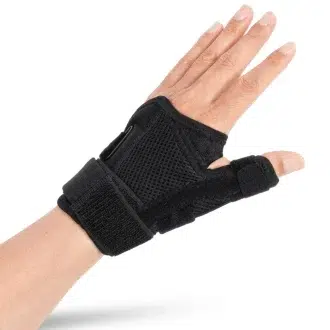
Wrist Supports
When Your Wrist Starts to Hurt
You rarely think about your wrist. It connects your hand to your forearm, steadies your grip, bears weight when you push down, and lets you bend, rotate, and twist through the day. So when it starts to hurt, you notice. Everything from turning a key to lifting a pan suddenly becomes slower, tighter, or more painful.
Sometimes the pain arrives in a single moment. A fall, an awkward twist, or a heavy lift that you feel immediately. At other times it creeps in gradually. A dull ache builds by the evening. A twinge appears when you grip something firmly. The wrist wakes you at night, or it simply feels stiff every morning. Because the wrist is involved in almost everything you do, even a small irritation can make a big impact on your daily life.
Before anything else, one caution is worth stating. If you’ve fallen or twisted your wrist and the pain is severe, the swelling is significant, the wrist looks misshapen, or your fingers are numb, pale, or cold, stop and get medical attention. The same applies if you can’t move the wrist normally after an injury. A wrist support has an important role, but only after a proper assessment.
For most other wrist problems, your symptoms are not random. They are clues about what is happening inside.
Four patterns people commonly notice
After an injury. A fall onto an outstretched hand, a sudden twist, or a direct knock can damage a bone or ligament. Pain usually comes on quickly, often within hours. The wrist swells, bruising may appear later, and the wrist feels weak when you try to put weight through your hand.
During or after activity. If the wrist aches when you grip, lift, or twist, then eases when you rest, the problem is often in the tendons. Several tendons cross the wrist, and when they are overused they become swollen and painful as they slide through their protective sleeves.
At night or in the morning. Tingling, numbness, or a hand that feels dead when you wake usually points to nerve compression. The way you sleep matters. When the wrist curls forward during the night, the spaces around the nerves narrow, and symptoms can appear even if you feel fine during the day.
As persistent stiffness and swelling. A wrist that feels stiff, puffy, and deeply achy after use points to the joint itself. This pattern often feels worse first thing in the morning or after a busy day, and it tends to build gradually.
These patterns can overlap. But they give you a helpful starting point for understanding what’s going on and choosing the right support.
A Simple Picture of the Wrist
You don’t need a medical degree to make sense of wrist pain. A basic mental picture is enough.
The two bones of the forearm, the radius on the thumb side and the ulna on the little-finger side, meet the hand at the wrist. Between them sits a cluster of eight small carpal bones, arranged in two neat rows. That arrangement allows a wide range of movement, but it leaves tight quarters. When any structure swells, there is not much spare room for it to expand.
Bones and ligaments
Ligaments are tough bands that connect bone to bone. They keep the carpal bones aligned while still permitting smooth movement. If you fall heavily onto your hand, these ligaments can stretch or tear. The wrist becomes painful, swollen, and sometimes unsteady. You may find it hard to push yourself up from a chair or twist your hand without a sharp twinge. Ligaments heal slowly because they have a limited blood supply. If you keep using an injured wrist in ways that pull on damaged tissue, the problem can drag on for much longer than expected.
Tendons
The muscles that bend and straighten your fingers sit mostly in the forearm. They send long tendons through the wrist into the hand. Each tendon travels through a snug sleeve that keeps it close to the bone. When you repeat the same movement, especially with the wrist held at an awkward angle, friction increases inside that sleeve. The tendon can swell, and the sleeve around it can thicken. Because space is limited, even a little swelling makes the tendon catch or pull as it moves. That produces the aching or sharp discomfort you feel during activity.
Nerves
Two nerves in particular are responsible for most wrist-related symptoms. The median nerve runs through a narrow passage on the palm side, along with the tendons that bend your fingers. When pressure builds there, you feel tingling or numbness in your thumb, index finger, middle finger, and the thumb-side half of your ring finger. A classic sign is waking at night with a hand that feels dead, then shaking it to bring the feeling back. The ulnar nerve runs through a separate canal on the little-finger side. If that one is compressed, symptoms appear in your little finger and the side of your ring finger next to it, and your grip may feel weaker.
The joint and its lining
Where the bones meet, the ends are covered in smooth cartilage. That lets them glide across each other without friction. Around this meeting point sits a thin membrane called the synovium. It produces a small amount of fluid that keeps the joint moving smoothly and feeds the cartilage. When cartilage wears away, the bones rub more directly, and that produces the stiffness and ache you feel with arthritis. When the synovium becomes inflamed, extra fluid builds up and the wrist swells and feels tight.
What a Wrist Support Can Actually Do
A wrist support cannot rebuild cartilage, switch off inflammation, or repair a completely torn ligament. No support will ever do that. What it can do is more practical: it keeps your wrist in a position where irritated tissue can heal, and it helps protect that tissue from the movements that keep causing damage.
The wrist is under the least strain when it rests in a neutral position. That means the hand stays in line with the forearm, not bent upward, downward, or tilted to either side. In neutral, there is more room around the nerves, tendons are not squeezed at sharp angles, and joint surfaces take load evenly.
Without help, the wrist drifts out of neutral. You bend it down to use a keyboard, tilt it up to push a door, or curl it while holding a bag. If the wrist is already irritated, those positions can keep aggravating the damaged tissue. A well-fitted support helps the wrist stay closer to neutral while leaving your fingers free. You can still use your hand, but the wrist is guided away from the movements that cause the most problems.
A support also adds gentle compression, which can help move excess fluid along. That may reduce puffiness and stiffness. Because the wrist has so little spare space, even a small reduction in swelling can make a noticeable difference.
There is one benefit that surprises many people. A support makes you aware of the wrist throughout the day. You notice when you rest it against the edge of a desk, curl it under your body, or grip something too tightly. That reminder is enough to help you adjust how you move without obsessing over it.
What a support cannot replace
A wrist support is one useful part of a recovery plan. It does not replace rest, exercise, or medical care. If you continue doing the same aggravating activity at the same intensity while wearing a support, you may simply mask the pain while the underlying problem continues.
It is also possible to use a support too much. Wearing a firm brace all day and all night, week after week, weakens the muscles around the wrist and stiffens the joint. The wrist needs protection during activity, and at night if symptoms demand it. The rest of the time, it needs to move.
Choosing the Right Support for Your Pattern
Wrist supports may look similar at first glance, but different designs address different problems. Answer these few questions and you’ll know which one to pick.
- Where is the pain?
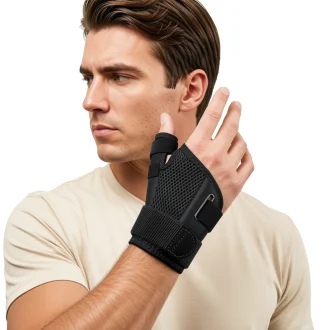
On the thumb side. This often involves the tendons that move your thumb or the joint at the base of the thumb. A thumb wrap will almost certainly help more than a plain wrist band, because holding the wrist straight alone does not stop the thumb from pulling on irritated tissue.
Down the centre of the wrist. This can involve the median nerve, the carpal bones, or the joint surface. A standard wrist support, worn snugly around the wrist, is usually the right starting point.
On the little-finger side. This may point to the ulnar nerve, the triangular fibrocartilage complex (TFCC), or the ligaments along that edge. You may need a support that extends further up the forearm to limit twisting.
Across the back of the wrist. This can indicate tendon irritation, a bony bump, or a joint problem that responds well to limiting how far the wrist bends backward.
Pain isn’t always exact, but its rough location still points you in the right direction.
- What happened?
A clear injury. A fall, twist, or sudden force usually needs a firmer brace during the early stage. The priority is protecting damaged ligaments and bone while they begin to repair.
No clear injury, gradual onset. Repetitive activities or underlying joint conditions tend to respond better to lighter supports during aggravating tasks, with firmer options available during flares.
Symptoms mainly at night or in the morning. This usually points to sleep positions. A night splint that holds the wrist straighter may be the most effective choice.
- When is the wrist at its worst?
This matters because it tells you when to wear the support, not simply which model to choose.
- If night-time tingling or morning stiffness keeps you from sleeping, a slim splint worn overnight helps.
- If pain comes from typing, driving, carrying, or using tools, a daytime support worn for those tasks makes sense.
- If the wrist aches most at the end of the day after cumulative use, wear the support during the busier part of the day, then remove it once you are home.
- How much control do you need?
This is the final deciding point.
- A light sleeve or wrap provides warmth, mild compression, and a reminder to avoid awkward positions. It suits mild pain, arthritis flares that are settling, or later stages of recovery.
- An adjustable support with removable stays is the most versatile option. Keep the stays in for firm control while the wrist is vulnerable, then remove them as strength returns.
- A firm brace is for early injuries, significant instability, or post-cast protection. It limits movement noticeably and should be worn only when the wrist genuinely needs that level of protection.
Most people find that one adjustable support can carry them through several stages of recovery. Choose one that matches where your wrist is right now, rather than one designed for a problem you don’t have.
Wrist Injuries and Fractures
These are the wrist problems that usually trace back to a single moment. You can pinpoint the fall, the twist, or the sudden force that caused it. Even if you are not sure how serious it is, you can be sure something happened. The guidance here moves from the most common injuries to those that need prompt medical attention.
Wrist Sprain – Stretched or Torn Ligaments
You slip, you reach out, and your hand takes the impact. At the moment, you might feel a sharp pain, a tearing sensation, or simply a sense that the wrist moved further than it should. Afterwards, you can still move it, so you assume it’s just a twist. But over the next few hours the wrist swells, sometimes bruising appears, and it feels stiff and unsteady. Rising from a chair becomes a moment you brace for. Twisting movements bring a quick reminder that something is not right.
Inside the wrist, the tough bands that connect bone to bone have been stretched beyond their normal limit. Some fibres have torn. These ligaments don’t receive much blood, so they take a long time to heal. If you keep stretching the damaged tissue while it is trying to repair, the pain can drag on for weeks. A severe sprain can actually hurt more and heal slower than a crack in the bone.
Not all sprains are the same. A mild sprain overstretches a ligament. A moderate sprain partially tears it, causing more pain and swelling. A severe sprain tears it completely, leaving the wrist feeling slack and prone to giving way. Whichever type you have, the approach is the same: protect the ligament while it heals, then gradually restore movement and strength.
A wrist support helps here by stopping the wrist moving into the positions that pull on the damaged ligament. During the first week or two, a firmer brace worn through the day offers the best protection. As pain eases, you can step down to a lighter support for heavier tasks or when the wrist feels tired.
One warning is worth repeating. If you have tenderness in the hollow at the base of the thumb, and the wrist is not particularly swollen or bruised, get it checked before assuming it’s a sprain. That spot can hide a small bone fracture in the scaphoid, which needs a different approach.
Wrist Fracture – Broken Bone
Some injuries do not leave you guessing. After a hard fall, the pain is deep and sickening. The wrist swells quickly. Bending it, even slightly, makes you wince. That combination usually means a bone has broken.
Most wrist fractures happen when you land on an open palm. The force travels into the radius bone near its lower end. The bone may crack, break cleanly, or shift out of position. If the break extends into the joint surface, the wrist may not glide as smoothly afterwards, so proper assessment and correct alignment matter from the start.
The pain from a fresh fracture is intense because every movement tugs on the broken edges. The swelling that builds in such a tightly packed joint adds its own pressure.
A wrist support is not the treatment for a new fracture. You need a proper assessment first, immobilisation in a cast or rigid splint, and possibly a procedure to realign the bone. Only when the medical team confirms the bone is healing does a removable brace become useful.
That is where a removable support makes a real difference. Once the cast comes off, the bone has knitted enough to be safe, but it is not yet strong enough for everyday demands. The muscles have weakened, the joint has stiffened, and the hand feels unfamiliar. A firm brace worn during the day holds the wrist at a comfortable angle while you begin gentle movement and gradually rebuild strength. Carrying a full kettle, opening a jar, or lowering yourself onto a chair: these are the actions where a brace provides genuine protection.
Expect the wrist to look thinner, feel stiff, and lose strength for a while. That is normal. Follow the advice of your fracture clinic, do the gentle exercises they give you, and do not skip follow-up appointments. They are tracking bone healing, and they will tell you when it is safe to stop wearing the support.
Scaphoid Fracture – a Break That Hides
This one deserves special attention because it is easy to underestimate. The scaphoid is a small bone that sits in the hollow at the base of the thumb, just below the wrist. It takes a lot of force when you fall onto an outstretched hand. But unlike a typical wrist break, it can cause surprisingly mild symptoms.
You may not see much swelling. The wrist does not look crooked. You can move it well enough to hold a cup or write. The main signs are a persistent ache in the hollow at the base of the thumb and tenderness when you press directly over that bone. Some people notice discomfort when they pinch, push through the palm, or grip firmly.
That quiet presentation is what makes the injury dangerous. It can be mistaken for a sprain, and a sprain is often left to heal on its own. But the scaphoid has an unusual blood supply. Blood enters at one end, so if the bone breaks, part of it can lose its circulation. Without prompt protection, the bone may heal poorly or fail to heal completely, leading to long-term wrist problems that are difficult to treat. This is avoidable with early care.
To complicate things further, a scaphoid fracture can be invisible on an initial X-ray. If the story fits and tenderness sits in the classic spot, a medical team will often treat it as a fracture anyway, applying a cast and repeating the X-ray a week or two later. This is exactly why doctors don’t take chances with this injury.
Treatment begins in a cast that extends around the thumb, or sometimes surgery if the bone has shifted. Once your clinician allows the cast off, a wrist-and-thumb support continues the protection. It prevents the thumb from pulling on the healing bone through its tendons and limits the backward bending that stresses the break.
These injuries heal slowly. Many wrists continue to ache for months, and strength returns gradually. That is common. Wear the support as directed, attend every follow-up, and do not push through pain. With patience, most people regain full function.
Colles’ Fracture – Break Near the Wrist Joint
A fall onto an open palm can drive the radius bone to break just above the wrist, with the fragment tilting upward. The wrist looks deformed, swelling rapidly, and there is no question of treating it as a minor sprain. This type of fracture needs hospital care without delay.
At the hospital, the bone is realigned, usually by a manipulation, and fixed in a cast. In some cases, especially if the joint surface is involved or the break is unstable, surgery with a plate and screws is necessary. After the cast comes off, the wrist is typically stiff, swollen, and much weaker than the other side. Muscles have lost condition, and the joint capsule has tightened.
A removable brace is often introduced at this point. It does several practical jobs: it keeps the wrist from drifting back into that upward-tilted position as you start moving it again, protects the healing bone from sudden forces, and helps you feel steadier when you begin using the hand for everyday tasks. Actions you barely thought about before, such as lifting a pan or supporting your weight on the arm of a sofa, become easier with that external support.
The skin that has been under a cast is often dry and flaky, and the hand can feel unusually sensitive to light touch. That is temporary. Wear the brace as the fracture clinic advises, start gentle movements when permitted, and expect some discomfort as tissues adapt. A Colles’ fracture is a serious setback, but with steady use of the right support, most people regain near-full function within a few months.
Wrist Dislocation – Bones Out of Place
A wrist dislocation is not a minor event. It happens after serious impact, such as a fall from height, a cycling accident, or a heavy blow that forces the wrist bones beyond their normal limits. The wrist looks visibly deformed, the pain is intense, and there is no safe way to manage it at home.
Never try to push the bones back into place yourself. That is a hospital procedure, done under sedation or anaesthetic, and trying it on your own can damage nerves and blood vessels. Go to the emergency department at your nearest hospital immediately.
At the hospital, the bones are put back into place, and if ligaments are badly torn or small bone fragments have broken away, surgery may be needed to stabilise the area with wires, plates, or screws. Full recovery is a slow process. The ligaments around the wrist have been widely disrupted and need months to form strong scar tissue.
After the initial cast comes off, your specialist or hand therapist will prescribe a removable brace. That brace holds the bones aligned while the ligaments continue to heal. It blocks movements that could pull the repair off course, and it supports you while you gradually regain mobility. Your clinician will explain how many hours a day to wear it and when to start reducing it. Follow that plan as closely as you can. The wrist may look better on the outside, but inside, things are still healing.
If you notice sudden new pain, a feeling that the wrist is unstable again, or numbness and colour changes in your fingers, contact the hospital team immediately. A dislocation is a serious injury that needs thorough supervision throughout recovery.
TFCC Tear – Pain on the Little-Finger Side
On the little-finger side of your wrist sits a structure with a long name: the triangular fibrocartilage complex, or TFCC. It cushions forces moving from your hand into the smaller forearm bone, stabilises rotation between the two forearm bones, and absorbs the twisting stress your wrist handles daily.
A TFCC tear usually comes from one of two patterns. It can appear suddenly, after a fall onto the hand with the wrist bent and twisted, or after a forceful pull. It can also creep up over months of repeated twisting, pushing, and gripping. Either way, pain is felt specifically on the little-finger side.
The pain feels distinctive. It is often sharp when you rotate the forearm, for example using a screwdriver, turning a key, or twisting off a lid. Some people feel an instability, as if the wrist cannot be fully trusted. Others notice a click or a catch during movement. If you press into the soft spot on the little-finger side, it usually hurts.
This injury tends to hang around because you can’t completely stop twisting your wrist. A wrist brace helps by limiting rotational stress. Look for a brace that controls twist at the forearm rather than just holding the wrist up and down. A firm wrap just above the wrist often calms the pain dramatically.
During the early stage, a brace worn during daily activities protects the damaged tissue as it heals. That protection can be the difference between a problem that eases and one that carries on. But a brace alone may not be enough. Some TFCC tears, particularly those near the edge, respond to splinting and activity changes. Tears closer to the centre of the wrist, where blood supply is poor, may need an injection or occasionally surgery. If the pain persists beyond two or three weeks, a clinical assessment is the right next step rather than continuing to manage on your own.
Nerve and Tendon Problems
These conditions tend to creep in quietly. The wrist may look completely normal. There’s no dramatic fall, no bruise, no visible swelling. Instead, symptoms appear when you use your hand in a certain way, or they find you at night while you’re trying to sleep.
Carpal Tunnel Syndrome – When the Median Nerve Is Squeezed
Waking with a hand that feels dead, or having to shake your wrist to bring back sensation, is unsettling. It is also a classic sign of carpal tunnel syndrome.
The problem sits at the wrist. The median nerve, which supplies feeling to your thumb, index finger, middle finger, and the thumb-side half of your ring finger, runs through a narrow passageway together with the tendons that bend your fingers. That passageway is called the carpal tunnel, and it has very little spare room. When the tendons or the tissue around them swell, they take up more space. Pressure builds, and the nerve becomes compressed.
Symptoms often appear at night because of how you hold your wrist while sleeping. Many people curl the wrist toward the palm or tuck it under the pillow. That position narrows the tunnel further and raises pressure on the nerve. You wake with tingling, numbness, or a dull ache in those fingers. Shaking the hand sometimes brings the feeling back, but the cycle can interrupt sleep night after night. During the day, similar symptoms may appear when you grip something for a long stretch, hold the wrist bent while working at a desk, or drive without moving your hand much.
A night splint is the most straightforward first step. It holds the wrist in a more neutral line while you sleep, which keeps the tunnel as open as possible and reduces pressure on the nerve. Many people find regular overnight use reduces waking episodes within a couple of weeks.
For daytime, a slim support can help during specific tasks that trigger symptoms, such as typing, carrying heavy bags, or holding a tool steadily. But you shouldn’t wear a firm brace around the clock. The wrist needs to move freely during non-aggravating activities to keep the tendons gliding and the muscles conditioned.
If a night splint and sensible adjustments to hand position aren’t enough after a few weeks, ask for a proper assessment. Constant numbness, weakness in the thumb, or dropping objects more often are signs the nerve has been under pressure for a while. Earlier treatment gives the best chance of full recovery.
Ulnar Tunnel Syndrome – Tingling in the Ring and Little Fingers
Carpal tunnel gets most of the attention, but the ulnar nerve can also become compressed as it passes through a narrow channel on the little-finger side of the wrist. That channel is sometimes called Guyon’s canal, but you don’t need to remember that name. What matters is the result: ulnar tunnel syndrome.
Symptoms follow the nerve’s territory. Tingling, numbness, or an aching feeling appears in the little finger and the side of the ring finger next to it. You may also notice a dull discomfort along the little-finger side of the wrist. Some people describe a sense of clumsiness: buttons become awkward, picking up small objects feels different, and grip strength isn’t quite what it used to be.
Sustained pressure on the base of the palm is a common trigger. Cyclists leaning on handlebars, people resting the heel of their hand against a desk or workbench, or anyone bracing through the palm during yoga or push-ups can compress the nerve. Repeatedly bending the wrist forward, such as resting on the heel of your hand while reading, also raises pressure inside the channel.
The right support should discourage leaning through the heel of the hand as well as keeping the wrist straight. A wrist splint with a padded section over the palm helps spread pressure away from the area above the nerve. At night it stops the wrist curling forward. During the day it acts as a physical prompt to keep the wrist neutral and avoid putting weight through the palm.
Changing habits amplifies the benefit. Pad handlebars, adjust a desk setup so the wrists stay level, and take regular breaks from sustained pressure. If tingling becomes constant, grip strength drops noticeably, or the fleshy area at the base of the little finger begins to look flatter, have it assessed. At that point a wrist support alone may not be enough, and you need to find out what is pressing on the nerve.
Wrist Tendinitis – When Tendons Are Irritated
Sometimes wrist pain appears only when you use the hand in a certain way. At rest the wrist feels fine. Then, after half an hour of gardening, carrying shopping, or typing without a break, a distinct ache builds along the wrist. Stop the activity and it fades again. That pattern points to tendon irritation.
Several tendons cross the wrist, connecting the forearm muscles to your fingers and thumb. Each one runs through a snug sleeve lined with a slippery layer that lets it glide smoothly. When a tendon is repeatedly loaded or forced, friction rises. The sleeve becomes inflamed, the tendon swells, and space inside tightens. A swollen tendon that can no longer glide freely creates a pulling sensation whenever you grip, twist, or bend the wrist.
The location of the discomfort is a useful guide. Pain on the thumb side is often linked to lifting, gripping, or moving the thumb outward. Pain on the palm side tends to appear with repeated downward bending of the wrist or firm gripping. Pain on the little-finger side is worse with twisting and side-to-side movement.
A support for tendinitis should not lock the joint completely. That simply leads to stiffness. Instead it should discourage the painful end-of-range movements while letting the hand work normally for everyday tasks. A light, adjustable brace worn during the activities that bring on pain is often sufficient. Remove it when you are resting, and build in gentle stretching and strengthening exercises as the acute pain subsides.
If the pain stays fixed in one precise spot for several weeks despite sensible rest and bracing, it may involve more than simple inflammation. A partial tendon tear produces similar symptoms and follows a different recovery path. A GP or physiotherapist can help you identify exactly what is happening.
De Quervain’s Tenosynovitis – Thumb-Side Pain
The movement that sets off De Quervain’s is often a twist, and the pain can be sudden enough to stop you mid-action. Turning a stiff lid, wringing out a cloth, lifting a child with your thumbs hooked under the arms, or swinging a heavy pan: all involve pulling the thumb away from the hand while gripping. If the tendons on the thumb side of the wrist are irritated, that combination produces a sharp, specific ache around the base of the thumb.
Inside the wrist, the problem is a tight fit. Two tendons that move the thumb run side by side through a narrow tunnel on the thumb side. In De Quervain’s, the lining of that tunnel thickens and swells. There is very little spare room, so every time the thumb moves, the swollen tendons scrape against the tunnel wall. Pressing over the area is tender, a little swelling may be visible, and some people feel a rasping or catching sensation when they move the thumb.
A standard wrist brace is rarely enough here. It allows the thumb to keep moving, and thumb movement is exactly what drags the tendons through the inflamed tunnel. Instead you need a thumb-spica support, one that wraps around the wrist and holds the thumb gently against the hand. That small difference is essential. With the thumb rested and stabilised, the tendons stop being pulled through the narrow passage with every grip.
You will also need to change how you lift and hold things. Avoid hooking the thumb under a load. Support weight with the flat of both hands, take breaks from twisting movements, and wear the thumb-spica support during tasks that involve gripping or lifting. Some people find it helpful at night too, especially if they tend to curl their hand against the pillow.
If rest and bracing have not eased the pain within a couple of weeks, a clinician may discuss a steroid injection to calm the inflamed tunnel lining in addition to the support. Early treatment makes a real difference here because the condition can become increasingly stubborn the longer it remains inflamed.
Intersection Syndrome – Forearm Pain at the Tendon Crossing
Most wrist problems make themselves known right at the joint. Intersection syndrome is different. The pain usually sits further up the forearm, several centimetres above the wrist, along the back of the arm. That unusual location often confuses people.
The anatomy explains why. Two groups of tendons cross over each other in this region. One group comes from muscles that move the thumb. The other group lifts the wrist backward. Where the two groups intersect, there is a natural point of friction. When you repeatedly bend the wrist backward while the thumb is also working, such as during rowing, racket sports, weightlifting, or work with hand tools, those tendon groups grate against one another. The tissue around them becomes inflamed.
You may feel a deep ache along the back of the forearm, sometimes with a subtle creaking sensation when you move the wrist. Localised swelling can appear over that spot. The discomfort is easily confused with De Quervain’s, but the position is different: higher on the forearm rather than directly at the thumb base.
Here a wrist brace has one clear priority: stop the wrist from bending backward too far, particularly during activities that also demand thumb movement. A brace that holds the wrist at a comfortable middle angle while leaving the fingers free is usually sufficient. A thumb piece is not necessary because the primary problem is wrist extension, not thumb position.
Choose a slim brace that does not bunch under a long-sleeved shirt or interfere with your natural grip. Wear it during the activities that provoke pain and remove it when the arm is resting. Gently move the wrist and fingers through a comfortable range several times a day to prevent stiffness, without pushing into pain. As the acute discomfort fades, forearm strengthening exercises help stop the problem returning when you resume normal levels of activity.
If symptoms remain stubborn beyond a few weeks, ask a GP or physiotherapist to examine the area. The signs could be coming from the tendon crossing point, or they might be caused by something else in the forearm that needs a different approach.
Joint, Inflammatory, and Less Common Causes
These are the wrist problems that creep in slowly rather than arriving with a bang. There is often stiffness, swelling, or a lump you can feel. The pattern can shift from day to day, but the common thread is inflammation inside the joint, changes in the bones themselves, or structures that quietly stop working as they should.
Wrist Osteoarthritis – Wear and Tear in the Joint
People with wrist osteoarthritis often notice a specific daily rhythm. The wrist feels stiff when you first wake. You move it around for a few minutes and it starts to loosen. As the day goes on and the wrist carries its normal load, a dull ache builds. By the evening it feels tired and sore, especially after gripping, carrying, or repeated movement.
Arthritis in the wrist is usually a slow wearing away of the smooth cartilage that covers the ends of the bones. As that cartilage thins, the joint surfaces become rougher. The joint may produce extra fluid, making the wrist feel puffy and tight. Small bony outgrowths can develop around the edges, further limiting smooth motion.
That worn surface can still cope with most of your daily activity. But it does not tolerate being pushed to its extremes of movement or loaded heavily when it is already tired. An adjustable wrist support helps here by holding the joint at a more comfortable angle during use. That reduces pressure through the worn areas and limits the subtle shearing forces that irritate the joint lining.
Many people find they need two levels of support. During a flare, when the wrist is swollen and painful, a firmer brace worn for longer periods can shield the joint and help the inflammation quieten. Between flares, a lighter support worn only for heavier tasks, such as carrying a shopping bag or working in the garden, reassures you without making the wrist dependent on it.
Keep the wrist moving. Gentle, pain-free movement exercises help nourish the remaining cartilage and reduce stiffness. Strengthening the forearm muscles gives the joint natural support from the surrounding tissue. A support is there to make you comfortable enough to keep doing that work, not to replace it.
If the pain becomes constant, the swelling does not ease, or the wrist becomes noticeably stiffer, seek professional advice. There are more treatment options available than you might think, and getting a clear picture of what is happening helps you stay active for longer.
Rheumatoid Arthritis – Inflammatory Joint Disease
Rheumatoid arthritis is different from osteoarthritis. It is not caused by wear and tear. It is an autoimmune condition in which the immune system mistakenly attacks the lining of the joint, the synovium. That lining becomes inflamed, thickened, and swollen. In the wrist, this often affects both sides and may also involve the small joints of the hands. The typical pattern is pain, swelling, and stiffness that is worse in the morning and lasts for more than an hour, even after moving the joint.
Wrist involvement in rheumatoid arthritis matters because the wrist is such a complex joint. When the synovium becomes inflamed, it can stretch the ligaments that hold the small carpal bones together. Over time, a chronically inflamed wrist can drift out of alignment, losing strength and mobility. That is why early, effective medical treatment is essential, and why you should be under the care of a rheumatologist if you have this diagnosis.
A wrist support cannot stop the underlying immune process. What it can do is make the rest of your day more comfortable while you are waiting for medication to take effect, and during a flare. A firm but comfortable support worn during activities that load the wrist, such as carrying shopping or typing, holds the joint in a stable position and reduces the strain on the inflamed lining. At night, a splint that keeps the wrist straighter can reduce the intensity of morning stiffness.
One point deserves emphasis. If you have rheumatoid arthritis and the wrist suddenly becomes hot, red, and intensely swollen, or if you feel feverish and unwell, contact your rheumatology team promptly. That pattern can occasionally signal an infected joint, which needs urgent treatment. For day-to-day management, though, a well-fitted wrist support is a helpful partner to your medication and exercise plan. It keeps the joint protected without doing the work for you.
Psoriatic Arthritis – Wrist Pain Linked to Psoriasis
If you live with psoriasis, of the skin or nails, and you have started to notice wrist pain, swelling, or stiffness that lasts beyond a few minutes in the morning, there is a real chance you are dealing with psoriatic arthritis. It is an inflammatory condition driven by the immune system, and it can affect the joints, the tendons, and the places where tendons attach to bone.
Psoriatic arthritis behaves differently from rheumatoid arthritis in some ways. It often affects joints in an uneven pattern. It can cause a whole finger to swell like a little sausage. It frequently causes pain around tendons, so the wrist may ache not only from joint inflammation but also from the points where tendons pull across the joint. People with psoriatic arthritis often notice nail changes, such as pitting or lifting.
Medical treatment is the foundation. Your GP or rheumatologist will discuss disease-modifying drugs and other treatments that address the underlying immune process. A wrist support is an addition, not a replacement. But it has a genuinely useful role.
During a flare, a firmer brace helps hold the wrist in a comfortable stable position while the joint calms down. It reduces the repeated micro-movements that stretch an already irritated joint lining and pull on tender tendon attachments. Between flares, a lighter support worn for specific tasks, such as carrying something heavy or doing prolonged handwork, can keep you active without provoking symptoms.
Because psoriatic arthritis varies so much from person to person, it is worth discussing your choice of support with your rheumatology team. They can also advise on exercises that maintain strength and movement without flaring the joint. If you notice that the wrist stays swollen, hot, or increasingly painful despite treatment, do not wait to mention it. Inflammatory arthritis responds best when treatment is adjusted early.
Wrist Synovitis – Inflammation of the Joint Lining
Synovitis is a straightforward problem, even if the name sounds technical. The synovium is the thin lining inside a joint that produces the fluid that nourishes the cartilage and lubricates the joint surfaces. When that lining becomes inflamed, it thickens and produces extra fluid. The wrist looks swollen, feels warm, and seems stiff, especially when you try to bend or straighten it fully.
Synovitis can follow an injury that has not healed completely. It can come from repetitive overuse. Or it can develop as part of an inflammatory condition such as rheumatoid arthritis. Whatever the trigger, the result is a wrist that hurts more with movement, feels tight and puffy, and may ache even when you are resting it. Because the joint capsule has limited space, the extra fluid raises pressure and stretches the sensitive lining, producing a deep, uncomfortable pain.
If you have an inflammatory condition such as rheumatoid arthritis, the most important step is getting the underlying disease under control with your rheumatology team. A wrist support cannot do that. But during a flare, a brace can give the wrist the rest it needs. It holds the joint at a comfortable resting angle, allowing the extra fluid to be reabsorbed rather than continually squeezed by movement.
You may find the support helps most during unavoidable tasks, such as carrying a plate, writing, or using a keyboard. Wearing it for a few hours at a time gives the joint enough relief for swelling to gradually ease. Between flares, a lighter support worn for heavier tasks may be all you need.
Watch for warning signs. Increasing pain, redness, swelling that does not ease, or feeling unwell alongside joint symptoms warrants prompt medical advice. Persistent synovitis can lead to joint damage if it is not treated, so this is a condition that deserves proper attention rather than patient endurance.
Wrist Gout – Sudden Inflammatory Attacks
Most people think of gout as a problem of the big toe, and it is common there. But gout can also affect the wrist, and when it does, it produces some of the most intense joint pain you are likely to experience.
Gout is caused by uric acid crystals forming inside the joint. When the immune system reacts to those crystals, it sets off a powerful inflammatory response. The wrist becomes red, hot, swollen, and exquisitely tender. Often the pain reaches its worst within a day of the first twinge. The skin over the joint may look glossy, and even the weight of a bedsheet can feel unbearable.
If you have had gout before, you may recognise the pattern immediately. If this is a first attack, or if the presentation feels unusual, it is important to have it assessed. Gout can look similar to an infected joint, which is a medical emergency requiring prompt treatment. A doctor can confirm what is happening and help bring the attack under control.
A wrist support does not treat gout, but it can make a flare far more bearable. When the wrist is at its most sensitive, an accidental knock or a stretch during sleep can cause a spike of pain. A support holds the wrist still and shields it from those unintended impacts. If you can tolerate gentle compression, it may also help reduce some of the fluid swelling that accompanies the attack.
One practical note: during an acute flare, the wrist may be so sensitive that firm pressure is itself painful. In that situation, use a soft support or a resting splint that makes minimal contact until the inflammation begins to calm. Do not force yourself into a tight brace while the joint is at its worst.
Between flares, a wrist support is usually less necessary, unless gout has progressed to cause joint damage. If attacks are frequent or the wrist remains stiff, a lighter support for heavier tasks offers reassurance while you work with your doctor on managing uric acid levels. That includes staying well hydrated and reviewing any medication that might trigger flares.
Carpal Boss – Bony Bump on the Back of the Wrist
You are washing your hands and notice a hard lump on the back of your wrist. You push on it. It does not move. You wonder if it could be something worrying.
A carpal boss is a bony overgrowth where the long bones of the hand meet the small bones of the wrist. It is a localised area of joint wear that causes the bone to thicken and form a firm bump. Many people have one without it ever bothering them. Others find it becomes painful when the wrist bends backward under load, such as during push-ups, planks, or resting on the back of the bent wrist.
If the bump hurts, it is usually for two reasons. Pushing weight through a bent wrist compresses the joint beneath the bump. And the tendons that lift your fingers have to glide back and forth over an uneven bony surface. That friction causes tenderness around the area, and sometimes a clicking or grating sensation.
A carpal boss can be mistaken for another type of lump, but they feel different. A fluid-filled cyst may feel softer and move a little under the skin, while a boss is hard because it is bone. A clinician can tell the difference with a quick examination, especially if the lump is growing or causing pain.
When a carpal boss causes trouble, a wrist support can help. The aim is not to immobilise the entire wrist. It is to prevent full backward bending, which is the movement that loads the bump. A lightweight brace that holds the wrist in a slightly straighter position, with a padded area over the back, is often the most practical choice. It gives you freedom to use the hand while protecting the bump from being compressed every time you extend the wrist.
If you do press-ups, yoga, or heavy lifting, a support with a soft pad over the bump can help distribute pressure across a wider area. The bony bump itself is permanent, but the pain around it can usually be managed with these adjustments. If pain persists despite bracing and activity changes, your GP may consider an injection to calm the irritated tissue around it. Surgery is reserved for lumps that remain painful despite those efforts.
Ganglion Cyst – A Lump on the Wrist
A lump on the wrist is unnerving, especially the first time you notice it. It may be as small as a pea or as large as a grape. It often feels smooth, slightly rubbery, and moves a little under the skin. In many cases it causes no pain at all, but it can sit at the back of your mind.
If you have found a lump, the only way to know for certain what it is, and whether it needs treatment, is to have it examined. Many lumps in this area turn out to be ganglion cysts, which are fluid-filled swellings that form when the lining of a joint or tendon sheath balloons outward. But other types of lumps exist, so it is not something you should diagnose yourself.
Ganglions have a few characteristic habits. They can change size with activity, feeling firmer after a busy day of gripping or twisting, then softer after rest. They can appear suddenly and disappear just as unexpectedly. Many ganglions need no treatment at all once a clinician has confirmed what they are.
The ones that cause problems do so in a few ways. If a ganglion presses on a nerve, it can cause tingling, weakness, or aching elsewhere in the hand. If it is located directly over a spot that takes weight, it can make certain activities uncomfortable. A very large cyst can restrict the wrist’s range of motion.
The old habit of flattening or bursting a cyst by pressing on it is not recommended. That does not fix the problem, and it can irritate the surrounding joint or tendon even more. Do not try that.
A wrist support can help when the cyst is painful because movements are making it swell. The goal is not to squeeze the cyst away. It is to hold the wrist in a stable position so that pressure inside the joint stops filling the cyst as quickly. By reducing the extremes of wrist movement, the brace can slow that cycle and reduce the aching feeling at the end of the day. Choose a support with a soft padded section that sits over the lump, so it creates a buffer between the skin and hard surfaces.
If the cyst becomes painful, grows rapidly, or causes tingling or weakness in the fingers, have it reviewed. If it stays trouble-free, leaving it alone is often perfectly fine once it has been checked.
Kienböck’s Disease – Reduced Blood Supply to the Lunate Bone
This is a less common wrist problem, but it deserves attention because it can be mistaken for a sprain that never fully heals. Kienböck’s disease affects the lunate, a small crescent-shaped bone that sits in the middle of the wrist near the base of the hand. The problem begins when that bone does not receive enough blood. Without a good blood supply, the bone tissue softens and may eventually collapse.
The symptoms are vague at first. There is a deep, aching pain in the centre of the wrist, often worse when you push through your hand or bend the wrist backward. The wrist may feel stiff, and your grip might weaken. It can be hard to point to one exact spot, but pressing over the back of the wrist, in the centre, is usually tender. If you have pain like this after a fall, it could be a bone bruise. If it persists for weeks or months without clear improvement, Kienböck’s should be considered.
Diagnosis is not always straightforward. An early Kienböck’s may not show up on a standard X-ray. An MRI scan is often needed to assess the blood supply to the bone. That is one reason persistent central wrist pain without a clear injury should never be dismissed as “just a strain”.
Treatment depends on the stage of the condition and how much you rely on your wrist. In the early stages, the aim is to reduce the load passing through the lunate while the bone has a chance to recover its blood supply. This is where a wrist support genuinely helps. A firm brace that limits full backward bending reduces the forces pushing through the centre of the wrist. You are not immobilising the whole hand, just giving the lunate a break from weight-bearing positions.
If the disease has progressed, there are surgical options designed to redistribute load away from the affected bone. These might involve shortening the radius slightly so more force passes through other bones, or fusing certain bones to protect the lunate. If you end up having surgery, your surgeon will prescribe an exact schedule for brace use afterwards. Before surgery, a stable support can ease symptoms enough to keep you working while you consider your options.
If you have been managing central wrist pain with rest and patience but it keeps returning in the same spot, do not keep guessing. Kienböck’s is uncommon, but it is worth investigating properly. Early identification gives you the best chance of preserving the bone and avoiding long-term collapse.
Wrist Instability – When the Wrist Feels Loose or Clicking
There is a distinct kind of wrist discomfort that does not follow a straightforward pain pattern. Instead, the wrist simply does not feel trustworthy. You might feel a click deep inside as you move it. Pushing up from a chair, carrying a heavy bag, or turning a tight handle gives you the sense that something is shifting more than it should. You may have had a fall months ago that never fully resolved, or you may have always had naturally loose joints.
Inside, the problem usually lies in the ligaments. The eight small carpal bones are held together by an intricate network of ligaments. If one of those ligaments has been stretched or torn, the bones no longer move as a coordinated unit. They slide out of sync, producing a clunk, a catch, or a sharp twinge. One of the most common patterns involves the scapholunate ligament, which links two important bones near the base of the thumb.
Wrist instability can also follow a fracture that healed with a slight change in alignment, or it can be the product of generalised joint laxity, where supporting structures are naturally more elastic. In the latter case, the wrist depends on its surrounding muscles to hold the bones together. If those muscles are weak or tired, the wrist starts to ache.
If you describe these symptoms to a clinician, they will likely want to do more than just advise a brace. A distinctly unstable wrist may have a significant ligament tear that will not heal with external support alone. Some ligament tears are best repaired surgically, particularly in younger or more active people. Other cases respond very well to a period of splinting and a guided strengthening programme.
If non-surgical treatment is appropriate, a firm wrist support holds the carpal bones in better alignment. It prevents the extremes of movement that let the bones shift and gives the surrounding muscles a stable base to work from. You may wear it for most of the day initially, then gradually reduce wear as your strength improves and the wrist feels more dependable.
Do not make the brace a permanent part of your life. The muscles in your forearm can be trained with specific exercises to stabilise the wrist. A physiotherapist can guide you on grip strengthening, wrist stabilisation, and balance work. The goal is to reach a point where the wrist feels secure enough that you no longer need to think about it.
There are a few signs that warrant urgent assessment. If you hear a distinct pop or feel the wrist give way when you are doing something specific, if the back of the wrist swells and subsides repeatedly, or if the wrist feels as though it might dislocate with normal activity, do not ignore these signals. Ligament injuries do not always announce themselves loudly, but they repay early diagnosis.
Getting the Fit Right
A support that is too loose will slide around and offer little protection. One that is too tight can compress nerves and restrict circulation. Either way, you will stop wearing it, and then it cannot help you. The following guidance applies whatever condition you are managing.
Measure your wrist correctly
Use a soft tape measure. Wrap it around your wrist just below the bony bump on the little-finger side, keeping it snug but not tight. Note the measurement in centimetres and compare it with the sizing chart for the product you are interested in. If you are between sizes, choose the larger one and adjust the straps. A support that is slightly big can be pulled tight enough. A support that is too small will press on nerves and feel intolerable after half an hour.
If your wrist is swollen, measure it at the end of the day when the swelling is at its peak. If you already have a dressing or bandage on, do not measure over the top of it. Measure bare skin. When in doubt, check the sizing chart on the product page below; you are buying for your wrist, not for a friend’s.
Check the fit against these three signs
First, the support should feel snug but not tight. It should not be able to slide around on its own, but you should be able to tuck the tip of your index finger between the support and your skin. If you can slide a whole finger underneath easily, it is too loose to hold the wrist properly.
Second, watch your fingers. After wearing the support for a few minutes, your fingers should look normal, feel warm, and have full sensation. If they tingle, turn pale, or go cold, the support is too tight or is pressing on the wrong spot. Loosen the straps and reposition.
Third, check the edges. The wrist has several bony points that sit close to the skin, especially on the little-finger side. If the edge of the support digs into one of those points, you will develop a sore red mark that makes you want to take it off. Most well-designed supports have contoured, padded edges that sit away from the bones. If yours is rubbing, try shifting it a few millimetres up or down the forearm. If that does not fix it, a different size or style may suit you better.
When you remove the support, look at your skin. Light redness that fades within a few minutes is normal. Deep red marks, blisters, or sore spots that last long after removal mean the fit is wrong. Adjust or replace the support before wearing it again.
Caring for your support
You will be wearing the support close to your skin, often for several hours at a time or overnight. It needs to stay clean and fresh. Most wrist supports can be hand-washed in cool or lukewarm water with a mild detergent. Fasten all the straps before washing so they do not tangle. Rinse thoroughly and dry flat, away from direct heat or sunlight. Do not use a tumble dryer or place it on a radiator, because heat can distort the material and damage any built-in stays.
If the support has removable stays, take them out before washing and wipe them clean separately. The hook-and-loop fastening can pick up fabric fluff over time, which reduces its grip. Clean it by brushing gently with a soft brush or pressing a piece of adhesive tape over the hooks to lift off the lint. If a stay starts to poke through the fabric or the straps lose their grip, it is time to replace the support.
When to Wear It and When to Take It Off
There is no single schedule that works for every condition. The general rule is this: wear the support when your wrist needs protection, and take it off when it does not.
If you are in the early stage after an injury or surgery, a firmer brace may need to stay on for most of the day and night. The healing tissue needs consistent protection from accidental positions and loads. You will not be able to take the wrist through a full range of movement yet, and that is fine.
As pain eases and strength returns, begin to remove the support for gentle tasks around the house. Then extend that time. If you are wearing it mainly for specific activities, such as typing, gardening, carrying shopping, or driving, put it on for those tasks and take it off when they are done. That keeps the wrist free to move and strengthen during the rest of the day.
Take the support off for rest, for washing, and for the exercises your physiotherapist or clinician has given you. If you keep the wrist immobilised all day and all night, the muscles around it will weaken and the joint will stiffen. That can leave you with a second problem on top of the original injury.
You may also want to take it off when you are sitting quietly at home, reading, or watching television. There is no need for support when the wrist is not being loaded or moved into awkward positions. Let your skin rest.
What to do at night
If your symptoms are worse in the morning, you wake during the night with pain, or you tend to sleep with your wrist curled under your pillow, a night-time splint is usually a good idea. The right splint holds the wrist in a straighter, more neutral position while you sleep, which keeps the spaces around nerves and tendons open and reduces the pressure that builds up overnight.
Not all daytime braces are comfortable to sleep in. Some are bulky and can press into the wrist when you turn over. If you are buying one to wear at night, look for a slim design with soft padding that allows you to lie comfortably on your side. If you have chosen an adjustable model, you may be able to loosen it slightly for overnight use, provided it still holds the wrist in the right position.
Recovery Is Not Always Straight Forward
Most wrist problems improve gradually, but with setbacks along the way. You may have a good week, feel hopeful, and then do something that sets the wrist back for a few days. That is normal. Healing happens in waves, not in a steady climb.
The key is to tell the difference between a normal flare and a genuine setback.
A normal flare is a temporary increase in discomfort that eases within a day or two. It usually follows a period of increased activity. If you recognise that pattern, ease back to a level your wrist can handle, keep wearing the support for protection, and then progress more gradually. Do not stop everything and do not panic.
A genuine setback is different. The pain becomes significantly worse, returns to the level it was at the beginning, or is accompanied by new swelling, redness, or altered sensation. If this happens, stop the activity that triggered it and seek advice. Do not push through a severe or worsening pain while relying on a support. A support is a tool for recovery, not a way to ignore signals that need attention.
Pacing your return to normal life
When you return to normal activities, use a simple pacing rule. Do half of what you think you can do, take a break, and then assess how the wrist feels. If it is comfortable during the activity and an hour later, you have done an appropriate amount. If it aches, you have done too much. Adjust the next session accordingly.
Pacing is not about being lazy. It is the fastest route to a full recovery, because it allows the tissues to adapt to each increase in load without triggering another flare.
Habits that slow you down
Some everyday actions can keep a wrist problem going long after the original injury has resolved. Leaning on the heel of your hand while reading or working compresses the wrist structures. Holding a phone or book with a curled wrist narrows the spaces around tendons and nerves. Gripping tools or bags too tightly puts strain through the joint and tendons. Sleeping with the wrist tucked under your pillow keeps it in a shortened position for hours.
Wearing a support helps because it blocks some of these positions and makes you more aware of them. But you can also change the habit directly. Adjust your chair height so your forearms rest at a comfortable angle. Use both hands to carry heavy items rather than carrying them one-handed. Avoid resting your wrist on hard desk edges. Every small change reduces the load the damaged tissue has to handle.
Rebuilding strength and movement
A support, on its own, will not give you back a strong, stable wrist. What will do that is consistent, gentle movement and progressive strengthening. The muscles that cross the wrist act as natural shock absorbers. When they are weak, the joints, ligaments, and tendons take more of the load. When they are strong, the wrist feels more stable and the supporting tissue is protected from overload.
Start with simple movements. Gently bend the wrist up and down, side to side, without force. Keep the range comfortable and pain-free. Then add finger exercises and grip work, such as squeezing a soft ball or using a light resistance band. A physiotherapist can design a programme specific to your condition and your goals. If you have had a fracture or surgery, your fracture clinic should guide you on when to start strengthening and how quickly to progress.
Even after the wrist feels better, keep doing a little maintenance work. The wrist is a vulnerable joint. Once it has been injured, it is more vulnerable to future problems if the supporting muscles are not kept in good condition.
When to Seek Professional Help
There is a limit to what self-management and a wrist support can achieve. If you have been wearing the right support consistently for two or three weeks and have seen little or no improvement, or if your symptoms are getting worse, it is time to stop guessing and get a proper assessment.
Make an appointment with a GP, physiotherapist, or hand therapist if any of the following apply:
-
- The pain is severe and you cannot put weight through your hand or move your wrist normally.
-
- The wrist looks misshapen or deformed, or the pain began with a fall and has not improved within the first few days.
-
- You have persistent numbness, tingling, or weakness in your fingers, especially if it is spreading or getting worse.
-
- The wrist is hot, red, and swollen, and you feel generally unwell or feverish.
-
- You have a known inflammatory condition such as rheumatoid arthritis or psoriatic arthritis, and you notice a sudden change in one wrist that does not follow the pattern of your usual flares.
-
- The pain has lasted more than two or three weeks despite using the right support, modifying your activities, and following sensible self-care.
-
- You feel a distinct pop or give-way sensation in the wrist, or it feels as though the bones are slipping out of place.
-
- You have noticed a lump on the wrist that is growing, changing, or causing new symptoms.
-
- You have ongoing pain or clicking in the centre of the wrist that does not ease with rest.
These signs do not automatically mean something serious is wrong. But they do mean a clinician should look at the wrist, arrange imaging if needed, and give you a clear diagnosis. The right support can then be chosen with confidence as part of a proper treatment plan.
Common Questions, Straight Answers
Turning This Into the Right Product Choice
You now have all the information you need to pick a support that matches your wrist problem. The product range below is organised so you can find the right type without having to imagine what the descriptions mean.
Here is a simple way to translate what you read into a choice:
- If your pain is on the thumb side, or if you have been diagnosed with De Quervain’s, thumb arthritis, or a scaphoid injury, look for a support that includes a thumb wrap or thumb-spica design. That is the one that stops the thumb pulling on the irritated area.
- If you wake at night with tingling or numbness in your fingers, look for a slim, padded night splint that keeps your wrist straight. Use it overnight, and consider a lighter support for daytime tasks if needed.
- If you have had a recent wrist injury, fracture, or a feeling that the wrist is unstable, look for a brace with removable stays or a firm rigid design. The stays stop the wrist from bending into painful positions while you heal.
- If you have arthritis, tendinitis, or general aching after activity, look for an adjustable support with compression. You can wear it loosely for comfort during most of the day, and tighten it for extra support when you are lifting or carrying.
- If you have little-finger-side pain, especially with twisting, look for a brace that extends further up the forearm to limit rotational stress.
You may find two different styles both look suitable. If so, choose the more adjustable one. You can loosen it for a quiet evening and tighten it for a demanding morning. A well-chosen wrist support should feel like a background helper, not a constant reminder that your wrist is injured. When it fits correctly and you use it at the right times, it lets you get on with your day while the wrist quietly recovers.
Used properly, a wrist support is a useful aid. It holds the wrist steady while the tissues heal, then steps aside as you rebuild strength. Pick the style that matches your symptoms, wear it for the activities that need it, and check the fit carefully. If you do that, you should soon notice that you are reaching for it less often, not more. That is the clearest sign your wrist is on the mend.
-
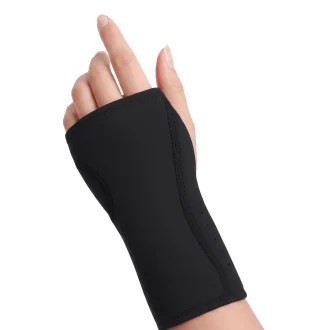
Wrist Splint
- Wrist splint with removable contoured aluminium support that holds your wrist straight in a neutral position
- For carpal tunnel syndrome, tendonitis, sprains, fractures (after clinical assessment), De Quervain’s tenosynovitis, and arthritis
- Immobilises the wrist to protect healing tendons, ligaments, and bones from repeated stress
- Neutral positioning keeps the carpal tunnel as open as possible, reducing pressure on the median nerve
- Compression helps control swelling and may ease pain
- Three adjustable Velcro straps let you control support and pressure at the palm, wrist, and forearm
- Fits left or right hand; one size fits most adults
- Soft neoprene with ventilation holes; cushioning beads under the palm for comfort during extended wear
- For carpal tunnel: wear at night; for tendonitis or sprains: wear during activity; for fractures: follow your clinician’s guidance
- Most soft-tissue injuries improve within 4–6 weeks; fractures take 6–8 weeks minimum, sometimes longer
- Do not use if you have a blood clot, severe circulation problems, loss of sensation in your hand, or an open wound or infection near the area
- If you develop severe pain, visible deformity, worsening numbness, or signs of infection, seek medical advice immediately
- 30-day money-back guarantee
£13.99inc VAT -
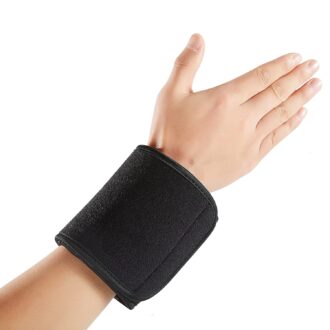
Wrist Ice Pack Wrap for Wrist Sprains, Carpal Tunnel Pain, Arthritis, Tendonitis, Swelling & Bruises
- 1x Wrist Ice Pack Wrap for Wrist Sprains, Carpal Tunnel Pain, Arthritis, Tendonitis, Swelling & Bruises
- For both Men & Women
- One size fits most featuring a fully adjustable secure Velcro strap allowing to to get the right support, compression and fit quickly and easily
- Designed to stimulate your pulse to help reduce your overall body temperature and cool you down in hot summer weather
- Recommended for treating and easing Wrist Sprains, Strains, Tendonitis, Capral Tunnel Syndrome, Muscle spasms and cramps, Arthritis’s, Gout and more!
- Can be worn to provide soothing heat therapy by placing in boiling water or cold therapy by cooling in fridge of freezer
- Specially formulated gel retains hot or cold temperature allowing you to receive long lasting and effective heat or cold therapy
- The ideal solution for speeding up injury recovery, reducing inflammation and swelling and easing aches and pains in your wrist or hand
- Provides compression to help increase blood flow to you hand to promote healing and ease aches and pains
- Great for runners and athletes wanting to avoid injury – Provides heat therapy perfect for warming up muscles before exercising
- Can be wrapped around not just your Hand and Wrist but also your Ankles, Feet, Arms or Elbows
- Includes a full 30 day money back guarantee for complete customer peace of mind!
£8.99inc VAT -
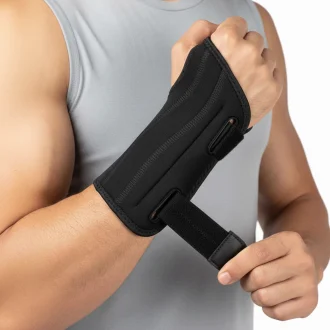
Tendonitis Wrist Brace Support
- 1x Tendonitis Wrist Brace Support designed to help protect, support and compress injured and weakened wrists to help improve injury recovery of wrist injuries such as wrist Tendonitis
- For both Men & Women
- Available in a range of different sizes to suit every hand type
- The secure adjustable straps allow you to quickly and easily change the level of support and compression that the wrist brace provides
- Recommended for helping treat and ease Wrist Tendonitis, Carpal Tunnel Syndrome, Repetitive strain injuries (RSI), Sprains, Fractures, Gout and Arthritis
- Features 2 metal splints that have been designed to stabilize and hold your wrist in a straight comfortable position preventing movement which could cause further injury
- Provides soothing compression to help boost blood flow to your hand and wrist that helps target and ease aches and pain, reduce inflammation and swelling and speed up the natural healing process of damaged tissue
- Made from specially crafted moisture wicking materials with breathable ventilation holes that allow air to properly circulate around your hand and wrist keeping your hand dry, sweat free and comfortable
- Ideal for daily activities, exercise and sports use to help better protect your hand and wrists from injury
- Includes a full 30 day money back guarantee!
£13.99inc VAT -
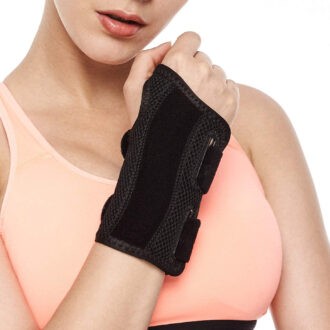
Compression Wrist Support Brace for Arthritis, Joint Pain, Tendonitis, Sprains & Fractures
- A slim, adjustable wrist support brace designed to steady the wrist without feeling overly bulky.
- Suitable for adults dealing with wrist pain, stiffness, weakness, irritation, or recovery after minor injury.
- May help with symptoms often seen in carpal tunnel syndrome, tendon irritation, sprains, strains, arthritis, and repetitive strain problems.
- Works by helping keep the wrist in a more neutral, supported position during everyday use.
- Can help reduce the small repeated movements and awkward positions that often keep symptoms going.
- Provides adjustable compression around the wrist to improve comfort and support.
- Two adjustable Velcro straps allow the fit to be changed through the day depending on activity and comfort.
- Reinforced palm support adds extra stability when pressing through the hand or during tasks that jar the wrist.
- Lightweight, breathable, moisture-wicking fabric helps make longer wear more comfortable.
- Smooth materials and seamless edges are designed to be gentler on sensitive or easily irritated skin.
- Low-profile design makes it easier to wear under everyday clothing and during routine tasks.
- The brace should feel supportive but not tight, and it should not make the hand feel colder, more numb, or more uncomfortable.
- If symptoms are severe, new, unexplained, or not improving, it is sensible to speak to a GP, physiotherapist, or another appropriate clinician.
£13.99inc VAT -
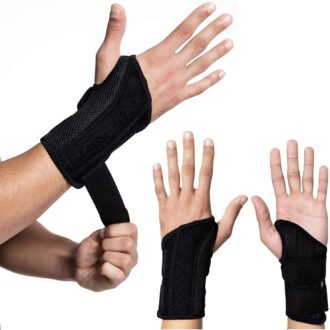
Wrist Support Splint
- 1x Single Wrist Support Splint designed to support and hold your hand and wrist in a straight comfortable position to aid with injury recovery
- One size fits all
- For both Men & Women
- Can be worn on either the left or right hand
- Features fully adjustable Velcro straps that wrap around your hand keeping the wrist splint securely in place and prevent rubbing and chaffing
- Made from skin friendly, breathable and materials with moisture wicking properties to keep your hand dry, sweat free and comfortable
- This wrist splint is recommended for treating and easing a range of different wrist and hand injuries including Tendonitis, Carpal Tunnel Syndrome, Fractures, Sprains and Strains, Gout, and Arthritis and more!
- Designed to improve the way your hand functions and strengthen and improve mobility of injured weakened hands and wrists
- Inbuilt metal splints give your hand targeted support that hold your hand in a straight position and prevent movement which could cause further injury while allowing your hand to recovery and heal properly
- Provides soothing compression to boost blood flow to your hand and help supply fresh oxygenated blood to damaged tissue to speed up the natural healing process, reduce inflammation and swelling and ease aches and pains
- Perfect for wearing through out the day or at night to protect your hand and wrist or whilst playing sports and exercising to give you added support and protection
- Includes a full 30 day money back guarantee!
£13.99inc VAT -
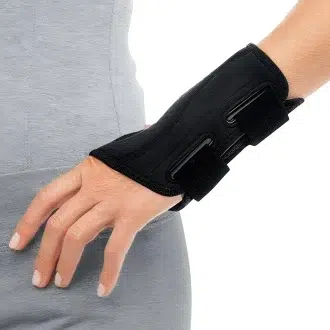
Wrist Support Brace
- Rigid wrist brace with dual aluminium splints that hold your wrist straighter and stop the extreme bending that triggers pain.
- For carpal tunnel syndrome, wrist sprains, tendonitis, arthritis, and post-injury recovery—when you need firmer support than a soft wrap provides.
- Reduces pain by limiting the movements that compress nerves, strain ligaments, and irritate tendons while still allowing mid-range wrist movement for daily tasks.
- Your fingers stay completely free—you can type, grip, drive, and handle objects while your wrist is supported.
- Breathable neoprene with adjustable straps—wear during activities that stress your wrist, overnight if symptoms are worse at night, or both.
- Available in left and right versions, two sizes—measure your wrist circumference and refer to the sizing guide to select the correct size and hand.
- Not suitable for suspected fractures, open wounds, or active infection—seek medical assessment first if you have severe pain, visible deformity, or inability to move your wrist.
- 30-day try-it period—wear it through your usual days and return for a full refund if it doesn’t ease your symptoms or suit your wrist.
£13.99inc VAT -
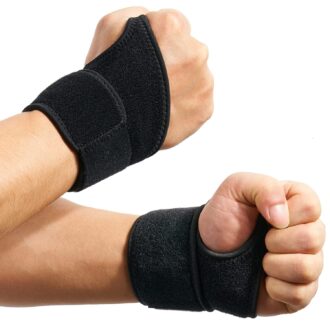
1x Pair of Hand Brace Wrist Wraps
- 1x Pair of Hand Brace Wrist Wraps designed to provide extra support stability and protection to your hands and wrists
- For both Men & Women
- One sizes fits most
- Features adjustable Velcro straps for a secure and comfortable fit
- Ideal for preventing and easing a wide range of hand and wrist injuries including Repetitive Strain injuries, Wrist Sprains, Wrist tendonitis, Carpal Tunnel syndrome, Fractures, Gout and Arthritis
- Recommend for protecting your hands and wrists whilst exercising, playing sports or for your daily activities
- Designed to provide firm and sturdy support to correct the way your hands and wrists function helping improve the stability and mobility of your hands and wrists, reduce strain and pressure on your hands and wrists and protect you from pain and injury
- Provides targeted compression to your hand helping to boost blood flow to reduce inflammation and swelling, ease aches and pains and speed up the natural healing process by delivering fresh oxygen blood to damaged tissue
- Made from skin friendly Neoprene material that is lightweight, breathable and has moisture wicking and antibacterial properties to help keep your hands and wrists dry, sweat free and feeling comfortable
- Includes a full 30 day money back guarantee!
£12.99inc VAT -
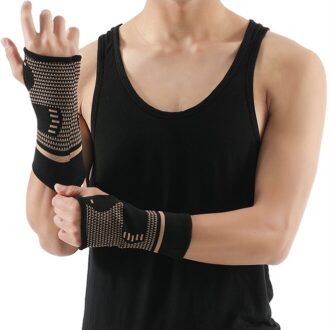
Copper Compression Wrist & Hand Support Sleeves for Wrist Tendonitis & Arthritis
- 1x Pair of Copper Compression Wrist & Hand Support Sleeves for Wrist Tendonitis & Arthritis
- For both Men & Women
- Available sizes Small, Medium & Large
- Ideal for providing injured wrists with extra support, stability and protection to help you make a full and faster recovery
- Can be worn to help treat and prevent Wrist Tendonitis, Arthritis, Gout, Carpal tunnel syndrome, Sprains & Repetitive strain injuries
- Promotes optimum wrist and hand movement and function to help prevent excessive strain and pressure from causing pain and injury to your hand and wrist
- Provides soothing targeted compression to your hands and wrists helping to improve blood circulation, reduce inflammation and swelling, ease pain and speed up the natural healing process of damaged tissue
- Made from a high quality blend of Copper, Nylon & Spandex material that has antibacterial properties to help kill bacteria and germs and keep you hands free from sweat and odour, dry and feeling fresher for longer
- The lightweight, breathable and durable design of these wrist sleeves makes them ideal for wearing whilst playing sports, exercising or for your daily activities
- Includes a full 30 day money back guarantee for total customer peace of mind!
£11.99inc VAT -
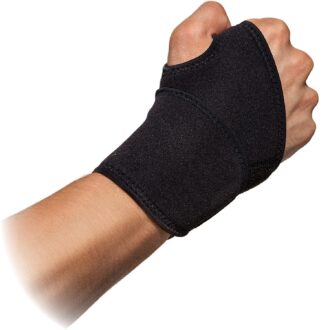
Compression Wrist Wrap Support Sleeve
- 1x Compression Wrist Wrap Support Sleeve designed to help increase wrist stability, support and protection, ease aches and pains and treat and prevent numerous wrist injuries and conditions
- For both Men & Women
- One sizes fits most – Features a fully adjustable Velcro strap that wraps around your wrist keeping the brace securely in place even during the most intense exercise routines
- Can be worn on either left or right hand
- Recommended for treating and preventing Wrist Sprains, Repetitive Strain injuries, Carpal Tunnel syndrome, Wrist tendonitis, Fractures, Gout and Arthritis
- Helps reduce the risk of injury when doing exercises such as weightlifting by supporting and holding your wrist in the correct form preventing excessive strain and pressure being placed on your wrist when you are exercising
- Helps increase the stability and mobility of injured and damaged wrists by supporting your wrist in the correct position and improving function
- Provides soothing compression that helps boost blood flow to your wrist to help speed up injury recovery by easing aches and pain, reducing inflammation and swelling and supplying fresh oxygen rich blood to damaged tissue to promote healing
- Made from skin-friendly, lightweight, breathable Neoprene material with anti bacterial properties to help keep your wrist and hand dry, sweat free and comfortable
- Includes a full 30 day money back guarantee!
£7.99inc VAT -
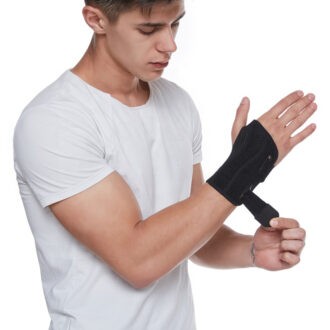
Compression Wrist Wrap Support Brace for Wrist Pain
- 1x Compression Wrist Wrap Support Brace expertly designed with medical-grade materials to offer optimal comfort and support. Not only does wearing it help with existing pain and injury, but it also offers protection against future issues.
- For both Men & Women
- One size fits all
- Features fully adjustable strap that wrap around your hand keeping the brace secure to prevent rubbing and chafing and allows you to adjust the brace quickly and easily to the right level of support and compression that you need
- Protects and supports injured weakened muscles and ligaments found in your hand and wrist making this brace ideal for wearing during the P.R.I.C.E injury recovery protocol
- Recommended for helping ease wrist pain, injuries and conditions such as Carpal Tunnel Syndrome, Wrist fractures, Sprains, Strains, Tendonitis, Gout and Osteoarthritis
- Provides soothing compression that will help speed up injury recovery by increasing oxygen rich blood to damaged tissue whilst reducing inflammation and swelling and easing aches and pains
- Reinforces and improves wrist and hand stability and mobility by supporting your hand in the correct position and promoting proper hand and wrist movement
- Ideal for daily activities, exercise such as weightlifting and playing sports to help better support and protect your hand and wrists from injury
- Features a soft padded inside that helps cushion your hand and protect your hand from shocks and abrasions
- Made from skin friendly, breathable materials with moisture wicking capabilities to keep your hand dry and comfortable even when wearing the brace for long periods of time
- Includes a full 30 day money back guarantee!
£13.99inc VAT -
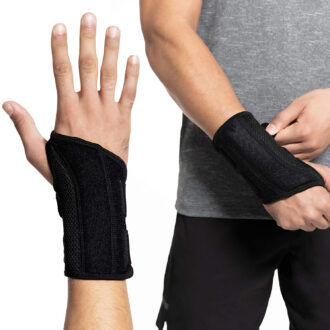
Wrist Stabilizer Hand Brace
- 1x Wrist Stabilizer Brace ideal for increasing protection, support, stability, strength and mobility of weakened and injured hands and wrists to help speed up and improve injury recovery
- For both Men & Women
- Designed to support your hand and wrist in the correct position and prevent strain and pressure from causing pain and injury
- Recommended for helping to ease, treat and prevent a wide range of hand and wrist related injuries and conditions including but not limited to Carpal Tunnel Syndrome, Repetitive strain injuries (RSI), Wrist Sprains, Fractures, Tendonitis, Gout and Osteoarthritis
- Protects your hand and wrist from shocks, pressure, impacts and abrasions allowing injured and weakened hands and wrists to make a full and proper recovery without reinjury
- Helps increase hand mobility and stability by reinforcing and improving the way in which your hand functions
- Provides effective targeted compression that will help stimulate blood flow to your hand and wrist helping speed up the natural healing process of damaged tissue, reduce inflammation and swelling and soothe aches and pains
- Made from lightweight breathable materials and features a soft padded inside and moisture wicking capabilities to help keep your hand feeling dry and comfortable even whilst wearing the brace for sustained periods of time
- Ideal for daily activities, exercise and sports use to help better protect your hand and wrists from injury
- The secure adjustable straps allow you to quickly and easily change the level of support and compression that the wrist brace provides
- Includes a full 30 day money back guarantee!
£13.99inc VAT -
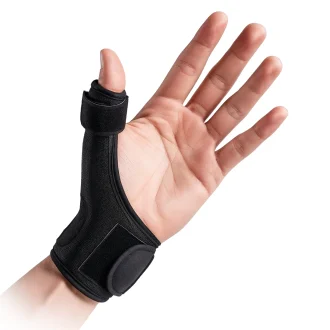
Broken Thumb Splint Support
- 1x Broken thumb splint designed to straighten immobilize and straighten your thumb to help improve and speed up injury recovery of broken thumbs
- For both Men & Women
- One size fits all
- Ideal for wearing during the P.R.I.C.E injury recovery protocol to better protect, support and compress your thumb
- Helps ease aches and pains, reduce inflammation and swelling and speeds up the natural healing process of damaged tissue by providing soothing compression that increases the supply of oxygen rich blood to your thumb
- Recommended for helping treat broken thumbs as well for treating Thumb Fractures, Sprains and Strains, Tendonitis, Carpal Tunnel Syndrome and Arthritis
- Specially designed to support, straighten and immobilize your thumb to help ensure your thumb heals correctly and is not further injured whilst you are recovering
- The ergonomic design ensures that this thumb brace is extremely lightweight to wear and it has been made from breathable moisture wicking materials that will keep your hand sweat free, dry and comfortable even whilst wearing the brace for long periods of time
- Made from breathable moisture wicking materials that keep your thumb and hand dry and sweat free whilst you wear the splint
- Includes a full 30 day money back guarantee!
£9.99inc VAT -
Thumb pain Support Brace
- A thumb and wrist support brace designed to hold the thumb steady during recovery from thumb injuries.
- Built in a thumb spica style, which wraps the thumb and wrist together so they move as a unit.
- Contains a fixed metal splint that holds the thumb in a steadier, more neutral resting position.
- Suitable for supporting the thumb during recovery from fractures, sprains, strains and other painful thumb injuries.
- May also help in some cases of thumb-base arthritis, carpal tunnel syndrome and wrist strain where steadier positioning helps.
- Elasticated straps wrap around the thumb, palm and wrist, with adjustable fastenings so you can set the level of hold.
- Gentle, even pressure from the straps helps limit the swelling that builds up around irritated tendons and joints.
- The spica design makes the combined movements that tend to aggravate thumb pain harder to perform without thinking.
- Soft padding, breathable ventilation holes and moisture-wicking materials help keep the hand comfortable, cooler and drier during longer periods of wear.
- One-size adjustable design, and the same brace fits either hand. Made to fit most adults.
- Suitable for all-day wear and for use during exercise and sport, and it can be hand-washed.
- It’s a support, not a cure, and it won’t fix the underlying cause on its own.
- Not intended for use during pregnancy.
- Speak to a GP or physiotherapist if the cause of your thumb pain is unclear, or if symptoms are new, unexplained or getting worse.
£12.99£16.99inc VAT -
Thumb Fracture Splint
- Designed to help support, stabilise, and protect the thumb and wrist during recovery from fractures, sprains, strains, and other painful thumb injuries.
- Built in a thumb spica style with a fixed metal splint to help hold the thumb in a steadier, more neutral position and reduce movement that can aggravate injured or irritated tissues.
- Provides moderate to firm support around the thumb and wrist, with the level of hold adjustable depending on how tightly the straps are secured.
- Elasticated support straps with secure Velcro fastenings wrap around the thumb, palm, and wrist for a more personalised fit and reliable day-to-day stability.
- Helps support painful gripping, pinching, lifting, twisting, and other hand movements where the thumb needs added protection.
- Suitable for use on either the left or right hand, making it a practical choice for everyday wear.
- One-size adjustable design made to fit most adults comfortably, for both men and women.
- Soft padded construction helps improve comfort around sore or sensitive areas during longer periods of wear.
- Breathable ventilation holes help improve airflow around the hand and wrist to reduce heat build-up during daily use.
- Moisture-wicking materials help keep the hand drier and more comfortable throughout the day.
- May also be helpful for supporting some cases of thumb-base arthritis, carpal tunnel syndrome, and wrist strain where steadier thumb and wrist positioning is beneficial.
- Suitable for all-day wear, exercise, sport, and hand-wash cleaning for practical everyday use.
- Includes a 30-day money-back guarantee for added peace of mind.
£12.99£16.99inc VAT -
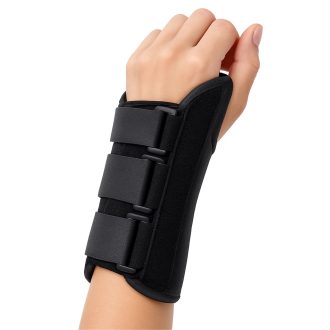
Carpal Tunnel Syndrome Wrist Splint Brace
- Firm wrist splint brace for adults with wrist and hand pain, tingling, or numbness
- Neutral‑position wrist brace for Carpal Tunnel Syndrome and other common wrist problems where a clinician advises support
- Holds the wrist straight to help reduce pressure on the median nerve in the carpal tunnel
- Three built‑in aluminium strips stabilise the palm side and both sides of the wrist and forearm
- Limits bending and twisting at the wrist that can provoke pain, pins and needles, or weakness
- Carpal tunnel wrist splint commonly recommended for night‑time use to reduce waking with “dead” or tingling hands
- Can also be worn in the day during tasks that tend to bring your symptoms on, such as typing or other repetitive hand work
- Left‑ and right‑hand specific design in three sizes for a secure, anatomical fit around the wrist and hand
- Padded, breathable materials with soft edges for comfort during longer wear
- Leaves thumb and fingers free so you can still perform many light everyday tasks
- Supports the Protection, Rest, and Compression parts of the P.R.I.C.E. approach for sprains, strains, and other wrist injuries
- Often recommended by clinicians for mild to moderate Carpal Tunnel Syndrome with night‑time or desk‑based symptoms
- Simple to fit and adjust; check comfort and skin regularly, and seek clinical advice if symptoms worsen
- Intended as a supportive aid alongside professional care, not as a diagnostic tool or complete treatment on its own
£13.99inc VAT -
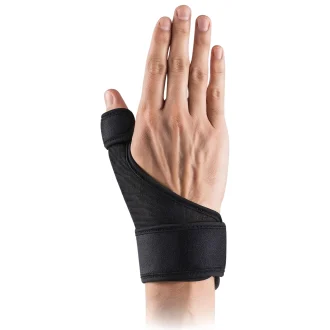
Thumb Support Spica Brace – Splint for Thumb Pain & Injury, Wrist Tendonitis and Sprains
- 1x NuovaHealth Thumb Spica Support Brace for thumb pain, injury and post‑fracture support
- Available in left or right hand versions, suitable for most adult hand sizes
- Semi‑rigid contoured metal splint steadies the base of the thumb (CMC and MCP joints) to limit painful movement and protect healing ligaments and joints
- Adjustable hook‑and‑loop straps around the wrist and thumb let you set firm, comfortable support one‑handed
- Provides targeted compression around the thumb base and thumb‑side of the wrist to help reduce swelling and ease aching from arthritis, sprains, tendon irritation and repetitive‑strain problems
- Open‑palm, free‑finger design so you can still type, use tools and carry out day‑to‑day tasks while the thumb is supported
- Slim, lightweight, padded construction with breathable, moisture‑managing fabric for comfortable wear over several hours at work, home or during light activity
- Designed to be used during the later stages of recovery after a sprain or stable fracture, once a clinician has confirmed it is safe to move from casting to lighter support
- Commonly recommended by clinicians for base‑of‑thumb arthritis, ligament sprains, De Quervain‑type tendon irritation and overuse pain around the thumb and wrist
- Backed by NuovaHealth’s 30‑day returns period, so you can try the fit and support at home and return it in original condition if it is not right for you
£9.99inc VAT