

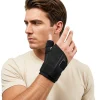
Thumb pain Support Brace
£12.99£16.99 (-24%)inc VAT
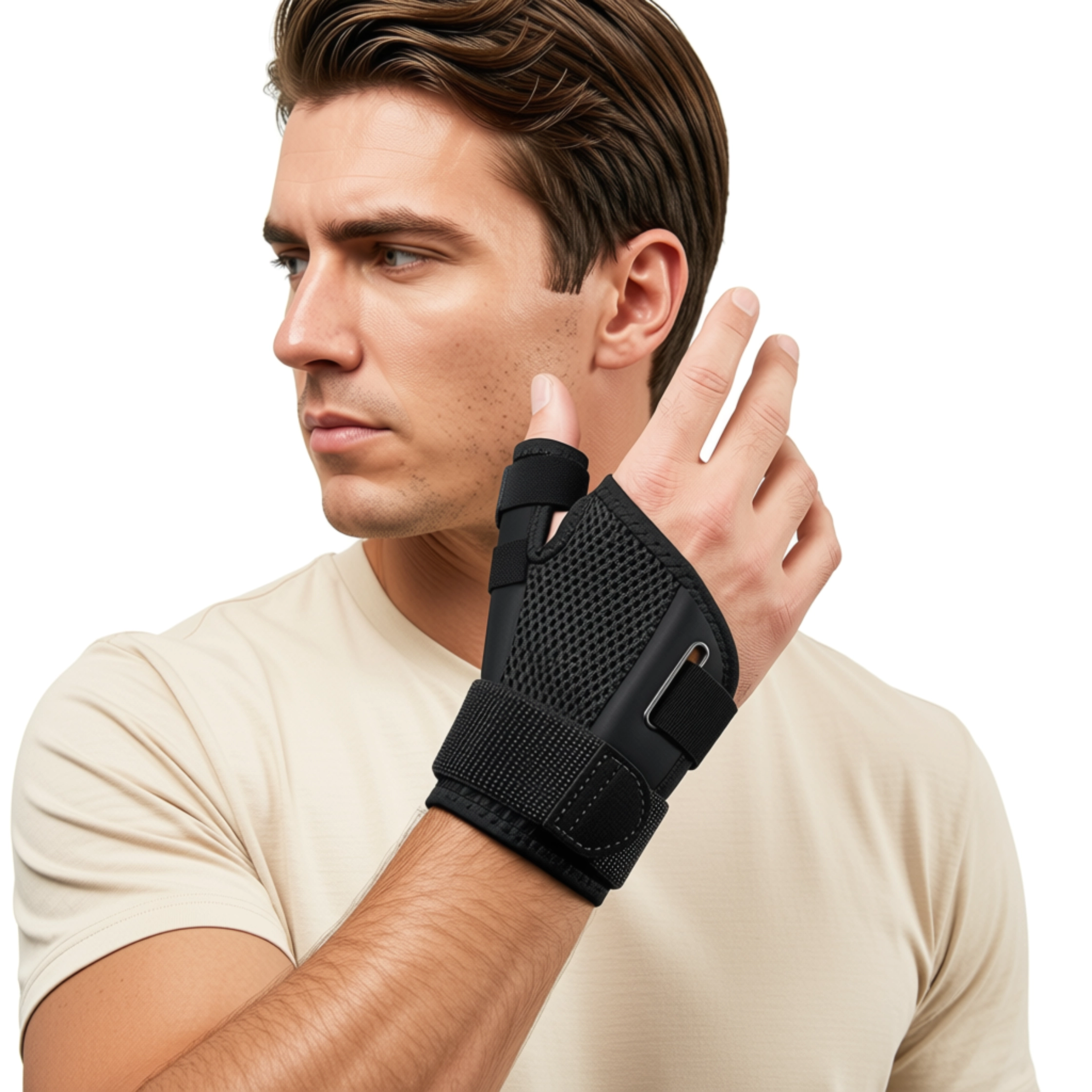
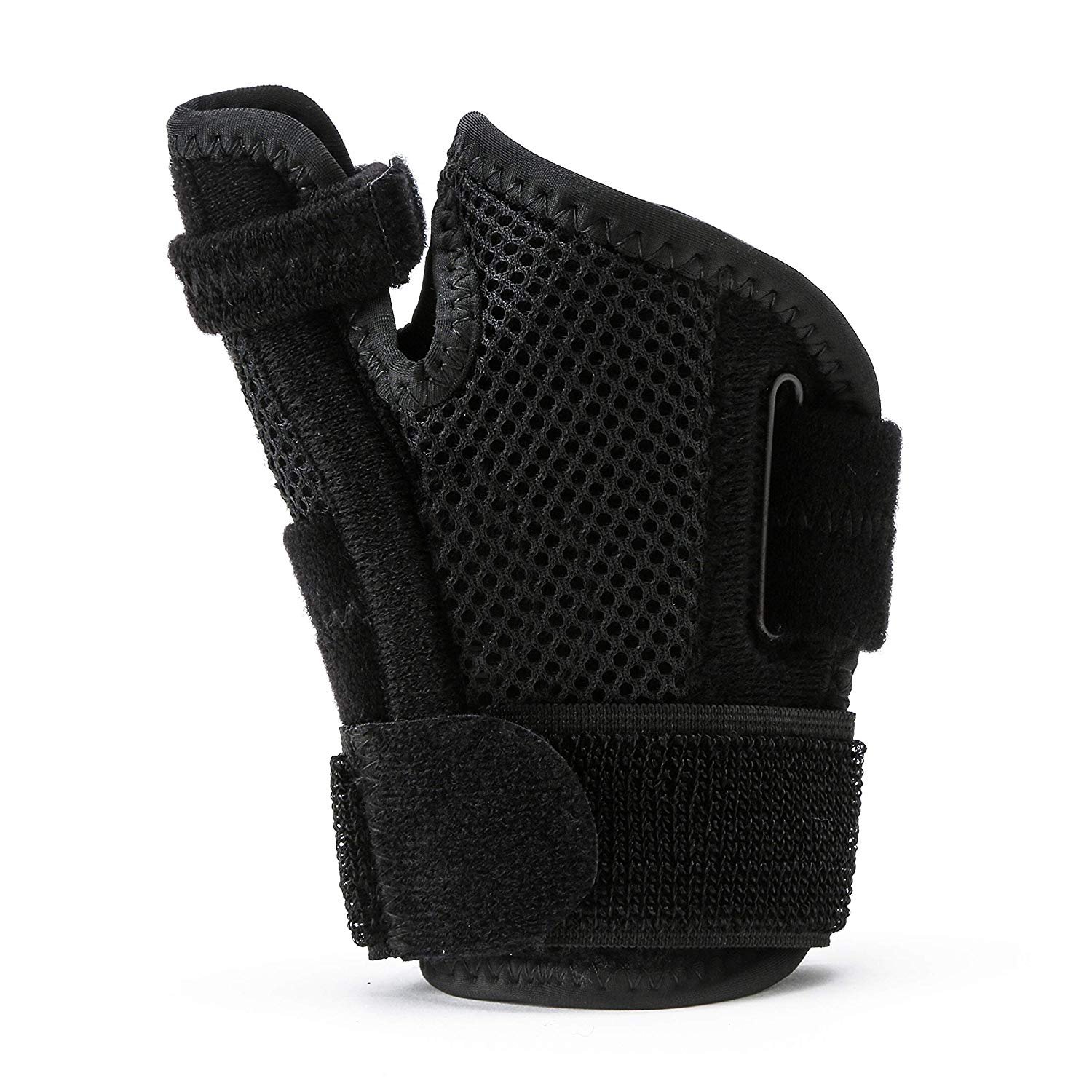
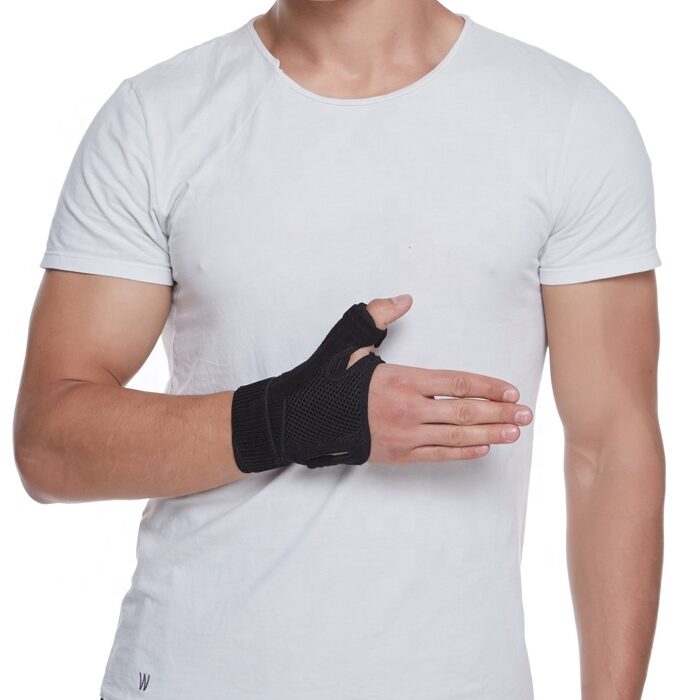
- A thumb and wrist support brace designed to hold the thumb steady during recovery from thumb injuries.
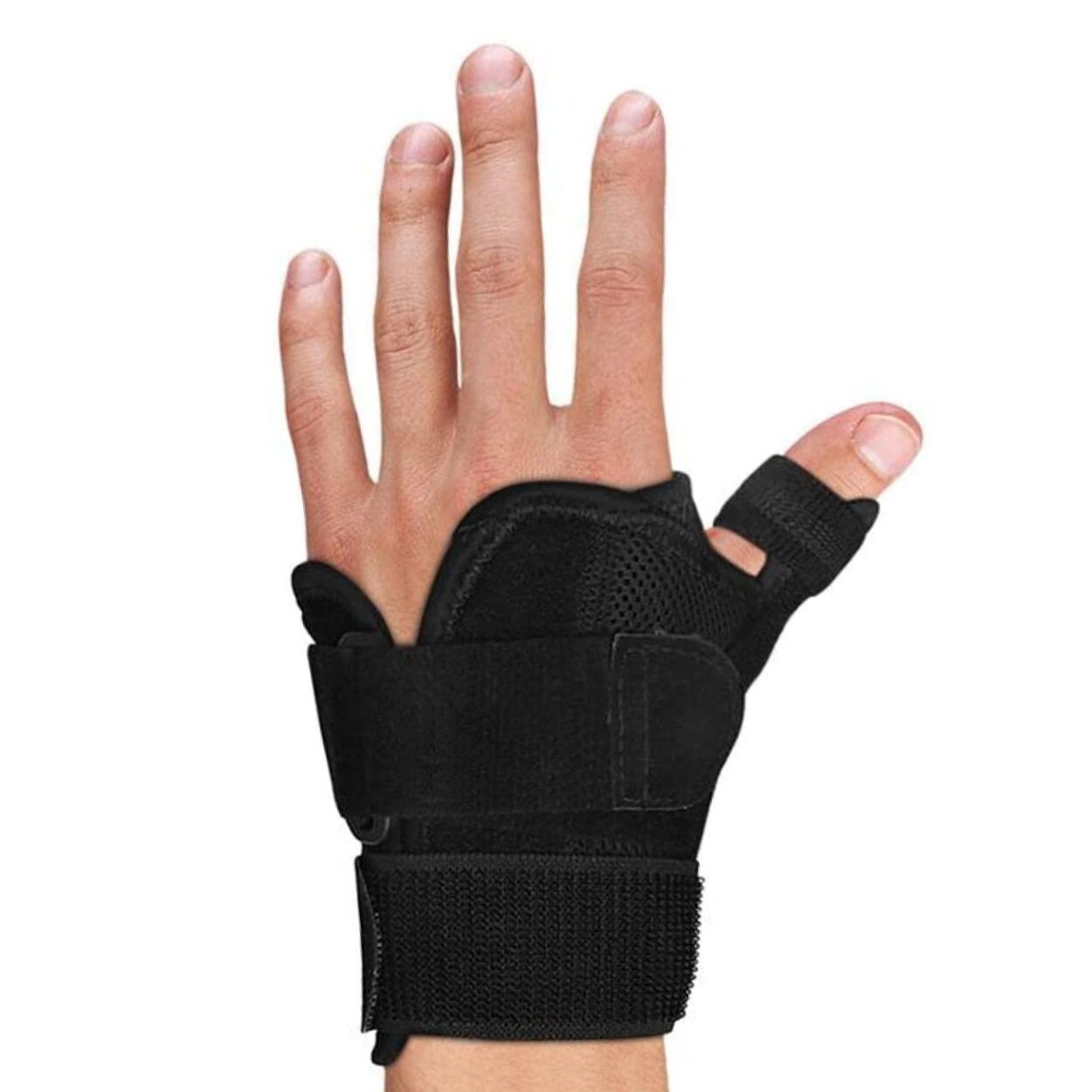
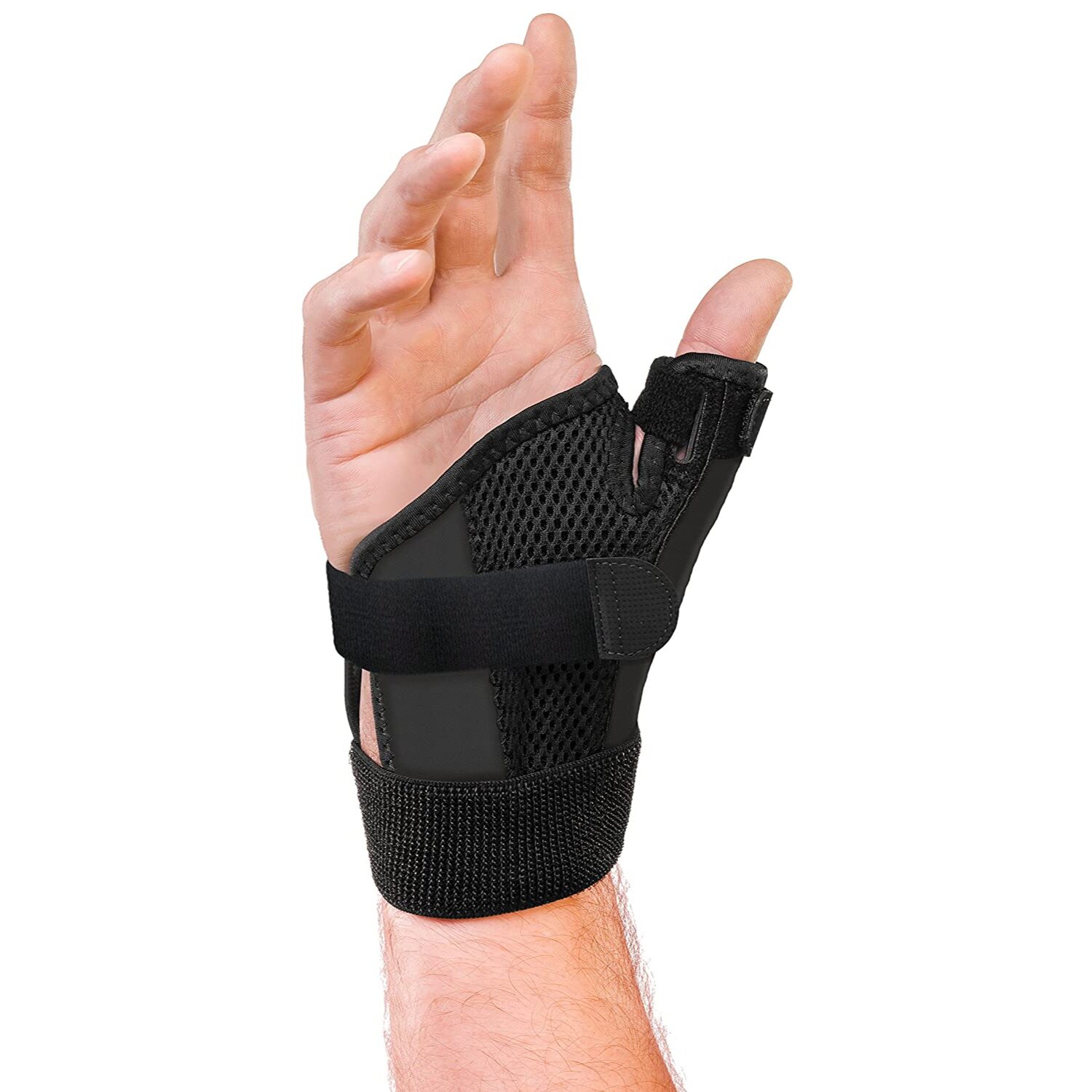
- Built in a thumb spica style, which wraps the thumb and wrist together so they move as a unit.
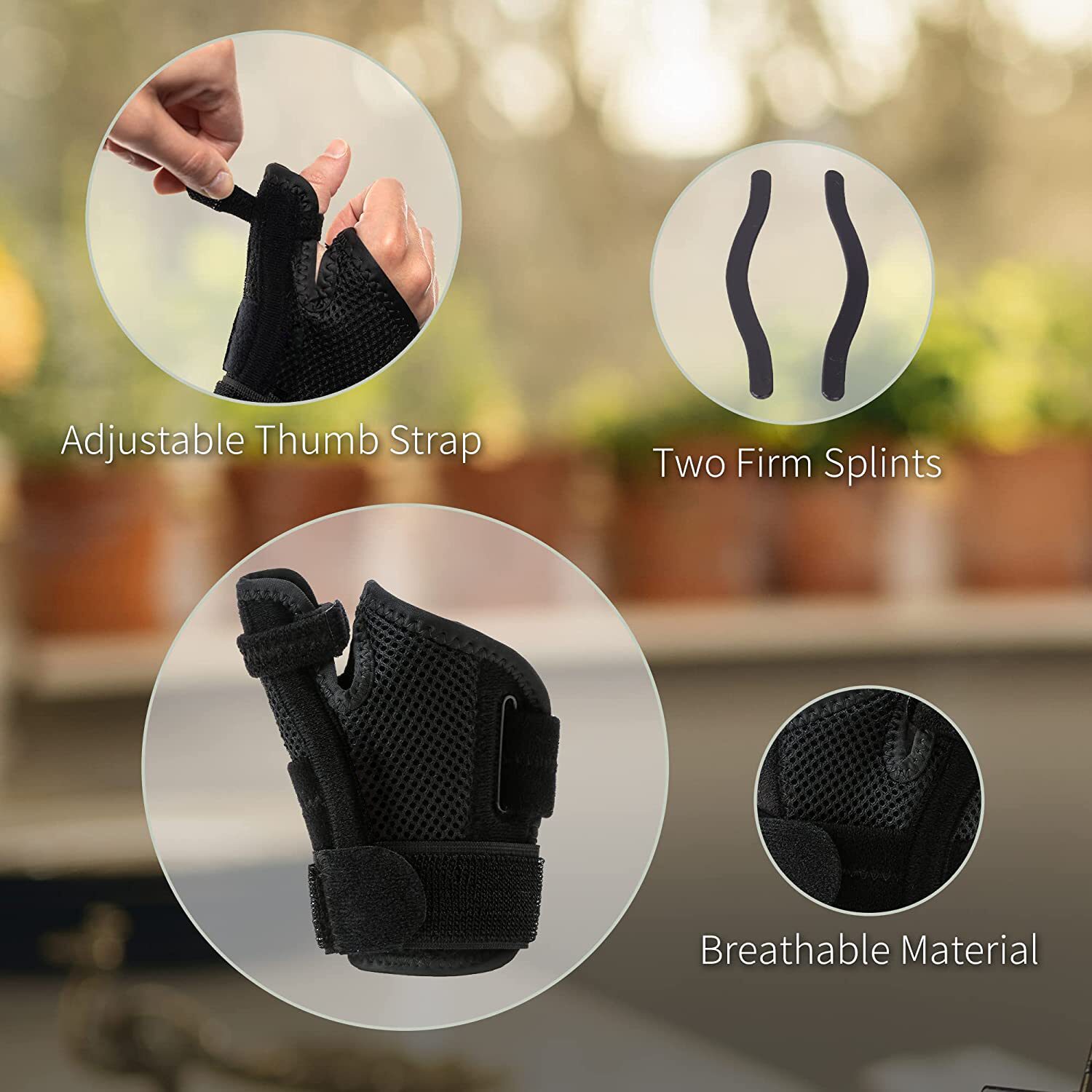
- Contains a fixed metal splint that holds the thumb in a steadier, more neutral resting position.
- Suitable for supporting the thumb during recovery from fractures, sprains, strains and other painful thumb injuries.
- May also help in some cases of thumb-base arthritis, carpal tunnel syndrome and wrist strain where steadier positioning helps.
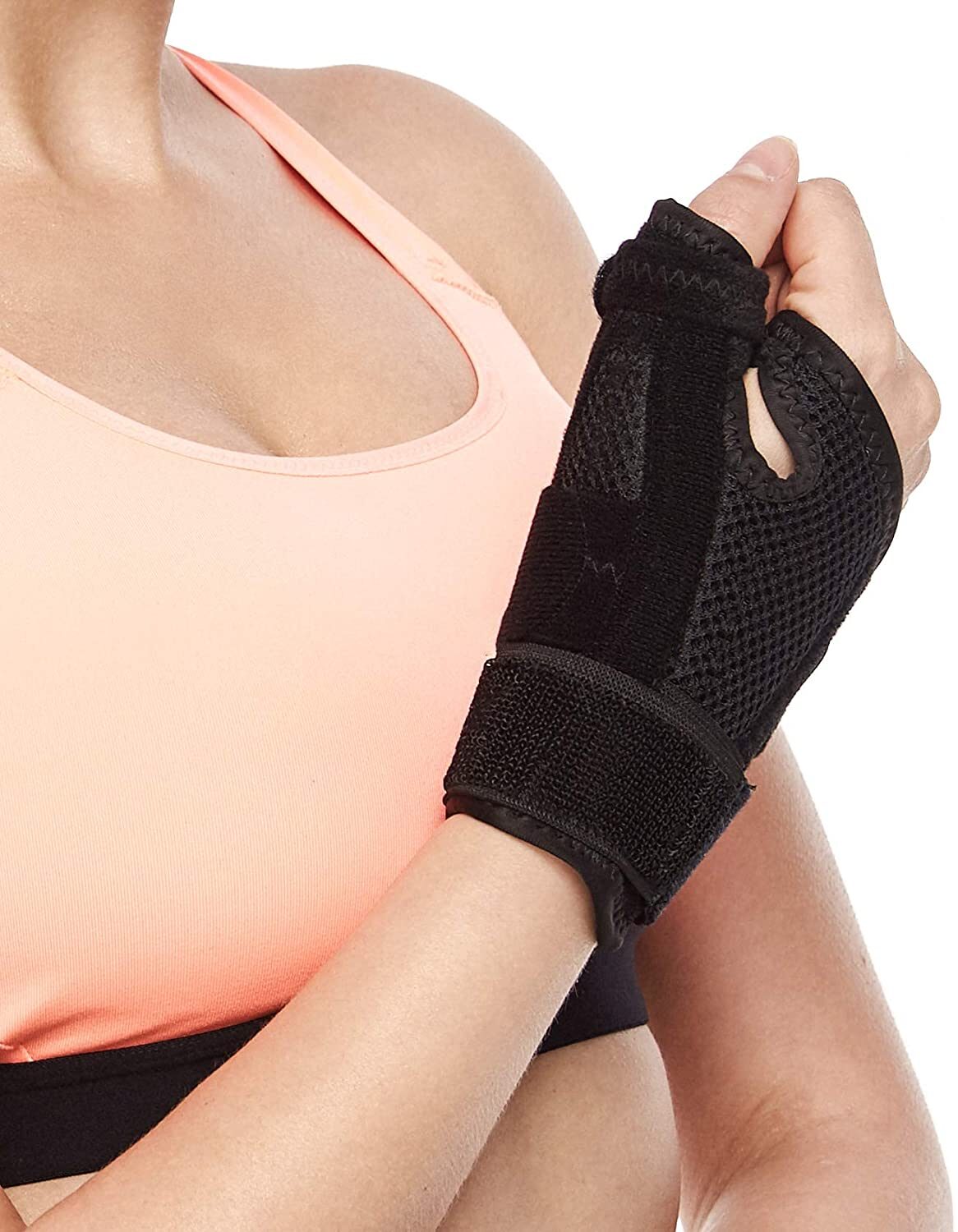
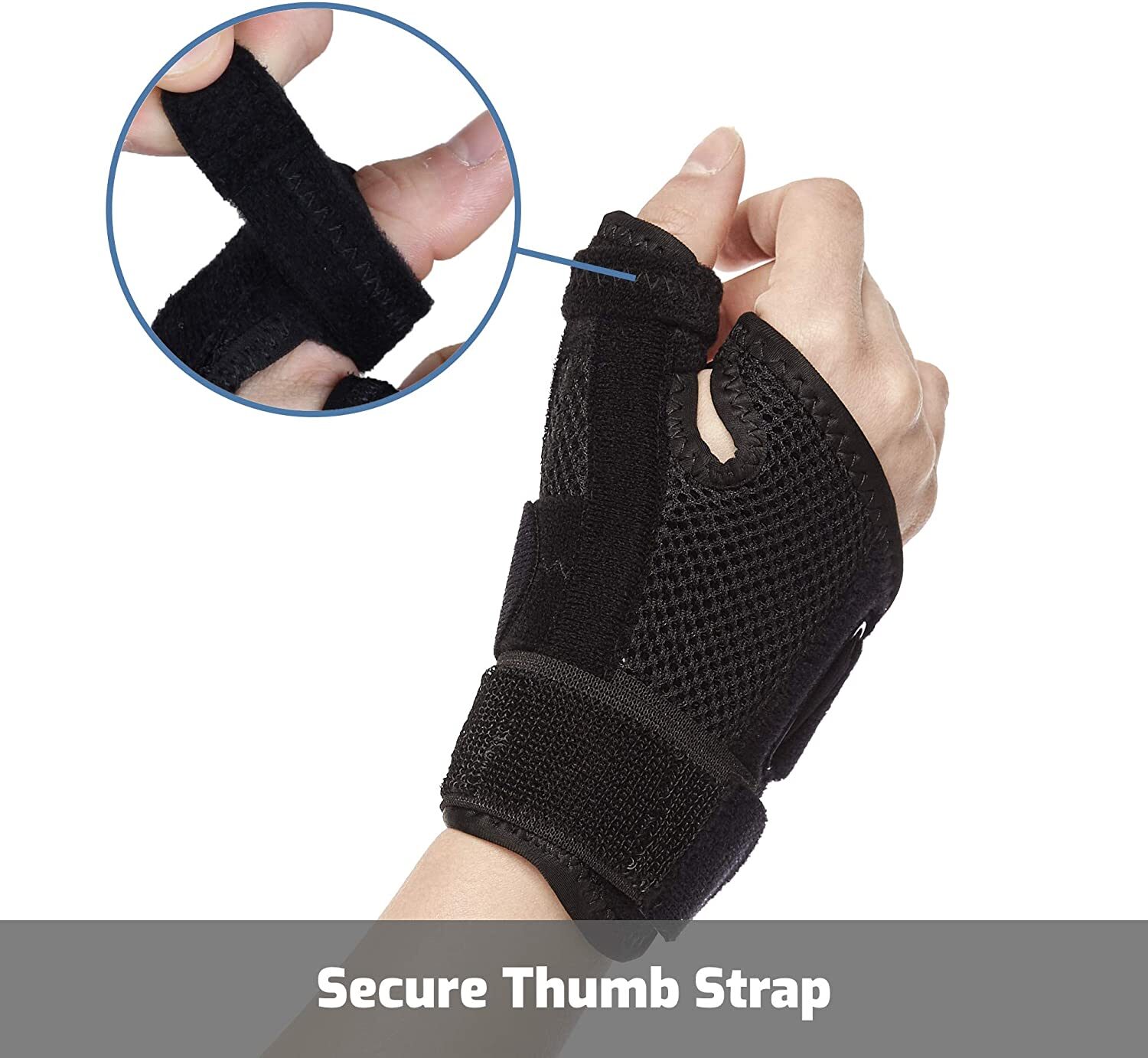
- Elasticated straps wrap around the thumb, palm and wrist, with adjustable fastenings so you can set the level of hold.
- Gentle, even pressure from the straps helps limit the swelling that builds up around irritated tendons and joints.
- The spica design makes the combined movements that tend to aggravate thumb pain harder to perform without thinking.
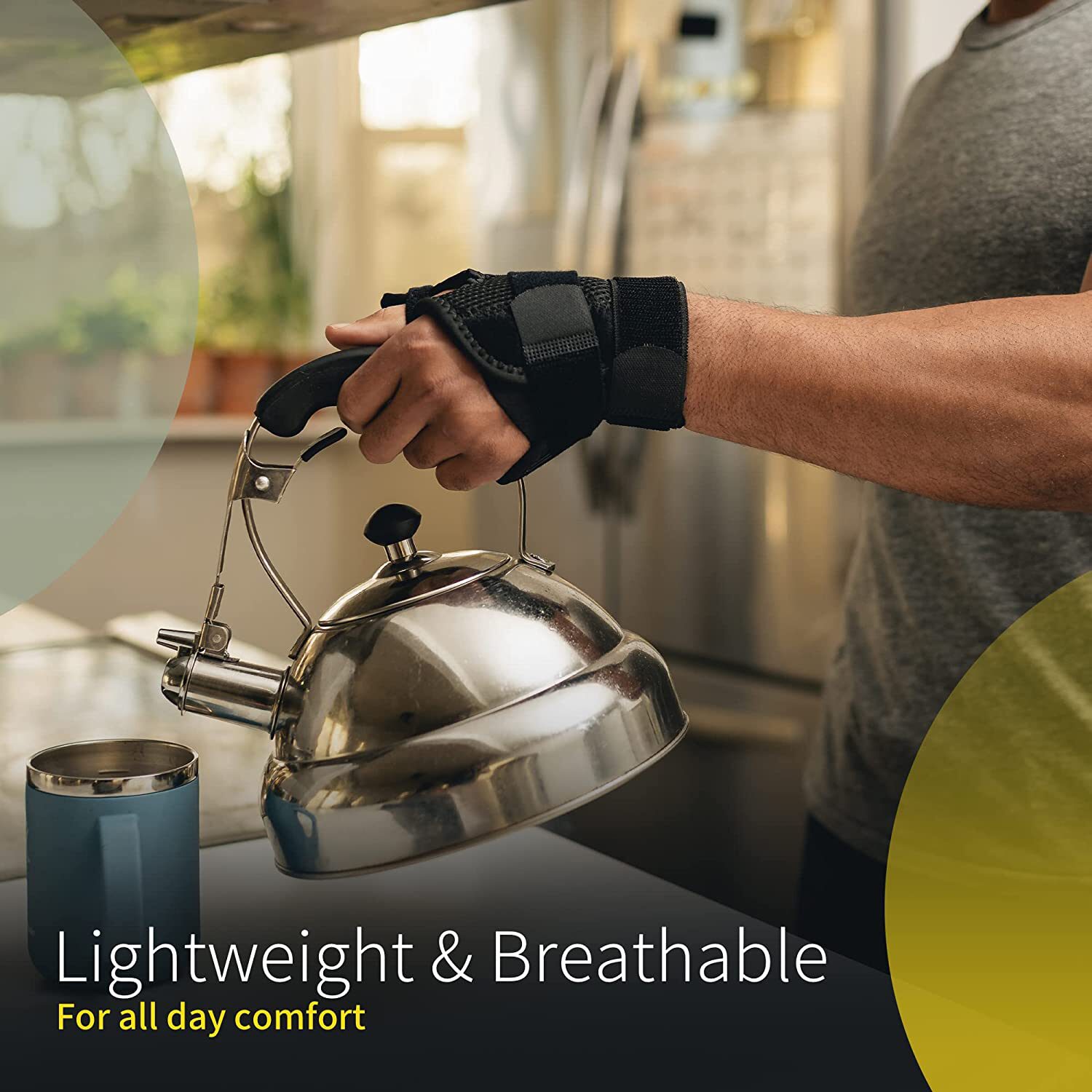
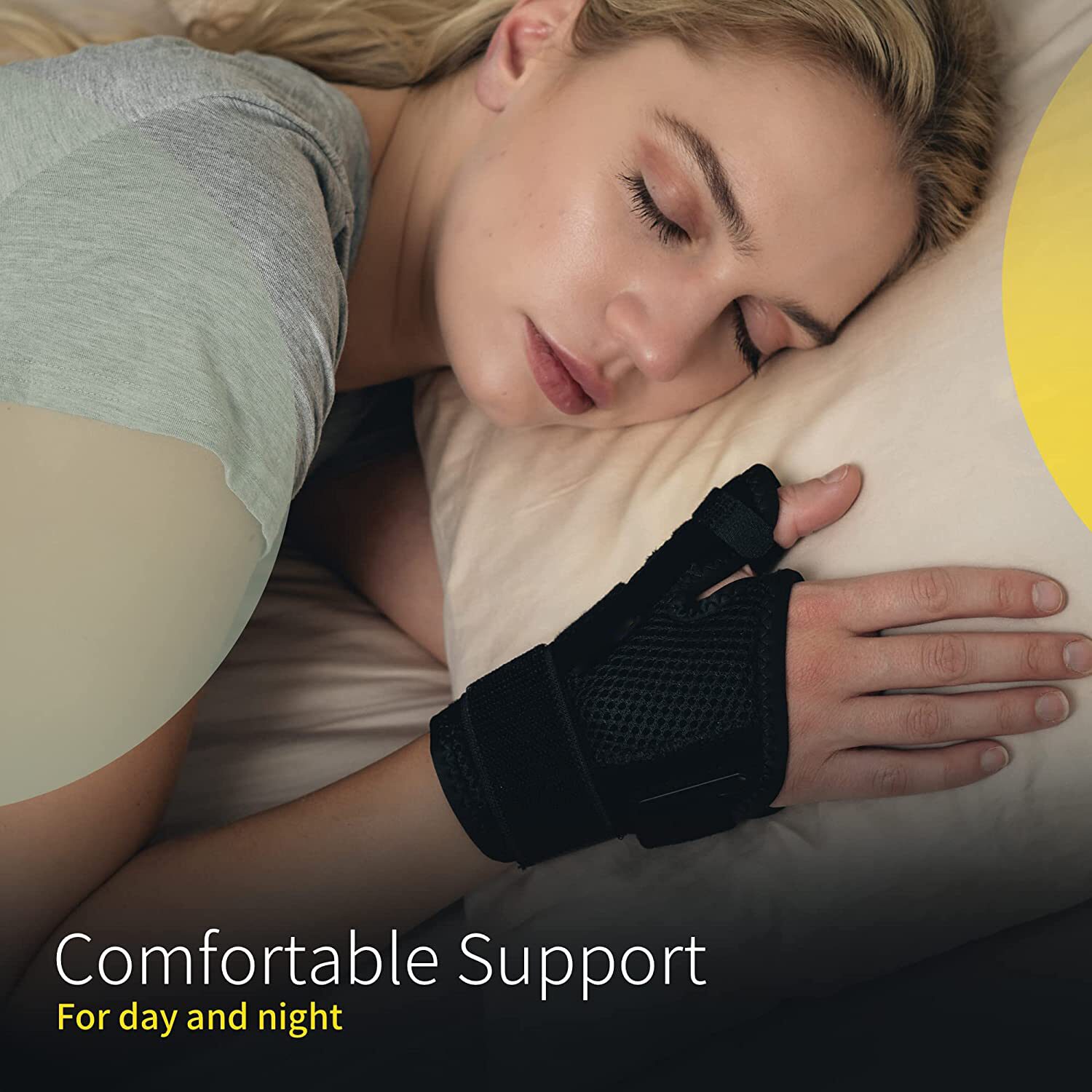
- Soft padding, breathable ventilation holes and moisture-wicking materials help keep the hand comfortable, cooler and drier during longer periods of wear.
- One-size adjustable design, and the same brace fits either hand. Made to fit most adults.
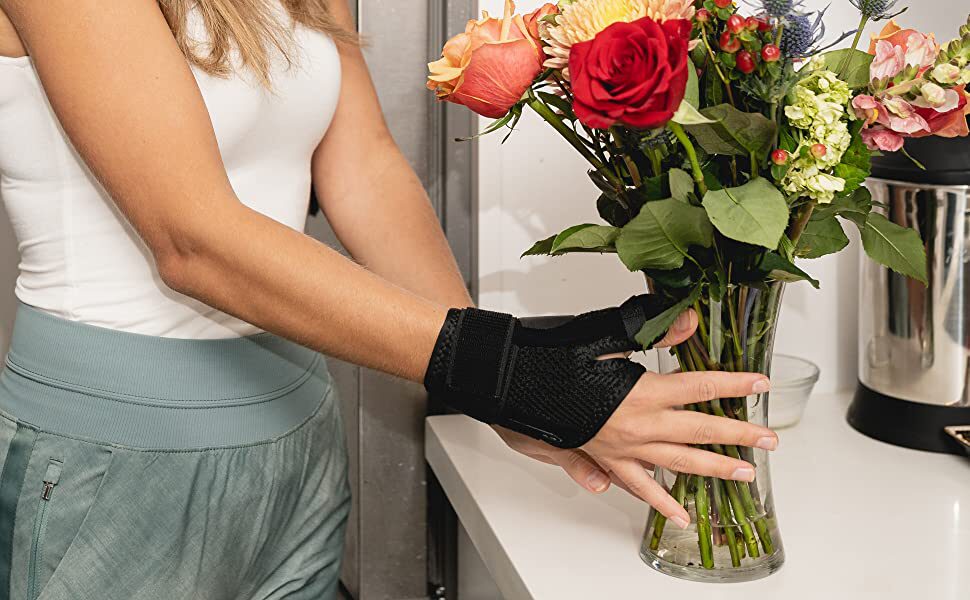
- Suitable for all-day wear and for use during exercise and sport, and it can be hand-washed.
- It’s a support, not a cure, and it won’t fix the underlying cause on its own.
- Not intended for use during pregnancy.
- Speak to a GP or physiotherapist if the cause of your thumb pain is unclear, or if symptoms are new, unexplained or getting worse.
When your thumb starts to complain
It’s rare for thumb pain to arrive all at once. More often it builds over weeks, until you notice it’s shaping your day more than you’d expect.
It often shows up first thing in the morning, when your thumb can’t grip the lid of a jar the way it used to. Later, holding a mug, when the weight seems to travel straight down into the base of your thumb. Think about a normal morning and how much your thumb does before you’ve left the kitchen. It grips the kettle handle. It pinches the teabag. It turns the key in the door lock. It holds the pen. It scrolls the phone. It lifts a shopping bag by the handle.
None of those are heavy tasks. That’s what makes thumb pain so frustrating — it interferes with the small, constant things rather than the big ones.
Because those small things happen dozens of times a day, the thumb never really gets a rest. Every grip, pinch and twist loads the same tendons and joints, so the irritated tissue keeps being asked to work, and the pain keeps coming back.
For most people it isn’t a single injury moment. A twinge becomes a niggle, then something worth planning around. You might find yourself using the other hand for the awkward jobs, or leaving certain jars in the cupboard rather than struggling with them. Both are reasonable moves in the short term, but neither does anything about the underlying problem.
Which is why it helps to understand what’s going on inside the thumb. Once you know that, the reasons a support brace helps make obvious sense — and so does knowing when to get proper advice rather than simply working around the pain.
What’s actually happening inside a painful thumb
The thumb is built for mobility rather than strength. It sits at the end of a chain of small bones, joints, tendons and ligaments, and it moves in more directions than any other part of your hand. That range is exactly why it’s so useful — and exactly why it’s so easy to irritate.
Two terms are worth knowing first, because they come up constantly.
A tendon is the tough cord that attaches a muscle to a bone. When a muscle contracts, it pulls on its tendon, and the tendon pulls the bone. In the hand and wrist, tendons run through narrow tunnels and around tight corners, gliding through lubricated sleeves called sheaths so they slide smoothly as the thumb moves.
A joint is where two bones meet, and the ends of the bones are capped with cartilage, a smooth, slippery surface that lets them move against each other without grinding. In the thumb, those surfaces take load every time you pinch or grip.
Nearly every cause of thumb pain comes down to one of two things: a tendon that isn’t gliding comfortably, or a joint that isn’t moving comfortably. Sometimes both at once. Working out which of the two is behind your pain is the most useful step, because it changes how much support you want and how you approach recovery.
Here are the patterns that come up most often.
Repetitive gripping, pinching and twisting
Most thumb pain doesn’t have a single cause. It builds from weeks, months or years of asking the thumb to grip, pinch and twist, again and again, often while the wrist is turned or bent.
Look at what your thumb does on an average day. Holding a pen. Gripping a mouse. Lifting pans. Scrolling a phone. Carrying bags by the handles. Gardening. Pushing a pram. Using tools. Playing an instrument. Crocheting or knitting. Your thumb is doing much the same work in all of them — pressing, pinching and gripping against resistance.
Tendons adapt to load — the force they’re being asked to handle — and that’s how hands get stronger. But they need recovery time between loads. When the same movement repeats faster than the tissue can recover, the tendon and its sheath become irritated. The sheath thickens, the tendon swells and its surface becomes less smooth, and gliding starts to hurt. That pattern sits behind the most common tendon-based thumb problems, though not every one of them behaves the same way.
De Quervain’s tenosynovitis
The full name sounds intimidating, so let’s take it apart. Tenosynovitis means inflammation of a tendon and its sheath — the sleeve the tendon slides through. De Quervain’s is the name given to that problem when it affects the tendons on the thumb side of your wrist. It’s named after the Swiss surgeon who first described it, which is why it carries a person’s name rather than a description.
The two tendons pass through a narrow channel where the wrist meets the thumb, and that channel doesn’t stretch much. When the tendon swells inside its sheath, there’s less room in that tight space. The tendon can still glide, but each glide is rougher than it should be. The pain is worse during movement than at rest, because the friction is only there when the tendon is being asked to slide.
You’ll usually feel it at the base of the thumb, on the wrist side, rather than in the thumb tip or the middle of the palm. The tell-tale sign is that it hurts when you grip something and turn the wrist at the same time — your thumb pulling on a full kettle, pinching a cloth as you wring it out, twisting the lid off a jar, lifting something from a worktop with a turn of the hand. Some people describe a sharp, catching pain. Others find it’s more of a burning ache that builds through the day. A few notice a creaking or grating feeling as the thumb moves, which is the swollen tendon dragging through its tightened sheath.
Mornings and the day after heavy use tend to be worst. Overnight, the tendon has been still and the sheath has had time to swell slightly. The first few movements are often the sorest, then things ease a little as you go — which can tempt you into doing more than the tendon is ready for, though you’ll feel that later on.
De Quervain’s is most common in adults whose days involve a lot of repetitive hand or wrist movement, and in people who carry, lift or hold things for long stretches. Because it’s a tendon and sheath problem rather than a joint problem, the usual aim is to reduce how often the tendon glides through the sore spot while it settles.
Trigger thumb
Trigger thumb feels distinctive enough to separate out from the tendon pain that builds from repetitive gripping. The thumb catches, clicks or locks, and that sensation is quite different from a dull, spreading ache.
Along a tendon there are small rings of tissue called pulleys, which hold the tendon close to the bone so it can’t bowstring away from the hand as the thumb bends. In trigger thumb, the tendon develops a thickened lump — a nodule — and the pulley it passes through becomes swollen and less giving. As the thumb bends, the nodule has to be pulled through the pulley. As it straightens, the nodule has to come back. If the pulley has tightened, that return journey is where things catch. Sometimes the thumb clicks or pops as it releases. Sometimes it locks in a bent position until you straighten it with your other hand.
A pattern through the day gives it away. Mornings are usually worst, because the tendon and pulley have been still overnight and the nodule can’t slip through as smoothly at first. Things often ease as the day goes on. Then after a spell of heavy gripping — or after a long stretch where the hand hasn’t moved much — the catching can return. That stop-start behaviour is one of the clearest signs you’re dealing with a trigger thumb rather than a simple strain.
Because the problem sits at the point where the tendon passes through the pulley, bending the thumb fully less often helps. Every full bend asks the nodule to pass through the tightened pulley, so fewer full bends means fewer chances for a catch.
Osteoarthritis at the base of the thumb
A different mechanism altogether. Where tendon problems are about gliding, osteoarthritis is about the joint surface itself.
At the base of the thumb, where the thumb bone meets the small bones of the wrist, there’s a saddle-shaped joint that lets the thumb move in a circle. It takes load every time you pinch, grip or push with the thumb. Over the years, the cartilage lining it gradually thins and roughens for many adults. That’s osteoarthritis — wear at the joint surface, rather than inflammation of a tendon.
The pain is usually deep and aching, right at the base of the thumb, and often described as being inside the joint rather than on the surface. Pinching movements bring it on most reliably — opening a jar, turning a key, holding a pen, gripping a pan by the handle. Some people also notice a grating or grinding feeling when they move the thumb across the palm, which is the roughened surfaces moving against each other. After a period of rest, the joint tends to feel stiff. Later in the day, once it’s been used, it tends to ache again.
Osteoarthritis fluctuates. There are better weeks and worse ones, and the worse ones usually follow a stretch of doing more. It’s a long-term condition rather than something that settles on its own, so how much you ask of the base joint day to day tends to matter more than any single flare-up.
Fractures, sprains and strains
Not all thumb pain builds slowly. Some of it arrives with an event, and these three injuries can feel quite different from one another.
A fracture is a break in the bone. A sprain is an injury to a ligament — the tough band that connects one bone to another and keeps a joint stable. A strain is an injury to a muscle or tendon.
Where it happened matters. Thumb injuries often follow a fall onto an outstretched hand, a direct knock, or a sports collision, and the pattern of damage tends to follow the direction the thumb was pushed. A sprain usually hurts most when the thumb is moved in the direction it was injured, and it tends to settle over a few weeks if the tissue is protected in the early days. A fracture is usually more painful and more swollen, and often comes with reduced grip strength. A strain tends to show up after a specific activity rather than from a single moment, and it usually flares when the muscle or tendon is used again rather than at rest.
Because the thumb is involved in so much, even a small injury becomes a real disruption. What the tissue needs in the early days — protection, and time without being stretched or loaded — is a different job from simply easing an overuse ache. It’s worth being clear about which situation you’re in before deciding how much support you want.
Carpal tunnel syndrome
Carpal tunnel syndrome is a nerve problem, not a tendon or joint problem, and it behaves differently enough to keep separate in your mind.
At the front of the wrist there’s a narrow passage called the carpal tunnel, formed by a curved arch of small wrist bones with a tough band stretched across the top. Through that tight space run the tendons that bend your fingers, along with the median nerve — a major nerve that supplies sensation to the thumb, index finger, middle finger and part of the ring finger, and controls some of the muscles at the base of the thumb.
When the contents of that tunnel swell, or the tunnel itself narrows, the median nerve gets squeezed. Because the nerve supplies the thumb, that pressure can show up as thumb pain alongside the symptoms the condition is known for — numbness or tingling in the thumb and fingers, sometimes with a burning or electric quality, and often worse at night when the hand has been in one position for a while. Waking up needing to shake the hand out is a common sign that the nerve is involved rather than just the tendons.
Because it’s a nerve issue rather than a simple strain, it’s worth having properly assessed rather than assumed. Steadier positioning of the wrist and thumb can reduce how often the hand sits in the most compressed positions, though a support is not a treatment for the nerve itself.
Other underlying conditions
A few other conditions can produce thumb pain. They’re worth mentioning briefly so you know they exist, without going into detail that belongs with a clinician rather than a product page.
Rheumatoid arthritis is an inflammatory joint condition that affects the small joints of the hands among others. Gout is caused by crystals forming inside a joint, producing pain and swelling. And infection in a joint or the soft tissue around the thumb is uncommon but serious.
These sit in a different category from the mechanical and wear-related problems above. They need proper medical assessment rather than self-management, and a support brace is not the answer on its own.
Where this leaves you
Across all of those problems, the same underlying theme keeps showing up. Tendons that are being overloaded. Joints that are being worn or irritated. Nerves that are being compressed. Injuries that need protecting while they heal.
They’re different problems, and they don’t all want the same approach. But there’s one thing they share. They all get worse when the irritated structure keeps being asked to work, and they all tend to settle better when that load is reduced for a while.
That single idea is the reason a thumb support exists at all.
Why a thumb support helps
Getting a proper rest for a thumb is close to impossible. You can rest a knee by sitting down. You can rest a shoulder by keeping your arm still. But your thumb is involved in almost everything you do, and meals still need cooking, cars still need driving, buttons still need doing up. The tasks that load it still have to happen.
So the question isn’t really whether to rest the thumb. It’s how to reduce the load enough to let the irritated tissue settle, while still getting on with your day. That’s the gap a thumb support is designed to fill.
Three things happen when you wear one, and each works on a slightly different part of the problem.
First, it limits movement. For tendons — the cords that glide through their sheaths — movement itself is what causes the irritation. Every time the tendon slides through a swollen sheath, or the nodule on a trigger thumb has to pass through a tightened pulley, it’s being asked to do the very thing that’s irritating it. Joints work differently. There, the pain comes from load through the worn surface, and the ends of the movement — bending the thumb as far as it will go, or stretching it fully away from the palm — tend to be the sorest places. A support that keeps the thumb in a steadier mid-range position (roughly the middle of its movement, rather than at either end) reduces how often either problem gets aggravated. Fewer aggravations mean more time for the tissue to settle.
Second, it provides compression. Gentle, even pressure around the thumb and wrist helps limit the swelling that builds up around irritated tendons and joints. Less swelling means less pressure inside the tissue, which in turn means less pain and less restriction. Compression also gives the area a sense of being held. A hand that feels unsupported is often used guardedly and awkwardly. A hand that feels held is often used more naturally.
Third, it protects. If you’ve had a fracture, a sprain or a strain, the injured structure needs time without being stretched or loaded. A support provides a physical barrier between your thumb and the things it would otherwise be asked to do. That protection matters most in the early days, when the tissue is at its most vulnerable, and less as things settle.
Protection is where the P.R.I.C.E. principle comes in. P.R.I.C.E. stands for Protection, Rest, Ice, Compression and Elevation, and it’s a widely used early approach to soft tissue injuries. The “P” — protection — is the part a support brace contributes to. It’s not a treatment in itself. It’s a way of shielding the area while the tissue repairs itself.
One thing to be clear about: a support reduces load, but it doesn’t remove the underlying problem. If your issue is osteoarthritis, the joint is still arthritic. If it’s a tendon problem, the tendon still needs time, and a gradual return to activity rather than a sudden jump back into it. What a brace does is reduce the load enough for recovery to make progress. That’s why it works best alongside professional advice about the root cause, not instead of it.
How the Thumb Pain Support Brace is designed to help
Here’s how this particular brace is built, and what each part is doing.
A thumb spica design with a fixed metal splint
The brace is built in a thumb spica style. “Spica” describes a wrap that crosses diagonally over a body part. In practice, a thumb spica wraps around the thumb and across the wrist, so the two are held together as a unit rather than moving independently.
The spica shaping does more than hold the wrap in place. A lot of thumb pain is brought on by combined movements — gripping while the wrist rotates, or pinching while the hand tilts. Those are the exact movements that load the tendon sheaths at the thumb side of the wrist, stress the base joint of the thumb, and ask a trigger thumb to pass its nodule back through the pulley. Holding the thumb and wrist in a steadier relationship makes those combined movements harder to perform without thinking, so the tissue is aggravated less often across the day.
Inside the brace is a fixed metal splint. Fixed means it isn’t something you bend or reshape — it’s set in place as part of the brace’s structure. The splint runs along the thumb in the spica position and holds the thumb in a steadier, more neutral position.
Neutral means the thumb’s natural resting alignment, rather than bent towards the palm or stretched away from it. It’s the position where the tendon sheaths at the wrist are under the least tension, and where the base joint of the thumb sits closest to its mid-range. Holding the thumb there reduces the movement that aggravates injured or irritated tissue, and it gives the area a consistent position to settle in rather than being nudged in and out of alignment all day.
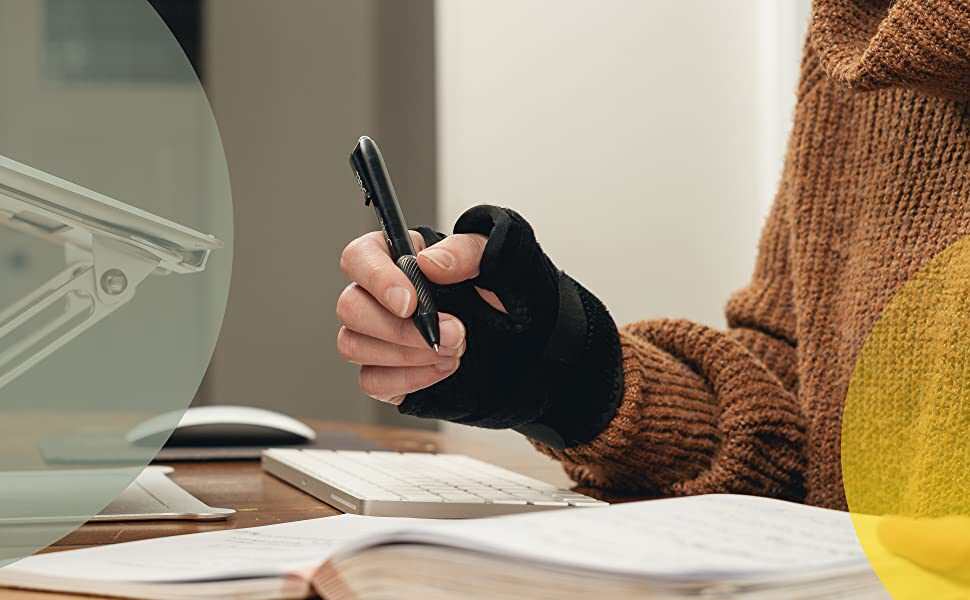
For fractures, sprains and strains, that steadiness is the point. For tendon and joint problems, it’s the reduction in repeated movement that helps. If you’re at a keyboard, or doing something with your hands for a spell, the splint keeps your thumb from drifting into the bent, gripping position that tends to be most irritating. That means the tissue isn’t being asked to work from an aggravated starting point every time you reach for something.
Adjustable straps for a personalised level of support
The brace uses elasticated support straps with secure fastenings that wrap around the thumb, the palm and the wrist. Because they’re adjustable, the level of hold is adjustable too, from moderate to firm depending on how firmly you secure them.
The adjustability gives you control over how much support your thumb gets, and different problems want different amounts. A freshly sprained thumb needs a firmer hold so the injured tissue isn’t stretched or loaded while it’s settling. An arthritic thumb that stiffens badly often feels better with a lighter hold that still gives support but allows some movement, since too much restriction can leave the joint feeling stiffer rather than easier. A trigger thumb tends to do well with a moderate, consistent hold, because it stops the thumb from drifting into the full bend that makes it catch.
The strap arrangement also spreads the load. Because the straps cross the thumb, palm and wrist rather than sitting in one place, the pressure is spread over a wider area. That makes the brace much less likely to dig into a single sore point, and much more likely to stay in place during repetitive movement — gripping, twisting, lifting — where a poorly positioned support would shift or loosen.
Suitable for either hand
The same brace fits the left or right hand, so there’s nothing to swap or adjust between sides.
Thumb pain doesn’t always stay on one side. In De Quervain’s, tendon irritation in one wrist is often mirrored over time in the other, because the unaffected hand naturally takes on more of the load. The same is true after a fracture or sprain — the other hand works harder, and it can start to feel sore too. A brace that fits either hand means you’re not locked into one side, and you can move it across if the other thumb starts to feel the extra work.
One size, adjustable for most adults
This is a one-size adjustable design, made to fit most adults comfortably, for both men and women. The adjustment comes from the straps, which let you set the fit to your own hand rather than relying on a fixed size.
One realistic caveat: one-size adjustable means it fits most adult hands, not every adult hand. If your hands sit at the extremes of size, there’s a chance the fit won’t be ideal. It’s designed as an adult product.
Padding, airflow and moisture management
The brace is softly padded, which helps with comfort around sore or sensitive areas during longer periods of wear. A support that presses uncomfortably on a tender spot gets taken off, and one that’s taken off isn’t doing anything. For most people, the padding is what makes the difference between a brace they can wear through a working day and one they take off by mid-morning.
Breathable ventilation holes help improve airflow around the hand and wrist, reducing heat build-up. The materials are moisture-wicking — meaning they help move moisture away from the skin rather than trapping it — which helps keep the hand drier and more comfortable. Both features affect how long you can comfortably wear the brace, and that in turn affects how much benefit you get from it. A brace that traps heat and moisture is one you’ll want off within an hour. A brace that stays cool and dry is one you can keep on through the tasks that would otherwise be loading your thumb.
All-day wear and everyday use
The brace is suitable for all-day wear, and it can also be worn during exercise and sport. Even with the splint in place, it’s lightweight and not bulky, so it doesn’t get in the way of normal hand movement more than it needs to. It can be hand-washed.
To be clear about the scope: this brace is designed to help support, stabilise and protect the thumb and wrist during recovery from fractures, sprains, strains and other painful thumb injuries. It may also help with some cases of thumb-base arthritis, carpal tunnel syndrome and wrist strain, where steadier thumb and wrist positioning is useful. Those are the conditions it’s built around. It’s a support, not a cure. It’s designed as an adult product and it isn’t intended for use during pregnancy.
Fitting it, wearing it, and looking after it
Getting the fit right is the difference between a brace that helps and one that ends up unused.
Getting it on
Start with your hand relaxed and your thumb in its natural resting position — not bent towards the palm, not stretched outwards. If it helps, rest your hand palm-up on a table for a moment and let the thumb settle where it wants to be. That’s the neutral position you’re aiming to hold.
Slide the brace onto the affected hand and bring the straps around the thumb, the palm and the wrist. Secure the fastenings so the brace is held close to the hand but not pulled tight. Work through the straps in order, adjusting as you go, rather than doing one up tightly and then trying to correct it with the others. The aim is an even hold across the whole wrap.
Take a moment at the end to check that the metal splint is positioned along the thumb where it should be, and that no strap is twisted or digging in.
How tight it should feel
The brace should feel firm and supportive, but your fingers should still feel warm, and you should be able to move them freely. Nothing should feel pinched.
If anything feels uncomfortable in a way that isn’t just unfamiliar, undo the straps and refit a little more loosely. This isn’t a brace you should have to grit your teeth through.
Hands change size during the day. Swelling tends to be worse in the morning and after activity, and better once the hand has been elevated. A fit that’s comfortable at 8am might feel tighter by late afternoon, so it’s worth adjusting the straps as the day goes on. That’s what the adjustable straps are for.
When to wear it
What this looks like in practice depends on why you’re wearing the brace and what you’re doing.
During a recovery period, wearing it for the demanding parts of your day makes sense — the tasks that involve gripping, pinching, lifting or twisting. For a painful thumb, that’s most of the day.
During exercise, the support helps protect the thumb while it’s under load. If you’re returning to a sport after a thumb injury, a supportive brace through that transition period is a reasonable approach.
One practical point about over-reliance: a support is there to help you do what you need to do, not to allow you to keep loading an irritated thumb without consequence. If you notice the pain is consistently worse after a particular activity, that activity is giving you useful information, whether or not you’re wearing a brace.
Checking your skin
Take the brace off at least once a day and look at the skin underneath it. It should look normal — no marks that persist after you’ve taken the brace off, no sore patches, no broken skin. Every person’s skin responds differently to pressure and warmth, so it’s worth checking rather than assuming.
If the skin does become sore or irritated, leave the brace off for a while and let it settle before wearing it again, and refit it more loosely next time.
Cleaning and care
The brace can be hand-washed. Use cool or lukewarm water with a mild soap, rinse it well, and let it air dry completely before wearing it again. Don’t wring it out, don’t put it through a hot wash, and don’t put it in a tumble dryer — heat can affect the elasticity of the straps and the shape of the support.
A gentle clean once a week, or more often if you’re wearing it during sport, is a sensible routine. Letting it dry properly between wears helps keep the materials in good shape and the hand comfortable.
How long will it last?
With reasonable care, a support like this should hold up through a normal recovery period and beyond. The straps tend to wear out first, because elastic and fastenings both lose their edge over time. If you notice the strap tension isn’t holding the way it used to, or the fastenings aren’t gripping properly, it’s time for a replacement. A loose brace isn’t providing the support you’re relying on.
What to expect
This is the part most people want to know.
In the first few days
Expect the brace to feel noticeable. It’s holding your thumb and wrist in a position they’re not used to, and the straps are new. Most people find that settles within a day or two of wear.
Don’t expect the pain to disappear overnight. What you’re more likely to notice is that the sharp pain during difficult tasks becomes less frequent, or that you can do a task without flinching. That’s the reduction in aggravating movement showing up in real life.
Your hand may also feel tired more easily at first, because the muscles are working around a support rather than freely. That’s normal and usually eases.
Over the first couple of weeks
With consistent wear, the change is usually gradual. Fewer sudden twinges during gripping and pinching. Less soreness the morning after a demanding day. A general sense that the thumb is being supported rather than constantly tested.
Recovery is rarely a straight line. There are better days and worse ones, and the worse ones usually follow a day of doing more than usual. That’s not the brace failing. It’s a sign that the tissue hasn’t yet built up tolerance for what that day asked of it.
Over the longer term
What happens next depends on what’s causing your pain.
For a soft tissue injury, supports are usually used through the recovery period and then gradually reduced as the thumb takes on more load on its own. The aim is to need it less, not to wear it forever.
For a long-term condition like osteoarthritis, the picture is different. The joint isn’t going to stop being arthritic. In that case, a brace is often a tool you use when you need it — during flare-ups, on demanding days, or for particular tasks you know cause trouble. Some people wear it daily; some keep it for specific situations. Both are reasonable.
What it won’t do
It won’t fix the underlying cause, and it won’t make an irritated tendon or a worn joint recover on its own. It won’t replace a proper assessment of why you’re in pain in the first place. And it won’t work if it’s too loose to support anything, or so tight that you don’t want to wear it.
The braces that help most are the ones that fit well, get worn consistently when they’re needed, and are used alongside cutting back on the tasks that ask the most of your thumb, and, where appropriate, professional guidance. That’s a modest claim, but an accurate one.
When to get advice
If your pain is persistent or keeps coming back, it’s worth seeking medical advice promptly rather than waiting for it to pass on its own. A brace can ease the load on irritated tissue, but it can’t address why that tissue is irritated in the first place. So it’s worth having the root cause looked at by your GP, a physiotherapist or another appropriate clinician. A support is part of the solution, not the whole of it.
It’s also worth taking thumb pain seriously rather than working around it. Pain here is usually a sign that something is being asked to do more than it comfortably can, and ignoring that tends to lead to a longer, more frustrating recovery than dealing with it early. Getting the right advice early is one of the most useful things you can do.
If you notice new or unexplained symptoms that don’t settle, or if your pain is getting worse rather than better, it’s sensible to speak to a GP or physiotherapist rather than continuing to manage it yourself.
A practical next step
Thumb pain tends to persist. It makes ordinary tasks feel effortful, and it’s common for people to gradually start avoiding the tasks that trigger it.
Understanding what’s going on is the first step. If your pain comes from tendons being overloaded, a worn joint being asked to do more than it comfortably can, or an injury that needs protecting while it heals, then reducing the load on that tissue is a sensible part of managing it. That’s what this support is designed to do.
The Thumb Pain Support Brace is built around that idea — a thumb spica design with a fixed metal splint to hold the thumb in a steadier, more neutral position, elasticated straps with adjustable fastenings so you can set the level of hold to what your thumb needs, and soft padding with breathable, moisture-wicking materials for comfort through the day. It’s one size adjustable, fits either hand, and it’s fine for all-day wear, exercise and sport.
It comes with a full 30-day money-back guarantee.
And alongside it, the most important step: get your thumb looked at properly. A support works best when it’s part of a plan, not a substitute for one.
Disclaimer
The information on this page is general guidance. It isn’t a substitute for individual medical advice, diagnosis or treatment. If you’re unsure about your symptoms, or if they’re new, unexplained or getting worse, it’s sensible to speak to a GP or physiotherapist for personalised advice. No specific outcomes are guaranteed.
Fast & Secure Checkout Through Paypal
Pay with Paypal the secure payment gateway that accepts all credit and debit cards. Paypal is free and secure and no credit or bank information is ever stored or shared with us.
Fast Dispatch
Enjoy your items soon with quick dispatch via Royal Mail. Expect to have your items between 1-3 working days for domestic orders. 7-10 Working days for international orders.
Return Policy – 30 Day Money Back Guarantee
In the unlikely event, you are unhappy with your purchase you can return it within 30 days for a refund. Please contact us via the form on the contact us page to start your return.
To return an item please send it to: Nuova Health UK, 81 Highfield Lane, Waverley, Rotherham, S60 8AL. Please include a note with your order id so we know who to refund. Please retain your postage receipt as proof of postage. All that we ask is that the item is in the original packaging and unused.
Reviews
There are no reviews yet.