






Wrist Splint
£13.99inc VAT
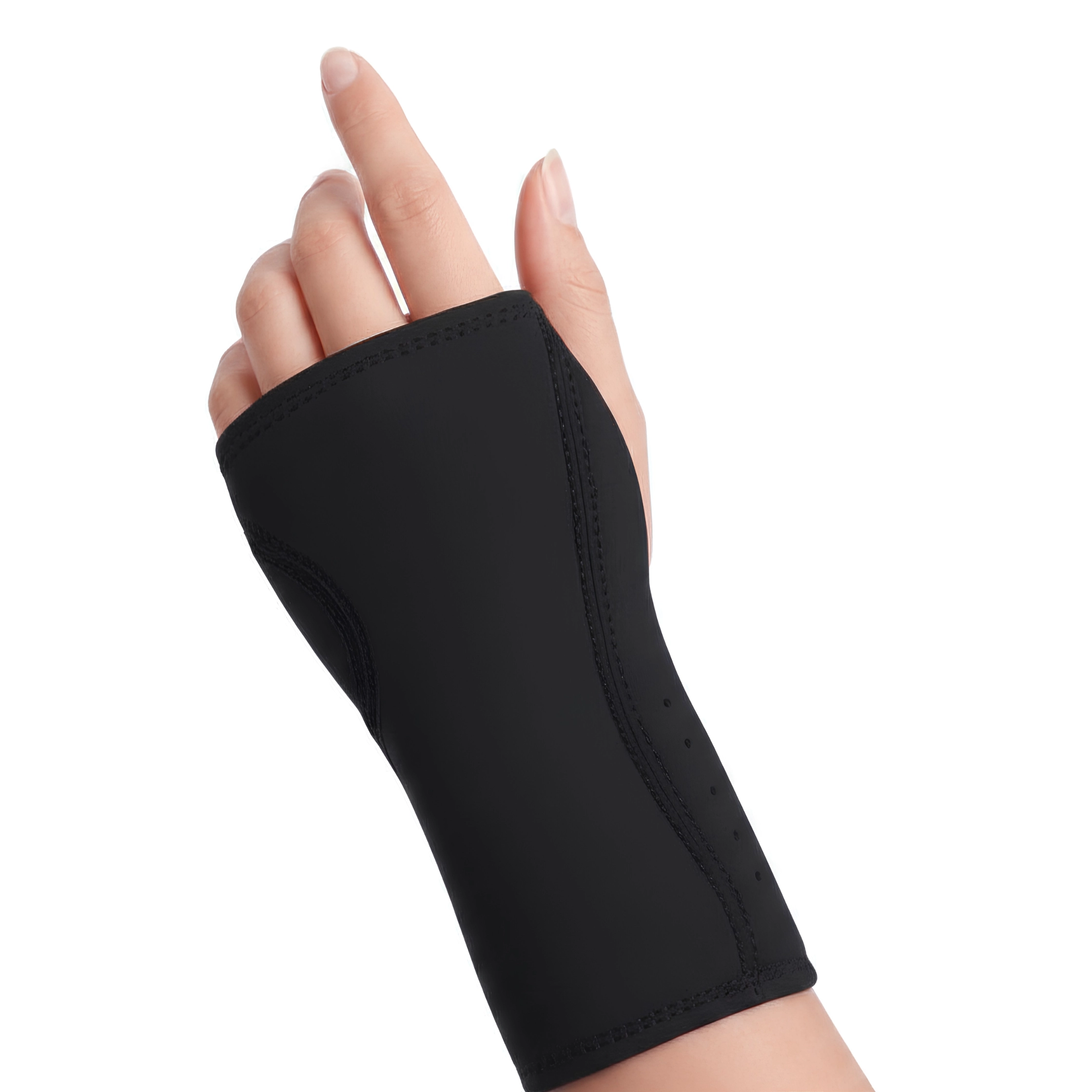
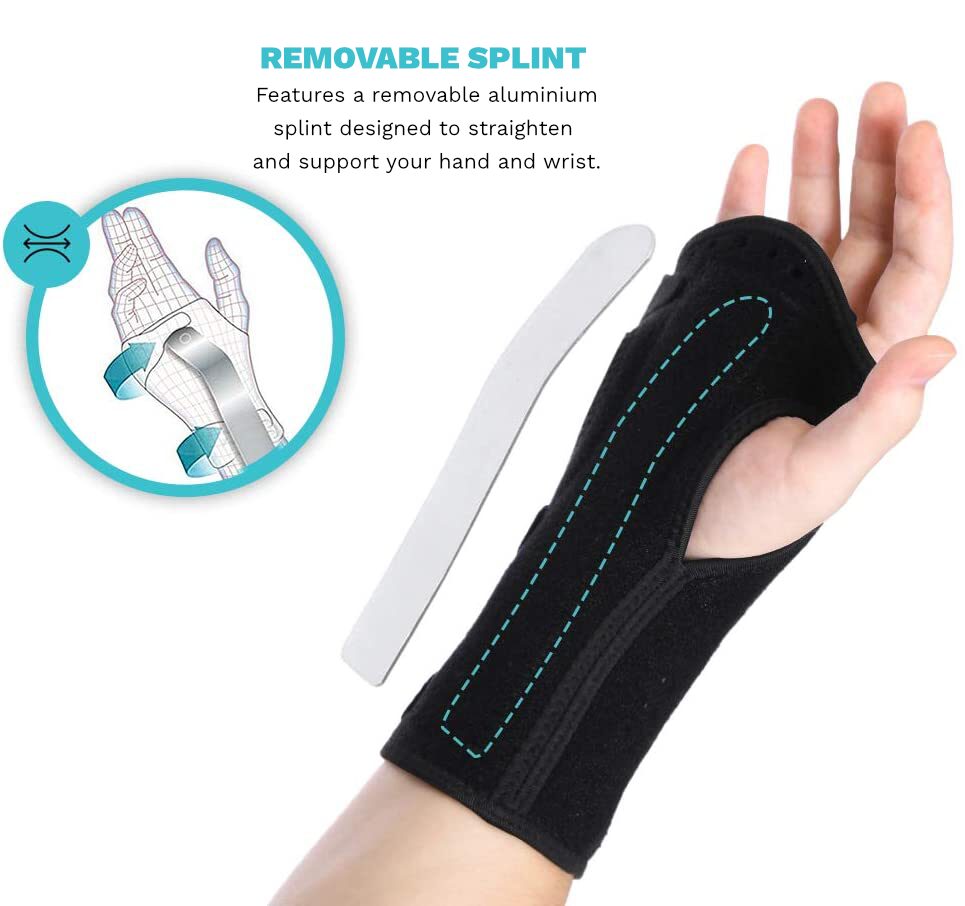
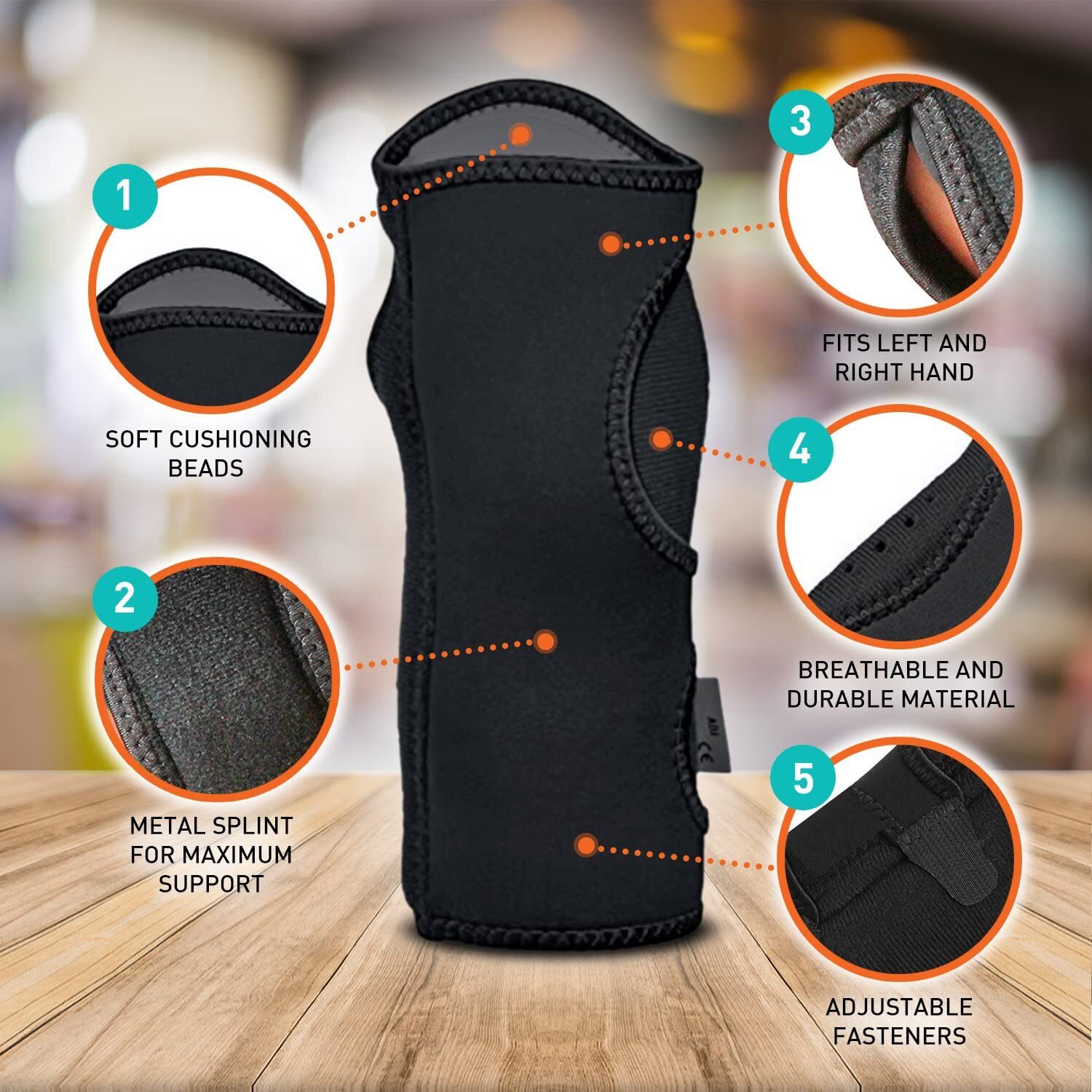
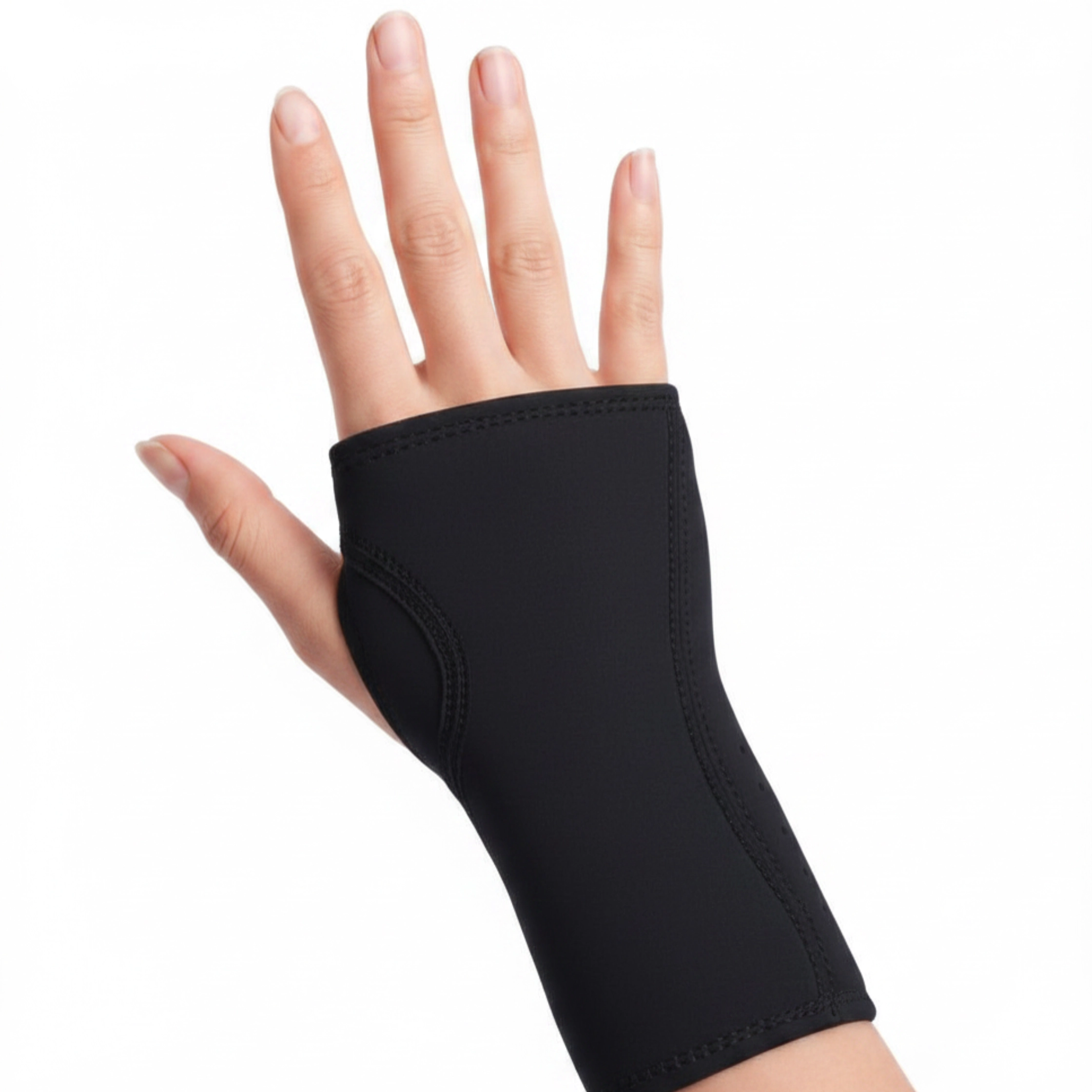
- Wrist splint with removable contoured aluminium support that holds your wrist straight in a neutral position
- For carpal tunnel syndrome, tendonitis, sprains, fractures (after clinical assessment), De Quervain’s tenosynovitis, and arthritis
- Immobilises the wrist to protect healing tendons, ligaments, and bones from repeated stress
- Neutral positioning keeps the carpal tunnel as open as possible, reducing pressure on the median nerve
- Compression helps control swelling and may ease pain
- Three adjustable Velcro straps let you control support and pressure at the palm, wrist, and forearm
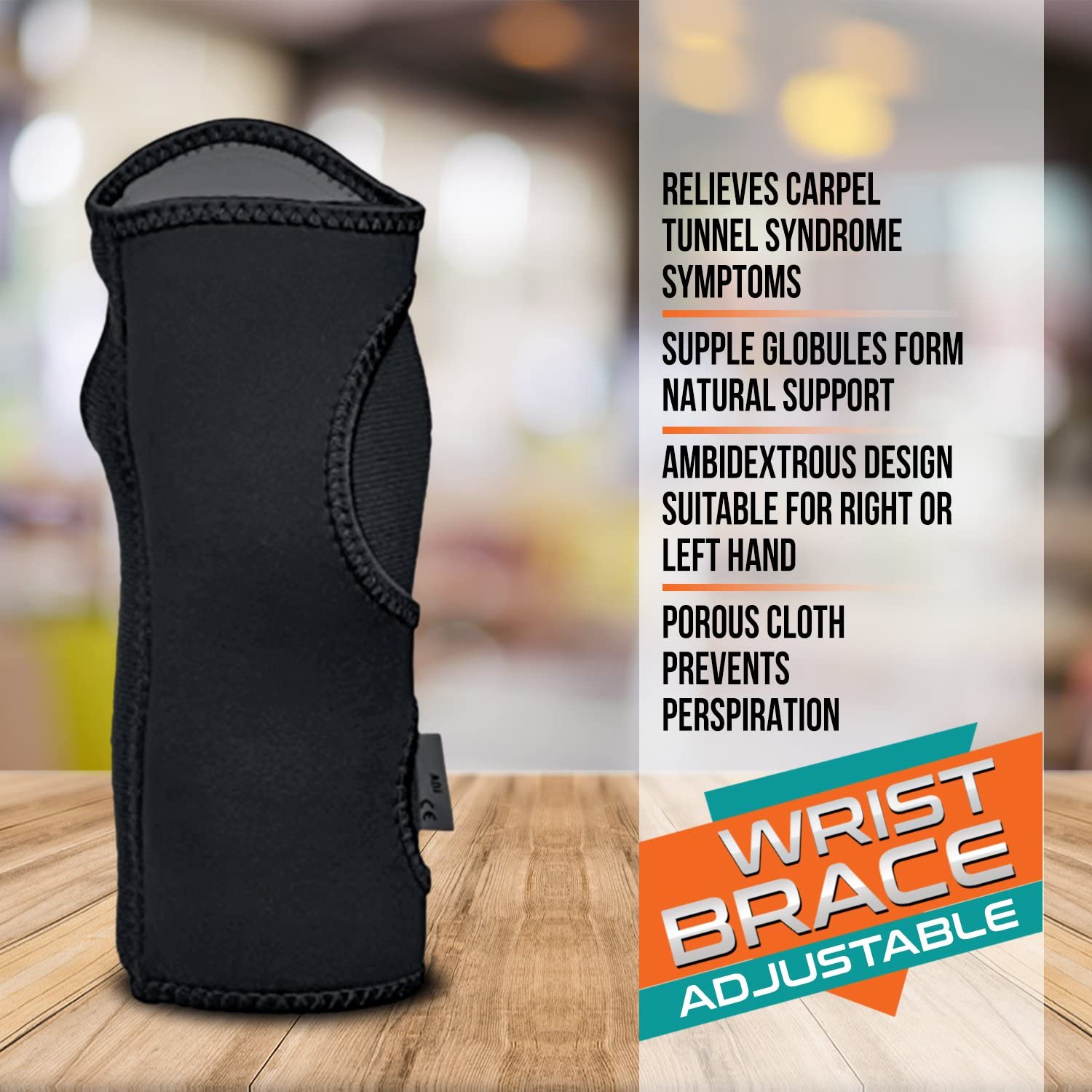
- Fits left or right hand; one size fits most adults
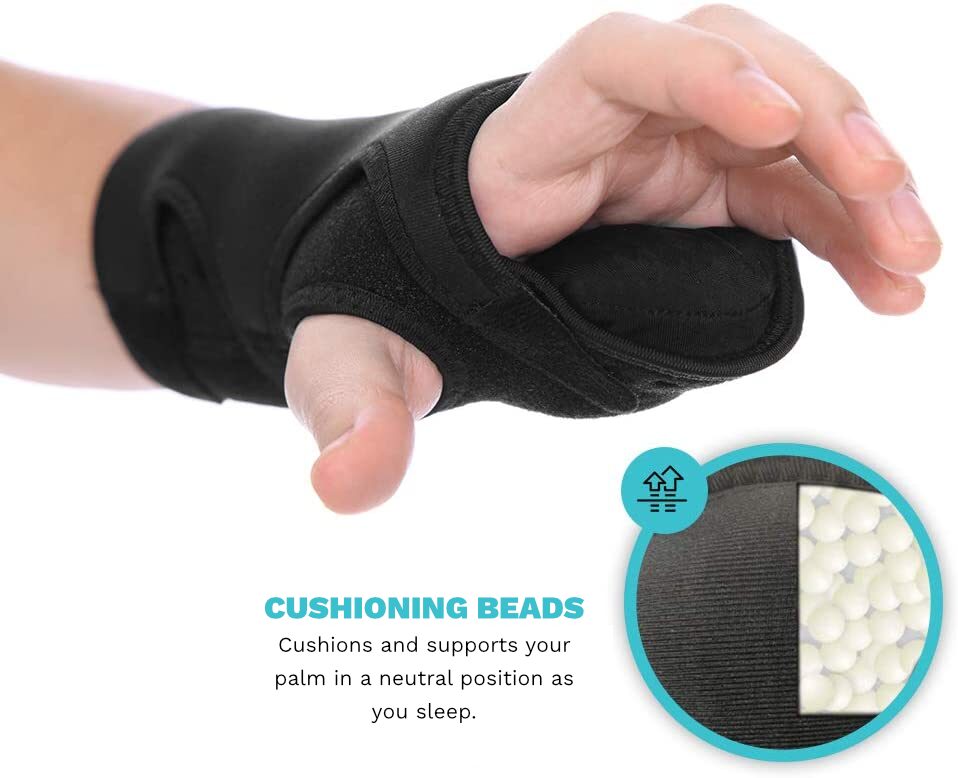
- Soft neoprene with ventilation holes; cushioning beads under the palm for comfort during extended wear
- For carpal tunnel: wear at night; for tendonitis or sprains: wear during activity; for fractures: follow your clinician’s guidance
- Most soft-tissue injuries improve within 4–6 weeks; fractures take 6–8 weeks minimum, sometimes longer
- Do not use if you have a blood clot, severe circulation problems, loss of sensation in your hand, or an open wound or infection near the area
- If you develop severe pain, visible deformity, worsening numbness, or signs of infection, seek medical advice immediately
- 30-day money-back guarantee
Wrist Pain? Here’s How the Right Support Can Help You Recover
If you’ve hurt your hand or wrist, you already know how quickly everyday tasks become difficult. Lifting a mug, typing an email, turning a door handle — all can feel sharp, stiff, or simply impossible. You might find yourself favoring the other hand, avoiding certain movements, or wincing when you accidentally grip something the wrong way.
What you want is relief that lasts. A wrist splint can be part of that solution — but only if you understand what your wrist needs and how the right splint actually delivers it.
This guide walks you through exactly that: why your wrist hurts, how a splint helps, how to tell if it’s right for you, and how to use it safely and effectively. By the end, you’ll know whether this splint is the support you’ve been looking for.
Why Your Wrist Hurts: What’s Going On Beneath the Surface
Your wrist looks simple, but it’s one of the most complex joints in your body. Eight small carpal bones are arranged in two rows, connecting your two forearm bones (the radius and ulna) to the bones of your hand (the metacarpals). Strong, flexible bands called ligaments hold these bones together.
Ligaments don’t move joints — they stabilise them. They stop bones from sliding too far apart, twisting too much, or collapsing under load. One of the most important ligaments is the scapholunate ligament, which connects two carpal bones on the thumb side of your wrist. It’s a common site of injury after a fall.
Tendons run across the wrist in the other direction. These tough, rope-like cords connect muscles in your forearm to your fingers and thumb. When a muscle contracts, it pulls on a tendon, moving the bone it’s attached to. Nine flexor tendons bend your fingers, and several extensor tendons straighten them.
Here’s something that matters: tendons and ligaments have a limited blood supply. Blood carries oxygen and nutrients needed for repair. Because these tissues get little blood, healing is slow — sometimes taking weeks or months to fully recover from even a minor injury.
The carpal tunnel: a tight space
A U-shaped curve of wrist bones forms a narrow channel on the palm side of your wrist. A tough band of tissue, called the flexor retinaculum, stretches across the front to form the roof of this tunnel. Nine flexor tendons and the median nerve all pass through this tight space.
The median nerve provides sensation to your thumb, index, middle, and half of your ring finger. It also controls some small muscles at the base of the thumb. When anything takes up space in the carpal tunnel — swelling in the tendon sheaths, fluid retention, or a bent wrist — the nerve gets squeezed, causing numbness, tingling, or weakness.
Why movement makes pain worse
When you injure or overuse these tissues, they become inflamed and swollen. Swelling takes up space, presses on nerves, and makes any movement painful. Damaged tendons and ligaments develop tiny tears at the microscopic level. The body responds by sending inflammatory cells to clear away damaged tissue and begin rebuilding.
But here’s the problem: those new collagen fibres — the building blocks of tendon and ligament repair — are fragile at first. If you keep moving the wrist while they’re trying to form, you stretch or tear them before they’ve had time to bond. The inflammation stays active, the pain continues, and healing is delayed.
That’s why rest isn’t just a nice extra after a wrist injury. It’s the single most important factor in allowing the body to repair properly.
How wrist injuries usually happen
Wrist injuries generally fall into three broad types:
- Sudden trauma — falling onto an outstretched hand can break bones (especially the scaphoid, a small bone at the base of the thumb) or tear ligaments (especially the scapholunate ligament). The impact forces the wrist into extreme extension, stretching or snapping the tissues on the palm side.
- Overuse and repetitive strain — repeating the same wrist movements — typing, using tools, gripping, lifting — loads the tendons constantly without adequate rest. Tiny tears accumulate, and the tendon sheaths become inflamed. This is called tendonitis — or tenosynovitis, when the inflammation affects the sheath around the tendon too. It develops gradually, but can become just as painful as an acute injury.
- Compression and sustained postures — holding your wrist in a bent or awkward position for long periods — resting on a keyboard, gripping a steering wheel, sleeping with your wrist curled under your pillow — narrows the carpal tunnel and squeezes the median nerve. This is a common cause of carpal tunnel syndrome, especially when combined with swelling from daytime activity.
So wrist pain often comes down to a mix of pressure, strain, and not enough rest. The next question is how to break that cycle.
How a Wrist Splint Helps: Four Ways It Supports Healing
A wrist splint is a simple but effective tool. It doesn’t just mask the pain — it helps the area heal by working in four distinct ways.
- Immobilisation
The splint holds your wrist completely still, preventing the bending, twisting, gripping, and lifting movements that stress damaged tendons, ligaments, and bones.
When a tissue is injured, movement stretches or compresses it. This irritates the injury, triggers pain signals, and disrupts the fragile new collagen fibres that are trying to bridge the gaps between torn areas. By keeping the wrist still, you give the body a chance to lay down new tissue and let it mature, gradually restoring strength.
Immobilisation is especially important in the first weeks after an injury, when the repair is weakest. If movement re-tears those early fibres, the healing process has to start over.
- Neutral positioning
The splint holds your wrist in a neutral position — straight and in line with your forearm. This might sound minor, but it has a significant effect on the structures passing through the wrist.
- For tendons: a straight wrist gives tendons a direct path from forearm to hand. They don’t have to curve around bones, which reduces friction and tension.
- For the carpal tunnel: the tunnel is at its widest when the wrist is straight. Bending the wrist forward or backward narrows the tunnel and directly compresses the median nerve.
- For ligaments: a neutral position puts them at their resting length — neither stretched nor compressed.
If tissues are already inflamed, any deviation from neutral increases pressure, irritation, and pain. The splint holds your wrist in the position that creates the least tension on tendons, nerves, and ligaments.
- Compression
The splint applies gentle, even pressure around your wrist.
When tissues are injured, blood vessels leak fluid into the surrounding area. This fluid build-up — swelling or oedema — causes puffiness, stiffness, and pressure on nerves. It also slows healing because the excess fluid reduces blood flow to the damaged zone.
Compression gently squeezes the tissues, increasing pressure in the fluid-filled spaces between cells. That pressure pushes excess fluid back into the bloodstream and lymphatic vessels, which carry it away. Less swelling means less pressure on nerves, less pain, and a more comfortable healing process.
- Protection
The splint acts as a physical barrier, shielding your wrist from knocks, bumps, and sudden movements that could worsen the injury. It also reminds you — when you feel the splint, you’re less likely to unconsciously grip, twist, or lift with that hand.
This is especially useful at night, when you can’t control how you sleep. It’s also helpful during the day, when you’re distracted and don’t realise you’re using your wrist in a way that slows healing.
That’s why a wrist splint makes sense for so many wrist problems. Let’s look at which ones.
Is a Wrist Splint Right for You? Common Wrist Problems
The wrist is a small area, but not all wrist problems behave the same way. Each pattern below has its own distinct feel, timing, and underlying mechanics. If you recognise yourself in one of these, the right splint — worn in the right way — can make a real difference.
Carpal Tunnel Syndrome: The Night-Time Numbness That Wakes You
If your hand goes numb or tingles while you’re asleep, and you have to shake it to get feeling back, this is the pattern most people recognise as carpal tunnel syndrome. It happens because the median nerve — the nerve that supplies feeling to your thumb, index, middle, and half of your ring finger — is being squeezed as it passes through a narrow channel at the front of your wrist.
Why it’s often worse at night
During the day, repeated hand use — typing, gripping, holding a phone — causes low-level swelling in the flexor tendons that share that channel with the nerve. By evening, that swelling is at its peak. Then, during sleep, many people bend their wrist without realising — curling it under the pillow, under the chin, or against the mattress. That bending narrows the already-tight channel further, pressing directly on the nerve.
The result is the classic pattern: waking with fingers that feel numb, tingly, or clumsy, and needing to shake the hand or hang it down to get feeling back.
What you’re likely to notice
During the day, you might notice the same sensation when your wrist stays bent for a while — driving, using a mouse, or resting your hands on a desk. As it progresses, you may find your grip feels weaker, especially in your thumb, and fine tasks like buttoning a shirt or picking up small objects become harder. In more advanced cases, the base of the thumb can begin to look thinner, and the numbness may become constant.
How a splint fits in
Wearing a wrist splint at night holds your wrist straight, which keeps that channel as wide as possible and takes pressure off the nerve. For many people, this alone is enough to stop the night-time episodes. If symptoms also flare when you do repetitive daytime tasks, wearing the splint then does the same job — it stops you from spending long stretches with the wrist bent and the nerve squeezed.
Other useful steps
Take regular breaks from repetitive hand movements, and check your desk setup — keyboard flat, wrists in a neutral line, not resting on the desk. If symptoms don’t improve after 2–3 months of consistent night splinting and activity changes, a GP may offer a corticosteroid injection or refer you to a hand specialist. Treating it early matters because prolonged nerve compression can lead to permanent numbness and thumb weakness.
Wrist Tendonitis: The Pain That Returns When You Grip
This pattern feels different. You don’t get numbness — instead, you get sharp pain along the palm side or back of the wrist that’s strongly linked to movement. You’ll often notice it most when you first use your hand after rest — first thing in the morning, or after sitting still for a while. It may ease slightly as you warm up, then return as you continue.
What’s happening inside
The tendons that bend and straighten your wrist and fingers run through protective sheaths. When you repeat the same movements — typing, using tools, gripping, lifting — you overload these tendons. Tiny tears form in the fibres, and the sheaths become inflamed. If you keep using them without enough rest, that inflammation lingers, and the tendon and sheath can thicken and develop scar tissue.
Some people also notice a creaking or grating feeling when they move the wrist. That’s the inflamed tendon moving against its swollen sheath — a sign that the area is irritated and needs a break.
Why a day splint helps
For tendonitis, the splint is most useful during waking hours, especially for tasks that involve gripping, twisting, or lifting. It holds the wrist still so the tendon isn’t repeatedly stretched and loaded. That allows the inflammation to settle instead of constantly re-aggravating it. The gentle compression from the splint also helps control swelling, which reduces pressure on the already-sore tissues.
Other supportive measures
Ice packs for 10–15 minutes several times a day can help calm the area in the early stages. Avoiding the specific movement that caused the problem is critical — continuing the same activity will keep the inflammation active. Once the sharp pain settles, gentle strengthening and stretching exercises, guided by a physiotherapist, help rebuild the tendon’s tolerance so the problem doesn’t keep returning.
If tendonitis goes on for weeks or months without rest, it can become a long-term problem that takes much longer to settle. Resting it early, with a splint and by changing how you use your hand, gives you the best chance of getting back to normal quickly.
Ligament Sprains: The Wrist That Feels Unstable After a Fall
This pattern often starts with a specific moment — a fall onto an outstretched hand, a sudden twist, or a direct blow. At the time, you may have felt a pop or tearing sensation. Your wrist gets forced beyond normal range, stretching or partially tearing a ligament (one of the strong bands that holds the wrist bones together).
What you’ll feel
Pain, swelling, and tenderness around the wrist, often on the same side as the damaged ligament. The pain is sharp when you twist or put weight through your hand — pushing up from a chair, for example. You may notice bruising, stiffness, and a feeling that the wrist isn’t quite stable or reliable.
Why it needs to be kept still
Ligaments heal in stages. First, a blood clot forms at the tear. Over the next 2–3 weeks, new collagen fibres begin to bridge the gap. Over 6–12 weeks, those fibres mature and strengthen. If you move the wrist during those early stages, you stretch or tear the fragile new fibres before they’ve had time to bond, and healing is set back.
A splint keeps the wrist in a stable, neutral position so the ligament isn’t repeatedly stressed. The compression also helps keep swelling down, which reduces pressure on the surrounding tissues and makes the wrist more comfortable while it heals.
Other helpful steps early on
In the first 48–72 hours, follow the RICE approach — rest, ice, compression, and elevation (keeping the hand raised above heart level when resting). After a few days, continue wearing the splint during activity, but start gentle finger and elbow exercises to prevent stiffness. If the wrist feels significantly unstable, or the pain is severe, get it properly assessed to rule out a full ligament tear.
Why not to stop too soon
If a sprained ligament heals in a stretched or weakened position, the wrist can remain unstable — it may “give way” during gripping or twisting, and over time that extra movement can wear the joint unevenly and lead to early arthritis. Wearing the splint consistently in the early stages gives the ligament the best chance to heal strong.
Fractures: When the Pain Is Immediate and Severe
This pattern needs urgent attention. If you’ve fallen and your wrist is severely painful, swollen, or looks bent or twisted, you need medical assessment straight away — don’t just strap on a splint and hope for the best. A fracture needs to be properly diagnosed and, if the bone ends have shifted, realigned by a clinician.
What’s happening inside
The most commonly fractured bones in the wrist are the radius (the forearm bone on the thumb side) and the scaphoid (a small bone at the base of the thumb). Both are vulnerable when you fall onto an outstretched hand. The scaphoid deserves special attention because its blood supply is unusually poor — blood vessels enter at one end only, so the far end heals very slowly. Fractures here have a higher risk of not knitting together, and they don’t always show on an initial X-ray. If you have pain in the hollow at the base of your thumb when you extend it — an area known as the anatomical snuffbox — it’s worth taking seriously even if the X-ray looks clear.
How a splint supports bone healing
Bone heals in three overlapping stages. In the first few days, a blood clot forms at the fracture site and inflammatory cells clear away damaged tissue. Over the next 2–3 weeks, soft callus — a temporary internal structure made of cartilage and new bone — bridges the gap. Over the following 6–12 weeks, that soft callus is gradually replaced by hard, strong bone.
If the wrist moves during the soft callus stage, that scaffolding cracks or shifts, and healing is set back. The splint holds the bone ends still so the callus can form and harden undisturbed. That’s why, for a fracture, you need to wear the splint continuously — not just during painful moments.
Why you must not stop early
Pain often eases several weeks before the bone is fully solid. If you remove the splint early because it feels better, the bone may shift, re-fracture, or heal in a misaligned position. That can cause long-term stiffness, weakness, and arthritis. Your clinician will advise how long to wear it — typically 6–8 weeks, sometimes 12 for the scaphoid. You’ll usually need physiotherapy afterwards to restore movement and strength.
De Quervain’s Tenosynovitis: The Sharp Pain on the Thumb Side
This pattern is very distinct. The pain is on the thumb side of the wrist, and it flares when you grip, pinch, or move your thumb — especially when you lift something with your thumb spread wide. It can radiate up the forearm or down into the thumb. You may also notice swelling over the thumb side and, sometimes, a catching or snapping sensation when you move the thumb.
Why it happens
Two tendons run from your forearm, through a narrow tunnel on the thumb side of your wrist, and into your thumb. These tendons lift and spread your thumb away from your hand. When you repeatedly lift, grip, or pinch with the thumb extended — carrying shopping bags by the handles, lifting boxes at work, using secateurs or hand tools — those tendons slide back and forth through the tunnel. Over time, the tendons and the tunnel lining become inflamed.
A simple test can point towards this condition: tuck your thumb inside your fingers, make a fist, and bend your wrist toward your little finger. If this causes a sharp pain on the thumb side of your wrist, it’s a strong sign that these tendons are inflamed.
How a wrist splint can help
The two tendons cross both the wrist joint and the base of the thumb joint. A splint that holds the wrist in a neutral position reduces the amount these tendons have to stretch and slide as you use your hand. That reduction in friction can help the inflammation settle. A splint that also holds the thumb still would give more complete rest, but even a well-fitted wrist splint can make a meaningful difference, especially if you also adjust how you use your hand during the day.
Other useful measures
Avoid or reduce the activities that caused the problem — take breaks from lifting, change how you hold things, or ask for help with repetitive tasks. Ice packs can help ease pain and swelling. If symptoms don’t improve after 6–8 weeks of splinting and activity changes, a corticosteroid injection often gives significant relief. If it persists, a GP or specialist can discuss further options with you.
Arthritis: A Different Kind of Wrist Pain
Arthritis is less about a single injury and more about the joint becoming painful, stiff, and swollen. There are two common patterns, and they behave differently.
Osteoarthritis
Osteoarthritis is wear-and-tear arthritis. The smooth cartilage that cushions the ends of the bones gradually wears away, leaving rough surfaces that rub together. It often develops in a wrist that was injured years earlier — a fracture or a bad sprain can change the mechanics of the joint and lead to arthritis later.
Rheumatoid arthritis
Rheumatoid arthritis is an autoimmune condition. The body’s immune system attacks the lining of the joint, causing inflammation, swelling, and eventually joint damage. It often affects both wrists, and the stiffness is usually worst first thing in the morning — it can take 30 minutes or more to ease.
What you’re likely to notice
Pain and stiffness with gripping, twisting, and pushing, along with reduced grip strength and difficulty with fine tasks. You may also feel a grinding or creaking sensation when you move the wrist. Symptoms often fluctuate — some days are better than others, and flare-ups can be triggered by overuse, cold weather, or sometimes no obvious cause.
How a splint can help
Every time you grip or twist, the muscles pull on the wrist bones and compress the joint. In a healthy joint, smooth cartilage cushions that force. In an arthritic joint, the cartilage is worn or inflamed, so the bones rub together and cause pain. A splint limits movement and supports the joint, reducing how often those joint surfaces are compressed. It won’t reverse arthritis, but it can make day-to-day activities — gardening, DIY, carrying shopping — noticeably more comfortable. Many people with rheumatoid arthritis also find wearing a splint overnight helps ease morning stiffness by holding the wrist in a comfortable position while they sleep.
What else supports long-term comfort
For osteoarthritis, gentle range-of-motion exercises — bending and straightening the wrist within a pain-free range — can help maintain flexibility and prevent stiffness from settling in. A physiotherapist can show you safe ways to strengthen the forearm muscles so they take some load off the joint. Heat packs can ease morning stiffness, while a cold pack can calm a flare-up after a busy day.
For rheumatoid arthritis, the most important step is working with your GP or rheumatologist to find medication that reduces joint inflammation. During the day, using the splint for heavier tasks like carrying shopping or gardening can protect the joint without leaving you dependent on support.
Staying active, eating well, and keeping a healthy weight reduce the load on all your joints, including the wrists.
Prevention and Support During Activity
Some people reach for a wrist splint not because of constant pain, but because their wrist feels weak or vulnerable after an injury, and they’re worried about re-injuring it when they return to heavier activities.
When extra support is useful
After the main healing phase of a sprain or tendonitis (usually four to six weeks), or after a fracture’s cast has been removed (often six to eight weeks, sometimes longer for the scaphoid), the wrist can still feel unreliable even though the sharp pain has settled. The muscles may still be regaining strength, and you may unconsciously favour the wrist or hesitate to load it fully. That’s a normal part of recovery, not a sign you’ve done something wrong.
A splint provides mechanical support during this vulnerable stage. It limits the extreme bending, twisting, and heavy gripping that could stress healing tissues before they’ve reached full strength. It also gives you confidence that the wrist is protected, which can help you gradually rebuild strength and return to normal activity without fear of setback.
What a splint can and cannot do
A splint is a temporary support tool, not a replacement for rehabilitation. If you rely on it indefinitely without addressing the underlying weakness, the muscles can become dependent on the support and gradually weaken. The best approach is to use the splint for the activities that feel too demanding, while following a structured rehabilitation plan — usually exercises guided by a physiotherapist — to rebuild the wrist’s real strength and stability.
Using it as part of a plan
If you’re returning to heavy lifting, manual work, or a sport that puts stress through your wrist, wearing a splint for the first few sessions can help you build up tolerance safely. As your strength returns, gradually reduce how often you wear it, rather than stopping suddenly. If the wrist continues to feel unstable despite this approach, get it assessed — there may be an underlying issue that needs specific treatment.
If any of these sound like you, here’s how this splint is designed to support your recovery.
This Wrist Splint: What It Does and How It Works
This splint delivers the four actions we’ve covered — immobilisation, neutral positioning, compression, and protection — in a practical, comfortable package. Here’s how each feature translates into everyday benefit.
Contoured Aluminium Splint Holds Your Wrist Neutral
The removable splint runs from your forearm to your palm along the palm side of your wrist. It’s shaped to follow the natural curve of your forearm and palm, which does two things: it keeps the wrist in that optimal neutral position — the one that creates the least tension on tendons, nerves, and ligaments — and it sits flat against your skin without digging in or creating pressure points.
That neutral position is the same one that matters most for carpal tunnel syndrome. When your wrist is straight, the carpal tunnel is at its widest, so the median nerve isn’t being squeezed. For De Quervain’s tenosynovitis, holding the wrist straight means those thumb tendons don’t have to curve around the wrist bones as they slide, which reduces friction on the inflamed tunnel they pass through. For a ligament sprain, it keeps the damaged fibres at their resting length, so they’re not being stretched while they heal.
The aluminium is rigid enough to prevent bending, but thin and light enough to wear comfortably all day or overnight. You can remove it for washing.
In the early stages of injury, you usually need rigid support. After several weeks, as pain reduces and strength improves, some people find they only need the compression and mild support of the fabric sleeve without the rigid splint. Check with your physiotherapist or GP before removing the splint — especially in the first 2–3 weeks when tissues are most vulnerable.
Three Adjustable Velcro Straps Give You Control Over Compression
Three separate straps sit at the palm, wrist, and forearm, so you can control pressure at each point independently.
- The palm strap secures the splint against your hand and prevents it from sliding down.
- The wrist strap provides targeted compression around the most swollen, tender area.
- The forearm strap anchors the splint in place and distributes tension evenly.
For tendonitis or a sprain, the wrist strap is the one you’ll likely want slightly firmer during the day — it’s pressing on the area where swelling tends to collect. At night, you can loosen it just enough to stay comfortable while keeping the splint secure. For carpal tunnel, the forearm strap matters more: it holds the splint in place so your wrist stays neutral while you sleep, even if you move around.
The three-strap configuration stops the splint from rotating or sliding down the forearm. And because the Velcro grips securely across a wide surface area, you get a stable fit that stays where you put it.
Cushioning Beads in the Palm Prevent Sore Spots
A soft pillow of beads sits at the base of the palm — the heel of the hand. This is where pressure concentrates when you rest your hand on a surface or when the splint presses against the palm. The cushioning spreads that pressure evenly, preventing soreness during extended wear, especially overnight.
If you’re wearing the splint all night for carpal tunnel or through a long workday for tendonitis, this is the feature that stops the splint itself from becoming a source of discomfort. It also fills the gap between the rigid splint and the curved base of your palm, so your hand doesn’t rock or shift inside the splint, which keeps your wrist in that stable neutral position.
Breathable Neoprene for Comfort During Long Wear
The splint is made from soft, lightweight, durable neoprene with ventilation holes to allow some air circulation. Neoprene naturally insulates and can trap some warmth and moisture, but the holes help vent excess heat.
This matters most for anyone wearing the splint for long stretches — overnight for carpal tunnel, all day for tendonitis or after a fracture. If you tend to sweat heavily, or if you’re wearing the splint all day or overnight, remove it briefly each day to wash and dry your skin, and make sure the splint itself is fully dry before putting it back on. A thin cotton sleeve underneath can also help. This prevents trapped moisture from softening the skin and causing redness, itching, or small sores.
Fits Left or Right Hand, One Size for Most Adults
One splint works for either wrist. The three adjustable straps and removable aluminium splint fit both hands, and the range suits most adult wrist and forearm sizes. No need to measure or buy separate versions.
The splint should feel snug but not tight — you should be able to slide one finger under the straps. That level of snugness gives you support and compression without cutting off circulation. If your fingers tingle, swell, or turn pale or blue, loosen the straps immediately. If symptoms don’t improve within a few minutes, remove the splint and contact your GP or physiotherapist — you may need a different size or type of support.
Care Instructions
Hand-wash the splint in cool water with a mild detergent. Remove the aluminium splint before washing — it can’t be submerged and doesn’t need washing. Hot water can damage the neoprene and weaken the Velcro.
Air-dry away from direct heat. Don’t tumble-dry or place it on a radiator, as high heat can make the neoprene stiff, brittle, or misshapen, and can melt the Velcro or cause the straps to lose their grip. Air-drying at room temperature keeps the material in good condition and the splint working properly.
How to Wear It and What to Expect
Getting the most from your splint comes down to two things: wearing it consistently, and wearing it correctly.
How It Should Fit
- Snug but not tight. You should be able to slide one finger under the straps.
- Wrist straight. The aluminium splint should hold your wrist in line with your forearm.
- Your fingers should feel warm and stay pink. Your fingers should be able to move freely.
- Capillary refill test: press a fingernail — it should turn white, then pink again within two seconds. If it stays white longer than two seconds, blood flow is restricted and the splint is too tight. Loosen the straps immediately.
Check your circulation every hour for the first few times you wear the splint, then at least twice a day once you’re used to it. If your fingers turn pale or blue, feel cold, or stay white after pressing, loosen the straps immediately. If symptoms don’t improve within a few minutes, remove the splint completely and seek medical advice.
When to Wear It
- For carpal tunnel syndrome: wear it overnight. Most people bend their wrists while asleep without realising, compressing the median nerve. Night-time splinting is the priority because symptoms are usually worst at night. If you also get numbness or tingling during repetitive daytime tasks, wear it during those tasks too.
- For tendonitis or sprains: wear it during the day when you’re active, especially during tasks that stress the wrist — gripping, lifting, twisting, pushing, or any movement that causes pain. You may also find it helpful at night if pain disrupts your sleep.
- For fractures: follow your clinician’s advice — usually continuous wear for several weeks, removing only for washing or prescribed exercises. You need to wear the splint consistently during healing; removing it too often or too early can delay union or allow the fracture to shift.
- For arthritis or prevention: wear it during activities that stress the wrist — gardening, DIY, carrying shopping, heavy lifting, or manual work — and during flare-ups when the joint is painful.
- For De Quervain’s tenosynovitis: wear it during the day, especially for activities involving lifting, gripping, or thumb movement. Some people also benefit from wearing it at night to prevent the wrist from curling during sleep.
How Long Will I Need to Wear It?
- Soft-tissue injuries (sprains, tendonitis): most improve within 4–6 weeks. “Improve” means pain and swelling reduce significantly, but full strength and confidence may take longer. Healing time depends on the severity of the injury, how consistently you rest it, and whether you do rehabilitation exercises.
- Carpal tunnel syndrome: many people notice improvement within 2–3 weeks of wearing the splint every night, though some need to continue for several months. If symptoms don’t improve after 2–3 months, check back with your GP — you may need additional treatment.
- Fractures: fractures take longer — typically 6–8 weeks minimum, sometimes 12 weeks for slow-healing bones like the scaphoid. Your clinician will advise based on X-rays showing how the bone is healing.
Don’t stop wearing the splint early just because pain eases. Healing continues beneath the surface. Stopping too soon can leave you with ongoing pain, weakness, stiffness, or a wrist that feels unstable or gives way during activity. If you’re unsure how long to wear it, check with your GP or physiotherapist.
What to Expect in the First Week
- Stiffness and awkwardness: completely normal. Your muscles and tendons are used to moving freely. Holding them still feels strange at first, and the surrounding muscles may feel tight or uncomfortable. This usually settles within a few days as your body adapts.
- Pain gradually easing: over the first one to two weeks, as damaged tissues rest and swelling reduces, pain should become less sharp and less frequent. You may find you can use your hand for light tasks with less discomfort.
- Tasks feeling clumsy: typing, writing, buttoning clothes, or picking up small objects may feel awkward. This is the splint doing its job — limiting movement. If you need to do something that requires full wrist mobility, remove the splint briefly for essential tasks (washing, personal care), but keep it off for the shortest time possible — ideally no more than 10–15 minutes — then put it straight back on. The more consistently you wear it, especially in the first 2–3 weeks, the better your injury can heal.
If pain worsens, you develop new symptoms — numbness, colour change, increased swelling — or the splint feels too tight even after loosening the straps, check back with your clinician. Worsening pain or new symptoms may mean the injury is more serious than initially thought, or that the splint isn’t the right fit or type for your injury.
Movement and Exercises
Immobilisation is important, but so is maintaining mobility in your fingers and elbow. The tendons that control your fingers run through your wrist, and the muscles that control your wrist attach at your elbow. If you keep your wrist and fingers completely still for weeks, they can become stiff and weak, which makes it harder to use your hand even after the wrist heals.
Do these exercises while wearing the splint:
- Finger curls and stretches: make a fist, then spread your fingers wide. Do 10 repetitions every few hours. This keeps the tendons sliding smoothly through the wrist and maintains grip strength.
- Elbow bends and straightening: gently bend and straighten your elbow several times a day. The muscles that move your wrist attach around the elbow, so keeping these mobile prevents stiffness and weakness in the whole arm.
When to start wrist movement exercises:
Only start wrist movement exercises when your clinician advises it — usually after initial pain and swelling have settled (often 2–3 weeks for sprains or tendonitis, longer for fractures). Your physiotherapist will show you the safe range for your specific injury.
Move only within a pain-free range. Mild stiffness or a gentle pulling sensation is okay. Sharp, stabbing pain, or pain that gets worse as you continue, means you’re stressing the injury — stop immediately.
Safety and When to Seek Help
A splint is a useful tool, but it’s not for everyone or every situation. Here’s what you need to know.
Seek Medical Help Immediately If You Have
- Severe pain or visible deformity — your wrist looks bent, twisted, or has an unusual bump where bone may have shifted out of place.
- Numbness that’s getting worse or spreading — this suggests a nerve is being compressed or damaged and needs urgent assessment.
- Inability to move your fingers or thumb — a complete tendon tear or severe nerve compression needs prompt treatment.
- Signs of infection — redness, warmth, fever, or a wound near the injury that’s becoming hot, swollen, or discharging pus.
If you’re unsure, get it checked. Early assessment can prevent serious complications.
Check with Your GP or Physiotherapist First If You Have
- A blood clot or history of deep vein thrombosis (DVT): compression around the arm or wrist could dislodge a clot or restrict blood flow.
- Severe circulation problems or peripheral vascular disease: compression could further narrow already-restricted blood vessels. Signs include cold hands, pale or blue fingers, or slow-healing wounds.
- Loss of sensation in your hand (neuropathy): if you can’t feel your hand properly, you won’t notice if the splint is too tight or causing pressure sores.
- An open wound or infection near the area: a splint over an open wound can trap bacteria and prevent healing. The wound needs to be clean, dry, and covered with a sterile dressing first.
- Pregnancy: wrist pain and carpal tunnel symptoms are common in pregnancy, but this does not mean a splint is automatically safe for you. Changes in circulation, fluid retention, and blood pressure can affect how compression and wrist positioning feel on your body. Do not wear a splint during pregnancy unless your midwife or GP has assessed your wrist and specifically advised that a splint is appropriate for your situation.
If Symptoms Don’t Improve
If you’ve been wearing the splint consistently for 2–3 weeks and there’s no improvement — or your symptoms are getting worse — it’s time to see a clinician. You may need imaging (X-ray, MRI, or ultrasound) to check for fractures or ligament tears that weren’t initially apparent, a corticosteroid injection to reduce inflammation, or a different treatment approach entirely.
Skin Irritation
If you develop a rash, redness, itching, or any skin reaction, remove the splint and consult a healthcare professional. This can be caused by friction, trapped moisture, or sensitivity to the material.
To reduce the risk:
- Ensure your skin is clean and dry before putting the splint on.
- Remove the splint briefly each day to wash and dry your skin.
- Check for any red or sore areas.
- A thin cotton sleeve between your skin and the splint can act as a barrier.
If irritation persists, the material may not be suitable for you.
The Next Step: Try It with Confidence
You don’t need to live with wrist pain while it slowly heals. The right splint — worn correctly and consistently — can reduce pain, support healing, and protect your wrist as you return to normal activity. Whether you’re waking with numb fingers from carpal tunnel, recovering from a sprain, managing tendonitis after weeks of repetitive work, or protecting your wrist during activity, a splint works with your body’s natural healing process, not against it.
If you recognise yourself in any of the conditions described, this splint is designed to help. Try it for yourself. Wear it as advised, check the fit regularly, and if your symptoms don’t improve within a few weeks, get professional guidance.
You’re covered by a 30-day money-back guarantee. If it doesn’t help, return it for a full refund — no questions asked.
Medical Disclaimer: The information on this page is general guidance based on common wrist problems and how wrist splints work. It is not a substitute for individual medical advice, diagnosis, or treatment. If you have severe pain, visible deformity, worsening numbness, signs of infection, or symptoms that don’t improve with splinting, speak to a GP or physiotherapist. They can assess your specific situation, confirm the diagnosis, and recommend the most appropriate treatment for you. Outcomes vary depending on the type and severity of injury, consistency of treatment, and individual factors such as age, overall health, and activity level.
Fast & Secure Checkout Through Paypal
Pay with Paypal the secure payment gateway that accepts all credit and debit cards. Paypal is free and secure and no credit or bank information is ever stored or shared with us.
Fast Dispatch
Enjoy your items soon with quick dispatch via Royal Mail. Expect to have your items between 1-3 working days for domestic orders. 7-10 Working days for international orders.
Return Policy – 30 Day Money Back Guarantee
In the unlikely event, you are unhappy with your purchase you can return it within 30 days for a refund. Please contact us via the form on the contact us page to start your return.
To return an item please send it to: Nuova Health UK, 81 Highfield Lane, Waverley, Rotherham, S60 8AL. Please include a note with your order id so we know who to refund. Please retain your postage receipt as proof of postage. All that we ask is that the item is in the original packaging and unused.
Reviews
There are no reviews yet.