Shoe insoles
Supportive Insoles for Sore Feet, Legs, and Back
Sore feet can turn a short walk, a flight of stairs, or a long afternoon on your feet into something you brace for. A sharp pain under the heel when you first stand up. Arches that ache by mid-afternoon. Burning under the ball of the foot. An ache that creeps into your knees, hips or lower back after a day on hard floors.
These complaints are common, and a handful of everyday factors usually sit behind them.
For most people, it doesn’t start with one dramatic injury. It builds gradually, over weeks of repeated load through the same part of the foot. Hours at a time on hard floors. Days spent mostly on your feet. Shoes with thin, worn soles. Every step puts force through the same few spots, day after day, with no real break between one stretch on your feet and the next.
When soreness keeps returning, the pattern usually comes down to how load is being repeated rather than one obvious cause. The useful question isn’t simply how far you walk. It’s how each step loads the foot, how quickly the foot adapts, and whether the same tissue is being loaded again before it has had time to settle.
Where the effect reaches the knee, hip or back, it does so indirectly, through the way your foot manages load. Nothing here treats a knee or a back directly.
Why sore feet keep coming back
Time on your feet is the most common factor. Hours of standing or walking on firm floors, with little chance to sit, leave the same structures taking load over and over.
Footwear matters just as much. Once a pair has lost the shape that held your arch or supported your heel, your foot has to work harder with every step. Thin, worn soles pass more of the impact straight through.
The shape of your foot plays a part too. A low, flexible arch and a high, stiff one carry load differently from each other, and each loads a different part of the step. A bunion changes where your weight lands at push-off.
And some feet tolerate less repetition than others. An old ankle sprain, a tendon that has grumbled before, or joint sensitivity from arthritis can all make an ordinary day on your feet feel harder than it should.
None of that makes the problem vague or imagined. There’s a physical reason behind it, and it comes down to how force moves through the foot. The part taking the extra load is usually the part that hurts — one person ends up with heel pain, another with a sore patch under the forefoot, someone else with aching shins or knees.
None of this amounts to a diagnosis, and an insole can’t give you one. A supportive insole can make standing and walking more comfortable, but persistent, severe or worsening symptoms deserve advice from a healthcare professional.
How walking loads the foot
The clearest way to understand foot pain is to follow a single step. During ordinary walking, the foot does three overlapping jobs.
The heel meets the ground
The heel and rearfoot make first contact and begin taking your body weight. The ankle rolls with the ground rather than staying locked, and the pad of tissue under the heel bone starts soaking up the impact.
A comfortable landing doesn’t require the foot to be perfectly level or locked in place — no two steps land quite the same way. But when the heel lands tilted, or slides about inside the shoe, contact concentrates along one edge rather than spreading across the pad. The same force arrives at a smaller area, and the landing feels sharper.
The arch takes the load
As your body moves over the foot, the arch lowers slightly. That small flattening is normal. It’s how the foot moulds to the ground and spreads load across the whole sole, rather than letting it build under one part. The muscles, tendons and ligaments along the inner side of the foot and ankle control how far and how quickly that lowering happens.
This is where pronation comes in. Pronation is the natural inward roll of the foot as it takes weight, and every foot does it. The issue isn’t the movement itself. It’s when the roll is excessive, too fast, or poorly controlled for that person’s tissues and activity — the supporting structures end up working harder, for longer, in every step.
At the other end, some feet don’t roll inwards enough. That outward pattern, called supination, is much less common, but it changes the picture in the same way. Because the foot doesn’t roll inwards to absorb load, force arrives more sharply along the outer edge, and the ankle has less natural give with each step.
A high, stiff arch behaves differently again. The midfoot makes less contact with the ground, so force reaches the heel and forefoot more directly, with less of the arch’s natural cushioning in between.
The push-off and the windlass
As your heel lifts and your body moves over the forefoot, the toes bend upwards. That toe bend does something useful. It wraps the plantar fascia — the band of tissue running along the sole from the heel bone to the base of the toes — around the heads of the metatarsal bones, like a cable around a winch. This is the windlass mechanism.
The tightening lifts the arch and turns the foot into a firmer lever, so you push off from a stable platform rather than a soft one. When the arch sits lower than usual or the fascia is irritated, the winch does less work, and the forefoot ends up absorbing more of the load at push-off. That’s one reason forefoot soreness and heel pain often turn up in the same foot.
Force and pressure
Two ideas are worth keeping apart, because nearly everything an insole does comes down to the difference between them.
Force is the total load passing through your foot with each step. During walking, the force through the foot briefly rises above your body weight, and running multiplies it further still. The exact figure varies with speed, weight and stride — what matters is the direction, not the precise number.
Pressure is how concentrated that force is over a particular area. The same force over a small patch produces far more pressure than the same force spread across a wider one.
An insole can’t remove your body weight from a step. What it can change is where contact happens, how widely the load is shared, and how sharply the pressure peaks in the spots that hurt. That distinction is why the shape and placement of support matters more than how soft a material feels under your thumb.
Walking, running, stairs and uneven ground all shift the timing and size of these loads. This is a useful way to understand ordinary walking; other activities change the numbers, not the principle.
A closer look at the tissues taking the load
The plantar fascia does two jobs, not one. It’s a strap that limits how far the arch can lower, and it’s also a spring. As the arch lowers under your weight, the band stretches slightly and stores a small amount of energy, then releases it as you push off. That stored energy is part of what makes walking efficient. It also explains why the band complains most at the point where it attaches to the heel bone — that’s where the stretch concentrates when the arch drops further or faster than the tissue can comfortably control.
The fat pad under the heel bone is built to squash and spring back. It cushions best when force arrives spread out and even, because the tissue has room to give. Load the same edge of the heel step after step and the pad has less room to spread, which is why a bruised, tender spot can appear directly under the bone.
The tendons around the ankle behave differently again. The Achilles tendon at the back of the heel, the tibialis posterior tendon behind the inner ankle bone, and the peroneal tendons behind the outer ankle bone all take load, stretch slightly, and spring back. That’s fine as long as the load is spread across a day. It becomes a problem when the same tendon carries more than the others, in the same direction, on every step.
Soft tissue needs time between loads to recover. When you’re on your feet for hours without a real break, that recovery doesn’t happen. By evening the same areas ache. The next morning the routine starts again.
Where the load is felt
When your soreness arrives tells you as much as where it sits.
Under the heel
Heel pain usually falls into one of two patterns, and the timing separates them.
The first is sharp and grabbing, worst on the first steps after getting up or after sitting for a while, and it eases as you walk a little further. That pattern usually points to the tissue running along the sole and attaching at the inner underside of the heel.
The second is a bruised, tender feeling that builds the longer you stay on your feet and aches by evening. That one points to the pad of tissue directly under the heel bone, pressed against the ground with no proper rest between steps.
Along the arch and inner ankle
A dull ache along the inner arch, or around the inner ankle bone, tends to build through the day rather than arriving at once, and it often eases with a short rest. That’s often a sign the arch is lowering further or faster than the tissues supporting it can comfortably control. You’ll notice it most on days that keep you upright for hours, particularly on firm floors.
Under the ball of the foot
Burning, a pebble-like sensation, or a sharp pain under one joint at the base of the toes. The forefoot takes a long series of small impacts as you push off, and when the same narrow band takes the pressure step after step, one of those spots turns tender. Stairs and pace make it worse, because push-off drives more force through the forefoot than standing still does. Footwear that presses the toes together or leaves too little room across the front of the foot does the same.
Around the outer edge and ankle
Pain along the outer edge of the foot, or around the outer ankle. Some feet don’t roll inwards enough, and load tracks along the outer edge instead. An ankle that’s been sprained before can also feel unsteady, because it no longer senses its position as accurately. Sloped or uneven ground exposes this, since you keep loading the same edge for the length of a walk.
Higher up
Soreness that shows up above the foot — in the shin, knee, hip or lower back — is covered next.
How the foot affects the leg above it
Your foot doesn’t work alone. The foot, ankle, shin, knee, hip and lower back move as a linked chain, and a change at one link alters the demands placed on the next. Repeat that thousands of times a day and the effects build.
It doesn’t mean every knee, hip or back symptom starts in the feet, and it isn’t a conveyor belt that carries foot problems upwards in a predictable direction. What it does mean is that when your foot rolls further than your leg can easily correct, or your arch drops quickly, the muscles and joints above have more to steady with every step.
Aches above the foot often show up in specific situations. Tightness or aching along the inner shin is common after a long walk or a busy day on your feet. Pain around or behind the kneecap often turns up when you climb stairs, walk downhill, or sit with your knee bent for a while. Outer hips can feel tired and achy after longer walks, as the hip muscles work harder to steady your step. A lower-back ache tends to build gradually on firm ground, rather than arriving all at once.
None of these look like foot problems on the face of it, which is why so many people treat them as separate complaints. They may be connected — not always, but often enough to be worth considering together.
What supportive insoles change
Supportive insoles change what happens between your foot and your shoe. They broaden contact under the midfoot, guide the heel, spread repeated pressure across the sole, and cushion the points that take the most force. None of that removes the load of a step. It changes where that load lands and how quickly it builds.
They don’t fix everything. How much difference one makes depends on its design, the shoe it sits in, the way you move, and where your soreness comes from.
Guiding the heel and rearfoot
At first contact, a shaped heel cup gives your heel a defined place to sit. The rim holds it centred rather than letting it slide about inside the shoe, so contact spreads around the rearfoot instead of concentrating along one edge. A heel landing close to level takes less force on any single side, which is why you notice the sharp pull at the inner heel, or the knock at the outer heel, less often.
You notice the difference most when you’re moving: stepping off a kerb, crossing a driveway that slopes to one side, shifting weight from foot to foot. Those moments call on the ankle to steady the foot, often suddenly. A heel seated in a shaped base gives the ankle less to correct.
Broadening contact under the arch
A contoured midfoot increases the area of the insole that meets your foot as you take weight. Force passes through a broader stretch of the sole instead of travelling quickly from the heel to a narrow band under the front of the foot. The tibialis posterior tendon and the muscles along the arch still control how fast the arch lowers — they simply have more surface sharing the work with them.
Support here should feel like a broad, even surface under your foot, not a hard ridge pressing into one spot.
Spreading pressure under the heel and forefoot
Cushioning under the heel and just behind the ball of the foot softens the two places that take the sharpest contacts on firm ground. The aim isn’t to let your foot sink in and lose its sense of the ground. It’s to blunt the peak of each impact while keeping a clear point of contact and a definite arch to lean into.
Too soft and the muscles around your ankle work harder to keep the foot steady, so long days feel more tiring rather than less. Too firm and your heel and forefoot absorb every hit. The useful balance is somewhere in between.
Supporting the forefoot at push-off
Under the ball of the foot, a full-length insole usually provides an evenly cushioned platform with enough give at the front to move with your toes. Pressure spreads across the front of the foot as you push away, rather than concentrating on one or two joints.
Some insoles add a low metatarsal support. This sits behind the long bones that lead to your toes, not directly under the tender spot. The nerves running between those bones pass through a tight space, and when the front of the foot loads in one narrow band, the nerve can get squeezed. A gentle lift placed behind the metatarsal heads raises that area slightly and lets the fat pad take more of the load at push-off. If you recognise a pebble-like or burning feeling between the toes, a well-placed one can make a real difference. Placed too far forward, or straight under the sore part, it tends to feel worse rather than better.
How these insoles are built
Heel cup and rearfoot shaping
The heel sits in a cup with raised side walls. Depth matters more than the amount of cushioning inside it: a shallow cup with plenty of soft padding feels comfortable for a few minutes and then leaves you unsure where your foot is meeting the ground. Cushioning always sits on top of a shaped base, never instead of one.
Some designs add a small recess at the centre of the heel, which takes pressure off a tender spot without softening the rest of the cup. Others keep the heel area slim for slim shoes with little room inside, holding the heel lightly cupped without adding bulk at the back.
Midfoot contour and side walls
The arch support rises gradually from the heel rather than climbing abruptly. Gradual side walls limit how far and how fast the foot rolls, without an edge digging into the arch. Slimmer designs use a shallower contour that keeps even contact under the midfoot without crowding a close-fitting shoe.
Cushioning zones
Softer material sits where contact is sharpest — under the heel and just behind the ball of the foot. Firmer material sits under the arch and around the heel rim, where control matters more. That layout is deliberate, and it’s why an insole can feel cushioned at the heel and supportive at the arch at the same time.
Forefoot platform and flexibility
The front of a full-length insole flexes with your toes as you push away. Too rigid and it fights the windlass as your toes bend back. Too floppy and it stops spreading the load. The aim is a platform that shares pressure across the front of the foot while still letting the foot do its own work.
Edge, toe and underside details
Tapered, bevelled edges let the insole sit flush with the base of the shoe, so there’s no raised step where it ends. Thin toe sections, in designs meant for closer-fitting footwear, preserve room around your toes. A lightly textured underside grips the shoe base and keeps the insole from sliding forwards or wrinkling mid-walk. That last detail sounds minor until it happens — an insole that shifts under your arch leaves a folded edge pressing into the sole of your foot for the rest of the walk.
Materials, feel and durability
What an insole is made from decides how it feels and how long that feel lasts. Supportive bases are usually built from lightweight, springy foams — EVA and similar durable materials — sometimes with firmer inserts under the heel and arch. A good base springs back when it’s working, and holds its contour instead of flattening within a few weeks.
Cushioning layers vary. Firmer foams compress under weight and bounce back, giving a slightly springy feel. Softer foams sit in the zones that want a gentler touch. Some designs use small areas of silicone-based gel to spread pressure where impact is highest, and a few add a thin memory-foam top layer. Memory foam recovers slowly, warming against your foot and gradually taking on its shape, which spreads pressure across bony areas and gives a noticeably plush feel — especially when it sits on a firmer base that keeps the overall shape even.
Materials differ from one insole to the next, so the base, cushioning and top layer won’t be the same across the range. If a specific material matters to you, check the details of the product you’re considering rather than assuming they’re all alike.
The upper surface is chosen to feel smooth against socks, keep your feet from feeling clammy, and cut friction underfoot and at the edges. A firmer foam holds its shape longer under repeated load. A softer one feels gentler but loses its cushioning sooner. Neither is better on its own — it’s a trade-off between comfort and how long the insole keeps feeling the way it did on day one.
Choosing the right insole
The insoles in this range aren’t competing versions of the same thing. They change different things about how your foot sits in the shoe. Sorting them by what each one changes makes the choice clearer.
Changing how much of the foot is supported
Full-length insoles run from heel to toe and replace the original liner where there is one. Continuous coverage supports the heel, midfoot and forefoot together, with no seam and no change in feel partway along the foot. They suit problems in more than one place, and work best in roomier trainers, walking shoes and work boots. Check that your toes can still spread and bend, and that your heel sits fully down in the cup.
Three-quarter-length insoles sit under the heel and midfoot and stop before the ball of the foot, leaving the forefoot area of the shoe as it was. That shorter shape makes them useful in closer-fitting footwear — they steady the heel and support the arch without changing the room around your toes. A common choice for office shoes and everyday casual styles.
Heel cups are shaped shells that hold and centre the heel with a rim around it. Heel pads are flatter and mainly add cushioning directly under the heel, with less of a raised edge. Both leave the rest of the shoe untouched, so nothing is added under your arch or your toes. Neither supports the arch or the forefoot.
Changing the angle of the foot
Heel lifts raise the heel and tip the foot slightly forwards, which reduces how much the Achilles tendon and calf stretch on each step. They change the angle of the foot rather than supporting the arch or cushioning the sole, which makes them a different kind of product from everything else here.
A heel lift is not a general solution for foot pain. If you’re using one for a diagnosed leg-length difference, an Achilles problem or another medical reason, follow guidance from a GP, podiatrist or physiotherapist, and keep the lift small — a few millimetres. Check that the shoe still fits securely on your foot.
Changing height
Height-adding insoles add a discreet amount of height while keeping the foot supported. The shape is built around firm heel support and cushioning rather than piling soft material on top, so the extra height doesn’t leave your foot feeling loose inside the shoe.
Built for higher activity
Running drives more force through the heel and the front of the foot than walking does, and it does it more often. Insoles made for running and active use are built to cope with that. They typically include secure shaped heel support, a balance of cushioning and spring under the heel and forefoot, and enough flex at the toe end to move with your toes. The heel support is more built up than in the slimmer everyday designs.
Most full-length insoles can be trimmed at the front if needed. Where trim lines are marked, work in small steps and check the fit as you go.
Choosing by symptoms, shoe room and foot shape
Three checks narrow the choice faster than anything else: where you feel the discomfort, what you’re wearing when it happens, and how your foot behaves under load. None of them is a diagnosis on its own, but together they point to a format and a set of features worth putting first.
Start with where it hurts
Under the heel. A deeper heel cup with reliable cushioning gives the heel a more even base, so less of the strongest force arrives at the moment of contact. If the tenderness sits in one small spot, a cup with a heel recess is worth looking for. Avoid a cup that presses directly on the tender area.
Along the inner arch or inner ankle. A secure heel cup with firm, well-shaped support under the arch brings more of the midfoot into contact with the insole. Look for broad, even contact across the midfoot.
Under the ball of the foot. An evenly cushioned forefoot spreads pressure across the front of the foot. Where a metatarsal support is included, check it sits behind the metatarsal heads, not under the sore spot.
Along the outer edge, or an ankle that feels unsteady on sloped ground. Look for insoles that add contact under the arch, cushion well under the heel and forefoot, and help keep the heel from tipping outwards. A well-seated heel cup matters more here than extra cushioning.
Knee, hip or lower-back aches that build on firm ground. Secure heel control, arch support that limits the roll, and even cushioning under the heel and forefoot reduce how much correction your leg has to make with each step. Don’t assume the foot is the only possible cause — treat insoles as one part of the picture.
Then match the format to the room in your shoe
The room inside a shoe decides which format will work, more often than the symptom does. If a shoe is already snug across the front and you add depth underneath your foot, your toes get pushed upwards and the top of the shoe presses down on them. That turns up as rubbing or numbness rather than better support, and it’s a fitting problem, not a foot problem.
Fit comes before symptom.
Start with the pairs you wear for the activities that cause the soreness — work shoes on hard floors, trainers for walking, smarter shoes for going out. Where the shoe has a removable liner and enough depth, a full-length type gives continuous support in one piece. Where the shoe fits closely or already feels tight across the front, a three-quarter type steadies the heel and supports the arch without changing the room around your toes. Where the problem sits mainly under the heel, or the front of the shoe needs to stay as it is, a heel cup or pad adds support at the back without touching the fit anywhere else.
Most people end up using more than one format across their shoes. A full-length pair in trainers and a shorter one in work shoes is a common combination.
Then check it against your foot shape
Treat this as a rough guide, not a diagnosis. A lower, more flexible arch tends to move more under load, so a more structured contour and a deeper heel cup often suit it. A higher, stiffer arch makes less contact through the middle of the foot and sends more force to the heel and forefoot, so broader midfoot contact and generous cushioning in those two areas usually suit it better. Arches that sit somewhere in the middle generally do well with moderate support — enough to increase contact without pressing awkwardly into the arch.
Neither pattern is automatically a problem. What matters is whether your foot shape, your activity and your footwear are combining to produce symptoms. If you’re unsure, start with where the soreness is worst most often and which shoes you spend the most time in, and choose a pair that suits both as closely as possible.
Getting the fit right
A few minutes spent on fit matter more than which insole you choose. Get this wrong and even a good one will press where it shouldn’t or leave a gap where you need support.
Take the original liner out if the shoe has one, then place the insole flat on the shoe base. Check three things before you walk anywhere in it.
Your heel sits fully down in the cup. Not perched on the edge, and not lifted out of the back of the shoe. If the heel doesn’t seat, the cup can’t hold it, and you lose the stability you were looking for.
The arch support meets your foot comfortably. It should feel like a broad surface under your midfoot, not a lump pressing into one point. Firm contact is fine. Sharp pressure is not.
Your toes have room. They shouldn’t be pressed against the top of the shoe or pushed upwards. If the top of the shoe sits tightly across your toes, the insole is adding more depth than that shoe can take, and a shorter format is usually the better answer.
Position the insole with the heel fully seated at the back of the shoe and the shape aligned with your foot. It’s tempting to shuffle a shaped insole forwards or backwards to change the feel, but doing so misaligns the heel cup and the arch contour, and can leave your heel sitting partly outside the cup. If the support feels misplaced, check the size, the trim and the shoe, rather than sliding it around.
Introducing them gradually
Start by wearing your insoles during the part of the day you’re on your feet longest, or during the walk that usually brings on discomfort. If that feels reasonable, increase the time over several days rather than going straight to all-day use.
A new insole may feel unfamiliar at first — a different shape under your arch, a firmer edge, more contact than you’re used to. That’s not the same as pain. Don’t push through sharp, escalating or persistent discomfort on the assumption that it will settle. If the discomfort increases, reduce your wear time, check the fit and positioning again, and consider whether the level of support or the format is right for that shoe.
You may also notice one foot more than the other in the early days, since the two rarely carry exactly the same load.
What to expect over the first weeks
How quickly you notice a change varies from person to person. It depends on where your soreness sits, which shoes you wear the insole in, and how consistently you use it.
Some people feel a difference in comfort within the first few uses. For others it takes longer, and the change is easier to spot across several weeks than within a single day. What matters more than any one good day is whether things are moving in the right direction — whether the worst days are getting milder, whether you’re noticing the ache later in the day than you used to, or whether a walk that felt like a chore feels a little easier.
Soreness can still flare after an unusually long or hard stretch on your feet. That doesn’t mean the insoles have stopped working. It means you’ve done more than usual.
If your symptoms are worsening, if the insole is creating new pressure, or if there’s no meaningful improvement after a reasonable trial with consistent use, reassess the fit and consider whether the format and support level are right. If that doesn’t help, seeking advice is more useful than persisting.
Limits, safety and when to seek advice
Supportive insoles sit alongside your other care rather than replacing it. If you’re already working with a podiatrist, physiotherapist or another clinician, their advice comes first.
What insoles can do is reduce the strain on sore tendons, ligaments and fat pads in the foot and leg, and make standing and walking on firm ground more comfortable. What they can’t do is treat the cause of a condition that needs medical care. They don’t cure arthritis or change the joint itself. They don’t lower uric acid levels, so they don’t treat the cause of gout. They don’t replace a strengthening or rehabilitation programme for tendons and muscles, and they don’t stand in for an assessment or personalised advice from a healthcare professional.
Stop using them and seek advice if
- pain is severe, sharp, or getting worse rather than better
- you develop numbness, tingling, or changes in the colour of your foot or toes
- you get blisters, wounds or persistent rubbing that doesn’t settle with small adjustments
- your pain started suddenly after an injury
- your symptoms wake you at night
- your symptoms aren’t settling despite sensible changes to your activity
Get advice before changing your footwear if
- you have diabetes or reduced sensation in your feet
- you have known circulation problems
- you have an active inflammatory flare
- you have a significant foot deformity, such as a marked bunion, a very high arch, or a foot that has changed shape over time
- you’ve had recent foot or ankle surgery or injury
- you’re following a clinician-directed rehabilitation plan
Don’t use insoles on open wounds, active infections or broken skin. If any of the points above apply to you, speak to a GP, podiatrist or another appropriate professional before making major changes to your footwear.
Looking after your insoles
Take them out overnight where possible so they can air. If they get dirty, wipe them with a damp cloth rather than soaking them or applying heat. Keep them away from radiators and other sources of high heat, and don’t leave them sitting in strong direct sunlight for long periods — heat can warp the materials and change how they fit and feel.
How long a pair lasts depends on how much you walk or stand in them, your body weight, how firm the surfaces are where you walk or stand most, and how closely they match the shoes you wear. Replace them when the cushioning under the heel or forefoot has flattened or gone thin, when the shape under the heel or arch has visibly collapsed compared with when they were new, or when the top layer is worn through or peeling in the areas that take the most contact.
Insoles wear out with regular use. Replacing them when they’re clearly flattened or damaged keeps the support and comfort you had when they were new.
Guidance for specific conditions
The sections below cover the conditions that produce each of the main pain patterns described earlier. Each entry explains what the problem typically feels like, which features are worth putting first, and when assessment matters more than self-selection. Each entry adds detail about one condition. None of them replaces the shared mechanics already covered, and none is a diagnosis.
Supportive insoles aren’t suitable for every cause of foot or leg pain.
Next steps
Foot pain rarely comes down to one day. It builds from the same small loads repeated thousands of times.
Choose a pair that matches where you feel the problem, the shape of your foot, and the shoes you wear most often. Introduce them gradually, give your feet and legs time to adjust, and watch how your symptoms change over several weeks rather than from one day to the next.
If your pain is severe, came on suddenly, wakes you at night, or isn’t improving despite sensible changes and consistent insole use, speak to a healthcare professional. Used alongside suitable footwear, and with a simple strengthening or stretching routine where a clinician has suggested one, insoles are a practical way to make everyday standing and walking on firm ground more comfortable.
-
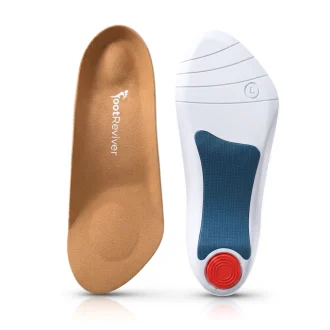
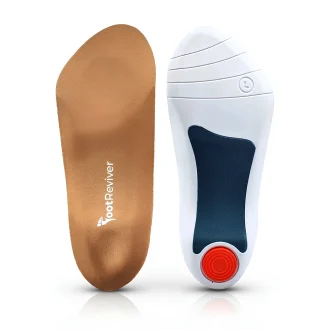
Plantar Fasciitis Arch Support 3/4 Length Heel Pain Relief Insoles
- 1x Pair of Arch Support Insoles — FootReviver Arch Support Insoles designed to steady your heel, support your arch, and help ease plantar‑fasciitis‑related heel discomfort during everyday wear
- For Men & Women
- Available in UK sizes 7–11 and 3–7; trim‑to‑fit forefoot for a closer match
- Slim 3/4‑length design fits most everyday shoes quickly and easily while leaving toes free
- Semi‑rigid plastic arch support, deep heel cup, and gentle medial posting (a small inner‑edge lift that guides alignment) help reduce excess inward roll and the strain it can place on the inner heel, arch, and plantar fascia
- Dual‑density foam cushioning with a built‑in heel pad absorbs impact while keeping midfoot support stable
- Soft, breathable fabric top cover with a moisture‑wicking surface helps keep feet drier and reduces rubbing; smooth against the skin to reduce irritation
- A practical choice for long shifts on your feet—retail, hospitality, healthcare—and for feet with low or high arches that benefit from steady support
- Designed to reduce strain on the plantar fascia and support comfortable daily movement; results vary and this is not a medical device
- Lightweight, durable, and easy to swap between shoes; trim the forefoot only, then seat the heel cup flush at the back
- Includes a full 30‑day money‑back guarantee
£9.99£10.99inc VAT -
Orthotic Heel Pad Plantar Fasciitis Inserts
- Are you struggling with heel pain that gets worse when walking or standing for extended periods, especially on hard surfaces? We understand your discomfort and have a solution that could change your life. The FootReviver Orthotic Shoe Inserts for Plantar Fasciitis are designed with your comfort in mind.
- These shoe inserts are more than just regular insoles. They are expertly designed by FootReviver, a trusted name in the field of foot care. Each pair is created with the goal of providing the ultimate solution to heel pain, a common symptom of plantar fasciitis. When you choose our product, you are choosing quality and effectiveness.
- These inserts are a universal solution, perfect for both men and women. They come in two size ranges: 7-11 and 3-7, even having the flexibility to be custom cut to perfectly fit your shoe.
- The design is compact and 3/4 length, so these inserts can be fitted in virtually any type of shoe. Perfect for those who need to shift between different shoes throughout the day, such as office wear to running shoes, ensuring constant comfort and support.
- Primarily aimed at preventing plantar fasciitis in individuals with flat feet or high arches, the FootReviver Orthotic Shoe Inserts are designed to provide optimal arch support. This feature plays a crucial role in reducing the strain on the plantar fascia, preventing further damage and fostering healing. They are designed to ensure that your feet have the right support they need, whenever they need it.
- Crafted with top-quality, medical-grade materials, the inserts offer unparalleled cushioning. The solid carbon fiber shell heel cup absorbs shock, protects your lower limbs, and prevents pressure point build-up. This feature is particularly beneficial for those with active lifestyles or demanding work environments.
- These inserts are not just limited to plantar fasciitis. They offer relief for a range of foot and lower limb conditions including Heel Spurs, Arthritis, Metatarsalgia, Morton’s Neuroma, Bunions, Blisters, Sesamoiditis, Achilles tendonitis, Ankle sprains, and Shin Splints. They also help correct gait issues such as supination and overpronation, making them an all-in-one solution for foot health.
- The FootReviver Orthotic Inserts promise relief, comfort and improved foot health. They are lightweight yet durable, and can be trimmed to fit any footwear, making them a versatile addition to your footwear.
- We are confident in the performance of our inserts as we provide a full 30-day money-back guarantee. If you are not 100% satisfied with your purchase, we offer a no questions asked return policy, which reflects our belief in the effectiveness of our product.
- Please note: We strongly recommend consulting with your doctor before using our heel cups especially if your symptoms persist. Your health is our utmost priority, and we strive to provide the best possible solution for your heel pain. If you have any queries or require further assistance, our team at Nuovahealth is always ready to help.
£9.99£10.99inc VAT -
Insoles for High Arches
- Full-length orthotic insoles designed to support high-arched feet inside everyday and sports shoes.
- Made for adults whose feet feel sore, tired, or under-supported during standing, walking, or running.
- Especially relevant if pressure tends to build under the heel and the ball of the foot.
- Firm arch support helps the middle of the foot sit on a more supportive surface.
- A deep heel cup helps hold the heel more steadily inside the shoe.
- Heel cushioning helps soften repeated impact, especially on hard floors and pavements.
- Forefoot cushioning helps reduce pressure under the ball of the foot during push-off.
- Full-length coverage gives a more even underfoot feel from heel to toe.
- Best suited to shoes with removable insoles and enough depth to fit a supportive orthotic properly.
- Remove the original insole before fitting to avoid making the shoe too tight.
- If needed, trim the front carefully for a closer fit, making small adjustments at a time.
- Start by wearing them for one to two hours, then build up over several days.
- They are designed to improve support and comfort, but they are not a substitute for assessment if pain is severe, worsening, or unexplained.
£9.99£11.99inc VAT -
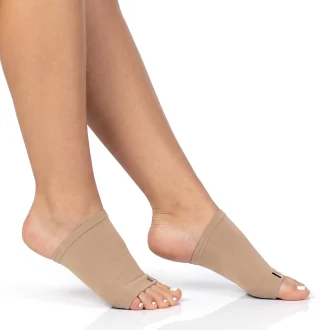
Gel Arch Support Compression Sleeves for Plantar Fasciitis relief & Flat Feet
- One pair of gel arch support foot compression sleeves
- Left- and right-shaped, so the pad sits along the arch on both feet
- Suits men and women — one size that stretches to fit
- Designed for plantar fasciitis, flat feet, fallen arches, high arches, and everyday heel and arch pain
- Suits tired, aching feet after long hours on hard floors
- Moulded medical-grade silicone gel runs the full length of the arch
- The gel absorbs the shock of each step and spreads pressure across a wider area of the sole
- Adds gentle, even compression around the foot
- Thin enough to sit inside most everyday shoes and trainers
- Can be worn alongside insoles or orthotics you already use
- Comfortable at home, with or without socks
- Start with an hour or two a day, then build up over a week or two
- For daytime wear only, not overnight
- 30-day money back guarantee
£7.99inc VAT -

Morton’s Neuroma Insoles with Forefoot cushioning & Metatarsal support
- Full-length insoles made for pain in the ball of the foot that gets worse when too much pressure goes through one small area, especially burning, tingling, stabbing, or pebble-like discomfort between the third and fourth toes.
- Best suited to adults whose forefoot pain builds with walking, standing, commuting, or long periods on hard floors.
- Built-in left and right metatarsal support helps take pressure off the sore nerve area by supporting the foot just behind it, rather than letting the front of the foot take the full force of push-off.
- Full-length gel cushioning helps make repeated ground contact feel less harsh across the whole foot, especially on firmer surfaces.
- Moderate arch support helps the middle of the foot take more of your weight, so the front of the foot does not have to do quite so much.
- A firmer heel base and heel cup help the foot feel steadier from first contact, so weight moves forward more smoothly instead of dropping quickly into the ball of the foot.
- Slim, lightweight full-length shape is easier to fit into many everyday shoes with enough depth.
- Available in adult USA sizes 3–9 and 7–13, with a trim-to-fit forefoot so you can adjust the fit using the printed guide underneath.
- Usually most comfortable in trainers, work shoes, casual shoes, safety shoes, and other shoes with a roomier forefoot.
- Usually not a good match for high heels or tightly tapered shoes that still squeeze the front of the foot from the sides.
- For the best fit, remove the original liner if possible and place the insole fully back in the shoe so it lies flat from heel to toe.
- Build wear up gradually, starting with 1 to 2 hours a day before increasing as comfortable.
- A good fit should feel like a gentle lift behind the sore area, not a lump pressing into it.
- If the pain is severe, follows an injury, or does not fit the usual Morton’s neuroma symptoms, it is sensible to speak to a podiatrist, physiotherapist, GP, or another appropriate clinician.
£10.99inc VAT -
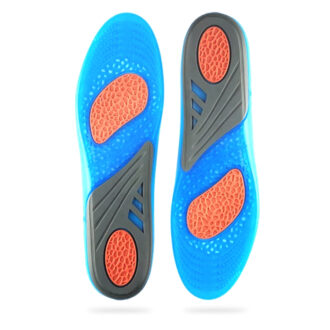
Soothing Gel Shoe Insoles for Diabetes
- Full-length gel insoles for adults who want everyday shoes to feel softer and more supportive.
- Useful for tired, sore, sensitive, or easily irritated feet, especially after standing or walking.
- May suit people managing diabetes or neuropathy who want a more forgiving feel inside ordinary footwear.
- Full-length gel cushioning helps reduce how hard the shoe feels from heel to toe.
- Moderate arch support helps the middle of the foot feel less flat and better supported.
- Firmer heel base and heel cup help the heel feel steadier from the first part of the step.
- A firmer, flatter, shock-absorbing forefoot support area helps when the front of the foot feels overworked.
- Designed to improve overall shoe comfort rather than padding just one small area.
- Often best suited to trainers, work shoes, walking shoes, safety shoes, and other footwear with enough depth.
- Usually less suitable for high heels, narrow dress shoes, or very shallow footwear.
- Available in adult USA sizes 3–9 and 7–13, with a trim-to-fit forefoot area to help match the shape of your shoes more closely.
- Start gradually and build up wear time over the first few days as comfortable.
- If you wish, separate metatarsal pads can also be worn with these insoles for more targeted forefoot support.
- If you have diabetes or neuropathy, check that the insoles and shoes feel comfortable and are not creating rubbing or pressure points.
£10.99inc VAT -
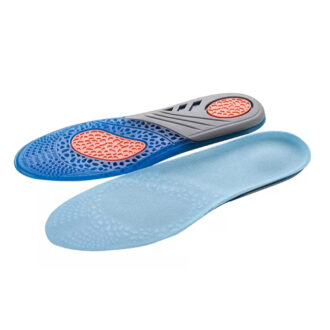
Gel Shoe Insoles for Atrophy of the fat pad, Cuboid Syndrome, Foot fatigue, Drop Foot & Heel bursitis
- 1x Pair of Gel Shoe Insoles for Atrophy of the fat pad, Cuboid Syndrome, Foot fatigue, Drop Foot, Heel bursitis and more!
- For both Men & Women
- Available in USA shoe sizes 3-9 & 7-13 (trim to fit)
- Helps keep your feet supported and comfortable when wearing shoes for long periods of time
- Features advanced inbuilt arch support that helps prevent common gait problems such as overpronation and supination and stops abnormal load and pressure from damaging and inflaming your plantar fascia ligaments and causing plantar fasciitis
- Specially designed heel cup and support technology helps to better support and stabilize your heels and ankle protecting them from shock, pressure and strain
- These gel insoles are often highly recommended by Podiatrists to help ease foot and heel pain and treat common foot injuries and problems including Flat feet, Plantar fasciitis, Heel Spurs, Metatarsalgia, Atrophy of the fat pad, Cuboid Syndrome, Foot fatigue, Drop Foot, Heel bursitis, Sesamoiditis, Morton’s Neuroma, Arthritis, Neuropathy, Ankle sprains and more!
- Designed to soothe and massage your feet as you walk and helps stimulates your blood vessels to improve circulation in them and speed up and improve injury recovery
- Lightweight, slim and breathable and breathable made from premium durable materials
- Great for running, exercising, playing sports or general everyday wear
- Includes a full 30-day money back guarantee!
£10.99inc VAT -
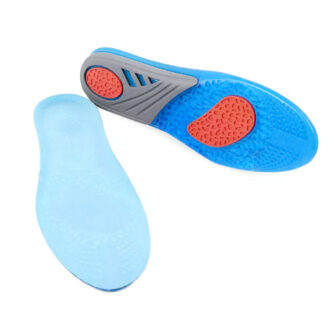
Orthotic Gel Shoe Insoles for Heel Spurs
- 1x Pair of Orthotic Gel Shoe Insoles designed to ease heel pain and for preventing and stopping Heel Spurs from getting worse
- For both Men & Women
- Available in 3-9 & 7-13 USA shoe sizes
- Specially designed to reduce pressure and stop abnormal load on your heel bones to prevent heel spurs from developing or worsening
- Great for people who have flat feet, high arches or suffer from gait problems such as Overpronation and Supination which puts more pressure on your feet when you walk
- Made from medical grade shock absorbing silicone gel that cushions and protects your feet and heel from shock, vibrations and impacts and helps spread weight and pressure evenly underneath your feet stopping pressure points from developing and causing damage and pain to them
- Can also be worn to help treat, ease and prevent Arthritis, Gout, Foot fatigue, Diabetic foot, Neuropathy, Raynaud’s disease, Plantar fasciitis, Heel Bursitis, Foot drop, Metatarsalgia, Morton’s Neuroma, Achilles tendonitis, Cuboid Syndrome, Ankle and Foot fractures, Shin splints as well as pain in your knees and lower back
- Advanced arch support technology properly supports the arches of your feet taking strain and pressure off key ligaments found in your feet such as your plantar fascia ligament to help prevent overuse injuries including Plantar fasciitis
- Inbuilt stabilizing heel cups built into the insoles helps to support and realign your heels and ankles in the correct position and prevent movement which can cause injury to them
- Ideal for people who suffer from tired aching feet or legs when standing for long periods of time
- Features anti-slip technology that stops your feet from moving around and rubbing against the sides of your shoes and causing blisters to develop
- Includes a full 30-day money back guarantee!
£10.99inc VAT -
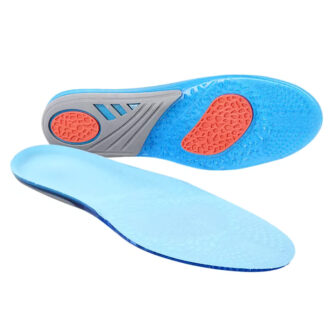
Massaging gel insoles for Blisters
- 1x Pair of FootReviver™ Orthotic Gel insoles for treating and easing blisters effectively by stopping your feet from rubbing against your shoes
- For both Men & Women
- Available in 3-9 & 7-13 USA shoe sizes (trim to right size using scissors)
- Features a soft velvet top layer and a shock absorbing silicone gel bottom layer that will help to protect your feet and keep them comfortable all day long
- Can be placed in the fridge to cool down for a few minutes to provide soothing cold therapy to your feet to help ease pain caused by blisters
- Helps alleviate pressure and stops rubbing and chaffing on your feet to treat and prevent blisters
- Soothing massaging gel eases aches and pains and stimulate blood flow to your flow to help promote the natural healing process of damaged tissue
- Ideal for people who find themselves stood for long amounts of time and suffer from tired aching feet and legs
- Realigns and supports your feet in the correct position and corrects your gait to help stop your feet from moving excessively in your shoes and rubbing against the sides which often can cause blisters to develop
- These insoles can also be worn to also help treat and ease a range of other foot and lower limb injuries and conditions and not just blisters including Bunions, Plantar Fasciitis, Metatarsalgia, Morton’s Neuroma, Arthritis and Achilles tendonitis
- Can be fitted inside a range of footwear and are great for running, sports and everyday use
- Please note: To avoid blisters you must make sure that your shoes are not too tight or too loose and that the insoles fit properly inside of them
- These insoles make an excellent combo with a pair of blister protection sleeves available here.
- Includes a full 30-day money back guarantee!
£10.99inc VAT -
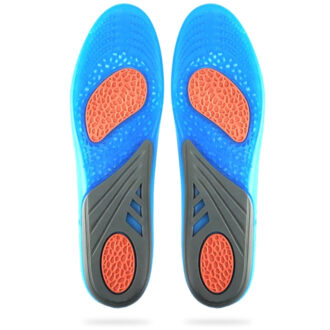
Everyday Comfort Gel Walking Insoles
- 1x Pair of Everyday Comfort Gel Walking Insoles specially created for people who love to walk or run long distances and don’t want painful aching feet or legs
- For both Men & Women
- Available in 3-9 & 9-13 USA shoe sizes (trim to fit using scissors)
- The soothing silicone gel that these insoles are made from will help to massage and relax your feet as you walk not only that, but this specially designed gel will also help to stop pressure points from developing underneath your feet by evenly spreading weight across your soles
- Designed to cushion and protect your feet from shock and impacts created when your feet strike the ground when you are walking, running or jumping
- Features inbuilt arch support technology that has been specially designed to support the arches of your feet in the optimum position and helps take strain and pressure off your arches to prevent overuse injuries such as Plantar fasciitis
- These walking insoles are lightweight, breathable and durable and can be slipped easily inside many different types of footwear including Walking shoes and Boots, Trainers, Work boots, High heels, Slippers, as well as Casual and Formal shoes
- Helps stop heel pain in its tracks by stabilizing and supporting your heels and ankles and prevents twisting and excessive movement of your feet which can cause injuries such as ankle sprain and Achilles tendonitis from occurring
- Highly recommended for people with Flat feet, High arches, Supination, Overpronation, Plantar Fasciitis, Heel Spurs, Bunions, Metatarsalgia, Sesamoiditis, Morton’s Neuroma, Diabetes, Cuboid Syndrome, Achilles tendonitis, Shin splints, Patella tendonitis, as well as Knee, hip and back pain
- Designed to help fix your gait when you walk preventing excessive pronation during the gait cycle in order to minimize the pressure being put on your feet and prevent injuries from developing
- Includes a full 30-day money back guarantee!
£10.99inc VAT -

Soothing gel insoles for Neuropathy
- 1 pair of soothing gel insoles designed to make everyday shoes feel more cushioned and supportive under sensitive feet.
- Suitable for men and women.
- For adults with neuropathy-related foot discomfort, including burning, tingling, numbness, soreness, or oversensitivity.
- Also commonly chosen by people with diabetes and other causes of reduced or altered feeling in the feet.
- Made from medical-grade silicone gel to soften repeated impact under the heel, middle of the foot, and forefoot.
- Helps spread pressure across more of the sole of the foot instead of letting one small area take too much load.
- A supportive heel cup helps keep the heel steadier inside the shoe and can reduce excess side-to-side movement.
- Intended to make walking and standing feel less harsh, especially on harder surfaces.
- Can help reduce rubbing inside the shoe by improving how the foot sits against the insole.
- Available in USA shoe sizes 3–9 and 7–13, and can be trimmed for a neater fit using the size guide printed on the insoles.
- Made for everyday use in a wide range of footwear, provided the shoe has enough depth and room.
- Best introduced gradually at first if your feet are especially sensitive or your feeling is reduced.
- Check your feet regularly for redness, rubbing, or pressure marks, especially when trying them in a new pair of shoes.
- These insoles do not cure neuropathy or repair nerve damage; they are designed to improve comfort and reduce everyday stress on the feet.
£10.99inc VAT -
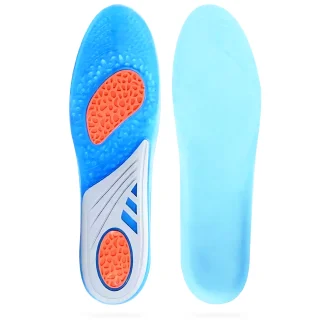
Shock absorbing insoles for Trainers & Running shoes
- FootReviver Shock Absorbing Insoles are designed for runners, athletes, and anyone who spends long hours on hard surfaces. They reduce the impact your body absorbs with every step—protecting your feet, ankles, knees, hips, and lower back from repetitive stress.
- Sizing: Available in two size ranges: UK 3–9 and UK 9–12 (USA 3–9 and USA 7–13). Sold as a pair. Trimmable to fit exact shoe size.
- Who they’re for: Runners managing plantar fasciitis, shin splints, runner’s knee, or general impact-related pain. People who work long shifts on concrete or hard floors. Anyone with tired, aching feet at the end of the day.
- How they work: Full-length gel cushioning absorbs shock from heel to toe. Targeted heel and metatarsal pads provide extra cushioning where impact is highest. Moderate arch support and a shaped heel cup improve stability and control overpronation. Breathable honeycomb design keeps feet cool and dry.
- What to expect: Softer landings, less heel and forefoot pain, reduced fatigue in your legs and lower back. Most people notice gradual improvement over 2–4 weeks of consistent wear.
- Fit: Designed for trainers and running shoes. Gradual break-in essential—start with 1–2 hours, build up over 1–2 weeks.
- Guarantee: 30-day money-back guarantee from NuovaHealth.
£10.99inc VAT -
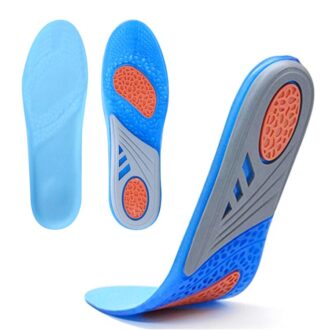
Shock Absorbing Insoles for Achilles tendonitis
- Shock-absorbing full-length insoles for everyday trainers, running shoes, and many roomier work or casual shoes.
- Mainly suited to adults with Achilles tendon pain that is worse with repeated impact, long periods on hard floors, running, or tired, unsupported feet.
- Made to soften the feel of each step, especially if the back of the heel feels sore when your foot first lands.
- Combine cushioning with heel and arch support, rather than relying on softness alone.
- Include extra support under the heel and ball of the foot to help spread force more evenly across the sole.
- A firmer section under the heel helps give the back of the foot a steadier base during walking and standing.
- A shaped heel cup helps keep the heel more centred inside the shoe.
- Moderate arch support is intended to support tired feet without feeling too hard or intrusive for everyday wear.
- May help if your Achilles pain is worse after running, long walks, stairs, or hours spent on hard surfaces.
- May also suit people whose feet feel tired, less supported, or less steady later in the day.
- Best introduced gradually, starting with shorter periods of wear before using them for longer walks, runs, or full work shifts.
- Usually work best in shoes with enough depth to fit a supportive insole comfortably.
- Not a cure and not a substitute for sensible activity adjustment if the tendon is already irritated.
- If symptoms are severe, unusual, or not settling, it is sensible to speak to a GP, physiotherapist, podiatrist, or another appropriate clinician.
£10.99inc VAT -

Gel Footbed Insoles for trainers
- 1x Pair of Gel Footbed Insoles for trainers and running shoes to help protect your feet and lower limbs from shock when running, exercising or playing sports
- For both Men & Women
- Available in sizes 6-9 & 8-12 (trim to fit)
- Recommended for people suffering from Plantar fasciitis, Heel Spurs, Flat feet, High arches, Achilles tendonitis, Arthritis, Neuropathy, Diabetes, Raynaud’s disease, Poor circulation, Metatarsalgia, Morton’s neuroma, Bunions, Pes Cavus, Sesamoiditis, Cuboid Syndrome, Ankle sprains, Shin splints as well as Knee, Hip and lower back pain
- Made from medical grade silicone gel that massages your feet and helps prevent foot fatigue and improves muscle recovery by stimulating the blood vessels in your feet to boost the circulation in them
- Helps cushion your feet and absorbs shock and vibrations whenever your feet strike the ground when walking, running and jumping to deplete the impact felt on key ligaments, tendons and joints found in your feet, knees, hips and lower back
- The silicone gel moulds to the exact shape and contours of your feet to provide a custom level of support and protection
- Helps correct common gait problems and biomechanical imbalances known to cause injury such as Overpronation and supination
- Provides supports your arches in the correct position and helps take strain and pressure off your plantar fascia ligament to help prevent and treat Plantar fasciitis
- 3/4 length heel cup provides extra support and stability to your heels and ankles and prevents heel pain by spreading weight evenly underneath your heels to stop pressure points from developing when stood for long period of time
- Lightweight and breathable design featuring moisture wicking technology and antibacterial properties to keep your feet fresh and odour free
- Includes a full 30-day money back guarantee!
£11.99inc VAT -
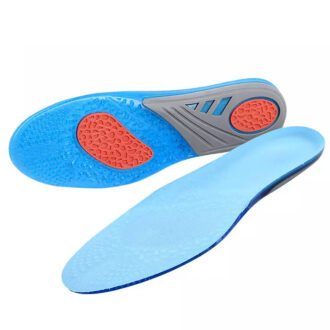
Full-length Gel insoles for Bunions (Hallux Valgus)
- 1x Pair of Orthotic Gel Insoles that mould to the exact shape and contours of your feet help to protect and stop bunions from getting worse
- For both Men & Women
- Available in 3-9 & 7-13 USA shoe sizes
- Designed to stop bunions from getting worse by shielding them from shock and pressure and helps ease pain caused by them
- Improves the way your feet function to correct biomechanical imbalances such as supination and overpronation which are known to cause bunions to develop
- Recommended by Podiatrists for treating and easing Bunions, Arthritis, Metatarsalgia, Sesamoiditis, Morton’s Neuroma, Oedema, Neuropathy, Diabetes, Poor circulation, Raynaud’s disease, Fallen arches, Flat feet, Plantar Fasciitis, High arches, Cuboid Syndrome, Heel Spurs, Achilles tendonitis, Shin Splints as well as knee, hip and lower back pain
- Features specially adapted orthotic technology that helps corrects the way that you walk to place less strain and pressure on your feet to help you stay injury and pain free
- Inbuilt arch support system helps prevent abnormal load being put on your plantar fascia ligament protecting it from overuse injuries such as Plantar fasciitis
- Provides excellent shock absorption to protect your feet and lower limbs from shock, impacts and vibrations to prevent further pain and injuries developing
- Made from medical grade Silicone gel that is designed to soothe and massage your feet as you walk stimulating blood flow in your feet to help reduce swelling and inflammation, and supply damaged tissue with fresh oxygenated blood to speed up healing
- Supports your forefoot and metatarsal bones in the correct position helping to reduce the appearance overtime of bunions
- 3/4 length hard shell heel cup protects your heels from shock and injury and helps give your feet extra stability
- Ideal for wearing when standing for long periods of time – These insoles will spread weight and pressure underneath the soles of your feet stopping pressure points from forming and causing tired aching legs and feet
- Includes a full 30-day money back guarantee!
£10.99inc VAT -
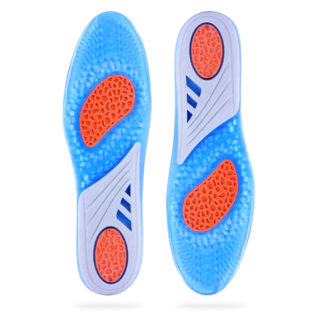
Gel Metatarsal Support Insoles for Metatarsalgia (Ball of foot pain)
- 1 pair of full-length orthotic gel metatarsal support insoles designed to cushion the ball of the foot and improve comfort during walking and standing.
- Mainly suited for those with pressure-related pain at the front of the foot, including discomfort often linked with metatarsalgia.
- Useful if the ball of the foot feels bruised, tender, burning, or more painful after time on hard floors or longer periods on your feet.
- Gel cushioning under the forefoot helps soften contact where pressure often peaks near the end of each step.
- The metatarsal support shape helps spread force across the front of the foot instead of letting it settle into one sore area.
- Full-length support under the arch and heel helps create a steadier base so the forefoot is not left to absorb as much strain on its own.
- Can be helpful in shoes that feel flat, thin underfoot, or harsh on hard surfaces, provided there is enough room in the shoe.
- Suitable for both men and women and easy to trim to size using the printed guide on the insoles.
- Available in US shoe sizes 3–9 and 7–13.
- Made from soft silicone gel that moulds more comfortably under the foot and helps reduce how sharp impact feels under sensitive areas.
- Start by wearing them for short periods, then build up as comfort allows so your feet can adjust.
- If the shoe feels tight across the toes or pushes the top of the foot upwards, the fit is unlikely to be right.
- These insoles may improve comfort and reduce aggravation, but they do not treat every cause of pain in the ball of the foot.
- If pain is severe, follows an injury, comes with marked swelling, or does not settle, speak with a GP, physiotherapist, podiatrist, or another appropriate clinician.
£10.99inc VAT