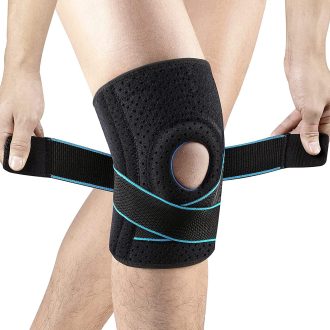
Knee Supports

Knee Pain, Instability and Stiffness: When a Support Can Help

Knee problems can show up in many ways. You might feel a sharp pain when you twist or change direction, a dull ache at the front of the knee when you use the stairs or squat, a pulling pain just below the kneecap when you jump, or a deep ache and stiffness that makes walking or standing for long periods harder than it should be. Some people notice catching or locking. Others feel as if the knee could “give way” without warning.

These experiences usually reflect what is happening to key structures in your knee when you stand, walk, or turn. Ligaments that normally steady the shin bone (tibia) under the thigh bone (femur) can be stretched or torn. The C‑shaped meniscus cartilages between the bones can be pinched or worn. The kneecap (patella) may not slide smoothly in its groove. Tendons and the joint lining can become irritated and inflamed. When any of these are under too much strain, movements like twisting, kneeling, squatting, running, or even standing for a long time can become painful or feel unreliable.

It is understandable to feel frustrated or cautious about moving when your knee behaves like this. The right knee support can help. It changes how much strain falls on sore ligaments, cartilage, or tendons and how the joint moves. Supports can limit twisting and side‑to‑side movement, help the kneecap run more smoothly in its groove, reduce movement into painful end ranges, and support control of swelling around the joint. That often makes everyday tasks such as walking, using stairs, or returning to gentle exercise feel more manageable while you work on strength, flexibility, and movement control.

On this page you will find knee supports ranging from simple sleeves to more structured braces and straps, so you can match the level of support to what your knee needs. These have been chosen and developed by NuovaHealth to match the knee problems people most often describe in everyday life—such as instability after a twist, pain around the kneecap, or aching from arthritis—and to cover key mechanical needs such as stability, kneecap guidance, tendon support, and unloading a worn side of the joint.


How Knee Supports Change Load and Movement

Different supports act in different ways, but they all change how strain is shared between the different parts of the knee. They can:

  • apply compression around the joint, which helps manage swelling in and around the joint lining (synovium) and improve feedback from the skin and deeper tissues
  • guide the joint so it bends and straightens along a steadier path, reducing small sliding movements between the femur and tibia
  • limit side‑to‑side angling (valgus and varus) and sudden twisting that increase strain on ligaments and the meniscus
  • influence how the kneecap moves in its groove, so pressure is not all focused on one small area behind it
  • apply focused pressure to tendons or bands of tissue so the sore area is not taking all the load
  • take some body weight away from the more worn or painful side of an osteoarthritic knee.

These supports do not, on their own, cure the underlying injury or arthritis, but they can reduce the particular movements and pressures that keep it irritated. If you notice pain is focused in one small area of the knee, these changes are about spreading that load more evenly. Many people find this makes pain easier to live with and helps them build up strength and get back to walking, stairs, and light exercise with more confidence.


Compression Sleeves

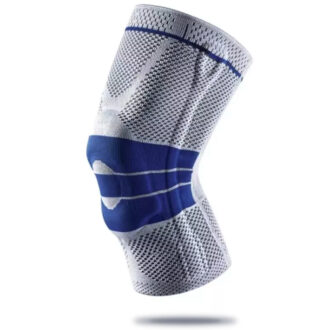
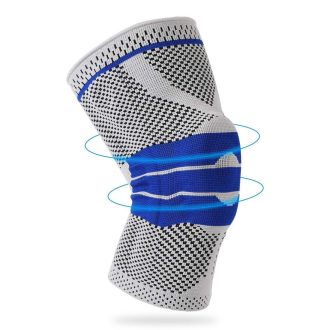
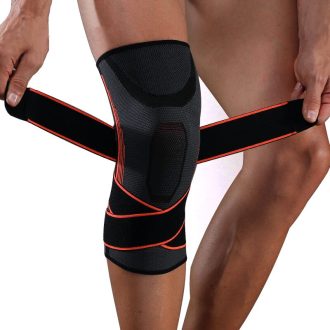
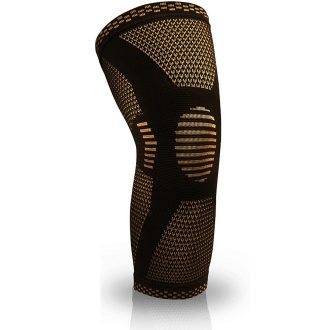
Compression sleeves cover the whole joint and apply steady, even pressure to the soft tissues and capsule around the knee. This gentle compression can help limit excess fluid building up in and around the joint and help that fluid drain away more easily. Because the sleeve is in close contact with the skin and tissues underneath, it also improves your awareness of where the knee is in space, which can make it easier to control how you move.

Sleeves are often used when the knee feels mildly swollen or “puffy” after activity, or when there is a general ache from early osteoarthritis, a rheumatoid flare, or a minor sprain or strain without marked instability. In these situations, compression can reduce the sense of fullness, take the edge off stiffness, and support the muscles around the knee so walking, standing, or light exercise feels more secure. You may notice that when swelling is better controlled, the knee feels less tight and easier to bend. Because they are soft and flexible, sleeves do not stop the knee wobbling or twisting if the ligaments are badly stretched or torn, so a sleeve on its own is usually not enough for a knee that regularly gives way.


Hinged and Structured Braces

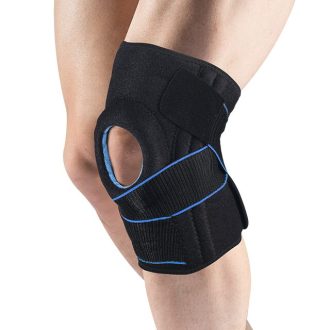
Hinged and structured braces have firm side bars or upright sections along the outside of the joint, linked by hinges at knee level. These parts control side‑to‑side movement and reduce excess twisting between the femur and tibia, while still allowing you to bend and straighten your knee.

This type of brace is usually recommended by clinicians when the major stabilising ligaments are injured or lax – the anterior cruciate ligament (ACL), posterior cruciate ligament (PCL), medial collateral ligament (MCL) or lateral collateral ligament (LCL). It is also used when there is joint‑line pain and a tendency to wobble or feel unsteady, especially on uneven ground or when changing direction, with meniscal injury or more advanced osteoarthritis. By limiting the movements that open the inner or outer side of the joint, and by preventing the shin bone sliding too far forwards or backwards, a hinged brace reduces stress on these ligaments and on the meniscus between the bones.

Because these braces offer more support, they are often used for work or sports that involve turning, sudden stops, or uneven ground, and in the months after surgery when a surgeon or physiotherapist recommends them. They do not replace the need for rehabilitation exercises, but they can lower the risk of the knee giving way while you build strength and control.


Patella‑Support and Tracking Braces

Patella‑support braces and sleeves are designed around the kneecap and the groove it tracks in at the end of the thigh bone (the trochlear groove). Many use an open ring around the kneecap and a shaped pad on one side to gently nudge it into a better position. When the kneecap drifts outwards or tilts, more pressure is placed on one part of the patellofemoral joint; guiding it back towards the centre can spread this pressure more evenly.

These supports are often used for pain around or behind the kneecap during running, using stairs, or squatting, or when you sit with the knee bent for a long time – often labelled Runner’s Knee or patellofemoral pain. They are also used in patellofemoral osteoarthritis, where cartilage behind the kneecap is sensitive, and when known alignment or tracking issues are contributing to symptoms. If your pain is mainly at the front of the knee on stairs or when getting up from a low chair, this joint is often involved.

By reducing sideways drift and tilt, patella‑support braces aim to reduce the small areas of high pressure on one side of the kneecap and can make bending and straightening feel smoother and more controlled.


Straps and Targeted Tendon Supports

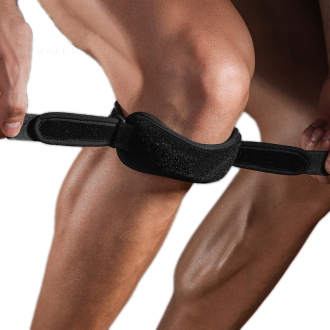
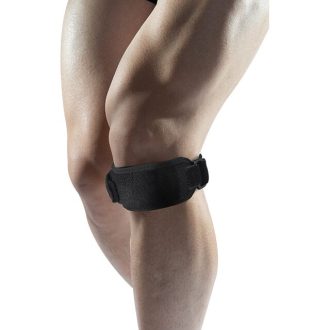
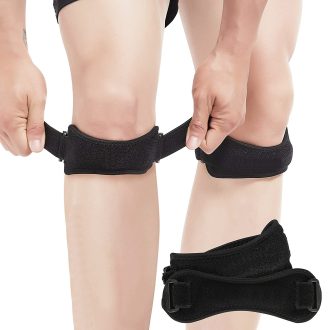
Some supports are focused on a smaller area. Infrapatellar straps and sleeves with built‑in pads apply gentle pressure to the patellar tendon, which connects the lower edge of the kneecap to the shin bone. Pressing on the tendon just below the kneecap changes how tension is shared along the tendon so that less force is concentrated at the irritated attachment near the inferior pole of the patella.

This type of strap can be particularly helpful for Jumper’s Knee (patellar tendinopathy), where pain is felt just below the kneecap when you jump, run, or go downstairs. By reducing peak strain in the middle of the bend—not fully straight and not fully bent—during stairs, squats, and landing, a strap can make these movements more tolerable while you work through a strengthening programme.

Other focused supports sit over the lower part of the iliotibial band on the outer side of the knee, a thick band that runs from muscles at the outer hip to the upper shin. A strap or pad just above the outer joint line can reduce the repeated pressure of the band over the bony bump on the outer femur. This is often where pain comes from in Iliotibial Band Syndrome. In both cases, the aim is to alter how forces pass through a specific tendon or band so the most irritated point is shielded from some of the strain.


Unloading Braces for Osteoarthritis

Unloading, or offloading, braces are more specialised and usually used when osteoarthritis mainly affects one side of the knee joint. In many people, the inner (medial) or outer (lateral) joint surfaces between the femur and tibia bear more load, especially if the leg tends to bow outwards or inwards. The cartilage and underlying bone on that side then take more stress with each step.

An unloading brace uses pressure above and below the knee to apply a gentle corrective force near the joint. For example, in medial compartment osteoarthritis often seen with bow‑legged alignment, the brace can apply a small outward (valgus) force to reduce pressure on the inner joint surfaces. In lateral compartment osteoarthritis, it can apply a slight inward (varus) force. In everyday terms, this means a little less pressure going through the more painful side of the joint with each step. This does not reverse arthritis, but by taking some load off the more worn side of the joint it can make walking, standing, and using stairs more comfortable.


Which Type of Knee Support Might Suit You?

Different types of knee pain and instability tend to respond to different types of support. As a general guide, ask yourself which of these sounds most like your knee:

  • Unstable or “giving way” after a twist?
    Does the knee feel wobbly, unstable, or as if it could give way after a twist or sprain? This often means that one or more of the ligaments that normally keep the joint steady have been stretched or torn. A hinged or structured brace that limits side‑to‑side movement and twisting can help take over some of this stabilising role while ligaments heal and muscles are strengthened. You might notice this most when walking on uneven ground or changing direction quickly.
  • Pain around or behind the kneecap?
    If pain is mainly around or behind the kneecap when you run, use stairs, squat, or sit with the knee bent, the pain often comes from the way the kneecap moves in its groove and where pressure builds up behind it. A patella‑support sleeve or brace that guides the kneecap towards the middle of the groove and reduces uneven pressure can be useful here.
  • Pain just below the kneecap with loading?
    If you feel a sharp or aching pain just below the kneecap when you jump, run, squat, or go downstairs, the patellar tendon where it meets the lower edge of the kneecap may be taking more strain than it can currently handle. A patellar tendon strap or a sleeve with a tendon pad can change how force is shared along the tendon and reduce peak stress at that sore attachment.
  • Outer‑knee pain that builds with distance?
    If pain is felt along the outer side of the knee and tends to build after a certain distance of running, walking, or cycling – often worse going downhill – the lower part of the iliotibial band near the outer side of the femur is commonly involved. A strap or support that applies focused pressure over this band just above the outer joint line can reduce irritation in that area.
  • Deep ache and stiffness inside the knee?
    If there is a deep ache and stiffness inside the knee that worsens with walking or standing, especially if you have been told you have osteoarthritis, the cartilage covering the joint surfaces is likely thinner and the underlying bone more sensitive. A supportive brace, and in some cases an unloading brace that shifts some load away from the most worn side, can help manage joint stresses during everyday tasks.
  • Swollen or “puffy” knee?
    If the knee feels puffy, swollen, or generally sore without major instability, fluid in and around the joint can make it feel stiff and weak. You may notice this most after a long day on your feet. A compression sleeve can help manage swelling and provide light support, which often makes it easier for the quadriceps to work effectively and support the joint.

If you are unsure which of these descriptions best fits your knee, the condition overviews in the accordion below give more detail on how each problem tends to feel and behave, and how supports are often used alongside rehabilitation. Speaking to a medical professional can also help you choose the most appropriate type. The “When to Seek Further Help” section on this page highlights situations where assessment should not be delayed.


Common Knee Problems and How Knee Supports Help

Our knee supports are widely recommended by health professionals for treating and helping to prevent a variety of knee conditions and injuries including:

For Knee Ligament Injuries

Knee Ligament Injuries

Knee ligament injuries, including the ACL, MCL, PCL, and LCL, can make walking, turning, or playing sport painful and unstable. These ligaments act like strong guides that keep the knee moving in safe paths. When one is injured, the knee can slide, twist, or angle more than it should, which is why even simple tasks can feel difficult.

What Are Ligament Injuries?

Ligaments connect bone to bone and control how far and in what direction a joint moves. In the knee, the ACL helps stop the shin bone (tibia) sliding forward and controls twisting. The MCL helps stop the knee caving inward (valgus). The PCL helps stop the shin bone sliding backward. The LCL helps stop the knee bowing outward (varus) and adds stability on the outer side of the joint. If a ligament stretches too far or tears, the knee loses these controls. Pain, swelling, and a “giving way” feeling can follow, like an overstretched rubber band that no longer snaps back.

Commonality and Risk Factors

These injuries are common in active people. Fast cuts, pivots, sudden stops, and awkward landings in sports load the ligaments heavily. Women have a higher risk of ACL injury due to a mix of anatomy, movement patterns, and hormones. Young, active adults are affected more often, and a past knee injury can raise the chance of another.

Symptoms and The Importance of Treatment

People often feel or hear a pop at the time of injury, followed by sharp pain, swelling, stiffness, and a sense that the knee might buckle, especially when turning or going down stairs. In more severe cases you may struggle to put weight through the leg straight away. Ignoring these signs can lead to repeated giving‑way episodes, extra rubbing and sliding between the joint surfaces of the femur and tibia, cartilage damage, and early arthritis. Getting assessed early and starting a clear plan improves results and speeds recovery.

If you have a major fall or twist with immediate, significant swelling, obvious deformity, or cannot bear weight, it is important to seek urgent medical assessment, such as at A&E or an urgent GP appointment, before using a brace.

Treatment Options

Right after injury, rest, ice, compression, and elevation help control pain and swelling. Rehabilitation then builds strength in the quadriceps and hamstrings, improves hip control, and retrains balance and movement so the muscles and nervous system can better protect the knee. For more severe tears—especially a full ACL or PCL tear, higher‑grade MCL or LCL injuries, or combined injuries—surgery may be considered, followed by guided rehab.

The Role of Knee Supports

Knee supports help protect the injured ligament and guide the knee to move in safer paths while you heal and rebuild strength. Many designs include compression elements that help manage swelling in and around the joint, which can reduce stiffness and make it easier for the quadriceps to switch on again. The contact from a brace can also sharpen your sense of joint position, helping you react more quickly to sudden movements.

For ACL injuries, a functional brace usually has sturdy side uprights with hinges at the level of the knee joint and straps above and below the knee. This creates a gentle push–pull system that resists the shin bone sliding forward under the thigh bone, the motion the ACL normally stops. Many designs also limit too much inward collapse and twisting, which are key parts of the pivoting motion that triggers instability after an ACL tear. By keeping the shin from gliding forward during cutting, slowing down, or landing, the brace lowers stress on healing tissue or a surgical graft and can reduce episodes of giving way.

For MCL injuries, a hinged brace controls inward movement that opens the inner side of the knee. The rigid frame and hinges keep the thigh and shin bones from angling toward each other under valgus load. Some braces place extra support on the inner side to offload the injured MCL fibres in early healing. If bending or straightening to the end of range strains the MCL, the brace can limit those end ranges so you can move and work while protecting the ligament.

For PCL injuries, a brace applies a gentle forward‑directed force on the upper shin to counter the backward sag the PCL normally stops, especially when the knee is bent and the tibia tends to drop backwards. By holding the shin in a more neutral position under the thigh bone during walking, stairs, or standing up from a chair, the brace reduces shear on the healing PCL and tissues at the back of the knee.

For LCL injuries, a hinged brace focuses on controlling outward bowing that opens the outer side of the knee. A rigid or semi‑rigid frame with well‑aligned hinges limits varus stress and helps keep the thigh and shin bones from angling away from each other. Some braces add targeted support on the outer side to offload the injured LCL fibres, especially early on when that tissue is sensitive to side‑to‑side forces. If certain end ranges increase tension on the LCL, the brace can be set to restrict those ranges while allowing safe motion for daily activity.

Across all ligament injuries, choosing the right level of support matters. Mild sprains may be managed with lighter supports or sleeves under professional advice, while higher‑grade tears and early post‑surgical phases often require more structured, hinged designs. A brace can support your recovery, but it needs to sit alongside good exercises and sensible activity changes, not instead of them.

Conclusion

ACL, MCL, PCL, and LCL injuries weaken the knee’s natural stabilisers, causing pain, swelling, and instability. Early recognition, sensible protection, focused rehabilitation, and surgery when needed give you the best path back. The right knee support can reduce the slipping, twisting, and opening forces that stress your injured ligament, help control swelling, and improve confidence as you move, particularly during higher‑risk tasks such as turning, uneven ground, or sport.

For Runners Knee

Runner’s Knee

Runner’s Knee, or patellofemoral pain syndrome, describes pain around or behind your kneecap. If you feel a persistent ache at the front of your knee when you run, climb stairs, squat, or sit with your knee bent for a while, this pattern is often seen in Runner’s Knee.

What is Runner’s Knee?

Runner’s Knee involves irritation where your kneecap (patella) glides in a shallow groove at the end of your thigh bone (the femoral trochlear groove). As you bend and straighten your knee, the patella should glide smoothly in that groove. When it doesn’t—because of overload, alignment issues, or muscle imbalance—the patella can tilt or drift slightly to one side, usually outward (lateral maltracking). This increases pressure on a small area of cartilage and surrounding tissues, often on the outer side of the patella, causing the aching and sometimes grinding pain you feel.

Causes, Risk Factors, and Symptoms

Runner’s Knee often develops after a period of doing more than your kneecap joint can adapt to in the short term, especially with a lot of hills, stairs, or speed work. Patellar maltracking can add to the problem, as can muscle imbalances—weak quadriceps (especially the inner portion that helps guide the kneecap), weak hip muscles that let the knee drift inward, and tight tissues on the outer thigh. Foot mechanics like flat feet can increase inward rotation and pull the kneecap off its ideal path. Women can be at higher risk due to pelvic width and movement patterns that increase inward knee drift. Prior knee issues and worn‑out or unsuitable footwear can also play a part.

You will typically notice a dull, aching pain around or behind the kneecap during running, squatting, climbing or descending stairs, or after sitting with the knee bent (“moviegoer’s sign”). You might feel or hear grinding when you bend and straighten the knee. If getting up after sitting for a while is one of the worst times, that is very typical of this problem. Swelling is usually mild, if present at all.

Why Treatment is Essential

If the kneecap continues to track poorly and the joint is repeatedly overloaded, irritation can become longer‑lasting. Some people change how they move to protect the painful area, which can then place extra strain on other joints. Addressing it early usually makes it easier to calm the pain and build back up to the activities you want to do.

Treatment Options and the Role of Knee Supports

Most people do well with simple steps at first: easing back on painful activities, using ice and compression to calm symptoms, and gradually rebuilding strength and control. Working on the quadriceps (especially the inner portion), glutes, and hip stabilisers helps guide the knee along a better path and reduces inward collapse. Stretching tight quads, hamstrings, calves, and the outer thigh can reduce sideways pull on the kneecap. Foot support can help if your feet roll in excessively. Medicines that reduce pain and inflammation may help for a short period. Surgery is rarely needed and reserved for cases that do not respond to thorough rehabilitation.

Knee supports can help by influencing how your kneecap moves and how pressure is shared behind it.

A patellar‑tracking brace with a supportive buttress gently guides the kneecap towards the centre of its groove, especially between about 20–60 degrees of bend where forces on the patellofemoral joint are high and symptoms are often worst. If your kneecap tends to drift outward, a lateral buttress applies a subtle inward (medial) glide to reduce tilt and shift. This helps the patella sit more evenly in the groove and can lower the concentrated pressure on the outer side that often causes pain. An open‑patella ring can cradle the kneecap, reducing direct pressure on it while steadying its path.

Adjustable strap systems on some braces let you fine‑tune the direction and amount of corrective force, similar in concept to taping techniques used in rehab but in a reusable form. By keeping the kneecap better centred during running, stairs, and squats, these braces can make movement feel smoother and more controlled while you build strength and flexibility.

Compression sleeves without a specific patella buttress provide more general support. They apply uniform pressure around the joint, which can help limit mild swelling and improve awareness of joint position. That feedback can make it easier to engage the quadriceps, which is important for guiding the patella. Sleeves on their own are usually most suitable for milder symptoms or as an addition to other treatment.

Fit matters. A patella opening should sit squarely over your kneecap, and if you use a buttress to correct outward drift, it should sit along the outer edge of the patella to nudge it inward. Any straps should feel supportive without pinching or affecting circulation. It makes sense to wear the support during activities that usually trigger pain so your kneecap is better controlled while you rebuild strength and mobility.

Conclusion

Runner’s Knee is common but usually manageable with the right mix of load changes, strengthening, and movement retraining. The main issue is how the kneecap moves and where pressure builds up behind it. The right knee support can help by guiding the patella into a more comfortable path, reducing uneven pressure on the joint surfaces, and improving control as you move, so you can progress rehabilitation with more confidence.

For Jumpers Knee

Jumper’s Knee

If you feel sharp or aching pain just below your kneecap when you jump, run, squat, or go downstairs, you may be experiencing a pattern often called Jumper’s Knee, also known as patellar tendinitis or patellar tendinopathy. It affects the patellar tendon—the strong band connecting your kneecap (patella) to your shinbone (tibia)—which you rely on every time you straighten your knee to take off, land, or stand up.

What is Jumper’s Knee and How Common is It?

Jumper’s Knee involves irritation and overload of the patellar tendon, most often where it attaches to the lower edge of the kneecap (the inferior pole). With repeated high forces, tiny tendon fibres can become disorganised and more sensitive, leading to localised pain right at the front of the knee. It is common in sports that involve frequent jumping and quick changes of direction, but anyone who suddenly increases running, stair climbing, or time on their feet at work can be affected.

Causes, Risk Factors, Symptoms, and the Importance of Treatment

The main cause is repeated loading that outpaces your tendon’s ability to adapt—such as adding more runs, jumps, or stairs too quickly, training on hard surfaces, or not allowing enough recovery. Tight quadriceps or calves increase pull on the tendon. Weak or underactive quadriceps and hip muscles mean the tendon has to absorb forces it should normally share with muscle and joint structures. If your knee drifts inward when you land or stand from a chair, the pull on the tendon concentrates near its attachment. Prior knee issues, flat feet, and worn or unsuitable footwear can add to the strain.

You will usually notice a tender spot at the lower edge of your kneecap, pain when you load the tendon—jumping, running, squats, or going downstairs—and stiffness that eases as you warm up but may return after activity. Many people say the tendon feels stiff and sore at the start of activity, eases as they warm up, then aches again afterwards. If the same overloading continues, symptoms often linger and can become more stubborn over time.

If you feel a sudden sharp pain in the tendon with a popping sensation and cannot continue weight‑bearing or straightening the knee, that may suggest a more serious injury and needs urgent medical assessment.

Treatment Options and the Role of Knee Supports

The aim is to reduce pain while you rebuild your tendon’s capacity to handle load. Rather than stopping all movement, it usually helps to reduce or swap the activities that flare your pain. If jumping and hill running set it off, switching to lower‑impact options like flat walking or cycling for a period can help. In daily life, breaking up jobs that involve lots of bending, kneeling, or lifting and using handrails on stairs gives the tendon more recovery time. As pain allows, higher‑load tasks are reintroduced gradually.

Strengthening is a key part of recovery. Slow, controlled exercises for your quadriceps and hips at first, then heavier, slower work—often including exercises like slow squats or decline squats that target the patellar tendon within a manageable level of discomfort—help the tendon adapt. Gentle flexibility work for your quads, hamstrings, and calves can reduce extra pull on the tendon. Medicines that reduce pain and inflammation may help with soreness in the short term, but the main solution is smart load changes and progressive strengthening. Injections are not usually first choice and should be discussed with a clinician, as some can weaken tendon tissue.

Knee supports can help by changing how force travels through your patellar tendon so the irritated spot is less overloaded.

An infrapatellar strap (patellar tendon strap) sits just below your kneecap and applies gentle, targeted pressure to the tendon. This counterforce slightly shifts the tendon’s line of pull and spreads load over a broader area, reducing peak strain at the sore attachment near the kneecap. It is especially helpful between about 20–60 degrees of knee bend—the range used in stairs, squats, standing from a chair, running, and landing—when tendon forces and pain often spike. Many people notice some reduction in pain with the strap, which can make it easier to move well and keep up with rehabilitation.

A knee sleeve with a built‑in patellar tendon pad combines overall compression with focused support under the tendon. Compression can help limit mild swelling around the tendon, dampen tendon vibration during impact, and improve your awareness of knee position so your quadriceps engage more effectively. The gentle warmth from a sleeve can also ease stiffness so movement feels smoother.

Fit and placement matter. Position the strap or pad just below your kneecap over the patellar tendon, firm enough to support without causing numbness, tingling, or skin irritation. If your support includes an open‑patella design, the opening should be centred over your kneecap. Wear the support during the specific activities that usually trigger your pain—sport, work, stairs, or longer walks—so forces stay manageable while your tendon adapts.

Conclusion

Jumper’s Knee reflects a mismatch between how much load the patellar tendon is asked to handle and how strong and well adapted it is at that time. Addressing that mismatch with careful load changes and progressive strengthening is key. The right knee support can help by reducing peak strain at the tendon’s most sensitive area during everyday tasks and exercise, improving comfort, and making it easier to stay consistent with rehabilitation.

For Meniscus Tears

Meniscus Tears

The meniscus is a C‑shaped piece of cartilage that cushions the space between your thighbone (femur) and shinbone (tibia). Each knee has two—one on the inner side (medial meniscus) and one on the outer side (lateral meniscus). They act like shock absorbers and help keep the knee stable. When a meniscus tears, you can feel pain, swelling, catching or locking, and your movement can be limited, which quickly affects day‑to‑day life.

Causes and Risk Factors

Meniscus tears often happen when you twist or turn on a planted foot with the knee bent—such as a quick pivot, a sudden change of direction, or turning while lifting. In these situations, the meniscus can be pinched between the femur and tibia and torn. Sports with rapid turns raise the risk, but you do not have to be an athlete; everyday twists, deep squats, or awkward steps can do it too. As you get older, natural wear makes the meniscus less resilient, so tears can occur with smaller twists or even normal activities. Heavy manual work and a history of knee injuries also increase susceptibility.

Recognising the Symptoms

Typical signs include pain along the joint line on the inner or outer side of your knee, swelling that may build over several hours, and a popping sensation at the time of injury. You might struggle to fully straighten or bend the knee, feel it catch or lock, or notice clicking with movement. In some tears, a loose flap of cartilage can get caught between the joint surfaces, causing the knee to momentarily jam. If the knee suddenly jams so you cannot fully straighten or bend it, rather than just feeling stiff, that is a sign to seek specialist advice promptly. If these symptoms are familiar, getting assessed early helps protect the joint and reduces the chance of longer‑term problems like ongoing pain, instability, or early arthritis.

Treatment Options: From Rest to Surgery

The right treatment depends on the tear’s size, location, and your symptoms. Many tears settle with conservative care: rest from painful twisting and deep bending, ice, compression, and elevation to control swelling, followed by guided exercises to restore motion, strength, and balance. Physical therapy focuses on activating and strengthening your quadriceps and hip muscles, improving control so the knee tracks well and the meniscus is less likely to be pinched.

If your knee is locking, if pain and swelling persist despite good rehabilitation, or if imaging shows a tear pattern likely to benefit from repair, a surgeon may recommend arthroscopy to repair or, when repair is not possible, trim the damaged tissue. Changes such as narrowing of the joint space and early signs of osteoarthritis may be seen on X‑ray. Rehab continues afterward to regain strength and function.

The Role of Knee Supports and Braces

Knee supports can reduce pain, improve stability, and protect a healing meniscus by controlling the movements that stress it most.

A hinged knee brace can limit excessive side‑to‑side angling (valgus and varus) and help restrain sudden twists that pinch or shear the meniscus between the femur and tibia. By guiding the knee to bend and straighten more cleanly, it reduces the small shifts and rotations that aggravate a tear, especially during walking on uneven ground, using stairs, squatting, or getting up from a chair. For medial meniscus tears, a brace that resists inward collapse can reduce pressure on the inner joint line; for lateral meniscus tears, controlling outward bowing can help protect the outer side.

In some cases, a brace can take some pressure away from a painful side of the joint by applying gentle three‑point pressure to slightly “open” the affected side, easing compression on the injured part of the meniscus while you move. This is more often used when a tear is associated with narrowing of the joint space and early signs of osteoarthritis.

A well‑fitted compression sleeve can help with swelling and stiffness by promoting fluid return, and it can improve your sense of joint position so you react and stabilise more effectively. Better quadriceps activation often follows when swelling is under control, which supports the meniscus with each step. A sleeve alone is usually more suitable when pain and swelling are present but there is no marked feeling of the knee giving way.

Fit matters for results. Hinges should align with the knee’s natural bending axis near the bony points on each side, and straps or fastenings (if present) should be secure and comfortable without restricting circulation or bunching behind the knee. Wear your support during the activities that usually trigger symptoms—walking, stairs, light chores—so forces through the knee stay predictable while you rebuild strength and control.

Conclusion

A meniscus tear disrupts the knee’s shock absorption and stability, leading to pain, swelling, catching, and limited motion. Early recognition, a clear plan to calm symptoms and restore strength, and surgery when appropriate give you the best path back to comfortable movement. The right knee support can help by limiting the side‑to‑side and twisting stresses that provoke meniscal pain, controlling swelling, and making daily activity feel safer as you heal.

For Meniscitis

Meniscitis

Meniscitis refers to irritation and inflammation involving the meniscus—the C‑shaped cartilage that cushions between your thighbone and shinbone—without necessarily having a clearly defined tear that catches in the joint. Each knee has two menisci, inner (medial) and outer (lateral), which absorb shock and help keep the joint stable. When this tissue and the nearby lining of the joint become inflamed, you can feel pain along the joint line, swelling, stiffness, and limits in how far you can bend or straighten your knee. Left unchecked, it can make everyday tasks and exercise uncomfortable.

What is Meniscitis?

The central part of the meniscus has limited blood supply, but its outer rim and the meniscocapsular area contain nerve endings and tissue that can become irritated. Meniscitis describes this painful inflammatory response, which often occurs with repeated loading, small degenerative frays, or after a minor twist that stresses the meniscus but does not cause a large loose flap. The result is tenderness where the femur and tibia meet, sometimes with a feeling that the knee does not move as smoothly, but usually without the firm locking seen in larger tears.

How Common is Meniscitis?

Pain coming from this area of the knee is common, especially in people who are active and in adults over 40 as natural wear builds up. Different clinicians may use slightly different terms, but the pattern—joint‑line pain, swelling after activity, discomfort with twisting or deep bending—is frequently seen.

Causes and Risk Factors

A small twist on a planted foot with the knee bent can trigger meniscal irritation, but many people notice a more gradual onset related to repetitive deep squats, kneeling, heavy lifting, or long days on their feet. Age‑related changes make the tissue less resilient, so smaller twists or routine activities can spark inflammation. Prior knee injuries, reduced quadriceps or hip strength, alignment issues that let the knee cave inward or bow outward, higher body weight, and hard or uneven training surfaces increase the strain on the meniscus and surrounding tissues.

Signs and Symptoms

You may feel pain along the inner or outer joint line, swelling that builds over hours after activity, stiffness, and discomfort when twisting, squatting, or climbing stairs. Some people notice clicking or a brief “catching” sensation, but the knee still generally moves through its range. If these symptoms persist, getting assessed helps protect the joint and reduces the risk of longer‑term problems.

The Importance of Treatment

Ignoring ongoing inflammation can keep the meniscus and joint lining irritated, leading to persistent pain, reduced confidence in your knee, and increased stress on nearby cartilage. Over time, repeated episodes can contribute to more general wear in the joint. Acting early helps calm symptoms, restore smoother movement, and lower the chance of chronic issues.

Treatment Options

Most cases start with simple, effective steps. Easing back from activities that spike your pain—deep squats, prolonged kneeling, twisting, or heavy carries—and favouring lower‑stress options while symptoms settle can make a significant difference. Ice and compression help manage swelling, and elevating your leg after longer periods on your feet can reduce fullness (a sense of tightness or pressure around the joint). Guided exercises to restore motion and strengthen your quadriceps and hip muscles improve knee control so the meniscus is less likely to be pinched or sheared with each step. As pain allows, you can gradually reintroduce bending and load in a controlled way.

Medicines that reduce inflammation may help in the early phase. If catching, swelling, or pain do not improve with sensible load changes and rehabilitation, a clinician may consider imaging. In some cases, particularly where small degenerative tears are present, symptoms can still improve without surgery when strength and movement patterns are addressed.

The Role of Knee Supports and Braces

Knee supports can reduce pain, improve stability, and protect an irritated meniscus by limiting the specific motions and loads that aggravate it, without necessarily needing the level of control required for a larger tear.

A compression sleeve can be very useful here. By applying even pressure around the joint, it helps manage swelling and provides gentle support to the soft tissues. Less swelling often improves quadriceps activation, which supports and steadies the knee with every step. The consistent contact from a sleeve can also sharpen your sense of joint position, making your movements more controlled and less likely to provoke the meniscus region.

In some cases, a lighter hinged support can help guide your knee to bend and straighten without excessive side‑to‑side angling or sudden twisting, particularly if your pain is worse on uneven ground or when carrying loads. By limiting inward collapse (valgus) and outward bowing (varus), these supports reduce compression and shear on the inner or outer meniscus during walking, stairs, or getting up from a chair.

Fit and wear matter. Choose the correct size so a sleeve sits snugly without rolling or cutting in at the edges. If you use a support with hinges, they should align with the knee’s natural bending axis near the bony points on each side. Wear your support during the activities that usually trigger symptoms—long walks, stairs, work tasks—so forces through the knee stay more predictable while you rebuild strength and mobility.

Conclusion

Meniscitis can cause joint‑line pain, swelling, and stiffness that make daily life and exercise harder than they should be, even without a large, clearly defined tear. Early, targeted care—calming inflammation, restoring strength and control, and adjusting activities—gives you the best path back. The right knee support can help by reducing side‑to‑side and twisting stresses, controlling swelling, and making movement feel safer and more comfortable as you heal.

For Iliotibial Band Syndrome

Iliotibial Band Syndrome

If you feel sharp or burning pain on the outside of your knee during runs, rides, or long walks—often worse going downhill or after a certain distance—you may be dealing with Iliotibial Band Syndrome (ITBS). The iliotibial band is a thick band of tissue running from your outer hip to the top of your shin. As your knee bends and straightens, the lower part of the band passes over the bony outside of the femur (the lateral femoral epicondyle). When the band is too tight or the area is overloaded, it can irritate the tissues there and cause pain.

What is Iliotibial Band Syndrome?

The IT band receives tension from the tensor fasciae latae and gluteus maximus muscles at the hip and anchors down to the outer top of the tibia (Gerdy’s tubercle). Near the outer knee, it slides over the lateral femoral epicondyle. Repeated flexing and straightening—especially around 20–30 degrees of knee bend during the stance phase of running or walking—can compress and irritate the tissue between the band and bone. You feel this as sharp, localised pain on the outside of the knee that may build during activity and ease with rest.

Prevalence and Risk Factors

ITBS is a common cause of outer knee pain in runners and cyclists, and it can affect anyone who increases activity quickly or spends long periods on their feet. Sudden jumps in training volume or intensity, frequent downhill running, cambered or uneven surfaces (roads or paths that slope to one side), and worn or unsuitable footwear can all contribute. Movement patterns like hip weakness that allow the knee to drift inward, higher foot pronation, or a leg length difference can increase strain on the band. You do not need to be an athlete to develop ITBS—similar overload can happen with brisk walking, hiking, or repetitive work tasks.

Symptoms and Importance of Treatment

A key feature is sharp pain on the outer side of the knee, often flaring at a predictable point in your run or ride and worsening with downhill, stairs, or repeated knee bends. If your outer‑knee pain always seems to start at roughly the same point into a run or walk, that is very typical of ITBS. You might notice tenderness just above the joint line over the bony knob on the outer femur, and sometimes a snapping sensation. If you continue to train through significant pain, you may change how you move to protect the area, which can place extra stress on other joints. Early, targeted care helps you settle pain and return to activity with more confidence.

Effective Treatments and the Role of Knee Support

Start by reducing the activities that spike your symptoms rather than stopping all movement. Shortening runs or rides, avoiding steep downhills and strongly sloped roads, and mixing in lower‑impact options like flat walking or cycling at easier efforts can help the area calm down. Addressing the drivers is important: strengthening your hip abductors and extensors and your quadriceps with controlled, progressive exercises helps your knee track better under the hip so the IT band is less overloaded. Mobility work for the hips, quads, and calves, and more careful choices about running and walking surfaces and about footwear can all contribute.

Knee supports can make activity more comfortable and help you keep progressing by reducing the specific stresses that aggravate ITBS.

An IT band strap or lateral knee strap sits a few centimetres above the outer side of your knee, directly over the distal IT band. By applying focused compression, it acts as a counterforce that slightly changes the band’s line of pull and reduces peak pressure where it passes over the lateral femoral epicondyle. This can lessen the painful compression that occurs around 20–30 degrees of bend during running, stairs, or repeated squats, often providing clear symptom relief so you can move more comfortably.

A knee sleeve provides uniform compression around the joint. Compression can limit mild swelling, dampen soft‑tissue vibration during impact, and improve your sense of joint position so you control knee alignment more effectively. Some sleeves include targeted padding along the outer knee to add gentle pressure to the distal IT band region, combining the benefits of a strap with more general support.

If you struggle with excessive side‑to‑side motion—your knee drifting inward when you land—a hinged knee brace may be helpful for higher‑demand activities or uneven ground. By resisting inward knee collapse (valgus) and limiting sudden twisting, it guides your knee to bend and straighten more cleanly, reducing the small shifts that irritate the outer knee tissues.

Fit and placement matter. For a strap, position it just above the outer knee over the distal IT band, firm enough to support without causing numbness or skin irritation. For sleeves or hinged braces, choose the correct size so they stay centred and any hinges align with the knee’s bending axis at the bony points on each side. Wear your support during the activities that typically trigger pain—runs, rides, stairs, or longer walks—so forces stay manageable while you build strength and improve mechanics.

Conclusion

Iliotibial Band Syndrome is a mechanical overload problem at the outer knee, centred on how the IT band moves over the lateral femoral epicondyle. With early adjustments to training, focused hip and thigh strengthening, improved mobility, and more careful surface and footwear choices, many people settle symptoms and return to their goals. The right knee support can help by reducing pressure where the band irritates the outer knee, improving control, and boosting comfort so you can keep moving and recover more steadily.

For Rheumatoid Arthritis

Rheumatoid Arthritis in the Knee

Rheumatoid arthritis is an autoimmune condition in which your immune system attacks the lining of your joints. In the knee, this lining (the synovium) becomes inflamed and thickened, producing excess fluid and inflammatory chemicals that irritate nerves, weaken surrounding tissues, and gradually damage cartilage and bone. Unlike wear‑and‑tear arthritis, this is an inflammatory process that can flare and settle. Many hundreds of thousands of adults in the UK live with rheumatoid arthritis, and knee involvement is common.

The Impact on Your Body and Life

When the synovium in your knee is inflamed, the joint swells and feels warm and stiff, especially in the morning or after rest. The fluid and pain can inhibit your quadriceps, so the knee feels weak or unstable on stairs or uneven ground. Ongoing inflammation can stretch the ligaments and capsule, leading over time to changes in alignment, such as the knee drifting inwards (valgus) or outwards (varus). It can also irritate the patellofemoral joint so kneeling, squatting, and getting up from a chair hurt. Flares can sap your energy and make daily tasks harder. Knee symptoms often sit alongside hand, foot, or other joint problems in rheumatoid arthritis. It is understandable to feel worn down when flares make even short walks or stairs more difficult. Rheumatoid arthritis is more common in women and in people with a family history or who smoke, and it often begins between ages 40 and 60, but it can affect adults at any age.

Importance of Treatment

Early, targeted treatment helps control inflammation, protect joint structures, and keep you moving. Leaving knee synovitis unchecked raises the risk of progressive cartilage loss, ligament laxity, reduced function, and broader health impacts. Acting early improves pain, preserves mobility, and supports long‑term quality of life.

Treatment Options

Medical care typically combines medicines that calm inflammation now and control the disease over time. Medicines that modify the disease process are prescribed and monitored by your clinician. Short courses of anti‑inflammatories can ease pain and swelling during flares. Injections into the joint may be considered for stubborn synovitis. Alongside this, physical therapy focuses on gentle range‑of‑motion work to limit stiffness, progressive strengthening—especially of your quadriceps and hips—to support the joint, and gait and activity strategies that reduce stress on inflamed tissues. Heat can ease morning stiffness; cold can calm a hot, swollen flare. When joint damage is advanced and symptoms persist despite best care, surgical options such as synovectomy or knee replacement may be discussed.

The Role of Knee Supports and Braces

Knee supports can make a meaningful difference by reducing painful motion, supporting alignment, and improving confidence as you move. They do not replace medical therapy, but they complement it—especially during flares, longer walks, stairs, and uneven ground.

A compression sleeve provides uniform circumferential pressure that helps limit fluid build‑up (effusion) and promotes fluid return. Less swelling often improves quadriceps activation, reducing the “buckling” feeling. The gentle warmth and consistent contact can lessen stiffness and enhance your awareness of knee position so you control joint alignment more accurately with each step.

A hinged knee brace adds side‑to‑side stability by resisting valgus and varus drift that can worsen when ligaments and the joint capsule are inflamed or lax. By guiding the knee to bend and straighten more cleanly, it reduces shear on the synovium and stress on irritated collateral ligaments. Many people find this especially helpful on stairs, ramps, and uneven surfaces or during flare‑ups.

If symptoms are worse on one side of the joint due to developing varus or valgus alignment and associated cartilage wear, an unloading brace can apply gentle three‑point pressure to shift load away from the more painful compartment. This can reduce localised irritation of the joint lining and contact pain while you stay active. For prominent kneecap pain, an open‑patella sleeve or a patellar‑supporting brace can reduce direct pressure on the kneecap and improve patellofemoral tracking, easing pain with sitting, rising, and squatting.

Fit and wear matter for comfort and effect. Hinges should align with the knee’s bending axis near the bony points on each side; straps or fastenings should be snug but not constricting. Centre any patella opening over the kneecap. Because some medicines and active inflammation can make skin and soft tissues more fragile, check for pressure spots, skin irritation, or signs of rubbing and adjust as needed. Wear your support during the activities that usually trigger pain or instability—walking, errands, work, stairs—so forces stay predictable while you build strength and manage inflammation.

Conclusion

Rheumatoid arthritis in the knee is driven by inflammation of the joint lining, which causes swelling, pain, stiffness, and, over time, structural change. Early treatment to control inflammation, protect cartilage, and strengthen supporting muscles helps you stay active and independent. The right knee support can help by reducing swelling, stabilising side‑to‑side motion, improving patellar tracking where needed, and boosting confidence with daily tasks as part of your wider treatment plan.

For Knee Osteoarthritis

Knee Osteoarthritis

Knee osteoarthritis is a common cause of persistent knee pain, stiffness, and swelling. If your knee aches with activity, feels stiff after sitting, or grinds when you move, you may be dealing with this condition. It can limit walking, stairs, work, and the activities you enjoy—but with the right plan, many people reduce pain and move more comfortably.

What Is Knee Osteoarthritis?

Osteoarthritis is often called “wear and tear”, but the process is more than simple use. In the knee, the smooth cartilage that covers the ends of your thighbone and shinbone gradually thins. As cushioning decreases, the joint can become inflamed and swollen, the bone beneath the cartilage can stiffen, and small bony spurs may form. Pain and stiffness follow, especially with load‑bearing activities. The patellofemoral joint (behind the kneecap) can also be involved, causing pain with squatting, stairs, or getting up from a chair.

Causes and Risk Factors

Age, previous knee injury, and family history raise your risk. Extra body weight increases the load on the joint with every step. Repetitive kneeling, squatting, heavy lifting, or long periods on your feet can add up over time. Alignment matters too: bow‑legged alignment (varus) increases stress on the inner (medial) compartment; knock‑kneed alignment (valgus) increases stress on the outer (lateral) compartment. Women are more often affected, especially after menopause.

Symptoms and the Importance of Treatment

Common symptoms include deep, activity‑related pain, morning stiffness that eases as you get moving, swelling after heavier use, and a grating or grinding sensation. You might feel weakness or giving way if swelling inhibits your quadriceps. If the first few steps after getting out of bed or up from a chair are the worst, that is a common pattern in knee osteoarthritis. The grating sensation itself is often more alarming than harmful, but it usually reflects rougher joint surfaces. Early treatment helps calm inflammation, protect remaining cartilage, and keep you active. Waiting can lead to more pain, loss of motion and strength, and greater impact on daily life.

Treatment Options and the Role of Knee Supports

A good treatment plan combines symptom relief with strategies that improve how your knee handles load. Simple changes like breaking up long periods of standing, choosing lower‑impact exercise, and, where appropriate, working on weight loss can all reduce the strain on the joint. Targeted strengthening for your quadriceps and hips supports alignment and improves shock absorption; gentle range‑of‑motion work limits stiffness. Heat can ease morning stiffness; ice can calm a swollen, sore knee after activity. Medicines that reduce pain and inflammation may be used under clinical guidance. When symptoms remain severe despite best care, surgical options may be discussed.

Knee supports can make a meaningful difference by improving alignment, reducing painful joint stresses, and enhancing confidence with movement so you can stay active and keep strengthening.

Why Knee Supports Work for Knee Osteoarthritis

In medial or lateral compartment osteoarthritis, an unloading (offloading) brace applies a gentle three‑point pressure pattern using cuffs or pads on the thigh and calf and a corrective element near the knee. If your inner (medial) compartment is painful—often seen with bow‑legged alignment—the brace can apply a small outward (valgus) force. This shifts load away from the worn inner side toward healthier areas, reducing contact stress on painful cartilage with each step. For outer (lateral) compartment symptoms, the brace can apply a slight inward (varus) force to unload the outer side. By reducing the knee’s tendency to angle inwards or outwards as you walk, the brace lowers peak load on the most affected part of the joint and can lessen pain during walking, standing, and stairs.

For patellofemoral osteoarthritis, a patellar‑supporting brace or sleeve with a shaped buttress helps guide the kneecap to track more centrally in its groove, reducing uneven pressure on sensitive cartilage behind the patella. This can ease pain during stair climbing, rising from a chair, or squatting.

A compression sleeve provides uniform pressure that can limit effusion (swelling), improve fluid return, and offer gentle warmth. Less swelling often improves quadriceps activation, reducing that “buckling” feeling. The constant contact enhances your awareness of joint position, so you control knee alignment more accurately with each step.

Fit and use matter. For an unloading or hinged brace, the hinges should line up with your knee’s natural bending axis near the bony points on each side, and the pressure from the brace should feel supportive rather than pinching. For patellar braces, centre the opening over your kneecap and position the buttress to guide the patella comfortably. Fastenings should be snug but not constricting. Wear your support during the activities that usually trigger pain—walking, errands, work, stairs—so forces through the joint stay manageable while you build strength and mobility. Supports complement, but do not replace, a well‑rounded management plan, and they are not a cure for arthritis; their role is to modify load and make movement more tolerable.

Conclusion

Knee osteoarthritis develops as joint cushioning thins and alignment and loading patterns place more stress on certain areas of cartilage and bone. The best results come from addressing load and alignment, strengthening the muscles that support the knee, and using practical measures—like pacing more demanding tasks such as longer walks, gardening, or carrying shopping, using walking aids where advised, and using heat or ice when needed—to ease symptoms. The right knee support can help by unloading painful compartments, improving kneecap tracking where needed, reducing swelling, and boosting confidence so you can stay as active as your condition allows.


How to Use a Knee Support Safely and Effectively

The right fit and use are important for getting the most from a knee support. In general, supports are designed to be worn during the activities that usually trigger your pain or instability, such as walking, standing, sport, work, or using stairs. Many people start with shorter periods and build up how long they wear a support as their skin and knee get used to it. Wearing a support overnight is usually not needed unless a clinician has advised it.

If your support includes straps or Velcro‑style fastenings, these should feel snug and secure without cutting into the skin or causing numbness, tingling, or colour change in the leg or foot. Check that no part of the support is bunching or digging into the back of the knee when you bend. A good check is whether the support feels snug and steady, but you can still move and feel your skin normally.

If your support includes hinges, they should sit level with the natural bending point of your knee, close to the bony bumps on each side. This helps the brace move with the joint rather than against it. Supports with an open‑patella design should be positioned so the opening is centred over the kneecap, allowing any buttress or ring to cradle the patella comfortably.

For compression sleeves, choose the correct size so the sleeve is firm but comfortable, does not roll at the top or bottom, and does not cause pins and needles or deep red marks that take a long time to fade after removal. If your skin is fragile or you are on medicines that thin the skin or affect healing, check regularly for signs of rubbing or breakdown.

If a support causes increasing pain, rubbing, severe redness, or any feeling of restricted blood flow, it should be removed and the fit checked. Our knee supports and braces are designed for adults. If you have circulation problems, a history of blood clots such as deep vein thrombosis (DVT) in the legs or clots in the lungs, or known vascular disease, it is sensible to speak with a medical professional before using more compressive or structured supports around the knee.


When to Seek Further Help

Knee supports can play a helpful role in managing pain and instability, but they are not a substitute for assessment and treatment from a qualified clinician.

Speak to a GP, physiotherapist, or other appropriate professional if:

  • you have sudden, severe knee pain after an injury
  • you cannot put weight through the leg, or the knee looks significantly deformed
  • the knee becomes very hot, red, and swollen, especially if you feel unwell or have a fever
  • you notice repeated locking where the knee will not fully straighten or bend
  • pain, swelling, or instability are getting worse despite sensible use of a support and activity changes
  • you develop new numbness, weakness, or unusual colour or temperature changes in the lower leg or foot.

These are not situations to manage with a brace or sleeve on its own. If scans or specialist appointments have already been advised, it is important not to delay or miss them in favour of self‑managing with a support. These situations may point to a problem that needs prompt medical assessment rather than just changing your activity or support at home.

The information on this page is general guidance and is not a personal diagnosis or a replacement for medical advice. No brace or support can guarantee a cure, but the right design can often make symptoms more manageable and help you stay active while you work on underlying strength, flexibility, and conditioning under professional guidance.


Design, Quality and Returns

Our range of knee supports brings together different designs so you can choose the level and type of support that suits your needs—from lighter compression sleeves through to more structured, hinged braces and unloading designs. Materials are chosen to balance stability with comfort, using breathable, skin‑friendly fabrics and components built to cope with regular use at work, at home, and on the move. Many designs use adjustable fastenings so you can fine‑tune the fit around your leg and allow for small day‑to‑day changes in swelling. Each product includes clear sizing information to help you choose a support that sits properly and can do its job effectively.

Our designs are informed by what clinicians look for in effective knee supports: helping stabilise ligaments where needed, guiding kneecap movement when it contributes to pain, and easing pressure on more worn parts of the joint, all in supports that are practical to wear for longer periods. Input from clinicians who regularly treat knee problems helps ensure the supports are practical to wear alongside your exercises and any other treatments.

All knee supports and braces in our range come with a 30‑day money‑back guarantee, allowing you to try them at home and make sure the design feels right for your knee. This gives you time to see how a support feels in real use, with less worry about making the wrong choice. For details, see the returns policy.


Next Steps

If knee pain, stiffness, or instability is limiting what you can do, it is reasonable to consider a support that changes how strain passes through the joint and how the knee moves. These descriptions are intended to help you recognise the kind of problem you might have—whether that is instability after a ligament injury, pain around the kneecap, tendon pain just below the kneecap, joint‑line pain from meniscus irritation, or stiffness and aching from arthritis—and to show how different supports can help address those mechanics.

A support is one part of managing knee pain. It usually works best alongside exercises, advice about activity, and any other treatment your clinician recommends. You can use these guides, together with advice from a GP, physiotherapist, or other appropriate professional, to decide which style of support is most likely to suit your situation. From there, you can explore the knee supports in our range and choose a design that fits with your daily activities, current symptoms, and any clinical recommendations you have been given. It is helpful to notice how your knee feels over a few weeks of wearing the support and to feed that back to your clinician if you have one, so that your support, exercises, and any other treatments work together. While no brace can fix everything, many people find that the right support makes walking, standing, and everyday tasks feel more manageable.

Please note there is no guarantee of specific results and that the results can vary for this product.

  • Knee Support Compression Sleeve Bandage

    01

    NuovaHealth Elasticated Knee Supports provide firm support and underprop for the protection of the muscle joint. One size fits all without being restrictive on your freedom to move the joint. This NuovaHealth knee support brace helps to relieve pain and swelling of the knee muscle joint. This knee support is excellent for cold weather when knee pain often becomes worse as it traps warmth around the joint and stimulates blood flow.

    • 2x Firm Knee Support Braces (One for each leg).
    • Colour: Blue.
    • Size: Fits all.
    • For both men and women.


    Please note there is no guarantee of specific results and that the results can vary for this product.

    £6.99inc VAT
  • Knee Support Brace Compression Sleeve

    NuovaHealth Elasticated Knee Supports provide firm support and underprop for the protection of the muscle joint. One size fits all without being restrictive on your freedom to move the joint. This NuovaHealth knee support brace helps to relieve pain and swelling of the knee muscle joint. This knee support is excellent for cold weather when knee pain often becomes worse as it traps warmth around the joint and stimulates blood flow.

    • 2x Firm Knee Support Braces (One for each leg).
    • Colour: Blue.
    • Size: Fits all.
    • For both men and women.


    Please note there is no guarantee of specific results and that the results can vary for this product.

    £6.99inc VAT
  • Patellar tendon Knee Band Strap

    01
    • 1x Adjustable Patellar Knee Band Strap – Designed to help reduce the pressure on your patella tendon by supporting your knee joint in the correct position and improve knee function
    • One size fits all with adjustable strap to help you find the most comfortable fit and level of support that is best for you
    • For both Men & Women
    • A perfect choice for runners and athletes
    • Provides soothing compression to help ease knee pain
    • Helps treat and prevent knee injuries such as Patellar tendonitis, Runners knee, Anterior cruciate ligament (ACL) injuries, Bursitis and Meniscal tears
    • Features padded shock absorbers that cushion and protect your knee from shock damage
    • Ideal for arthritis sufferers
    • Improves circulation to your knee aiding the natural healing process
    • Includes a full 30 day money back guarantee, if you are not 100% satisfied with your purchase!

    Please note there is no guarantee of specific results and that the results can vary for this product.

    £9.50inc VAT
  • Gel Knee Support Band

    • 1x Gel Knee Support band for supporting, compressing and protecting your patella tendon
    • One size fits all
    • For both Men & Women
    • Ergonomically designed to be lightweight, non bulky and to not restrict knee movement making this knee support band ideal for running, exercise and sports such as Cycling, Tennis, Football, Rugby, Basketball and Volleyball
    • Features a specially designed gel support pad that supports and stabilizes your patella tendon helping ease strain and pressure off your knee joint and prevent injury
    • Designed for injury and prevention – Ideal for people suffering from  stiff or sore Muscles & Joints, Runners knee, Patellar tendonitis, Irritated Kneecap, Osgood-Schlatter, Chondromalacia,, Anterior cruciate ligament (ACL) injuries, Bursitis and Meniscus tears and more!
    • Provides soothing compression that helps increase circulation to your knee joint helping to ease pain, reduce inflammation and swelling speeding up the natural healing process of damaged tissue
    • Features fully adjustable Velcro straps that allow you to quickly and easily adjust the level of support, compression and the fit with total ease
    • Includes a full 30 day money back guarantee, if you are not 100% satisfied with your purchase!

    Please note there is no guarantee of specific results and that the results can vary for this product.

    £9.50inc VAT
  • Patella Tendon Strap Support for Patellar Tendonitis (Jumper’s Knee), PFPS (Runner’s Knee), ITBS, Chondromalacia & Patellar Tracking

    • 1x Adjustable patella tendon strap for Patellar Tendonitis (Jumper’s Knee), PFPS (Runner’s Knee), ITBS, Chondromalacia & improved Patellar Tracking
    • For both Men and Women
    • One size fits most with adjustable Velcro strap to help you find the right fit and compression for you.
    • (Note they are a tight fit if you are on the larger size then these may be more appropriate – Open Patella Knee Support)
    • Great for runners and sports professionals wanting extra support and protection
    • Lightweight, breathable and non bulky design helps keep your knee dry, cool and sweat free when running and exercising
    • Provides targeted pain relief. Soothing compression helps ease Arthritis, Jumpers and Runners knee pain
    • Speeds up injury recover by improving circulation to your knee and preventing movement which may cause damage to your knee tendons and joint
    • Supports your patella tendon and corrects the position and biomechanics of your knee helping you to avoid damaging and injuring your knee
    • Shock absorption helps protect your knee from shock damage
    • Includes a full 30day money back guarantee!

    Please note there is no guarantee of specific results and that the results can vary for this product.

    £9.99inc VAT
  • Open Patella Knee Support Brace for Running, Football, Rugby Basketball, Volleyball, Weightlifting, & Gym Workout

    01
    • 1x Open Patella Fully adjustable Knee Support Brace Ideal for Running, Football, Rugby Basketball, Volleyball, Weightlifting, & Gym Workout
    • Provides extra stability, protection and support where you need it the most
    • One size fits all with 2 secure adjustable Velcro straps to help you find the perfect fit
    • For both Men & Women
    • Lightweight and breathable design makes this Knee support the ideal choice for wearing whilst running, exercising and playing sports
    • Provides deep targeted compression support that helps relieve aches and pains as well as improve blood flow to your knee joint helping to speed up injury recovery
    • Can be worn to help treat and prevent a wide range of injuries including ACL, PCL & MCL knee injuries, Meniscus Tear, Strains, Sprains, Tears, Arthritis, Bursitis and Patella tendonitis
    • Helps correct the biomechanics of your knee helping you to avoid injury and improve your mobility and performance
    • Breathable design that quickly absorbs moisture and keeps your knee feeling fresher for longer
    • Comes with full 30 day money back guarantee!

    Please note there is no guarantee of specific results and that the results can vary for this product.

    £9.99inc VAT
  • Knee support sleeve brace

    Compression Knee Brace

    03
    • Introducing Our Innovative Knee Brace – Experience unparalleled support and protection with our state-of-the-art knee brace, expertly designed to treat and prevent a wide range of knee injuries. Whether you’re a seasoned athlete or someone seeking relief from daily discomfort, our knee brace offers the ideal solution to enhance your knee function, stability, and overall performance.
    • Comprehensive Injury Treatment and Prevention – Our knee brace effectively addresses various injuries, including ACL, PCL, and MCL injuries, Patella tendonitis, and Meniscus tears. It’s also beneficial for Runners & Jumpers knee, Chondromalacia, Arthritis, and Osteoarthritis. By providing soothing compression, it eases deep-seated aches and pains while improving blood flow to reduce muscle fatigue and boost the natural healing process. Realigning and supporting your knee joint, it minimizes strain on key ligaments, tendons, muscles, and bones, offering both recovery enhancement and future injury prevention.
    • Design Features for Maximum Comfort and Support – Engineered for both men and women, our knee brace is ideal for running, exercising, playing sports, or general daily activities. Its lightweight, breathable, and discreet design ensures comfort during prolonged use. Metal spring side stabilizers provide extra stability and control, while a silicone gel knee pad enhances kneecap protection. Available in sizes Medium (31-35cm), Large (36-40cm), and Extra Large (41-45cm), it’s easy to find the perfect fit for your needs.
    • Risk-Free Satisfaction Guarantee – We’re confident you’ll love the benefits our knee brace provides, which is why we offer a full 30-day money-back guarantee. If you’re not completely satisfied, simply return it within 30 days for a full refund, ensuring your purchase is entirely risk-free. Elevate your knee health and enjoy peace of mind with our innovative knee brace, crafted to support your active lifestyle and promote optimal recovery.

    Please note there is no guarantee of specific results and that the results can vary for this product.

    £9.99inc VAT
  • Basketball Knee Brace

    Basketball Knee Brace

    • 1x Basketball Knee brace designed to protect, support, compress and stabilize your knee joint whilst playing Basketball, football, cycling, running or exercising
    • For both Men & Women
    • Available in sizes Medium 31-35cm, Large 36-40cm & Extra Large 41-45cm (Measure according to Knee dimension)
    • Features an inbuilt silicone gel knee pad that helps to protect your knee from excessive shock and impacts
    • Inbuilt metal spring supports help to stabilize and improve function in your knee preventing movement which could twist, sprain and strain your knee and cause further damage and injury
    • Provides soothing compression designed to boost the supply of fresh oxygen rich blood to your knee helping to reduce inflammation and swelling ease aches and pains and prevent fatigue during physical activity
    • Recommended for treating and easing a wide range of different injuries and conditions including ACL, PCL & MCL knee injuries, Patella tendonitis, Runners & Jumpers knee, Meniscus Tear, Patellar tendon sprains and strains, Chondromalacia or irritated knee cap, Gout, Arthritis, and Osteoarthritis
    • Made from lightweight and breathable fabric with moisture wicking and antibacterial properties to help keep your knee and leg dry, cool, sweat free, odour free and feeling fresher for longer whilst playing sports and exercising
    • The ideal choice for Basketball players, Footballers, Runners, Athletes, Cyclists and Gym goers
    • Includes a full 30 day money back guarantee if you are not 100% satisfied with your purchase!

    Please note there is no guarantee of specific results and that the results can vary for this product.

    £9.99inc VAT
  • Knee Wraps

    02
    • 1x pair of Knee Wraps for protecting, supporting and compressing the knee joint to help ease aches and pain
    • For both Men & Women
    • One size fits all – Features a secure Velcro strap that keeps the knee wrap firmly in place whilst wearing
    • Recommended for treating and easing ACL, PCL & MCL knee injuries, Patella tendonitis, Meniscus Tear, Runners & Jumpers knee, Chondromalacia or irritated knee cap, Arthritis, Osteoarthritis, Patellar tendon sprains and strains
    • Provides a custom level of support that is designed to reduce pressure and strain off the knee joint and helps to improve knee stability and function to prevent future injuries
    • Soothing compression helps to improve injury recovery by easing pain, reduce swelling, inflammation and muscle fatigue and speeds up the natural healing process of damaged muscles, ligaments and tendons
    • Ideal for wearing whist running, exercising or playing sports such as Football or Rugby
    • Multi use – Can be wrapped around your Knees, Thighs or calves for extra protection, support and compression where you need it the most
    • Made from lightweight, stretchy and durable nylon and high elastic latex material
    • Washable and reusable
    • Includes a full 30 day money back guarantee if you are not 100% satisfied with your purchase!

    Please note there is no guarantee of specific results and that the results can vary for this product.

    £10.49inc VAT
  • Compression Knee sleeves for men & women

    2X Arthritis Knee Support

    09
    • 1x Pair of Arthritis Knee Support Sleeves (2 supports, 1 for EACH knee)
    • Available in Small, Medium, Large & XL in a range of different colours
    • For both Men & Women
    • Slips easily and comfortable around your knee and features anti-slip technology that helps to stop the knee support from slipping down
    • Made from lightweight, breathable neoprene material
    • Provides soothing compression to your knee joint which is ideal for easing knee pain, swelling and inflammation from arthritis and knee tendinitis
    • A great choice for any runner or athlete wanting to keep running after sustaining a knee injury. Provides protection and support for a wide range of sports and activities such as football, rugby, golf, cycling, tennis, hiking, volleyball, skiing, weightlifting, power lifting, crossfit and much more.
    • Designed to promote better knee function and biomechanics helping to prevent knee and lower limb injuries
    • Ideal for preventing further wear and tear to your knee by reducing shock and jolts to your knee
    • Improves knee stability, this knee support has been designed to realign & stabilize your knee in the correct position reducing the risk of knee strains & sprains
    • Includes a full 30 day money back guarantee!
    • Sizes are as follows:
    • S: Length:27cm; Top circumference: 15cm; Bottom circumference: 13cm; Leg circumference: 30-34cm
    • M: Length:27cm; Top circumference: 16cm; Bottom circumference: 14cm; Leg circumference: 35-41cm
    • L: Length:27cm; Top circumference: 17cm; Bottom circumference: 15cm; Leg circumference: 42-47cm
    • XL: Length:27cm; Top circumference: 18cm; Bottom circumference: 16cm; Leg circumference: 48-55cm

    Please note there is no guarantee of specific results and that the results can vary for this product.

    £11.99inc VAT
  • How to use the Knee Stabilizer Brace

    Knee Strap Stabilizer Brace

    • 1x Knee Strap Stabilizer Brace designed to protect, support and stabilize your knee joint
    • For both Men and Women
    • Available in a range of different sizes to suit every knee type:
    • Total length 28cm (Small: Top Width 15cm, Bottom Width: 13cm, Medium: Top Width 16cm, Bottom Width: 13.5cm, Large: Top Width 17.5cm, Bottom Width: 14.5cm, Extra Large: Top Width 19cm, Bottom Width: 15.5cm)
    • Recommended for treating and easing a number of different injuries and conditions including ACL, PCL, and MCL knee injuries, Sprains, Strains, Meniscus Tears, Tendonitis, Runners & Jumpers knee, Arthritis, Osteoarthritis and knee instabilities
    • Provides graduated support and compression that works with the biomechanics of your knee joint to improve function and ease strain and pressure off your knee
    • Ideal for wearing for PRICE injury recovery protocol – Provides soothing compression that helps reduce swelling and inflammation, eases pain and boost blood flow to your knee area helping to speed up the healing process of damaged muscles, tendons and ligaments
    • Comes with a fully adjustable knee strap band that holds your knee joint in place giving you a custom level of support and protection against shock, sprains, strains and wear and tear injuries
    • Made from lightweight, breathable, moisture wicking material that helps keep your knee dry and sweat free
    • Materials: nylon spandex and latex
    • The perfect choice for any athlete wanting to stay injury free whilst running, exercising or playing sports
    • Includes a full 30 day money back guarantee if you are not 100% satisfied with your purchase!

    Please note there is no guarantee of specific results and that the results can vary for this product.

    £11.99inc VAT
  • 2x Patella Tendon Knee Strap for Tendonitis, Running Hiking, Soccer, Basketball, Running, Jumpers Knee, Tennis, Volleyball & Squats

    • 1x pair of Patella Tendon Knee Strap for Tendonitis, Running Hiking, Soccer, Basketball, Running, Jumpers Knee, Tennis, Volleyball & Squats designed to support and protect your knee cap and patella tendon when running
    • For both Men & Women
    • One sizes fits all with adjustable secure buckles that keep the knee straps firmly in place and allows you to quickly and easily adjust them to the correct support and fitting
    • Protects, stabilizes and improves the way your knee function reducing the pressure on your knee caps and patella tendons helping you to avoid injury when you run
    • Ideal for treating and preventing a wide range of knee injuries including Patellar tendonitis, Runners knee, Jumpers Knee, Anterior cruciate ligament (ACL) injuries, Bursitis and Meniscal tears
    • Provides soothing compression support that helps ease pain and improve blood circulation helping reduce muscle fatigue and speed up the natural healing process of injured knees
    • Comfortable to wear all day long, the soft padded inside helps cushion and absorb shock helping protect your knee all day long
    • Breathable ventilation holes allows your skin to breath keeping your knees dry and sweat free for longer
    • The lightweight and non bulky design making them perfect for whilst running, exercising and playing sports
    • Includes a full 30 day money back guarantee!

    Please note there is no guarantee of specific results and that the results can vary for this product.

    £12.50£19.00inc VAT
  • Knee Support brace for Painful knees

    01
    • Say Goodbye to Persistent Knee Pain with Our Innovative Support Brace: Are you tired of feeling held back by nagging knee pain that disrupts your daily routine and prevents you from enjoying your favorite activities? Our Open Patella Knee Support Brace is designed to be the ultimate problem-solver, offering lasting relief and renewed confidence in both men and women. Whether you’re managing arthritis, recovering from an ACL injury, or dealing with everyday aches and strains, this brace provides protection, stability, and comfort in one convenient solution.
    • Extra Stability and Shock Absorption: When your knee feels weak, every step can become a chore. The durable design of our brace ensures that it absorbs shock, so each stride is smoother and less painful. This stability means fewer missteps and a safer approach to movement, allowing you to reclaim your active lifestyle without the worry of further wear or tear.
    • Fully Adjustable for a Custom Fit: A one-size-fits-all product might sound too good to be true, but our brace lives up to the promise. With two easy-to-use straps, you can quickly adjust the tightness and level of compression around your knee. This personalized support helps reduce discomfort and protects the joint by keeping it properly aligned—perfect for tackling everything from morning walks to intense workouts.
    • Soothing Compression and Faster Recovery: Pain that lingers can make even simple tasks feel like an obstacle course. The light but firm compression of this brace not only eases aches deep within the knee joint, but it also boosts essential circulation. This natural increase in blood flow encourages faster recovery from sprains, strains, and other injuries, giving you peace of mind and helping you get back on your feet sooner.
    • Corrected Biomechanics for Long-Term Relief: Poor knee alignment can lead to unnecessary stress and a higher risk of future injury. An ergonomic structure in our brace helps redistribute pressure across the knee, guiding your movements so they’re more in line with healthy joint function. This approach enhances mobility in both daily routines and more demanding activities, so you can move confidently with each step.
    • Lightweight, Breathable Design: Excessive sweating and chafing can make wearing a brace uncomfortable during exercise. Our brace features a breathable open-patella construction and lightweight neoprene material to keep your knee sweat-free and fresh in even the most high-energy sports. This design choice means consistent support without sacrificing comfort—ideal for running, basketball, football, or weightlifting sessions.
    • Versatile Design For Sports: From high-intensity workouts to casual weekend games, this brace is an excellent choice for virtually any physical hobby or sport. By providing extra stability where it matters most, it helps you stay focused on what you love to do, instead of worrying about sudden twinges of pain. You’ll move with greater ease, whether you’re jogging around the park or setting a gym personal best.
    • One Size Fits Most: Worried about picking the right size? The simple Velcro strap system adjusts to both men’s and women’s legs, delivering the security and snug fit you need for optimal knee care—no second-guessing required.
    • 30-Day Money Back Guarantee: In the pursuit of mitigated knee pain and preserved mobility, peace of mind is crucial. That’s why the brace comes with a full 30-day money back guarantee, ensuring your satisfaction and confidence in taking control of your knee health.
    • Why Wait? Equip yourself with the support you need to conquer discomfort and protect your knees from further strain. Once you try our Open Patella Knee Support Brace, you’ll wonder how you ever managed without it. Embrace the relief, enhance your performance, and get back to enjoying an active, pain-free life.

    Please note there is no guarantee of specific results and that the results can vary for this product.

    £12.99£19.99inc VAT
  • Copper knee brace

    Copper knee brace

    • 1x Copper Knee brace to help protect, support, stabilize and ease painful knees
    • For both Men & Women
    • Sizes are as following: Thigh Circumference –
    • S 12.9-14.2 Inches
      M 14.2-15.3 Inches
      L 15.3-16.5 Inches
      XL 16.5-17.7 Inches
    • Available in a range of different sizes to suit every knee type
    • Ideal for treating and preventing a wide range of knee conditions and injuries including Arthritis, Osteoarthritis, ACL, PCL & MCL knee injuries, Patella tendonitis, Meniscus Tear, Runners & Jumpers knee, Chondromalacia or irritated knee cap, Patellar tendon sprains and strains.
    • Made from a special blend of Copper and fibre material that will help relieve muscle soreness, stiffness, aches and pain as well as boost metabolism
    • Ideal for wearing during PRICE injury recovery protocol – Our knee brace will provide targeted compression that will help to ease aches and pains, reduce inflammation and swelling and improve injury recovery by stimulating blood flow to your knee speeding up the natural healing process
    • Supports your knee joint in the correct position and improve knee function helping to enhance mobility and reduce pressure off your knee preventing future injury and damage to your knee joint
    • Provides soothing compression that helps reduce muscles fatigue and tiredness whilst exercising by providing key ligaments, tendons and muscles with oxygenated blood
    • The anti bacterial properties of the copper fibre will kill bacteria and reduce the risk of infection of wounds
    • Made form lightweight and breathable fabric that wicks moisture away from your skin keeping you sweat free and fresher for longer
    • Ideal for everyday use, Sports, exercise and running
    • Features anti slip silicone strips that keep the knee brace firmly in place even during the most vigorous exercise routines
    • Includes a full 30 day money back guarantee if you are not 100% satisfied with your purchase!

    Please note there is no guarantee of specific results and that the results can vary for this product.

    £12.99inc VAT
  • Adjustable Patella Knee Support Brace for Running & Sports

    01
    • 1x Adjustable Patella Knee Support Brace designed to support, compress and protect your knee from injury when running, exercising and playing sports
    • For both Men & Women
    • One size fits all – with fully adjustable straps for the perfect fit and support
    • Recommended for treating and easing a wide range of different injuries and conditions including ACL, PCL & MCL knee injuries, Patella tendonitis, Runners & Jumpers knee, Meniscus Tear, Patellar tendon sprains and strains, Chondromalacia or irritated knee cap, Gout, Arthritis, and Osteoarthritis
    • Designed to not restrict knee movement to help keep the muscles that support your knee strong and mobile
    • For the best comfort we highly recommend buying a pair of our knee compression sleeves to be worn with this Knee brace which are available to buy here.
    • Includes a full 30 day money back guarantee!

    Please note there is no guarantee of specific results and that the results can vary for this product.

    £12.99£14.99inc VAT
  • Knee Pain Brace for Men & Women – Arthritis, Tendonitis, Meniscus Tear, ACL & MCL Injury Recovery, Running, Sports, & Workouts

    • 1x Knee Pain Brace designed to support and ease your knee joint and prevent pain and injuries from occurring
    • For both Men & Women
    • One size fits all
    • Recommended by knee experts to help ease and treat a wide range of injuries and conditions including ACL & MCL injuries, Osgood Schlatter disease, Meniscus Tears, Patella tendonitis, Runners & Jumpers knee, Patellar tendon sprains and strains, Chondromalacia or irritated knee cap, Gout & Arthritis
    • Features inbuilt metal support springs that are specially designed to help support and realign your knee joint in the correct position, improve knee function and reduce excessive and strain and pressure off your knee joint
    • Provides soothing compression proven to help ease aches and pains, reduce inflammation and swelling and speed up the natural healing process of damaged tissue by boosting fresh oxygen rich blood flow to your knee
    • Silicone gel knee pad will help to protect your knee joint from shocks, jolts and impacts which may cause damage and injury to your knee
    • Fully adjustable straps allow you to quickly and easily adjust the fit and the level of support that the knee brace gives you according to your exact needs and requirements
    • Made from lightweight moisture wicking materials with breathable ventilation holes to better circulate air around your knee keeping you dry, sweat free and feeling fresher for longer even during the most vigorous exercise routines
    • Ideal for wearing whilst exercising, running playing sports or for everyday activities
    • Includes a full 30 day money back guarantee!

    Please note there is no guarantee of specific results and that the results can vary for this product.

    £12.99£14.99inc VAT

Main Menu