
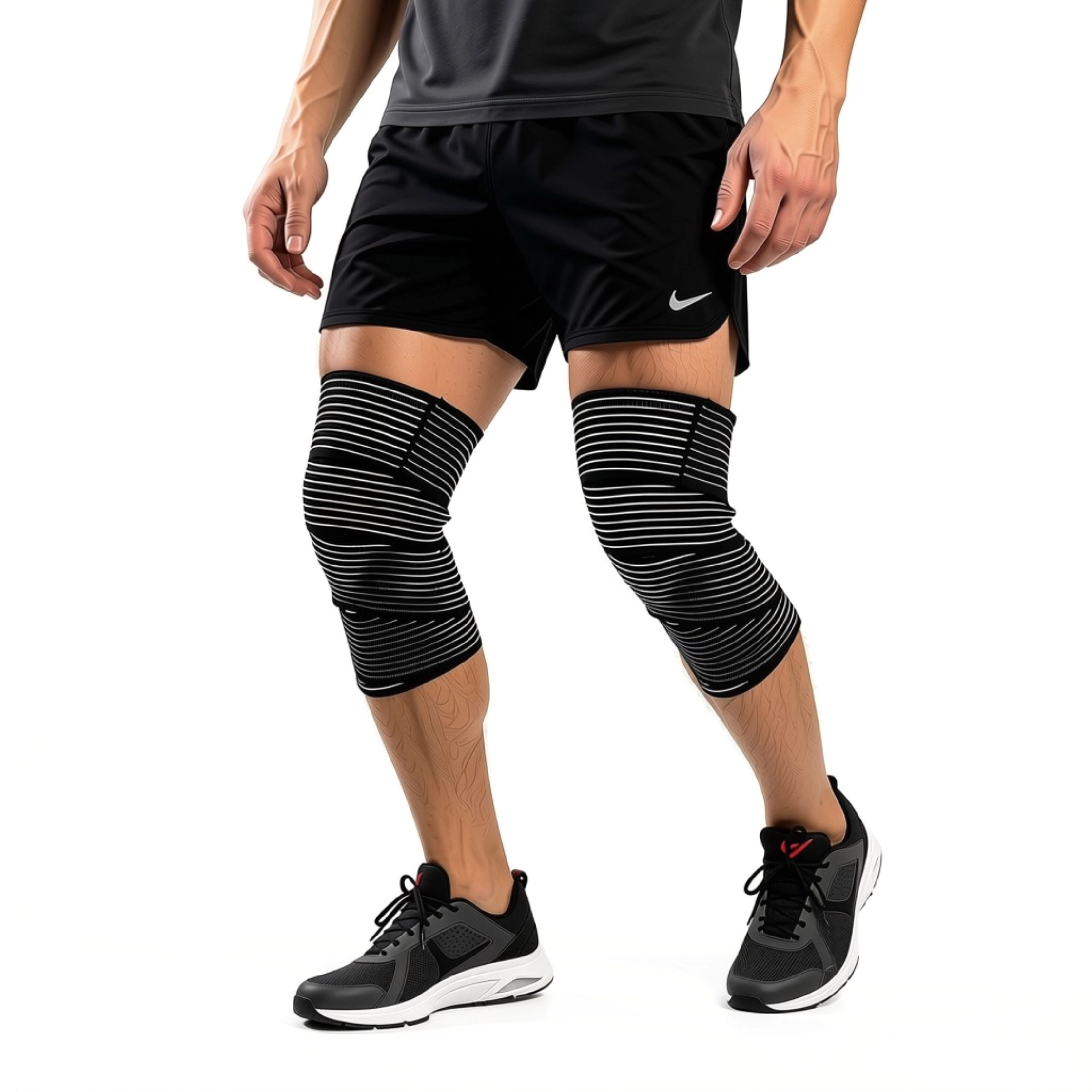
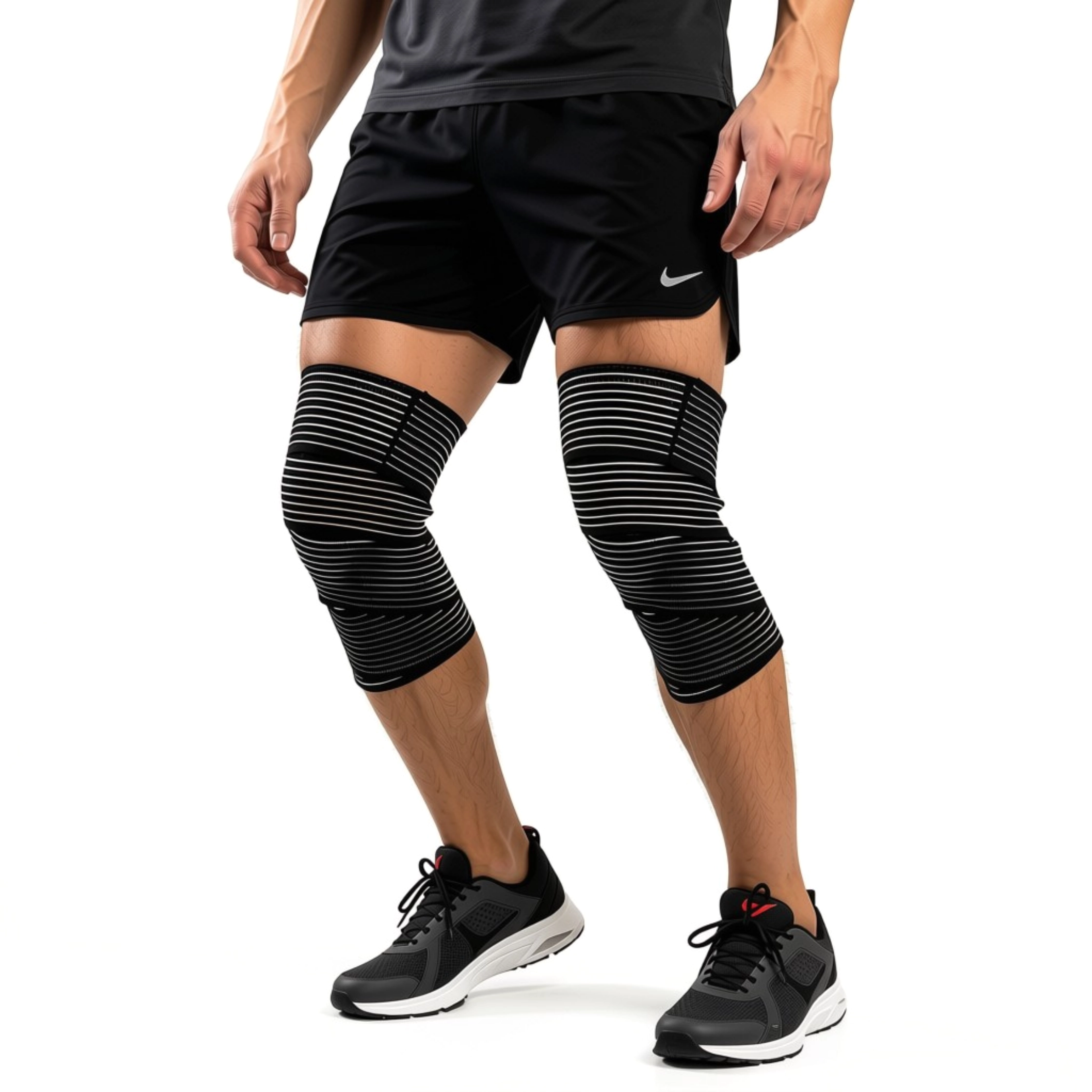
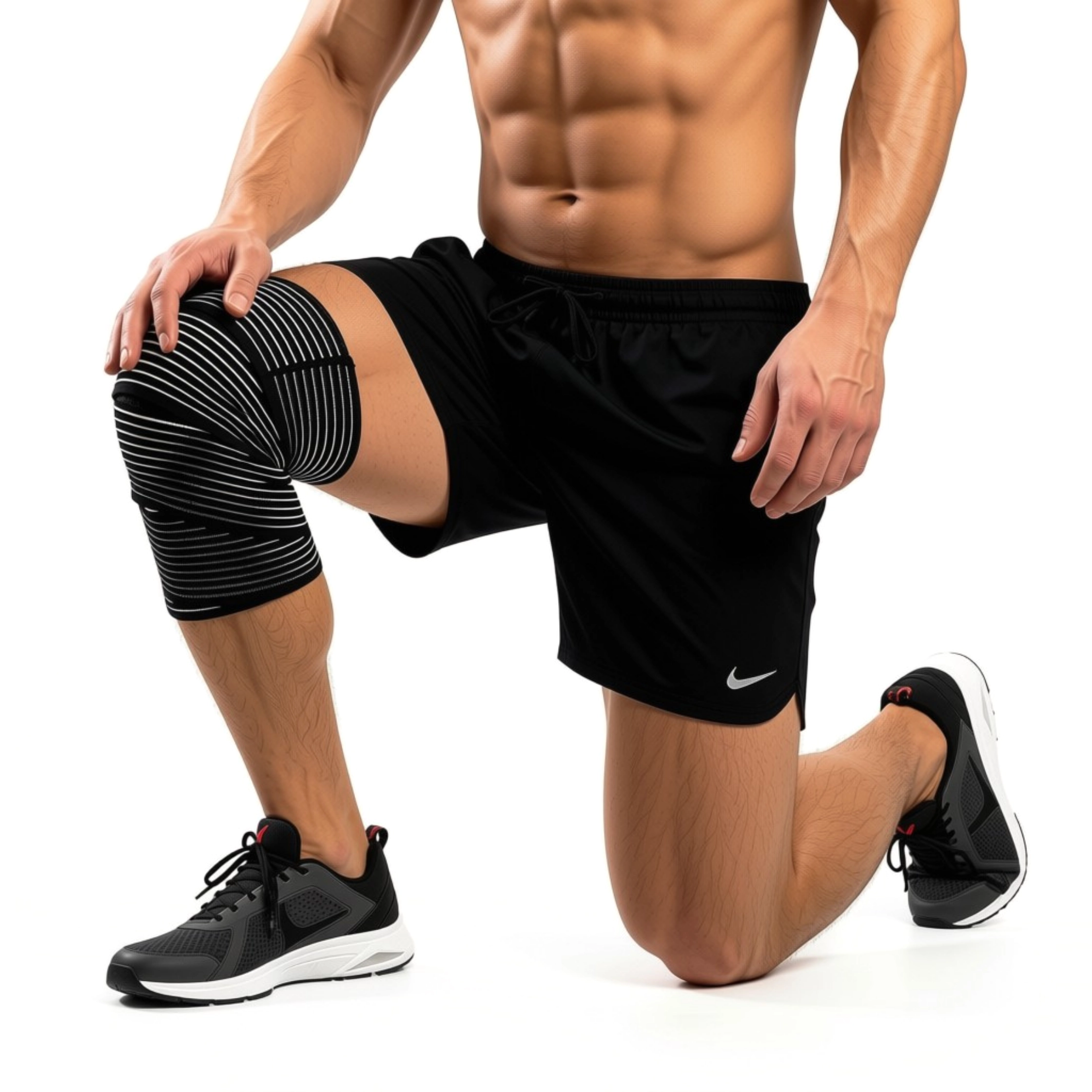
Knee Wraps
- Brand: NuovaHealth
-
( 2 Reviews )Rated 5.00 out of 5 based on 2 customer ratings02
£10.49inc VAT
In stock
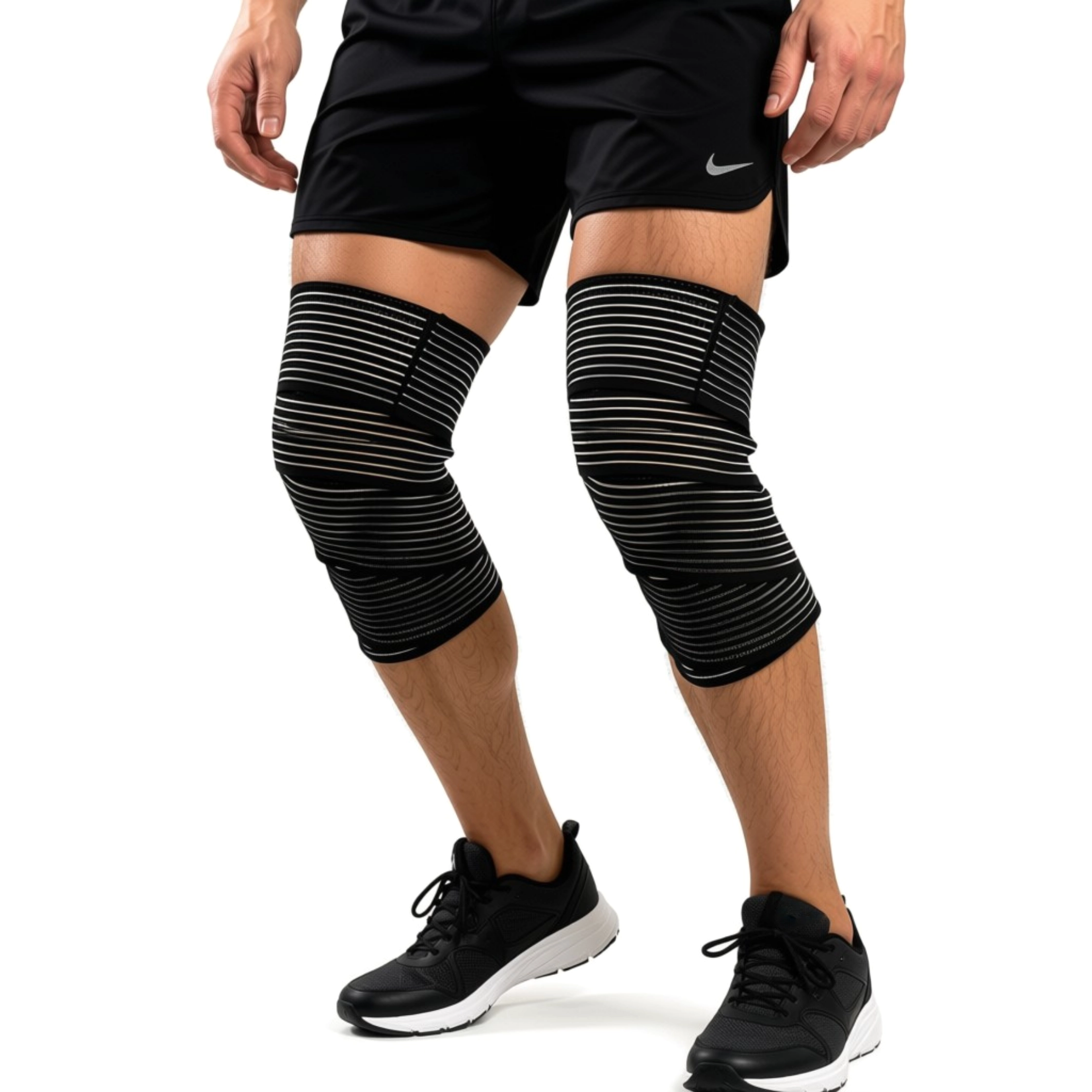
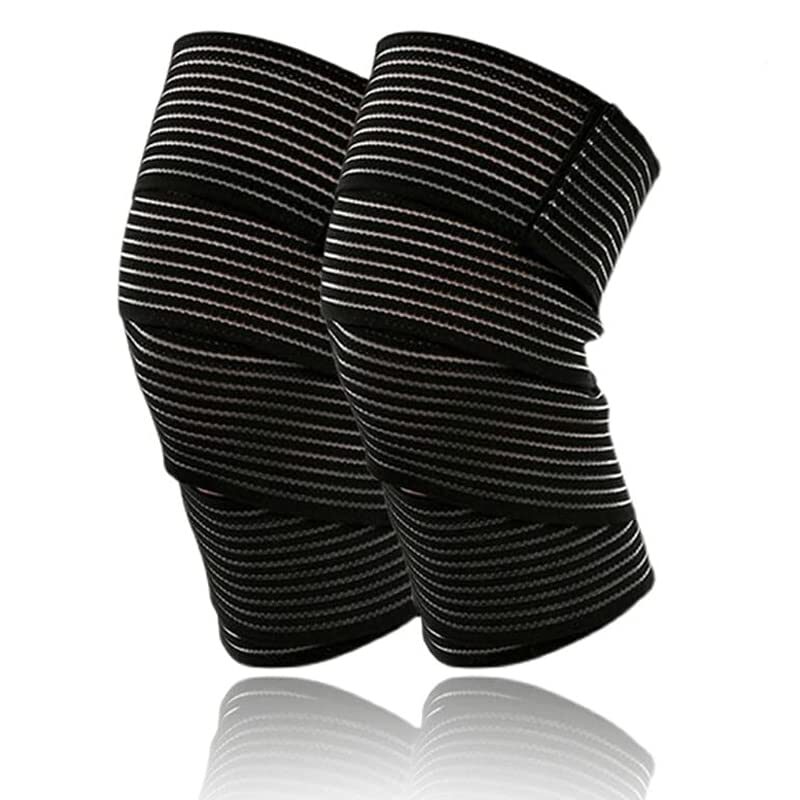
- A pair of adjustable elastic knee wraps for protecting, supporting, and gently compressing the knee joint to help ease aches and pain.
- Suitable for both men and women, with a one-size-fits-most design.
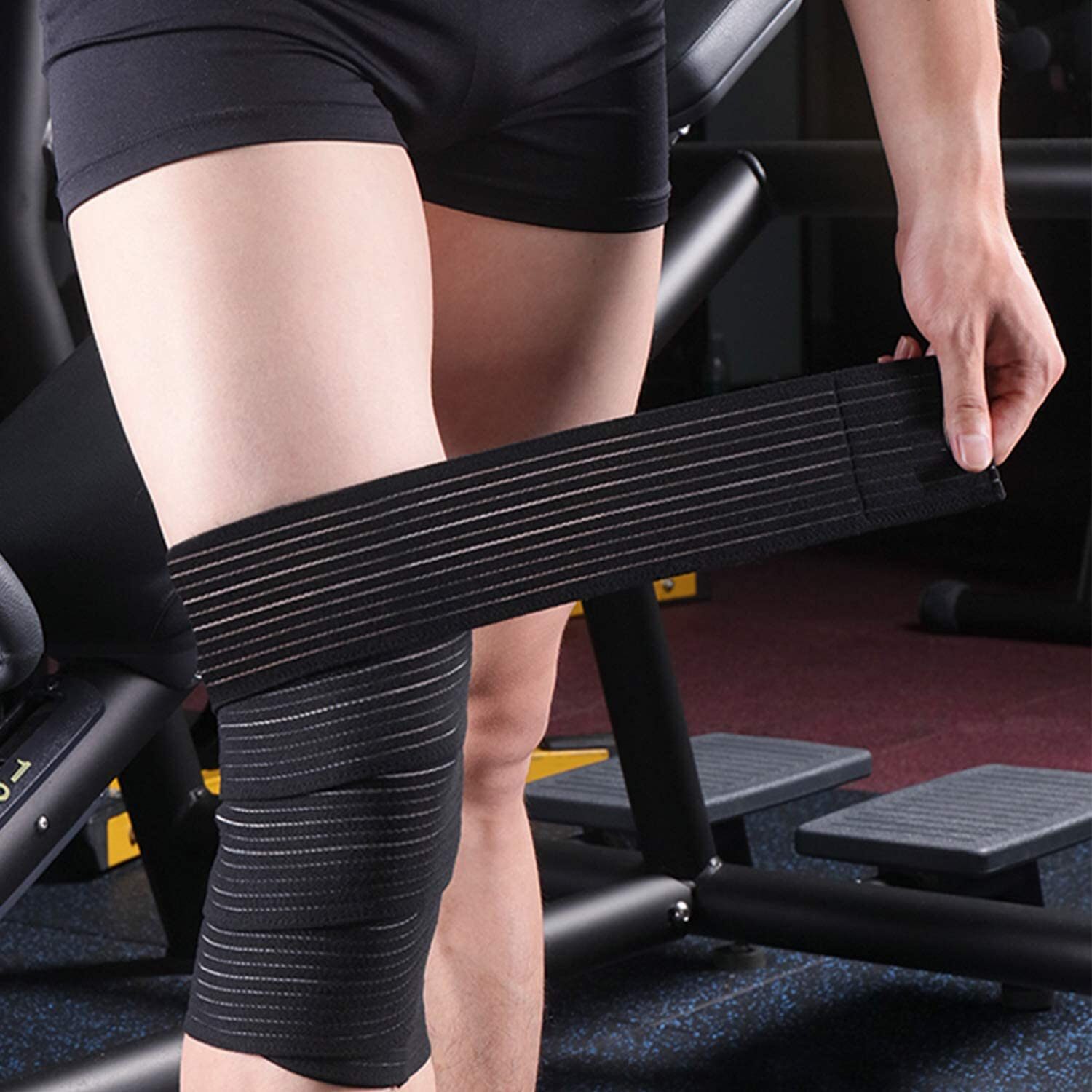
- Secure Velcro strap keeps the wrap firmly in place and lets you control the level of pressure.
- Helpful for common knee problems including arthritis-related stiffness, patellar tendon discomfort, patellofemoral pain, meniscus-related soreness, and mild ligament strains such as ACL, PCL, and MCL issues.
- Provides targeted support that helps reduce pressure and strain on the knee joint, supporting stability and function so you can move with more confidence.
- Soothing compression helps ease pain, reduce mild swelling, and support recovery after activity.
- Ideal for wearing during running, exercise, or sports like football and rugby.
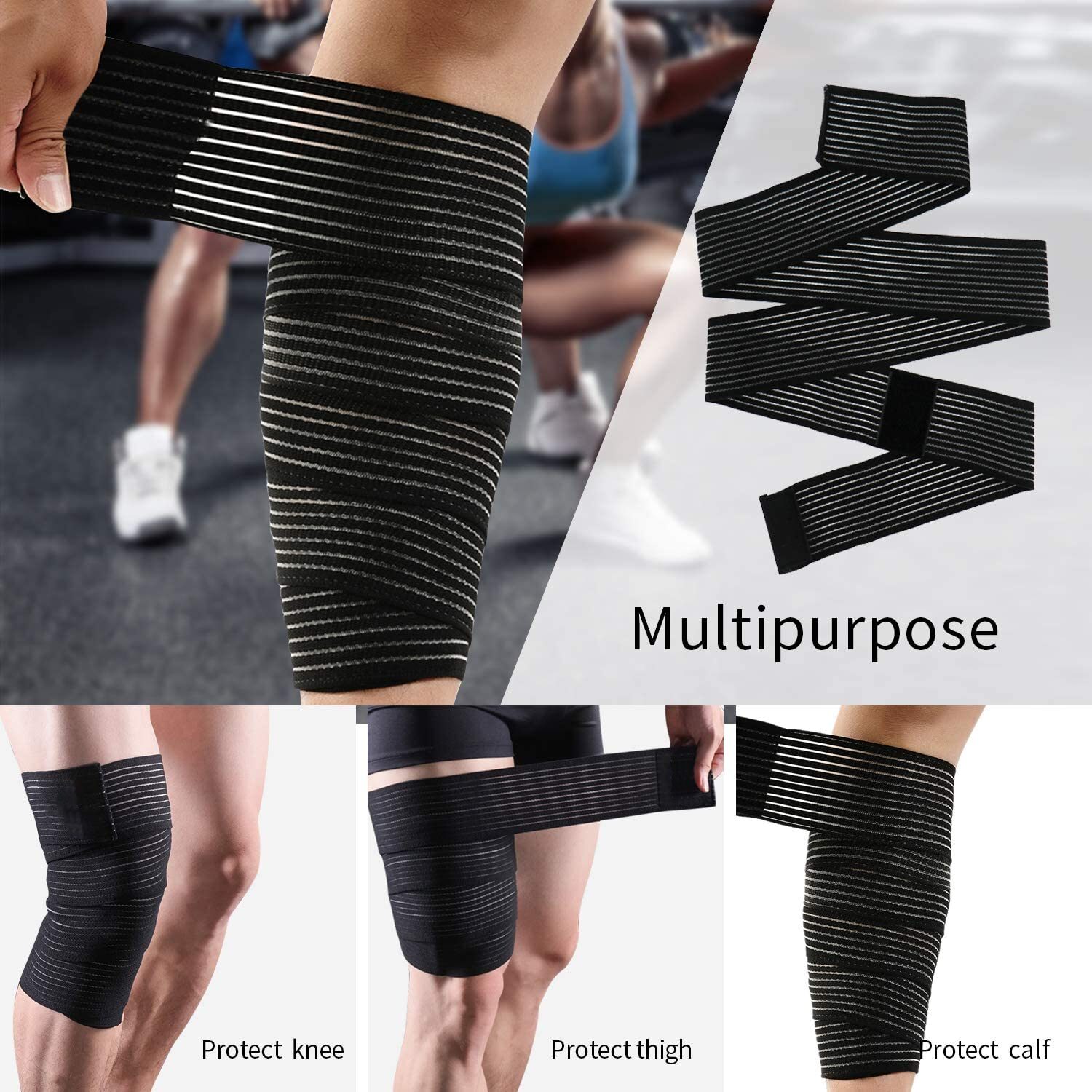
- Multi-use – can be wrapped around knees, thighs, or calves for extra support and compression where you need it most.
- Made from lightweight, stretchy, durable nylon and high-elastic latex for comfort and longevity.
- Washable and reusable, so it’s a practical long-term choice.
- Backed by a 30-day money-back guarantee if you’re not completely satisfied.
Please note there is no guarantee of specific results and that the results can vary for this product.
Knee wraps: practical support for knees that have been through a lot
If you’re reading this, there’s a good chance your knees have started to give you trouble. Maybe it’s a sharp twinge when you get up from a chair. Maybe it’s a dull ache that appears halfway through a walk and lingers into the evening. Or perhaps it’s the uncomfortable grind of climbing stairs, or the sense that the knee isn’t quite as stable as it used to be.
For many people, that’s just accepted as part of getting older, or the price you pay for being active. But it doesn’t have to be that way. There’s a practical, sensible middle ground between putting up with the pain and giving up the activities you enjoy. A well‑designed, adjustable knee wrap is a simple piece of equipment that can make a genuinely noticeable difference. It won’t cure arthritis or repair damaged tissue – a wrap can’t do that – but it can provide the support, warmth, and reassurance that help you keep moving more comfortably.
Before we go further, let’s be clear about what this page is and isn’t. It’s not a sales pitch dressed up as information. It’s an honest look at why knees hurt, why a wrap helps, and how to choose one that actually does the job. The aim is to help you make a sensible decision, whether that’s buying this particular product or simply understanding your options a little better.
At a glance
-
- An adjustable elastic knee wrap for knees that ache, feel stiff, or need extra support during activity.
-
- Helpful for arthritis‑related stiffness, patellar tendon discomfort, patellofemoral pain, meniscus‑related soreness, and mild ligament strains.
-
- Provides gentle compression to help contain the knee and create a more stable feel.
-
- Retains body heat to warm the soft tissues around the joint, which can help ease morning stiffness.
-
- Adds sensory feedback to improve your awareness of where the knee is during movement.
-
- Fully adjustable Velcro closure, so you can tighten or loosen it as needed.
-
- One size fits most people.
-
- Made from breathable, moisture‑wicking nylon and elastic latex for comfort during wear.
-
- Antibacterial fabric helps keep the wrap fresh between washes.
-
- Can be worn during sport, exercise, walks, or around the house.
-
- Lightweight and quick‑drying; fits under loose trousers.
-
- Not a rigid brace; allows natural knee movement while still supporting the joint.
-
- Washable and reusable.
-
- If symptoms are new, severe, or getting worse, speak to a GP or physiotherapist.
What your knees do all day
Your knee is the largest joint in your body, and it works hard. It connects your thigh bone to your shin bone, and it has to bend, straighten, and absorb load while staying stable at the same time. That’s no small task.
Inside the joint, smooth layers of cartilage allow the bones to glide over each other. Cartilage doesn’t have its own blood supply, so it relies on movement to stay nourished. Every time you bend and straighten your knee, the joint fluid is squeezed in and out of the cartilage, bringing oxygen and nutrients with it. That’s one reason why a knee that’s been resting for a while can feel stiff and reluctant – and why gentle movement, properly supported, usually helps it feel better.
There are also two wedge‑shaped pieces of cartilage called menisci that act a bit like shock absorbers. They sit between the thigh bone and shin bone, spreading the load so no one area takes the full force. Ligaments hold the bones together, and tendons connect the surrounding muscles to the bones. The muscles themselves are your knee’s best protection. Strong thigh muscles take a large share of the force that would otherwise land directly on the joint surfaces. When those muscles weaken, more load falls onto the cartilage, ligaments, and tendons – and they feel it.
Think about how much force your knees absorb on a normal day. Every time you walk, your knee carries roughly one and a half times your body weight. Climbing stairs can push that to about two or three times your body weight. Running increases it further. When you squat to lift something heavy, the forces become even greater. Your knees bear that load with every step, every stride, every bend. They don’t get a day off.
Most knee pain doesn’t come on suddenly, the way an injury does. It builds gradually. Cartilage wears thinner, supportive muscles get a little weaker, and tendons and ligaments lose some of their elasticity. Over time, the joint has to work harder for the same result, and eventually something sends a pain signal. That signal isn’t there to ruin your day. It’s there to tell you the knee needs a bit more support, a bit more warmth, and a bit more care.
Common reasons your knee might be complaining
There’s no single cause of knee pain. Different people end up with different patterns of discomfort, and it helps to know which one matches your own experience. We’re not trying to diagnose you here, but recognising a common pattern can point you in the right direction.
Arthritis
Arthritis is one of the most common reasons for knee pain, particularly as we get older. The smooth cartilage inside the joint gradually becomes thinner and rougher, so the bones no longer glide over each other as easily as they once did. This is why arthritis often feels like a deep, achy stiffness, especially in the morning or after sitting still for a while. The stiffness eases a little once you start moving, because movement pumps fresh fluid through the joint and helps the roughened surfaces shift more freely. But the same movement can also produce a grinding or creaking sensation, and stairs or getting up from a low chair may feel more demanding than they used to.
Warmth tends to help this kind of stiffness, and it’s one of the main ways a knee wrap helps.
Patellar tendon issues
Patellar tendon issues affect the thick band of tissue that connects your kneecap to your shin bone. This tendon is where your thigh muscles attach, and it transmits enormous forces every time you straighten your leg, especially during running, jumping, or squatting. When that tendon is strained too often to recover properly, small areas of irritation develop within it. The pain is usually sharp and specific, felt just below the kneecap, rather than a vague ache across the whole knee. It often flares during activity or afterwards, and it can make simple movements like landing from a step or straightening the leg when pushing against something feel unpleasant.
A wrap worn slightly lower across the knee, with the compression sitting over the tendon rather than directly on the kneecap, spreads the force from the tendon over a wider area. That means the irritated spot doesn’t take the full pull on its own. Many people find this makes the area feel less stressed during movement. It’s not a repair, but it’s practical support for a tendon that’s being asked to do a lot.
Patellofemoral pain (runner’s knee)
Patellofemoral pain, sometimes called runner’s knee, is another common problem. The kneecap sits in a shallow groove at the front of the thigh bone, and it slides up and down this groove every time your knee bends. For the kneecap to track smoothly, the muscles that pull on it from different angles need to work in balance. When they don’t, the kneecap drifts slightly off‑centre and the underside rubs against the bone, producing pain around or behind the kneecap. This pain is often worse on stairs, squatting, or after long periods of running – all situations where the kneecap is pressed hard against the groove while it moves. The knee may feel like it needs to “crack” or may grind as it bends.
Support around the kneecap helps in two ways. The pressure guides the kneecap towards its natural path as the knee moves, and the warmth keeps the surrounding muscles and tendons supple. Together, this can reduce the friction that causes the pain and make bending the knee feel smoother.
Meniscus tears
Meniscus tears involve the wedge‑shaped shock absorbers inside the joint. When the knee twists while bearing weight, or when it’s bent in an awkward position, the meniscus can get caught between the bones and tear. This can happen suddenly during sport, but it can also occur as a gradual wear‑and‑tear process as the meniscus weakens with age. A torn meniscus often causes pain on the inner or outer side of the knee, swelling that builds over a few days, and a feeling that the knee is catching, clicking, or locking. The knee may feel unsafe.
A wrap cannot repair a torn meniscus, and it’s not a substitute for proper assessment. But it can provide useful support during recovery: the compression helps keep mild swelling down, and the snug external layer makes it harder for the knee to twist sharply. That helps protect an injured meniscus from the kind of movement that tends to aggravate it.
Ligament injuries (ACL, PCL, MCL strains)
Ligament injuries such as ACL, PCL, and MCL strains are different again. These are the strong bands of tissue that connect the thigh bone to the shin bone and stop the joint from sliding or rotating too far. They are the knee’s built‑in restraints. When a ligament is stretched or partially torn, it loses some of its tension, and the knee can feel loose or unreliable. What’s less obvious is that ligaments also contain nerve endings that sense joint position. After a ligament injury, that sense of joint position is often impaired, which is why the knee feels not just physically unstable but also harder to control.
This is where a wrap can be particularly valuable. It provides an external layer of support that helps hold the joint in place, and the pressure on your skin gives your brain a constant stream of information about where the knee is. That improves your body’s awareness of the joint, which makes movement feel more deliberate and controlled while the ligament heals and while you rebuild strength around it.
Patellar tracking disorder
Patellar tracking disorder is a term that covers several issues where the kneecap doesn’t move smoothly through its groove. It can be caused by muscle imbalance, tightness in the structures on one side of the knee, or simply the way your body is built. The result is pain at the front of the knee, especially during squatting, running, or going downstairs. A wrap that fits firmly around the kneecap adds a gentle guiding pressure that helps the kneecap stay centred as it moves, and the warmth keeps the surrounding tissues pliable. It’s not a correction, but it can make the difference between a knee that’s painful with every bend and one that moves without constantly reminding you it’s there.
These conditions are not the same, and we’re not trying to lump them together. But they all share one thing: they make the knee feel less comfortable and less dependable. And they can all benefit from the kind of simple external support a wrap provides.
What a knee wrap actually does
A knee wrap is not a rigid brace. It won’t lock your knee into a fixed position or restrict all movement. It’s also not just a sleeve you pull over your leg. A wrap is a long, stretchy elastic band that you wrap around your knee and secure in place, usually with a Velcro strap. That gives you a level of control a sleeve simply can’t offer.
When worn correctly, a knee wrap does three straightforward things.
First, it applies gentle external pressure. That pressure helps hold the joint in place and makes everything feel more secure. If you’ve ever instinctively pressed your hand against a sore knee, you already understand the principle. The wrap provides that same reassuring pressure while leaving your hands free and allowing you to move.
Second, it traps warmth. Your body heat builds up beneath the wrap and soaks into the soft tissues around the joint. Warm muscles and tendons are more pliable and move more easily. This is one reason why a wrap can be especially helpful for stiffness.
Third, it enhances your body’s awareness of the knee. This is a sense called proprioception – your brain’s ability to know where a joint is without looking at it. Your skin is packed with nerve endings that constantly report to your brain about joint position. When you wear a wrap, those nerve endings receive extra stimulation, and your brain gets a clearer picture of the knee’s position. That helps you move with better control, especially when the knee is already injured or painful.
There’s nothing mystical about these effects. They’re basic principles of how the body responds to pressure and warmth. And they’re exactly why so many people, from professional athletes to grandparents, reach for a knee wrap when their knee needs a bit of support.
The core benefits of knee wraps
It’s easy to read a long list of vague marketing claims about knee wraps, so let’s break things down into the benefits that actually matter.
Support and stability
Wrapping the knee adds an external layer of support that takes some of the strain off the joint. This is especially valuable when you ask your knee to carry a heavy load, such as during squats, lunges, lifting, or walking up steep hills. The elastic pressure helps guide the kneecap along its natural groove, which can reduce pain if your kneecap tends to drift slightly outward. The wrap also makes the knee feel more contained, so you’re less likely to make sudden, awkward movements that could aggravate the joint.
Perhaps just as important, the extra stability helps you move with confidence. When you know your knee has a bit of backup, you’re less likely to favour the other leg or change the way you walk. That matters, because staying active and moving normally is key to keeping your knee strong over the long term.
Compression and circulation
Compression has been used in sport and medicine for decades. Firm, even pressure on the knee encourages blood and lymph fluid to move more efficiently, which helps deliver oxygen and nutrients to the tissues and flushes away the by‑products that can build up after activity.
For knees that are prone to swelling after exercise or at the end of a long day, that can make an obvious difference. Swelling is the body’s way of protecting an irritated joint, but too much of it can stiffen the knee and slow recovery. Compression helps keep mild puffiness down and gives the joint a more comfortable feel. Many people who wear a wrap after a workout notice that their knee settles more quickly and feels easier by the next morning.
Warmth and relief from stiffness
There’s a reason why people reach for a heat pack when a joint aches. Heat relaxes tight muscles and tendons, encourages blood flow, and reduces the sensation of stiffness. A knee wrap does this without needing to be plugged in – it simply holds your own body heat against the skin.
This is particularly helpful in the morning. Many people with arthritis or general wear‑and‑tear find that their knee feels stiff and reluctant for the first few minutes after getting out of bed. Wearing a wrap while you move around the house, prepare a drink, or head out for a short walk can help loosen things up more quickly. The tissues around the knee – tendons, ligaments, and the tough capsule around the joint – are made largely of collagen, which becomes more supple as it warms up. A warm knee moves more easily and feels less stiff.
Warmth also helps in cold weather, when joints naturally feel stiffer. A wrap worn under a pair of trousers can keep the knee comfortable during a winter walk or a day out.
Better body awareness and control
That sense of joint position has a practical side. When a knee is injured or painful, that sense of where the joint is can become less accurate. The knee feels unreliable, and your brain no longer relies on it. A knee wrap helps restore that sense by adding extra sensory input, allowing you to move with more control and reducing the chance of landing awkwardly or twisting the joint.
This is particularly valuable for athletes and people returning to sport after an injury. But it also helps everyday people stay steady on their feet, especially on uneven ground or during long walks.
Confidence and the mental side of recovery
If your knee has hurt before, you remember that pain. You may subconsciously guard the joint, adjust your gait, or avoid certain movements because you’re afraid the pain will come back. This is completely understandable, but it can hold you back. Fear of movement leads to less movement, and less movement leads to weaker muscles and a more vulnerable knee.
A knee wrap can help you step out of that pattern. It provides a tangible feeling of support, a reminder that the knee is protected. That reassurance makes it easier to move normally, to do the exercises that will make you stronger, and to return to the activities you enjoy. The wrap can’t make you indestructible, but it can make you feel safer than you otherwise would. And sometimes, that’s exactly what you need to keep going.
Who Could Benefit From Knee Wraps
Knee wraps aren’t just for athletes. If your knees take a lot of strain, or have started to feel a little fragile, a wrap can make a real difference. Here are the people who tend to get the most from them.
The Gym‑Goer And Weightlifter
When you squat, deadlift, lunge, or press heavy weights, your knees absorb forces several times your body weight. A knee wrap helps keep the joint stable and your technique on track. Many lifters also value the compression because it makes the knee feel supported and ready for effort.
The key advantage is adjustability. Wrap it firmly for a heavy squat, ease off for lighter work or mobility drills, and change the tension depending on how your knee feels that day. If you only want gentle warmth, keep it loose; if you need extra support, make it snug.
The Hiker And Outdoor Enthusiast
Hiking is wonderful exercise, but uneven ground, steep descents and a loaded backpack can make your knees work hard. It’s not unusual to be halfway along a trail and feel the first twinge of an ache. That’s when having a knee wrap to hand makes a real difference. Stop for a minute, put it on, adjust it for comfort, and continue with more support.
The wrap is light and packs down small, so it slips easily into a daypack. Simply knowing you have a way to support an aching knee can take the worry out of the whole trip.
The Older Adult
As we age, our knees naturally change. The cartilage that cushions the joint becomes thinner, the muscles around it lose strength, and everyday tasks like climbing stairs or getting up from a low chair can feel harder. Morning stiffness is common, as is an ache after sitting still for a while.
A knee wrap offers a simple, drug‑free way to bring comfort to a tired knee. The warmth and compression ease stiffness and arthritis‑related discomfort. The support can take the strain out of walking, climbing stairs and gardening. For many older adults, that extra confidence is enough to keep them active – and staying active is what helps preserve strength and independence.
The Runner And Endurance Athlete
Running is repetitive by nature. Every stride sends a shock through your knee, and over time that repeated impact can irritate the joint. Pain around the kneecap is one of the most common problems, and it can make a training block a real struggle.
A knee wrap can help in a few ways. The compression supports the area around the kneecap and can reduce the pulling and rubbing that lead to pain. The warmth keeps muscles and tendons loose during long runs. And that extra awareness helps you keep a stable stride, especially when you’re tired and your form starts to fade. Many runners wear a wrap on one knee during training, then take it off afterwards to help the joint settle.
The Cyclist
Cycling is gentler on the knees than running, but it still puts them under pressure. The repetitive pedalling, the long spells with your knee bent, and the extra force needed to climb hills all take their toll. Over a long ride, that pressure can build into discomfort.
A knee wrap supports the joint through the repeated bend and stretch of every pedal stroke. It keeps the tissues warm and loose, which can help prevent stiffness and irritation. It also gives a welcome sense of support when you’re pushing hard on a climb. For anyone who spends hours in the saddle, a wrap is a simple and effective piece of cycling kit.
The Recovering Athlete
Returning to sport after a knee injury takes patience. You need to rebuild strength, regain movement, and gradually increase what you ask of the knee. During this stage the joint is vulnerable, and the fear of re‑injury is very real.
A knee wrap can make rehabilitation exercises feel safer. It gives you a sense of security through squats, lunges, step‑downs and balance work. The compression also helps keep swelling down, which is often a concern during recovery. And by giving you a clearer sense of where your knee is, it helps you re‑learn how to control the joint. It won’t replace the work you do with a physiotherapist, but it can make that work feel much less daunting.
Whatever your activity – lifting, hiking, running, cycling, or recovering from an injury – a knee wrap is a small addition that can keep you moving comfortably. It won’t fix a serious injury, but for everyday aches and the demands of an active life, it’s a simple tool worth having on hand.
When to wear a knee wrap
Knowing when to wear a wrap is just as important as wearing one at all. There’s no need to keep it on around the clock. In fact, it’s often healthy to give your knee plenty of time unwrapped to move freely. The wrap is a tool you can bring in when your knee needs a bit of extra help.
Here are some of the times when a wrap is genuinely useful:
-
- Before, during, and after a workout that involves running, jumping, heavy lifting, or deep knee bending.
-
- During long walks, hikes, or days when you’ll be on your feet for a long time.
-
- In the morning if your knee is particularly stiff and painful when you get out of bed.
-
- During rehabilitation exercises, to give the joint extra support while you move.
-
- On days when your knee feels swollen, achy, or aggravated, even if you’re just doing light daily activities.
-
- After physical activity, to help settle the joint and support recovery.
Many people also wear a knee wrap preventatively. If they know they’re going to do something demanding, or if the forecast is cold and damp, they’ll put on the wrap before starting. That way, the knee is already warm and supported when the demand starts, rather than trying to make up for it afterwards.
How to use a knee wrap properly
More important than the exact timing is making sure you’re wearing it correctly. A properly fitted wrap should feel snug but never painfully tight. You want enough pressure to feel supported, but you should still be able to slide a finger easily between the wrap and your skin. If your leg feels numb, tingles, or changes colour, it’s too tight. Remove it, loosen it, and re‑wrap.
Positioning also matters. For general knee support, wrap directly over the joint, with the curve of the fabric following the natural line of your knee. If you have patellar tendon issues, you may want the wrap placed slightly lower so the compression sits over the tendon rather than directly on the kneecap. If your problem is around the kneecap, keep the wrap higher. Don’t be afraid to experiment until it feels as though the support is targeting the area that needs it.
Wrapping technique is straightforward. Start below the knee, wrap upward in a smooth spiral, and secure the Velcro firmly. Avoid bunching or folding the fabric. A smooth, flat wrap is more comfortable and more effective. The Velcro should hold the wrap securely in place during movement, without sliding down or digging into the back of your knee.
How long to wear it depends on what feels right for you. Some people wear the wrap only during their activity and take it off once they’re done. Others find that wearing it for a few hours during the day keeps the knee warmer and more comfortable. You can also wear it after activity to support recovery and reduce swelling. Listen to your body. If the wrap feels comfortable and helpful, that’s a good sign. If your skin becomes irritated or the compression starts to bother you, take a break.
Caring for your wrap is simple. Most require no more than a hand wash in cool water with a mild detergent. Leave it to air dry naturally. Avoid the tumble dryer, because heat can damage the elastic fibres and shorten the lifespan of the wrap. With basic care, a good wrap will maintain its stretch and continue to support you properly.
When not to use a knee wrap and when to see help
A knee wrap is a support, not a substitute for medical care. It’s important to use common sense.
If your knee is severely swollen, warm to the touch, or painful enough that you can’t put weight on it, consult a healthcare professional rather than simply wrapping it. If your knee locks, gives way, or is visibly deformed, seek advice promptly. If knee pain persists for more than a few weeks despite this type of support, or if it’s getting worse rather than better, speak to a GP or physiotherapist. If you have a known circulatory condition, or if you’ve been told to avoid compression, check with a healthcare professional before using a knee wrap. If you have an open wound, broken skin, or a skin infection around the knee, don’t use a wrap until the skin has healed.
The wrap should never cause numbness, tingling, or increased pain. If it does, remove it immediately and re‑evaluate how you’re using it. In most cases, a correctly worn wrap will feel comfortable from the moment you put it on.
A knee wrap is not a cure. It won’t repair cartilage, rebuild ligaments, or fix an underlying structural problem. What it will do is support the joint, keep it warm, and help you move more comfortably while you work on strengthening the surrounding muscles and addressing the root cause with professional guidance if needed.
What to expect from wearing knee wraps
If you’ve never used a knee wrap before, you may be wondering what the experience is actually like. The honest answer is that the difference is noticeable but subtle. You won’t suddenly feel pain‑free or invincible. Instead, you’ll feel as though your knee is being held and supported from the outside. The warmth builds up gradually, and the pressure gives you a sense that the joint isn’t working alone.
The first time you wear a wrap, you may need a few minutes to adjust the tension and find the most comfortable position. Once it’s set correctly, you should be able to move naturally without feeling restricted. After a workout or a long walk, your knee may feel less tired and less swollen than it would have without the wrap. Over time, as you continue to use it alongside strengthening exercises, you may find that your knee grows more confident and comfortable.
Consistency matters more than intensity. Wearing a wrap occasionally when you already have pain is useful, but wearing it regularly during activities that stress the knee is likely to be more beneficial. The goal is to support the knee while you remain active, not to rely on the wrap as a permanent crutch.
Why these knee wraps stand out
If you’ve looked at other knee supports, you’ll know they’re not all made equal. Some are too flimsy to provide any real support, while others are so thick and rigid that they restrict movement and feel uncomfortable within minutes. These wraps are designed to strike a practical balance between support and comfort.
The first thing you’ll notice is the adjustable Velcro closure. One size fits most people, and you can tighten or loosen the wrap at any point during your activity. This matters more than it might seem. Your knee can swell slightly during a long walk or a hard workout, and a fixed‑size sleeve has no way to accommodate that. With an adjustable wrap, you can ease the pressure if it starts to feel tight or add more support if the knee needs it. For heavy lifts, you can make it snugger. This level of control is something a fixed‑size sleeve simply can’t offer.
The materials are chosen for comfort against your skin. A combination of high‑quality nylon and elastic latex gives the right balance of strength, stretch, and recovery. The wrap is strong enough to provide meaningful compression, but flexible enough to allow a full range of knee movement. The elastic fibres create the compression, and the nylon gives the wrap durability and helps it hold its shape through repeated use.
Breathability is another important detail. A wrap that traps sweat becomes uncomfortable very quickly, especially during exercise. These wraps allow air to circulate, and the moisture‑wicking properties draw sweat away from the skin. This helps keep your knee drier and reduces the chance of skin irritation during long wear.
The fabric also has antibacterial properties that help prevent bacteria from building up. Bacteria are one of the main causes of odours in sports equipment, and keeping them under control is a practical way to keep the wrap fresh between washes. It means the wrap stays more hygienic, even if you use it regularly for intense workouts.
These wraps are also lightweight and quick‑drying. You can wear them under loose trousers without adding noticeable bulk, and they won’t make you feel overly hot on a summer run.
They’re versatile, too. While designed for knee support, the long elastic band can be wrapped around other areas, such as your thigh, calf, or elbow, depending on the support you need. That makes them a more useful addition to your home than a single‑purpose product.
Finally, they’re washable and reusable. You don’t have to throw them away after a few uses. With a gentle hand wash and a bit of drying time, they’ll be ready for another session. That makes them a practical investment in your long‑term comfort, rather than a disposable one‑off purchase.
Our promise to you
Trying a new knee support always involves some uncertainty. You don’t know in advance whether it will feel right, stay in place, or actually help. That’s why this product comes with a 30‑day money‑back guarantee. If you try these wraps and aren’t satisfied with the quality, comfort, or level of support, you can return them for a full refund, without a complicated process or awkward questions. They’re designed to make a clear difference in your daily routine or workouts. But if they’re not right for you, you don’t have to keep them. You can try them and see, without being committed if they don’t work out.
A sensible next step
Your knees carry you through every day of your life. They support you when you stand, walk, climb, run, and squat. They’re not meant to hurt, and you don’t have to accept constant discomfort as normal. A simple, well‑designed knee wrap can provide the support, warmth, and reassurance that help you keep doing the things you enjoy. It won’t perform miracles, but it can make everyday life feel considerably easier.
If your knee is telling you it needs a little extra help, listen to it. Start with a support that’s easy to use, adjustable, and comfortable enough to wear through your normal day. See how your knee feels during your next walk, your next workout, or just your next trip up the stairs. That experience will tell you more than any description, and you can try it with confidence.
Disclaimer
This information is general guidance and is not a substitute for individual medical advice, diagnosis, or treatment. If you are unsure about your symptoms, or if they are new, unexplained, or more complex, speak to a GP, physiotherapist, or another appropriate clinician for personalised advice. Results vary from person to person, and no specific outcome is guaranteed.
Average Rating
5.00
2 Reviews For This Product
Fast & Secure Checkout Through Paypal
Pay with Paypal the secure payment gateway that accepts all credit and debit cards. Paypal is free and secure and no credit or bank information is ever stored or shared with us.
Fast Dispatch
Enjoy your items soon with quick dispatch via Royal Mail. Expect to have your items between 1-3 working days for domestic orders. 7-10 Working days for international orders.
Return Policy – 30 Day Money Back Guarantee
In the unlikely event, you are unhappy with your purchase you can return it within 30 days for a refund. Please contact us via the form on the contact us page to start your return.
To return an item please send it to: Nuova Health UK, 81 Highfield Lane, Waverley, Rotherham, S60 8AL. Please include a note with your order id so we know who to refund. Please retain your postage receipt as proof of postage. All that we ask is that the item is in the original packaging and unused.
by Kam
Good knee wraps that work well although you gotta know how to put them on properly to get maximum benefit.
by Stephen Flinders
I like knee wraps better than conventional knee braces when exercising as they give you better range of movement. These are very good quality and much more stretchy than others I have tried.