Are you frustrated by that persistent ache on the outside of your foot, or do you find yourself feeling less stable on your feet than you used to? We know how much of a nuisance foot pain can be, which is why we look for solutions that fix the problem, not just the pain.
That’s why we stock FootReviver Supination Insoles. They’re built to correct improper foot alignment and help you get back to moving comfortably and naturally.
Below, we’ll walk you through what supination actually is, how it affects your whole body, and how these insoles are designed to provide proper, lasting relief. Let’s dive in.
Understanding Supination
That persistent ache on the outside of your foot—does it intensify into a deep throb after standing all day, or make you feel unsteady on uneven ground? You might notice excessive wear on the outer edges of your shoes, or a sharp discomfort that travels into your ankle. These aren’t just random niggles; they’re common signs of an underlying issue with your biomechanics—a fault in your walking pattern.
To see where the problem starts, it helps to know how a healthy foot is meant to work. Your foot isn’t a rigid block; it’s designed to be both a shock absorber and a lever for propulsion. This happens in a smooth, three-step process with each step you take:
- Heel Strike: As your heel lands, it naturally rolls inward slightly—this is pronation. It’s your body’s way of cushioning the impact, allowing your arch to flex and adapt to the ground, dissipating force safely.
- Mid-Stance: Your weight moves forward, stabilising the foot. The arch stores energy like a spring, ready for push-off, ensuring even weight distribution.
- Toe-Off: You propel forward from the ball of your foot and big toe. Your foot supinates slightly here to create a rigid lever for efficient movement, using the stored energy.
In a healthy gait, your foot transitions smoothly from shock absorber to stable platform to lever. Pronation is the controlled movement that makes this possible—and when it’s disrupted, problems arise that can affect your entire body.
The Key Gait Issues
This system can fail in two key ways. You may have heard of overpronation, where the foot rolls inward too much, often causing the arch to collapse and leading to issues like inner ankle pain and flat feet. The other, less recognised issue is supination (or underpronation), where the foot doesn’t roll inward enough, remaining stiff and tilted outward. Supination needs a specific approach because it focuses your body’s entire weight onto a small, vulnerable area, creating sharp, localised pain that standard cushioned insoles can’t resolve, and it’s frequently overlooked in favour of more common gait problems.
Where It Goes Wrong: Supination
With supination, the shock-absorption phase fails. Instead of that controlled inward roll at heel strike, your foot stays rigid and tilted outward from the moment it hits the ground. So the force of each step doesn’t get absorbed. Instead, it travels directly to a small, vulnerable area along the outer edge of your foot and ankle. Your arch can’t act as a spring, and your foot never stabilises properly to become an efficient lever.
This pressure concentration directly causes the localised pain, distinct shoe wear, and instability you might feel. Correcting it isn’t about masking discomfort; it’s about fixing a fundamental mechanical fault that starts at ground level. Data from the Institute for Preventive Foot Health indicates that high arches, a primary factor in supination, affect around 8% of adults. However, supination itself is often dismissed as simple wear and tear or an inevitable part of getting older, rather than the specific, treatable gait issue that it is.
What Causes Supination?
The root causes are often structural. High, rigid arches are a common factor because they limit flexibility, preventing proper shock absorption and naturally resisting the inward roll. Tight calf muscles can restrict ankle movement, forcing the foot outward to complete a step as a compensatory mechanism. Ill-fitting shoes—especially those with too much arch curve or inadequate support—can encourage this outward roll by failing to provide stability. In some cases, past ankle injuries or certain neurological conditions contribute as your body compensates for weakness or instability elsewhere, perpetuating the cycle of misalignment.
Who Feels It Most And Why?
Supination tends to have a greater impact on people who are very active or spend long hours on their feet. When an unstable gait combines with high-impact activities or long periods of standing, it can quickly worsen pain and lead to distinct problems.
For active people like runners and athletes, the repetitive, high-impact nature of their activity exacerbates supination. Each step with an outward roll sends a jarring force through the leg, raising the risk of overuse injuries such as shin splints and stress fractures, particularly in the outer foot and shin area.
For people who are constantly on their feet but with limited walking, like nurses or retail workers, the problem is continuous pressure. Without the natural shifting of weight that comes with taking steps, your body weight settles relentlessly on the outer edge of your foot. This static loading intensifies deep fatigue and localised pain, making long shifts particularly draining.
Foot structure is another key factor. People with naturally high, rigid arches have a mechanical predisposition to supination, as their foot type is structurally less able to absorb shock effectively. A family history of similar foot issues can also increase susceptibility.
For people with certain health conditions, like diabetic neuropathy, the effects can be more severe. Reduced sensation means that the constant, excessive pressure on the outer foot can go unnoticed, raising the risk of skin breakdown and ulcers. In these situations, early and proactive care is crucial not only for comfort but for preventing serious complications.
This misalignment leads to direct and painful effects. The excessive outward roll targets two key points: the outer heel and the base of your little toe. This bypasses your arch, sending shockwaves upward through your legs. The strain often results in pain along the tendons on the outside of your ankle, known as peroneal tendonitis. That heavy fatigue in your lower legs isn’t just tiredness; it’s your shin and calf muscles overworking to stabilise your foot. The rigid structure and repetitive pounding also overstretch the plantar fascia—the band of tissue under your foot—commonly causing heel pain and plantar fasciitis. The uneven wear on your shoes is the clearest possible sign of where this pressure is concentrated, a direct result of the underlying issue.
How Supination Can Affect Your Whole Body
When your foot doesn’t absorb shock, it triggers a predictable kinetic chain of strain—where a problem in one joint creates compensatory issues in the next. This sequence extends far beyond your feet, systematically affecting your entire posture, mobility, and daily comfort.
Your ankles and lower legs take the first hit, with ligaments and tendons on the outside under constant stress, leading to inflammation and discomfort. This outward roll then forces your shin bone to rotate inward, altering knee mechanics and often causing pain on the outer knee, especially when walking downhill or on slopes. Your hips and pelvis adjust to these uneven forces—the hip on the affected side may elevate or tilt upward, straining muscles and potentially leading to outer hip pain and imbalance.
This pelvic imbalance typically pulls on spinal muscles, resulting in lower back stiffness and chronic discomfort. If left unaddressed, this ongoing strain can accelerate joint wear over time. But the impact is not just physical; this inefficient walking pattern is physically draining. Because your foot isn’t working as a proper lever, your leg muscles strain to move you forward, leading to deep exhaustion after routine activities and often making you avoid movements you once enjoyed.
This is where a vicious cycle takes hold. The body’s compensations—the tight calves, the rotated shin, the tilted pelvis—don’t just cause their own pain. They actively reinforce the faulty gait. For instance, tight hips and a tilted pelvis alter the entire leg’s alignment, which can force the foot to strike the ground in an even more pronounced outward roll. This locks the body into a self-perpetuating loop where the solutions your body devises only deepen the original problem. This is precisely why just adding cushioning fails; you have to correct the gait at its source to break this cycle and achieve lasting relief.
The Importance Of A Professional Diagnosis
If you’re experiencing symptoms like localized outer foot pain, persistent shin discomfort, or deep fatigue that aligns with these patterns, seeing a podiatrist is the best way to get a definitive answer. They will perform a detailed assessment. This usually involves analysing your gait on a treadmill or pressure plate to watch how you walk, checking your foot and ankle flexibility, and testing muscle strength to spot any weaknesses. Sometimes, X-rays or an ultrasound are needed to rule out other issues like stress fractures or arthritis. This gives a complete picture of what’s happening mechanically.
This evaluation will clearly show how you walk and confirm whether supination is the cause of your discomfort. Often, the recommended solution is specialised insoles. FootReviver Supination Insoles are designed to correct the underlying mechanics of supination, targeting the root cause rather than just masking the symptoms. A professional assessment from the start means you get the correct support early, which helps prevent long-term issues and puts you back on the path to moving comfortably and with confidence.
Why Standard Insoles Aren’t Enough
Standard cushioned insoles lack the specific design needed to control the mechanics of supination. They may feel comfortable initially, but their soft, unstructured design cannot provide the firm guidance needed to prevent the foot from rolling outward excessively. This lack of support often increases instability, which can cause the foot to tilt further and lead to muscles tiring more quickly throughout the day. Because they don’t address the root cause, standard insoles can prolong discomfort and increase the likelihood of related strains.
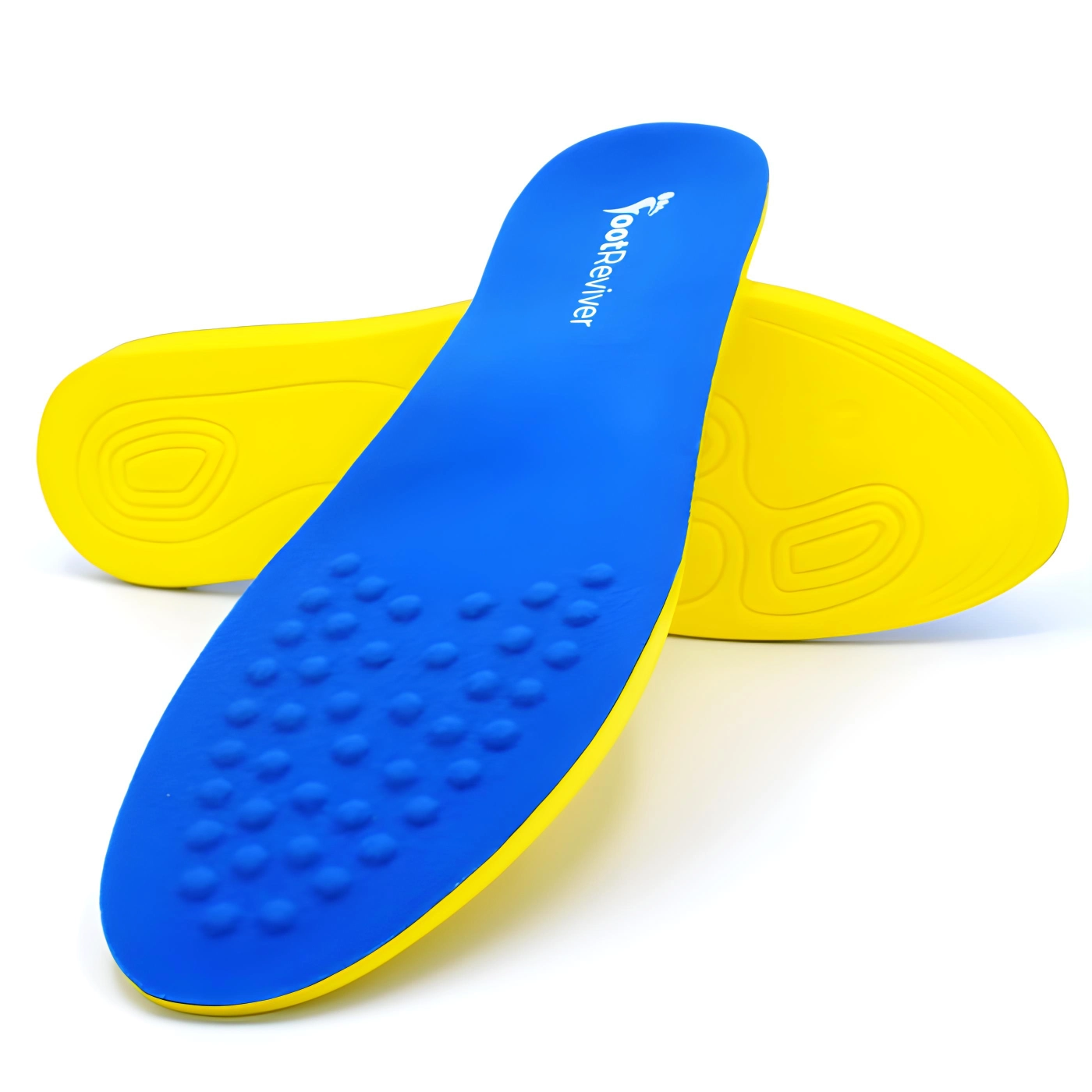
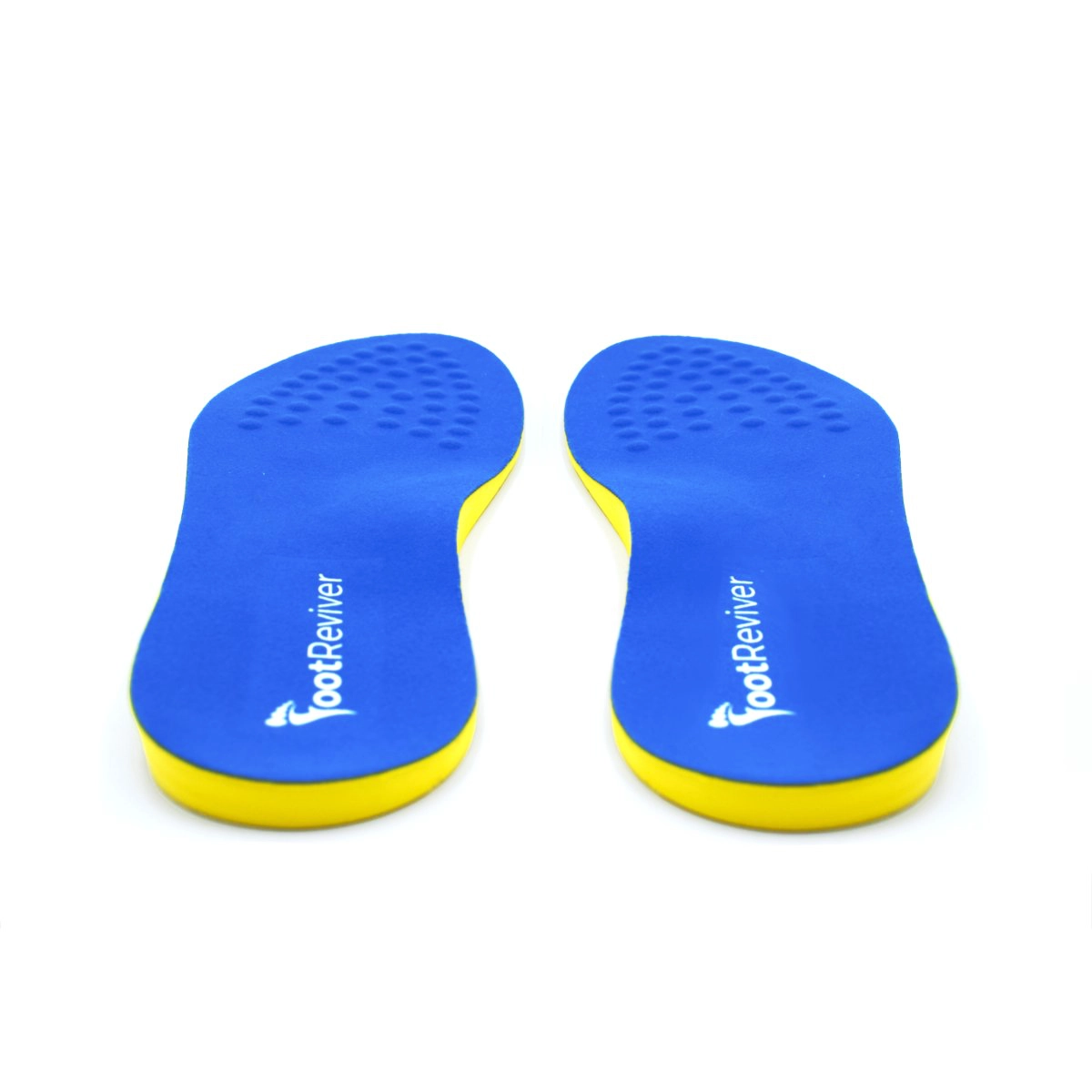
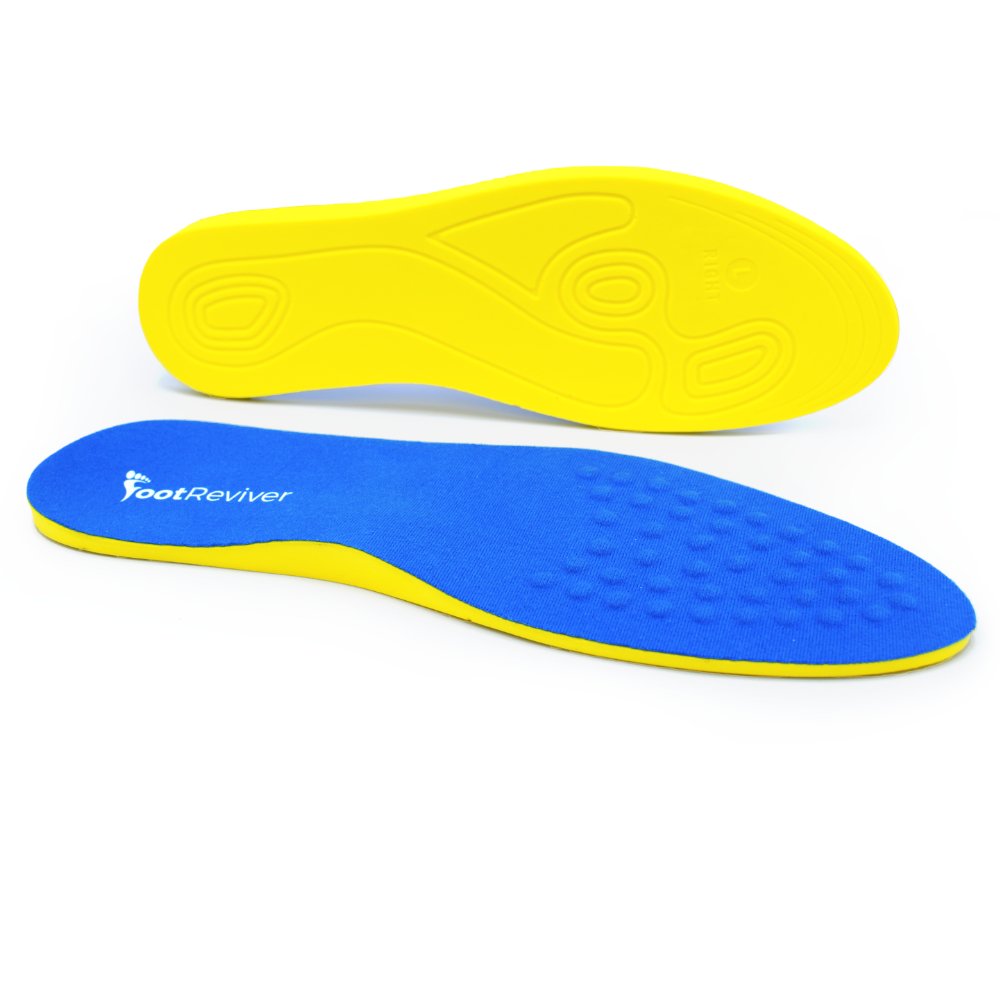
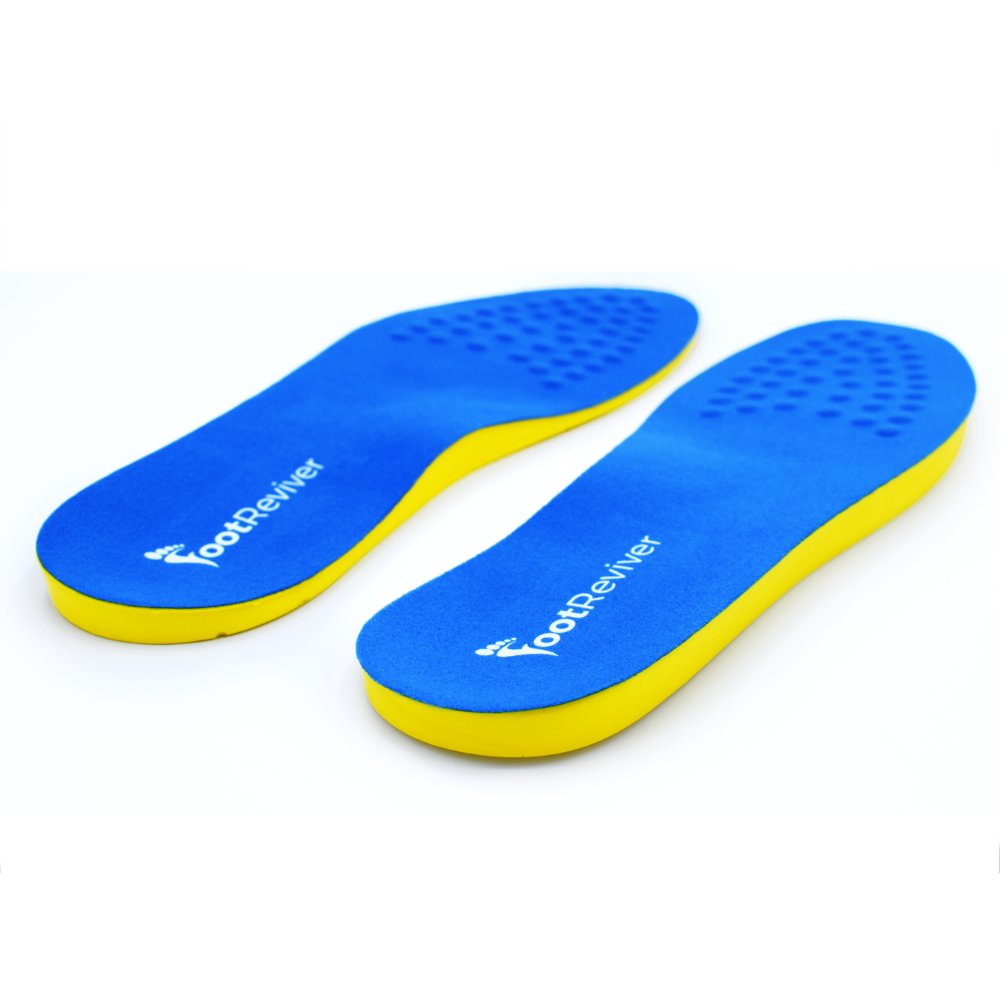
FootReviver insoles correct supination by working on several fronts at once. The design focuses on stabilising the foot, absorbing shock, and promoting proper alignment throughout the entire walking cycle.
- Lateral Support for Stability
A firm, raised outer edge creates a consistent, gentle slope that rises from the inner foot to the higher outer edge. This built-in incline provides immediate resistance against the outward roll from the moment your heel makes contact with the ground. By guiding the foot towards a neutral position, this design reduces strain on the outer ankle and disperses the concentrated pressure that builds on the side of the foot. - Strategic Cushioning for High-Impact Zones
A full-length, shock-absorbing base cushions every step, while built-in high-density pads in the outer heel and forefoot target the areas where supination concentrates the most force. This layered approach ensures that the intense, jarring impacts from hard surfaces are absorbed and dispersed locally before the shock can travel up the leg. This addresses the poor shock absorption of high arches, helping to protect your heels, ankles, and shins from the persistent discomfort caused by supination. - Arch Support for Proper Alignment
This support is designed to cradle the arch effectively, which is crucial as supination often stems from high, rigid arches. By providing a stable platform that prevents the foot from rolling outward, it also helps stop the knee from buckling inward, thereby stabilising the entire leg alignment. When paired with a contoured heel cup that secures the rearfoot in a neutral stance, this corrects the misalignment at its source. Proper arch support also reduces excessive tension on the plantar fascia ligament, which can help to prevent and alleviate heel pain. - Secure Fit and Anti-Slip Design
For the corrective elements to work effectively, the insole must stay securely positioned inside your shoe, and your foot must not slide on top of it. The bottom of the insole features a textured base that grips your shoe’s interior, preventing any shifting during activity. On the top layer, subtle grip patterns increase friction against your foot, holding it steady in the ideal placement. This two-part system ensures that the lateral incline and arch support remain accurately aligned with your foot, providing reliable correction with every step. - Breathable and Moisture-Wicking Fabric
The top layer is made from a breathable, moisture-wicking material that actively pulls dampness away from your skin. This is a practical necessity, not just a comfort feature. By keeping your feet dry, it greatly reduces friction to minimise the risk of blisters and hot spots, especially during prolonged wear. A drier environment also discourages the growth of odour-causing bacteria, helping your feet feel fresher throughout the day and making the insoles more hygienic for extended use. - Durable and Long-Lasting Construction
For insoles to function properly, they must maintain their shape and support over time. The high-density foam core is designed to resist compression, ensuring the lateral incline, arch support, and cushioning layers remain effective for months of daily use. This durability, combined with the secure fit, means you experience consistent, trustworthy support with each step, without the product breaking down or requiring constant replacement. - Practical, Everyday Design
To provide continuous correction, the insoles are crafted for all-day wear in everyday shoes. They are lightweight and slim, delivering firm guidance without adding bulk or altering how your shoes fit. The flexible forefoot allows for a natural push-off when you walk, and clear trim lines make them easy to fit comfortably into a wide range of footwear. This ensures you receive consistent biomechanical support during all your daily activities, from walking to work to running errands.
By combining these features, FootReviver insoles work to break the cycle of pain associated with supination. The difference you’ll feel extends beyond reduced discomfort to include genuinely improved stability, less muscle fatigue, and the confidence to move through your day with greater ease.
Targeted Support for Common Foot Concerns
Plantar Fasciitis: When Morning Steps Feel Like Walking on Glass
Waking up to a sharp, stabbing pain in your heel can make those first steps of the day feel unbearable. This isn’t just ordinary stiffness—it’s often a sign that the plantar fascia, the thick band of tissue supporting your arch, has become inflamed from overuse. With supination, where your foot rolls outward too much, this tissue faces uneven pulling and tension, particularly where it attaches to your heel bone. Instead of absorbing shock smoothly, each step tugs at the fascia, leading to micro-tears that flare up after rest.
Overnight, as the tissue tries to repair itself, it shortens and tightens. Those initial morning steps then stretch it abruptly, causing that jolt of pain. Throughout the day, the pain might ease into a dull ache as you move, but it can return after prolonged standing or walking on hard surfaces like pavements.
FootReviver insoles help by addressing the root cause: the faulty foot mechanics. The contoured arch support provides the structure your foot needs, reducing excessive stretching of the plantar fascia with every step. Combined with the reinforced lateral edge that controls outward rolling, the insoles promote a more neutral foot position. This, along with strategic heel cushioning, absorbs impact from hard floors, helping to break the cycle of inflammation. Many users find the morning pain diminishes within a few weeks of consistent wear, as the insoles offer steady support that allows the tissue to heal during daily activities. If pain persists or worsens, it’s wise to consult a physiotherapist or GP for personalised advice.
Heel Spurs: Understanding the Bone's Response to Chronic Strain
A deep, persistent ache in your heel, especially with those first steps in the morning, might point to a heel spur—a bony growth that forms where the plantar fascia attaches to the heel bone. It’s important to know that the spur itself isn’t always the direct source of pain; instead, it’s the inflammation in surrounding tissues caused by long-term mechanical stress. Supination worsens this by making your foot roll outward, placing abnormal tension on that attachment point. Your body responds by depositing calcium over time, much like a callus, but this can lead to more irritation.
This process is often accelerated because supination reduces your foot’s natural shock absorption. Each step on hard floors sends more force directly to the heel, exacerbating discomfort. You might notice the pain is worse after standing for long periods or in shoes with little support.
FootReviver insoles work to alleviate both the symptoms and the underlying issue. The arch support reduces chronic traction on the plantar fascia, decreasing the stress that encourages spur formation. While the insoles can’t dissolve existing bone, they create conditions for inflammation to settle by improving alignment. The heel cushioning plays a key role by absorbing impact that would otherwise jar the area. Users typically report less morning pain and reduced end-of-day ache within a month, as the insoles provide consistent support. For ongoing issues, pairing them with supportive footwear and seeking guidance from a healthcare professional can offer a comprehensive approach.
High Arches: Supporting a Rigid, Supinated Foot Type
Having high, rigid arches might seem like a sign of a “strong” foot, but this shape often creates a natural tendency for the foot to roll outward—a biomechanical issue known as supination. Unlike a flexible foot that can absorb shock, a high-arched foot acts like a rigid lever, poorly distributing impact forces. This places excessive pressure on the heel and the ball of the foot, particularly the outer edge, while the elevated arch itself remains unsupported and under constant tension.
You might notice your footprints show only a narrow band connecting the heel and forefoot, or that your shoes wear down heavily on the outside edge. Discomfort often manifests as a general ache in the arch, pain on the outer side of the foot, or a bruised feeling in the heel and ball of the foot after activity.
FootReviver insoles are specifically designed to address the challenges of high arches. The contoured arch support makes crucial contact with the raised arch, providing the structural reinforcement it lacks. This helps to dampen the foot’s rigid lever effect and promote a more neutral alignment. The full-length, strategic cushioning is vital, as it compensates for the foot’s poor natural shock absorption, dispersing impact forces that would otherwise travel straight up the leg. The reinforced lateral edge also works to gently control the excessive outward roll inherent in this foot type. Together, these features help to alleviate pressure points, reduce fatigue, and create a more stable, comfortable platform for every step. Users with high arches often report a significant reduction in arch ache and forefoot pain, allowing for longer periods of comfortable standing and walking.
Flat Feet: Finding Support When Your Arches Flatten
The feeling of your entire foot making contact with the ground, accompanied by a generalised ache through the arch and heel, often points to flat feet. While this condition is frequently linked to overpronation, the collapsed arch can also lead to a rigid, unstable foot that struggles to absorb shock effectively, sometimes resulting in compensatory supination. Without adequate arch support, the muscles and ligaments in your feet and lower legs are forced to work constantly, leading to fatigue that sets in quickly during standing or walking.
This discomfort is often most pronounced on hard, unyielding surfaces like shop floors or pavements, where the lack of natural cushioning becomes starkly apparent.
FootReviver insoles provide the essential architectural support that flat feet lack. The contoured arch support is key, as it makes contact where the arch has collapsed, helping to lift and stabilise the midfoot. This reduces the strain on overworked muscles and ligaments. The deep heel cup works in tandem, cradling the heel to create a stable foundation from which the arch can function more effectively. By improving overall alignment and shock absorption, the insoles can significantly reduce that end-of-day foot fatigue and aching. Many users find they can stand for longer periods with greater comfort. For best results, they should be paired with supportive, stable footwear.
Overpronation: Stabilising Excessive Inward Rolling
While it may seem opposite to supination, overpronation—where your foot rolls inward too much—is another common gait issue that benefits from stable, supportive foundations. This excessive inward motion can flatten the arch, stretch the plantar fascia, and create a chain of misalignment up the leg. The goal of effective support isn’t to force the foot in one direction, but to guide it towards a neutral, stable position throughout the gait cycle.
You might notice wear on the inner edges of your shoes, or experience arch pain, heel discomfort, and generalised fatigue.
FootReviver insoles help manage overpronation through their structured design. The deep, cradling heel cup is fundamental, as it holds the heel in a neutral alignment, preventing the inward collapse that starts the problematic chain reaction. The contoured arch support then provides a firm yet comfortable platform for the midfoot, preventing the arch from flattening excessively. This combination works to control the degree of inward roll, promoting a more efficient and stable gait. Users often report a feeling of their feet being “guided” into a better position with each step, leading to less strain and improved comfort during daily activities. They are an effective tool for encouraging healthier foot mechanics.
Posterior Tibial Tendon Dysfunction: When Your Arch's Main Support Falters
Pain and swelling along the inside of your ankle, coupled with a gradual flattening of your arch, often signal posterior tibial tendon dysfunction. This tendon acts as a primary support for your arch, and when it becomes compromised, your entire foot structure can change. Supination contributes significantly by forcing the tendon to work constantly against outward rolling. With each step, it fights to stabilise your arch, leading to micro-tears, inflammation, and eventual stretching that weakens its function.
The condition usually progresses slowly: you might first feel an ache after activity, then notice swelling or difficulty standing on tiptoes. Over time, your arch may visibly drop, and walking on uneven ground like grass or cobbles can become challenging.
FootReviver insoles provide external reinforcement to ease the strain on this tendon. The contoured arch support acts like a scaffold, reducing the load the tendon must bear. The reinforced lateral edge helps control supination, encouraging better alignment, while the deep heel cup enhances stability at the foundation. This combination allows the tendon to recover by promoting a more efficient gait. Users with early to moderate issues often experience less pain and improved stability within several weeks. For best results, introduce the insoles gradually and wear them with supportive shoes. If symptoms advance, consulting a physiotherapist or podiatrist is recommended for tailored management.
Fat Pad Atrophy: When Your Natural Shock Absorbers Wear Thin
A deep, bruised sensation in your heel or ball of the foot, particularly on hard surfaces, often indicates fat pad atrophy—the thinning of the natural cushioning that protects your bones from impact. These fat pads are your body’s built-in shock absorbers, and when they wear down, every step can feel punishing. Supination speeds up this process by concentrating your body weight on small areas, like the outer heel and forefoot, much like wearing down one spot on a carpet. Over time, this focused pressure flattens the pads, leaving bones vulnerable.
You might find that discomfort increases after standing on pavements or in unsupportive shoes, and your feet may feel “bony” or overly sensitive.
FootReviver insoles compensate for this lost cushioning with intelligent design. The full-length foam layer absorbs and disperses impact forces, reducing the burden on your remaining fat pads. More than just softness, the insoles correct alignment: the arch support and reinforced lateral edge encourage even weight distribution, preventing pressure from focusing on vulnerable spots. Users typically notice less pain during prolonged standing or walking, allowing them to stay active with greater comfort. Pairing the insoles with well-cushioned footwear enhances the benefits, but if symptoms persist, a healthcare professional can help rule out other conditions.
Metatarsalgia: When the Ball of Your Foot Feels Like Walking on Pebbles
A burning, aching sensation in the ball of your foot can make every step feel like you’re walking over small, sharp stones. This discomfort, known as metatarsalgia, happens when pressure becomes unevenly distributed across the forefoot, overloading the metatarsal bones and compressing the tissues between them. With supination, your weight shifts disproportionately onto the outer metatarsals—the fourth and fifth toes—which aren’t designed to bear the brunt of your entire body weight. This leads to inflammation, thinning of the protective fat pads, and nerve irritation.
You might notice the pain starts as a mild ache during a walk, evolving into a distinct burning sensation with continued activity, and sometimes sharpening when you push off or wear restrictive shoes.
FootReviver insoles help rebalance this pressure system. The reinforced lateral edge provides resistance against excessive outward rolling, preventing your weight from overloading the outer metatarsals. The contoured arch support stabilises the midfoot, creating a solid foundation for more even weight transfer from heel to toe. Combined with full-length cushioning that absorbs impact, this approach minimises nerve irritation and supports natural foot function. Many users feel less burning during walks and reduced ache after standing within a few days. For comprehensive management, wear them with footwear that has adequate room in the toe box. Persistent numbness or tingling should be evaluated by a professional to rule out other issues.
Morton's Neuroma: When Nerves Get Trapped Between Your Metatarsals
A sharp, electric shock sensation between your toes, often feeling like you’re stepping on a marble, is a classic sign of Morton’s neuroma. This isn’t a true tumour but a thickening of the tissue around a nerve, caused by chronic compression and irritation. Supination contributes to this by creating instability in your forefoot. With each step, the excessive outward roll can cause the metatarsal bones to pinch the nerves between them. This repetitive trauma leads to inflammation and hypersensitivity.
The discomfort is often worse in narrow shoes and tends to ease when you remove your footwear. You might also experience numbness or tingling that radiates toward your toes.
FootReviver insoles address this by tackling both the compression and the underlying instability. The contoured arch support stabilises the entire foot structure, reducing the forefoot splaying that allows bones to pinch nerves. The reinforced lateral edge controls supination, encouraging more even weight distribution and preventing the shifts that create instability. The full-length cushioning then absorbs impact that would otherwise travel through the compressed area. This creates a more predictable mechanical environment, allowing inflamed nerves to settle. Users often report a reduction in burning and electric shock sensations within weeks. They are most effective when paired with shoes that have a wide, deep toe box. For persistent or severe symptoms, further professional management may be needed.
Bunions: More Than Just a Bump—Understanding the Progressive Deformity
That prominent bump at the base of your big toe is a visible sign of a progressive structural change, where the big toe shifts toward the others, forcing the metatarsal head to protrude. While genetics play a role, biomechanical stresses like supination accelerate the process. The excessive outward roll increases pressure on the inner edge of your foot, placing constant strain on the joint capsule and ligaments. This encourages the big toe to drift laterally over time.
Discomfort often evolves from intermittent soreness to persistent pain, with redness, swelling around the joint, and difficulty finding comfortable shoes.
FootReviver insoles help manage bunion development by improving overall foot alignment. The contoured arch support reduces excessive pressure on the medial forefoot that drives the big toe outward. While insoles can’t reverse existing bony changes, they can slow progression and reduce inflammation by creating a more stable environment. The reinforced lateral edge works to control supination, preventing the weight shift that strains the bunion joint. The supportive base also allows your toes to splay naturally. Users frequently report less inflammation, improved comfort in shoes, and decreased fatigue during walking. For optimal results, wear them with footwear that has adequate width and depth in the toe box. This approach works best as part of a comprehensive management plan.
Hammer Toes: When Toes Contract from Muscle Imbalances
Bent, curled toes that resemble little hammers are often the result of muscle imbalances that pull the toes into a flexed position. This progressive deformity typically affects the second, third, or fourth toes, causing pressure points, corns, and difficulty with footwear. Supination contributes by creating foot instability. To compensate, the toe flexor muscles overwork, gripping the ground for stability with each step. Over time, the tendons tighten and the joints stiffen in this curled position.
Shoes with narrow toe boxes can worsen the problem, but the underlying instability from supination is often the primary driver.
FootReviver insoles address this by providing the stable foundation your feet lack. The contoured arch support promotes better alignment, reducing the compensatory muscle activity that leads to toe contraction. The reinforced lateral edge controls supination, encouraging more even weight distribution across the forefoot and alleviating pressure on the toes. The full-length design supports a natural toe-off during walking, allowing toes to extend properly rather than curling. With consistent use, users often experience less pain on the tops of bent toes, decreased corn formation, and improved flexibility. For comprehensive management, pair them with footwear that has a deep, roomy toe box and simple toe exercises to maintain mobility. Fixed deformities may require additional professional interventions.
Sesamoiditis: The Overlooked Cause of Big Toe Joint Pain
A sharp, localised pain under the ball of your foot, directly beneath the big toe joint, often points to sesamoiditis. This is inflammation of two small, pea-shaped bones embedded in the tendon that controls your big toe movement. These sesamoids act as pulleys, enhancing leverage and absorbing weight when you push off during walking. Supination can contribute to this condition by creating instability that leads to overloading on the inner forefoot. This places increased pressure on these delicate bones during activities like walking or climbing stairs.
The discomfort is often most noticeable when walking barefoot on hard surfaces or in thin-soled shoes that offer little protection, and it can feel like stepping directly on a bruise.
FootReviver insoles help offload pressure from these vulnerable bones. The contoured arch support and reinforced lateral edge work together to promote a more balanced gait, minimising focal stresses on the inner forefoot. This approach corrects the mechanical faults that lead to overloading. The strategic cushioning then absorbs shock at heel strike and toe-off, protecting the sesamoids from repetitive impact. This combination helps reduce inflammation while preventing further irritation. Users often experience significant pain reduction and improved comfort during daily activities within weeks. For optimal results, pair them with footwear that has good cushioning and a lower heel. Persistent pain should be evaluated by a professional to rule out stress fractures.
Ankle Sprains: Breaking the Cycle of Recurrent Instability
The sudden sensation of your ankle giving way on uneven ground is more than a simple twist; it can be the start of a frustrating cycle of recurrent instability. After an initial sprain, ligaments often heal in a lengthened position, compromising stability. Supination sets the stage for this by creating a naturally unstable foundation. The excessive outward roll places your lateral ankle ligaments under constant tension, making the joint more vulnerable to rolling over on minor irregularities like grass or cobbles.
This instability can undermine your confidence with every step.
FootReviver insoles intervene by stabilising this foundation. The reinforced lateral edge acts as a physical barrier against excessive supination, preventing your ankle from rolling into the vulnerable position that causes sprains. The deep, cradling heel cup enhances stability by holding your heel in better alignment, establishing a solid base for the entire ankle joint. This improved alignment also sharpens your body’s sense of joint position, helping your nervous system make quicker, more precise adjustments on unpredictable surfaces. Users typically report greater ankle security, fewer rolling incidents, and improved confidence during daily activities within weeks. The insoles function as consistent stabilisers, allowing weakened ligaments to strengthen. For a fresh or severe sprain, proper medical assessment is essential to exclude fractures.
Shin Splints: When Your Lower Leg Muscles Protest Overwork
A nagging ache or sharp pain along the inner edge of your shin bone is often a signal that your lower leg muscles are working overtime. Known as shin splints, this condition involves inflammation of the muscles, tendons, and bone tissue around the tibia. Supination significantly contributes to this overload. The excessive outward roll of your foot forces the muscles along the front and inside of your shin to constantly fire to stabilise your ankle and control foot placement.
This increased muscular effort, combined with poor shock absorption from an unstable foot strike, creates the perfect environment for shin splints to develop, especially during weight-bearing exercise.
FootReviver insoles address this overload at its source. The contoured arch support promotes a more neutral foot position, reducing the compensatory overuse of shin muscles that occurs when your foot struggles for stability. The reinforced lateral edge controls excessive supination, decreasing the strain on key stabilisers like the tibialis anterior. The full-length cushioning then absorbs impact that would otherwise transmit directly up your leg, lessening the repetitive stress on shin tissues. Users often experience reduced shin pain during and after activity, and improved endurance. For comprehensive management, introduce them alongside gradual training progression and proper footwear. Persistent pain should be evaluated to rule out a stress fracture.
Achilles Tendonitis: Reducing Strain on Your Powerful Push-Off Tendon
Stiffness and pain at the back of your heel, particularly noticeable after rest or during activity, can point to Achilles tendonitis. This involves inflammation and degeneration of the large tendon connecting your calf muscles to your heel bone. Supination contributes directly to this strain. When your foot rolls outward excessively, it creates a rotational force through your ankle that places an uneven load on the Achilles tendon, irritating its fibres.
This is often compounded by tight calf muscles, which increase baseline tension on the tendon. You might feel the discomfort is worst upon waking or during activities like running or stair climbing.
FootReviver insoles help alleviate this strain by improving biomechanics. The cradling heel cup stabilises your heel bone, preventing excessive shifting and reducing the twisting forces that aggravate the tendon. The slight heel lift inherent in the insole’s design also gently reduces tension in the calf-Achilles complex, providing the inflamed tendon with relative rest even during activity. By controlling supination with the reinforced lateral edge, the insoles promote more efficient force transfer from calf to foot. Users typically report reduced morning stiffness and less pain during daily activities. For comprehensive management, they work best alongside a progressive calf-strengthening programme. Sudden, severe pain or an inability to walk normally warrants immediate medical attention.
Peroneal Tendonitis: When Your Ankle's Stabilizers Become Inflamed
Pain and tenderness on the outer side of your ankle or foot, often worsening with movement, may signal peroneal tendonitis—an inflammation of the tendons that help stabilise your ankle. These tendons work constantly to prevent excessive rolling, but supination places them under particular strain. The excessive outward roll creates constant tension, leading to friction and irritation where the tendons pass behind the outer ankle bone. This is especially noticeable during activities that involve sudden direction changes or prolonged standing on uneven ground.
The discomfort often follows a clear pattern: it builds with activity, eases with rest, and might include a sensation of snapping or popping in more severe cases.
FootReviver insoles help by stabilising the foundation these tendons rely on. The reinforced lateral edge acts as a mechanical buffer against excessive supination, reducing the load on the peroneal tendons and allowing them to work with less compensatory effort. The arch support promotes better overall foot alignment, which helps distribute forces more evenly and reduces the overuse of these specific tendons. The cushioning in the heel and midfoot then absorbs shock that would otherwise travel directly through the inflamed area. Users typically experience reduced pain and swelling, along with improved ankle stability during movement. For optimal results, combine them with rest and gentle stretching during acute phases. Persistent pain or significant instability should be evaluated by a professional to rule out tendon tears.
Tarsal Tunnel Syndrome: Relieving Nerve Compression in Your Ankle
A burning, tingling, or numb sensation on the inside of your ankle or bottom of your foot may indicate tarsal tunnel syndrome—a condition where the tibial nerve becomes compressed as it passes through a narrow space on the inner ankle. Similar to carpal tunnel in the wrist, this nerve entrapment can lead to significant discomfort. Supination contributes to this by altering ankle alignment and increasing soft tissue tension. The excessive outward roll may cause tissues around the tarsal tunnel to tighten or swell, narrowing the space for the nerve.
This often feels worse with prolonged standing or walking, and the symptoms might ease when you rest or remove your shoes.
FootReviver insoles help alleviate this compression by improving foot alignment. The contoured arch support encourages a more neutral foot position, which can decrease tension on the medial ankle structures and create more space within the tarsal tunnel. By controlling supination with the reinforced lateral edge, the insoles promote more even weight distribution, minimising focal pressures that aggravate the nerve. The cushioning properties then absorb shock during walking, reducing impact forces that could further irritate the area. Users often report decreased tingling and pain, along with better comfort during daily activities. They are most effective when worn with footwear that provides adequate room and support. Persistent or severe cases may benefit from additional professional interventions like stretching regimens.
Poor Posture: How Your Feet Influence Your Entire Body's Alignment
That nagging ache in your back, neck, or shoulders might surprise you by starting in your feet. Poor posture isn’t just about slouching; it’s a full-body alignment issue that begins with how your feet meet the ground. When your feet are unstable, your body initiates a chain of compensations that travel upward. Supination directly undermines your foundation by creating a wobbly base. The excessive outward roll forces the muscles on the outside of your calves to overwork, which can twist your lower legs, pull your knees out of alignment, and lead to hip tilting and spinal curvature.
This isn’t occasional slouching—it’s a persistent mechanical cascade that leaves you feeling off-balance and fatigued from simple activities like standing in a queue or walking short distances.
FootReviver insoles address this at the source by steadying your feet. The reinforced lateral edge prevents excessive outward rolling, providing the stable foundation your body needs to find its natural alignment. This allows your ankles, knees, hips, and spine to settle into more neutral positions without constant compensatory bracing. The contoured arch support and cradling heel cup work together to encourage proper foot positioning, which helps your pelvis and spine align more efficiently. Users often notice less back stiffness after standing, decreased shoulder tension, and improved overall endurance within weeks. For comprehensive improvement, pair them with supportive footwear and awareness exercises. Persistent issues may benefit from professional guidance to address muscular imbalances.
Knee, Hip & Back Pain: Tracing Lower Body Discomfort to Its Source
Persistent discomfort in your knees, hips, or back often has a surprising origin—your feet. Your body functions as an interconnected system, and imbalances in your feet send stress upward through kinetic chains, overloading joints and soft tissues. Supination triggers specific compensations: when your feet roll outward excessively, your weight shifts to the outer edges, forcing your lower legs to rotate. This changes knee function, increases hip tilting, and disrupts pelvic alignment, leading to spinal curvature and lower back stiffness.
These aren’t isolated aches but cumulative stresses that build with activity, particularly on uneven ground or during stair climbing.
FootReviver insoles tackle this chain reaction at its root. The reinforced lateral support reduces excessive weight bearing on the outer edges of your feet, helping to normalise forces travelling up through your ankles and knees. The full-length cushioning absorbs and disperses impact that would otherwise jar your joints and spine, while the arch support promotes better alignment to reduce compensatory muscle recruitment. By addressing the foundational issue, the insoles help your muscles work together more efficiently. Users typically experience reduced knee pain during daily activities, decreased hip stiffness after standing, and improved comfort on uneven surfaces within the first month. While FootReviver insoles can significantly improve lower body comfort, they work best as part of a comprehensive approach that may include strengthening exercises.
Arthritis: Managing Joint Stress in Inflammatory and Degenerative Conditions
That deep, aching pain and stiffness in your foot or ankle joints, often worse in the morning, can signal arthritis. While this condition involves joint inflammation and cartilage breakdown, its symptoms are profoundly influenced by the mechanical forces passing through your joints with every step. Supination significantly exacerbates this by creating abnormal joint loading. The excessive outward roll concentrates forces on specific areas of the foot and ankle not designed to bear the full brunt of your body weight, accelerating wear in vulnerable joints and further irritating already inflamed tissues.
The compromised shock absorption from an unstable gait means each step delivers more direct impact to sensitive joints, making activities like walking on pavements particularly challenging.
FootReviver insoles help manage these mechanical stresses. The cushioning properties are vital, absorbing a significant amount of shock during heel strike and toe-off to reduce the jarring impact that triggers pain. Equally important, the arch support and reinforced lateral edge work to correct alignment, encouraging a more neutral foot position that distributes your body weight more evenly across joint surfaces. This reduces peak pressures on overstressed areas, helping to minimise inflammation. The improved stability also reduces the muscular effort required for walking, which can lessen fatigue. Users often report reduced end-of-day pain and less morning stiffness, allowing for greater activity with less discomfort. While valuable for managing symptoms, these insoles work best as part of a broader plan that includes medical management and low-impact exercise.
Gout: Supporting Comfort During Flare-Ups and Remission
The sudden, intense pain, redness, and swelling of a gout attack—often in the joint at the base of the big toe—is a form of inflammatory arthritis caused by uric acid crystals in the joints. While gout is primarily a metabolic condition, how you walk and stand influences how you experience the pain. Supination plays a secondary role; it doesn’t cause the underlying issue, but the excessive outward roll and altered pressures can create micro-trauma through instability. This mechanical stress can serve as a trigger for acute flare-ups in joints already primed for inflammation.
During an attack, the intense pain often forces a pain-avoiding gait that exaggerates poor mechanics, creating a vicious cycle of increased discomfort.
FootReviver insoles provide valuable supportive management. During remission, the full-length cushioning helps absorb shock and reduce the daily micro-trauma that might otherwise trigger a flare in vulnerable joints. By promoting better overall alignment and a more stable gait, the insoles help minimise abnormal joint stresses, encouraging more even weight distribution. During acute attacks, they can offer gentle, consistent support if you’re able to wear shoes, helping to offload the inflamed joint slightly. Regular use during remission typically contributes to overall foot comfort and may help reduce the frequency of activity-related triggers. It’s important to understand that FootReviver insoles are a supportive measure within a comprehensive gout management plan guided by a GP, which is essential for addressing the underlying condition.
Calluses and Corns: Addressing the Cause, Not Just the Symptom
Tough, thickened patches of skin on your feet—calluses on the soles or corns on the toes—are your body’s defence mechanism against repeated friction and pressure. While often treated as a superficial issue, they are frequently a visible sign of underlying biomechanical problems. With supination, the excessive outward roll creates specific, focused pressure points on the outer edge of your heel, the ball of your foot, and the tops of curled toes (hammer toes), leading the skin to thicken protectively in these exact spots.
Simply filing them away offers temporary relief, as the root cause remains unchanged.
FootReviver insoles help by addressing the mechanical source of the problem. The reinforced lateral edge and contoured arch support work to correct foot alignment, promoting a more even distribution of weight across the entire foot. This reduces the focalised pressure on specific areas that causes the skin to thicken. By stabilising the gait and minimising the internal sliding and shifting of the foot within the shoe, the insoles also significantly reduce the friction that leads to these formations. Over time, with consistent use, you may notice that existing calluses become softer and less painful, and new ones stop forming as the foot is held in a healthier, more neutral position.
Foot & Ankle Instability: Rebuilding Confidence in Your Foundation
A persistent feeling of your foot “giving way” on uneven ground, or a general lack of confidence in your footing, points to chronic instability. This is more than weak muscles; it’s a complex issue involving compromised ligaments and faulty foot mechanics that disrupts your body’s innate sense of joint position. Supination is a primary driver. The excessive outward roll creates a naturally unstable base, stretching the lateral ankle ligaments over time and disrupting the neurological feedback from your feet. This means your brain receives delayed information about ground contact, resulting in slower corrections and a high risk of rolling your ankle.
It’s a cycle that can start with a minor sprain and escalate into a recurring problem.
FootReviver insoles directly target both the mechanical and neurological aspects. The reinforced lateral edge acts as a physical buffer against excessive supination, preventing your foot from rolling into the vulnerable position that leads to giving way. The deep, cradling heel cup enhances stability by holding your heel in better alignment, establishing a solid foundation. This improved alignment also sharpens your body’s proprioceptive feedback, effectively retraining your nervous system to make quicker, more precise adjustments on unpredictable surfaces. Users typically report a significant reduction in episodes of the ankle giving way and greater confidence during daily activities within weeks. For comprehensive management, they’re most powerful when combined with a dedicated strengthening programme prescribed by a physiotherapist.
General Foot Fatigue & Aching: Easing the Strain of Long Days on Your Feet
That deep, all-over ache and heaviness in your feet after a long day isn’t just normal tiredness—it’s often a sign that your feet have been fighting for stability and struggling to absorb shock. Whether you’re standing behind a counter, walking on hard pavements, or moving through a busy shift, cumulative stress takes its toll. Supination worsens this dramatically by creating a wobbly foundation, forcing the muscles in your feet, ankles, and calves to constantly grip and correct, leading to premature fatigue.
This type of aching typically builds steadily throughout the day and feels most relieved when you can finally take the weight off your feet.
FootReviver insoles combat this fatigue by providing comprehensive support and cushioning. The reinforced lateral edge stabilises the foot, preventing the energy-draining outward roll that forces muscles to overwork. The full-length cushioning layer absorbs a significant amount of impact with every step, reducing the jarring forces that contribute to that deep, bruised sensation. Meanwhile, the arch support helps to distribute your body weight more evenly, taking pressure off overburdened areas. The result is that your musculoskeletal system doesn’t have to work as hard, so you can stay on your feet for longer before that debilitating fatigue sets in. Many users describe the feeling as “walking on a supportive cloud” that makes a tangible difference to their endurance.
Frequently Asked Questions
Before you get started, here are answers to some common questions we hear. This should help you feel confident about using FootReviver insoles.
How do I choose the right size?
Our insoles are designed to be trimmable for a custom fit. Simply refer to the size guide based on your UK shoe size and trim along the indicated lines if needed. This ensures they sit perfectly in your shoes without shifting.
Will they feel strange when I first use them?
It’s common to feel a new awareness in your feet, arches, or calves during the first few days. This is a normal sign that your body is adapting to the improved alignment. We recommend a gradual break-in period to allow your muscles and ligaments to adjust comfortably.
What types of shoes are they compatible with?
These insoles are versatile and fit well in most footwear with a removable insole, such as running trainers, work shoes, and casual footwear. They are not suitable for shoes with very shallow depth, like ballet flats, or high heels, as they need adequate space to function correctly.
How long do the insoles typically last?
With daily use, you can expect them to provide consistent support for approximately 6 to 12 months. The high-density foam core is durable and resists compression, but like any supportive product, they will eventually need replacing as the cushioning properties diminish with wear.
How should I clean and care for them?
Hand wash with mild soap and lukewarm water, then air dry away from direct heat sources like radiators. This helps maintain their shape and materials. Avoid machine washing or drying, as this can damage the structure.
Getting Started With Your Insoles
Allowing Your Body To Adapt
When you first use the insoles, you’re asking your body to change a movement pattern it may have had for years. Your muscles and ligaments are accustomed to working in a specific way to manage the supination.
The structured support immediately begins to correct this, guiding your tissues into a better alignment. This is a positive change, but it can cause temporary, mild fatigue or awareness in your feet, arches, or calves as they adapt. This is a normal and positive sign of adaptation.
Ease into using your insoles by wearing them for a few hours each day during light activity, gradually increasing the time over the first week. This gradual approach gives your body the time it needs to strengthen and adjust comfortably, building a foundation for lasting improvement.
Supporting Your Comfort With Simple Daily Habits
To get the most from your insoles and support your body’s adaptation, consistency is key. Pairing them with a few simple daily habits can significantly enhance your comfort and accelerate your progress. Focus on these two areas: improving flexibility and building strength.
1. Improve Calf Flexibility to Ease Strain
Tight calf muscles are a primary driver of supination, as they restrict your ankle’s natural movement. A simple daily stretch can make a notable difference.
- How to do it: Stand facing a wall with one foot stepped back, keeping the knee straight and your back heel firmly on the floor. Gently lean forward until you feel a stretch in the calf of your back leg. Hold for 20-30 seconds and repeat 2-3 times for each leg.
2. Strengthen Your Ankle Stability
Supination creates instability. By strengthening the small muscles that control your ankle, you create a more resilient foundation.
- How to do it: Practise standing on one foot for 30 seconds at a time while doing a quiet activity like brushing your teeth. For safety, do this near a wall or counter you can touch if needed. This simple exercise directly challenges and strengthens your stabilisers.
3. Choose Supportive Footwear
Your insoles work in partnership with your shoes. The right footwear provides a stable base, while the wrong shoes can undermine the insoles’ correction.
- What to look for: Opt for shoes with a firm heel counter (the back of the shoe that cups your heel) and adequate cushioning. Avoid worn-out shoes that allow your heel to wobble or shoes that are overly flexible.
If discomfort continues beyond the initial adaptation period, consulting a physiotherapist or podiatrist can offer personalised guidance tailored to your specific biomechanics.
A Supportive Solution For Daily Comfort
View these insoles as an effective tool for managing supination. For most people, supination is a structural aspect of their feet. Wearing FootReviver insoles consistently provides the support your body needs to function with better alignment and significantly less pain throughout the day. They create the optimal conditions for comfort and function, helping you move through your life with greater ease.
Experience The Difference In Your Daily Movement
While supination can be frustrating, it doesn’t have to limit your daily life. FootReviver insoles help your foot find a more stable, comfortable position, so you can move with greater confidence. You should notice more secure, cushioned steps with improved stability. We stand behind the difference they can make. If you’re not completely satisfied with the comfort and stability improvements, we offer a straightforward refund. Choose FootReviver and take the first step toward moving with greater comfort and confidence—from the ground up.
A Note On Your Safety And Wellbeing
Your wellbeing is our priority. FootReviver insoles are designed for comfort and support. If you have specific health concerns such as diabetes, circulatory issues, severe undiagnosed pain, or persistent symptoms, please speak with your GP or a podiatrist before using any new foot support product to ensure it’s suitable for your situation. Discontinue use and seek medical advice if you experience new numbness, colour change, or increasing pain.

by Jake
Very happy! Speedy delivery, well made but more importantly wearing these insoles has really helped stop my feet from hurting all the time.
by Luke
Very good quality. Thank you!
by Alec Davis
These have made a phenomenal difference to my life! I was told I needed ankle fusion by the doctors…a process with a 20% rate of total failure and a 10% chance of even more pain afterwards. I noticed that in the report I was given I was underpronating and found these online. They felt very strange at first, so bad had become my gait, but after a few days I discovered I could walk without constant pain, and now, after 2 months am walking without a stick and almost back to normal. I no longer fear standing up and am looking forward to long country walks once again.
I am ordering further pairs for all my shoes now.
by Iwona
This is very good quality product. helps me so much with my condition. Very fast delivery. Highly recommended! THANK YOU
by Graeme Smith
As a postman of 4 and a ½ years,I can’t recommend these enough, having suffered for over 2 years with plantar fasciitis.I’m still experiencing a little discomfort while getting used to these ,but that’s down to my feet and ankles adjusting to walking more or less as I should be,rather than the insoles being at fault.Obviously they aren’t custom made so won’t be a perfect fit for everyone but they’ve made such a difference to me,I walk around 10 miles a day in my job,and can honestly say these have possibly saved me from having to switch jobs.Good price too, highly recommend them.
by Louise Elmwood
Iv been suffering from supination for a long time now however I’m pretty dumb when it comes to knowing what insoles to buy to sort them out as iv bought loads of dud insoles in the past that were said to help fix my supination but didn’t. After finding these insoles I was a bit sceptical at first due to my past experiences but because they were quite inexpensive compared to the others I thought I would give them a shot. I am really glad that I did. Since I started wearing them they have totally changed the way that I walk. Now I don’t get anywhere near the level of niggling aches and pains in my feet as I used to get and I’m soooo happy. As we speak am buying more pairs for my others shoes!!! 😎
by Suzanne
I’m very impressed with these supination insoles. They tilt my feet inwards effectively but provide plenty of blissful cushioning under the foot. Considering that I roll outwards very badly, particularly on my right foot, due to a permanent tear in an ankle ligament, these insoles are very effective at preventing the rolling and preventing foot and ankle pain. I walk at least an hour a day with our three dogs, so support and comfort are essential. I had none of my usual ankle pain whilst using these insoles, compared with wearing just the standard insoles which came with the shoes.
I used the insoles in a pair of shoes where the standard insoles could be removed and replaced with an orthotic insoles. I will definitely buy more of these insoles for the pain-prevention, comfort and support they provide.
by Jennifer
Excellent. This insole provided immediate pain relief from the severe supination I suffer on account of spastic hemiplegia pushing the outside of my foot hard down into my rigid AFO. The real test will be when I go on Holiday at the end of the month, and am walking on hard surfaces for several hours daily, but even with just using around the house, the reduction in pain significant and more than worth the modest cost of the product. I’m wishing I had thought to investigate supination insoles years ago and spared myself all the pain. If you’re considering these, I would really recommend giving them a try.