
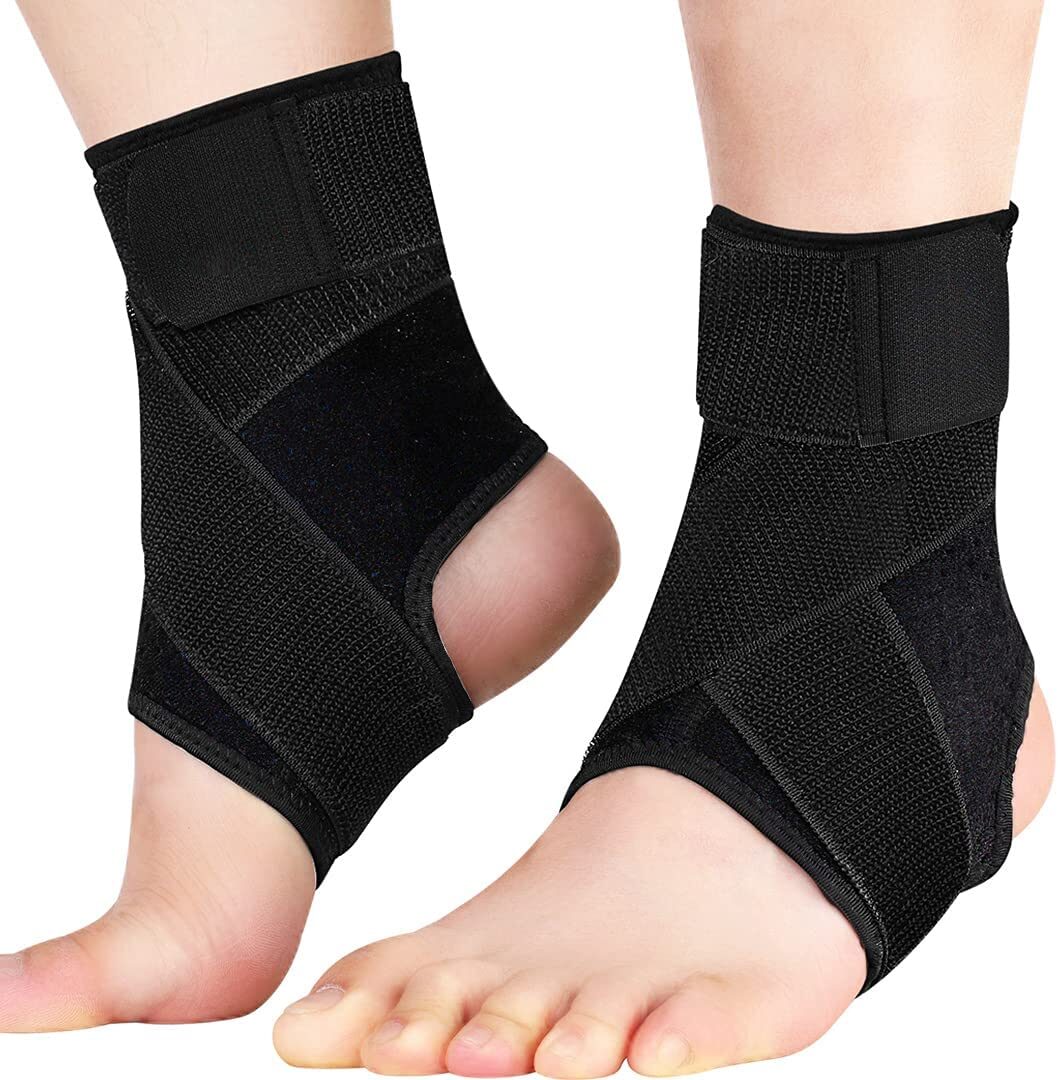
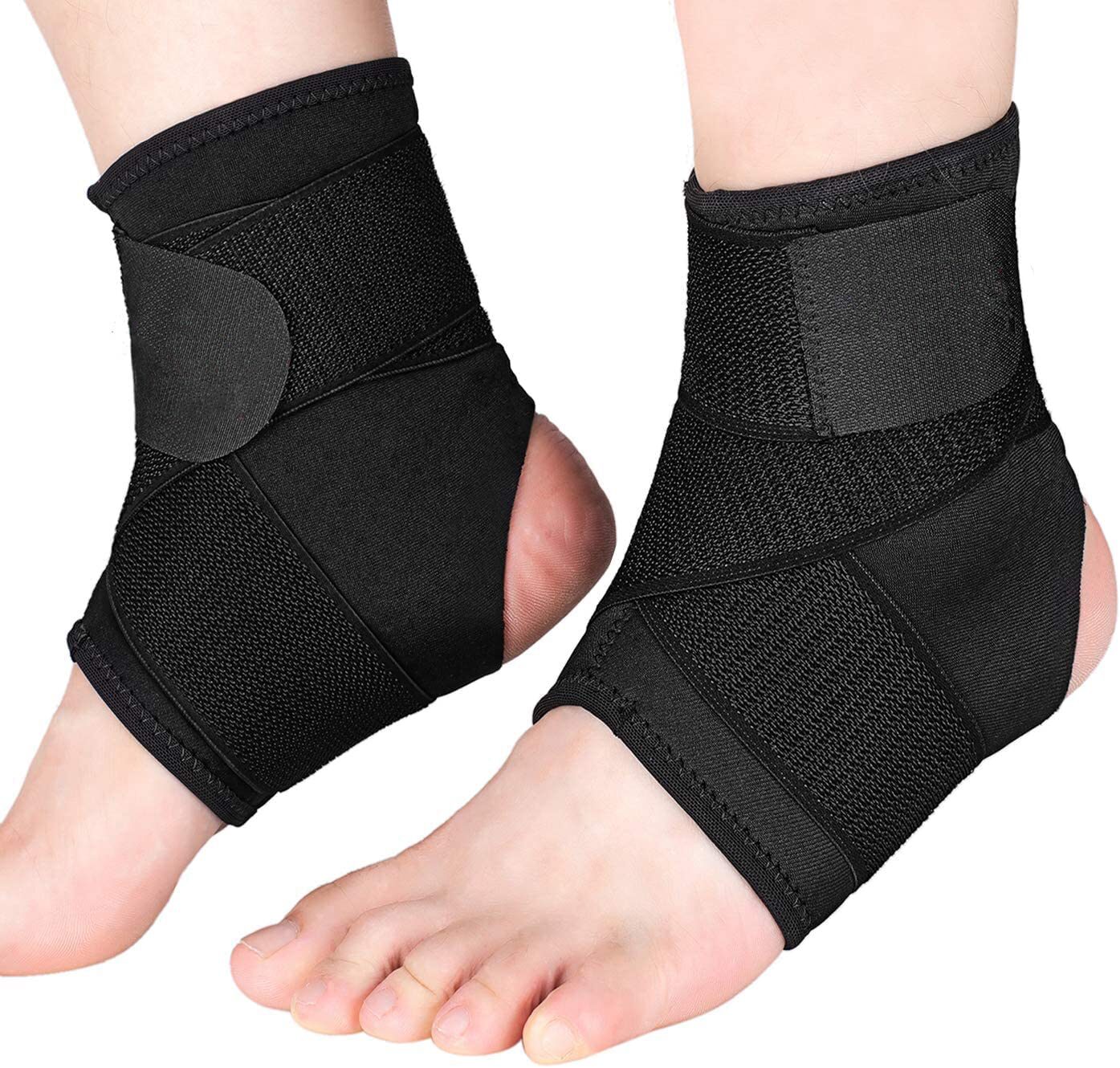
1x Pair of Plantar Fasciitis Sleeve Braces
£16.99£19.98 (-15%)inc VAT
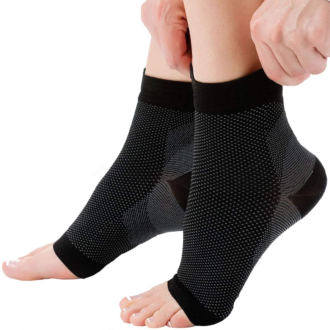
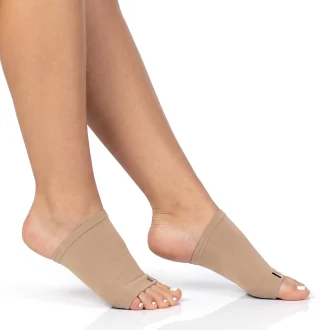
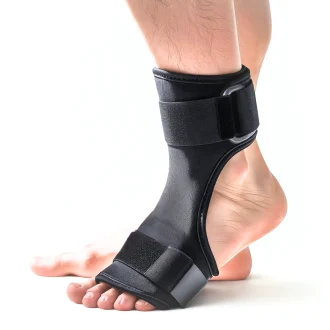
- A pair of slim sleeve-style braces that wrap around your midfoot, arch and heel
- Designed for plantar fasciitis and the heel and arch pain that comes with it
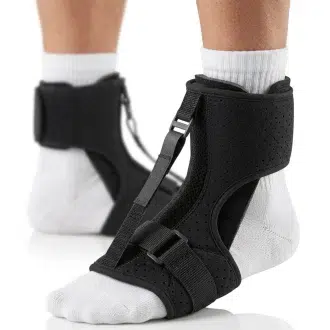
- Also worn for Achilles tendonitis, heel spurs, drop foot, strains and sprains, osteoarthritis and gout once a flare has settled
- Unisex, one size, with adjustable straps so you can set the fit yourself
- Made from neoprene — a stretchy, rubber-based material that’s light, hard-wearing and shock-absorbing
- A shaped section sits under the arch to take some of the tension off the plantar fascia
- A cupped heel section cushions impact and spreads pressure across the heel pad rather than concentrating it under the sore spot
- The sleeve continues around the back of the heel and up towards the ankle, supporting the area where the Achilles tendon attaches
- Adjustable straps let you set how much support and compression you feel through the day
- Thin enough to wear inside ordinary shoes and trainers
- Can also be worn around the house, when shoes aren’t on
- Start with an hour or two a day and build up gradually — the fit should feel snug rather than tight
- Won’t undo months of irritation overnight. Most people notice a difference over weeks of consistent wear, rather than days
- If your pain is severe, you can’t put weight on the foot, or you notice new or unexplained symptoms, speak to a GP, physiotherapist or podiatrist
Get 15% off - When bought together with:
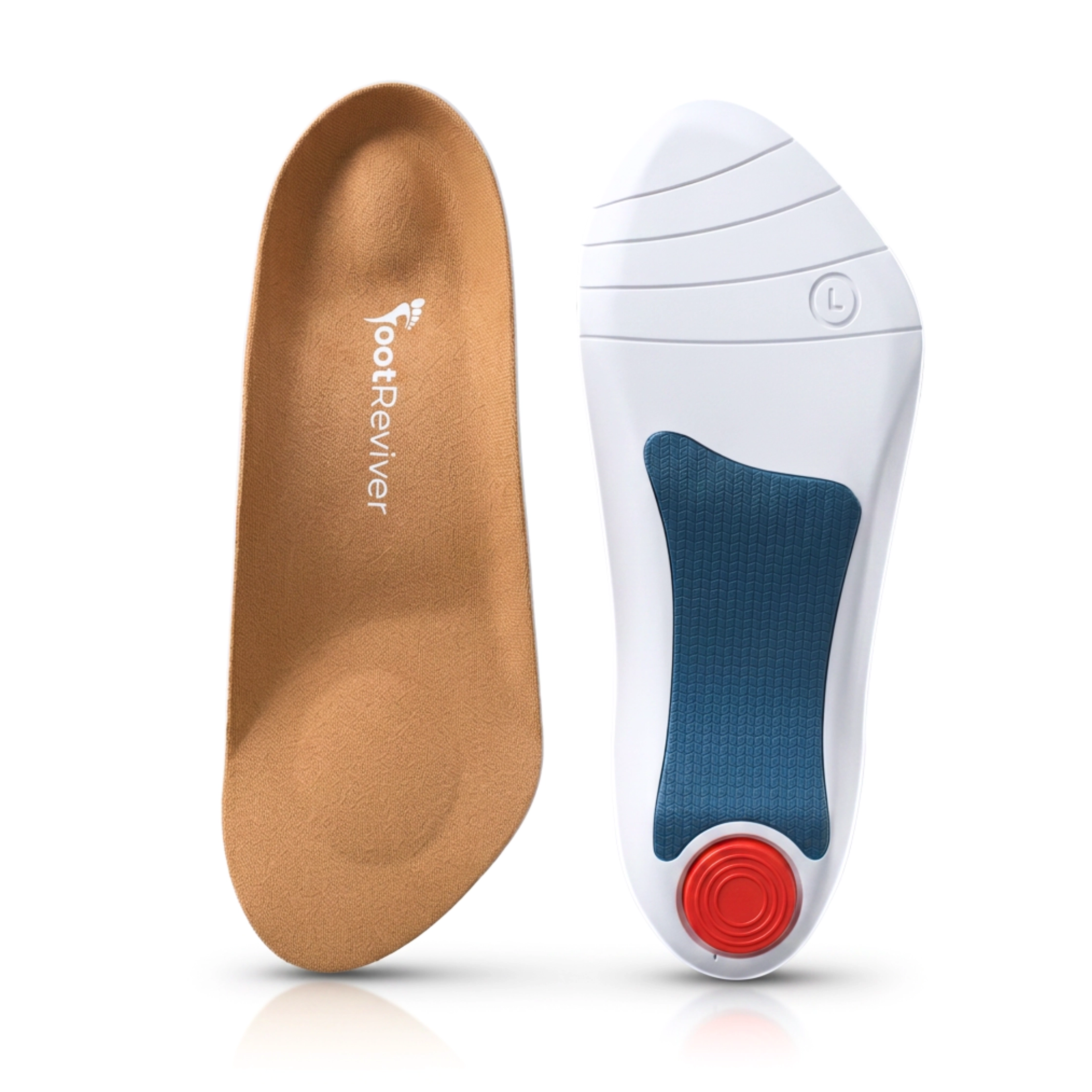
- This item: 1x Pair of Plantar Fasciitis Sleeve Braces(£16.99
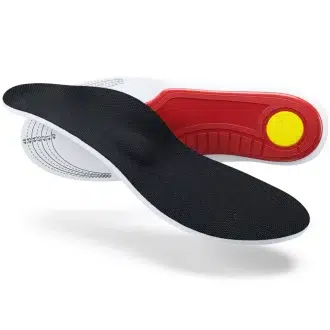
£19.98(-15%)inc VAT) - Plantar Fasciitis Arch Support 3/4 Length Heel Pain Relief Insoles(£9.99
£10.99inc VAT)
FootReviver™ plantar fasciitis sleeve braces are designed around how plantar fasciitis actually behaves. They support the arch, cushion the heel, and apply a gentle, adjustable compression, in a slim design that fits inside ordinary shoes. Worn consistently through the day, they keep the foot supported while the plantar fascia settles.
What plantar fasciitis actually feels like
If you’ve woken more than once with a sharp pain under your heel, or felt a tight pull through the arch of your foot as you took your first steps of the day, you already know what plantar fasciitis feels like. It’s an irritation of the plantar fascia, the band of tissue that runs along the sole of your foot from the heel bone to the base of the toes, holding up the arch as you stand and walk.
Estimates suggest up to one in ten adults experience this at some point, placing it among the most common foot and ankle problems. What sets it apart isn’t the intensity of the pain; it’s the way it moves through the day. Walking eases it, resting seems sensible, and yet the soreness comes back the next morning with the same reliability. Many people carry on with this for months, gradually scaling back what they do to avoid a flare, without ever getting a clear picture of what’s happening inside the foot. Understanding that picture changes what you can sensibly do about it.
The description most people give is remarkably consistent. The first couple of steps out of bed bring a sharp, stabbing pain, usually under the heel and slightly towards the inner edge. It’s not a background ache. The pain can be sharp enough to stop you mid-step. After ten or twenty steps it settles, enough that you think whatever it was has passed. Then you sit down for half an hour, stand up again, and the same pain returns in the same spot with the same character.
Where you feel it varies from person to person. Some feel it right under the heel, like walking on a small stone. Others feel a broader ache across the arch itself. Both can show up in the same foot at different times of day.
As the day goes on, the quality of the pain shifts. If you’re on your feet for hours — a full shift on hard flooring, a long walk, several hours upright with little chance to sit down — a duller ache builds through the afternoon and is often worst by the evening. Runners and other athletes get a second spike, usually in the first mile and again once they slow down and cool off. It’s the same pattern you feel in the morning, triggered by a different set of circumstances: the tissue cools and tightens during stillness, and then becomes painful again the moment you put weight through it.
It rarely stays confined to one spot, either. When one foot hurts on every step, you shift weight onto the other side, shorten your stride on the painful side, and roll off the foot differently to avoid the sore spot. Across a single day none of this is noticeable. Across a few weeks, the opposite foot, the calf, and sometimes the outer side of the hip start to feel the extra work. By the time this has been running for a couple of months, soreness on both sides is common — and the second side is often a consequence of favouring the first.
The easing part is where people get caught out. Because the pain lifts once you’ve walked a bit, it’s easy to assume the problem is settling, and to keep going as normal. What’s actually happening is that the tissue is warming up and being stretched back to its working length, not that it’s healed. The repeated strain carries on step after step, and if the foot never gets enough time out of load to repair itself between days, the trouble builds fairly steadily.
Why plantar fasciitis follows this pattern
To make sense of this pain, it helps to know what the plantar fascia is and what it does all day.
The plantar fascia is a broad, tough band of fibrous tissue that stretches from the bottom of the heel bone forward to the base of the toes. It isn’t a muscle. It doesn’t contract or relax on command. It works as a structural support, holding the arch of the foot in shape and storing a small amount of energy with each step.
Standing still puts it under tension. Your body weight presses down through the arch, and the fascia resists that downward pressure by pulling the two ends of the arch — the heel bone at one end, the ball of the foot at the other — closer together. This keeps the arch from flattening under your weight, and lets it carry load like a firm structure rather than a soft pad.
Walking adds a second, more demanding role. Every step involves landing on the heel, transferring weight forward onto the ball of the foot, and finally pushing off through the toes. During that push-off, your toes bend upwards. Because the fascia runs from the heel to the base of the toes, bending the toes upwards pulls the band tight, and that pull raises the arch. The whole structure firms up, giving you a more solid base to push off from.
Think about how often that happens in a day. A modest 6,000-step day means 6,000 repetitions of the same stretch-and-release cycle. A long shift on a hard floor can easily double that. And because the pull is hardest right where the fascia anchors to the heel bone, that end of the band takes by far the most repeated strain.
On its own, none of this causes trouble. A healthy plantar fascia handles the load and recovers between days. Problems start when what’s being asked of the tissue is more than it can comfortably keep up with, and the reason is usually repetition rather than any single moment of injury. When one part of the band is taking more strain than the rest, small amounts of damage accumulate faster than the tissue can repair, and the strain keeps renewing itself. Ongoing overload of this kind causes tiny tears in the fibrous tissue. Those tears irritate the surrounding area and draw in inflammation, and inflammation produces the soreness and stiffness you feel. Stiff tissue then doesn’t move and stretch as freely as it should, so even more load lands on the same vulnerable point. Without any change in what’s loading the foot, the tissue is being irritated faster than it can repair.
The reason one part of the band carries more load than the rest usually comes back to how the foot moves. The term for the way you walk is your gait — how your heel lands, how your weight rolls along the sole, and how you push off through the toes. If your foot rolls inwards or outwards more than usual, or the arch sits lower than it should, or the alignment of your leg feeds weight down the inside of the foot rather than evenly across it, one edge of the plantar fascia takes more tension than the other. Sometimes this is described as a biomechanical imbalance, which simply means the alignment of the foot and lower leg under load isn’t quite even. It doesn’t have to be dramatic. A small bias repeated across thousands of steps a day is enough to overload a narrow strip of tissue.
The sore spot normally sits at the point where the fascia anchors to the heel bone. The fascia is flexible; the heel bone is not. Where those two very different tissues link, load concentrates, which is why the soreness usually sits under the heel, often slightly towards the inner edge, rather than in the middle of the arch itself.
Then there’s the morning. Overnight, your foot tends to rest in a slightly pointed position, with the toes lower than the ankle. In that position the plantar fascia isn’t being stretched, so it settles into a shorter resting length. When you put your full weight down for the first time, the band is asked to stretch further and faster than its shortened length can manage comfortably. Small amounts of repair tissue that have begun to form overnight can also be disrupted in that first stretch, which is the sharp catch you feel. Once you’re up and moving, the fascia lengthens back to its working length and the pain drops away. The strain itself hasn’t changed; it’s just less obvious while the tissue is already long and warm.
Healing is slow for a specific reason. The plantar fascia has a limited blood supply compared with a muscle. A muscle has a rich network of blood vessels, so when it’s damaged, blood arrives quickly with the nutrients and repair cells needed to rebuild. The fascia has a much thinner supply, so recovery happens at a fraction of that speed. This is why the problem runs for weeks or months rather than days, and why it’s so easy to interrupt the recovery by doing too much on a day when it feels better.
There’s one more structure worth knowing about, because it explains why hard floors feel so much worse than carpet. Under the heel bone sits a pad of fatty tissue. It absorbs the shock of each step and protects the bone and the fascia attachment from direct impact. The pad works well while it’s supple, but it can stiffen or thin with age, with prolonged standing, and with constant pressure in one position. When the pad isn’t doing its job as well as it once did, more impact reaches the fascia attachment, and a sore heel feels sharper on a concrete floor than on grass.
Why a support of this type makes sense
Once the problem is understood as ongoing strain rather than a single injury, it’s easier to see what a support can and can’t do. You’re trying to do two things at once: reduce the load the plantar fascia has to carry, and keep the foot comfortable enough that you can carry on moving rather than limping around it and making things worse elsewhere.
Removing tension from the band
The first job is to support the arch directly. A shaped support sitting under the arch and around the heel does exactly that. The arch has something to rest on, so the fascia doesn’t have to hold the whole weight of the arch by itself, and the heel cup spreads the pressure of landing across a wider area of the fat pad underneath. Someone who’s been working a full shift on hard flooring often feels the benefit first in the afternoon, when the accumulation of load on the heel would normally be at its worst.
Keeping the foot steadier as weight goes through it
The second job is to limit how far the foot rolls off its ideal line as you walk. If the arch drops more than it should, or the foot rolls inwards or outwards, a support sitting under the arch can reduce how far the foot travels in that direction. This doesn’t change the alignment of the hip or knee, and it doesn’t correct your gait as a whole. What it does is shift the path your weight takes through the sole of the foot, so the same strip of fascia isn’t taking the bulk of the load on every step.
Applying gentle, even compression
The third job is compression. Pressure of this kind has been used for a long time to manage swelling in the foot and ankle. When soft tissue is swollen, the fluid that has gathered makes the area feel tight and sore, and a firm but even external pressure discourages more of that fluid from pooling into the space while you’re upright. It also gives the area a firmer, more supported feel, and many people find that helpful on days of longer standing or walking. The heel and arch are compact areas with very little spare room, so even a small amount of swelling makes a noticeable difference.
Support like this is a useful tool, but it’s one part of the picture, not the whole answer. It works best alongside sensible management of whatever is loading your feet — how long you’re standing without breaks, how quickly you’re building activity back up, and how much recovery time you’re giving the foot between the demanding days.
How these FootReviver™ sleeve braces are built to help
These are sleeves rather than insoles or straps, and that difference matters for how they work. Each one pulls on like a thick sock and wraps around your midfoot, arch and heel, staying on the foot rather than sitting separately inside a shoe. An insole only does its job while you’re wearing that particular shoe, so nothing protects the foot during the walk to the bathroom or while you’re at home in socks. A sleeve stays on your foot, so it supports the arch whether you’re wearing shoes or not — in the house, in the garden, on the way to the car.
Underneath, a shaped section sits beneath the arch and a cupped section wraps around the heel, and the two do separate jobs. The arch section reduces the tension running through the plantar fascia at the point where it would otherwise be pulled hardest — the moment the toes bend upwards during push-off. The heel cup absorbs part of the impact when your heel lands and spreads the pressure across a wider area of the fat pad, rather than concentrating it under the sore spot. Because the sleeve continues around the back of the heel and up towards the ankle, the same support reaches the area where the Achilles tendon attaches.
The straps cross over the top of the foot and let you set how much support and compression you feel. This isn’t a cosmetic detail. A sleeve that’s too loose slides around and does very little; one that’s too tight pinches, digs in, and won’t stay on comfortably for a full day. Being able to adjust the tension means you can set it firm enough to feel the support working without needing to take it off halfway through an afternoon.
The material is neoprene, a stretchy synthetic rubber used widely in supports and sports gear. It’s light, it holds its shape, it grips the foot without slipping, and it absorbs a useful amount of shock. The shock-absorbing property is what matters most on hard surfaces. Concrete, tile and industrial carpet don’t give the way soil or grass does, so the force of your heel landing travels straight up through the heel pad, through the fascia attachment, and into the ankle. A compressive layer under the heel spreads that impact over a slightly longer moment, reducing how much force reaches the sore tissue at any one time.
The design is kept deliberately low-profile, thin enough to sit inside ordinary shoes and trainers. You can leave them on through a commute, a shift on your feet, or a morning of back-to-back walking, and the straps sit under the tongue of most lace-up shoes rather than pressing on top of the foot.
Support of this type is commonly used alongside other day-to-day measures for plantar fasciitis, alongside looking at what’s loading the feet and how quickly activity is being built back up. The people who get the most from them tend to be those who stand for long periods on hard floors and feel the ache creeping in by mid-afternoon, together with runners and athletes wanting extra protection during training.
Other foot and ankle problems these sleeves are worn for
Plantar fasciitis is the main job, but the same design — arch support, a cushioned heel, and adjustable compression around the midfoot and ankle — makes these sleeves useful across a number of other foot and ankle problems. Each one shows up a little differently, so here’s a short look at each.
Achilles tendonitis
The Achilles tendon is the thick cord that connects the calf muscles at the back of the leg to the heel bone. Every time you push off through your toes, the tendon is pulled while it carries weight at the same time. A sudden jump in running distance, a lot of hill walking, or a change of footwear can push it past what it can recover from, and it becomes sore, swollen and stiff. The pattern is often similar to plantar fasciitis: worst first thing in the morning or at the start of a run, easing with movement, then returning once you cool down. The sleeve wraps around the back of the heel and up towards the lower ankle, supporting the area where the tendon attaches and cushioning the heel as you push off.
Heel spurs
Many adults have a small bony growth on the underside of the heel without ever being aware of it. A heel spur isn’t always the source of the pain, and it frequently isn’t — in those cases, the soreness comes from the soft tissue around it. The sleeve won’t change the spur or make it disappear, and it isn’t meant to. What it does is cushion the heel pad, spread pressure across a wider area, and reduce how much impact reaches the irritated tissue next to the spur. On hard floors, that tends to make walking more manageable.
Drop foot
Drop foot describes weakness in the muscles that lift the front of the foot, so the toes and forefoot tend to drag as you walk and each step takes more effort to clear the ground. It almost always has an underlying cause that needs its own assessment. Support is a comfort measure in this situation rather than the answer, and it’s worth having a clinician look at what’s driving it. In the meantime, a sleeve holds the foot more comfortably inside the shoe and gives the arch something to rest on while the underlying muscles recover.
Strains and sprains
These two are often used interchangeably, but they involve different tissues. A strain is an overstretched or partly torn muscle or tendon. A sprain is the same type of damage to a ligament — the tough band connecting one bone to another. In the foot and ankle, both usually happen when tissue is pushed past what it can take: a twisted ankle on uneven pavement, an awkward landing off a step, a sudden change of direction. In the first couple of weeks, compression and support help limit swelling and give the area some support and compression while it settles. Afterwards, they make it easier to walk normally without doing too much too soon on a foot that hasn’t fully recovered.
Osteoarthritis
This shows up differently from the other problems on this list — less as a sharp pain, more as a dull ache that builds through the day. Osteoarthritis is wear to the smooth cartilage lining the joints, the surface that lets bones glide over each other without friction. As the cushioning thins, movement becomes stiffer, especially after rest, and the foot feels less forgiving on stairs, on slopes, and after a day on hard flooring. Support and cushioning can’t reverse that wear, but they take some of the jolt out of each step and spread pressure across a broader area. Time on your feet becomes easier to get through.
Gout
Gout sits in a separate category. It’s a form of inflammatory arthritis caused by crystals forming inside a joint, most often the joint at the base of the big toe. A flare comes on quickly, often overnight, with intense pain, redness, heat and swelling. It needs its own medical management rather than support, so a sleeve isn’t the right tool during an active flare. Once the flare has settled and you’re working your way back onto your feet, though, a sleeve can make walking more comfortable — that return-to-normal stage is where this type of support has something useful to offer.
If you’re not sure which of these is causing your pain, that’s a good conversation to have with a podiatrist or physiotherapist. The answer changes what will help you most.
How to wear them, and what to expect
Getting them on
Sit down and roll the sleeve up over your foot the way you’d put on a thick sock. Position the padded section under the arch and the cupped section around the heel, then bring the straps over the top of the foot and fasten them. You’re aiming for snug, not tight. If the sleeve pinches, if your toes go numb, or if it leaves deep marks once you take it off, loosen it. If it slides around when you walk, tighten it slightly.
Because they come as a pair, one can go on the foot that’s giving you trouble, and the other can be kept for the opposite side if it needs support later.
Building up wear time
Give yourself a day or two to adjust. Start with an hour or two at a time, ideally when you’re up and about, and build from there. If you have sensitive skin, check the foot after the first wear for any rubbing before committing to a full day.
When to wear them
Wear them during the day, whenever you’re on your feet — walking, standing at work, running, training, doing the shopping. Keep active while wearing them, as that’s usually where they help most and when the foot is taking load. On a day that’s going to involve more standing or walking than usual, putting them on early gives the support its best chance to do its job.
What to expect
Be realistic about what a sleeve can do. It won’t undo months of irritation overnight, and no support will. The sharp morning pain usually becomes less severe, or arrives a little later, within the first week or two of consistent wear. Over a few weeks, walking and standing generally start to feel easier, and the ache that used to build by the afternoon takes longer to appear. Full settling takes longer still, because the tissue underneath needs time to repair, and that process runs in weeks rather than days.
Consistency is what makes the difference. Wearing them for a day and then leaving them in a drawer changes nothing. Wearing them day after day, on the days you’re on your feet, is what adds up.
Managing the load on your feet
A sleeve can’t change the load you’re putting through your feet. If you’re spending eight hours a day on a hard floor, or building running distance faster than your feet can manage, the support is working against a continuing load, and that makes it much harder for the sleeve to help. Bringing that load down even a little — breaking up long stretches of standing, easing back on distance before building it up again — gives the sleeves a much better chance.
When to get help
Most foot pain settles with sensible support and a bit of time. There are times, though, when getting a professional opinion is a better route than pushing on.
Speak to a GP, physiotherapist or podiatrist if:
-
- The pain is severe, or you can’t put weight on the foot at all
-
- You’ve been wearing support consistently for several weeks and nothing has changed
-
- The pain keeps coming back each time it seems to settle
-
- You notice new or unexplained symptoms in the foot or leg
-
- You’re not sure what’s causing it and want it properly assessed
A clear diagnosis is particularly useful if you’ve been guessing at the cause. A clinician can look at how your foot moves, how your weight is distributed, and what’s loading the fascia. That often points to something practical you can change — the surface you work on, the pace at which you’re building activity back up — and it makes a support like this far more effective. It also rules out the less common causes of heel and arch pain, which is sensible if the pattern doesn’t match the usual picture.
Don’t use a sleeve to mask pain that’s getting worse. Support is there to help you recover, not to let you push through something that needs looking at.
Looking after your sleeves
Hand wash them in cool water with a mild soap, rinse thoroughly, and squeeze the excess water out gently rather than wringing. Lay them flat to dry away from direct heat.
Avoid the washing machine, and be particularly careful about tumble dryers, radiators and hot pipes. Heat breaks down neoprene and the elastic in the straps, and once that’s happened the sleeve won’t hold its shape or its compression properly.
Check the straps from time to time for stretching or fraying. When a sleeve starts to feel loose no matter how far you tighten it, or the material has lost its give, it’s time to replace it. A stretched sleeve has stopped doing the job you bought it for.
The bottom line
Plantar fasciitis is common, stubborn, and usually comes down to load rather than a single event. It heals slowly because the tissue has a limited blood supply, so recovery rewards patience more than heroics.
A pair of FootReviver™ plantar fasciitis sleeve braces gives you a practical way to reduce some of that load. Support under the arch, cushioning under the heel, and adjustable compression you set yourself, all in a slim design that fits inside ordinary shoes and around the house. There’s a 30-day money-back guarantee if they aren’t right for you.
Worn consistently, alongside a sensible look at how much you’re asking of your feet, they can help you get back to walking and standing without dreading the first step. And if things aren’t shifting after a few weeks of consistent wear, a conversation with a podiatrist, physiotherapist or GP is a sensible next step rather than a last resort.
Disclaimer
The information on this page is general guidance and isn’t a substitute for individual medical advice, diagnosis or treatment. It can’t account for your own circumstances, and no outcome is guaranteed. If you’re unsure whether these sleeves suit your situation, or if you have new, unexplained or more complex symptoms, speak to a GP, physiotherapist, podiatrist or another appropriate clinician for personalised advice.
Fast & Secure Checkout Through Paypal
Pay with Paypal the secure payment gateway that accepts all credit and debit cards. Paypal is free and secure and no credit or bank information is ever stored or shared with us.
Fast Dispatch
Enjoy your items soon with quick dispatch via Royal Mail. Expect to have your items between 1-3 working days for domestic orders. 7-10 Working days for international orders.
Return Policy – 30 Day Money Back Guarantee
In the unlikely event, you are unhappy with your purchase you can return it within 30 days for a refund. Please contact us via the form on the contact us page to start your return.
To return an item please send it to: Nuova Health UK, 81 Highfield Lane, Waverley, Rotherham, S60 8AL. Please include a note with your order id so we know who to refund. Please retain your postage receipt as proof of postage. All that we ask is that the item is in the original packaging and unused.
Reviews
There are no reviews yet.