

Arch Support Insoles for Plantar Fasciitis and Flat Feet
£9.99£11.99 (-17%)inc VAT
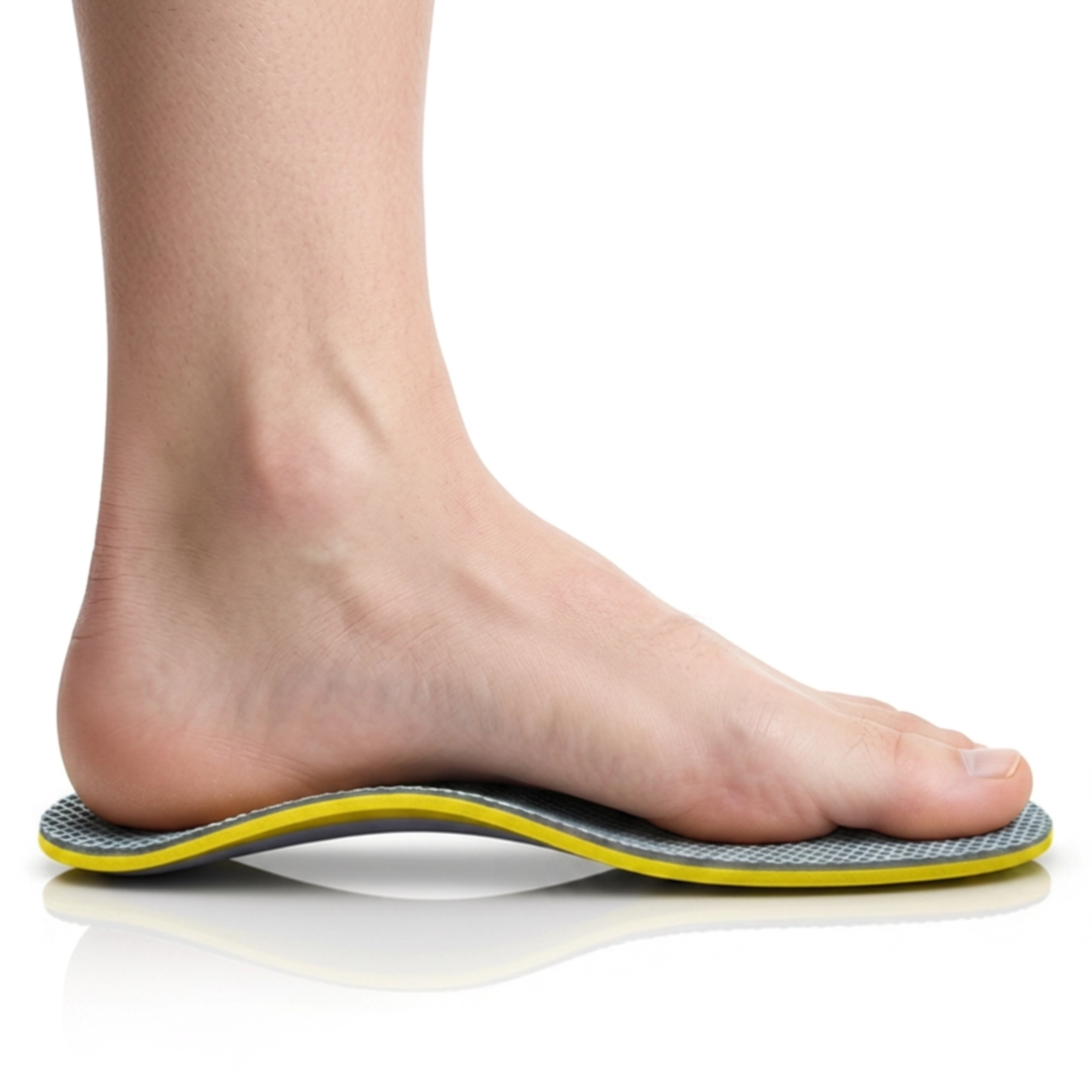
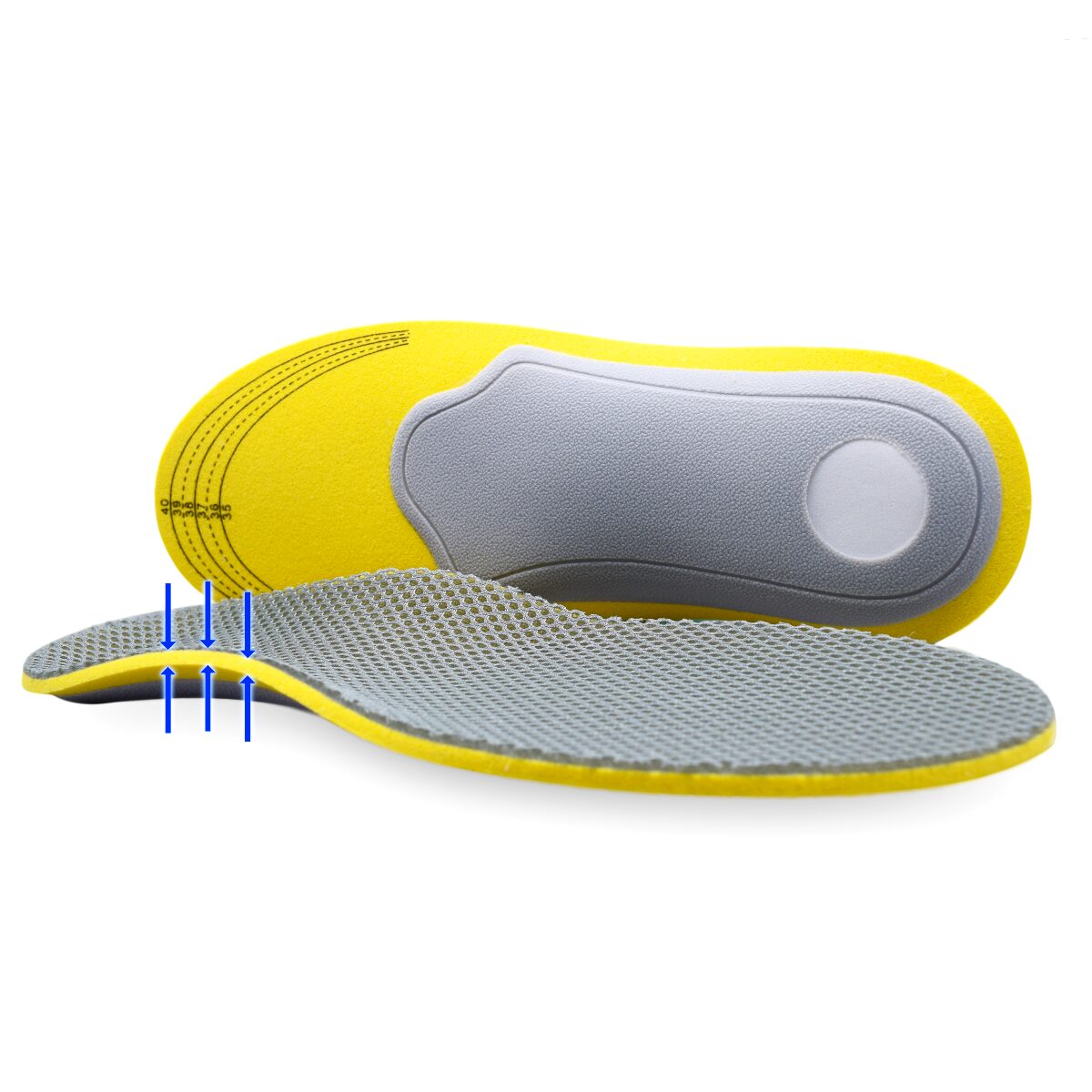
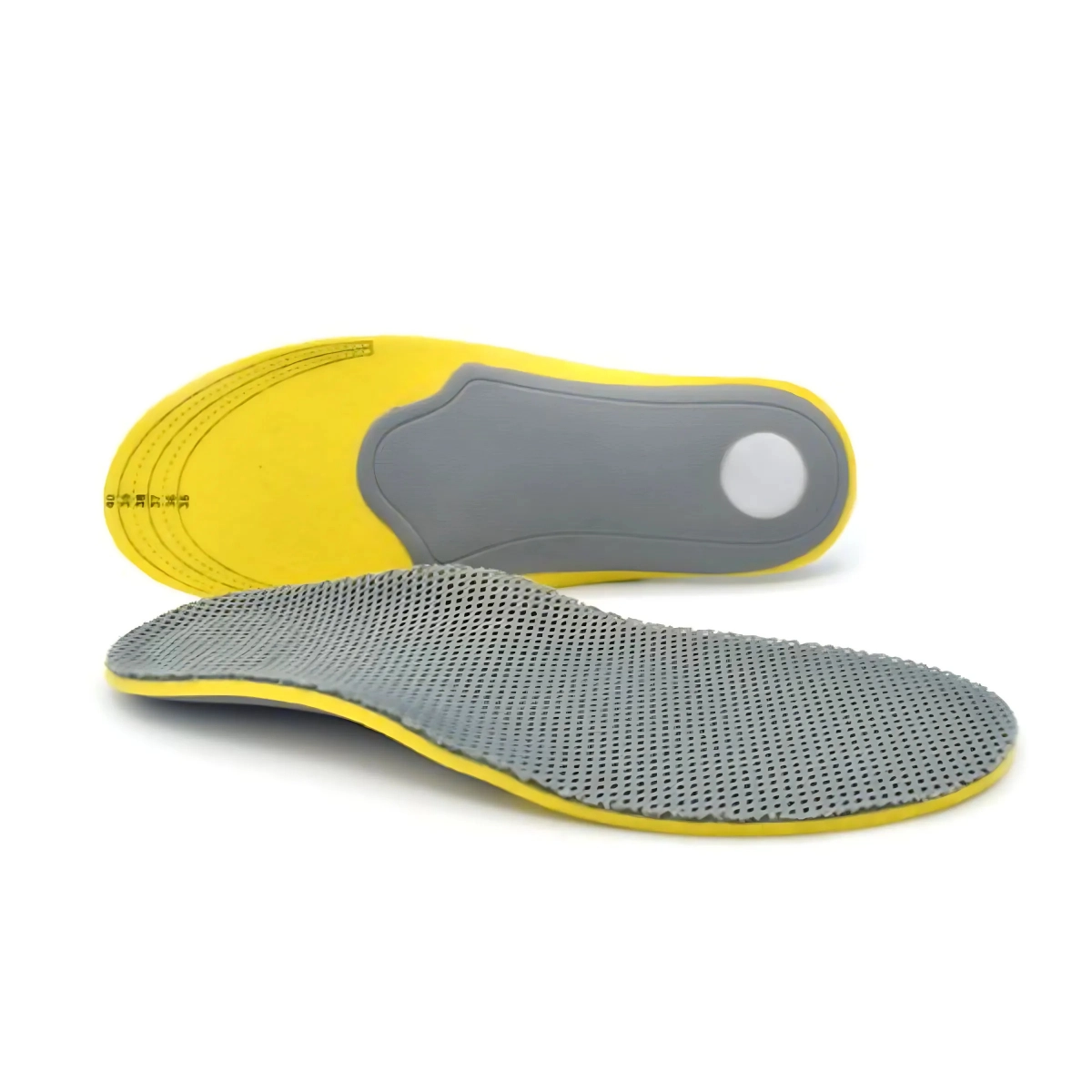
- Support For Flat Feet, Low Arches, And Plantar Fasciitis: Shaped for feet that need more structure than a flat liner or factory insole provides. The contoured arch supports the middle of your foot, the deep heel cup holds your heel in place, and the cushioning layer absorbs impact. Together they give you a more stable base from the first step.
- Orthotic Arch Support And A Deep Heel Cup: Firm support under the arch encourages a more neutral alignment of your foot and lower leg, rather than correcting it. The heel cup keeps your heel centred inside the shoe and holds the fat pad in position so it can cushion as intended. Force spreads more evenly across your sole instead of concentrating in the same spot with every step.
- Support For Common Foot Patterns: Suits plantar fasciitis, flat feet, low arches, overpronation, high arches, metatarsalgia, Morton’s-type forefoot pain, bunions, Achilles pain, shin splints, and general foot fatigue. Several of these overlap in practice, which is why one shaped support can help more than one problem.
- Cushioning That Softens Repeated Impact: Absorbs the impact of concrete, tile, and pavement, and spreads weight more evenly across the sole. This matters most several hours into the day, when hard surfaces and long periods on your feet would otherwise leave your feet feeling worn down rather than freshly rested.
- A Breathable Top Cover: The top layer uses active carbon fibre that inhibits bacterial growth and neutralises odour, which keeps the insoles fresher through months of daily wear. Breathable material also reduces heat and moisture build-up inside the shoe.
- Structured Support For Running And Everyday Activity: The arch support and heel cup help with the alignment demands of a running stride, and the cushioning softens the impact of each footfall. They also suit walking, standing, and everyday wear, and are worth considering if you want a more supportive base in the shoes you use most. If you run high mileage or race frequently, a thinner running-specific insole may suit you better over time.
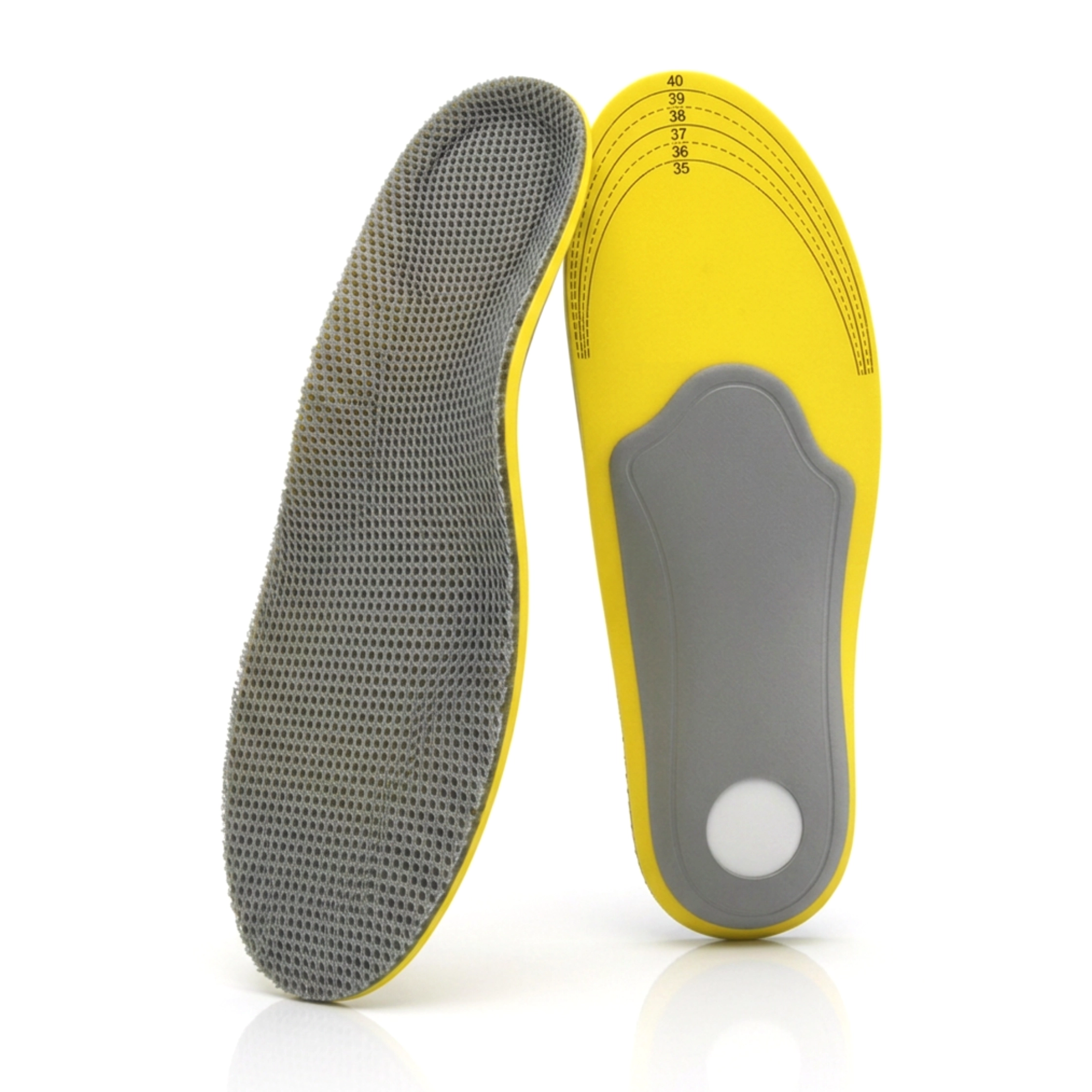
- Trim-To-Fit, In Sizes 3–7 And 7–11: The 3–7 range suits women’s sizing and the 7–11 range suits men’s sizing. Each insole can be trimmed to shape using the original insole from the shoe as a guide, so they fit most closed-toe footwear — trainers, work shoes, and boots.
- 30-Day Comfort Guarantee: Use them in your own shoes, in your normal routine, and decide whether they help. If they do not make a genuine difference, return them for a full refund.
Get 15% off - When bought together with:
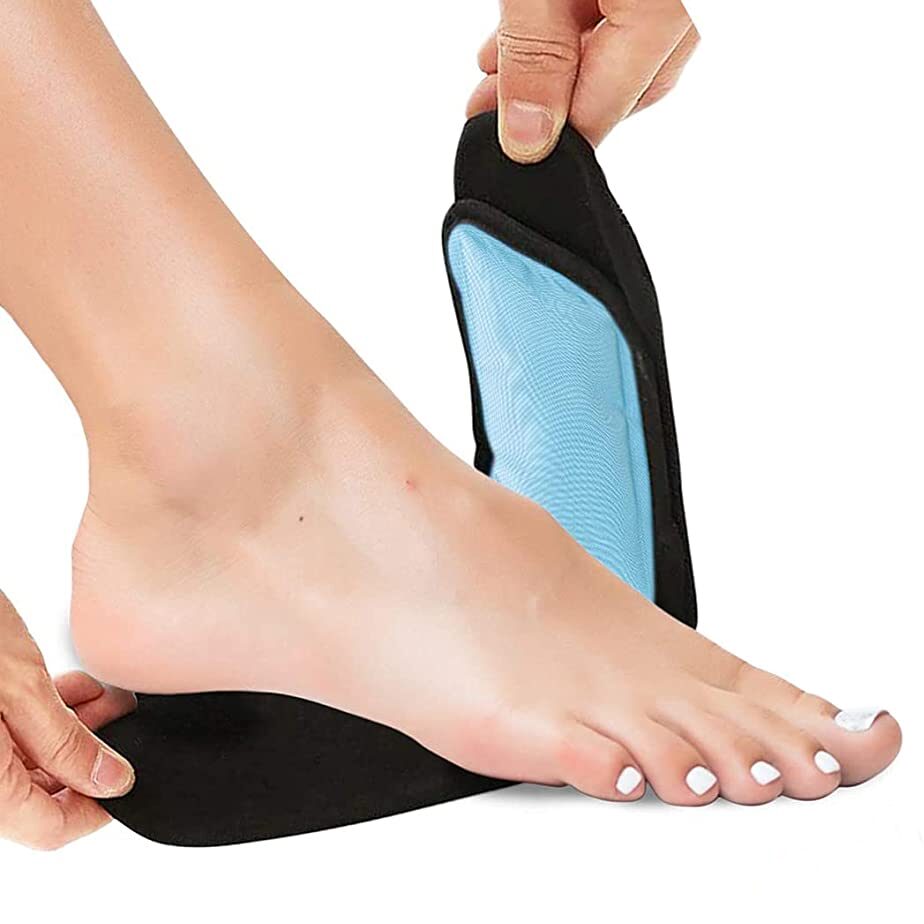
- This item: Arch Support Insoles for Plantar Fasciitis and Flat Feet(£9.99
£11.99(-17%)inc VAT) - Foot Ice Pack Plantar Fasciitis Wrap(£8.99inc VAT)
Heel Pain, Tired Arches, And The Shoes That Don’t Help
If the first step out of bed is the worst, the day tends to go like this. Before you’re fully awake, your heel meets the floor and sends up a sharp, familiar pain. A few more steps and it loosens. By lunchtime you’ve forgotten it. By six in the evening, standing at the kitchen counter, it’s back — not sharp this time, just a deep, worn-down ache that follows you around the house.
Maybe it isn’t your heel. Maybe it’s your arch instead, fine in the morning and heavy and stretched by evening, especially after a lot of standing. Maybe it’s the ball of your foot, bruised by mid-afternoon. Maybe there’s no single sore spot at all, just feet that feel as though they’ve been carrying more than they should.
In each of these cases, most footwear isn’t giving your foot much help. The thin insole that comes as standard adds almost nothing. Soft gel pads feel pleasant for the first hour and then flatten out. On hard ground, day after day and month after month, a foot without support starts to hurt in a way that keeps coming back.
This kind of heel pain often points to plantar fasciitis, where the band of tissue under the foot becomes irritated at the point where it attaches to the heel bone. Flat feet, low arches and arches that collapse under weight are all common alongside it. Not everyone with flat feet hurts, and not everyone who hurts has flat feet. What matters more is how your foot moves when you put weight on it, and what’s underneath it when you do.
That’s the part rest alone can’t change. So why does taking it easy help for a while — and then stop?
Why Rest Helps — and Then Stops
Heel and arch pain often eases for a while, then comes back. You take it easy for a few days. You stop wearing the shoes that seem to set it off. You stretch in the morning. The soreness calms down — sometimes enough that you think it’s gone.
Then your usual routine returns: longer shifts, more walking, a week of errands and stairs. The ache shows up in the same place, at the same time of day.
That’s not random. The same load hits the same part of your foot in the same way every time. If your arch still drops by the same amount, if your heel still lands with the same force, and if the same small spot on your sole still takes more impact than the rest of your foot, then the soreness has only been quieted. The cause hasn’t changed. When the load returns, the pain returns with it.
This is why foot pain can linger without being serious. There’s rarely one injury you can point to. Instead, it builds from small forces repeated often — and your routine hasn’t changed enough to reduce them or spread them out.
The small details give it away. By mid-afternoon, the same shoe starts to feel flat. The same stretch on the same floor brings the same twinge. At the end of a long day, the same spot on your sole feels tender when you press it. Nothing dramatic set it off. It’s repetition, not a single event.
Hard surfaces make this easier to notice. Concrete and tile absorb very little force, so your arch, your sole, and the small muscles inside your foot have to do more of the work. A day on these surfaces asks more of those tissues than a day on grass or carpet. Long hours in shoes with nothing under the arch can have a similar effect — even if the shoes feel comfortable at first.
Rest still matters, but it has limits. A quieter week can calm irritated tissue, and that’s useful while it lasts. What it can’t do is change how your foot meets the ground once you go back to your normal activity. Support works on that part — the part rest can’t change.
What’s Happening Under Your Foot
The pain keeps returning because of what your foot does with every step. One step shows why. The arch depends on support underneath it, and when that support is loaded beyond what it can comfortably manage, the strain lands in one place. That’s usually the spot that becomes sore first.
The Band That Supports Your Arch
Run a finger along the underside of your foot, from heel towards your toes, and you’re tracing the plantar fascia. It’s a tough band of tissue running from the heel bone to the base of the toes, and it works with every step you take.
Standing still, it holds the shape of your arch. Walking, it does something more. As your weight lands on your heel, your toes are straight, the band sits relatively slack, and your arch lowers slightly under your body weight — which is how the foot absorbs the landing. Then your weight rolls forward onto the ball of your foot, and as it does, your toes bend upwards. The toes are attached to the band, and lifting them winds it tighter.
That tension lifts your arch and firms the middle of your foot, turning it into a rigid lever for push-off. The name for this comes from the windlass, a winch in which a rope wound around a drum turns a small pull into a tighter grip on a larger loop. Your foot works on the same principle, which is how it manages to be both a shock absorber and a lever, often within the same fraction of a second.
It also means the band tightens and releases with every single step. It slackens as you land and tightens as you push off, thousands of times a day, without any thought from you.
Where The Pain Usually Starts
The band anchors at both ends — at the heel bone and through the toes. The heel end is where trouble usually begins.
When that tissue is loaded more heavily, or more often, than it can comfortably manage, it becomes sensitive and less able to cope with the same demand. That capacity doesn’t recover between steps, and often not between days either, if your routine is the same every day. A full shift on a hard floor, a longer walk than usual, flat shoes with nothing under the arch — each of these keeps loading the same attachment point.
Most cases build over weeks or months rather than from a single moment. A twist or a fall occasionally sets it off, but far more often the story is pressure accumulating gradually, with no change in how the foot bears weight.
One point worth clearing up: heel spurs. Plenty of people with heel pain have one, and plenty of people with a heel spur have no pain at all. Where a spur appears alongside symptoms, it’s the irritated soft tissue around it that hurts, not the bony projection itself. That explains why scan results and pain levels so often disagree. Support and cushioning address the tissue, and the tissue is what’s sensitive.
The Fat Pad Under Your Heel
A pad of fatty tissue sits under your heel bone, held in place by internal walls of connective tissue. It absorbs and spreads the force of every landing, and it does that job well when it stays where it belongs.
It doesn’t work well when it shifts. If your heel drifts sideways inside your shoe, or slides forward as you walk, the pad spreads and thins in the wrong places. As it does, the heel bone sits closer to the ground, and each step arrives with more of a jolt. That’s why some heel pain feels like a bruise under the bone, with no clear moment of injury — just a spot on your sole becoming steadily more tender.
Stayed in position, the pad works as one unit and absorbs force across its whole surface rather than in one spot. That’s the difference between a heel that feels cushioned and one that feels bony under the same weight.
Your heel also takes the first contact of every step, so anything sensitive there is felt immediately when you stand.
Why The First Steps After Rest Are The Sharpest
Pain that’s worst on the first steps of the day is one of the clearest signs of this problem, and it has a straightforward explanation.
During rest — sleep, or an evening in a chair — the tissue under your foot and the calf behind your ankle sit in a shortened, relaxed position, and they lose some length and elasticity. Your first standing step takes that slightly shortened band, drops your arch onto it with your full body weight, and stretches it from an already-stiff starting point. If the attachment near your heel is sensitive, that first stretch feels sharp.
The same explanation covers why the pain is often worst in the opening minute and eases as you move. Walking lengthens and warms the tissue, and the next hundred steps feel more manageable. It also explains why the pain can return late in the day, once the tissue has been loaded thousands of times since breakfast and the irritation has built back up.
So there are two separate things to manage here. There’s the fresh, sharp pain when the tissue is cold and short after rest, and there’s the accumulated, worn-down ache after hours of use. One eases with movement; the other builds through the day. Good footwear has to handle both.
How Your Arch Handles Load
You can look at your arch in a mirror and still not know how it behaves on the move. What matters isn’t its shape when you’re standing still. It’s what happens once weight starts travelling through it.
A foot with a low or flexible arch tends to drop further than the tissues can comfortably allow. As it does, the foot lengthens and widens, and the band under your sole is stretched each time you take weight. The muscles and tendons supporting the inner side of your arch work continuously to hold that position. That’s what makes the ache feel more like tiredness than pain — a foot doing more work than it should just to stay stable.
A high or rigid arch has the opposite problem. It holds its shape well but gives very little as it absorbs a landing, so force arrives under the heel and the ball of the foot and stays concentrated there. You feel it as hardness underfoot, particularly on firm ground, and often as wear along the outer edge of your shoe.
Both lead to pain in similar places for opposite reasons. A useful solution, then, can’t simply mean a higher arch. A heavily lifted insole suits very few people, and for a rigid foot it would only add pressure where the sole is already sore. What helps depends on what your foot is failing to do.
Every step asks your foot to spread a load. Heel, arch and ball each take a share, and those shares shift as you move through the step. When the arch doesn’t accept its portion — because it can’t hold, or because it won’t give — the force redistributes to whatever is left.
For a collapsing arch, that usually means more pull on the fascia and more work for the muscles supporting the inside of the foot. For a rigid arch, more impact under the heel and the ball. For a foot that rolls inward too far and stays there, push-off happens from a poor position, and the calf and sole are asked to compensate.
None of this is a fault in your foot. These are the consequences of thousands of repetitions in a position that doesn’t suit the surface under you or the shoes you’re wearing. On firm ground, nothing else takes much of the force, so your foot takes almost all of it.
The areas that take more of the load tend to be the ones that hurt. That’s why the same heel, the same inner arch or the same part of the ball tends to be sore, rather than a different place each time.
Three Things Any Solution Would Need To Do
That leaves three requirements.
- Something has to limit how far your arch drops under weight. Not by locking your arch or forcing it into a raised shape, but by setting a floor underneath it, so the tissues below aren’t stretched with every step.
- Your heel has to stay settled. Centred in the shoe, not sliding sideways, with the fat pad underneath doing its job instead of being pushed out from under the bone. A heel that stays put gives you a stable start to every step.
- The repeated impact has to be spread across more of your sole and damped at the point of contact, so it doesn’t all arrive at once through the same small patch.
Limit how far the arch drops. Keep the heel settled. Spread the impact. Get those three right, and the load stops landing in one place.
How These Insoles Change The Load On Your Foot
These orthotic arch support insoles are made for that situation. A contoured arch supports the middle of your foot, a deep heel cup holds your heel in place, and a cushioning layer absorbs impact from hard floors. Together they give your everyday shoes the support they’re missing — in trainers, work shoes and boots.
Three parts of the design, each addressing one of those needs.
Limiting How Far The Arch Drops
The contoured shape under the midfoot gives the arch something firmer to rest against than a flat factory liner or a bare shoe floor. It doesn’t lock the arch, and it doesn’t push it up into a raised position. It sets a limit underneath the middle of the foot, so the arch can rest into support instead of dropping as far as the shoe allows.
For a low or tired arch, that limit carries most of the benefit. The foot stops stretching itself every time it takes weight, and the small muscles along the inner side are released from a job they can’t hold all day. What you tend to notice is less of a spreading, dragging ache by the afternoon, rather than a sudden difference.
For a rigid or high arch, the same arch contour helps for a different reason. Bringing more of the sole into contact with the inside of the shoe spreads force across a wider area, so the heel and forefoot don’t have to carry all of it. The sensation is less about being lifted and more about being held evenly across the whole sole.
Most of this work happens during the middle of the step, when your weight is directly over the midfoot and the arch is under load for the longest stretch. That phase passes quickly, but it repeats thousands of times a day. Setting a limit there changes how much the tissues under the foot have to do on each pass.
Keeping The Heel Held
The heel cup is shaped around the back and sides of the heel, holding it more centrally inside the shoe. Less sideways drift. Less sliding forward. A more predictable landing each time the foot comes down.
Part of that is control. A heel that moves around forces the rest of the foot to work harder to compensate, and the muscles and tendons along the inner ankle end up doing more than they should. Part of it is about the cushion already under your heel. When the heel stays centred, that cushion stays where it should be, rather than being squeezed out from under the bone. The difference shows up as less bruising sensation, most often in the first steps of the day and on firm ground.
A heel that stays put also changes where push-off starts from. With the heel held centred, the foot is in a better position to roll forward and push cleanly, so the calf and the arch don’t have to correct a poor start to the step. Nothing is forced, but each step begins from a more stable base, and the tissues above have less to make up for.
Sharing And Softening The Impact
Between the top cover and the base sits the cushioning layer. Its job is to take the edge off repeated contact, rather than to feel plush for an hour and then give up.
When force spreads across more of the sole and is damped at the point of contact, sensitive areas stop absorbing the peak of every step. That matters most several hours in — on a shop floor, through tiled corridors, across long stretches of pavement — when a foot that has been coping all day starts to feel worn thin. Softening doesn’t solve the problem on its own, but it stops the daily total accumulating quite so fast.
Cushioning on its own can’t correct mechanics. It doesn’t lift the arch, and it doesn’t control how the heel rolls. What it does is reduce the peak force arriving at the sole, which gives the support above it more room to work. The three parts do their jobs together, and the softening is the one that keeps the day from wearing the foot down before the support can help.
They come with a 30-day comfort guarantee, so you can try them in your own routine before deciding.
What Makes These Insoles Different
Most insoles fall into one of two groups. They either feel soft at first and compress within the hour, or they hold the foot firmly enough to help but feel intrusive to wear. This pair aims for the middle: enough firmness to change how your foot takes weight, and enough give to wear all day without wanting to take them out.
That balance matters, because comfort in the first few minutes and comfort after six hours are not the same thing. Plenty of insoles feel pleasant when you first put them on, then offer very little support once your weight is on them. Others hold the foot firmly but feel harsh under the arch or around the heel, and end up back in the box. Everyday support only works if it helps, stays comfortable enough to keep wearing, and keeps working over months rather than days.
Structured Without Feeling Harsh
The arch contour is firm enough to change how your foot takes weight, without the hard ridge under the midfoot that makes more rigid orthotics uncomfortable for many people.
That matters most if you have tried very flat factory liners and found them too thin, but are wary of heavily shaped orthotics. Everyday support needs to be present enough to help and comfortable enough to keep wearing through the activities that usually make your feet worse.
A Heel Cup Shaped Around The Heel, Not Just Deep
At the back of the insole, the cup is shaped around the back and sides of the heel, holding it more centrally inside the shoe. That improves control of the heel and the back of the foot, and it needs to stay comfortable through longer wear. A well-shaped cup guides the heel without rubbing at the edges, lifting awkwardly inside the shoe, or making the back of the shoe feel cramped.
The overall shape matters more than depth alone. When the heel feels better centred and more secure, the rest of the foot often follows. For anyone whose feet drift inward as they tire, that shows up as a more predictable step, less demanding by the end of the day.
Layered Cushioning For Longer Days
On top of the structured base sits a cushioning layer designed to make hard ground less wearing over time. A softer upper layer adds underfoot comfort straight away. A firmer base beneath it absorbs and spreads force during walking and standing.
This is different from soft inserts that feel cushioned at first but compress quickly, leaving little support under the foot. The aim is not just to feel soft underfoot. It is comfort that still does its job after hours of loading, especially when the foot is already sore or easily aggravated by firm surfaces.
Other Practical Details
The top layer is chosen with everyday wear in mind as well as comfort. A breathable cover helps reduce heat and moisture build-up inside the shoe, which matters more the longer the insoles are worn. A hotter, damper shoe is more likely to lead to rubbing, slipping, and general discomfort, especially in work footwear or shoes worn for long hours. The top layer also uses an active carbon fibre that inhibits bacterial growth and helps neutralise odour, which keeps them fresher through months of daily wear.
Basic insoles often feel fine at first, then flatten quickly and stop offering much support. These use a firmer base under the arch and heel, so the shape holds up with regular use. That consistency matters. There is not much value in something comfortable that has stopped doing its job.
Trim To Fit
Each insole can be trimmed to shape if needed, using the factory liner from the shoe as a guide. That makes it easier to get a neater fit across different types of everyday footwear rather than relying on a one-size-fits-all approach.
A good fit makes a bigger difference than many people expect. If the insole sits too long, bunches at the toe, lifts at the edge, or shifts in the shoe, both comfort and support suffer. A properly trimmed insole sits flatter, feels more natural, and stays where your foot can use the support.
A Practical Step Before Custom-Made Orthotics
For many people, these insoles offer more support than a factory liner, without the cost, complexity, or uncomfortable rigidity of a custom-made orthotic.
That makes them a sensible option if you want meaningful arch and heel support in everyday footwear but are not yet at the stage of needing, or wanting, a custom-made orthotic. For common heel pain, tired arches, low-arch strain, and general foot fatigue, this level of support is often enough to make a worthwhile day-to-day difference.
Who These Insoles Are Best For
These insoles suit anyone who needs more support than the basic insole most shoes include. If your feet feel unsupported or tire easily during ordinary daily activity, they may help.
They’re worth considering if:
- you spend a lot of time standing at work
- tile and concrete make your feet feel worse
- heel pain is sharp on the first steps of the day or after rest
- arches feel low, weak or easily tired
- insoles you’ve tried add softness but not support
- shoes feel comfortable when you put them on but much less so by the end of the day
- you want to replace the insole the shoe came with
Low arches, flat feet and arches that collapse under weight often benefit from shaped support. High arches can benefit too, but for a different reason: they tend to need better shock absorption and pressure distribution rather than extra height. Feet that roll inward when you’re tired, shoes that wear along the inner edge, and ankles that ache by the end of the day all point to a foot that needs more support through the middle.
They also suit people who spend long hours in training shoes, work shoes or boots and want firmer support underfoot.
Which Of These Sounds Familiar
Several foot problems feel similar at first, especially when discomfort builds gradually rather than arriving all at once. You may be unsure whether the trouble is the heel, the arch, the ball of the foot, or somewhere nearby that is feeling it because of how your foot lands.
None of these comparisons is a diagnosis. They are a way to work out which sounds closest to your own experience. If symptoms are severe, persistent, or difficult to explain, it is sensible to see a GP, physiotherapist, or podiatrist. For the more common day-to-day situations, these comparisons can still help you decide whether this kind of insole support is likely to be relevant.
Heel Pain From The Plantar Fascia, Versus General Heel Soreness
Plantar heel pain is usually worst with the first few steps after rest, especially in the morning or after sitting. It tends to be sharp and focused under or just in front of the heel. It may ease after a short time, then build again later in the day.
More general heel soreness often feels like a steady bruise, without the sharp spike when you first stand. It tends to spread across the underside of the heel rather than sitting in one particular spot.
Flat Feet, Versus General Foot Fatigue
Flat feet often show up as arches that look low when you stand and drop further once you put weight on them. The discomfort tends to be a dragging ache through the arch and inner foot rather than a sharp pain. Feet feel more strained by evening, especially in shoes with little support.
General foot fatigue can feel similar, but without the same sense of the arch collapsing or rolling inward. The whole foot simply feels overworked, heavy, or tired by the end of the day.
Metatarsalgia, Versus Nerve Pain In The Forefoot
Metatarsalgia tends to feel like bruising, aching, or pressure under the ball of the foot. It usually builds with standing and walking, and it may feel worse during the part of the step where the foot pushes you forward.
Forefoot nerve pain tends to be sharper, burning, or tingling, often between the third and fourth toes. It is usually more localised and more easily aggravated by tighter shoes.
Achilles Pain, Versus Heel Pain
Achilles pain is felt at the back of the heel or into the lower calf, rather than under the heel. It may feel stiff first thing in the morning, tender along the tendon, or sore after a lot of walking or standing.
Heel pain linked to the plantar fascia sits under the heel rather than behind it, and it tends to be sharpest with the first steps after rest rather than building through the tendon as activity continues.
Knee Discomfort From Foot Mechanics, Versus Knee Problems Alone
Knee discomfort linked to foot mechanics often feels worse when your feet are tired, or on stairs, slopes, and uneven ground. It may improve when you switch to more supportive shoes. It often feels like a background irritation rather than a sharp pain within the joint.
Knee pain from other causes may feel more constant, more focused within the joint, or clearly linked to specific knee movements rather than to how long you have been on your feet. If knee pain is severe, locking, giving way, or accompanied by swelling, it is worth seeing a physiotherapist or GP.
Common Foot Patterns, Explained
Not every pattern is a foot shape. Diabetes and recovery from a stress fracture change what a foot can tolerate, whatever its shape, and each needs its own approach. The patterns here are the everyday ones: how they feel, why the foot behaves that way, what support does about it, and what a realistic timeframe looks like.
Feet That Need Extra Care
Two situations need their own guidance. Both concern feet where the usual rules about support still apply, but where getting the fit wrong carries more serious consequences, or where support plays a role in recovery rather than daily comfort.
Wearing Them: Fitting, Shoes, And Breaking In
These insoles are made for everyday closed-toe shoes. In most cases they work best in footwear that already has a removable factory liner, a stable sole, and enough internal depth to take a structured insert without the fit feeling cramped. Even a well-made insole only feels right if the shoe gives it the space to sit properly.
Before You Wear Them
If your shoes have removable factory liners, take them out first. That step is the one most people miss, and it is the most common reason a structured insole feels too tight. Leaving the original in place adds thickness and stops the new support from sitting at the right depth under your foot.
If trimming is needed, use the factory liner as your guide. Trace around it, then cut a small amount at a time from the toe end. Never trim the arch or the heel cup — the shape there is doing the work. Test the fit, then trim again if needed. It is far easier to take more off than to fix an insole that has been cut short.
A Fit Checklist
After inserting them, check these:
- The insole sits flat inside the shoe, with no edges curling up
- Your heel sits snugly in the cup, with the back of your heel against the back of the cup
- The insole reaches roughly to the end of your toes, not beyond
- The shoe doesn’t feel noticeably tighter across the top of your foot
- The arch support feels noticeable, not uncomfortable
- The insole stays in place rather than sliding forward
If any of these don’t hold, adjust before building up wear. Most fit problems come from the shoe, not the insole. Insufficient depth, a narrow toe box, or a worn-out heel area are the usual causes.
Which Shoes They Suit
Trainers, walking shoes, work shoes, and most casual boots are the easiest starting point, particularly if the factory liner is removable. Shoes with a reasonably firm heel and some stability through the midsole let the insole do its job properly.
Some footwear works less well. Very shallow shoes, narrow styles, or shoes that already feel snug with their original liner are often too tight once structured support is added. Slip-on styles and open footwear are usually less suitable, because they cannot hold your foot over the contour. If your heel lifts or your foot slides sideways, the support underneath cannot stay aligned with your arch.
Check the depth before you commit. If you can feel the top of the insole pressing against the top of your foot, the shoe is not deep enough, and no amount of adjusting will fix that.
Very flat shoes have a separate problem. They leave the underside of your foot doing most of the work on its own. If your arch already struggles under load, or your heel is sensitive after rest, flat shoes tend to make that more obvious rather than less. The issue is not heel height alone. It is the lack of shape under the foot and the lack of help controlling how it takes weight.
Even a shoe that was once supportive can become unhelpful once it is badly worn. A worn-out midsole, a collapsed heel area, or uneven wear on the sole can change how your foot lands and rolls, so the same sore areas keep getting irritated even if the shoe still feels familiar. This is easy to overlook, because older shoes can still feel comfortable in a familiar way. If the internal support has broken down or the sole is wearing unevenly, they may be part of the reason symptoms keep returning.
Building Up Wear
You’ll notice structured support more than a factory liner, especially if what you have been wearing is thin or flattened. That is normal, and it is why a gradual start works better than going all day immediately.
- Wear them for one to two hours a day for the first two days.
- Increase by about an hour every other day, so that by the end of the first week you are wearing them for most of the day.
- Use them consistently from that point.
Some people notice mild calf stiffness, arch fatigue, or a general awareness of the support in the first few days. That is your foot adjusting to working in a slightly different position, and it fades. If you experience sharp pain, persistent rubbing, or a hotspot that feels different from ordinary adjustment, stop and check the fit. Also check whether the shoe itself is suitable.
Swapping Between Shoes
You can move them between pairs, and many people keep one set in the shoes they wear most and another in work footwear. Recheck the fit each time you move them. A shoe that felt fine with its original liner can feel different once structured support is added.
Lacing makes a small but real difference. A firm lace across the midfoot holds your foot over the arch contour rather than letting it slide forward. The shoes do not need to be tight, just secure enough that your foot is not moving around inside them.
Care And Lifespan
A few habits keep them working properly:
- Take them out of your shoes overnight to air.
- Wipe with a damp cloth and mild soap if needed, then air dry. Never machine wash or tumble dry, which damages the support.
- Keep them away from radiators, direct heat, and long spells in strong sunlight.
- Check periodically that the arch still feels firm and the heel cup still has shape.
With regular wear, expect six to twelve months before the support starts to soften and replacement becomes sensible. Signs it is time include a top cover worn thin, a heel area that has gone flat, or support that no longer feels as helpful as it once did.
What To Expect, And When
Getting the fit right is one question. Whether your foot is responding to the support is a different one.
The First Day
You’ll notice the support. It is firmer under the arch and more shaped around the heel than a factory liner, and that is the point, but it takes a little getting used to. Some people feel mild pressure under the midfoot or a slightly different sensation in the calf. Start with an hour or two.
Standing on a hard floor may feel a little less harsh underfoot straight away, particularly where the heel cushioning sits. That early impression is real, and it is not the whole story.
The First Week
The awareness fades. Most people are comfortable wearing them for most of the day by the end of the week, and they stop feeling unfamiliar.
If the fit is wrong, this is when it shows. Rubbing at the edge, cramping, your heel lifting, toes feeling crowded, or a sharp pressure in one spot that does not ease — those signal a problem, and the shoe is usually the cause rather than the insole. Trying the same pair in a different shoe usually makes the answer obvious.
The First Month
By the end of the first month, you should have a clearer sense of whether the support is helping. Not the absence of all sensation — foot problems rarely improve that cleanly — but a sense that the same activities cost you less.
Ask yourself after a month:
- Is the first step out of bed less sharp, or sharp for a shorter time?
- Does a full day on your feet end with them tired rather than throbbing?
- Have the arches stopped feeling stretched by mid-afternoon?
- Are the shoes you wear most often more comfortable than they were?
- Have you stopped thinking about your feet during the last stretch of the working day?
If several of those have shifted, the support is doing what it can. Improvement in foot problems rarely happens all at once. It is a slow reduction in how much your daily routine aggravates the tissue, and the signs tend to build gradually rather than appear suddenly.
If It Doesn’t Seem To Be Working
Before concluding anything, check three things.
Fit. Is the factory liner out, is the shoe deep enough, is your heel fully back in the cup? A surprising number of “these do not help” experiences turn out to be “these do not fit in these shoes.” Footwear. Are your main shoes worn out, too soft at the heel, or too flat? Support works best alongside shoes that are not working against it. Consistency. A month of wearing them most days in your main shoes is a fair test. Intermittent wear across a lot of very different shoes is not.
If all three are in order and there has been no change after a month, that is a reasonable signal to get an assessment rather than continuing to experiment. Some problems need a different kind of support, and some need to be looked at properly.
When It Makes Sense To Get Further Advice
Supportive insoles suit common heel pain, arch strain, and everyday foot fatigue well. They are not a substitute for proper assessment when something does not fit the usual picture.
It is sensible to see a GP, physiotherapist, or podiatrist if:
- Pain is severe, or has not improved after several weeks of sensible footwear and support
- Symptoms are getting worse rather than better
- There is marked swelling, redness, heat, or a visible change to the skin
- Pain is present at rest, or regularly wakes you at night
- You have numbness, tingling, or weakness in your foot or leg
- Symptoms began after a clear injury or a sudden change in activity
- You have diabetes, circulation problems, or reduced sensation in your feet and any new symptom appears
- You are unsure what is causing the discomfort, or whether this kind of support is appropriate
Pain at rest behaves differently from pain on use. Discomfort that eases when you sit down tends to respond to solutions aimed at load. Pain that is there when you are lying in bed, or that wakes you, points towards something that needs assessing rather than supporting.
Diabetes and reduced sensation change the calculation in a similar way. If you cannot reliably feel pressure in your feet, you cannot rely on discomfort to tell you when something is wrong. That does not rule out support — pressure management is valuable — but it does mean introducing it with supervision and checking your feet diligently.
There is also a point here that is easy to overlook. Many foot problems respond well to better support in the right shoes and a sensible reduction in whatever is aggravating them. The signs that call for help are the ones that persist, worsen, or do not fit a situation you recognise.
Frequently Asked Questions
Fit And Wear
Do I need to remove the factory liner first?
Yes, in most cases. Leaving it in place adds thickness and usually makes the shoe too tight. Take it out and put the new insole in its place. If your shoes do not have a removable liner — some work shoes and dress shoes do not — the insole still works, but the shoe needs enough depth to take it. If the fit feels tight over the top of the foot, that is usually the sign the shoe is not deep enough for a structured insert.
Can I trim them myself?
Yes. Use the factory liner from the shoe as a guide, and cut small amounts from the toe end. It is easier to take more off than to fix one that has been cut short. If your shoes do not have a removable liner to use as a template, place the insole into the shoe and check that it reaches roughly to the end of your toes without bunching at the front. Mark where to trim, take a small amount off, then test again.
Will they make my shoes feel tighter?
They can, if the shoe is already close-fitting or the factory liner is still in place. In a shoe with enough depth, they should fit comfortably once the factory liner is removed. You normally do not need to go up a shoe size. If the shoe still feels cramped, the issue is usually depth or width rather than length, and a different pair may suit better.
Will they fit in trainers?
Most trainers with a removable factory liner are suitable. Take it out first, then trim the new one so it sits neatly. If your trainers are already snug with their liner in place, the added support may make them too tight, so it is worth checking before committing to longer wear.
Can I use these in work boots?
In many cases, yes. They work well in boots that have a removable factory liner and enough internal depth. If you spend long hours standing or walking on concrete or tile, work footwear is often the single most useful place to wear them.
Which shoes do they work best in?
Trainers, walking shoes, work shoes, and most casual boots, especially those with a removable factory liner. Shoes that are very shallow, narrow through the toe box, or already snug with their factory liner are usually too tight for structured support. Open styles and slip-on shoes are less suitable because they cannot hold your foot over the arch contour.
Can I move them between different pairs?
Yes. Check the fit each time. The insole should sit flat, your heel should be fully back in the cup, and the shoe should not feel cramped or bunched. If you swap shoes often, keeping a second pair in the footwear you use most is often simpler than moving a single set back and forth.
Can I wash them?
Clean them gently. Wipe with a damp cloth and mild soap if needed, then let them air dry naturally. Avoid machine washing or tumble drying, as heat and agitation damage the support and shorten their life. Airing them between wears and keeping your shoes clean helps them stay fresher for longer. Strong detergents and hot water are best avoided.
How long do they last?
It depends on how often you wear them and how much load they take each day. With regular use, most people get six to twelve months before the support starts to soften. It is usually time for a new pair when the top cover looks heavily worn, the heel area feels obviously flattened, or the support no longer feels as helpful as it did when new.
Can I use them around the house?
Yes, and it often helps. Mornings on hard floors are when heel pain tends to be at its worst, and supportive footwear indoors during that first hour is a useful tactic. A dedicated pair of house shoes or trainers with the insoles left in them works better than moving one pair back and forth. If you already have a set in your work shoes, a second set for indoors avoids the constant swapping.
Conditions And Suitability
Do they suit both flat and high arches?
Yes, though the benefit is different in each. For flatter feet, the main help is better arch support and improved heel control, which reduces how much the foot drops under load. For higher arches, the benefit is more contact through the sole and more even pressure, along with softer impact under the heel and forefoot. If one foot is flatter than the other, wear support in both. A single foot without support creates an uneven base that can lead to discomfort in the knee, hip, or lower back.
Will they cure plantar fasciitis?
No insole can promise to cure plantar fasciitis. What these can do is reduce the repeated strain that keeps it irritated. Their role is to support the arch, hold the heel, soften repeated impact, and spread pressure more evenly through the sole. That can ease the load on the irritated tissue. Most cases ease over weeks to months with consistent support and sensible footwear. Where symptoms persist, or the pain is present at rest, an assessment is more useful than more support.
Can I use these for running?
Yes, for most regular runners. The arch support and heel cup address the same alignment demands a running stride makes, and the cushioning handles the repeated impact. The main consideration is volume. If you run high mileage or race frequently, a thinner, more flexible running-specific insole may suit you better over time, because these are built for all-day wear rather than specifically for the mechanics of distance running.
If I stand all day at work, will they help?
Yes. Long hours on your feet are one of the main reasons people choose this type of insole. If you stand or walk a lot during the day, especially on hard surfaces, the added support and cushioning help reduce the build-up of fatigue and soreness. Standing on a cushioned mat where possible, shifting your weight between feet regularly, and taking short sitting breaks to stretch your feet all help alongside them.
Should I use them if I already wear custom-made orthotics?
If you wear custom-made orthotics prescribed by a clinician, continue with those unless you are advised otherwise. Custom-made orthotics are tailored to your own foot mechanics, and a general-purpose insole will not replicate that fit. Some people keep a second pair of these for shoes where the custom-made orthotic does not fit — travel, secondary shoes, or backup — but it is sensible to check with the clinician who made them first.
Are they suitable if I have diabetes?
They may help spread pressure more evenly, but if you have diabetes — especially where sensation is reduced or circulation is affected — any change in footwear or insoles is worth discussing with a professional first. Trimming should be guided by feel and checked with your hand rather than relying on your foot to sense the edges. Check your feet and shoes regularly.
One foot is worse than the other — do I need both?
Yes. Using support in only one shoe creates a slightly uneven base, and the difference in height and angle between the two feet can lead to discomfort in the knee, hip, or lower back. Both feet being supported keeps the whole gait more even, even if only one side hurts.
Comfort And Expectations
Will they feel too firm if I normally wear gel insoles?
They will usually feel firmer and more structured than soft gel or flat foam inserts, especially at first. That is expected. These are built to give support as well as cushioning. They should feel supportive and noticeable, not harsh or sharply uncomfortable. If you are used to extremely soft liners, allow a few days for the sensation to feel normal.
What if the arch feels strange at first?
That is common when switching from a flat or worn-out insole. The arch support will feel more noticeable at first, because your foot is adapting to a different shape underneath it. Strange is fine. Painful is not. If the support feels sharply uncomfortable, causes rubbing, or still feels wrong after a week or two of gradual wear, check the fit and the shoe before concluding anything about the insole itself.
How soon should I feel a difference?
That varies. Some people notice a change within the first few days, especially on hard floors or with first-step heel pain. For others, the benefit becomes clearer over a couple of weeks as the feet adjust and the support is used consistently. The change is usually gradual rather than dramatic. For many people, the first sign is not the pain disappearing completely, but the heel feeling less sharp on first standing, the arches tiring more slowly, and longer periods on your feet feeling more manageable.
Do they help with blisters, heel spurs, or bunions?
Not directly, and the honest answer differs for each. Blisters come from friction between skin and shoe, so the fix is a better-fitting shoe and appropriate socks, and an insole that does not fit properly can make things worse. Heel spurs are a bony change often present without causing pain, and where they do appear alongside symptoms, the irritated soft tissue around them is what hurts. The support these insoles provide is aimed at that tissue. Bunions are their own case, because what helps depends on how the arch behaves.
Where This Leaves You
Back to that first step out of bed. The band under your foot is stiff and short from the night. The heel is about to take your full weight. Nothing about that moment changes unless the foot underneath meets the floor differently — the arch set against something firmer than a bare shoe, the heel landing from the same centred position every time, and the peak of each step softened enough that the same small patch of sole is not taking all of it.
It is a morning where the first step asks less of you, and a day on hard ground that costs you a little less by the time you sit down — not overnight, and not for every foot, but usually enough, over a month, that the morning stops setting the tone for everything that follows.
30-day comfort guarantee. These come with thirty days to try them in your own shoes, in your own routine. Your feet need time to adjust to a more supportive shape, and they will feel different in the first few days — that is expected. If after a fair trial they are not for you, return them for a full refund. Keep the packaging and follow the return instructions supplied with your order.
A good starting point is your most-worn pair of closed shoes. Take the factory liner out, put the insole in, and check that your heel sits fully back in the cup. Then give it a week before you judge anything. Seven days of real use will tell you more than seven minutes of trying them on.
General Guidance Only
This information is general guidance only. It is not a substitute for individual medical advice, diagnosis, or treatment. If you are unsure whether these insoles are suitable for you, or if you have more complex, persistent, or unexplained symptoms, speak to a GP, physiotherapist, or podiatrist. No product can guarantee the same outcome for every foot.
103 Reviews For This Product
Fast & Secure Checkout Through Paypal
Pay with Paypal the secure payment gateway that accepts all credit and debit cards. Paypal is free and secure and no credit or bank information is ever stored or shared with us.
Fast Dispatch
Enjoy your items soon with quick dispatch via Royal Mail. Expect to have your items between 1-3 working days for domestic orders. 7-10 Working days for international orders.
Return Policy – 30 Day Money Back Guarantee
In the unlikely event, you are unhappy with your purchase you can return it within 30 days for a refund. Please contact us via the form on the contact us page to start your return.
To return an item please send it to: Nuova Health UK, 81 Highfield Lane, Waverley, Rotherham, S60 8AL. Please include a note with your order id so we know who to refund. Please retain your postage receipt as proof of postage. All that we ask is that the item is in the original packaging and unused.
by Sally Simmons
These insoles have been great for my flat feet. I was skeptical at first, but they’re surprisingly comfortable and lightweight. They don’t make my shoes feel heavy like others I’ve tried. I trimmed them with my sharp scissors and voila, a perfect fit! My feet feel so much better. Definitely a 5-star product!
by Rajesh Patel
Unbelievable comfort! I’ve tried EVERYTHING for my plantar fasciitis. Nothing worked. Until now. These insoles are magic. The support under my arches is just perfect. I can walk for hours without a hint of pain. It’s like a miracle. If you’ve got foot pain, don’t wait. Get these insoles!
by Clara Bennett
Absolutely in love with these insoles! My job requires me to stand for hours, and plantar fasciitis was making my life miserable. These insoles? Total relief. 😍 The arch support is just what I needed!!!