
Plantar Fasciitis Orthotics – Shoe insoles for Arch, Heel & Foot pain
£9.99£11.99 (-17%)inc VAT
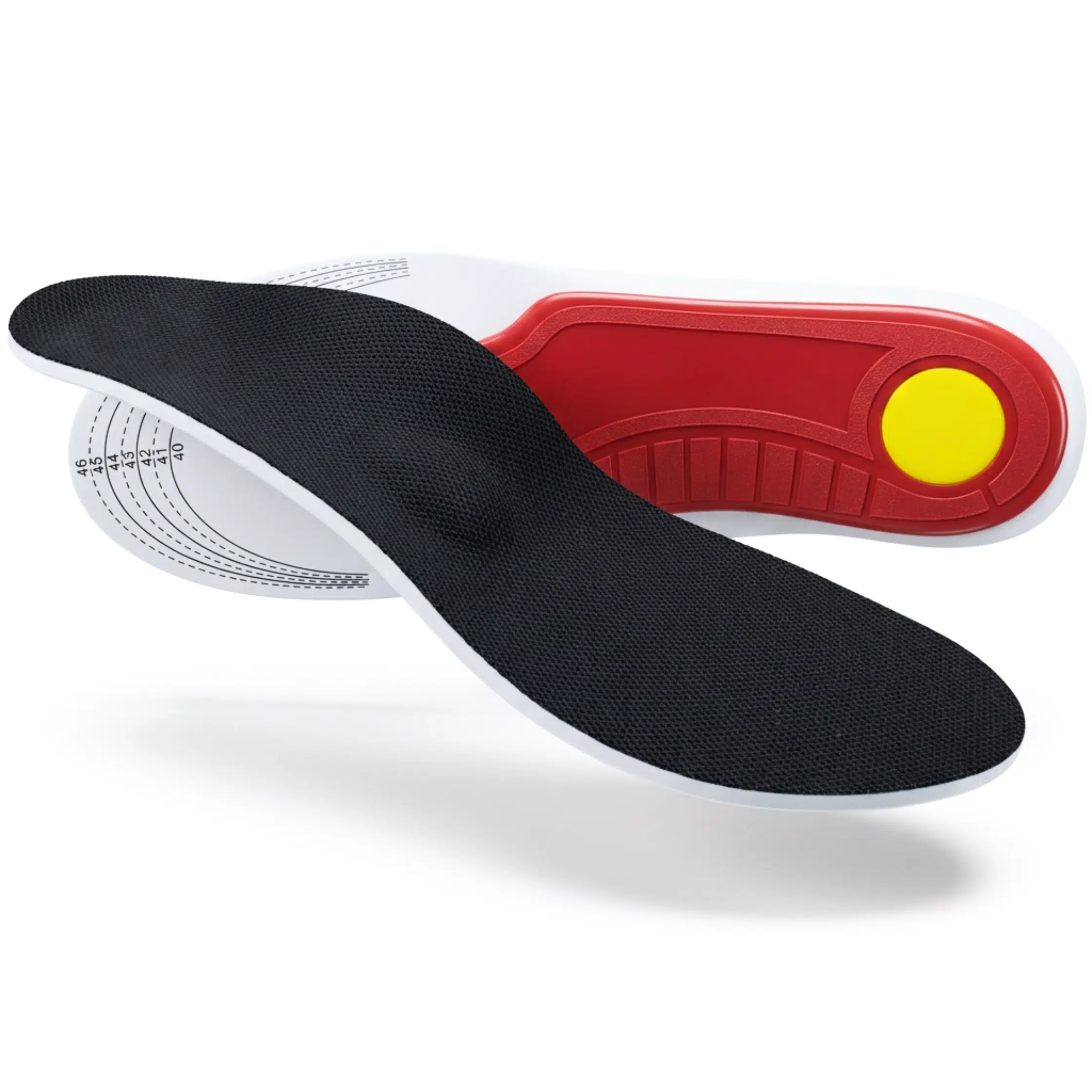
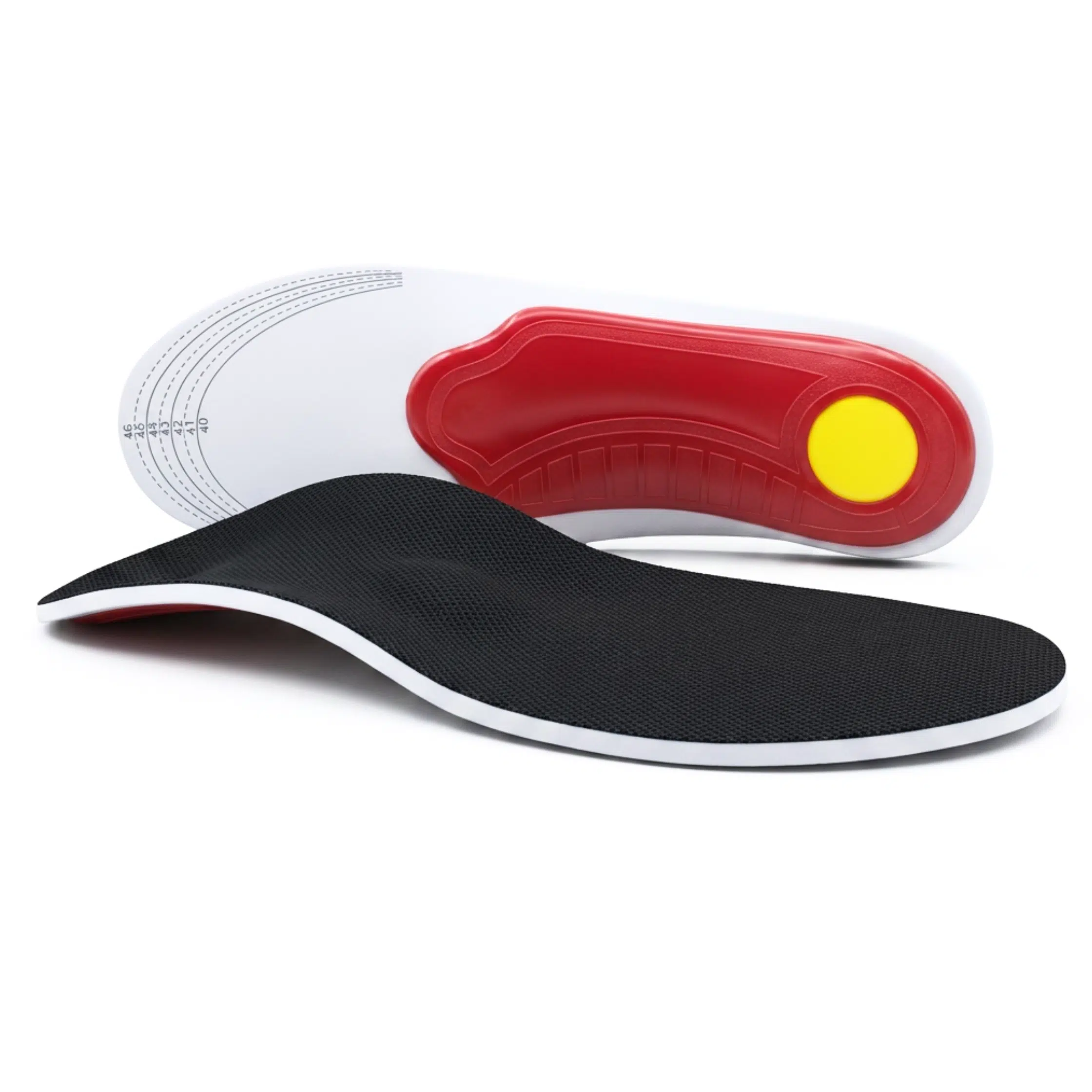
- A pair of trim-to-fit orthotic insoles for plantar fasciitis and related foot pain
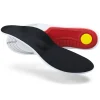
- Shaped to support the arch, cushion the heel, and limit inward roll of the foot
- The arch support reduces the repeated stretch on the plantar fascia with each step you take
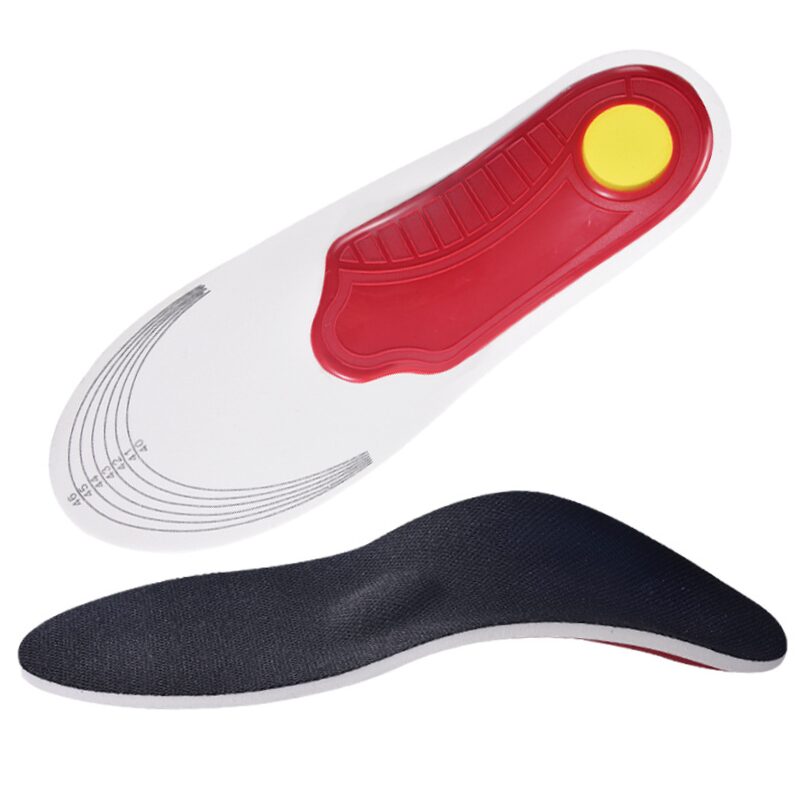
- 3/4-length semi-rigid shell sits under the arch and stops before the toes
- Solid heel cup spreads impact and holds the heel steady through each step
- Dual-layer foam cushioning — softer top layer, firmer base layer
- Shaped midfoot bridge fills the space under the arch when the arch drops under load
- Forefoot pad softens the transition as weight rolls from heel to toes
- Breathable top cover wicks moisture away, helping keep the inside of the shoe dry and fresher
- Smooth edges reduce rubbing through the day
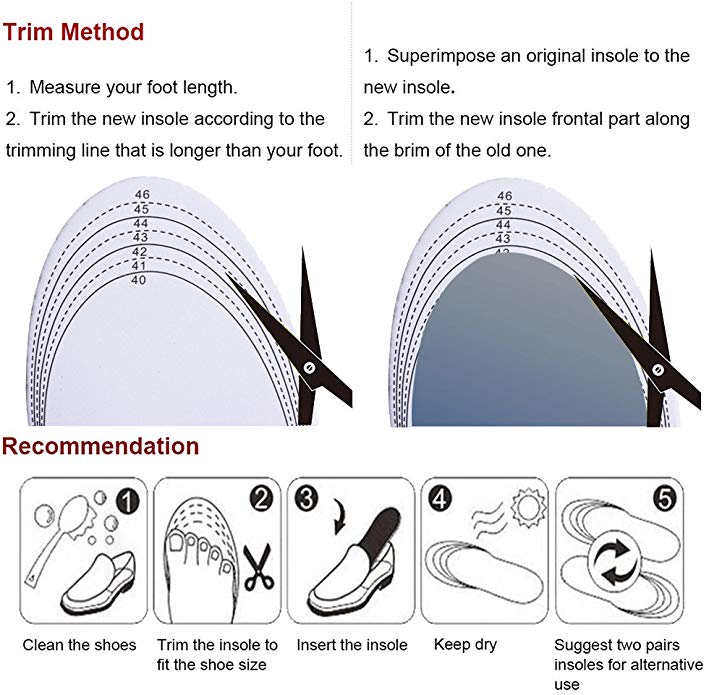
- Trim-to-fit markings for a precise fit in your own shoes; available in UK sizes 3–7 and 7–11
- Suitable for everyday shoes, trainers, work boots, and walking shoes
- Wear is built up over the first week — a couple of hours on day one, then an hour more each day
- Not suited to very slim dress shoes or shallow flat shoes, and not intended for use during pregnancy
Get 15% off - When bought together with:
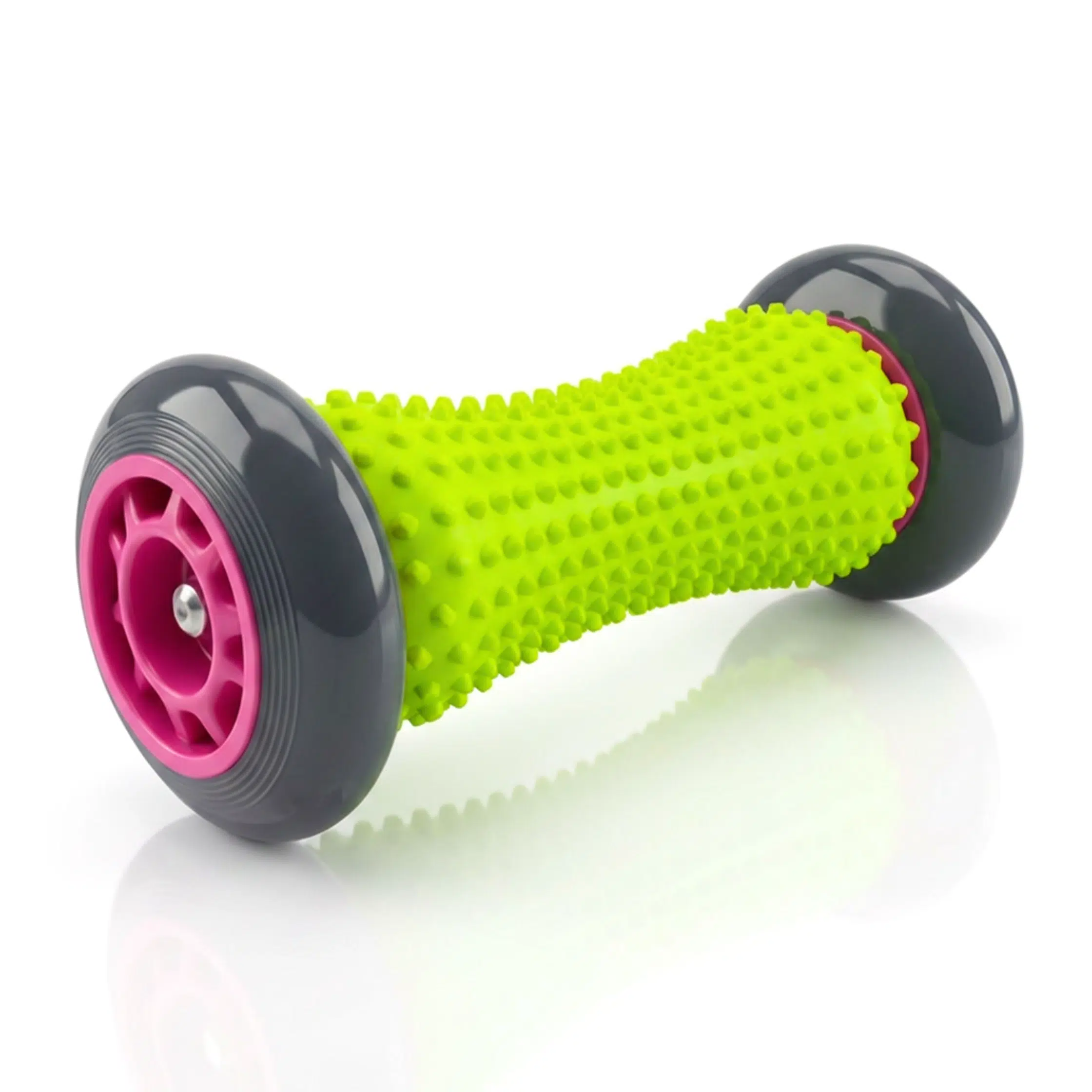
- This item: Plantar Fasciitis Orthotics - Shoe insoles for Arch, Heel & Foot pain(£9.99
£11.99(-17%)inc VAT) - Plantar Fasciitis Foot Massage Roller(£9.99inc VAT)
Support and relief for sore, tired feet
The first steps of the day
There’s a particular kind of pain that shows up when your feet first meet the floor in the morning. It’s usually sharp, near the heel or under the arch, and it makes that first step a cautious one. Within a few minutes of moving around, it often eases. Later in the day it can come back — after a long time on your feet, or after sitting still for a while.
That pattern — worst in the morning or after rest, easier once you’re moving, worse again after longer periods on your feet — is one of the most recognisable signs of plantar fasciitis. It’s a common problem, and easy to dismiss as just a bit of heel pain that will sort itself out. It often eases on its own, but it can take many months. The longer it runs, the more the way you walk begins to change around it.
The discomfort tends to show up in one of two places. Either directly under the heel, where each step feels concentrated and sharp. Or along the sole of the foot and into the arch, where it’s often spread across a wider area. Some people notice both. Others find it moves about depending on the day, the shoes they’ve been wearing, or how long they’ve been standing.
Certain shoes tend to make it worse than others over the day — thin soles, hard soles, anything with little cushioning or arch support underneath. Hard floors have a similar effect, and the pain usually flares more on them than on carpet or grass. The first few steps after getting out of a car or standing up from a desk are often the sharpest moments.
Much of this comes down to load — the total amount of force the foot has to manage, both in a single step and across a whole day of them. Shoes and floors change how much of that force lands on the heel and the arch. So does the number of steps you take. Anything that increases the load, or repeats it more often, tends to bring the pain back.
If it’s sharp on waking, that isn’t the shoes acting overnight. Yesterday’s load leaves the foot more sensitive, and a night without movement leaves it stiffer still — so the first steps of the day feel the result of both. That combination explains more about this condition than almost anything else.
What’s actually happening in your foot
That morning pattern makes more sense once you know what’s actually taking the strain.
Running from the bottom of your heel bone to the base of your toes is a thick band of tissue called the plantar fascia. It isn’t a single cord — it’s a broad, layered sheet that runs along the sole of the foot. Most of it is collagen, the same structural protein that gives tendons and ligaments their strength. Its job is to hold the arch in shape and to help the whole foot handle the forces of walking and running.
It’s under load every time you put your foot down — your body weight during a slow walk, several times that during a run. And because it’s involved in every step you take, all day, every day, it never gets a proper rest. A healthy fascia copes with all of it. When the tissue has been overloaded, though, it starts to change. Small tears form where the fascia attaches to the heel bone, and the tissue around them becomes inflamed.
Most of the symptoms come down to what happens at the end of each step. As your heel lifts and your toes bend upwards against the ground, that upward bend pulls the plantar fascia taut. The band wraps around the ball of the foot and lifts the arch. This is called the windlass mechanism, and it explains a great deal of what plantar fasciitis feels like.
That tightening isn’t a fault. It’s how a healthy foot works. It turns the middle of the foot into a firmer lever, so you can push off cleanly at the end of a step, and it lets the arch spring back slightly with each stride. Without it, walking would take more effort. But it also means every step stretches the plantar fascia to its limit, right at the point where it attaches to the heel bone.
When the fascia is already sore, that stretch is what hurts. It’s why the pain is often sharp rather than dull, and why it tends to sit in one specific spot under the heel rather than being spread across the whole sole. The fascia is thickest there, at the point where it meets the heel bone, and it takes the most pull on every step. That’s where the small tears start, and that’s where the pain is usually sharpest.
The morning pattern comes from the same mechanism. When you sleep, your feet usually rest in a relaxed, slightly pointed position, with the toes down and the heel up. In that position, the plantar fascia sits at its shortest for hours at a time. Overnight, the tissue adapts to that shorter length, and the irritation from the day before leaves it stiffer and tighter.
When you stand up and put your foot flat, you’re asking the fascia to stretch out to a longer length again, suddenly. That sudden stretch of an inflamed band is what produces the sharp first-step pain.
Why it takes so long to heal
Three things explain why plantar fasciitis takes so long to settle.
The first is blood supply. Compared with muscle, the plantar fascia has a limited blood supply. Blood carries the cells that repair damaged tissue and the nutrients they need to do the work. With less blood reaching the fascia, especially where it attaches to the heel, the tissue repairs itself slowly. A pulled muscle in the calf might feel better in a week or two. The fascia often takes months.
The second is daily load. The fascia is loaded with every step, and most adults can’t stop walking for weeks while it heals. So while the tissue is trying to recover, it’s still being loaded hundreds or thousands of times a day. The same area is being irritated and asked to repair itself at the same time. That’s a difficult combination for any tissue.
The third is the morning setback. Because the fascia tightens up overnight and then gets stretched suddenly the next morning, there’s a small amount of fresh irritation before the previous day’s damage has had a chance to settle. Morning after morning, that setback arrives before the tissue has caught up.
So this is a condition that can heal, given the right conditions. Those conditions rarely happen by accident. The foot has to be supported in a way that takes some of the repeated stretch off the fascia during the day.
Why it doesn’t stay in the heel
Plantar fasciitis doesn’t always stay in the heel. Caught early and supported properly, it often eases without changing how you walk. Left alone, it tends to become something broader than heel pain.
A walk looks effortless, but each step is a sequence of movements, and the foot does something different at every stage. That repeating sequence is what clinicians call gait — the pattern of how you walk, from one foot landing to the same foot landing again, step after step. Within it, three stages run in order in roughly a second, every time a foot is on the ground.
It starts with the heel strike. The outer edge of the heel touches the ground first, and weight begins to move forward and across the sole.
Next is the mid-stance. The foot flattens onto the ground, and the middle of the foot rolls very slightly inward. That gentle inward roll is called pronation. It isn’t a fault — it’s how the foot absorbs some of the impact of landing and lets the arch flatten just enough to take the load. Healthy pronation is small and brief.
Then comes the toe-off. Your weight shifts forward, your heel lifts, and your toes bend upward against the ground. That’s the moment the fascia tightens and lifts the arch into a firmer shape. The foot becomes a lever so you can push off through the ball of the foot and the big toe, and step forward with the other foot. As the heel lifts, the foot rolls slightly outward again — that outward roll is called supination, and it’s the other half of a normal step.
Once the heel is sore, that sequence starts to change. Usually without you intending it. The changes are small enough that most people don’t notice they’re making them. You shorten the stride on the sore side, so the foot doesn’t have to reach as far forward. You roll onto the front of the foot earlier, because the front of the foot doesn’t hurt the way the heel does. You stop giving the heel its usual share of the work, so your push-off becomes weaker on that side. And your other foot lands a fraction harder to make up for it.
Over days and weeks, those small changes add up to a different walking pattern, with different forces running through the foot and up the leg.
The effect carries up through the leg. Above the ankle is the knee. If the foot has moved into a different position to protect the heel, the knee takes on a slightly different position too. The kneecap moves slightly differently against the thigh bone, and the muscles around the knee work harder to keep the joint steady through each step. Above the knee is the hip. The hip compensates for the change at the ankle and knee — sometimes by turning the leg slightly more than usual, sometimes by shifting the pelvis. From there, the shift runs into the lower back.
This sequence runs through a connected set of joints and muscles, all the way from your feet up through your legs and into your lower back. The whole set is what clinicians mean by the kinetic chain. The name sounds technical, but the idea is straightforward: a change in one link affects the others.
Two things follow from this, and both affect how plantar fasciitis behaves.
First, what starts as heel pain can end up contributing to knee discomfort, hip aching, or lower back soreness — sometimes more noticeable than the heel itself. People often describe tightness in the calf, along the shin, or down one side of the lower back alongside their heel pain. Those things are usually related.
Second, the changes can harden into a pattern that keeps itself going. The heel hurts, so you walk differently. The different walking pattern puts load through tissues that aren’t built to take that much of it, and they start to become sore. Meanwhile, the fascia is still being stretched on every step, because nothing has been done to reduce the load on it. The original problem is still there, and new problems begin to sit alongside it.
So the pattern reinforces itself. Pain changes how you walk. The changed way of walking keeps stressing the tissue. The tissue doesn’t recover, so the pain continues, so the walking pattern stays altered. Weeks pass, and neither the original problem nor its knock-on effects improve, because each one keeps the other going.
None of this means plantar fasciitis will inevitably spread to the knee, hip, and back. Often it doesn’t. What it does mean is that ignoring it isn’t harmless. The longer the fascia stays irritated, the more time the rest of the chain has to adjust around it.
Why an orthotic helps
If the pain is driven by how weight moves through the foot and up through the body, the question is what can change that without asking you to stop walking.
Rest is one answer, but it’s a limited one. Most adults can’t stop walking for weeks at a time. And even if they could, the fascia would still be subject to the same stretch when they started moving again.
Calf and foot stretches have their place. So do simple changes like swapping hard-soled shoes for something with more cushioning. But an insole that supports the arch and cups the heel does something the others can’t. It changes how the foot is loaded during every step you take, not just when you’re doing an exercise.
That’s why orthotic insoles come up so often in plantar fasciitis. An orthotic is an insole shaped to support the foot’s natural arch and to slightly change the way the foot moves as you walk. The aim isn’t to immobilise the foot. It’s to hold it in a position that takes some of the repeated stretch off the plantar fascia.
Two patterns of foot movement matter here, and they don’t mean the same thing. Keeping them apart makes it easier to see where an insole actually helps.
Overpronation is when the inward roll of the step goes further than it should, or lasts longer than it should. The foot flattens too much across the sole, the arch drops lower than it’s designed to under load, and the plantar fascia is stretched from the inside on every step. Over time, that repeated stretch is one of the main ways plantar fasciitis is kept going. This is the pattern an arch-support insole limits.
Underpronation is the opposite pattern. This is the foot that keeps rolling outward — the outward roll of supination, which is normal as the heel lifts, doesn’t give way enough to the inward roll that softens the landing. Nothing collapses, and there’s no inward pull on the fascia. But the foot doesn’t absorb impact as softly through the middle of the step, so more of it runs straight through the heel and the outer edge of the sole. For someone with an underpronating foot, the plantar fascia can still be irritated by the sharpness of that impact landing on the heel.
That difference changes what an insole can do. For a foot that overpronates, arch support limits how far the foot rolls inward, so the repeated pull on the fascia is reduced. For a foot that underpronates, arch support doesn’t correct the roll — the roll isn’t the problem — but the cushioning and the heel cup still take some of the sharpness off the impact landing on the heel.
With those differences in mind, an orthotic insole helps plantar fasciitis in three practical ways.
First, the arch is supported from underneath. When the arch is supported, the plantar fascia isn’t carrying that support on its own, so it’s under less tension through the day.
Second, inward roll is limited. When the foot rolls inward less, the fascia isn’t pulled on from the inside as hard or as often, and the arch stays closer to its natural height through the step.
Third, the heel is cushioned, and this is often the change people notice first. Cutting the sharpness of impact at the heel spreads the force that lands there, so the irritated attachment point isn’t taking the full force of each step.
Together, those three changes take load off the irritated tissue. They move the foot into a more efficient position through each step and cut down how often the fascia is stretched to its limit. The insole doesn’t heal the fascia; that’s not how it works. What it does is change the conditions during the day, so the tissue has room to recover rather than being re-irritated on every step.
How FootReviver Orthotics are built for this
An insole like this only makes sense once you know what it’s for — a fascia under repeated stretch, a foot rolling too far inward, and a heel taking the impact of every step. Here’s what each part does, and why it’s shaped that way.
The most noticeable feature is the 3/4-length shell. This is a semi-rigid layer that runs from just behind the heel to about the middle of the foot, stopping before the toes. It’s made from a plastic that gives a little under load but holds its shape — firm enough to hold the arch up, soft enough that it isn’t uncomfortable underfoot. It stops before the toes for a reason. A full-length rigid shell takes up too much space in most shoes and can feel intrusive under the toes. Stopping at three-quarter length keeps the support where the fascia and the arch need it most.
That firm section sits under the arch — the exact spot where the fascia takes the most pull on every step, and where the small tears form. With the shell holding the arch up from underneath, the fascia isn’t carrying that support on its own. On a full day of standing or walking, that reduction in repeated pull is what lets the tissue recover between steps rather than being stretched to its limit on each one.
Built into the back of that shell is a solid heel cup — a shaped, semi-rigid support that curves around the heel bone. It does two things.
The first is shock absorption. Every step sends a brief pulse of force through the heel, and on a hard floor that pulse is sharper. This is especially noticeable on pavements, in shops, and on any hard indoor surface where you spend a lot of the day on your feet. The heel cup spreads that force over a wider area and a slightly longer time, so the plantar fascia attachment isn’t left taking the full impact on its own.
The second is stability. The heel cup holds the heel in a fairly neutral position through the step, which limits how far the foot can roll inward afterwards. For a foot that tends to overpronate, that means the inward pull on the fascia is smaller every time the foot lands.
Under the midfoot, the design includes a shaped midfoot bridge — a raised section that sits under the middle of the arch. The inside of a shoe is flat, and the arch curves upward above it, so on its own the arch has nothing underneath holding it up. Under load it drops, which is exactly what stretches the fascia, and the more the foot overpronates, the further it drops. The raised section fills the space instead, so the arch is supported from below rather than left to span it. It’s shaped to follow the natural curve of the arch rather than pressing flat against it, so it supports the foot without creating pressure points along the sole.
Toward the front is a forefoot pad. It matters more the longer you’re on your feet. When you push off at the end of a step, the ball of the foot and the toes take a lot of load. If the insole ends abruptly before the ball of the foot, it creates a hard ridge under the sole. That can feel uncomfortable, and it can itself change how you walk. The forefoot padding softens the transition, so the foot rolls smoothly from the heel onto the toes.
The insole sits on a dual-layer cushioning system — two layers of foam of different densities. The top layer is softer, and it’s what your foot feels first. The lower layer is firmer, which stops the cushioning from flattening out completely under your weight. On a day of standing or walking, the firmer layer takes most of the sharpness out of each landing. It’s also the part of the design that helps most if your foot underpronates. That pattern reduces the natural shock absorption through the middle of the foot, so more of the impact runs down onto the heel.
Around the edge, the insole has a smooth, rounded finish. Sharp or unfinished edges can catch against the inside of a shoe and rub, which over time leads to blisters or hardened patches of skin. Rounding the edges off lets the insole sit level against the shoe, so nothing snags at the sides of the foot.
The top cover is a breathable fabric that sits directly against your foot. It lets air move through and draws moisture away from the sole, which keeps the inside of the shoe drier and slightly cooler over a long day.
Finally, the whole insole is built with trim-to-fit markings. You can trim it along the markings to match the length and shape of the specific shoes you’re using, so it fits more precisely than a standard one-size-fits-all insole would.
Put together, these features change how weight passes through the foot on every step. That doesn’t make the pain disappear, but it lowers the demand on the tissue across the whole day rather than only during the worst moments.
The insoles come in two size ranges — UK sizes 3–7 and 7–11. The overlap at size 7 gives a bit of choice depending on how tightly you want them to fit. They’re suitable for both women and men. You receive one pair, with one insole for each foot.
Getting the fit and the wear right
An insole only helps if it sits properly inside your shoe and gets worn for the right amount of time. A few practical points make the difference between them working and not.
Matching the insole to your shoe. The trim-to-fit markings on the base are worth using before you wear them. Take the original insole out of your shoe if there is one, and place it on top of the FootReviver insole with the heels lined up. Use that as a guide to see if any trimming is needed. If it is, take off a small amount, try it in the shoe, and trim more only if you need to. It’s much easier to take a little off than to add it back.
They fit most everyday shoes, trainers, work boots, and walking shoes. Very slim dress shoes or very shallow flat shoes may not have enough room. If the shoe feels tight, or the heel of your foot lifts as you walk, the insole likely isn’t sitting properly — or the shoe is too shallow to take it.
Breaking them in. The first few days with a new orthotic often feel unusual, and that’s expected. Your foot is used to doing its work without arch support underneath it, and now there’s a firm layer holding the arch up. Some people find the first few hours comfortable straight away. Others find the support noticeable and a little stiff at first.
Start with a couple of hours on the first day, then add an hour or so on each following day over the first week. That gives your foot time to adjust and gives you a chance to notice if any spot is uncomfortable. If a specific point is pressing too hard, take the insole out, look at where the pressure is, and check whether the trim or the position inside the shoe needs adjusting. By the end of the first week, most people can wear them for a full day without noticing them.
How long to wear them. In short: wear them for as long as the pain is a problem. Plantar fasciitis takes time, so wearing the insoles daily for at least a few weeks gives the tissue a longer period of regular support to work with. Many people continue to wear them after the pain has eased, particularly on days when they’re on their feet for long periods or wearing shoes that offer little support of their own.
For walking, running, or long hours at work, the cushioning and support are useful for the whole activity, not just the start. On days that mix sitting and standing, they’re most useful during the parts you’re actually on your feet.
Care and lifespan. The insoles don’t need much looking after. Wiping the top surface with a damp cloth and letting them air dry is usually enough. Avoid a washing machine or direct heat — both can distort the shape of the shell.
Lifespan depends on how much they’re used. As a rough guide, most people get several months of regular wear before the cushioning starts to feel flatter or the shell starts to feel less supportive. When the insoles no longer feel firm under the arch, or the heel cushioning has flattened out, it’s time for a new pair.
What to realistically expect
Plantar fasciitis is a slow-healing condition, and an insole doesn’t change that on its own. It helps — but over weeks, not days. Here’s roughly what that looks like.
The first few days. The main thing to watch is whether the morning pain is any shorter or less intense than it was. For some people this happens in the first week. For others, it takes longer — sometimes two or three weeks before the difference is obvious. Early on, it’s also common to notice the insole itself more than any change in your pain. That’s normal. The support is doing its job even when the pain hasn’t responded yet.
The first two to four weeks. By this point, the insoles should feel like a normal part of your shoes. If the support is working for you, the change in morning pain should start to become more reliable. You may find that pain after long periods on your feet is less intense, or that a flare-up — a stretch of days when the pain is noticeably worse than usual — takes longer to build. The soreness might still be there, but its intensity should be moving in the right direction.
The second month. For most people with plantar fasciitis, this is where real progress shows. The first-step pain often becomes mild or occasional rather than daily. Discomfort after activity becomes less predictable. Some days will still be worse than others, and that’s normal — it usually relates to what you’ve been doing the day before.
Beyond that. Some people find the pain resolves completely with the right combination of support, a practical approach to time on their feet, and patience. Others find they’re prone to it, with the occasional flare-up months or years apart, especially after periods of more activity or a change in footwear. If that’s you, wearing the insoles through flare-ups and during demanding stretches is a useful habit to build.
So the realistic expectation is gradual improvement over weeks, not relief within days. And the more often the insoles are worn, the more that improvement continues.
The insoles work across a range of activities — walking, running, standing for long periods at work, and everyday errands. They aren’t limited to one type of shoe or one type of day. That’s useful, because the condition rarely gets a quiet week to settle in. The more often the feet are supported through whatever you’re doing, the greater the chance the tissue has to recover.
If you reach a point where the pain isn’t improving at all despite daily use over a month or two, that’s a signal to have a clinician look at it. There may be something else going on, or the load might need adjusting in a way the insoles alone can’t do.
Other foot and lower-leg problems these insoles can help with
Plantar fasciitis is the main reason people reach for an insole like this, but it isn’t the only problem the same design helps with. The features doing the work — arch support, heel cupping, and cushioning through the midfoot and forefoot — are useful whenever too much load is landing on one part of the foot, or when the foot isn’t absorbing impact as well as it should. These are the patterns that most often sit alongside plantar fasciitis.
Metatarsalgia
If pain sits under the ball of your foot — just behind the toes, where the long bones of the foot meet the toe joints — it may be metatarsalgia. It usually feels like a bruise, or like there’s something hard under the ball of the foot, and it’s often worse on hard surfaces or in thin-soled shoes.
The cause is usually too much pressure concentrated on that area over time. Small fluid-filled cushions sit under the ball of the foot, at the ends of the long bones, and normally spread the load of each step. When pressure sits on that area for long periods — through tight shoes, high-impact activity, or a change in how you walk because of pain elsewhere in the foot — those cushions get compressed repeatedly and start to become sore.
Day to day, two things keep the pressure on that spot. Standing for a long time without moving keeps the load on the same spot without ever resting it. Walking on hard pavements and floors sends more impact through the ball of the foot than softer ground does. Both build pressure over the same area through the day.
Supportive insoles help here too. The arch support limits how far the foot rolls inward, which reduces how much weight shifts forward onto the ball with each step. The forefoot padding then softens the load reaching the ball of the foot on push-off, so the cushions under the bones are under less pressure through the day.
Heel spurs
A heel spur is a bony growth on the underside of the heel bone. The name sounds alarming, and it’s easy to assume the spur is what’s hurting — but in most cases it isn’t.
A heel spur is better understood as a sign of long-running stress on the tissue that attaches to the heel, rather than a source of pain in itself. The discomfort in plantar fasciitis comes from the fascia, not the bone. That’s why someone with a clear spur on a scan can be entirely free of foot pain, and why people with no spur at all can still have it. So when a heel spur shows up alongside plantar fasciitis, the two aren’t the same thing, even though they’re often mentioned together.
The same insoles that help with plantar fasciitis usually help here too. Not because they make the spur go away — they don’t — but because they reduce the load on the fascia and the tissue around the heel, which is what’s producing the pain in the first place.
Shin splints
Shin splints usually show up through activity rather than at rest. The pain builds along the inner side of the shin bone — usually the lower half — as you run or walk, eases when you stop, and then returns the next time you go out. Many people describe it as a dull ache that sharpens the longer they keep moving.
The cause is usually a mix of training load, hard surfaces, and foot mechanics. When the foot rolls inward too far, the muscles and connective tissue along the shin have to work harder to control each step. Those muscles run from the lower leg, down past the ankle, and attach to the bones of the foot. Every time the foot lands, they steady the arch and control the inward roll. If the foot is rolling more than it should, the muscles around the shin end up doing more work on every step than they’re built for. Over a long walk or a run, that extra work builds into pain.
Arch support in an insole reduces how much the foot rolls inward through each step, which cuts down the work the shin muscles have to do to control the foot. That won’t replace changes to how you build up activity on its own, but it can take enough demand off the shin to let it recover.
Achilles tendinitis
The first few minutes of a walk or a run are often the hardest part with Achilles tendinitis. The tendon at the back of the ankle feels stiff and tight, eases after a few minutes of movement, and then sometimes aches again afterwards. The tendon involved is the one that connects the calf muscles to the heel bone. It’s the strongest tendon in the body, and it takes the load of every push-off you make.
It has a limited blood supply, which is part of the reason it can be slow to recover. Pain usually builds gradually over weeks rather than appearing suddenly, and it’s often worse at the start of an activity than in the middle of it, once the tendon has warmed up.
The strain builds in two ways. First, the tendon has to stretch as your foot rolls inward and the arch drops — overpronation pulls the tendon out of its usual line and puts more load through it. Second, uphill walking, stairs, and hard pavements all increase the range the tendon has to move through on each step, which adds up over distance.
Insoles don’t work on the tendon itself, but they change the load reaching it. The heel cup cushions the tendon’s attachment at the heel bone, and the arch support holds the foot closer to a neutral line through each step, so the calf muscles aren’t working so hard to control the foot and the tendon isn’t being pulled off-line. That doesn’t cure Achilles tendinitis on its own — specific strengthening work has an important role — but it can take enough load off the tendon to let the other things you’re doing for it take effect.
When foot pain needs a clinician
Most cases of plantar fasciitis ease with support, patience, and rest when it flares. Some situations, though, call for a proper assessment, and it’s worth knowing which is which.
Speak to a GP, physiotherapist, or podiatrist if any of the following apply:
-
- The pain is severe enough that you can’t put weight on the foot properly, or you’ve been changing how you walk for more than a few days to compensate.
-
- The pain isn’t improving at all after several weeks of daily support, stretching, and steady activity.
-
- You have new or unexplained symptoms beyond foot pain — such as numbness, tingling, or loss of sensation in the foot.
-
- You notice swelling, redness, or warmth around the heel that wasn’t there before.
-
- You have a health condition that affects the nerves or the circulation in the feet.
-
- You’ve had a recent injury to the foot or heel that hasn’t eased in a reasonable time.
-
- The pain is waking you at night, or it isn’t helped by rest.
None of these situations automatically means something serious is going on. They mean that the standard approach of support and time may not be enough on its own, and a proper assessment would help work out what’s driving the pain and what the best next step is.
Plantar fasciitis is easier to manage the earlier it’s assessed. Waiting months to have it looked at rarely helps, and often means the rest of the chain has had more time to adjust around the sore foot.
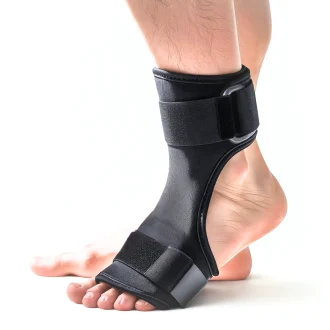
Night splints, and when they’re considered. For people whose morning pain is severe, or where the fascia is tightening up overnight, a clinician may suggest a night splint alongside an insole. It’s a soft brace worn while you sleep that holds the foot in a slightly stretched position, so the fascia doesn’t sit in its shortened state for hours. For some people, this reduces the sharpness of the first-step pain the following morning. It isn’t a replacement for supportive insoles during the day, and it isn’t needed in every case — it’s something to discuss with a clinician if the morning pain is the main problem.
Where this leaves you
Plantar fasciitis is common, and it’s usually manageable. What it needs is time, and support that takes the strain off the irritated tissue while it recovers. That is what FootReviver Orthotics do — they reduce the load on the plantar fascia on every step.
They come with a 30-day money-back guarantee, so if they don’t work for you, you can return them. Put them in your usual shoes, build up the wear over the first week, and give it a few weeks before deciding how well they’re working for you.
Disclaimer
The information on this page is general guidance for adults in the UK. It isn’t a substitute for individual medical advice, diagnosis, or treatment. If you’re unsure whether FootReviver Orthotics are right for you, or if you have new, unexplained, or more complex symptoms, speak to a GP, physiotherapist, or podiatrist for personalised advice. No specific outcomes are guaranteed.
4 Reviews For This Product
Fast & Secure Checkout Through Paypal
Pay with Paypal the secure payment gateway that accepts all credit and debit cards. Paypal is free and secure and no credit or bank information is ever stored or shared with us.
Fast Dispatch
Enjoy your items soon with quick dispatch via Royal Mail. Expect to have your items between 1-3 working days for domestic orders. 7-10 Working days for international orders.
Return Policy – 30 Day Money Back Guarantee
In the unlikely event, you are unhappy with your purchase you can return it within 30 days for a refund. Please contact us via the form on the contact us page to start your return.
To return an item please send it to: Nuova Health UK, 81 Highfield Lane, Waverley, Rotherham, S60 8AL. Please include a note with your order id so we know who to refund. Please retain your postage receipt as proof of postage. All that we ask is that the item is in the original packaging and unused.
by Mathew
After months of pain iv finally have recovered from my Plantar fasciitis thanks to having these insoles in my shoes everyday for the past 3 weeks!!! 🥳
by Josh Jones
After my recent bout with plantar fasciitis, my foot was in constant pain. That’s when I came across these arch support insoles. They’ve been a great addition to my recovery process. What I like most about these insoles is that they provide really good rigid arch, toe, and heel support, realigning my feet to their correct position. Despite the robust support they offer, they are surprisingly slim and lightweight, fitting perfectly into my daily shoes. They do take a bit to break into, but once you do, they are a dream to walk on. The shock absorption and cushioning on these insoles are impressive. It feels like I’m walking on clouds, and the pain has noticeably reduced. These insoles have been integral in providing stability, especially to my unstable ankles. I highly recommend these insoles to anyone dealing with foot pain. They’re worth every penny!
by Barry
I’ve been using these arch support insoles for a while now and the difference they’ve made is enormous. The quality is top-notch and they are very comfortable. Priced at £9.99, they are worth every penny. They are very easy to insert into any shoe and the design is slim and lightweight. The customer service was also prompt and helpful.
by Kenneth Miller
They offer a good balance of support and cushioning. There was a slight break-in period but the comfort they offer is absolutely worth it.