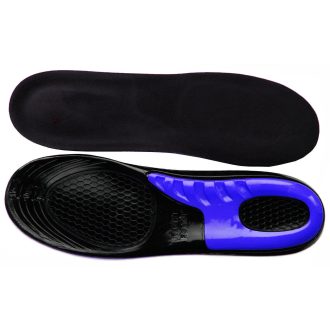
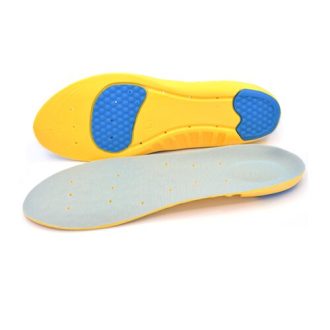
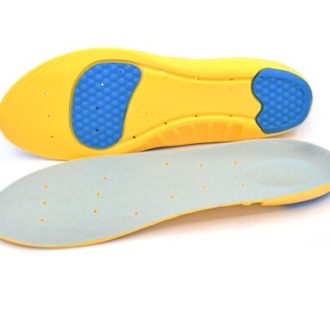
Shoe insoles
Supportive Insoles for Sore Feet, Legs, and Back
Why sore, tired feet are so common
Sore feet can turn simple things into hard work. Sharp pain under the heel when you first stand up, arches that feel tired by mid‑afternoon, burning under the ball of the foot, or an ache that builds in the knees, hips, or lower back after a day on hard floors are all very common.
For many people, this does not start with one dramatic injury. It creeps in over time, especially on days where you are on your feet more than usual – long shifts on concrete or tiles, or days where you are in and out of the house constantly in less supportive shoes. By the evening, the same areas may be grumbling again and again, day after day.
Each step asks your heel, arch, and forefoot to share the load. When that sharing is fairly even and well‑timed, most people barely notice their feet. When one part takes more than its share, or takes it too quickly, the tissues there are repeatedly stressed and can become irritated and sensitive.
This is more likely when:
- You spend long periods on hard, flat floors with little change in position.
- Your shoes no longer support the arch or hold the heel securely, so the foot rolls or drops more than it should.
- Your arches are very low and flexible or very high and stiff.
- You have a history of ankle sprains, tendon problems, or arthritis in the feet or legs, which leaves joints and soft tissues more easily irritated.
So this is not just “tired feet” in a vague sense – there are clear mechanical reasons why it happens. A long day on firm ground can leave one person with heel pain, another with burning under the ball of the foot, and someone else with aching shins or knees, depending on which part of the foot has been taking the strain.
Because every step starts at your feet, long‑term issues there often set the tone for the rest of the leg. If your heel rolls in, your shin and knee are pulled with it. If the arch collapses quickly, the muscles and ligaments on the inner side of the leg have to work harder. Over thousands of steps on hard ground, that extra work can begin to show up as aches in the shins, knees, hips, or lower back, not just under the feet.
Common patterns behind sore feet and legs
Most of the problems that bring people to insoles fall into a few broad patterns:
- Sore spots in the heel or forefoot
where tissues such as the plantar fascia, the fat pad, or the joints under the toes are carrying more pressure than they can comfortably share. - Tendons doing too much of the work
such as the Achilles tendon, the posterior tibial tendon at the inner ankle, or the peroneal tendons on the outer side, which are working hard to steady and control the foot. - Knock‑on effects in the shins, knees, hips, or back
where repeated inward or outward drift of the leg over the foot makes certain areas higher up take extra load. - Joint conditions
such as osteoarthritis, rheumatoid arthritis, or gout, where the joint surfaces and surrounding tissues are more sensitive to repeated loading. - Foot shapes that change how you spread your weight
such as very flat or very high arches, or bunions, that alter which parts of the foot meet the ground first and hardest.
The detailed condition overviews further down this page take each of these patterns in turn, show how they usually behave, and explain how particular features in this range can help to change the way that load is passed through the foot.
If you mainly want to understand what is going on in your feet and legs, the next sections on how your step works and what these insoles change will walk through the mechanics. If you already know roughly where you hurt, you can also go straight to “Choosing an insole from this range” and the condition‑specific guidance further down the page to match what you feel with the descriptions there.
How your step works
Every step has three main phases:
- Your heel meets the ground.
- Your weight passes through the arch while the foot is flat.
- You push away through the ball of the foot and toes.
When these three phases are balanced, pressure spreads across the sole and movement feels predictable. When one area or edge of the foot takes more load, or gets that load too quickly, it often becomes sore. For example:
- If the heel tips in too far, the inside of the foot works harder and the tissues there brace with every step.
- If the heel tips out, the outer edge takes more of the load and the ankle can feel less secure.
- If the arch drops quickly, the inside of the foot and ankle tire and the shin and knee are pulled slightly inwards.
- If the arch stays very high and stiff, less of the midfoot shares the load and more pressure goes straight to the heel and forefoot.
- If you push off from one small patch under the ball of the foot instead of from the whole front of the foot, hot spots and “stone bruise” pains often develop.
The expandable section below looks in more detail at what happens at the heel, arch, and forefoot, and how that movement links further up the leg.
What NuovaHealth insoles actually change in your step
NuovaHealth insoles do not change how your foot is built, but they do change how each step is handled. They change how your heel meets the ground, how your arch shares the load, and how your forefoot pushes off.
Heel landing
Deeper, shaped heel cups cradle the heel bone and help it land more centrally and more upright. This reduces how far the heel can tip strongly in or out at contact, so less pressure falls onto one edge and the ankle has a more secure base on firm ground.
Load through the arch
Contoured support under the midfoot brings the arch into earlier, broader contact with the insole as you bear weight. The arch is still allowed to lower, but it does so more gradually instead of dropping quickly. This reduces the extra work the tissues along the inside of the foot and shin have to do with every step.
Push‑off through the forefoot
An evenly cushioned surface under the ball of the foot, sometimes with a gentle metatarsal support placed just behind the metatarsal heads, helps spread pressure across the front of the foot. This makes it less likely that one small sore patch under the ball of the foot will carry most of the effort when you push away.
In day‑to‑day use, this usually feels like less sharpness under the heel, less inner‑arch fatigue, and fewer burning areas under the ball of the foot by the end of the day. Put simply, these insoles change the same three parts of the step that were overloading your heel, arch, and forefoot in the first place.
What makes the NuovaHealth range different
There are many insoles on the market. Some of the cheapest are thin, flat liners that simply cover the inside of the shoe. Others are made from very soft foams that feel pleasant when they are new but do little to change how your foot is actually loaded and can pack down quickly.
The insoles included in this range are chosen to do more than just change how a shoe feels underfoot. The focus is on giving your heel and arch a stable base, helping pressure under the forefoot spread more evenly, and doing it in a way that holds up over time.
NuovaHealth insoles, and the partner designs chosen to sit alongside them, are shaped with clinical input and built around three priorities:
- Reliable heel control where it is needed
In many insoles in this collection, the heel area is not simply padded; it is shaped. Heel cups are made deep enough, with a clear rim, so the heel bone sits down inside the cup rather than resting on a flat pad. This gives your heel a more definite “home” in the shoe and makes it less likely to roll strongly in or out as you land.
That steadier heel position at the start of the step gives the ankle a more secure base. In slimmer inserts, where space is tight, the heel shaping is more modest but still aims to centre the heel rather than letting it sit wherever the shoe allows.
- Support that guides, not jabs
Where arch support is included, it follows the natural curve of the midfoot rather than forcing it into an artificial position. The height and shape of these arch areas have been developed with podiatrists and physiotherapists to avoid tall, pointy ridges that feel like a lump under the foot.
The aim is for the arch to come into contact earlier and across a broader area so it can help share the work, while still being free to move. The support is there to guide and steady the movement, not to hold the foot rigid. In practice, this means the arch should feel “held” rather than propped up on a hard bar. In models that are meant to be very slim, this support is gentler but still present.
- Cushioning that keeps its shape
Very soft insoles can feel pleasant when they are new, but if the material packs down quickly and stays flat, they soon stop making much difference. In this range, the support bases and cushioning layers are chosen so they give a bit under load for comfort but do not simply squash and stay there.
The materials are selected so that, after many days on hard floors, you still have a recognisable shape under the heel and arch rather than a thin, flattened layer. The aim is that the support you notice when you first put the insoles in is broadly similar after they have been used in everyday life, not just on day one.
Alongside these core priorities, there are smaller details chosen with everyday wear in mind:
Smooth, comfortable top layers
The upper surfaces are selected so they feel comfortable against socks, help manage moisture, and reduce rubbing at the edges of the insole, particularly when you are on your feet for longer periods.
A secure fit inside the shoe
Many insoles in the range use tapered, bevelled edges so the insole sits flush against the shoe base without a noticeable “step” where it finishes. A light texture on the underside helps the insole stay where it is placed rather than sliding or bunching up, even in smooth‑lined footwear.
Taken together, these design choices mean that, whether you choose a NuovaHealth insole or one of the carefully selected partner brands such as FootReviver, you can expect a similar approach: meaningful heel control where space allows, arch support that is broad and gradual rather than sharp, and cushioning that is chosen to last, not just to feel soft on the first day.
Within this collection you will find different types – full‑length insoles, three‑quarter‑length designs, heel cups, heel lifts, and height‑adding options – and different profiles, from slimmer to more cushioned. The underlying principles stay the same; what changes is how each insole sits in different shoes and how much cushioning and guidance it is designed to provide. The next sections explain how these features come together and how to match them to your feet, footwear, and day‑to‑day demands.
Types in this range and when they tend to work best
A useful way to choose an insole is to start with the space inside your shoes and how much of the foot you want to support.
Full‑length insoles (heel to toe)
Full‑length insoles run the whole length of the shoe and replace the original liner where one is present. They are usually the best choice when your shoes have removable liners, there is reasonable depth inside the shoe, and you want guidance and cushioning under the entire foot.
Full‑length designs are a good starting point for many people with heel pain, arch strain, overpronation, or forefoot soreness, because they can support the heel, arch, and forefoot together and keep transitions between insole and shoe smooth.
Three‑quarter‑length insoles
Three‑quarter‑length insoles sit under the heel and midfoot and stop before the ball of the foot. They are useful when shoes are closer‑fitting or do not have removable liners, when you want to support and steady the heel and arch without changing the space around the toes, or when you use formal or closer‑cut shoes where a full‑length insole would be too bulky.
They still help steady the heel and support the arch, but leave the original forefoot area of the shoe unchanged.
Heel cups and heel pads
Heel cups and pads focus on the back of the foot. They often suit people who have pain mainly under or around the heel, want extra cushioning and control at the heel without altering the rest of the shoe, or use shoes that already fit snugly in the forefoot.
Heel cups cradle and centre the heel, while heel pads add extra cushioning directly under the heel area. They work well in many trainers, work shoes, and casual styles that do not have much spare depth under the forefoot.
Heel lifts
Heel lifts are small inserts that raise the heel slightly. They can be helpful when easing strain on the Achilles tendon or calf has been advised, when a small difference in leg length has been identified by a health professional, or in some cases where reducing how much the ankle bends at each step makes movement more comfortable.
Heel lifts should stay within sensible heights for your shoes and should not make footwear feel unstable. If a lift is being used to address a known medical issue, it is best to follow guidance from a GP, podiatrist, or physiotherapist.
Height‑adding insoles
Height‑adding insoles provide a discreet increase in height while still aiming to keep the heel secure and the foot cushioned. In this range, they focus on firm heel support and cushioning rather than simply stacking soft material. They are shaped so that the extra height does not make the foot feel loose or unstable inside the shoe.
Activity‑focused insoles (running and active use)
Some insoles in the collection are built for repeated impacts and longer distances. These usually include secure, shaped heel support to cope with higher loads at landing, a balance of cushioning and “spring” under the heel and forefoot, and flexibility at the front so the insole moves with the toes during push‑off.
They suit brisk walking, running, and more active days where the feet and legs take higher, more frequent impacts on firm surfaces.
Across all types, the build quality and overall level of support are consistent. What changes is how each one fits into different shoes and how it behaves when you stand, walk, or run.
Key features in this range and what they change
Across this range you will see a set of core features used in different combinations. In some models they are kept deliberately slim and subtle for closer‑cut shoes. In others they are more built‑up for long days on hard ground. The mix depends on foot type, shoe space, and how much support and cushioning each insole is intended to give.
Not every insole has every feature; that is intentional, so you can choose the balance that suits you and your footwear.
Heel cup and rearfoot support
In many NuovaHealth and partner‑brand insoles, the heel sits in a shaped cup with a defined rim and supportive sidewalls. The job of this cup is to give your heel a clear position to sit in, so it starts the step close to upright instead of being left to tip strongly in or out.
On firm ground this usually feels like a more secure, centred heel strike. Your heel is less likely to land hard on one edge or slide about inside the shoe, and your ankle has a more predictable base to work from.
In some models, the heel area also includes:
- A small recess at the very centre to take some of the pressure off a particularly sore point.
- Targeted cushioning under the heel to soften contacts without letting the back of the foot feel loose or wobbly.
Other designs keep the heel area slimmer for shoes with less depth. In those, the focus is on maintaining some cupping and central heel position without adding bulk. Wherever extra cushioning is used, it is paired with a properly shaped base so you are not left with a soft but unstable heel.
Arch and midfoot contact
Where arch support is present, it is there to increase contact under the midfoot rather than to lock it in place. That extra contact helps your foot share the work over more of its length, instead of letting the whole load move quickly from heel to a narrow band under the forefoot.
People often notice this as the inner side of the foot and ankle feeling less tired by the end of the day. The arch support is designed to feel like a broad, steady surface, not a single hard ridge.
Subtle shaping along the inner and outer edges of the insole blends from the heel into the midfoot. This helps limit how far the foot can roll strongly inwards or outwards without making you feel as if you are standing on a rail. It encourages the foot to sit more centrally on the insole and can make walking on side‑sloped pavements or cambered paths feel less awkward.
In models aimed at slimmer shoes, this shaping is gentler and lower in profile, so you still gain some guidance without crowding the foot in the available space.
Cushioning where it is most useful
In more cushioned insoles in the range, softer zones are placed under the heel and just behind the ball of the foot. These are the areas that take the brunt of contact on firm ground. The aim is to soften the feel of those repeated contacts without making the whole insole so soft that your foot sinks or feels vague.
The cushioning works together with the supportive base. You still have clear guidance at the heel and under the arch, but the sharpness is taken out of heel‑strikes and toe‑offs on firm surfaces. This combination often suits people who spend long spells on hard floors or who notice impact most at the start and end of each step.
Slimmer designs use thinner, slightly firmer layers so they can fit into closer‑cut footwear while still offering some shock absorption. In all cases, the underlying shape is designed to hold up rather than flatten, so the way the insole supports you does not vanish quickly with use.
Forefoot shaping and metatarsal support
Under the ball of the foot, most full‑length insoles in the collection provide an evenly cushioned platform with enough flexibility at the front to move with your toes. This helps pressure spread more naturally across the front of the foot as you push away, instead of concentrating on one or two small spots.
Some models add a low metatarsal support placed just behind the ball of the foot. This small, gentle lift is used when the forefoot needs more help. It encourages the long bones behind the toes to sit and move in a slightly more open position and helps share load across them.
For people who recognise burning or “pebble” sensations between the toes, or very localised soreness under one part of the forefoot, this kind of subtle forefoot shaping can make a noticeable difference without feeling as though there is a lump under the toes.
Design details that matter over a long day
Several smaller choices are included because they affect how the insoles feel from morning to evening:
- Tapered, bevelled edges so the insole blends into the base of the shoe, avoiding a clear “step” where it ends.
- Thin, low‑bulk toe sections in insoles intended for closer‑fitting footwear, to preserve space around the toes and reduce pressure from above.
- Lightly textured undersides to help the insole grip the shoe base and stay put, rather than sliding forwards or wrinkling.
These details are easy to overlook at first glance, but they often make the difference between something that feels fine for half an hour and something that remains comfortable and unobtrusive throughout a long shift or a busy day.
Taken together, these features mean that, whichever insole you choose from this range – whether it carries the NuovaHealth name or comes from a partner brand such as FootReviver – you can expect a consistent approach: a secure heel position where space allows, steady support under the midfoot, considered cushioning under the most stressed areas, and practical design details that help the insole work with your shoes instead of fighting them.
Materials and how they feel underfoot
Different insoles in this range combine different materials to suit their job. Some focus on being slim and supportive; others add more cushioning for longer days on firm ground. What matters most is how the materials behave when you are standing and moving – how much they give, how much they support, and how well they keep that feel over time.
Supportive bases
Most insoles use a supportive base made from EVA or similar long‑lasting support foams. Some add firmer inserts in the heel and arch areas. When these are present, you are likely to notice:
- Light, springy support rather than a dead, flat feel.
- A shape that holds up over time instead of flattening quickly.
- Clear guidance for the heel and arch, especially when extra control is needed.
Insoles intended to be very slim may use thinner bases with less pronounced shaping, to fit into shoes with limited volume while still giving some structure under the foot.
Cushioning layers
Cushioning comes from different combinations:
- Firmer foams that compress and rebound, giving a slightly springy feel under load.
- Softer foams in zones needing a gentler feel, such as directly under the heel or just behind the ball of the foot.
- Silicone‑based gels in selected areas in some insoles, mainly where impacts are highest.
- A few insoles use a thin memory‑foam top layer. This tends to mould slightly to the shape of the sole, spread pressure across bony areas, and feel noticeably plush underfoot, especially when combined with a firmer base that keeps the overall guidance consistent.
Not every insole includes gels or memory foam; many rely on carefully chosen foam densities and shapes to balance comfort and control.
Top layers and undersides
Top layers are generally chosen so they:
- Feel smooth and comfortable against socks.
- Help manage moisture so feet are less likely to feel clammy.
- Reduce friction over the surface and along the edges to minimise rubbing.
The underside of many insoles has a light pattern or texture to help the insole grip the shoe base and stay in place, particularly inside smooth‑lined footwear.
This means each insole in the range has its own blend of feel – some more plush, some more springy, some more firmly supportive – within the space most everyday shoes allow.
Choosing an insole from this range
Choosing well usually comes down to three things:
- Where you feel the problem most.
- The shape of your foot.
- The space and style of the shoes you want to use them in.
None of these is a diagnosis on its own, but together they give you a good starting point.
- Where do you feel the problem?
Use this as a starting guide. If something sounds familiar, you can open the matching condition overview later for more detail and examples.
Sharp or bruised pain under the heel
Start with insoles that have a deeper heel cup and reliable cushioning under the heel. If the pain is very localised, a design with a small recess under the sore spot can help ease peak pressure on that area.
The plantar fasciitis, fat pad, and heel spur sections in the condition guidance explain the differences between these problems and how particular heel features can help in each case.
Tired arches or ache along the inside of the ankle
Look for a combination of a secure heel cup and firm, well‑shaped support under the arch, so more of the midfoot shares the load and the inside of the foot does not have to work as hard. Designs that mention support for flat feet or overpronation are often a good starting point here.
The flat‑feet and posterior tibial tendon sections give extra guidance on what to prioritise.
Burning or pinpoint soreness under the ball of the foot
Look for an evenly cushioned forefoot and, where relevant, a gentle metatarsal support just behind the sore area to help spread pressure. This is particularly useful if you recognise “stone bruise” sensations, burning between the toes, or very sharp pain under one or two toe joints.
The metatarsalgia, Morton’s neuroma, plantar plate, and sesamoiditis sections explain how forefoot shaping can help in those situations.
Outer‑edge soreness or a less secure feeling on sloped pavements
Look for insoles that add contact under the arch, offer good cushioning under the heel and forefoot, and help keep the heel from tipping strongly outwards. This brings more of the sole into play and often feels more stable on side‑sloped pavements or uneven paths.
The peroneal tendon and ankle sprain sections are relevant here.
Knee, hip, or lower‑back aches that seem to build on firm ground
Look for a combination of secure heel control, steady arch support, and even cushioning under the heel and forefoot. This can help calm some of the repeated twists and jolts travelling up the leg from each step on hard surfaces.
The shin, knee, hip, and back sections link these features to higher‑up discomfort and suggest when insoles are likely to make a noticeable difference.
- Match the insole to your shoes
Even the best‑matched insole will only feel right if it suits the shoes you put it in. Think about the pairs you use most for the activities that bother you most – for example, work shoes on hard floors, trainers for walking, or smarter shoes for social occasions.
As a guide:
Roomier trainers, walking shoes, and work boots with removable liners
These usually take full‑length insoles well. Remove the original liner and place the new insole directly on the shoe base. Check that:
- Your toes still have room to move and are not being pushed upwards.
- The heel sits fully in the cup without lifting the back of the foot out of the shoe.
Full‑length designs are often the best way to support the heel, arch, and forefoot together in these roomier styles.
Closer‑fitting shoes without removable liners
Office, school, and many casual shoes do not have removable liners and may not have much spare depth. These often suit three‑quarter‑length insoles or slimmer full‑length designs.
If the shoe already feels tight across the forefoot, start with:
- Three‑quarter‑length insoles that support the heel and arch while leaving the original forefoot area unchanged, or
- Heel cups or pads if your main problem is under or around the heel.
This helps avoid crowding the toes or making the top of the shoe feel too close.
Shoes where you do not want to change the fit at the front
If you want to leave the toe area of the shoe exactly as it is – for example in a smarter shoe where space is limited – heel cups, heel pads, or modest heel lifts can add comfort and support under the heel without affecting the fit around the toes.
Using more than one pair of insoles
If your everyday shoes are very different – for example, supportive trainers for walking and slimmer work shoes for the office – you may decide to use one style of insole in the trainers and a slimmer or shorter option in the work shoes. The key is that, in each shoe, the insole sits flat, your heel is well seated, and your toes still have room.
Most full‑length insoles can be trimmed at the front if needed. Trim along the marked lines in small steps, checking the fit frequently, so you do not remove more material than is necessary.
- Consider your foot shape
A full assessment from a podiatrist or physiotherapist is best for detailed advice, but some broad patterns can help guide your choice:
Lower or more flexible arches
Often do well with a more structured contour under the arch and a deep heel cup to reduce the quick inward roll that tires the inner side of the foot and ankle. Look for insoles described as supporting flat feet or overpronation, and for designs that mention firmer arch support rather than just extra softness.
The flat‑feet and overpronation section explains this further.
Higher or stiffer arches
Often benefit from added contact under the midfoot, good cushioning under the heel and forefoot, and guidance that helps stop the foot tipping outwards. Insoles described as suitable for high arches, or for people who feel impact strongly through the heel and outer forefoot, are a useful starting point.
The high‑arches and supination section covers this in more detail.
Neutral‑looking arches
Often feel best with moderate support that increases contact under the arch without feeling intrusive, combined with a well‑shaped heel cup and steady cushioning. You are usually looking for balanced, all‑round support rather than very firm or very soft extremes.
Most people do not fit neatly into a single type, and different shoes may bring out different tendencies in the same foot. Use these patterns as a guide rather than a label. If you are unsure, start by thinking about where you are sore most often and which shoes you spend the most time in, then choose an insole that suits both as closely as possible.
What to expect when you start using insoles
Even a well‑matched insole changes how your foot and leg share load. It is normal to need a short period of adjustment.
Fitting and first use
- Place the insole flat on the shoe base. If your shoe has a removable liner, take that out first unless you know there is enough space for both.
- Make sure your heel sits fully down into the heel cup, not perched on the edge.
- Check that the arch support meets your foot comfortably and is not pressing hard into one point.
- Make sure there is still clear room for your toes to move.
A few millimetres forwards or backwards inside the shoe can change how the insole feels under the arch and forefoot. It is worth making small position adjustments until both feet feel as comfortable and even as possible.
Building up wear time
When you first start:
- Begin by wearing the insoles during the parts of the day that usually bring on discomfort – for example, your regular walk or the hours you stand most.
- If all feels reasonable, gradually increase the amount of time you use them over several days.
- Mild, settling aches in the arches or calves can be normal in the first week as muscles and tissues adjust to a more even load.
Warning signs that mean you should reduce use and seek advice include:
- Sharp, increasing pain anywhere in the foot or leg.
- New numbness, tingling, or changes in skin colour.
- Rubbing or blisters that do not settle with minor adjustments.
If these occur, reduce wear time, check fit and positioning, and speak to a GP, podiatrist, or physiotherapist if symptoms persist.
How long before you notice a difference?
Timelines vary, but many adults who are a reasonable match for insoles and build up use steadily notice:
- A change in how sharp certain pains feel (particularly under the heel or forefoot) within two to four weeks of regular use.
- Improved tolerance for firm‑surface walking, standing, or stairs across six to twelve weeks as tissues adapt to the new loading pattern.
Occasional flare‑ups can still happen, especially after unusually long or intense days. A consistent pattern of steadier, more comfortable movement over several weeks is more important than any single day.
What insoles can and cannot do
Supportive insoles:
- Can reduce strain on irritated tissues in the foot and lower limb.
- Can help you stand and walk more comfortably on firm ground.
- Can support other measures such as strengthening, stretching, and sensible changes in activity.
They cannot:
- Cure arthritis or change the underlying joint surfaces.
- Alter uric acid levels, so they do not treat the cause of gout.
- Replace a structured strengthening or rehabilitation programme for tendons and muscles.
- Take the place of an assessment or personalised advice from a healthcare professional.
If pain is severe, has come on suddenly after an injury, is associated with night pain, or is not improving despite appropriate insoles and sensible activity changes, speaking to a GP, podiatrist, or physiotherapist is always advised.
Care and when to replace your insoles
A little care helps insoles work well for longer:
- Allow insoles to air out after use by removing them from shoes overnight where possible.
- Wipe with a damp cloth if they become dirty; avoid soaking or high heat.
- Do not leave them on radiators, in strong direct sunlight for long periods, or near other high‑heat sources, as this can warp materials.
How long a pair lasts depends on how far you walk or stand in them, your body weight, the firmness of the surfaces you use most, and how closely they fit your shoes.
Signs it may be time to replace them include:
- Cushioning under the heel or forefoot no longer feels present.
- The shape under the heel or arch feels flattened compared with when they were new.
- The top layer is worn through or peeling in contact areas.
Insoles do wear out with regular use. Replacing them when they are clearly flattened or damaged helps keep the support and comfort you noticed at the start.
Important information
A few points are especially important to keep you safe and comfortable:
- Build up use gradually and pay attention to how your feet and legs feel.
- Check for any rubbing or pressure points in the first days.
- Stop using an insole if you experience increasing pain, numbness, tingling, or persistent colour changes around the foot or toes, and seek advice.
- Do not use insoles over open wounds, active infections, or areas of broken skin.
If you have known circulation problems, diabetes, or significant loss of sensation in your feet, it is especially important to speak to a GP, podiatrist, or other appropriate professional before making major changes to your footwear or insoles.
NuovaHealth insoles are designed to support comfort and everyday movement. They do not replace an assessment or personalised care plan from a healthcare professional. If pain is severe, has started after an injury, is associated with night pain, or is not improving over time, please seek professional advice.
Condition‑specific guidance
If you would like guidance linked to specific conditions or patterns of pain – such as plantar fasciitis, Achilles tendon pain, heel spurs, metatarsalgia, Morton’s neuroma, overpronation, supination, front‑of‑knee pain, or lower‑back ache linked to foot mechanics – use the detailed overviews below.
Each overview:
- Describes typical symptoms.
- Explains what is happening in the foot or leg at tissue and joint level.
- Shows how supportive insoles can change the loading pattern for that problem.
- Highlights which features in this range are worth prioritising.
- Outlines other simple steps that often help and when to seek further advice.
Your next steps
Sore feet, and the aches that follow up the leg, usually come down to how each step loads your heel, arch, and forefoot. NuovaHealth insoles are designed to steady your heel, bring your arch into useful contact, and spread pressure under the ball of your foot, so each step feels more predictable and less punishing on firm ground.
Use the “Choosing an insole from this range” section and, if relevant, the condition‑specific overviews in the accordion to pick a pair that matches where you feel the problem, the shape of your foot, and the shoes you wear most often.
Introduce the insoles gradually, give your feet and legs a few weeks to adjust, and pay attention to how your symptoms change over time rather than from one day to the next. If pain is severe, sudden, waking you at night, or not improving despite sensible changes and regular insole use, it is always worth speaking to a GP, podiatrist, or physiotherapist.
Used alongside suitable footwear and, where needed, simple strengthening and stretching exercises, NuovaHealth insoles are designed to make everyday standing and walking on firm ground more comfortable and more manageable over time.
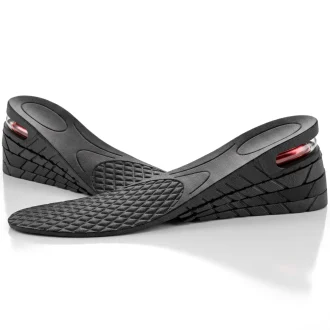
Height Increasing Insoles
- 2x High Quality Height Increasing Insoles Left and Right (3 Layered System)
- The perfect option for quickly and effectively boosting your height and confidence
- Total height gain using 3 layers = 3.5 Inches
- Out of sight and out of mind – These insoles fit discreetly inside your shoes so that nobody will know your wearing them
- Features shock absorbing air cushion heels that will help protect your feet and lower limbs from pain and injury when you walk
- Inbuilt arch and heel support specially designed to keep pressure and strain off your feet helping to treat and prevent common foot injuries such as Plantar Fasciitis and Achilles Tendonitis
- Comes with a full 30 day money back guarantee!
£16.99inc VAT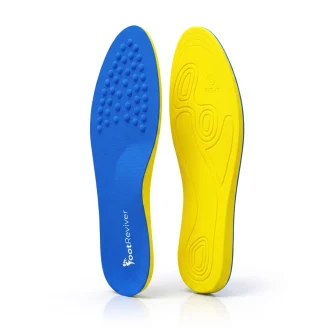
Supination Insoles for Underpronation By FootReviver™
- Precision-Engineered for Supination Correction: This pair of insoles is specifically designed to correct underpronation by featuring a strategically inclined outer edge that gently tilts your foot inward, promoting proper alignment and a stable gait.
- Durable & Versatile for Everyday Use: The low-profile, flexible-yet-supportive construction ensures a seamless fit in a wide range of footwear, making them perfect for both everyday wear and sports. Sizes available: XS (UK 1-2), S (UK 2-3), M (UK 4-6), L (UK 7-8.5), XL (UK 9-11).
- Reinforced Lateral Support & Targeted Arch Control: The dual-action design combines a firm, reinforced lateral barrier to block excessive outward roll with a contoured arch cup to cradle your foot’s natural curve, working in unison to alleviate strain on ankles, arches, and plantar fascia.
- Full-Length Advanced Shock Absorption: Crafted from lightweight, durable, and high-resilience EVA material that runs from heel to toe, providing superior cushioning to protect your feet, joints, and lower back from impact during walking, running, or prolonged standing.
- Anatomically Contoured for Natural Alignment: A heel cup and precision-moulded arch support work together to guide your entire foot into a healthier, neutral position, redistributing weight evenly to reduce fatigue and compensatory pain in your knees and hips.
- Secure, Breathable & Comfortable Fit: Features gripper nodes under the forefoot to prevent slipping and a moisture-wicking top cover that improves air circulation, keeping your feet dry, secure, and comfortable all day long.
- Universal Design & Professional Recommendation: For both men and women, these insoles are ideal for casual shoes, trainers, and boots. They are recommended by physiotherapists and podiatrists to help treat and prevent a wide range of conditions linked to supination, including Plantar Fasciitis, Heel Spurs, Metatarsalgia, Achilles Tendonitis, Ankle Instabilities, and knee or back pain.
- Your Satisfaction Guaranteed: Backed by a full 30-day money-back guarantee, so you can experience the FootReviver difference risk-free.
£16.95inc VAT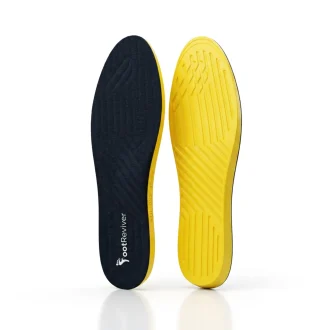
Pronation Insoles for Overpronation By FootReviver™
- Introducing the FootReviver Orthotic Pronation Insoles for Overpronation! These are more than just insoles, they are your first step towards alleviating foot pain and preventing debilitating conditions caused by overpronation. Here’s why you should consider them:
- For both Men & Women
- Available in a variety of shoe sizes
- Sizes are as follows: (XS: (EU 32-34) (UK: 1-2), Small (35-37) (2 – 3), Medium (38-40) (4-6), Large (41-43) (7-8.5), Extra Large (9-11)
- Innovatively Designed: These aren’t your average insoles. Their ergonomic design works to align your feet and ankles into an optimal position, preventing overpronation while walking. This simple yet effective strategy keeps your feet safe from overuse injuries like plantar fasciitis.
- Quality Material: Crafted from superior shock-absorbing EVA material, they shield your feet and lower limbs from impacts. This high-quality material helps provide a buffer between your feet and hard surfaces, reducing strain on your feet.
- Runner’s Best Friend: If you love to run but overpronation is holding you back, these insoles are just what you need. They offer the extra support runners require, allowing you to enjoy your passion without compromising on foot health.
- Perfect for Flat Feet: People with flat feet are more prone to overpronate. But fret not! These insoles are ideal for you, designed to offer the necessary support and comfort.
- Arch Support: They feature built-in arch support, relieving tension and pressure off your arches. This helps combat arch pain and strain, making each step more comfortable.
- Hassle-Free Guarantee: We’re so confident you’ll love the relief these insoles provide, we offer a full 30-day money-back guarantee. This means you can try them out risk-free and discover the difference they can make in your life.
- Take a step towards better foot health today with the FootReviver Orthotic Pronation Insoles for Overpronation. You’ll be amazed at the difference they can make! Don’t let overpronation hold you back any longer. Choose comfort, choose FootReviver.
£14.95inc VAT
Memory foam insoles – Cushioning footbeds for sore aching feet
- Do you ever feel like your feet need a break? Are you constantly battling with foot pain, discomfort, or other related conditions? FootReviver Memory Foam Insoles are here to bring relief to your tired and aching feet. These Specially designed Footbeds will help cushion, support and protect your feet, knees, legs hips and back!
- For both Men & Women
- Available in a 5-7 & 8-10 UK shoe sizes (trim to fit)
- Ideal for people who are suffer from flat feet, High arches, Overpronation, Underpronation and Diabetes who are at greater risk of develop foot problems as a result
- Features a memory foam top layer that adapts to the shape of your feet to provide a custom level of support and cushioning
- Designed to redistribute weight pressure evenly underneath your feet preventing pressure points from causing pain and injury when you are stood for long amounts of time
- Shock absorbing EVA base soles protect your feet from shock, vibrations and impacts when walking, running and jumping
- Feature orthotic arch support technology that helps keep your arches properly supported and prevents excessive movement and gait problems such as Overpronation and supination from damaging your feet and causing overuse injuries such as Plantar fasciitis
- Recommended by podiatrists to help treat and ease Metatarsalgia, Bunions, Morton’s Neuroma, Metatarsal fractures, Atrophy of the fat pad, Plantar Fasciitis, Heel Spurs, Heel Bursitis, Achilles tendonitis, Cuboid Syndrome, Arthritis, Oedema, Neuropathy, and gout!
- The ventilation holes allow your feet to breathe and keep them comfortable, dry and feeling fresher for longer
- Deep heel cups help to support and stabilize your heels and ankles to prevent excessive movement which can twist, sprain and strain your feet and legs
- Includes a full 30-day money back guarantee!
£12.99inc VAT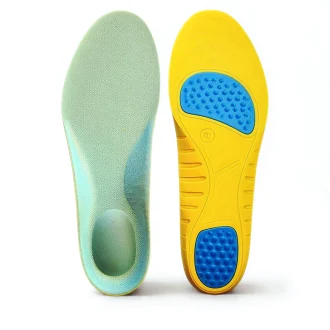
Orthotic insoles for knee pain
- 1x Pair of orthotic insoles designed to protect your knees from shock, pressure and strain – Consider slipping a pair of FootReviver orthotic insoles into your running shoes or even your everyday slippers. These insoles are designed to provide the advance orthotic support to your feet, thereby easing knee pain. By maintaining proper foot alignment and absorbing shocks, they prevent undue stress on the knees, keeping them safe and sound.
- For both Men & Women
- Available in a 5-7 & 8-10 UK shoe sizes (trim to fit)
- Made from shock absorbing EVA material that helps deplete shock and protect your lower limbs from damage every time your foot strikes the ground when walking, running and jumping
- Helps correct the way your feet function and restores biomechanical balance to your feet and lower limbs which will help you to place less strain and pressure on your knee joints
- These orthotic insoles are recommended by Podiatrists and Physiotherapists to help treat and ease a wide range of injuries and conditions affecting your feet and lower limbs such as Bunions, Morton’s Neuroma, Metatarsalgia, Atrophy of the Fat pad, Plantar Fasciitis, Achilles tendonitis, Heel spurs, Heel Bursitis, Shin Splints, Patella tendonitis, Meniscus Tears, Patellar tendon sprains and strains, Runners & Jumpers knee, Chondromalacia or irritated kneecap Arthritis and Osteoarthritis
- Features specially designed arch and heel support that keeps strain and pressure off key ligaments and tendonitis which are found in your feet such as your plantar fascia ligament to help prevent overuse injuries such as Plantar fasciitis
- Breathable ventilation holes help keep air circulating around your feet to keep them dry and prevent the build-up of bacteria and odour
- Ideal for wearing for your everyday activities, running, cycling, football, Rugby, basketball or just for standing for long periods on hard surfaces to properly protect, support and ease your feet and legs
- Includes a full 30-day money back guarantee!
£12.99inc VAT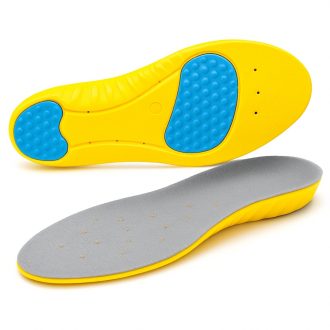
Work Boot Insoles
- 1x Pair of insoles for work boots designed to support, cushion, protect and ease your feet and lower limbs
- For both Men & Women
- Available in a 5-7 & 8-10 UK shoe sizes (trim to fit)
- Inbuilt heel and arch support will take strain and pressure off your feet and stop common foot injuries such as Plantar fasciitis from developing
- Made from lightweight breathable but durable materials that will absorb shock and protect your feet
- Includes a full 30 day money back guarantee!
£12.99inc VAT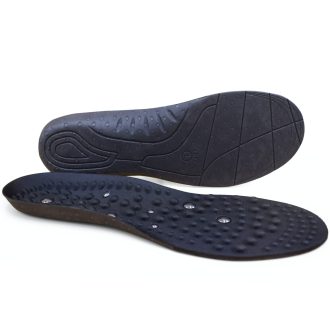
Diabetic Insoles By FootReviver™
- 1x Pair of Diabetic insoles developed by FootReviver™ to help support, protect and ease your feet if you are suffering from Diabetic Neuropathy
- Available in Size Medium or Large
- Medium (UK shoe size 7-10), Large (UK shoe size 10-13), cut along the guidelines for your best fit.
- Designed to help to prevent nerve damage and ease neuropathy caused by Diabetes
- Provides soothing magnetic therapy to ease aches and pains deep within your feet and lower limbs
- Reflexology nodes massage and stimulate blood flow helping to reduce numbness, aches and pains and improve circulation
- Built in arch and heel support helps ease pressure and strain off key tendons, ligaments and joints in your feet to help prevent injuries from developing
- Includes a full 30 day money back guarantee!
Warning! Please note this item contains Magnets and so it can potentially interfere with pacemakers, defibrillators, and other medical implants that could be affected by magnets. Do not buy this item if you have an implanted medical device, we cannot be held liable for any damage caused wearing this product.£12.99inc VAT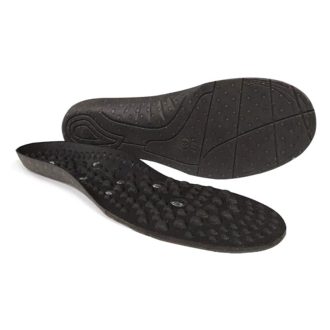
Magnetic Massaging Insoles
- 1x Magnetic massaging insoles designed by FootReviver™ to help ease foot and heel pain and massage your feet as you walk
- Available in size Large or Medium
- Medium (UK shoe size 7-10), Large (UK shoe size 10-13), cut to fit.
- Ideal for treating and easing a range of injuries and conditions affecting your feet including Plantar fasciitis, Heel Spurs, Metatarsalgia, Bunions, Hammer toes, Arthritis, Gout, Neuropathy and Diabetes
- Features strategically placed magnets that provide soothing magnetic therapy giving your feet deep targeted relief to help ease your aches and pains
- Massaging acupuncture nodes help massage your feet as you walk helping stimulate blood circulation to your feet aiding the natural heling process of injuries by supplying fresh oxygenated blood that will reduce inflammation, swelling and pain and improve your injury recovery
- Inbuilt orthotic arch support system supports your feet in the correct position helping to improve your gait and the biomechanical balance and function of your feet which will help to reduce pressure and strain on your lower limbs and prevent overuse injuries such as plantar fasciitis from occurring
- A deep heel cup helps to stabilize and protect your heels and prevent you from twisting and spraining your ankle
- Made from lightweight, flexible EVA material designed to protect your feet by absorbing shock and spreading pressure evenly underneath your feet to help prevent pressure points from forming and damaging your feet
- Helps keep your feet stay dry, sweat free and fresher for longer thanks to the insoles lightweight and breathable design
- Includes a full 30 day money back guarantee!
£12.99inc VATInsoles for Arthritis by FootReviver™ (Blue and Black)
- 1x pair of insoles for easing arthritis pain in the feet
- For both Men & Women
- Made from medical grade silicone gel that massages your feet as you walk helping to soothe arthritis foot pain
- Protects your feet from damage by absorbing shock and prevents the build up of pressure points underneath your soles and heels by evenly distributing weight across the whole foot
- Orthotic technology helps support your feet in the optimum position correcting common biomechanical imbalances such as overpronation and supination often linked to foot pain and injuries
- Ideal for people who have to stand all day on hard flooring and suffer from tired and aching feet and heels
- Can be slipped straight into virtually any type of shoes quickly and easily
- These insoles for arthritis comes with a full 30 day money back guarantee, no questions asked!
£12.99inc VATInsoles for foot pain
These insoles are made combat against the main underlining causes of foot pain.
If you have flat feet and over pronate then you are at much greater risk of developing plantar fasciitis and other foot related injuries. Wearing a pair of these insoles to correct your pronation can help. Using orthotic arch support technology these insoles will realign and re-balance your feet and stop you from over-pronating when you walk. This will help to treat and ease plantar fasciitis pain by taking the pressure and strain off your arches when you walk, helping you to avoid inflaming and damaging the plantar fascia ligament that stretches across and supports your arch.
Main features
- 1x pair of insoles specially developed for people with over-pronation. Helps to correct foot function and ease foot pain.
- Inbuilt arch support to relieve pressure and tension off your arches and stops your feet from over pronating, making these insoles ideal for treating and preventing a whole host of foot injuries including plantar fasciitis.
- Heel support helps to give your heels a break and provides you with more stability balance and comfort.
- Shock absorption properties help prevents lower limb injuries such shins splints and knee tendinitis
- Highly recommend for athletes and people with flat feet
- Made to be compact and non bulky so you feet don’t feel tight or weighed down by your shoes when you wear them
- Features memory foam layer for more comfortable feet
- 30 day money back guarantee
You get:
2x High Premium Quality Orthotic Arch Support Insoles (Left and Right foot).
Available in 2 Sizes: Large Size UK 8-10 and Medium Size UK 5-7 (Cut down to meet your individual requirements).
Brand new and unused.
Material: EVA.£12.99£14.99inc VATInsoles for overpronation
How can these insoles help if you have overpronation?
Overpronation is when the foot rolls inward too much when your foot flattens during gait. When overpronation occurs it can lead to excessive strain and pressure being placed upon the foot and lower limbs. Overtime this overpronation can cause damage to the ligaments found in your foot and cause injuries such as plantar fasciitis to develop. Wearing a pair of orthotic insoles that realign and support your feet properly when you walk will help to reduce overpronation in your feet and help prevent as well as treat a number of injuries affecting your feet and lower limbs.Main features
- These insoles have been specially made for people who suffer from overpronation.
- They work by using orthotic support that helps to adjust and realign your feet properly when you walk helping to stop your feet excessively pronating when you walk. This helps to prevent unnatural load and pressure form damaging your feet and causing overuse injuries such as plantar fasciitis.
- Made from highly shock absorbent EVA material to prevent shock from causing damage to your feet and lower limbs.
- Perfect for runners wanting extra support when they run.
- Ideal for people with flat feet who are more likely to over-pronate
- Breathable holes circulate air around your feet keeping them feeling dry and fresher for longer
- Heel pad and cup helps support and prevent damage to your heels.
- Built in arch support relieves tension and pressure off your arches helping to combat against arch pain and strain.
- Our 30 day money back guarantee means that you can return them if they are not right for you!
You get:
2x High Premium Quality Orthotic Arch Support Insoles (Left and Right foot).
Available in 2 Sizes: Large Size UK 8-10 and Medium Size UK 5-7 (Cut down to meet your individual requirements).
Brand new and unused.
Material: EVA.£12.99£14.99inc VAT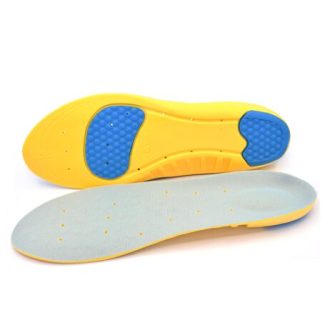
Orthotic Insoles for Sports & Running
- 2x High Premium Quality Orthotic Arch Support Insoles (Left and Right foot).
- Improves balance, stability and foot strength.
- The perfect choice for running and sports
- Enhances running ability through improved foot pronation.
- Excellent Shock absorption to help better protect your feet when you run
- Helps treat and prevent common foot injuries such as plantar fasciitis and Achilles tendonitis.
- Durable, lightweight and non-bulky design
- Includes a full 30 day money back guarantee
£12.99inc VAT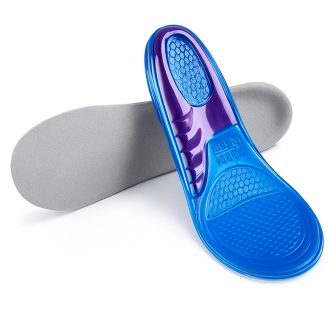
Gel Footbed Insoles for trainers
- 1x Pair of Gel Footbed Insoles for trainers and running shoes to help protect your feet and lower limbs from shock when running, exercising or playing sports
- For both Men & Women
- Available in sizes 6-9 & 8-12 (trim to fit)
- Recommended for people suffering from Plantar fasciitis, Heel Spurs, Flat feet, High arches, Achilles tendonitis, Arthritis, Neuropathy, Diabetes, Raynaud’s disease, Poor circulation, Metatarsalgia, Morton’s neuroma, Bunions, Pes Cavus, Sesamoiditis, Cuboid Syndrome, Ankle sprains, Shin splints as well as Knee, Hip and lower back pain
- Made from medical grade silicone gel that massages your feet and helps prevent foot fatigue and improves muscle recovery by stimulating the blood vessels in your feet to boost the circulation in them
- Helps cushion your feet and absorbs shock and vibrations whenever your feet strike the ground when walking, running and jumping to deplete the impact felt on key ligaments, tendons and joints found in your feet, knees, hips and lower back
- The silicone gel moulds to the exact shape and contours of your feet to provide a custom level of support and protection
- Helps correct common gait problems and biomechanical imbalances known to cause injury such as Overpronation and supination
- Provides supports your arches in the correct position and helps take strain and pressure off your plantar fascia ligament to help prevent and treat Plantar fasciitis
- 3/4 length heel cup provides extra support and stability to your heels and ankles and prevents heel pain by spreading weight evenly underneath your heels to stop pressure points from developing when stood for long period of time
- Lightweight and breathable design featuring moisture wicking technology and antibacterial properties to keep your feet fresh and odour free
- Includes a full 30-day money back guarantee!
£11.99inc VAT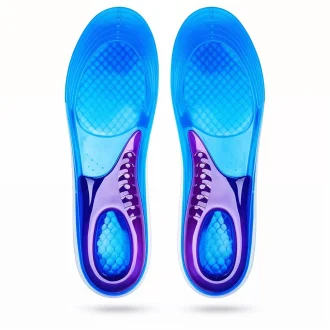
Gel Insoles for Morton’s Neuroma
- 1 pair of gel insoles designed to cushion the front of your feet and make pressure through the ball of the foot feel less harsh.
- Suitable for both men and women.
- Available in sizes 6–9 and 8–12.
- Mainly suited to adults with ball-of-foot pain, burning, tingling, numbness, or a “pebble in the shoe” feeling that may fit Morton’s neuroma.
- Soft medical-grade silicone gel helps absorb repeated impact during walking, standing, and everyday use.
- Forefoot cushioning helps reduce how concentrated pressure feels under the metatarsal region inside your shoes.
- Contoured arch support helps the foot work from a steadier base and may reduce how overloaded the front of the foot feels as the day goes on.
- Helps spread pressure more evenly across the sole rather than leaving one sore area to take most of the load.
- Can be useful for adults who spend long periods standing or walking, especially on hard floors.
- Trim-to-fit design helps the insoles sit more neatly inside different shoe shapes.
- Lightweight, breathable, durable build with moisture-wicking and odour-control features for everyday wear.
- Best used in shoes that do not crowd the forefoot, as tight shoes can still aggravate symptoms.
- It often helps to build up wear time gradually rather than wearing them all day straight away.
- Includes a 30-day money-back guarantee.
£11.99inc VAT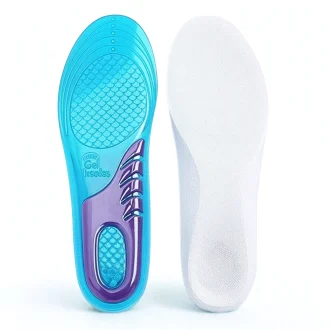
Gel Insoles for Arthritis
- What you get: 1 pair of silicone gel insoles designed for arthritis pain in feet, ankles, and knees
- For: Men and women with mild to moderate arthritis (osteoarthritis or rheumatoid arthritis)
- Sizing: Available in two options: UK 6-9 and UK 8-12. Trim to your exact size using the cutting guides printed on the base. Remove your shoe’s existing insole before fitting.
- How they work: Gel cushioning absorbs impact and spreads pressure across your foot. Arch support holds your foot in better alignment to reduce joint stress. Heel cup reduces excessive rolling that twists ankle and knee joints.
- Best for: Pain during standing and walking on hard surfaces, tired and aching feet by end of day, and reducing stress on arthritic joints in feet, ankles, and knees
- Gradual introduction: Build up wear time over the first week (start with 1-2 hours, increase gradually). Most people notice improvement within 1-2 weeks of regular use.
- How long they last: Typically last 6-12 months with daily use. Replace when cushioning feels less springy or you notice visible wear.
- Safety note: Do not use if you have open wounds, ulcers, severe neuropathy, active infection, or severe circulatory problems. If you have diabetes or recent foot surgery, speak to your podiatrist or GP first.
- 30-day money-back guarantee: Try them for 3-4 weeks following the gradual introduction guidance. If they haven’t helped, return for a full refund within 30 days.
£11.99inc VAT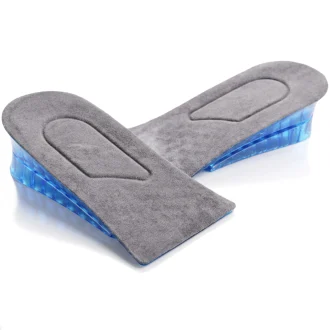
Heightboosters™ Shoe lift inserts for height
- Discreet height boost: Stand up to 38–40 mm (about 1.5 in) taller—hidden inside your shoes, so they look the same from the outside
- Adjustable layers: Start low, add height as you adapt—you control the progression
- Honeycomb gel cushioning: Softens hard floors, spreads pressure, eases harsh heel landings
- Stable, cupped base: Wider heel platform guides balanced motion and steadies each step
- May ease everyday discomfort: Plantar heel pain, Achilles irritation, calf tightness, small leg-length differences
- One size fits most: 3/4-length design fits UK 5–12 (EU 38–46) without trimming—slips into trainers, dress shoes, boots
- Breathable, lightweight, easy care: Wipe clean, air dry, swap between shoes in seconds
- 30-day money-back guarantee: Try them risk-free—if they don’t work, return for a full refund
£11.99inc VAT