
Gel Insoles for Arthritis
£11.99inc VAT
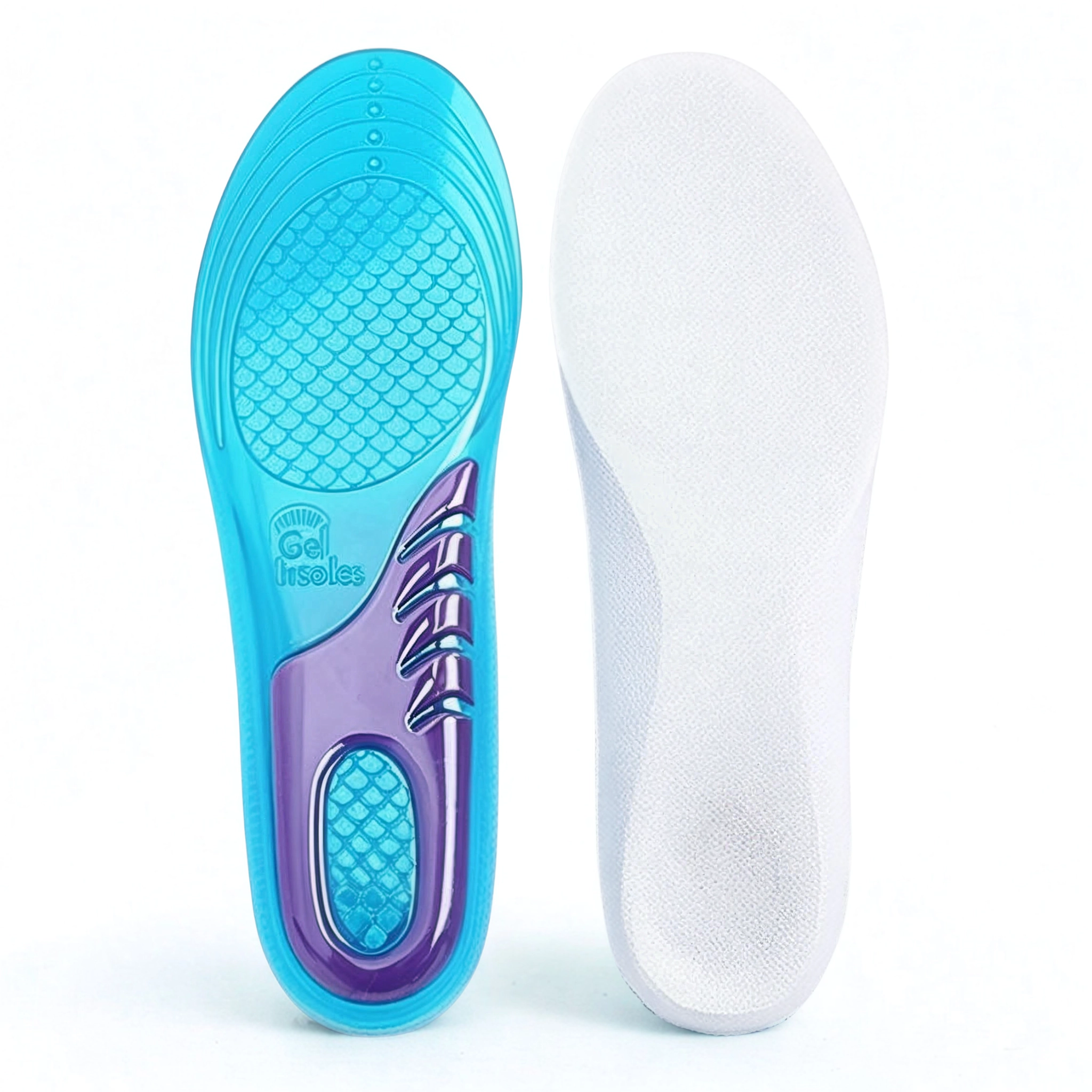
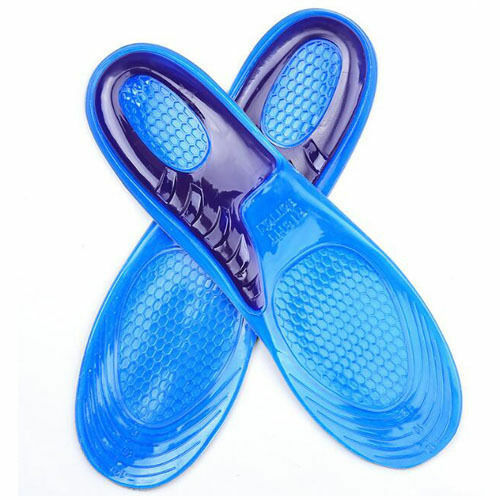
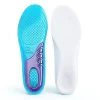
- What you get: 1 pair of silicone gel insoles designed for arthritis pain in feet, ankles, and knees
- For: Men and women with mild to moderate arthritis (osteoarthritis or rheumatoid arthritis)
- Sizing: Available in two options: UK 6-9 and UK 8-12. Trim to your exact size using the cutting guides printed on the base. Remove your shoe’s existing insole before fitting.
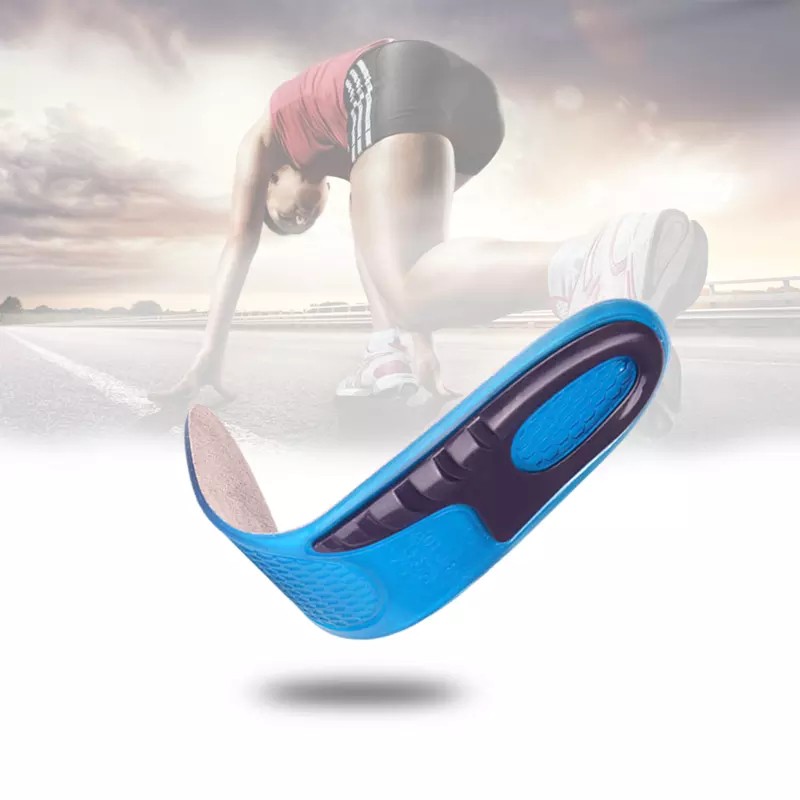
- How they work: Gel cushioning absorbs impact and spreads pressure across your foot. Arch support holds your foot in better alignment to reduce joint stress. Heel cup reduces excessive rolling that twists ankle and knee joints.
- Best for: Pain during standing and walking on hard surfaces, tired and aching feet by end of day, and reducing stress on arthritic joints in feet, ankles, and knees
- Gradual introduction: Build up wear time over the first week (start with 1-2 hours, increase gradually). Most people notice improvement within 1-2 weeks of regular use.
- How long they last: Typically last 6-12 months with daily use. Replace when cushioning feels less springy or you notice visible wear.
- Safety note: Do not use if you have open wounds, ulcers, severe neuropathy, active infection, or severe circulatory problems. If you have diabetes or recent foot surgery, speak to your podiatrist or GP first.
- 30-day money-back guarantee: Try them for 3-4 weeks following the gradual introduction guidance. If they haven’t helped, return for a full refund within 30 days.
Who These Insoles Help
These insoles are designed for people with arthritis in their feet, ankles, or knees who experience pain, stiffness, or fatigue when standing or walking.
You might find them helpful if:
- Your feet or ankles ache after standing for long periods
- Walking on hard surfaces—pavements, tiled floors, concrete—makes your joint pain worse
- Your feet feel tired and sore by the end of the day
- You have osteoarthritis or rheumatoid arthritis affecting your feet, ankles, or knees
- You need extra cushioning and support to make daily activities more comfortable
The insoles provide gel cushioning to absorb impact, arch support to improve weight distribution, and a heel cup to reduce excessive rolling movements that stress your joints.
Understanding Arthritis in Your Feet & Ankles
If you already know your diagnosis and just want to understand how the insoles work, skip to “How These Insoles Work” below.
What Is Arthritis?
Arthritis is inflammation and damage in a joint. The two most common types affecting feet and ankles are osteoarthritis and rheumatoid arthritis.
Osteoarthritis is wear-and-tear arthritis. The cartilage cushion that normally covers the ends of your bones gradually wears down. As the cartilage thins, the bones start to rub together, causing pain, stiffness, and sometimes swelling. Osteoarthritis usually develops gradually over years and tends to affect joints that have taken a lot of load—feet, ankles, knees, hips, and hands.
Rheumatoid arthritis is an autoimmune condition where your immune system attacks the lining of your joints (the synovium), causing inflammation, pain, and swelling. Over time, this inflammation can damage the cartilage and bone. Rheumatoid arthritis often affects multiple joints symmetrically—both feet, both hands—and can develop at any age.
Both types cause pain, stiffness (particularly in the morning or after rest), swelling, and reduced range of movement. The location affects which movements hurt most. Ankle arthritis often hurts when walking on uneven ground or climbing stairs, while big toe joint arthritis typically hurts when you push off during walking.
Why Your Feet and Ankles Hurt
Your feet and ankles contain many small joints, and each one takes repetitive load with every step you take. When the cartilage in these joints is damaged and the joint lining is inflamed, that repetitive load causes pain.
Three main mechanical stresses drive arthritis pain: impact (sharp force spikes from each footstrike hitting inflamed tissue), pressure concentration (weight focusing on fewer joints when alignment is poor), and twisting (extreme rolling movements that grind joint surfaces at abnormal angles).
The insoles target all three. The next section explains exactly how.
What You Might Notice
Arthritis pain in your feet and ankles often follows predictable patterns:
Morning stiffness. Your joints feel stiff and painful when you first get out of bed, then loosen up after 10-30 minutes of movement. Without movement overnight, fluid doesn’t circulate through the cartilage, and the joint lining becomes stiff. Movement pumps fluid through and loosens things up.
Pain after activity. Your feet and ankles ache more after standing for long periods, walking on hard surfaces, or being on your feet during a busy day. The cumulative stress from hundreds or thousands of steps builds up, and by the end of the day, your joints are inflamed and painful.
Pain during specific movements. Pushing off through your big toe when walking, rolling your ankle on uneven ground, or climbing stairs. If those joints are arthritic, those movements trigger sharp pain.
Fatigue. Your feet feel tired and heavy, even after light activity. The muscles around your joints are working harder to stabilise damaged joints and compensate for poor alignment. This creates fatigue.
When Insoles Help (and When They Don’t)
Insoles work well for mild to moderate arthritis pain that’s primarily mechanical—pain that gets worse with activity and improves with rest. They reduce the repetitive stress on your joints, which for many people is enough to make daily activities more comfortable.
They don’t treat the underlying arthritis or reverse cartilage damage. What they do is reduce the mechanical load that worsens pain—and for many people, that’s enough to make a real difference.
They’re less effective for severe inflammation that needs medical treatment, very advanced arthritis where the joint damage is too severe for insoles alone to help meaningfully, or pain from other causes—nerve compression, tendon problems, stress fractures—that won’t respond to cushioning and alignment changes.
How These Insoles Work
These insoles reduce arthritis pain by targeting the three main mechanical stresses that worsen joint pain: impact, pressure concentration, and twisting.
Gel Cushioning Reduces Impact
Every time your foot hits the ground, a sharp force spike travels up through your heel, ankle, and knee. When your joints are healthy, the cartilage absorbs most of this impact. When the cartilage is damaged and the joint lining is inflamed, that impact hits inflamed tissue directly, causing pain.
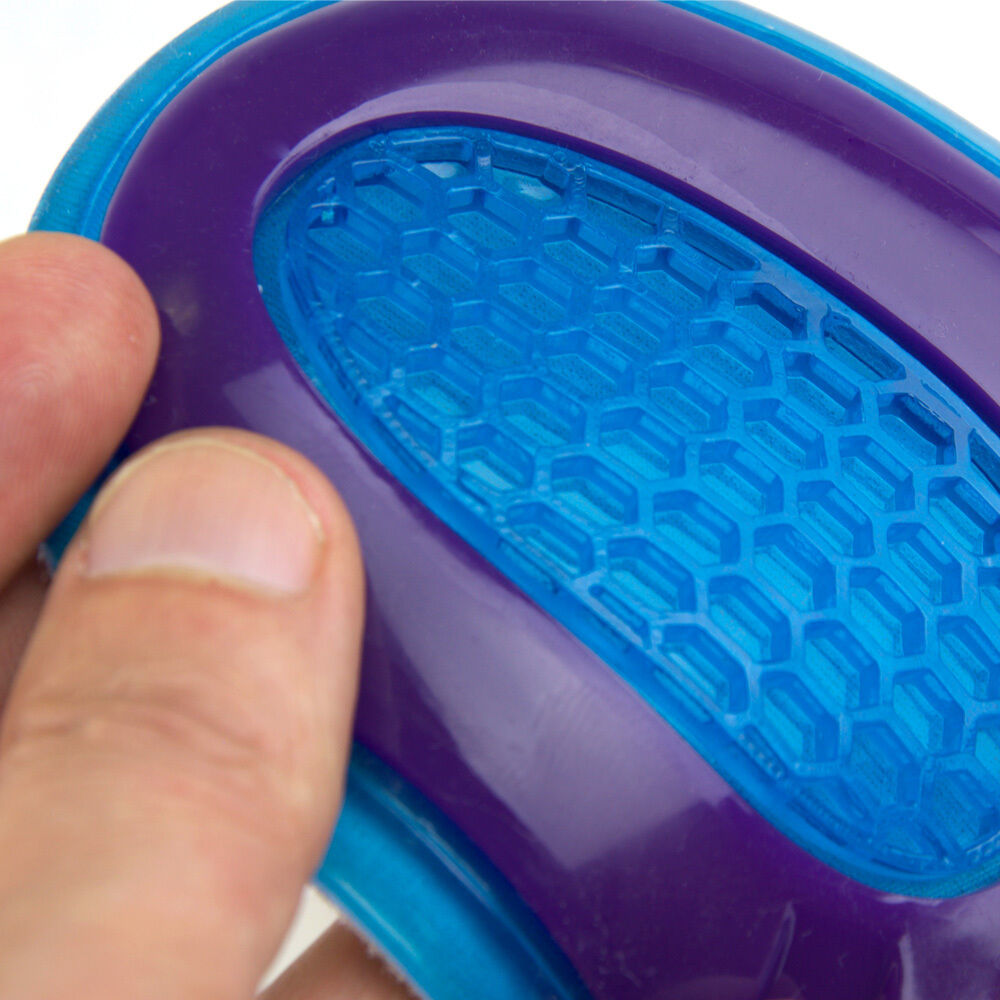
The silicone gel layer in these insoles squashes down when your foot strikes the ground, absorbing some of that impact force before it reaches your joints. The gel spreads the force over a longer time period, which reduces the peak force your joints experience.
This is particularly helpful on hard surfaces—pavements, tiled floors, concrete—where there’s no natural cushioning. The gel acts as a buffer between your foot and the hard ground, reducing the shock that travels up through your joints with each step.
Arch Support Spreads Pressure Evenly
Your foot has a natural arch that acts as a spring, distributing your body weight across the entire foot. When your arch collapses (often called flat feet or overpronation), your weight concentrates on fewer joints—usually the inside of your foot and ankle. Those joints take more load than they’re designed for, which accelerates cartilage wear and increases pain.
The arch support in these insoles holds your arch up slightly, which spreads your weight more evenly across your foot. Instead of a few joints taking most of the load, the load is distributed across more joints. Each individual joint experiences less stress, which reduces pain and slows further cartilage wear.
This also improves the alignment of your ankle and knee. When your arch collapses, your ankle rolls inward excessively, which twists your knee inward as well. This misalignment puts abnormal stress on the inside of your knee joint. By supporting your arch, the insoles reduce this excessive rolling and help keep your ankle and knee in better alignment.
Heel Cup Reduces Twisting
Your heel naturally rolls slightly inward (pronation) and outward (supination) as you walk. This is normal and helps your foot adapt to uneven ground. But when this rolling becomes excessive—often because of poor arch support, worn-out shoes, or muscle weakness—it creates twisting forces that grind your ankle and knee joints at abnormal angles.
The heel cup in these insoles wraps around the back and sides of your heel, holding it in a more neutral position. This reduces excessive rolling, which reduces the twisting forces on your ankle and knee joints.
Less twisting means less abnormal stress on the joint surfaces, which reduces pain and slows cartilage wear.
How the Three Work Together
The three features work together to reduce the cumulative stress on your joints throughout the day.
The gel cushioning absorbs the sharp impact spikes with each step. The arch support spreads your weight evenly so no single joint is overloaded. The heel cup reduces excessive rolling that twists your ankle and knee.
Each step you take puts less stress on your joints. Over hundreds or thousands of steps throughout the day, that reduction adds up. Your joints experience less cumulative stress, which means less pain and less inflammation by the end of the day.
What Makes These Insoles Different
Silicone Gel, Not Foam
Most insoles use foam cushioning, which squashes down quickly and loses its spring within a few weeks or months. These insoles use medical-grade silicone gel, which is more durable and maintains its cushioning properties for longer—typically 6-12 months with daily use.
Silicone gel also provides better shock absorption than foam. It squashes down under pressure and springs back quickly, absorbing impact more effectively. Foam tends to bottom out under repeated load, which means it stops cushioning effectively once it’s fully compressed.
Full-Length Coverage
These insoles cover the entire length of your foot, from heel to toe. This provides cushioning and support across your whole foot, not just the heel or arch.
Full-length coverage is particularly important for arthritis because the pain often affects multiple joints—heel, ankle, midfoot, and the ball of your foot. Partial insoles that only cushion the heel won’t help if your midfoot or forefoot joints are painful.
Breathable Fabric Top Layer
The top layer is made from breathable fabric that allows air to circulate around your foot. This reduces moisture build-up and helps keep your feet feeling fresher throughout the day.
The fabric also provides a comfortable surface against your foot and reduces friction, which helps prevent blisters and rubbing.
Fitting Your Insoles
Sizing
These insoles are available in two size options: UK 6-9 and UK 8-12. Each insole covers a range of sizes and can be trimmed to fit your exact size using the cutting guides printed on the base.
To find your size:
- Check the size marked inside your shoe (usually on the tongue or insole)
- If you wear UK 6, 7, 8, or 9, choose the UK 6-9 option
- If you wear UK 8, 9, 10, 11, or 12, choose the UK 8-12 option
- If you’re UK 8 or 9 (which appears in both ranges), either option will work—choose based on whether you prefer a roomier fit (larger option) or more precise fit after trimming (smaller option)
- If you normally wear a half size (e.g., UK 7.5), round up to the next full size (UK 8) and trim to fit
EU to UK conversion (approximate): EU 39-40 = UK 6-7, EU 41-42 = UK 7-8, EU 42-43 = UK 8-9, EU 44-45 = UK 10-11, EU 46-47 = UK 11-12.
Trimming to Fit
If the insoles are slightly too large for your shoes, you can trim them to fit using the cutting guides printed on the base of each insole.
How to trim:
- Remove your shoe’s existing insole (if it has one) and place it on top of the new insole
- If the new insole is larger, mark where you need to cut using the existing insole as a guide
- Use sharp scissors to cut along the cutting guides printed on the base—cut carefully and check the fit after each cut
- Try the insole in your shoe and trim a little more if needed
Cut conservatively—you can always trim more, but you can’t add material back. It’s better to leave the insole slightly larger and trim gradually until it fits comfortably.
Which Shoes Work Best
These insoles work best in shoes that have enough depth to accommodate them without making the shoe too tight. Trainers, walking shoes, work boots, and casual lace-up shoes usually work well. Flat pumps, ballet flats, and very low-profile shoes often don’t have enough depth.
The insoles are designed to replace your shoe’s existing insole, not sit on top of it. Remove the original insole before fitting these insoles. This creates space and prevents the shoe from feeling too tight.
If your shoe doesn’t have a removable insole, the new insoles will sit on top of the existing one. This works in shoes with plenty of depth (like trainers or boots), but may make shallow shoes feel too tight.
Fitting the Insoles
- Remove your shoe’s existing insole if it’s removable
- Place the new insole into the shoe with the fabric side facing up
- Make sure the heel cup sits snugly around your heel and the arch support sits under your arch
- Put your shoe on and walk around for a few minutes to check the fit
The insoles should feel comfortable immediately, though they may feel slightly different from what you’re used to. If they feel too tight, check that you’ve removed the original insole. If the shoe still feels too tight, you may need to use the insoles in a different pair of shoes with more depth.
Who Shouldn’t Use These Insoles
These insoles are not suitable for everyone. Do not use them if you have:
- Open wounds or ulcers on your feet. The insoles could irritate the wound or prevent it from healing properly.
- Severe peripheral neuropathy (nerve damage that causes numbness in your feet). If you can’t feel your feet properly, you won’t notice if the insoles are causing pressure points or rubbing, which could lead to skin damage.
- Active infection in your foot or ankle. Any redness, warmth, swelling, or discharge needs medical assessment before using insoles.
- Severe circulatory problems. Conditions like severe peripheral arterial disease mean your feet don’t get enough blood flow. Adding pressure from insoles could reduce blood flow further and cause tissue damage.
If you have diabetes: Speak to your podiatrist, diabetes foot care team, or GP before using these insoles. People with diabetes are at higher risk of foot complications, particularly if you have neuropathy or circulatory problems. Your clinician can assess whether insoles are safe for you and monitor for any problems.
If you’ve had recent foot or ankle surgery: Wait until your surgeon or physiotherapist confirms it’s safe to use insoles. Surgery changes the structure and alignment of your foot, and you need professional guidance on when and how to introduce support.
If you’re unsure whether these insoles are appropriate for your situation, speak to your GP, physiotherapist, or podiatrist before use.
Using Your Insoles
Starting Slowly
Your feet need time to adjust to the new support and cushioning. Start by wearing the insoles for short periods and build up gradually over the first week.
Suggested introduction schedule:
- Days 1-2: Wear for 1-2 hours during light activity (pottering around the house, short walk to the shops)
- Days 3-4: Increase to 3-4 hours if the first two days felt comfortable
- Days 5-7: Build up to wearing them for most of the day
- Week 2 onwards: Wear them whenever you’re in shoes, if comfortable
If your feet feel sore or uncomfortable at any point, reduce the wear time and build up more slowly. Some mild awareness of the arch support is normal in the first few days, but sharp pain or significant discomfort is not—if that happens, stop using the insoles and speak to a podiatrist or physiotherapist.
Wearing Them Day-to-Day
Once your feet have adjusted, wear the insoles whenever you’re in shoes and on your feet. They work best when worn consistently—the more you wear them, the more cumulative stress reduction your joints experience.
You don’t need to wear them at home if you’re barefoot or in slippers, but if you’re doing activities that involve standing or walking (cooking, cleaning, gardening), wearing them in supportive shoes will reduce the stress on your joints.
If you have multiple pairs of shoes, you might find it helpful to buy a second pair of insoles so you can keep one pair in your most-worn shoes and swap the other pair between different shoes as needed.
When to Expect Results
Most people notice some improvement within 1-2 weeks of regular use. This might be less pain during standing or walking, less fatigue by the end of the day, or feeling able to do activities that were previously too uncomfortable.
The improvement is usually gradual rather than immediate. Your joints experience less cumulative stress each day, and over a week or two, that reduction becomes noticeable.
Some people notice a difference within the first few days, particularly if impact pain on hard surfaces was a major problem. The gel cushioning starts working immediately, so if impact was your main issue, you may feel relief quickly.
Give the insoles 3-4 weeks of consistent use before deciding whether they’re helping. If you haven’t noticed any improvement after a month of regular use, they may not be the right solution for your particular pain pattern.
Signs They’re Helping
You’ll know the insoles are working if you notice:
- Less pain during standing or walking, particularly on hard surfaces
- Your feet feel less tired and achy by the end of the day
- You can stand or walk for longer before pain starts
- Less stiffness after periods of rest
- You feel more confident doing activities that previously triggered pain
The improvement is often subtle rather than dramatic. You might not notice a huge difference on any single day, but when you compare how your feet feel after a week or two of wearing the insoles versus before you started using them, the difference becomes clear.
If They’re Not Working
If you’ve worn the insoles consistently for 3-4 weeks following the gradual introduction schedule and haven’t noticed any improvement, they may not be the right solution for your pain.
Why Insoles Might Not Help
Insoles work by reducing mechanical stress on your joints. If your pain isn’t primarily mechanical, insoles won’t help much.
Severe inflammation. If your arthritis is in an active inflammatory phase—your joints are hot, swollen, and painful even at rest—the inflammation needs medical treatment. Insoles can’t reduce inflammation; they can only reduce the mechanical stress that worsens pain. Speak to your GP or rheumatologist about medication to control the inflammation.
Very advanced arthritis. If your joint damage is severe—the cartilage is almost completely worn away, the joint is very unstable, or the bones have changed shape significantly—insoles alone may not provide enough support to make a meaningful difference. You may need more substantial interventions like custom orthotics, bracing, or in some cases, surgical options. Speak to your GP or a musculoskeletal specialist about what else might help.
Pain from other causes. Not all foot and ankle pain is arthritis. Nerve compression (like tarsal tunnel syndrome), tendon problems (like Achilles tendonitis or posterior tibial tendon dysfunction), stress fractures, or ligament injuries can all cause pain that won’t respond to insoles designed for arthritis. If the insoles haven’t helped and your pain is getting worse, see your GP or a physiotherapist for assessment.
Poor footwear. If your shoes are very worn out, completely flat with no structure, or too tight to accommodate the insoles properly, the insoles can’t work effectively. Check that your shoes are supportive and have enough depth for the insoles to sit comfortably.
What to Try Next
If the insoles haven’t helped after a month of consistent use, consider:
Seeing a physiotherapist or podiatrist. They can assess your foot and ankle mechanics, identify what’s driving your pain, and recommend more targeted interventions. This might include custom orthotics (insoles made specifically for your feet), exercises to strengthen the muscles around your joints, or manual therapy to improve joint movement.
Reviewing your footwear. Sometimes the problem isn’t the insoles—it’s the shoes. A podiatrist can advise on what type of shoes will work best for your foot structure and arthritis pattern.
Speaking to your GP about medication. If inflammation is a major component of your pain, medication to reduce inflammation (like NSAIDs or disease-modifying drugs for rheumatoid arthritis) may help more than mechanical interventions alone.
Exploring other supports. Depending on which joints are most affected, ankle braces, knee supports, or walking aids might provide more effective relief than insoles alone.
How Long They Last
These insoles typically last 6-12 months with daily use. The silicone gel gradually loses its springiness over time as the material fatigues from repeated compression.
Signs it’s time to replace them:
- The cushioning feels less springy—the gel doesn’t bounce back as quickly when you press it
- You notice visible wear—the fabric top layer is worn through, the gel is cracked or torn, or the insole has lost its shape
- Your pain starts to increase again after a period of improvement, even though nothing else has changed
How long they last depends on how much you use them, your body weight, and the surfaces you walk on. Someone who wears them all day every day on hard surfaces will wear them out faster than someone who wears them occasionally for light activity.
When the cushioning starts to feel less effective, replace the insoles. Worn-out insoles won’t provide the same level of impact absorption and support, which means your joints will experience more stress again.
Caring for Your Insoles
Cleaning
Clean the insoles regularly to prevent odour and bacteria build-up. Wipe them down with a damp cloth and mild soap, then allow them to air dry completely before putting them back in your shoes.
Do not machine wash or tumble dry the insoles—the heat and agitation can damage the silicone gel and cause the insoles to lose their shape and cushioning properties.
Do not soak the insoles in water for extended periods. A quick wipe-down is sufficient.
Storage
Store the insoles in a cool, dry place away from direct sunlight and heat sources. Prolonged exposure to heat can degrade the silicone gel and reduce its effectiveness.
If you’re not using the insoles for an extended period, store them flat or in their original packaging to help them maintain their shape.
Other Things That Help
Insoles are one part of managing arthritis pain. Combining them with other strategies often produces better results than relying on insoles alone.
Appropriate Footwear
Supportive shoes make a significant difference. Look for shoes with a firm heel counter (the back of the shoe that cups your heel), adequate arch support, a cushioned sole, and enough depth to accommodate the insoles without making the shoe too tight.
Avoid completely flat shoes with no structure (like ballet flats or flip-flops), very worn-out shoes where the sole has compressed and lost its cushioning, and shoes that are too tight or too loose.
Strengthening Exercises
Strengthening the muscles around your feet, ankles, and knees helps stabilise your joints and reduces the load on damaged cartilage. A physiotherapist can show you exercises tailored to your specific joints and pain pattern.
Common exercises include calf raises to strengthen the muscles that support your ankle, toe curls and spreads to strengthen the small muscles in your feet, and resistance band exercises to strengthen the muscles around your ankle and knee.
Strengthening takes time—usually several weeks of consistent exercise before you notice improvement—but the results are often significant and long-lasting.
Weight Management
Excess body weight increases the load on your feet, ankles, and knees. Every extra kilogram of body weight adds approximately 3-4 kilograms of force through your knee joint when walking. Losing even a modest amount of weight can significantly reduce joint stress and pain.
This isn’t about achieving an ideal weight—it’s about reducing the mechanical load on your joints. Even a 5-10% reduction in body weight can make a noticeable difference to pain levels.
Activity Modification
Adjusting how you do activities can reduce joint stress without giving up the activities entirely. This might include taking regular breaks during standing tasks, alternating between sitting and standing throughout the day, choosing softer surfaces for walking when possible (grass or dirt paths instead of concrete pavements), or using a walking stick or crutch to offload some weight from a painful joint.
Activity modification isn’t about stopping everything—it’s about finding ways to stay active while managing the load on your joints.
Medication
Over-the-counter pain relief (like paracetamol) or anti-inflammatory medication (like ibuprofen) can help manage pain and inflammation, particularly during flare-ups. For rheumatoid arthritis, disease-modifying drugs prescribed by your rheumatologist can slow disease progression and reduce inflammation.
Speak to your GP or rheumatologist about what medication options are appropriate for your situation.
Physiotherapy
A physiotherapist can assess your foot and ankle mechanics, identify movement patterns that are contributing to your pain, and provide targeted exercises and manual therapy to improve joint function and reduce pain.
Physiotherapy is particularly helpful if your pain is related to muscle weakness, poor movement patterns, or joint stiffness that’s limiting your mobility.
Summary
These silicone gel insoles are designed to reduce arthritis pain in your feet, ankles, and knees by cushioning impact, supporting your arch, and stabilising your heel. They work best for mild to moderate arthritis pain that’s primarily mechanical—pain that gets worse with activity and improves with rest.
Start by wearing them for short periods and build up gradually over the first week. Most people notice improvement within 1-2 weeks of regular use. Give them 3-4 weeks of consistent use before deciding whether they’re helping.
The insoles typically last 6-12 months with daily use. Replace them when the cushioning feels less springy or you notice visible wear.
If the insoles haven’t helped after a month of consistent use, speak to your GP, physiotherapist, or podiatrist about what else might help. Insoles are one tool for managing arthritis pain—combining them with appropriate footwear, strengthening exercises, and other strategies often produces the best results.
Do not use these insoles if you have open wounds, ulcers, severe neuropathy, active infection, or severe circulatory problems. If you have diabetes or have had recent foot surgery, speak to your podiatrist or GP before use.
30-day money-back guarantee: Try the insoles for 3-4 weeks following the gradual introduction guidance. If they haven’t helped, return them for a full refund within 30 days of purchase.
Fast & Secure Checkout Through Paypal
Pay with Paypal the secure payment gateway that accepts all credit and debit cards. Paypal is free and secure and no credit or bank information is ever stored or shared with us.
Fast Dispatch
Enjoy your items soon with quick dispatch via Royal Mail. Expect to have your items between 1-3 working days for domestic orders. 7-10 Working days for international orders.
Return Policy – 30 Day Money Back Guarantee
In the unlikely event, you are unhappy with your purchase you can return it within 30 days for a refund. Please contact us via the form on the contact us page to start your return.
To return an item please send it to: Nuova Health UK, 81 Highfield Lane, Waverley, Rotherham, S60 8AL. Please include a note with your order id so we know who to refund. Please retain your postage receipt as proof of postage. All that we ask is that the item is in the original packaging and unused.
Reviews
There are no reviews yet.