

Arch Support Insoles for Plantar Fasciitis and Flat Feet
£9.99£11.99 (-17%)inc VAT
- Expertly Engineered for Targeted Pain Relief: Specifically crafted for individuals with flat feet and plantar fasciitis, these arch support insoles deliver focused relief by addressing the underlying causes of foot and heel pain. They provide a structured foundation that helps reduce discomfort from the first step, supporting your path to improved daily comfort.
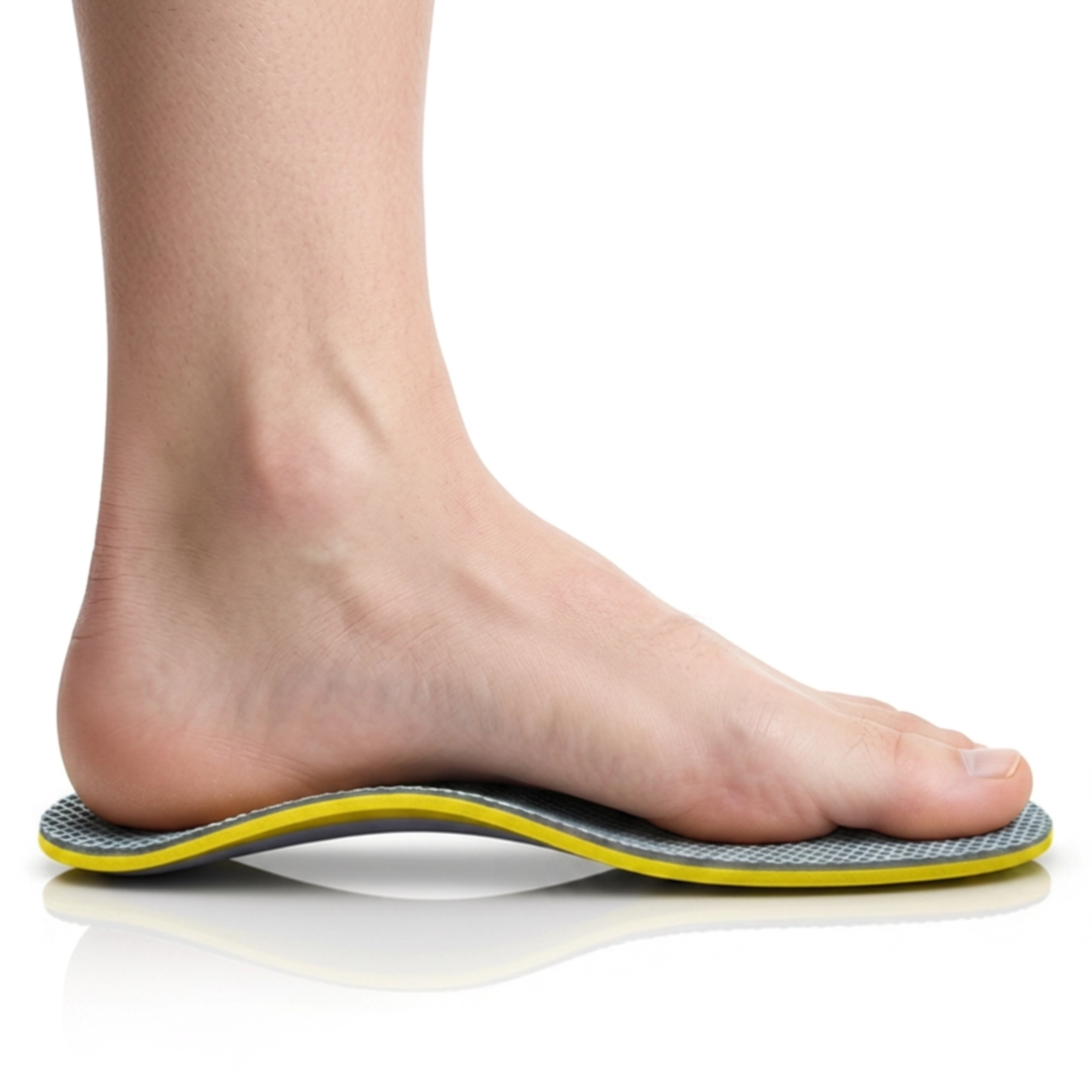
- Orthotic Alignment for Improved Biomechanics: Experience comprehensive orthotic arch and deep heel cup support that encourages proper alignment of your feet and lower limbs. This design helps correct imbalances like overpronation and supination, distributing pressure more evenly with each step. By fostering optimal alignment, you can minimize strain on vulnerable areas and enhance natural foot function throughout your activities.
- Holistic Support for Common Foot Conditions: Rely on these insoles to assist in managing, alleviating, and preventing a variety of foot and lower limb issues. They offer consistent, therapeutic support for conditions such as plantar fasciitis, heel spurs, arthritis, metatarsalgia, Morton’s neuroma, bunions, blisters, sesamoiditis, Achilles tendonitis, ankle sprains, and shin splints, contributing to overall foot health.
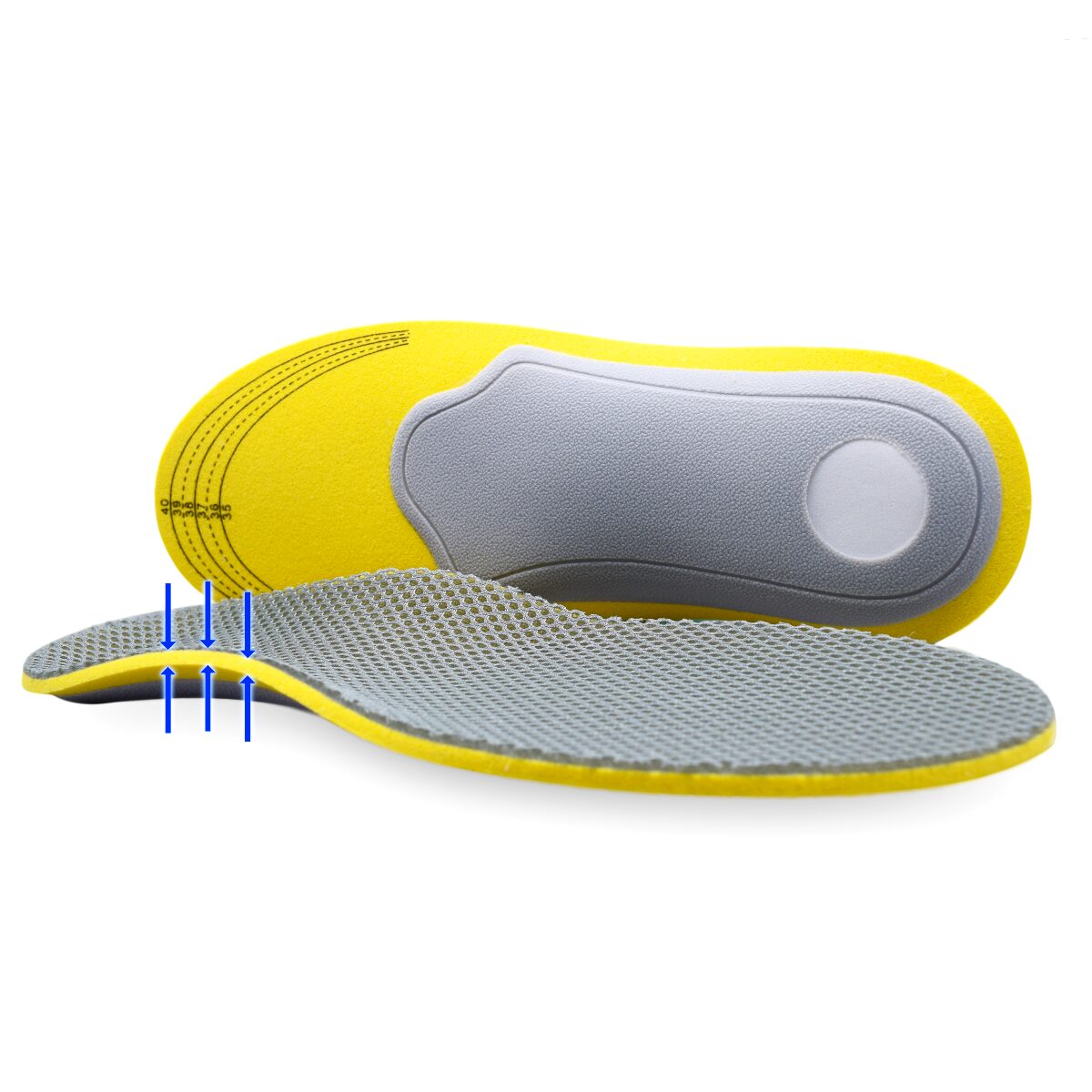
- Advanced Shock Absorption for Lasting Comfort: Protect your feet from the repetitive impacts of daily life with insoles designed to absorb shock and distribute weight uniformly across the sole. This reduces high-pressure points and discomfort, making them an essential choice for those who stand for long periods on hard surfaces or experience tired, aching legs and feet. The result is a stable, cushioned foundation that helps combat fatigue and maintain comfort.
- Antibacterial Material for Enhanced Freshness: Crafted from Active Carbon Fibre, these insoles naturally inhibit bacterial growth, effectively neutralise odours, and promote a drier, fresher feeling throughout the day. This material choice ensures that comfort extends beyond support to include a more pleasant in-shoe environment.
- Reinforced Stability for Active Pursuits: Benefit from added support and stability that makes these insoles ideal for runners and athletes. They provide extra protection during high-impact activities like running or jumping, helping to safeguard your feet and ankles while promoting confident movement.
- Customisable Fit for Versatile Use: Designed to suit both men and women, the insoles are available in sizes 7-11 and 3-7. With a simple trim-to-fit feature, you can easily adapt them to any enclosed footwear—from trainers and boots to casual shoes—ensuring the support elements are perfectly positioned for maximum effect.
- Risk-Free Trial with a Satisfaction Guarantee: Purchase with assurance thanks to a 30-day money-back guarantee. This allows you to experience the transformative comfort and support of these insoles firsthand, providing peace of mind as you invest in your foot health.
Get 15% off - When bought together with:
- This item: Arch Support Insoles for Plantar Fasciitis and Flat Feet(£9.99
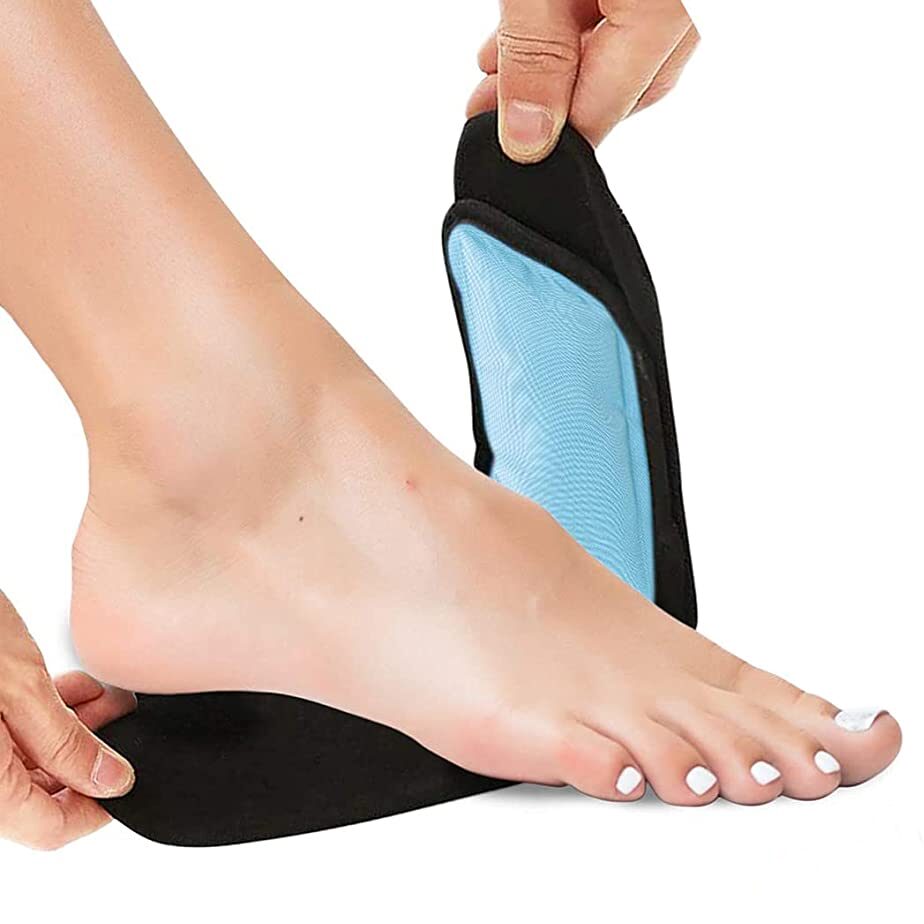
£11.99(-17%)inc VAT) - Foot Ice Pack Plantar Fasciitis Wrap(£8.99inc VAT)
Orthotic Arch Support Insoles For Plantar Fasciitis, Flat Feet, And Everyday Foot Comfort
If heel pain, fallen arches, or tired, aching feet are making walking more uncomfortable than it should be, these orthotic arch support insoles give your everyday shoes the support they may be missing.
Whether you’re dealing with plantar fasciitis, flat feet, low arches, or simply the toll of long days on your feet, they combine contoured arch support, a deep heel cup, and cushioning to ease the strain of standing and walking on hard floors.
Unlike flat foam inserts that only add softness, these insoles do more. The contoured arch supports the middle of your foot, the deep heel cup holds your heel in place, and the cushioning absorbs the impact of concrete, pavement, and tile. Together, they create a more stable and comfortable base — especially welcome if your heel feels sharp first thing in the morning, your arches ache by evening, or your feet simply feel overworked by the end of the day.
They fit most closed-toe shoes — trainers, work shoes, and boots — and can be trimmed to size. Supportive insoles feel different from flat ones at first, so it’s best to break them in gradually over the first few days. When worn correctly and given time to adjust, they help your feet feel better supported, less strained, and more resilient through the activities that usually trigger your symptoms.
And with a 30-day comfort guarantee, you have time to try them in your own shoes, in your daily routine, and see how they feel where it matters most.
Key Benefits at a Glance
Support & Stability
-
- Provide low, tired, flat, or overworked arches with a firmer base for everyday walking and standing
-
- Keep your heel stable and properly positioned inside the shoe with a deep heel cup
-
- Feature a supportive base under the arch and heel that holds its shape better than basic liners
-
- Help if your feet feel fine in the morning but become increasingly sore or tired by evening
Comfort & Cushioning
-
- Help ease sharp heel pain on your first steps in the morning
-
- Help reduce everyday strain along the bottom of your foot
-
- Cushion the impact of concrete, pavement, tile, and other hard surfaces
-
- Spread pressure more evenly across the heel, arch, and forefoot
-
- Use a breathable top cover to help control heat and moisture inside your shoes
Everyday Wear & Fit
-
- Offer more structure than a flat foam insert, without adding unnecessary bulk
-
- Make trainers, work shoes, and boots more comfortable for longer wear
-
- Can be trimmed to fit most everyday closed-toe footwear
-
- Designed for gradual daily use, so your feet can adapt to the supportive shape
-
- Provide a more supportive base for work, commuting, errands, and daily activity
-
- Backed by a 30-day comfort guarantee
Who These Insoles Are Best For
These insoles are for anyone who needs more support than a basic flat insole or thin factory liner provides. They’re especially useful when the issue isn’t just that the shoe feels hard — it’s that your foot itself feels unsupported, unstable, or easily fatigued during everyday use. For many people, the problem isn’t one single sore spot. It’s the way your heel, arch, and sole gradually start to struggle with standing, walking, stairs, and hard floors.
These insoles are a good fit for you if your heel hurts most with the first few steps in the morning, if it becomes sore again after sitting for a while, or if a tender area under or just in front of your heel gets worse the longer you’re on your feet. They also help if your feet feel manageable at first but become increasingly tired, achy, or heavy as the day goes on — especially in shoes that feel too flat or not supportive enough.
People with low arches, flat feet, or arches that seem to drop once they bear weight often do well with this kind of shaped support. Some mainly notice aching through the inner arch or sole. Others are more aware of tired ankles, a sense that their feet roll inward as they fatigue, or shoes that wear down faster along the inner edge. If extra softness has never really solved the problem, that’s often a sign your feet need more structure as well as cushioning.
These insoles are also well suited to anyone who spends long hours in trainers, work shoes, or boots and wants something more supportive than a simple foam liner. If you regularly stand at work, commute on foot, walk on hard indoor floors, or end the day feeling your feet have done more work than they should have, this kind of support can make a noticeable difference. It’s a practical step up from standard insoles without jumping straight to custom-made orthotics. They’re especially worth considering if:
-
- you spend a lot of time standing at work
-
- hard floors make your feet feel noticeably worse
-
- your heel feels sharp first thing in the morning or after rest
-
- your arches feel low, weak, or easily tired
-
- basic insoles add softness but never seem to add enough support
-
- your shoes feel comfortable at first but much less so by the end of the day
-
- you’re ready to replace the basic factory insole with something more supportive
Why Heel And Arch Pain Often Keeps Coming Back
Heel and arch pain often settles just enough to make it seem like things are improving, only to return once your normal routines pick up again. A day with less time on your feet may help for a while. Stretching may ease stiffness for a bit. Softer shoes may feel better at first. But once the usual demands return — long shifts, errands, commuting, stairs, or simply more time on your feet — that familiar ache starts creeping back in. The reason is that short-term relief doesn’t always change how your foot copes with weight and movement. A sore area may calm down for a day or two, but if your heel still lands the same way, your arch still drops into the same collapsed position, or the same part of your sole still takes more force than it can handle, the irritation returns with it. Your foot may have rested briefly, but it hasn’t been given a better way to deal with normal daily demands. That’s why heel and arch pain is so stubborn. It’s not that nothing is helping.
Sometimes things are helping briefly, but the pattern that keeps aggravating your foot hasn’t changed enough for the improvement to last. A sore heel may ease when you’re doing less, then flare again once repeated walking loads the same spot. A tired arch may feel better after a quieter evening, then strain again during the next day’s standing and walking. The real issue is that your foot is doing too much work on its own. For some people, the problem shows up most clearly at the start of the step, especially under the heel where your foot first takes weight. For others, the bigger issue builds once your arch has had to keep supporting your foot for hours. Hard surfaces like concrete, pavement, or tile often make both patterns more obvious because they give your foot very little help in absorbing force. Long hours in unsupportive shoes can have a similar effect, even if the shoes seem comfortable enough at first. This is where structured support inside the shoe makes a real difference.
The aim isn’t just to make your foot feel better for a few minutes. It’s to reduce that daily strain that keeps bringing the pain back. By improving how your heel sits, how your arch is supported, and how pressure moves through your foot, these insoles can make everyday walking and standing feel less tiring on the areas that become irritated most easily.
Understanding Plantar Fasciitis, Flat Feet, And Ongoing Foot Strain
If heel pain and arch strain keep returning, it helps to understand what’s happening inside your foot, rather than treating it as simply a sore heel that never settles. Plantar fasciitis is often described in broad terms, but in practice it usually comes down to repeated overload. The tissues under your foot are handling more pull, more impact, or more continuous stress than they can comfortably cope with. Low arches can make that more likely, but they’re not the only factor.
Some people have flat feet that cause little trouble, while others with only mildly low arches struggle with pain. What matters most isn’t just the shape of your foot, but what it does when you stand on it, how much time you spend on hard surfaces, the kind of footwear you choose, and how much strain those tissues absorb during everyday life. Once that’s clearer, it becomes easier to see why shaped support underfoot can help some people far more than simple cushioning alone.
What The Plantar Fascia Actually Does
The plantar fascia is a strong band of tissue running along the underside of your foot, from your heel towards your toes. One of its main jobs is to help support your arch. It also helps your foot do two important things when you walk: soften slightly as you take weight, then firm up again as you push into the next step.
The plantar fascia is involved in every step you take. It helps your foot cope with body weight, guide movement through the sole, and transfer force as you walk. When it’s working well, you barely notice it. When it becomes irritated, ordinary standing and walking can start to feel quite uncomfortable, because the same tissue keeps being stretched and loaded again and again.
Think of the plantar fascia as a rope under tension. It is designed to handle a lot — it has to, because nearly every step you take stretches and loads it. But it is not designed to be pulled constantly, day after day, without support or recovery. When your arch flattens under body weight, that band gets pulled tight. When you push off, it stretches again. Too much of that pull, over too many steps, is what makes the area irritable.
What Happens When It Becomes Irritated
Plantar fasciitis usually develops because the tissue under your foot is being loaded more heavily, or more often, than it was designed to handle. In many cases, the problem is felt near the point where the plantar fascia attaches to your heel bone. That area becomes more sensitive and less tolerant of the everyday forces that walking sends through it.
It’s not always the result of a single injury. More often, it’s tissue that has dealt with too much repeated strain without enough change in how your foot bears weight. Standing for long periods on hard floors like concrete or tile, walking more than usual, or wearing shoes that give your arch very little support can all keep putting that same load on the sore spot.
In shorter-lasting cases, the problem may settle fairly quickly. In longer-lasting cases, the tissue often stays irritable because that same pattern of loading continues day after day. Hard surfaces, unsupportive footwear, sudden increases in time on your feet, or changes in the way you walk to avoid pain can all keep the cycle going.
Many people assume that a heel spur is the source of their pain, but in most cases the spur itself isn’t the problem. It’s the soft tissue around it that has become irritated – which is why cushioning and support matter far more than the spur.
Why The First Few Steps Can Hurt So Much
Ever noticed how your heel hurts most with that first step out of bed? That sharp, sudden jab under the heel is one of the clearest signs of plantar heel pain – and it’s enough to make anyone cautious about how they step first thing.
This happens because the tissues under your foot and through your calf stiffen slightly overnight. When you stand again, the plantar fascia is stretched as your arch lowers under body weight. If the sore area near your heel is already sensitive, that first movement can feel much sharper than the steps that follow.
As you move around, the tissue usually loosens a little and becomes easier to tolerate. That’s why the pain often eases after a short time. Later in the day, the same area may become sore again once it has dealt with enough repeated loading. For some people, that later discomfort becomes sharp again. For others, it feels more like bruising, aching, or a heel that simply feels worn out.
How Flat Feet Add To The Problem
Low arches don’t always cause pain, but they can make heel and arch problems more likely when your foot drops further under weight than your tissues can comfortably manage. In that situation, the underside of your foot is stretched more often and more heavily than it should be, especially during long periods on your feet.
What matters more than how your foot looks when you stand still is what it does once weight moves over it. If your arch keeps giving way and your heel keeps drifting inward, the structures supporting the inside of your foot don’t get much of a break. That’s when your foot often starts to feel tired, heavy, and overworked, even if there’s no single sharply painful spot.
This is also why one foot may be worse than the other. One side often flattens more, tires faster, or carries load a little differently. Small differences in walking pattern, past injury, leg dominance, or shoe wear can all make one foot more troublesome than the other, even when both look broadly similar.
Why Higher Arches Can Cause Problems Too
Higher arches can lead to trouble for a different reason. Instead of dropping too much, your foot may stay relatively rigid when it meets the ground. That can leave your heel and forefoot dealing with more force than they should, because the middle of your foot isn’t helping enough to spread the load.
So while flatter feet often create trouble because the arch collapses and pulls too hard on the tissue, higher-arched feet can create trouble through too little give and too much concentrated pressure. The discomfort may show up in a similar part of your foot, but the route into it is different.
That’s why support under the foot isn’t only about lifting the arch. In some feet, the bigger benefit comes from improving contact through the sole, sharing force more evenly, and reducing harsh impact under the heel and forefoot.
Where Insoles Fit Into The Bigger Picture
Supportive insoles work well as part of a broader approach. Their role is to give your foot a better base, improve how your heel sits, soften repeated contact with the ground, and reduce how much force keeps concentrating in the sorest parts of your sole — and give the irritated tissue a better chance to recover.
For plantar heel pain, that may mean less repeated tension where the plantar fascia attaches to your heel. For low arches, it may mean your foot doesn’t drop and tire so heavily all day. For long hours on hard floors, it may simply mean your feet feel less worn down by the end of the day.
They usually work best alongside supportive footwear, sensible activity levels, and simple self-care where needed. That might mean being more careful about very flat shoes, spreading walking and standing more evenly through the day, or combining support with gentle stretching if stiffness is part of the problem.
How These Arch Support Insoles Help
Once you understand why heel and arch pain keeps coming back, it becomes easier to see why a thin soft liner is often not enough. If your foot is still dropping too far, your heel is still moving too loosely, or that same sore spot keeps taking too much force, the tissues underneath are still dealing with the same old strain. Your feet aren’t the problem – they’re just not getting the support they need. These insoles change that by giving your foot a firmer, more stable base inside the shoe.
How The Arch Support Takes Pressure Off Overworked Feet
The contoured shape under the arch gives the middle of your foot something firmer to rest against. If you have low or tired arches, that support helps limit how far the arch drops when you take weight. With the arch better supported, the tissues under your foot don’t have to work as hard with each step, which can reduce the strain feeding into your heel and through the arch itself.
For higher arches, the benefit is slightly different. The shaped support brings more of your sole into contact with the shoe, which helps share force more evenly from heel to forefoot. When more of your foot is involved, your heel and the ball of your foot aren’t left dealing with so much concentrated pressure on their own.
Why A Steadier Heel Makes A Difference
Every step begins at the heel, so the way it lands matters. The heel bone and the joints around it help guide the rest of your foot as you move from first contact into the middle of the step. If your heel moves too loosely inside the shoe, rolls too far inward, or lands without much control, the rest of your foot has to work harder to make up for it.
The deep heel cup helps keep your heel more centred and secure inside the shoe. It also keeps the fat pad under your heel bone in place. That pad is your foot’s natural shock absorber; when it spreads sideways or slides forward, the heel bone sits closer to the ground and every step feels harder. By holding the fat pad in position, the cup helps preserve that natural cushioning. If your heel feels bruised or sensitive, a more secure heel can also make each step feel more stable and less jarring.
How They Help Spread Pressure More Evenly
One reason certain parts of your foot become sore is that they’re taking more than their fair share of the force. When your arch isn’t well supported and your heel isn’t sitting securely, pressure can keep building through the same small areas, step after step.
By supporting your arch and helping to centre your heel, the insole encourages force to spread more evenly across your sole. That matters because irritated tissues usually become less tolerant when that one spot keeps absorbing most of the impact or push through the step. A more even spread of pressure won’t fix everything, but it can make standing and walking feel less punishing and help your foot cope better through the day.
How The Cushioning Helps On Hard Surfaces
If you spend long hours on your feet, the problem is often not movement itself but the repetition of it. Hundreds or thousands of steps on concrete, tile, laminate, pavement, or other firm ground can gradually turn a fairly manageable foot problem into a much more noticeable one.
The cushioning layer helps soften that repeated impact. This becomes especially useful several hours into the day, when your foot would otherwise start to feel worn down by firm ground. If you work on hard indoor floors, walk a lot outdoors, or notice symptoms building much faster on unforgiving surfaces, this extra give can make a real difference.
When repeated contact is cushioned, sensitive areas under your heel and forefoot don’t have to deal with that same jarring peak every time your foot lands. That can make longer walks, busy workdays, commuting, and general time on hard ground easier to manage.
Support That Helps From Morning To Evening
One of the most useful things about this type of insole is that it helps with the pattern of strain that builds gradually, not just with one painful moment. Some people mainly need help with the sharpness of first-step heel pain. Others find the bigger issue is that their feet become progressively more tired, stretched, or unstable by late afternoon and evening. These insoles are designed to help with both patterns, giving your foot more support from the moment it first takes weight through to the times of day when poor support becomes most noticeable.
Taken together, the arch support, heel stability, pressure distribution, and cushioning create a more stable and comfortable base inside the shoe. That doesn’t mean every symptom disappears instantly, but it does mean your foot is no longer being left to cope with that same everyday punishment in the same unsupported way. For many people, that’s what makes ordinary standing and walking feel manageable again.
What Makes These Insoles Different
Many insoles fall into one of two camps. They either feel soft at first but flatten quickly, or they feel supportive but too hard and intrusive to wear for long. This design aims for something more balanced. Instead of acting like a thin foam liner that disappears under body weight, or a very rigid insert that feels awkward in everyday shoes, these insoles are shaped to give real support while still being practical for regular wear.
That balance matters because comfort in the first few minutes and comfort after six hours aren’t always the same thing. Plenty of inserts feel pleasant when you first put them on, but offer very little structure once your foot starts loading them properly. Others hold the foot very firmly but feel so aggressive under the arch or around the heel that people stop wearing them. For everyday support to be worthwhile, it has to help, feel comfortable enough to keep wearing, and continue to work well over time.
Support That Feels Structured Without Feeling Harsh
The arch contour is shaped to support your foot without feeling bulky or overly forceful under the midfoot. For low or tired arches, that shape gives the inside of your foot something firmer to work against, helping reduce how far the arch drops once weight moves over it. At the same time, it’s designed to feel supportive rather than harsh, so it’s less likely to create the hard-ridge feeling that puts some people off more rigid inserts.
This matters most if you’ve tried very flat liners and found them too unsupportive, but you’re wary of aggressive orthotic shapes. Everyday support needs to feel present enough to help, but comfortable enough that you’ll keep wearing it through the activities that usually make your feet worse.
A Deep Heel Cup Designed For Comfort
At the back of the insole, your heel sits inside a deeper cup that helps keep your foot more settled inside the shoe. That improves control of the heel and back of the foot, but it also needs to stay comfortable through longer wear. A good heel cup should guide your heel without rubbing at the edges, lifting awkwardly inside the shoe, or making the back of the shoe feel cramped.
That’s why the overall shape matters more than depth alone. If your heel feels better centred and more secure, the rest of your foot often feels more settled too. For people whose feet tend to drift inward as they tire, that can make each step feel less unsteady and less demanding by the end of the day.
Layered Cushioning For Longer Days On Your Feet
On top of the structured base is a cushioning system designed to make hard ground feel less punishing over time. The softer upper layer adds underfoot comfort straight away, while the firmer support beneath helps absorb and share force more effectively during walking and standing.
This is different from flat soft inserts that feel cushioned at first but quickly compress, leaving very little support under your foot. The aim isn’t just to feel soft underfoot. It’s to provide comfort that still does its job after repeated loading through the day, especially when your foot is already sore, tired, or easily aggravated by firm surfaces.
A Breathable Top Cover For Everyday Wear
The top layer is designed with everyday practicality in mind as well as comfort. A breathable cover helps reduce heat and moisture build-up inside the shoe, which matters even more the longer the insoles are worn. That may sound like a small detail, but a hotter, damper shoe is more likely to lead to rubbing, slipping, and general discomfort – especially in work footwear or shoes worn for long hours. If your foot is already sensitive, even a little extra friction can make the day harder than it needs to be.
Built To Hold Their Shape Better Than Basic Inserts
One of the most common complaints about basic insoles is that they feel fine at first, then flatten quickly and stop offering much support. These insoles use a firmer supportive base under the arch and heel, so the structure holds up with regular use. That consistency matters – there’s not much value in something comfortable that stops doing its job.
Trim-To-Fit For A Better Fit In Everyday Shoes
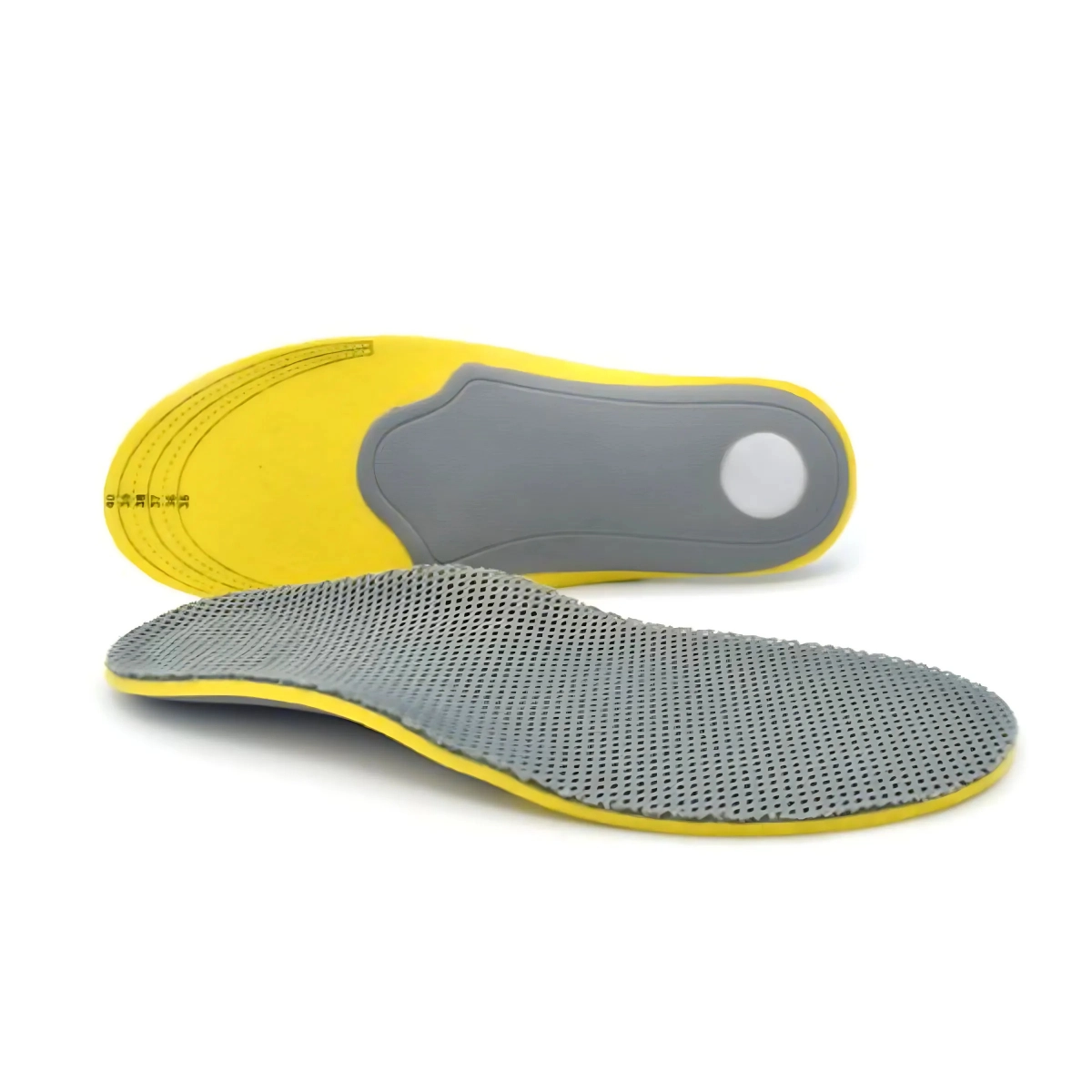
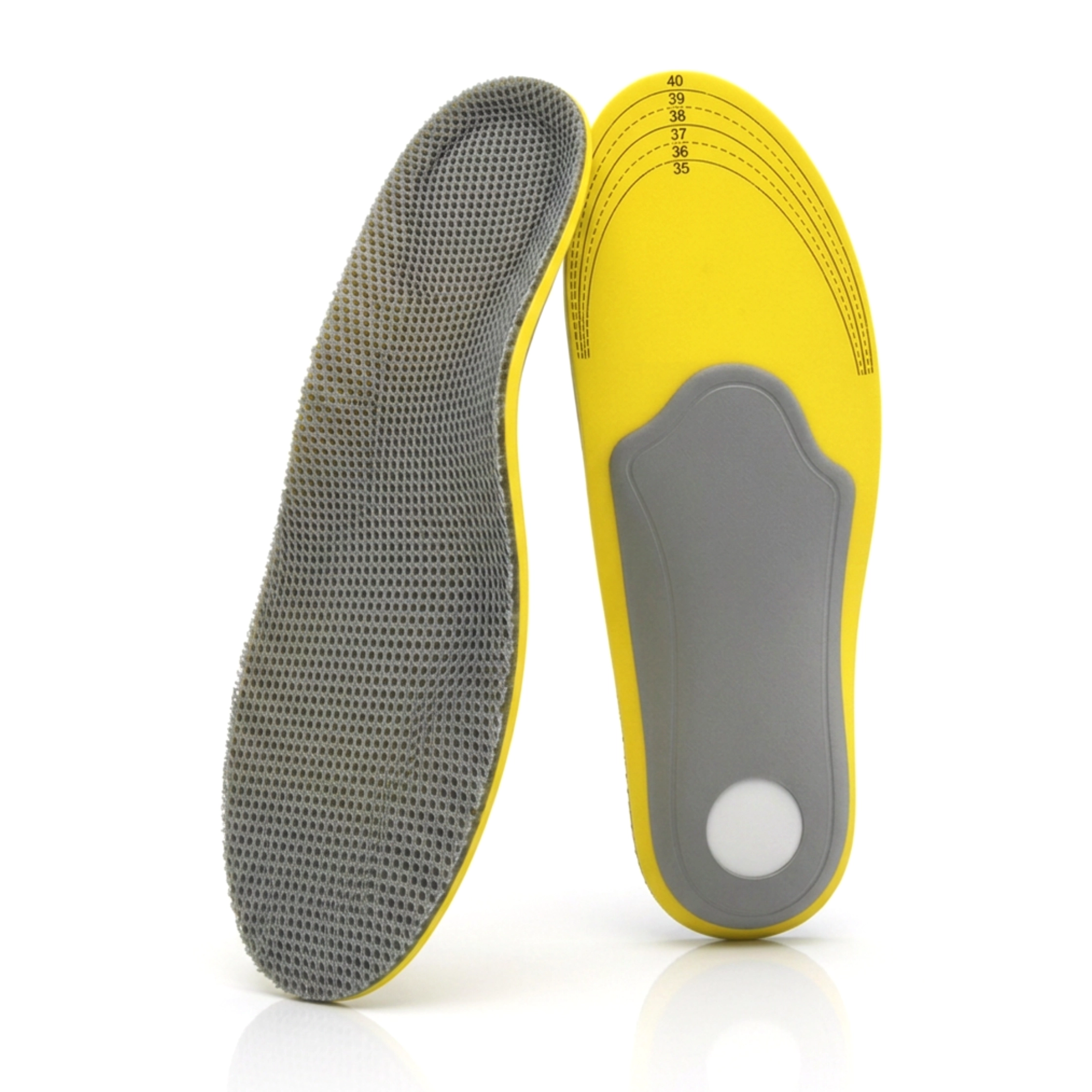
Each insole can be trimmed to shape if needed, using the original insole from the shoe as a guide. That makes it easier to get a neater fit across different types of everyday footwear rather than relying on a one-size-fits-all approach.
A good fit makes a bigger difference than many people expect. If the insole sits too long, bunches at the toe, lifts at the edge, or shifts in the shoe, both comfort and support suffer. A properly trimmed insole tends to sit flatter, feel more natural, and stay where your foot can actually use the support properly.
A Practical Step Before Custom-Made Orthotics
For many people, these insoles sit in a very practical middle ground. They offer far more support than a basic flat insert, butwithout the cost, complexity, or uncomfortable rigidity of custom orthotics.
That makes them a sensible option if you want meaningful arch and heel support in everyday footwear but aren’t yet at the stage of needing, or wanting, a fully custom-made orthotic. For common patterns of plantar heel pain, tired arches, low-arch strain, and general foot fatigue, this level of support is often enough to make a worthwhile day-to-day difference.
How To Tell Which Foot Pattern Sounds Like Yours
Several foot problems can feel similar at first, especially when pain builds gradually rather than hitting you all at once. You might be unsure whether the main trouble is your heel, your arch, the ball of your foot, or somewhere nearby that’s feeling it because of how your foot is landing. The sections below aren’t a diagnosis, but they can help you work out which description sounds closest to your own symptoms.
If symptoms are severe, persistent, or difficult to explain, it’s sensible to see a GP, physiotherapist, podiatrist, or another suitable clinician. For more common day-to-day patterns of discomfort, these comparisons can still help you decide whether this kind of insole support is likely to be relevant.
Plantar Fasciitis Versus General Heel Pain
Plantar heel pain is usually worst with the first few steps after rest, especially in the morning or after sitting. The pain is often sharp and focused under or just in front of the heel. It may ease after a short time, then build again later in the day.
More general heel pain often feels like a steady bruise or soreness, without that sharp spike when you first stand. It may feel more spread across the underside of your heel rather than focused in one specific area.
Flat Feet Versus General Foot Fatigue
Flat feet often show up as arches that look low when you stand and flatten further once you put weight on them. The discomfort is usually more of a dragging ache through the arch and inner foot than a sharp pain. Your feet often feel more strained by evening, especially in less supportive shoes.
General foot fatigue can feel similar, but without the same clear sense of arch collapse or inward roll. Your whole foot simply feels overworked, heavy, or tired by the end of the day.
Metatarsalgia Versus Morton’s-Type Forefoot Pain
Metatarsalgia usually feels like bruising, aching, or pressure under the ball of your foot. It often builds with standing and walking and may feel worse during the part of the step where your foot pushes you forward.
Morton’s-type forefoot pain often feels sharper, more burning, or as though something is trapped under or between your toes. It’s usually more localised and more easily aggravated by tighter shoes.
Achilles Pain Versus Heel Pain
Achilles pain is usually felt at the back of your heel or into your lower calf rather than under the heel. It may feel stiff first thing in the morning, tender along the tendon, or sore after a lot of walking or standing.
Heel pain linked to the plantar fascia is usually felt under the heel rather than behind it, and it tends to spike most sharply with the first steps after rest rather than building gradually through the tendon during activity.
Foot-Linked Knee Pain Versus Knee Problems Alone
Knee discomfort linked to foot mechanics often feels worse when your feet are tired, or when you’re on stairs, slopes, or uneven ground. It may also improve when you switch to more supportive shoes. It’s often more of a background irritation than a sharp pain within the joint itself.
Knee pain from other causes may feel more constant, more focused within the joint, or clearly linked to specific knee movements rather than to how long you’ve been on your feet. If knee pain is severe, locking, giving way, or accompanied by swelling, it’s worth seeing a physiotherapist or GP.
In the sections that follow, you can match these patterns more closely to what your own feet are doing, and see how this kind of support may help in each case.
Common Foot Problems, Explained
Each of the following sections looks at a specific pattern of foot discomfort. You may recognise yourself in more than one – that’s common, because flat feet, overpronation, and heel pain often overlap. The aim here is to help you see what’s likely happening under your foot and why support can make a difference.
As explained earlier, the plantar fascia is the strong band of tissue under your foot that helps support your arch. When that band is repeatedly stretched or loaded, it becomes irritable – especially near the heel. In the sections that follow, we refer back to that idea rather than repeating the full explanation every time.
Choosing The Right Shoes And Getting Used To The Support
These insoles are made for everyday closed-toe shoes such as trainers, work shoes, and boots. In most cases, they work best in footwear that already has a removable factory insole, a sufficiently stable sole, and enough internal depth to take a structured insert without making the fit feel cramped. Even a well-designed insole will only feel right if the shoe gives it enough space and support to sit properly.
How To Fit Them Properly
If the shoe already contains a removable insole, take that out before fitting the new one. This creates the space needed for the support to sit at the right depth inside the shoe. Leaving the original insole in place can make the shoe feel too tight and can stop the structured support from sitting properly under your foot.
If trimming is needed, use the original insole as a guide and cut small amounts at a time. It’s much easier to remove a little more than to fix an insole that’s been cut too short. Once trimmed, place the insole into the shoe and check that it lies flat, reaches the back of the heel properly, and doesn’t bunch at the toe or lift at the edges.
If the shoe feels tight over the top of your foot, first check that the original liner has been removed. In many cases, that’s the simple reason a supportive insole feels too bulky in a shoe that should otherwise accommodate it.
A Simple Fit Checklist
Use this checklist after inserting them:
- the insole should lie flat inside the shoe
- the heel of your foot should sit snugly in the cup, with the back of your heel against the back of the cup
- the insole should reach roughly to the end of your toes, but not beyond
- the shoe should not feel noticeably tighter over the top of the foot
- the arch should feel supportive, not intrusive
- the insole should stay in place rather than sliding forward
If you need to trim, use the original insole as a guide and trace around it. Cut just inside the toe area. Never trim the arch or heel. Test the fit after trimming.
Which Shoes They Work Best In
Some shoes naturally work better with this kind of support than others. Trainers, walking shoes, many work shoes, and many casual boots are often the easiest place to start. Shoes that are very shallow, narrow through the toe box, or already tight over the instep can be less suitable even if they’re technically the right size. If a shoe already feels close-fitting with its original liner, adding structured support may make it too cramped for comfortable wear.
Open footwear is usually less suitable as well. Structured insoles work best when the shoe helps hold your foot securely over them. If your foot slides, lifts, or shifts too much, the support underneath can’t stay properly aligned with your heel and arch. That doesn’t mean every open style is impossible, but most people get more reliable support from insoles in closed-toe shoes that hold the heel and midfoot properly.
What They Should Feel Like At First
Structured support usually feels firmer and more noticeable than a flat liner, especially if your usual insoles are soft, thin, or worn out. That difference is normal. A supportive insole should feel noticeable under the arch and more shaped around the heel than a standard liner, but it shouldn’t feel sharp, jarring, or as though one area of your foot is being pushed up too aggressively.
Build Up Wear Gradually
Most people do best by building up wear gradually rather than using them all day straight away. A sensible starting point is to wear them for shorter periods at first, then increase use over several days.
- Start by wearing them for 1–2 hours a day for the first two days.
- Increase by an hour every other day, so by the end of the first week you’re wearing them for most of the day.
- Use them consistently from that point onward, remembering to switch them between your most-worn shoes if you change footwear during the day.
Some people get a little calf stiffness, mild arch fatigue, or a different type of pressure in the first few days. That’s usually your foot muscles adjusting to a new way of working. It should fade quickly. If you experience sharp pain, persistent rubbing, or a hotspot that feels different from ordinary adjustment, stop and check the fit. It’s also worth wondering whether the shoe itself is suitable.
Normal Adjustment Or A Poor Fit?
There’s a difference between normal adaptation and poor fit. Adaptation usually feels like increased awareness of the support at first, followed by your foot settling into it over time. Poor fit is more likely to feel like rubbing, cramping, heel lift, toe crowding, or one area feeling a sharp pressure rather than comfortable support.
If the fit feels wrong, the issue is often the shoe rather than the support itself. Even a good insole will struggle in footwear that is too shallow, too narrow, too soft through the heel, or too worn out to hold your foot properly.
Getting The Shoe And Insole To Work Together
The shoe matters as much as the insole. A supportive insert inside a poor shoe can only do so much. When the shoe and the support work well together, your foot usually feels more settled, more secure, and less easily irritated through the day. A supportive shoe doesn’t have to look bulky or specialist. What matters more is that it holds your foot reasonably well, has enough depth for the insole to sit properly, and isn’t already worn down in a way that changes how your foot lands.
Very flat shoes can leave the underside of your foot doing most of the work on its own. If your arch already struggles with load, or if your heel is sensitive after rest, flat shoes often make that more obvious rather than less so. The issue isn’t just heel height. It’s the lack of structure under the foot and the lack of help in controlling how your foot takes weight.
Even a shoe that was once supportive can become unhelpful once it’s badly worn. A worn-out midsole, a collapsed heel area, or uneven wear at the sole can change how your foot lands and rolls. That means those same painful areas may keep getting irritated even if the shoe still feels familiar. Many people overlook this because older shoes can still feel comfortable in a familiar way. But if the internal support has broken down or the sole is wearing unevenly, they may be part of the reason your symptoms keep returning.
A structured insole also needs enough room inside the shoe to sit properly. If the shoe is too shallow, your foot can feel cramped, the support may sit too high against your foot, and the insole may become uncomfortable even if the design itself is sound. This is one reason some people assume a supportive insole isn’t for them, when the real issue is that the shoe was never a good match for that kind of support. Enough internal space is essential if the insole is going to sit and work properly.
Finally, supportive insoles work best when the shoe around them also offers some stability. A firm heel area, a sufficiently stable sole, and enough room inside the shoe all help the insole do its job. The shoe and the insole support each other, and one without the other is often less effective. That doesn’t mean you need specialist footwear. It simply means the insole tends to work best in shoes that aren’t working against it.
Looking After Them And Swapping Between Shoes
If you have multiple pairs of shoes, you can swap the insoles between them. Just remember that each time you swap, you’ll need to recheck the fit. A shoe that felt fine with the factory liner might feel different with a structured insole, especially if the shoe itself is tight.
Tying your shoes correctly can improve how the insole feels. A firm lace-up over the midfoot helps hold your foot in place over the arch support, rather than letting your foot slide forward. You don’t need to tie them overly tight – just enough to feel secure.
For hygiene and longevity:
- Allow insoles to air out between wears. Take them out of your shoes overnight if you can.
- Do not machine wash or dry them. That can damage the supportive structure. Instead, wipe them with a damp cloth and mild soap if needed, then air dry.
- Keep them away from direct heat, radiators, or prolonged sunlight, which can warp the structure.
- Check periodically that the supportive structure hasn’t lost its shape. If the arch feels soft or the heel cup has flattened, it’s time to replace them – typically every 6–12 months depending on use.
30-Day Comfort Guarantee
We want you to feel confident trying these insoles, which is why they come with a 30-day comfort guarantee. This gives you time to use them in your normal routine, build up gradually, and decide whether they make a genuine difference to your daily comfort.
The guarantee isn’t there to push you into deciding straight away. We know your feet need time to adapt to a more supportive shape. In the first few days, they might feel different – that’s expected. If after a fair trial you’re not satisfied, you can return them for a full refund.
That makes it easier to try structured support properly rather than guessing based on a first impression alone. Keep the packaging and follow the return instructions on the product page. Once we receive the returned item, we’ll process your refund.
When It Makes Sense To Get Further Advice
Supportive insoles can make a useful difference to common patterns of heel pain, arch strain, and foot fatigue, but they’re not a substitute for proper assessment when symptoms are severe, persistent, unusual, or difficult to explain. Many common cases of plantar heel pain and arch-related discomfort improve when daily strain is reduced, but some foot symptoms need a clearer explanation rather than more trial and error.
It’s sensible to see a GP, physiotherapist, podiatrist, or another appropriate clinician if:
- heel or foot pain is severe and not improving after several weeks of sensible footwear and support
- symptoms are getting worse rather than better
- there’s marked swelling, redness, heat, or visible skin change
- pain is present even at rest or regularly wakes you at night
- you have numbness, tingling, or weakness in your foot or leg
- symptoms started after a clear injury or sudden change
- you have diabetes or circulation problems and any new foot symptoms appear
- you’re unsure what’s causing the discomfort or whether insoles are appropriate for your situation
That doesn’t mean every sore heel needs specialist help straight away. Many common problems do settle with better support, suitable shoes, and a sensible reduction in repeated aggravation. But persistent, worsening, or confusing symptoms are much easier to deal with when you know what you’re dealing with and have a clear plan.
When This Kind Of Support Is The Right Next Step
If your main problem is first-step heel pain, tired arches, sore soles, or feet that feel increasingly overworked by the end of the day, a more supportive base inside your shoes is often the next sensible step. These insoles are designed to support the arch, steady the heel, share pressure more evenly, and soften repeated impact from the surfaces and routines that usually keep symptoms going.
They aren’t there to promise instant fixes or replace individual assessment when symptoms are severe, unusual, or hard to explain. Their role is simpler and more practical: to make ordinary standing and walking easier for feet that are dealing with more strain than they can comfortably cope with, and to offer more meaningful support than a standard flat insole usually can.
For many people, that means less sharpness under the heel first thing in the morning, less arch fatigue through the day, better tolerance of hard floors, and a general sense that your feet aren’t having to work quite so hard just to get through normal routines. Even when symptoms don’t disappear completely, that kind of improvement can make work, commuting, errands, and daily life feel much more manageable.
If that sounds close to your situation, the next step is simply to check the fit carefully, use them in the shoes that matter most, and give your feet enough time to adjust to a more supportive shape. With the right footwear and consistent use, this kind of structured support is often enough to make a worthwhile everyday difference.
Frequently Asked Questions
How long do these insoles last?
That depends on how often you wear them and the load they deal with each day. With regular use, most people get several months before the support starts to compress or the materials show obvious wear. If the heel or forefoot area looks flattened, or the support doesn’t feel as effective as it once did, it’s usually time for a new pair.
Can I wash these insoles?
Yes, but clean them gently. Wipe them with a damp cloth and let them air dry naturally. Avoid machine washing or tumble drying – heat and agitation can damage the support structure and shorten their life.
Can I use these in work boots?
Yes, in many cases. They work well in work boots that have a removable insole and enough internal depth to take a structured insert comfortably. If you spend long hours standing or walking at work – especially on concrete or tile – this is often one of the most useful places to wear them.
Will they fit in trainers?
Most trainers with a removable insole are suitable. Take the original insole out first, then trim the new one if needed so it sits neatly inside the shoe. If your trainers are already snug, the fit may become too tight, so it’s worth checking there’s enough space before longer wear.
Can I use them in boots as well as trainers?
Yes, as long as the boots have enough internal space and ideally a removable original insole. Many people switch them between trainers and everyday boots, especially when they want the same support across different pairs of shoes.
Can I move them between different shoes?
Yes, you can. Just make sure they sit flat in each pair, the heel is fully back, and the shoe still feels comfortable once they’re in place. If you swap shoes often, many people find it easier to keep a pair in the shoes they wear most.
Do I need to remove the original insole first?
Yes, in most cases. Leaving it in place usually makes the shoe too tight and can stop the support from sitting properly under your foot. Removing the factory liner first gives the structured insole the room it needs to work effectively.
Can I trim them myself?
Yes. If trimming is needed, use the original insole from your shoe as a guide and cut small amounts at a time. It’s always better to trim gradually than take too much off at once.
Will they make my shoes feel tighter?
They can if the shoe is already close-fitting or the original insole hasn’t been removed. In a shoe with enough depth, they should fit comfortably once the factory insole is taken out. If your shoes feel cramped afterwards, that usually means they’re too shallow or too snug for a structured insert.
Do I need to go up a shoe size to use them?
Not usually. Most people can use them in their normal shoe size as long as the original insole is removed and the shoe has enough internal room. If a shoe is already tight across the top or shallow inside, it may not be the best match for this kind of support.
Are they suitable for both flat feet and higher arches?
Yes, they can help both, though the reason isn’t always the same. For flatter feet, the main benefit is usually better arch support and improved heel control, which reduces how much the foot drops and strains during standing and walking. For higher arches, the benefit is often better contact through the sole, more even pressure distribution, and softer impact under the heel and forefoot.
Are they too firm if I am used to soft gel insoles?
They will usually feel firmer and more structured than soft gel or flat foam inserts, especially at first. That’s normal – these are designed to give support as well as cushioning, so they feel different from an insert that only adds softness. They should feel supportive and noticeable, not harsh or sharply uncomfortable.
What if the arch feels strange at first?
That’s common when switching from a flat or worn-out insole to a structured one. The arch support will usually feel more noticeable at first because your foot is adapting to a different shape underneath it. That should feel unfamiliar rather than painful. If it feels sharply uncomfortable, causes rubbing, or still feels wrong after a gradual break-in period, check the fit and the shoe choice.
Can I wear these every day?
Yes, they’re made for everyday use. Most people do best by building up wear gradually over the first several days, then using them regularly in the shoes they rely on most. Once your feet adjust, daily use is often the best way to get consistent benefit.
Can I use these if I stand all day at work?
Yes. Long hours on your feet are one of the main reasons people choose this type of insole. If you stand or walk a lot during the day – especially on hard surfaces – the added support and cushioning can help reduce the build-up of fatigue and soreness.
Do these work for running?
These insoles are mainly designed for walking, standing, work use, and general everyday wear rather than running. Running places different demands on the foot, so most people who run regularly do better with insoles designed specifically for that purpose.
Will they help if my feet ache more by evening than in the morning?
Yes, they may. Some people notice sharp heel pain with the first few steps after rest, while others feel the bigger problem later in the day when the arches, soles, or ankles become tired and overworked. These insoles are designed to help with both patterns by improving support during the hours when strain usually builds.
Will these cure plantar fasciitis?
No insole can promise to cure plantar fasciitis. What these insoles can do is help reduce the repeated strain that often keeps it irritated. Their role is to support the arch, steady the heel, soften repeated impact, and spread pressure more evenly through the sole – which can ease the load on that inflamed tissue.
How soon will I feel a difference?
That varies. Some people notice a difference within the first few days, especially on hard floors or with first-step heel pain. For others, the benefit becomes clearer over a couple of weeks as the feet adjust and the support is used consistently. The change is often gradual rather than dramatic.
What kind of improvement should I expect?
For many people, the first sign isn’t that the pain disappears completely, but that your feet feel more comfortable. The heel may feel less sharp on first standing, the arches may tire more slowly, and longer periods on your feet may feel more manageable. Over time, your feet often feel less easily irritated by the routines that used to set symptoms off.
What if they do not help?
If they still don’t feel right after a proper trial in suitable shoes, you can return them under the 30-day comfort guarantee. Before deciding, check that they’re trimmed correctly, the original insole has been removed, and the shoes you’re using have enough room and support to work well with a structured insert.
Can I use these if I already have custom orthotics?
If you already wear custom orthotics prescribed by a clinician, it’s usually best to continue with those unless advised otherwise. Custom devices are tailored to your own foot mechanics and needs, so they should normally remain your first option.
One foot is worse than the other. Do I still need both insoles?
Yes. Even if one foot is clearly more painful, using support in only one shoe creates an uneven base and may lead to discomfort elsewhere. In most cases, both feet should be supported evenly.
Do they help with general foot fatigue as well as heel pain?
Yes. They’re not only for sharp heel pain. They can also help if your feet feel tired, achy, heavy, or overworked by the end of the day – especially if your arches tend to flatten or your shoes feel unsupportive during longer wear.
Do they replace stretching or other self-care?
No. They’re best seen as one useful part of a practical plan. If calf tightness, poor footwear, sudden increases in activity, or time barefoot on hard floors are also part of the problem, those things may still matter. The insole’s role is to improve support and reduce daily strain through the foot.
How do I know when they need replacing?
It’s usually time for a new pair when the top cover looks heavily worn, the heel or forefoot feels obviously flattened, or the support no longer feels as helpful as it did when new. If you rely on them daily, checking them regularly for wear is a good habit.
Do they smell after wearing?
Like any insole, they can develop odour over time with regular use. The breathable top cover helps reduce heat and moisture build-up, but letting them air between wears and using them in clean footwear helps keep them fresher for longer.
Are they suitable for people with diabetes?
They may help spread pressure more evenly, but if you have diabetes – especially with reduced sensation or circulation problems – it’s important to be cautious with any change in footwear or insoles. If you’re unsure, it’s best to seek advice before using them and to check your feet and shoes regularly.
When should I seek further advice instead of just trying insoles?
It’s sensible to seek advice if your pain is severe, getting worse, present even at rest, or accompanied by swelling, redness, numbness, weakness, or other unusual symptoms. Insoles can be very helpful for common patterns of heel pain and arch strain, but they’re not a substitute for proper assessment when symptoms don’t fit the usual picture.
General Guidance Only
This information is general guidance only – it’s not a substitute for individual medical advice, diagnosis, or treatment. If you’re unsure whether these insoles are suitable for you, or if you have more complex, persistent, or new unexplained symptoms, speak to a GP, physiotherapist, podiatrist, or another appropriate clinician. No product can guarantee the same outcome for every foot.
103 Reviews For This Product
Fast & Secure Checkout Through Paypal
Pay with Paypal the secure payment gateway that accepts all credit and debit cards. Paypal is free and secure and no credit or bank information is ever stored or shared with us.
Fast Dispatch
Enjoy your items soon with quick dispatch via Royal Mail. Expect to have your items between 1-3 working days for domestic orders. 7-10 Working days for international orders.
Return Policy – 30 Day Money Back Guarantee
In the unlikely event, you are unhappy with your purchase you can return it within 30 days for a refund. Please contact us via the form on the contact us page to start your return.
To return an item please send it to: Nuova Health UK, 81 Highfield Lane, Waverley, Rotherham, S60 8AL. Please include a note with your order id so we know who to refund. Please retain your postage receipt as proof of postage. All that we ask is that the item is in the original packaging and unused.
by Sally Simmons
These insoles have been great for my flat feet. I was skeptical at first, but they’re surprisingly comfortable and lightweight. They don’t make my shoes feel heavy like others I’ve tried. I trimmed them with my sharp scissors and voila, a perfect fit! My feet feel so much better. Definitely a 5-star product!
by Rajesh Patel
Unbelievable comfort! I’ve tried EVERYTHING for my plantar fasciitis. Nothing worked. Until now. These insoles are magic. The support under my arches is just perfect. I can walk for hours without a hint of pain. It’s like a miracle. If you’ve got foot pain, don’t wait. Get these insoles!
by Clara Bennett
Absolutely in love with these insoles! My job requires me to stand for hours, and plantar fasciitis was making my life miserable. These insoles? Total relief. 😍 The arch support is just what I needed!!!