

Raynauds Gloves for Cold Hands With Grips
£13.99inc VAT
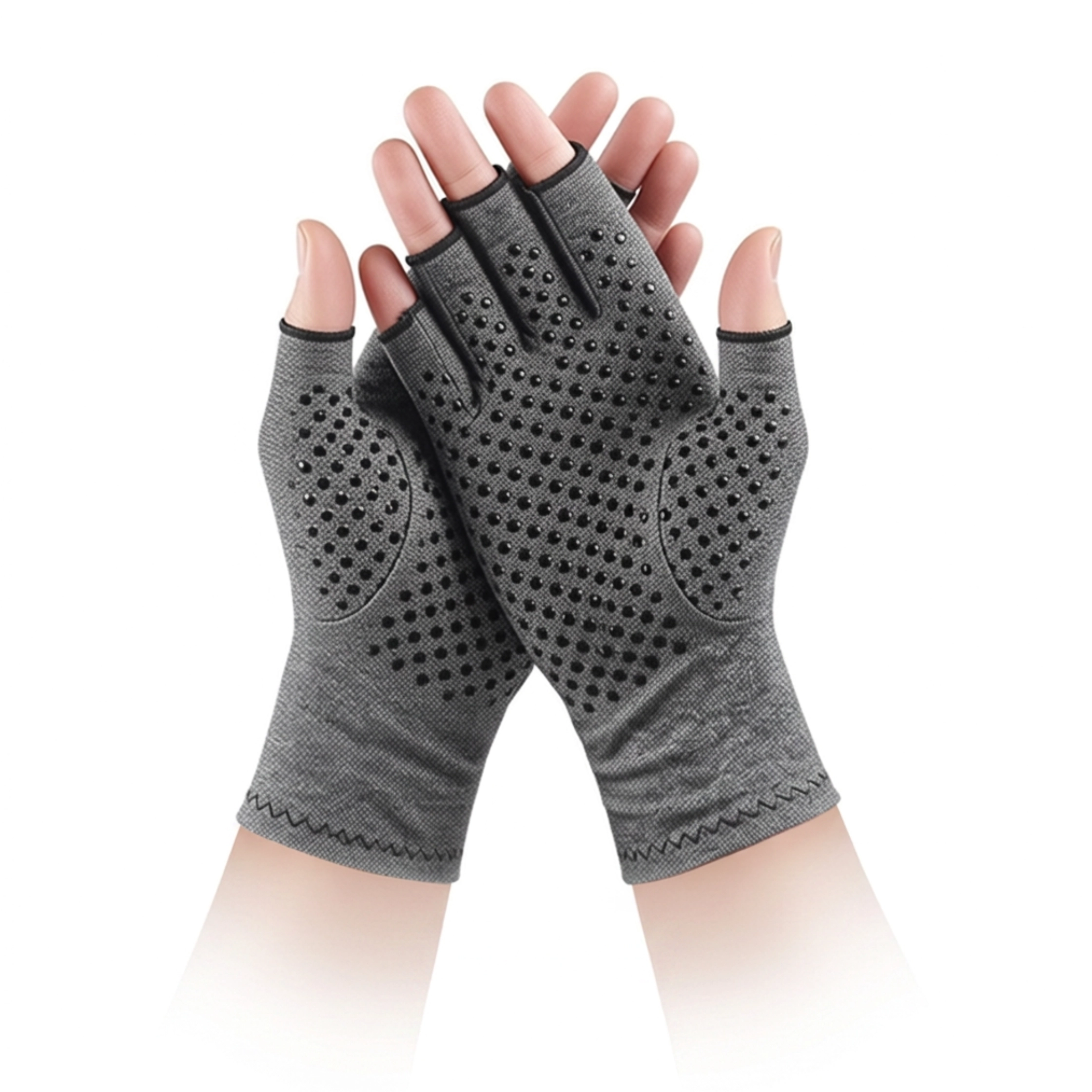
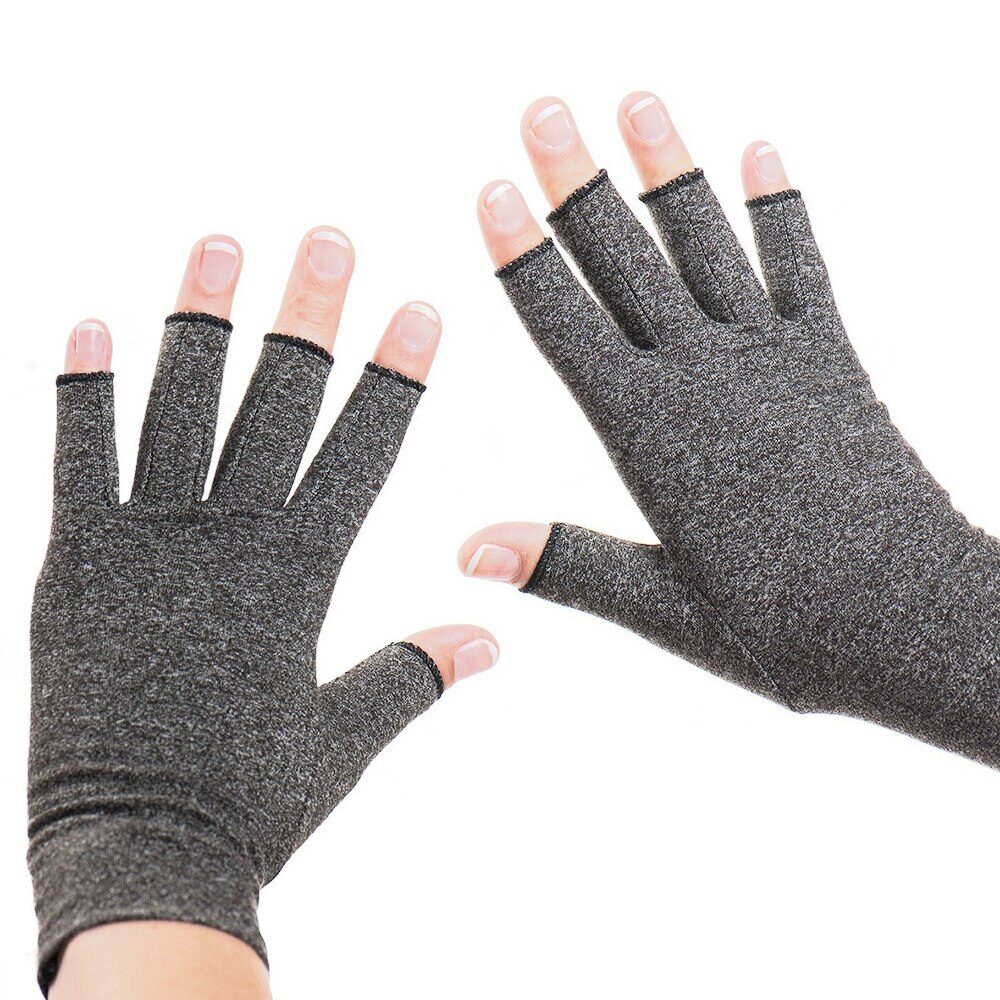
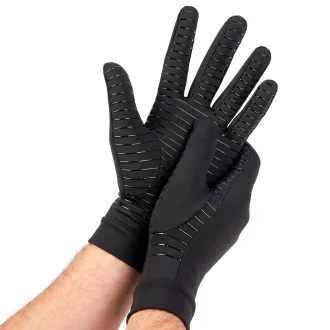
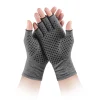
- Fingerless compression gloves designed to support circulation and reduce cold-triggered episodes in Raynaud’s disease
- Apply gentle, even pressure across hands and fingers to help keep small blood vessels open during cold exposure
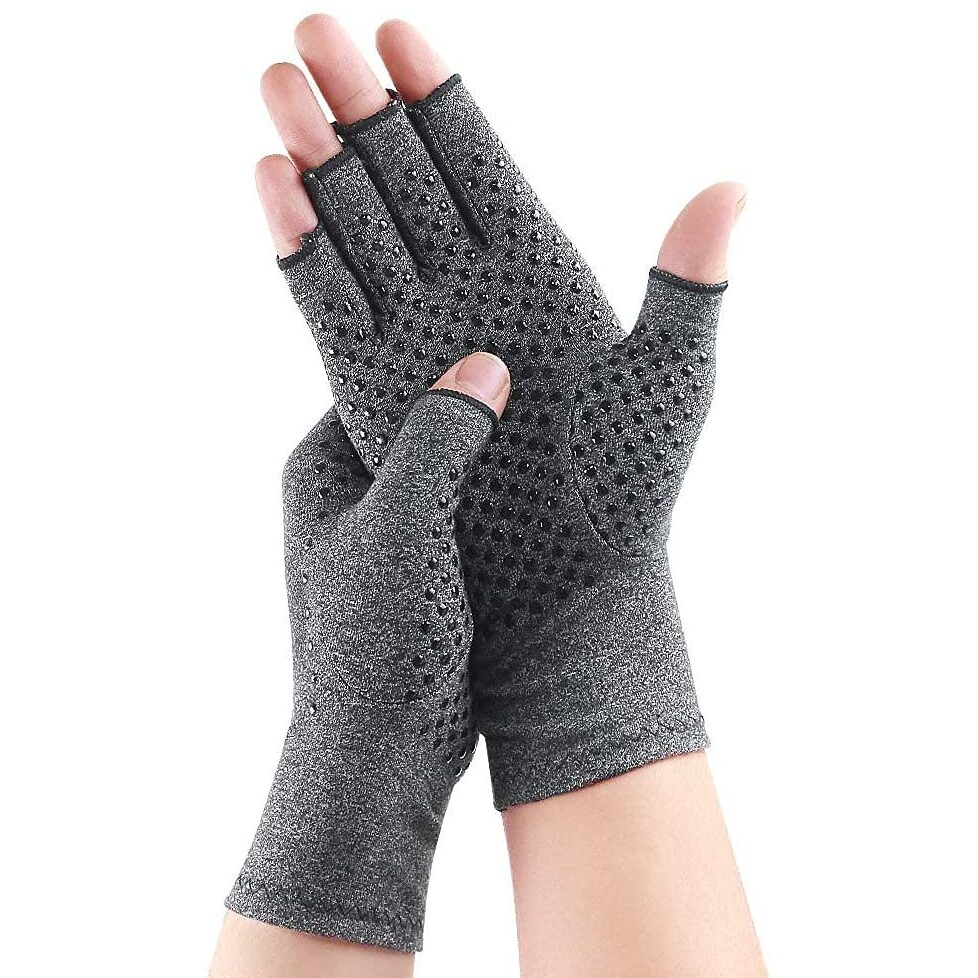
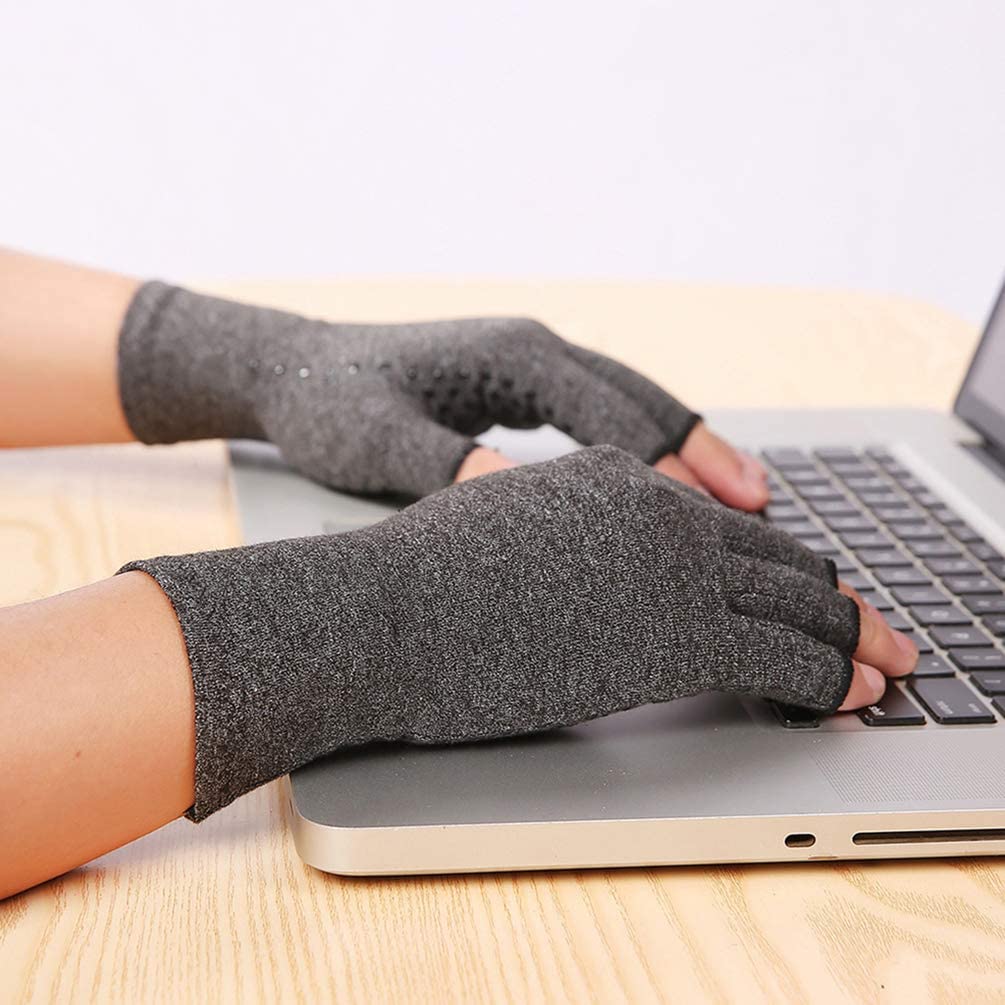
- Fingerless design allows full use of fingertips for typing, writing, phone use, and handling small objects without removing gloves
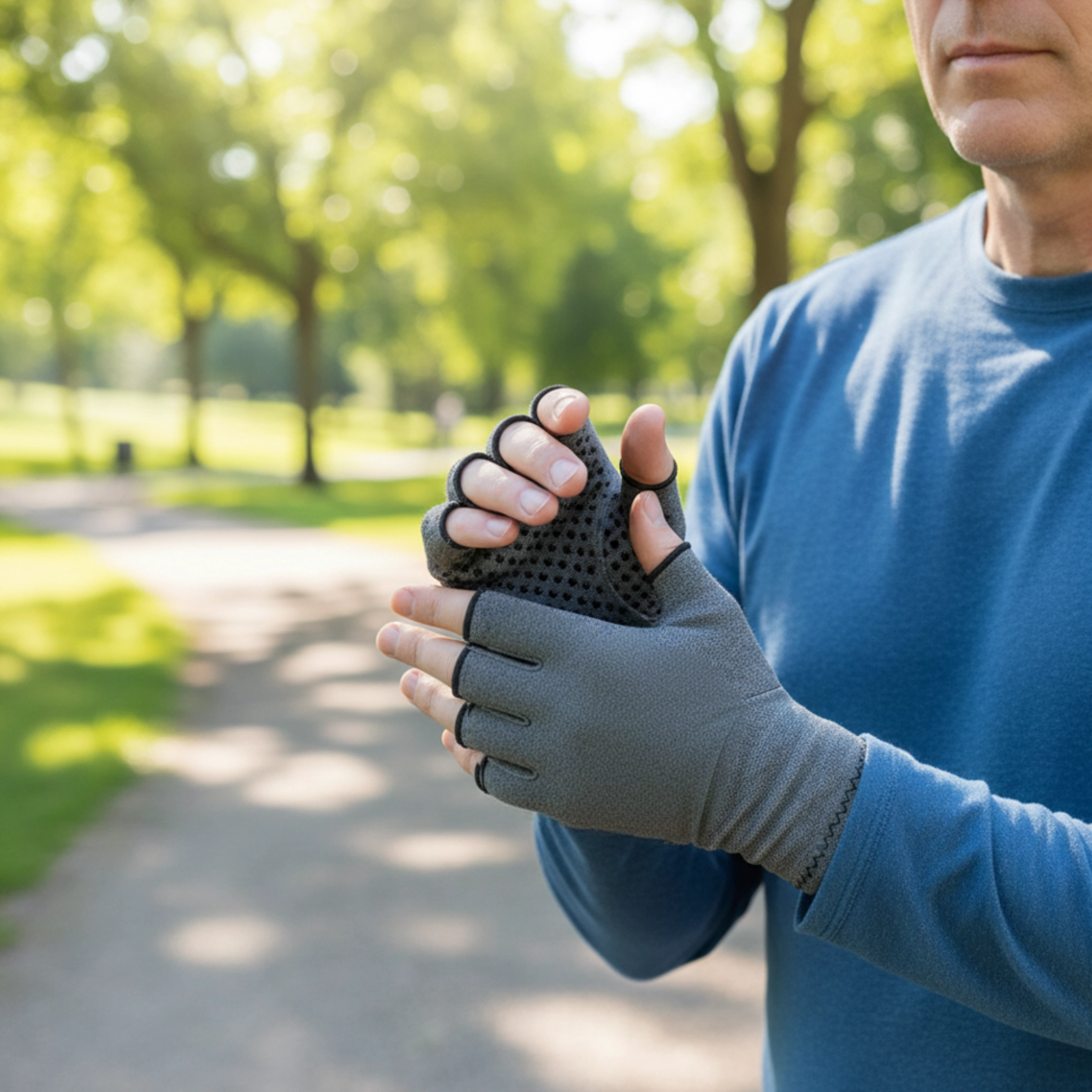
- Silicone grips on palms provide secure handling during tasks when hands are cold or sensation is reduced
- Thermal regulation prevents overheating while moisture-wicking fabric keeps hands dry to avoid dampness-triggered cold
- Thin, non-bulky design allows layering under winter gloves or mittens for outdoor use in very cold weather
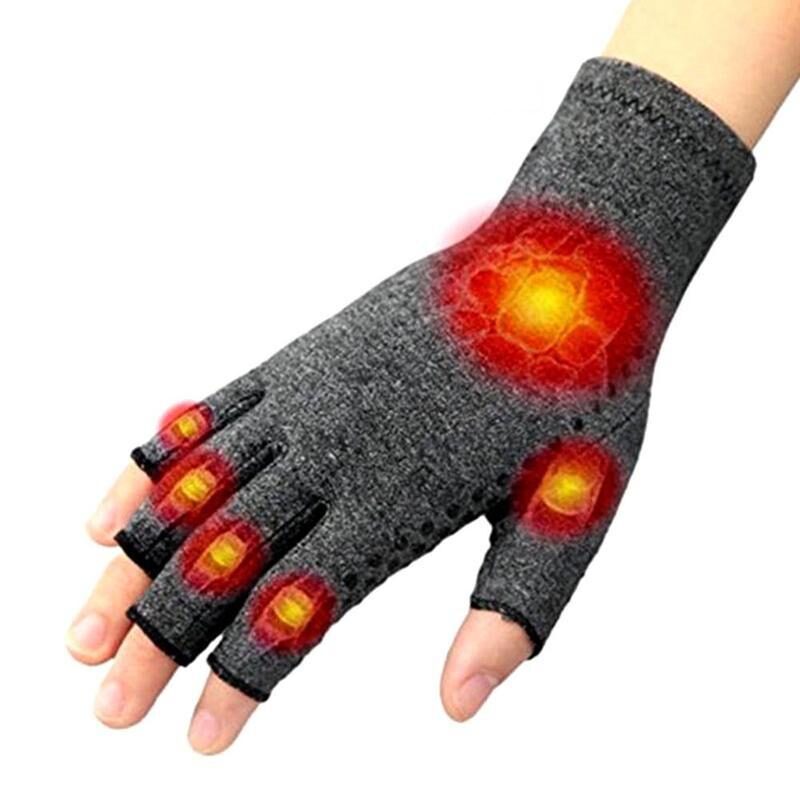
- Most people notice hands feel warmer within 15 to 30 minutes as compression supports blood flow to fingertips
- With consistent use over weeks, many find episodes become less frequent or less severe, though results vary
- Also helpful for arthritis (reduces swelling, eases stiffness), carpal tunnel (reduces fluid build-up), chilblains prevention, and poor circulation generally
- Start by wearing for an hour or two to check fit—compression should feel snug and supportive, not tight or restrictive
- Check with your GP before using if you have very poor circulation, peripheral vascular disease, severe skin conditions, open wounds, or diabetes with reduced hand sensation
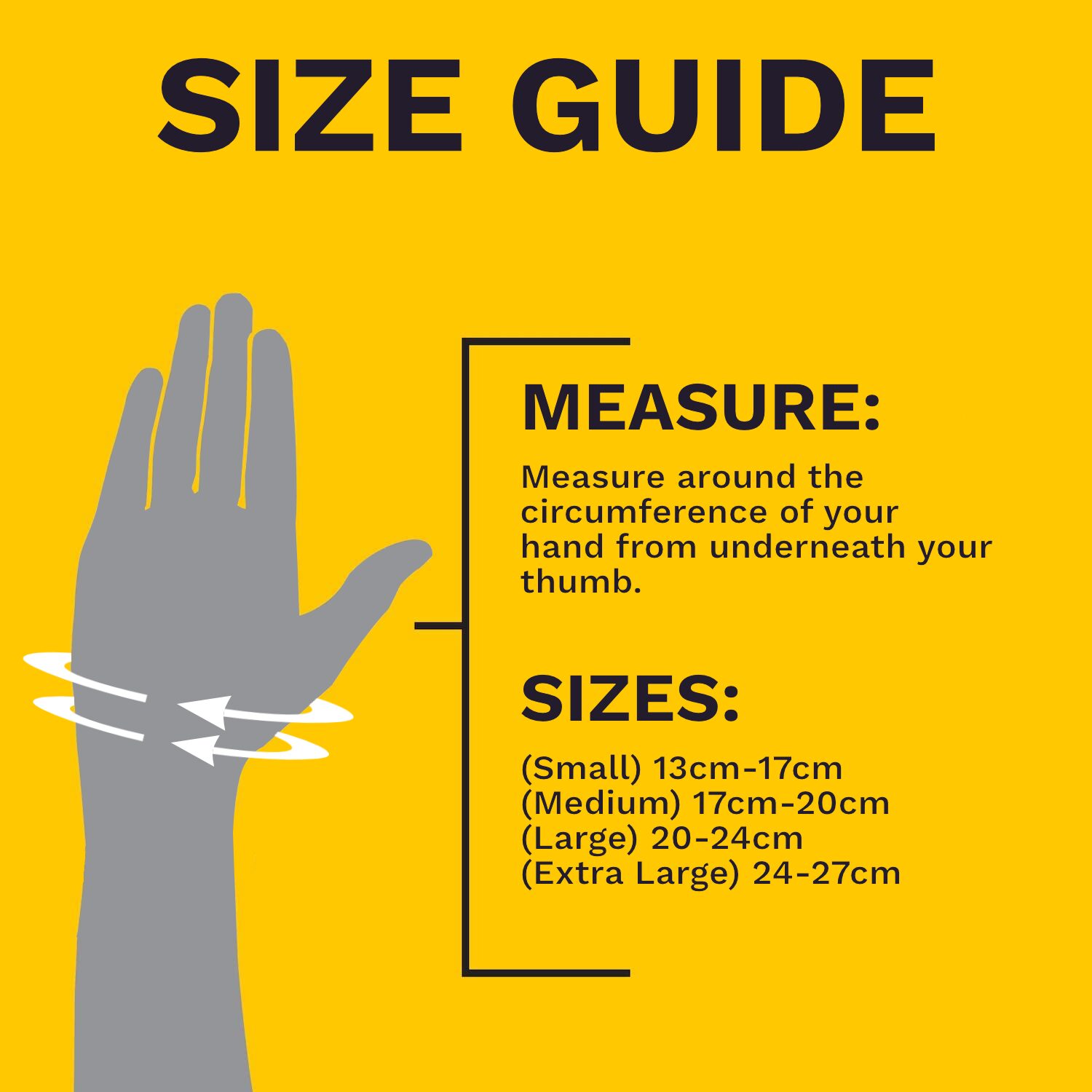
- Available in three sizes—refer to size guide to find your fit
- Machine washable; air dry to preserve elasticity and compression over time
- Does not treat or prevent blood clots—if you have clot risk or worrying circulation symptoms, seek clinical advice
Get 15% off - When bought together with:
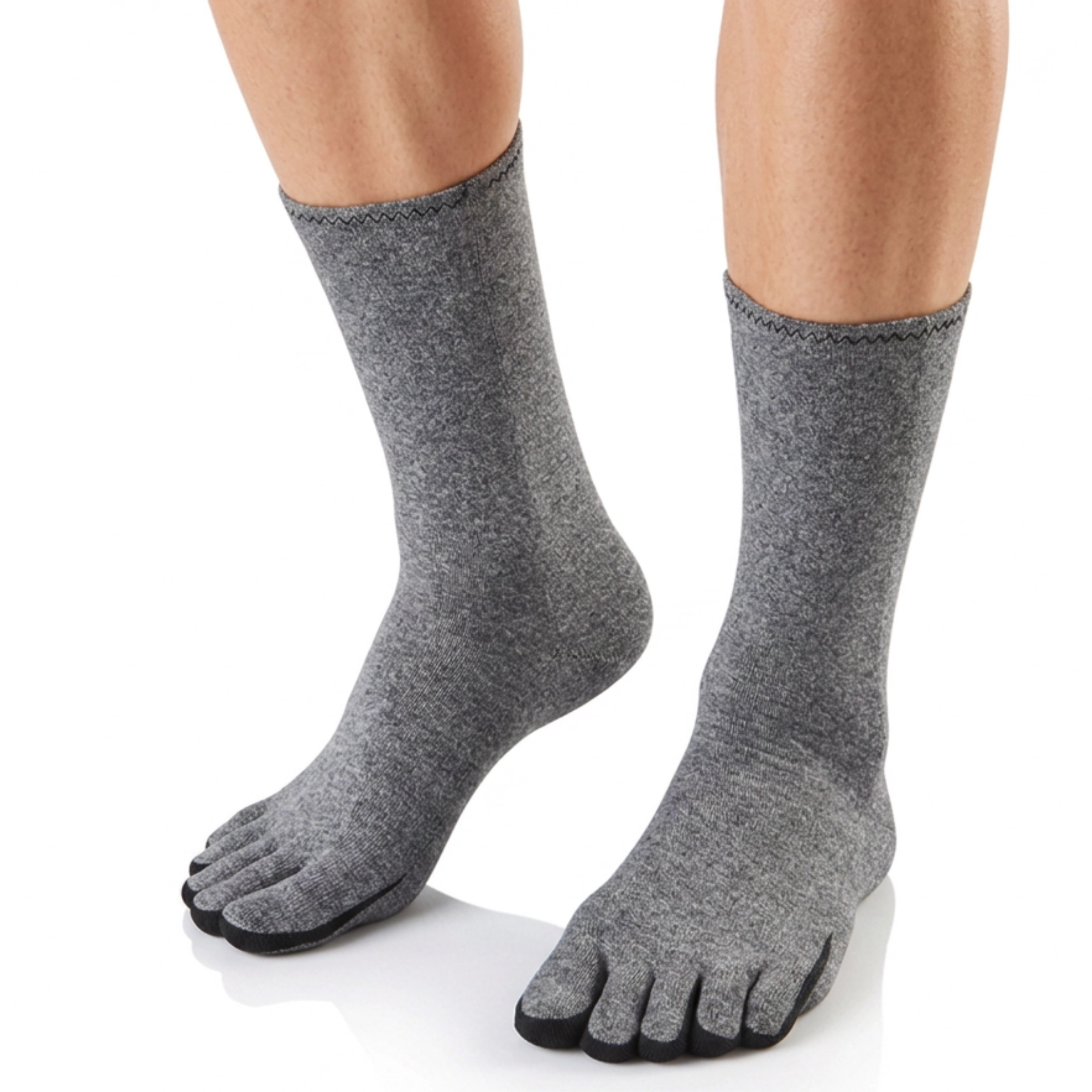
- This item: Raynauds Gloves for Cold Hands With Grips(£13.99inc VAT)
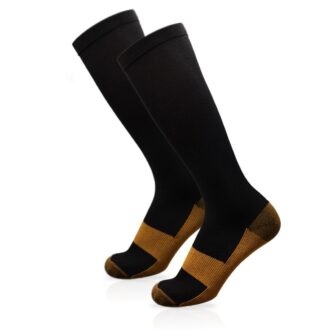
- FootReviver™ Raynaud's Disease Socks(£10.99inc VAT)
Cold, numb hands make routine tasks slow and awkward. Holding a pen, typing, doing up buttons, gripping a zip, or handling coins can all take far longer when your fingers lose warmth and feeling. For many people in the UK, that’s what Raynaud’s is like day to day.
Warm fingerless base-layer gloves sit next to your skin and provide mild, even compression across your hands, palms, and lower fingers. They keep your hands warm, so you can carry on working, cooking, and getting through the day without pausing to warm your hands back up. You can wear them on their own indoors and under a pair of outer gloves when you go outside. They’re not medical-grade compression garments, and they’re not a treatment for Raynaud’s. They’re a practical layer that helps you stay warm and get on with your day.
-
- Thin fingerless gloves worn directly against the skin
-
- Built mainly for people with Raynaud’s, where cold brings on colour changes, numbness, and tingling in the fingers
-
- Some people also find them useful for arthritis, carpal tunnel syndrome, and chilblains
-
- Made from a blend of cotton, polyester, and spandex
-
- Holds warmth close without letting hands overheat
-
- Gentle, even pressure across the whole hand, palm, and lower fingers
-
- Moves sweat away from the skin so hands stay dry and don’t chill once moisture evaporates
-
- Open fingertips leave you free to write, type, and use a touchscreen
-
- Palm grips add security when cold hands make holding things harder
-
- No stitched seams, so nothing rubs where the skin is sensitive
-
- Three sizes available; the size guide helps you find the right fit
-
- Fit matters more than firmness — a glove that pinches can restrict blood flow instead of helping it
-
- A supportive layer, not a medical device or a cure for Raynaud’s
-
- Check with your GP first if you have very poor circulation, open wounds, severe skin conditions on your hands, or diabetes with reduced sensation in your hands
What Raynaud’s Does to Your Hands
Your fingers sit at the end of your circulation, furthest from your heart. The smallest blood vessels there — called arterioles — are the first to react when your body senses cold. They’re tiny branches of your arteries, and they control how much blood reaches your fingertips. When your body decides to conserve heat, it sends a signal through the sympathetic nervous system — the network of nerves that manage automatic body functions — telling these tiny vessels to tighten. Because they’re the smallest vessels and sit furthest from the heart, they close down before the larger vessels closer to your core.
This is a normal response, and it happens to everyone. In Raynaud’s, the same response is exaggerated. The arterioles narrow far more than they need to, and they stay narrowed for longer. Blood flow to your fingers drops sharply, and that’s when symptoms start.
Your fingers turn white first, as blood flow stops and feeling drains away. Then they turn blue: the blood sitting in the tissue has given up its oxygen, and with no fresh supply arriving, the tissue is left short. Finally they turn red, as the vessels open again and oxygen-rich blood returns. The pain usually comes with that return of blood flow, not during the cold phase. When oxygenated blood rushes back into tissue that has been without it for a while, you get tingling, burning, or a throbbing ache that can last several minutes.
Episodes are usually triggered by cold, sudden changes in temperature, or stress. Cold is the most common trigger by a wide margin. Moving between a warm room and cold outdoor air, handling cold items from the fridge or freezer, sitting still in a cool room, or walking into an air-conditioned space on a summer’s day are all common patterns. Stress sets off the same response, because your body diverts blood away from your extremities when it senses a threat — even a mild one.
A typical episode lasts from minutes to about an hour. Your fingers usually return to normal colour and feeling as they warm up. For some people, episodes are occasional and mild. For others, they happen several times a day and are painful enough to interrupt work, sleep, or everyday tasks.
Why a Warm Base Layer with Mild Compression Makes Sense
Warmth is the most direct way to reduce Raynaud’s symptoms. If your hands stay warm, the cold trigger that sets off an episode is less likely to fire. That’s why gloves work — not because they do anything complicated, but because they keep the temperature of your hands more stable. A base layer is simply a thin glove that sits right against your skin, holds warmth close, and wicks sweat away so your hands don’t get damp and then cold.
Mild compression adds a second, gentler benefit. Even pressure around your hands and fingers may help reduce swelling and help fluid drain from the tissues rather than pooling. For Raynaud’s specifically, compression isn’t a treatment in itself — some people find it helpful on top of warmth, others barely notice it. What it does reliably is hold the fabric gently against your skin, so the warmth stays where it should.
It’s worth being clear about what “mild compression” means here. A medical-grade compression garment is measured and fitted to deliver a specific amount of pressure, often in units called millimetres of mercury (mmHg), and it’s usually prescribed and fitted by a clinician. The gloves on this page aren’t that. They’re knitted from a stretch fabric that hugs your hand closely and gives gentle, even elastic pressure. That’s enough to feel comfortable and to stop the glove slipping, but they’re not built to the same specification as a measured medical garment.
So why a fingerless base layer specifically, rather than a normal pair of gloves? Because Raynaud’s is triggered as much by temperature change as by cold itself. If you have to keep taking gloves off to use a phone or open a packet, your hands go through a warm-and-cold cycle every time, and that cycle can set off an episode on its own. A fingerless base layer stays on through those tasks, so your hands hold a steadier temperature while you work, eat, or travel. It also sits close enough to the skin to hold warmth in without adding bulk, which means you can wear it under a warmer outer glove on the coldest days and peel back a layer without stripping everything off.
One important point about sizing. These gloves give mild compression in the size that fits you. Don’t choose a smaller size to get more compression. A glove that’s too tight presses harder than the fabric is designed to, and that can reduce blood flow rather than help it — which can make Raynaud’s symptoms worse rather than better. If a glove leaves red marks, causes numbness, or makes your hands feel colder, it’s too small. The right fit should feel close and comfortable, not tight.
How These Gloves Are Designed
These gloves keep your hands warm, add mild compression, and let you use your hands normally while you wear them. They come in three sizes — the size guide will help you find your fit.
Warmth, Compression, and Moisture Management
Three features work together to keep your hands warm, supported, and dry.
Thermal regulation: the fabric keeps warmth close to your skin without trapping too much heat. This is what stops your hands becoming clammy. Hands that get too warm and sweaty actually feel colder once the moisture evaporates, especially when you take the gloves off. The fabric holds warmth in without letting that happen. During activity, your hands warm up on their own, and the fabric stops heat building up to the point where you’d want to pull the gloves off and expose your hands to a sudden drop in temperature.
Compression: the gloves apply even pressure across your hands and fingers — not a tight band, but a consistent, gentle hug around the whole hand. A tight band concentrates pressure in one strip, which is exactly the restriction you’re trying to avoid. Even pressure spread across the surface gives the small blood vessels a light, steady squeeze without pinching anywhere, and it keeps the fabric close to the skin so warmth stays in place when your hands are cold. During tasks where your hands are still — typing, writing, holding a phone — the steady pressure helps keep blood moving, so you don’t need to stop and warm your hands as often. Because it’s knitted into the fabric rather than sewn in as bands, the pressure stays consistent across the whole glove.
Moisture management: the fabric draws perspiration away from your skin so your hands stay dry. Damp hands in cold air cool down quickly, and that’s a common trigger for Raynaud’s episodes. Keeping the skin dry helps you avoid that chilling effect, whether you’re moving between rooms or doing something active indoors.
Comfort for All-Day Wear
A base layer only helps if you can keep it on. For all-day wear, a glove needs to move with your hands without creating pressure points.
These gloves are shaped to follow the natural contours of your hand: slightly curved fingers that match your hand’s resting position, a defined thumb area that lets your thumb move freely, and a palm that flexes with you when you grip or type. The ergonomic shape means the fabric sits where it should without bunching or pulling, even during repetitive movements. When you close your fingers to grip something, the fabric moves with you instead of resisting or creating a tight spot that would reduce circulation.
They’re also made without stitched seams, which is what you want if your skin is sensitive — particularly if you’re wearing the gloves during or after a Raynaud’s episode, when your fingers can feel raw or tender. There are no raised edges to rub against your knuckles or the webbing between your fingers, so there’s nothing digging in during the longer stretches of wear.
Fingerless Design and Grip
The fingerless shape keeps your fingertips free for tasks that need fine control.
Your fingertips stay uncovered, so you can type, write, use a phone, do up buttons, handle coins, and pick up small objects without taking the gloves off. The compression and warmth extend along the length of each finger to just below the first joint, so the small arteries that run along each side of your fingers — called the digital arteries — get some gentle pressure. During tasks that involve repeated small movements, that helps maintain circulation to your fingertips, even though they’re exposed.
Silicone grips on the palms give you a firmer hold without adding bulk. This helps when your hands are cold, or when numbness and stiffness during an episode make your grip less secure. Rather than gripping harder — which increases muscle tension and can reduce circulation further — you can rely on the textured surface to help you hold things steadily.
Materials and Durability
The gloves are made from a blend of cotton, polyester, and spandex.
The cotton makes them breathable and comfortable against the skin. Polyester adds durability and helps the fabric wick moisture away from your hands. Spandex gives the gloves their stretch, so they fit closely and return to shape after you take them off.
The fabric is lightweight, so your hands don’t feel bulky or overheated. It’s stretchy enough to fit comfortably around your knuckles, thumb joint, and wrist without cutting in or reducing circulation in one area. The spandex content helps the gloves hold their elasticity over time, so the compression stays consistent rather than loosening after a few weeks.
The blend survives regular washing and daily wear without losing its shape, which counts for a lot when you may be wearing the gloves for hours at a time. With proper care, they should keep their fit and their function for months. The thin, low-bulk design also makes them practical for layering. If you need extra warmth outdoors, you can wear them under a pair of winter gloves without your hands feeling cramped.
When You’d Wear These Gloves
Wear them through the months when Raynaud’s symptoms are worst — usually autumn through spring in the UK, when temperatures drop and episodes are more likely.
Indoor Use
Many people wear them through the working day, during household tasks, or any time cold hands make fine motor skills difficult. The fingerless design means you can keep them on while you write, type, use a phone, or manage buttons and zips. Your hands, palms, and lower fingers stay covered and warm, while your fingertips stay free for precise tasks. For desk work especially, that’s the difference between settling into a document and stopping every few minutes to warm your hands back up.
Cool indoor spaces count too, not just the outdoors. A cold office, an unheated kitchen on a winter morning, or a long car journey with the heating off can all be enough to set off symptoms, and those are exactly the situations where fingerless gloves let you keep working without stopping to warm your hands.
Outdoor Use
You can wear them on their own in milder cold, or under a pair of winter gloves when temperatures drop further. The thin design makes layering practical without your hands feeling cramped. The base layer sits against your skin, keeping compression and warmth close, while the outer glove adds insulation. When you come back indoors, you can take off the outer gloves and keep the base layer on, so your hands don’t go through a sudden temperature change. This is useful during a UK winter, when you’re often moving between cold outdoor air and heated indoor spaces. Your hands stay warm without overheating, and you can still manage zips, keys, or your phone without taking everything off.
Overnight Use
Some people find wearing them to bed helpful, particularly if they wake with cold, stiff hands. The warmth keeps blood flowing through the night as your body temperature drops naturally during sleep. If you’re going to try overnight wear, make sure the fit is comfortable first, and check with your GP if you have reduced sensation in your hands — you may not feel early signs that the gloves are too tight.
During Flare-Ups
If you feel an episode starting — that familiar tingling, coldness, or the first hint of colour change — putting the gloves on quickly can sometimes reduce how severe it gets. Warming your hands early, before the vessels fully narrow, gives you the best chance of keeping the episode short. The sooner you put them on, the less likely the episode is to progress through the full white-blue-red cycle.
Who These Gloves May Help
These gloves are designed primarily for people with Raynaud’s, where cold-triggered circulation problems make everyday hand use difficult. Raynaud’s is the main use case, and it’s the one these gloves are built around. The warmth keeps your hands warm enough that cold is less likely to trigger the response, and the mild compression adds gentle pressure on top.
The same features may also help with arthritis, carpal tunnel syndrome, and chilblains, though the reasons differ for each.
If you have very poor circulation, severe skin conditions on your hands, open wounds, or diabetes with reduced sensation in your hands, check with your GP before using compression gloves.
How to Use These Gloves
Getting Started: Fit and Comfort Check
Start by wearing the gloves for an hour or two so your hands can adjust to the sensation of pressure, and so you can check the fit properly. They should feel snug and comfortable, but not tight. You should be able to move your fingers freely, make a fist, and do normal tasks without the gloves squeezing too hard or cutting into your skin.
Getting the size right is the single most important thing with a glove like this. A fit that’s too loose means the glove shifts around, doesn’t hold warmth close, and doesn’t give you consistent pressure. A fit that’s too tight presses harder than the fabric is designed to, restricts blood flow, and can make Raynaud’s symptoms worse. The right fit is the one in the middle — close enough to stay in place and keep warmth in, but loose enough that your hand can move naturally and your circulation isn’t impeded.
If the gloves feel uncomfortably tight, leave red marks that don’t fade within a few minutes of taking them off, cause numbness or tingling that isn’t like a Raynaud’s episode, or make your hands feel colder rather than warmer, they’re probably too small. Check the size guide and try the next size up. If they slip and bunch when you grip things, or if your fingertips feel exposed to the cold even through the covering, they may be too large.
Once you’re confident the gloves fit well, you can build up to wearing them through the day. Many people wear them for a full working day, during household tasks, or overnight without discomfort. If you’re new to wearing anything close-fitting on your hands, a gradual build-up over the first week or two makes it easier to adjust — an hour at a time, then half a day, then as long as you need them.
Wear Time
There’s no single pattern that works for everyone. Some people wear the gloves all day during winter. Others wear them mainly for specific tasks, or at particular times of day when symptoms are worst. Some people wear them overnight, and some don’t.
During colder months, many people keep the base layer on and add outer gloves when they go outside. If you’re wearing them for long stretches, check in with how your hands feel. They should feel comfortably warm, not sweaty or overheated. If your hands feel too warm or damp, take a short break from the gloves, or adjust how much you’re layering.
Because these are a warm layer rather than a medical device, there’s no fixed limit on how long you can wear them. The main thing to watch is comfort. If your hands feel warm, dry, and comfortable, the gloves are working as they should. If they feel tight, cold, or numb, that’s a sign to change size or take a break, not to push through it.
Care and Maintenance
The gloves are machine washable. Wash them regularly — daily or every few days if you’re wearing them for hours at a time — to keep them fresh and hygienic. Air dry them to preserve the compression. Avoid tumble drying on high heat, which can break down the spandex fibres and reduce the compression effect.
With regular washing and proper care, the gloves should keep their fit and function through months of daily wear. If you notice the compression becoming looser, the fabric losing its stretch, or the gloves no longer fitting as snugly as when new, it’s time to replace them. That’s normal with stretch fabrics, and it’s worth checking the fit at the start of each cold season rather than waiting until they feel slack.
What to Expect
Warmth and Comfort
Most people notice their hands feel warmer within 15 to 30 minutes of putting the gloves on, as the warmth and gentle pressure take effect. Your hands should feel comfortably warm without being sweaty or overheated. If they feel too warm or damp, take a short break from the gloves, check the room temperature, and make sure you’re not layering them with another pair indoors when you don’t need the extra insulation.
The compression should feel comfortable throughout the time you’re wearing them. If the gloves start to feel tight, or if your hands feel colder rather than warmer, take them off and check the fit. A glove that’s working properly should make your hands feel better, not worse.
Episode Reduction Over Time
With consistent use over several weeks, some people find their Raynaud’s episodes become less frequent or less severe. This varies a lot from person to person. Some notice a significant difference — episodes happening less often, or not progressing as far through the colour changes. Others notice a more modest improvement, such as episodes being slightly less painful or easing more quickly. Most of the benefit comes from warmth; the compression adds gentle pressure on top of that.
These gloves work best as part of a broader approach to managing Raynaud’s. Keeping your whole body warm counts, not just your hands, because your core temperature affects how readily your arterioles narrow. If your core is cold, your body prioritises keeping your vital organs warm, which reduces blood flow to your extremities and makes episodes more likely even when your hands are covered.
Managing stress helps too, because stress triggers the same response that diverts blood away from your hands and feet. Staying active keeps your overall circulation moving — regular movement helps blood flow and supports the health of your blood vessels. Avoiding smoking is important because nicotine narrows blood vessels and worsens circulation problems. None of these replace the value of simply keeping your hands warm, but together they make episodes less likely and less severe.
Your GP or a physiotherapist can help you put together a management plan that brings these approaches together in a way that suits your lifestyle and the severity of your symptoms. For some people, warm gloves and lifestyle measures are enough to keep symptoms manageable. Others need medication to help relax and widen blood vessels, particularly during the coldest months or if episodes are frequent and severe. A small number of people with very severe Raynaud’s need input from a rheumatologist or vascular specialist, though this is relatively uncommon.
Over time, you’ll learn when you most need the gloves and how long you can comfortably wear them. Some people wear them all day through winter; others wear them mainly during specific tasks or at the times of day when symptoms are worst. The goal is to find a pattern that reduces your symptoms and fits into your daily routine. That pattern often shifts with the seasons, so it’s worth revisiting as the weather changes rather than sticking rigidly to whatever worked last winter.
Safety: When to Check with Your GP
If You Haven’t Had a Formal Diagnosis
If you think you have Raynaud’s but haven’t seen your GP, it’s worth getting a proper diagnosis. Raynaud’s is common and usually manageable, but some other conditions can cause similar symptoms and need different treatment. Scleroderma, for example, causes thickening and hardening of the skin and connective tissue, and can affect blood vessels in ways that look similar to Raynaud’s but need specialist monitoring. Lupus is an autoimmune condition that can also cause circulation problems in the hands and fingers, along with other symptoms affecting joints, skin, and internal organs.
Your GP can examine your hands, ask about your symptoms — when they started, how often they happen, what triggers them, how long episodes last — and rule out other causes. They may look for other signs that would suggest a condition beyond straightforward Raynaud’s, such as skin changes, joint problems, or symptoms affecting other parts of your body. They can also advise on whether these gloves suit your situation, or whether you need further investigation or treatment.
Who Should Check with Their GP Before Using Compression Gloves
Check with your GP before using compression gloves if you have:
-
- Severe skin conditions on your hands (such as open wounds, ulcers, or active infections). Compression can interfere with healing if it’s applied over broken skin, and it may trap moisture or bacteria against wounds, increasing the risk of infection.
-
- Very poor circulation or peripheral vascular disease. Peripheral vascular disease is a condition where the arteries themselves are narrowed or blocked. If blood flow to your hands is already severely restricted, compression may not be appropriate. In these situations, the circulation problem is structural — the vessels themselves are damaged or blocked — rather than functional, as in Raynaud’s, where vessels narrow too much but are otherwise healthy. Your GP can assess whether compression would help or potentially make your symptoms worse.
-
- Diabetes with reduced sensation in your hands. Reduced sensation (peripheral neuropathy) means you may not feel if the gloves are too tight or causing pressure damage. Without normal sensation, you might not notice early warning signs — such as discomfort, numbness, or skin changes — that would tell you to adjust or take off the gloves.
-
- Any condition where your GP has advised against compression. Some medical conditions or treatments make compression unsuitable. If you’re unsure, check with your GP before using compression gloves.
In these situations, compression may not be suitable, or you may need specific guidance on how to use it safely. A quick conversation with your GP can clarify whether compression gloves are right for you.
Important: Blood Clots
These gloves do not treat or prevent blood clots, and they must not be relied on for that purpose. If you have risk factors for blood clots — such as a history of deep vein thrombosis, a clotting disorder, recent surgery, or prolonged immobility — speak to your GP before using them. If you notice sudden swelling, warmth, redness, or pain in one hand or arm that doesn’t match your usual Raynaud’s pattern, seek urgent medical advice.
When to Seek Help for New or Worsening Symptoms
Contact your GP if you notice:
-
- Ulcers or sores developing on your fingers. These can develop when circulation is severely reduced for long periods, depriving tissues of oxygen. Ulcers are painful, slow to heal, and can become infected. They suggest your Raynaud’s is more severe than typical and may need specialist assessment.
-
- Persistent pain that doesn’t ease when circulation returns. In typical Raynaud’s episodes, pain and tingling happen mainly when blood flow returns, and then settle once circulation is restored. If you’re getting constant pain, or pain that continues long after your fingers have returned to normal colour and temperature, this may indicate tissue damage or another problem that needs investigation.
-
- Colour changes that don’t resolve within a reasonable time. Typical Raynaud’s episodes last minutes to perhaps an hour or so. If your fingers stay white, blue, or mottled for several hours, or if colour changes are happening much more often than before, this suggests your circulation is more severely affected and you may need additional treatment.
-
- Episodes becoming significantly more frequent or severe despite your management efforts. If you’re wearing warm gloves regularly, keeping warm, managing stress, and avoiding known triggers, but your episodes are still happening more often or progressing further, speak to your GP. You may need medication to help widen your blood vessels, or a referral to a specialist to rule out underlying conditions.
-
- New or unexplained symptoms that concern you. If you develop new symptoms — such as joint pain, skin changes, tiredness, or problems in other parts of your body — alongside your hand symptoms, mention these to your GP. Raynaud’s on its own is usually straightforward to manage, but new symptoms may point to a broader condition that needs investigation.
These signs could mean your Raynaud’s needs a different management approach, or that something else is happening that needs attention. Getting assessed early means you can get appropriate treatment before symptoms worsen or complications develop.
A Practical Layer for Cold Hands
These fingerless base-layer gloves are built around one idea: keep your hands warm without getting in the way of using them. A thin layer of warmth sits against your skin, and gentle, even pressure keeps the fabric close so the warmth stays put. Warmth is the main reason these gloves help — it’s what makes cold less likely to set off an episode.
The fingerless shape keeps your fingertips free for typing, writing, and everyday tasks, while the seamless construction and silicone grips help them stay comfortable and secure. Thin enough to wear under winter gloves, they let you move between cold and warm environments without your hands swinging through a sudden temperature change.
They come in three sizes — the size guide will help you find the right fit. Getting the size right is the key: a glove that fits well keeps your hands warm and comfortable, while one that’s too tight can reduce blood flow and make symptoms worse. If you’re between sizes, or unsure, it’s better to check the guide than to guess.
If you’d like guidance on whether these gloves suit your situation, your GP or physiotherapist can help. Put them on before your hands get cold, and you give yourself the best chance of getting through a cold day without an episode.
Disclaimer
The information on this page is general guidance and is not a substitute for individual medical advice, diagnosis, or treatment. Everyone’s hands and symptoms are different, and a glove that suits one person may not suit another. If you’re unsure whether these gloves are right for you, or if you have more complex, new, or worsening symptoms, speak to a GP, physiotherapist, or another appropriate clinician for personalised advice. No guaranteed outcomes are promised or implied.
2 Reviews For This Product
Fast & Secure Checkout Through Paypal
Pay with Paypal the secure payment gateway that accepts all credit and debit cards. Paypal is free and secure and no credit or bank information is ever stored or shared with us.
Fast Dispatch
Enjoy your items soon with quick dispatch via Royal Mail. Expect to have your items between 1-3 working days for domestic orders. 7-10 Working days for international orders.
Return Policy – 30 Day Money Back Guarantee
In the unlikely event, you are unhappy with your purchase you can return it within 30 days for a refund. Please contact us via the form on the contact us page to start your return.
To return an item please send it to: Nuova Health UK, 81 Highfield Lane, Waverley, Rotherham, S60 8AL. Please include a note with your order id so we know who to refund. Please retain your postage receipt as proof of postage. All that we ask is that the item is in the original packaging and unused.
by Jake
Finally a pair of gloves that actually help ease my Raynauds disease!
by Elly
Very comfortable and started soothing my hands as soon as I started wearing them. Would definitely buy again.