
Raynauds Disease Compression Socks
£8.99inc VAT
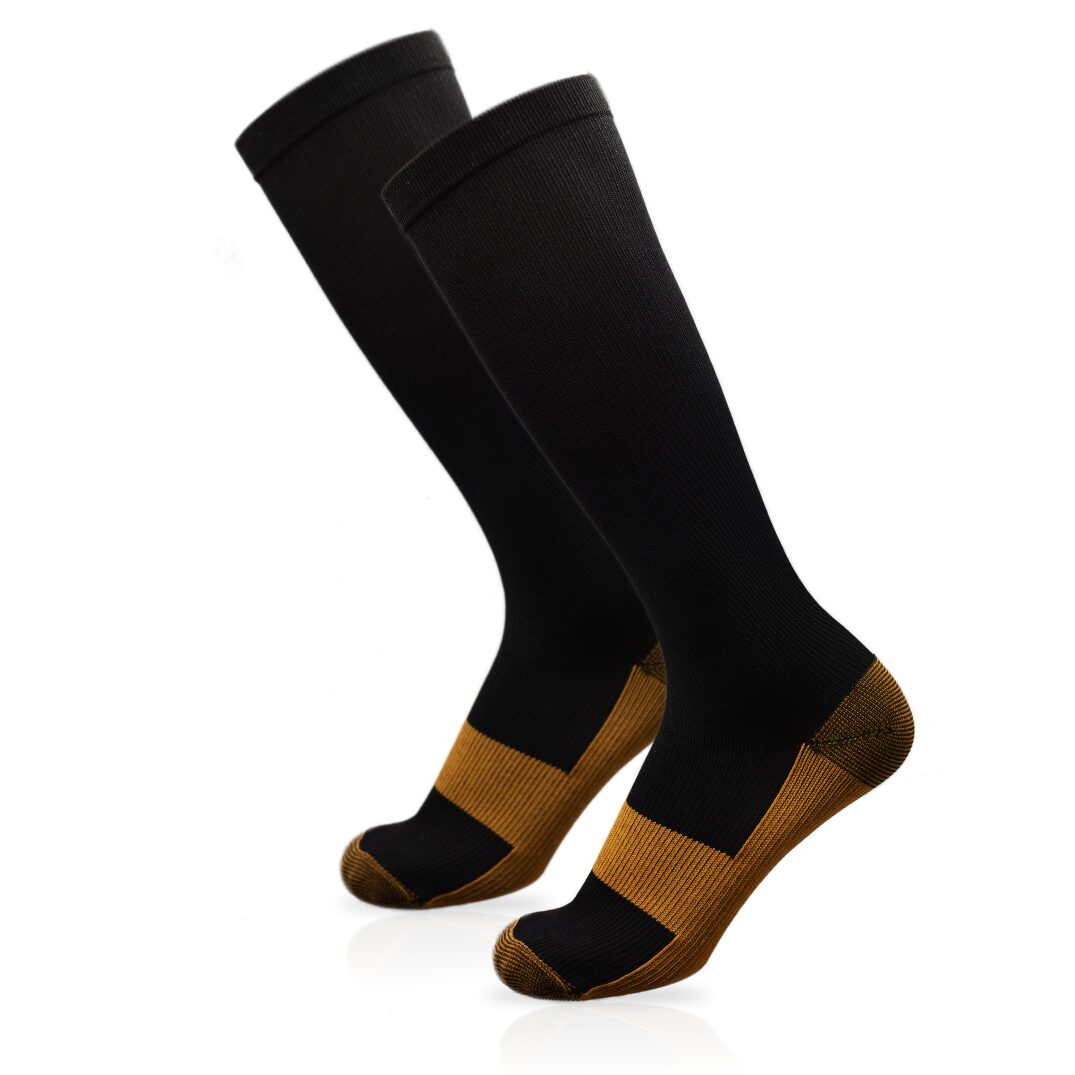
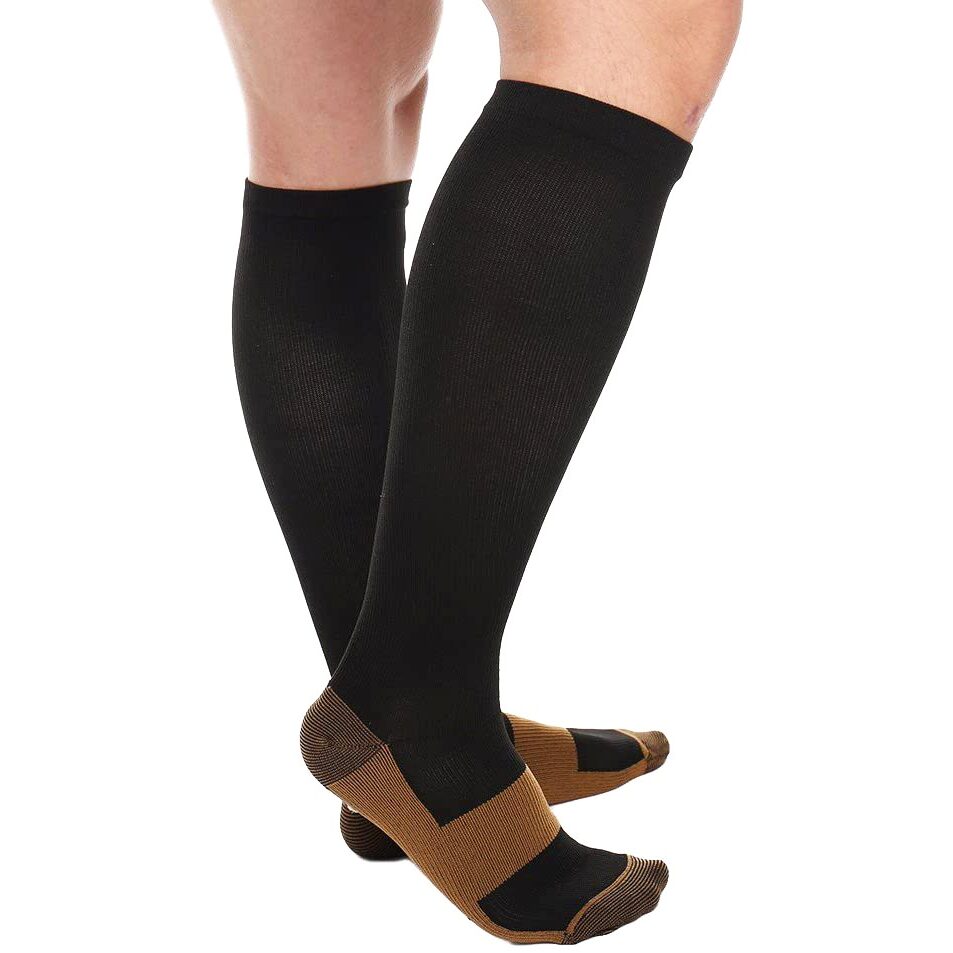
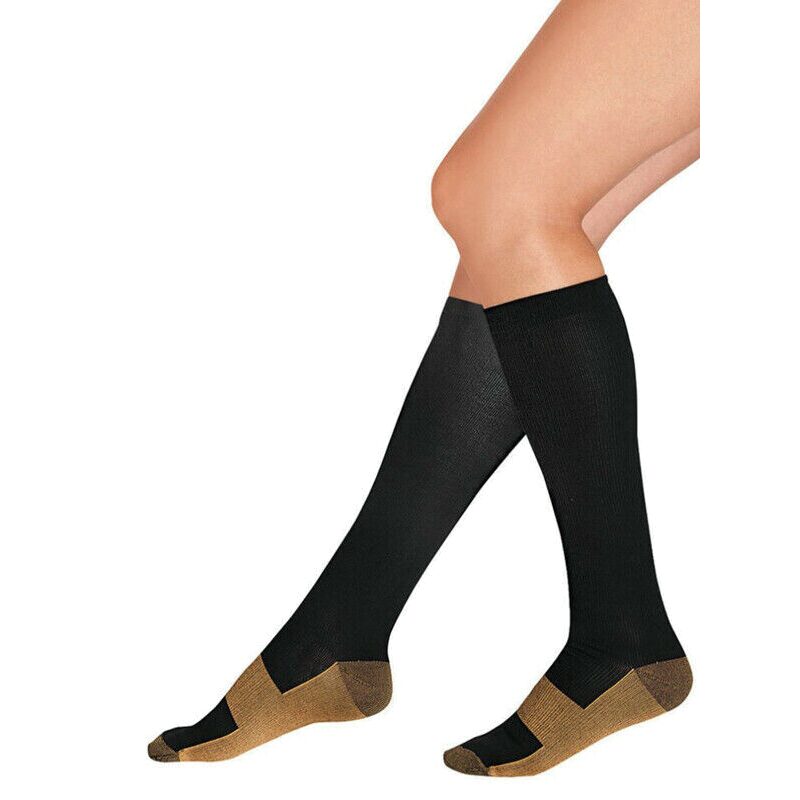
- Mild, knee‑high graduated compression socks for adults with Raynaud’s in the feet, supplied as one pair.
- Firmest pressure through the foot and ankle, easing up the calf, so blood moves back up the leg through the veins.
- Toe area covered without bulk, plus moisture wicking so the skin stays dry and cools more slowly.
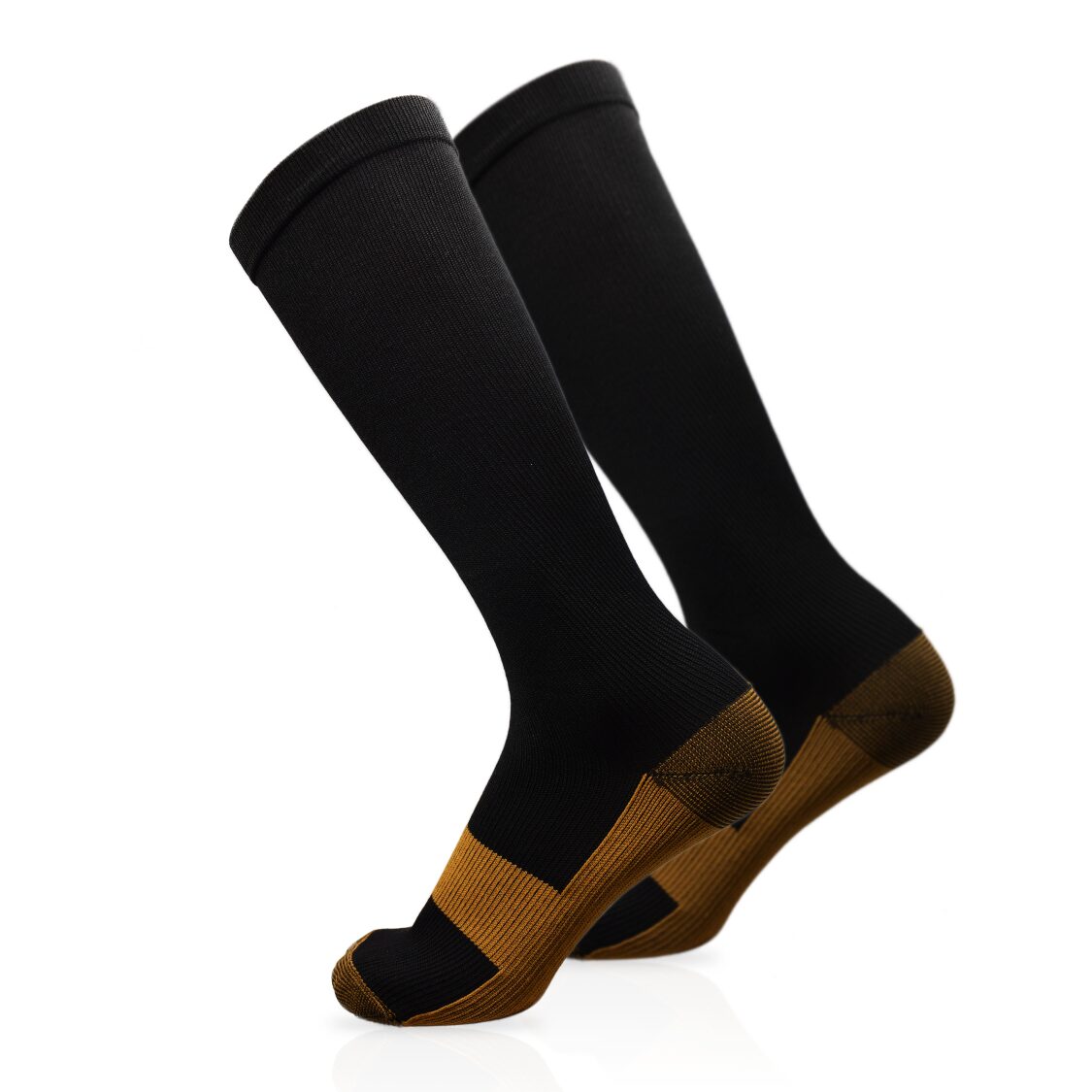
- A flat‑linked toe seam and gentle padding under the toe pads, so nothing ridges or presses across the front of the foot.
- A contoured midfoot band that supports the arch and holds the compression zones in place, plus a shaped heel pocket that helps stop the sock slipping down.
- A wide top band that spreads its hold over the ankle and lower calf, so it doesn’t dig in along a narrow line.
- Unisex design, simple sizing, machine washable, with reinforcement at the heel and toe.
- Worn before heading into the cold, rather than once the toes have already started to change colour.
- Light sock marks at the end of the day are normal. Deep grooves or redness that lingers suggests the size is too small.
- Supportive of comfort and circulation, but not a cure and unable to change how your blood vessels react to cold. Results vary from person to person.
- No treatment or prevention of blood clots, and not to be relied on for that. Clinical advice first if you have a clot risk or worrying symptoms.
- Not suitable with narrowed arteries in the legs that reduce blood flow to the feet, marked nerve damage in the feet, an active skin infection in the feet or legs, severe heart failure, or clinical advice against compression.
- Not recommended during pregnancy. With diabetes or reduced sensation in the feet, check daily for sores, redness, or swelling that isn’t settling.
Raynaud’s affects the small blood vessels in the toes. In cold conditions or under stress, those vessels tighten far more than they should. Blood flow to the skin of the toes drops, the toes change colour, and feeling fades. As circulation returns, they often throb, tingle, and feel sore.
A flare can cut a walk short, make standing uncomfortable, and leave your feet feeling bruised for a while afterwards. After even a short spell outside in the cold, warming up again can take far longer than it should. Cold is the usual trigger, and stress can set off the same response even when you’re warm.
If you have Raynaud’s in your feet, three practical questions usually come up. How do you keep your toes warmer? How do you support circulation? And how do you cut down how often cold sets off an episode? The right kind of compression sock can help with all three.
Why graduated compression helps with Raynaud’s
Graduated compression means pressure that is firmest at the foot and ankle and becomes gradually lighter as it rises up the leg. The gradual easing works with the way veins carry blood back towards the heart.
Veins are the vessels that return blood from the body to the heart, and in the legs they’re working uphill against gravity. Three things keep that flow moving. The first is the muscle in your foot and calf. Those muscles do more for blood flow in the legs than any other muscle group, because every time they tighten — and they tighten with every step you take — they squeeze the deep veins they surround. Blood inside those veins has nowhere to go but upwards, back towards the heart. The second is the one‑way valves inside the veins. These open to let blood through and then close again, so blood can’t fall back down between squeezes. The third is the layer of small veins just under the skin. These have thin walls and very little muscle of their own, so they rely on pressure from outside to keep blood moving through them.
When all three work together, blood leaves the foot efficiently and fluid doesn’t pool around the ankle. When your feet are affected by Raynaud’s, the flow in and out of the foot matters more than usual. Warm blood has to return to the toes easily once a spasm settles, and if fluid has collected around the foot and the veins are sluggish, that return is slower and less comfortable. Helping blood out of the foot helps fresh blood come back in.
Your calf muscles only do that squeezing work while you’re moving. Stand still at a counter or sit for an hour, and the veins lose that help and have to manage on their own. For that reason, compression is often worn on days spent sitting at a desk as well as on walks.
The firmer pressure at the foot and ankle squeezes the small surface veins, encouraging blood out of them and into the deeper veins, where the muscle pump can move it on. The lighter pressure further up doesn’t resist the returning flow. The result is steadier movement of blood away from the foot, and an easier return once the vessels open again.
Mild compression makes more sense than strong compression here. The small arteries feeding the toes are sensitive, and firm pressure over the foot and ankle can resist the blood trying to flow into the foot, which works against what you want. Gentle, even pressure supports the return of blood through the veins without pressing hard on the arteries that supply the toes. So compression used for Raynaud’s is usually lighter than the firmer compression used for varicose veins.
Beyond pressure, the design of the sock itself matters for feet affected by Raynaud’s, particularly around the toes and along the top edge, where pressure points are most likely to rub.
How these socks from FootReviver are designed to help
These are mild, knee‑high graduated compression socks designed for daily wear. The design is unisex, easy to size, and machine washable, and one pair is supplied.
Graduated compression for circulation and warmth
The pressure is strongest through the foot and ankle, where the veins need the most help, and it eases as it rises up the calf. That helps move blood away from the foot through the veins, so circulation can resume in the toes once the vessels open again.
The effect is steadier warmth in the toes through the day, and a return of feeling that’s less intense after an episode. They’re light enough to wear all day, which suits a pair you can put on first thing and leave on until the evening. The difference shows most on days when you’re on your feet for long stretches, whether that’s a long queue, a busy shift, or a walk on cold pavements.
Consistent pressure you can rely on day after day
The support a compression sock gives needs to hold up over time, not just for the first few days. That matters in two ways. Through the day, the pressure should stay even from the moment you put the socks on until you take them off — no band tightening after a few hours, and no slackening around the foot. Across weeks and months of wear and washing, the sock needs to keep its graduated compression in place, so the pressure at the ankle stays firmer than the pressure at the calf. If that difference flattens, the sock may still feel snug, but the graded support that helps the veins has gone.
The yarn and the knit are chosen with that in mind. The fabric is made to return to its intended shape once it has dried, so long as the care instructions are followed. A sock that has stretched out of shape loses the difference between the two ends, and the foot and the calf finish up at roughly the same pressure.
Steady pressure is also what makes it possible to judge whether the socks are helping. If the support drifts from one wear to the next, or fades over a few weeks, you can’t tell whether the socks helped or whether it was simply a milder day. The pressure itself sits in the middle range: too strong feels restrictive and can reduce comfort around the toes, while too weak does very little for circulation. These are firm enough to help the veins without feeling like a tight band.
Everyday comfort for swelling and tired legs
Long periods of standing, walking, or sitting let fluid collect around the feet and ankles. Gravity pulls blood and tissue fluid downward, and the veins have to work against that pull. Tissue fluid is the fluid that surrounds the cells. Over hours, more of it passes out of the blood and into the tissue around the ankle. That’s what causes puffiness by the end of the day.
The stronger hold over the foot and ankle helps limit that build‑up. Fluid is less likely to pool around the ankle, so shoes feel comfortable for longer. By evening, the legs often feel less heavy.
Sitting still for a long stretch leaves the veins without that muscle help altogether. The gentle hold the sock provides keeps blood moving through the veins during that time, whether you’re at a desk or in the car.
A fit that protects sensitive toes
The toe area has a flat‑linked seam. A flat‑linked seam sits smoothly against the skin rather than creating a raised ridge across the top of the toes. There’s no line pressing upward into your shoes and no pressure point to rub skin that’s already sensitive. Gentle padding sits under the toe pads, spreading pressure across the front of the foot. If your toes feel sore when warmth returns, a smooth interior makes walking and standing easier through a long day, and it reduces rubbing between the toes.
A contoured band wraps around the midfoot and supports the arch. That band does two jobs. First, it keeps the sock positioned correctly on your foot, so the compression zones stay where they’re meant to be rather than drifting down towards the toes. Second, it gives the midfoot a little extra support as you walk, which helps the foot cope better on uneven ground or on stairs.
The heel pocket is shaped to hold your heel in place. That stops the sock sliding down and prevents wrinkles forming under the arch or across the front of the foot. Bunching can create pressure lines on the skin and crowd the toes inside the shoe, and if your toes are already tender after a flare, that extra pressure is the last thing you want. When the heel stays in place, you’re not stopping halfway through a walk to pull the socks up.
The top of the sock uses a wide band to stay in place. A wide band spreads its hold over more of the ankle and lower calf, so it doesn’t dig in along a narrow line. This helps most during a flare, when blood is coming back into the toes, because a tight narrow cuff can press on the small vessels just below the skin as that return happens. A wide band holds the sock steady through a full day without pinching, and it stops the sock rolling down.
Moisture‑wicking fabric and copper fibres
The fabric wicks moisture away from the skin and spreads it through the outer layer so it can dry faster. Dry skin holds warmth better than damp skin, and it’s less likely to become sore or chafe. With less friction, the toes feel calmer once feeling returns and the skin is at its most sensitive.
The socks contain copper fibres. Copper has a mild effect on the bacteria that cause odour, so the socks stay fresher between washes. If you’re using compression daily to manage Raynaud’s, that freshness makes it easier to keep wearing them, and consistency is what makes compression do its job. The material feels soft against the skin around the edges of the toenails and in the small spaces between the toes, which helps when skin is tender.
Durability
These socks are made to last. The heel and toe areas are reinforced, which is where a sock usually wears through first. That’s what stops the fabric thinning at the points that take the most wear.
For mild surface veins
By easing pressure in the small veins just under the skin and guiding blood back towards the heart, compression may make mild surface veins in the lower leg less noticeable. It reduces how much blood sits in those veins, which is what makes them stand out. Compression doesn’t remove veins, and it isn’t a treatment for varicose veins that have already become badly stretched. It offers light support for veins that haven’t reached that stage, and for mild cases that can leave your legs feeling lighter through the day.
How to use them and what to expect
Fitting and sizing
These socks have a unisex design. Pick the size that matches your usual shoe size. The fit should feel snug at the forefoot and secure at the top without pinching. If they feel tight rather than snug, try a larger size.
A useful check is how your skin looks when you take them off at the end of the day. Light sock marks are normal after a few hours of wear. Deep grooves or redness that lasts more than a few minutes aren’t. If you see either, the size is probably too small.
If you’re between sizes, going up is usually the better choice. Too much pressure on the small vessels in the foot works against the reason you’re wearing the socks. A sock that’s too small also compresses the foot unevenly, which flattens the graduated compression the design is built around, so the pressure no longer rises smoothly up the leg.
Getting the most from them
Put the socks on before exposure to cold, not once your toes have already started to change colour. Once a flare has begun, a sock on its own is unlikely to bring it to a quick end, because the vessels have already tightened and the foot has already lost its warmth.
Wear footwear with a roomy toe box so your toes can move naturally and nothing presses across the front of the foot. If the socks become damp during the day, change into a dry pair.
For deeper cold, you can add a thin liner sock underneath. If the liner makes the socks bunch or press, the fit of the outer sock is the thing to fix first.
What to expect
These socks support comfort and circulation. They aren’t a cure for Raynaud’s. A sock worn on the outside can’t change how your blood vessels react to cold, but it can support circulation and warmth around the feet.
What they can do is support the return of blood from the foot, reduce pooling around the ankle, and keep the toes warmer for longer. For some people that shows up as a shorter, less painful return of feeling after an episode. For others it shows up in the shape of the day: getting through a long queue or a full shift before the feet start to feel heavy, or getting back to normal sooner after coming in from the cold. Some people notice both.
Results vary. How much you notice depends on how often you’re exposed to cold, how severe your Raynaud’s is, whether an underlying condition is also at play, and whether you wear the socks consistently. Compression is one tool among several. It works best alongside keeping your feet warm, keeping your stress levels down where you can, staying active where you can, and checking your feet regularly.
Some days will still be difficult. A cold snap, a stressful week, or a long stretch outdoors can bring on a flare regardless of what you’re wearing. That doesn’t mean the socks aren’t helping. It means Raynaud’s has many triggers, and no single measure controls all of them.
Care
Turn the socks inside out before washing. Machine wash cool on a gentle cycle, and air dry. Avoid high heat. High heat weakens the stretch in the fabric, and once that stretch goes, the graduated compression goes with it.
Safety and suitability: when to seek advice
Compression socks support comfort and circulation, but they aren’t right for everyone. It’s worth getting a proper diagnosis to confirm Raynaud’s and rule out other causes of colour change or pain in the feet. Not everything that turns the toes white or blue is Raynaud’s. Several conditions can reduce blood flow to the feet, and some have nothing to do with how the vessels respond to cold, so the way your feet should be managed can differ depending on the cause.
Getting a diagnosis is especially important if symptoms begin later in life, are severe, affect only one foot, or come with sores that don’t heal. A clinician can also advise whether compression is suitable for you, and how to combine it with other measures.
Compression may not be appropriate if you have narrowed arteries in the legs that are reducing blood flow, marked nerve damage in the feet, an active infection in the skin of the feet or legs, severe heart failure, or if a clinician has advised against compression for another reason. In those situations the risks of compression can outweigh any benefit, and a different approach may be safer.
Compression of this kind supports circulation in the veins. It doesn’t treat or prevent blood clots, and it shouldn’t be relied on for that. If you have a known risk of clots, or you notice worrying symptoms, seek clinical advice before wearing them.
If you have diabetes, peripheral artery disease, or reduced sensation in your feet, check them daily. Reduced sensation means you may not feel touch, temperature, or pain in your feet as clearly as you should, so a blister or a small cut can pass unnoticed, and slower healing means it can become a bigger problem before you spot it. Look at each toe and between them for redness, swelling, warmth, fluid, worsening pain, or any sore that isn’t healing, and seek prompt care for blisters, cracks, or ulcers that appear. The check takes a couple of minutes and catches small problems before they grow.
Stop wearing the socks and seek medical advice if you develop new or worsening numbness or pain, colour changes that don’t improve after warming, signs of infection such as redness, heat, swelling, discharge, or fever, or any skin breakdown.
If your Raynaud’s is linked to another condition, it can be more serious. Conditions such as scleroderma, lupus, and vasculitis can lead to toe ulcers, infections, or, rarely, tissue loss. Some can cause complications elsewhere in the body if they aren’t managed. Follow your clinician’s advice, keep any underlying condition under review, and remember that compression socks are there to support your comfort, not to replace medical care.
A practical next step
If these socks suit your needs and your clinician agrees compression is appropriate for you, they’re a practical way to support circulation and keep your feet comfortable from morning to night. They’re simple to size, comfortable enough for daily wear, and built to hold their shape so the graduated compression stays steady through the day. If your symptoms are new, affect only one foot, or seem to be getting worse, speak to your GP or a podiatrist first so the cause is properly checked. Otherwise, a pair of FootReviver Raynaud’s compression socks is worth trying.
Disclaimer
This page is general guidance, not a substitute for individual medical advice, diagnosis, or treatment. It can’t replace advice tailored to you. If you’re unsure, or your symptoms are new, unexplained, or more complex, speak to a GP, physiotherapist, or podiatrist for personalised advice. No outcome is guaranteed, and how much you notice from compression will vary.
2 Reviews For This Product
Fast & Secure Checkout Through Paypal
Pay with Paypal the secure payment gateway that accepts all credit and debit cards. Paypal is free and secure and no credit or bank information is ever stored or shared with us.
Fast Dispatch
Enjoy your items soon with quick dispatch via Royal Mail. Expect to have your items between 1-3 working days for domestic orders. 7-10 Working days for international orders.
Return Policy – 30 Day Money Back Guarantee
In the unlikely event, you are unhappy with your purchase you can return it within 30 days for a refund. Please contact us via the form on the contact us page to start your return.
To return an item please send it to: Nuova Health UK, 81 Highfield Lane, Waverley, Rotherham, S60 8AL. Please include a note with your order id so we know who to refund. Please retain your postage receipt as proof of postage. All that we ask is that the item is in the original packaging and unused.
by Claire
Lovely comfortable socks that stay up don’t dig in and very good customer service
by MARC GERAGHTY
Fantastic make a marked improvement of my condition. Will by another pair when i have some money