Should I Wear a Back Support Belt for Lower Back Pain?
We get asked this question a lot at NuovaHealth. Lower back pain is one of the most common reasons people seek advice, and there’s a lot of conflicting information online about whether back support belts actually help—or whether they might do more harm than good.
The short answer is that back support belts can be helpful when used correctly, for the right reasons, and in the right situations. They’re not a cure, but they are a practical tool that can help you stay active and manage symptoms during demanding tasks and pain flare-ups.
Here’s what you need to know.
The Question
“I’ve had lower back pain on and off for months. It’s worse when I’m lifting at work or standing for long periods. A friend suggested I try a back support belt, but I’ve read mixed things online. Do they actually help, or will they make my muscles weaker? When should I wear one, and how do I know if it’s right for me?”
Quick Answer
Yes, back support belts can help when used strategically during lifting, prolonged standing or sitting, physical work, and pain flare-ups. They won’t weaken your muscles if you use them correctly—wear them when you need support, take them off when you don’t, and combine them with core strengthening exercises. Choose a belt with rigid structure, adjustable compression, and proper lumbar coverage.
Do Back Support Belts Actually Help?
Yes, when used correctly and for the right situations, back support belts can help manage lower back pain and support you during activities that place your spine under strain.
What They Do
A good back support belt—particularly a semi-rigid or rigid one—provides external support that limits the movements and positions most likely to aggravate lower back pain. It resists forward bending, twisting, and excessive arching, all of which place high loads on the discs, muscles, and joints in your lower back.
The belt also provides compression around your lower back and abdomen. This compression supports the muscles, reduces fatigue during prolonged activity, and encourages you to maintain better posture. When you’re lifting, standing for long periods, or doing physical work, the belt reduces the load on your spine and helps you move in a more controlled, stable way.
During pain flare-ups—periods when your symptoms are worse than usual—a back support belt provides extra stability and confidence. It helps you stay active and manage symptoms while your back settles down, rather than being forced to rest completely.
What They Don’t Do
Back support belts are not a cure. They cannot heal damaged discs, repair torn ligaments, reverse degenerative changes, or push slipped vertebrae back into place. They don’t address the underlying cause of your pain—they manage symptoms and provide support during the activities that aggravate it.
A belt is a tool, not a treatment. It’s most effective when combined with other measures: strengthening exercises to build core stability, posture awareness, activity modification, and, where appropriate, professional guidance from a GP or physiotherapist.
The Evidence
Research on back support belts shows mixed results, which is why you’ll find conflicting advice online. Some studies show benefits for certain groups—particularly people doing manual work or lifting tasks—while others show little difference compared to no support.
The key is context. Belts are most helpful for people with mechanical lower back pain—pain related to movement, posture, and load—during specific activities that place the spine under strain. They’re less helpful for people with pain that isn’t related to movement, or for people who wear them constantly without addressing the underlying problem.
In clinical practice, many physiotherapists and GPs recommend back support belts as part of a broader management plan, particularly for people returning to work after injury, managing flare-ups, or doing physically demanding tasks.
When Should You Wear a Back Support Belt?
Use a back support belt strategically during the tasks and situations that place your lower back under the most strain. You don’t need to wear it all the time—in fact, you shouldn’t. Wear it when you need the support, and take it off when you don’t.
🏋️ Lifting and Carrying
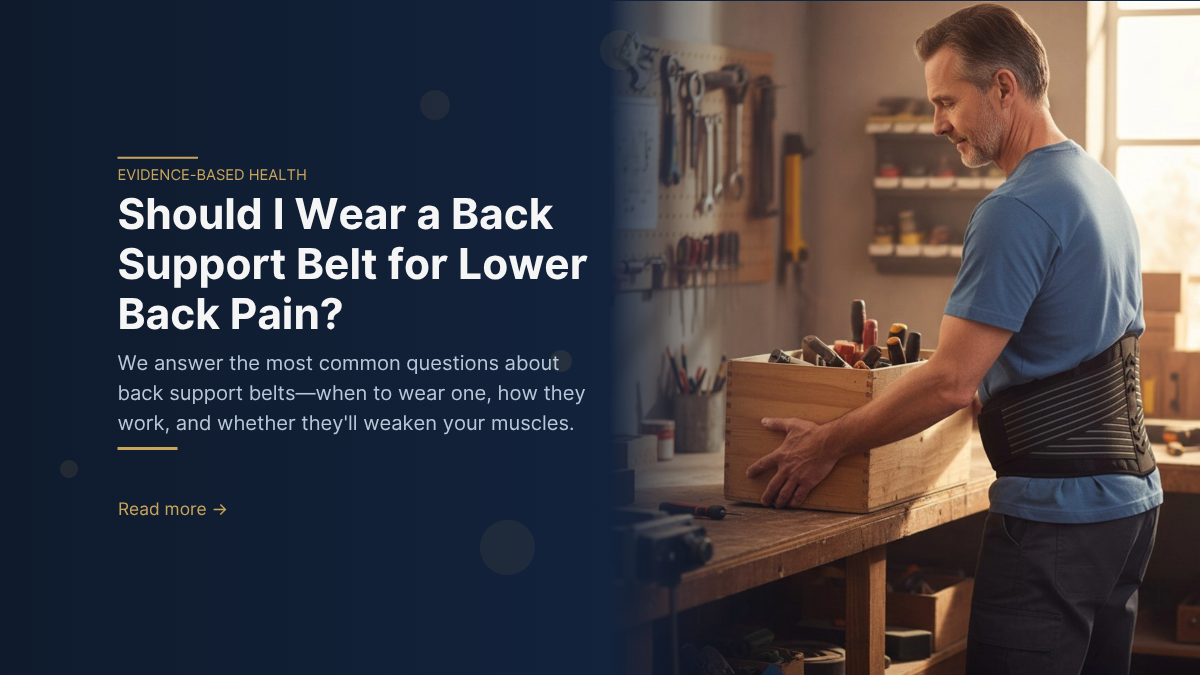
Lifting and carrying place high loads on your lower back, particularly if you’re lifting something heavy, awkwardly positioned, or from a low height. The belt limits forward bending and twisting, encourages better posture, and provides external support that reduces the load on your muscles and spine. Wear it during manual work, moving furniture, lifting boxes, carrying shopping, or any task that involves repeated or heavy lifting.
🧍 Prolonged Standing
Standing for long periods places ongoing load on your lower back muscles and joints. The belt provides external support that reduces muscle fatigue and helps you maintain better posture. Wear it during work that involves prolonged standing—retail, hospitality, healthcare, teaching—or during activities like cooking, ironing, or attending events where you’ll be on your feet for extended periods.
💺 Prolonged Sitting
Sitting increases the pressure on the discs in your lower back, and sitting in a slumped or poorly supported position makes it worse. The belt encourages you to maintain better posture while sitting, and the compression provides external support that reduces the load on your spine. Wear it during desk work, meetings, long journeys, or any situation where you’ll be sitting for extended periods.
🔨 Physical Work and Demanding Tasks
Jobs or activities that involve repeated bending, lifting, twisting, reaching, or carrying place cumulative stress on your lower back. The belt provides structural support and stability that helps you manage these demands more safely. Wear it during manual work, gardening, DIY projects, cleaning, or caring for children or dependents.
⚠️ During Pain Flare-Ups
Pain flare-ups—periods when your symptoms are worse than usual—can be triggered by overactivity, poor posture, stress, or simply the natural fluctuation of your condition. During a flare-up, your lower back is more sensitive, and movements that are usually tolerable may become painful. The belt provides extra support and stability during these periods, helping you stay active and manage symptoms while your back settles down.
↗️ Returning to Activity After Rest
If you’ve had to rest because of severe pain, returning to normal activity can be daunting. The belt provides confidence and support during this transition, helping you gradually rebuild your tolerance for movement and activity without fear of making things worse.
When Should You NOT Wear a Back Support Belt?
During Rest
Take the belt off during rest periods—sitting comfortably at home, lying down, relaxing—and during activities that don’t aggravate your pain. Your muscles need to stay active. If you wear the belt constantly, even when you don’t need it, your muscles may become reliant on the external support and lose strength over time.
While Sleeping
Do not wear the belt while sleeping. Your body needs to move freely during sleep, and wearing a rigid support overnight can cause discomfort and restrict natural movement.
All Day, Every Day
The belt is a tool to help you stay active and manage symptoms during demanding tasks and flare-ups, not a permanent replacement for your own muscle strength and stability. Use it strategically, not constantly.
What Should You Look for in a Back Support Belt?
Not all back support belts are the same. If you’re going to invest in one, choose a belt that provides genuine structural support, not just compression.
Rigid or Semi-Rigid Structure
Look for a belt with a rigid or semi-rigid back panel, ideally reinforced with metal or plastic stays. This provides the structural support needed to limit forward bending, twisting, and excessive arching. Elastic-only belts provide compression but very little structural support, so they’re less effective for mechanical lower back pain.
Adjustable Compression
The belt should have adjustable straps that allow you to control the level of compression. You want to be able to tighten the belt for maximum support during demanding tasks, and loosen it slightly for comfort during sitting or easier activities.
Proper Coverage
The belt should cover your lumbar spine—the lower part of your back, roughly from the bottom of your rib cage to the top of your hips. It should also wrap around your lower abdomen to provide compression and support from all sides. A belt that’s too narrow won’t provide adequate support. A belt that’s too tall will restrict your ribs or hips and feel uncomfortable.
Breathable and Comfortable
You’ll be wearing the belt during physically demanding tasks, so it needs to be breathable and comfortable for extended wear. Look for belts with ventilation holes or moisture-wicking fabric that reduces heat and sweat build-up.
Correct Sizing
Sizing matters. A belt that’s too small will be uncomfortable and restrictive. A belt that’s too large won’t provide adequate support and may slip or ride up during movement. Measure your waist at the level where the belt will sit—roughly at the top of your hips—and choose the size that matches your measurement.
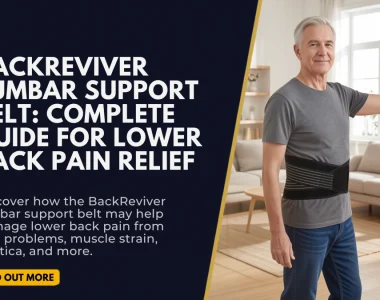
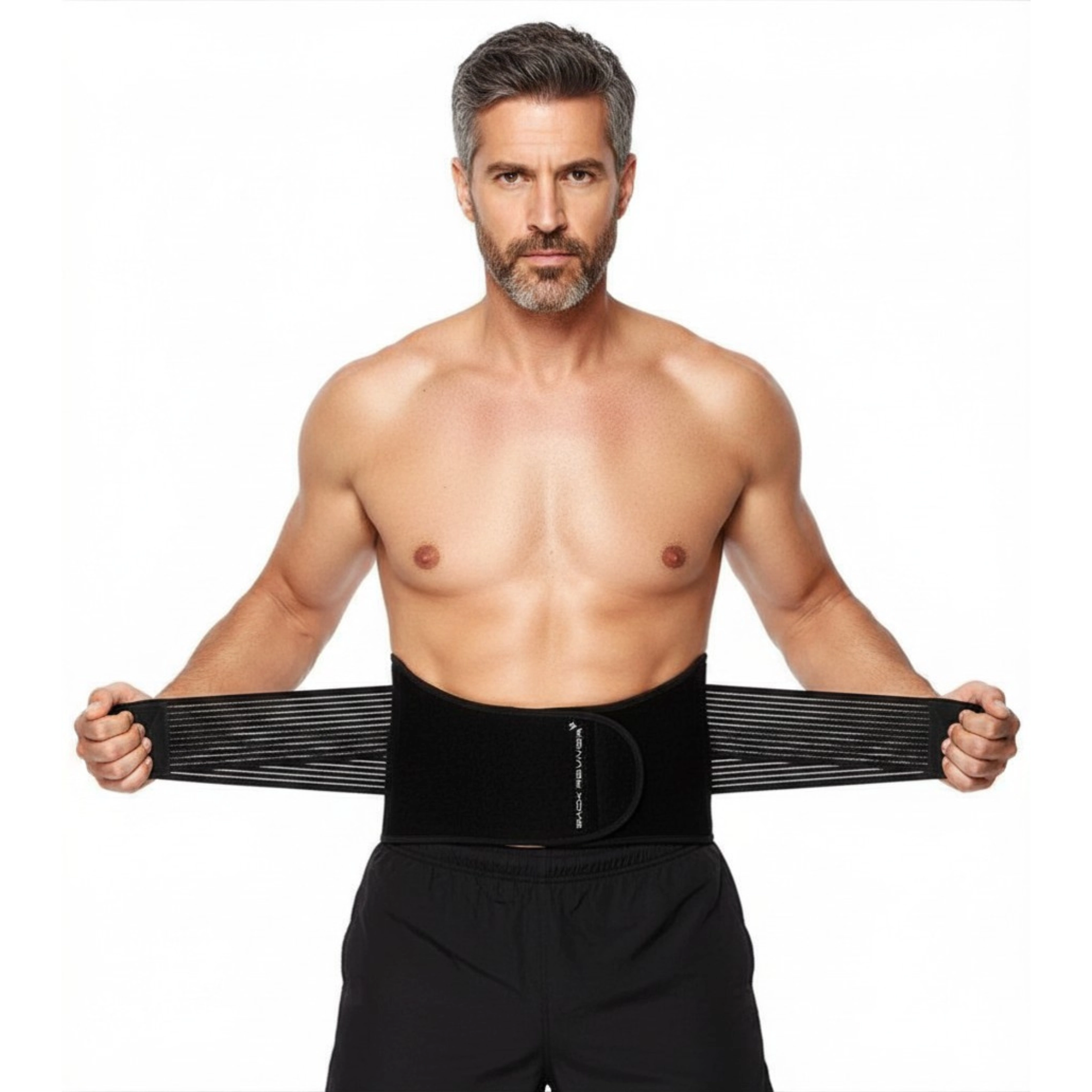
The BackReviver Lower Back Support Belt we stock ticks all these boxes. It’s a semi-rigid lumbar brace built for exactly the kind of use we’ve described above—lifting, prolonged standing or sitting, physical work, and pain flare-ups.
Will a Back Support Belt Make My Muscles Weaker?
This is one of the most common concerns people have, and it’s a fair question. The short answer is: only if you wear it constantly when you don’t need it.
The Concern
The worry is that if you rely on external support all the time, your core muscles—the muscles that normally stabilise your spine—will stop working as hard and become weaker. This is a real risk if you wear a back support belt all day, every day, even during activities that don’t place your spine under strain.
The Reality
When used strategically—during lifting, prolonged standing or sitting, physical work, and pain flare-ups—a back support belt does not weaken your muscles. It provides temporary external support during the tasks that place your spine under the most load, allowing you to stay active and manage symptoms without overloading your back.
During rest periods and activities that don’t aggravate your pain, you take the belt off. Your muscles continue to work normally during these times, maintaining their strength and function.
The Key: Strategic Use, Not Constant Reliance
Think of a back support belt like a walking stick. If you use a walking stick during a long hike when your knee is sore, it helps you complete the hike without making your knee worse. But if you use the walking stick all day, every day, even when you’re just sitting at home, your leg muscles will weaken because they’re not being used.
The same principle applies to back support belts. Use them when you need the support. Take them off when you don’t.
| ✓ Do This (Safe & Effective) | ✗ Don’t Do This (Risk of Weakness) |
|---|---|
| Wear during lifting, standing, sitting, physical work | Wear all day, every day, even during rest |
| Take off during rest and light activities | Never take it off except to sleep |
| Combine with core strengthening exercises | Rely on the belt alone without strengthening |
| Use strategically during flare-ups and demanding tasks | Wear constantly even when pain-free |
Strengthening Is Still Important
A back support belt is not a substitute for strengthening your core muscles. Core strengthening exercises—targeting your abdominal muscles, lower back muscles, and the muscles around your pelvis—improve your spine’s natural stability and reduce your risk of future pain and injury.
A physiotherapist can give you a tailored exercise programme that’s appropriate for your condition and fitness level. Combining strategic use of a back support belt with regular strengthening exercises gives you the best outcome: symptom management in the short term, and improved stability and resilience in the long term.
Is a Back Support Belt Right for You?
It May Be Suitable If You Have
A back support belt is most helpful for adults with mechanical lower back pain—pain related to movement, posture, and load. This includes:
- Lower back strain or muscle pain – pain triggered by lifting, bending, twisting, or prolonged standing or sitting
- Disc problems – bulging discs, herniated discs, degenerative disc disease
- Sciatica – leg pain caused by disc or nerve irritation in the lower back
- Facet joint pain – pain from the small joints at the back of the spine, often worse with arching or twisting
- Degenerative changes – wear and tear, osteoarthritis of the spine
- Spinal stenosis – narrowing of the spinal canal causing pain, numbness, or weakness
- Spondylolisthesis – a vertebra slipping forward on the one below it
If your pain is worse during lifting, bending, twisting, prolonged standing or sitting, or physical work, and better during rest, a back support belt is likely to help.
Seek Professional Advice First If
You should speak to a GP or physiotherapist before using a back support belt if:
- You’re unsure what’s causing your pain
- Your pain is severe, constant, or getting worse
- You have numbness, tingling, or weakness in your legs
- You’ve had recent surgery or a significant injury to your lower back
- You’re pregnant
- You have any existing medical conditions affecting your lower back, abdomen, or circulation
Seek Urgent Medical Advice If You Develop
- Severe or rapidly worsening leg weakness
- Numbness in the saddle area—between your legs, groin, buttocks, inner thighs
- Loss of bladder or bowel control
These are signs of cauda equina syndrome, a rare but serious condition that requires immediate medical attention.
Summary
Back support belts can be a helpful tool for managing lower back pain when used correctly. They provide external support that limits painful movements, reduces the load on your spine during demanding tasks, and helps you stay active during pain flare-ups.
The key is strategic use, not constant reliance. Wear the belt during lifting, prolonged standing or sitting, physical work, and flare-ups. Take it off during rest and activities that don’t aggravate your pain. Don’t wear it while sleeping. Combine the belt with core strengthening exercises to build your natural stability over time.
Choose a belt with rigid or semi-rigid structure, adjustable compression, proper coverage, breathable materials, and correct sizing. The BackReviver Lower Back Support Belt meets all these criteria and is designed for the kind of strategic use we’ve described throughout this article.
If you’re unsure whether a back support belt is right for you, or if your symptoms are severe or worsening, speak to a GP or physiotherapist for a proper assessment and personalised advice.
Ready to Try a Back Support Belt?
View the BackReviver Lower Back Support Belt, check sizing, and read full product details.