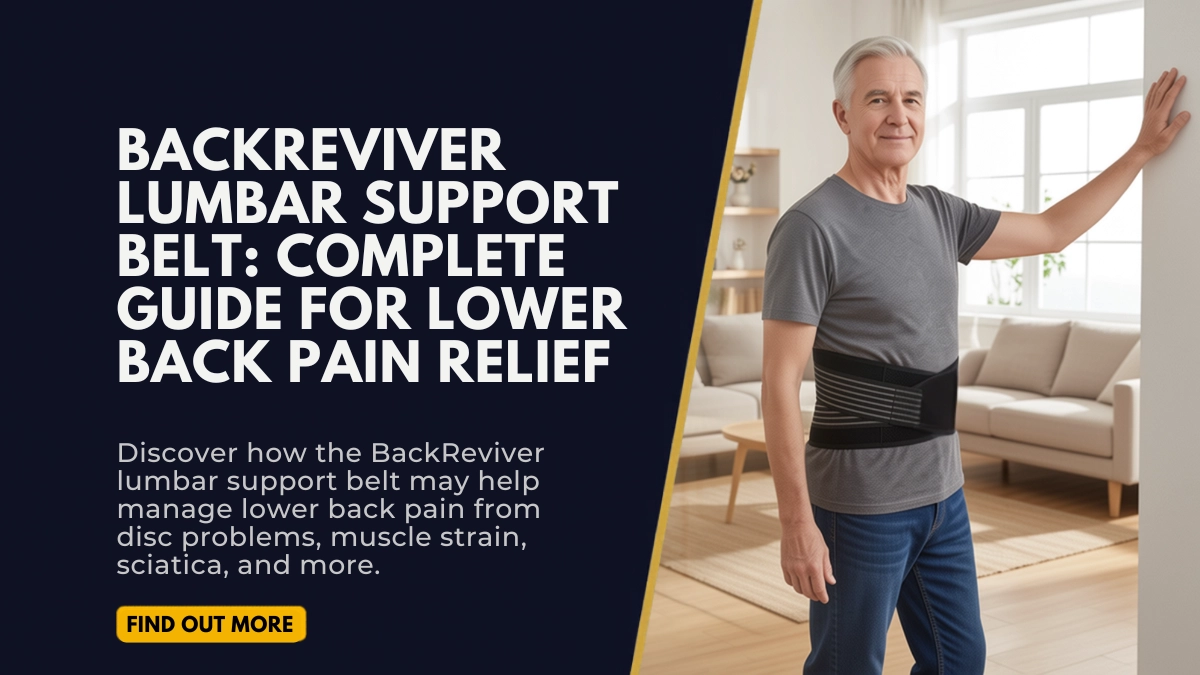
BackReviver Lumbar Support Belt: Complete Guide for Lower Back Pain Relief
About the BackReviver Lumbar Support Belt
The BackReviver lumbar support belt is a semi-rigid back brace designed by BackReviver, a UK-based specialist in biomechanical support products. At NuovaHealth, we stock and recommend the BackReviver belt because it combines firm structural support with practical, everyday wearability.
This guide is written by our team at NuovaHealth to help you understand how the belt works, who it may help, and how to use it safely. We’ve collaborated with UK physiotherapists to ensure the advice is evidence-informed and grounded in real-world clinical experience.
Lower back pain doesn’t just ache—it takes over your day. It changes how you sit, stand, walk, and sleep. Simple tasks become a challenge, and you’re left wondering if anything can help.
Most lower back pain comes from a handful of underlying patterns. Your lumbar spine—the five vertebrae in your lower back—is built to carry weight and allow movement, but it’s also vulnerable. Discs (the cushions between each vertebra) can bulge or wear down. The small facet joints at the back of each vertebra can get irritated. Muscles and ligaments can be strained. Nerves can become compressed, sending pain into your buttock or leg.
Whatever the cause, the result’s the same. Your back feels unstable, and certain movements trigger pain. Your body tightens the surrounding muscles to protect the area, but that tightness makes you feel stiff and sore.
The BackReviver lumbar support belt is designed to provide external stability to your lower back and pelvis during acute flare-ups and recovery. It supports your lower back and pelvis, limits the movements that aggravate things—especially bending forward and twisting—and gives injured tissues a chance to settle. The gentle compression can ease muscle spasm and improve your awareness of your posture, so you’re less likely to move in ways that cause pain.
You’re not strapping yourself into a rigid corset all day. It’s about giving your back the support it needs during activities that usually cause trouble, so you can stay active and let your body heal.
BackReviver Belt: Design & Features
The BackReviver belt wraps around your lower back and pelvis, sitting snugly over the area where most problems live. Its contoured shape follows the natural curve of your lumbar spine, so it stays in place and doesn’t dig in when you move.
Inside the belt sit eight flexible aluminium stays—four on each side of your spine. These springy stays follow your body’s shape. They feel like a firm guide, not a rigid cage. When you put the belt on, it keeps your lower back neutral and upright, limiting the bending forward and twisting that trigger pain.
The fastening’s simple. A wide Velcro panel at the front, plus two elastic tension straps that pull forward from the back and attach with Velcro overlays. No buckles. This two-stage design lets you dial in the compression—looser when sitting, tighter when walking or lifting.
The thick padding cushions your lower back and stomach, protecting you from shocks and jolts. The breathable ventilation layer helps keep you comfortable during extended wear. The slim profile means you can wear it under most clothing without looking bulky. The belt is unisex and fits both men and women.
Why Choose the BackReviver Lumbar Support Belt?
There are many back braces available—from simple elastic wraps that offer minimal support to rigid medical-grade orthoses that restrict all movement. The BackReviver belt sits in the middle: it provides firm structural support when you need it, but remains comfortable enough for everyday wear.
What sets it apart is the combination of eight flexible aluminium stays (not just elastic or neoprene) with a two-stage adjustable fastening that lets you control compression precisely. You get the stability of a semi-rigid brace without the bulk or discomfort of a full medical orthosis.
Designed by BackReviver, a UK-based specialist in biomechanical support products, the belt is built around real-world use—standing at work, walking to the shops, lifting at home—not just clinical settings.
Key features:
- Eight flexible aluminium stays (four on each side) provide firm resistance to bending forward and twisting while allowing natural movement
- Two-stage adjustable fastening (inner Velcro + outer elastic straps) gives you precise control over compression—tighten for lifting or walking, loosen for sitting
- Breathable, padded construction for extended wear without overheating or chafing
- Slim profile sits flat under clothing
- Unisex design suitable for both men and women
Ideal if you:
- Need firm support during flare-ups but don’t want a rigid brace all day
- Want to stay active during recovery without constant fear of re-injury
- Need support during specific activities (standing, walking, lifting) but can take it off when resting
- Have tried elastic wraps and found them too weak, or rigid braces and found them too restrictive
Not suitable if you:
- Have a severe spinal fracture requiring a custom-fitted orthosis prescribed by a specialist
- Have an active infection or open wound where the belt sits
- Are pregnant (the abdominal compression could cause harm)
How a Lumbar Support Belt Helps Lower Back Pain
The belt’s main job is to take pressure off the bits that hurt. When you bend forward, your discs and joints take a lot of strain. The belt resists that movement, taking some of the load off your spine. The compression also sends a steady signal to your nervous system, easing muscle spasm—that tight, gripping feeling that makes back pain worse.
The belt won’t fix a herniated disc or reverse arthritis. What it does is create better conditions for your back to heal. By limiting the movements that aggravate things and reducing muscle spasm, it gives your body the space it needs to recover.
How to Use a Lumbar Support Belt Correctly
Using the belt properly makes a real difference to how well it works and how comfortable you feel. Here’s a straightforward guide based on how a physiotherapist would walk you through it.
Putting It On
The belt sits low around your hips, just above your hip bones. The contoured stays line up along either side of your spine—you’ll feel them more at the sides than directly over the bones.
- Close the main Velcro panel at the front
- Pull each side tension strap forward and across your body, attaching them to the front overlays
- The belt should feel snug but not tight enough to restrict your breathing or dig into your stomach—you should be able to slide two fingers between the belt and your body
When to Wear It
The belt’s a tool for specific situations, not something you wear all day. It’s most helpful when:
- Standing for long periods, like at a workbench or in a queue
- Walking for more than a few minutes, especially on hard surfaces
- Lifting or carrying anything heavier than a few kilograms
- Sitting for extended periods, particularly if your chair doesn’t support your lower back well
- Gardening, DIY, or any task that involves bending and twisting
- Gym sessions where you need extra lumbar stability
When you’re resting at home, sitting in a good chair, or lying down—take the belt off. Muscles need to work and move to stay strong. Wearing the belt constantly can make them reliant on it. Use it for the moments when your back needs extra support, not as a crutch all day.
What to Expect in the First Few Days
The first time you wear the belt, it may feel unusual—a bit stiff or restrictive. That’s normal. Your body isn’t used to the extra support. Most people find it takes two or three days to get comfortable with the feel and tension.
Start with a looser fit and gradually tighten it as you get used to it. If the belt causes sharp pain, numbness, or tingling, it’s either too tight or not positioned correctly—adjust it or take it off and try again.
You might notice an immediate sense of stability. Many people say they feel less “wobbly” when they walk or bend. Pain relief is often gradual—you may find you can do a bit more each day without discomfort. That’s a good sign. It means the belt is protecting the irritated tissues while they calm down.
How Long to Wear It Each Day
There’s no fixed rule, but a sensible starting point is two to three hours spread over the day. For example, wear it for an hour during your morning walk, then again when you’re standing to cook dinner.
Listen to your body. If you feel the belt is becoming a habit you rely on for every move, take it off more often. The aim is to wean off it gradually as your back improves.
Safety and When to Seek Help
A lumbar support belt is safe for most adults with lower back pain. However, it’s not right for everyone, and there are times when you should see a doctor rather than self-manage.
Who should not use a lumbar support belt?
Be cautious or avoid the belt without medical advice if you have:
- An unhealed fracture in your spine
- An active infection in your back or pelvis
- A vascular condition such as an abdominal aortic aneurysm (the compression could be harmful)
- Blood clots or severe circulation problems
- A skin condition or wound where the belt sits
- A pacemaker or other implanted device near the belt area
Is a lumbar support belt safe during pregnancy?
No. Do not wear the belt if you are pregnant. The pressure on the abdomen could cause harm. This is the safest course of action.
When should I see a doctor about my back pain?
If you get any of these symptoms, stop using the belt and see a doctor:
- New or worsening leg weakness, numbness, or pins and needles that does not settle
- Sudden loss of bladder or bowel control
- Pain that is constant, severe, and not eased by changing position
- Unexplained weight loss, fever, or night sweats alongside your back pain
- Pain that started after a significant fall or accident
These symptoms might mean something more serious is going on—get it checked. The belt isn’t a replacement for proper diagnosis and treatment.
What the Belt Is—and What It Isn’t
The BackReviver belt is:
- A mechanical support tool that limits painful movements
- A way to reduce load on irritated spinal structures
- A confidence aid that helps you stay active during recovery
- Most useful during specific activities that trigger your pain
- A temporary support while your back heals
The belt isn’t:
- A cure for herniated discs, arthritis, or other structural problems
- A replacement for proper diagnosis and treatment
- A substitute for core strengthening exercises
- Something you should wear all day, every day
- A way to avoid addressing the underlying cause of your pain
Always combine belt use with good movement habits—regular breaks from sitting, gentle stretching, appropriate exercise, and attention to posture. If your pain persists or worsens despite using the belt sensibly, seek professional medical advice.
For most common causes of lower back pain—disc problems, muscle strains, arthritis, sciatica, and similar—a well-fitting back brace used sensibly can make a real difference. It gives you the confidence to keep moving, which is one of the best things you can do for your back.
How the BackReviver Belt May Help with Specific Lower Back Problems
The following sections explain how a well-designed back brace interacts with common lower back conditions. These are not medical claims—they describe the mechanical principles that many people find helpful during flare-ups or aggravating activities. Always consult a healthcare professional for a proper diagnosis and tailored advice.
Fitting Guide
For the best fit, position the belt low around your hips, just above your hip bones. The contoured stays should line up along either side of your spine—not directly over it.
Step-by-step:
- Unfasten the front Velcro panel and loosen both side straps completely
- Position the belt low around your hips—the contoured back panel should be centred over your lower spine
- Bring the front panel across your abdomen and fasten the main Velcro closure—snug but not tight enough to restrict your breathing
- Pull each side strap forward across your body, one at a time. Attach the Velcro end to the front of the belt
- Adjust the tension so the belt feels firm and supportive. You can tighten it further for lifting or walking, and loosen it for sitting
- Check that the belt doesn’t ride up when you move. If it shifts, the starting position may be too low or too high—adjust and refasten
You should be able to slide two fingers between the belt and your body when it’s properly fitted.
Care Instructions
To keep the BackReviver belt in good condition:
- Hand wash only in cool water with mild detergent
- Do not machine wash or tumble dry
- Do not iron or dry clean
- Air dry flat, away from direct heat or sunlight
- Ensure the belt is completely dry before storing
- Store flat or loosely rolled in a cool, dry place
- Keep Velcro fasteners closed when not in use to prevent them catching on fabric
Frequently Asked Questions
Usage & Fit
Can I wear the belt under my clothes?
Yes. The slim profile sits flat under most clothing without creating bulk.
How tight should the belt be?
Snug enough to feel supportive, but not so tight it restricts your breathing or digs into your stomach. You should be able to slide two fingers between the belt and your body.
Can I wear the belt during exercise?
Yes, during activities like walking, gym sessions, or lifting where you need extra lumbar stability. Avoid wearing it during exercises that specifically target your core muscles, as it will reduce the training effect.
How long should I wear a lumbar support belt?
There’s no fixed rule, but a sensible starting point is two to three hours spread over the day. Use it during activities that trigger your pain, and take it off when resting.
Can I sleep in the belt?
No. Your back needs to move and relax during sleep. Wearing the belt at night can make your muscles reliant on it and may disrupt your sleep.
Results & Expectations
How long will it take to feel a difference?
Some people notice an immediate sense of stability. Pain relief is often gradual—you may find you can do a bit more each day without discomfort. If you don’t notice improvement after two weeks of consistent use, see a physiotherapist.
Will a lumbar support belt cure my herniated disc?
No. It won’t cure a herniated disc, reverse arthritis, or strengthen weak muscles. What it does is create conditions that allow your back to heal while you stay active.
Is a lumbar support belt a substitute for exercise?
No. The belt is a temporary support tool. Always combine belt use with good movement habits, gentle stretching, and appropriate exercise. Muscles need to work to stay strong.
Will the belt weaken my core muscles?
Not if you use it sensibly. Wear it during activities that trigger pain, and take it off when resting or doing gentle movement. The belt is a temporary support, not a permanent replacement.
Safety & Medical Concerns
What if the belt causes pain or discomfort?
If the belt causes sharp pain, numbness, or tingling, it’s either too tight or not positioned correctly. Adjust it or take it off and try again. If discomfort persists, stop using it and consult a healthcare professional.
Can I wear the belt if I have a pre-existing medical condition?
If you have a known fracture, active infection, vascular condition, blood clots, severe circulation problems, or a pacemaker, speak to your GP or physiotherapist before using the belt. They can advise whether it’s safe and appropriate for your situation.
Is it safe to wear a back brace during pregnancy?
No. Do not wear the belt if you are pregnant—the pressure on the abdomen could cause harm.
When to Stop Using the Belt
How do I know when to stop using the belt?
See our full guide on weaning off the belt below.
What if my pain returns when I stop wearing the belt?
If pain returns when you reduce belt use, you may be progressing too quickly. Slow down and build up more gradually. Keep the belt for high-demand activities until you feel confident without it.
Getting the Most from Your Belt
The BackReviver belt works best as part of a broader approach to managing your back pain:
Combine it with movement
Gentle walking, swimming, and stretching help keep your back mobile and strong. The belt gives you the confidence to move, but movement itself is what helps you heal.
Pay attention to posture
Whether you’re sitting, standing, or lifting, try to keep your spine in a neutral position. The belt provides feedback, but you still need to be mindful of how you move.
Take regular breaks
If you sit for work, stand up and move every 30–45 minutes. If you stand for work, sit down and rest when you can. Prolonged static positions—even with the belt on—can aggravate back pain.
Strengthen your core gradually
As your pain settles, start gentle core exercises to build the natural support around your spine. A physiotherapist can guide you on what’s appropriate for your stage of recovery.
Listen to your body
If an activity causes sharp pain, stop. If the belt feels uncomfortable, adjust it. If your pain persists or worsens despite using the belt sensibly, seek professional advice.
When to Wean Off the Belt
As your back improves, you should gradually reduce how much you rely on the belt. Here are signs that you’re ready to start weaning off:
- You can perform daily activities with minimal or no pain
- You feel stable and confident moving without the belt
- You’ve been doing core strengthening exercises and your muscles feel stronger
- You only need the belt for particularly demanding activities
How to wean off:
- Start by taking the belt off during low-demand activities—sitting in a supportive chair, gentle walking on flat surfaces
- Gradually increase the time you spend without the belt each day
- Keep the belt for high-demand activities—lifting, prolonged standing, long walks—until you feel confident without it
- If pain returns when you reduce belt use, you may be progressing too quickly. Slow down and build up more gradually
- Once you can manage all your usual activities without the belt, keep it as a backup for particularly challenging days or flare-ups
The goal is to reach a point where you don’t need the belt at all, or only use it occasionally during high-risk activities.
A Final Word
Lower back pain is exhausting. It’s not just the ache—it’s the constant worry about whether you’ll make it through the day, the activities you avoid, the plans you cancel. It affects not just your body, but your confidence, your mood, and your ability to do the things you enjoy.
The BackReviver lumbar support belt won’t fix everything, but it can give you the stability and confidence you need to stay active while your back heals. It’s built around a simple principle: give your spine the external support it needs during the movements that hurt, so the injured tissues get a chance to settle.
Eight flexible aluminium stays resist the bending and twisting that aggravate most lower back problems. The two-stage fastening lets you control compression precisely. The breathable, padded construction means you can wear it for hours without discomfort. It’s designed for real life—standing at work, walking to the shops, lifting at home—not just clinical settings.
Use it sensibly—during the activities that trigger your pain, not all day. Combine it with good movement habits, appropriate exercise, and attention to posture. And if your pain persists or worsens, don’t hesitate to seek professional advice.
Your back can heal, given the right conditions. The belt helps create them. The rest is up to you.
Stay active. Stay patient. Give your back the support it needs.
Sizing Guide
The BackReviver lumbar support belt is available in three sizes. To find your size, measure around your waist at the level of your belly button:
- Medium: 25.2–28.8 inches (64–73 cm)
- Large: 28.8–32.4 inches (73–82 cm)
- Extra Large: 32.4–36 inches (82–91 cm)
If you’re between sizes, choose the larger size for comfort. The adjustable tension straps allow you to fine-tune the fit.
Unisex design: The belt is suitable for both men and women.
BackReviver Lumbar Support Belt
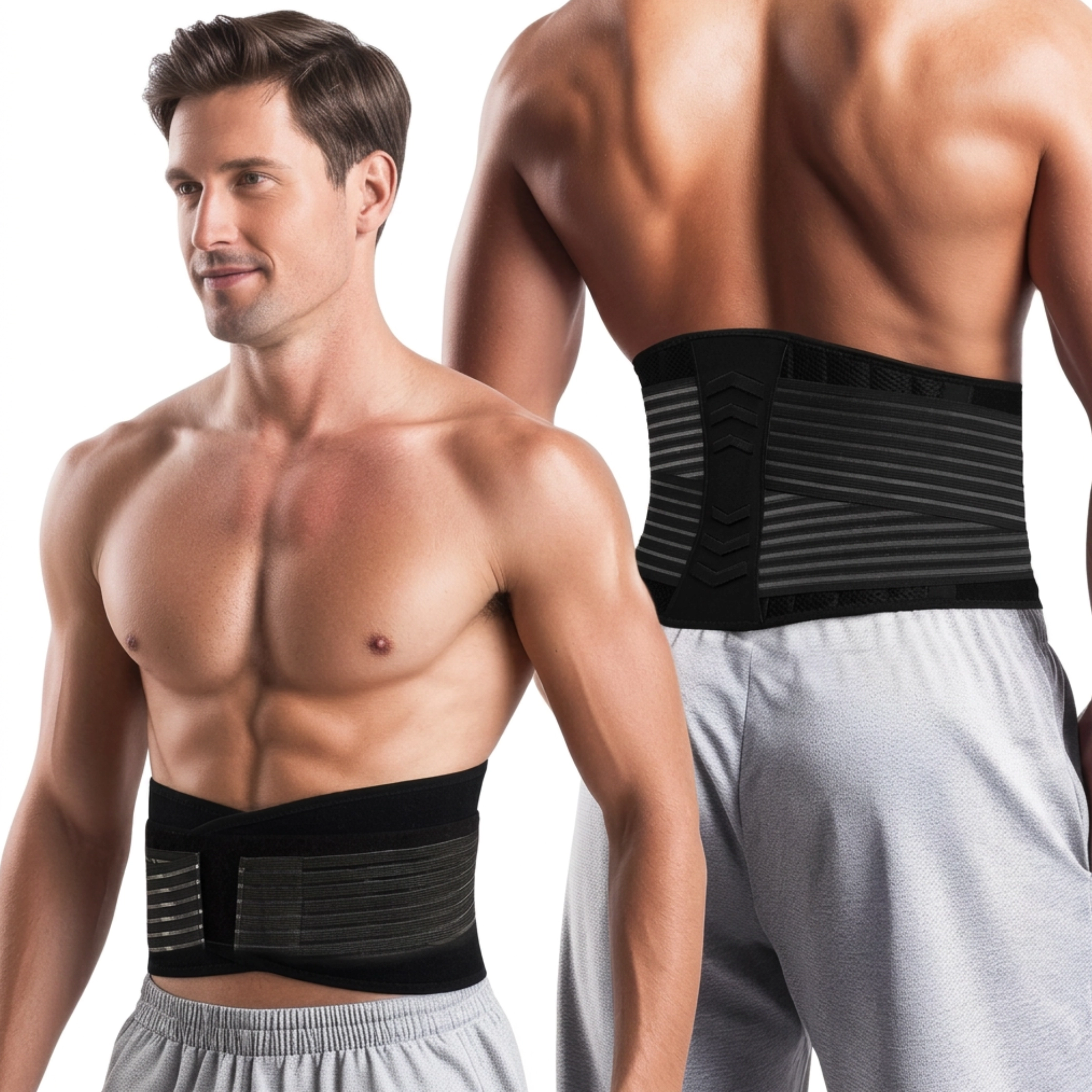
BackReviver Semi-Rigid Lumbar Support Belt
£16.99
- ✅ Eight flexible aluminium stays for firm support
- ✅ Two-stage adjustable fastening for precise compression
- ✅ Breathable, padded construction for all-day comfort
- ✅ Slim profile—wear under clothing
- ✅ Unisex design (Medium, Large, Extra Large)
- ✅ 30-day money-back guarantee
Need help choosing your size? See our sizing guide above or contact our team for advice.
Summary: Key Points to Remember
- ✅ The BackReviver belt provides external stability to your lower back and pelvis, limiting the movements that trigger pain
- ✅ Eight flexible aluminium stays (four on each side) resist bending forward and twisting while allowing natural movement
- ✅ Two-stage adjustable fastening (inner Velcro + outer elastic straps) lets you control compression precisely
- ✅ May help manage symptoms associated with muscle strain, disc problems, sciatica, facet joint pain, SI joint dysfunction, and postural pain
- ✅ Wear it during activities that trigger pain—standing, walking, lifting, sitting—and take it off when resting
- ✅ Not suitable if you are pregnant, have active blood clots, severe circulation problems, or certain medical conditions without medical advice
- ✅ Combine with movement, stretching, and core strengthening for best results
- ✅ Wean off gradually as your back improves—the goal is to rely on your own muscles, not the belt
- ✅ Seek medical advice if you experience red flag symptoms (leg weakness, loss of bladder/bowel control, unexplained weight loss, fever)
- ✅ 30-day money-back guarantee—if it doesn’t help, return it for a full refund
Ready to Try the BackReviver Belt?
- Measure your waist using our sizing guide above
- Choose your size (Medium, Large, or Extra Large)
- Order with confidence – 30-day money-back guarantee
- Follow our fitting guide when it arrives
- Wear it during activities that trigger your pain – standing, walking, lifting
- Track your progress – most people notice improvement within 1–2 weeks
Still unsure? Contact our team for personalised advice.
The BackReviver lumbar support belt: designed by BackReviver, recommended by NuovaHealth, trusted by people with lower back pain across the UK.