No products in the cart.
Best Night Splints and Support for Plantar Fasciitis: An Expert Q&A
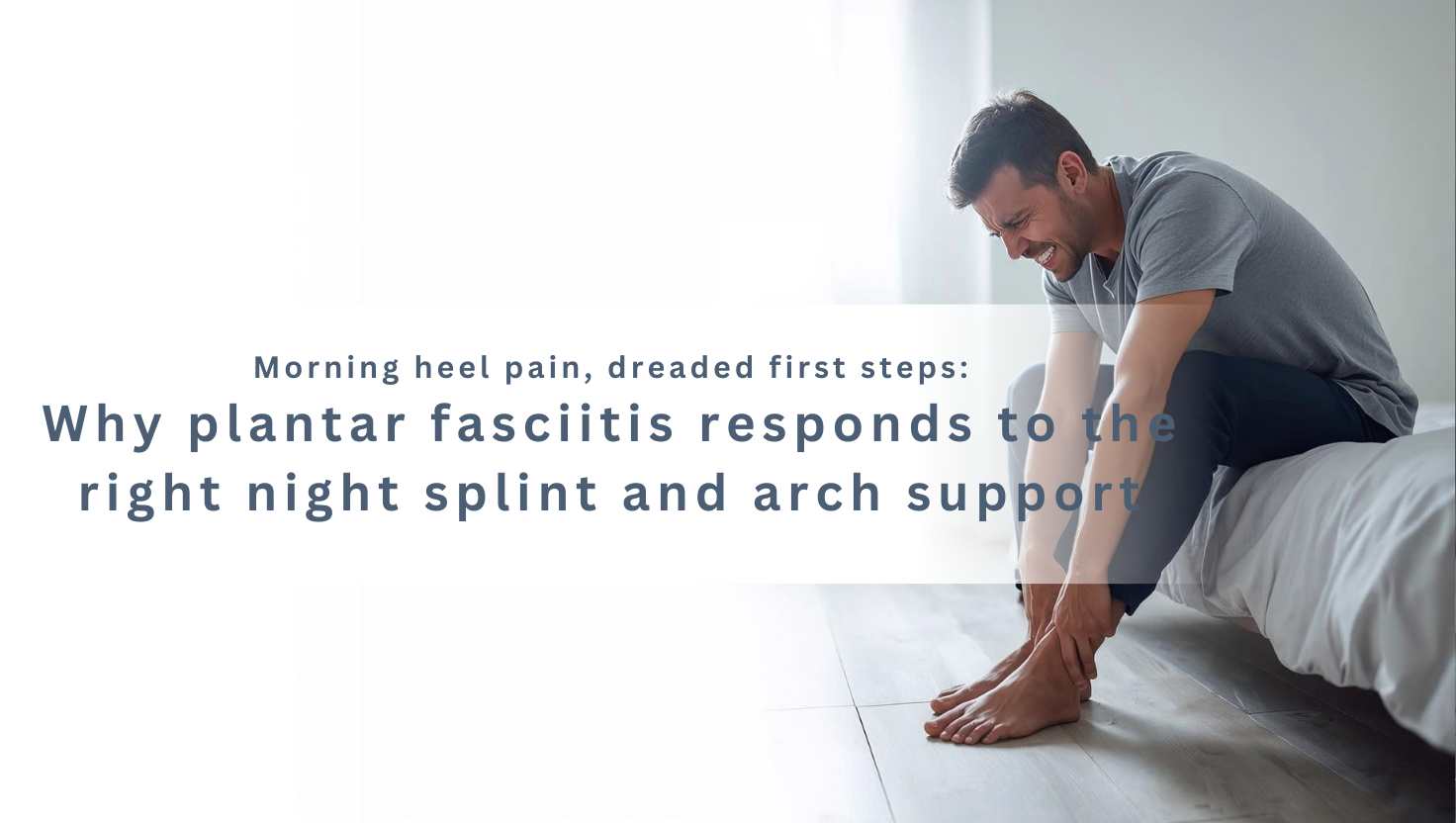
If you wake up dreading those first few steps because of heel pain, you’re not alone. At first, it might just be a bit of soreness when the feet touch the floor. Before long, those very first steps out of bed bring a sharp, stabbing pain under the heel that makes you hesitate before you stand. A few minutes of walking usually takes the edge off, but the pain never fully disappears. It flares again after a busy shift on your feet, a long walk, a run, or a match – and the same pattern is back the next morning.
Search for “best night splint for plantar fasciitis” and there are plenty of products and strong opinions. Some swear by night splints. Others insist that insoles or stretching are enough. In reality, for many people this pattern of pain is driven by a combination of foot shape, how much impact the feet are under, and what the plantar fascia and calf are allowed to do when off the feet, especially overnight.
To see how night splints and arch supports can work together in a sensible way, it helps to look at a question that comes up again and again.
Darren’s Question
“I’ve had flat feet for as long as I can remember, but never had them checked or used any insoles. Over the last few months I’ve started getting a really sharp pain under my heel when I get out of bed in the morning. It eases off after I walk around a bit, but it always comes back, especially after running or playing football. I’ve seen people talking about plantar fasciitis and night splints, and I keep seeing ‘best night splint for plantar fasciitis’ recommendations online, but I don’t know if that’s actually what I need, or if arch supports would be better. Can a night splint really help if I’ve got flat feet and play a lot of sport, and how do I know what to choose?”
Darren’s situation is very familiar: long‑standing flat feet, no formal diagnosis, an active life, and a very characteristic “first‑step” pain pattern.
What Darren’s Story Tells Us
Several key points stand out from Darren’s description:
- The arches have been flat for years
- Pain under the heel is sharpest with the first steps in the morning
- Pain settles as he moves but returns after running, football and long periods on his feet
- No arch supports or insoles have been used despite regular sport
- There is awareness of plantar fasciitis and night splints, but uncertainty about what is actually needed
Taken together, this strongly suggests plantar fasciitis (or plantar fasciopathy, when the problem has been present for a while), with the plantar fascia under extra strain because of flat feet and high‑impact loading from sport. That classic pattern of pain on first standing, easing with movement and flaring again after activity is one that clinicians see every day.
To understand how a night splint and proper arch supports can help, it is worth looking at what is happening in the heel and arch, and how flat feet plus sport feed into that.
What’s Actually Going On in the Heel and Arch?
The plantar fascia is a thick band of connective tissue that runs along the bottom of the foot from the heel bone (calcaneus) to the base of the toes. It helps support the arch and stabilise the foot when walking and running.
When the plantar fascia is repeatedly overloaded, small areas near where it attaches into the heel can become irritated. In earlier stages, this often involves more inflammation (plantar fasciitis). Over time, if the overload continues, the tissue can become less organised and less resilient (plantar fasciopathy).
Typical features include:
- Sharp or stabbing pain under the heel, often slightly towards the inner side
- Pain that may extend along the arch
- Discomfort after long spells standing or walking, or after sport
- A strong spike in pain with the first steps in the morning or when standing after sitting
The way the tissue behaves between bouts of activity is key. During the day, every step loads the plantar fascia, particularly at the heel. If the tissue is already irritated, this repeated loading keeps it sensitive. When lying down or sitting for longer periods, the foot is not bearing weight. The plantar fascia and the calf–Achilles complex naturally shorten slightly in this relaxed position.
Most people sleep with the feet relaxed and the toes pointing down a little. In someone with plantar fasciitis, the plantar fascia stiffens in that shortened state overnight. When standing in the morning, full bodyweight goes straight through that shortened, sensitised tissue. The fascia has to lengthen quickly to reach the length it works at during walking, and that sudden pull through a sore area is what produces the familiar “first‑step” pain.
After a few minutes of walking, the fascia warms and lengthens and the pain often eases. But each time there is a longer rest – sleep, a long drive, sitting at a desk – the same tightening then rapid stretching sequence repeats.
Flat Feet, Running and Football: Why This Pattern Is So Common
Flat feet and overpronation (the foot rolling inwards more than average when weight goes through it) play an important role in many cases like Darren’s.
With flat feet:
- The arch sits lower, or drops more when standing
- The plantar fascia has to span a “flatter” curve
- The heel often rolls inwards slightly, increasing strain at the inner part of the heel where the fascia attaches
This means the plantar fascia:
- Spends more time under tension
- Experiences higher peak tensile forces at its heel attachment with each step
- Is often closer to its load limit before any extra stress from sport is added
Running and football then add further load:
- Repeated impact through the heel and forefoot, especially on firm or uneven ground
- Sudden acceleration, deceleration and changes of direction that demand rapid loading and unloading of the fascia
- Surfaces and movements that can exaggerate how much the foot rolls in
- Trainers or boots that may not provide much in the way of arch support or cushioning
For someone like Darren:
- Flat feet have probably been asking more of the plantar fascia for years, quietly
- Regular running and football increase both the number and intensity of loading cycles
- Without arch support, there is nothing to reduce how far the arch collapses or how much the heel rolls in when tired
- By the end of a session, the fascia is more irritated and the calf may be tighter
- Overnight, the foot relaxes into a toes‑down posture, letting both plantar fascia and calf tighten further
- In the morning, that first standing stretch pulls on tissues that have been strained all day and then allowed to shorten all night
That combination explains why the pain is most severe on first getting up, improves a little with movement, then returns after sport and long days on the feet: foot shape, loading and overnight behaviour are all working together.
Common Treatments – and Where Night Splints and Insoles Fit In
Most people with plantar fasciitis do best with a combination of straightforward measures rather than a single fix.
One part is reducing sharp peaks in load:
- This can include temporarily reducing running mileage or intensity, avoiding the hardest surfaces where possible, and building in short breaks during long periods of standing
- Footwear is important: shoes that are very flat, unsupportive or badly worn tend to increase strain on the plantar fascia, while those with adequate heel cushioning and a stable heel counter can help reduce it
Another part is helping the tissues cope better with the demands they face:
- Gentle calf stretches (with the knee straight and slightly bent) and simple plantar fascia stretches can ease background tightness
- Strengthening the foot muscles and calf, and sometimes the hips and gluteals, can improve how forces are shared through the leg and foot
Supportive devices help in more targeted ways:
- Arch support insoles sit inside footwear to support the arch, control excessive rolling in and distribute load more evenly across the foot, particularly away from the most tender part of the heel
- Night splints change how much the plantar fascia and calf are allowed to tighten when off the feet, particularly overnight, and so they directly target the “first‑step” pain
When pain is very severe, persists despite sensible measures, or shows features that are not typical for plantar fasciitis (for example strong night pain that does not settle, significant swelling or systemic symptoms), a GP, physiotherapist or podiatrist can assess for other causes such as stress fractures, inflammatory joint disease or nerve problems and advise accordingly.
How Arch Support Insoles Help – Especially with Flat Feet
Arch support insoles (orthotic insoles) are placed inside shoes and are shaped to:
- Provide a contoured platform under the inside (medial) arch
- Cradle the heel in a slightly deeper cup
- Often add cushioning under the heel and forefoot
The purpose is not to force the foot into an unnaturally high arch, but to give enough support and control that:
- The arch does not collapse as far when weight is put through the foot
- Excessive rolling in of the foot (overpronation) is reduced
- The heel sits more steadily and in a better‑aligned position in the shoe
- The plantar fascia does not have to stretch as far, reducing peak tension at the heel attachment
Mechanically:
- Less arch collapse means the fascia is not pulled quite as taut on each step
- Better control of pronation and heel position improves how forces travel through the foot
- Shock‑absorbing materials under the heel and forefoot help reduce the impact from running and jumping
Arch support insoles from NuovaHealth’s orthotic range are shaped to address these mechanical issues. They typically offer:
- A defined medial arch profile suitable for flat or pronating feet
- A deep heel cup to steady the heel bone and improve rearfoot control
- Firm, supportive materials that do not simply squash flat under load, with some cushioning where it is most needed
- Versions designed for everyday footwear and for sports shoes and boots
Together, the arch shape and heel cup help control excessive pronation and improve how the rearfoot lines up as you walk and run.
For someone with flat feet who runs and plays football, placing these insoles into running trainers and football boots can:
- Reduce how far the arch flattens with each plant and push‑off
- Spread impact forces more evenly across the heel and midfoot
- Lower the constant tensile load on the plantar fascia under the heel
Used regularly, this can reduce both activity‑related pain and the degree of morning discomfort by easing one of the main drivers of irritation at the fascia’s heel attachment.
How a Night Splint Changes Those First Steps
Arch supports act when on the feet. A night splint acts when off them, especially during sleep.
When sleeping, the foot naturally relaxes into a slightly toes‑down position. In someone with plantar fasciitis, that allows the plantar fascia and the calf–Achilles unit to shorten and stiffen. The first steps of the day then involve moving from that shortened position straight into full weight‑bearing, and the plantar fascia has to lengthen quickly to cope. That is one of the main reasons the first few steps hurt so much.
A plantar fasciitis night splint is designed to change this pattern by:
- Holding the ankle close to a right angle (dorsiflexion)
- Gently lifting the front of the foot and toes towards the shin (toe dorsiflexion)
- Keeping the plantar fascia and calf in a mild, steady stretch throughout the night
In this position:
- The fascia and calf are less able to drop back into their shortest, tightest state
- The difference between the length they are at rest and the length they need to work at when standing is smaller
- The first few steps in the morning usually place less sudden tension through the painful area
For a night splint to be genuinely helpful, not just in theory, it needs to be something that can realistically be worn through the night. That means:
- The angle of the ankle and the degree of stretch at the toes must be adjustable, so a position can be found that is effective but still comfortable enough to sleep in
- The front of the splint must be structured enough to stop the foot sagging back into a toes‑down posture
- Straps should hold the foot and ankle securely without digging in or compromising blood flow
- Padding and outer fabrics need to be soft and breathable so that the splint does not cause rubbing or excessive heat build‑up
Why a FootReviver™ Plantar Fasciitis Night Splint Is a Strong Choice
A plantar fasciitis night splint from FootReviver™ is built around these practical needs.
It holds the ankle near a right angle and keeps the toes gently lifted, so the plantar fascia and calf stay lightly stretched instead of relaxing fully into a toes‑down posture. The angle and degree of stretch can be adjusted using the straps, which allows someone with very sensitive feet to start with a milder position and gradually increase the stretch as comfort improves.
A firm support along the front of the leg and foot, together with a carefully designed strap system around the calf, ankle and foot, keeps the foot in the chosen position through the night. This helps prevent the foot sliding down or twisting into positions that would either increase strain on already irritated tissues or reduce the benefit of the stretch.
Soft padding next to the skin and breathable outer materials are used so the splint feels snug rather than scratchy or overly hot. This is important because meaningful change comes from wearing the splint for several hours a night on a regular basis, not just for short trials.
Because the FootReviver™ splint is designed specifically with plantar fasciitis and related problems in mind, the position it maintains targets the overnight tightening that plays such a big part in morning pain. In someone with flat feet who runs or plays football, the same gently stretched position can also help prevent the calf–Achilles unit from fully shortening after heavy sessions.
Arch support insoles from NuovaHealth help to manage strain on the plantar fascia during the day. A FootReviver™ Plantar Fasciitis Night Splint helps manage how much the fascia and calf tighten overnight. Used together, they address two key mechanical contributors to morning heel pain.
Other Helpful Supports and Self‑Care Tools
While arch support insoles and a night splint address the main mechanical drivers of plantar fasciitis, some lighter supports and simple self‑care tools can also play a useful part in easing strain and discomfort.
Arch support straps
Arch support straps are lightweight bands or sleeves worn around the midfoot, often with a shaped pad under the arch. Some, including gel arch support straps available through NuovaHealth, are designed to mould gently to the shape of the foot, provide mild lifting under the arch, and add a bit of cushioning.
They can be particularly helpful when:
- Wearing shoes that cannot easily take a full insole
- Walking around the house on hard floors in socks or barefoot
- Taking the first steps in the morning around the home, before shoes are on
Mechanically, these straps offer gentle support under the arch, so it does not collapse quite as far on each step. They can help reduce how much the foot rolls in (overpronates) and add a little shock absorption under the arch area. They are not as powerful or controlling as a full orthotic insole, but they can reduce some of the strain the plantar fascia is exposed to during the day, particularly in situations where full insoles are not practical. Over time, that can contribute to less overall irritation and, for some people, less intense morning pain.
Spiky massage balls and foot rollers
Spiky massage balls and foot rollers are simple tools used to massage the sole of the foot. Placed under the foot while seated or standing, they can be rolled back and forth to:
- Stimulate local blood flow
- Help reduce feelings of stiffness or tightness in the plantar fascia and foot muscles
- Provide a soothing, massaging effect after long days or runs
Many people with plantar fasciitis find it helpful to:
- Roll the foot over a spiky ball or roller for a few minutes after sitting for a long time
- Use them at the end of the day, or before or after stretching exercises
They do not replace load management, arch support or a night splint, and they are not a cure for plantar fasciitis. However, they can make the foot feel more comfortable, encourage gentle movement, and be a useful part of a self‑care toolkit alongside the other measures described.
A Realistic Plan If Your Situation Is Similar to Darren’s
If the pattern Darren describes feels familiar, a practical way forward often involves several linked steps.
The first is to be confident about the diagnosis. A GP, physiotherapist or podiatrist can:
- Ask how and when the pain started and how it behaves
- Check exactly where the pain is located and how the foot and ankle move
- Rule out other causes of heel pain, such as stress fractures, inflammatory arthropathies, nerve problems or systemic illnesses
Once plantar fasciitis related to flat feet and activity has been confirmed, it makes sense to address both daytime loading and night‑time tightening.
During the day, the focus is on reducing strain with better support and sensible changes to activity:
- Choose footwear with decent heel cushioning, a supportive heel counter and a stable base, rather than very flat or obviously worn‑out shoes
- Use suitable arch support insoles from NuovaHealth’s range in everyday shoes, running trainers and football boots to support the arch and stabilise the heel
- Consider arch support straps in situations where full insoles are not practical, such as at home on hard floors
- Adjust running and sporting activity for a period, for example by reducing weekly mileage, spacing out the hardest sessions, or substituting some high‑impact sessions with lower‑impact options
At the same time, stretching and strengthening help the tissues cope better with the loads they face:
- Gentle calf and plantar fascia stretches, performed within a comfortable range, can reduce background tightness, especially after sitting and before bed
- A gradual strengthening programme for the calf and foot muscles, and where needed for the hips and gluteals, can improve overall lower‑limb mechanics
Simple self‑massage with a spiky ball or foot roller can be added, particularly after long days or runs, to ease perceived tightness and make the foot feel more comfortable.
At night, a FootReviver™ Plantar Fasciitis Night Splint can reduce the degree of overnight tightening:
- Starting with shorter periods of wear in the evening allows time to adapt to the feel of the splint
- Building up to wearing it for most or all of the night gives the plantar fascia and calf several hours in a gently stretched position rather than fully shortened
- Over time, this often makes the first steps in the morning less painful and less daunting
In the first week or two, the main change may simply be becoming used to the devices and new routines. Over several weeks, many people notice that the intensity of first‑step pain reduces, the number of steps needed before walking feels comfortable decreases, and activity feels less likely to trigger severe flares.
If, after a consistent trial of six to eight weeks using appropriate footwear, arch support insoles, arch support straps where useful, stretching, strengthening and a night splint, there is little or no improvement, or if new symptoms appear (such as constant night pain, significant swelling, spreading pain, or numbness), it is important to go back to a clinician for reassessment.
Common Questions About Night Splints and Insoles
Do I need both arch supports and a night splint?
Often, yes. Arch support insoles focus on what happens when weight is going through the feet, helping to reduce strain on the plantar fascia with every step. A night splint focuses on how much the plantar fascia and calf shorten when off the feet, especially overnight. Used together, they address both the day‑time load and the night‑time tightening that feed into morning and “first‑step” pain.
Will a night splint cure my plantar fasciitis on its own?
A night splint can make a clear difference to morning and “after rest” pain for many people, but it is rarely enough as the only measure. It works best alongside footwear changes, arch support insoles where appropriate, adjustment of training or standing load, stretching and strengthening exercises, and, if helpful, lighter supports such as arch support straps. The splint addresses one important part of the problem; the other steps help ensure the tissues are not being pushed past what they can tolerate.
How long does it usually take to feel a difference?
Some people notice a change in morning pain within a couple of weeks. More commonly, a clear improvement appears over four to six weeks of regular use of a night splint such as the FootReviver™ design, combined with suitable arch supports, supportive footwear, and sensible load management. Tissues like the plantar fascia and Achilles tendon adapt gradually, so patience and consistency are important.
Can I keep running or playing football?
In many cases, yes, although short‑term changes are often needed. Reducing mileage, avoiding the very hardest surfaces, spacing out the toughest sessions, and using appropriate arch support insoles in running shoes and boots can all help. A plantar fasciitis night splint worn regularly can make those first steps after training much less painful. If pain is severe, steadily worsening, or accompanied by other worrying signs, seeking advice from a clinician is essential.
Choosing the Right Night Splint – and What to Do Next
When heel pain is at its worst with the first few steps in the morning, and you have flat feet and regularly run or play football, plantar fasciitis is a likely explanation. In that situation, a helpful night splint is one that:
- Keeps the plantar fascia and calf in a gentle stretch while sleeping
- Allows the angle of stretch to be adjusted so it is effective but tolerable
- Is comfortable and secure enough to stay on through the night
- Fits easily alongside daytime measures such as arch support insoles, lighter supports like arch straps, and appropriate footwear
For people in Darren’s position, the best results usually come from a joined‑up approach rather than relying on a single product. That means:
- Using arch support insoles from NuovaHealth’s range to support flat feet and reduce strain on the plantar fascia during the day
- Wearing a FootReviver™ Plantar Fasciitis Night Splint regularly to reduce overnight tightening and ease those first painful steps
- Adding lighter supports, such as arch support straps, when full insoles are not practical
- Incorporating simple stretching, strengthening, self‑massage tools, and thoughtful adjustments to training and daily load
If this pattern of pain and activity sounds familiar, it is worth taking that more complete approach rather than waiting for things to settle on their own.
At NuovaHealth, we believe in supporting your feet around the clock. Start with the FootReviver™ Night Splint to address overnight stiffness and morning pain. For daytime, browse our range of orthotic insoles and supportive products designed to work alongside it, providing stability and comfort during your active hours.
Take the next step toward lasting relief. Explore our full selection of supports tailored for plantar fasciitis and find the combination that works for you.