The Best Choice for Everyday Knee Support: How to Move with Less Hesitation
Stop Letting Your Knee Dictate Your Day
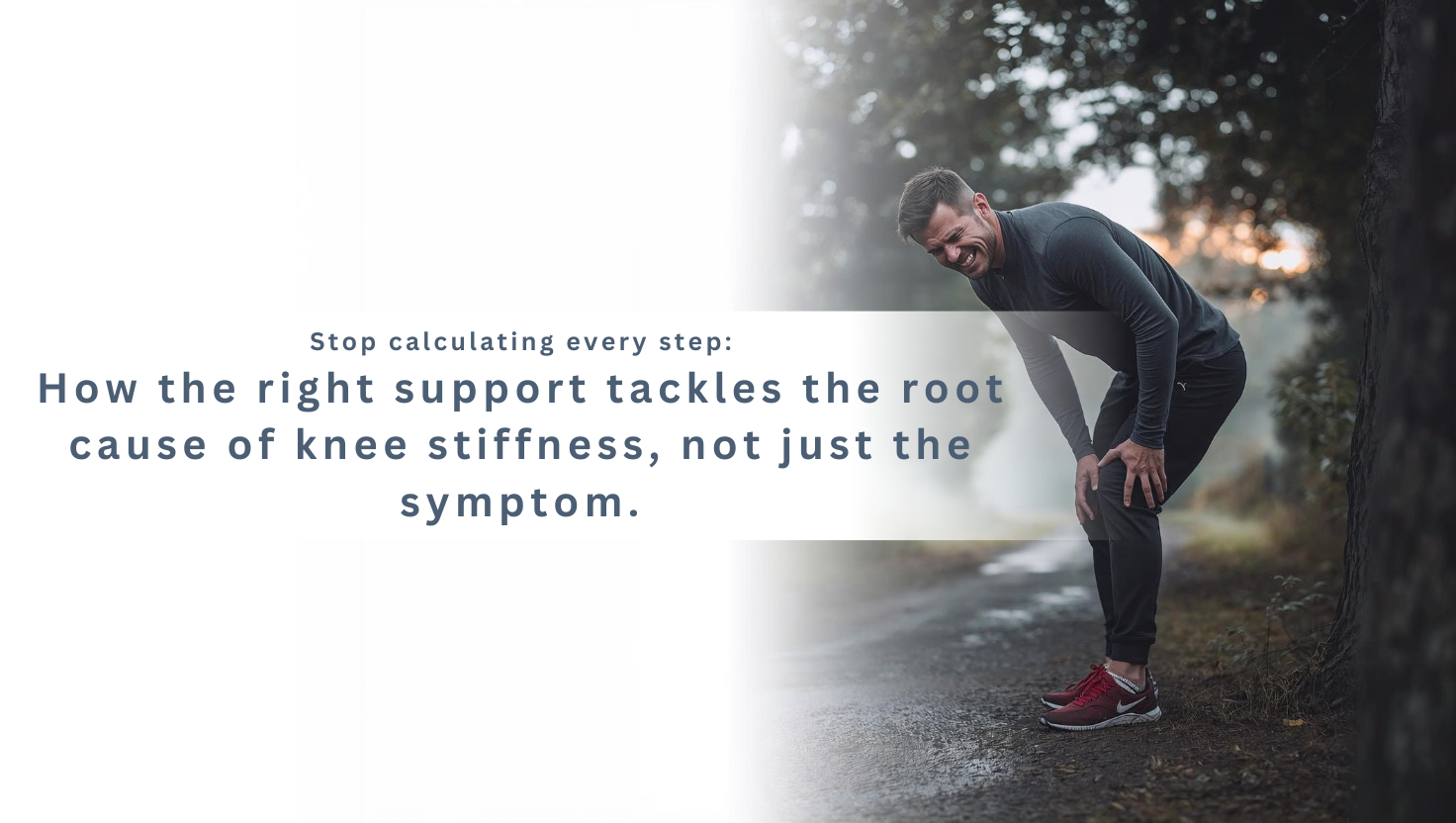
You know the feeling. That hesitation halfway up the stairs, or the stiff ache that sets in after sitting for a while. Maybe you find yourself calculating whether a walk is worth the potential regret later.
If that sounds familiar, you’re in the right place. That stiffness and uncertainty usually signal your knee has lost some of its natural control. It’s a common mechanical issue—think of it like a hinge that’s slightly out of alignment. The right support can help you get that control back, making everyday movements easier and less daunting.
Safety First, Always: This guide is for common, niggling knee concerns. If you have severe, sudden pain, cannot bear weight, or have a recent traumatic injury, it’s essential to consult your GP or a physiotherapist before trying any new support.
Why Your Knee Hurts: It’s Usually a Mechanics Problem
Let’s make sense of that discomfort. Most ongoing knee trouble comes down to a simple fact: the mechanics of the joint have gone off track.
Your knee is built to be both stable and mobile, handling your weight with each step. When everything works, your body weight passes through evenly. The bones glide smoothly, cushioned by two tough, rubbery shock absorbers (the menisci) that spread the load. Strong ligaments stop any excessive wobbling or twisting. It’s a finely tuned system. But when one part gets stressed, the whole system can falter, typically in one of three ways.
The Three Culprits Behind Most Knee Grief
First, there’s misalignment. Your knee is meant to move in a straight line. But many knees tend to drift inwards when you walk, squat, or climb stairs. This makes the inner side of your knee take the brunt of the load. Over time, that uneven pressure stresses the inner cartilage and ligaments, leading to a persistent inner-knee ache—very common in general wear and tear.
Second is swelling and stiffness. Sometimes, the knee’s lining gets irritated and produces too much fluid. This excess fluid has nowhere to go, so it creates pressure inside the joint. That pressure stretches the tissues and irritates the nerves. You feel this as tightness, puffiness, and that ‘locked’ feeling, often worst first thing in the morning.
Third is poor stability feedback. Your brain relies on constant, subtle signals from your knee to control it—this is your joint’s innate sense of position. Swelling or pain can dull this signal. When the feedback is fuzzy, the muscles that stabilise your knee react too slowly. The result is that unsteady, clumsy feeling, where you just don’t trust your knee, especially on stairs or uneven ground.
How One Problem Creates Another: The Pain Cycle
These issues often lock together. Pain makes you move differently to protect the knee—you might limp or guard it. Moving differently means you don’t use the right muscles properly, so they get weaker. Weaker muscles can’t control the joint well, so each step becomes more jarring and uneven. This leads back to more irritation and swelling. And so the cycle continues.
What Good Knee Support Actually Needs to Achieve
To help break that cycle, support has to tackle those core issues. It should work with your body, not just squeeze it. Useful support needs to do three things:
- Guide the knee gently. Encourage it to track in a better, more neutral position during movement, taking uneven pressure off sore spots.
- Ease swelling. Use smart, graduated pressure to help reduce fluid buildup and that tight, puffy feeling.
- Improve natural stability. Sharpen your knee’s own awareness to help your muscles react faster, rebuilding confidence.
That’s why proper support should actively help you move better, not just sit there squeezing. Many basic sleeves only manage one of these jobs, if any.
The KneeReviver Sleeve: How Our Design Meets Those Needs
The KneeReviver Sleeve was designed specifically to do that. Developed with physiotherapists, every part of it serves one of those three core jobs.
How It Works: Addressing Each Culprit
For knees that drift inwards, a simple tube won’t help. This sleeve is shaped differently for your left and right knee. The contoured fit provides subtle, directional support that helps nudge your knee into a better line as you move. It’s about encouraging better alignment to ease the strain on the inner knee.
For swelling and puffiness, even pressure can sometimes trap fluid. This sleeve uses graduated compression—firmer over the joint, gentler at the edges. This smarter pressure encourages fluid to move away from the joint, helping to reduce that packed-in tightness.
For wobbliness and poor confidence, the key is feedback. The silicone grip bands and close, second-skin fit give your brain better information about your knee’s position. With clearer feedback, your subconscious can fire the right stabilising muscles quicker. You feel this as more security on stairs or uneven paths.
Designed for All-Day Comfort, Not Discomfort
If a sleeve isn’t comfortable, you won’t wear it. We focused on details that matter for all-day use: a breathable fabric that wicks moisture, flat-lock seams that won’t chafe behind the knee, and materials that keep their shape. The aim is comfort you can ignore, so you get consistent support exactly when you need it.
Why It’s Different From a Basic Support
It helps to know what this sleeve isn’t. It’s not a simple tubular sleeve that just squeezes for warmth. It’s not a rigid, hinged brace for a major injury. And it’s not a simple strap that only targets one spot. Instead, it’s designed for that middle ground—common aches and instability that benefit from full, active support, not just simple compression or total restriction.
Could This Sleeve Help You?
Let’s be clear about who might benefit. This sleeve is meant to help with specific, common problems.
You Might Find It Useful For:
It can be helpful for the deep ache of knee arthritis (especially inner knee pain), that ‘wobbly’ feeling from past niggles or weakness, kneecap pain that flares on stairs, and general puffiness after activity or a long day on your feet.
A Crucial Check: See a Professional First If…
Think of it as a helpful aid, not a replacement for a professional diagnosis or treatment plan. Always consult a GP or physio before use if:
- Your pain is severe, sudden, or followed a specific injury.
- Your knee locks, catches, or gives way completely.
- You have significant, unexplained swelling, redness, or warmth.
- You have a condition like Rheumatoid Arthritis.
- You have circulatory issues, severe diabetes with neuropathy, or other major health concerns affecting your limbs.
How to Use and Look After Your Sleeve
To get the best results, fit and use are key.
Step One: Getting the Right Fit
If it doesn’t fit right, it won’t work properly.
- Measure: Use a soft tape to measure around the centre of your kneecap with a slight bend. Do this at the end of the day.
- The Right Sensation: It should feel snug and supportive, not tight. You should comfortably fit two fingers under the top and bottom cuffs.
- Heed Warning Signs: Take it off immediately if you feel numbness, tingling, a cold foot, or see deep, persistent redness.
When to Wear It for the Best Effect
You’ll get the most out of it by wearing it for the right tasks:
- Start gradually. Try 2-3 hours during light activity first, like a walk.
- Use it for challenging tasks. Wear it for activities that usually cause discomfort, like gardening or prolonged standing.
- Consider it for recovery. Wearing it for an hour or two after more strenuous activity can help manage any delayed stiffness.
- Listen to your body. It’s usually not necessary to sleep in it. If your knee feels good, a day without it is fine.
How to Care for Your Sleeve
- Hand wash in cool water with a mild detergent.
- Rinse well and press out water gently—don’t wring or tumble dry.
- Air dry flat, away from direct heat.
- Avoid fabric softeners and bleach.
Your Knee’s Long-Term Health: It’s Not Just About the Sleeve
The sleeve is a helpful tool, but the real foundation for a confident knee is strength. Think of the sleeve as a coach that provides support while you build that underlying strength.
Two Simple Exercises to Build Knee Strength
- Straight Leg Raises: Lie on your back, one knee bent. Tighten the top of your other thigh, lock the knee straight, and slowly lift the leg to the height of your bent knee. Lower slowly. Aim for 15 repetitions, twice a day. You should feel this in your thigh, not your knee.
- Terminal Knee Extensions: With a resistance band anchored and looped behind your knee, step back to create tension. Slightly bend the knee, then slowly straighten it, squeezing your thigh hard at the end. This targets the inner quad muscle, your knee’s first line of defence against collapsing inwards. Aim for 2 sets of 15.
Supportive Daily Habits
Managing the overall load on your knees makes a big difference. Supportive footwear improves alignment from the ground up. Intelligent pacing—like breaking a long walk into two shorter ones—helps avoid overloading irritated tissues. And if you’re carrying extra weight, even a modest reduction significantly lessens the force going through your knees with every step.
Taking the Next Step Towards Confident Movement
Dealing with knee pain is about more than managing discomfort; it’s about reclaiming your confidence to move through your day. We’ve walked through how common issues often stem from misalignment, swelling, and poor stability—and how effective support needs to guide, ease, and improve to help break the cycle.
That’s the kind of support the KneeReviver Sleeve aims to give you. For a plan tailored specifically to you, consulting a physiotherapist or your GP is always the best step.
If you’re ready to move with less hesitation, start by finding your correct size.