
Lower Back Lumbar Waist Support Belt for Sciatica, Herniated Disc, Scoliosis & Lower Back Pain Relief
£16.99inc VAT
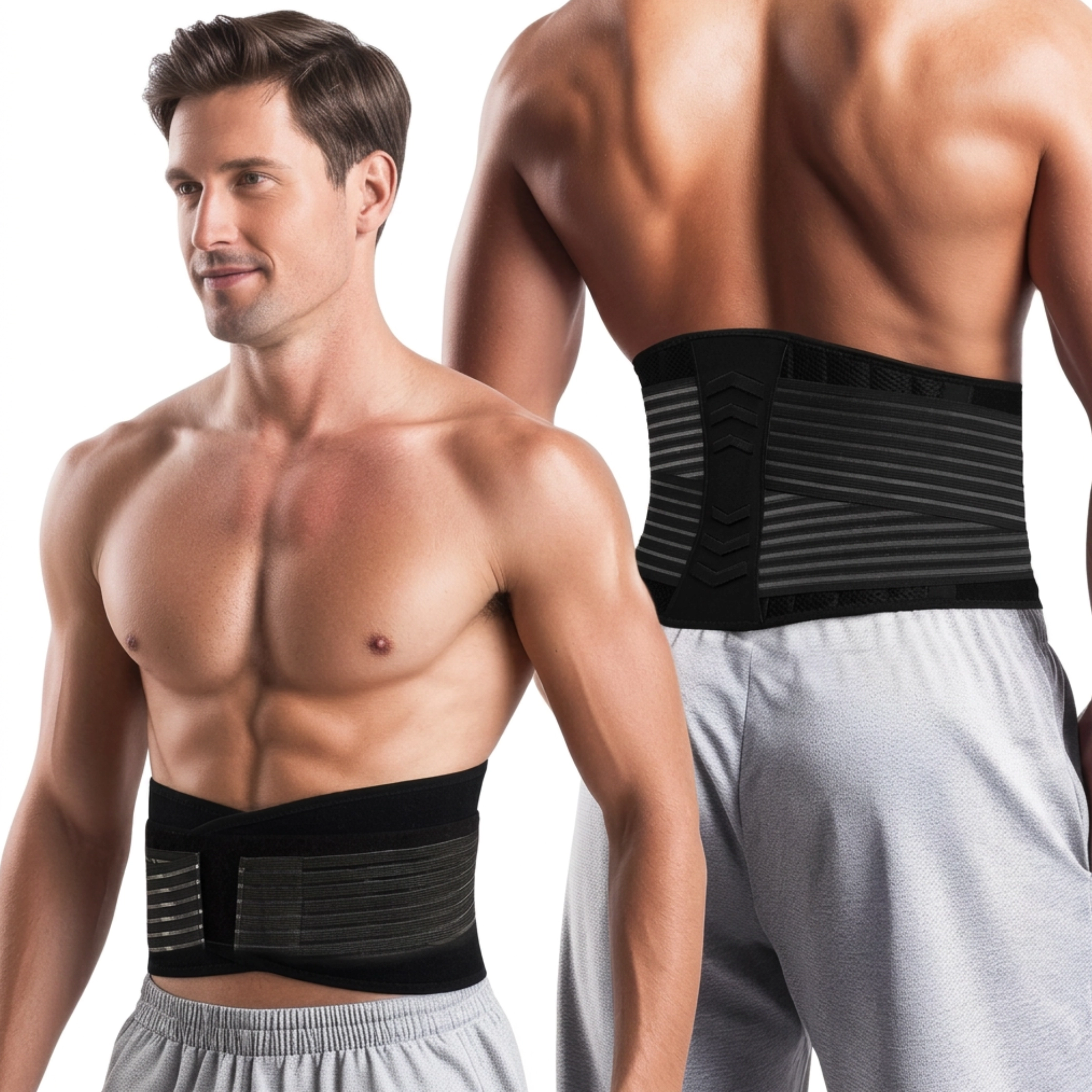
- Semi-rigid lumbar support belt designed by BackReviver for movement-related lower back pain during acute flare-ups and recovery
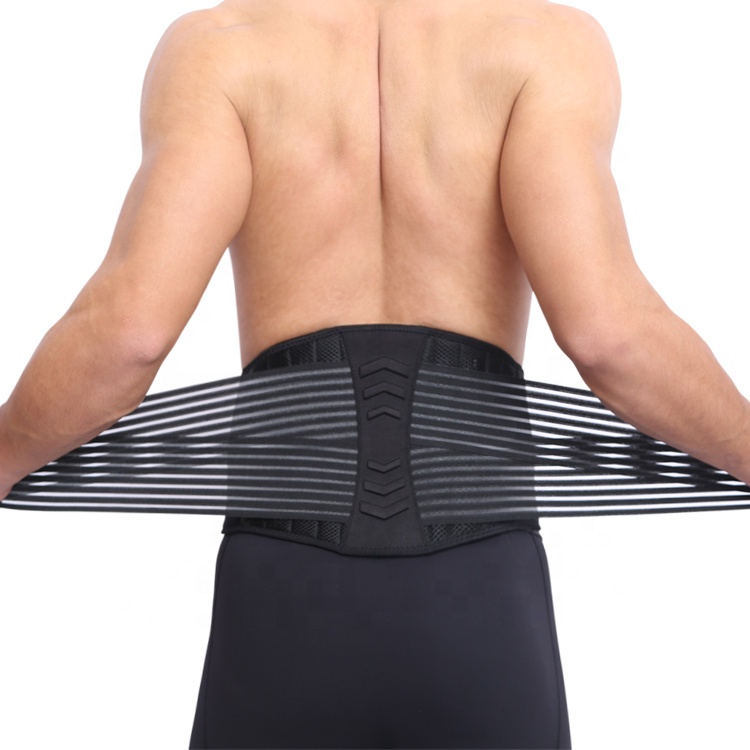
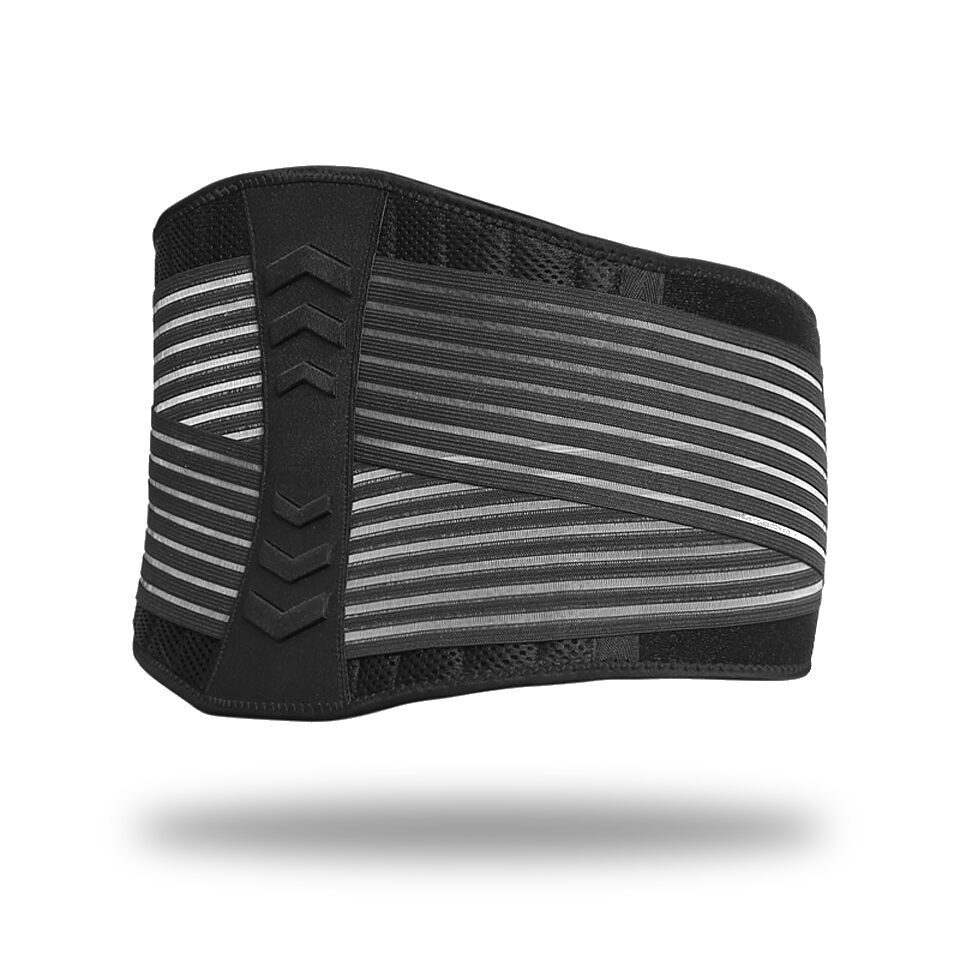
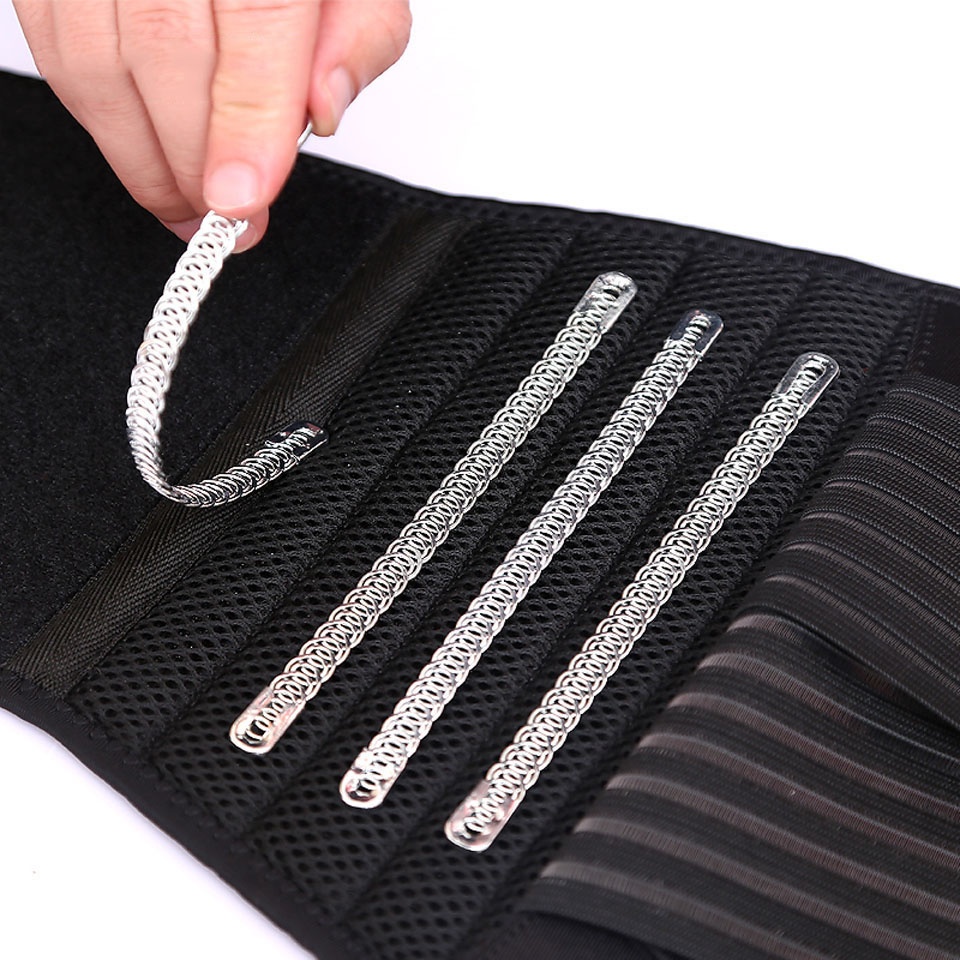
- Rigid contoured back panel with eight aluminium stays – limits forward bending and twisting to reduce pain triggers
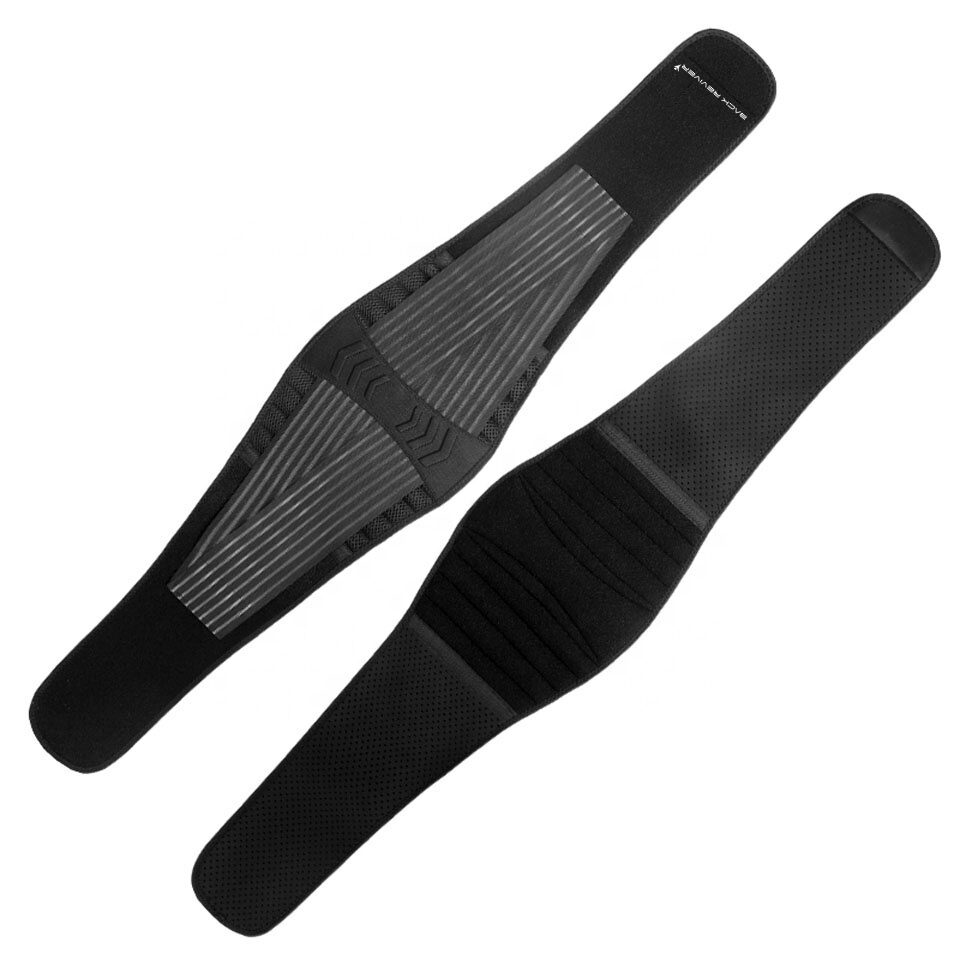
- Two-stage adjustable fastening – inner velcro belt plus outer elastic side straps for precise compression control
- May help manage symptoms associated with muscle strain, ligament sprain, facet joint pain, disc problems, SI joint dysfunction, and postural pain
- Provides firm compression around your lower back and abdomen, which may help reduce swelling during acute flare-ups and allows tight muscles to relax slightly
- Encourages better posture by making it uncomfortable to slouch or maintain positions that load your back poorly
- Breathable ventilation layer and thick padding – comfortable for extended wear during work, standing, or active tasks
- Unisex design – suitable for men and women
- Slim enough to wear under clothing but still robust enough to provide structural support
- Available in three sizes:
- Medium: 25.2–28.8 inches (64–73 cm)
- Large: 28.8–32.4 inches (73–82 cm)
- Extra Large: 32.4–36 inches (82–91 cm)
- Not suitable if you are pregnant, have active blood clots, or severe circulation problems – see full safety information below
- 30-day money-back guarantee – if it doesn’t help, return it for a full refund
You’re halfway through your shift and your lower back is already aching. Or you’ve bent down to pick something up and felt that sharp catch that makes you freeze. The BackReviver Lumbar Support Belt is a semi-rigid brace designed to help you get through these moments—by limiting the movements that hurt, supporting your spine, and giving injured tissues a chance to settle.
This belt works best for movement-related back pain—pain that catches when you bend forward, twist, or lift, and eases when you rest or change position. If your pain fits this pattern, read on. If your pain is constant regardless of what you’re doing, or if it’s worse at night, this belt is less likely to help—you might need a different approach.
This page explains how the belt works mechanically, which conditions respond best, and how to use it effectively. We’ll be honest about what it can and can’t do.
The belt isn’t a cure—it won’t reverse structural damage or fix underlying problems. But it can help you manage symptoms and stay functional while your back settles or while you work on other treatments.
BackReviver Lumbar Support Belt for Lower Back Pain
Semi-rigid lumbar belt for movement-related lower back pain. Limits forward bending and twisting, provides adjustable compression around your lower back and abdomen, and encourages better posture during acute flare-ups and recovery.
- Rigid contoured back panel with eight aluminium stays – physically restricts the movements that typically trigger pain (forward bending, twisting)
- Two-stage adjustable fastening – inner velcro belt for base support, outer elastic side straps for precise compression control
- Breathable ventilation layer and thick padding – comfortable for extended wear during work, standing, or active tasks
- Velcro-only closure – simple, adjustable fastening system
- Waist sizes 25–36 inches – see sizing guide below
- Not suitable if you have active blood clots, severe circulation problems, or are pregnant – see safety information
- 30-day money-back guarantee – if it doesn’t help, return it for a full refund
Is This Belt Right for Your Back Pain?
Not all lower back pain responds to a support belt. This section helps you work out whether this type of support is likely to help your particular pattern of pain, or whether you need a different approach.
When the belt helps most
The belt is most effective for pain that’s triggered or worsened by specific movements—usually forward bending, twisting, or lifting—and eases when you rest or lie down. This pattern suggests your pain is mechanical: something in your lower back (a muscle, ligament, disc, or joint) is being loaded or stretched in a way that irritates it, and limiting those movements gives the tissue a chance to settle.
If your pain fits this description, the belt can help you stay functional during the acute phase—typically the first few days to weeks after an injury or flare-up. It won’t cure structural problems or reverse degenerative changes, but it can help you manage symptoms and stay active while your back settles or while you work on other treatments.
Common situations where people find the belt helpful:
Acute muscle strain or spasm. You’ve lifted something awkwardly, bent forward too quickly, or twisted while carrying something, and your lower back has gone into spasm. The pain is sharp when you move, and you feel like your back might “catch” or “give way” if you move the wrong way. The belt limits the movements that trigger the spasm and gives the muscle a chance to relax.
Ligament sprain. You’ve overstretched the ligaments that support your spine—often from a sudden movement, a fall, or lifting something heavy with poor technique. The pain is sharp when you bend forward or twist, and you feel vulnerable when you move. The belt restricts those movements and supports the area while the ligaments heal.
Facet joint pain. The small joints at the back of your spine are inflamed or irritated. The pain is often worse when you arch backward, twist, or stand for long periods. It might ease when you sit or lean forward slightly. The belt provides compression and limits the movements that load the facet joints, which can reduce pain during flare-ups.
Disc-related pain. You have a bulging or herniated disc, or degenerative disc disease, and your pain is worse when you bend forward, sit for long periods, or lift. The belt limits forward bending and provides compression that increases pressure inside your abdomen, which takes some of the load off your discs.
Sacroiliac joint dysfunction. The joint where your pelvis meets your spine is painful or unstable. The pain is often one-sided, worse when you stand on one leg, walk on uneven ground, or get in and out of the car. The belt provides compression around your pelvis and lower back, which can help stabilise the joint and reduce pain.
Post-surgical support. You’ve had spinal surgery and your surgeon or physiotherapist has recommended a support belt during the recovery phase. The belt provides external support while your tissues heal and helps you move with more confidence during the early weeks after surgery.
When the belt might help
The belt can also be useful for chronic or recurrent lower back pain, particularly if you have periods where your back is more vulnerable and you need extra support to get through demanding activities.
Chronic postural pain. Your pain builds gradually over the course of the day, particularly after prolonged sitting, standing, or repetitive bending. It’s often a deep, aching pain rather than sharp and catching. The belt encourages better posture and provides support that allows your muscles to relax slightly, which can reduce the aching.
Recurrent flare-ups. You have a history of lower back problems—perhaps degenerative disc disease, spinal arthritis, or recurrent muscle strains—and you know certain activities are likely to trigger a flare-up. Wearing the belt during those activities (heavy lifting, prolonged standing, long drives) can help you get through them with less pain and reduce the risk of a full flare-up.
Lumbar spondylosis or spinal arthritis. You have wear-and-tear changes in your lower back—thinning discs, bone spurs, stiff facet joints—and your pain is worse after activity or at the end of the day. The belt provides external support that reduces the load on arthritic joints and can help you stay more active with less pain.
When the belt probably won’t help
The belt is not appropriate for all types of lower back pain. If your pain doesn’t fit the mechanical pattern described above, or if you have certain symptoms that suggest a more serious problem, you need proper assessment rather than a support belt.
Pain that’s constant and not affected by movement or position. If your pain is the same whether you’re lying down, sitting, standing, or moving, that’s not a mechanical pattern. It could be referred pain from another area, or it could be a sign of a more serious underlying problem. See your GP.
Pain that’s getting progressively worse despite rest and simple measures. If your pain has been building steadily over weeks or months, and nothing you do makes any difference, that’s a sign you need proper assessment. Don’t rely on a support belt to manage pain that’s not settling.
Pain with neurological symptoms. If you have numbness, tingling, or weakness in your legs, or if you’re having trouble controlling your bladder or bowels, you need urgent medical assessment. These symptoms suggest nerve compression or another serious problem that needs immediate attention. See the safety section below for more detail.
Pain in someone who’s never had back problems before and has no clear trigger. If you’re over 50 and you’ve developed new, unexplained lower back pain without any obvious injury or strain, get it checked. Most of the time it will be straightforward mechanical pain, but new pain in this age group needs assessment to rule out other causes.
If you’re unsure whether your pain fits the pattern that responds to a support belt, speak to your GP or a physiotherapist before ordering. They can assess your back, work out what’s causing the pain, and advise whether a belt is likely to help or whether you need a different approach.
What to Expect from the Belt
Before you decide whether to try the belt, it helps to know what it actually does, what kind of timeline to expect, and what it won’t do. This section gives you a realistic picture.
What the belt does
The belt helps your lower back in three ways. First, it limits forward bending and twisting—the movements that typically trigger pain during flare-ups. The rigid back panel and aluminium stays make it uncomfortable to bend far forward or rotate your spine, so you naturally stop before you reach the painful range. Second, it provides compression around your lower back and abdomen, which may help reduce swelling during acute flare-ups and allows tight muscles to relax slightly. Third, it encourages better posture by making it uncomfortable to slouch or lean to one side.
If you want to understand the biomechanics in detail—exactly how the rigid panel resists movement, how compression affects inflammation, how posture changes load distribution—read the ‘How the Belt Works’ section later on this page. For now, what matters is this: the belt physically limits the movements that hurt, supports the tissues while they settle, and reminds you to move in ways that don’t aggravate your back.
Realistic timeline for improvement
Most acute lower back injuries—muscle strains, ligament sprains, minor disc problems—settle within four to six weeks if you avoid repeatedly aggravating them. The belt helps you avoid those aggravations during the acute phase.
In the first few days of wearing the belt, you’ll probably notice you can move with less sharp pain. The belt is preventing the movements that trigger spasm or catch, so you’re getting through your day with fewer painful moments. You might still have a background ache, but the sudden jabs are less frequent.
Over the next two to three weeks, the acute inflammation usually starts to settle. The sharp pain eases, the muscles relax, and you start to feel more confident moving. You might find you can do tasks that were impossible a week ago—bending to load the washing machine, walking for more than ten minutes, sitting through a meeting without constantly shifting position.
As your pain improves, you gradually reduce how often you wear the belt. Start by taking it off during easier activities—sitting at home, gentle walking, light household tasks. If you can do these comfortably without the belt, progress to slightly more challenging activities. You might still wear it for work, heavy lifting, or prolonged standing, but take it off in the evenings and at weekends.
Most people can stop wearing the belt completely within four to eight weeks of an acute injury. If you’re still relying on the belt after eight weeks without any reduction in use, that’s a sign you need proper assessment. See your GP or a physiotherapist. There might be an underlying issue that needs a different approach, or you might need specific exercises to rebuild strength and confidence.
Some people with chronic conditions—degenerative disc disease, spinal arthritis, recurrent facet joint problems—find it helpful to keep the belt for occasional use during flare-ups or particularly demanding activities. That’s fine. There’s no rule that says you have to stop using it completely. Just be aware of whether you’re using it as a temporary support during difficult periods, or whether you’re relying on it constantly because you’re avoiding addressing the underlying problem.
What the belt won’t do
The belt is not a cure. It won’t fix a herniated disc, reverse arthritis, or heal a torn ligament. What it does is help you manage symptoms and stay functional while your body heals, or while you work on other treatments. Think of it as a tool to get you through the acute phase, not a permanent solution.
The belt won’t make up for poor movement habits, weak core muscles, or a sedentary lifestyle. If you spend all day sitting in poor posture, the belt might help you get through your work shift with less pain, but it won’t fix the underlying problem. You still need to address your workstation setup, take regular breaks to move, and work on strengthening your back and core muscles.
The belt won’t prevent all pain. You’ll probably still have some discomfort, particularly in the first few days. What the belt does is reduce the frequency and intensity of painful episodes. You’re aiming for manageable discomfort, not complete pain relief.
The belt is not a substitute for proper medical assessment. If you have severe pain, neurological symptoms (numbness, weakness, loss of bladder or bowel control), or pain that’s getting worse despite using the belt, you need to see a healthcare professional. The belt can help you manage straightforward mechanical back pain, but it can’t diagnose or treat serious underlying conditions.
When to Wear the Belt
The belt is designed for use during activities that challenge your back or trigger your pain. This section explains when to wear it and when to take it off.
Situations where the belt can help
During work shifts. If your job involves prolonged standing, walking, manual handling, or repetitive bending, the belt can help you get through your shift with less pain. Wear it during the working day and take it off when you get home.
When lifting or carrying heavy objects. The belt provides structural support and limits the movements that can strain your back during lifting. Wear it when you’re moving furniture, carrying shopping, lifting at work, or doing heavy household tasks.
During prolonged standing or walking. If you know you’ll be on your feet for several hours—at an event, walking around town, standing at a workstation—the belt can help reduce the aching that builds up over time.
At the gym. The belt can provide support during compound lifts—deadlifts, squats, rows—particularly if you’re returning to training after an injury or flare-up. It helps you maintain better form and reduces the risk of aggravating your back. But don’t rely on it permanently—your goal should be to rebuild strength so you can lift without external support.
During long drives. Sitting in a car for long periods can aggravate lower back pain, particularly if the seat doesn’t support your lumbar curve well. The belt can help maintain better posture and reduce the aching that builds up during long journeys.
During household tasks. Vacuuming, gardening, DIY, cleaning—these tasks often involve repetitive bending, twisting, and lifting. The belt can help you get through them with less pain, particularly during the acute phase when your back is vulnerable.
During acute flare-ups. In the first few days to weeks after an injury or flare-up, wear the belt during any activity that you know will challenge your back. This is when the belt is most useful—it helps you stay functional while the acute inflammation settles.
When to take the belt off
When resting at home. If you’re sitting on the sofa, lying down, or doing very light activities around the house, you don’t need the belt. Take it off and let your muscles work on their own.
During gentle, low-demand activities. Gentle walking, light household tasks, sitting at a desk—if you can do these comfortably without the belt, take it off. You want to gradually reduce your reliance on external support as your pain improves.
At night. Do not sleep in the belt. Your body needs to move freely during sleep, and the compression can become uncomfortable over several hours. The belt is for use during weight-bearing activities, not for lying down.
During rehabilitation exercises. If you’re doing exercises to strengthen your back and core muscles, do them without the belt. Your muscles need to work on their own to get stronger. The belt is for getting through your day when your back is painful, not for exercise.
The key is to wear the belt when you need it, and take it off as soon as you can manage without it. Your goal should be to gradually reduce how often you wear it as your pain improves.
Safety Information
The belt is safe for most adults with straightforward mechanical lower back pain, but there are some situations where you shouldn’t use it, or where you need to check with a healthcare professional first. Read this section before ordering.
Do not use the belt if you have:
Active blood clots (deep vein thrombosis or pulmonary embolism). The compression from the belt could dislodge a clot or interfere with blood flow. If you’ve been diagnosed with a blood clot, or if you’re being treated for one, do not use the belt. Wait until your doctor confirms the clot has resolved and it’s safe to use compression garments.
Severe circulation problems in your legs or abdomen. If you have peripheral arterial disease, severe varicose veins, or another condition that affects blood flow, the compression from the belt could make things worse. Check with your GP or vascular specialist before using the belt.
Pregnancy. Do not use the belt if you are pregnant. The compression around your abdomen could be uncomfortable or unsafe as your pregnancy progresses, and the rigid panel may restrict movement in ways that are not appropriate during pregnancy. If you have lower back pain during pregnancy, speak to your midwife or GP about appropriate support options.
Recent abdominal or spinal surgery (within the last six weeks). If you’ve had surgery on your abdomen or spine, don’t use the belt until your surgeon or physiotherapist confirms it’s safe. The compression and restriction could interfere with healing or cause complications. If your surgeon has specifically recommended a support belt as part of your recovery, follow their guidance on when to start using it and how tight it should be.
Open wounds, infections, or severe skin conditions on your lower back or abdomen. The belt sits directly against your skin (or over a thin layer of clothing). If you have broken skin, an active infection, severe eczema, or another skin problem in the area where the belt sits, don’t use it until the skin has healed. The pressure and friction could make things worse.
Check with a healthcare professional before using the belt if you have:
A diagnosed spinal condition that you’re being monitored for. If you have a known disc herniation, spinal stenosis, spondylolisthesis, or another structural problem that’s being managed by a specialist, check with them before using the belt. In most cases it will be fine, but they might have specific advice about when to wear it and how tight it should be.
Osteoporosis or fragile bones. If you have significant bone thinning, particularly in your spine, check with your GP or specialist before using the belt. The restriction of movement is usually helpful, but they might want to assess your back first to make sure there are no fractures or high-risk areas.
Diabetes with nerve damage or circulation problems. If you have diabetic neuropathy (reduced sensation in your feet or legs) or poor circulation, you might not notice if the belt is too tight or causing problems. Check with your GP or diabetes nurse before using it, and be extra careful about monitoring how it feels.
A history of abdominal hernias. If you’ve had a hernia in your abdominal wall, the compression from the belt could put pressure on the area. Check with your GP before using it. In most cases it will be fine, but they might want to examine you first.
When to get urgent medical help
Stop using the belt and get urgent medical assessment if you develop any of these symptoms:
Loss of bladder or bowel control. If you suddenly can’t control when you urinate or have a bowel movement, or if you lose sensation in your groin or around your back passage, this is a medical emergency. It suggests severe nerve compression in your lower spine (cauda equina syndrome). Call 999 or go straight to A&E. Don’t wait.
Severe or progressive weakness in your legs. If your legs feel increasingly weak, or if you’re having trouble standing, walking, or climbing stairs, and it’s getting worse over hours or days, you need urgent assessment. This could be a sign of significant nerve compression.
Numbness or pins and needles spreading in both legs, or around your groin and inner thighs. Some numbness or tingling in one leg can happen with disc problems and isn’t always serious, but if it’s affecting both legs, or if it’s spreading to your groin, buttocks, or the area around your back passage, that’s more concerning. Get it checked urgently.
Severe pain that’s not relieved by rest, painkillers, or any position. If your pain is so severe that nothing helps—you can’t find any comfortable position, painkillers make no difference, and it’s not easing at all over 24 to 48 hours—that’s a sign you need assessment. It could be a severe disc problem, a fracture, or another issue that needs investigation.
Sudden severe pain after a significant injury. If you’ve had a fall, a car accident, or another significant trauma and you’ve developed severe lower back pain, get it checked. You might have a fracture or other structural damage that needs assessment.
Unexplained weight loss, fever, or night pain. If your back pain is accompanied by unexplained weight loss, fever, or pain that wakes you at night and is worse when you’re lying down, see your GP urgently. These symptoms can be signs of infection, inflammation, or other conditions that need investigation.
General precautions
Don’t wear the belt too tight. The belt should feel snug and supportive, but it shouldn’t restrict your breathing or cause pain. If you feel short of breath, dizzy, or if the belt is digging in painfully, it’s too tight. Loosen the side straps. You’re aiming for firm support, not maximum compression.
Don’t wear the belt continuously for weeks on end. The belt is designed for temporary use during the acute phase of an injury or flare-up—typically a few days to a few weeks. Wear it during activities that trigger your pain, and take it off when you’re resting or doing gentle activities. If you’re still wearing the belt all day every day after eight weeks, that’s a sign you need proper assessment and a broader treatment plan.
Don’t sleep in the belt. Your body needs to move freely during sleep, and the compression can become uncomfortable over several hours. The belt is for use during weight-bearing activities—standing, walking, lifting—not for lying down.
If the belt consistently makes your pain worse, stop using it. Not everyone responds well to a support belt. If you’ve tried adjusting the position and tension, and the belt still makes your pain worse, stop using it and see a healthcare professional. Your pain might need a different approach.
Sizing
Getting the right size is important. A belt that’s too small won’t fasten comfortably and will dig in. A belt that’s too large won’t provide enough support and might slip or bunch up.
How to measure
Measure around your waist at the level of your belly button. Use a tape measure and keep it level all the way around—don’t let it ride up at the back or sag at the front. Pull the tape snug, but don’t compress your abdomen. Breathe normally and take the measurement at the end of a normal breath out.
If you’re between sizes, or if your measurement is right on the boundary between two sizes, go with the larger size. It’s easier to tighten a belt that’s slightly large than to stretch one that’s too small.
Size chart
| Size | Waist measurement (inches) | Waist measurement (cm) |
|---|---|---|
| Medium | 25.2–28.8 | 64–73 |
| Large | 28.8–32.4 | 73–82 |
| Extra Large | 32.4–36 | 82–91 |
What to expect when you put it on
When you first fasten the belt, it should feel snug around your lower back and abdomen, but not painfully tight. You should be able to breathe normally and move without the belt digging in or restricting your breathing.
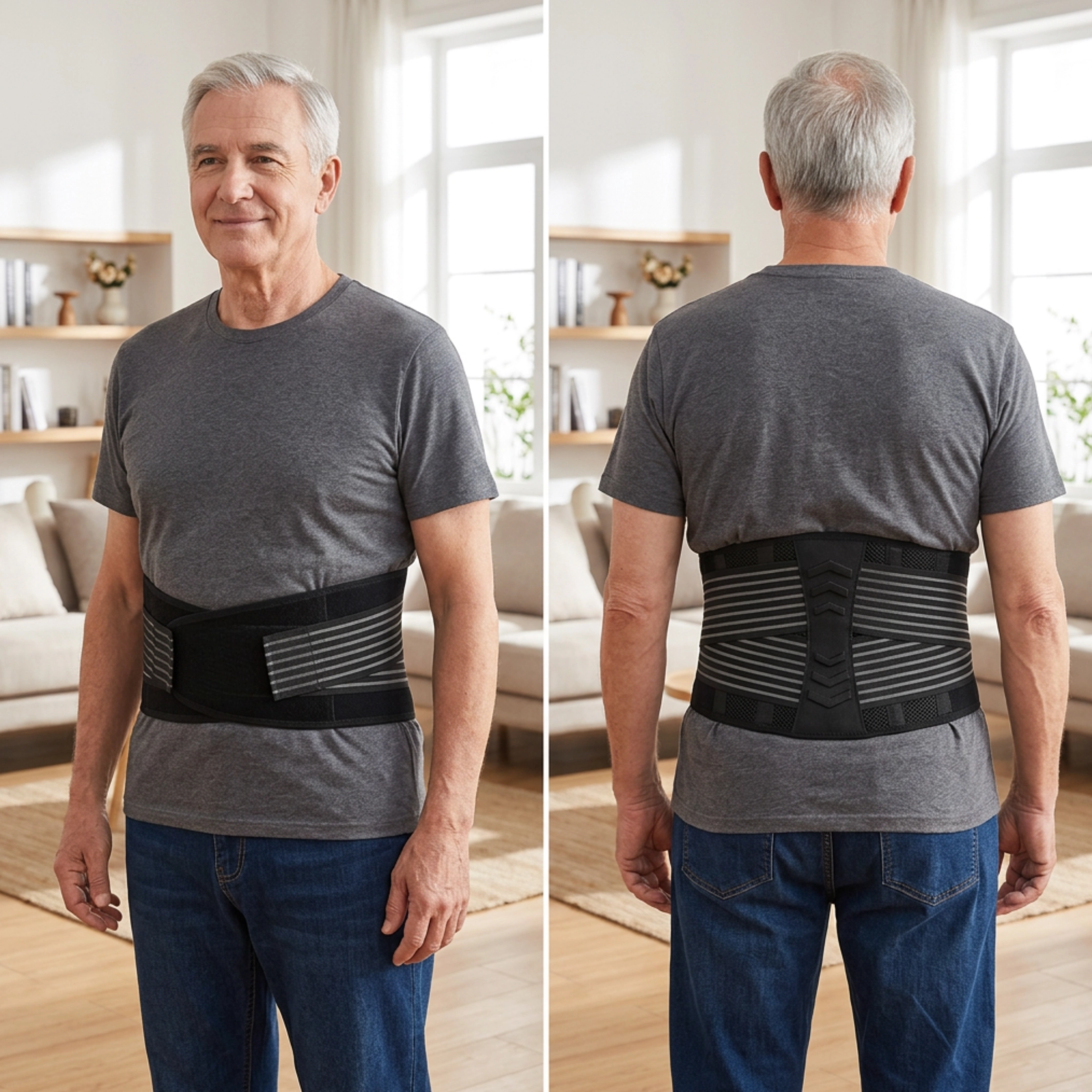
The rigid back panel should sit centrally over your lower back, covering your lumbar spine. The top edge shouldn’t dig into your ribs, and the bottom edge shouldn’t press into your hip bones when you sit down. The panel is approximately 6–7 inches tall and is contoured to follow the natural curve of your lower back.
The side straps give you fine control over the compression. Start with them fairly loose, then gradually tighten until the belt feels supportive but comfortable. You can adjust the tension throughout the day as needed—tighter during more demanding activities, looser when you’re resting or sitting.
If the belt is riding up, slipping down, or bunching at the sides, it’s probably too large. If you can’t fasten it comfortably, or if it’s digging in even when the straps are loose, it’s too small.
If you’re unsure about sizing, or if you’ve measured and you’re right on the boundary between two sizes, contact us before ordering. We can talk you through it and help you choose the right size.
How the Belt Works
This section explains the biomechanics—exactly how the belt reduces pain and supports your lower back during the acute phase of an injury or flare-up. If you just want a quick summary, you’ve already read it in the ‘What to Expect from the Belt’ section above. This is the detailed explanation for those who want to understand the mechanisms fully.
Mechanism 1: Limiting Painful Movement
Most acute lower back pain is triggered or worsened by specific movements—usually forward bending (flexion) and twisting (rotation). These movements load your spine in ways that stress injured or inflamed tissues. The belt works by physically restricting how far you can move into these painful ranges.
When you bend forward, several things happen in your lower back. Your intervertebral discs get compressed at the front and stretched at the back. The ligaments that run along the back of your spine are pulled tight. The muscles in your lower back have to work hard to control the movement and prevent you from toppling forward. If you have an injured disc, a strained muscle, or inflamed ligaments, this forward bending movement puts direct stress on the damaged tissue, which triggers pain.
The rigid back panel of the belt sits over your lower back—covering your lumbar spine area. It’s a contoured plastic panel that follows the natural curve of your lower back. Either side of the rigid back panel are eight vertical aluminium stays that run parallel to your spine, four on each side. These stays add extra stiffness and prevent the panel from flexing or twisting.
When you try to bend forward while wearing the belt, the rigid panel resists the movement. It doesn’t lock your spine completely—you can still bend a little—but it makes it uncomfortable to bend far forward. You feel the pressure of the panel against your back, and you naturally stop before you reach the range that would normally trigger pain. This is a passive restriction. You’re not consciously thinking “I mustn’t bend forward”—the belt physically prevents you from doing it.
The same principle applies to twisting. When you rotate your spine—turning to look over your shoulder, reaching across your body—the belt resists the movement. The rigid panel and the aluminium stays create a semi-rigid frame around your lower back that limits how far you can twist. Again, you can still move, but the belt stops you before you reach the painful range.
This movement restriction serves two purposes. First, it reduces the number of times per day you aggravate the injured tissue. Every time you bend forward or twist into the painful range, you’re re-irritating the injury. You’re stretching torn muscle fibres, compressing an inflamed disc, or loading a painful facet joint. Each aggravation triggers inflammation, which prolongs the healing process. By preventing these movements, the belt gives the tissue a chance to settle.
Second, the restriction gives you confidence to move. When your back is acutely painful, you become very cautious. You guard every movement because you know one wrong move will trigger a spasm or a sharp jab of pain. This guarding is exhausting and it limits what you can do. The belt takes some of that decision-making away. You don’t have to constantly monitor your position and worry about whether you’re about to move the wrong way—the belt stops you before you get there. This allows you to move more freely within the safe range, which is better for your back than staying completely still.
Mechanism 2: Compression and Support
The belt provides circumferential compression around your lower back and abdomen. This compression has several effects that help reduce pain and support healing.
First, compression increases intra-abdominal pressure. Your abdomen is not a rigid structure—it’s a flexible cavity filled with organs, surrounded by muscles and connective tissue. When you tighten your abdominal muscles (for example, when you brace your core before lifting something heavy), the pressure inside your abdomen increases. This increased pressure acts like an inflated cushion that supports your spine from the front. It reduces the load that goes through your spinal discs and the muscles in your lower back.
The belt mimics this effect. By compressing your abdomen, it increases intra-abdominal pressure even when you’re not actively bracing your core. This takes some of the load off your spine, which reduces the stress on injured discs, ligaments, and muscles. The effect is modest—the belt can’t generate the same pressure as a strong voluntary muscle contraction—but it’s enough to make a noticeable difference, particularly during weight-bearing activities like standing, walking, and lifting.
Second, compression may help manage swelling and inflammation during acute flare-ups. When you injure soft tissue—muscle, ligament, tendon—the body responds with inflammation. Blood flow to the area increases, immune cells move in to clear damaged tissue, and fluid accumulates in the spaces between cells. This swelling is part of the healing process, but it also causes pain and stiffness. The swollen tissue presses on nerve endings, which triggers pain signals. The accumulated fluid restricts movement, which makes you feel stiff.
Compression helps by increasing the pressure in the tissue, which may reduce the accumulation of fluid. It’s the same principle as using a compression bandage on a sprained ankle. The compression doesn’t stop inflammation completely—you don’t want to stop it, because inflammation is necessary for healing—but it may help manage the swelling and reduce the pressure on nerve endings, which can ease pain.
Third, compression provides a degree of external support that allows your muscles to relax slightly. When your back is injured, the muscles around the injury often go into spasm. This is a protective response—the muscles are trying to splint the injured area and prevent further damage. But prolonged muscle spasm is painful and exhausting. The muscles are working constantly, which causes a deep, aching pain and makes you feel tired.
The belt provides external support, which means your muscles don’t have to work as hard to stabilise your spine. They can ease off slightly, which reduces the spasm and the associated pain. This doesn’t mean your muscles stop working completely—they’re still active, just not as tense. The belt is doing some of the stabilising work, which gives your muscles a chance to relax.
Mechanism 3: Posture Support
Poor posture increases the load on your lower back and can worsen pain. The belt helps by encouraging better spinal alignment and making it uncomfortable to maintain positions that load your back poorly.
When you stand or sit upright with good posture, your spine maintains its natural curves. Your lumbar spine (lower back) has a gentle inward curve called lordosis. This curve distributes load evenly across your discs and allows your muscles to work efficiently. When you slouch—rounding your lower back, tilting your pelvis backward, letting your shoulders roll forward—you lose this natural curve. Your lower back rounds outward, which increases the load on the front of your discs and stretches the ligaments along the back of your spine. This position increases stress on the tissues and worsens pain.
The rigid back panel of the belt is contoured to follow the natural lumbar curve. When you wear the belt, the panel sits against your lower back and encourages you to maintain that curve. If you try to slouch or round your back, the panel digs in uncomfortably. You feel the pressure, and you naturally adjust your position to relieve it. This means you end up sitting and standing with better posture, which reduces the load on your discs and ligaments.
The belt also discourages asymmetric postures—standing with your weight shifted to one side, sitting twisted in your chair, leaning to one side while you work. These asymmetric positions load one side of your spine more than the other, which can aggravate pain, particularly if you have a facet joint problem or sacroiliac joint dysfunction. The belt makes these positions uncomfortable, so you naturally shift back to a more balanced, symmetrical posture.
This postural support is particularly useful during prolonged sitting or standing. When you’re tired, or when you’re absorbed in a task, your posture tends to deteriorate. You gradually slouch forward over your desk, or you shift your weight to one side while standing. The belt acts as a constant reminder to maintain better alignment. You don’t have to consciously think about your posture all the time—the belt gives you physical feedback when you start to drift into poor positions.
It’s important to understand that the belt is not forcing you into a rigid, military posture. You can still move, shift your weight, and adjust your position. What the belt does is make it uncomfortable to maintain the extreme positions that load your back poorly. You still have freedom to move within a range that’s safe and comfortable for your back.
What to Expect When Using the Belt
Understanding the timeline helps you know what’s normal and what’s a sign you need to adjust your approach or seek help.
First few days: When you first put the belt on, it will feel strange. You’re not used to the pressure around your abdomen and lower back, and the restriction of movement takes some getting used to. Give it ten to fifteen minutes. Most people find the initial strangeness settles quickly and the belt starts to feel supportive rather than restrictive.
During the first few days of wearing the belt, you’ll probably notice you can move with less sharp pain. The belt is preventing the movements that trigger spasm or catch, so you’re getting through your day with fewer painful moments. You might still have a background ache—that’s normal during the acute phase—but the sudden jabs are less frequent. You’ll find you can do tasks that were very difficult a day or two ago: getting dressed, walking to the car, sitting through a meeting.
Two to three weeks: Over the next couple of weeks, the acute inflammation usually starts to settle. The sharp pain eases, the muscles relax, and you start to feel more confident moving. You might find you can do tasks that were impossible a week ago—bending to load the washing machine, walking for more than ten minutes, carrying shopping bags. The background ache is still there, but it’s less intense and less constant.
This is when you start thinking about reducing how often you wear the belt. You don’t need to wear it all the time anymore—just during activities that you know will challenge your back. You might still wear it for work, for heavy tasks, or for prolonged standing or walking, but you can take it off in the evenings when you’re resting at home.
Four to six weeks: Most acute lower back injuries settle significantly within four to six weeks if you avoid repeatedly aggravating them. By this stage, you should be able to do most of your normal daily activities without the belt. You might still have some discomfort after a long day or after particularly demanding tasks, but the sharp, catching pain should be gone.
As your pain improves, you’ll gradually reduce how often you wear the belt—see ‘When and How to Stop Wearing the Belt’ below for the full weaning plan. Most people can stop wearing the belt completely within four to eight weeks of an acute injury. Some people with chronic conditions keep it for occasional use during flare-ups or particularly demanding activities.
If your pain isn’t improving after four to six weeks, or if it’s getting worse despite using the belt, that’s a sign you need proper assessment. See your GP or a physiotherapist. There might be an underlying issue that needs a different approach, or you might need specific exercises to rebuild strength and confidence.
When the Belt Can Help: Specific Conditions
This section explains how the belt can help with specific types of lower back pain. Each subsection below describes a common condition, what’s happening in the tissue, and how the belt responds to that problem.
Muscle Strain or Spasm
A muscle strain happens when you overstretch or tear muscle fibres in your lower back. This usually occurs during lifting, twisting, or sudden movements—particularly if you’re tired, cold, or moving awkwardly. The muscle responds by going into spasm, which is a protective contraction to prevent further damage. The spasm causes sharp, localised pain and makes you feel like your back might “give way” if you move the wrong way.
The belt helps by limiting the movements that stretch the injured muscle and trigger spasm. The rigid back panel restricts forward bending and twisting, which are the movements most likely to aggravate a strained muscle. The compression around your lower back provides external support, which allows the muscle to relax slightly and reduces the intensity of the spasm. This doesn’t mean the muscle stops working—it’s still active—but it doesn’t have to work as hard to stabilise your spine, which eases the aching and allows you to move more comfortably.
Most muscle strains settle within two to four weeks if you avoid repeatedly aggravating them. The belt helps you stay functional during that time by preventing the movements that re-injure the muscle and by providing support that reduces muscle fatigue.
Ligament Sprain
A ligament sprain happens when you overstretch the ligaments that connect the bones of your spine. This usually occurs during sudden movements, falls, or lifting with poor technique. The ligaments are tough bands of connective tissue that limit how far your spine can move in each direction. When you stretch them beyond their normal range, the fibres tear slightly, which triggers inflammation and pain.
The pain from a ligament sprain is usually sharp and localised, worse when you move into the position that stretches the injured ligament. For ligaments along the back of your spine, the pain is typically worse when you bend forward. For ligaments at the side, it’s worse when you bend sideways or twist.
The belt helps by restricting the movements that stretch the injured ligament. The rigid back panel limits forward bending and twisting, which gives the ligament a chance to heal without being repeatedly stretched. The compression provides support that reduces the load on the ligament during weight-bearing activities. Most ligament sprains settle within three to six weeks if you avoid aggravating them. The belt helps you stay active during that time without repeatedly re-injuring the tissue.
Facet Joint Pain
The facet joints are small joints at the back of your spine, one on each side at every spinal level. They guide and limit movement, and they bear some of the load when you stand, walk, and move. Facet joint pain can be caused by inflammation (often after a sudden movement or awkward position), arthritis (wear and tear over time), or a locked or irritated joint.
The pain is usually one-sided or more painful on one side, worse when you arch backward, twist, or stand for long periods. It often eases when you sit or lean forward slightly, because these positions take load off the facet joints. The pain can refer into your buttock or the back of your thigh, but it doesn’t usually go below the knee.
The belt helps by providing compression around your lower back, which reduces movement at the facet joints and can ease pain during weight-bearing activities. The rigid panel limits twisting and excessive backward arching, which are the movements most likely to load the facet joints heavily. The postural support encourages you to maintain a more neutral spine position, which distributes load more evenly and reduces stress on individual joints.
Facet joint pain can be acute (settling within a few weeks) or chronic (coming and going over months or years, particularly if you have arthritis). The belt is most useful during acute flare-ups or during activities that you know will challenge the joints—prolonged standing, heavy lifting, long drives.
Disc-Related Pain
Your intervertebral discs sit between the bones of your spine and act as shock absorbers. Each disc has a tough outer ring (the annulus) and a gel-like centre (the nucleus). Disc problems can range from minor bulges or tears in the outer ring, to more significant herniations where the gel centre pushes out and presses on a nerve.
Disc-related pain is typically worse when you bend forward, sit for long periods, cough, or sneeze—all activities that increase pressure inside the disc. The pain might be localised to your lower back, or it might radiate into your buttock, leg, or foot if the disc is pressing on a nerve. If you have leg pain, numbness, or weakness, that’s a sign the disc is affecting a nerve, and you need proper assessment.
The belt helps by limiting forward bending, which is the movement that increases pressure on the front of the disc and can worsen pain or push the disc material further out. The compression around your abdomen increases intra-abdominal pressure, which supports your spine from the front and reduces the load going through the discs. This can make standing, walking, and lifting more comfortable.
The belt won’t heal a herniated disc or reverse degenerative disc disease, but it can help you manage symptoms during acute flare-ups and stay functional while you work on other treatments—physiotherapy, exercises, weight management, pain relief.
Sacroiliac Joint Dysfunction
The sacroiliac (SI) joints sit where your pelvis meets the base of your spine, one on each side. They’re strong, stable joints that transfer load between your spine and your legs. SI joint pain can be caused by inflammation, instability, or stiffness in the joint. It’s more common in women, particularly during or after pregnancy, but it can affect anyone.
The pain is usually one-sided, felt deep in your buttock or at the base of your spine. It’s often worse when you stand on one leg, walk on uneven ground, climb stairs, or get in and out of the car. It can refer down the back of your thigh, but it doesn’t usually go below the knee.
The belt helps by providing compression around your pelvis and lower back, which can help stabilise the SI joint and reduce pain during weight-bearing activities. The compression limits the small movements at the joint that can trigger pain when the joint is inflamed or unstable. The rigid back panel provides additional support and encourages better posture, which helps distribute load more evenly through both SI joints rather than overloading one side.
SI joint problems can be stubborn and often need a combination of approaches—exercises to strengthen the muscles around the pelvis, manual therapy from a physiotherapist, and sometimes specific SI joint belts that sit lower and provide more targeted compression. This lumbar belt can help during acute flare-ups, but if your SI joint pain is persistent, you might need a more targeted approach.
Postural Pain
Postural pain builds gradually over the course of the day, particularly after prolonged sitting, standing, or repetitive bending. It’s usually a deep, aching pain rather than sharp and catching. The pain is caused by sustained loading of your spinal structures in poor positions—slouched sitting that rounds your lower back, standing with your weight shifted to one side, repetitive bending without breaks.
The belt helps by encouraging better posture and providing support that allows your muscles to relax slightly. The rigid back panel makes it uncomfortable to slouch or maintain asymmetric positions, so you naturally sit and stand with better alignment. The compression provides external support, which means your back muscles don’t have to work as hard to hold you upright, particularly when you’re tired.
The belt can help you get through a long work shift or a demanding day with less pain, but it’s not a long-term solution for postural pain. You also need to address the underlying causes—workstation setup, movement habits, core strength, and regular breaks to move and change position.
Post-Surgical Support
If you’ve had spinal surgery—discectomy, fusion, decompression—your surgeon or physiotherapist might recommend a support belt during the early recovery phase. The belt provides external support while your tissues heal and helps you move with more confidence during the first few weeks after surgery.
The rigid panel limits the movements that could stress the surgical site, and the compression provides support that reduces muscle fatigue. This can make it easier to get up and move around, which is important for recovery—prolonged bed rest after spinal surgery is generally not recommended.
If your surgeon has recommended a belt, follow their specific guidance on when to start using it, how tight it should be, and how long to wear it each day. Don’t use the belt after surgery unless your surgeon or physiotherapist has confirmed it’s appropriate. In some cases, they might want you to avoid external support so your muscles have to work on their own from the start.
Lumbar Spondylosis and Spinal Arthritis
Lumbar spondylosis is the medical term for age-related wear and tear in your lower back. It includes degenerative changes in the discs (they lose height and become stiffer), bone spurs that form around the edges of the vertebrae, and arthritis in the facet joints. These changes are extremely common—most people over 50 have some degree of spondylosis on imaging, even if they don’t have pain.
The pain from spondylosis is usually a deep, aching pain that’s worse after activity or at the end of the day. It might be stiff first thing in the morning, ease as you move around, then worsen again after prolonged activity. The pain can flare up after heavy lifting, prolonged standing, or activities that load your back repeatedly.
The belt helps by providing external support that reduces the load on arthritic joints and degenerative discs. The compression and the rigid panel work together to offload some of the stress, which can reduce the aching during and after activity. The postural support helps you maintain better alignment, which distributes load more evenly rather than overloading particular segments.
The belt won’t reverse the degenerative changes or cure arthritis, but it can help you stay more active with less pain. Many people with spondylosis find the belt useful during flare-ups or during activities they know will challenge their back—gardening, DIY, long walks, travel.
How to Use and Care for the Belt
This section explains how to put the belt on, adjust it for the right level of support, and look after it so it lasts.
How to put the belt on
Stand up. It’s easier to position the belt correctly when you’re upright rather than sitting or lying down.
Wrap the belt around your lower back so the rigid back panel sits centrally over your spine. The top edge should sit just below your ribcage, and the bottom edge should sit just above your pelvis. If you’re not sure where to position it, start with the centre of the panel roughly level with your belly button, then adjust up or down until it feels comfortable and supportive.
Fasten the inner elastic panel first. This wraps around your abdomen and fastens with velcro at the front. Pull it snug, but not tight—this is your base layer of support. You’ll fine-tune the compression in the next step.
Now fasten the two side straps. These are the adjustable elastic straps that come from each side of the belt and fasten over the top of the inner panel. Start with them fairly loose, then gradually tighten until the belt feels supportive but comfortable. You should feel firm pressure around your lower back and abdomen, but you should still be able to breathe normally and move without the belt digging in.
Check the position of the back panel. It should sit flat against your lower back without twisting or riding up. If it’s digging into your ribs at the top or pressing into your hip bones at the bottom, adjust the position up or down slightly.
How to adjust the compression
The side straps give you control over how much compression you’re getting. Tighter straps mean more compression and more restriction of movement. Looser straps mean less compression and more freedom to move.
Start with moderate compression—firm enough that you feel supported, but not so tight that it’s uncomfortable or restricts your breathing. Wear it like this for ten to fifteen minutes and see how it feels. If you’re still getting sharp pain when you move, try tightening the straps a bit more. If the belt feels uncomfortably tight or you’re struggling to breathe normally, loosen them.
You can adjust the compression throughout the day depending on what you’re doing. Tighten the straps during more demanding activities—lifting, prolonged standing, walking—and loosen them when you’re resting or sitting. Some people find they need more support first thing in the morning when their back is stiff, and can loosen the belt as the day goes on and they warm up.
If you’re not sure how tight is right, err on the side of slightly looser. You can always tighten it if you need more support, but if you start too tight you might find it uncomfortable and give up on the belt before you’ve given it a fair trial.
How long to wear it
During the acute phase—the first few days to weeks after an injury or flare-up—wear the belt during activities that trigger your pain. This usually means wearing it during the day when you’re up and moving, and taking it off in the evenings when you’re resting at home.
You can wear the belt for several hours at a time—a full work shift, for example—but take it off periodically to give your skin a break and allow your muscles to work on their own. If you’re sitting at a desk for long periods, you might find you can take the belt off while you’re sitting and put it back on when you stand up or move around.
Don’t wear the belt all day every day for weeks on end without breaks. Your muscles need to work on their own to stay strong. Wear the belt when you need it, and take it off as soon as you can manage without it.
Don’t sleep in the belt. Your body needs to move freely during sleep, and the compression can become uncomfortable over several hours.
Care instructions
Hand wash the belt in warm water with mild detergent. Don’t use bleach or fabric softener. Rinse thoroughly and allow it to air dry. Don’t tumble dry, iron, or dry clean—the heat can damage the rigid panel and the velcro.
Before washing, fasten all the velcro straps back on themselves so they don’t catch on the fabric or lose their grip. Wash the belt on its own or with similar items—don’t wash it with delicate fabrics that the velcro might snag.
With proper care, the belt typically lasts six to twelve months of daily use. The velcro will gradually lose some of its grip over time, and the elastic will stretch slightly. When the belt no longer provides adequate support—when you can’t tighten it enough to feel secure, or when the velcro won’t hold—it’s time to replace it.
When and How to Stop Wearing the Belt
The belt is a temporary support tool, not a permanent solution. Your goal should be to gradually reduce how often you wear it as your pain improves. Here’s how to know when you’re ready to start weaning off the belt, and how to do it safely.
Signs You’re Ready to Reduce Belt Use
Your pain has settled significantly. The sharp, catching pain has gone, and you’re left with only mild aching after prolonged activity. You can move through your normal daily activities—getting dressed, walking, light household tasks—without triggering significant pain. This usually happens within two to four weeks for acute injuries.
You’re moving more confidently. You’re no longer guarding every movement or worrying that one wrong move will set off a spasm. You can bend forward to tie your shoes, twist to reach something, or lift light objects without fear. This confidence is a sign that your back is healing and that you’re ready to start relying more on your own muscles.
You can perform easier activities comfortably without the belt. Try taking the belt off during low-demand activities—sitting at home, gentle walking, light tasks around the house. If you can do these comfortably without the belt, you’re ready to start reducing your use.
How to Wean Off the Belt
Start by taking the belt off during the easiest activities. Sitting at home in the evening, gentle walking, light household tasks—do these without the belt. If you can manage them comfortably, progress to slightly more challenging activities. You might still wear the belt for work, heavy lifting, or prolonged standing, but take it off in the evenings and at weekends.
Over the next few weeks, gradually increase the amount of time you spend without the belt. The key is to progress at a pace that doesn’t trigger a flare-up. If you take the belt off and your pain comes back significantly, you’ve progressed too quickly. Put the belt back on, give it another few days, and try again.
Most people find they can stop wearing the belt completely within four to eight weeks of an acute injury. If you’re still relying on the belt after eight weeks without any reduction in use, that’s a sign you need proper assessment. See your GP or a physiotherapist. There might be an underlying issue that needs a different approach, or you might need specific exercises to rebuild strength and confidence.
What If the Pain Returns When You Stop Wearing the Belt?
Some return of symptoms is normal when you first take the belt off. Your muscles have been relying on external support, and now they have to work harder. You might feel a bit achy or tired for the first few days. This is expected and usually settles within a week as your muscles adapt.
But if the pain comes back significantly—if you’re back to the sharp, catching pain that you had at the start—that’s a sign you’ve progressed too quickly. Put the belt back on and give it another week or two. Then try again, but this time progress more gradually. Take the belt off for shorter periods, or only during very easy activities.
If you’ve tried weaning off the belt several times and the pain keeps coming back, that’s a sign you need help. See a physiotherapist. You might have weakness or poor movement patterns that need addressing. The physiotherapist can assess how your back moves, identify any problems, and give you specific exercises to build strength and control. The belt can help you manage symptoms in the short term, but it’s not a substitute for addressing the underlying issues.
Keeping the Belt for Occasional Use
Some people with chronic back problems find it helpful to keep the belt for occasional use during flare-ups or particularly demanding activities. That’s fine. There’s no rule that says you have to stop using it completely. If you have degenerative disc disease, spinal arthritis, or another chronic condition, you might have periods where your back is more vulnerable. Wearing the belt during those times can help you stay functional and prevent a minor flare-up from becoming a major one.
The key is to be honest with yourself about whether you’re using the belt as a temporary support during difficult periods, or whether you’re relying on it constantly because you’re avoiding addressing the underlying problem. If you’re wearing the belt every day for months on end, that’s a sign you need a broader approach—strengthening exercises, activity modification, weight management, stress management, or other treatments.
Frequently Asked Questions
Can I wear the belt all day?
You can wear the belt for extended periods—a full work shift, for example—but you shouldn’t wear it continuously for days or weeks without breaks. Your muscles need to work on their own to stay strong. Wear the belt during activities that trigger your pain, and take it off when you’re resting or doing gentle activities. Most people find they wear it for a few hours at a time during the acute phase, then gradually reduce use as their pain improves.
Can I sleep in the belt?
No. Don’t sleep in the belt. Your body needs to move freely during sleep, and the compression can become uncomfortable over several hours. The belt is designed for use during weight-bearing activities—standing, walking, lifting—not for lying down. If your pain is bad enough that you’re considering sleeping in the belt, that’s a sign you need proper assessment. See your GP or a physiotherapist.
Can I exercise while wearing the belt?
You can wear the belt during gentle exercise like walking, but it’s not designed for high-impact activities or sports. If you’re doing exercises as part of a rehabilitation programme—core strengthening, stretching, mobility work—do them without the belt. Your muscles need to work on their own to get stronger. The belt is for getting through your day when your back is painful, not for exercise.
Will wearing the belt weaken my muscles?
Not if you use it appropriately. The concern about muscle weakening comes from wearing a support continuously for months on end without doing any strengthening work. If you wear the belt during the acute phase (a few days to a few weeks), then gradually reduce use as your pain improves, your muscles won’t weaken. In fact, the belt can help you stay more active during the acute phase, which is better for your muscles than lying in bed or avoiding all movement.
The key is to use the belt as a temporary support, not a permanent crutch. Wear it when you need it, and take it off as soon as you can manage without it. If you’re worried about muscle weakness, work on core strengthening exercises as your pain settles. A physiotherapist can give you a programme tailored to your needs.
Can I use the belt alongside other treatments?
Yes. The belt works well alongside other treatments—painkillers, anti-inflammatory medication, physiotherapy, exercises, heat or ice, massage. It’s not an either-or situation. The belt helps you manage symptoms and stay functional during the acute phase, while other treatments address the underlying problem. If you’re seeing a physiotherapist, tell them you’re using the belt. They can advise you on when to wear it and when to take it off, and they can give you exercises to do alongside it.
What if the belt doesn’t help?
Not everyone responds to a support belt. If you’ve been wearing the belt consistently for a week or two and it’s not making any difference to your pain, it’s probably not the right tool for your particular problem. That’s fine—it doesn’t mean there’s anything wrong with you or the belt. It just means your pain isn’t the type that responds to external support and movement restriction.
If the belt doesn’t help, see your GP or a physiotherapist. They can assess your back, work out what’s causing the pain, and recommend other treatments. You’re covered by the 30-day money-back guarantee, so if the belt doesn’t help you can return it for a full refund.
What if the belt makes my pain worse?
If the belt consistently makes your pain worse, stop using it. This can happen if the belt is too tight, positioned incorrectly, or if your particular type of pain doesn’t respond well to compression and restriction. Try adjusting the position and loosening the side straps. Give it another try. If it still makes things worse, stop using it and see a healthcare professional. Your pain might need a different approach.
Who Designed This Belt
The BackReviver Lumbar Support Belt is designed by BackReviver, a UK-focused brand that develops evidence-informed support products for common musculoskeletal problems. The belt is retailed by NuovaHealth, which stocks a range of targeted support products including BackReviver’s posture corrector, FootReviver insoles and braces, and NuovaHealth’s own pelvic support range.
The design brief for this belt was straightforward: create a semi-rigid lumbar support that’s more effective than a basic elastic belt, but more practical and affordable than a custom-fitted brace. It needed to limit forward bending and twisting, provide adjustable compression, be comfortable enough for all-day wear, and be simple to put on and adjust without help.
The rigid contoured back panel and the eight aluminium support stays provide the structural support. The two-stage adjustable fastening system gives precise control over fit and compression. The breathable ventilation layer and thick padding make it comfortable for extended wear. The velcro closure keeps it simple and adjustable.
The belt is built to last. With proper care, it typically lasts six to twelve months of daily use. If it doesn’t help you, you can return it within 30 days for a full refund under the money-back guarantee.
Final Thoughts: Is This Belt Right for You?
The BackReviver Lumbar Support Belt is designed for movement-related lower back pain during acute flare-ups and recovery. It works by limiting the movements that hurt, providing compression and support, and encouraging better posture. It’s most effective for pain that catches when you bend forward, twist, or lift, and eases when you rest.
If your pain fits this pattern, the belt can help you stay functional during the first few days to weeks after an injury or flare-up. It won’t cure structural problems or reverse degenerative changes, but it can help you manage symptoms and stay active while your back settles or while you work on other treatments.
The belt is most useful during the acute phase—typically the first few days to weeks. As your pain improves, you gradually reduce how often you wear it. Most people can stop wearing the belt completely within four to eight weeks of an acute injury. Some people with chronic conditions keep it for occasional use during flare-ups or particularly demanding activities.
If you’re unsure whether the belt is right for your particular type of pain, read the ‘Is This Belt Right for Your Back Pain?’ section near the top of this page. If you’re still unsure, speak to your GP or a physiotherapist before ordering. They can help you work out whether a support belt is likely to help, or whether you need a different approach.
If you decide to try the belt and it doesn’t help, you’re covered by the 30-day money-back guarantee. Return it for a full refund.
Check the sizing guide to find your size, read the safety information to make sure the belt is appropriate for you, and if you have any questions contact us before ordering. We’re here to help you make an informed decision.
Medical Disclaimer
The information on this page is general guidance about lower back pain and the use of lumbar support belts. It is based on biomechanical principles and clinical experience, but it is not a substitute for individual medical advice, diagnosis, or treatment.
The BackReviver Lumbar Support Belt is a wellness product designed to provide support and comfort during everyday activities. It is not a medical device and is not intended to diagnose, treat, cure, or prevent any medical condition.
If you have a diagnosed medical condition, if you’re unsure what’s causing your back pain, or if you have new or unexplained symptoms that are not settling, speak to your GP, physiotherapist, or another appropriate healthcare professional for personalised advice. Do not rely on this information alone to make decisions about your health.
Individual results vary. Some people find the belt very helpful, others find it makes little difference. This depends on the cause of your pain, the severity of your condition, how you use the belt, and many other factors. We cannot guarantee specific outcomes.
If you develop any of the red-flag symptoms described in the safety section—loss of bladder or bowel control, severe or progressive leg weakness, numbness around your groin or inner thighs, or severe pain that is not relieved by rest or painkillers—get urgent medical help. Call 999 or go to A&E.
Use the belt as directed. Do not wear it so tight that it restricts your breathing or causes pain. Do not wear it continuously for weeks on end without breaks. Do not use it as a substitute for proper medical assessment and treatment.
This page was last updated in June 2026. The information is current as of that date, but medical knowledge and best practice evolve over time. If you’re reading this page significantly later, check with a healthcare professional to ensure the guidance is still appropriate.
1 Review For This Product
Fast & Secure Checkout Through Paypal
Pay with Paypal the secure payment gateway that accepts all credit and debit cards. Paypal is free and secure and no credit or bank information is ever stored or shared with us.
Fast Dispatch
Enjoy your items soon with quick dispatch via Royal Mail. Expect to have your items between 1-3 working days for domestic orders. 7-10 Working days for international orders.
Return Policy – 30 Day Money Back Guarantee
In the unlikely event, you are unhappy with your purchase you can return it within 30 days for a refund. Please contact us via the form on the contact us page to start your return.
To return an item please send it to: Nuova Health UK, 81 Highfield Lane, Waverley, Rotherham, S60 8AL. Please include a note with your order id so we know who to refund. Please retain your postage receipt as proof of postage. All that we ask is that the item is in the original packaging and unused.
by Emily
When my mother started experiencing lower back pain, I knew I had to find something to help her out. After some research, I came across the Backreviver Lower Back Support. She was skeptical at first, but now she won’t stop raving about it!
The first few days were a bit of an adjustment, but once she got used to wearing it, the benefits were clear. Her back pain has diminished significantly, and she’s back to gardening and playing with her grandkids. She said it feels like it’s giving her back a gentle, supportive squeeze, almost like it’s cradling her spine.
The material is soft but durable, and it doesn’t irritate her skin even after prolonged use. She also loves how easy it is to put on and take off—no need for a second pair of hands. It’s given her a newfound sense of independence, and for that alone, it’s worth every penny. If you’re on the fence, just go for it. It might just make a world of difference.