Is Your Foot Pain Caused by Supination? How to Recognise the Signs and Find Proper Relief
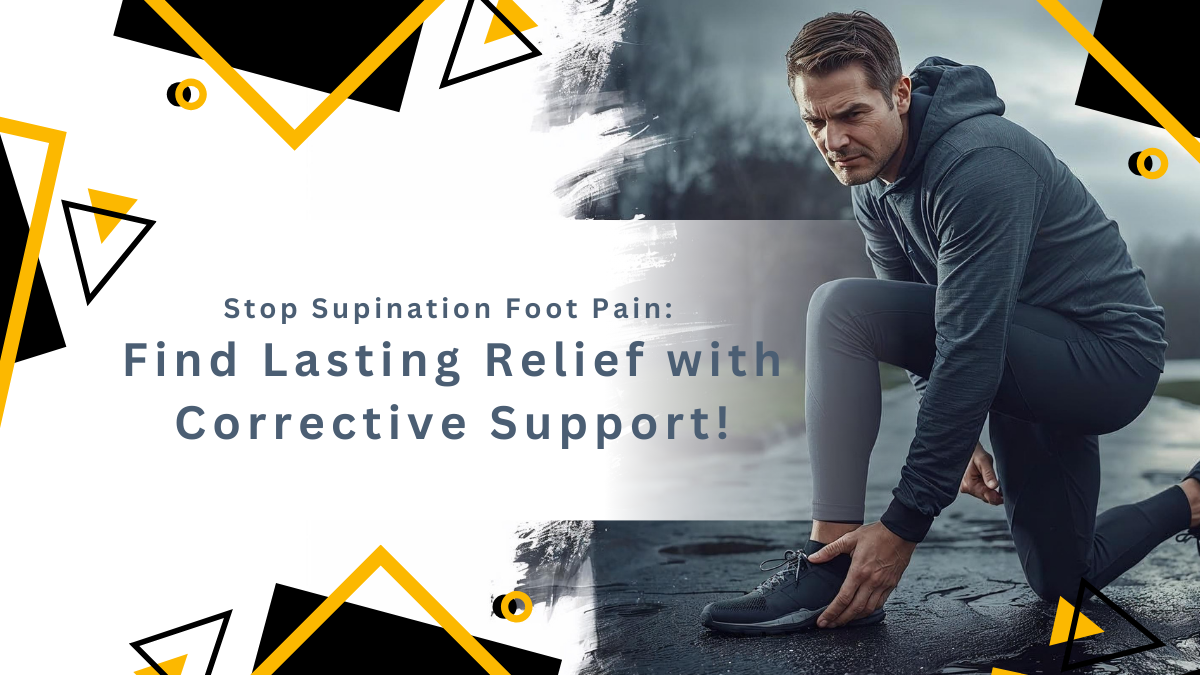
We often ignore our feet until they protest with a nagging ache or sharp jab. That subtle discomfort along the outer edge, the shoes wearing down unevenly on one side—it’s easy to dismiss as normal wear and tear. But these quiet signals are often your body’s first attempt to alert you about a deeper postural pattern.
What you’re likely noticing are the early signs of supination—a natural but often excessive rolling motion in your gait that affects far more than just your feet. When this motion isn’t properly supported, it can create ripple effects that travel upward through your ankles, knees, and even your lower back.
This guide will help you understand what your feet have been trying to tell you. We’ll walk through how to recognise the specific signs of supination, explore its surprising full-body impact, and provide a clear path toward finding proper support that addresses the root cause rather than just masking the symptoms. Let’s begin.
A perfect example of this comes from David in Manchester, who shares a concern we hear often:
“For months, I’ve had this persistent ache on the outside of my foot, and my shoes are wearing down unevenly on the outer edge. A mate mentioned supination, but I’m not convinced. How can I be sure? And if it is supination, what’s the best step? Are insoles worth trying?”
David, that’s a brilliant question, and you’re right to link those symptoms. That sharp pain on the outer foot, along with the unusual wear on your shoes, are classic signs that many brush off as normal wear and tear. But it’s often a clear indicator of a biomechanical issue known as supination. Let’s walk through what’s happening, how to confirm it, and what you can do to address it.
Recognising the Signs – How to Know if It’s Supination
Identifying the problem starts with knowing what to look for. Supination comes with clear, tell-tale symptoms and physical signs you can spot yourself.
The Symptoms You Feel
- Localised Outer Foot Pain: You’ll typically feel a persistent ache or sharp pain along the outside edge of your foot, especially around the base of the fifth metatarsal—that’s the long bone connected to your little toe. This spot takes most of the impact with every step.
- A Sense of Ankle Instability: That feeling of your ankle about to give way on flat ground isn’t just clumsiness. The constant outward roll puts stress on the ligaments on the outside of your ankle, leaving the joint feeling unstable.
- Pain That Travels Upwards: The issue doesn’t always stay in one place. You might notice a dull ache or sharp pain moving up the outside of your shin, as your muscles strain to keep your foot stable.
- Rapid Foot Fatigue: Since your foot isn’t cushioning impact properly, muscles and tendons get tired fast. This means your feet feel heavy, weary, and sore much sooner than expected.
The Visual Evidence You Can See
- The Shoe Wear Pattern: Check the soles of your everyday shoes. If you see heavy wear on the outer heel and the outer edge of the front part, that’s clear evidence of your walking pattern. It’s just like a car with misaligned wheels wearing down one tyre too quickly.
- Your Foot’s Posture: Stand barefoot. Do you see a high, stiff arch? Does the outer edge of your foot bear most of your weight? This shape is often the main cause of supination.
A Crucial Note on Diagnosis:
Simple checks like the wet footprint test can give clues, but they’re no replacement for expert advice. If you have ongoing or sharp pain, it’s best to book with a physiotherapist or podiatrist for a full gait analysis to get a proper diagnosis.
The Domino Effect – The Specific Injuries Supination Causes, Starting with the Feet
Thinking of supination as just a foot problem is like fretting over a damp patch on the ceiling but missing the burst pipe in the loft. The real issue is the ripple effect it has through your whole body—what we call the kinetic chain. If the foundation is off, everything above has to adjust. But let’s start where it all begins: with the foot conditions supination directly causes. These are usually the earliest and most frequent issues.
The Foundation: Foot-Specific Conditions from Supination
The foot takes the first and most direct hit from this biomechanical fault. The constant outward roll and poor shock absorption create predictable patterns of stress and overload.
- Lateral Foot Pain & Fifth Metatarsal Stress Reactions: This is where it all starts. The outer edge of your foot, particularly the base of the fifth metatarsal bone, faces constant, intense pressure. It’s not just ordinary soreness; it’s a deep, concentrated ache that can turn into a stress reaction or even a stress fracture. This happens because the bone is overloaded beyond its ability to heal, leading to sharp, stabbing pain that gets worse with activity and is tender to touch.
- Peroneal Tendonitis/Tendinopathy: The peroneal tendons run behind that bony bump on the outside of your ankle. Normally, they help with stability. But with supination, they’re forced to work overtime to stop your ankle from rolling outward. This overuse leads to tendonitis (acute inflammation) which, if ignored, can become tendinopathy (degeneration of the tendon fibres). The pain is usually a sharp or burning feeling along the outside of the ankle and foot, often worse in the morning or when you start moving.
- Plantar Fasciitis: It might surprise you, as supination is linked to high arches. However, a rigid, high-arched foot can’t absorb shock well. Instead of spreading the impact, it creates a high-tension, “bowstring” effect on the plantar fascia—the thick band of tissue along the sole. This ongoing strain can irritate and inflame the fascia, especially where it attaches to the heel, causing the classic stabbing heel pain most intense with your first steps in the morning.
- Metatarsalgia: While the outer foot gets the worst of it, the entire forefoot is affected. The supinated foot often has a stiff, raised forefoot that slaps down rather than rolling smoothly. This poor force distribution can overload the ball of the foot, leading to metatarsalgia—a generalised pain and inflammation in the metatarsal heads. It feels like a bruising or burning sensation in the ball of the foot, as if you’re walking on pebbles.
- Morton’s Neuroma: The changed mechanics and increased pressure in the forefoot can squeeze the nerves between your metatarsal bones. This chronic compression, often between the third and fourth toes, can lead to a Morton’s Neuroma—a thickened, irritated nerve. This causes sharp, shooting, or burning pain, tingling, or numbness into the toes, often eased by taking off your shoe and rubbing your foot.
The Ankle and Lower Leg: Where Instability Becomes Injury
The trouble doesn’t end at the foot. The wobbly, rolling ankle places unsustainable stress on the outer structures.
- Chronic Lateral Ankle Sprains & Instability: The ligaments on the outside of your ankle are constantly stretched and weakened. This sets up a vicious cycle: the supination stretches the ligaments, which makes the ankle unstable, leading to more frequent and severe sprains from minor trips. This can progress to Chronic Ankle Instability, where the joint feels always weak and “gives way” during everyday activities.
- Shin Splints (Posterior Tibial Stress Syndrome): The muscle on the inside of your shin (the tibialis posterior) can become overworked as it tries to counter the foot’s outward motion and stabilise the arch. This overuse leads to inflammation where the muscle attaches to the shin bone, causing pain along the inner edge of the lower two-thirds of the shin.
The Knee: The Twist That Creates Torment
The misalignment moves upwards. The outward roll of the foot often makes the lower leg rotate externally, changing knee mechanics.
- Iliotibial (IT) Band Syndrome: The IT band is a thick band of tissue from your hip to your knee. With supination, it gets pulled tight, rubbing painfully on the outside of the knee. The result is a sharp, burning pain on the outer knee, especially during activities like running or cycling.
- Patellofemoral Pain Syndrome (Runner’s Knee): The altered leg rotation affects how your kneecap moves, causing it to grind against the thigh bone. This leads to a dull, aching pain around or behind the kneecap, often felt after sitting for a long time or when walking downstairs.
The Hip, Pelvis, and Lower Back: The Final Destinations
The accumulated misalignments finally show up in the body’s core.
- Gluteus Medius Tendinopathy: To balance the misaligned leg, the gluteus medius muscle on the outside of your hip overworks. This can lead to tendinopathy (degeneration of the tendon), causing a deep ache on the side of the hip, often mistaken for bursitis or arthritis.
- Sacroiliac (SI) Joint Dysfunction & Low Back Pain: The rotational forces from the legs and pelvis strain the sacroiliac joints (where your spine meets your pelvis) and the lower spine. This can cause a sharp, stabbing, or dull ache in the lower back, often on one side, which might spread into the buttock, mimicking sciatica.
The Critical Takeaway: This progression from foot to back isn’t just theory; it’s a common clinical path. The wear on your shoe is the first warning of a process that, if ignored, can lead to a cascade of chronic pain. Tackling supination at its source isn’t just about foot comfort—it’s a proactive way to protect your entire body from preventable, long-term damage.
The Insoles That Work – And Why Most Don’t
It makes sense to try insoles, but here’s where many go wrong. Most insoles you find on the high street are made for just one thing: general comfort.
They’re filled with gel or soft cushioning. While this might feel nice at first, it’s like putting a soft, plush seat in a car with misaligned wheels. The ride might feel smoother, but the underlying mechanical issue remains.
These standard insoles don’t help with supination because they miss key features for proper correction. They don’t support the side to stop the outward roll, have the wrong arch shape for high arches, and lack a secure heel cup. The result is temporary cushioning, while the root biomechanical misalignment and strain on your body continue.
How FootReviver Supination Insoles Provide the Right Support
So if cushioning isn’t the answer, what is? The solution lies in addressing the root cause: guiding the foot back into alignment. This is the sole purpose behind FootReviver Supination Insoles. They’re designed to tackle the specific issues of supination head-on.
Here’s how each design element matches up with a specific problem:
- Reinforced Lateral Support: Countering the Roll.
Recall that outer foot pain and wobbly ankle? The firm support along the insole’s outer edge acts as a guide, steadily resisting the outward roll. This directly eases strain on the fifth metatarsal, peroneal tendons, and outer ankle ligaments. - Anatomically Contoured Arch & Deep Heel Cup: Creating a Stable Foundation.
For the high, rigid arch, the precise arch support gives the contact and structure that’s missing. Along with the deep heel cup, it cradles the heel and supports the arch, building a stable, neutral platform. This stability is key to stopping the domino effect up your body. - Full-Length Shock Absorption: Protecting the Entire Chain.
This high-quality foam layer is made to absorb the harsh impact that your foot can’t handle on its own. By managing this at the source, it shields the joints further up—your knees, hips, and spine—from repeated, damaging forces. - Practical, Trim-to-Fit Design:
The slim profile and easy-to-trim design mean this targeted support fits into a wide range of footwear, from running trainers to everyday shoes, without compromising fit.
Your Practical Guide to Getting It Right
Using corrective insoles is different. Your body needs time to adapt to a new, proper alignment. Follow this guide to ensure success.
The Break-In Period: Your Step-by-Step Plan
Don’t jump into wearing them all day straight away. Your muscles and ligaments need time to get used to them.
- Days 1-3: Start by wearing them for 1-2 hours around the house. This lets your body adjust gently.
- Days 4-7: Gradually increase to 2-4 hours, including a short walk outside.
- Week 2: Try wearing them for half-days.
- Week 3+: You should feel comfortable wearing them all day.
What to Expect and When to Persevere
- Initial Feel: The support will feel noticeable and firm. This is correct and means they’re working.
- Muscle Awareness: You might notice slight new aches in your arch or calf. This is usually a good sign that muscles which weren’t doing much before are now starting to work properly. This should be a dull ache, not a sharp pain, and fade within a few days.
- Red Flags: If you experience sharp, shooting pain, numbness, or increased joint pain, stop using them and consult your physiotherapist.
Choosing the Right Shoes
These insoles need a stable partner. Use them in shoes with:
- A firm heel counter (the back of the shoe shouldn’t collapse when you squeeze it).
- Good overall support (avoid flimsy fashion shoes or worn-out trainers).
- Enough depth: Remove the existing insole first to ensure a good fit.
Your Timeline for Meaningful Improvement
- 1-2 Weeks: Reduced sharp pain on the outer foot, less fatigue.
- 3-4 Weeks: Better sense of stability, less referred shin or knee pain.
- 4+ Weeks: Long-term joint protection and a more natural, efficient walking pattern.
Take the First Confident Step
Let’s recap the journey. You started, like David, confused by a simple foot pain. You discovered it could be the source of issues from your ankles to your back. Now, you have a precise tool and a clear plan to not just mask the pain, but to correct its cause.
Tackling supination with FootReviver insoles is a smart investment in your movement and comfort. It’s not just about covering up pain with cushioning; it’s about actively helping your body find its natural, stable position.
With the 30-day guarantee, you have the freedom to follow this plan and feel the difference for yourself, entirely without risk. Don’t just manage your foot pain—resolve the cause.
Start today and give yourself a stable, comfortable base for all your steps ahead.