









Roll over image to zoom in
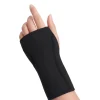
Wrist Splint
£13.99inc VAT
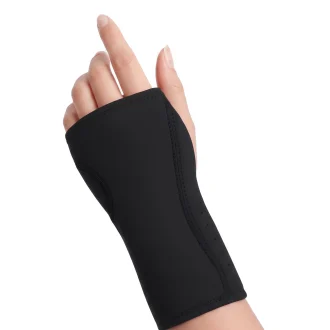
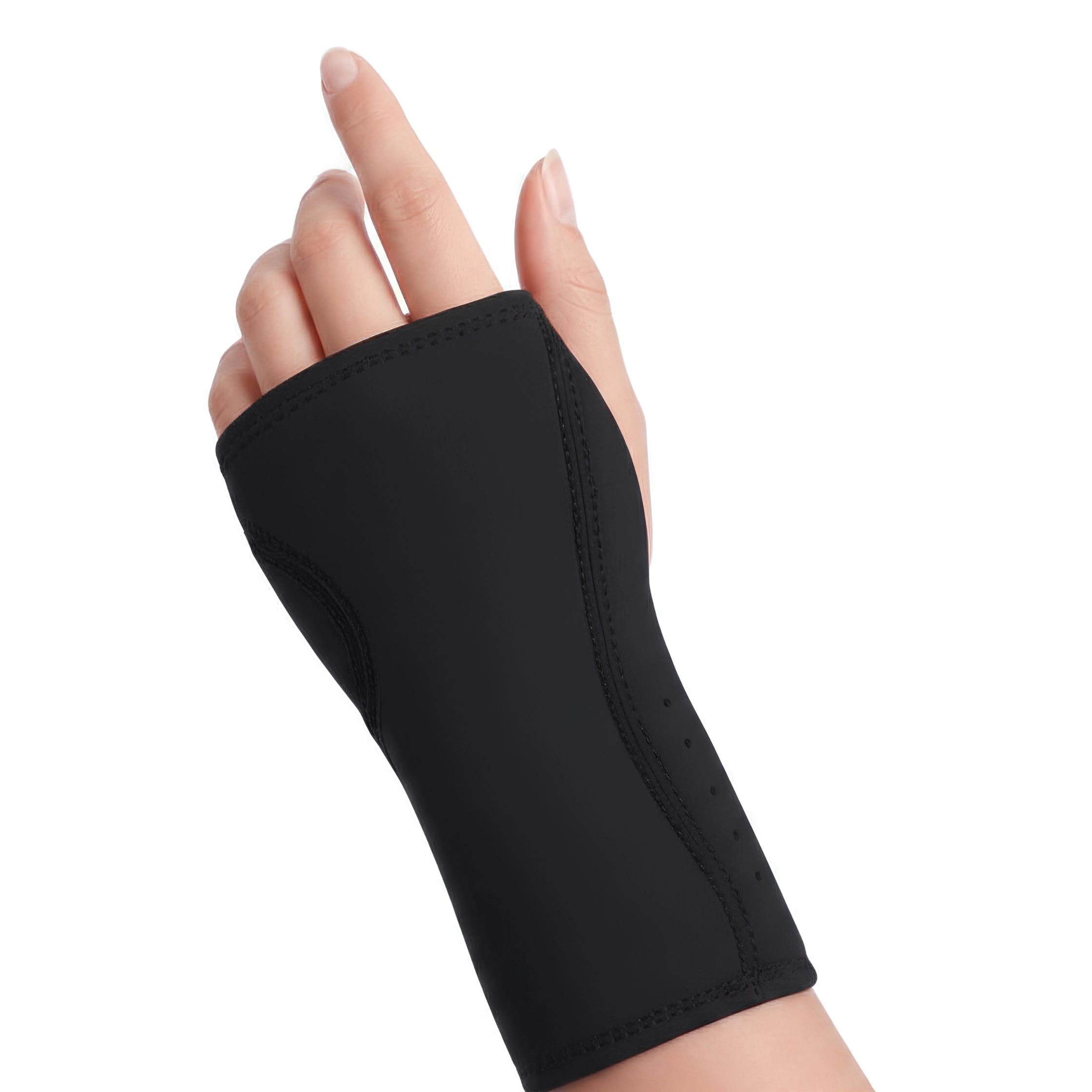
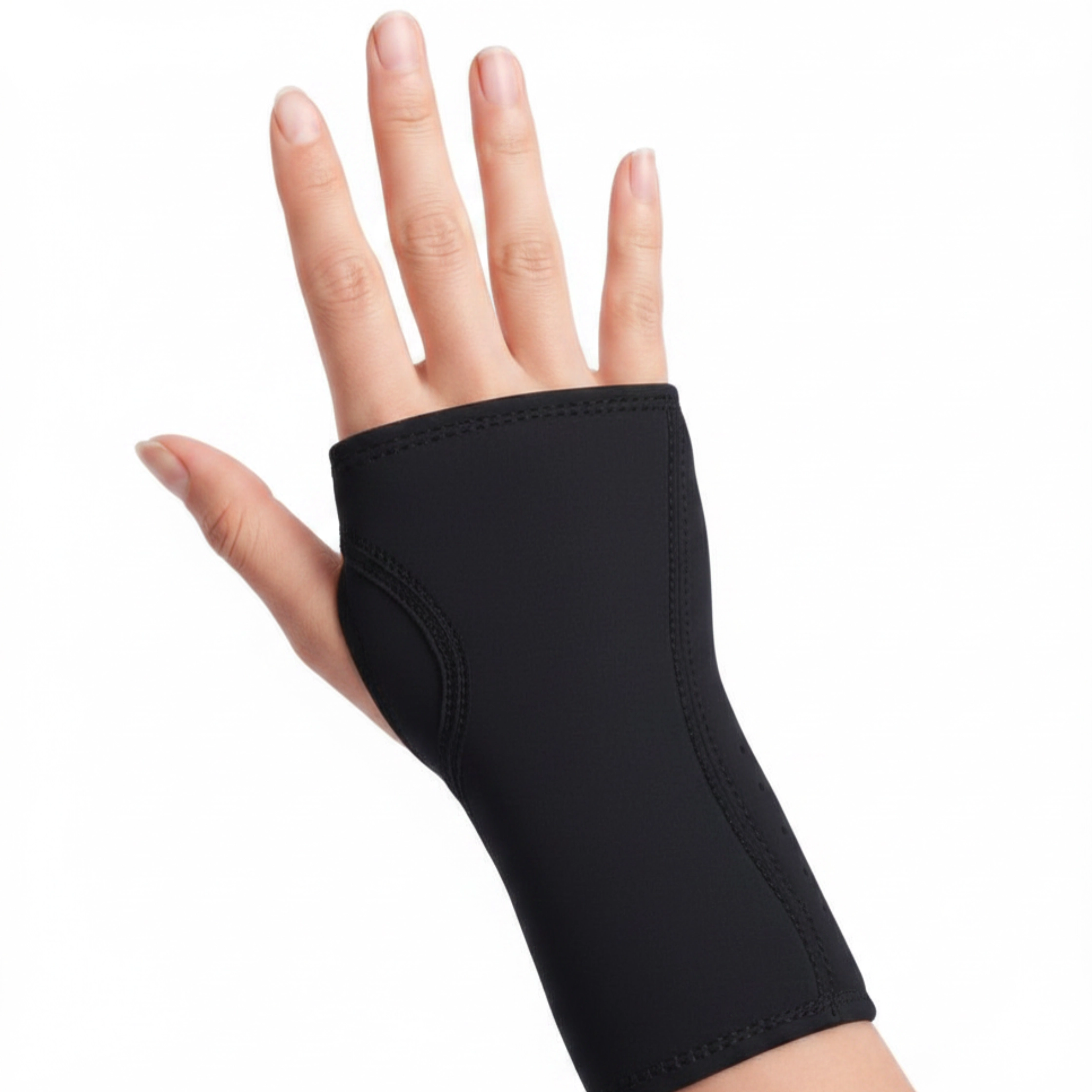
- Wrist splint with removable contoured aluminium support that holds your wrist straight in a neutral position
- For carpal tunnel syndrome, tendonitis, sprains, fractures (after clinical assessment), De Quervain’s tenosynovitis, and arthritis
- Immobilises the wrist to protect healing tendons, ligaments, and bones from repeated stress
- Neutral positioning keeps the carpal tunnel as open as possible, reducing pressure on the median nerve
- Compression helps control swelling and may ease pain
- Three adjustable Velcro straps let you control support and pressure at the palm, wrist, and forearm
- Fits left or right hand; one size fits most adults
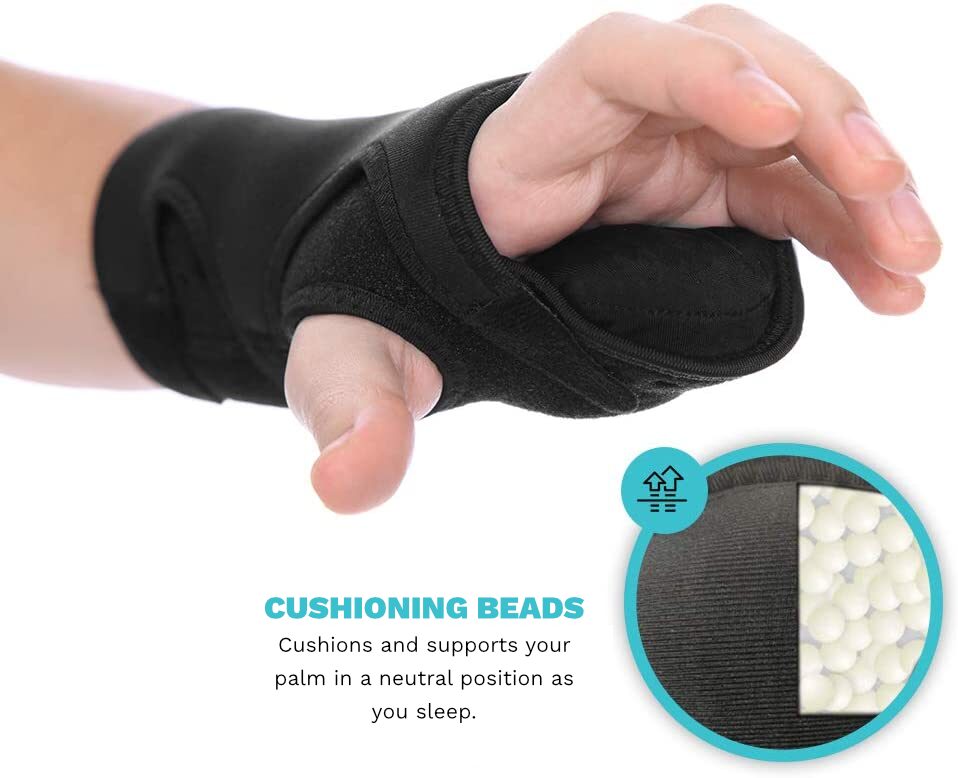
- Soft neoprene with ventilation holes; cushioning beads under the palm for comfort during extended wear
- For carpal tunnel: wear at night; for tendonitis or sprains: wear during activity; for fractures: follow your clinician’s guidance
- Most soft-tissue injuries improve within 4–6 weeks; fractures take 6–8 weeks minimum, sometimes longer
- Do not use if you have a blood clot, severe circulation problems, loss of sensation in your hand, or an open wound or infection near the area
- If you develop severe pain, visible deformity, worsening numbness, or signs of infection, seek medical advice immediately
- 30-day money-back guarantee
Have You Injured Your Hand or Wrist?
A hand or wrist injury can stop you doing everyday tasks. Lifting a mug, typing, turning a door handle—all become painful or impossible. The wrist is a complex joint, and when tendons, ligaments, or bones are damaged, even small movements can set back your recovery.
A wrist splint can make a significant difference. It holds the wrist still, takes pressure off damaged tissues, and gives them time to heal. Here’s how it works and when it’s useful.
What Is a Wrist Splint and How Does It Work?
A wrist splint wraps around your wrist and forearm, holding your wrist still in a straight, neutral position. It works in four ways: immobilisation, neutral positioning, compression, and protection.
Immobilisation
The splint holds your wrist completely still, preventing the bending, twisting, and gripping movements that stress damaged tendons, ligaments, and bones.
When tissues are injured, movement stretches or compresses them. This causes pain and delays healing. Tendons are tough, rope-like cords made of collagen fibres. When overused or injured, the fibres develop tiny tears. If you keep using the tendon—gripping, twisting, lifting—the new fibres are stretched or torn before they’ve had time to strengthen. The inflammation stays active. Ligaments—the bands connecting bone to bone—work the same way. When stretched or torn, they need rest to repair. If the joint keeps moving, the new collagen fibres bridging the tear are disrupted before they’ve bonded.
Keeping the wrist still allows injured tissues to rest and repair without being repeatedly stressed. Tendons and ligaments heal by laying down new collagen fibres to repair tiny tears. This process takes several weeks. Immobilisation gives those fibres time to mature and bond together, which gradually reduces pain and restores strength.
Neutral Positioning
The splint holds your wrist in a neutral position—straight and in line with your forearm. This is the position that puts the least strain on tendons, nerves, and ligaments crossing the wrist.
When your wrist is straight, tendons have a direct path from forearm to hand without having to bend around bones. This reduces friction and tension. The carpal tunnel—a narrow channel on the palm side of your wrist—is at its widest in this position, giving the median nerve the most space. Ligaments are at their resting length, neither stretched nor compressed.
When you bend your wrist forward or backward, tendons have to curve around the wrist bones, which increases friction and tension. The carpal tunnel narrows, compressing the median nerve. Ligaments on one side of the wrist are stretched while those on the other side are compressed. If tissues are already injured or inflamed, these positions increase pain and slow healing.
Neutral alignment protects healing tissues and reduces pressure on nerves.
Compression
The splint applies gentle, even pressure around your wrist.
When tissues are injured, blood vessels leak fluid into the surrounding area. This fluid build-up is called swelling or oedema. It causes puffiness, stiffness, and pressure on nerves and other tissues, which adds to pain.
Compression gently squeezes the tissues, increasing pressure in the fluid-filled spaces between cells. This pressure helps push excess fluid back into the bloodstream and lymphatic vessels, reducing the build-up that causes swelling. Less swelling means less pressure on nerves and soft tissues, which can ease pain and make the area more comfortable during healing.
Protection
The splint acts as a physical barrier, shielding your wrist from knocks, bumps, and sudden movements that could worsen the injury. It also reminds you not to use your wrist in ways that could delay healing—when you feel the splint, you’re less likely to unconsciously grip, twist, or lift with that hand.
Understanding Wrist Anatomy
Your wrist is a complex joint made up of eight small carpal bones arranged in two rows, connecting your forearm bones (radius and ulna) to your hand bones (metacarpals). These bones are held together by a network of strong ligaments that provide stability.
Multiple tendons cross the wrist, connecting muscles in your forearm to your fingers and thumb. They transmit the pulling force that moves your joints. Tendons are strong but have a limited blood supply, which means they heal slowly.
On the palm side of your wrist, a narrow channel called the carpal tunnel is formed by a horseshoe of wrist bones on three sides, with a tough ligament—the flexor retinaculum—stretched across the front like a roof, forming the tunnel’s ceiling. Nine flexor tendons (which bend your fingers) and the median nerve all pass through this tight space. The median nerve supplies sensation to your thumb, index, middle, and half of your ring finger. It also controls some small muscles at the base of the thumb. When the tendons or their sheaths swell, or when you bend your wrist, the tunnel narrows and squeezes the nerve, causing numbness, tingling, or weakness.
This complex structure lets your wrist move in many directions—bending forward and back, side to side, and rotating—but it also makes the wrist vulnerable to injury from falls, overuse, and repetitive strain.
How Wrist Injuries Usually Happen
Wrist injuries usually happen in three ways:
Sudden trauma: Falling onto an outstretched hand can break bones—especially the scaphoid, a small boat-shaped bone at the base of your thumb—or tear ligaments, particularly the scapholunate ligament, which connects two of the small wrist bones on the thumb side and is one of the most important stabilising ligaments in the wrist.
Overuse and repetitive strain: Repeating the same wrist movements hundreds of times—typing, using tools, gripping, lifting—can inflame tendons and their sheaths. This is called tendonitis or tenosynovitis. The tendons are loaded constantly without adequate rest, causing tiny tears and inflammation that build up over time.
Compression and sustained postures: Holding your wrist in a bent or awkward position for long periods—typing with your wrists resting on the desk, gripping a steering wheel, sleeping with your wrist curled under your pillow—can compress the median nerve in the carpal tunnel, leading to carpal tunnel syndrome.
When to Seek Urgent Medical Advice
A wrist splint is useful for many wrist problems, but some symptoms need immediate assessment. See your GP or visit A&E if you have:
- Severe pain or visible deformity (your wrist looks bent, twisted, or has an unusual bump)
- Numbness that’s worsening or spreading
- Inability to move your fingers or thumb
- Signs of infection (redness, warmth, fever, or a wound near the injury)
If you’re unsure, get it checked. Early assessment can prevent serious complications.
When a Wrist Splint Helps
A wrist splint is most commonly used for:
- Carpal tunnel syndrome
- Tendonitis (wrist and forearm tendon inflammation)
- Sprains (ligament injuries)
- Fractures (broken bones)
- De Quervain’s tenosynovitis (thumb tendon inflammation)
- Arthritis (joint inflammation and wear)
- Prevention and support during activity
Carpal Tunnel Syndrome
Carpal tunnel syndrome is common, affecting millions of people in the UK, particularly those aged 40–60. It happens when the median nerve is compressed as it passes through the carpal tunnel. Symptoms are often worst at night—you may wake with numb, tingling fingers and need to shake your hand to relieve it.
Why This Happens
Anything that narrows the carpal tunnel or increases pressure inside it can compress the median nerve. Repetitive hand movements—typing, using tools, assembly work—keep the flexor tendons moving through the carpal tunnel all day. This causes low-level inflammation and swelling in the tendon sheaths. By evening, the swelling is at its peak.
Most people bend their wrists in sleep without realising—curling the hand under the pillow or chin, or flexing the wrist against the mattress. This narrows the carpal tunnel and compresses the nerve for hours. If the tendons are already swollen from daytime activity, bending the wrist at night compounds the problem.
Fluid retention—pregnancy, menopause, thyroid problems, kidney disease—can increase pressure in the carpal tunnel. Some people have a naturally smaller carpal tunnel, making them more prone to nerve compression. A previous wrist injury can change the shape of the wrist bones and narrow the tunnel.
Recognising the Symptoms
Numbness, tingling, or pins and needles in your thumb, index, middle, and half of your ring finger. During the day, you might notice numbness or tingling when you hold your wrist bent for long periods—typing with your wrists resting on the desk, gripping a steering wheel, using a phone. As it gets worse, you may notice weakness in your thumb grip, difficulty with fine tasks like buttoning clothes or holding small objects, and in severe cases, permanent numbness and muscle wasting at the base of the thumb.
Why Immobilisation Works Here
The splint holds your wrist in a neutral position. For carpal tunnel, this matters particularly at night. By keeping the tunnel as open as possible, the splint reduces pressure on the nerve. For most people, this greatly reduces or stops night-time symptoms.
If you also get numbness or tingling during the day—especially during repetitive hand use—wearing the splint during those tasks can help by keeping the wrist straight and the carpal tunnel as open as possible.
Night-Time Numbness After Keyboard Work
If you work at a keyboard all day and wake with numb fingers several nights a week, you’re likely experiencing carpal tunnel syndrome. Repetitive typing keeps the flexor tendons moving through the carpal tunnel all day, causing low-level inflammation and swelling. By evening, the swelling is at its peak. If you then bend your wrist in sleep, the already-swollen tunnel narrows further, compressing the nerve and causing numbness and tingling that wakes you up. A night splint prevents this by holding your wrist straight.
Other Treatments That Help
A night splint is usually the first treatment for carpal tunnel syndrome if symptoms are mild to moderate. Alongside splinting, changing how you work can help: take regular breaks from repetitive tasks, improve desk ergonomics—keep your keyboard flat and your wrists in a neutral position, not resting on the desk—and avoid prolonged wrist bending.
If symptoms don’t improve after 2–3 months of wearing the splint every night and changing your activities, your GP may refer you to a hand specialist. Other treatments include a corticosteroid injection—a strong anti-inflammatory medicine injected into the carpal tunnel to reduce swelling. If symptoms remain severe or persistent despite these treatments, your GP or specialist may discuss other options with you, including procedures that may help. Your clinician will explain the risks, benefits, and alternatives based on your specific situation.
What Happens If Left Untreated
If carpal tunnel syndrome is left untreated for months or years, the prolonged pressure on the nerve can cause permanent damage. The nerve fibres can die, leading to permanent numbness, loss of sensation in the fingers, and weakness in the thumb muscles. By this stage, even specialist treatment may not fully restore function. Early treatment—splinting, changing your activities, and medical advice if symptoms persist—can prevent this progression.
Tendonitis (Wrist and Forearm Tendon Inflammation)
Tendonitis is inflammation of a tendon and its surrounding sheath. It’s common, particularly in people who do repetitive hand or wrist movements. In the wrist, the most commonly affected tendons are the flexor tendons—which bend your fingers and wrist—and the extensor tendons—which straighten them.
How the Problem Develops
Tendonitis is nearly always caused by overuse. Repeating the same wrist movements hundreds of times—gripping, twisting, lifting, typing, using hand tools—loads the tendons constantly without adequate rest. The tendon fibres develop tiny tears, and the outer covering—the sheath—becomes inflamed. If you keep using the tendon without giving it time to heal, the inflammation becomes long-term. The tendon and its sheath thicken and develop scar tissue, making the area stiff and painful even with light use.
The Pattern of Pain
Pain along the tendon, usually on the palm side or back of the wrist, that worsens with gripping, twisting, or lifting. The pain often feels worst when you first start using your hand after resting—first thing in the morning, or after sitting for a while. This is because the inflamed tendon and sheath stiffen when still, then hurt as they’re stretched and moved. Pain may ease slightly with gentle movement as the area warms up, but then returns or worsens if you continue the activity. Sharp pain on gripping or twisting is typical. You may also notice swelling, tenderness to touch, and sometimes a creaking or grating sensation—called crepitus—when you move the wrist.
Protecting the Tendon While It Heals
Immobilisation gives the tendon time to rest and repair. The splint holds your wrist still so the tendon isn’t repeatedly stretched or loaded. This allows the inflamed tendon and sheath time to settle. The splint also provides compression, which helps control swelling and reduces pressure on the inflamed tissues.
Sharp Wrist Pain After Repetitive Work
If you’ve been doing repetitive gripping and wrist movements for several weeks—painting, using hand tools, assembly work, or heavy lifting—and now feel sharp pain on the palm side of your wrist when you grip, you’re likely experiencing flexor tendonitis. The repetitive movement has overloaded the flexor tendons, causing tiny tears and inflammation. Every time you grip, you’re re-stressing the damaged fibres. Resting the tendon with a splint during the day—and avoiding the aggravating movement—gives it a chance to settle.
Beyond Splinting
Splinting is an important part of tendonitis treatment, but it works best alongside other approaches. Avoiding or reducing the movements that caused the problem is critical. Continuing the same activity will keep the inflammation active. Ice packs—10–15 minutes, several times a day—can help reduce pain and swelling in the first few weeks.
Once the immediate pain settles, gentle strengthening and stretching exercises—guided by a physiotherapist—help rebuild tendon strength and prevent recurrence. If symptoms don’t improve after 6–8 weeks of wearing the splint during the day and avoiding aggravating movements, your GP may offer a corticosteroid injection—a strong anti-inflammatory medicine injected into the tendon sheath—to reduce inflammation.
Why Rest Matters Early
If you keep using an inflamed tendon without giving it adequate rest, the inflammation becomes long-term. The tendon and its sheath thicken and develop scar tissue, making the area stiff and painful even with light use. Long-term tendonitis can take months to settle and may require more intensive treatment—physiotherapy, injections, or in some cases specialist intervention. Resting the tendon properly in the early stages, with a splint and avoiding aggravating movements, can prevent this progression.
Sprains (Ligament Injuries)
A sprain is a stretch or tear of a ligament. Ligaments are strong bands of tissue that connect bone to bone and hold joints together. Unlike tendons—which connect muscle to bone and actively move joints—ligaments don’t move joints. They provide stability and prevent excessive movement.
Wrist sprains are common after a fall onto an outstretched hand, a sudden twist, or a direct blow to the wrist. The scapholunate ligament—which connects the scaphoid and lunate bones on the thumb side of the wrist—is one of the most commonly injured.
What Triggers It
Sprains happen when the wrist is forced beyond its normal range of movement. Falling onto an outstretched hand forces your wrist into extreme extension—bent backwards—which stretches or tears the ligaments on the palm side of the wrist. A sharp twist of the wrist—for example, catching yourself on a door frame, or twisting while holding a heavy object—can tear ligaments. A blow to the wrist—in contact sports, or hitting your wrist against a hard surface—can damage ligaments.
What You Might Notice
Pain, swelling, and tenderness around the wrist, usually on the side where the ligament is damaged. The pain is often sharp and worsens with movement, particularly twisting or putting weight through the hand—for example, pushing up from a chair. You may notice bruising, stiffness, and a feeling that the wrist is unstable or unreliable. In severe sprains, you may hear or feel a pop at the time of injury.
Holding the Ligament Stable
Immobilisation protects the ligament while new collagen fibres grow to repair the tear. The splint holds the wrist in a neutral position so the damaged ligament isn’t repeatedly stretched or twisted. Ligament healing happens in stages. First, a blood clot forms at the tear site. Then, over 2–3 weeks, new collagen fibres begin to bridge the gap. Finally, over 6–12 weeks, the fibres mature and strengthen. If the wrist moves during the early healing stages, the new fibres are stretched or torn before they’ve had time to bond, which sets healing back.
The splint also provides compression to control swelling, which reduces pressure on nerves and soft tissues and makes the area more comfortable.
Pain After a Fall Onto Your Hand
If you fell onto your outstretched hand and now have pain and swelling on the thumb side of your wrist that worsens when you twist or grip, you’ve likely sprained the scapholunate ligament. The fall forced your wrist into extreme extension, stretching or tearing the ligament. Every time you twist or grip, you’re stressing the damaged ligament. A splint holds the joint stable while the ligament fibres repair.
What Else You Can Do
In the first 48–72 hours after a sprain, follow the RICE protocol: rest, ice (10–15 minutes every few hours), compression (the splint provides this), and elevation (keep your hand raised above heart level when resting to help fluid drain).
After the first few days, continue wearing the splint during activity but start gentle finger and elbow exercises to prevent stiffness. The tendons controlling your fingers run through the wrist, and the muscles controlling the wrist attach at the elbow. If you keep your fingers and elbow completely still, they can become stiff and weak, which makes it harder to use your hand even after the wrist heals.
After 2–3 weeks, your physiotherapist may give you gentle wrist exercises to gradually restore movement and strength. Most sprains heal well with this approach, but severe sprains—especially scapholunate ligament tears—may need specialist assessment. Your specialist will advise on the most appropriate treatment for your specific injury.
The Risk of Stopping Too Early
If a sprained ligament doesn’t heal properly—because it wasn’t rested enough or was re-injured during healing—it can remain stretched or weak. This leaves the wrist unstable. It may feel like it ‘gives way’ or is unreliable during gripping or twisting movements. Over time, this instability can lead to abnormal wear on the wrist bones and early arthritis. Proper immobilisation in the early stages gives the ligament the best chance to heal with good strength and stability.
Fractures (Broken Bones)
A fracture is a break in a bone. Wrist fractures are common, particularly after a fall onto an outstretched hand. The most commonly fractured wrist bones are the radius—one of the two forearm bones, on the thumb side—and the scaphoid, a small, boat-shaped bone at the base of your thumb.
How the Problem Develops
Falls onto an outstretched hand are the most common cause. When you fall and put your hand out to break the fall, the impact forces your wrist into extreme extension—bent backwards—which can break the radius near the wrist joint (a Colles’ fracture—a break near the wrist end of the radius) or the scaphoid. Direct impact—a blow to the wrist in contact sports, car accidents, or hitting your wrist against a hard surface—can fracture bones. Osteoporosis weakens bones, making them more prone to fracture even from minor falls or impacts.
Recognising the Symptoms
Immediate, severe pain at the time of injury. The wrist may look bent, twisted, or have an unusual bump where bone may have shifted out of place—visible deformity. Swelling, bruising, and tenderness are common. You’ll find it very difficult or impossible to move your wrist or grip with your hand. If the scaphoid is fractured, pain is usually felt in the ‘anatomical snuffbox’—the hollow at the base of your thumb when you extend it.
Why Scaphoid Fractures Are Particularly Serious
The scaphoid sits at the base of your thumb, bridging the two rows of wrist bones. Blood vessels enter the scaphoid at one end only, so the other end—the pole furthest from the thumb—has very poor blood supply. Fractures at this end are notoriously slow to heal and have a higher risk of non-union—where the bone ends never knit back together.
If a fracture doesn’t heal properly, it’s called delayed union—where healing takes much longer than expected—or non-union—where the bone ends never knit back together. Non-union causes ongoing pain, weakness, and instability, and usually requires specialist intervention to achieve healing. Your clinician will assess the fracture and recommend the most appropriate treatment. Strict immobilisation for the full recommended period gives the fracture the best chance to heal naturally.
Keeping the Bone Ends Stable
After a fracture has been assessed and aligned—either by manipulation or specialist treatment—immobilisation is critical. The splint holds the wrist completely still so the broken bone ends can knit back together without being disturbed.
Bone healing happens in three stages. In the inflammatory stage (first few days), a blood clot forms at the fracture site, and inflammatory cells clear away damaged tissue. In the repair stage (2–3 weeks onwards), soft callus—a mix of cartilage and new bone cells—forms like internal scaffolding, bridging the fracture gap. In the remodelling stage (6–12 weeks onwards), hard bone gradually replaces the soft callus, and the bone reshapes itself to restore strength.
If the bone moves during the soft callus stage, the scaffolding breaks and healing is set back. Immobilisation keeps the bone ends stable so the callus can form and harden without disruption.
Severe Pain at the Base of Your Thumb
If you fell onto your outstretched hand and now have severe pain and swelling at the base of your thumb, you may have fractured your scaphoid. An X-ray—and sometimes an MRI or CT scan (detailed imaging that can show fractures X-rays miss), as scaphoid fractures don’t always show on initial X-rays—will confirm the diagnosis. Your GP or A&E doctor will immobilise the wrist in a splint or cast. You’ll need to wear it continuously for at least 6–8 weeks, sometimes 12 weeks for scaphoid fractures, to allow the bone to heal.
Other Treatments That Help
Treatment for a wrist fracture depends on the type and severity. Simple, stable fractures—where the bone ends are well aligned—can usually be treated with a cast or splint for 6–8 weeks. More complex fractures—where the bone is displaced, unstable, or involves a joint surface—may need specialist treatment to realign and stabilise the bone. Your clinician will explain the options and recommend the most appropriate approach for your fracture.
After the immobilisation period, physiotherapy is usually needed to restore movement, strength, and function. The wrist will be stiff and weak after weeks of immobilisation, and exercises help rebuild this.
Why Strict Rest Is Critical
In the first few weeks after a fracture, the bone ends are held together only by soft callus, which is fragile. If you remove the splint and use your wrist normally, the bone ends can shift or the callus can crack, causing a sudden increase in pain. This sets healing back and may require the immobilisation period to be extended or, in some cases, specialist intervention to realign the bone.
Pain often reduces before the bone is fully healed. If you remove the splint early just because pain has eased, the bone may shift, re-fracture, or heal in a misaligned position, which can cause long-term problems with movement and strength. Bone healing takes at least 6–8 weeks, sometimes longer for certain bones like the scaphoid. The splint must be worn continuously during this time to keep the bone ends stable and aligned.
De Quervain’s Tenosynovitis (Thumb Tendon Inflammation)
De Quervain’s tenosynovitis is inflammation of the tendons and their sheaths on the thumb side of the wrist. Two tendons—abductor pollicis longus and extensor pollicis brevis—run from your forearm, along the thumb side of your wrist, to your thumb. They pass through a narrow tunnel—the first dorsal compartment—held down by a tight band of tissue. These tendons lift and spread your thumb away from your hand.
What Triggers It
Repetitive thumb movements, particularly lifting or gripping with the thumb spread wide, inflame the tendons and the tunnel lining. Any task that involves lifting with the thumb extended puts strain on these tendons. Common triggers include carrying shopping bags by the handles, lifting boxes or equipment at work, using secateurs or hand tools in the garden, or gripping and lifting awkwardly positioned objects.
The Pattern of Pain
Sharp pain on the thumb side of the wrist, especially when gripping, pinching, or moving your thumb. The pain may radiate up the forearm or down into the thumb. You may notice swelling and tenderness over the thumb side of the wrist, and sometimes a catching or snapping sensation when you move your thumb. A classic test—Finkelstein’s test—involves making a fist with your thumb tucked inside your fingers, then bending your wrist towards your little finger. This stretches the inflamed tendons and causes sharp pain if you have De Quervain’s.
Why Both Wrist and Thumb Need Rest
A splint that immobilises both the wrist and the base of the thumb joint gives the inflamed tendons complete rest. The two affected tendons cross both the wrist joint and the base of the thumb joint. Moving either joint pulls on the tendons. For example, if you immobilise the wrist but keep moving your thumb, the tendons still slide back and forth through the inflamed tunnel. Immobilising both joints gives the tendons complete rest, allowing the inflammation to settle.
Thumb-Side Pain From Repetitive Lifting
If you’ve been doing repetitive lifting with your thumb spread wide—carrying shopping bags, lifting boxes at work, or using hand tools—and now feel sharp pain on the thumb side of your wrist every time you lift or grip, you’re likely experiencing De Quervain’s tenosynovitis. The repetitive lifting with the thumb extended has overloaded the two thumb tendons, inflaming them and the tunnel they pass through. A splint that holds both the wrist and thumb still gives the tendons a chance to settle.
What Else You Can Do
Splinting is the first-line treatment for De Quervain’s tenosynovitis, especially if you can avoid or reduce the activities that caused it—for example, taking breaks from lifting, using different hand positions, or asking for help with repetitive tasks. Ice packs can help reduce pain and swelling.
If symptoms don’t improve after 6–8 weeks of wearing the splint during the day and avoiding aggravating movements, your GP may offer a corticosteroid injection—a strong anti-inflammatory medicine injected into the tendon sheath—which often provides significant relief. If symptoms persist despite these treatments, your GP or specialist may discuss further options with you. Treatment decisions are made based on your individual situation, symptom severity, and response to conservative measures.
Arthritis (Joint Inflammation and Wear)
Arthritis is inflammation and wear of a joint. It commonly affects the wrist, particularly in people with osteoarthritis or rheumatoid arthritis.
Osteoarthritis and Rheumatoid Arthritis
Osteoarthritis is wear-and-tear arthritis, where the smooth cartilage covering the bone ends gradually wears away, leaving rough surfaces that rub together. It’s more common in older adults and in joints that have been injured or overused. In the wrist, osteoarthritis often develops years after a fracture or severe sprain.
Rheumatoid arthritis is an autoimmune condition where the body’s immune system attacks the joint lining, causing inflammation, swelling, and eventually joint damage. It often affects both wrists and tends to cause more morning stiffness. Symptoms can flare and settle unpredictably.
What You Might Notice
Pain, stiffness, and swelling in the wrist joint. The pain is often worse with movement—gripping, twisting, pushing—and may ease with rest. In osteoarthritis, pain typically worsens as the day goes on and after activity. In rheumatoid arthritis, stiffness is often worst first thing in the morning and may take 30 minutes or more to ease.
Arthritis symptoms often fluctuate. A flare-up is a period of increased pain, swelling, and stiffness, often triggered by overuse—a day of heavy activity, repetitive tasks—cold weather, or sometimes no obvious cause. During a flare-up, the joint feels hot, swollen, and painful even at rest. Between flare-ups, you may have calmer periods where pain is milder and you can use your hand more comfortably.
You may also notice reduced grip strength, difficulty with fine tasks, and sometimes a grinding or creaking sensation—crepitus—when you move the wrist.
Supporting the Joint During Activity
The splint supports the wrist joint and reduces the load on inflamed cartilage and bone. Every time you grip, twist, or push with your hand, the muscles pull on the bones, compressing the wrist joint. In a healthy joint, smooth cartilage cushions this force. In an arthritic joint, the cartilage is worn or inflamed, so the bones rub together, causing pain.
The splint holds the wrist still and limits movement, which reduces the number of times the joint surfaces are compressed. This can ease pain, especially during flare-ups or activities that would normally stress the joint—gardening, DIY, carrying shopping.
The splint doesn’t reverse arthritis or stop its progression, but it can make day-to-day activities more comfortable and help you stay active.
Managing Morning Stiffness and Flare-Ups
If you have rheumatoid arthritis and your wrists are particularly painful and stiff in the morning, wearing a splint overnight can help by holding the wrist in a neutral position and providing gentle compression, which may reduce morning stiffness and pain.
If you have osteoarthritis and find your wrist aches during or after activities like gardening, DIY, or carrying shopping, wearing the splint during these tasks can help reduce pain by limiting movement and supporting the joint.
Beyond Splinting
Managing arthritis involves a combination of approaches. Staying active with gentle exercises—guided by a physiotherapist—helps maintain joint mobility and muscle strength, which supports the joint and reduces pain. Maintaining a healthy weight reduces load on all joints.
Pain relief—paracetamol, anti-inflammatory gels or tablets as advised by your GP—can help during flare-ups. The splint is useful for providing extra support during painful periods or activities that stress the joint.
If symptoms are severe and not controlled by these measures, your GP may refer you to a rheumatologist or hand specialist for further treatment. This may include corticosteroid injections—a strong anti-inflammatory medicine injected into the joint—or disease-modifying drugs for rheumatoid arthritis (medicines that slow the immune system’s attack on the joints). If symptoms are severe and not controlled by these measures, your specialist will discuss further treatment options with you.
Why Long-Term Management Matters
Arthritis is a long-term, progressive condition that gradually worsens over time. There’s no cure, but symptoms can be managed. The goal of using a splint isn’t to reverse the arthritis, but to reduce pain during flare-ups, protect the joint from excessive stress, and help you stay active and functional. Alongside splinting, staying active with gentle exercises, maintaining a healthy weight, and using pain relief as advised by your GP can all help manage symptoms and slow progression.
Prevention and Support During Activity
Some people wear a wrist splint to prevent injury or provide extra support during activities that stress the wrist, particularly if they’re returning to activity after an injury or have a wrist that feels weak or unstable.
When Extra Support Helps
Returning to activity after injury: After recovering from a sprain, fracture, or tendonitis, your wrist may feel weak or unstable, which can make you hesitant to use it fully. The splint provides mechanical support—limiting extreme movements that could re-injure healing tissues—and psychological reassurance. You feel more protected and stable. This combination can help you gradually rebuild strength and confidence without risking a setback.
Heavy or repetitive wrist use: People returning to heavy lifting—whether at the gym, at work, or during DIY tasks—often wear wrist splints during pressing or overhead movements to provide extra stability and reduce the risk of bending the wrist too far back under load. The same principle applies to any activity where you’re returning to heavy or repetitive wrist use after an injury—manual handling at work, gardening, lifting and carrying—where the splint provides extra stability while your wrist regains full strength.
Long-term instability: If you have a history of wrist sprains or loose ligaments, your wrist may feel unreliable during certain movements. A splint can provide extra support during activities that would otherwise cause pain or a feeling of instability.
A Splint Is Not a Substitute for Rehabilitation
A splint isn’t a substitute for proper rehabilitation. If you’re recovering from an injury, you need to gradually rebuild strength, mobility, and confidence through exercises—guided by a physiotherapist. The splint is a temporary support tool to help you transition back to full activity, not a long-term solution. Relying on a splint indefinitely without addressing the underlying weakness or instability can lead to muscle wasting and dependence on the support.
When to See a Clinician Instead
A wrist splint is a useful tool for many wrist problems, but some symptoms need medical assessment. See your GP, physiotherapist, or visit A&E if you have:
Severe pain or visible deformity: If your wrist looks bent, twisted, or has an unusual bump where bone may have shifted out of place, this is a clear sign of a broken bone that needs immediate medical assessment. An X-ray—and sometimes an MRI or CT scan—will confirm the diagnosis and guide treatment.
Numbness that’s getting worse or spreading: Worsening or spreading numbness suggests a nerve is being compressed or damaged. If left untreated, this can lead to permanent loss of sensation or hand function. This needs urgent assessment.
Weakness or inability to move fingers: If you can’t make a fist, straighten your fingers, or move your thumb, a tendon may have torn completely or a nerve may be severely compressed. This needs urgent assessment because delayed treatment can lead to permanent loss of function.
Signs of infection: If there’s a wound—even a small cut or graze—near the injury, bacteria can get in and cause infection. Signs include the area becoming red, hot, swollen, and painful, sometimes with pus or a fever. Infection in the wrist can spread to tendons and bones, so it needs prompt antibiotic treatment.
Symptoms that don’t improve after 2–3 weeks of splinting: If pain, swelling, or difficulty using your hand stays the same or gets worse despite wearing the splint as advised, this may mean the injury is more serious than initially thought, or you need additional treatment. This could include physiotherapy exercises, a corticosteroid injection to reduce inflammation, or imaging—X-ray, MRI, or ultrasound—to check for fractures, ligament tears, or other problems that weren’t initially apparent.
Our Wrist Splint: Designed with Your Recovery in Mind
This wrist splint is designed to provide immobilisation, support, compression, and protection in a practical design for real-world use.
Fits Left or Right Hand
One splint works for either wrist. The three adjustable straps and the removable aluminium splint allow the design to be configured for either hand and adjusted to fit different wrist and forearm sizes, so you don’t need to buy separate versions. The design fits both men and women.
Three Adjustable Velcro Straps
Three fully adjustable Velcro straps let you control the level of compression and support. One strap sits on the palm, one wraps around the wrist, and one sits further up on the forearm. This positioning allows you to adjust pressure at different points along your wrist and forearm.
For carpal tunnel, you might want firmer compression at night to control swelling. For tendonitis, firmer support during activity and lighter support at rest. For fractures, consistent, even support all day. Adjusting each strap separately lets you control this.
Tightening the straps increases compression and improves support—holds the splint more firmly in place. The Velcro grips strongly across a wide surface area, and the three-strap design distributes tension evenly, which prevents the splint from rotating or sliding down the forearm. You can adjust the straps with one hand.
Contoured Aluminium Splint
A removable contoured aluminium splint runs from your forearm to your palm along the palm side of your wrist. The splint holds the wrist in a neutral position—the position that puts the least strain on tendons, nerves, and ligaments.
The splint is shaped to follow the natural curve of your forearm and palm, which makes it more comfortable and ensures it sits flat against your skin without digging in or creating pressure points. The aluminium is rigid enough to prevent all bending but thin and light enough to wear comfortably all day or overnight.
You can remove the splint for washing. In the early stages of injury, rigid support is usually needed. After several weeks, as pain reduces and strength improves, some people find they only need the compression and mild support of the fabric sleeve without the rigid splint. Check with your physiotherapist or GP before removing the splint—especially in the first 2–3 weeks when tissues are most vulnerable.
Cushioning Beads in the Palm
A pillow of soft cushioning beads sits under the base of the palm—the heel of the hand—which is where pressure concentrates when you rest your hand on a surface or when the splint presses against the palm. The cushioning spreads this pressure and prevents soreness, particularly when wearing the splint while sleeping or resting.
The cushioning fills the gap between the rigid splint and the curved base of your palm, which stops your hand from rocking or shifting inside the splint. This keeps your wrist in a stable, neutral position and prevents the splint edges from digging into the wrist joint, which can cause pressure and discomfort during extended wear.
Adjustable Compression
Compression helps control swelling and can ease pain. The three adjustable straps let you control the level of compression at the palm, wrist, and forearm to suit your comfort and recovery needs. You can tighten the wrist strap for firmer support during activity, then loosen it slightly for comfort when resting.
Lightweight and Breathable
The splint is made from soft, lightweight, and durable neoprene. The neoprene is soft against the skin and designed to be worn for extended periods without causing irritation for most people. If you have sensitive skin or known sensitivities to synthetic materials, test the splint for short periods first.
Ventilation holes allow some air circulation, which helps reduce heat build-up. Neoprene naturally insulates and can trap some warmth and moisture, but the holes help vent excess heat. If you tend to sweat heavily, you may want to remove the splint briefly during the day to let your skin dry, or wear a thin cotton sleeve underneath.
This matters if you’re wearing the splint all day or overnight. Trapped moisture softens the skin—maceration—which can lead to redness, itching, or even small sores if the splint rubs. To prevent this, remove the splint briefly each day to wash and dry your skin, and ensure the splint itself is fully dry before putting it back on.
One Size Fits All
The splint is designed to fit most adults. The three adjustable straps adjust across a wide range, but if you have a very small or very large wrist or forearm, check the fit carefully when you first try it on. The straps should overlap by at least 2–3 cm for a secure hold.
The splint should feel snug but not tight. You should be able to slide a finger under the straps. This level of snugness provides support and compression without cutting off circulation.
If your fingers tingle, swell, or turn pale or blue, these are signs that circulation is restricted. Loosen the straps immediately. If symptoms don’t improve within a few minutes, remove the splint and contact your GP or physiotherapist—you may need a different size or type of support.
Care Instructions
Hand-wash in cool water with mild detergent. Remove the aluminium splint before washing. Hot water can damage the neoprene and weaken the Velcro. The aluminium splint must be removed because it can’t be submerged—water may get trapped inside the sleeve—and doesn’t need washing.
Air-dry away from direct heat—don’t tumble-dry or place on a radiator. High heat can cause neoprene to become stiff, brittle, or misshapen, and can melt the Velcro or cause the straps to lose their grip. Air-drying at room temperature preserves the material and keeps the splint effective.
How to Wear Your Wrist Splint Effectively
Getting the most from your wrist splint depends on wearing it correctly and consistently. Here’s how to use it safely and effectively.
When Should I Wear It?
For carpal tunnel syndrome: Wear it at night. Most people bend their wrists in sleep without realising, compressing the median nerve. Night-time splinting is the priority because carpal tunnel symptoms are usually worst at night.
If you also get numbness or tingling during the day—especially during repetitive hand use like typing, using tools, or driving—wearing the splint during those tasks can help by keeping the wrist straight and the carpal tunnel as open as possible.
For tendonitis or sprains: Wear it during the day when you’re active, especially during tasks that stress the wrist—gripping, lifting, twisting, pushing, or any movement that causes pain. The splint limits these movements and supports the wrist, which may reduce pain and protect healing tissues.
Remove it for gentle movement exercises—as advised by your physiotherapist or GP—such as finger curls or gentle wrist circles to prevent stiffness. While rest is important for healing, keeping the wrist completely still for weeks can lead to stiffness and weak muscles. Your physiotherapist or GP may give you gentle exercises—like slow wrist bends or circles within a pain-free range—to maintain mobility. Do these with the splint off, then put it back on afterwards.
You may also want to wear it at night if pain disrupts your sleep. Pain at night can be caused by unconsciously moving or bending the wrist in sleep, or from swelling that builds up when the arm is still. The splint holds the wrist in a neutral position and provides compression, which may reduce both movement-related pain and swelling.
For fractures: Follow your clinician’s guidance—usually continuous wear for several weeks, removing only for washing or exercises prescribed by your physiotherapist.
Bone healing takes at least 6–8 weeks, sometimes longer for certain bones like the scaphoid. The splint must be worn continuously during this time to keep the bone ends stable and aligned. Removing it too often or too early can delay healing or allow the fracture to shift out of position.
Pain often reduces before the bone is fully healed. If you remove the splint and start using your wrist normally, the bone may shift, re-fracture, or heal in a misaligned position, which can cause long-term problems with movement and strength. Don’t remove it early just because pain eases—the bone is still healing beneath the surface.
How Should It Fit?
Snugness: The splint should feel snug but not tight. You should be able to slide a finger under the straps. This level of snugness provides support and compression without cutting off circulation. If you can’t slide a finger under, the splint is too tight and may restrict blood flow.
Wrist position: Check that your wrist is straight and in line with your forearm—the aluminium splint should hold it in this neutral position. This is the position that puts the least strain on tendons, nerves, and ligaments.
Circulation checks: Check your circulation every hour for the first few times you wear the splint, and then at least twice a day once you’re used to it. Your fingers should be warm, pink, and able to move freely.
Press on a fingernail—it should turn white, then pink again within two seconds when you release. This test—called capillary refill—checks that blood is flowing properly to your fingers. If the nail stays white for longer than two seconds, blood flow is restricted and the splint is too tight.
If your fingers turn pale, blue, feel cold, or stay white for longer after pressing, the splint is too tight. Loosen the straps immediately. If symptoms don’t improve within a few minutes after loosening, remove the splint completely and contact your GP or physiotherapist. You may need a different size or type of support.
How Long Will I Need to Wear It?
Soft-tissue injuries (sprains, tendonitis): Most soft-tissue injuries improve within 4–6 weeks. “Improve” means pain and swelling reduce significantly, but full strength and confidence may take longer. Healing time depends on the severity of the injury, how consistently you rest it, and whether you do rehabilitation exercises.
Carpal tunnel syndrome: Many people notice improvement within 2–3 weeks of wearing the splint every night, though some need to continue for several months. If symptoms don’t improve after 2–3 months, check back with your GP—you may need additional treatment.
Fractures: Fractures take longer—typically 6–8 weeks minimum, sometimes 12 weeks for slow-healing bones like the scaphoid. Your clinician will advise based on X-rays showing how the bone is healing.
General advice: Don’t stop wearing the splint early just because pain eases. Healing continues beneath the surface. Stopping too soon can leave you with ongoing pain, weakness, stiffness, or a wrist that feels unstable or gives way during activity. This can affect your ability to work, exercise, or do everyday tasks comfortably.
If you’re unsure how long to wear it, check with your GP or physiotherapist.
What to Expect in the First Week
Stiffness and awkwardness: In the first few days, you may feel stiff or awkward. Your muscles and tendons are used to moving freely. When the splint holds your wrist still, the surrounding muscles may feel tight or uncomfortable because they’re not being used in their normal pattern. This usually settles within a few days as your body adapts.
Pain reduction: Pain should gradually reduce over 1–2 weeks as the injured tissues rest and the body clears away inflammatory chemicals and swelling. You should notice pain becoming less sharp and less frequent, and you may find you can use your hand for light tasks with less discomfort.
Tasks may feel clumsy: You might notice that tasks take longer or feel clumsy with the splint on. Typing, writing, buttoning clothes, or picking up small objects may feel awkward because the splint limits wrist movement and makes your hand less flexible. This is normal and shows the splint is doing its job.
If you need to do something that requires full wrist mobility, remove the splint briefly, then put it back on afterwards. You should only remove the splint for tasks that are essential and can’t be done with it on—for example, washing, certain personal care tasks. Keep it off for the shortest time possible—ideally no more than 10–15 minutes—then put it straight back on. The more consistently you wear it, especially in the first 2–3 weeks, the better your injury can heal.
Warning signs: If pain worsens, you develop new symptoms—numbness, colour change, increased swelling—or the splint feels too tight even after loosening the straps, check back with your clinician. Worsening pain or new symptoms may mean the injury is more serious than initially thought—for example, a fracture that wasn’t detected, or a ligament tear that needs different treatment—or that the splint isn’t the right type or fit for your injury. Your clinician can reassess and adjust your treatment plan.
Exercises and Movement
Why movement matters: Immobilisation is important, but so is maintaining mobility in the fingers and elbow. The tendons controlling your fingers run through the wrist, and the muscles controlling the wrist attach at the elbow. If you keep your fingers and elbow completely still, they can become stiff and weak, which makes it harder to use your hand even after the wrist heals.
When a joint is held still for weeks, the surrounding tissues—ligaments, joint capsule, muscles—shorten and tighten. Muscles that aren’t used lose strength quickly, sometimes within days. Gentle, controlled movement prevents this without stressing the healing injury.
Exercises your clinician may recommend: Your physiotherapist or GP may give you gentle exercises to do while wearing the splint, or short periods without it to move the wrist through a pain-free range. Pain-free range means moving the joint only as far as you can without pain—mild stiffness is okay, but sharp pain means stop. Your physiotherapist will show you the safe range for your specific injury.
Typical exercises include:
Finger curls and stretches—making a fist, then spreading fingers wide—to maintain hand function. These keep the tendons sliding smoothly through the wrist and maintain grip strength. Do them several times a day—for example, 10 repetitions every few hours—unless your clinician advises otherwise.
Elbow bends and straightening to prevent stiffness in the arm. The muscles that move your wrist attach to the bones around your elbow. If you keep your elbow still, these muscles can become tight and weak, which affects wrist function. Gentle elbow bending and straightening keeps the whole arm mobile.
Gentle wrist circles or flexion/extension—only if advised, and only within a pain-free range. Wrist movement exercises are usually not started until the initial pain and swelling have settled—often after 2–3 weeks for sprains or tendonitis, longer for fractures. Your physiotherapist will tell you when it’s safe to start and will show you how much movement is appropriate for your stage of healing.
Don’t skip these exercises: Prolonged immobilisation without any movement can lead to stiffness and weakness that takes longer to recover.
Listen to your body: If you’re not sure what exercises are safe, ask your physiotherapist. Discomfort feels like mild stiffness, tightness, or a pulling sensation that eases as you move. Pain is sharp, stabbing, or gets worse as you continue—this is your body’s warning that you’re stressing the injury. Stop immediately if you feel pain.
Important Safety Guidance
Who Should Not Use This Splint
Do not wear the splint if you have:
A blood clot or history of deep vein thrombosis (DVT): Compression around the arm or wrist could potentially dislodge a blood clot or restrict blood flow in someone with clotting problems. If you have a history of DVT or are at risk of blood clots, check with your GP before using any compression garment or splint.
Severe circulation problems or peripheral vascular disease: Peripheral vascular disease means the blood vessels in your arms or legs are narrowed or blocked, reducing blood flow. Compression from a splint could further restrict circulation. Signs include cold hands, pale or blue fingers, or slow-healing wounds. If you have any of these, check with your GP before using a splint.
Loss of sensation in your hand (neuropathy): Neuropathy means nerve damage that causes numbness or reduced feeling. If you can’t feel your hand properly, you won’t notice if the splint is too tight or causing pressure sores. This can lead to skin damage or circulation problems without you realising.
An open wound or infection near the area: Wearing a splint over an open wound can trap bacteria, prevent the wound from drying and healing, and increase the risk of infection spreading. The wound needs to be clean, dry, and covered with a sterile dressing before you can safely wear a splint over it—check with your GP or practice nurse first.
Check with your GP or physiotherapist first if any of these apply.
Pregnancy
If you’re pregnant and considering a wrist splint, speak to your midwife or physiotherapist before use. Carpal tunnel syndrome is common in pregnancy due to fluid retention, and a night splint is often safe and helpful—but always check first.
Skin Irritation
If you develop a rash, redness, itching, or any skin reaction, remove the splint and consult a healthcare professional.
Skin irritation can be caused by friction—the splint rubbing—moisture build-up—sweat trapped under the neoprene—or sensitivity to the material. To reduce the risk, ensure your skin is clean and dry before putting the splint on, remove it briefly each day to wash and dry your skin, and check for any red or sore areas.
You may need a barrier layer—like a thin cotton sleeve—between your skin and the splint, or the material may not be suitable for you.
30-Day Money-Back Guarantee
We’re confident this splint will support your recovery. If you’re not completely satisfied, return it within 30 days for a full refund—no questions asked.
Summary: When a Wrist Splint Helps
A hand or wrist injury can stop you doing everyday tasks. Lifting a mug, typing, turning a door handle—all become painful or impossible. A wrist splint works by holding the wrist still, supporting it in a neutral position, and protecting healing tissues from further stress.
When used consistently, a wrist splint can help reduce pain, support healing, and protect your wrist while you gradually return to normal activity.
Whether you’re waking with numb fingers from carpal tunnel, recovering from a sprain, managing tendonitis after weeks of repetitive work, or protecting your wrist during activity, the right splint—worn correctly and consistently—can make a real difference to your comfort and recovery time.
If you’re unsure whether a splint is right for you, or if your symptoms aren’t improving after 2–3 weeks of consistent use, speak to a GP or physiotherapist. They can assess your injury, rule out anything serious, and guide you on the best approach.
Medical Disclaimer
The information on this page is general guidance based on common wrist problems and how wrist splints work. It is not a substitute for individual medical advice, diagnosis, or treatment.
If you have severe pain, visible deformity, worsening numbness, signs of infection, or symptoms that don’t improve with splinting, speak to a GP or physiotherapist. They can assess your specific situation, confirm the diagnosis, and recommend the most appropriate treatment for you.
We do not promise or guarantee specific outcomes. Recovery time and results vary depending on the type and severity of injury, how consistently you follow treatment advice, and individual factors such as age, overall health, and activity level.
If you’re unsure whether this splint is suitable for you, or if you have any concerns about your wrist or hand, seek professional advice before use.
Fast & Secure Checkout Through Paypal
Pay with Paypal the secure payment gateway that accepts all credit and debit cards. Paypal is free and secure and no credit or bank information is ever stored or shared with us.
Fast Dispatch
Enjoy your items soon with quick dispatch via Royal Mail. Expect to have your items between 1-3 working days for domestic orders. 7-10 Working days for international orders.
Return Policy – 30 Day Money Back Guarantee
In the unlikely event, you are unhappy with your purchase you can return it within 30 days for a refund. Please contact us via the form on the contact us page to start your return.
To return an item please send it to: Nuova Health UK, 81 Highfield Lane, Waverley, Rotherham, S60 8AL. Please include a note with your order id so we know who to refund. Please retain your postage receipt as proof of postage. All that we ask is that the item is in the original packaging and unused.
Reviews
There are no reviews yet.