
No products in the cart.



Roll over image to zoom in
Wrist Splint Support Brace – For Carpal Tunnel, Tendonitis and Arthritis
£9.99£11.99 (-17%)inc VAT
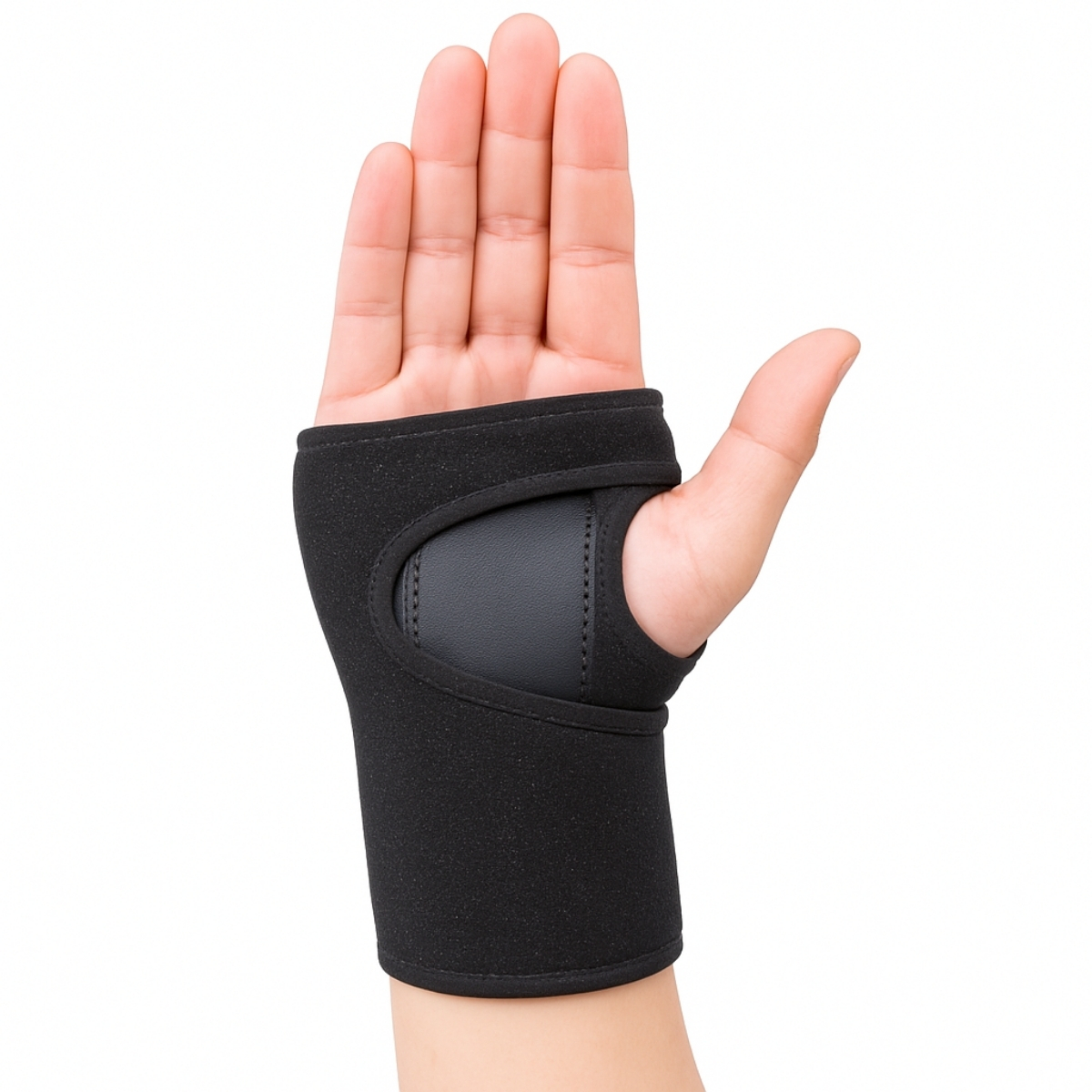
- Rigid wrist support with a firm metal splint running along the palm side of the wrist
- Helps when wrist pain, weakness or tingling are made worse by bending, gripping or putting weight through the hands
- Holds the wrist closer to straight to reduce strain on ligaments, joint surfaces, tendons and the median nerve
- Commonly used for carpal tunnel–type symptoms, carpal tunnel syndrome, wrist sprains, repetitive strain and inflammatory wrist pain when advised by a clinician
- Broad, contoured palm‑side splint gives firmer control of deep bending than basic elastic wrist supports
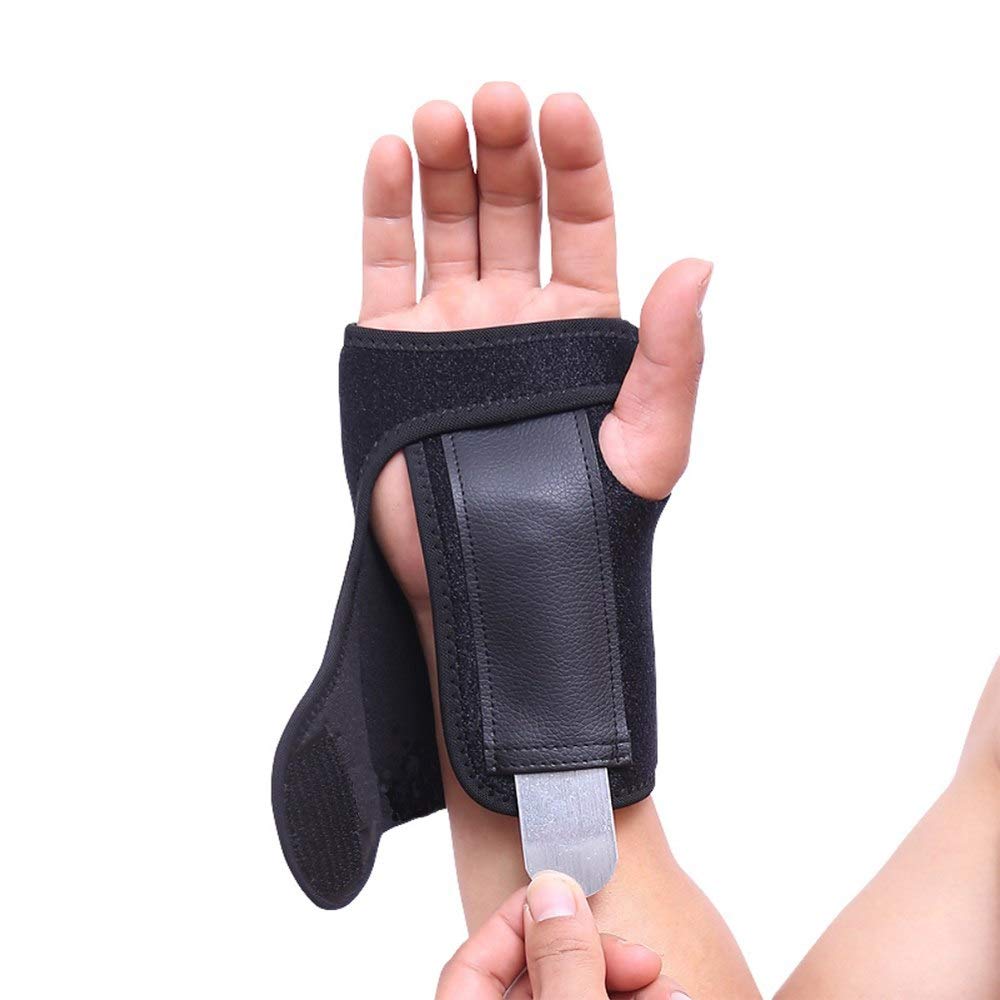
- Removable splint: wear it rigid for maximum control, or take it out when you only want softer compression and light support
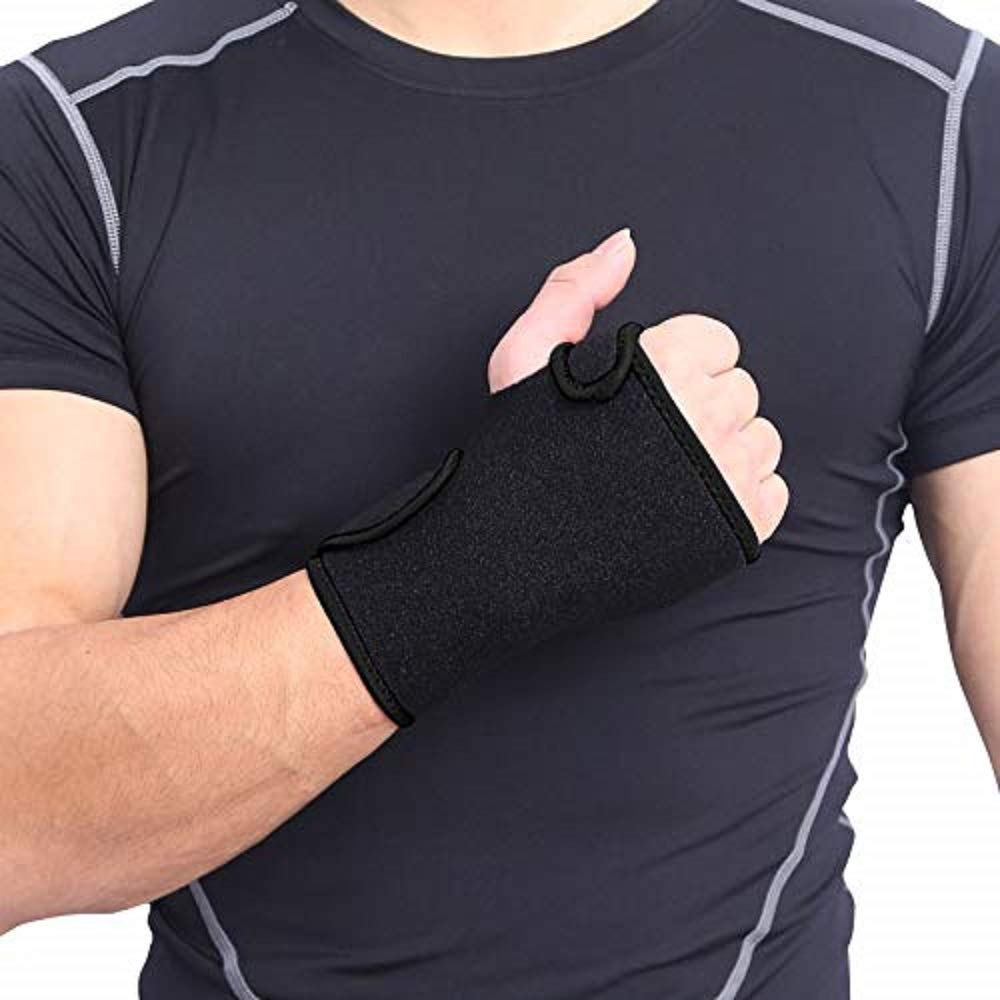
- Neoprene body and two adjustable straps provide close, comfortable compression even without the splint in place
- Thumb loop keeps the brace correctly positioned over the palm side of the wrist, reducing slipping and twisting during use
- Separate right‑ and left‑hand versions shaped to match each hand more closely and reduce pressure points
- Leaves fingers and thumb free so you can still grip, type, write and handle tools while the wrist joint is protected
- Suitable for daytime use in lifting, carrying and repetitive tasks, and for night‑time neutral positioning when recommended
- Easy to take on and off so you can use it for higher‑demand periods, then remove it for specific exercises or lighter activities as advised
- Not suitable over obvious deformity, suspected fracture, sudden severe swelling or worrying new symptoms without medical advice
- Does not prevent or treat blood clots; sudden breathlessness, chest pain or unexplained limb swelling always needs urgent medical help
Everyday wrist pain and strain: what is going on?
What wrist symptoms can feel like
When your wrist starts to ache, catch, or tingle during everyday movements, even simple tasks can take more effort than they used to. Wrist pain and tingling often appear in the most ordinary actions. You might feel a sharp catch at the wrist joint when pushing up from a surface, a deep ache across the front of the wrist after gripping for a while, or tingling that creeps into the fingers when holding something for too long. For some, discomfort is most noticeable at the base of the hand on the palm side; for others, it feels deeper in the wrist joint or travels slightly into the forearm. A sharp, localised jolt when weight goes through the hand or when twisting often points to irritation in the joints or ligaments. Tingling or numbness that spreads into specific fingers usually suggests a nerve is being compressed or irritated.
You might also notice a sense of weakness or “giving way” when lifting a heavier bag or a full kettle. Tasks that once felt automatic — twisting a lid, carrying shopping, or supporting your weight through your hands — can start to feel hesitant or awkward. Without realising it, you may begin to change how you move: avoiding leaning through the hands or relying more on the other wrist. Nights can be difficult too. You may wake with tingling or numbness in the thumb, index, and middle fingers, or with a dull, deep ache in the wrist that eases once you move it around. During sleep, the wrist often curls inwards without you noticing, which can increase pressure on sensitive tissues at the front of the wrist.
What is happening inside the wrist joint
Inside the wrist, several small joints, ligaments, and tendons work together to control the hand. The wrist is formed by a group of small bones called the carpal bones, which connect with the ends of the forearm bones — the radius and ulna. Around these joints are strong bands of tissue called ligaments. These ligaments hold the bones in place and prevent the wrist from sliding or twisting too far when you lean through the hand or catch yourself during a stumble.
Tendons from the forearm muscles cross the wrist joint to bend and straighten the fingers and thumb, powering gripping, lifting, and pushing. On the palm side of the wrist lies a narrow passageway called the carpal tunnel. This tunnel contains the median nerve and several flexor tendons. The median nerve carries sensation to the thumb, index, middle, and part of the ring finger, and helps control some of the small muscles in the hand.
How everyday pressure and angles irritate the wrist
When clinicians talk about “load” on the wrist, they mean how much weight passes through your hand, how firmly you grip, and the angle your wrist is held in at the time. When the wrist is repeatedly bent forwards (flexion), bent back (extension), twisted, or pushed hard while at an awkward angle, the surrounding structures are placed under extra strain. Bending forwards stretches the tissues at the back of the wrist and reduces space at the front; bending backwards compresses the back of the joint and stretches the soft tissues at the front. Over time, tendons can become irritated by constant friction within their sheaths, the joint surfaces and ligaments can feel the effects of repeated impact or stretching, and pressure inside the carpal tunnel can rise, squeezing the median nerve.
Many wrist problems share similar triggers — particular wrist angles and repeated loading through the hands. After a single injury, a long period of overuse, or with an inflammatory joint condition such as arthritis, the tissues around the wrist can become more sensitive. Everyday tasks that once felt easy can now provoke discomfort much sooner. Bending the wrist fully forwards or backwards, holding it bent for long periods, or loading heavily through the hand — for example, when pushing up from a chair, leaning on a work surface, or carrying a heavy object by its sides — can all make symptoms flare. That is why a deeply bent wrist often feels more painful or vulnerable than when it is kept closer to straight.
Because of this, clinicians often recommend external support during certain stages of recovery. A well‑designed wrist support does more than simply hold the area still — it changes how the wrist moves and how forces travel through it. By guiding the joint towards a more neutral position and limiting the most aggravating ranges, a brace or wrist splint can help reduce the repeated strain that keeps symptoms going, while still allowing enough movement for everyday use. This is where a rigid palm‑splint wrist brace can make a meaningful difference.
Why a rigid palm‑splint wrist brace can help
Once you understand how certain wrist positions and everyday pressures can irritate the joint, it becomes clearer why structured support can make such a difference. A rigid palm‑splint wrist brace is designed to protect the wrist from the movements and forces that most often trigger pain, while still allowing you to use your hand comfortably for everyday tasks.
Why extremes of movement are a problem
The sensitive structures around the wrist are most strained at the limits of movement. When the wrist bends fully forwards, the flexor tendons and tissues at the front are stretched and the space within the carpal tunnel narrows, increasing pressure on the median nerve. When the wrist bends fully back, the tissues on the back of the wrist are compressed and stretched at the same time. Side‑to‑side bending (towards the thumb or little finger) can also become uncomfortable if repeated under load, such as when lifting with the wrist angled.
If those tissues are already irritated or slightly damaged, these movements can set off a chain of reactions. Repeated deep bending can cause small additional strains in the ligaments or joint capsule. Each strain triggers a local inflammatory response: fluid and repair cells move into the area, leading to swelling, warmth, and sensitivity. That swelling can further increase pressure inside tight spaces such as the carpal tunnel, making the nerve more easily irritated. When this cycle continues over days or weeks, the tissues are loaded again before they have fully settled, and symptoms can gradually become more frequent or appear with smaller tasks.
What a straighter wrist position means
A practical way to manage this is to keep the wrist closer to a straight, mid‑range position. A neutral wrist is not bent forwards or backwards, and not strongly tilted towards the thumb or little finger. Seen from the side, there’s a fairly straight line from the middle of the forearm through the back of the wrist into the hand. In this middle part of the wrist’s movement, load is shared more evenly, ligaments are not pulled to their limits, tendons glide more smoothly, and the space within the carpal tunnel is usually more comfortable for the median nerve. Many people notice that their wrist feels easier and less vulnerable when it’s kept nearer to straight rather than forced into a deep bend.
How support and compression work together
A structured wrist brace helps maintain this safer, straighter position. The firm splint built into the palm side of the brace resists movement into the most aggravating extremes. When you push up from a surface, for example, the wrist naturally tends to collapse into a deep backward bend. In a more neutral position, the load is shared more evenly across the joint. With the brace in place, the rigid splint limits how far the wrist can bend, so the ligaments and tissues on the back of the wrist aren’t driven as hard into compression and stretch. When you hold objects for longer periods, the brace discourages the wrist from sagging forwards, which can otherwise narrow the carpal tunnel and increase pressure on the median nerve.
Gentle compression adds another layer of benefit. A properly fitted wrist support applies light, even pressure around the wrist joint and lower forearm. This has two main effects. First, the contact around the skin and underlying tissues improves awareness of wrist position and movement (proprioception). This extra feedback helps the surrounding muscles make finer adjustments and can reduce the sense of wobbliness or “giving way”. Second, the pressure supports the return of fluid through veins and lymphatic channels after activity, which may help swelling and that feeling of tightness settle more efficiently in some people.
At the same time, the brace must allow useful movement. Completely immobilising the hand and wrist for long periods is rarely the goal outside early fracture or surgical recovery. If a wrist joint is held still for too long, it can stiffen and the muscles around it can weaken. For most everyday wrist problems linked to pain or overuse, the aim is to limit the most harmful positions while still allowing low‑strain movement and function. This helps maintain muscle activity, joint nutrition, and general hand use while irritated tissues are protected from the worst of the stress.
Put simply, a rigid wrist brace helps by reducing repeated movement into the extremes that irritate sensitive structures; by supporting a straighter wrist angle that’s friendlier to joints, ligaments, tendons, and the median nerve; and by adding gentle compression and improving your awareness of wrist position, which can help you feel more in control and comfortable during tasks that usually feel shaky or painful. The rigid wrist brace described here is built around these principles. Its palm‑side metal splint, adjustable straps, and close‑fitting body are arranged to hold the wrist in a more protective position while keeping the fingers and thumb free to move.
How this rigid wrist brace is built – and what it changes
Rigid palm‑side splint
The brace covers the hand and wrist and extends several centimetres along the forearm, while leaving the fingers and thumb free to move. A broad, thick metal splint runs along the palm side of the brace, housed in a protective pocket. It’s shaped to follow the natural curve of the palm and wrist into the forearm. Once the straps are fastened, the splint becomes the main structure that controls wrist position. The splint is deliberately rigid, giving firm control over wrist movement and preventing the joint from bending too far forwards or backwards beyond a safer mid‑range.
Because the brace extends up the forearm, the longer splint spreads the bending forces that act at the wrist across a wider area. This distributes stress along the splint and into the forearm instead of concentrating it at the joint line. As the wrist tries to bend, the palm‑side splint absorbs the force that would otherwise strain the soft tissues at the front of the joint. This is particularly important in positions such as pushing up from a surface, where the wrist would otherwise drop into a deep backward bend.
Soft wrist supports often rely on flexible splints that permit more movement, whereas this brace uses a broad, contoured splint to stabilise the wrist in a safer position. The splint can also be removed when a little more movement is wanted. With the metal insert taken out, the neoprene body and straps still provide light support and compression around the wrist joint. Some people use the brace in this softer form for lighter activities or when a rigid splint isn’t suitable — for example, during certain sports or exercise sessions — if advised by a clinician.
Thumb loop, straps and alignment
A thumb loop holds the front of the brace in place at the base of the hand, keeping it steady during movement. By securing around the base of the thumb, this loop helps keep the far end of the splint aligned with the palm and prevents the brace from sliding down towards the forearm during use. This alignment matters because even a well‑designed splint becomes less effective if it shifts away from the joint line it’s designed to support. The loop also ensures that, as you move the hand, the brace moves with it rather than twisting independently, which maintains even support and reduces rubbing.
Two adjustable hook‑and‑loop straps cross over the wrist area and secure back onto the body of the brace, allowing you to set the snugness that feels right for you. When tightened, they draw the neoprene body and splint closely around the wrist joint and forearm. This close contact improves how forces are transferred into the brace, making the splint more effective at limiting the wrist positions that cause trouble. The straps also let you adjust pressure as needed — a little firmer when you’re lifting or putting more weight through the hands, and looser when swelling is present or you’re resting. The straps should feel secure but shouldn’t cause new pain, pins and needles, or colour changes in the hand.
Neoprene body and free fingers
The body of the brace is made from lightweight, breathable neoprene. The material has a gentle stretch for comfort but enough firmness to support the splint and straps. Its ability to absorb some sweat and allow air flow helps manage moisture against the skin, which becomes important if the brace is worn for longer periods, such as through a working day or overnight. By keeping the hand and wrist drier, the material helps reduce the risk of skin irritation under the brace.
The design leaves the knuckles of the fingers and the thumb free. This means the brace stabilises the wrist joint itself while allowing the fingers and thumb to move through their normal ranges. You can still curl and straighten the fingers fully to grip, type, write, and handle tools, but with the wrist held in a steadier position. Mechanically, this balance protects the wrist while keeping the hand functional. The joint that’s causing difficulty is guided and limited, while the rest of the hand continues to move so that everyday activities remain possible.
This brace is made in specific right‑hand and left‑hand versions. The shape and angle of the palm and wrist differ slightly between sides, so having a hand‑specific contoured splint helps the brace sit more closely along the natural curves of that hand. A better anatomical match tends to improve both comfort and the precision of support, as the splint can sit exactly where it needs to be to control wrist movement without creating pressure points. A generic brace designed to fit either hand is more likely to dig into one edge of the wrist and less able to follow the palm closely, which can reduce both comfort and control.
Together, these design features steady the wrist and manage load in a controlled, predictable way. The rigid palm‑side splint limits positions that tend to cause pain, while the straps and neoprene body provide adjustable compression and support. The thumb loop and hand‑specific shaping keep the brace aligned with the wrist joint, and the free fingers and thumb let you continue everyday tasks comfortably within safer limits.
Understanding how the brace works makes it easier to see when it’s most likely to help.
When this brace is most likely to help
Using the brace in daily life
Once you understand how the brace supports your wrist, the next step is learning how to use it day to day.
When to wear it: daytime and night‑time
Many people find a wrist brace most useful at the times or during the activities when their symptoms tend to build. For some, that’s while working with tools, lifting, or carrying items; for others, it’s when pushing up from a surface or leaning through the hands. Some also notice that wearing the brace overnight changes how their wrist feels by morning.
During the day, it often helps to use the brace when you know your wrist is likely to bend deeply or carry weight. Those are the moments when the joint is under most strain. Think about the times when your wrist has to grip firmly, twist repeatedly, or support your body weight. Examples include long spells of lifting and carrying, using hand tools with the wrist bent or turned, or tasks that involve steadying yourself with your hands. At those times, the brace can help prevent the wrist from drifting into the angles that usually bring on discomfort and can reduce the sense of weakness or instability.
It’s usually not necessary, and often not helpful, to wear the brace all day unless a clinician has advised otherwise. For most conditions, the aim is to protect the wrist during heavier or more demanding tasks while allowing it to move freely at quieter times. Short periods without the brace, when symptoms allow, help maintain muscle activity and confidence in the joint. If a wrist is kept in a brace constantly without clear reason, the muscles that normally stabilise it can become less active and stiffness may develop, so some brace‑free movement within comfortable ranges is usually encouraged.
Night‑time use is particularly relevant if you have carpal tunnel–type symptoms or pain that worsens overnight. Many people naturally sleep with their wrists bent forwards, which increases pressure in the carpal tunnel and can irritate the median nerve. Wearing the brace at night keeps the wrist closer to a straight, neutral position and makes it harder to curl the hand into a tight bend. Some people find they wake less often with tingling, numbness or deep aching when they use a neutral‑position wrist splint in this way, although responses vary.
In general, it makes sense to use the brace more during flare‑ups or heavier activity, to wear it during tasks you know are likely to provoke symptoms, and to take short brace‑free breaks when it feels comfortable to move the wrist gently, unless advised otherwise by a clinician.
How to put it on and check the fit
Once you’ve identified when the brace is most useful, fitting it correctly ensures it provides the intended support. A good fit is essential. If it’s too loose, it won’t control movement effectively; if it’s too tight, it can cause discomfort or affect circulation. The steps below describe how to position the brace so the rigid palm‑side splint sits correctly and the straps provide even support.
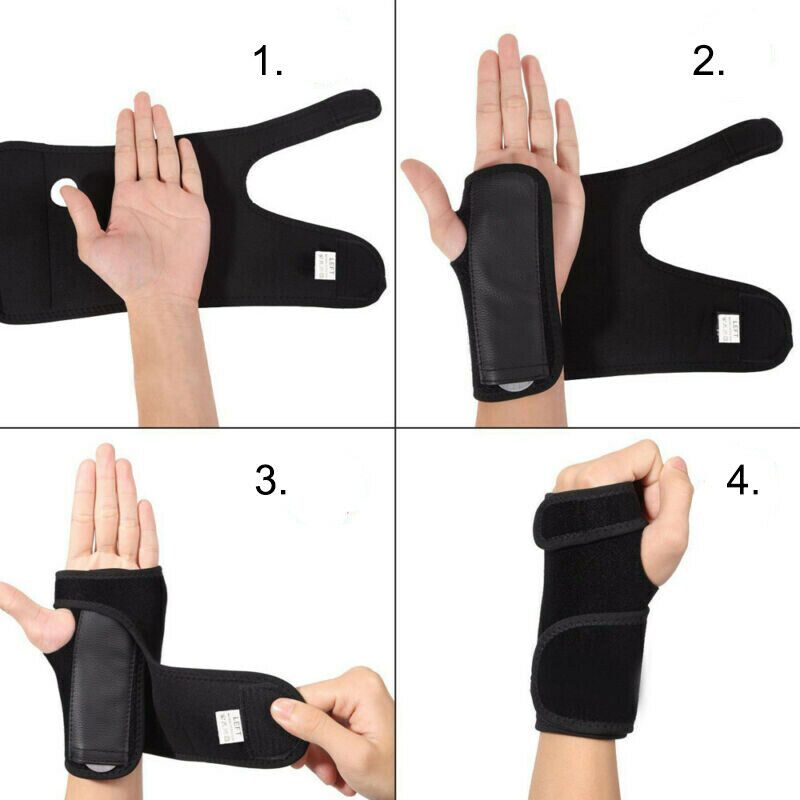
Choose the correct hand. Make sure you have the right‑hand or left‑hand version for the wrist you want to support. The metal splint should run along the palm side of that hand and forearm — the side you close around an object when you grip — not along the back of the hand where the knuckles are.
Next, position the thumb loop. Locate the thumb loop at the end of the wrist support and slide your thumb through it from above. The loop should rest comfortably at the base of the thumb, with the rest of the brace lying against the palm side of your hand and wrist.
Next, align the splint. Check that the internal metal splint runs along the palm side of your hand and wrist, following the natural curve into the forearm. The lower end of the splint should sit just below the crease at the base of the fingers, without covering the knuckles, so you can still bend the fingers fully.
Then, wrap the body around the wrist and forearm. Bring the sides of the neoprene body around the back of your wrist and forearm so they overlap comfortably. The material should lie flat without folds or gaps, and the top edge should not dig into the base of the thumb or the back of the hand.
Fasten the straps in order. Start with the strap closest to the wrist joint. Pull it across the front of the brace and secure it onto the outer surface. Then fasten the second strap further up the forearm. Adjust each strap so the brace feels snug and the splint is held firmly against the palm side, but not so tight that it causes pain or throbbing.
Check comfort and circulation. Once both straps are fastened, check that your fingers and thumb can move freely and that the brace doesn’t dig into the base of the thumb or the back of the hand. Look at the colour of your fingers; they should look normal for you, not unusually pale or blue. Lightly press the skin of a fingertip and watch it quickly return to its usual colour. Notice any new tingling, throbbing or a feeling of pressure building under the straps in the first few minutes — these can be signs that the brace is too tight.
Try a few gentle movements. Gently bend the wrist forwards and backwards within the limits allowed by the brace, and try a light version of a task you commonly do, such as loosely gripping an object. You should feel that the wrist brace resists movement into the extremes without causing sharp pressure points or rubbing. If you’ve had a recent injury, keep these test movements within the range your clinician has advised is safe.
If you notice tingling that wasn’t present before, increasing discomfort, or marks that don’t fade after a few minutes, ease the straps slightly and re‑check. If any of these problems persist even with gentle fastening, it’s best to stop using the brace and have it checked by a clinician.
Adjusting compression and support level
After fitting the brace comfortably, you can fine‑tune how much support it gives depending on your activity and how your wrist feels that day. Because the brace uses adjustable hook‑and‑loop straps, you can vary how firmly it holds the wrist to match what you’re doing.
When you expect to load the wrist more heavily — for example, during lifting, carrying, or supporting your body weight through the hands — you may choose to tighten the straps slightly so the splint sits closely against the palm side and the brace feels more solid. This can improve its ability to prevent the wrist from moving into its most provocative angles and may give a stronger sense of stability. Always tighten gradually and stop well before any discomfort, pins and needles, or colour change appears.
At times when the wrist is more swollen or feels particularly warm and sensitive, a slightly looser fit may be more comfortable. Swollen tissues are more easily compressed, and too much pressure can be uncomfortable or affect circulation. In these situations, fasten the straps so the brace stays in place but feels softer under your fingers. You can always tighten again briefly for specific tasks if needed.
Over the course of a day, it can help to loosen the straps a little during periods of rest or lighter activity, tighten them gently before tasks that challenge the wrist, and take the brace off completely for short intervals, if comfortable and appropriate, to move the wrist through easy ranges as advised by a clinician. The timing and length of these breaks will depend on your symptoms and any specific guidance you’ve been given.
Pay attention to how your skin and wrist respond. Persistent redness, new numbness, a cold sensation, or colour changes in the hand suggest the wrist support may be too tight or not sitting correctly. If this happens, remove it, allow the area to settle, and refit more gently. If problems keep returning even after careful fitting, it’s best to have the brace and your wrist checked by a clinician.
Who this brace may suit, and when to be cautious
This brace is designed for adults whose wrist symptoms change with position or load, and who may benefit from steadier support that limits the movements most likely to cause discomfort. It is not suitable for every situation, and there are times when using a wrist splint without proper assessment could delay the right care. This section explains who may benefit, when the brace may not be appropriate, and which warning signs mean you should seek prompt medical advice.
People who may benefit
This type of rigid wrist brace is often helpful when:
- Your wrist pain or tingling clearly worsens when the joint bends or carries weight, and eases when it is supported or kept nearer to straight
- You have been given a diagnosis such as carpal tunnel syndrome, a wrist sprain or dislocation in later recovery, wrist tendonitis or repetitive strain, or inflammatory or arthritic disease affecting the wrist, and a clinician has suggested or approved the use of a wrist brace or wrist support
- You are in a later phase of recovery from a stable wrist injury, where rigid casting or splinting is no longer required but the joint still feels vulnerable or easily irritated during daily tasks
- Certain movements – such as pushing up from a surface, leaning through the hands, or carrying items repeatedly – reliably bring on discomfort, and you want a way to make those activities more manageable while you follow a rehabilitation plan
If several of these points sound familiar, this style of rigid palm‑splint wrist support is likely to be relevant to your situation. Even when your symptoms match these descriptions, it’s sensible to involve a clinician, especially if you have other health conditions, recent trauma, or are unsure of the underlying cause. A brace is one tool within a wider management plan. It works best alongside other treatments rather than as a standalone solution.
When this brace may not be appropriate
You should be cautious about using the brace, and seek clinical advice first, if you’ve had a recent significant injury to the wrist — for example, a fall from height, a fresh dislocation, or a high‑energy impact — and the area is very painful, swollen, or visibly out of alignment. The same applies if the wrist or hand has a clear deformity, or if you cannot move your fingers or thumb at all because of pain or mechanical blockage. You should also seek advice if swelling has appeared suddenly and is severe, especially if it’s accompanied by widespread bruising; if there are open wounds, ulcers, or fragile skin where the brace would sit; if the wrist or hand is already being managed in another rigid support where altering it could disrupt treatment; or if you’ve been advised not to wear compressive or restrictive items on your limbs because of another condition, such as certain circulatory or nerve disorders.
In these circumstances, placing a semi‑rigid wrist brace over the problem area may hide important signs, alter the position of an unstable injury, or create extra pressure on already compromised tissues. You should obtain a clear diagnosis and a tailored management plan from a clinician before relying on a brace in these situations. After a significant injury or recent dislocation, don’t use a wrist support as a substitute for proper medical assessment.
Safety, red‑flag symptoms, and circulation considerations
Most people can use a wrist support safely, as long as they pay attention to fit and comfort. Minor issues such as temporary red marks from pressure, mild warmth under the brace, or a light sense of compression that eases when the straps are loosened can usually be managed by adjusting the fit or reducing wear time. However, there are certain warning signs that are not typical fitting problems and should not be ignored.
If any of the following occur, remove the brace and seek urgent medical assessment rather than waiting to see if they settle:
- Sudden, severe pain in the wrist or hand, especially after an incident such as a fall or heavy impact
- A clear change in the shape of the wrist or hand, or a new inability to move the fingers or thumb that wasn’t present before
- The hand becoming very pale, blue, or unusually cold compared with the other side, or developing a mottled appearance
- Rapidly increasing swelling, tightness, or a feeling that the hand is being squeezed from within
- New or spreading numbness, weakness, or loss of control in the hand or fingers that doesn’t ease quickly when you remove the brace
Pregnancy can affect how the hands and wrists behave, partly due to changes in fluid balance and ligament flexibility. Some people notice carpal tunnel–type symptoms or more swelling around the wrists and hands during pregnancy. If you are pregnant and considering using a wrist splint or wrist brace, especially if there is noticeable swelling or any concern about circulation, it’s particularly important to discuss this with a midwife, GP, or physiotherapist so that support can be tailored to your situation.
Because this brace applies compression and limits movement locally around the wrist, it’s also important to be clear about what it doesn’t do. It doesn’t prevent, treat, or reduce the risk of blood clots. Some people associate compression garments with clot prevention, but those are very different devices designed to act on the larger veins of the legs. This wrist support only changes mechanics and support around the wrist and hand. It should never be relied upon for any circulation‑related or clot‑related concern. If you experience symptoms such as unexplained swelling in a limb away from the brace, sudden shortness of breath, chest pain, or calf tenderness, seek urgent medical help — these are not issues that a wrist support can address.
Used in the right circumstances, and with suitable caution, this rigid wrist brace can be a practical way to control painful wrist movements. It helps create the conditions for other treatments and exercises to work more effectively.
How this brace fits into your wider rehabilitation plan
A wrist splint or brace can make a real difference to comfort and confidence, but it works best as one part of a broader plan rather than the whole solution. Rehabilitation for wrist problems usually combines several elements: understanding what aggravates the wrist joint, adjusting how and when those loads are applied, and gradually rebuilding strength, control, and mobility. The role of this brace is to support those aims, not to replace them.
Using the brace with activity changes
Rehabilitation often begins by identifying which movements and tasks tend to bring on your wrist symptoms. Positions such as deep wrist bending forwards or backwards, sustained gripping, and heavy loading through the hands are common triggers. A clinician will usually suggest ways to adjust these tasks — for example, changing hand positions, breaking work into shorter blocks, or varying how load is shared between the arms. Using the brace during the most demanding or symptom‑provoking tasks can reinforce those adjustments by physically limiting the wrist angles that cause discomfort and providing extra stability while new habits are developed.
In long‑standing overuse problems, rehabilitation often involves planning activity levels so that the amount of gripping, lifting, and weight‑bearing through the hands and wrists better matches what the tissues can currently tolerate. Rather than stopping all the activities that cause discomfort, the aim is to spread them more evenly and build them up gradually. Wearing the brace during higher‑demand periods can make it easier to keep activity within those planned limits by reducing peak strain, while still allowing the wrist to move naturally at other times.
Using the brace alongside exercises
Alongside activity changes, exercises are commonly used to restore or maintain the strength and mobility of the hand, wrist, and forearm. These may include gentle range‑of‑movement exercises for the wrist joint, isometric holds, and later, controlled strengthening against resistance. In this context, the brace can be worn for part of the day to protect the wrist during heavier or less predictable tasks. It can then be removed under guidance for specific exercise sessions. This allows the wrist to experience safe, targeted loading needed for recovery, while still being protected at other times.
For those recovering from ligament sprains, dislocation, or post‑injury stiffness, a clinician may advise a gradual move from a rigid cast to a semi‑rigid brace, and finally to periods without external support. This rigid wrist brace fits into that middle stage for many people, once fractures have healed sufficiently and the focus shifts to regaining movement and functional strength. The aim is not long‑term dependence, but a gradual reduction in wear time as the ligaments and muscles around the wrist joint take over more of the stabilising work.
For some activities, a softer support without the splint is enough. If your clinician agrees, you can remove the metal stay and use the neoprene wrist support on its own to give light compression and reassurance around the joint during selected exercise or sport, while still allowing more wrist movement than the full splint.
In inflammatory and arthritic wrist pain, brace use is usually one part of a wider plan that may also involve medication, joint‑protection techniques, and specific exercises. During flare‑ups, the brace can play a more prominent role in calming irritation by limiting movement and load. In quieter phases, it may be used less often, mainly for heavier tasks. A rheumatology specialist or therapist can advise on the best pattern for your particular condition. It’s often helpful to review how you’re using the brace from time to time with a clinician, so it continues to serve a clear purpose for your wrist rather than becoming something you wear out of habit.
In all these situations, it helps to see the brace as a tool that changes how the wrist is loaded while you and your clinicians address the movements and loads that are driving your symptoms. Reviewing how often you wear it, which tasks you rely on it for, and how your symptoms are changing over time can help ensure it continues to support your recovery and daily life. Many people use a rigid wrist brace more often when symptoms are at their worst. Once the wrist is stronger, they keep it in reserve for future flare‑ups.
Care and cleaning
Looking after the brace properly will help it stay comfortable, hygienic, and effective for as long as possible. Because it sits close to the skin and may be worn for extended periods, regular cleaning and simple checks for wear are important.
For routine cleaning, it’s usually best to remove the metal splint if the design allows, so that the neoprene body and straps can be washed more thoroughly without soaking the metal. Make a note of how the splint sits in the pocket so that you can reinsert it with the curved part following the palm and wrist again, not the back of the hand. The brace can then be washed gently by hand in lukewarm water using a mild detergent. Avoid hot water, harsh chemicals, or vigorous scrubbing, as these can damage both the neoprene and the hook‑and‑loop fastenings.
After washing, rinse the brace thoroughly to remove any soap residue, then gently squeeze out excess water without twisting or wringing the material. Lay it flat or drape it over a clean surface to air dry at room temperature. Direct heat sources such as radiators or strong sunlight can cause the material to stiffen, shrink, or degrade more quickly, and should be avoided. High heat can also reduce the effectiveness of the hook‑and‑loop fastenings.
Check the skin under the brace regularly for any areas of redness, irritation, or broken skin. Most marks from normal pressure should fade within a few minutes. If they persist, or if the skin looks sore, it may help to adjust the fit next time or reduce wear time until the area has recovered.
Over time, the fabric and fastenings will naturally wear. It’s helpful to check the brace regularly for straps that no longer fasten securely, neoprene that has stretched excessively, thinned, or split, a splint pocket that’s damaged or no longer holds the metal insert firmly, or noticeable changes in how the brace feels, such as increased looseness even when straps are tightened. The neoprene and fastenings in this wrist support are chosen for durability, but like all braces they will eventually need replacing. If you notice these changes, the brace may not be controlling wrist movement as intended and could be less effective. At that stage, it’s usually sensible to replace it, and if you rely on the brace regularly, to discuss any replacement or change of style with your clinician.
Because the splint can be removed, it’s straightforward to wash and dry the brace properly, and to check the skin underneath for any signs of irritation.
Is this rigid wrist brace suitable for you?
How this wrist brace helps
Wrist pain, tingling, or a sense of weakness often stem from how the wrist joint is positioned and loaded during everyday activities. Bending the wrist into its extremes, holding it at awkward angles for long periods, or repeatedly loading it through the hands can irritate ligaments, tendons, joint surfaces, and nerves — especially when these tissues are already sensitive or healing. That’s why tasks such as pushing up from a surface, gripping tools, or sleeping with the wrist curled often bring symptoms on or make them worse.
This rigid wrist brace with a palm‑side splint is designed to change those mechanics in a clear, physical way. The contoured metal splint along the palm side, secured by adjustable straps and a close‑fitting neoprene body, holds the wrist closer to a neutral position and resists deep bending forwards or backwards at the joint. At the same time, gentle compression around the joint provides support and feedback, while the free movement of the fingers and thumb allows you to continue using the hand for most daily activities. In conditions such as carpal tunnel–type symptoms and carpal tunnel syndrome, wrist sprains and dislocation recovery, repetitive strain and wrist tendonitis, and inflammatory or arthritic wrist pain, that combination of steadier position and controlled movement can help reduce the stresses that keep symptoms going.
The design of this brace reflects what clinicians often look for when they want firm guidance into a straighter wrist position but need to keep the fingers and thumb free. The broad, contoured palm‑side splint, hand‑specific shaping, and breathable neoprene have been chosen to provide reliable control and day‑to‑day comfort rather than minimal, elastic support. Many people who use this style of rigid wrist support describe feeling more confident carrying out tasks that previously felt risky or uncomfortable.
Recognising your wrist symptoms
Before deciding, it helps to notice how your wrist behaves during everyday tasks. Does your discomfort clearly change with how bent your wrist is? Do you notice tingling in the thumb, index, or middle fingers that eases when you straighten the wrist joint? Do certain positions — such as pushing up from a surface or leaning through the hands — reliably bring on sharp pain at the wrist? Does the wrist feel steadier when you support it with your other hand? If several of these experiences sound familiar, this type of rigid palm‑splint wrist brace is likely to be worth considering.
Next steps and professional guidance
If your symptoms are severe, rapidly worsening, or linked with worrying signs such as deformity, marked swelling, colour changes, or spreading numbness, urgent assessment is more important than any brace. If your symptoms fit more closely with the position‑ and load‑related wrist problems described here, it’s reasonable to discuss this type of support with a GP, physiotherapist, or hand specialist. The 30‑day money‑back guarantee that comes with this wrist splint gives you and your clinician time to see how well it fits your symptoms and daily activities in practice.
If you decide to try it, choosing the correct right‑ or left‑hand version and following the fitting and usage guidance above will give you the best chance of gaining useful support while you work on the broader aspects of recovery. Taking the brace to appointments can also help your clinician check the fit and advise on how and when to use it most effectively.
Important medical information
The information on this page provides general guidance about wrist pain and the use of a rigid wrist brace with a palm‑side splint. It is not a substitute for individual medical assessment, diagnosis, or treatment.
If you’re unsure about the cause of your symptoms, if they’re new, changing, or not improving, or if you have other health conditions that affect your joints or circulation, you should speak to a GP, physiotherapist, hand specialist, or another appropriate clinician for personalised advice. No brace can guarantee specific results, and outcomes naturally vary between individuals.
Fast & Secure Checkout Through Paypal
Pay with Paypal the secure payment gateway that accepts all credit and debit cards. Paypal is free and secure and no credit or bank information is ever stored or shared with us.
Fast Dispatch
Enjoy your items soon with quick dispatch via Royal Mail First Class. Expect to have your items between 1-3 days for domestic orders. 7-10 Working days for international orders.
Return Policy – 30 Day Money Back Guarantee
We are so confident that you will just love our product that we offer a full 30 day money back guarantee. In the unlikely event, you are unhappy with your purchase you can simply return it within 30 days for a refund. Please contact us via the form on the contact us page to start your return.
To return an item please send it to: Nuova Health UK, 81 Highfield Lane, Waverley, Rotherham, S60 8AL. Please include a note with your order id so we know who to refund. Please retain your postage receipt as proof of postage. All that we ask is that the item is in the original packaging and unused.
Reviews
There are no reviews yet.