

DIY Work Knee Pads for Construction, Flooring & Gardening
£16.99inc VAT
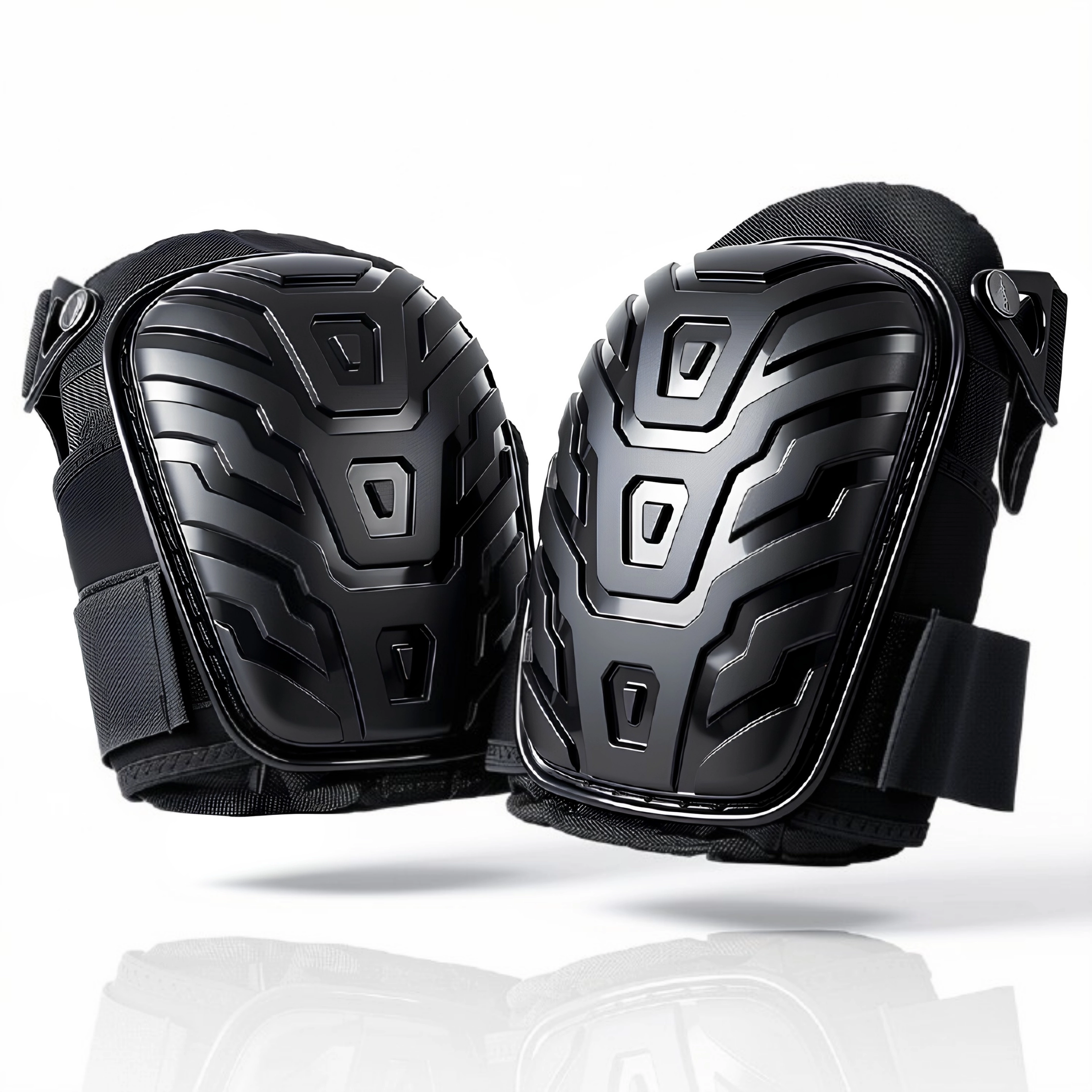
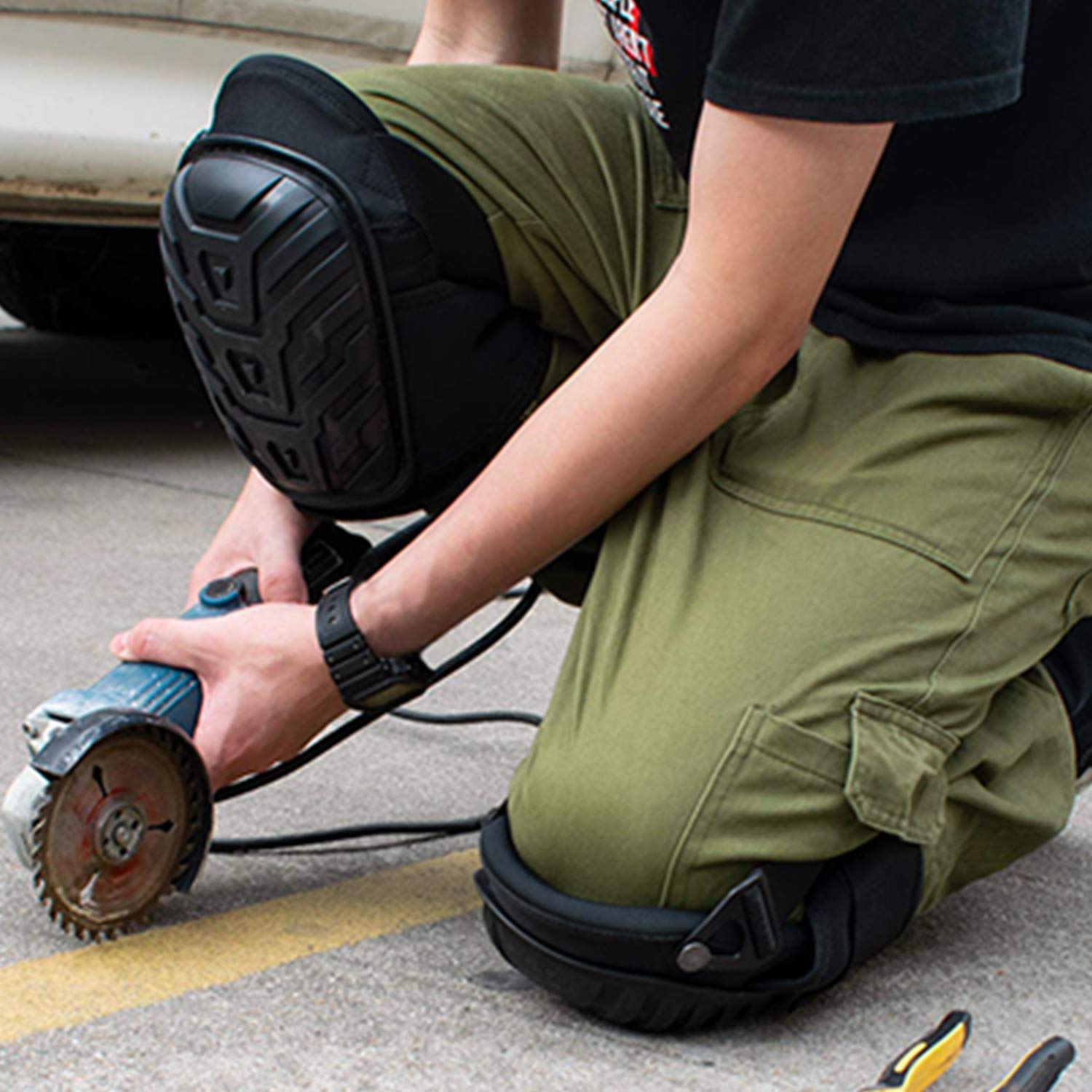
- A pair of work knee pads for adults who kneel for DIY, trade or garden jobs.
- Built to reduce the pressure that builds at the front of the knee during long periods on hard or uneven ground.
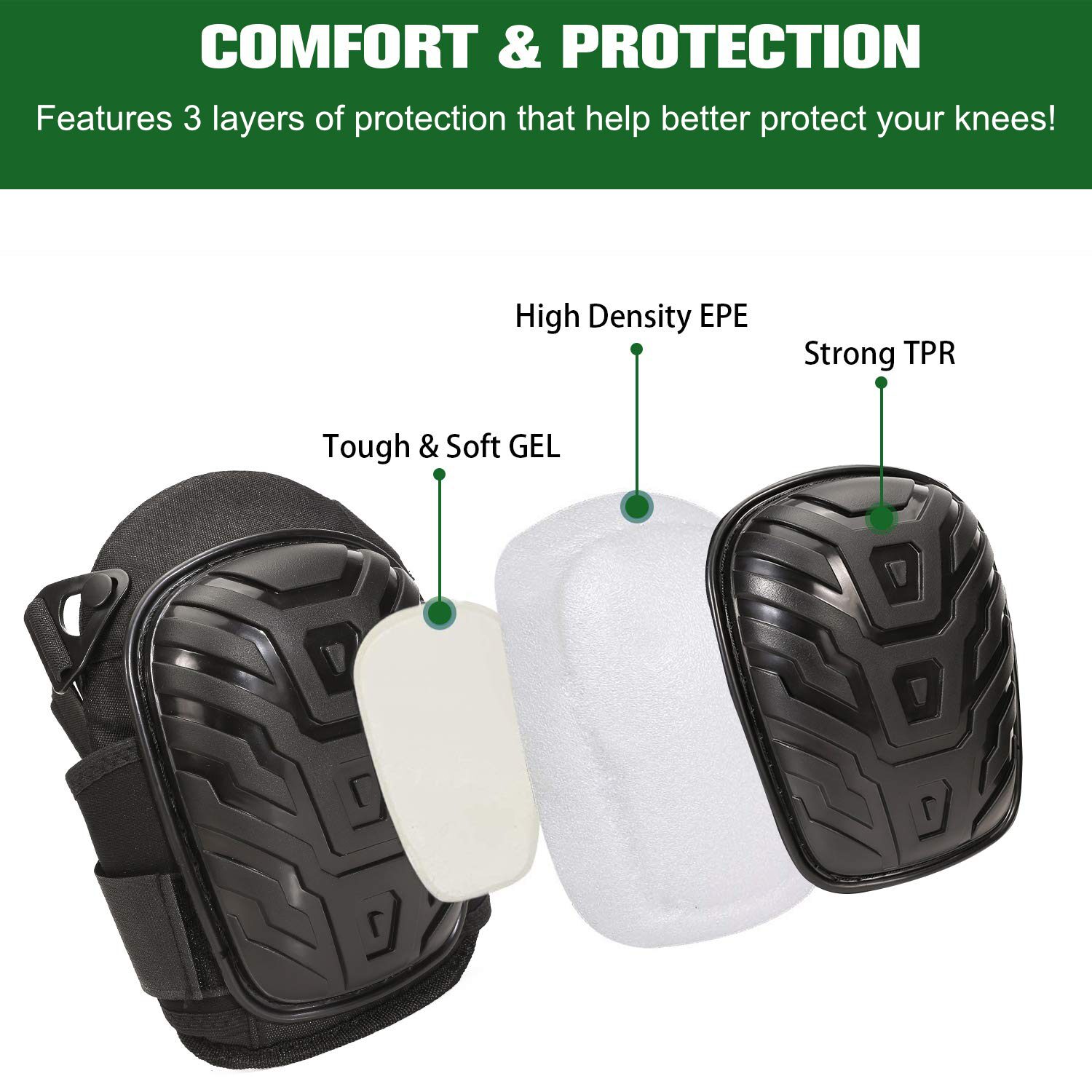
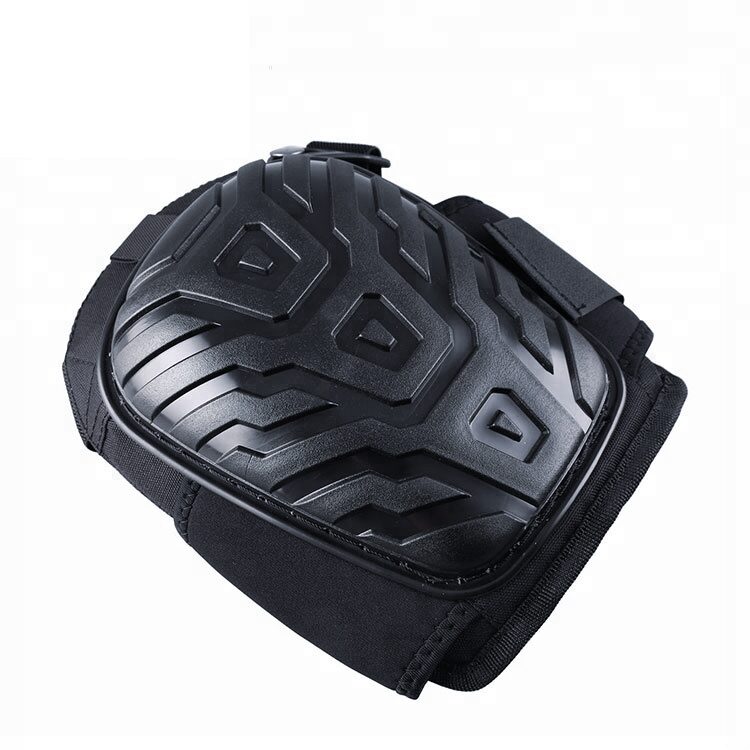
- Three layers at the front: a soft gel layer, a firmer foam core, and a hard plastic shell on the outside, with a soft fabric face where your knee rests.
- The soft fabric face softens the first contact as you kneel down, with the gel layer just behind it; the foam core spreads body weight across a wider area, so the pressure at any one spot drops.
- The shell smooths over rough ground, grit and sharp edges, so the knee rests on an even surface rather than on grit and offcuts.
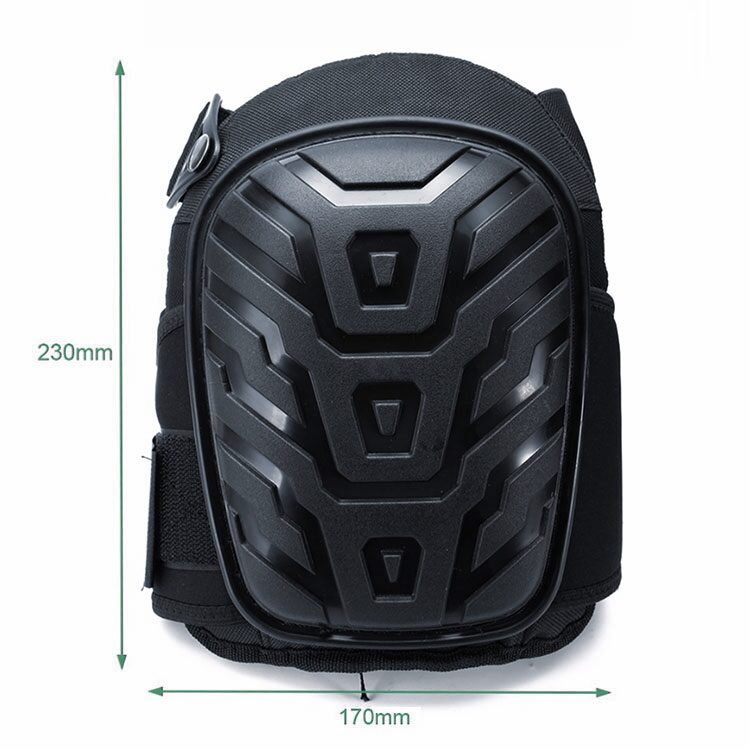
- Single size, so there’s nothing to measure — the wide adjustable straps set the fit.
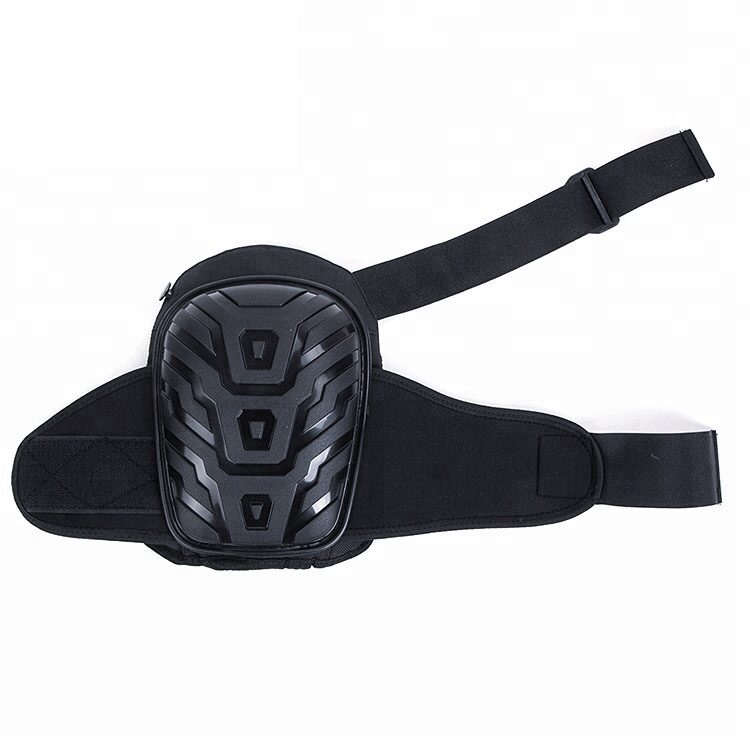
- Two wide straps with adjustable fastening, plus quick-release buckles that clip in seconds, even with gloves on.
- Contoured side panels and flexible sections help keep the cushioning centred under the kneecap as you lean, pivot or work with one knee down.
- A textured shell face with indentations helps the pad hold its position on tiles and finished wood, with extra grip on uneven ground.
- Soft fabric against the knee, water-repellent fabric on the straps and panels, a breathable lining, and reinforced stitching at the points that get pulled hardest.
- Wear over clothing, keep the straps snug rather than tight, and check your skin at breaks.
- Use short periods on your knees, standing for a minute between them.
- The shell resists scrapes, scuffs and rough ground but not sharp punctures — sweep away nails, glass and other sharp debris before you kneel.
- Not a cure or a treatment. If pain is severe, new, unexplained or getting worse, speak to a GP or physiotherapist.
Knee pain from kneeling: what’s happening
Kneel for long enough on a hard floor and soreness starts at the front of the knee. If time on your knees is part of what you do — flooring, tiling, plumbing, joinery, or a day in the garden — you’ll know how quickly it sets in. What you notice first is a soft, tender puffiness that usually settles right over the kneecap, though sometimes it spreads a little above or below it. Rather than a sharp sting in one place, it’s more of a broad tenderness that builds. By the end of the day the skin over it often feels warm to the touch, and by the next morning it can seem to have settled.
There’s very little padding at the front of the knee. Under the skin sits the kneecap, and directly in front of it is a small fluid-filled sac called the prepatellar bursa. Its job is to let the skin glide over the kneecap when you bend and kneel, rather than rubbing straight against bone. Kneel on a hard floor and your body weight presses that thin layer between you and the floor. The smaller the contact area, the higher the pressure at any one spot. Uneven ground makes things worse, because a single edge or a piece of grit concentrates force onto one small spot.
Press that spot hard for long enough, and the lining of the sac becomes irritated. It responds by producing more fluid, so the sac fills. The skin over it is then stretched tighter, and stretched skin is more sensitive to the next contact. Pressure builds, the sac fills, and every kneel after that feels sharper than the one before. It’s also why the swelling sits in one place rather than spreading across the whole knee.
The first kneel of the day usually feels worst. Once you’ve been down for a few minutes the sharpness often eases, and you can work for a while. Stay in the position too long, though, or keep shifting weight onto the same knee, and it builds again. You may find yourself sitting back on your heels, switching knees, or standing up just to take the weight off, even when the job isn’t finished. By the evening the front of the knee can feel tight and hot. Overnight it usually settles, and by morning it may feel almost normal — until you kneel again.
Most people can trace this back to a change in what they’ve been doing. A flooring job that ran over several days. A week of tiling after months of lighter activity. A garden cleared on concrete rather than soil. What usually links them is a run of kneeling on hard or uneven ground, a jump in the time spent on your knees, or a knock that never quite cleared. Anyone who spends long periods on their knees — for work or at home — can run into it, and it’s especially common after a burst of work when your knees haven’t grown used to that much time on the floor.
Left alone, the soreness builds up. Every day of kneeling leaves the bursa and the skin over it a little more swollen, and a more swollen area is more sensitive to the next day’s work. Over time, occasional soreness becomes a persistent problem that shortens how long you can kneel and slows down every job that needs you on the floor. Reducing the pressure at the front of the knee limits how much fluid builds up, which is why padding and short breaks help — particularly when they’re introduced early rather than after weeks of pushing through it.
Why a knee pad helps
A knee pad works mechanically. It sits between your knee and the surface and changes how your weight is distributed. Instead of your body weight pressing through one small patch of skin and the bursa beneath it, the pad widens the contact area. Total force stays the same, but the pressure at any one spot drops. Concentrated pressure in a small space is what irritates the bursa, so spreading the load is the most direct way to ease it.
A good pad also changes the surface your knee presses against. Hard floors, sharp joist edges and stray grit all concentrate your weight onto small spots. A shell smooths over those, so your knee rests on a level, forgiving layer instead. That reduces the small knocks that catch the bursa while it’s still sore.
Fit matters as much as cushioning. A pad that slips off-centre leaves its harder edge sitting on or near the sorest spot. Adjustable straps keep the cushioning centred under the kneecap as you lean, pivot and stand up.
The KneeReviver pads are built around exactly that.
Meet the KneeReviver DIY Work Knee Pads
The KneeReviver DIY Work Knee Pads are built for adults who kneel as part of DIY, trade or garden work. Each pad has three layers at the front: a soft gel layer, a firmer foam core, and a hard plastic shell on the outside. Against your knee is a soft fabric face, and the shell’s face is textured with indentations for grip. Around the shell, the straps and side panels are fabric as well — water-repellent on the outside, with a breathable lining against your skin — wrapping from the shell’s edge around the sides and behind the knee. The pads come in a single size, so there’s nothing to measure and no size to choose — two wide straps with adjustable fastening set the fit and hold the pad in place. Quick-release buckles let you clip in and out in seconds, even with gloves on.
Worth knowing before you start: the shell resists scrapes, scuffs and rough ground, but it isn’t designed to resist sharp punctures. Sweep away nails, glass and other sharp debris before you kneel.
How the design supports you through a working day
Cushioning and pressure relief
The soft fabric face is what your knee meets, and the gel layer sits just behind it. The gel moulds to the front of your knee and softens the initial contact, so kneeling down doesn’t land as a sudden hard hit on the bursa. The foam core takes your body weight and spreads it across a wider area, which brings the pressure at any one spot down while you hold a position. The shell at the front shields the softer layers from rough ground and small debris. The three layers work best together. Gel on its own flattens too easily once you lean onto it. Foam on its own feels firm from the first contact. A shell alone would shift the pressure rather than spread it. Combined, they cushion, spread and protect.
Once you’re down and working, spreading the load matters more than the thickness of the padding. A pad that’s soft alone compresses flat under body weight, and the knee ends up against the floor again. A shell with no cushioning would pass the pressure straight through. The three layers cover every stage of a kneeling task — dropping onto the knee, holding the position while you reach and work, and shifting your weight as you lean to one side or straighten up.
Movement, grip and protection
The pad’s shape follows the curve around the kneecap and upper shin, so it sits close without pinching. Flexible sections move with you as you reach forward or drop into a half-kneel — one knee down, one foot forward — which keeps the cushioning under the kneecap rather than letting it slip to one side. The textured shell face helps the pad hold its position on smoother floors such as tiles or finished wood, while still letting you reposition without sticking, and gives extra bite when you brace at an angle on uneven ground. The straps and panels are water-repellent, so moisture beads and can be wiped away, and the hard plastic shell stands up to concrete, wood and other rough materials without wearing through.
Breathability and durability
The fabrics against your skin — the soft face your knee rests on, and the lining of the straps and panels — let air move, so heat and moisture escape more easily during hard work. When the skin stays drier, it’s more comfortable, and less moisture means less odour through the day. Quick-dry fabrics mean the pads are ready to wear again between jobs. Reinforced stitching at the points that get pulled hardest — strap anchors, panel edges and the joins between layers — helps the pads keep their shape through repeated kneeling and standing, so the cushioning stays consistent project after project.
Getting the fit right
There’s only one size, and the wide straps are what set the fit, so there’s nothing to measure before you start. Begin by centring the pad over your kneecap. Set the lower strap first — this anchors the pad and stops it riding up as you work. Then fine-tune the upper strap so the pad doesn’t tilt to one side. The same single size fits over light trousers or heavier work clothing. If your skin is sensitive to rubbing, wear the pads over clothing; the straps and panels take the friction instead of your skin.
Aim for snug, not tight. You should be able to slide a finger under the strap without effort. If the strap leaves a deep mark on your skin, it’s too tight. Check your skin at breaks, and loosen the straps if you notice numbness, tingling, extra redness or heat around the edges. Those are signs the pad is pressing in the wrong place.
Use short periods on your knees, with a minute back on your feet every twenty to thirty minutes, and alternate knees when you can. That way, the pressure isn’t sitting in one place for too long. If discomfort starts to build, shorten your time on your knees, re-centre the pad, and build back in small steps rather than pushing through.
Caring for your knee pads
Wipe the shell and the fabric face that sits against your knee, and air-dry the lining between tasks. Keep them free of dust and grit, so the grip stays effective on smooth floors. After rough jobs, check the shell for cuts or deep scuffs, and inspect the straps and stitching for signs of wear. Store the pads so the shell and lining aren’t crushed or folded against each other.
Which of these sounds like your knee?
If you’re not sure which fits, a few points help tell them apart. Bursitis — inflammation of the fluid-filled sac in front of the kneecap — tends to swell directly over the kneecap, with soreness at its worst on the first kneel. A contusion follows a specific knock and hurts to press, but usually feels better walking on the flat. Soreness linked to reduced bone strength lingers after even minor bumps and feels sharper over the bony points at the front of the knee.
There are other causes of front-of-knee pain that look similar but need clinical input rather than padding. Discomfort around or behind the kneecap that’s worse on stairs usually points to the joint surface — the cartilage lining the joint — rather than the bursa. Pain just below the kneecap that’s tender to press and worse with jumping or a quick rise tends to come from the tendon that runs from the kneecap down to the shin. If the area becomes red, hot and increasingly painful and you feel unwell, that needs medical attention rather than self-care. If you’re unsure which one fits, a GP or physiotherapist can help you work it out.
The three below are the ones a well-fitted pad can genuinely help with. None of this amounts to a diagnosis, and if your symptoms are severe or keep coming back, it’s worth speaking to a GP or physiotherapist.
What to expect
With regular use, kneeling tends to feel less sharp within a week or two, once the pad is centred properly and you break your kneeling into shorter periods. Over two to four weeks, the puffiness at the front of the knee usually settles as your knees get used to the work. Some soreness by the end of the day is common at first, and usually fades as your knees settle. How quickly this happens varies from person to person, and depends on how much time you spend on your knees.
If the soreness gets worse and stays worse for a day or two, ease back slightly, keep gentle movement going, and rebuild in small steps. Short, frequent kneeling works better than staying down for hours, and steady use through the working week works better than occasional bursts of effort.
When to seek help
The guidance here is general and supports day-to-day use. It doesn’t replace personalised advice, and it isn’t a diagnosis. Always work safely.
Seek medical assessment if you notice:
-
- Red, hot swelling with fever or feeling generally unwell.
-
- A wound over the kneecap with increasing pain or discharge.
-
- Sudden, severe swelling after a direct fall or impact.
-
- Not being able to put weight on the knee, or a knee that feels locked.
-
- Numbness, tingling, or increasing swelling while wearing the pad.
-
- Symptoms that don’t improve after a few weeks of sensible changes.
If any of these appear, it’s worth getting it looked at rather than pushing on.
Putting it into practice
This comes down to pressure — too much of it concentrated on one small spot at the front of the knee, repeated across a working day. A well-fitted pair of knee pads changes that in the most direct way available — by widening the contact area, spreading the load, and giving the kneecap a smooth, forgiving layer to rest on. That matters most in trade, DIY and garden work, where hard floors and long periods on your knees are the norm.
If that sounds like your day, the next step is to try a pair and give yourself a week or two of regular use, with short periods on your knees and the fit checked at breaks. Centre the pad, set the straps snug but not tight, keep the floor free of nails and sharp debris, and let your knees adjust. If pain is new, unexplained, or worsening despite sensible changes, speak to a GP or physiotherapist for advice tailored to you.
Disclaimer
The information on this page is general guidance and is not a substitute for individual medical advice, diagnosis or treatment. It’s written for adults in the UK. If you’re unsure about your symptoms, or if they are new, unexplained or more complex, speak to a GP, physiotherapist or another appropriate clinician for personalised advice. No specific outcome is promised or guaranteed.
Fast & Secure Checkout Through Paypal
Pay with Paypal the secure payment gateway that accepts all credit and debit cards. Paypal is free and secure and no credit or bank information is ever stored or shared with us.
Fast Dispatch
Enjoy your items soon with quick dispatch via Royal Mail. Expect to have your items between 1-3 working days for domestic orders. 7-10 Working days for international orders.
Return Policy – 30 Day Money Back Guarantee
In the unlikely event, you are unhappy with your purchase you can return it within 30 days for a refund. Please contact us via the form on the contact us page to start your return.
To return an item please send it to: Nuova Health UK, 81 Highfield Lane, Waverley, Rotherham, S60 8AL. Please include a note with your order id so we know who to refund. Please retain your postage receipt as proof of postage. All that we ask is that the item is in the original packaging and unused.
Reviews
There are no reviews yet.