

Roll over image to zoom in
Height increase Heel Lifts for shoes
£11.99£14.99 (-20%)inc VAT
- Helps with common heel and lower‑leg pain – including sharp pain under the heel when you first stand (often linked with the band under the arch), stiffness or ache at the back of the heel (often linked with the Achilles tendon), tired feet on hard floors, and one‑sided loading from a mild leg length difference.
- Adjustable stacked‑layer system – each side has five interlocking silicone gel layers, giving up to around 1.5 inches of height increase at the heel. You can add or remove layers in small steps on one or both feet to fine‑tune ankle position or gently reduce a mild leg length difference under clinical guidance.
- Firm, controlled silicone cushioning – medical‑grade gel compresses slightly under load to slow and spread impact under the heel, easing bruised or stabbing sensations, while staying firm enough that you do not sink through and lose height.
- Heel‑only, one‑size‑fits‑most design – compact shape cups the heel and runs into the start of the arch, leaving the forefoot on the shoe’s own insole. Fits most adult closed shoes with a firm heel cup and enough depth, with no trimming in most cases.
- Supports plantar fascia and Achilles mechanics – gently raises the heel so the band under the arch (plantar fascia) and the Achilles tendon start each step slightly shorter, spend less time at the tightest upward ankle bend and experience fewer sharp pulls, especially with first steps, slopes and stairs.
- Helps soften the impact of hard floors – puts a cushioning, grippy layer under the heel so part of the shock is taken by the gel, not just by the heel pad and bone, which can make long shifts on firm surfaces feel less bruising and tiring.
- Option for discreet extra height – worn inside your usual closed shoes to raise your heel by a chosen amount without changing how the footwear looks from the outside, for people who feel more confident standing a little taller.
- 30‑day money‑back guarantee – if you try these heel lifts as directed and find they are not right for you, you can return them within 30 days for a refund, so you can test the fit, feel and height adjustment with less risk.
- Clinician‑friendly choice – if you already see a GP, physiotherapist or podiatrist about heel, Achilles or leg length issues, these adjustable heel lifts are straightforward to discuss and to tailor to their advice.
Everyday problems these HeightBoosters heel lifts are designed to help with
What these HeightBoosters heel lifts are and how they are built
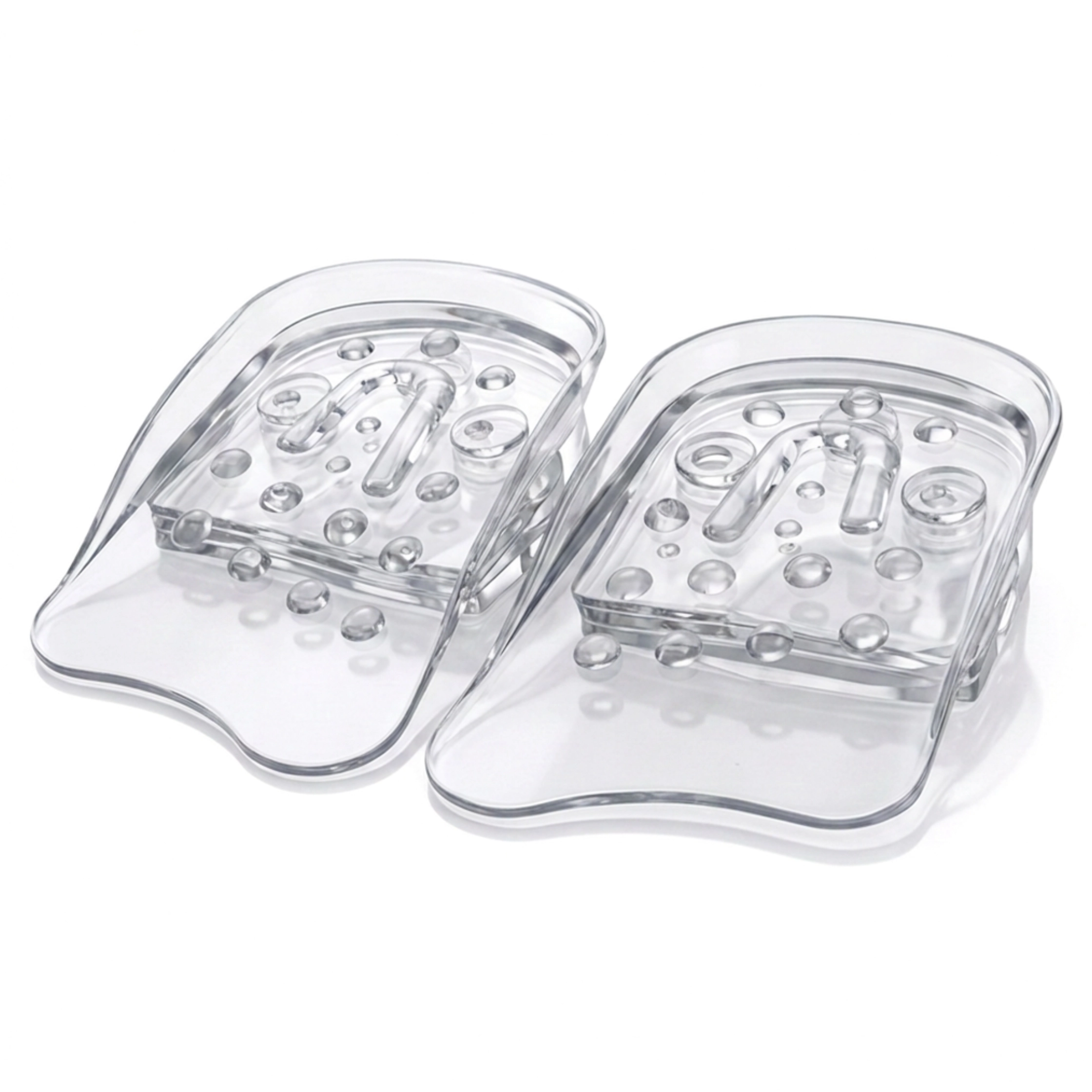
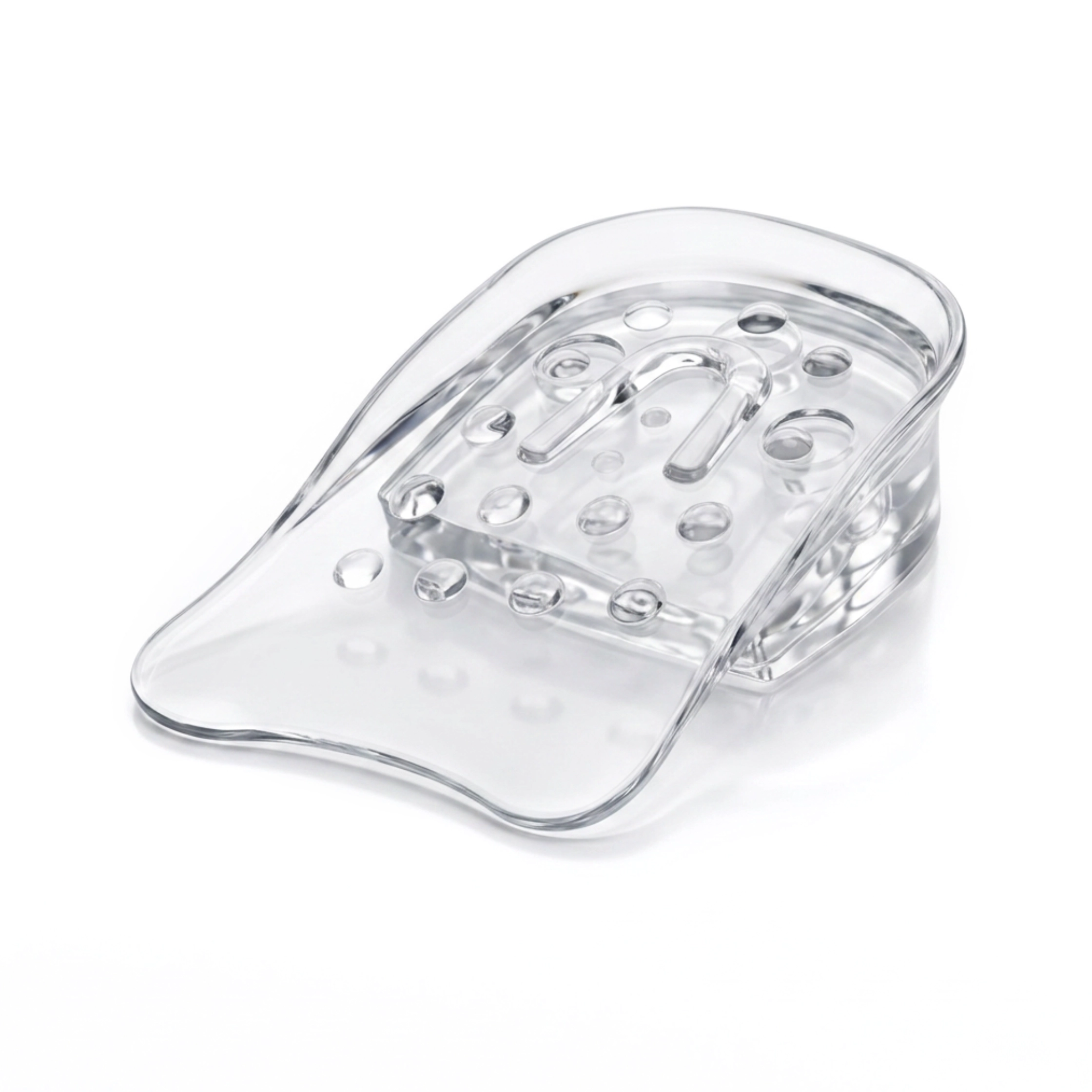
These HeightBoosters heel lifts are a pair of compact, layered inserts made from medical‑grade silicone gel.
Each pack includes:
- One heel lift for the left foot and one for the right.
- Five individual gel layers per side, which lock together.
- A total height increase at the heel of around 1.5 inches when all five layers are used.
The shape focuses on the back of the foot:
- The rear of the insert cups and raises the heel.
- The lift then slopes gently forwards into the start of the arch.
- The toes and the ball of the foot stay on the shoe’s own insole.
All layers are made from the same HeightBoosters silicone gel. Under your body weight, the gel compresses slightly, giving controlled cushioning, but it is firm enough to stop the heel sinking deeply and losing height. The bare gel surfaces grip against each other and against the shoe’s insole.
The layers connect using a simple stud‑and‑socket system, supported by the natural grip of the gel:
- When pressed together firmly, they feel and perform like a single, stable platform under your heel rather than a stack of loose pads.
- The underside of the bottom layer grips the shoe’s insole, helping to keep the lift in place in closed shoes during normal walking.
Because the insert occupies only the heel and the beginning of the arch, it usually does not need trimming and can be used in most adult shoe sizes, provided the footwear has:
- A closed back and sides.
- A reasonably firm heel counter (the stiff part around the back of the heel).
- Enough depth at the heel to accommodate the lift.
The design is unisex and intended for adult use. It is compact, but allows meaningful adjustment of height and cushioning under the heel.
Among heel lifts, this HeightBoosters design combines a firm‑cushioning silicone material with adjustable, interlocking layers and a heel‑only profile that lets many people keep using their usual closed shoes.
Key features of these HeightBoosters heel lifts and how they work in your body
Adjustable layered system – fine‑tuning ankle position and leg length
Each HeightBoosters heel lift is built from five separate gel layers that lock together. When all five are in place, the heel is raised by around 1.5 inches. Using fewer layers gives a smaller lift. This lets you adjust heel height in small, predictable steps without cutting or reshaping anything.
Used on both feet together:
- A modest lift on each side means the ankle starts in a slightly more downward‑pointed position. The band under the arch and the Achilles tendon begin each step a little shorter and less tightly stretched, so they are not taken as far into their tightest position.
- If your main problem is first‑step heel pain or low‑level Achilles tightness, that can help those first few steps feel less like a sudden jab and more like a strong but manageable pull.
- On slopes and stairs, the ankle does not need to bend quite as far upwards, so the tendon and fascia spend less time at the tightest upward bend where they often hurt.
Used on one side only for a mild leg length difference:
- Each extra layer reduces how far that leg has to travel to meet the ground.
- The pelvis can sit more level; the lower back does not need to bend sideways as much.
- Hip and knee movement on both sides becomes more similar as you walk, so the shorter side does not have to over‑straighten and “slam” into the ground.
Because each layer uses the same firm‑cushioning HeightBoosters gel and locks securely to the next, the assembled lift behaves like a single insert rather than a wobbly pile of pads. This reduces the risk of movement between layers, which could otherwise irritate the skin or feel unstable.
The ability to adjust layer by layer is one reason clinicians often like designs of this type when trying different heights over time. You can:
- Start with a small lift.
- Add or remove one layer at a time.
- Stop at the point where symptoms improve and joints still feel comfortable.
That is usually more practical than cutting fixed wedges or committing to one permanent height straight away.
Silicone gel cushioning – slowing and spreading impact
HeightBoosters use medical‑grade silicone gel in these heel lifts. When you stand or walk on them, the gel compresses a little and then springs back, acting as a built‑in shock absorber under the heel.
If an insert is too soft, the heel can sink deeply into it:
- The intended height difference is lost under body weight.
- Pressure can become focused around a small ring or point instead of being spread.
- The foot can feel unstable, especially in a flexible shoe.
If it is too hard, the impact from the ground is passed almost unchanged into the heel bone and up through the ankle and lower leg.
These HeightBoosters heel lifts sit between those extremes:
- When the heel lands, the gel deforms enough to slow how quickly force builds up. The same overall force is spread over a slightly longer time and a slightly larger area under the heel and rear arch.
- This reduces the “peak” stress on sensitive spots, such as where the plantar fascia joins the heel or where the Achilles attaches.
- At the same time, the gel is firm enough to keep the heel at the chosen height, rather than flattening fully when you stand.
If you have tenderness under the heel, this controlled cushioning can lessen the bruised or stabbing sensation, especially on hard surfaces. If your main problem is where the Achilles joins the heel bone, softening the jolt at heel strike can also help.
Because every layer is made from the same HeightBoosters gel, this cushioning effect is present whether you use one layer or all five. The bare gel surfaces grip against each other and the insole, which helps keep the lift stable inside suitable closed shoes. They are usually best paired with shoes that have reasonably firm soles. If the shoes are extremely soft and flexible, adding more softness can feel less stable.
Compact heel‑only shape – supporting the back of the foot without overhauling the shoe
These HeightBoosters heel lifts sit under the heel and the start of the arch only. The back of each insert cups the heel, while the front tapers away under the rear arch. The front of the foot stays directly on the shoe’s insole.
This has several advantages:
- Fitting is simple. You place the lift so its rear edge rests against the inside of the heel of the shoe, then centre your heel in the shallow cup. There is usually no need to trim.
- Because only the rear part of the shoe is occupied, the lifts can be used in a range of closed shoes with enough depth at the back. That makes it easier to use them consistently day to day, rather than having a single “special” pair.
- The forefoot keeps the shoe’s original feel. If your main issue is at the back of the foot and lower leg, this often feels more natural than a full‑length insert.
The gentle slope from the heel into the back of the arch also has a role:
- It lets your foot roll forwards smoothly as you walk, rather than pivoting over a sudden edge, which could irritate the arch or feel unstable.
- It starts to share some load with the rear arch, which is particularly useful if your tenderness is just in front of the heel bone rather than right under its back edge.
Because the lift sits entirely inside the shoe, it is discreet. In closed footwear with a secure heel cup, it is not visible from the outside. That matters if you are using the lifts for comfort, to help with a leg length difference, or to gain a little height.
These heel lifts are not intended for open‑backed shoes, very low‑cut slip‑ons without a firm heel cup, or very high‑heeled shoes where adding more heel height would push the ankle into an extreme position.
Using these HeightBoosters heel lifts for discreet extra height
For some people, standing slightly taller is closely tied to how confident and at ease they feel. The change in height may be modest, but it can alter where you sit in a group, how you carry your shoulders and how you feel in everyday situations.
Visible high‑heeled shoes are one way to change height, but they can look obvious, may not suit your usual style and often alter balance in a way that does not feel natural. HeightBoosters heel lifts inside a closed shoe give another route: your shoes look the same from the outside, while your heel sits higher inside them.
Adding height inside the shoe:
- Raises your heel bone so your ankle rests slightly more downward‑pointed.
- Shifts your centre of mass a little forwards, which can encourage a more upright stance if the change is modest.
- May subtly alter the tilt of your pelvis and the curve in your lower back. At gentle heights most people adapt without difficulty; larger changes need more care and monitoring.
The layered HeightBoosters design allows for a gradual adjustment:
- Begin with a low lift—enough for you to feel a difference, but likely unnoticed by others.
- If your joints and back feel good, you can add another layer to see how it feels.
- Should an increase cause any discomfort in your knees, hips, or lower back, you can easily step back down to the previous height.
This simple postural shift frequently leads people to feel more visible and self-assured. Many also notice a natural improvement in their walk or how they hold their head and shoulders. While these effects vary from person to person, they are commonly experienced.
An added benefit is that by using lifts inside your existing shoes, you keep the support and stability of the original sole and heel counter, unlike adapting to an entirely new shoe design.
A Note on Safety: If you currently experience significant knee, hip, or lower-back pain, it’s wise to consult a clinician before making a substantial change in heel height, as it alters angles through the lower limb. A modest, gradually introduced lift inside stable shoes is typically well-tolerated, but moving to the maximum height immediately is not advised.
How these HeightBoosters heel lifts support common problems
Supporting plantar fascia‑related heel pain – easing the pull under the heel
If getting out of bed feels like stepping onto a stone with one or both heels, and your first few steps are the worst of the day, the band under your arch is likely under more strain than it is happy with.
The way this HeightBoosters heel lift is shaped and positioned aims to soften that strain:
- By raising the heel, it starts the plantar fascia a little shorter. When your arch flattens with each step, there is less extra stretch on top of that resting length. The band still works, but with less of a sharp pull at its attachment on the heel.
- By cradling both the heel and the very start of the arch, the lift spreads pressure from one very tender spot under the front of the heel into a slightly larger area under the rear arch. This is particularly useful if your soreness sits just in front of the heel bone.
- By cushioning impact with firm silicone gel, it slows and softens the force where the fascia joins the heel. Instead of a hard jolt into a firm insole, the heel lands on a surface that gives a little but does not collapse.
Over the course of a day, if this type of lift suits you, those first steps in the morning may still feel tight but less like a sudden jab. You may find you can stand or walk on hard floors a little longer before the familiar burning or bruised ache builds up. The fascia has fewer sharp pulls and impacts to cope with, which can help it move back towards a state where it is less easily provoked.
Plantar fascia‑type heel pain is more common in people who stand for long periods, have recently changed their walking or running, have reduced calf flexibility, or carry more body weight. Left entirely unchanged, it can become persistent: pain starts earlier in the day, spreads a little in area, and can lead to limping or avoiding activity. A HeightBoosters heel lift will not fix this on its own, but it can be an important part of making walking and standing more manageable while you work on stretching, strengthening and sensible time on your feet.
Reducing strain at the tightest upward bend for the Achilles tendon
If the back of your heel or lower calf feels like a stiff rope when you first get up, then eases a little, then bites again when you walk uphill or climb stairs, the Achilles tendon is probably being stressed near the end of its comfortable movement.
As described earlier, the tendon works hardest when your ankle bends upwards and your shin moves over your foot. On level ground in moderate shoes, this usually stays within a range the tendon is happy with. But when you walk or run uphill, climb stairs repeatedly, or stand for long periods in very flat shoes on firm ground, the ankle is taken closer to its tightest upward bend again and again. An irritated tendon often hurts there. That is why those movements can feel so sharp.
A HeightBoosters heel lift alters that starting position:
- It raises the heel so the ankle rests slightly more downward‑pointed. For any given movement, the tendon is not taken as far into its tightest upward bend as it was before.
- When you walk up a gentle slope or climb stairs, your shin still moves forwards, but from a point where the tendon is already a little shorter. It spends more time working in the middle part of the ankle bend and less time at the tightest upward bend.
- For problems where the tendon joins the heel bone, the heel raise reduces how much the tendon is pressed against the back of the heel at the deepest ankle bend.
- The controlled silicone cushioning under the heel also softens the impact when your foot contacts the ground, which slightly reduces the impulse that travels up towards the tendon insertion.
In daily life, this can mean:
- Morning stiffness that is still there but less severe and easier to walk off over a short distance.
- Slopes and stairs that feel less like they trigger a pinpoint jab at the back of the heel.
- Standing in fairly flat shoes on firm ground that feels less as though the tendon is being held on stretch.
Achilles tendon problems are more common in people who run or walk a lot, who have recently changed activity or footwear, who have stiff calves or limited ankle motion, or who spend long days in flat, unsupportive shoes.
Heel lifts like these from HeightBoosters do not replace the need for a strengthening programme that is built up gradually, which is crucial to restoring tendon capacity. What they can do is make daily tasks less provocative, so you can carry out that strengthening and stay active with fewer sudden increases in pain.
If you experience a sudden, severe pain at the back of the heel or calf, often described as being kicked or struck, or you have marked swelling and difficulty walking, you should seek urgent medical assessment before using any heel raise.
Helping to level a mild leg length difference
If one shoe always seems to wear down faster, one side of your lower back regularly complains when you stand, or one heel feels as though it thumps the ground harder, a small leg length difference may be involved.
When one leg is slightly shorter, whether because of bone length or posture, the pelvis tends to tip down on that side and the lower spine bends slightly sideways to keep your head centred. Muscles at the outer hip and along the spine work harder on one side to control this. The shorter leg often has to straighten more to reach the ground, taking more impact in the heel and calf.
A HeightBoosters heel lift under the shorter side helps by:
- Raising the heel on that side, effectively lengthening the leg.
- Allowing the pelvis to sit more evenly in standing and when you walk.
- Reducing the amount of sideways bend needed in the lower spine to keep you centred.
- Allowing hip, knee and ankle movements to become more symmetrical so the shorter leg does not have to over‑straighten and absorb extra impact.
Because these HeightBoosters heel lifts use separate layers, the amount of correction can be fine‑tuned:
- You can start with a small increase and see how your body responds.
- Under professional guidance, you can add layers until your pelvis feels more level and symptoms improve.
In long‑standing discrepancies, your body may have adapted to the difference; fully equalising the legs in one step may feel uncomfortable. Partial correction is often more comfortable and more realistic.
It is important not to self‑prescribe large corrections based solely on shoe wear or guesswork. Over‑correcting can tip the pelvis the other way and create new issues. A physiotherapist, podiatrist or similar clinician can help confirm whether there is a meaningful discrepancy, estimate its size and advise how much correction to use and how quickly to introduce it.
General foot fatigue and standing or walking on hard surfaces
If by the end of a working day your feet feel sore, heavy and as though every step is an effort, but you would not say you have a specific diagnosis, long hours on firm floors in flat footwear are likely part of the story.
Under your heel, the fat pad cushions impact. Under the arch and around the ankle, small muscles and tendons support and guide the foot. On unyielding surfaces:
- Each heel strike compresses the heel pad sharply, and over time more of that impact is felt in the bone and soft tissues.
- The small muscles and tendons that stabilise the arch work continuously. As they tire, the arch can flatten more and the foot can roll inwards more quickly.
- This changes where pressure falls under the heel and midfoot, so some areas become particularly sore or hot. The plantar fascia and ligaments take on more of the load.
These effects are stronger if your shoes have thin, flat soles, if you rarely sit down, or if each step carries relatively high force because of your job demands or body weight.
A silicone heel lift from HeightBoosters can help by:
- Adding a firm, cushioning layer under the heel so the gel, rather than just the heel pad, absorbs part of each impact.
- Shifting some load from the very back of the heel forwards into the rear arch, which can be more comfortable if the very back of the heel is tender.
- Reducing how far the ankle has to bend upwards with each step, which may make things feel a little less demanding on the calf and Achilles.
You may notice less bruised soreness under the heel at the end of the day and a sense that your feet and lower legs feel less tired by long spells on hard floors.
It is still important to look at other factors: where you stand, what footwear you use and how often you can take brief breaks. HeightBoosters heel lifts do not replace those steps, but they provide a practical way to reduce some of the strain going through your heels on every step.
Who these HeightBoosters heel lifts are, and are not, suitable for
These HeightBoosters heel lifts are intended for adults and are most suitable if:
- You recognise a type of under‑heel pain that is worst with first steps after rest and has been linked to the plantar fascia or similar structures.
- You experience stiffness or ache at the back of the heel or lower calf, particularly on slopes or stairs, and a clinician has suggested trying a heel raise as part of your management.
- You have a mild, clinically identified leg length difference and have been advised to use a heel lift on the shorter side.
- Your feet feel tired and sore after long periods on hard floors in flat footwear, and you want extra cushioning and a small lift under the heel.
- You would like a discreet, adjustable increase in height for confidence or appearance while keeping your usual style of closed shoes.
They tend to work best in:
- Closed shoes with a firm heel counter and reasonable depth at the back.
- Footwear that is not already extremely high‑heeled or extremely soft and unsupportive.
They are generally not suitable if:
- Most of your footwear is open‑backed or very low‑cut so the heel is not well contained.
- You regularly wear very high‑heeled shoes where adding more height would push the ankle into an uncomfortable angle.
- You have open wounds, ulcers or infected skin on the heel or rear of the foot, where extra friction could delay healing.
- You have pronounced foot deformity, frequent falls or significant balance problems, unless this is being guided by a clinician.
If you have conditions affecting circulation or nerve function in your feet, or a history of foot ulcers, you should speak to a GP, physiotherapist or podiatrist before using any in‑shoe device that changes heel height.
Everyday situations where you may notice a difference
When these HeightBoosters heel lifts are fitted correctly in suitable shoes, people often notice changes most clearly at certain points in the day:
- First steps after rest – for example, getting out of bed or standing from a long sit, if heel or Achilles pain has been a problem. With the heel slightly raised and cushioned, those first steps may still feel stiff, but often less like stepping onto a sharp object.
- Standing or walking on hard surfaces for moderate periods – the cushioning and rearfoot support can make your heels feel less bruised and your lower legs less tired by the time you sit down.
- Walking on gentle slopes or short flights of stairs – if the back of the heel has been sore, reducing how far the ankle has to bend upwards can make those movements feel more manageable.
- Longer walks or standing periods if a mild leg length difference is being corrected – a more level pelvis and more even hip and knee movement can reduce the sense that one side of the back, hip or knee always gives up first.
- Social or work situations if you are using the lifts for height – standing conversations may feel different because your posture and eye‑line change slightly, and that can influence how you feel in your body.
The exact effect varies between individuals and depends on the underlying pain, your footwear, your activity levels and how many layers are used.
Condition‑specific deeper dives
Different people come to these HeightBoosters heel lifts for different reasons. Some are managing plantar fascia‑type heel pain. Others are living with Achilles tendon problems, a recognised leg length difference, general fatigue on hard floors or a wish to feel a little taller. The overviews below add more depth for those specific situations and show how they link back to the main mechanics described above.
How to use HeightBoosters heel lifts and what to expect
Fitting the lifts in your shoes
HeightBoosters heel lifts are designed for use in closed shoes with a proper heel cup and enough depth at the back.
To fit them:
- Check the shoes – Make sure they have a closed back and a reasonably firm heel counter (the stiff part around the back of the heel). If there is a removable insole that makes the heel area very shallow, you may need to take it out.
- Build the lift – Decide how many gel layers you want to start with. Press them together firmly so the studs engage and the edges line up. The assembled stack should feel like one solid unit.
- Place the lift – Put the assembled lift at the back of the shoe so its rear edge rests snugly against the inner heel. The tapered front should lie smoothly under the rear of the arch area.
- Check your heel position – Put the shoe on and make sure your heel sits centred in the small cup formed by the lift. Your heel should feel securely cradled, not perched on an edge or riding up out of the shoe.
If you are using lifts in both shoes, check that you have the same number of layers in each, unless you are deliberately correcting a leg length difference on one side. For leg length differences, follow clinical advice on which side to lift and by how much.
Building up height and wear time gradually
Your body needs a little time to adapt to changes in heel height or cushioning, even modest ones. A sensible approach with HeightBoosters heel lifts is:
- Start with a moderate number of layers rather than the maximum – for example, two or three out of the five.
- Use the lifts for a few hours on the first couple of days and notice how your feet, ankles, knees, hips and lower back feel.
- If things are comfortable, extend wear time gradually towards a full day.
- Once you are happy at one height, consider adding another layer if you think there may be further benefit.
As you do this, pay attention to how your body responds:
- Mild muscle tiredness or a sense of “working differently” around the calves or hips is common at first and usually settles as you adapt, because muscles are working at slightly different angles.
- New or increasing pain – for example, sharp knee pain, strong lower‑back ache, or a sense of being tipped too far forwards – suggests that you may have added too much height or changed it too quickly.
If adding a layer causes new discomfort that does not settle within a short period, remove that extra layer and return to the previous, better‑tolerated height. It is usually better to move in small steps and allow time for adaptation than to aim for the maximum lift straight away.
If you already use full‑length insoles or other in‑shoe devices, adding a heel lift changes the angles and pressures further. In that situation, it is wise to seek advice from a clinician about how to combine them, or whether to adjust or replace existing inserts.
Care, cleaning and replacement
The silicone gel used in HeightBoosters heel lifts is durable but benefits from basic care:
- Wash the lifts occasionally with mild soap and lukewarm water.
- Rinse thoroughly and let them air dry away from direct heat.
- Avoid harsh detergents, solvents or very hot water, which can damage the gel.
With regular use, the gel will slowly compress and the surface can wear. You may notice that:
- The lifts feel flatter or offer less cushioning.
- The layers do not grip together as securely as they did.
- Your heel feels less evenly supported.
When you see these signs, it suggests the lifts are nearing the end of their useful life and should be replaced. At that point they may no longer provide the height, cushioning or stability they were designed to offer.
Safety, red flags and when to seek further help
HeightBoosters heel lifts are designed to help with day‑to‑day comfort and, for some, with height. They do not replace a medical assessment.
It is sensible to speak to a GP, physiotherapist or podiatrist before using heel lifts, or to stop using them and seek advice, if:
- You have sudden, severe pain in the heel, ankle or calf, especially after a fall, trip or a feeling of being kicked or struck at the back of the leg.
- Weight‑bearing on the affected foot is very difficult and you can only manage a few steps.
- There is marked swelling, heat, redness or a visible change in shape around the heel, ankle or calf.
- You notice new changes in sensation in the foot, such as numbness, tingling or burning.
- You have a known condition affecting circulation or nerve function in your feet, or a history of foot ulcers.
- You have pronounced foot deformities, frequent falls or significant balance problems.
- You suspect a leg length difference but have not had it properly assessed.
It is also worth seeking advice if:
- Increasing the number of layers repeatedly leads to new pain in your knees, hips or lower back that only improves when you remove height.
- Pain that used to be clearly localised under the heel or at the back of the ankle starts to spread higher up the leg without a clear reason.
- Pain is severe, getting worse, changing in character or not improving over time despite sensible self‑care.
HeightBoosters heel lifts can play an important role in managing heel pain linked with the plantar fascia, Achilles tendon irritation, mild leg length differences and fatigue from hard floors, but they form just one part of the picture. Effective management usually also includes:
- Reviewing footwear and activity levels.
- Following stretching and strengthening exercises where advised.
- Considering factors such as body weight and working conditions.
- Using custom or more specialised devices where a clinician recommends them.
These lifts are not intended for use in pregnancy. Any changes to foot position and joint angles in pregnancy should be discussed with a clinician, as they can affect balance and comfort in ways that are harder to predict.
Responses vary between individuals. If symptoms are severe, getting worse, changing in character or not improving over time despite sensible self‑care, it is important to have an individual assessment.
Bringing it together – are these HeightBoosters heel lifts right for you?
Heel pain under the foot, stiffness at the back of the ankle, tired feet on hard floors and the effects of a mild leg length difference all relate to how each step loads the structures around your heel and lower leg. When the plantar fascia, heel pad, Achilles tendon or supporting muscles are pushed close to what they can comfortably cope with, day after day, they become more sensitive and less forgiving of everyday tasks.
A modest, well‑controlled change at the heel – raising it slightly, cushioning it and, where appropriate, reducing a small difference between sides – can shift those stresses into a more comfortable range. These HeightBoosters heel lifts are designed to:
- Start the plantar fascia and Achilles tendon each step a little shorter, so they spend more time in the middle part of the ankle bend and less at the tightest upward bend where they tend to hurt.
- Slow and spread impact under the heel bone and into the start of the arch instead of letting forces concentrate on one tender spot.
- Provide a practical way, under guidance, to reduce the effect of a mild leg length difference and help the pelvis sit more level.
- Offer a discreet internal height increase for people who feel more confident and comfortable with a little extra stature.
Their layered, interlocking silicone design makes it possible to fine‑tune height in small steps and to adjust over time, and the compact heel‑only shape helps them fit into most closed, reasonably supportive shoes. That combination makes them one of the more practical types of heel lift to try if you recognise the kinds of pain and fatigue described here.
If your heel or Achilles pain feels similar to the examples on this page, or you have a mild leg length difference that has been identified, these HeightBoosters heel lifts are a sensible option to consider. You can discuss them with a GP, physiotherapist or podiatrist who knows your history, or you can trial them gradually yourself in suitable footwear, paying close attention to how your body responds and adjusting the height in small, careful steps.
Disclaimer
The information on this page is general guidance for adult readers in the UK. It is not a substitute for individual medical advice, diagnosis or treatment. HeightBoosters heel lifts can help reduce strain and impact around the heel and lower leg in some common types of pain and fatigue, but they do not guarantee specific results and are only one part of managing symptoms. Products are intended for adult use and are not suitable in pregnancy. If you are unsure whether these heel lifts are right for you, or if you have severe, changing or unexplained symptoms, speak to a GP, physiotherapist, podiatrist or other appropriate clinician before using them.
11 Reviews For This Product
Fast & Secure Checkout Through Paypal
Pay with Paypal the secure payment gateway that accepts all credit and debit cards. Paypal is free and secure and no credit or bank information is ever stored or shared with us.
Fast Dispatch
Enjoy your items soon with quick dispatch via Royal Mail. Expect to have your items between 1-3 working days for domestic orders. 7-10 Working days for international orders.
Return Policy – 30 Day Money Back Guarantee
In the unlikely event, you are unhappy with your purchase you can return it within 30 days for a refund. Please contact us via the form on the contact us page to start your return.
To return an item please send it to: Nuova Health UK, 81 Highfield Lane, Waverley, Rotherham, S60 8AL. Please include a note with your order id so we know who to refund. Please retain your postage receipt as proof of postage. All that we ask is that the item is in the original packaging and unused.
by Nancy Heath
They work a treat!
by Mark Robertson
Great product and exactly what I was looking for.
by Great for basketball
I know its is probably cheating but I wear these lifts all the time now in my shoes when I play basketball.. as they give me a much needed couple of inches in height.. I get away with it because the referee has no idea cuz you cannot tell at all when someone is wearing them hehe 😀
by Greggy boy
These are so cool. Bought a pair after reading an article about how Daniel Radcliffe and Tom cruise all wear these secret shoe lifts to appear taller… and now I know why!! Im 3 inches taller now and everyone is non the wiser of how I have done it muhaha
by Danny
I really wish I knew about these lifts sooner! Im always wearing mine and I suggest to anyone who is self conscience about their height to give them a go because these lifts have really helped me and my confidence.. because thanks to them I am now 3 inches taller woohooooo! Also I just love the adjustable feature on these lifts because you can add and take away height as you choose.. so what I did was just gradually put on my stacks over a course of a few months and that way nobody has any suspicions at all as everyone just thinks your growing taller.
by So good!
I love these shoe lifts they are so good and you really feel the difference when you wear them. Even though 3 inches does not sound like a lot it really is! I actually feel a bit like zoom from The Flash right now but instead of wanting more speed I am wanting even more height!
by Mike
These shoe lifts are awesome… My friends have no clue how I have managed to get so tall so fast.. they just think that I am just having an ultra fast growth spurt, it so funny! Thanks so much for these things!
by Sue
For people thinking about buying these I thought I would share what I like and don’t like about them.
Pro’s
-Although they are advertised as a way of giving you a height boost, I don’t wear them to make myself taller but for easing my Achilles tendinitis of which they do a great job! I now don’t suffer from any foot or heel pain anymore.
-There is no faffing around when it comes to adjusting the heel height. The layer stack system makes it super easy to find the right height. I use 1 layer on each lift which is just the right amount of height that I need.
-They are super durable, I have had these heel lifts inside my shoes for a couple weeks now and they don’t have any wear on them at all… so dont have to worry about keep on replacing them every other day like other insoles.
-Love the fact that they are made from gel which means they stop shock from damaging my already injured Achilles.
-They are pretty lightweight and so you don’t feel as though they are weighing down your shoes when you wear them.
Cons
-Only one size so if they don’t fit then your out of luck. But I guess the money back guarantee makes this less of a problem.
-Mine took a lot longer than expected to be delivered.
Overall these heel lifts are the best things I have put in my shoes and have helped a lot with treating my Achilles pain. Would recommend to anyone thinking of buying them.
by William Rios
I really like these heel lifts and would definitely recommend them to anyone wanting to look a little bit taller. I have been wearing these heel lifts for 2 weeks now and they really do make a difference in your height and confidence levels! I use 2 stacks on each of the lifts which have boosted my height by 2 inches and because they are hidden inside your shoes so nobody has to know you are wearing them to make yourself taller. They fit really well inside my shoes and they have actually made my shoes feel a lot more comfortable to wear. I can wear them all day just about without getting any aches or pain in my feet.
by James Frey
Really good quality and very comfortable to wear.
by Peter Atkinson
Ever since I developed a leg length discrepancy due to a football injury, I’ve been on the lookout for something to even things out. That’s when I stumbled upon the HeightBoosters heel lifts. Oh, what a game-changer! These heel lifts are just what I was looking for, with their ingenious layer stack system. I could effortlessly adjust the lifts to match my needs, and the best part is, they fit easily into my shoes and are discreet. Now let’s talk comfort. The shock-absorbing gel works wonders! It not only cushions my foot against shock and jolts, but it also soothes and massages my feet. In a nutshell, these lifts are worth every penny. They haven’t just fixed my stride; they’ve boosted my confidence. Thanks, HeightBoosters!