
Height increase Heel Lifts for shoes
£11.99£14.99 (-20%)inc VAT
- Helps with common heel and lower‑leg pain – including sharp pain under the heel when you first stand (often linked with the band under the arch), stiffness or ache at the back of the heel (often linked with the Achilles tendon), tired feet on hard floors, and one‑sided loading from a mild leg length difference.
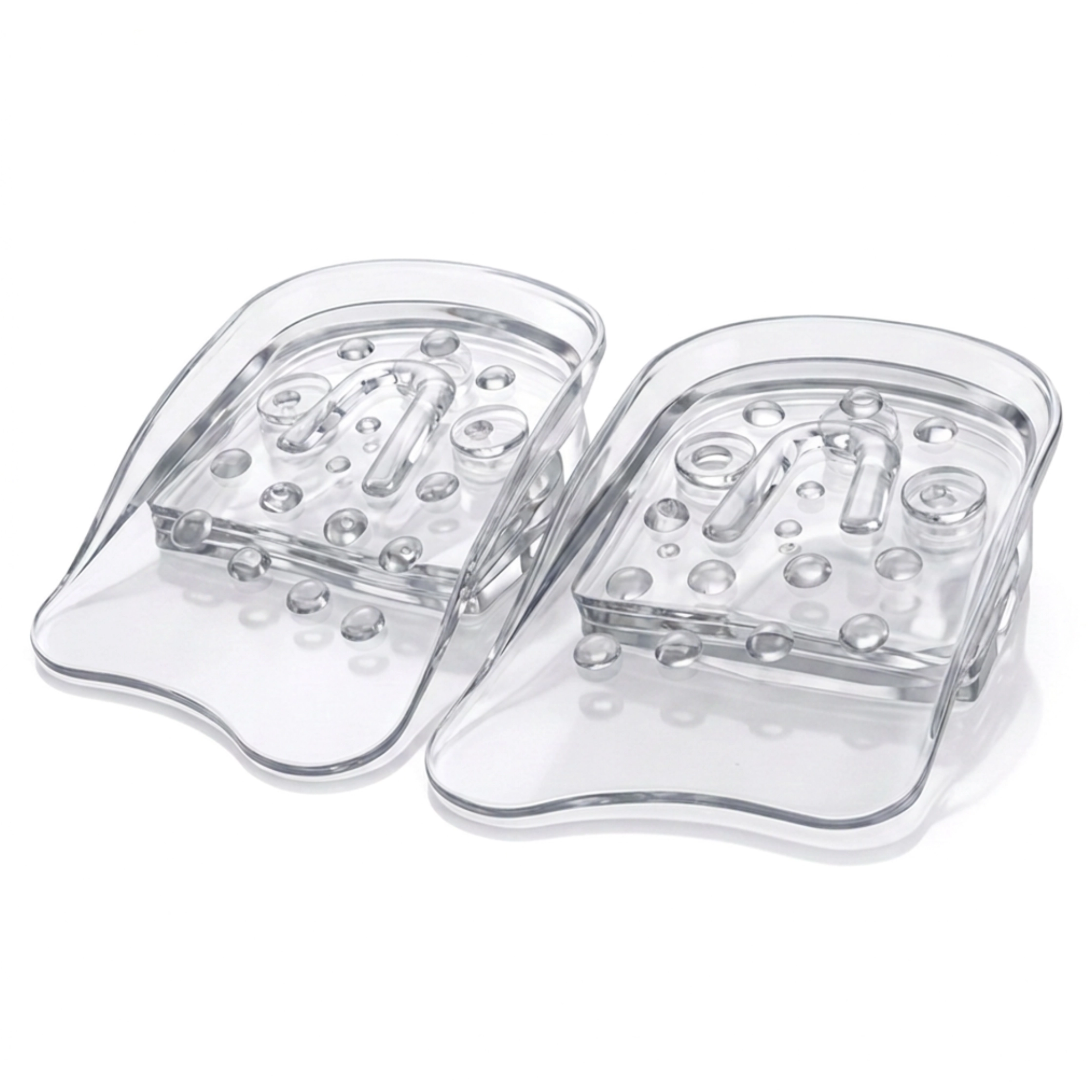
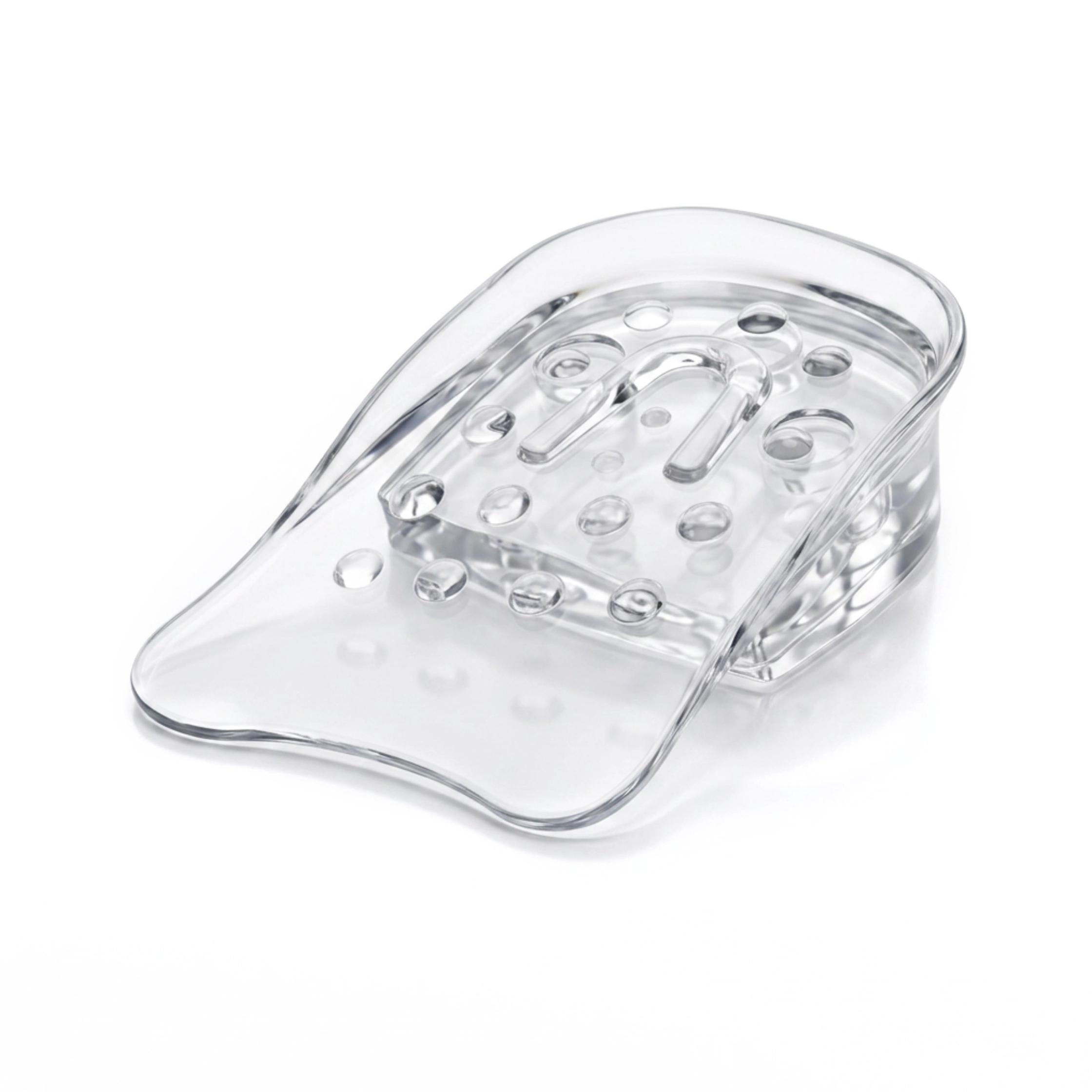
- Adjustable stacked‑layer system – each side has five interlocking silicone gel layers, giving up to around 1.5 inches of height increase at the heel. You can add or remove layers in small steps on one or both feet to fine‑tune ankle position or gently reduce a mild leg length difference under clinical guidance.
- Firm, controlled silicone cushioning – medical‑grade gel compresses slightly under load to slow and spread impact under the heel, easing bruised or stabbing sensations, while staying firm enough that you do not sink through and lose height.
- Heel‑only, one‑size‑fits‑most design – compact shape cups the heel and runs into the start of the arch, leaving the forefoot on the shoe’s own insole. Fits most adult closed shoes with a firm heel cup and enough depth, with no trimming in most cases.
- Supports plantar fascia and Achilles mechanics – gently raises the heel so the band under the arch (plantar fascia) and the Achilles tendon start each step slightly shorter, spend less time at the tightest upward ankle bend and experience fewer sharp pulls, especially with first steps, slopes and stairs.
- Helps soften the impact of hard floors – puts a cushioning, grippy layer under the heel so part of the shock is taken by the gel, not just by the heel pad and bone, which can make long shifts on firm surfaces feel less bruising and tiring.
- Option for discreet extra height – worn inside your usual closed shoes to raise your heel by a chosen amount without changing how the footwear looks from the outside, for people who feel more confident standing a little taller.
- 30‑day money‑back guarantee – if you try these heel lifts as directed and find they are not right for you, you can return them within 30 days for a refund, so you can test the fit, feel and height adjustment with less risk.
- Clinician‑friendly choice – if you already see a GP, physiotherapist or podiatrist about heel, Achilles or leg length issues, these adjustable heel lifts are straightforward to discuss and to tailor to their advice.
Everyday problems these HeightBoosters heel lifts are designed to help with
Why heel pain builds up
To make sense of any of those problems, it helps to picture what happens during a single step. Every step sets the same sequence in motion, travelling from the ground up through your foot and leg.
Your heel bone, and the fat pad beneath it, usually meets the ground first. Those two absorb the opening impact. As your weight rolls onto the foot, your arch flattens slightly and then springs back. The plantar fascia — the tough band running from the underside of your heel bone to the base of your toes — works with the small muscles in the sole of your foot to control that flattening. Between them, they stop the arch from collapsing.
Next, your ankle bends so your leg can travel forwards over the planted foot. Your calf muscles and the Achilles tendon — the cord running from those muscles down to the back of your heel bone — govern that bend and help drive you into the next step. Further up, your knee, hip and pelvis share the load, so no single part carries the brunt every time.
When all of that works well, you barely notice any of it. Your plantar fascia lengthens a little as your weight comes through the foot, then recoils as you push off and returns some of that energy to the step. The small muscles around your ankle hold the foot steady without tiring. Your pelvis stays roughly level, and your lower back barely has to bend from side to side.
Trouble builds when one link in that chain works close to the limit of what it can tolerate. That rarely comes from a single moment. It comes from the same demand repeated week after week: long hours on hard floors, regular uphill walking, very flat shoes that keep your ankle near the top of its range, a spell of more standing than your feet are used to, or one leg slightly shorter than the other so that one side does more of the work with every step.
Two things decide whether that repeated demand turns into pain: load and recovery.
Load is the total demand you place on your plantar fascia, your Achilles tendon, your heel pad, or whichever part is complaining. It covers how much force passes through it, how far it is stretched or compressed, and how often that happens over a day or a week. Six hours of standing puts more load through your plantar fascia than two hours does. Walking on a hard floor loads your heel pad differently from walking on grass.
Recovery is everything that happens in between. In practice, that means the time your plantar fascia, your Achilles tendon and the fat pad under your heel bone get to rest and repair — between one step and the next, one shift and the next, one long walk and the next.
When load stays inside what those tissues can recover from, they stay comfortable. Raise the load, or shorten the recovery, and they become more sensitive. Pain arrives sooner, smaller triggers set it off, and it takes longer to settle afterwards.
That is why the same job, or the same weekend walk, can be manageable for years and then start to bite. The activity has not changed. The balance between load and recovery has.
The three things a heel lift can change
How far your ankle bends upwards as your shin passes over your foot. How far your plantar fascia and Achilles tendon stretch at the tightest point of that bend. How concentrated the impact is under your heel bone when your foot lands.
A heel raise sits inside the shoe and affects all three. It holds your ankle in a slightly more downward‑pointed resting position, so your plantar fascia and Achilles tendon begin each step a little shorter and a little less stretched. Your ankle does not have to travel as far into that upward bend on each step. And the lift material itself gives a little and springs back, soaking up some of the impact before it reaches your heel bone.
A heel lift will not repair anything, and it cannot change the condition of your plantar fascia, your Achilles tendon or your heel pad. What it changes is the angles and the pressure patterns those parts work under. Used sensibly, that can take the edge off the worst of the pain, make ordinary tasks easier to manage, and give you a steadier base for the deeper work — the stretching, the strengthening, and pacing, which means spreading your activity evenly across the day rather than doing it all in one long burst.
That is the thinking behind this type of insert. Whether it earns a place in your shoes comes down to how it is made, where it sits under your heel, and how well it fits the footwear you actually wear.
What these heel lifts are and how they are built
These HeightBoosters heel lifts are a pair of compact, layered inserts made with a durable, skin‑friendly silicone gel. It cushions under your body weight without collapsing, so the height you set stays where you set it.
Each pack holds one heel lift for the left foot and one for the right. Each side has five separate gel layers that lock together. With all five in place, your heel sits roughly 1.5 inches higher, a little under 4 cm. Use fewer layers and you get a smaller, gentler lift.
The shape follows the back of your foot. The rear of the insert cups and raises your heel, then slopes gently forwards into the start of the arch. Your toes and the ball of your foot stay on the shoe’s own insole, so the front of the shoe keeps its normal feel.
Every layer uses the same silicone gel. Under your body weight it compresses a little, which gives controlled cushioning, but it stays firm enough that your heel does not sink in and lose the height you have set.
Getting that balance right matters more than it might sound. An insert that is too soft lets your heel sink deeply into it. You lose the height you were trying to create, pressure ends up focused on one small area of your heel, and the foot can feel unstable — especially inside a flexible shoe. An insert that is too hard passes the impact from the ground almost unchanged into your heel bone and up through your ankle and lower leg. This gel sits between those two extremes.
Each layer has a small stud that presses into a matching hollow in the next one, helped by the natural grip of the gel itself. Pressed firmly together, the layers behave like one solid platform under your heel rather than a loose stack of pads. The underside of the bottom layer grips the insole, which helps hold the lift in place in closed shoes during normal walking. If the layers could slide against each other, the lift would feel unstable and could rub against your heel.
Because the insert covers only your heel and the very start of the arch, it usually needs no trimming and fits most adult shoe sizes.
Compared with many heel lifts, this one combines a firm‑cushioning gel with adjustable, interlocking layers and a shape that covers only the heel. That combination is what lets many people keep wearing their usual closed shoes rather than switching to a different style of shoe.
Which shoes they work in, and how to fit them
Start with the shoes themselves. These lifts work best in footwear with a closed back, a reasonably firm heel counter — the stiff part around the back of the heel that holds your foot steady — and enough depth at the back to take the lift. If there is a removable insole that leaves the heel area very shallow, you may need to take it out.
Press your layers firmly together so the studs click into place and the edges line up. The assembled stack should feel like one solid unit, not something that shifts in your hand. Then place the lift at the back of the shoe, with its rear edge snug against the inner heel and the tapered front lying smoothly under the rear of the arch.
Once the shoe is on, check that your heel sits centred in the small cup the lift forms. It should feel securely cradled, not perched on an edge or riding up out of the shoe.
If you wear lifts in both shoes, check that each side has the same number of layers, unless you are deliberately correcting a leg length difference on one side. In that case, follow clinical advice on which side to lift and by how much.
A few checks are worth doing before you commit to a full day. Your heel should sit in the middle of the cup, not pressed to one side. If it slips up and down as you walk, the shoe is probably too shallow or too loose at the back, so try a different pair or take out a layer. If the shoe feels tight across the top of your foot or pinches your toes, the lift is taking up too much room, and fewer layers — or a shoe with more depth — will suit you better. Adjusting the laces can help hold your heel down, sometimes by lacing more firmly around the ankle. Socks make a difference too: thicker ones tighten the fit, thinner ones allow more movement. Walk around indoors for a few minutes first, and check the lift stays put and your heel feels stable.
Some shoes simply will not work. Open‑backed shoes and very low‑cut slip‑ons do not hold the heel, so the lift cannot stay steady. Very high‑heeled shoes are also unsuitable, because the ankle already sits well down and there is little room to add more. Very soft, flexible shoes can feel less secure once you add more than a layer or two.
If you wear the lifts most days, it helps to rotate between two pairs of suitable closed shoes. Each pair gets time to air and recover, and neither compresses in the same spot day after day.
Get the fit right and you will barely notice the lift is there. What matters more is settling what you are trying to ease.
Four common problems a heel lift can help with
Most of what people ask a clinician about this part of the foot comes down to four problems. You do not need to read all four. Find the one closest to your own experience and start there.
Discreet extra height: what changes and what does not
Not everyone arrives at these lifts with a painful heel. For some, it is not pain at all. It is height. Wearing an extra centimetre or so inside the shoe lifts your eye‑line slightly and changes how you stand in relation to other people, and for many that affects how they carry themselves and how confident they feel. There is nothing unusual about wanting that.
Visible heeled shoes are one route to extra height, but they change how you balance, they look obvious, and they may not suit the shoes you actually want to wear. A lift that sits inside a closed shoe leaves the outside of the shoe exactly as it was.
What the lift changes is small but real. Raising the heel shifts your weight slightly forwards and tilts your pelvis a little, which for many people encourages a more upright stance — shoulders sitting back, weight spread more evenly over both feet. It is a subtle adjustment rather than a correction, and it tends to show up in how someone carries themselves rather than in anything dramatic.
At one or two layers this is barely noticeable, and most people adapt within a day or two. Bigger changes need more care and a slower build‑up, which is one reason the layers come apart. The change is also entirely private. Nothing about it shows from the outside, and you can stop at any point without altering anything about your shoes.
What the lift does not change is the shoe you chose, or the support of its original sole and heel counter. That is quite different from balancing on a completely different style of shoe to gain height.
Many people describe feeling more visible and more self‑assured when they stand taller, and some notice a natural change in how they walk or hold their head and shoulders. These effects vary from person to person rather than being guaranteed, but many people find the same.
One thing catches people by surprise. Removing your shoes puts you back at your usual height, and for the first week or two that drop can feel more noticeable than the lift itself did. It is the abruptness of the change rather than the size of it, and it usually stops registering within a week or two.
If you already have significant knee, hip or lower‑back pain, it is wise to talk to a clinician before making a substantial change in heel height, since any raise shifts the angles through your lower limb. A modest, gradually introduced internal lift in stable, closed shoes is usually well tolerated. Going straight to the maximum is not advisable.
Choosing and adjusting your height
The five layers are what give this pair its flexibility. You can add or remove them one at a time, with nothing to cut, trim or reshape. That matters, because the right height for you is not the same as the maximum.
As a starting point:
| Your main problem | Start with | Which side |
|---|---|---|
| First‑step heel pain | 2–3 layers | Both feet, equal |
| Stiffness or ache at the back of the heel | 2–3 layers | Both feet, equal |
| Tired, heavy feet on hard floors | 1–2 layers | Both feet, equal |
| Mild leg length difference | 1 layer, then review | Shorter side only, under clinical guidance |
| Discreet extra height | 1–2 layers | Both feet, equal |
These are starting points, not targets. The aim is to find the smallest lift that makes a useful difference, and then stop there.
Starting lower than you think is a real advantage, because a bigger lift is not automatically a better one. Going straight to maximum height changes the angles at your ankle, knee, hip and pelvis all at once, and the tissues around them need time to catch up. A modest first step keeps the change small while you find out how your body responds.
Wear the lifts for a few hours on the first day and notice how your feet, ankles, knees, hips and lower back feel. If everything is comfortable, extend the wear time gradually over the next few days, towards a full day. Then, if you think there is more benefit to gain, add a single layer and repeat the process. Do it one layer at a time, and give your body a few days between changes before deciding whether to keep it.
If you are using the lifts on one side only, build the correction up slowly, and check in with the clinician who advised you before adding further.
Mild muscle tiredness, or the feeling that your calves or hips are working slightly differently, is common at first and usually settles as you adapt. That is normal, and it is not a reason to stop.
New or increasing pain is a different matter. Sharp knee pain, a strong ache in the lower back, or a feeling of being tipped too far forwards all suggest you have added too much height, or changed it too quickly. If that happens, take the extra layer out and go back to the height that felt better. Pushing through pain that has a sharp, new quality rarely ends well.
Recheck the fit each time you change the height. More layers mean the heel needs more room, and a lift that fitted well at two layers may feel cramped at four. A quick check that your heel is still centred, and that the layers are still locked together, keeps everything sitting where it should.
If you already use full‑length insoles or another insert in your shoes, adding a heel lift changes the angles and pressures further. That is worth discussing with a clinician, who can advise how best to combine them, or whether one of your existing inserts needs adjusting or replacing.
What to expect over the first days and weeks
It helps to know what a reasonable response looks like, so you can tell whether the change is helping.
The first few days. Some people notice very little at all, which is normal. Others notice a mild tiredness in the calves or hips, or a sense that they are standing a little differently. That usually fades as the body adapts to the new angles. Expect the first steps after rest to still feel stiff. The aim is that they feel less like a sudden jab than they did.
The first week or two. The changes people notice first are quite specific. Morning first steps feel less sharp. Walking on gentle slopes and short flights of stairs feels a little less likely to trigger a pinpoint jab at the back of the heel. Standing or walking on hard floors takes longer before the familiar bruised or burning ache builds up.
Week two to four. By the end of a shift, the heels feel less sore and the lower legs feel less tired. If you are correcting a mild leg length difference, the change often shows itself as a steadier, more even feeling when standing, less of that one‑sided lower‑back or hip ache after time on your feet, and less of a sense that one heel is thumping the ground harder than the other.
If you are using the lifts for height, the change is more about how you feel in your body than about pain. You may notice a slightly different eye‑line in conversation, an easier sense of standing upright, or simply less self‑consciousness about your height.
How much difference you notice varies from person to person. It depends on the underlying problem, your footwear, your activity levels, and how many layers you are using, and it is worth giving it a few weeks of consistent use before deciding. It can help to see how that plays out in a few everyday situations.
What it looks like in practice
These are illustrative situations rather than real individuals. They are here to show how the reasoning fits together, not to offer a template you should follow.
“First steps are the worst.” Someone who is on their feet for most of a shift has sharp under‑heel pain for the first few minutes each morning. It eases through the day, then returns as a bruise‑like ache by evening. They start with two layers in both shoes, in a pair of closed work shoes with a firm heel. Within a fortnight the morning pain is noticeably less sharp. They also start a gentle calf and arch stretching routine, and space out their standing time through the day. After three weeks they add a third layer. The lift is doing the load reduction. The stretching is doing the repair.
“It bites on the stairs.” Someone who walks hilly routes at weekends notices stiffness at the back of the ankle that eases after ten minutes and flares on slopes. They start with two layers in both shoes and keep walking, but on flatter routes for the first few weeks, adding slow heel raises as strengthening. The lift keeps everyday walking from provoking the tendon while the strengthening builds its capacity back up.
“One side always complains.” Someone whose shoe wear is uneven, whose heel lands harder on one side, and whose lower back aches on one side after standing. A clinician confirms a mild difference and advises a single layer under the shorter side, with a review in a few weeks. Partial correction is used deliberately rather than bringing both legs fully level, because the body has adapted over years.
“Sore by the end of every shift.” Someone who stands on hard flooring all day has no specific injury, just heavy, bruised feet each evening. They use one layer in both shoes for cushioning, add a mat at their workstation, and rotate a second pair of shoes. The general fatigue eases enough that a specific sore spot, which had started to develop, becomes easier to notice and address.
“I just want to stand taller.” Someone with no heel pain, who feels more at ease with a bit of extra stature, starts with one layer in both shoes in their usual closed footwear. They notice the difference mainly in how they stand, not in any symptom change, and they find the drop when they take their shoes off more noticeable than the lift itself for the first week.
Talking to a clinician about heel lifts
If you already see a GP, physiotherapist or podiatrist, these lifts are straightforward to discuss. A little preparation makes that conversation more useful.
Take the shoes you plan to wear them in, and the lifts themselves if you already have them, so the fit can be checked in person. Note roughly how long the symptoms have been present, what makes them better and worse, and what you have already tried.
Questions worth asking:
- Does my problem match anything you would expect a heel raise to help with?
- How much height, and on which side, would you suggest starting with?
- How quickly should I build up the wear time?
- What would tell you the lift is helping, and what would tell you to stop?
- Is there strengthening or stretching work I should be doing alongside it?
- Do I have a leg length difference, and if so, how much correction is sensible?
Mention any recent change in symptoms, any new numbness, tingling or burning, any swelling or change in shape, and any knee, hip or back pain that has appeared since you started wearing the lifts.
If you are using them for height alone, there is no clinical question to answer unless the extra height brings on pain. If it does, the same conversation applies: bring the shoes, describe what you feel, and ask how much height is reasonable for you.
Safety and when to get help
These lifts are intended for adults and are designed to help with day‑to‑day comfort and, for some people, with height. They do not replace a medical assessment.
Some situations make an insert that changes heel height a poor idea, or one that should only be used with a clinician guiding you. Speak to a GP, physiotherapist or podiatrist before using heel lifts — or stop using them and seek advice — if any of the following apply:
- You have sudden, severe pain in the heel, ankle or calf, especially after a fall or a trip, or a feeling of being kicked or struck at the back of the leg.
- Putting weight on the affected foot is very difficult and you can only manage a few steps.
- There is marked swelling, heat, redness, or a visible change in shape around the heel, ankle or calf.
- You notice new changes in sensation in the foot, such as numbness, tingling or burning.
- You have a known condition affecting circulation or nerve function in your feet, or a history of foot ulcers.
- You have open wounds, ulcers or infected skin on the heel or the rear of the foot, where extra friction could slow healing.
- You have pronounced foot deformities, frequent falls or significant balance problems.
- You suspect a leg length difference but have not had it properly assessed.
- You are pregnant. Changes to foot position and joint angles during pregnancy can affect balance and comfort in ways that are harder to predict, so these lifts are not intended for use in pregnancy.
It is also worth seeking advice if adding layers repeatedly brings on new pain in your knees, hips or lower back that only eases when you remove the height, if pain that used to sit clearly under the heel or at the back of the ankle begins to spread higher up the leg without a clear reason, or if pain is severe, getting worse, changing in character, or not improving despite sensible self‑care.
Looking after the lifts, and when to replace them
The silicone gel is durable, but it does better with a little basic care.
Wash the lifts occasionally with mild soap and lukewarm water, rinse them thoroughly, and let them air dry away from direct heat. Avoid harsh detergents, solvents and very hot water, which can damage the gel. Let them dry completely before putting them back in your shoes, because damp gel can feel slippery and may affect how well the layers grip each other.
When you are not wearing them, keep them in a clean, dry place. If you have removed some layers, keep the spares together so you can find them when you want to adjust the height.
With regular use, the gel will slowly compress and the surface can wear. You will know it is time to replace them when the lifts start to feel flatter or offer less cushioning, when the layers no longer grip together as securely as they did, when your heel starts to feel less evenly supported, or when the lift no longer stays in place as well as it used to. At that point they may no longer provide the height, cushioning or stability they were designed to give.
Where this leaves you
Heel pain under the foot, stiffness at the back of the ankle, tired feet on hard floors, and the effects of a mild leg length difference all come back to the same question: how much load the structures around your heel and lower leg have to cope with, and how much chance they get to recover.
When the plantar fascia, the heel pad, the Achilles tendon or the supporting muscles are pushed close to their limit, day after day, they become more sensitive and less forgiving of everyday tasks. A modest, well‑controlled change at the heel — raising it slightly, cushioning it, and where appropriate reducing a small difference between sides — can shift those stresses into a more comfortable range.
These HeightBoosters heel lifts start the plantar fascia and the Achilles tendon each step a little shorter, so they spend more time in the middle of the ankle’s comfortable range and less at the tightest point where they tend to hurt. They take the sharpness out of each heel strike, easing the load under the heel bone and into the start of the arch, rather than letting force concentrate on one tender spot. They offer a practical way, under guidance, to offset a mild leg length difference so the hips and lower back carry a more even load. And for anyone who wants it, they add a little height that stays hidden inside the shoe.
The layered, interlocking gel design makes it possible to fine‑tune height in small steps and adjust over time. The compact heel‑only shape helps them fit into most closed, reasonably supportive shoes. Together, that makes them one of the more practical types of heel lift to try if the problems described here sound like yours.
If your heel or Achilles pain feels similar to what is described here, or you have a mild leg length difference that has been identified, these lifts are a sensible option to consider. You can discuss them with a GP, physiotherapist or podiatrist who knows your history, or try them gradually for yourself in suitable footwear, paying close attention to how your body responds and adjusting the height in small, careful steps.
If you try these heel lifts as directed and find they are not right for you, you can return them within 30 days for a refund, so you can test the fit, feel and height adjustment with less risk.
Disclaimer
The information on this page is general guidance for adult readers in the UK. It is not a substitute for individual medical advice, diagnosis or treatment. HeightBoosters heel lifts can help reduce strain and impact around the heel and lower leg in some common types of pain and fatigue, but they do not guarantee specific results and are only one part of managing symptoms. Products are intended for adult use and are not suitable in pregnancy. If you are unsure whether these heel lifts are right for you, or if you have severe, changing or unexplained symptoms, speak to a GP, physiotherapist, podiatrist or other appropriate clinician before using them.
11 Reviews For This Product
Fast & Secure Checkout Through Paypal
Pay with Paypal the secure payment gateway that accepts all credit and debit cards. Paypal is free and secure and no credit or bank information is ever stored or shared with us.
Fast Dispatch
Enjoy your items soon with quick dispatch via Royal Mail. Expect to have your items between 1-3 working days for domestic orders. 7-10 Working days for international orders.
Return Policy – 30 Day Money Back Guarantee
In the unlikely event, you are unhappy with your purchase you can return it within 30 days for a refund. Please contact us via the form on the contact us page to start your return.
To return an item please send it to: Nuova Health UK, 81 Highfield Lane, Waverley, Rotherham, S60 8AL. Please include a note with your order id so we know who to refund. Please retain your postage receipt as proof of postage. All that we ask is that the item is in the original packaging and unused.
by Nancy Heath
They work a treat!
by Mark Robertson
Great product and exactly what I was looking for.
by Great for basketball
I know its is probably cheating but I wear these lifts all the time now in my shoes when I play basketball.. as they give me a much needed couple of inches in height.. I get away with it because the referee has no idea cuz you cannot tell at all when someone is wearing them hehe 😀
by Greggy boy
These are so cool. Bought a pair after reading an article about how Daniel Radcliffe and Tom cruise all wear these secret shoe lifts to appear taller… and now I know why!! Im 3 inches taller now and everyone is non the wiser of how I have done it muhaha
by Danny
I really wish I knew about these lifts sooner! Im always wearing mine and I suggest to anyone who is self conscience about their height to give them a go because these lifts have really helped me and my confidence.. because thanks to them I am now 3 inches taller woohooooo! Also I just love the adjustable feature on these lifts because you can add and take away height as you choose.. so what I did was just gradually put on my stacks over a course of a few months and that way nobody has any suspicions at all as everyone just thinks your growing taller.
by So good!
I love these shoe lifts they are so good and you really feel the difference when you wear them. Even though 3 inches does not sound like a lot it really is! I actually feel a bit like zoom from The Flash right now but instead of wanting more speed I am wanting even more height!
by Mike
These shoe lifts are awesome… My friends have no clue how I have managed to get so tall so fast.. they just think that I am just having an ultra fast growth spurt, it so funny! Thanks so much for these things!
by Sue
For people thinking about buying these I thought I would share what I like and don’t like about them.
Pro’s
-Although they are advertised as a way of giving you a height boost, I don’t wear them to make myself taller but for easing my Achilles tendinitis of which they do a great job! I now don’t suffer from any foot or heel pain anymore.
-There is no faffing around when it comes to adjusting the heel height. The layer stack system makes it super easy to find the right height. I use 1 layer on each lift which is just the right amount of height that I need.
-They are super durable, I have had these heel lifts inside my shoes for a couple weeks now and they don’t have any wear on them at all… so dont have to worry about keep on replacing them every other day like other insoles.
-Love the fact that they are made from gel which means they stop shock from damaging my already injured Achilles.
-They are pretty lightweight and so you don’t feel as though they are weighing down your shoes when you wear them.
Cons
-Only one size so if they don’t fit then your out of luck. But I guess the money back guarantee makes this less of a problem.
-Mine took a lot longer than expected to be delivered.
Overall these heel lifts are the best things I have put in my shoes and have helped a lot with treating my Achilles pain. Would recommend to anyone thinking of buying them.
by William Rios
I really like these heel lifts and would definitely recommend them to anyone wanting to look a little bit taller. I have been wearing these heel lifts for 2 weeks now and they really do make a difference in your height and confidence levels! I use 2 stacks on each of the lifts which have boosted my height by 2 inches and because they are hidden inside your shoes so nobody has to know you are wearing them to make yourself taller. They fit really well inside my shoes and they have actually made my shoes feel a lot more comfortable to wear. I can wear them all day just about without getting any aches or pain in my feet.
by James Frey
Really good quality and very comfortable to wear.
by Peter Atkinson
Ever since I developed a leg length discrepancy due to a football injury, I’ve been on the lookout for something to even things out. That’s when I stumbled upon the HeightBoosters heel lifts. Oh, what a game-changer! These heel lifts are just what I was looking for, with their ingenious layer stack system. I could effortlessly adjust the lifts to match my needs, and the best part is, they fit easily into my shoes and are discreet. Now let’s talk comfort. The shock-absorbing gel works wonders! It not only cushions my foot against shock and jolts, but it also soothes and massages my feet. In a nutshell, these lifts are worth every penny. They haven’t just fixed my stride; they’ve boosted my confidence. Thanks, HeightBoosters!