
No products in the cart.


Roll over image to zoom in
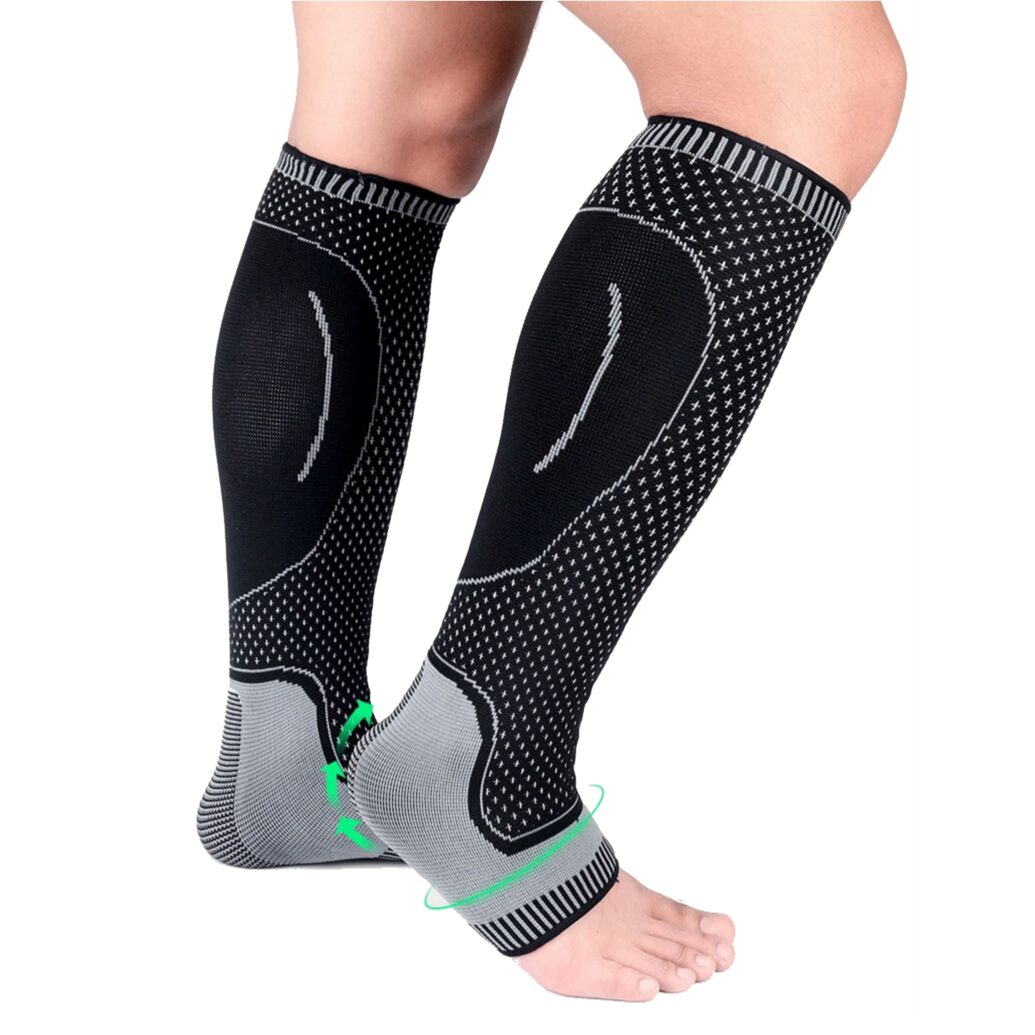
Calf Support Compression Sleeves
£9.99inc VAT
- Who these sleeves are for: Adults whose lower legs feel tight or tired during or after runs or long walks; who notice a strip‑like ache along the inner or front of the shin; or who find their calves and ankles feel heavy, puffy or restless after long shifts on hard floors or longer car, train or plane journeys.
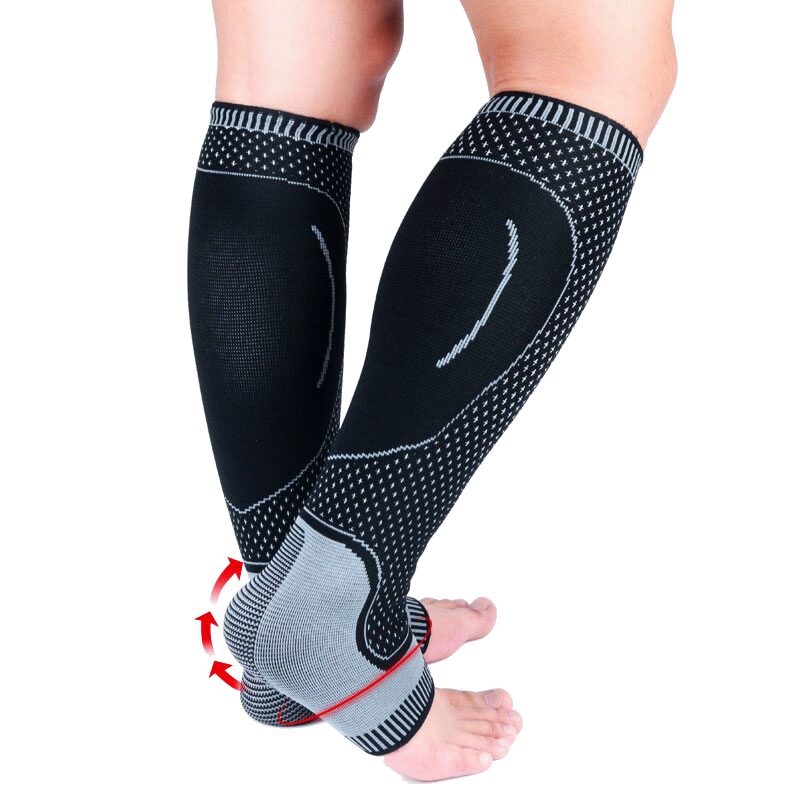
- What they do: NuovaHealth leg and calf compression sleeves provide firm, graduated compression from under the heel and arch to just below the knee. This helps steady the calf and shin muscles on impact, supports the everyday return of blood and fluid from the lower leg, and gives the calf–shin–Achilles area a more “held together” feel during activity and recovery.
- Targeted support zones: Denser knit along the inner shin where “shin splints”‑type pain often appears; snug support around the Achilles and upper heel; and a firmer knitted band within the sleeve under the arch and around the heel to share load with shin and calf muscles, especially in less supportive footwear.
- Designed for typical days and training: Suitable for running and brisk walking on firm ground; long work shifts on hard floors in roles such as retail, healthcare or hospitality; and longer car, train or plane journeys where ankle movement is limited.
- Firm, graduated compression: Firmer around the ankle and lower calf, easing towards the knee. This supports vein function, helps reduce end‑of‑day heaviness and ankle puffiness, and limits muscle “wobble” that can irritate shin and calf tissues.
- Comfort and construction: Left‑ and right‑specific shaping so support sits where it is needed; open toes to allow natural toe movement and make skin colour and temperature easy to check; breathable, moisture‑managing fabric with flat seams and stay‑up cuffs.
- Size guide (measure standing): Measure around the widest part of your calf and just above your ankle bones.
Medium: top 26 cm, lower 19 cm, length 45 cm
Large: top 28 cm, lower 20 cm, length 45 cm
Extra Large: top 30 cm, lower 21 cm, length 45 cm - Fit checks: Sleeves should feel like a firm, even hug – supportive but not painful. If you notice numbness, pins and needles, marked colour change, severe discomfort or deep cutting‑in, remove them and seek advice on size and suitability.
- Returns and exchanges: A 30‑day returns window allows you to check fit and comfort in your normal routine, with size exchanges available if the first size is not quite right.
Disclaimer: These leg and calf compression sleeves are a general support for lower‑leg comfort. They do not treat or prevent blood clots or serious circulation problems and must not be relied upon for that purpose. Always speak to a GP, physiotherapist, podiatrist or other appropriate clinician if you have a history of circulation problems, previous clots, major heart or artery disease, or if you are unsure whether compression is suitable for you.
If your lower legs start complaining halfway through a run, a long walk or a busy shift on hard floors, you are not imagining it. A sharp ache along the inner or front of the shin, calves that feel close to cramping when you pick up the pace, or ankles that seem heavy and puffy by evening are all signs that the structures in your lower leg are being asked to do more than they are ready for.
The sections below explain why that happens and how NuovaHealth leg and calf compression sleeves are designed to support those hard‑working tissues in everyday life.
What’s Going On in Tight, Heavy or Sore Lower Legs
How Tight, Heavy or Sore Lower Legs Tend to Feel
Many people recognise some of these signs:
- You notice a sharp or throbbing ache along the inner edge or front of the shin during or after runs, especially on firm pavements or when running downhill.
- Your calves feel tight and close to cramping when you increase your speed, walk longer distances or climb slopes.
- By the end of a long shift on hard floors or a long journey with little movement, your lower calves and ankles feel heavy, full and mildly puffy.
- The back of the heel or just above it feels stiff and pulling when you first walk after sitting, or when you restart running after a break.
- At the end of a demanding day, calves and shins can feel restless, twitchy or cold when you finally sit down.
There are clear reasons why these symptoms show up. They reflect how a few key structures in the lower leg are being stressed, and how far they are being pushed beyond their usual level of work.
What’s Going On Inside Your Lower Leg
To understand why your legs behave this way, it helps to look briefly at the structures that are working hardest.
Calf muscles (gastrocnemius and soleus)
These muscles form the thick, springy bulk at the back of the lower leg. They act like powerful springs: they control your body as you land and drive you forwards as you push off. With each step they shorten to push you away from the ground and then lengthen under control as you lower your heel.
Shin and outer‑leg muscles (tibialis anterior, tibialis posterior, peroneal muscles)
The muscles along the front and inner side of the shin pull your foot up and help control how quickly it lowers to the ground. The muscles on the outer side help stop your ankle rolling too far in or out. Together they guide and steady the foot on hard, uneven or sloping ground.
Achilles tendon
The Achilles is the thick, rope‑like band that links the calf muscles to the heel bone. In a healthy state it acts as a spring, storing and releasing energy with each step, jump or push‑off. It should feel firm but not painfully tight, lumpy or grumbly.
Shin bone covering (periosteum)
The shin bone is wrapped in a thin, sensitive layer called the periosteum. Many of the calf and shin muscles blend into this layer where they attach. It is rich in nerve endings, which is why irritation here can feel like a distinct, well‑localised strip of ache along the inner or front shin – often in a line you can trace with a fingertip.
Veins and lymphatics
Veins and small lymphatic channels around the calf and ankle return blood and fluid back up the leg. They rely heavily on the “calf pump” – the squeezing action of the calf muscles as they contract and relax – and one‑way valves inside the veins, which should close to stop blood slipping back down.
When everything is working well, these structures share load smoothly. Calf and shin muscles lengthen under control as you land (eccentric work – the muscle works as it is being stretched, like when you slowly lower yourself off a step) and then shorten strongly as you push off. The Achilles behaves like a spring. The shin covering is tugged but not repeatedly irritated. The calf pump pushes blood and lymph upwards effectively when you walk, and veins do not allow fluid to pool excessively around the ankles.
These key tissues are usually pushed too far in three main ways.
Repeated Impact and Muscle Vibration
When you walk or run on firm surfaces, every time your foot strikes the ground a shock wave travels up through the foot into the shin and calf. The soft muscles and tissues are not rigid; they can wobble against the underlying bone with each impact.
This is especially common when you run or jog on pavements or hard paths, on long downhill stretches, or when you suddenly increase distance, speed or time on steeper slopes. With each landing:
- muscle fibres are rapidly stretched and released,
- the points where muscle meets tendon are repeatedly tugged,
- and the sensitive layer over the shin bone is pulled and vibrated.
Over hundreds or thousands of steps, this can irritate the muscle fibres themselves, the points where muscle meets tendon, and the shin bone covering where these structures anchor.
How it often feels
During or shortly after a run, you may feel a sharp or throbbing ache along the inner edge or front of the shin, often as a strip rather than a single pinpoint. Later that day or the next morning there can be a deep, bruised‑type ache through the calf or along that strip of shin, especially when going downstairs or taking the first few steps out of bed. On descents or hard surfaces the leg may feel “slappy” or jarring, as if the muscles are bouncing inside the skin. This is why that band along the shin can feel so sore after firm, repetitive impact.
When this runs along the inner edge of the shin it is often labelled “shin splints” or medial tibial stress syndrome, but the core story is the same: repeated small, rapid stretches and pulls irritating sensitive tissue along the shin.
Sudden Increases in Work or Speed
Here, “work” simply means how often and how hard a tissue is asked to perform. For the lower leg, the main drivers are:
- distance,
- speed,
- amount of climbing,
- the number of sessions per week,
- surface firmness,
- and total time on your feet without enough recovery.
If you abruptly increase weekly running or walking distance, add steeper inclines or faster bursts, or jump back into impact exercise after a break without building up, your calf muscles, shin muscles and Achilles tendon are suddenly exposed to more force and more repetitions than they are currently conditioned for.
At tissue level this can cause microscopic disruption of muscle fibres and the connective tissue around them, irritation and swelling within parts of the Achilles tendon, and a sense that the calves are always “on the edge” of cramp.
How it tends to behave
First thing in the morning or after sitting, the calves and Achilles area feel stiff and tight, particularly in the first 10–20 steps or when you walk downstairs. During rest, irritating substances can build up around the overloaded areas, and the tendon and muscles are not being moved through their range. As you start moving, blood flow increases and tissues warm up, so stiffness and pain often ease after a few minutes of walking or gentle jogging. That is why many people say they “warm out of” the discomfort.
Later in the day, or as you keep adding time on your feet, tightness, ache or that “back on the edge of cramp” feeling often returns. The more aggressive the increase in training or active time, the earlier these symptoms reappear and the longer they take to settle. If you keep pushing on without easing back, the irritated areas can gradually thicken and become less springy, and shin or calf pain can become persistent rather than just appearing after harder sessions.
Prolonged Standing or Sitting and Fluid Pooling
Gravity constantly encourages blood and lymph downwards. When you walk with a reasonable stride, the calf pump – the squeezing and relaxing of the calf muscles – helps push fluid back up, and the one‑way valves in the veins stop it simply falling back to the ankles.
When you stand almost still for long periods, or sit for hours with your hips and knees bent and your ankles hardly moving (for example at a desk or on long journeys), the calf pump works far less effectively. The calf muscles are not contracting regularly enough to squeeze the veins, so blood and lymph drift downwards and linger around the ankles and lower calves. In some people the vein walls are already a bit stretched or the valves do not close fully, so pooling is more marked.
How it often feels and looks
As the day or journey goes on, a sense of heaviness, fullness or dull ache builds in the lower calves. Ankles may look rounder, sock lines become more obvious, and shoes can feel tighter over the front of the ankle and forefoot. After getting up from prolonged sitting, the lower legs may feel stiff, swollen and uncomfortable for the first few minutes before walking disperses some of the fluid. Resting with your legs raised above hip level or lying flat often eases heaviness because gravity is no longer pulling fluid down and veins can drain more easily. This is why shoes and socks that felt fine in the morning can feel tight by evening.
Over months and years, especially in people with existing vein weakness or many years in jobs that involve a lot of standing on hard floors, this constant pull of gravity on blood and fluid in the lower legs can be one of several reasons why surface veins become more prominent, the skin around the ankles becomes darker, tighter or more fragile, and leg fatigue appears earlier in the day.
Who Is More at Risk, and Why Problems Become Long‑Term
Some people are more likely to end up with this mix of impact‑related pain, over‑work and fluid pooling, and problems can gradually become longer‑term if early warning signs are ignored.
People are more likely to fall into these situations when they:
- increase activity suddenly – longer runs or walks, more sessions per week, or a return to impact exercise after a long break, before tissues have adapted;
- work long hours on hard floors – retail, healthcare, hospitality, warehouse and similar roles mean many hours of low‑grade muscular effort and standing still;
- have a history of ankle, Achilles or calf injuries – even when pain has settled, local tissues and nerves can remain more sensitive and the supporting muscles may have to work harder to protect the joint;
- carry extra body weight – each step produces higher impact forces through the feet, ankles and shins, especially on hard surfaces;
- have underlying vein weakness or a strong family history of leg vein issues – less effective vein walls or valves make pooling more likely;
- are older – with age, tendons and other soft tissues become less elastic and adapt more slowly to increased work, and vein function may decline.
If early warning signs – regular shin ache, morning Achilles stiffness, recurrent calf tightness or end‑of‑day ankle swelling – are repeatedly ignored, the tissues can change over time. Tendons may thicken and their fibres become less well‑aligned, so they work less well as springs and are more easily irritated. The shin covering can stay sensitised, so even normal loads feel uncomfortable. Surface veins can become more stretched and twisted. Muscles around stiff or painful joints can stay slightly guarded and overworked.
Day to day, this often means pain or stiffness appears earlier in activities that used to be fine, you need longer to “warm up” in the mornings, you feel less confident in your legs on stairs, slopes or uneven ground, and you may avoid walking or standing for long. Over time, that can lead to less overall activity, weaker muscles and further loss of resilience.
This is why your lower legs can feel tight, sore or heavy. Any support that helps has to work with these mechanics, not just sit on the skin.
From Problem to Solution: How a Calf Compression Sleeve Can Help
Given how your calf muscles, shin muscles, Achilles tendon and lower‑leg veins are stressed by impact, sudden increases in workload and long periods of standing or sitting, a calf compression sleeve can help turn some of those stresses into something your legs can cope with more comfortably.
To do that well, it needs to tackle three main jobs.
- Contain and Steady Soft Tissue Under Impact
On firm ground, each foot strike makes the calf and shin muscles wobble and pulls on the sensitive layer over the shin. That repeated vibration and tugging is a major reason for strip‑like shin pain and that “beaten up” calf feeling after hard runs or longer brisk walks.
A helpful sleeve sits close enough to the skin to gently press the muscle towards the bone, reduce sideways wobble and rapid expansion of the muscle when you land and push off, and spread impact forces more evenly along the shin and around the Achilles. In practice, firm pavements and descents should feel more controlled and less “slappy”, and post‑run calf and shin soreness may feel less sharp or bruised.
- Assist the Calf Pump and Discourage Fluid Pooling
During long spells of standing almost still or sitting with little ankle movement, the calf pump is under‑used and gravity pulls fluid towards the ankles. Veins, especially if already stretched, struggle to move blood upwards, so heaviness and swelling build.
A well‑designed sleeve provides firmer pressure around the ankle and lower calf and gradually eases pressure towards the knee (graduated compression). This gentle external pressure slightly narrows the veins so the tiny valve flaps inside can meet more effectively. When you shift weight or move your ankles, the calf muscles squeeze the veins against that firm outer support, so blood and lymph are pushed upwards more efficiently. By the end of a long shift or journey, calves and ankles should feel less heavy and “waterlogged”, shoes may feel less tight, and sock marks may be milder.
- Support Common Hot‑Spots and Improve Body Awareness
Irritated Achilles tendons, sensitive shin strips and overworked arch‑supporting tissues are common sources of lower‑leg discomfort. After previous injury or longer‑term joint changes, local nerves can also become more reactive and protective muscles work harder.
An effective sleeve:
- provides targeted support around the Achilles region and inner shin edge, where muscles and tendons pull on sensitive tissue;
- includes a firmer knitted band within the sleeve under the arch and around the heel, where forces from the calf and shin pass into the foot;
- applies constant, even pressure that gives the nervous system clearer information about leg position and movement.
This can make everyday tasks such as stairs, slopes and longer walks feel more controlled and less “exposed”, and restless or oversensitive lower legs may feel calmer and more settled by the evening.
NuovaHealth leg and calf compression sleeves have been developed around these three jobs, following the full length of the lower leg – from arch to just below the knee – with knit patterns and compression levels chosen to reflect what clinicians commonly see in people with shin ache, calf tightness, Achilles problems and vein‑related leg heaviness.
How the NuovaHealth Design Works in Your Lower Leg
NuovaHealth leg and calf compression sleeves are built around how your calf, shin, Achilles and lower‑leg veins behave when you move, stand and sit. The knit pattern, compression level and full‑length coverage are chosen to match what clinicians commonly see in people with shin ache, calf tightness, Achilles niggles and evening leg heaviness.
Coverage From Arch to Just Below the Knee, With an Open Toe
The sleeves start under the foot at the arch and heel, pass around the ankle and calf, and finish just below the knee, leaving the toes free.
This continuous coverage means they follow the main route your calf muscles use to squeeze blood and fluid back up the leg – from the heel to the top of the calf. Pressure and contact are spread along the whole system that has to cope with impact and fluid movement, rather than squeezing only a small section of the muscle.
By wrapping the lower calf and Achilles region, the sleeve applies even pressure where the calf muscles transfer force into the heel. That encourages the tendon and surrounding tissue to move more as a single unit and can moderate abrupt “bow‑stringing” sensations at the back of the ankle.
A firmer knitted band within the sleeve sits under the arch and around the heel, giving gentle assistance to the structures that stop the arch collapsing too far or the foot rolling in or out too much. This small lift can reduce how hard the shin and calf muscles have to work to stabilise each step, especially on firm surfaces in less supportive footwear.
The openings at the ankle and calf have enough give to let you work the sleeve gradually into place with your hands, then settle into a firm, even hold once they are on. Many people find this more manageable than very stiff medical‑grade stockings, especially if they are not used to compression.
Leaving the toes free allows natural spreading of the forefoot and normal balance adjustments. It also makes it easier to keep an eye on toe colour and temperature, which helps you judge whether the fit is appropriate for you.
Firm, Graduated Compression for Active Use
These sleeves use a compression level chosen for people who are on the move – running, walking briskly or working long shifts – rather than for very light travel‑only use.
Pressure is firmer at the ankle and lower calf, where fluid pooling and vein strain are most evident, and gradually reduces as the sleeve approaches the upper calf. This avoids a tight band or “cut‑off” point at the top.
By gently narrowing the veins, the compression helps the valve flaps inside meet properly and hold blood up between squeezes. When your calf muscles contract, more of their squeezing force is directed into moving blood and lymph upwards. Between contractions, the external pressure discourages excessive refilling and pooling.
At the same time, snug graded pressure holds muscle fibres closer together and closer to the bone. With each landing, muscles wobble less, reducing the sudden shaking that can irritate the points where muscle meets tendon and the sensitive shin covering.
In practice, many people tell clinicians that end‑of‑day heaviness is less marked, sharpness of post‑exercise ache is reduced, and calves feel less uncontrolled on firm pavements or descents when they use this type of sleeve.
Anatomical Knit Zones for Shin, Calf, Achilles, Heel and Arch
NuovaHealth sleeves are not simple tubes. The knit pattern and density vary across the sleeve, and there is left‑ and right‑specific shaping so the more supportive zones sit where they are actually needed.
Along the inner edge of the shin bone, a firmer knit runs in the strip where many runners and walkers say they feel a line of ache. This denser fabric resists outward bulging of the muscle and connective tissue and supports the attachments into the sensitive shin covering. That aims to reduce traction on this tissue with each step and soften that “bone‑ache” feeling.
Over the thicker part of the calf muscle at the back of the lower leg, the knit is designed to give solid, comfortable containment. This limits sideways expansion and wobble of the muscle belly during landings and push‑off, which can reduce small strains where muscle meets tendon and leave the calf feeling less battered after repetitive impact.
Around the Achilles and upper heel, the knit is snug but smooth. This consistent contact helps the tendon and its surrounding sheath move in unison with the calf, reducing the sense of an exposed cord at the back of the ankle.
Under the heel and mid‑arch, a supportive knitted band in the sleeve gives a gentle lift. It works with your own arch‑supporting tissues to moderate excessive rolling in or out, which can lessen the stabilising workload on the shin and calf muscles.
Areas that are under less mechanical strain have slightly more give, to avoid over‑constriction and improve comfort.
Because the curve of the inner shin edge, the angle of the Achilles and the muscle bulk are not identical between legs, the sleeves are shaped specifically for left and right. This helps ensure that the firmer zones sit directly over areas that often become sore in practice, rather than being slightly off to one side as can happen with symmetrical, one‑shape sleeves.
Stay‑Up Cuffs With Silicone Grip and Low‑Irritation Edges
Support only helps if it stays where it should and remains comfortable over time. These sleeves use broader cuffs at the top and lower edge, with internal silicone strips to help the fabric stay in contact with the skin. The edges are rounded and seams are positioned away from bony points.
Keeping the sleeve from sliding down helps maintain the intended pressure gradient from ankle to knee, rather than allowing loose patches or folds that can rub or create tight bands. Spreading pressure over a broader cuff reduces the risk of a narrow line digging in and causing local discomfort or impaired flow.
The cuffs are designed to stay in place without constant readjustment, so you should not need to keep pulling them up or twisting them back into position once they are fitted smoothly. Thoughtful seam placement and smooth edges help minimise friction where the sleeve meets socks, shoes or clothing, making it realistic to wear them comfortably through a run, a walk or a full shift.
Breathable, Moisture‑Managing Fabric With Flat Seams
The fabric blend is thicker and more structured than a standard sock, to deliver a firm, clearly supportive squeeze, but is designed to move moisture away from the skin surface. Seams are kept flat and away from high‑friction zones such as the front of the ankle.
By helping to keep the skin drier and reducing seam‑related rubbing, the material may lower the risk of chafing or minor skin breakdown where the sleeve contacts shoe edges or other garments. In cooler conditions, there is a bit of extra warmth, which can make stiff or cold shins and calves feel more willing to move when you get going. In warmer settings, moisture management helps the legs feel less clammy.
These lower‑leg sleeves are designed to sit under your usual socks and inside everyday shoes or trainers, without adding bulky seams at the front of the ankle or across the top of the foot.
How and When to Wear Your Sleeves
How you use NuovaHealth leg and calf compression sleeves will depend on your goals and any individual advice you have been given, but a few broad patterns are common.
During Runs, Brisk Walks and Sport
Put the sleeves on shortly before you begin, so they are in place when impact and muscle wobble are highest. Many people then keep them on for a short period afterwards. This can support early post‑exercise fluid movement and may help make next‑day stiffness feel more manageable.
On Long Work Shifts on Hard Floors
If your main problem is end‑of‑day heaviness and swelling, put the sleeves on at the start of your shift, before swelling has built up. Wear them through the main period when you are on your feet, whether mostly standing still, walking slowly or a mix. Once you are off your feet and resting, you can usually remove them unless you have been advised otherwise.
On Long Journeys (if You Are Suitable for Compression)
Put the sleeves on shortly before you travel. During the journey, move your ankles regularly – flexing and pointing the feet activates the calf pump, helping the sleeves assist blood and fluid movement even when you are seated. Stand up and walk briefly when you can. Once you are back to moving around more freely, you can take the sleeves off.
Phased Introduction
If you are new to compression or unsure how you will respond, it can be sensible to start with shorter wear periods, such as part of a shift or a shorter walk, and increase wear time over several days if the sleeves feel comfortably snug without numbness, unusual pain or worrying colour changes in the foot.
Wearing calf compression sleeves overnight is generally not recommended unless a clinician has specifically advised it. When you are lying flat, gravity acts differently on leg circulation, and constant compression is often unnecessary and may not be appropriate for everyone.
Choosing Your Size and Getting the Right Fit
Correct sizing is important. Sleeves that are too tight can cause unwanted constriction, while sleeves that are too loose will not provide firm, effective support.
NuovaHealth leg and calf compression sleeves are available in several sizes based on calf and ankle measurements, rather than a single “one‑size” tube, so taking accurate measurements helps you choose the size that should fit and support you best.
To choose a size:
- measure around the widest part of your calf while standing;
- measure around your lower leg just above the ankle bones.
Compare your measurements to the guide:
- Medium: top circumference 26 cm, lower circumference 19 cm, length 45 cm
- Large: top circumference 28 cm, lower circumference 20 cm, length 45 cm
- Extra Large: top circumference 30 cm, lower circumference 21 cm, length 45 cm
When you first pull the sleeve on, it should feel like a firm, even hug – clearly supportive but not painful. After a few minutes, you should mostly notice the sense of support rather than constant pressure.
Signs that the fit may not be right include:
- numbness, pins and needles or tingling in the foot or toes;
- marked colour change in the toes or foot (very pale, blue or mottled) compared with the other side;
- severe discomfort or cutting‑in;
- deep indentations where the sleeve ends.
If your calf and ankle measurements fall into different size bands, or your lower legs are particularly large or small relative to standard sizing, advice from a clinician can be helpful. In some people, standard compression sleeves do not provide an ideal fit and a different style or compression level may suit better.
What You Can Expect Day to Day
When they are used by people who are suitable for compression, many notice some differences quite quickly with calf sleeves. Not everyone responds in the same way, but common reports include:
- less end‑of‑day heaviness and swelling, with shoes feeling less tight and legs less “waterlogged”;
- a more cohesive, controlled feeling during runs and brisk walks, especially on firm surfaces or descents;
- post‑exercise soreness that feels more manageable on stairs and slopes the following days;
- lower legs that feel calmer and less twitchy after demanding days, particularly in cooler environments.
At the same time, it is important to keep expectations realistic. Calf sleeves can help you feel more supported, reduce discomfort and manage longer periods on your feet a little better. They cannot rebuild worn cartilage, fully reverse longstanding tendon changes, or by themselves correct unhelpful training and loading patterns. They are also unlikely to make a major difference if pain is severe, constant, or appears with very minimal activity. In those situations, individual assessment and a fuller management plan are needed.
Used alongside gradual activity progression, strength and flexibility work, footwear choices and professional advice where appropriate, many people find that NuovaHealth leg and calf compression sleeves become a useful support in making walking, standing and exercise more comfortable.
Safety and When to Seek Further Help
These NuovaHealth leg and calf compression sleeves are designed for adults and are not a substitute for medical assessment, diagnosis or treatment.
You should speak to a GP, physiotherapist, podiatrist or other appropriate clinician before using compression sleeves if:
- you have ever had a blood clot in the leg or lungs;
- you have been told you have serious arterial disease affecting the legs;
- you have significant heart failure or major circulation problems;
- you have recently had major surgery to the hips, knees, pelvis or abdomen;
- you have marked nerve damage affecting the legs;
- you have open wounds, ulcers, active skin infections or obvious skin breakdown in the area where the sleeve would sit;
- you are pregnant.
Even if you are generally healthy, remove the sleeves and seek medical advice promptly if you notice:
- sudden, marked swelling in one calf or ankle, especially if the area is hot, red or unusually painful;
- new, unexplained severe pain in the lower leg, particularly after an injury;
- a significant change in colour or temperature of one foot compared with the other (much paler, bluer or colder);
- new breathlessness, chest pain or coughing up blood;
- other new or unexplained symptoms that do not settle.
These can be signs of serious circulation or heart–lung problems that require urgent assessment.
While wearing the sleeves, also be alert for:
- numbness, pins and needles or burning pain in the feet or toes;
- deep, painful indentations where the sleeves begin or end;
- intense itching, rash or blistering under the sleeve.
If you experience any of these, take the sleeves off and seek advice on whether the size, compression level and use are appropriate for you.
These sleeves do not treat or prevent blood clots or serious circulation problems and must not be relied upon for that purpose.
Looking After Your Sleeves
Looking after the sleeves properly helps them keep their shape and level of support over time.
Wash by hand or in a gentle machine cycle at a moderate temperature, using a mild detergent. Avoid very hot water and high‑heat drying, as these can damage the elastic fibres and silicone grip strips, leading to weaker or uneven compression. Do not use strong fabric softeners or bleach, as they can break down the fibres and alter how pressure is distributed. Air‑dry flat away from direct heat sources. Clean the silicone bands gently if residue builds up, to maintain grip and good contact with the skin.
Inspect the sleeves regularly for thinning, fraying or noticeable loss of elasticity. If they become loose or no longer feel supportive, it may be time to replace them. Keeping the elastic fibres in good condition helps the sleeves keep providing an even level of support, which is important for both comfort and effect.
Is This Calf Sleeve Right for You?
Tight, heavy or sore calves, strip‑like shin ache, Achilles niggles and end‑of‑day ankle swelling often arise because your calf and shin muscles are being jolted by repeated impact, your tendons and muscles are being asked to do more work than they are ready for, and gravity is encouraging fluid to linger around the ankles when you stand or sit still for long periods.
NuovaHealth leg and calf compression sleeves are designed to respond directly to those situations. Firm, graduated compression supports everyday circulation from ankle to knee, targeted knit zones around the inner shin, the thicker part of the calf muscle, the Achilles and the arch help contain muscle wobble and reduce pulling on sensitive tissue, and full‑length lower‑leg coverage gives the whole calf–shin–Achilles region a more supported feel during activity and recovery.
If the situations described here sound familiar – runs or walks on firm ground that leave your shins and calves sore, long days on hard floors that end with heavy, puffy ankles, or longstanding lower‑leg niggles that feel better when they are gently held – and you are suitable for compression, NuovaHealth leg and calf compression sleeves are a sensible support to consider. Measure your lower legs, choose an appropriate size, and pay close attention to how your legs respond over the first few weeks in your usual routine.
There is a 30‑day returns window so you can check fit and comfort in your normal day‑to‑day life, with size exchanges available if the first size is not quite right. Getting an accurate fit is central not only to comfort but also to the support these sleeves are designed to provide.
If your symptoms are significant, changing quickly, difficult to explain, or if you have any concerns about circulation, previous clots or other medical conditions, discussing the use of compression sleeves with a GP, physiotherapist or podiatrist is always a sensible step before relying on them for regular use.
Medical Disclaimer
The information on this page is general guidance about lower‑leg discomfort and the possible role of leg and calf compression sleeves. It is not a substitute for individual medical advice, diagnosis or treatment. Those with ongoing, severe or unclear symptoms should speak to a GP, physiotherapist, podiatrist or other appropriate clinician for personalised assessment and recommendations. Responses to any support, including compression sleeves, vary between individuals, and no specific outcome can be guaranteed.
2 Reviews For This Product
Fast & Secure Checkout Through Paypal
Pay with Paypal the secure payment gateway that accepts all credit and debit cards. Paypal is free and secure and no credit or bank information is ever stored or shared with us.
Fast Dispatch
Enjoy your items soon with quick dispatch via Royal Mail First Class. Expect to have your items between 1-3 days for domestic orders. 7-10 Working days for international orders.
Return Policy – 30 Day Money Back Guarantee
We are so confident that you will just love our product that we offer a full 30 day money back guarantee. In the unlikely event, you are unhappy with your purchase you can simply return it within 30 days for a refund. Please contact us via the form on the contact us page to start your return.
To return an item please send it to: Nuova Health UK, 81 Highfield Lane, Waverley, Rotherham, S60 8AL. Please include a note with your order id so we know who to refund. Please retain your postage receipt as proof of postage. All that we ask is that the item is in the original packaging and unused.
by Jon McBride
Very good fit and the support and compression that these socks give you is great and goes a long way to easing and stopping shin pain when your out running etc
by Jane Rose
Fast delivery good price. Hopefully help my sore leg muscles. Well made