NuovaHealth Reviews: Your Trusted Source for Health Products!
Finding the right kind of support is not always as simple as matching a product to a body part. Two people can both have discomfort in the same area and still need something quite different depending on when it shows up, how it feels, and what they need to get through each day. That is why NuovaHealth focuses on support that is practical, wearable, and easier to match to real life.
This page brings together customer experiences, symptom-led guidance, and plain-English explanations of how different types of support are designed to help. The aim is not just to show positive feedback, but to help you make a more informed choice based on what your discomfort is actually telling you. Every order is backed by our 30-day money-back guarantee, so you can choose with confidence.
Start Here: What Kind of Help Do You Need Most?
If you are not sure where to begin, it often helps to think less about product names and more about what you need the product to do. That is usually where choosing becomes easier.
- Pressure relief underfoot: Often explored by people dealing with heel pain, arch strain, bunions, or tired feet after long periods standing or walking.
- More confidence in a joint: Often relevant when a knee or ankle feels less steady, especially after a strain or sprain.
- Support during work or daily routines: Common for people spending long hours on their feet, sitting at a desk, lifting, or repeating the same movements.
- Help with stiffness after rest: Often part of the picture when discomfort is worse first thing in the morning or after sitting still for too long.
- Warmth and light compression: Often preferred when the goal is everyday comfort, reduced heaviness, or help with cold-sensitive hands and tired legs.
- Practical help at home: Often the priority for people looking to make day-to-day tasks easier, safer, or less tiring.
You do not need to identify everything perfectly before making a start. In most cases, the most useful first step is to think about what feels hardest to manage and what kind of support would make that feel easier.
Why the Way Discomfort Shows Up Matters
Where discomfort is felt matters, of course, but it is rarely the whole story. It also helps to notice when it tends to show up, which movements aggravate it, and whether it feels more like pressure, strain, stiffness, fatigue, or instability. That small shift in thinking often makes product choice much clearer.
For example, discomfort that is sharp on first steps in the morning is not always asking for the same kind of support as soreness that builds gradually after hours on hard floors. A knee that feels stiff after sitting is not necessarily looking for the same kind of help as one that feels less steady on stairs. Wrist discomfort from repetitive work may call for something different again. In other words, how the problem behaves often matters just as much as where it is felt.
That is why support products are designed to do different jobs. Some cushion pressure. Some apply compression. Some add structure around a joint. Others provide warmth, encourage better positioning, or simply make everyday tasks less demanding. Once that becomes clear, choosing tends to feel far less overwhelming.
Common Symptom Patterns and the Kind of Support People Often Explore
- First-step discomfort in the morning: Often leads people to look at insoles, foot supports, or night splints that help reduce strain under the foot and support the arch.
- Feet that ache after long days standing or walking: Often points people towards cushioning, pressure relief, or extra underfoot support inside everyday shoes.
- A knee that feels stiff after sitting: Often leads people to explore supports that provide light compression and a more supported feeling during movement.
- An ankle that no longer feels fully reliable: Often prompts interest in braces or more structured supports that help improve stability and confidence.
- Wrist, elbow, or back discomfort during repetitive work: Often leads people towards supports that reduce the sense of strain and feel practical enough to wear throughout the day.
- Tired, heavy-feeling legs during work or travel: Often makes compression socks or lower-leg supports a sensible starting point.
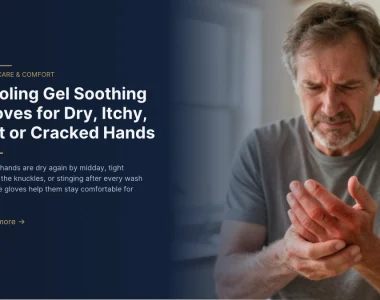
- Cold-sensitive hands or everyday hand stiffness: Often leads people to choose gloves that provide warmth and a gentle compressive feel.
- Difficulty managing routine tasks at home: Often makes living aids the most relevant place to start, especially when the aim is ease and independence rather than structured support.
These are not fixed rules, but they are often useful starting points. The goal is not to overcomplicate things. It is simply to narrow down the kind of support that makes practical sense for the way the problem tends to behave.
Different Types of Support and What They Are Designed to Do
Support products are usually easier to choose when you think in terms of function. Insoles and heel supports are commonly used to redistribute pressure, support the arch, and soften repeated impact under the foot. Compression socks and sleeves apply light, even pressure that can help legs feel less heavy or fatigued during long days, travel, or recovery. Braces and more structured supports are often chosen when a joint feels vulnerable, less steady, or in need of more external support during movement.
Other types of support do a slightly different job. Back and posture supports are often less about rigid correction and more about light support and reminder-based positioning. Gloves may help by retaining warmth and providing a gentle compressive feel that many people find more comfortable during everyday tasks. Living aids are different again. Their purpose is not necessarily to support an irritated body part directly, but to make ordinary daily activities easier, safer, and less physically demanding.
It is easy to assume that the firmest or most structured option is always the best one. In practice, that is not always the case. Quite often, the most useful product is the one that fits comfortably into everyday life and feels easy enough to use consistently.
Who This Page Is Especially Useful For
- People on their feet for long hours at work
- Desk-based workers dealing with posture-related strain
- Active people looking for extra support during movement or recovery
- Travellers wanting more comfort on longer journeys
- Older adults looking for more manageable day-to-day support
- People buying for a parent, grandparent, partner, or friend
- Anyone trying to work out whether cushioning, compression, bracing, warmth, or stability support makes the most sense
This is where customer feedback becomes genuinely useful. It shows how products fit into real routines, not just how they sound in theory. For one person, what matters most may be comfort during a long shift. For another, it may be feeling steadier on walks, getting through a working day with less strain, or making ordinary tasks feel easier to manage.
Customer Experiences by Need
Foot Comfort, Pressure Relief, and Everyday Support
Foot discomfort often affects more than people expect. It can change how you walk, how long you feel comfortable standing, and how manageable the day feels overall. Products in this category are commonly chosen by people looking to reduce pressure, improve comfort inside shoes, or make walking and standing feel a bit less aggravating.
Mechanistically, these products are generally designed to help by redistributing pressure, supporting the arch, cushioning repeated impact, and reducing strain on overworked tissues. Night splints work differently again, holding the foot in a position that helps limit overnight tightening, which can make those first few steps of the day easier for some people.
This category may be a good place to start if: you get heel or arch discomfort on first steps, your feet feel tired after long hours standing, or you want support that works inside your everyday shoes.
Emma’s Experience with NuovaHealth Insoles
“As a nurse, I’m on my feet for most of the day, and it was really starting to catch up with me. I’d tried insoles before and honestly didn’t expect much, but these felt supportive straight away and made my work shoes noticeably more comfortable. After a few long shifts, I could tell my feet weren’t feeling quite as worn out by the end of the day. They haven’t magically made the job easier, but they’ve definitely helped.”
Ava’s Experience with Plantar Fasciitis Socks
“When foot pain started getting in the way of my training, I needed something supportive that I’d actually wear properly. These socks have been easy to use, comfortable, and supportive enough to make a difference during the day. I also liked that they fit properly with my usual running gear and didn’t feel bulky or awkward.”
Oliver’s Experience with a Night Splint
“Mornings used to be the worst part of the day because of the pain in my feet when I first got up. I wasn’t sure how I’d get on with a night splint, and it did take a little getting used to, but it’s been better than I expected. It’s comfortable enough to wear overnight, and those first few steps in the morning are much easier now.”
There is a useful pattern here. People usually choose foot support because they want day-to-day movement to feel more manageable, not because they expect anything dramatic. Comfort, fit, and whether the product works with normal shoes often matter just as much as the support itself.
If this sounds familiar: a practical next step is to think about when your feet feel worst. If the issue is mainly during standing and walking, underfoot support may make the most sense. If it is worst on first steps in the morning, overnight support may be more relevant.
Knee, Ankle, and Joint Support for Movement and Recovery
Supports in this category are often chosen when the main problem is not only discomfort, but confidence in movement. That can apply to everyday walking, getting back to exercise, using stairs, or dealing with a joint that simply no longer feels as reliable as it used to.
Mechanistically, these products are generally designed to help by applying gentle compression, improving awareness of joint position, and providing external support around more vulnerable areas. That can help the joint feel steadier during walking, hiking, training, or other routine movement.
This category may be a good place to start if: your knee or ankle feels less steady, you want more reassurance while moving, or you are returning to activity and want support that feels secure without being overly restrictive.
Mark’s Experience with a Knee Brace
“After injuring my knee, I wanted something that would give me a bit more confidence without feeling too restrictive. This brace felt secure and comfortable from the start. It helped me ease back into activity gradually, and I felt steadier moving around with it on. That was really all I wanted from it, to be honest.”
Tom’s Experience with Knee Support on Hikes
“I mainly use knee support for longer walks and hikes, where my knees tend to feel it most. What I liked about this one was that it stayed in place, didn’t feel bulky, and gave me support without making my leg feel restricted. It just made longer walks feel a bit more manageable, especially on uneven ground.”
Liam’s Experience with an Ankle Splint
“After spraining my ankle, I needed support that felt secure but was still practical to wear day to day. The ankle splint gave me that extra sense of stability when I was getting back on my feet. It felt supportive without being awkward or too stiff, which made it much easier to get on with things normally.”
That difference matters more than it might seem. When a joint feels vulnerable, people are often looking for two things at once: physical support and the confidence to move more normally again. The best option is not always the most rigid one. Often, it is the one that gives enough reassurance without making movement feel awkward.
If this sounds familiar: think about whether the main issue is stiffness, instability, or confidence during activity. Light supports may suit everyday reassurance, while more structured options may make more sense when the joint feels more vulnerable.
Posture, Back Comfort, and Desk-Based Support
This category is often relevant when discomfort builds gradually through the day rather than appearing all at once. Long periods sitting, repetitive tasks, and poor positioning can all lead to a sense of strain that becomes harder to ignore as the hours go by.
Back, posture, wrist, and elbow supports are generally designed to provide light support, reduce the sense of strain, and encourage better positioning during repetitive or prolonged activity. In the case of posture supports, the benefit is often less about forceful correction and more about gentle reminder-based cueing.
This category may be a good place to start if: you feel discomfort mainly during desk work, repetitive tasks, lifting, or long periods in one position, and you want support that feels practical enough for regular daily use.
Liam’s Experience with Back Support
“I spend a lot of time at a desk, and after a while I could really feel it in my back. This support was comfortable to wear and, more than anything, it reminded me not to slump. Over time, that made the working day feel more manageable, and I wasn’t constantly distracted by the same dull ache.”
James’s Experience with a Posture Corrector
“What I liked most was that it was simple. It didn’t feel harsh or forceful, but it did give me a steady reminder to sit and stand better during the day. I’ve become much more aware of my posture since using it, and that’s made a real difference.”
Rachel’s Experience with Wrist Support
“I needed something light enough for everyday office use, and this worked well for that. It supported my wrist without making normal tasks awkward, and by the end of the day I was noticing less strain than usual. It’s been a practical help, especially on busier days.”
Rachel’s Experience with an Elbow Brace
“I was looking for something I could wear easily while working, and this elbow brace turned out to be a really practical option. It feels light, breathable, and supportive without getting in the way, which was my main concern to begin with.”
A lot of people in this position are not looking for something dramatic. They want to get through ordinary working days with less irritation and less awareness of the problem. That is often where discreet, wearable support earns its place.
If this sounds familiar: ask yourself whether the main issue is posture awareness, repetitive strain, or discomfort that builds after sitting or typing for too long. That usually points you towards the most relevant kind of support more quickly.
Warmth, Compression, and Everyday Comfort
Not every support product needs to feel highly structured to be useful. Quite often, people simply want something comfortable, wearable, and easy to use through the day, especially when the goal is warmth, reduced heaviness, or a bit more comfort rather than strong external support.
Compression socks and supportive gloves are generally designed to apply light, even pressure or retain warmth around the affected area. Compression can help legs feel less heavy during standing, travel, or recovery, while gloves may help maintain warmth and provide a gentle compressive feel that some people find soothing during everyday tasks.
This category may be a good place to start if: your legs feel tired or heavy after long days, you want more comfort during travel, or your hands tend to feel stiff or cold-sensitive in everyday life.
Sophia’s Experience with Compression Socks
“These made a real difference on long workdays when I’m on my feet for hours. My legs felt less heavy by the end of the day, and I found them comfortable enough to wear regularly without thinking about them too much. For me, that’s usually the sign something is working well.”
Daniel’s Experience with Compression Socks for Travel
“I bought these mainly for longer trips and flights, and they’ve been really useful. They feel supportive without being uncomfortable, and I’ve noticed my legs feel less tired after travelling. I wasn’t after anything fancy, just something reliable, and these have done the job well.”
Grace’s Gift for Her Grandmother
“I wanted something practical that might help my grandmother feel a bit more comfortable using her hands day to day. The gloves were a thoughtful choice, and she’s found them comfortable and easy to wear while doing things at home. It’s been nice seeing her use them without much fuss.”
Sophie’s Experience with Warm Supportive Gloves
“Cold weather is always hard on my hands, so warmth and comfort were the main things I wanted. These gloves feel soft, warm, and easy to wear outdoors, and they’ve made being outside in colder weather much more manageable. Nothing over the top, just genuinely helpful.”
This is a good example of something people often miss. The most useful support is not always the most technical-looking one. Sometimes the real value is simply that a product feels comfortable enough to use consistently and helps everyday life feel a bit easier.
If this sounds familiar: think about whether your priority is all-day comfort, travel comfort, warmth, or reduced leg fatigue. That usually makes the best starting point much clearer.
Practical Support for Daily Living
Support is not only about sport, injury recovery, or work-related strain. For many people, the real priority is simply being able to manage ordinary daily tasks with more ease and independence. That is where living aids often make the biggest difference.
These products are designed to make routine activities simpler, safer, and less physically demanding. They are particularly relevant when the goal is not to brace or compress a specific area, but to reduce effort and make day-to-day life feel more manageable.
This category may be a good place to start if: the main issue is coping with everyday tasks at home and you want straightforward support that makes ordinary routines easier rather than more technical.
Ben’s Experience with Living Aids
“What I appreciated most was how practical everything felt. These are fairly simple aids, but they’ve made day-to-day jobs easier and helped me feel more confident managing things around the house on my own. Sometimes it’s the straightforward things that make the biggest difference.”
This side of support is easy to overlook, but it matters just as much. Not everyone is trying to return to sport or get through a shift with less pain. Sometimes the goal is simply to make ordinary life easier.
If this sounds familiar: look for products that prioritise simplicity, ease of use, and practicality over technical features you may not need.
How to Choose More Confidently
If you are still deciding where to begin, it helps to ask a few simple questions. Is the main issue pressure, fatigue, stiffness, strain, or instability? Does the problem show up during activity, after activity, overnight, or after rest? Do you need something for work shoes, exercise, travel, home use, or all-day wear? Those questions often do more to narrow the options than product names alone.
It also helps to be realistic about what matters most. A product that feels too bulky, too tight, or too awkward for your routine is much less likely to be used consistently, even if it seems right on paper. Fit matters more than people expect. So does wearability. Quite often, a well-matched support that fits naturally into everyday life ends up being more useful than a more aggressive option that gets left in a drawer.
That is also why softer support is not necessarily the weaker choice. In some situations, a lighter, more comfortable product is the better fit because it is easier to wear regularly. In others, a more structured option makes better sense because the main issue is stability or reassurance during movement. The key is to match the level of support to the job it needs to do.
Buying for Yourself or Someone Else
Many people are not shopping only for themselves. They are choosing for a parent, grandparent, partner, or friend who may need extra support, more comfort, or help with everyday tasks. In those situations, ease of use tends to matter just as much as the support itself. If something is awkward to put on, uncomfortable to wear, or too complicated to fit into daily life, it is less likely to be used.
That is one reason these customer experiences can be genuinely helpful. They show how products work in ordinary life, whether that means using gloves at home, wearing compression socks on a journey, managing long shifts on your feet, or choosing a brace that helps a recovering joint feel more secure again.
What Customers Often Value Most
- Comfort that fits naturally into daily routines
- Support that feels noticeable without feeling intrusive
- Products that work for work, movement, travel, and home use
- Simple designs that are easy to use consistently
- Options that suit different levels of support, from light compression to more structured bracing
- The reassurance of a 30-day money-back guarantee
Across these experiences, a few themes come up again and again: comfort, practicality, ease of use, and the ability to keep moving through daily life with more confidence. Everyone’s needs are different, and no one product is right for every routine. Even so, the right support can make a meaningful difference when it is matched well to the problem it is trying to help with.
A Better Place to Begin
You do not need to have everything figured out before choosing a starting point. In most cases, it is enough to begin with what feels hardest to manage: first-step discomfort, tired feet, an unsteady joint, desk-based strain, heavy legs, cold-sensitive hands, or difficulty with everyday tasks. Once that part is clearer, the right kind of support usually becomes easier to recognise.
If you’re looking for well-designed health and wellness products to support comfort, movement, recovery, and daily living, NuovaHealth offers a wide range of options to explore. And with our 30-day money-back guarantee, you can choose with added peace of mind.