Best Gloves for Raynaud’s Disease: In‑Depth Q&A Guide
When Cold Turns Your Hands Against You
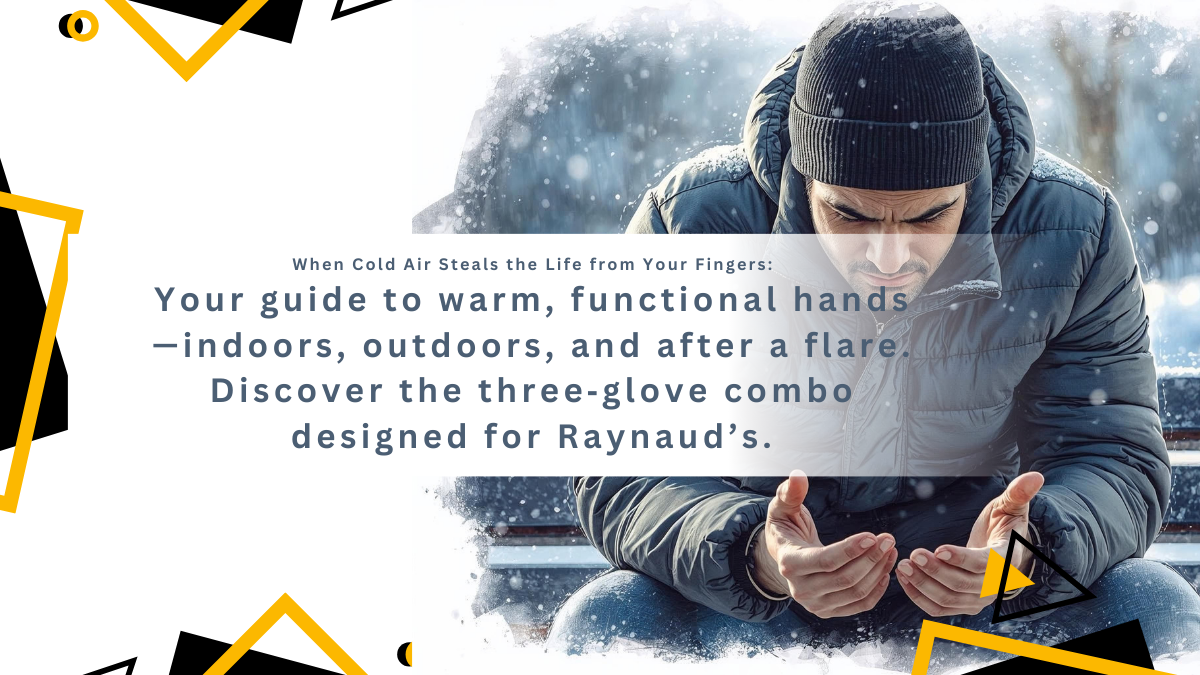
It often starts with something simple. You step outside and feel the cold on your hands before you’ve even locked the door. Or maybe it’s when you reach into the freezer, or grip a cold steering wheel. However it begins, the effect’s the same — within minutes your fingers no longer feel like your own.
They turn pale or patchy white, lose sensation, and become clumsy. Even turning a key or picking up a bag can suddenly feel awkward or impossible. When warmth finally returns, the colour shifts through blue or purple to a deep red. The skin burns and throbs sharply, as if it’s been scalded. Cold hits fast. Warmth takes its time.
No wonder it feels unsettling when your hands react like this, especially if no one has explained why. It’s strange watching your own fingers change colour and not knowing what’s happening underneath. You might wonder if it’s just “poor circulation”, if it could be Raynaud’s disease, or if it’s something more serious. And if it is Raynaud’s, how are you supposed to manage in typical UK weather — cold, damp, and unpredictable — without dreading every trip outside or every cold surface you have to touch?
Most people in this situation start searching online for the “best gloves for Raynaud’s disease” before anyone’s explained what’s actually going on. They try thicker and thicker gloves, only to find their fingers still turn white when they reach for a cold rail. Bulky gloves can make it hard to do anything indoors — and attacks can happen there too.
What You’ll Find in This Guide
In the sections below, we’ll go through those questions one by one. You’ll see how each section links what you feel in your hands to what’s happening beneath the skin, and then to how different glove designs can change those stresses.
The information is general — it can’t diagnose your individual situation — but it can help you understand your symptoms and work out what’s most likely to help. You’re not imagining it; there’s a clear reason your hands react this way.
You don’t have to read everything in one go. Each main question has its own heading, so you can go straight to the parts that matter most to you.
Understanding what’s happening is the first step to getting control back. So, before we look at glove design, let’s start with what’s really going on inside your fingers when they react to the cold.
Recognising What’s Going On in Your Hands
Before using labels like Raynaud’s, it helps to look closely at what’s really happening in your hands — the colours, the sensations, and when they appear. Understanding these details makes it easier to see whether what you’re experiencing fits with Raynaud’s‑type attacks or points towards something else.
Why do my fingers suddenly go white and numb when I get cold?
When fingers turn very pale or white in the cold, it often means less blood than normal reaches the skin and soft tissues for a short time. In many people with Raynaud’s‑type symptoms, this happens because the small arteries that supply the fingers — the digital arteries and their branches — over‑react to cold or stress.
Each small vessel has a thin muscle layer in its wall. In cooler conditions or under stress, that muscle tightens to help conserve body heat. In Raynaud’s, the tightening happens faster and more forcefully than needed. The vessel tightens quickly, and much less warm, oxygen‑rich blood reaches the fingertips.
Most people notice their fingers:
- Look pale or almost white compared with the rest of the hand.
- Feel cold when touched.
- Feel numb, tingly or “dead” because the nerves in the fingertips are receiving less blood and sending fewer signals back to the brain.
Hands are particularly prone to this because the fingers are small, lie far from the heart, and lose heat quickly. As the skin cools, those small arteries tighten even more — and that’s what causes the white, numb stage you notice.
My fingertips sometimes turn blue or purple in the cold – what is actually going on?
If the pale stage lasts, the fingers may shift from white to blue or purple. That doesn’t mean new blood is reaching the area yet. Instead, the blood already in the small veins and capillaries moves more slowly and gives up more oxygen to the tissues. As that blood becomes lower in oxygen, it changes colour, and through the skin it can look bluish or purplish.
During this blue‑tinged stage:
- Blood is still moving, but slowly and in smaller amounts than usual.
- The skin feels cold, and the fingers may feel heavy, clumsy or awkward.
- Even simple tasks like handling small items can become difficult because sensation and control are dulled.
This white‑to‑blue sequence is typical of Raynaud’s attacks. One clear difference from more serious circulation problems is that in Raynaud’s, colour usually returns once the fingers warm and the spasm relaxes. If a finger or part of a finger stays blue, very pale, or becomes dark and doesn’t recover colour with gentle warming, it needs prompt medical attention.
Why do my hands throb and burn when they finally start to warm up again?
That painful, throbbing stage when fingers warm again can be as uncomfortable as the numb, white stage. It usually involves:
- Intense tingling, “pins and needles” or burning.
- A deep, aching throb in the fingers.
- Fingers that look red and sometimes slightly swollen.
What’s going on is that, as the small arteries relax, blood rushes back into tissues that have been short of warmth and oxygen. Nerve endings that had gone quiet during the numb stage suddenly receive a surge of warm, oxygenated blood and signals. They start firing quickly and unevenly, which feels like strong tingling or burning pain.
The tiny veins can leak a little after a spasm, allowing some fluid to move into the surrounding tissues. That’s what gives that tight, swollen feeling many people notice as their fingers recover.
It’s unpleasant, but it usually means circulation is returning. The key thing is that the colour moves back towards your usual skin tone and the pain gradually eases, rather than staying severe or the colour not returning.
Why do my fingers feel “dead”, stiff or clumsy after being in the cold?
People often say their fingers feel “dead”, “like wood”, or “as if they’re not part of me” after being in the cold. A few things cause that feeling:
- Reduced blood flow cools the tissues, and cold slows how quickly nerves carry messages between the fingertips and the brain.
- The small muscles that move the fingers work less efficiently when cold, so movement feels stiff and awkward.
- The finger joints — at the knuckles (metacarpophalangeal joints) and middle joints (proximal interphalangeal joints) — along with the ligaments and the flexor and extensor tendons that bend and straighten the fingers, all stiffen in low temperatures. The joint fluid becomes thicker, and the soft tissues less flexible. If there’s already some joint wear or inflammation, that stiffness can be stronger.
The hand can then feel clumsy and slow. It struggles with fine control such as writing, typing, fastening, or picking up small objects. You may find yourself gripping too tightly to compensate, or feel as if the brain is reacting a fraction of a second behind the fingers.
Repeated cold episodes can make joints and soft tissues more sensitive and easier to irritate. That’s why it’s not only the attacks that cause discomfort — there can also be a background ache and stiffness between episodes of colour change.
I keep getting pins and needles in my fingers – is that part of Raynaud’s or something else?
Pins and needles (tingling) can happen:
- During the low‑flow stage, when nerves receive less oxygen and their signalling becomes irregular.
- As the fingers warm and blood returns, when nerve endings suddenly become active again.
When blood flow drops, the balance of oxygen and salts around the nerves changes. Nerve fibres may fire unevenly or stop briefly. As circulation recovers, the sudden return of warm, oxygen‑rich blood and the change in the tissues can make nerves fire rapidly, which feels like prickling or tiny electric shocks.
In Raynaud’s, tingling usually:
- Occurs with cold exposure or stress.
- Affects the same parts of the fingers that go pale or change colour.
- Eases as warmth and colour return.
Tingling can also come from pressure on a nerve higher up, such as in the wrist (carpal tunnel syndrome) or neck. In those cases, symptoms may:
- Be more constant or appear with certain wrist or neck positions rather than cold.
- Affect specific fingers in a consistent pattern.
- Be present even when the hand looks a normal colour and temperature.
If tingling is frequent, occurs at night, comes with weakness, like dropping things or losing thumb strength, or isn’t clearly linked to cold, it’s best to mention it to your clinician. Raynaud’s and nerve compression can also occur together, which changes how the hands feel and respond to cold.
Sometimes my fingers go bright red and feel hot and swollen when they rewarm – is that normal?
A bright red, hot, tingling phase is common after the white and blue stages of an attack. It reflects:
- Sudden widening of small arteries and arterioles (vasodilation) as the spasm eases.
- A flush of warm blood into cooler tissues.
- A brief leak of fluid from tiny vessels into nearby tissue, which makes the fingers feel puffy or tight.
For most people with Raynaud’s, this red phase is part of the typical three‑colour sequence:
- White or very pale.
- Blue or purplish.
- Red and warm or hot.
That red stage can be uncomfortable because nerve endings react to the sudden change in temperature and oxygen levels. Tissues that have been low in oxygen release substances that make pain fibres more sensitive, so even normal warmth can feel burning for a while.
As long as this stage gradually settles towards your usual skin tone and comfort, and the fingers aren’t developing open sores or marked swelling, it usually means the fingers are recovering, not being harmed.
Are cold hands and colour changes always Raynaud’s, or could they be something else?
Not everyone with cold, uncomfortable hands has Raynaud’s. Colour changes can also occur because of:
- General sensitivity to cold without clear vessel spasms.
- Long‑term narrowing of larger arteries higher up the arm, where blood supply is more permanently reduced.
- Nerve conditions that alter how blood vessels are controlled.
- Skin conditions or bruising that change colour for unrelated reasons.
Signs that point more towards Raynaud’s include:
- Episodes that clearly start with cold or stress.
- Fingers that change colour in recognisable phases — for example white, then blue, then red.
- Attacks that come and go, rather than a constant abnormal colour.
Signs that suggest other, potentially more serious circulation problems include:
- One hand or finger that stays much colder or paler than the others most of the time.
- Colour that doesn’t return to normal with gentle warming.
- Severe pain in the hand or arm unrelated to cold, especially if it appears with use.
- Wounds or ulcers on the fingers that heal slowly or worsen.
If one hand or finger seems very different from the others, don’t assume it’s Raynaud’s. A GP can assess the overall circulation, check the larger arteries in the forearm and arm, and decide whether further tests are needed.
Is it still Raynaud’s if only a few fingers are affected, or one hand is much worse than the other?
Raynaud’s attacks often affect some fingers more than others. One hand, often the dominant one, may feel the cold more sharply because it’s used and exposed more often.
It’s common for Raynaud’s to appear more clearly in particular fingers or on one side, especially early on. Over time, attacks may even out and affect both hands more evenly.
But if there’s a clear difference between hands, it can sometimes signal another problem. This includes:
- One hand staying colder, more painful or more discoloured than the other even outside attacks.
- One finger remaining pale, blue, dark or ulcerated.
- New weakness or difficulty using one hand that can’t be explained by pain alone.
If that happens, it’s important to have it checked. Secondary Raynaud’s (linked with other conditions) and separate circulation or nerve problems can look similar at first but need different monitoring and treatment.
How long do Raynaud’s‑type attacks usually last, and when does it count as “too long”?
The length of an attack can vary widely between people and between episodes. You may find that:
- Fingers go pale and numb for a few minutes when exposed to cold, then recover within 10–30 minutes once warmed.
- Some attacks last up to an hour or more if the hands stay cold or aren’t actively rewarmed.
- Several shorter attacks may occur through the day when moving in and out of cooler spaces.
In primary Raynaud’s (where no underlying disease is found), attacks are often shorter and recovery is quicker once the hands are warmed. In secondary Raynaud’s (linked with conditions such as connective tissue disease), attacks may:
- Start more quickly at milder temperatures.
- Be more intense.
- Take longer to settle, even with active warming.
Be aware of these warning signs if an attack lasts unusually long:
- Fingers that don’t start to regain normal colour within a reasonable time even with careful warming.
- Skin that stays very pale, blue, purple or dark for a long period.
- Severe pain that doesn’t follow your usual pattern.
If that happens — especially if there are ulcers or other signs of tissue damage — seek medical advice promptly. Most people with Raynaud’s never develop serious complications, but a few warning signs do need attention.
I have cracks, sores or skin changes at my fingertips – could these be linked to my circulation?
Yes. Skin changes at the fingertips can be linked to circulation problems and repeated Raynaud’s attacks. When fingers keep going through cycles of very low and then higher blood flow:
- The skin and underlying tissues are stressed by changes in oxygen supply and temperature.
- Small cracks, especially at the tips or around the nails, may appear because the skin becomes dry and strained.
- In more severe or secondary Raynaud’s, small ulcers or open sore areas can develop, especially where the skin is under pressure.
Chilblains — painful, itchy red or purple swellings that appear after cold exposure and re‑warming — are another form of cold‑related skin damage that can occur alongside Raynaud’s. In chilblains, tiny capillaries in the skin open and leak fluid and blood cells into the surrounding tissue when rewarmed, causing local swelling and inflammation.
These changes matter because:
- Open or cracked areas can be very painful when exposed to cold or pressure.
- Reduced blood flow means fewer immune cells and nutrients reach the area, so healing is slower and infection risk is higher.
- In some conditions, recurrent or non‑healing fingertip ulcers can point to more serious underlying vessel or immune problems.
If you notice recurring cracks, sores or changes in skin colour or texture at the fingertips, mention them to your clinician. Protecting the hands from cold, avoiding knocks or scrapes, and using suitable dressings or creams can help, but persistent or deep ulcers should always be assessed.
When you see your own fingers shifting through white, blue and red — moving from numb to throbbing — it can feel unpredictable and worrying. It’s easy to assume this is poor circulation, but it isn’t. Recognising this as the visible result of an over‑strong reaction in the small blood vessels is the next step in understanding what’s happening.
Raynaud’s: What It Is and What It Isn’t
Once you start noticing what your fingers are doing, the next question is whether that pattern fits with Raynaud’s. Understanding what’s really happening — and how it differs from other causes of cold or colour change — helps you make sense of what’s going on. It’s a pattern clinicians recognise instantly.
What exactly is Raynaud’s, and how is it different from simply having cold hands?
Raynaud’s describes how the small arteries in the fingers and toes react too strongly to cold or emotional stress. The key feature is short, repeated attacks where blood flow to the digits drops sharply, leading to clear changes in colour and sensation. It’s not dangerous, but it can be distressing.
In a typical attack:
- A trigger such as cold air, holding a cold object, or emotional stress sets things off.
- The smooth muscle in the walls of the small arteries tightens more than it needs to.
- Blood flow to the skin and soft tissues drops sharply.
- The skin turns pale or white, sometimes blue, and the fingers feel cold and numb.
- As the spasm eases, blood flow returns, the fingers flush red, and painful tingling or throbbing follows. You’ll know it’s easing when the colour starts to return.
This isn’t the same as just feeling the cold more than others. In Raynaud’s:
- The colour changes are distinct and sharply defined.
- Numbness, clumsiness and sometimes pain are more noticeable.
- The attacks come and go, usually triggered by cold or stress, rather than being constant.
Some people simply have colder hands without the full colour changes. Raynaud’s is more likely when the shifts in colour are striking, repeatable, and follow a recognisable pattern. That’s often when people start to worry. It’s a small but important distinction.
What is the difference between primary and secondary Raynaud’s?
Doctors often describe Raynaud’s as two main types — primary and secondary. The difference is whether the blood vessels themselves are healthy or affected by another condition.
Primary Raynaud’s means the small vessels are overly reactive but structurally normal between attacks. It’s the more common form and often starts in the late teens, twenties or thirties. It’s more common in women. The attacks can be uncomfortable and inconvenient, but they rarely cause ulcers or lasting damage. That’s often reassuring to know.
Secondary Raynaud’s happens when the same kind of vessel tightening occurs as part of another condition, such as a connective tissue disease. In these cases, the small vessels and nearby tissues can become thickened or scarred, which makes blood flow recovery slower and attacks more severe. It often begins later in life and may be linked with autoimmune conditions such as scleroderma, lupus or rheumatoid arthritis.
For most people with primary Raynaud’s, the main concern is how much it interferes with daily life — typing, driving, or waiting outdoors — rather than ulcers or tissue loss. When secondary Raynaud’s develops, those day‑to‑day difficulties are often there too, but there’s also a higher risk of fingertip ulcers, infection and tissue damage because the vessels and skin are already affected by the underlying condition. That’s the key difference between the two forms.
Primary Raynaud’s doesn’t automatically turn into secondary Raynaud’s. However, certain signs make doctors look more closely for an underlying cause. These include:
- Raynaud’s starting for the first time later in adult life.
- Significant joint swelling, not just stiffness.
- Unexplained rashes, especially if they’re sensitive to sunlight.
- Shortness of breath, chest pain, swallowing problems or weight loss.
- Thickening, tightening or marked changes in the skin.
If you notice any of these alongside Raynaud’s‑type attacks, it’s worth mentioning them to your GP. They may arrange blood tests or refer you to a rheumatologist to check for conditions that can cause secondary Raynaud’s.
Why do the small blood vessels in my fingers tighten so strongly?
So what’s happening here is that the small arteries in your fingers are controlled by nerves from the sympathetic nervous system — the part that helps regulate body temperature and the “fight or flight” response. In Raynaud’s, this normal control system over‑reacts. You can think of it as the body over‑doing a normal reaction.
When you’re exposed to cold:
- Temperature sensors in the skin send signals to the brain.
- The brain signals the small vessels in the fingers and toes to tighten.
- That’s the body’s way of protecting warmth.
When you’re stressed or anxious:
- Stress hormones such as adrenaline rise, and sympathetic nerve activity increases.
- The small vessels tighten as part of the body’s natural “prepare for action” response.
In Raynaud’s, these normal reactions are exaggerated. The vessel walls are overly sensitive to nerve and chemical signals, so they tighten harder and faster than needed. Normally, vessels narrow just enough to protect warmth. In Raynaud’s, the narrowing can be strong enough to sharply reduce blood flow to the fingers for a short time, which is why they can turn completely white or patchy. It’s a familiar pattern to clinicians.
In secondary Raynaud’s, long‑term changes in the vessel walls — such as thickening, scarring or narrowing of the inner lining — can further restrict blood flow, even between attacks.
Why do cold air, cold objects and emotional stress all seem to set off similar attacks?
Cold and emotional stress may feel different, but they trigger the same reaction in the body. Both increase activity in the sympathetic nervous system and release substances that tighten small blood vessels. In practice, the body can’t tell the difference between a cold shock and a stress surge — the vessels tighten either way.
For example:
- Stepping into cold air cools the skin quickly, prompting a strong constriction response to conserve heat.
- Feeling tense, upset or anxious can cause a surge of adrenaline and related hormones, which act on vessel walls as well as the heart.
In fingers already prone to Raynaud’s, these different triggers feed into the same over‑tightening of the small arteries. You might see this most clearly when you walk out into cold air or feel stressed indoors, even if the room temperature isn’t particularly low. That’s often when people start to notice the pattern. Understanding that stress and cold share this tightening pathway helps make sense of why that happens.
Can Raynaud’s affect toes, ears or the tip of my nose as well as my fingers?
Yes. Although fingers are usually affected first, other small, exposed parts of the body can also show Raynaud’s‑type changes. These include:
- Toes
- Ears
- Tip of the nose
- Sometimes the lips
The same process happens in these areas: the small vessels narrow sharply in response to cold or stress, reducing blood flow and causing changes in colour and sensation. For some people, Raynaud’s is more noticeable in the feet than the hands, especially in colder environments or when footwear doesn’t insulate well. The same management approach works in these areas too — keeping the whole body warm, avoiding rapid cooling, and using suitable clothing or protective gear to reduce triggers.
How can I tell the difference between Raynaud’s and more serious circulation problems in my hands?
Raynaud’s causes temporary narrowing of small vessels that reverses once the hands warm up. More serious circulation problems, such as narrowing or blockage of larger arteries in the forearm or upper arm, show different signs and tend to persist.
In typical Raynaud’s attacks:
- Attacks are clearly linked to cold or stress.
- Colour changes are temporary and improve with warmth.
- Between attacks, the fingers usually look and feel normal, especially in primary Raynaud’s.
- Pain occurs mainly during attacks or as the fingers re‑warm.
In more serious circulation problems:
- One hand or arm may feel persistently colder, weaker or more painful than the other, not just in cold conditions.
- Pain may appear when using the arm or hand and ease with rest, suggesting a fixed narrowing of larger vessels.
- Wounds or ulcers on the fingers may take a long time to heal or may worsen.
- Pulses at the wrist or higher up the arm may be reduced.
When that happens, it’s important to get checked. In secondary Raynaud’s linked to connective tissue disease, there can be both vessel spasms and structural vessel changes. That’s why, if ulcers keep coming back or become severe, prompt medical assessment is essential.
What are the main long‑term risks if Raynaud’s is not well controlled?
For many people with Raynaud’s — especially the primary form — the biggest challenge over time is how much it interferes with daily life. Repeated attacks can make tasks that rely on hand use, travel in cold weather and general independence more difficult. Many people start avoiding activities or environments they previously enjoyed because they fear triggering attacks. The constant discomfort and planning can be tiring.
In primary Raynaud’s, ulcers or tissue loss are uncommon if there’s no associated disease, but they can still occur. In secondary Raynaud’s, the long‑term risks are higher because:
- The small vessels may already be narrowed or damaged by the underlying condition.
- The skin and soft tissues may be more fragile.
- There may be wider effects from the underlying autoimmune or connective tissue disease.
When that happens, repeated or prolonged attacks can:
- Contribute to fingertip ulcers.
- Delay healing of small injuries.
- Increase the risk of infection.
- In severe cases, lead to tissue loss at the tips.
Over time, repeated tightening and reopening of already damaged small vessels can further irritate the vessel walls and surrounding nerves and tissues. That’s why they can spasm and ache more easily. Good control of the underlying condition, along with sensible measures to reduce cold attacks, can make a big difference.
Who should I see if I think I have Raynaud’s, and what usually happens at an assessment?
If you think you might have Raynaud’s, the first step is to see your GP. They’ll start by asking about your symptoms — what happens, when it happens, how long it lasts, and what seems to bring it on or ease it. They’ll also ask about your general health, including joint pain, rashes, breathing, weight changes, tiredness and any other symptoms that might point to an underlying condition.
Your GP will examine your hands and sometimes other areas to check skin quality, ulcers, joint swelling and pulses. Depending on what your GP finds, they may:
- Offer reassurance and suggest self‑management and monitoring if the pattern fits primary Raynaud’s and there are no warning signs.
- Arrange blood tests to look for markers of autoimmune disease or other underlying problems if secondary Raynaud’s is possible.
- Refer you to a rheumatologist or another specialist if there are signs of connective tissue disease, significant ulcers, or more complex features.
Are there tests that confirm Raynaud’s, or is it mainly based on my story and examination?
There isn’t a single test that confirms Raynaud’s on its own. Diagnosis is based mainly on your description of what happens and what the clinician sees during examination. Tests are used to check for possible underlying causes rather than to prove Raynaud’s itself. That’s usually enough to confirm what’s going on.
Clinicians usually consider:
- Your account of attacks — including triggers, colour changes, sensations and timing.
- Photographs taken during attacks, if you have them.
- Examination findings — skin quality, ulcers, joint changes, pulses, and the appearance of tiny capillaries near the nails.
- Blood tests — to look for signs of autoimmune disease or other systemic conditions when needed.
Some specialists also use a test called nailfold capillaroscopy. This involves looking at the small blood vessels at the base of the fingernail under magnification to see whether their pattern looks normal or shows changes such as swelling, twisting or loss of capillaries. These findings can help distinguish primary Raynaud’s from some forms of secondary Raynaud’s.
Ultimately, the diagnosis depends mostly on your history and examination. Tests add information to check whether there’s an underlying condition that needs separate treatment.
Can medicines, smoking or hormone changes make Raynaud’s attacks worse or more frequent?
Several things can make the small vessels tighten more easily or affect circulation in ways that influence Raynaud’s. These include:
- Smoking — nicotine and other substances in tobacco cause blood vessels to tighten and can damage vessel walls over time. If you smoke and have Raynaud’s, protecting your hands from cold becomes even more important because your vessels are already under extra strain.
- Certain medicines — some blood‑pressure medicines that work by constricting small vessels, and some medicines used for other purposes, can aggravate Raynaud’s‑type attacks. If you think a medicine might be worsening your symptoms, speak to your prescriber rather than stopping it suddenly.
- Caffeine and other stimulants — high doses can increase sympathetic nervous system activity, which may worsen vessel spasms in some people.
- Hormonal changes — Raynaud’s is more common in women, and symptoms may vary with hormonal shifts over the month or around menopause.
If your Raynaud’s‑type symptoms change after starting a new medicine, changing dose, or in connection with smoking or other habits, it’s worth mentioning this to your clinician. In more severe or secondary Raynaud’s, clinicians sometimes use medicines that relax blood vessels or other treatments. Gloves and protective measures don’t replace those options; they work alongside them to protect the fingers from everyday triggers. It’s a small change, but it can make a big difference.
Once you realise your fingers aren’t simply cold but reacting through an over‑strong tightening of small arteries and capillaries, it becomes clearer why certain everyday habits — especially how quickly your fingers cool — make such a difference. Understanding this gives you a clearer sense of control. Next, we’ll look at what helps day to day.
Day‑to‑Day Control: What You Can Change Yourself
You can’t change how your circulation is wired, but you can influence how it behaves. The way your hands lose heat, how sharply they react to cold, and how they recover afterwards are all things you can manage. This is where small, steady habits and practical clothing choices — especially gloves — start to make a real difference. It’s not about perfection, just consistency.
What is the single most important principle for preventing Raynaud’s attacks?
For most people living with Raynaud’s, one principle matters more than any other: try not to let your fingers cool quickly. A sudden drop in skin temperature is one of the strongest triggers for the vessel spasms described earlier. The faster the skin cools, the more sharply those small arteries tighten — and that’s when the colour changes start. You’ll often notice it first on cold mornings or when you grab something straight from the fridge.
You’re not trying to make your hands hot; you’re trying to keep them steady. Avoiding those sharp swings between cold and warm helps prevent attacks before they start. It’s a small thing, but it matters.
In practice, that means:
- Putting gloves on before your hands start to feel cold, not after. It’s a habit worth building early.
- Avoiding bare‑skin contact with very cold objects such as metal rails, freezer drawers or steering wheels — those few seconds are often enough to trigger a spasm.
- Trying not to step straight from warm indoor air into cold wind or draughts with uncovered hands. You’ll probably catch yourself doing this automatically after a while.
It’s often the small adjustments that make the biggest difference. Once you start noticing your own patterns, you’ll find it easier to stay one step ahead.
Why does keeping my whole body warm, not just my hands, help so much?
The body protects its vital organs first. When your overall temperature drops, the brain senses cooler blood and reacts by tightening small vessels in the skin, hands, feet, ears and nose to conserve heat. That’s why your fingers are often the first to feel it. If your torso is cold, your hands are more likely to lose blood flow — even if you’re wearing gloves.
Keeping your core warm changes that signal. A warm layer over your chest, proper leg coverings, and a hat and scarf in cold weather all help. Cold feet can have the same effect, so warm socks and suitable footwear matter too. Many people find that once they keep their core properly warm, their fingers are far less likely to turn white or blue at the slightest chill. It’s easy to underestimate how much core warmth matters — but once you fix it, you’ll notice the difference straight away.
How quickly should I try to warm my hands during an attack, and what is the safest way to do it?
When an attack starts, the goal is to warm your hands gradually, not suddenly. Rapid re‑warming with intense heat can be extremely painful and may burn the skin, especially when sensation is reduced. It’s a common mistake — and an easy one to avoid.
Safer ways to warm your hands include:
- Moving into a warmer, sheltered place away from wind and damp.
- Tucking your hands into warm areas of your body, such as under the opposite arm or inside clothing.
- Using warm (not hot) water to raise the temperature slowly over several minutes. A good guide is that the water should feel comfortably warm on the inside of your forearm — warm enough to be soothing, not so hot that you instinctively pull away.
- Wearing gloves or mitts that help your own warmth build gradually. That’s often enough to ease the pain without shock.
If you use heat packs or gel gloves, warm them according to the instructions so they reach a comfortable, not extreme, temperature. When the skin is completely numb, it can’t warn you about excessive heat — that’s when burns can happen without you realising. Wait until some colour and feeling return before applying direct warmth. It’s not about speed; it’s about safety.
Are there simple hand and arm movements that can help blood flow during or after an attack?
Gentle movement helps blood flow because muscle activity in the forearm and hand acts like a small pump. When the muscles contract and relax, they squeeze the veins and soft tissues, helping blood move through the area and generating a little warmth. It’s one of the simplest ways to help your hands recover — and it works.
Start small — even a few seconds helps:
- Slowly open and close your hands, spreading the fingers wide and then making a loose fist several times. You’ll feel the difference as the colour starts to return.
- Rotate your wrists gently within a comfortable range.
- Bend and straighten your elbows a few times to keep the forearm muscles active.
- Raise and lower your arms to shoulder height, or do small arm swings if space allows.
You’re coaxing warmth back, not forcing it. Keep the movements gentle and steady. You’ll soon get a feel for what works best for you — it’s a habit that becomes second nature.
What should I avoid when re‑warming very cold, numb fingers?
It’s tempting to rush, but that’s when injuries happen. When your fingers are very cold and numb, avoid:
- Very hot water — numb skin can’t sense temperature properly, and burns can occur before you realise.
- Direct contact with radiators, open fires or other high‑heat sources — the risk of burns is high when sensation is reduced.
- Rubbing the skin hard — vigorous rubbing can damage fragile skin, especially if there are cracks or chilblains. Cold skin is less elastic and more prone to tearing.
Think steady and gradual. That’s the safest way to bring your hands back. If, despite careful warming, a finger or patch of skin doesn’t return to its usual colour or sensation, or becomes unusually painful, seek medical advice. It’s better to check early than wait and worry.
How can I reduce triggers in everyday tasks like using the freezer, driving or carrying shopping?
Many everyday tasks involve short but intense exposure to cold surfaces or air. It’s often those quick moments that catch people out — a few seconds of contact with cold metal or air can be enough to trigger a spasm. Once you start noticing these patterns, you can plan around them.
For example:
- When using the freezer or fridge, put gloves on before opening and handling items. If gloves aren’t nearby, use a towel or cloth as a barrier rather than touching frosty metal directly.
- When driving, put gloves on before touching a cold steering wheel or gear stick, especially at the start of a journey. Some people wear a thin base‑layer glove while driving and add or remove a thermal layer as needed.
The key is to stay one step ahead — protect your skin before contact with cold objects, rather than reacting once your fingers are already numb and white. That’s the habit that makes the biggest difference. The best gloves are the ones you’ll actually wear — comfort matters as much as insulation.
Apart from gloves, what clothing and layering strategies help someone with Raynaud’s?
Raynaud’s isn’t just about your hands — your whole body sets the tone for how your fingers respond. Clothing choices beyond gloves can make attacks less frequent and less severe. In practice, that means:
- Layering — several thinner layers trap air between them and let you adjust as conditions change, rather than relying on one heavy layer that may be too warm or too light. It’s easier to adjust through the day.
- Covering your head and neck — heat loss from these areas cools the whole body and encourages the brain to tighten vessels in the hands and feet.
- Protecting your legs and feet — warm socks and suitable footwear reduce the body’s need to restrict blood flow to the extremities.
- Avoiding tight clothing that may restrict blood flow, especially around the wrists where vessels lie close to the surface.
Keeping your body within a comfortable temperature range helps your hands stay calmer. It’s a small shift, but it changes how your hands respond — and once you’ve felt the difference, you won’t go back.
Do smoking, activity levels, sleep and stress really affect Raynaud’s?
These factors don’t cause Raynaud’s on their own, but they do influence how often and how strongly attacks occur. They set the background tone for how your circulation behaves — and that tone matters.
- Smoking tightens blood vessels and damages their lining over time. Stopping or reducing smoking is one of the most effective non‑drug ways to ease strain on the circulation.
- Regular physical activity supports cardiovascular health and helps the inner lining of blood vessels (the endothelium) work more flexibly, improving baseline circulation. Even gentle movement counts — it keeps the blood moving.
- Poor sleep and ongoing stress keep the body in a heightened state, with increased sympathetic activity, which many people find makes attacks more frequent or easier to trigger. It’s not just in your head — stress hormones tighten vessels too.
- Caffeine and other stimulants in large amounts can add to this effect in some individuals.
These changes won’t transform Raynaud’s overnight, but they build up quietly over time. They reduce the background strain on your blood vessels and nervous system, making other measures — such as gloves and clothing — more effective. It’s not always easy, but it’s manageable.
Is there good evidence that diet or supplements change Raynaud’s, or should I focus on other things first?
Various diets and supplements are sometimes suggested for Raynaud’s, but the evidence for most is limited or mixed. You’ll see plenty of claims online, but few hold up under scrutiny. It’s easy to get drawn in, but the basics usually make the biggest difference.
In general:
- A balanced, heart‑healthy diet that supports good vascular health is sensible.
- Maintaining a healthy weight and managing conditions such as diabetes and high cholesterol helps protect blood vessels overall.
- Some supplements and alternative remedies make claims that aren’t supported by reliable studies.
Before spending money or making major dietary changes, it’s usually more effective to focus first on what’s proven:
- Keeping your body and hands at a steady, comfortable temperature.
- Stopping smoking, if relevant.
- Managing stress and sleep as best you can.
- Following medical advice about any underlying conditions.
If you’re considering a supplement or major dietary change, discuss it with a clinician — especially if you take other medicines or have other health conditions. It’s better to check first than to risk unwanted interactions. That’s the practical side of it.
How can I manage Raynaud’s at work, especially in cold offices, warehouses or chilled environments?
Workplaces can be challenging if they’re cool, draughty or involve handling cold items. It’s a common issue, especially in older buildings or refrigerated areas. Long periods of stillness in cool air or repeated short trips into colder spaces can both trigger attacks. Once you know your triggers, you can plan around them.
Helpful approaches include:
- Wearing a thin base‑layer glove that allows you to type, write or handle paperwork while keeping some warmth around your fingers.
- Speaking with your manager or occupational health team about reasonable adjustments, such as avoiding prolonged duties in very cold areas where possible, or allowing suitable hand protection if it’s safe for your role.
- Holding a warm cup periodically as a gentle heat source, provided it’s safe to do so.
- Taking short movement breaks if you sit still for long periods to encourage circulation — even a minute or two helps.
- Ensuring your core is well covered, not just your hands. It’s easy to forget when you’re sitting still.
Some jobs involve work where gloves can’t be worn safely — around machinery, tools or moving parts. In those roles, planning ahead matters most. Discuss with your employer whether adapted equipment, modified duties or scheduled warming breaks are possible, alongside clinical advice if symptoms are severe. It’s a practical conversation worth having early — and it often makes work far more comfortable.
By now, the overall picture is clearer: the small arteries in your fingers over‑react to cold and stress. Attacks are more likely when your hands cool quickly or when your whole body is under temperature or stress strain. Day‑to‑day management is about smoothing out those extremes and keeping your circulation steady.
The next question is what that means for gloves. Many people assume “the thicker the better”, but Raynaud’s‑sensitive hands need more than bulk. The right gloves work with your circulation, not just against the cold.
By now, the overall picture is clearer: the small arteries in your fingers over‑react to cold and stress. Attacks are more likely when your hands cool quickly or when your whole body is under temperature or stress strain. Day‑to‑day management is about smoothing out those extremes and keeping your circulation steady.
The next question is what that means for gloves. Many people assume “the thicker the better”, but Raynaud’s‑sensitive hands need more than bulk. The right gloves work with your circulation, not just against the cold.
What Good Gloves for Raynaud’s Disease Need to Do
Most people eventually ask, “What are the best gloves for Raynaud’s disease?” The answer depends less on how thick a glove looks and more on what it does around your skin and blood vessels. A good glove has to manage warmth, comfort, dexterity and protection all at once — not one at the expense of the others.
What are the key jobs the best gloves for Raynaud’s disease need to do for your hands?
For Raynaud’s‑sensitive hands, the best gloves have several clear jobs. They should:
- Slow how quickly the fingers lose heat to the surrounding air.
- Shield against wind and damp, which strip warmth faster than still, dry air.
- Keep the temperature around the fingers steadier as you move between colder and warmer places.
- Avoid squeezing or cutting into the fingers and wrists, so blood can circulate freely.
- Allow you to grip and control everyday objects without needing to clench or over‑squeeze.
- Be comfortable enough to wear for the parts of the day when protection really matters.
Each of these jobs tackles a different stage in the path from cooling to pain. If a glove is warm but too bulky for everyday tasks, you’ll end up taking it off repeatedly — and each time, your hands cool again. A slimmer glove that doesn’t block wind or hold warmth well may still let your fingers cool fast enough to trigger an attack. The best gloves for Raynaud’s strike a balance between warmth, dexterity and comfort, rather than focusing on a single feature.
Why is it not enough for Raynaud’s gloves to be simply thick or fluffy?
Thick or fluffy gloves add insulation, but on their own they don’t solve all the problems Raynaud’s creates — and they can introduce new ones:
- Bulky gloves make it harder to handle keys, cards or equipment. If you keep taking them off to manage tasks, your fingers are repeatedly exposed to cold air and surfaces.
- Some thick gloves are loose around the fingers and wrists, letting cold air circulate inside and undoing the benefit of the extra material.
- If the outer surface isn’t wind‑resistant, cold air can still strip heat from the glove surface and the warmth inside leaks away.
- Thick material can force your fingers apart and make gripping harder, which increases strain on joints and tendons — especially if you already have arthritis or overuse pain.
For Raynaud’s, the goal isn’t to pile on material but to:
- Trap a stable layer of warm air close to the skin.
- Reduce the direct effects of wind and damp.
- Maintain enough dexterity that you can keep gloves on during ordinary tasks.
That’s why many people do better with a set of gloves chosen to work together, each suited to a different part of the day, rather than relying on one very thick pair. Small changes in layering or fit can noticeably alter how your hands respond to cold.
Why do some gloves actually keep my fingers warm, while others seem to make no difference?
Fingers lose heat in three main ways:
- Direct transfer to colder air or surfaces (conduction).
- Loss of warm air from around the skin, replaced by cooler air (convection).
- Evaporation of moisture, for example if the glove or skin is damp from sweat or rain.
A well‑designed glove slows these processes by:
- Creating an insulating layer of trapped air around the fingers. Materials with small air pockets reduce how quickly heat moves away from the skin.
- Fitting closely enough that warm air stays near the skin, without being so tight that it restricts blood flow.
- Limiting air movement inside the glove, so warm air isn’t constantly replaced by cold draughts.
- Wicking away moisture or at least not holding it tightly against the skin, so sweat doesn’t cool you as it evaporates.
For someone with Raynaud’s, even a small reduction in the speed of cooling can make a noticeable difference. When the fingers cool more slowly, the small arteries are less likely to clamp down abruptly, and the whole attack may be milder — or might not start at all in situations that once triggered it. That’s usually when people realise it’s not just about thickness — it’s about how the glove manages heat and airflow.
Why do my fingers react so badly in the wind, even if the air temperature isn’t that low?
Wind has a powerful effect on heat loss. When cold air moves across a surface, it strips away the thin layer of warmer air sitting next to that surface and replaces it with colder air that has to be warmed again. It repeats this over and over as long as the wind blows.
On bare skin, this means your fingers lose heat much faster in a cold wind than they do in still air at the same temperature. On a glove, it means:
- Heat is drawn out of the glove fabric more quickly.
- The temperature inside the glove can drop faster, even if the glove is thick.
Weather forecasts call this the “feels like” or wind‑chill temperature. For Raynaud’s, where small vessels over‑react to any rapid cooling, wind can be the difference between tolerable and severe. A glove with a wind‑resistant outer layer can:
- Reduce how quickly moving air removes warmth from the glove surface.
- Help keep the temperature inside the glove more stable.
- Make outdoor conditions feel less extreme to the fingers.
Once you think of wind as something that constantly wipes away the warmth your hands are trying to build, it’s clear why blocking wind is as important as insulation for Raynaud’s‑sensitive hands. Many people only realise this after noticing that their hands ache more on breezy days than on still, colder ones.
Do my fingertips really need to be completely covered, or are fingerless gloves enough?
In Raynaud’s, the fingertips are often the first area to change colour and the last to warm up again. They:
- Have a large surface area for their volume, so they lose heat quickly.
- Are exposed at the ends of the fingers, where wind and contact with surfaces are most direct.
- Contain many nerve endings and small vessels close to the surface, making them highly sensitive to temperature changes.
Fingerless gloves leave exactly this vulnerable area exposed. Gloves that stop short of the tip or ride back when you grip also let cold air and surfaces reach the part of the finger most prone to Raynaud’s.
For preventing attacks in cold conditions, full fingertip coverage usually works much better:
- The glove should extend fully over the tips, even when you flex or reach.
- The material should maintain contact so no bare skin is exposed when you grip.
- The glove should hold its shape so it doesn’t fold away from the tip when you press on something.
Fingerless designs have their place for therapy sessions or detailed tasks, but they’re not enough on their own for outdoor prevention in Raynaud’s‑sensitive hands. Even a few millimetres of exposed skin can be enough to trigger an attack.
Do longer cuffs on gloves actually make a difference to Raynaud’s, or is that just a comfort thing?
The main arteries that supply blood to the hand — the radial and ulnar arteries — pass close to the skin at the wrist. This area is a key gateway for warm blood entering the hand. If it’s exposed, warm blood can lose heat just as it enters.
Gloves or mitts that cover more of the wrist and overlap with your sleeves help by:
- Keeping the blood slightly warmer as it enters the hand.
- Reducing cold gaps around the wrist where air can get in.
- Helping the warmth you build up inside the glove stay there, rather than leaking out at the cuff.
For Raynaud’s‑sensitive hands, this helps reduce cold spots around the wrist that might otherwise encourage vessel tightening and supports a more consistent temperature in the whole hand, not just the fingers. It’s a small design detail, but once you notice it, the difference is clear.
Why do some gloves rub my knuckles and fingertips raw, and others don’t?
When your hands are sore, stiff or affected by skin problems such as chilblains or cracks, the inside of a glove can make a big difference. Ordinary gloves often have:
- Thick seams that run along the sides of the fingers or across the knuckles.
- Rough joins between materials at the fingertip.
- Labels or thicker patches in areas that press against bony points.
When you grip, push or rest your hand, those seams and joins can:
- Dig into sensitive joints, especially if there’s arthritis.
- Rub across areas of thin or damaged skin.
- Create pressure points that become more painful over the day.
Gloves designed with smoother internal seams and careful seam placement help by:
- Keeping thicker joins away from the most prominent knuckles and fingertip pads.
- Reducing friction on vulnerable skin.
- Allowing you to make a fist, grip objects or lean on your hands with less localised pressure.
For people with Raynaud’s plus joint or skin problems, this can be the difference between tolerating a glove for hours and needing to remove it after a short time because it aggravates existing pain. It’s one of those small design details that quietly determines whether a glove feels wearable all day or not.
Why do I end up squeezing things so hard in gloves, and can better grip really help with that?
Cold, numb or stiff fingers have poorer feedback about how firmly they’re holding something. When sensation is dulled, many people:
- Squeeze harder than necessary to stop objects slipping.
- Hold tension in their hands and forearms for longer.
- Use awkward positions to compensate for a lack of confidence in their grip.
Over time, this extra effort can:
- Strain the small joints and tendons in the fingers and thumb.
- Increase aching in arthritic joints.
- Make hands feel tired and heavy much earlier in the day.
Gloves with grip patterns on the palms and fingers can:
- Increase friction between the glove and smooth surfaces.
- Allow you to maintain a secure hold with less squeezing force.
- Reduce the likelihood of items slipping, even if your sensation isn’t perfect.
For Raynaud’s‑sensitive hands, this means you can maintain better control of objects such as tools, rails or steering wheels without having to clamp your fingers as tightly. That small change often reduces joint and soft‑tissue irritation and helps your hands feel less fatigued by the end of the day.
People talk about “compression gloves” for Raynaud’s – what does that actually mean, and is it the same as medical compression?
Gentle, even compression in a glove means a light, consistent snugness of the material around the hand and fingers. It’s very different from the high‑pressure compression used in medical garments for vein disease or lymphoedema.
In Raynaud’s and cold‑sensitive hands, low‑level compression can:
- Provide a steady contact sensation, improving awareness of finger position when they feel numb or clumsy — a sense known as proprioception.
- Lightly support soft tissues and small joints, which some people with arthritis or overuse pain find reduces background ache.
- Help reduce small localised swellings by providing a gentle, spreading pressure.
The key points with this kind of compression are:
- It shouldn’t feel tight, pinching or restrictive.
- It shouldn’t leave deep marks in the skin after normal wear.
- It isn’t designed to treat serious vascular disease.
In Raynaud’s, squeezing too hard over small arteries can worsen the very lack of blood flow you’re trying to avoid. If a glove feels as if it’s constricting your fingers or wrists, especially if you already have circulation problems, it’s too tight and should be changed for a better‑fitting option. The right level of snugness should feel supportive, not restrictive — more like a second skin than a bandage.
Why does one single type of glove never seem to be enough when you have Raynaud’s?
A typical day exposes your hands to very different conditions:
- Cooler indoor environments, such as draughty rooms or workplaces.
- Short trips outdoors in cold, windy or damp conditions.
- Periods of heavier use, such as carrying bags, doing manual tasks or typing.
- Times when the hands are already sore, stiff or recovering from an attack.
Having a spare pair of the same glove is useful if one is lost or gets wet, but it doesn’t solve the problem that your hands need different things at different times. A glove that’s ideal for one situation is often a poor match for another.
For example:
- A glove warm enough for standing outside in the wind may be too hot and clumsy indoors.
- A slim glove perfect for typing may not offer enough protection outdoors.
- A glove that’s good for general use may not suit direct heat therapy when your hands are painful.
That’s why many people with Raynaud’s use more than one type of glove — often a thin pair for indoors, a thicker or more protective pair for outdoors, and a heat pack or therapy glove for recovery. Once you think of your day in three parts — indoors, outdoors and recovery — it’s easier to see why one glove can’t cover everything. It’s not about having more gloves — it’s about using the right one at the right time so your hands stay protected all day.
What makes the RevitaFit thermal gloves better for wind and damp days than normal gloves?
The RevitaFit thermal glove is designed as an outer layer, worn over the base‑layer glove when you’re out in colder, windier or wetter conditions. It reduces heat loss by:
- Using insulating materials that trap more of the warmth your hands naturally produce, so heat builds up inside the glove instead of escaping quickly.
- Adding a wind‑resistant outer surface that slows the removal of warm air and reduces the wind‑chill effect.
- Covering the fingers completely, including the tips, so no bare skin is exposed to cold air or surfaces.
Around the wrist, the thermal glove has a soft, close‑fitting cuff that keeps warm air inside. It sits comfortably against the skin without digging in or squeezing, which means blood flow into the hand isn’t restricted. By overlapping with your sleeves, it closes off cold gaps where air can get in and helps the warmth you build inside the glove stay there.
When worn over the base‑layer glove:
- The inner RevitaFit glove maintains gentle, warm contact with the skin.
- The thermal glove adds a thicker barrier against cold air, wind and light rain, while the cuff helps seal that warmth in.
In everyday use, this means that walking in cold wind, waiting for transport or running errands outdoors are less likely to trigger rapid cooling of your fingers. The temperature inside the glove stays steadier, even when the weather changes suddenly.
If I wear both pairs together, will my hands feel huge and clumsy?
The RevitaFit thermal glove is shaped and sized with the base‑layer glove in mind. When you wear both together:
- The total thickness is greater than either glove alone, but the fit is designed so your fingers aren’t forced far apart.
- The fabrics remain flexible, allowing you to make a fist, open your hand and move your wrist comfortably.
- The grip patterns on both gloves work together to maintain steady contact with what you’re holding.
For most daily tasks — such as holding a steering wheel, carrying bags, gripping handrails or pushing a trolley — the layered combination provides warmth and protection without making your hands feel awkward or oversized. Very fine tasks, such as threading a needle, are still easier with just the base layer or bare hands, but the combination is designed for practical, everyday use rather than precision work.
Will the grip on the thermal glove still work if I’m wearing it over the base glove?
Yes. The RevitaFit thermal glove has its own grip pattern on the palm and fingers. When worn over the base‑layer glove:
- The outer grip contacts the surface you’re holding, while the inner glove’s grip prevents the two layers from sliding against each other.
- Your hand, inner glove and outer glove move together as one unit, rather than the outer glove twisting independently.
This means you can maintain a secure hold on objects such as steering wheels, rails or tools without needing to squeeze as hard. It also reduces the risk of the outer glove twisting or slipping when you apply pressure — something that can be particularly uncomfortable if your finger joints are already sore. For anyone with reduced sensation or painful joints, this steadier movement helps prevent sudden tugs or twists that could aggravate symptoms.
Why is the wrist coverage on the thermal glove particularly useful for Raynaud’s‑type symptoms?
The RevitaFit thermal glove is cut to cover the wrist comfortably, with a soft, snug cuff. This matters because:
- The main wrist arteries — the radial and ulnar — run just under the skin here, carrying blood into the hand.
- Keeping this area covered helps the blood stay slightly warmer as it enters the hand, rather than cooling at the wrist.
- A cuff that overlaps your sleeves reduces gaps where cold air can reach bare skin.
For Raynaud’s‑sensitive hands, this reduces cold spots around the wrist that might otherwise encourage vessel tightening. It supports a steadier temperature across the whole hand, not just the fingers, and makes time outdoors less likely to trigger attacks — especially in windy conditions. Because the cuff is soft and slightly stretchy, it sits close without digging in or compressing the circulation. The aim is to keep warm air in and cold air out, not to apply pressure.
On what sort of days is this outer glove most likely to make a noticeable difference?
The thermal glove is most useful on days when:
- You’ll be outdoors for more than a few minutes in cold, breezy or damp air.
- Temperatures shift through the day — chilly mornings and evenings with milder periods in between.
- You move frequently between heated buildings, vehicles and outdoor spaces.
A typical day with the full glove set might look like this:
- In a cool house in the morning, you put on the base‑layer gloves after getting dressed so your fingers don’t start the day cold and stiff.
- When heading out into wind or rain, you add the thermal gloves over the base layer before stepping outside, so wind and damp don’t strip away your hand warmth.
- Once indoors again, you remove the thermal gloves but keep the base layer on, so your fingers don’t drift back towards the cold, sluggish stage.
- In the evening, if your hands feel sore or stiff after carrying, typing or time outdoors, you use the warmed gel therapy gloves for a short session to ease that stiffness before bed.
This kind of routine is where a coordinated three‑glove system feels most different from relying on a single, compromise pair.
What are the gel therapy gloves in this bundle actually for?
The gel therapy gloves in the RevitaFit bundle are fingerless gloves with built‑in gel pockets across the palm and back of the hand. They are designed to:
- Be warmed or cooled to act as a reusable heat or cold pack for the hands.
- Provide broad, even contact with tissues that often feel sore or stiff after attacks or heavy use.
- Offer an adjustable wrist wrap for added comfort and stability during a treatment session.
They are not intended for:
- Continuous wear throughout the day.
- Protection against outdoor cold in place of the thermal glove.
- Use over open wounds, ulcers or damaged skin.
For people with Raynaud’s, their main role is as a gentle heat therapy tool to ease lingering stiffness and aching once the fingers have rewarmed.
How do I prepare the gel therapy gloves if I want to use them warm?
To use the gel therapy gloves for warmth, follow the instructions supplied with the product. These usually involve either:
- Heating the gloves for a set time and power level in a microwave, or
- Placing them in hot (not boiling) water, often inside a protective bag to keep them dry.
After heating:
- Let the gloves rest briefly so the temperature evens out.
- Check the warmth by touching several areas of the inner surface to skin with normal sensation, such as the inner forearm.
- Confirm that the warmth feels comfortably warm, not hot.
Only once you’re satisfied with the temperature should you slip your hands into the gloves and fasten the wrist wrap so it feels snug but not tight. If the gloves feel hotter than expected once you’ve put them on, remove them and allow them to cool slightly before re‑checking.
How long should I use the warm gel gloves for, and how often can I repeat it?
A typical heat therapy session with the gel gloves lasts around 10–20 minutes, depending on comfort and the product guidance.
General points to keep in mind:
- Allow the skin to return fully to its usual temperature between sessions.
- Don’t keep the gloves on for longer than recommended, as prolonged heating can dry or irritate the skin.
- Stop the session if you notice any unusual discomfort, itching or redness.
The frequency of sessions depends on your symptoms and any advice from your clinician. Many people use them:
- After coming in from the cold, once colour has returned, to ease residual stiffness.
- In the evening, to relax hands that have been heavily used during the day.
When might cooling the gel gloves be used, and when should people with Raynaud’s avoid it?
The gel therapy gloves can also be cooled by placing them in a refrigerator or freezer for a set time. Cooling may be useful:
- For certain soft‑tissue injuries or inflamed areas where a clinician has specifically recommended local cooling, such as a tendon flare.
- For some conditions unrelated to Raynaud’s, where short cooling helps settle symptoms.
However, for most people with Raynaud’s or cold‑sensitive circulation problems:
- Deliberately cooling the hands is not suitable, as it can trigger or worsen attacks.
- Applying cold gloves to already cold or numb fingers increases the risk of skin damage and discomfort.
If you have Raynaud’s and another condition where cooling might be considered, only use cooled gel gloves on your hands if this has been explicitly advised by a clinician familiar with your situation.
What extra precautions are needed if I have reduced feeling, diabetes or known circulation problems?
If you have:
- Reduced sensation in your hands (for example, from peripheral neuropathy).
- Diabetes.
- Known severe circulation problems.
take extra care with both heat and cold therapy:
- Don’t rely on numb fingertips to judge temperature. Always test on an area with normal sensation or ask someone else to help.
- Avoid placing heated or cooled gloves on areas with open wounds, ulcers, infection or very thin skin.
- If you’re unsure about your ability to sense temperature reliably, seek advice from a clinician before using heat or cold therapy on your hands.
These gloves can still be helpful for many people in these categories, but they must be used within the safety guidance you’ve been given for your own condition.
What does it actually mean when you say these gloves were designed with clinicians – why should I care about that?
When we say the RevitaFit gloves were developed with clinician input, it means health professionals who regularly treat people with Raynaud’s, arthritis and hand pain were involved throughout the design process. Their feedback shaped the details that make a real difference in daily use. They highlighted recurring problems such as short cuffs that left wrists exposed, seams that pressed on sore knuckles, poor grip, and gloves that were too bulky for practical tasks. Those insights guided the final design.
For you, this collaboration shows in features such as:
- Smoother seams placed away from bony or tender areas.
- A soft, snug wrist cuff on the thermal glove that keeps warm air in without digging in or restricting blood flow.
- Grip patterns that provide control without stiffness, sized to work with both the base‑layer and thermal gloves without slipping.
- A fingerless layout on the gel therapy gloves that lets you judge temperature and maintain some hand function during short sessions.
NuovaHealth focuses on products with a clear, practical purpose. The Raynaud’s Gloves Bundle brings together three RevitaFit designs shaped by real‑world experience from clinicians and people living with Raynaud’s, rather than three unrelated gloves.
Why would I get this three‑glove bundle instead of just buying a couple of cheap pairs and a heat pack?
You could try to assemble a similar setup by buying:
- A thin pair of generic liner gloves.
- A separate thermal glove.
- An independent heat pack or therapy glove.
But that approach often leads to problems such as:
- Poor fit – outer gloves may not sit comfortably over liners, leaving them either too tight or too loose.
- Overlap – two gloves may both serve as general warmth layers, but neither works well for therapy or recovery.
- Gaps – you may end up without a slim glove suitable for indoor wear, or without an outer glove that properly covers the wrist and fingertips.
The RevitaFit Raynaud’s Gloves Bundle avoids these issues by combining:
- A base‑layer glove designed for long‑term indoor wear and as a liner.
- A thermal glove cut to fit over that base layer in the same size, with a soft cuff and matching grip.
- A therapy glove made for short, heated or cooled sessions, with a fingerless design and adjustable wrist support.
Buying them together is usually more efficient than sourcing each item separately, and gives you a coordinated set rather than a mix of unrelated pieces. Many users find that having all three options ready — one for indoors, one for outdoors, and one for recovery — makes it easier to protect their hands consistently without juggling mismatched gloves and packs.
On what sort of days do people say this three‑glove bundle makes the biggest difference?
This bundle tends to be most helpful on days when:
- Temperatures vary — cold mornings and evenings with milder periods in between.
- You move frequently between different environments — travelling, going in and out of buildings, or mixing indoor work with outdoor errands.
- Your hands are working harder than usual — carrying, gripping or typing for long stretches.
On those days, being able to:
- Wear the base‑layer glove steadily indoors.
- Add or remove the thermal glove quickly for outdoor periods.
- Use the gel therapy gloves later to ease stiffness or soreness.
lets you adapt to each part of the day without leaving your hands exposed or wrestling with unsuitable gloves.
Are there times when, no matter what gloves I wear, I really just need to see a doctor instead?
Yes. Even the best gloves have limits. They can’t:
- Correct serious blockages or severe narrowing in larger arteries.
- Reverse structural changes in small vessels caused by connective tissue disease.
- Replace medicines prescribed for autoimmune or vascular conditions.
- Repair nerve damage or restore normal sensation where nerves are injured.
You should seek medical advice if you notice:
- Non‑healing ulcers or blackened areas on your fingers.
- Severe or persistent pain that doesn’t match your usual pattern.
- Rapidly worsening symptoms, spreading numbness or weakness.
- Other concerning signs such as breathlessness, chest pain, fevers or unexplained weight loss.
In those situations, gloves are best seen as supportive tools for warmth and comfort while you get medical assessment, not as the main treatment. If your Raynaud’s symptoms are mild — for example, your fingers feel colder than others’ but rarely turn white or blue — a good base‑layer glove may be enough for most of the year. The full three‑glove bundle is most useful for people whose fingers regularly change colour or become unreliable in the cold.
When Raynaud’s Is Only Part of the Problem
For some people, Raynaud’s is only one part of what’s happening in their hands. Joint changes, nerve problems, diabetes or connective tissue disease can sit alongside Raynaud’s and make each attack feel sharper, last longer or carry more risk. In these cases, gloves still play an important role, but they’re only one part of the overall management plan.
Across these overlaps, the RevitaFit bundle supports warmth, comfort and protection. It doesn’t replace treatment or monitoring for the underlying condition.
Raynaud’s with Chilblains or Cold‑Damaged Skin
Chilblains are small areas of skin damage that appear after exposure to cold followed by relatively quick warming. They often:
- Show as red, purple or darker patches on the fingers.
- Feel itchy, burning or sore.
- Occasionally blister or break down.
In chilblains, tiny capillaries in the skin open and leak fluid and blood cells into the surrounding tissue when the area is rewarmed, causing local swelling and inflammation.
When chilblains and Raynaud’s occur together:
- Raynaud’s attacks drive the fingers into low blood flow and low temperature, then back out again, putting repeated stress on already fragile skin.
- Chilblain areas become more painful when exposed to cold or pressure.
- Recurrent attacks can slow healing and make new chilblains more likely.
A glove bundle helps by:
- Using the base‑layer and thermal gloves to keep fingers at a steadier temperature, reducing the sharp swings that aggravate skin.
- Shielding the fingers from minor knocks and friction during daily tasks.
However, gloves shouldn’t be worn directly over open, weeping or infected chilblains without medical advice. In those cases, dressings or specific skin care may be needed first. Once the skin has healed, warm gel therapy gloves can help ease residual discomfort, provided the skin is intact.
Raynaud’s with Hand Osteoarthritis or Rheumatoid Arthritis
Hand osteoarthritis involves gradual wear of the small joints, while rheumatoid arthritis is an autoimmune condition that inflames the joint lining (synovium). Both can cause:
- Pain and stiffness around the finger and thumb joints.
- Bony swelling or visible joint changes.
- Difficulty gripping, twisting or performing fine tasks.
Cold often makes these symptoms worse. When arthritis and Raynaud’s occur together:
- Joints may already be stiff or sore before an attack starts.
- Raynaud’s adds intense cold and low blood flow, followed by throbbing re‑warming pain.
- Hands can feel particularly unreliable after outdoor exposure.
The RevitaFit base‑layer glove provides steady warmth and gentle compression around the joints, which many people find eases stiffness. The thermal glove reduces how often joints are exposed to cold air and wind, while warmed gel therapy gloves (once skin is intact and circulation has returned) can soothe aching joints after a long day. These measures don’t change the underlying joint disease, but they reduce one of its main triggers — cold — which often makes arthritic hands feel worse.
Raynaud’s with Carpal Tunnel Syndrome or Other Nerve Problems
Carpal tunnel syndrome occurs when the median nerve is compressed as it passes through a narrow tunnel of bone and ligament at the front of the wrist. It can cause:
- Tingling, numbness or burning in the thumb, index, middle and part of the ring finger.
- Night‑time symptoms and clumsiness with fine tasks.
- Weakness in some thumb movements in more advanced cases.
Other nerves in the arm can also be compressed or irritated. When nerve problems coexist with Raynaud’s, the combination can be confusing:
- Numbness from nerve compression mixes with numbness from low blood flow.
- Colour changes from Raynaud’s may distract from underlying nerve issues.
- Grip and coordination can feel particularly unreliable.
The RevitaFit bundle can’t decompress a nerve, but it can help by:
- Keeping the palm, wrist and fingers warmer, which may reduce the sharpness of nerve symptoms.
- Protecting the hand from draughts and cold air that often make nerve symptoms more noticeable.
- Providing a soft layer that makes contact with surfaces more comfortable.
If you notice signs of nerve compression — such as waking at night, increasing weakness or wasting at the base of the thumb — seek assessment. Gloves can then be part of your comfort strategy, not the main treatment.
Raynaud’s with Diabetes or Peripheral Neuropathy
Peripheral neuropathy is damage to nerves outside the brain and spinal cord. It can result from diabetes, autoimmune conditions, vitamin deficiencies and other causes. In diabetes, long‑term raised blood glucose can damage small nerves and blood vessels over time.
In the hands, neuropathy can lead to:
- Numbness or reduced feeling.
- Pins and needles or burning sensations.
- Clumsiness and unnoticed minor injuries.
When neuropathy and Raynaud’s occur together:
- Early warning signs of cooling may be dulled, so fingers can become very cold before you realise.
- Numbness from nerve damage combines with Raynaud’s numbness, making sensation unreliable.
- The risk of unnoticed burns from heat therapy or damage from cold exposure increases.
The RevitaFit base‑layer and thermal gloves can still help protect hands with reduced sensation. They keep the hands warmer and provide a barrier against knocks and scrapes, while smooth seams and soft fabrics reduce rubbing on areas where healing may be slower.
Take extra care with the gel therapy gloves. Heat and cold should only be used after checking the temperature on an area with normal sensation, or with help from someone else. If your clinician has advised against heat or cold packs because of neuropathy or diabetes, that advice should take priority.
Raynaud’s as Part of Connective Tissue Disease or Widespread Pain Conditions
Secondary Raynaud’s often appears as part of connective tissue diseases such as scleroderma, lupus or certain inflammatory arthritides. In these conditions:
- The small blood vessels in the fingers can become structurally narrowed or scarred.
- The skin may be thinner, thicker or more fragile depending on the disease.
- Other organs or joints may also be affected.
These conditions are more common in women and often appear in early to mid‑adult life, though they can occur at other ages.
Raynaud’s can also appear in people with widespread pain conditions such as fibromyalgia, where:
- The nervous system processes pain signals in an exaggerated way.
- Cold exposure is a common trigger for generalised pain and stiffness.
- The brain and spinal cord become more sensitive to pain (central sensitisation), so mild cold can feel much more painful than it should.
In these situations:
- Raynaud’s attacks may be more frequent and severe.
- Tissue damage at the fingertips is more likely if the underlying disease isn’t well controlled.
- Cold‑induced hand pain can feed into wider fatigue and discomfort.
The RevitaFit bundle can’t change what’s happening inside the immune system or the way the nervous system handles pain, but it can reduce one key trigger — cold exposure — by keeping the hands at a steadier temperature. It also provides gentle support and cushioning for joints and soft tissues already under strain, giving a practical, non‑drug way to ease everyday hand discomfort alongside medical care.
Safety, Limits and When to Seek Further Help
Most people with Raynaud’s never reach the stage of ulcers or serious damage — and that’s reassuring. With the right gloves and a few steady habits, symptoms can often be kept under control. Even so, it’s worth being clear about what a glove bundle like this can and can’t do, and which warning signs mean it’s time to get medical advice.
What can a good Raynaud’s glove bundle realistically help with?
The right mix of gloves can genuinely make day‑to‑day life easier. Used properly, they can:
- Reduce how often your hands are exposed to sudden cooling or harsh weather.
- Take the edge off some attacks and help them pass more quickly.
- Ease the constant ache in joints and soft tissues by keeping them warm and supported.
- Make everyday tasks easier by improving grip and reducing the need to over‑squeeze.
- Give you a safe, simple way to use gentle warmth — and, in some cases, cooling under clinical advice — to relieve stiffness and ache.
For many people, a realistic goal is usually fewer, milder attacks and a daily routine that feels easier to live with, rather than expecting Raynaud’s to disappear completely.
What will no glove bundle – including this one – change in your circulation or immune system?
Even the best‑designed gloves can’t:
- Remove blockages or structural narrowings in larger arteries.
- Reverse long‑standing changes in small blood vessels caused by connective tissue disease.
- Change how the immune system behaves in autoimmune conditions.
- Replace disease‑modifying medicines for inflammatory arthritis or other systemic conditions.
- Repair nerve damage or restore normal nerve function.
Gloves change what your hands feel — not how your circulation or immune system works. They’re tools for comfort and protection, not cures for the underlying causes of Raynaud’s or related conditions.
Can gloves like this treat serious circulation problems?
No. These gloves help manage cold, discomfort and the day‑to‑day effects on your hands, but they can’t treat serious circulation problems in larger arteries. If you already know you have arterial disease — or if you notice pain when walking, a limb that stays cold even in warmth, or ulcers that don’t heal — you need direct medical care. In that situation, gloves can still help with comfort and protection, but they don’t address the underlying circulation problem.
When should you stop relying on gloves and seek medical advice urgently?
If any of the following happen, don’t wait — get medical advice rather than relying on gloves alone:
- Ulcers, sores or cracks at the fingertips that don’t heal or are getting worse.
- Skin that stays white, blue or dark even after careful warming.
- New, severe pain in the fingers, hand or arm that doesn’t fit your usual pattern of Raynaud’s attacks.
- Sudden swelling, redness or heat in the hand, which could suggest infection or another problem.
- Spreading numbness, weakness or clumsiness in the hand or arm, especially if it affects movement or grip.
- Other symptoms such as chest pain, breathlessness, fevers, unexplained weight loss or marked fatigue.
These signs often mean something more than Raynaud’s alone — such as infection, serious circulation issues or another underlying condition. In those situations, gloves can still be used for warmth and comfort as advised, but they should go hand‑in‑hand with urgent medical assessment and treatment, not replace it.
How This Raynaud’s Glove Bundle Fits Into Your Care
By now, you’ll have a clearer picture of how Raynaud’s behaves — why it happens, what tends to set it off, and what helps keep it under control. The RevitaFit Raynaud’s Gloves Bundle from NuovaHealth is built to turn those ideas into something practical you can use every day.
Why do my hands behave like this, in one simple picture?
When you live with Raynaud’s‑type symptoms, a few key things are happening:
- The small arteries in your fingers are overly sensitive to cold and stress. They tighten more than they need to, cutting down blood flow for a while.
- This causes the familiar pattern — fingers turning white and numb, sometimes blue, then red and throbbing as blood returns.
- Repeated attacks, and the sharp swings in temperature and blood flow that come with them, can irritate joints, tendons, nerves and skin over time.
- Other conditions such as arthritis, neuropathy or connective tissue disease can sit alongside Raynaud’s and make attacks feel worse, last longer or carry more risk.
Everything here — and each part of the RevitaFit bundle — is designed to calm that cycle by keeping temperature steadier and reducing strain on the hands.
How does using this kind of three‑glove bundle put the Raynaud’s advice into everyday life?
The main ideas behind managing Raynaud’s are simple:
- Prevent fingers from cooling quickly.
- Keep the whole body, not just the hands, comfortably warm.
- Rewarm fingers gradually when attacks occur.
- Protect joints and soft tissues already under strain.
- Use gentle heat sensibly once circulation has returned.
The RevitaFit Raynaud’s Gloves Bundle puts those ideas into practice:
- The thin base‑layer glove helps stop your hands dropping into the cold “danger zone” indoors or in mild conditions. It provides steady warmth and light support for small joints and soft tissues while you work or move around.
- The thermal outer glove shields against wind and damp when you step outside, protecting the fingertips and wrists and slowing the sharp cooling that triggers spasms. Its soft, snug cuff keeps warm air inside without squeezing the blood supply.
- The gel therapy gloves give you a safe way to apply warmth — and, in some specific non‑Raynaud’s situations, cooling — when your hands are aching and stiff, helping them settle after a demanding day.
Rather than forcing one pair of gloves to do everything, you have one for steady indoor protection, one for harsher outdoor conditions, and one for focused recovery sessions.
Where does this RevitaFit three‑glove bundle fit alongside everything else I’m doing for my Raynaud’s?
This bundle is one part of managing Raynaud’s and cold‑sensitive hands. It:
- Looks after warmth, grip and gentle support around the hand.
- Helps you keep to the everyday advice without constant improvising.
- Does not replace medicines, investigations or regular reviews for conditions such as connective tissue disease, diabetes, arthritis or neuropathy.
Think of it as a straightforward, practical way to protect and support your hands, while your GP or specialist manages diagnosis, monitoring and any medication or systemic treatment you may need. Combining good self‑care with medical support usually gives the best balance of symptom control and safety.
How do I know if now is the right time to try this bundle?
It’s worth considering if:
- Your main problems are cold‑triggered colour change, numbness and stiffness in the fingers.
- You recognise the pattern — pale or blue phases, then red and throbbing — and have been told, or strongly suspect, this is Raynaud’s or Raynaud’s‑type behaviour.
- You find yourself changing gloves often because none seem to work in every setting.
- You want a clearer, more organised way to protect your hands through a typical day in cooler weather.
See your GP first if:
- You have ulcers, blackened areas, severe pain or non‑healing sores at your fingertips.
- Your Raynaud’s‑type behaviour has changed suddenly or is much worse in one hand than the other.
- You have new symptoms elsewhere, such as fevers, breathlessness, chest pain, weight loss or obvious joint swelling.
If you’re not sure, it’s fine to mention your hand symptoms and your interest in using a three‑glove bundle at your next appointment. Ask whether there’s any reason to avoid particular glove types, compression levels or heat therapy in your case. Ultimately, it’s your choice what you use — your clinician can help you check it’s safe and suitable.
What is a realistic next step if this sounds like my hands?
If your hands sound like the ones described here — changing colour in the cold, going numb and throbbing as they warm — and you want a structured way to protect them through the day, the RevitaFit Raynaud’s Gloves Bundle from NuovaHealth is a practical next step to consider.
Most people find they need to use the base‑layer and thermal gloves regularly on colder days, and the gel gloves after harder days, for a few weeks before they can judge how much difference the bundle makes in daily life. It’s not a substitute for medical care, but it can make the everyday impact of Raynaud’s and cold‑sensitive hands easier to manage.
If you’d like to explore a more structured approach, you can find the Raynaud’s Gloves Bundle on NuovaHealth, alongside other hand‑warming and support options, and decide — with or without your clinician’s input — whether it suits your needs.
Important Information and Disclaimer
This guide provides general information about Raynaud’s‑type symptoms, cold‑sensitive hands and related conditions. It also outlines how the RevitaFit Raynaud’s Gloves Bundle from NuovaHealth may help with warmth and comfort. It is not intended as personal medical advice.
This glove bundle is intended for adult use. It is designed to support comfort, warmth and hand function. It does not treat or cure Raynaud’s disease, connective tissue disorders, diabetes, neuropathy, arthritis or other systemic conditions, and it cannot treat serious circulation problems in larger arteries. It should never replace medical assessment, monitoring or prescribed treatment.
Use heat and cold therapy carefully. Always follow the instructions supplied with the gel therapy gloves. Always test the temperature first on an area of skin with normal sensation, and avoid applying heat or cold to areas with open wounds, ulcers, infection or very reduced sensation. If you have neuropathy, diabetes or known circulation problems and are unsure about your temperature sense, seek clinical advice before using heat or cold on your hands. If you notice pain, blistering or unusual colour changes, stop using the product and seek advice.
If your symptoms change quickly or become severe — for example, ulcers, blackened areas, major loss of function, or new concerning signs elsewhere — contact your GP or another appropriate clinician promptly. No product can guarantee specific results. The difference this glove bundle makes will vary from person to person, depending on your underlying condition, overall health and how you use the gloves.