
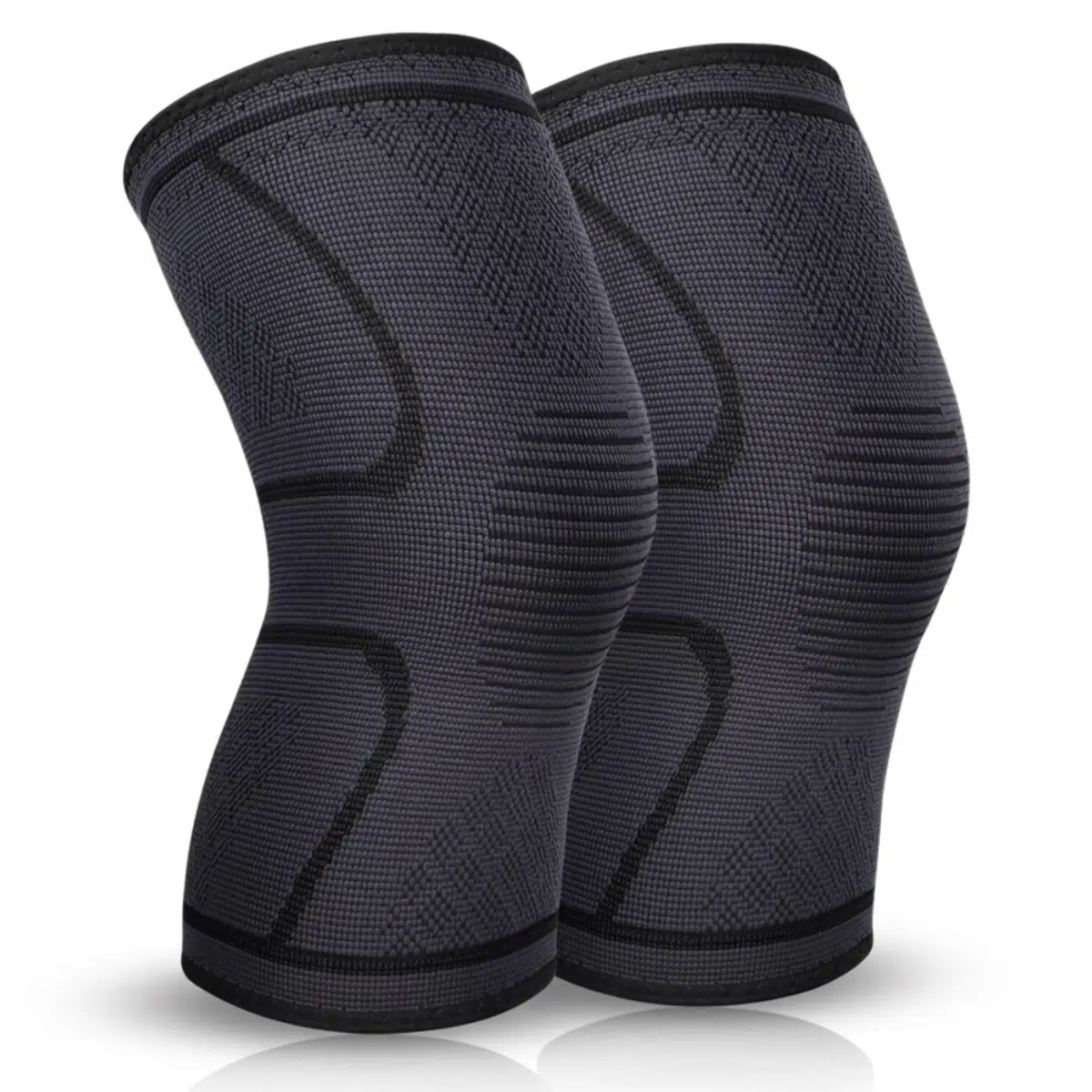
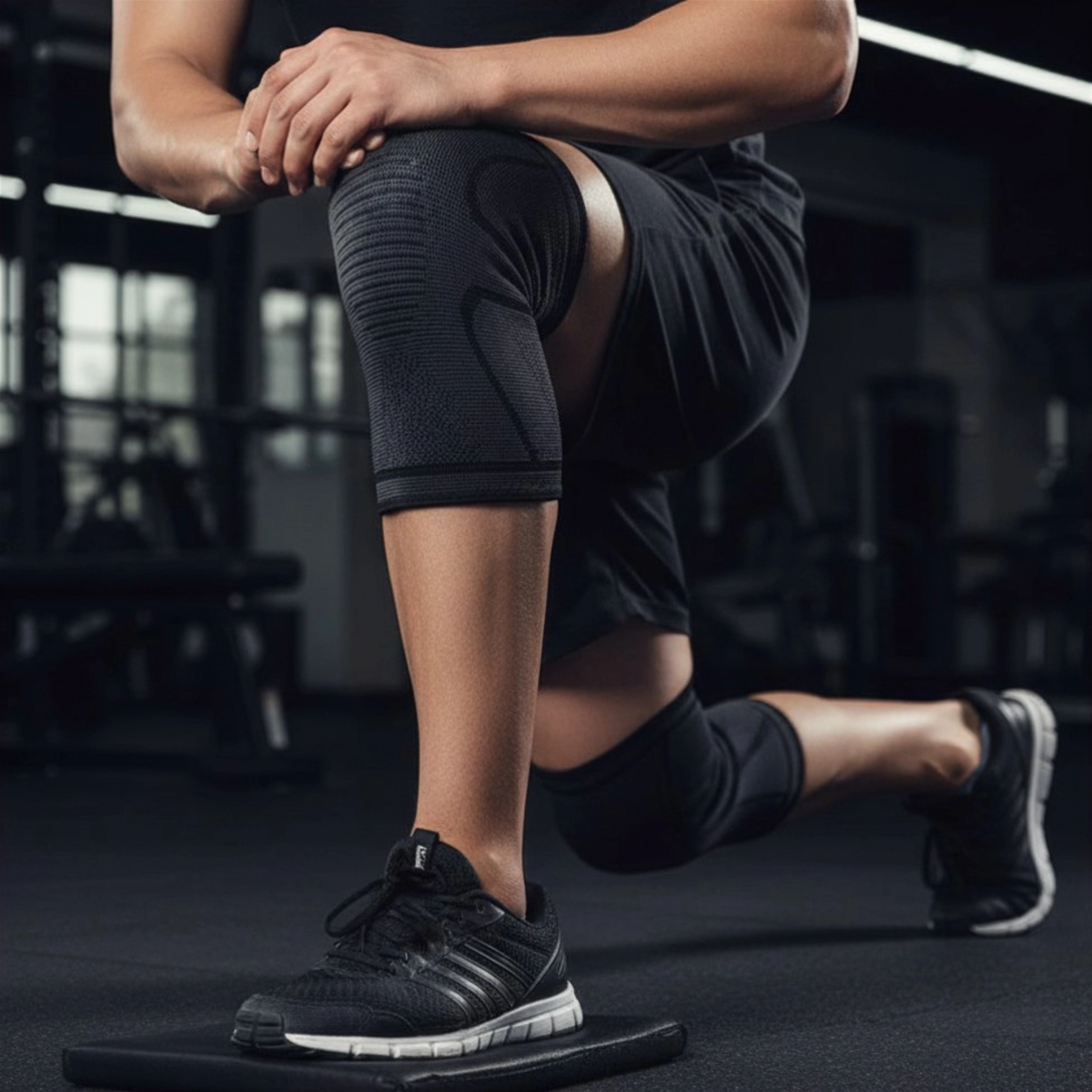
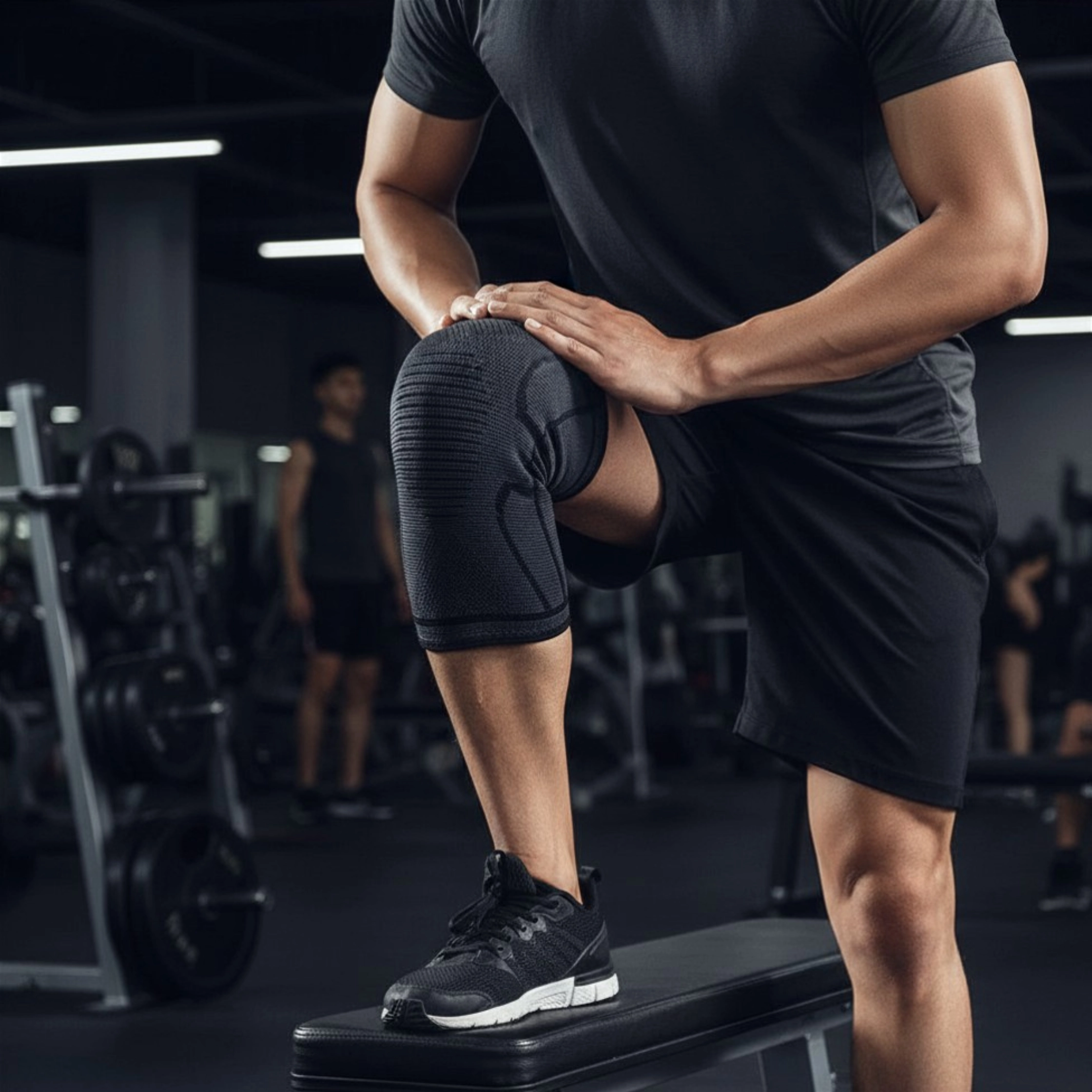
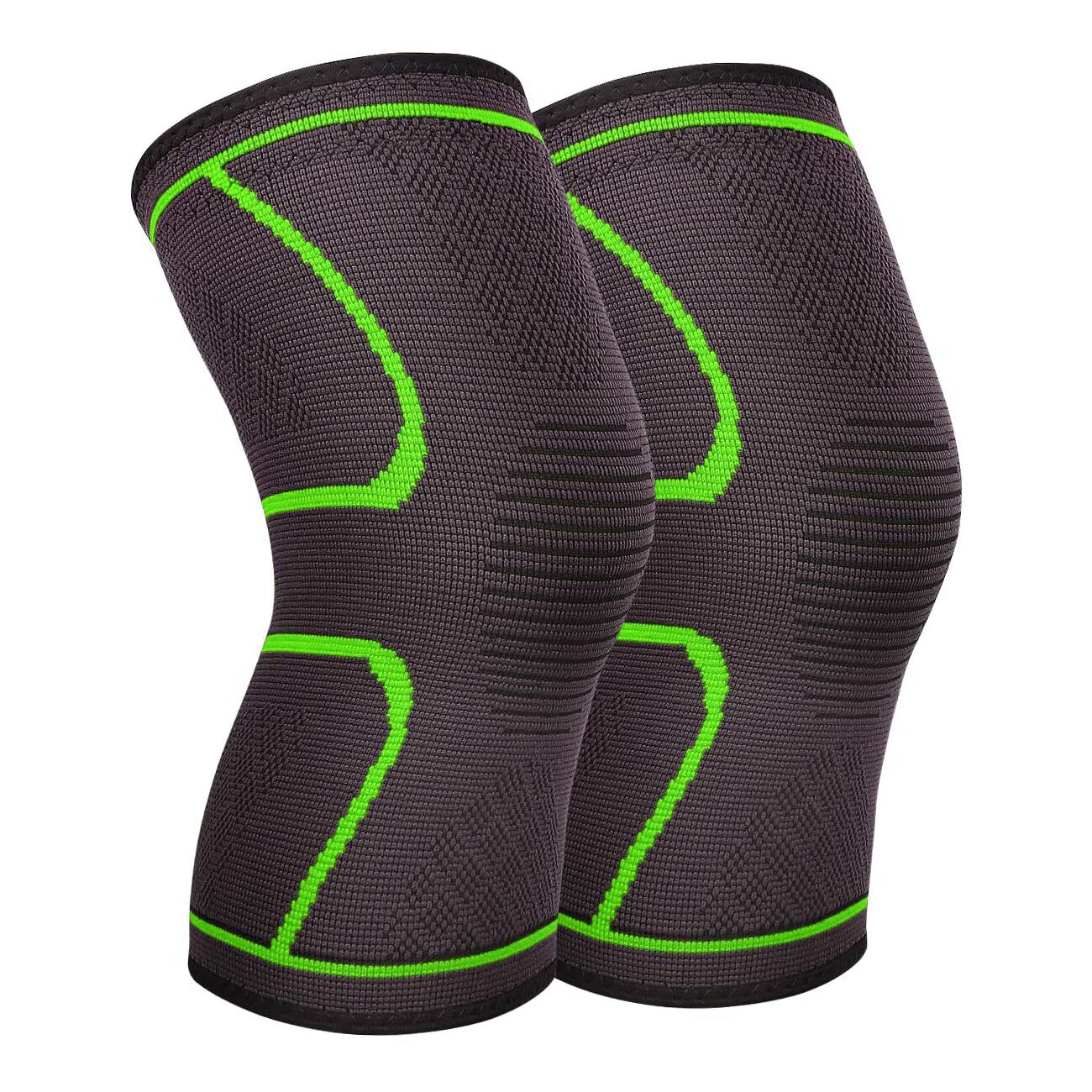
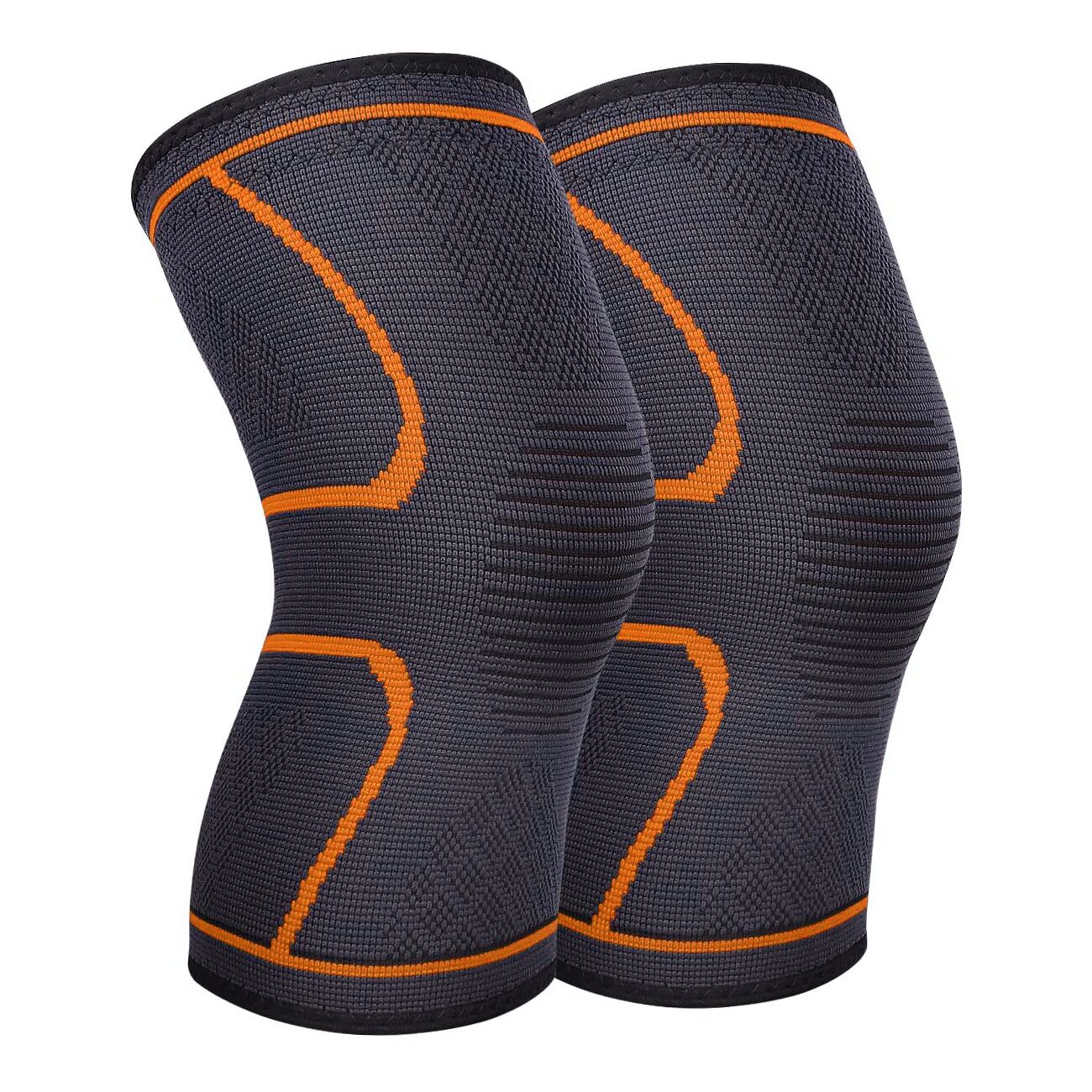
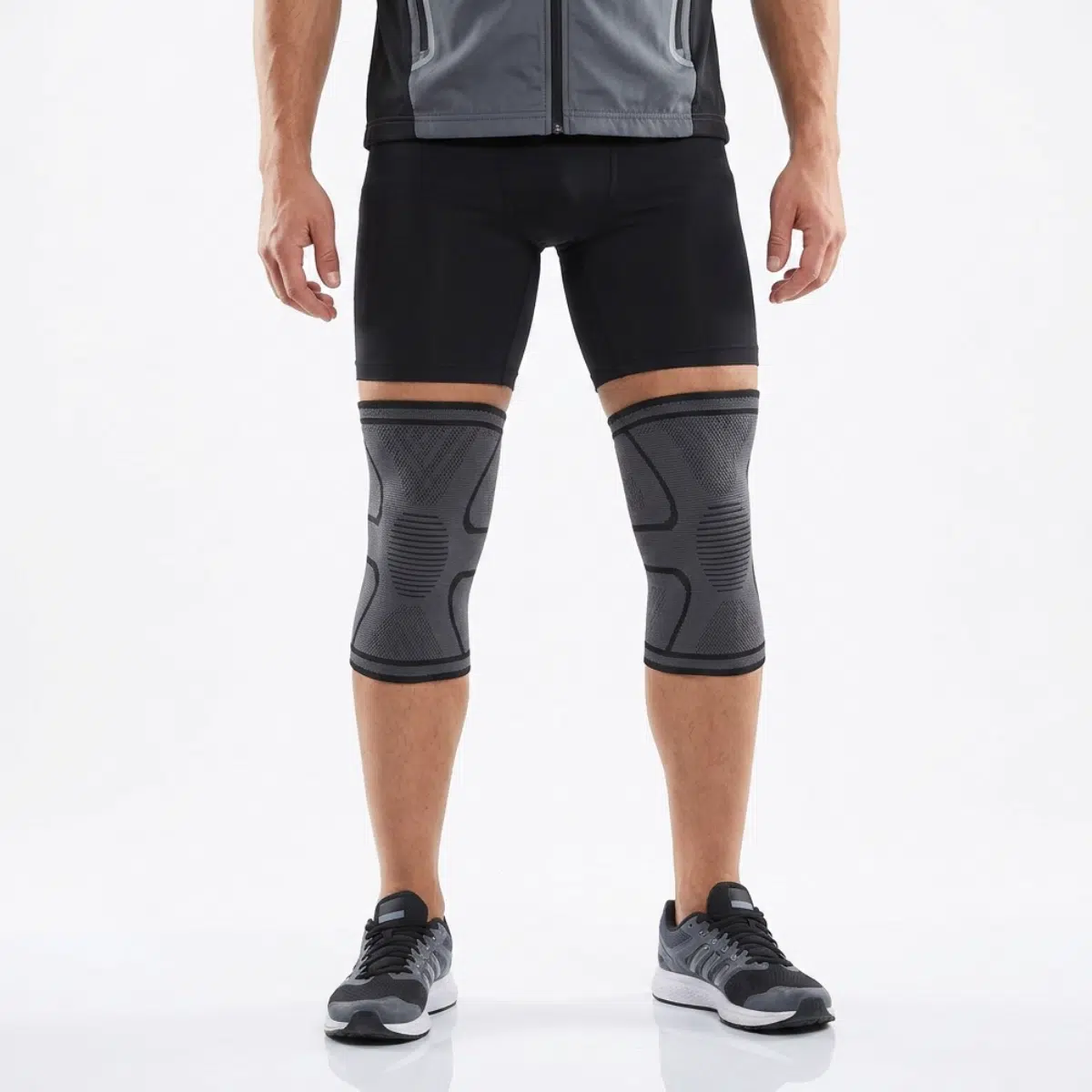
2x Compression Knee Support Sleeves
£11.99inc VAT
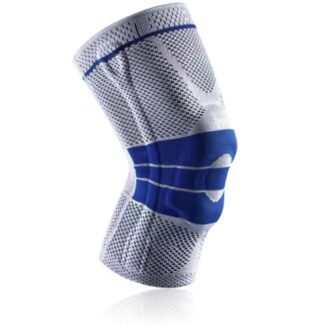
- Helps calm sore, puffy, or unsteady knees: KneeReviver Compression Knee Support Sleeves provide gentle, all‑round support and compression to help calm sore, puffy, or less steady knees when stairs, long days on your feet, or sport start to take their toll.
- For adults who need everyday knee support: Suitable for men and women who want soft knee support for daily activities, long shifts on their feet, regular running, or recurring niggles from old injuries, without the bulk of a rigid brace.
- Supports a range of knee conditions: Used as external support alongside medical care for ligament sprains (ACL, PCL, MCL), front‑of‑knee pain (runner’s knee, jumper’s knee, patellar tendon issues), meniscal irritation or tears (where your clinician agrees a sleeve is appropriate), and longer‑term wear‑and‑tear pain such as osteoarthritis or rheumatoid arthritis in the knee.
-
Helps keep the knee better aligned: The contoured design adapts to either knee, automatically adjusting to reduce inward or outward drift as you move. This spreads pressure more evenly and eases strain on key ligaments, tendons, and the joint itself—no matter which knee you wear it on.
- Gentle compression to ease tightness: Gentle, even compression around the joint helps limit fluid build‑up, ease that tight, full feeling, and make everyday, activity‑related aches more manageable while you work on strength and mobility.
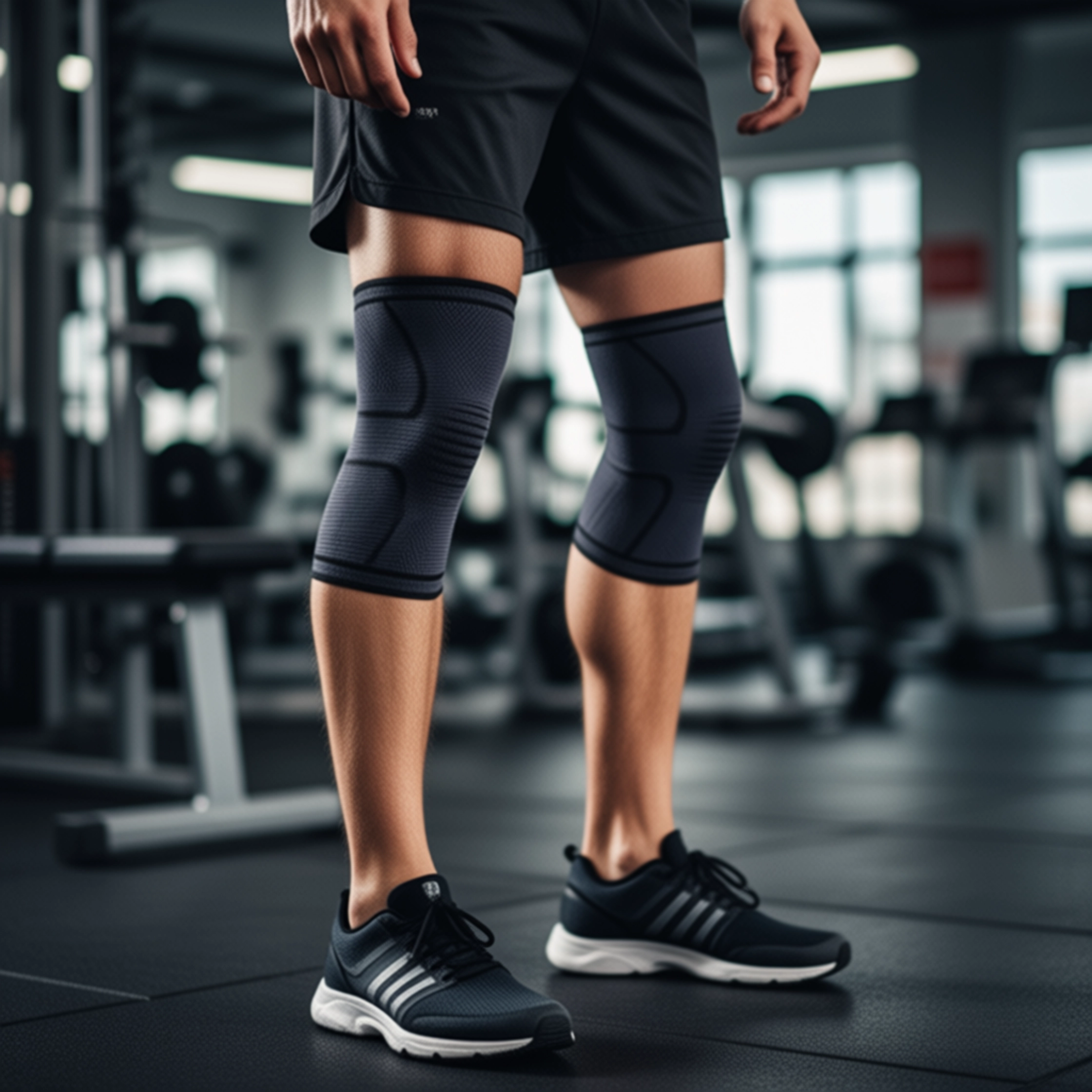
- Comfortable for daily wear and exercise: Light, low‑bulk sleeves you can wear at home, at work, or during training sessions, so the knee feels supported during the movements you actually do – from walking and climbing stairs to runs and pitch or court sports.
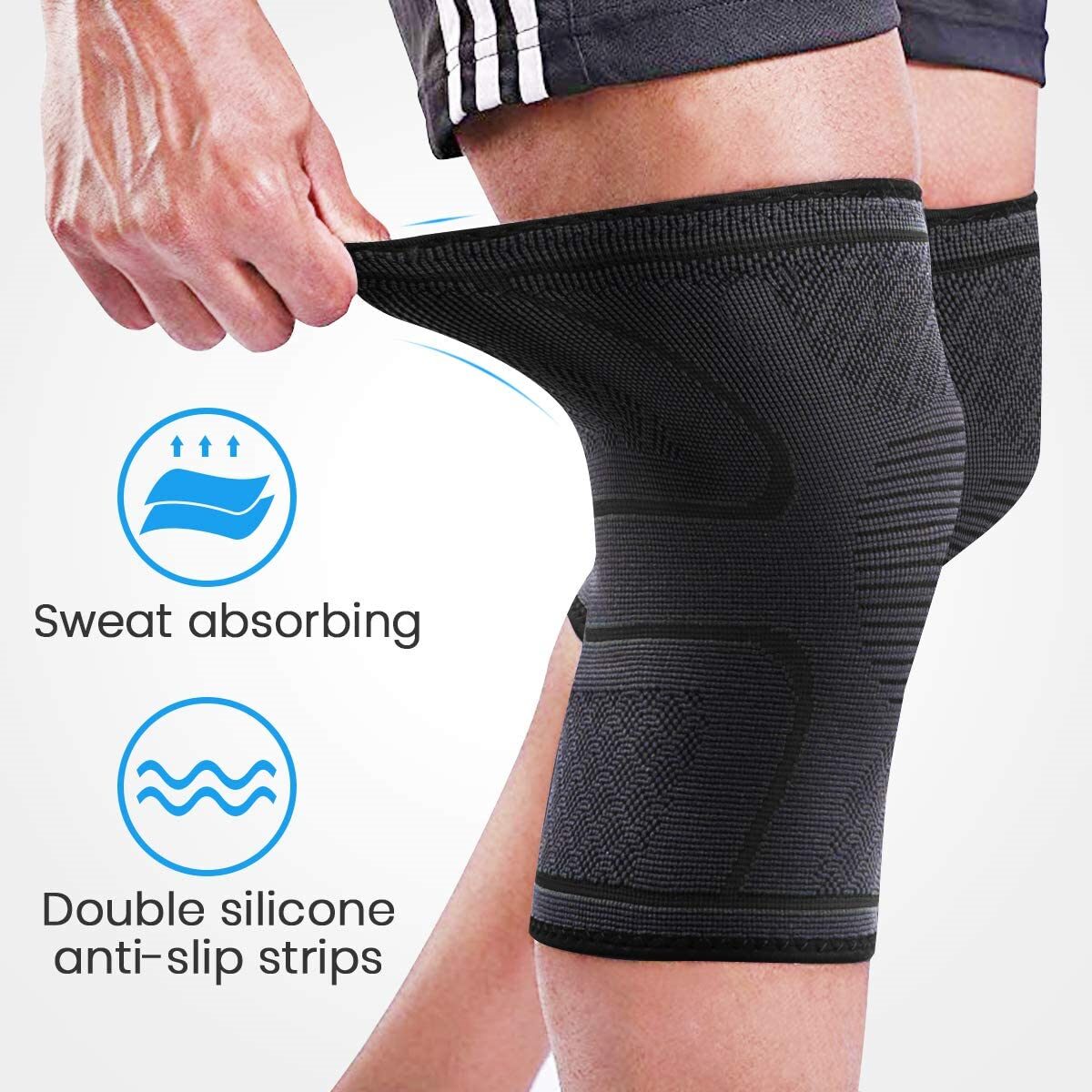
- Stays in place when you move: Double silicone strips on the cuffs help hold the sleeves comfortably in position, reducing slipping or rolling down, even during harder exercise sessions.
- Breathable fabric that feels fresher for longer: Made from lightweight, breathable, moisture‑wicking fabric to help keep your knees and legs drier and more comfortable, even in warm gyms, crowded trains, or long days in uniform.
- Try them with a 30‑day guarantee: Includes a full 30‑day money‑back guarantee so you can see how your knees respond to using the sleeves, without a long‑term commitment if they are not right for you.
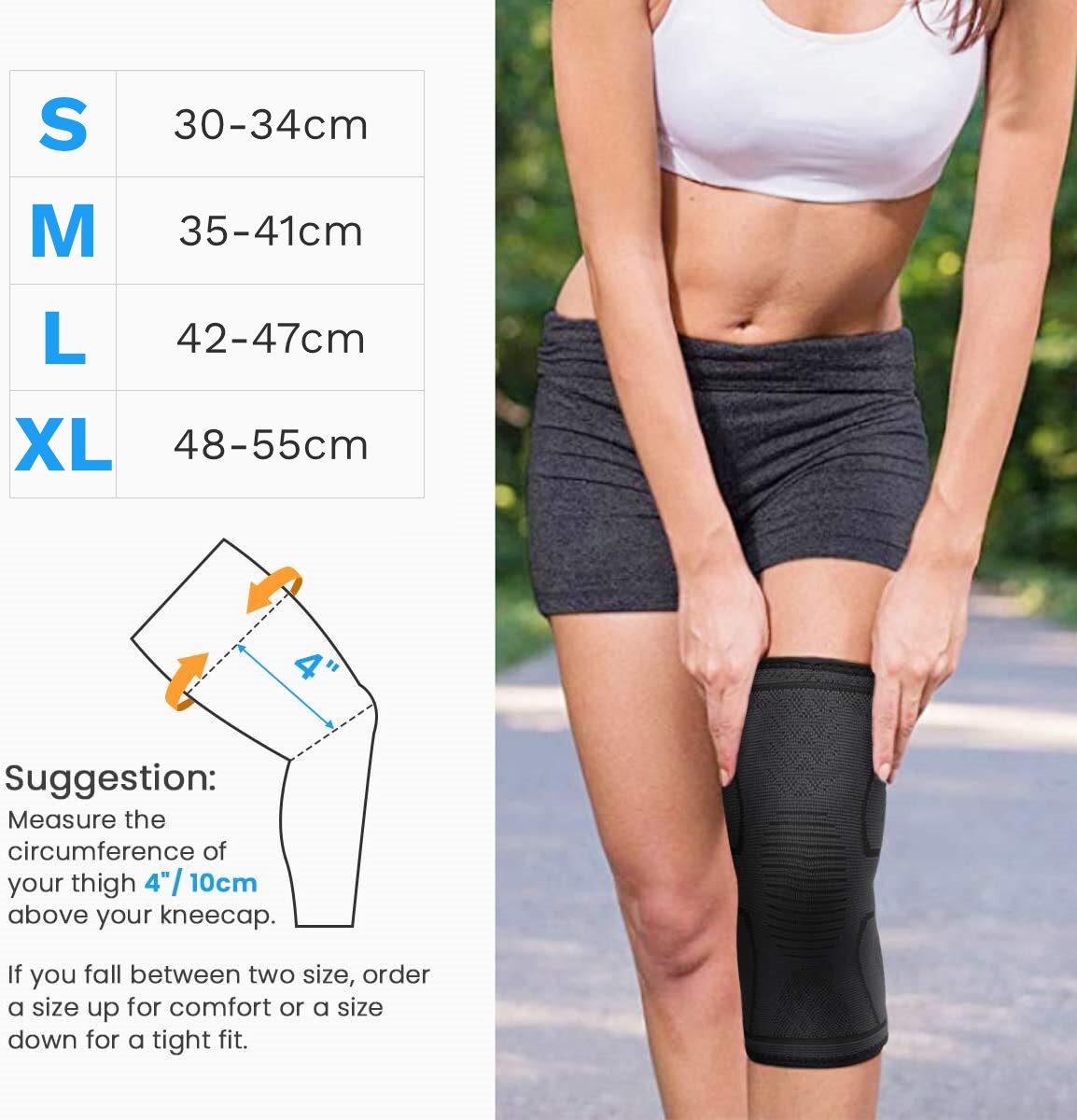
Size guide (measure around the knee area where the sleeve will sit):
- S: Length 27 cm; Top circumference 15 cm; Bottom circumference 13 cm; Leg (mid‑knee) circumference 30–34 cm
- M: Length 27 cm; Top circumference 16 cm; Bottom circumference 14 cm; Leg (mid‑knee) circumference 35–41 cm
- L: Length 27 cm; Top circumference 17 cm; Bottom circumference 15 cm; Leg (mid‑knee) circumference 42–47 cm
- XL: Length 27 cm; Top circumference 18 cm; Bottom circumference 16 cm; Leg (mid‑knee) circumference 48–55 cm
Get 15% off - When bought together with:
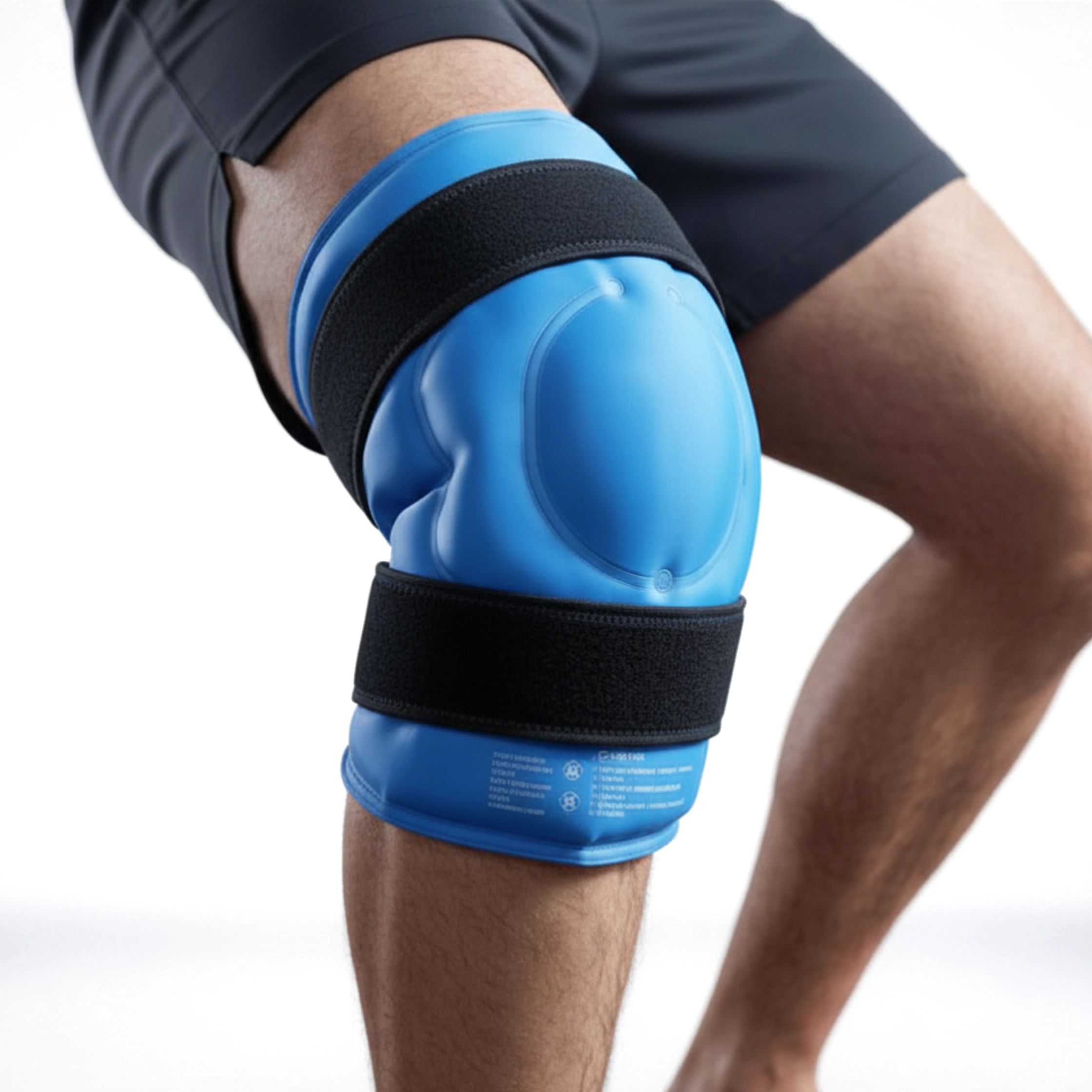
- This item: 2x Compression Knee Support Sleeves(£11.99inc VAT)
- Gel Knee Ice Pack Wrap for Knee Pain Relief(£22.99
£24.99inc VAT)
Knee pain can make ordinary movement feel harder than it should
If your knee feels sore, stiff, puffy, or less reliable than usual, you will often notice it in simple, everyday movements first. Stairs may feel awkward. Standing for a while can become tiring. Getting up from a chair, walking further than usual, bending the knee fully, or turning on that leg may all make the joint feel more noticeable than it should.
A healthy knee usually copes with these demands without drawing attention to itself. When you walk, stand, bend, or straighten your leg, different parts of the knee share the work. The joint, kneecap, cartilage, ligaments, tendons, and surrounding muscles all help manage force and keep movement controlled. If one or more of these areas becomes irritated, strained, worn, or slower to recover after activity, the knee may start to feel stiff, achy, mildly swollen, or less steady when you put weight through it.
KneeReviver Compression Knee Support Sleeves are made to provide light, even compression and help the knee feel steadier. The aim is not to hold the joint still or restrict movement. It is to make everyday activity feel easier to manage when your knee is sore, slightly swollen, tired after use, or simply not feeling as dependable as usual.
For most people, the benefit is not dramatic, and it is better to be clear about that. Usually, the improvement is more subtle and practical. Your knee may feel less full by the end of the day, less stiff when you stand after sitting, or more comfortable on stairs, longer walks, or during exercise. A sleeve like this does not fix the underlying cause of knee pain, but it can help the joint feel better supported while you go about your usual routine.
It helps to be clear about what this kind of support is for. A compression sleeve is an external aid. It does not diagnose the cause of knee pain, and it does not replace a proper assessment, a rehabilitation plan, or treatment from a qualified professional. It will not repair damaged tissue or explain sudden knee pain that has not been checked.
What it can do is apply gentle, consistent pressure around the knee. That may help the area feel more contained, reduce the sense of mild puffiness, and improve your awareness of how the joint is moving. For some people, that makes everyday movement feel a little easier and a little more secure.
If you have severe pain, a recent knee injury, marked swelling, repeated giving way, locking, or a known circulation problem, speak to a GP or physiotherapist before using any compression support. In the right situation, a sleeve can be helpful. If warning signs are present, though, it should not be used instead of a proper assessment.
Who these knee sleeves are for
Each pack contains a pair of KneeReviver Compression Knee Support Sleeves—both designed to adapt to either knee. That universal shaping helps the sleeve sit more naturally around the knee than a straight, tube-style support, automatically adjusting to your leg.
These sleeves are mainly for adults who want light-to-moderate support for a knee that feels sore, stiff, mildly swollen, or less secure during normal activity. They are not designed to replace a prescribed brace after a major injury or operation. They are intended for people who want a comfortable level of support for walking, stairs, work, exercise, travel, or longer periods on their feet.
Most people who choose this type of sleeve tend to be dealing with one or more of these experiences:
-
- the knee aches or feels slightly swollen after walking, standing, or using stairs
-
- the front of the knee becomes sore during running, training, or sport
-
- the knee has a history of injury, surgery, arthritis, or repeated flare-ups
-
- the joint feels less steady than it used to, especially on busier days
-
- they want support that feels wearable and discreet rather than bulky or restrictive
For everyday soreness, stiffness, and mild swelling
Some people do not have one dramatic knee injury. Instead, the knee simply feels sore or slightly swollen after it has been used more than usual. You may notice this after walking for longer than normal, standing at work, going up and down stairs, or spending more time on your feet than the knee tolerates comfortably.
In this situation, the knee often feels heavy, full, or stiff by the end of the day. Bending it fully can feel less comfortable. Standing up after sitting may take a few careful steps before the joint loosens again. The swelling is often mild rather than obvious. Sometimes the knee looks only slightly fuller than usual. At other times, it simply feels tight inside the joint.
A sleeve can help here by giving the knee a more even, supported feel during daily activity. Many people use this type of support on work days, on days with more walking than usual, or when the knee tends to become stiff and puffy later in the day.
For active knees: running, training, and sport
If you run, train regularly, or play sport, knee pain often becomes noticeable when the joint has to take repeated force through a bent position. You may feel this at the front of the knee during squats, lunges, hills, repeated stair use, or after a run. Some people notice it while they are active. Others mainly feel it later, when the knee stiffens or becomes slightly swollen after the session.
In these situations, the knee usually still moves fully, but it does not always feel comfortable or predictable under load. You may cut a run short because the front of the knee starts to ache, feel sore going downstairs after training, or find that one knee becomes more irritable than the other when you increase distance, speed, or gym work.
A sleeve can be useful when you want some added support without moving to a bulkier brace. It may help the knee feel more contained during exercise and less full afterwards, especially if the joint is prone to mild swelling or front-of-knee soreness after activity.
For knees with previous injuries or ongoing problems
If you have had trouble with your knee before, the joint often keeps some sensitivity long after the original problem has settled. This may be due to arthritis, a meniscus tear, a ligament injury, previous surgery, or repeated flare-ups over time. On good days, the knee may cope well. On other days, it may feel stiffer, more swollen, or less reliable than you would like.
You may notice this on stairs, on sloping ground, after longer walks, or after sitting still for a while. Some people find the knee becomes more noticeable in colder weather or after a busy day. Others mainly feel it during exercise or by the evening, when the joint feels more tired and less comfortable to bend fully.
A compression sleeve cannot undo previous damage, but it can give the knee a steadier, less exposed feel during activity. For many people, that makes it easier to keep moving, stick with their exercises, and manage the knee more comfortably from day to day.
How these sleeves support your knee
A good knee sleeve needs to do more than feel tight. If it is going to be useful, it has to support the knee in a way that feels noticeable but still comfortable, stays wearable through normal activity, and moves with the leg rather than fighting against it. That is the thinking behind KneeReviver Compression Knee Support Sleeves.
A steadier feel around the knee during movement
The knee is not just a simple hinge. As it bends and straightens, the joint also makes small guided movements that help the thigh bone, shin bone, and kneecap move together smoothly. When the knee is irritated, tired, or recovering from a previous problem, those small movements can feel less controlled. You may notice that the joint feels slightly wobbly, awkward, or less secure when walking, going downstairs, or standing from a chair.
These sleeves are shaped to sit closely around the thigh, knee, and upper calf, giving the joint a more even and contained feel. That close fit can help reduce the sense of small unwanted shifts around the knee during everyday movement. Many people notice this most when the knee is taking body weight while bent, such as on stairs, slopes, or when lowering into a squat.
The sleeve does not force the knee into a new position and it does not correct a structural problem inside the joint. What it can do is make movement feel steadier and less awkward, which is often what people want from this kind of support.
Compression where it is useful, without harsh pressure at the edges
One of the most common reasons people stop wearing knee sleeves is simple: they become uncomfortable. If the fabric cuts into the thigh, digs into the calf, or bunches behind the knee, you are unlikely to keep wearing it for long, even if the support itself seems promising.
KneeReviver Compression Knee Support Sleeves are designed to feel firmer around the knee itself and less tight at the top and bottom edges. That matters because the knee usually needs the support around the joint, not concentrated into tight bands above and below it. When the fit is right, the sleeve should feel close and supportive around the knee without creating pinching, sharp pressure, or an obvious ridge at the cuffs.
In practical terms, that makes the sleeve easier to wear through routine activity. You should be able to walk, sit, bend the knee, travel, and go about your day without feeling as though the sleeve is constantly drawing attention to itself.
Support for knees that feel swollen, tight, or full
When the knee has been irritated by activity, overuse, arthritis, or a previous injury, it often produces extra fluid inside or around the joint. You may notice this as mild swelling, but many people describe it more as a feeling of tightness, fullness, or pressure inside the knee, especially later in the day or after exercise.
The close, even compression from a sleeve can help the knee feel less full and less uncomfortable when that happens. Some people notice this most after walking or standing for longer periods. Others feel the benefit after training, when the knee is mildly swollen or stiff and more noticeable than usual.
This kind of support does not remove the underlying reason the knee is swelling, and it is not the right response to sudden marked swelling. What it can do is make mild day-to-day swelling feel easier to manage and less intrusive during normal activity.
Better awareness of how the knee is moving
When a knee has been painful, previously injured, or swollen for some time, it can start to feel less reliable even if it is still strong enough to use. Part of that is mechanical, but part of it is also sensory. The tissues around the knee help your body judge where the joint is as it bends, straightens, and takes weight. When the area is irritated, that sense can feel less clear.
A close-fitting sleeve increases contact around the skin and soft tissues of the knee. For some people, that makes it easier to judge what the joint is doing during movement. You may notice this when standing on one leg, going downstairs, walking on uneven ground, or changing direction during exercise.
This is one reason a sleeve can make the knee feel steadier without being rigid. The knee still moves normally, but the extra contact around the joint can make movement feel more controlled and less uncertain.
Flexible enough for everyday use
A rigid brace has a clear role after certain injuries and operations, but it is not what most people want for walking, working, travelling, or general day-to-day use. If your aim is to make the knee feel more supported while still allowing normal movement, a lighter sleeve is usually the more practical option.
These sleeves are designed to bend and straighten with the knee rather than block movement. That means you can still use stairs, sit comfortably, drive, train, and go about your day while the sleeve stays in place around the joint. The support is there without making the knee feel trapped.
For many people, that is the main advantage of this type of support. It is easier to wear regularly, which matters because a sleeve only helps if you can use it through the situations that usually bring your symptoms on.
Breathable, low-bulk support you can wear under clothes
Comfort is not only about compression. It also depends on whether the sleeve feels bulky, hot, or awkward under clothing. A support that feels heavy, bunches behind the knee, or becomes uncomfortable under trousers or sportswear is less likely to be worn consistently.
KneeReviver Compression Knee Support Sleeves are designed to sit close to the leg with a lower-bulk feel than a brace. That helps the sleeve fit more easily under many types of clothing and reduces the amount of excess fabric behind the knee when you sit or bend the joint fully.
The aim is straightforward: enough support to feel the difference, without so much bulk that wearing the sleeve becomes inconvenient. If the fit is right, the sleeve should feel present but not obtrusive.
Common knee problems — and how this sleeve may fit alongside your treatment
If you already have a diagnosis, or your knee symptoms feel familiar from a previous problem, the sections below explain some of the most common reasons people use this type of support. They are not here to diagnose the cause of your pain. They are here to help you judge whether a compression sleeve sounds appropriate for the sort of knee symptoms you are dealing with, and to be clear about when it may help and when it may not.
Across all of these situations, the role of the sleeve stays the same. It provides light compression, a closer feel around the joint, and a little more support during movement. It does not repair damaged tissue, replace exercise-based rehabilitation, or take the place of proper assessment if the knee is severely painful, suddenly swollen, locking, or giving way.
Why this sleeve stands out
Many knee sleeves look similar until you start wearing them properly. That is usually when the differences show up. Some feel fine when you first put them on, then slip down as you walk, bunch behind the knee when you sit, or start pressing too much into the thigh or calf. Others provide support, but feel bulky enough that you only use them when the knee is particularly troublesome.
KneeReviver Compression Knee Support Sleeves are designed to avoid those common problems. The aim is not simply to make the sleeve tighter. It is to give the knee useful support in a form that still feels practical for normal wear. If you are going to use a sleeve regularly, it has to feel comfortable enough for work, walking, travel, training, and the other situations where knee pain tends to become more noticeable.
-
- Left and right shaping for a more natural fit
Each sleeve is made specifically for the left or right knee rather than as a straight elastic tube. That shaped design helps it sit more evenly around the kneecap and along the sides of the joint. In practice, this usually means a more balanced feel around the knee and less tendency for the fabric to sit awkwardly when the leg bends and straightens. - Support focused around the knee, not concentrated at the cuffs
The knit is designed to feel firmer around the knee itself and less tight at the top and bottom. That matters because a lot of discomfort with basic sleeves comes from the edges pressing too much into the leg. Here, the aim is to support the joint itself while keeping the upper and lower edges more comfortable during longer wear. - Low-bulk design for daily use
A sleeve that feels too thick under clothing often ends up being left at home. These sleeves are made to sit close to the leg so they are easier to wear under many types of trousers, leggings, sportswear, and work clothes. The lower-bulk feel also helps behind the knee, where excess fabric can otherwise gather when you sit or bend the joint. - More wearable than a rigid brace for many day-to-day situations
If your knee does not need a formal brace, a lighter sleeve is often the more practical choice. It allows normal movement while still giving the joint a closer, more supported feel. That makes it better suited to people who want help during walking, stairs, work, travel, or lower-risk exercise without the stiffness and visibility of a larger support.
- Left and right shaping for a more natural fit
In short, this sleeve is designed for regular use rather than occasional emergency use. It is made for people who want meaningful support they can actually wear, not something that feels too cumbersome for everyday life.
Your key questions, answered clearly
Will it help with knee discomfort?
For many people, yes. It is most likely to help when the knee feels sore with activity, mildly swollen, stiff after sitting, or a little less steady than usual. In those situations, the sleeve may make the joint feel less full, more supported, and more comfortable during walking, stairs, exercise, or longer periods on your feet.
It is important to keep expectations realistic. This is a support aid, not a treatment on its own. It will not repair internal damage or explain new knee pain that has not been assessed.
Will it fit under clothing?
Usually, yes. The sleeve is slim enough to wear under many types of everyday clothing and sportswear without the bulk of a brace. Stretchier fabrics around the knee tend to feel most comfortable. Under very fitted clothing, you may still be aware of it, but it is designed to stay relatively discreet.
Will it restrict movement?
It should not if the size is right. A correctly fitted sleeve should feel close and supportive, but you should still be able to bend and straighten the knee, walk normally, sit comfortably, and use stairs. If it feels as though the sleeve is blocking movement or forcing the knee into one position, the fit is likely wrong.
Can I wear just one sleeve?
Yes. Each pack includes one left sleeve and one right sleeve, but you do not need to wear both together. Many people mainly use one on the knee that gives them more trouble and keep the other available if needed.
Will it stay in place when I am active?
It is designed to. The shaped fit helps the sleeve sit more naturally around the knee during walking and exercise. As with any support, correct sizing matters. A sleeve that is too loose is more likely to move, wrinkle, or roll. Skin that is damp or covered in cream can also make it easier for the sleeve to slip.
Can I wear it under a brace?
In some cases, yes. Some people wear a sleeve under a prescribed brace to reduce rubbing and add light compression. The brace still provides the main structural support. The sleeve simply adds comfort around the knee. If you have been given specific advice on how to wear your brace, that advice should come first.
Is it suitable for both men and women?
Yes. The sleeves are unisex and designed to suit a wide range of adult leg shapes. The most important factor is choosing the correct size for your knee.
Getting the right fit and size
Getting the size right matters. A sleeve that is too tight can become uncomfortable quickly and may leave the lower leg or foot feeling wrong. A sleeve that is too loose will not give much support and is more likely to slip, wrinkle, or bunch behind the knee. A good fit should feel close and supportive without feeling harsh.
-
- Measure around the centre of your kneecap
Use a soft tape measure and take the measurement with the knee slightly bent. This usually gives a more realistic guide than measuring the leg fully straight and relaxed. - Match your measurement to the size guide
Use the sizing chart shown on the page. If you are between sizes, think about how you want the sleeve to feel. If your thighs or calves are more muscular, the larger size may feel more comfortable. If you prefer a closer fit and are only just between sizes, the smaller option may feel more supportive. - Either sleeve fits either knee
Both sleeves are designed to adapt to the left or right knee, so there is no need to match markings. The universal shaping helps the sleeve sit naturally around the knee, whichever side you put it on. - Check the feel straight away
Once the sleeve is on, the pressure should feel even around the knee. It should not feel sharply tighter at the top or bottom than it does over the joint. You should be able to bend and straighten the knee normally without the fabric pulling hard into one spot. - Check how it feels after a short period of wear
A well-fitted sleeve may leave light impressions on the skin, especially after longer wear, but it should not cause tingling, numbness, marked colour change, or obvious discomfort in the lower leg or foot. If it does, remove it and reassess the size and fit. - Watch for signs the fit is not right
If the sleeve rolls behind the knee, slides down during walking, or feels much tighter at the edges than around the joint, it may be the wrong size or not positioned correctly. A support sleeve should feel secure and even, not uneven or intrusive.
- Measure around the centre of your kneecap
For many people, the best time to judge the fit is after wearing the sleeve for a short walk or for part of a normal day. That gives you a better sense of whether it stays comfortable once the knee is bending and straightening repeatedly, rather than only when you are standing still.
How and when to wear them
A knee sleeve usually works best when you wear it for the situations that tend to bring your symptoms on. For some people, that means putting it on before a longer walk, a work shift, a gym session, or a day with more stairs than usual. For others, it is more useful after the knee has been irritated, when the joint feels mildly swollen, stiff, or less secure and you want it to settle more comfortably.
There is no single routine that suits everyone. A simple way to judge it is to pay attention to what the knee feels like with the sleeve on and after you take it off. If the knee feels more comfortable and no more irritated afterwards, that usually suggests you are using it in a sensible way. If the knee becomes more painful, more swollen, or the sleeve itself becomes uncomfortable, stop and reassess.
For day-to-day life and work
Many people get most benefit from a knee sleeve during ordinary activity rather than sport. It can be helpful for walking, commuting, standing at work, climbing stairs, travelling, or any day when the knee usually feels more tired or swollen by the evening. If your symptoms are fairly predictable, it often makes sense to put the sleeve on before the activity that usually brings them on.
Some people wear the sleeve most days. Others keep it for busier days, longer outings, or times when the knee already feels a little more uncomfortable than usual. Both approaches can work. What matters is that the sleeve supports the knee through the activity, rather than being used to ignore symptoms that are clearly getting worse.
For sport and training
If you want to wear the sleeve for running, gym work, or sport, it is usually best to start with an easier session rather than using it for the first time during the most demanding activity of the week. A shorter run, a lighter gym session, or controlled training gives you a better sense of how the knee responds during movement and later the same day.
During exercise, the benefit is often not dramatic pain relief. More often, the knee simply feels a little more supported and less uncomfortable while taking force through bending and straightening. If the knee tends to become mildly swollen or stiff afterwards, the compression may also help it feel less full later in the day. If pain or swelling clearly increases, reduce the activity and get advice rather than relying on the sleeve to get through it.
For travel and longer periods of sitting
Knees often become stiff when they stay bent for too long, especially during longer journeys. Some people find a sleeve helps the knee feel less tight and less sluggish when travelling by car, coach, or train. This can be particularly useful if your knee tends to feel slightly swollen or slow to loosen after sitting with it bent for an extended period.
The sleeve is not a substitute for movement. It still helps to change position, stretch the knee out when you can, and stand up or walk around during longer journeys if that is possible. If the sleeve starts to feel too tight, or you notice numbness, tingling, or unusual pressure in the lower leg or foot, remove it and only put it back on once everything feels normal again.
At night
Most people do not need to wear a knee sleeve overnight. While you are asleep, you are less likely to notice if the fabric shifts, rolls, or starts pressing too much into one area, so there is usually little advantage in keeping it on unless you have been advised to do so.
If you do try wearing it at night, do so cautiously and check the skin and comfort of the leg in the morning. If the knee, lower leg, or foot shows any unusual colour change, numbness, tingling, or persistent pressure marks, stop wearing it overnight.
Looking after your sleeves
If you choose these sleeves, it helps to know that they are straightforward to look after. Keeping the fabric clean and in good condition helps it hold its shape and level of compression for longer. A sleeve that has stretched out or become damaged is less likely to feel supportive and more likely to slip.
-
- Hand wash in cool water
This is gentler on the fibres than hot water or rough machine cycles. - Use a mild detergent
Strong washing products can be harsh on stretch fabric and may leave residue if not rinsed well. - Rinse thoroughly
Removing all detergent helps the sleeve feel more comfortable against the skin. - Press out excess water gently
Avoid twisting or wringing the sleeve, as that can distort the shape over time. - Lay flat to dry
Keep it away from direct heat, radiators, and tumble dryers, which can weaken elastic fibres. - Avoid bleach and fabric softener
These can affect the stretch and feel of the material.
- Hand wash in cool water
With regular use, any compression sleeve will gradually lose some elasticity. If the sleeve starts slipping more easily, feels looser than it did at first, or no longer gives the same level of support, it may be time to replace it.
Important safety information
These sleeves are designed to provide external support for common knee aches, mild swelling, and activity-related discomfort. They are not suitable for every knee problem, and they should not be used to delay proper assessment when symptoms suggest something more significant.
Speak to a GP or physiotherapist before using these sleeves if:
-
- you have had a recent knee injury that has not been properly assessed
-
- you have recently had knee surgery and have not been advised that light compression is appropriate
-
- your pain is severe, worsening, unexplained, or very different from your usual symptoms
-
- the knee is suddenly very swollen, repeatedly locks, or gives way
-
- you have a known circulatory problem, greatly reduced sensation, or a history of blood clots
-
- you have been told to avoid compression garments
Do not use the sleeves:
-
- over broken skin, open wounds, infections, or inflamed rashes
-
- directly over fresh stitches or dressings unless you have been told it is appropriate
-
- if the sleeve causes numbness, tingling, clear colour change, or significant discomfort when fitted correctly
Stop using the sleeve and seek medical advice if:
-
- you notice a sudden or significant increase in pain
-
- swelling rapidly worsens in the knee, calf, ankle, or foot
-
- your lower leg or foot becomes numb, tingling, unusually pale, blue, or cold
-
- the knee starts catching, locking, or giving way more often
-
- the knee becomes very hot, very red, or much more painful
If you already have reduced feeling in your legs or feet, check the skin under and around the sleeve regularly. A compression sleeve should not create pressure damage, and if normal warning sensations are reduced, visual skin checks become more important.
What you can realistically expect
The most useful way to think about a sleeve like this is as practical support rather than a cure. If it suits your knee and you use it at the right times, it may make the joint feel less full, less stiff, and more comfortable during normal activity. It may also make walking, stairs, standing, or lower-risk exercise feel easier to manage when the knee is mildly irritated or prone to swelling.
For many people, the difference shows up in fairly ordinary but useful ways:
-
- the knee feels less full or tight by the end of the day
-
- it feels more comfortable to stand up after sitting
-
- stairs feel less awkward when the knee is mildly sore or stiff
-
- the joint feels better supported during walking or standing
-
- the knee feels less uncomfortable after training or longer periods on your feet
It is just as important to be clear about what the sleeve will not do:
-
- it will not rebuild cartilage, repair a meniscus tear, or replace treatment for a ligament injury
-
- it will not diagnose the cause of new or unexplained knee pain
-
- it will not replace a prescribed brace when more formal support is needed
-
- it is not the right response to severe pain, major swelling, recent trauma, or symptoms that are clearly worsening
In other words, this sleeve is designed to help when the knee is sore, mildly swollen, stiff, or less steady than usual, and you want a practical level of support during movement. It is most useful when it fits into a sensible overall approach: staying active within reason, keeping up with any exercises you have been given, and getting proper advice if the knee is doing something outside the usual pattern.
A practical way to support your knee through daily activity
If your knee tends to ache, feel slightly swollen, stiffen after sitting, or become uncomfortable after walking, training, or a day on your feet, KneeReviver Compression Knee Support Sleeves are designed for that kind of day-to-day use. They are made to give the joint a closer, steadier, more supported feel without the bulk of a rigid brace and without getting in the way of normal movement.
Whether you want support for work, stairs, walking, exercise, travel, or a knee that simply feels less dependable than it used to, the aim is straightforward: support you can wear through the situations where you are most likely to notice the joint.
If that sounds like the sort of support you are looking for, the next step is simple. Measure around your knee, choose the matching size, and see how the sleeves feel in your normal routine.
4 Reviews For This Product
Fast & Secure Checkout Through Paypal
Pay with Paypal the secure payment gateway that accepts all credit and debit cards. Paypal is free and secure and no credit or bank information is ever stored or shared with us.
Fast Dispatch
Enjoy your items soon with quick dispatch via Royal Mail. Expect to have your items between 1-3 working days for domestic orders. 7-10 Working days for international orders.
Return Policy – 30 Day Money Back Guarantee
In the unlikely event, you are unhappy with your purchase you can return it within 30 days for a refund. Please contact us via the form on the contact us page to start your return.
To return an item please send it to: Nuova Health UK, 81 Highfield Lane, Waverley, Rotherham, S60 8AL. Please include a note with your order id so we know who to refund. Please retain your postage receipt as proof of postage. All that we ask is that the item is in the original packaging and unused.
by James
Couldn’t be happier with these knee sleeves they support my knees perfectly when I’m out running. Im buying a second pair as we speak! 🙂
by Anod
Excellent product
by kellycherriewilliams
These knee sleeves get 5 stars from me because they stay in place and don’t slip down like most other knee sleeves do and they compress and support my knees really well.
by Janet Wood
These knee braces help me do all my walking & driving with comfort.