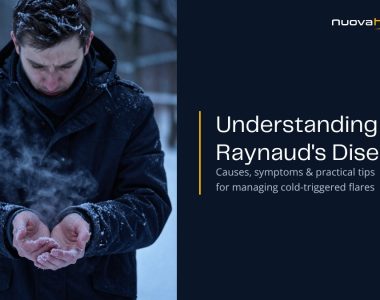
Silver gloves and socks for Raynaud’s: do they really help, or are they just overpriced?
What you’re actually dealing with
If you have Raynaud’s, you’ve probably spent hours looking for something that actually helps. Almost every product you find claims to be the answer — silver gloves, specialist socks, heated insoles. But with so many sellers pushing their own version of the truth, it’s hard to know what works and what’s just a clever sales pitch.
Silver products in particular sound like exactly what you’ve been looking for. It’s hard not to hope that something designed specifically for Raynaud’s might finally work. But before you spend money, it’s worth asking what these products actually are — and whether the label is doing the real work, or just the marketing.
Understanding Raynaud’s condition
People who don’t have Raynaud’s often dismiss it as “just cold hands”. That doesn’t reflect the reality. During an attack, the small blood vessels in your fingers or toes narrow, reducing blood flow. This isn’t ordinary cold sensitivity; it’s an overreaction in the blood vessels, often triggered by cold or stress. Your skin may turn white, then blue, then red as the blood flow returns. But the colour change isn’t the main issue. The real problem is the numbness, stinging, throbbing, clumsiness, and the way your fingers just… stop feeling like your own.
Raynaud’s makes everyday tasks difficult. Holding a steering wheel, typing, doing up buttons — things that should be simple become hard. Just moving from a warm room to a cooler one can trigger an attack. This is more than a minor inconvenience; it disrupts normal life.
Even when attacks aren’t severe, the constant planning is exhausting. You’re always watching out for cold rooms, freezers, and air conditioning — even a quick blast of cold air. You carry spare gloves, layer up before leaving the house, and try to stop a small chill from turning into a full attack. That kind of vigilance takes a real toll. You’re the one living with Raynaud’s. A silver glove seller isn’t. No marketing promise can know what it feels like for you — which is exactly why a one-size-fits-all silver glove is the wrong solution.
Why secondary Raynaud’s is much more serious
Most people have primary Raynaud’s, which means it happens by itself, with no underlying health problem. It’s usually milder — unpleasant, but unlikely to cause lasting tissue damage. Secondary Raynaud’s is different. It’s linked to another health issue, such as an autoimmune disease like scleroderma or lupus, where the immune system attacks healthy tissue. That underlying condition can make symptoms worse. Attacks are more painful and more frequent, and they’re more likely to cause skin damage and slow-healing sores.
With secondary Raynaud’s, the impact goes further than pain. Low blood flow means your skin doesn’t get enough oxygen, so it becomes fragile and heals slowly. A cracked fingertip, a sore patch, or a minor injury can turn into a serious problem. That’s not just painful; it can cause tissue damage that needs medical treatment. A tiny crack can become a gateway for infection, which is why proper skin care matters as much as staying warm. If you get sores that don’t heal, or any area of blackened skin, see a doctor immediately.
This is why secondary Raynaud’s needs to be taken seriously. If you have it, you need to work with your doctor to manage the underlying condition, monitor your skin closely, and take symptoms seriously. Staying warm matters, but it’s only one part of a bigger care plan. No “silver” product can replace medical care. Anyone who implies otherwise is putting your health at risk.
Why the marketing is so persuasive — and why it’s dangerous
Raynaud’s is exactly the kind of condition that unscrupulous sellers prey on. You’re cold, you’re tired, you’re desperate for anything that might help — and that’s exactly what they’re counting on. It’s ongoing, unpredictable, and often not taken seriously by others. You can’t avoid the cold, and standard advice doesn’t always help. So when you see a product that sounds medically advanced, it’s natural to hope it might be the one thing that helps.
Your desperation for relief is real. That’s exactly what they’re exploiting. The word “silver” sounds impressive. It makes you think you’re getting something more advanced than an ordinary thermal glove, that research has gone into it, and that it offers a genuine advantage. It’s natural to trust things that sound scientific, especially when you’re cold and worn out.
Then they make the product sound like it was made just for you and your Raynaud’s. A glove labelled “for Raynaud’s” feels more reliable than a plain thermal glove, even if the fabric is identical. That implies someone has studied your condition, designed the product around it, and tested it properly. In reality, that label is often the same glove in new packaging. The same glove you’d find on any high-street shelf, but with a much higher price.
And that higher price is the point. Silver-labelled gloves routinely sell for £20–30, sometimes more. Ordinary thermal gloves doing the same job cost £5–15. The extra cost isn’t in the function; it’s in the label. The same pattern shows up with socks: silver versions are priced at two or three times the cost of identical warm socks from the same factory, simply because of the coating and the story. When a standard glove is bought for £3 and sold for £30 purely because the label says “Raynaud’s,” that’s not a premium product. The seller isn’t charging for better materials or smarter design. They’re charging because they know you’re cold, worried, and desperate for something to work.
Some sellers go even further. They claim their products support circulation, relieve symptoms, or protect your blood vessels. Those claims aren’t just misleading; they can be dangerous. If you believe a glove is improving your circulation, you might miss warning signs that need medical attention, like persistent numbness, skin cracks, or discolouration.
No doctor would sell you a £30 glove and promise it will cure poor circulation. They’d explain that the evidence is weak, suggest practical options, and let you decide. The silver glove seller does the opposite: they hide the lack of evidence, exaggerate the benefit, and take your money. That’s profiting from someone else’s pain.
In the UK, if a seller makes unsubstantiated claims about circulation or symptom relief, that can breach consumer protection law. You can report it to Trading Standards or the Advertising Standards Authority (ASA). Both organisations investigate misleading advertising. Keep a screenshot. You’ll need it if you decide to report them, and it helps stop other people falling for the same trick.
How the silver trick works — and why it falls apart
What “silver” actually is
The word “silver” exists to make a basic glove look like a medical device. But look closely at the label. Many of these products don’t contain any silver at all. The fibres are polyester or acrylic — the same materials used in any cheap thermal glove. The word “silver” isn’t a material; it’s a sales tactic. It creates the illusion of something special, but it’s an ordinary glove with a misleading label.
Even when a product does have a thin silver coating, it’s usually just a microscopic layer of silver ions sprayed or bonded onto polyester — not a woven metal thread, and certainly not a medical treatment. It doesn’t help your circulation. It doesn’t stop a Raynaud’s attack. It doesn’t heal ulcers. It doesn’t do anything for your fingers except make them look slightly shinier under a microscope. The seller knows this. They’re not confused; they’re betting you won’t check.
Let’s be blunt: this isn’t an accident. It’s a calculated pricing strategy. Buy a glove for £3. Add a misleading label. Sell it for £30 to someone who is cold, exhausted, and just wants something to work. That’s not a clever business model. It’s exploiting a health condition for profit.
The layering alternative that actually works
Forget the label. What does a silver glove actually do that an ordinary mitten doesn’t? Nothing. It’s simple physics: warmth comes from insulation, fit, and layers. There is no shortcut beyond that.
Here’s what actually works — not fancy, but effective. Start with proper thermal gloves or mittens. Mittens are warmer because your fingers share heat. If your hands are still cold, add a thin liner glove underneath. The liner traps a layer of warm air and makes the outer glove far more effective. For your feet, choose socks that are warm but not tight around your toes or ankles. If one pair isn’t enough, wear a snug base sock under a warmer outer sock.
Beyond clothing, a few habits help too. Warm your hands before going outside, avoid sudden temperature changes, manage stress, and don’t smoke — smoking narrows blood vessels and makes attacks worse. Together, these steps do more than any silver-coated glove ever will.
A basic thermal glove with a liner underneath will keep you just as warm as one with a silver label — at a fraction of the price. You’re paying for the label, not better function. You don’t need niche products. You need the right basics, used well.
How to judge these products
The best way to judge silver gloves or socks is to stop reading the label and start examining the product itself. Here’s what to check:
- Look at the fabric itself. Silver is a coating, not insulation. The warmth comes from the fabric’s loft, weave, or fleece backing. A thin, tightly knitted “silver” glove is just a liner, no matter how much it costs. Look for a brushed or fleecy interior — that traps air and holds heat.
- Do the pinch test. Squeeze the fabric between your thumb and finger. Thick, lofty fabric with some give indicates better insulation. A flat, stretchy, compression-style fabric won’t keep you warm on its own — it’s designed to be a base layer, not a barrier.
- Try a liner under your normal glove. If your hands stay cold in a silver glove, experiment with a cheap cotton or silk liner underneath an ordinary thermal mitten. If that combination feels warmer, you’ve proven that layering — not silver — is what works. That’s the most reliable test you can do.
- If a seller makes a health claim, ask for proof. If the product claims to improve circulation, reduce Raynaud’s attacks, or protect the skin, where’s the data? A legitimate manufacturer would cite studies — or at least explain the mechanism. Instead, you’ll usually find vague wording that implies benefit without proving it.
- Check where it was made, not where it was designed. Many gloves sold as “specialist” products are made in the same factories as generic thermal gloves, then rebranded for a niche market. If the label lists the same materials (polyester, acrylic, elastane) as a high-street thermal, the only difference is the label.
These checks quickly reveal whether the label is doing the real work. The harder a seller pushes a product as a Raynaud’s solution, the more you should question their claims.
If you’ve already bought these products and they didn’t work any better than ordinary thermal layers, say so. Leave an honest review somewhere the seller can’t delete it. Other people with Raynaud’s deserve to know. If the seller made claims about circulation or symptom relief, report them. You’re not just protecting yourself — you’re protecting other people with Raynaud’s. Sellers like this only stop when they face consequences.
The simple truth about silver gloves and socks
Here’s the honest answer: if you have Raynaud’s — especially secondary Raynaud’s — what actually helps is proper thermal protection, sensible layering, and proper medical oversight when you need it. Silver doesn’t change any of that.
So here’s a simpler and cheaper approach: invest in a good thermal mitten and a thin liner glove, and choose socks that aren’t tight around your toes. Total cost? Usually half of what you’d pay for one “silver” glove — and the combination works better. Managing Raynaud’s is about small, consistent steps. You already know more than these sellers want you to think. Trust that, save your money, and keep your hands warm the honest way.
Frequently asked questions
Do silver gloves work for Raynaud’s?
There’s no reliable research or practical evidence that silver-coated gloves improve Raynaud’s symptoms. The warmth comes from the fabric and trapping air, not from the silver coating. A thermal glove with a liner underneath provides the same protection at around half the cost.
Does silver have any real benefit?
Some silver-coated fabrics do have antibacterial properties, but that’s a distraction. It doesn’t improve circulation, stop a Raynaud’s attack, or heal ulcers. It’s simply a way to make you feel like you’re getting something extra when you’re really paying for a story.
Are mittens always better than gloves?
Yes, generally. Mittens keep your fingers together so they share body heat, which reduces heat loss more effectively than keeping each finger in its own separate compartment. If you need dexterity, wear a liner glove under a mitten when you go outside, then remove the mitten when you need to handle something.
What is a liner glove?
A liner glove is a thin, close-fitting glove worn underneath an outer glove. It traps a layer of air between the liner and the outer layer, which improves insulation. Adding a liner is often cheaper and more effective than buying a glove sold as a “Raynaud’s product”.
Can I layer socks for Raynaud’s?
Yes. A snug, non-constricting base sock under a warmer outer sock can work better than one very thick pair — as long as your shoes aren’t too tight. Tight shoes can restrict blood flow and worsen symptoms. Make sure your boots have enough room for two layers without compressing your feet.
How do I report misleading silver glove claims?
If a seller makes unsubstantiated claims about circulation improvement or Raynaud’s relief, report them to Trading Standards or the Advertising Standards Authority (ASA). Take screenshots of the product listing and claims as evidence. Both organisations can investigate and take action against misleading advertising.