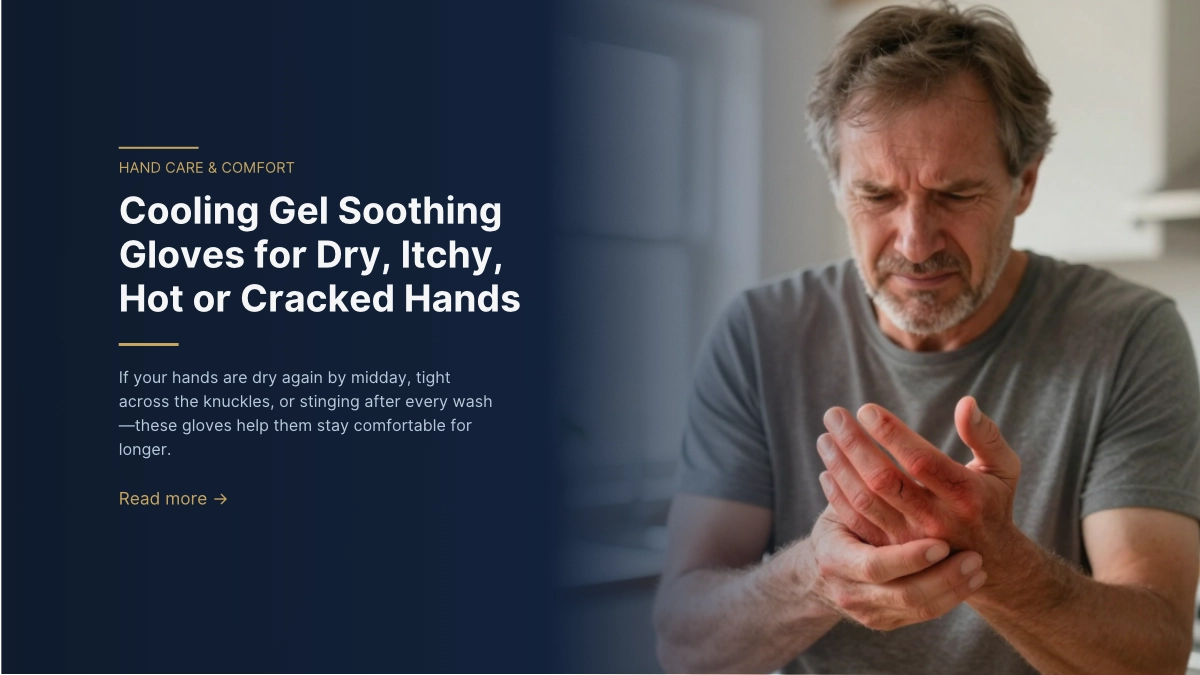
Cooling Gel Soothing Gloves for Dry, Itchy, Hot or Cracked Hands
If your hands are dry again by the middle of the day, if the skin across your knuckles feels tight when you close your hand, or if your fingertips sting after washing, you are probably not looking for another generic hand-care tip. You are looking for something that helps your hands stay comfortable for longer.
That is often the point when ordinary hand cream starts to feel frustrating rather than reassuring. You apply it, your skin softens for a while, then the dryness, irritation or heat comes back. Sometimes the hands just feel rough. Sometimes they itch. Sometimes they feel hot in warm weather or sore around the fingertips when the skin starts to crack. Whatever form it takes, the problem is often the same: the relief does not last.
Cooling gel soothing gloves are designed for exactly that sort of situation. They are worn over moisturiser to help keep it against the skin for longer, while the gel lining gives the hands a cooler, smoother feel. For hands that are repeatedly dry, sensitive, irritated or difficult to settle, that can be a far more practical approach than applying cream and hoping it survives the next hand wash or the next hour of ordinary use.
This guide explains what often sits behind recurring hand discomfort, why hand cream sometimes stops feeling like enough, what cooling gel gloves actually do, and who may find them most useful. It also looks at what matters when choosing a pair, how our pink gel cooling gloves are designed, and how to use them safely as part of a regular hand-care routine.
When Hand Discomfort Starts to Feel Like a Recurring Problem
Hand discomfort does not always begin in a dramatic way. More often, it builds slowly. The skin feels a little dry after washing. The backs of the hands seem rougher than usual. A fingertip becomes more sensitive than it used to be. Then, after a while, those small changes stop feeling occasional and start feeling familiar.
That is usually when people begin to realise the problem is no longer just a passing annoyance. The hands draw attention to themselves too often. They do not feel settled. They improve briefly, then slip back again. And because the hands are used constantly, even low-level discomfort can become surprisingly wearing.
The change is often less about severity at first and more about repetition. The skin keeps ending up in the same uncomfortable state. That is what turns ordinary dryness into something people actively want to sort out.
Dryness That Returns Quickly
One of the clearest signs that the hands need more support is dryness that keeps coming back soon after moisturising. The skin may feel better for a short while, then rough again before long. You may notice it across the knuckles, on the backs of the hands or around the fingertips, particularly after washing or during colder weather.
What makes this frustrating is not only the dryness itself but how easily it returns. You use hand cream, you do what seems sensible, and yet by the time you next notice your hands properly, they are back to feeling tight or rough again.
That can leave you feeling as though you are always managing the same problem in short bursts rather than actually getting ahead of it.
Itching or Reactive Skin
Some hands do not just feel dry. They feel reactive. The skin may itch lightly after washing, sting when product is applied to rough areas, or feel prickly after contact with soap or cleaning products. Some people notice redness. Others mainly notice that the skin feels uncomfortable in a way that is hard to ignore.
This sort of reaction is common in sensitive skin and may also be consistent with conditions such as eczema or contact dermatitis. In plain language, that means the skin may lose moisture more easily and react more quickly to everyday triggers. If you are not sure what is behind it, a clinician can help assess the cause.
Whatever the cause, reactive skin changes what hand care needs to do. It is not only about making the skin softer. It is also about helping it feel calmer.
Hands That Feel Hot or Overheated
Not everyone describes their hand discomfort as dryness first. Sometimes the main complaint is heat. The hands feel too warm after washing. They become more uncomfortable in warm weather. Or the skin takes on that flushed, over-stimulated feeling that makes you want to cool it down rather than simply put more cream on it.
This can be particularly frustrating because ordinary moisturiser does not always change that sensation very much. The skin may still need hydration, but what you notice most is the heat and the discomfort of it.
When that is the case, a cooling feel can make a noticeable difference. It addresses a part of the problem that many basic hand-care steps do not deal with on their own.
Cracking, Soreness or Sensitive Areas
Once dryness progresses into cracking or tenderness, the problem usually feels more urgent. The skin around the fingertips may split. The knuckles may sting when the hand bends. Dry areas may catch on towels or fabrics. Even when the cracks are small, they can make the hands feel constantly exposed.
That is often the point when people stop seeing the issue as mild dryness and start feeling that their hands need a more protective approach. The skin is not just rough. It is uncomfortable to use.
Symptoms That Follow a Clear Pattern
Many people notice that their hands feel worse after repeated washing, contact with household products, colder weather, warm conditions or simply a day in which the hands have not had much rest. The timing matters because it shows that the skin is responding to stress rather than changing for no obvious reason.
When you can see that your hands are drying out, stinging or feeling hot after specific triggers, it becomes easier to understand why a quick layer of cream may not be enough on its own.
Why Hands Can Be Difficult to Keep Comfortable
The skin on the hands has to cope with more than people sometimes realise. It is exposed more often than most other skin, washed more often and used almost constantly. That does not automatically mean something is wrong, but it does help explain why the hands are such a common place for dryness, irritation and soreness to build up.
Once the skin becomes sensitive or begins losing moisture too easily, the usual demands placed on the hands can be enough to keep the problem going.
The Hands Are Exposed More Than Most Skin
Hands are in frequent contact with water, soap, cleaning products, changing temperatures and physical friction from daily use. Unlike areas of skin that stay covered and relatively undisturbed, the hands are constantly interacting with the environment.
That repeated exposure matters because it gives the skin fewer chances to recover properly. Even if you moisturise, the next interruption often comes quickly.
Sensitive or Eczema-Prone Skin Loses Moisture More Easily
Some people have a weaker skin barrier. That means the outer layer of skin does not hold moisture as effectively and does less to keep everyday irritants out. This is often seen in eczema-prone skin.
In practical terms, it means the skin on the hands may dry out faster, react more quickly and take longer to settle once it has been irritated. If this sounds familiar, it is worth remembering that only a clinician can diagnose the cause, but the pattern itself is a useful clue as to why the hands may feel harder to manage.
Frequent Washing Can Strip Natural Oils
Washing the hands is necessary, but it also removes some of the skin’s natural surface oils each time. Those oils help reduce moisture loss and support the skin’s outer protective layer. When washing happens often, the skin may not have much time to rebuild that protection before the whole process begins again.
This is one reason some people feel trapped in a cycle of wash, dry, moisturise, then dry out again. The hands never seem to stay comfortable for long because the skin keeps being reset.
Everyday Products May Gradually Irritate the Skin
It is not always the harshest products that cause trouble. Repeated contact with soap, detergent, cleaning products or even ordinary water can gradually wear the skin down. The effect tends to build rather than happen all at once.
The hands may start to feel tighter after washing. The fingertips may become rougher. Product that never used to bother you may begin to sting if the skin is already dry. Over time, the hands stop feeling resilient in the way they once did.
Weather and Temperature Changes Can Worsen Symptoms
Cold air, low humidity and indoor heating can all increase dryness. Warm weather can bring a different sort of problem. Some hands feel hotter, more irritated or more difficult to settle in summer, especially if the skin is already sensitive.
That can catch people out. They may expect the change in season to solve the problem, only to find that the discomfort remains, just in a different form.
Constant Use and Friction Make Recovery Harder
Even without obvious irritants, the hands are always doing something. Holding objects, preparing food, typing, opening containers, gripping handles, handling fabrics and touching surfaces all create small amounts of friction. For healthy skin, that may not matter much. For dry or reactive skin, it can make it harder to recover.
That is why the hands often feel worse by the end of the day. The problem is not always one major trigger. More often, it is repeated low-level stress building up.
Why Ordinary Hand Cream May Stop Feeling Like Enough
Hand cream remains a sensible and important part of managing dry hands. The issue is not that moisturiser stops helping. It is that the hands are one of the hardest places on the body to treat well with moisturiser alone.
People often assume they simply need to apply more cream more often. Sometimes that helps. But when the dryness keeps returning, or the skin also feels itchy, sore or hot, the problem is often not a lack of effort. It is that the treatment keeps getting interrupted.
The Treatment Window Is Often Too Short
Most skin can be moisturised and then left relatively alone. Hands do not work like that. You apply cream, then wash them again, dry them, grip something, touch surfaces or carry on with the day. The moisturiser may still help, but it rarely stays on the skin in ideal conditions for very long.
For skin that is only mildly dry, that may be enough. For hands that are repeatedly rough, reactive or prone to cracking, it often is not.
Very Dry Skin May Need Longer Contact With Moisture
There is a difference between making the surface feel briefly softer and helping the skin stay supported over time. When the hands are very dry, the issue is often not just what product is used, but whether it remains on the skin long enough to make a meaningful difference.
This is why people sometimes feel disappointed by good creams. The product may not be the problem. The skin may simply need longer with it than everyday life allows.
Some Hands Need a Soothing Feel as Well as Hydration
When the skin feels hot, itchy or irritated, moisturising is only part of the answer. Many people also want a treatment step that feels calming while it is on the hands, not just one that sits there and asks them to wait.
A cooler, smoother contact can make a real difference here. It can make the hands feel less aggravated while the moisturiser does its job, which is why some people find glove-based support more helpful than cream alone.
Night-Time Care Can Be Messy or Inconvenient
Evening moisturising is often the most practical time to give dry hands more focused care, because it may be one of the few times the skin is not in constant use. But it is not always convenient. Some people dislike the feel of a heavier cream on their palms. Others find that it rubs off on bedding or clothing. In practice, that can mean the routine gets shortened, rushed or skipped altogether.
What many people need is not a more complicated routine, but a more workable one. They need a way to keep moisturiser where it is meant to be while the skin has a proper chance to settle.
What Cooling Gel Soothing Gloves Do Differently
Cooling gel soothing gloves are designed to make hand care more contained, more comfortable and easier to keep up. They are usually worn after applying moisturiser. The moisturiser sits against the skin, while the glove helps keep it there for longer and the gel lining gives the hands a cooler, smoother feel.
The idea is simple, but it answers several common problems at once. It helps reduce how quickly hand cream is lost, gives the skin a more protected period and can feel more soothing when the hands are warm, irritated or unsettled.
They Help Keep Moisturiser in Contact With the Skin
One of the main frustrations with hand cream is how quickly it seems to disappear. Cooling gel gloves help address that by keeping moisturiser against the skin instead of letting it be reduced straight away by daily use, contact with fabrics or repeated movement.
That does not mean the gloves replace moisturiser. They help it do more by giving the skin longer with it.
The Gel Lining Adds a Cooler, More Soothing Feel
This is one of the biggest differences from basic fabric gloves. The gel lining creates a smoother contact against the skin and can feel cooler when the hands are irritated or over-warm. For people who mainly notice heat, prickling or that inflamed feeling in the skin, that immediate sensation may be a large part of the appeal.
It is not only about covering the hands. It is about how the treatment feels while the skin is being supported.
They Create a More Protected Treatment Period
Cooling gel gloves give the hands time to sit with moisturiser on them without going straight back into the same cycle of washing, drying and contact. That period of protection can be especially useful in the evening or whenever the hands need a proper break.
For people who feel as though their hand care is constantly being interrupted, this is often the missing part of the routine.
They Are Not Just for Dryness
Because they combine moisture support with a cooling feel, these gloves may suit more than one type of hand discomfort. They may be useful for hands that are generally dry, but also for hands that feel hot, irritated or uncomfortable in warm conditions.
That wider usefulness makes them relevant to people whose symptoms are not always exactly the same from one week to the next.
Who May Find Cooling Gel Gloves Most Useful
Not everyone with dry hands needs a glove-based treatment step. But when the same discomfort keeps returning, or when the skin needs both moisturising and soothing, this type of product can make much more sense.
It is often most useful for people whose hands are under regular stress and who need a routine that is practical enough to use more than once in a while.
Eczema-Prone or Flare-Prone Hands
People whose hands are often dry, itchy or reactive may find cooling gel gloves useful as part of a moisturising routine. This may be especially relevant if the skin tends to flare after exposure to soap, water, cold weather or repeated irritation. These features are often seen in eczema, although diagnosis should come from a clinician.
The value here is not in trying to replace proper assessment. It is in making day-to-day skin support feel more practical and more comfortable.
Persistent Dryness That Keeps Returning
If the skin becomes dry again soon after using hand cream, the issue may be less about the product itself and more about how little time it gets to stay on the hands. Cooling gel gloves may help in exactly that situation, because they give moisturiser a better chance to remain in place.
For some people, that alone changes the routine from feeling temporary to feeling worthwhile.
Hands That Crack or Feel Sore After Washing
Repeated washing can leave some hands feeling raw, tight or sting-prone, especially around the fingertips and knuckles where the skin bends and stretches. When that happens, a glove-based treatment step can give the skin a more protected period after moisturising instead of leaving it exposed straight away.
That may not solve every cause of soreness, but it can make regular hand care feel more supportive.
Hands That Feel Hot or Irritated in Warm Weather
Some people notice that warmer weather changes the way their hands feel. The skin may seem hotter, more easily irritated or generally more difficult to settle. In that situation, the cooling feel becomes especially relevant, because the problem is not only dryness. It is also discomfort from heat.
Hands Exposed to Repeated Daily Stress
Frequent washing, cleaning, routine tasks and repeated contact with water or household products can all leave the hands feeling overworked. Not everyone in that position has a diagnosed condition. Many simply have hands that go through a lot and do not recover as easily as they used to.
For them, cooling gel gloves may be a sensible way to build a proper recovery step into regular hand care.
What to Look for in a Good Pair of Cooling Gel Gloves
If you are comparing products, the most useful question is not which pair sounds the most impressive on paper. It is which pair is likely to feel comfortable enough, practical enough and well designed enough that you will actually use it regularly.
A glove that looks good in a list of features but feels awkward, heavy or inconvenient is unlikely to become part of a routine.
A Smooth, Comfortable Gel Lining
The inside of the glove matters because it sits directly against the skin. If your hands are already dry or irritated, they are unlikely to tolerate something that feels rough, stiff or unpleasant. A smooth gel lining should feel softer and more comfortable on the hands.
That first impression matters. If the gloves feel calming from the moment you put them on, they are much more likely to become something you keep using.
Support for Use Over Moisturiser
A good pair should do more than simply cover the hands. It should help make moisturising more effective by giving the skin more time with the product. That is one of the main reasons people choose this category in the first place.
Breathable Outer Materials
If the gloves feel too heavy or stuffy, they are less likely to be worn for long enough to be helpful. Breathable outer materials can make a real difference, especially for people who dislike anything that makes the hands feel trapped or too warm.
This matters more than it may seem. Comfort is often the difference between something used once and something used often.
A Flexible, Comfortable Fit
The gloves should stay in place without feeling restrictive. A flexible stretch fit tends to work well because it makes the gloves easier to wear without turning the process into a sizing problem.
If the fit is awkward, the routine becomes awkward as well.
The Option to Cool Them Before Use
For people who want extra relief from heat or irritation, the ability to cool the gloves before use can be especially useful. This adds another layer of comfort and helps make the gloves feel relevant in warm weather as well as during colder, drier times of year.
Reusable and Easy-to-Clean Design
Recurring dryness or irritation often needs regular support, so reusability matters. A pair that is easy to clean and simple to keep ready for use is more likely to fit into normal life without becoming a hassle.
Why Our Pink Gel Cooling Gloves Are a Strong Option
Our pink gel cooling gloves are made for people who need more from hand care than another quick application of cream. They are designed for dry, sore and sensitive hands, and for anyone whose skin tends to become rough, uncomfortable or difficult to settle after everyday exposure.
What makes them stand out is not one feature on its own, but the way the design works together. They support moisturising, they feel more soothing on the skin than basic gloves, and they are practical enough to use regularly.
Designed for Dry, Sore and Cracked Hands
These gloves are intended for hands that feel rough, tight, dry after washing or prone to cracking. They are also useful for hands that simply do not stay comfortable for long, even when moisturiser is used regularly.
If your skin is prone to irritation that may be consistent with eczema, they can form part of a more supportive daily routine, although diagnosis and medical advice should always come from a clinician.
Used With Your Preferred Moisturiser
You do not need to replace the moisturiser you already trust. Apply it as usual, then wear the gloves over the top. This helps keep the product against the skin instead of letting it be reduced almost immediately by towels, clothing or ordinary movement.
That small change can make hand care feel much less temporary.
Silicone Gel Lining for Cooling Comfort
The silicone gel lining gives the gloves their cooler, smoother feel. When the hands feel hot, irritated or generally uncomfortable, that contact can feel much more soothing than fabric alone.
It is a practical feature, not a decorative one. It directly affects how the gloves feel on the skin and why many people find them more comfortable to use.
Breathable Cotton-Rich Outer Fabric
The outer layer is made from 95% cotton and 5% spandex. That combination helps the gloves feel soft, flexible and breathable enough for regular use. If the outside felt too heavy or too warm, many people would stop using them long before they became useful.
Comfort matters just as much as the gel lining if a product is going to earn a place in your routine.
Stretch-Fit Design
The one-size-fits-all stretch-fit design is intended to suit a wide range of hand shapes while keeping the gloves straightforward to use. They are made to fit comfortably without feeling rigid or fussy, which makes them easier to reach for when your hands need support.
Can Be Cooled Before Use
The gloves can be placed in a fridge to cool before wear for a more soothing feel when extra comfort is wanted. This can be especially welcome in warm weather or when the hands feel unusually hot after repeated washing or irritation.
That cooling option adds another level of usefulness without making the routine any more complicated.
Reusable and Easy to Clean
These gloves are designed for repeated use and can be cleaned simply with mild soap and water. For people who deal with recurring dryness or irritation, that matters. The gloves need to be easy to use more than once if they are going to become part of regular hand care.
Rose Essential Oil Scent
The gloves are infused with a rose essential oil scent. It is a small detail, but it may make the experience of wearing them more pleasant for people who like a lightly scented product.
30-Day Money-Back Guarantee
There is also a 30-day money-back guarantee, which offers some extra reassurance if you are trying this type of glove for the first time.
How to Use Cooling Gel Gloves
Cooling gel gloves work best when they fit naturally into your routine rather than feeling like another task. For most people, that means using them at a point when the hands can properly benefit from a more protected treatment period.
Step 1: Clean and Dry the Hands Gently
Start with clean hands and dry them gently, especially if the skin feels sore or cracked. Rubbing vigorously can make already-sensitive areas feel worse.
Step 2: Apply a Suitable Moisturiser
Apply your preferred moisturiser to the hands, paying attention to the driest or most uncomfortable areas. For many people, that includes the knuckles, fingertips and backs of the hands.
Step 3: Wear the Gloves
Put the gloves on after moisturising to help keep the product against the skin. This is the stage that turns ordinary moisturising into a more contained step.
Step 4: Use During Downtime or Evenings
They are often most convenient during rest periods, in the evening or whenever the hands need a more protected recovery step. This gives the skin a better chance to benefit from the moisturiser without immediate interruption.
Step 5: Cool First if Extra Soothing Relief Is Wanted
For a cooler feel, place the gloves in a fridge before use as directed. This may be especially welcome in warmer weather or when the hands feel unusually hot or irritated.
Step 6: Clean and Store Ready for Reuse
After use, clean the gloves and store them somewhere easy to reach for next time. Keeping them nearby makes it more likely they will become part of a practical routine rather than an occasional extra.
Important Safety Points
Cooling gel gloves are intended to support comfort and moisturising routines. They are not a cure for underlying skin conditions, and they are not a substitute for diagnosis or personalised medical advice.
- If you are unsure what is causing ongoing dryness, itching, soreness or skin changes on your hands, speak to a clinician for diagnosis.
- Do not use on deep wounds, signs of infection or severely damaged skin unless a clinician has advised that it is appropriate.
- If your skin becomes more irritated, painful or unusually reactive, stop using the gloves and seek advice.
- If you use the gloves with a moisturiser, choose one your skin already tolerates well.
- If cooling the gloves before use, follow the product instructions carefully. Excessive cold can be uncomfortable for some people.
- If you have a condition that makes your hands unusually sensitive to cold, seek clinical advice before trying cooled gloves.
Frequently Asked Questions
Why do my hands still feel dry even though I use hand cream?
Hands are washed and used so often that moisturiser may not stay in contact with the skin for very long. A glove-based step can help create a more protected period after moisturising, which may make the routine feel more effective.
Can cooling gel gloves help with eczema?
They may be helpful as part of a comfort-focused moisturising routine for hands that are dry, itchy or flare-prone. Eczema should be diagnosed by a clinician, and ongoing or worsening symptoms should not be self-assessed.
Are these gloves only for eczema-prone hands?
No. They may also suit people with general dryness, roughness, cracking or hands that feel hot and uncomfortable in warm weather. Their main role is to support moisturising and provide a more soothing step in regular hand care.
Do I Need to Use My Own Moisturiser With Them?
Most people use them over a moisturiser because one of the main benefits is helping that product stay against the skin for longer. If you already use a moisturiser that suits your skin, the gloves are designed to work alongside it.
Can They Be Useful in Summer?
Yes. The cooling feel may be especially appealing if your hands tend to feel hot or irritated in warmer weather. Being able to cool the gloves before use can also make them feel more soothing during hotter periods.
Will They Fit Most Hands?
The one-size-fits-all stretch-fit design is intended to suit a wide range of hand shapes while keeping the gloves easy to use.
Can They Be Reused Regularly?
Yes. They are designed for repeated use and can be cleaned between wears. This makes them practical for ongoing hand care rather than occasional one-off use.
Are They Comfortable Enough to Wear for a While?
Comfort is always personal, but the combination of a smooth gel lining, breathable cotton-rich outer layer and stretch fit is intended to make the gloves easier to wear than more basic alternatives.
When Should I Seek Further Advice for Hand Symptoms?
If your symptoms are persistent, severe, worsening, unusually painful or you are unsure of the cause, speak to a clinician. This is especially important if the skin looks infected, is significantly damaged or is becoming harder to manage rather than easier.
Final Thoughts
If your hands repeatedly become dry, itchy, hot or cracked, it may be a sign that they need more support than quick moisturising alone can provide. That does not mean moisturiser is unhelpful. In many cases, it simply means the skin needs a better chance to hold onto it and, for some people, a more soothing feel while it settles.
Cooling gel soothing gloves offer a simple way to make hand care more contained and more comfortable by helping moisturiser stay in place while adding a cooler, smoother feel. They may be especially useful for hands that are frequently washed, exposed to household products, prone to recurring dryness or difficult to keep comfortable in warm weather.
Our pink gel cooling gloves are designed to fit into that kind of routine. They are reusable, easy to wear, intended for use with your preferred moisturiser and can be cooled before wear for extra comfort. For people whose hands rarely stay comfortable for long, they can be a practical addition to regular hand care.