The Essential Guide to Rhomboid Muscle Strain
That burning, pulling sensation between your shoulder blades — the kind that makes you want to roll your shoulders and stretch every few minutes — is a familiar kind of discomfort for many people. In this article, we’ll look at what these muscles do, why they get strained, how to recognise it, and what actually helps — including when an upper back support might be useful.
Understanding Rhomboid Muscle Strain
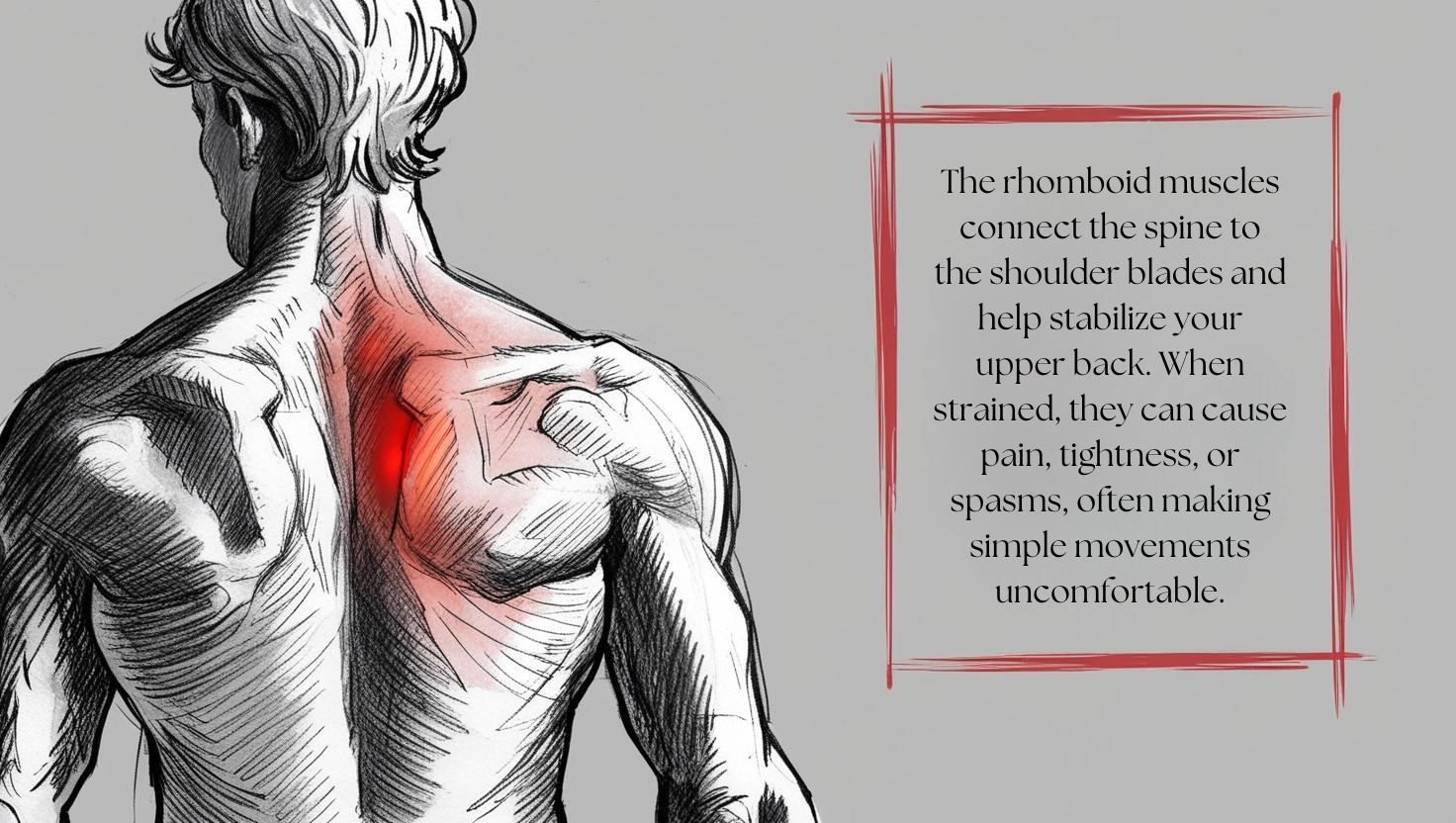
The rhomboid muscles sit between your spine and each shoulder blade. When they contract, they pull the shoulder blades together and help hold them steady against your ribcage when you move your arms. A strain means the muscle fibres have been overstretched or torn. But what does that actually mean?
When a muscle is strained, some of its fibres tear. The body responds with inflammation — that’s why the area feels tender, stiff, and sometimes warm. Small tears heal quickly; larger ones take longer and need more care. The rhomboids are often affected because they are relatively thin muscles, yet they are constantly active whenever you move your arm or hold your posture.
This is one of the most common causes of upper back pain, particularly among people who spend long hours at a desk or do repetitive lifting and reaching. You don’t need to know all the medical terms to understand what’s happening — this article explains everything in plain language.
What Causes a Rhomboid Strain?
1. Poor Posture
When people spend long periods with their shoulders rounded forward, the rhomboids are held in a stretched, lengthened position. Over time, they have to work harder to stabilise the shoulder blade every time the arm moves. To make matters worse, the muscles on the front of the chest — the pectorals — tighten up and pull the shoulders forward even more. This creates a cycle where the rhomboids are constantly fighting against that pull.
If this pattern is familiar, a good first step is to look at posture throughout the day — we’ll cover practical ways to do that later.
2. Overuse and Repetitive Movements
Activities like rowing, tennis, swimming, or lifting involve repeated reaching and pulling. If the rhomboids are not conditioned for that level of work, the muscle fibres can develop small tears. Muscles adapt slowly, so a sudden increase in lifting or reaching — such as moving furniture, tackling a big DIY project, or starting a new exercise routine — can overload the rhomboids and cause a strain.
If a strain comes on after a sudden change in activity, the key is to back off, let the muscle settle, then build back up gradually.
3. Sudden Trauma
A fall, a jerking movement, or lifting something unexpectedly heavy can overstretch the rhomboids in an instant. This type of strain often causes immediate pain and can feel quite severe at first. The muscle often spasms to protect itself, which is the body’s way of saying “stop moving this area.”
Recognising the Symptoms
Pain can come on suddenly after a specific movement, or it can build up gradually over weeks of poor posture. People often find it uncomfortable to reach forward, rotate their shoulders, or lift the arm overhead. Some describe a burning or pulling sensation between the shoulder blades.
When the rhomboid is strained, it often goes into spasm to protect itself. This spasm is what makes the area feel tight and movement uncomfortable. So the pain is often a combination of the torn fibres and the surrounding muscle clenching up.
If these symptoms sound familiar, the good news is that most rhomboid strains respond well to simple measures.
Common Symptoms
- Sharp or aching pain between the shoulder blades
- Tenderness when pressing on the area
- Difficulty moving the shoulders or arms comfortably
- Muscle spasms in the upper back
- Pain that worsens with deep breathing or when twisting the torso
When to See a Doctor
Most rhomboid strains settle on their own with rest and care. But there are times when professional advice is needed. A doctor or physiotherapist can usually identify a rhomboid strain by examining posture, pressing on the area, and asking about specific shoulder movements. An X-ray or MRI is rarely needed for this type of strain unless the pain is severe, not improving, or there are other concerning symptoms.
The area should be checked if any of the following are present:
- Pain that spreads down the arm or into the chest
- Numbness, tingling, or weakness in the arm or hand
- Severe swelling or bruising around the shoulder blade
- Pain that does not improve after a week of home care
- Difficulty moving the arm or shoulder at all
- Associated fever, night sweats, or unexplained weight loss
These could indicate a more serious issue that needs professional evaluation. It’s better to have it checked early than to let it drag on.
Treatment Options
There’s no single magic bullet, but most rhomboid strains follow a similar recovery path. Here’s a simple timeline. Most mild strains feel noticeably better within one to two weeks, though complete healing can take a few weeks more.
Protecting the Muscle (First 48–72 Hours)
In the first few days, the main goals are to reduce pain and protect the muscle. Rest from any activity that causes sharp pain or makes the discomfort worse, but keep the shoulder moving gently — this stops it from stiffening up. Over-the-counter pain relief, such as ibuprofen, can help settle discomfort — but check with a pharmacist before taking anything, especially if there are underlying health conditions. A warm compress can also help relax the muscle and improve blood flow.
Rebuilding Strength (Once the Initial Pain Settles)
Once the initial pain has settled enough to move comfortably, it’s time to start building strength gently. A physiotherapist can guide the right level for the stage of recovery. Simple movements like shoulder blade squeezes, wall angels, and gentle rowing with a resistance band are often recommended, but they should be introduced gradually and without pain. For a shoulder blade squeeze, sit or stand tall, draw your shoulder blades together gently, and hold for five seconds. Wall angels are done standing with your back against a wall — keep your arms bent at 90 degrees, with elbows and wrists against the wall, and slide them up and down slowly. If an exercise makes the pain worse, stop and scale it back.
Preventing It Coming Back (Long-Term)
Long-term, the best way to avoid another strain is to address the habits that caused it. Think about typical patterns: shoulders hunched forward at a desk, reaching toward a screen, or carrying bags on one side. Small adjustments — like setting the screen at eye level, keeping elbows at a comfortable angle, and taking a short walk every hour — can make a big difference. The goal is to stop the shoulders from spending so much time rounded forward.
A physiotherapist can help create a plan that fits your usual activities and routine.
How an Upper Back Support Can Help
An upper back support works in a few different ways. It provides gentle pressure on the shoulder blades and upper back, which acts as a tactile cue — the brain notices this pressure and naturally adjusts posture without conscious effort. It also keeps the area warm, and that warmth helps increase blood flow to the muscle, which can reduce stiffness and support healing. By keeping the shoulder blades from rounding too far forward, it also stops the rhomboids from being held in that stretched, vulnerable position for long periods.
A support won’t magically fix posture, but it can be a helpful reminder while working on strengthening, ergonomics, and activity changes. At NuovaHealth, we stock a range of back supports we have selected for comfort and durability. If you think one might help, the options below are a good place to start.
Conclusion
Some rhomboid discomfort is common and usually settles with the right care. The main steps are to identify what’s causing it, adjust activity and posture, strengthen the muscles gradually, and consider a support if it helps with stability. If the pain is severe, persistent, or getting worse, don’t hesitate to see a GP or physiotherapist — they can give a tailored plan for the specific situation.
Thanks for reading — take care of your upper back.
Disclaimer:
This article is for guidance purposes only and is not a substitute for professional medical advice. If you’re not sure what’s causing your pain, or if it’s severe, persistent, or getting worse, please see a GP or physiotherapist first.