Understanding Knee Sprains: Why Early Support Matters
A knee sprain can do more than cause pain for a few days. It can leave the knee swollen, sore, and hard to trust. Walking, using stairs, exercising, and even getting through ordinary daily tasks can suddenly feel less straightforward. For many people, pain is only part of the problem. The knee may no longer feel steady when you stand on it, turn, or move quickly. Knee sprains are common in the UK and affect both active people and those injured during everyday activity. Because the knee is involved in so many basic movements, even a sprain that seems manageable at first can interfere with day-to-day life if it is not recognised early and managed properly.
A knee sprain happens when one or more ligaments in the knee are stretched beyond their normal range or torn. Ligaments are strong bands of tissue that connect one bone to another and help keep the knee steady as it bends, straightens, and supports you when you stand or walk. The main ligaments include the anterior cruciate ligament, or ACL, the posterior cruciate ligament, or PCL, the medial collateral ligament, or MCL, and the lateral collateral ligament, or LCL. Each ligament helps control movement in a different direction. The ACL helps limit too much forward movement and twisting at the knee. The PCL helps stop the shin bone moving too far backwards. The MCL and LCL help steady the inner and outer sides of the knee. When one of these ligaments is injured, the knee may become painful, swollen, and less steady. That often shows up most clearly when you walk, turn, change pace, or move on uneven ground.
The Causes and Risks of Knee Sprains
Knee sprains usually happen when a force pushes, twists, or bends the knee further than the ligament can safely cope with. This may happen during sport, in a fall, during an awkward landing, or when you change direction quickly while the foot stays planted on the ground. Sports such as football and basketball increase the risk because the knee has to cope with sudden stopping, turning, jumping, landing, and side-to-side movement, often at speed. Outside sport, a knee sprain may happen if the knee is forced inwards, pushed backwards, or twisted sharply during an accident or misstep. The position of the knee at the moment of injury matters because each ligament resists a different type of force.
Some people are more likely to sustain this type of injury than others. That includes people who have had a previous knee injury, those returning to activity without enough preparation, and those with poor strength, reduced balance, or limited flexibility around the knee. If the muscles that support the knee are not controlling movement well, more force can pass into the ligaments instead. Muscle weakness is not the only reason knee sprains happen, but it can leave the joint less able to handle twisting, impact, or a sudden change in direction. In simple terms, the knee may be more vulnerable when something unexpected happens.
Recognising the symptoms of a knee sprain early can make a real difference. The sooner the injury is recognised, the sooner the knee can be protected from further strain. Common signs include pain around the knee, swelling, bruising, and a feeling that the knee may give way when you stand, walk, turn, or use stairs. Pain and instability are not always the same thing. Some people mainly notice soreness and swelling. Others notice that the knee feels weak, wobbly, or unreliable, even if the pain is not severe. You may also notice pain when bending the knee, straightening it fully, or trying to pivot on the affected leg, as well as stiffness after resting or a sharp pull at the injured area with certain movements. These are all signs worth taking seriously. If they are ignored, a knee sprain can lead to ongoing pain, repeated injury, and longer-term problems with how steady the knee feels in everyday movement.
Treatment and Prevention: The Role of Medical Knee Braces
Treatment for a knee sprain usually starts with rest, ice, compression, and elevation. This early approach can help reduce pain, limit swelling, and make the knee easier to manage in the first stage after injury. Once the early pain and swelling begin to settle, treatment often moves on to rehabilitation. This usually includes exercises to strengthen the muscles around the knee, improve balance and control, and gradually return the knee to normal movement. The aim is not only to calm the knee down, but to help it work properly again and cope better with walking, exercise, work, or sport. If a ligament is badly torn, surgery may sometimes be needed, but that depends on which ligament is injured, how unstable the knee is, and what the person needs the knee to cope with in daily life or sport.
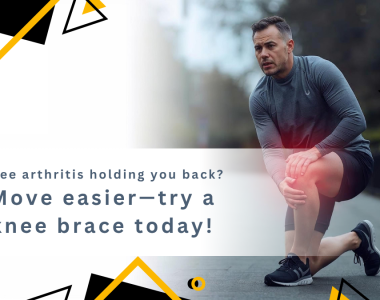
A medical knee brace can also be useful during recovery. In some situations, it may help reduce the risk of aggravating the injury again. A knee brace supports the knee from the outside and helps limit movements that place extra strain on an injured ligament. For example, if the sprained knee tends to move too far sideways, twist too sharply, or shift in a way that brings on pain or a feeling of giving way, the brace can help limit that motion while the ligament settles and rehabilitation progresses. This may make walking, standing, and exercise feel more manageable. It can also help the knee feel more secure during activities that would otherwise bring on discomfort or uncertainty, which is often important in the early stages of recovery.
The benefit of a medical knee brace becomes clearer when you look at how it supports the knee during movement. When a ligament is sprained, that ligament cannot control movement as well as it should. A brace can partly share that job by supporting the joint from the outside. It can help keep the knee within a range of movement that is less likely to twist, shift, or strain the injured ligament. It may also make it easier to sense the position of the knee when standing or walking, which can help movement feel more controlled. A brace does not heal the ligament on its own, and it is not a replacement for rehabilitation. Used properly, though, it can help protect the knee while it recovers. By limiting unnecessary movement, it can make the joint feel steadier and reduce repeated strain on the injured area while you rebuild strength and regain confidence in the knee. This is particularly relevant for ligaments such as the ACL, PCL, MCL, and LCL, because each one helps resist a specific direction of knee movement and contributes to the overall steadiness of the joint.
Understanding what a knee sprain involves can help you recover well and reduce the chance of longer-term problems. Early recognition, sensible treatment, and the right support can all make a meaningful difference to how the knee feels over time. Including a medical knee brace as part of a broader treatment plan may help provide reassurance, improve stability, and protect the knee while it recovers. If you are dealing with knee pain, swelling, or a sense that the joint does not feel steady, addressing it early and supporting the knee properly can help you get back to everyday movement with more confidence.