
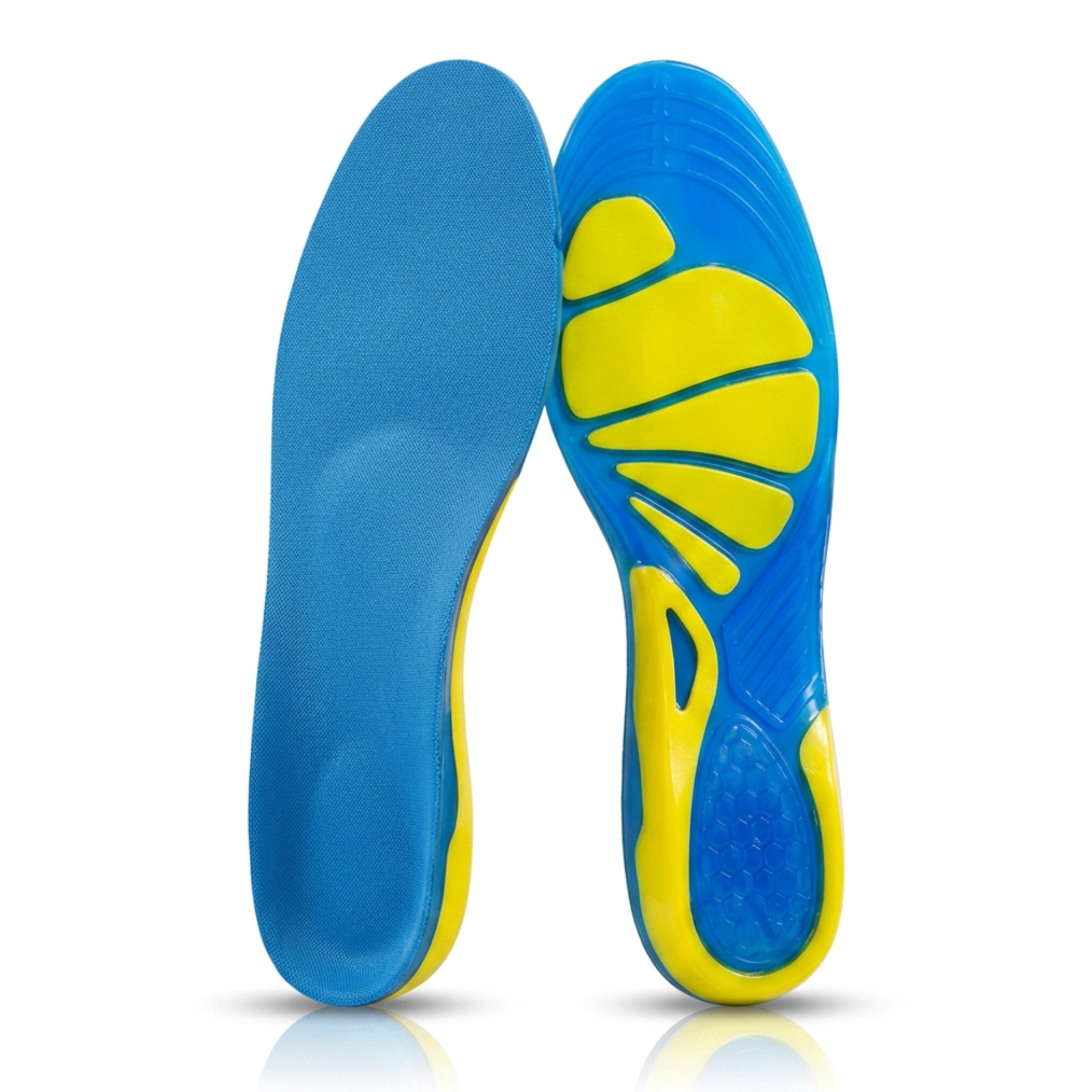
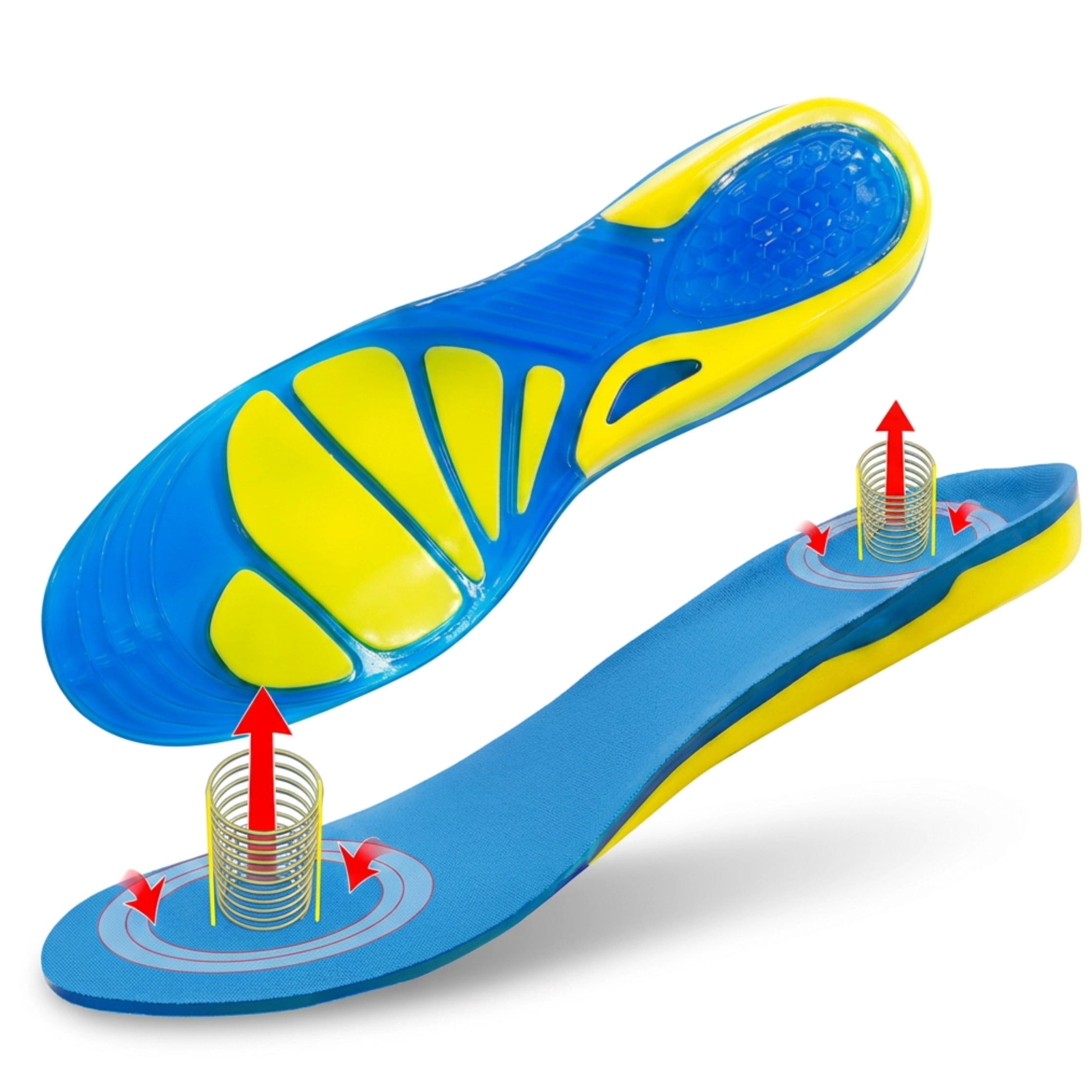
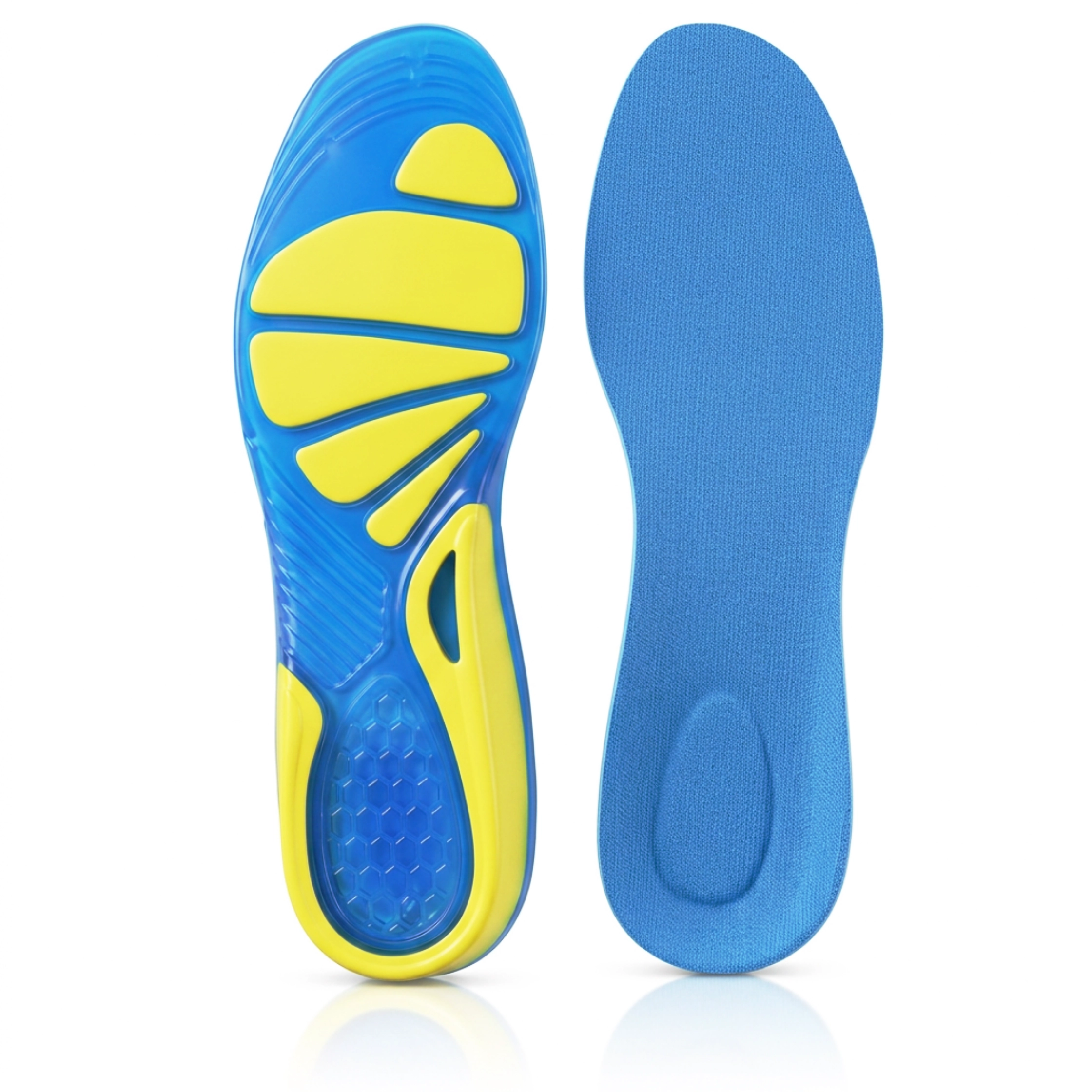
Shock Absorbing Gel Insoles for Sesamoiditis
£9.99inc VAT
- Two orthotic gel insoles, one for each foot, designed to cushion and support the forefoot inside everyday shoes.
- Mainly suited to adults with pain under the ball of the foot, especially near the base of the big toe.
- Useful when symptoms fit the pattern often seen with sesamoid irritation beneath the big toe joint.
- Helps reduce repeated pressure through a small, sore part of the forefoot during walking, standing, and push-off.
- Gel cushioning helps soften impact from hard floors and thinner-soled footwear.
- Orthotic shaping helps the foot sit more evenly so the same sore spot is not overloaded with every step.
- May help if push-off feels sharp, rising onto your toes is uncomfortable, or the area becomes more tender later in the day.
- Medical-grade silicone gel is designed to provide durable cushioning during regular wear.
- Lightweight, non-bulky design is easier to use in day-to-day footwear than thicker inserts.
- Trim-to-fit design helps the insoles sit flat inside the shoe for a more secure and comfortable fit.
- Usually works best in shoes with enough depth, a stable sole, and enough room around the forefoot.
- If you have not worn orthotic insoles before, it often helps to build up wear time gradually.
- Available in UK shoe sizes 2–5, 5.5–8, and 8.5–11.
- Not a cure, and not a substitute for assessment if pain is persistent, worsening, or clearly affecting the way you walk.
- If symptoms do not settle, or you have marked swelling, bruising, or trouble moving the big toe, speak to a GP, physiotherapist, or podiatrist.
Pain under the ball of the foot can change the way you move
If you have sesamoiditis, you’ll already know how disruptive it can be. Pain under the ball of the foot, particularly near the base of the big toe, can make ordinary movement feel awkward, guarded, and tiring. You may notice it when you’re walking at a normal pace, climbing stairs, standing for a while, rising onto your toes, or simply trying to get through the day without thinking about every step.
For some people, the pain feels sharp and very local, as though there is one exact sore spot under the front of the foot. For others, it is more of a deeper ache that builds the longer they’re on their feet. Either way, the result is often much the same. You start protecting the area without really meaning to. You shorten your step, shift away from the painful point, or stop pushing properly through the big toe. That may ease things in the moment, but it can also leave your walking feeling less natural and other parts of the foot taking more strain than they should.
That is why it makes sense to manage sesamoiditis properly. It is not only about making one tender area feel softer in the shoe. It is about understanding why that patch under the forefoot keeps getting irritated, which parts of walking tend to stir it up, and how the right support under the foot may help reduce the repeated strain keeping it going.
What sesamoiditis is
Sesamoiditis is irritation and inflammation affecting the sesamoid bones and the tissues around them beneath the big toe joint. These two small bones sit under the ball of the foot, inside the tendons that help the big toe move. They are small, but they do an important job every time you walk.
It helps to picture the last part of a step. As your heel comes up, your body weight moves forward over the front of the foot. The big toe bends, the forefoot takes more of the load, and the sesamoid bones help the tendons move smoothly under that joint. In a foot that is coping well, this is a normal and efficient part of walking and push-off.
Trouble starts when too much force keeps going through that same small area, or when pressure is not being shared evenly across the forefoot. Because the sesamoids sit under one of the hardest-working parts of the foot, they can become irritated when they are repeatedly overloaded. That is why sesamoiditis often shows up in adults who spend a lot of time on their feet or do activities that place repeated stress through the front of the foot.
Common triggers include running, dancing, and court sports such as basketball. Regular use of high heels can also play a part, as can foot shapes that alter how force is spread, including very high arches or flatter feet. Long periods of standing or walking, especially on firm surfaces, can add to the strain as well.
The symptoms are usually felt under the ball of the foot on the big toe side. You may notice pain under the forefoot close to the base of the big toe, tenderness if the area is pressed, discomfort when pushing off during walking, and pain when rising onto your toes. Some people also notice swelling, bruising, stiffness, or that the big toe no longer moves as easily as it should.
For some adults, the problem creeps up gradually after repeated activity. Others become aware of it after a clear flare, such as a long day on hard ground, a period of heavier loading through the front of the foot, or a change in footwear. However it starts, the area can be slow to settle if the same pressure pattern keeps happening day after day.
Why this area can become stubbornly painful
The sesamoid area is not an easy part of the foot to rest completely, and that matters. Even if you are not playing sport or doing anything particularly strenuous, ordinary walking still asks this area to help with forward movement. If standing and walking are built into your day, the tissues beneath the big toe joint may keep being loaded before they have had much chance to calm down.
The sore spot sits in one of the busiest parts of the foot. Each time you move from the middle of a step into push-off, force passes through the forefoot and the big toe joint bends. If that force keeps landing heavily through the same irritated point, the tissues around the sesamoids can stay sensitive. The pain may then show up not only with exercise, but with ordinary tasks such as walking across hard floors, standing at a counter, or climbing stairs.
That is one reason symptoms often settle into a pattern rather than feeling like a one-off pain. Early in the day the foot may feel fairly manageable. Later on, especially if you have been standing or walking a lot, the discomfort can build. Some people notice a sharper pain as they push off. Others find the area feels more tender afterwards, once the irritation has had time to accumulate. You may also notice that walking barefoot or wearing thin-soled shoes makes the pain more obvious, simply because there is less protection between the forefoot and the ground.
The big toe can start to feel stiff or awkward as well. That makes sense when you consider where the sesamoids sit. Because they are embedded within the tendons beneath the big toe joint, irritation there can make the foot more guarded during the part of walking that depends on the big toe bending well. Instead of rolling through smoothly, you start moving around the pain.
Once that happens, compensation often follows. You may shorten your stride, push off less through the big toe, or shift a bit more weight to the outer side of the foot. These are understandable changes, but over time they can make walking feel less smooth and less efficient. They may also alter how force is handled elsewhere simply because your usual walking pattern has changed.
That does not mean sesamoiditis always leads to trouble in the ankle, knee, hip, or lower back. The more realistic point is that if one painful area keeps changing the way you walk, the rest of the limb may end up handling force differently. That is one reason it is worth dealing with the source of irritation rather than simply hoping it will settle while the same loading pattern carries on.
Why footwear and foot mechanics matter so much
Sesamoiditis is often not only about how long you spend on your feet, but about how that force moves through the foot. Two people can walk the same distance and have very different experiences depending on their shoes, the shape of their feet, and the way pressure travels through the foot.
High heels are a straightforward example. They shift more body weight forward onto the forefoot, so the sesamoid area may spend longer under higher pressure. Thin soles can create a different problem. They leave the front of the foot feeling more of the ground underneath. Footwear with very little support can make things worse in another way, because pressure may keep peaking under the same sore spot instead of being shared more evenly across the foot.
The way the foot handles load matters as well. If the foot is not controlling force especially well, or if its shape means pressure naturally gathers more under one part of the forefoot, the sesamoids may end up doing more than they should. That helps explain why some adults with very high arches or flatter feet are more prone to this sort of pain. The point is not that one foot shape is automatically a problem. It is that the way force travels through the foot affects how much stress lands beneath the big toe joint.
This is where support under the foot starts to matter. If the aim is to reduce repeated irritation under a small, painful, load-bearing part of the forefoot, the question is not just how to make the shoe feel softer. It is also how to help the foot spread force more evenly so the same spot is not taking the brunt of it with every step.
Why an orthotic gel insole can help
An orthotic gel insole is more than a soft layer inside the shoe. With sesamoiditis, the main aim is to reduce the repeated stress that keeps provoking the sore area beneath the big toe joint. It may help with that in several connected ways.
First, cushioning can soften some of the force passing from the ground, through the shoe, into the foot. That matters most when you are walking on hard surfaces, standing for long periods, or wearing footwear that offers very little underfoot protection on its own. A gel layer is not a cure, and it cannot stop the foot from having to work, but it may take the edge off the jarring and direct pressure that tend to stir up a tender forefoot.
Second, an orthotic insole is shaped to support the foot rather than just sit underneath it. That shape matters because a better-supported foot is often able to share force across a wider area. Instead of pressure peaking sharply under one irritated point, the load may be spread more evenly through the foot. In sesamoiditis, that is particularly relevant because the problem often persists when the same small area keeps being overloaded during push-off.
Third, the way your foot sits and moves inside the shoe can influence what happens under the forefoot. If the foot is rolling or settling in a way that keeps adding stress on the big toe side, that can add to the irritation. An orthotic insole may help the foot feel steadier and better supported inside the shoe, which in turn may reduce repeated overload in the sesamoid area.
That is the reasoning behind it. Sesamoiditis often behaves like a repeated pressure problem in one of the hardest-working parts of the foot. An orthotic gel insole makes sense because it aims to cushion that area, spread force more evenly, and support the foot in a way that may reduce the day-to-day aggravation keeping the pain going.
How FootReviver Orthotic Gel Insoles are designed to support the sore area
FootReviver Orthotic Gel Insoles are built around that same mechanical aim: reducing strain under the forefoot while helping the foot feel more supported and comfortable inside the shoe.
The gel element provides cushioning under the foot. In practical terms, that gives you a softer layer between the sole of your foot and the inside of the shoe. If the sesamoid area feels tender on hard ground or after a long spell standing, that extra cushioning may help make each step less irritating.
Just as important is the orthotic shape of the insole. Softness on its own is not always enough. A flat insert that is only cushioned may feel pleasant at first, but if it does not help the foot manage pressure better, the same sore spot can still end up doing too much work. An orthotic insole adds structure as well as comfort. By supporting the arch and helping the foot sit more evenly, it may reduce the tendency for force to keep concentrating under the big toe side of the forefoot.
That distinction matters. A simple liner may make the shoe feel softer. A structured orthotic gel insole is doing something more specific. It cushions the impact from below while also helping the foot handle pressure in a more balanced way.
The medical-grade silicone gel is there to provide durable cushioning for regular wear. The lightweight, non-bulky design matters too, because support is only helpful if you are willing to wear it consistently. If an insole feels too thick, unstable, or awkward in day-to-day shoes, people often stop using it. A slimmer design makes regular wear easier, which is important when the goal is to reduce repeated daily aggravation rather than create a dramatic change in how the shoe feels.
The trim-to-fit design is practical for the same reason. An insole needs to sit flat inside the shoe and match the shape of the footwear properly. If it bunches, slips, or pushes the foot into a cramped position, it can create fresh discomfort instead of helping the original problem. A better fit gives the insole a better chance of supporting the foot as intended.
Taken together, these features matter because sesamoiditis rarely improves through one dramatic change. It usually settles more gradually, by reducing irritation over many ordinary steps. Cushioning, support, and a proper fit all matter for that reason.
Why this is different from simply adding more softness
When the ball of the foot is painful, it is easy to assume that any soft insert will do. Sometimes extra cushioning does help, especially on hard surfaces. But sesamoiditis often needs more than a general sense of softness.
The reason is straightforward. If the same sore point is still taking a large share of the force, the basic aggravation pattern may not change very much. The shoe may feel nicer, but the painful area can still be doing too much work every time you walk.
A structured orthotic gel insole aims to deal with both parts of the problem. It cushions the forefoot, but it also supports the foot in a way that may alter how pressure is spread. For sesamoid pain, that combination is often more useful than softness alone.
This matters particularly for adults who notice that pain is worse when they push off, walk further, or spend hours on their feet. In that situation, the issue is not just contact with the ground. It is the repeated loading pattern through the front of the foot. The more the insole can help reduce sharp pressure concentration under the sesamoid area, the more likely it is to feel useful in daily life.
What this may help with in day-to-day life
If this type of support suits you, you will often notice the difference first in ordinary daily activities. You may find it easier to stand for longer, walk on firm floors, or get through a busy day without the same steady build-up of soreness under the ball of the foot.
Some adults notice the biggest change during push-off. The step feels less sharp under the big toe side of the forefoot. Others notice the difference more afterwards than during the activity itself. Instead of the area becoming increasingly tender as the day goes on, it may feel less irritated by evening than it usually does.
You may also find yourself walking a little less defensively. If the sore area feels less irritated and better cushioned, it can become easier to roll through the foot more naturally instead of constantly trying to avoid the painful spot. That does not mean the insole forces your walking pattern to change. It means that if walking is less uncomfortable, you may not need the same amount of guarding that pain often creates.
For adults who spend long stretches standing or walking for work, that kind of change can make a real difference. Often the goal is not to remove every symptom straight away. It is to reduce repeated aggravation enough that everyday movement feels more manageable again, and that the sore spot is not being provoked quite so easily with each step.
Getting the best from them day to day
An insole works best when it is fitted properly and used in footwear that lets it do its job. The day-to-day set-up matters more than many people realise.
The first point is fit. The insole should sit flat inside the shoe without buckling or sliding. If trimming is needed, it should be done carefully so the shape suits the shoe. A poor fit can crowd the front of the foot, press the toes upwards, or create rubbing inside the shoe, none of which is helpful when the forefoot is already irritated.
The second point is shoe choice. Insoles like these usually work best in shoes with enough depth and enough structure to hold the foot securely. If the shoe is too shallow, the foot may feel cramped once the insole is added. If the shoe is very unsupportive or too floppy, the insole has less of a stable base to work from. In practical terms, you want footwear that allows the insole to sit properly, gives the forefoot enough room, and does not squeeze the ball of the foot.
That matters particularly in sesamoiditis because the sore area is already under pressure. A shoe that crowds the front of the foot can make symptoms worse even if the insole itself is well made. By contrast, a shoe with enough room and a supportive shape gives the insole a better chance to cushion the foot and spread force properly.
Consistency matters too. If you only wear the insoles now and then, you may not get much benefit from them, especially if most of your walking and standing still happens in less supportive shoes. For many adults, the most sensible approach is to use them in the shoes they wear for the greatest amount of time on their feet, such as work shoes or everyday outdoor shoes.
Some people prefer to build up wear time gradually if they have not worn orthotic insoles before. That can be a sensible way to get used to the feel of extra support under the foot. The aim is not to make the shoe feel dramatically different. It is to create a steadier and more comfortable underfoot set-up that you are happy to use regularly.
What improvement usually looks like
It helps to be realistic here. Insoles are not an instant fix, and they are not a substitute for proper assessment if symptoms are persistent or getting worse. Their role is narrower than that. They aim to reduce the repeated irritation under the sore area so the foot has a better chance to settle.
Because of that, improvement often shows up as a pattern rather than a dramatic overnight change. You may first notice that walking on hard surfaces feels less sharp, or that you can stay on your feet a bit longer before discomfort builds. Some adults notice that the area feels less bruised and tender by the end of the day than it usually does.
For some people, the early sign is that push-off feels easier. For others, it is that they stop thinking about the sore spot every few steps. Another useful sign is reduced guarding. If you find yourself rolling through the foot more normally and no longer shifting away from the painful area each time you walk, that often suggests the underfoot irritation is becoming easier to manage.
Progress is not always a straight line. A very irritated sesamoid area may still flare after a long day on hard ground, after wearing less supportive shoes, or after a sudden increase in forefoot-heavy activity. That does not automatically mean the insoles are not helping. It may simply mean the area is still sensitive and the overall demand on the foot has gone beyond what it can currently tolerate comfortably.
What matters most is the trend over time. If the painful spot is less easily aggravated, if the build-up of soreness is slower, or if your walking feels less guarded, those are all meaningful signs that the support under the foot is doing something worthwhile.
Where these insoles fit in the bigger picture
For sesamoiditis, insoles make most sense as part of a practical approach to reducing stress through the front of the foot. Their role is mechanical. They cushion the foot, support how it sits inside the shoe, and help spread force more evenly when you are standing or walking.
That can be helpful in its own right, but it usually makes more sense when paired with sensible footwear choices and some awareness of what tends to flare the area. If thin soles, high heels, hard floors, or long periods on your feet reliably make symptoms worse, support under the foot is most useful when the rest of your footwear is not constantly undoing the benefit.
This does not mean you need to stop all activity or overthink every step. It simply means recognising that sesamoiditis often settles better when the foot is not being pushed back into the same aggravating pattern day after day. Insoles can help change that pattern, but they work best when the rest of your footwear choices support the same goal.
When it is worth getting professional advice
If pain under the ball of your foot is persistent, getting worse, or clearly changing the way you walk, it is sensible to speak to a GP, physiotherapist, or podiatrist. The same applies if you have marked swelling, bruising, or difficulty moving the big toe.
That does not mean anything more serious is being assumed. It simply means the area is worth assessing properly if symptoms are not settling, keep coming back, or are interfering with normal walking. A clinical assessment can help clarify whether sesamoiditis is the main problem and whether footwear, walking pattern, or foot mechanics are contributing to the irritation.
It is also worth getting advice if you have already tried supportive footwear and insoles but the painful area remains stubbornly aggravated. Sometimes the key issue is not only the product itself, but how the foot is loading, which shoes are being worn most often, or how much repeated stress through the front of the foot is still built into your routine.
A sensible next step if the ball of your foot keeps flaring
Sesamoiditis can be surprisingly limiting because it affects a part of the foot that works hard during ordinary movement. When the sesamoid area is sore, walking, standing, and pushing off can all start to feel more effortful than they should.
That is why better support under the foot can make practical sense. The aim is not to promise a cure or make exaggerated claims. It is to reduce repeated strain under a small, hard-working, painful part of the forefoot so that movement feels more comfortable and less guarded.
FootReviver Orthotic Gel Insoles are designed with that in mind. By cushioning the forefoot, supporting the foot’s position inside the shoe, and helping spread pressure more evenly, they may reduce repeated aggravation beneath the big toe joint. For adults dealing with sesamoid pain, that can make everyday walking, standing, and general activity feel easier to manage.
If your symptoms fit this pattern and you want a practical way to improve underfoot support, these insoles are well worth considering. Check that the fit is right, use them in shoes with enough room and support, and give your feet a little time to adjust if you have not worn orthotic insoles before. If the pain is persistent, worsening, or not behaving in the way you would expect, it is worth speaking to a GP, physiotherapist, or podiatrist alongside reviewing your footwear and support.
Disclaimer
This information is intended as general guidance only. It is not a substitute for individual medical advice, diagnosis, or treatment. If you are unsure whether this product is suitable for you, or you have new, unexplained, persistent, or more complex symptoms, speak to a GP, physiotherapist, podiatrist, or another appropriate clinician for personalised advice. No product can guarantee a particular outcome.
1 Review For This Product
Fast & Secure Checkout Through Paypal
Pay with Paypal the secure payment gateway that accepts all credit and debit cards. Paypal is free and secure and no credit or bank information is ever stored or shared with us.
Fast Dispatch
Enjoy your items soon with quick dispatch via Royal Mail. Expect to have your items between 1-3 working days for domestic orders. 7-10 Working days for international orders.
Return Policy – 30 Day Money Back Guarantee
In the unlikely event, you are unhappy with your purchase you can return it within 30 days for a refund. Please contact us via the form on the contact us page to start your return.
To return an item please send it to: Nuova Health UK, 81 Highfield Lane, Waverley, Rotherham, S60 8AL. Please include a note with your order id so we know who to refund. Please retain your postage receipt as proof of postage. All that we ask is that the item is in the original packaging and unused.
by Priya Singh
I bought these gel insoles by FootReviver because I was struggling with ball of foot pain after my half-marathon training. WOW, what a difference! 🏃🏻♀️ From day one, I felt the cushioning and support exactly where I needed it. No more wincing with every step! Perfect for anyone on their feet all day. I’m walking on clouds! 🌤