
Sciatic nerve brace
£16.99inc VAT
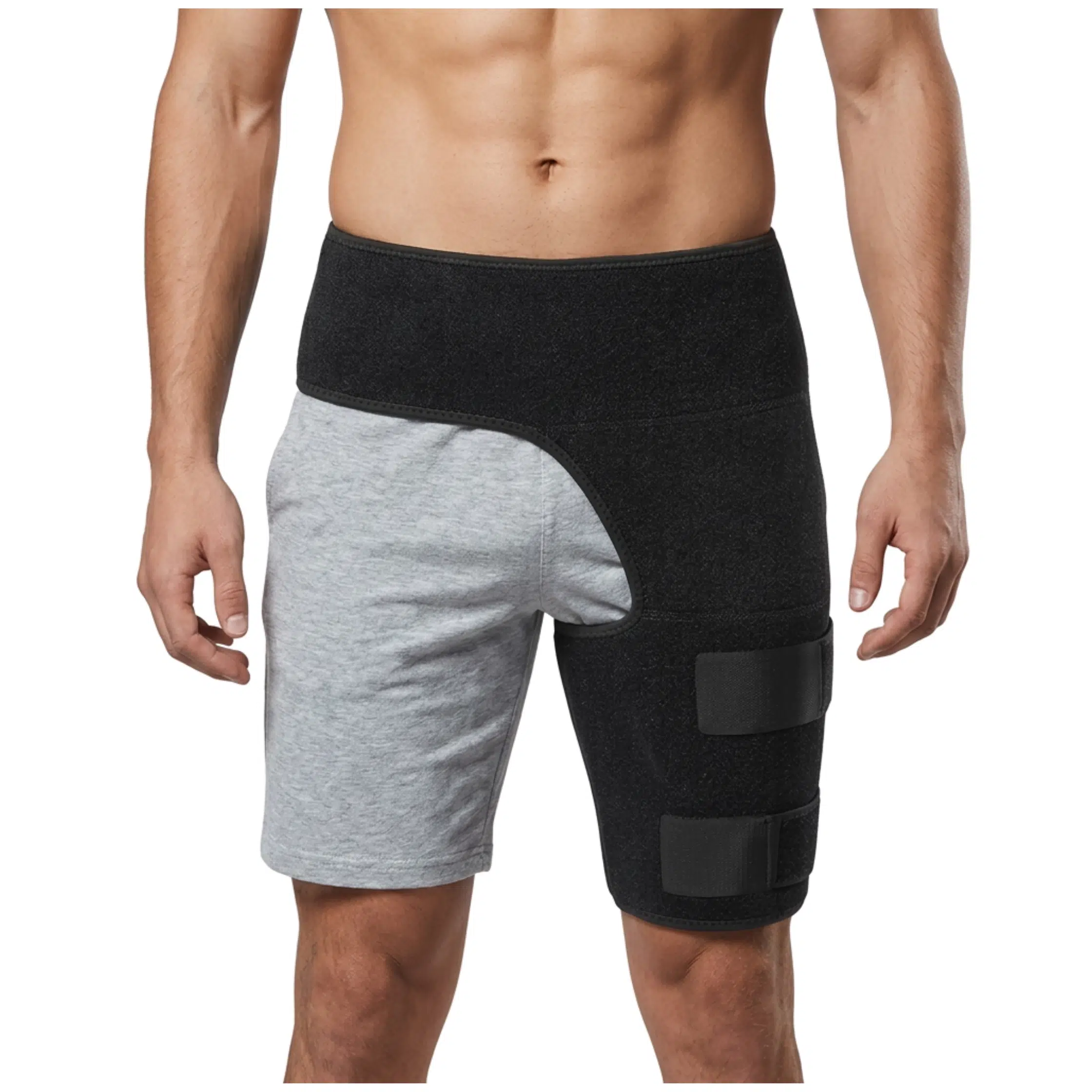
- 1 sciatica support brace designed to wrap around the waist, pelvis and upper thigh.
- Made for adults with sciatic-type pain, including pain, tingling, numbness or burning that travels from the lower back or buttock into the hip and leg.
- Suitable for both men and women.
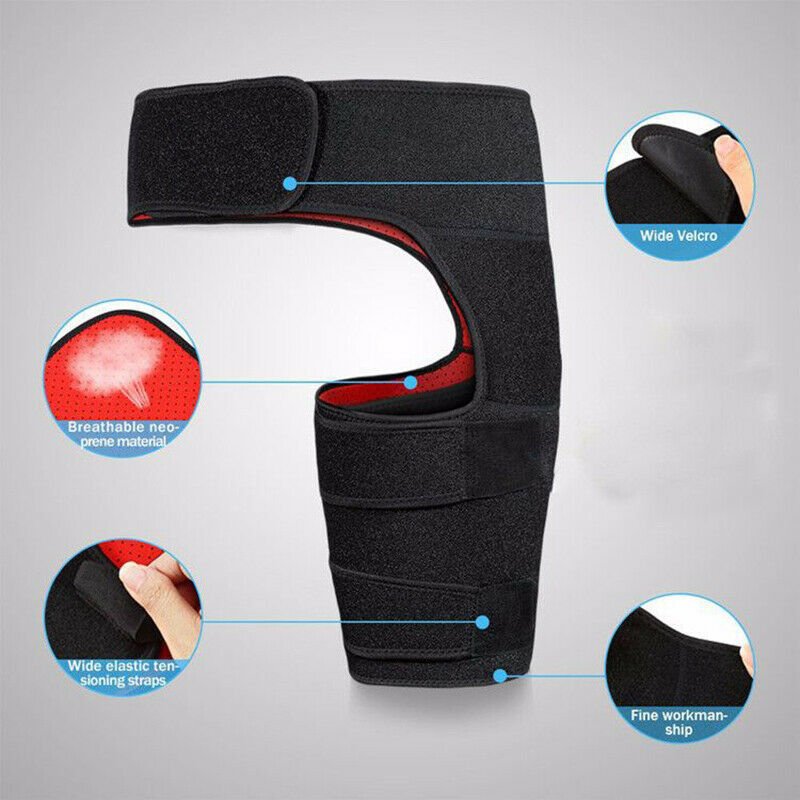
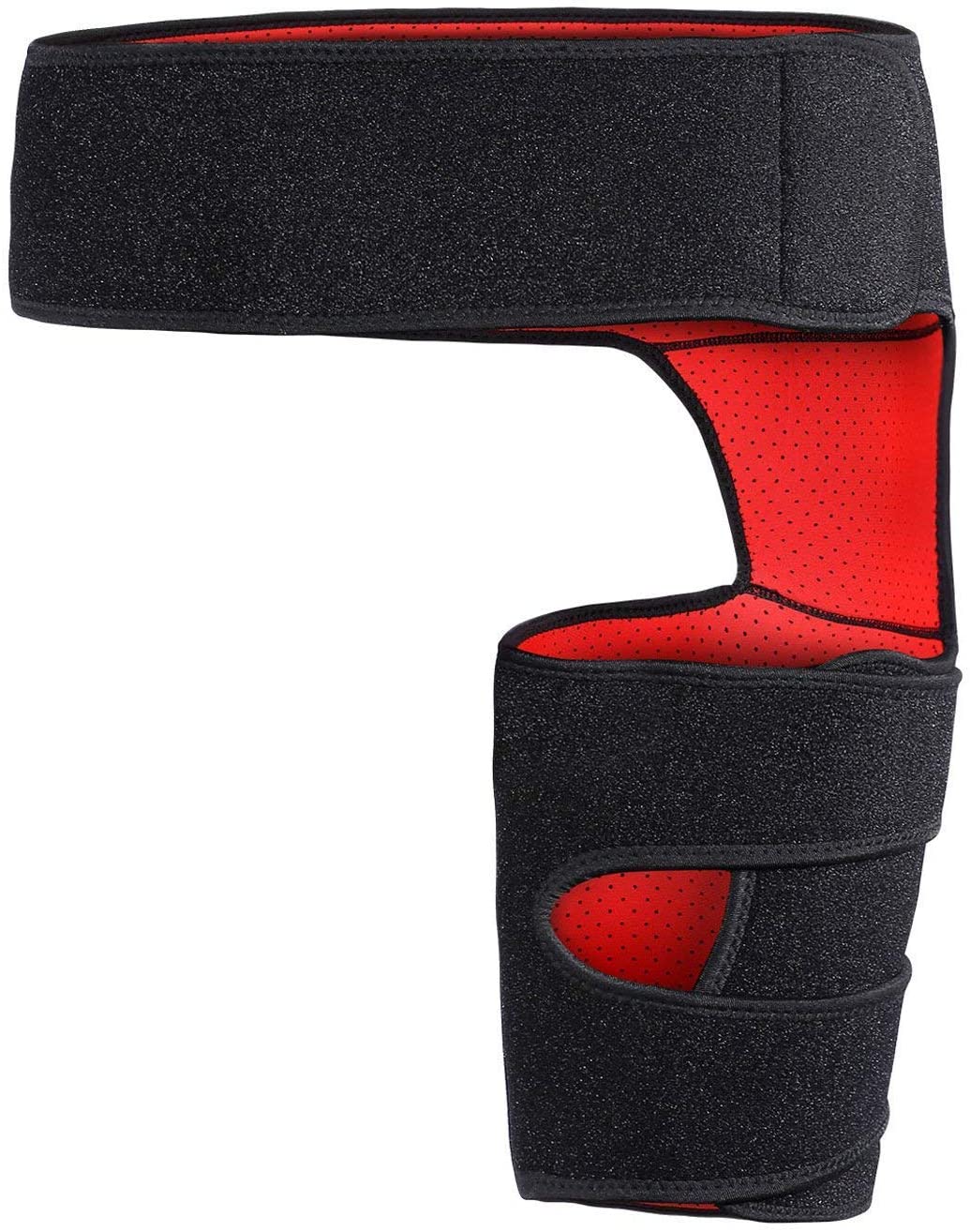
- Adjustable two-strap design with one strap around the waist or pelvic area and one around the upper thigh.
- Both straps use hook-and-loop fastening so you can adjust the fit and level of compression more easily.
- Designed to provide supportive compression around the lower back, pelvis, hip and upper thigh rather than rigid restriction.
- May help the area feel steadier and more comfortable during sitting, walking, commuting and other everyday activities.
- Lightweight design intended to be practical for regular day-to-day wear.
- Padded on the inside to improve comfort during longer periods of use.
- Made from breathable, moisture-managing materials to help reduce heat and discomfort.
- Fits waist sizes up to 117 cm and upper thighs up to 66 cm.
- Can be worn under everyday clothing if comfortable for you and if outer clothing allows enough room.
- It is not a cure for sciatica and does not identify the cause of your symptoms.
- If the brace increases numbness, tingling or discomfort, loosen it or stop using it and reassess the fit.
BackReviver Sciatica Nerve Brace
Targeted support for sciatic-type pain
If pain, tingling, numbness or a burning feeling is travelling from your lower back or buttock into your hip and leg, ordinary movement can start to feel much harder than it should. Sitting at a desk, driving, walking, climbing stairs, or trying to get comfortable in the evening can all become more tiring and more frustrating.
Sciatic-type pain does not feel the same for everyone. For some people it is sharp and shooting. For others it feels more like a burning ache, pins and needles, numbness, or a heavy, unreliable feeling in the leg. What many people do share is that certain positions and everyday activities keep stirring it up, especially when the lower back, pelvis and hip stay in the same position for too long or have to repeat the same movement again and again without much chance to settle.
When that happens, external support can sometimes make daily movement easier to manage. The BackReviver Sciatica Nerve Brace is designed to provide adjustable compression and support around the waist, pelvis, hip and upper thigh. It uses a two-strap design, with one strap wrapping around the waist or pelvic area and one around the upper thigh. Both straps fasten with hook-and-loop closures, so you can adjust the fit and the amount of compression more easily. For some people, that added support helps the area feel steadier and less irritated during normal activity.
By supporting the pelvis and upper thigh while you sit, stand or walk, the brace may reduce how much each movement aggravates the sensitive area. That can make ordinary tasks feel less draining. It is intended for adults who want a practical support option alongside other sensible measures such as spreading activity more evenly through the day, staying as mobile as symptoms allow, and getting professional advice when needed. Spreading activity more evenly simply means not doing all your sitting, standing, walking or chores in one long stretch and then feeling the effects later. The brace is not a cure for sciatica, but it may help some people feel more supported during flare-ups and more comfortable getting through the parts of the day that usually aggravate symptoms.
What sciatica means in real terms
Sciatica is the name commonly used when pain and other nerve-related symptoms travel from the lower back or buttock down into the leg. The sciatic nerve is the largest nerve in the body. It starts from nerve roots in the lower back, then passes through the buttock and down the leg. When one of the nerve roots feeding into it becomes irritated or compressed, symptoms are often felt somewhere along that route rather than only where the irritation started.
That is why the problem does not always stay neatly in one place. You might feel pain in the buttock, tingling in the calf, numbness in the foot, or a mix of symptoms that changes from day to day. Some people mainly notice lower back discomfort with leg symptoms that come and go. Others find the leg symptoms more obvious than the back pain itself. Nerves can also become sensitive to stretch, pressure and long periods in one position, which helps explain why symptoms often build during sitting, driving or repeated bending rather than showing up only during heavier effort.
It also helps to know that sciatica describes a group of symptoms rather than one single diagnosis. In other words, it tells you how the symptoms are behaving, but not automatically what is causing them. Two people can both say they have sciatica and still have different reasons for it. That matters because management usually needs to be practical and flexible rather than built around one simple fix. A support brace fits into that picture as a way of making movement and posture feel easier to manage, not as a way of naming the exact cause.
Why sciatic-type pain happens
A common reason for sciatic-type pain is irritation of a nerve root in the lower back. This can happen if a spinal disc bulges or herniates and presses on nearby nerve tissue. The discs sit between the bones of the spine and act as shock absorbers. When one becomes irritated and bulges backwards, the nearby nerve tissue can become more sensitive, especially during sitting, bending, or getting up from a chair. Age-related changes in the spine can also contribute. In some people, the spaces around the nerves become narrower, which can make certain movements or positions more aggravating.
Not all sciatic-type pain starts with a disc problem. Stiff or irritated joints in the lower back, changes around the sacroiliac area, or tight and sensitive muscles deep in the buttock can also contribute to a similar mix of pain, tingling or numbness. That is one reason self-diagnosing can be difficult. Pain travelling into the leg is often labelled as sciatica, but the exact source is not always obvious without proper assessment.
In day-to-day life, what matters most is that the nerve, or the tissues around it, have become sensitive and reactive. Once that area is irritated, it often becomes less tolerant of posture, repeated movement and the forces going through it. That is why symptoms may build during very ordinary activities rather than only during obviously heavy tasks. For example, when your lower back and pelvis stay bent for a long stretch at a desk or in the car, the irritated tissues may be held in a position they do not tolerate well. Support wrapped around the waist and pelvis may help the area feel less strained and more settled while you stay in that position. In a different way, when walking or climbing stairs repeatedly makes the pelvis and hip control body weight through the upper thigh, adjustable compression around the hip and upper thigh may help some people feel a little more stable and a little less irritated with each step.
What symptoms often feel like
Sciatic-type symptoms can feel quite different from ordinary muscular soreness. Some people describe a sudden electric-shock feeling running down the leg. Others notice a deep ache through the buttock and hip followed by tingling in the thigh, calf or foot. Numbness is common too, and some people feel that one leg is weaker, heavier, or simply less dependable than usual.
Symptoms are often worse on one side. They may stay mostly around the buttock and upper thigh, or they may travel further down. In many cases, the leg symptoms are more distracting than the back pain, which can feel confusing if you expect the problem to stay in the lower back. The sensation can also change through the day. A leg that feels mainly tight and aching in the morning may feel more tingly or burning after a long period of sitting, especially if you have not changed position much.
It is also common for symptoms to change with posture, movement and time of day. A morning that starts stiff and awkward may ease a little with movement. A day with too much sitting may bring the symptoms back down the leg again by evening. That shifting experience is one of the things people often find most wearing. It usually reflects how sensitive the nerve route is to repeated pressure, stretch or a fixed posture rather than meaning a completely different injury is happening each time.
Why ordinary activities can aggravate it
One of the hardest parts of sciatica is how much it can interfere with normal routines. Sitting is a common trigger, especially if it goes on for too long or if you cannot change position easily. Driving can be difficult for the same reason. The lower back, pelvis and hip stay in one position, and the irritated area may become less tolerant as time goes on. A long static position often bothers irritated nerve tissue more than people expect.
Bending, lifting, twisting, getting out of bed, putting on shoes, climbing stairs, or getting in and out of a car can also stir things up. These movements ask the lower back and pelvis to combine load with movement, and that can be enough to aggravate symptoms when the tissues are already sensitive. For some people, walking helps ease stiffness and feels useful. For others, too much walking brings on more pain into the buttock or leg. It often depends on what is irritating the nerve and how reactive the area is at that point.
The important point is that the problem is not always the movement itself. Often it is how much of that movement you do, how soon you repeat it, or how irritated the area already was before you started. Once symptoms are active, even simple tasks can start to feel as though they need more effort and more caution than usual. This is where a brace can help. Rather than stopping you moving, support around the waist, pelvis and upper thigh may make repeated sit-to-stand movements, walking around the house, or standing to cook or work feel less aggravating by giving the area a more secure, supported feel.
Why symptoms can come and go
Sciatic-type pain rarely settles in a perfectly straight line. Many people have a few better days and then a setback that seems to come from nowhere. A long drive, poor sleep, awkward lifting, too much sitting, or simply doing more than your body was ready for can all make symptoms more obvious again. Often the setback is less about one dramatic event and more about irritated tissues not having enough time to settle between one demand and the next.
The symptoms themselves can shift as well. One day the pain may sit mainly in the buttock. Another day it may be more noticeable in the calf or foot. That does not always mean a completely new problem has appeared. More often, it reflects a change in how irritated or sensitive the nerve route has become. If the lower back and pelvis have been coping reasonably well, symptoms may stay higher up. If the nerve is more irritated after a long period of sitting, driving or bending, you may notice the leg symptoms more clearly.
This is one reason people often feel unsure whether they are improving. In reality, progress is often gradual and uneven. Learning what tends to aggravate symptoms, and what helps settle them, can make a real difference over time. For some people, having a brace available for predictable trigger periods such as commuting, desk work, or a busy day on their feet can help stop symptoms building quite so easily.
Does it matter where you feel it most?
Yes, but not always in the way people expect. Some people with sciatic-type pain feel most of their discomfort high up in the buttock, outer hip or upper thigh. Others mainly notice tingling, numbness or pain further down in the calf, ankle or foot. Both can still fit the same broader picture.
This matters because people often judge a support product only by where they feel the pain most strongly. If your symptoms are mainly lower down the leg, you may wonder whether support around the pelvis, hip or upper thigh can still be useful. In many cases, it can. Symptoms felt lower down are still often influenced by what is happening higher up around the lower back, pelvis and the path of the nerve. If those upper areas feel less strained and less reactive during sitting, walking or using stairs, the symptoms further down may also feel easier to manage.
It is also common for symptom location to change over time. During a flare-up, pain may travel further down the leg. As things settle, it may become more concentrated in the buttock or upper thigh instead. That shift does not necessarily mean something new is happening. It can simply reflect changes in irritation and sensitivity.
For that reason, support around the pelvis and hip can still feel worthwhile even if the most noticeable discomfort is not always located there.
Can a brace help with sciatica?
A brace is not a cure for sciatica, and it does not replace proper assessment or treatment of the underlying cause. Even so, some people do find that targeted support and compression make day-to-day movement easier to manage, especially during flare-ups or during activities that repeatedly aggravate symptoms.
A brace like the BackReviver Sciatica Nerve Brace is made to support the waist, pelvis, hip and upper thigh area. For some wearers, that external support creates a greater sense of stability during movement. It may also improve your awareness of how the area is moving, which can help you move a little more confidently and with less protective tension. That extra tension often shows up when people expect pain. It can make movement feel more awkward and more tiring, so anything that helps you move more normally can be useful.
That matters because when pain is present, many people naturally stiffen up, hold themselves awkwardly, or start avoiding normal movement. Sometimes a well-fitted support can make everyday tasks feel less vulnerable and less irritating, even if it does not remove the problem entirely. When the pelvis and upper thigh feel better supported during walking, stairs, or getting in and out of a car, some people notice less of the repeated pulling or jarring feeling that usually builds as the day goes on.
Gentle compression can also help in a broader comfort sense. Some people simply find that the area feels more contained and supported during sitting, walking, commuting or housework. Results do vary, but for the right person and in the right situation, a brace can be a useful part of the overall approach rather than a stand-alone answer.
Supportive compression or rigid support?
Not all braces are designed to do the same job. Some supports are quite rigid and are made to limit movement much more heavily. That may be useful in certain situations, but it is not always what people want for day-to-day sciatic-type discomfort. If a support feels too stiff or bulky, people often stop wearing it, especially for work, travel or ordinary movement around the house.
Supportive compression works differently. Instead of trying to stop movement, it gives a close, supportive feel while still allowing you to move normally. For many people with sciatic-type symptoms, that is a better fit. The aim is not to lock the body down. It is to make everyday activity feel a little easier to manage. That often matters more than heavy restriction when the problem is being aggravated by long periods of sitting, repeated walking, or routine daily tasks rather than by a need to keep the area still.
The BackReviver Sciatica Nerve Brace sits in this more wearable, supportive category. It is intended to give adjustable compression and support rather than stiff restriction. That makes it a sensible option for people who want help staying comfortable during daily routines without feeling heavily strapped in or put off from wearing it consistently.
BackReviver Sciatica Nerve Brace
The BackReviver Sciatica Nerve Brace is designed for men and women who want targeted support for sciatic-type pain, lower back discomfort, hip irritation, or related flare-ups affecting the pelvis and upper thigh area.
Rather than relying on rigid panels or heavy restriction, it uses an adjustable two-strap design to give a supportive fit that can be tailored to you. One strap secures around the waist or pelvic area and the other around the upper thigh, with hook-and-loop fastening on both. That makes it easier to change the fit depending on your build, what you are wearing, and how sensitive the area feels that day. It also makes the brace more practical for ordinary life.
If you want support while sitting at work, moving around the house, walking, commuting, or managing days when symptoms feel more noticeable, the brace is intended to be comfortable enough for regular use and adaptable enough for different situations.
How the BackReviver brace is designed to help
Targeted compression around the areas that often feel most aggravated
The brace is designed to provide support around the lower back, pelvis, hip and upper thigh. These are the areas many people notice becoming more sensitive during sciatic-type flare-ups, even when the symptoms also travel further down the leg.
That targeted support can help some wearers feel steadier and more comfortable during everyday movement. Rather than forcing your body into one position, the aim is to make the area feel better supported during the tasks that usually aggravate discomfort. For example, when sitting keeps the pelvis and lower back in a position that tends to irritate the nerve route, compression around the waist and pelvis may make that position feel less aggravating for a time. When walking repeatedly loads the hip and upper thigh, support around those areas may help reduce the feeling of jarring or vulnerability with each step.
Adjustable fit for more personal comfort
One of the practical strengths of the brace is its adjustable fastening system. The two straps allow you to tailor both the fit and the level of compression. That matters because comfort can change depending on your build, what you are wearing, and how sensitive the area feels that day.
A brace that is too loose may shift and feel ineffective. One that is too tight can become uncomfortable and may aggravate symptoms instead of helping. The adjustable design makes it easier to find a level of pressure that feels supportive without being excessive. That is particularly useful with sciatic-type pain because tolerance can vary from day to day. On a better day you may want lighter support for walking or chores. On a flare-up day you may prefer a firmer feel for sitting, commuting or standing for longer periods.
Help with sitting, walking, and routine daily movement
Most people are not looking for support only during exercise. They need help with the ordinary things that have started to become difficult. Sitting through work, driving, shopping, doing light chores, standing for periods, and moving around the house can all feel more awkward when symptoms are active.
The BackReviver brace is designed with those everyday situations in mind. For some wearers, the added support makes routine activity feel more tolerable and less draining. It may not take symptoms away completely, but it can help reduce the sense of strain that builds as the day goes on. If repeated sit-to-stand movements usually trigger a pulling feeling through the buttock or upper thigh, the brace may help that transition feel more controlled. If walking on hard ground tends to make the hip and pelvis area feel less steady after a while, the supportive fit may help you stay comfortable for longer before symptoms start to build.
Lightweight enough for regular wear
A brace is only useful if it feels practical enough to put on and keep using. The BackReviver brace is designed to be lightweight, without the bulk that can make some supports awkward under clothing or inconvenient during daily tasks.
That lower-profile design can make it easier to fit into normal routines at home, at work, or when you are out and about. A brace that feels cumbersome often gets saved only for the worst days. A lighter design is more realistic for the times support is actually needed most, such as a commute, a working day at a desk, or a day with more walking than usual.
Breathable, moisture-managing materials
Comfort matters, especially if a brace may be worn for several hours at a time. The materials used in the BackReviver brace are designed to be breathable and help manage moisture, which can make a noticeable difference during longer periods of wear.
That can be especially helpful during warmer weather, on more active days, or when you are moving between different environments. A brace that feels hot and clammy often gets abandoned. One that stays more comfortable is simply easier to keep wearing when you need it. That practical point matters because support only helps while you are actually willing to keep it on during the tasks that aggravate symptoms.
Padded where comfort matters
The brace also includes padding to improve comfort against the body. This can help reduce rubbing and pressure points that sometimes make supports unpleasant to wear over time.
If you plan to use the brace during work, travel or longer stretches of activity, that extra comfort can make it feel more wearable and less intrusive. Padding does not just improve how it feels against the skin. It can also help the brace sit more evenly, which may make the support feel more consistent rather than leaving one area taking too much pressure.
Support without feeling overly restrictive
Some people avoid braces because they worry they will feel stiff, bulky or limiting. This brace is designed to provide support while still allowing everyday movement.
For many wearers, that is the balance that matters. The goal is not to stop movement. It is to move with a bit more support and a bit less aggravation. When symptoms are being stirred up by ordinary bending, walking or changing position, a support that works with movement rather than fighting it is often easier to tolerate and easier to use consistently.
When people often use this type of brace
A support brace like this is often most helpful in the situations where symptoms tend to build. For some people, that means wearing it at a desk when sitting for long periods usually brings on discomfort through the lower back, buttock or leg. For others, the hardest part of the day is commuting, whether that involves driving or simply spending too long in one position.
Walking is another common time to want extra support, particularly during flare-ups or after a difficult few days when the area feels more vulnerable. Some people also use this kind of brace during light chores, shopping, or times when they know they will be on their feet more than usual. These are the situations where repeated loading through the pelvis, hip and upper thigh can gradually build symptoms rather than causing one immediate sharp pain.
It can also be useful on days when the aim is simply to make normal movement feel more manageable while symptoms settle. That might mean wearing it around the house, during repeated sit-to-stand movements, or while getting through an ordinary day without overdoing things.
Not everyone uses a brace in exactly the same way. Some prefer occasional use during specific aggravating tasks. Others keep it for days when symptoms are more active. The most useful routine is usually the one that fits naturally into your life and supports activity without making you feel you have to depend on it all the time.
Who this brace may suit
The BackReviver Sciatica Nerve Brace may suit adults experiencing sciatic-type pain affecting the lower back, buttock, hip or leg, especially when symptoms are aggravated by sitting, standing, walking, or ordinary daily movement.
It may also appeal if you feel you would benefit from a little more support during flare-ups or while building confidence with normal activity again. Some people find it particularly useful if prolonged sitting tends to trigger symptoms, or if the area feels more vulnerable during commuting, chores or time spent on their feet.
Depending on the nature of the symptoms, this style of brace may also be considered by people dealing with related discomfort around the hip, pelvis, sacroiliac area or upper thigh. It is best thought of as a support option rather than a diagnosis in itself. If symptoms are severe, unusual or persistent, proper assessment remains important.
What this brace can and cannot do
The BackReviver brace can provide adjustable compression and support around the waist, pelvis, hip and upper thigh. For some wearers, that makes sitting, walking and everyday movement feel more manageable. It may help the area feel more supported during flare-ups, and it may make normal tasks feel less aggravating when symptoms are distracting or limiting.
It can also be a practical way to add support without stopping movement altogether. If you are trying to stay active, spread activity more sensibly through the day, and avoid repeated aggravation, that can be genuinely useful. In practical terms, this means breaking up longer spells of sitting, walking or chores so the irritated area is not being challenged for too long at once.
What it cannot do is identify the cause of your symptoms or correct every underlying issue that may be contributing to sciatic pain. It does not cure disc problems, spinal narrowing, or other structural causes. It is not a substitute for physiotherapy, clinical assessment, or medical treatment where those are needed.
It is also important to keep expectations realistic. Sciatic-type pain varies a great deal, and a brace that feels very helpful for one person may be only mildly helpful for another. Used with that understanding, it tends to be more useful and less disappointing.
How to wear a sciatica brace for best results
The brace should be positioned so that it supports the waist, pelvis, hip and upper thigh comfortably. The exact feel will vary from person to person, but the general aim is a firm, supportive fit without pinching, digging in, or making the area feel restricted.
Start by fastening the brace so that it feels secure, then adjust the straps gradually. It is usually better to begin with moderate compression and increase slightly if needed rather than tightening it too much straight away. A brace that is too tight can become uncomfortable and may make symptoms worse instead of better.
Many people choose to wear this kind of support during the activities that usually aggravate symptoms, such as prolonged sitting, commuting, walking or housework. Others prefer to use it mainly during flare-ups. In many cases it can be worn under everyday clothing if that feels comfortable and practical.
As with any support product, pay attention to how your body responds. If the brace slips, rubs, or causes increased numbness, tingling or discomfort, stop using it and reassess the fit. If symptoms continue to worsen, or if you are unsure whether a brace is appropriate for you, speak to a GP, physiotherapist, or another qualified clinician.
Sizing and fit
The BackReviver Sciatica Nerve Brace is designed to fit a wide range of adults. It fits waist sizes up to 117 cm and upper thighs up to 66 cm. Rather than calling it one size fits all, it is more accurate to think of it as a one-size adjustable brace within that fit range.
Its adjustable fastening system allows the fit to be tailored more precisely, which helps when trying to find the right balance between support and comfort. This adjustability can also help the brace stay more secure during movement and reduce the chance of slipping.
Before first use, it is worth checking that your measurements fall within the stated fit range and allowing yourself a little time to fine-tune the fit properly.
When to seek medical advice
Many cases of sciatic-type pain improve with time and sensible management, but it is important to seek medical advice if symptoms are severe, persistent, or getting worse. This is especially true if you notice increasing weakness in the leg, marked numbness, or pain that is becoming harder to manage.
Urgent medical attention is needed if you develop a major change in bladder or bowel control, numbness around the groin or inner thighs, or sudden severe weakness in the legs. These symptoms are less common, but they should not be ignored.
If your symptoms have been going on for a while, keep returning, or are affecting sleep, work or normal movement, a proper assessment can help clarify what may be driving them and what sort of treatment is most appropriate.
Frequently asked questions
Can a brace cure sciatica?
No. A brace is best thought of as a supportive aid rather than a cure. It may help manage symptoms by providing compression and support during activities that would otherwise aggravate the area, but it does not remove the underlying cause of sciatic pain.
Can I wear the brace all day?
That depends on comfort, fit and why you are using it. Some people wear a brace during the parts of the day that tend to trigger symptoms, such as sitting at work, commuting or walking. Others use it only during flare-ups. If you wear it for longer periods, make sure it remains comfortable and does not feel overly tight or restrictive.
Can I wear it while sitting at work or driving?
Yes, many people use this kind of brace during prolonged sitting, including desk work and travel, if it feels comfortable for them. Sitting is a common trigger for sciatic-type pain, so extra support can be useful in these situations. The fit should feel secure but not tight, and it still helps to change position regularly where possible.
Can it be worn under clothing?
In many cases, yes. The brace is designed to be lightweight enough for regular wear and may fit under normal clothing depending on what you wear over it. Looser clothing usually makes this easier. Comfort matters more than concealment, so it is worth adjusting the brace properly before wearing it for longer periods.
Will it help hip and buttock pain as well as leg pain?
It may help provide support around the areas where symptoms are most noticeable, particularly the hip, buttock, pelvis and upper thigh region. Some people feel most of their discomfort locally in these areas, while others feel it travelling further down the leg. How helpful the brace feels depends on the source of the symptoms and how your body responds to the added support.
How tight should a sciatica brace be?
It should feel firm and supportive, not painfully tight. You want enough compression for the brace to stay in place and give the area a supported feeling, but not so much that it digs in, causes discomfort, or increases numbness or tingling. If you are unsure, start slightly looser and adjust gradually.
Can I use it alongside exercises or physiotherapy?
Yes. In many cases, that is one of the most sensible ways to use it. A brace can provide support during everyday activity while exercises, movement work, or clinician-guided rehabilitation address the broader picture. It should not replace treatment where that treatment is needed, but it may complement it.
When should I get medical advice for sciatica symptoms?
You should seek medical advice if symptoms are severe, not improving, or getting worse, especially if you notice increasing weakness, significant numbness, or difficulty managing normal daily activity. Urgent assessment is needed if you develop changes in bladder or bowel control, numbness around the groin, or sudden severe weakness.
Order with confidence
If you are looking for a practical way to add support during periods of sciatic-type pain, the BackReviver Sciatica Nerve Brace offers adjustable compression, everyday comfort, and a design intended to support movement without feeling unnecessarily restrictive.
For some wearers, that can make sitting, walking, commuting and normal daily tasks feel more manageable. If that sounds like the kind of support you need, check the sizing carefully, make sure the fit range suits you, and use the brace for the activities that usually aggravate your symptoms. If you are unsure whether this type of support is right for you, a GP or physiotherapist can help you decide.
If a money-back guarantee or returns policy applies, this is the point to state it clearly and simply so that the reader feels reassured about trying the product.
Disclaimer
This information is general guidance only. It is not a substitute for individual medical advice, diagnosis, or treatment. If you are unsure whether this brace is suitable for you, or if you have new, persistent, or more complex symptoms, speak to a GP, physiotherapist, or another appropriate clinician for personalised advice. No support product can guarantee a particular outcome.
Fast & Secure Checkout Through Paypal
Pay with Paypal the secure payment gateway that accepts all credit and debit cards. Paypal is free and secure and no credit or bank information is ever stored or shared with us.
Fast Dispatch
Enjoy your items soon with quick dispatch via Royal Mail. Expect to have your items between 1-3 working days for domestic orders. 7-10 Working days for international orders.
Return Policy – 30 Day Money Back Guarantee
In the unlikely event, you are unhappy with your purchase you can return it within 30 days for a refund. Please contact us via the form on the contact us page to start your return.
To return an item please send it to: Nuova Health UK, 81 Highfield Lane, Waverley, Rotherham, S60 8AL. Please include a note with your order id so we know who to refund. Please retain your postage receipt as proof of postage. All that we ask is that the item is in the original packaging and unused.

Reviews
There are no reviews yet.