Are you struggling with persistent lower back pain, discomfort in the hips, or pain that seems to spread into the buttocks or upper thighs? This kind of pain around the lower back and hips can sometimes be linked to the sacroiliac (SI) joints, although other conditions can feel similar. When standing, walking, or getting up from a chair start to feel harder than they should because of pain around the back of the pelvis, it makes sense to look for extra support. A sacroiliac belt is one of the ways often used to support this area and ease some of the strain on these joints, usually alongside other treatments and exercises.
Understanding sacroiliac (SI) joint pain
What is sacroiliac (SI) joint pain?
The sacroiliac joints sit at the back of the pelvis, linking the base of the spine (the sacrum) to the large hip bones on each side. They are strong, weight‑bearing joints that pass load from the upper body down into the legs. Normally they only move just a little, which helps the pelvis cope with everyday movements like walking, standing, and turning.
If these joints or the ligaments around them become irritated, inflamed, or move more than they are meant to, you can start to feel pain in that area. This is often felt around the dimples at the back of the pelvis and can spread into the buttock, side of the hip, or the upper thigh. Because you use these joints every time you stand, walk, or shift weight from one leg to the other, pain here can easily affect day‑to‑day activities.
Sacroiliac joint problems are a well‑recognised cause of lower back and pelvic pain in adults, alongside other possible sources such as the lower spine and hip joints. Because different problems can feel similar, it is usually best to get things checked rather than relying on self‑diagnosis.
How sacroiliac joint pain tends to feel
SI‑type pain is usually felt on one side of the lower back, close to the back of the pelvis. It can spread into the buttock and sometimes towards the side of the hip or the upper thigh. In some cases the ache can also be felt in the groin, because of where the joints sit at the back of the pelvis. Leg pain linked to the SI joints usually does not travel below the knee and is often more of an ache than the sharp, shooting pain that can happen when nerves in the lower spine are irritated.
Many people notice a stiffness or “locked” feeling around the lower back and hips, especially after sitting or lying still for a while. Getting up from a chair or out of bed can feel particularly uncomfortable until the joints and muscles loosen. Those first few steps can feel very stiff and sore, which can be quite discouraging when it happens most mornings.
It can also feel as if the pelvis or lower back is not fully steady. Some people describe this as a feeling that one side might “give way” when they stand on one leg, turn quickly, or walk on uneven ground. That wobbly feeling can be quite unnerving, especially if there is worry about losing balance. This often means the ligaments and small muscles around the joints are working harder than usual to keep the pelvis steady.
Certain tasks tend to set pain off because they load one leg at a time and twist or tilt the pelvis. For example, standing up from a low seat, going up and down stairs, walking further than usual, or standing still for a long spell. When the sacroiliac joints are already sensitive, these repeated one‑leg loads and small twisting movements can put extra stress through the area, leading to sharper pain or a build‑up of aching. If you recognise that one‑sided ache into the buttock or upper thigh, you are far from alone.
Common reasons SI joints become painful
SI joint pain mainly affects the lower back and pelvic region, but the causes can differ. Common reasons include:
- Repeated strain or overload:
Frequent bending, lifting, twisting, or long periods of standing can put repeated stress through the sacroiliac joints and the strong supporting ligaments. Over time, this can irritate the joint surfaces or stretch the ligaments, so the joints become sore when you load or move them. - Arthritis‑type changes:
Conditions such as osteoarthritis or inflammatory arthritis can affect the joint surfaces and lining. When the smooth cartilage is worn or inflamed, movement at the joint can become stiffer and more uncomfortable, and the surrounding tissues can become sensitive. - Pregnancy‑related changes and the period after pregnancy:
During and after pregnancy, hormones can soften and loosen ligaments around the pelvis, allowing more movement at the sacroiliac joints. Added body and baby weight, plus changes in posture, can then leave the joints and supporting tissues feeling strained and less stable. (This belt is not suitable for use during pregnancy.) - Direct trauma:
A fall onto the buttocks or a heavy impact to the pelvis can injure the ligaments or joint surfaces, leading to sharp pain at first and sometimes longer‑term irritation while tissues heal. - Inflammatory and, more rarely, infectious causes:
Some inflammatory conditions can specifically target the sacroiliac joints, causing ongoing inflammation and pain. Infection in this region is rare but serious and is usually accompanied by feeling unwell, with fever and other general symptoms.
Even though the starting point is different, these causes can all tend to put too much repeated strain on the joints and ligaments. As a result, everyday movements that twist, tilt, or load the pelvis more can become painful.
How sacroiliac joint pain affects everyday life
When these joints and the tissues around them are irritated, the pain and stiffness described above can start to affect many areas of daily life. You might notice, for example, that:
- walking, particularly on slopes or stairs, becomes more tiring or painful,
- standing for long periods brings on a deep ache across the buttocks or low back,
- turning over in bed or getting out of bed is uncomfortable,
- balance or confidence on one leg feels reduced.
It is very common to feel wary about walking further or standing for too long when pain flares like this.
To avoid pain, people often start changing how they move without realising it. This might include limping slightly, leaning away from the sore side, or twisting more from the spine or hips to protect the pelvis. These are natural ways the body tries to protect the sore area, but over time they can place extra strain on other joints and muscles, such as the knees or upper back, and sometimes create new areas of discomfort.
Sleep can be affected if it is hard to find a comfortable position or if turning in bed sets pain off. Feeling tired, combined with ongoing pain, can understandably wear people down and make everyday tasks feel much harder than they should.
Treatment options for SI joint pain
So what can you actually do about it, beyond just putting up with the pain? Because several different problems can cause similar pain, having a proper assessment is important. A GP, physiotherapist, or other qualified clinician will usually:
- listen to how your symptoms started and how they behave with activity and rest,
- look at how you move and how the pelvis and spine respond to certain positions or tests,
- sometimes arrange imaging, mainly to rule out other problems rather than to “prove” SI joint pain.
Treatment depends on what is causing the problem and how severe it is. Most people do best with a mix of approaches rather than relying on just one. For many people, treatment includes:
- Activity and lifestyle changes:
Adjusting how long you stand or sit in one go, spacing heavier tasks out with lighter ones, and improving lifting technique can reduce repeated strain on the joints. - Exercise and physical therapy:
Strengthening the muscles around the pelvis, hips, and lower back, and improving control when standing on one leg or changing direction, can help the joints cope better with everyday loads. A physiotherapist can suggest exercises, for example targeting the gluteal and core muscles, that are suitable for your situation. - Pain‑relieving medicines:
A clinician may suggest medicines such as non‑steroidal anti‑inflammatory drugs (NSAIDs) in suitable cases to help reduce pain and inflammation. - In a small number of cases, injections or surgery:
For some with long‑lasting, confirmed SI joint pain, injections or other procedures may be discussed by specialists. These are usually considered only when more conservative care has not helped enough.
Alongside these measures, many clinicians look at whether a sacroiliac belt might help. The idea is to give extra support around the joints from the outside while irritated tissues settle and while strength and control are improved through exercise. This is often the point where people ask whether a support belt around the pelvis could make things easier.
Where a sacroiliac belt can fit in
Sacroiliac belts are often used for adults whose symptoms and examination suggest the sacroiliac joints are part of the problem. Many people say that, when they use a belt for the right activities, certain movements feel less painful and everyday tasks feel more manageable.
A sacroiliac belt does not fix the underlying cause of pain, and it will not suit everyone. A belt cannot undo arthritis or past injury, but it can often make day‑to‑day movement feel more manageable. Its job is to support the pelvis from the outside, reduce movements at the sacroiliac joints that are causing irritation, and let the surrounding muscles and ligaments work without having to brace quite as hard. It is usually just one part of the treatment plan you agree with your clinician, alongside exercises, activity advice, and any other treatments recommended.
How a sacroiliac belt changes the load on your pelvis
A sacroiliac belt is worn low around the pelvis, roughly level with the bony points at the sides of the hips. When you tighten it, it gently compresses the pelvis and helps hold the pelvic bones more closely against the sacrum.
This usually helps in three main ways:
- It can reduce small sliding or “shearing” movements between the sacrum and the hip bones when you shift weight from one leg to the other. In irritated joints, these tiny movements can trigger sharp pain. By limiting them a little, the belt may reduce these pain spikes when you stand up, use the stairs, or walk on the flat.
- It supports looser or strained ligaments at the back of the pelvis. If these ligaments have been stretched, for example after repeated strain or hormonal changes around pregnancy, they may struggle to keep the joints steady on their own. The belt acts like an extra pair of hands around the pelvis and helps share the strain.
- It gives your body clearer feedback about where your pelvis is. The gentle pressure of the belt can help your nervous system sense the position of your pelvis more accurately. This can help some people feel more stable and can encourage steadier movement.
When the sacroiliac joints move in a smaller, more controlled range and the supporting ligaments are less overstretched, the muscles of the lower back and hips do not need to grip as hard to protect the area. This can ease the tired, aching feeling some people notice across the lower back and side of the hips. That extra stability often means the same everyday activities that previously set pain off – such as standing, walking, and using stairs – may start to feel more manageable when a sacroiliac belt is worn. In simple terms, if the joints do not move quite so sharply each time you put weight through them, they usually complain less.
When people tend to use a sacroiliac belt
The sacroiliac joints work hardest when they are carrying body weight and dealing with twisting or tilting of the pelvis. Many people choose to wear a sacroiliac belt during the parts of the day when they are most upright and active, for example:
- longer periods of standing,
- walking or being on their feet for extended stretches,
- tasks that involve frequent stepping up or down, bending, or lifting.
If your pain tends to build when you are upright for too long, or when you keep shifting weight from one leg to the other, wearing the belt at those times may help reduce how sharply symptoms flare. You do not have to wear it all day for it to be useful; often it is about choosing the right moments.
Some people also find it helpful on certain types of journeys or during longer periods of sitting, while others prefer to loosen or remove it when seated and tighten it again when they are on the move. It usually takes a short time to adjust and find when the belt helps you most. A simple starting point is to wear it for the one or two activities that usually cause you the most discomfort and see if those feel easier.
Bringing it together
SI joint pain can cause aching or sharp discomfort around the back of the pelvis, buttocks, and upper thighs, especially when you are standing, walking, or changing position. This is often linked to irritation in the joint surfaces or strain in the ligaments that hold the sacrum and hip bones together, which can be stressed by repeated one‑leg loading and small twisting movements.
A sacroiliac belt is a non‑invasive way to support the pelvis from the outside, gently limit painful small movements at the joints, and share some of the load taken by irritated ligaments and muscles. Many people use a belt as one part of a plan that includes exercise, changes to how long they stay in one position, and other treatments agreed with a healthcare professional.
Common situations where a sacroiliac belt may help
Pain that builds the longer you stand or walk
A common issue is pain that builds the longer you are on your feet. You might be fairly comfortable at the start of the day, but after a spell of standing in one place, walking round the shops, or being on your feet at work, an ache deep across the back of the pelvis and into one buttock starts to build. Sitting down eases it, but as soon as you stand again the cycle begins. It can feel as though you can only stand or walk for a limited time before the pain forces you to stop.
Prolonged standing and walking mean the sacroiliac joints are carrying body weight over and over with each step. When you are standing still, the ligaments at the back of the pelvis – the tough bands of tissue that link the sacrum to the hip bones – are under a steady pull. If you stay in one position for too long, these ligaments can start to stretch slightly and become sore, similar to an elastic band held under tension for a long time.
When you walk, each step adds a small amount of movement between the sacrum and the hip bones. The sacroiliac joints are mainly designed to be very stable, with only a small amount of controlled movement. If the joint surfaces are irritated or the supporting ligaments have already been strained, those repeated tiny tilts and slides with each step can gradually increase irritation in the joint lining and surrounding tissues. The more steps you take without a break, the more chance there is for this irritation to build.
Muscles around the hips and lower back also work harder when you are on your feet for a long time. Muscles such as the gluteals and the deep spinal muscles help steady the pelvis with each step. If they are constantly working to protect sore joints, they can become tired and tight. By late morning or afternoon, the combination of strained ligaments, irritated joint surfaces, and tired muscles can make the back of the pelvis and buttock feel heavy, achy, and harder to trust.
When this is the main pattern, a sacroiliac belt can help by changing how the forces pass through the joints and ligaments:
- It gently draws the sides of the pelvis in, which reduces how much the two bones slide and tilt against each other with each step. This can mean less of the small, sharp movement that tends to trigger pain.
- It shares some of the work usually taken by the stretched ligaments at the back of the pelvis, so they are not pulled quite as hard when you stand or walk for longer.
- It gives a steadier base for the muscles of the hips and lower back to work from, so they do not have to grip as hard to protect the area. This can reduce the sense of deep fatigue in the muscles by the end of a busy day.
Many people with this kind of pain choose to wear a sacroiliac belt during the times they know they will be on their feet more, such as work shifts, shopping trips, or visits that involve more walking or queuing. You do not have to wear it all the time. Using the belt for the times when you are on your feet more and taking breaks from it when you are resting or only doing light tasks often gives a good balance between support and allowing the muscles to do some of the work themselves.
If you decide to try this belt from BackReviver for this pattern of pain, it can be helpful to start with one or two key activities that you currently find difficult – for example, a longer walk or a job that involves standing for an hour or more. Wear the belt for those specific times and notice whether pain builds more slowly, feels less intense, or settles more quickly afterwards. Over the next few days or weeks you can then see which parts of your day the belt helps most with.
A sacroiliac belt is not a replacement for spreading your activity sensibly through the day, taking short rests when you need them, or doing strengthening exercises around the hips and lower back. However, it can make it easier to get through necessary standing and walking without the pain escalating as quickly. If pain is severe from the first few steps, if you are struggling to bear weight at all, or if pain is spreading higher up the back or into both legs, it is important to have this assessed before relying on a belt.
Pain and a ‘giving way’ feeling around the pelvis
Another common experience is a nagging ache across one side of the lower back and pelvis, combined with a feeling that the pelvis might “give way” or is not quite under control. You might feel this most when standing on one leg to dress, turning quickly, stepping off a kerb, or walking on uneven ground. Even if the pelvis never truly collapses, the sensation itself can be unsettling and can make you move more cautiously.
Often this means the ligaments that normally hold the sacrum and hip bones tightly together have become a bit looser or strained. This can happen after repeated overload, after pregnancy‑related changes, or in people who are naturally more flexible. When those ligaments are not giving the same firm “check” on movement, the sacroiliac joints can move a little more than they are designed to.
When the joints are more mobile like this, the body tries to keep control by using the surrounding muscles. The small muscles close to the spine and pelvis, and the larger muscles at the side of the hip (such as gluteus medius), work harder to hold the pelvis steady each time you stand on one leg or change direction. At first this can be helpful, but over time it means those muscles are doing a lot of work just keeping things in line. They can become tired, sore, and tense.
That combination – ligaments giving a bit more play at the joint, and muscles needing to work harder to compensate – often explains:
- the dull ache around one side of the lower back and buttock,
- the feeling that one side may not fully support you,
- the sense that your muscles are always a little tight or braced.
In this kind of situation, a sacroiliac belt can help by changing how much the joints are able to move and how much work is left for the ligaments and muscles:
- The belt acts a little like firm hands around the pelvis, limiting the range in which the sacroiliac joints can move and reducing the feeling of looseness.
- It takes some of the strain off the stretched ligaments at the back of the joints, so they are not under constant tension every time you stand on one leg.
- It allows the muscles to ease back from constant gripping, because they no longer need to do quite as much of the stabilising on their own.
Many people with this kind of pain choose to wear the belt for tasks that challenge balance or single‑leg control, such as walking outdoors on uneven surfaces, going up and down stairs, or when they know they will be turning and changing direction more often. The aim is to give you a safer, more predictable range of movement so you can move with more confidence, while still working on strength and balance exercises recommended by a clinician.
If there is true buckling where the leg gives way, frequent stumbles or trips, new weakness, or you feel at risk of falling, you should have this assessed urgently before relying on a belt as your main support. A clinician can check for other causes of weakness, assess balance and strength, and help you decide how best to use a belt alongside a wider treatment plan.
Pain when you first move after sitting or lying
Some people find that pain is sharpest when they first move after being still. You may feel a sudden jab or catching pain around one sacroiliac joint when you:
- stand up from a chair after sitting for a while,
- get out of the car,
- turn over in bed or get up from lying.
Once you have taken a few steps and the joints have loosened a little, the pain may ease to a duller ache. You might then be able to move reasonably well until the next time you have been still for a while.
This “start‑up” pain often happens because several tissues around the sacroiliac joint stiffen slightly when they are not moving. The joint is wrapped in a capsule – a tough sleeve of tissue – and reinforced by ligaments. When you sit or lie still, those tissues can tighten and the small amount of fluid in and around the joint becomes less free‑moving. The first movement after rest then asks the joint surfaces to glide and tilt again, pulling on the capsule and ligaments, and moving through fluid that is not as freely flowing as when you have been moving regularly. If the joint is already irritated, that first move can feel like a jolt.
Muscles near the joint may also “switch off” a little when you are still and then have to react quickly when you move. For example, the deep muscles that help control the sacrum and the hip can be a little slow to react when you suddenly stand or twist. That can add to the catching or jabbing sensation.
A sacroiliac belt will not remove all start‑up pain, but it can change how sudden and large those first movements are:
- By holding the pelvis a little more firmly, the belt reduces how far and how quickly the hip bones can move relative to the sacrum when you first stand or turn.
- It reduces the amount of sliding between the sacrum and hip bones when you first put weight through the joint, so the first few movements are smaller and feel less abrupt.
- It gives a reassuring sense of support that can make it easier to stand up or turn without tensing every muscle in anticipation, which can itself reduce the sharpness of the pain.
People with this pattern sometimes choose to fasten the belt before times when they know they will have frequent sit‑to‑stand movements or when turning in bed is difficult, for example in the evening or at times of day when they are moving more between resting and being up. For many, it is not necessary or comfortable to wear the belt overnight. Gentle stretches and controlled movements before fully standing – such as gently rocking the knees or shifting weight in sitting – can also help ease the first movement.
Over time, combining the belt with exercises that improve joint movement and muscle control can reduce how sharp start‑up pain feels. A physiotherapist may, for example, suggest exercises to keep the joint capsule and surrounding tissues moving more regularly, so they do not stiffen as much when you are at rest.
If start‑up pain is severe, makes you feel you cannot move, wakes you repeatedly at night, or is linked with other worrying features such as fever, unexplained weight loss, widespread pain, or changes in bladder or bowel control, seek medical advice promptly. In those situations, the first step is to check for more serious causes and then agree a plan before relying on any support belt.
Ongoing sacroiliac‑type pain after pregnancy (when you are no longer pregnant)
For some people, pain around the back of the pelvis that started during pregnancy does not fully settle after the baby is born. You might notice ongoing aching around one or both sacroiliac joints, especially when standing, walking with a pushchair, carrying a baby on one hip, or lifting and lowering items around the home.
During and after pregnancy, hormones can soften and loosen ligaments around the pelvis. This extra looseness is helpful for childbirth, but it also means the sacroiliac joints can move more than usual. Added body and baby weight, plus changes in posture (for example, standing with more arch in the lower back) can then strain the sacroiliac joints and the ligaments and muscles that support them.
After pregnancy, these ligaments and muscles are gradually regaining strength, but this takes time. The joints may still feel less stable and more easily irritated for months afterwards. At the same time, the pelvic floor and deep abdominal muscles may be weaker and slower to activate, which reduces the natural muscular support around the pelvis. Everyday caring tasks – feeding, changing, lifting, carrying – can involve a lot of repeated bending, twisting, and time on your feet, which can keep symptoms going.
Once you are no longer pregnant, a sacroiliac belt may sometimes be considered, alongside pelvic‑floor and core rehabilitation, to:
- offer some extra stability around the sacroiliac joints while loosened ligaments and muscles regain strength,
- make standing and walking for everyday tasks, such as shopping, pushing a pram, or carrying a baby, more comfortable,
- support you while you work on exercises prescribed by a physiotherapist, women’s health physio, or other clinician.
The belt is not a shortcut around rehabilitation. Its role is to make everyday tasks more tolerable while you strengthen the muscles that need to take over the long‑term job of support. Many people find it helpful to wear the belt for the busier, more active parts of the day – for example, longer standing or walking periods – and then loosen it when resting or doing targeted exercises so that the muscles can work without too much external support.
A physiotherapist or women’s health physio may also suggest combining belt use with specific exercises, such as:
- pelvic floor exercises to improve support from below,
- deep abdominal activation to support the front of the pelvis,
- hip and gluteal strengthening to help control the pelvis when you stand on one leg or walk.
The belt can help these exercises feel more comfortable to perform and more manageable in daily life, but it does not replace them.
Use of a sacroiliac belt after pregnancy is best guided by a healthcare professional who understands your medical history and current situation. The belt in this product description is not suitable for use during pregnancy itself. If pain is severe, if there are symptoms such as pelvic pressure, bladder or bowel changes, or if you feel unsure how to balance support and exercise, it is important to discuss this with a GP, midwife, or physiotherapist.
Pain mainly on stairs, slopes, or uneven ground
Some people find that pain is most noticeable when using stairs, walking up or down slopes, or on uneven ground. You may feel relatively settled when walking on level surfaces, but as soon as you have to step up, step down, or manage a cambered pavement, a sharper pain appears around one sacroiliac joint or buttock. It can feel as though every step on a step or slope “catches” in the back of the pelvis.
These movements put much more strain on the sacroiliac joints than flat walking because they require:
- strong single‑leg loading when one foot is on a step or higher surface,
- controlled tilting of the pelvis as you step up or down,
- small rotations as you adapt to slopes or uneven surfaces.
When you step up onto a step or kerb, one leg has to push your body up and forwards. The pelvis tilts and the sacrum rotates slightly between the hip bones, and the sacroiliac joint on the supporting side takes a sharp increase in load. When you step down, the front leg has to control your body weight as it lowers. The pelvis tilts the other way, and the sacroiliac joint is again asked to manage a strong, quickly changing force. On slopes and side‑sloped pavements, one side of the pelvis may be higher or lower than the other with each step, creating small but repeated tilting and twisting at the joints.
If the sacroiliac joints or their ligaments are already irritated, these sharper tilts and twists can push them into ranges they do not tolerate well. The ligaments at the back of the pelvis can be pulled suddenly, and the joint surfaces can experience more shear (sliding) than in level walking. The muscles that support the pelvis, especially around the hips and lower back, may also tense more strongly to try to keep you steady on each step. Over a set of stairs or a section of uneven ground, this can quickly lead to a spike in pain.
A sacroiliac belt can help here by reducing how much the joints move and how suddenly they are challenged on each step:
- It limits the small gapping and sliding movements that occur when you step up or down, so the sacrum and the hip bone on the supporting side stay more closely aligned.
- It helps keep the sacrum and hip bones better centred at the moment your front leg takes weight, which can reduce the sharp pull on the ligaments at the back of the joint.
- It gives you a more secure feeling when you are on one leg, which can reduce the need to tense every muscle around the pelvis and can make stair climbing or walking on uneven surfaces feel more manageable.
For this pattern, many people choose to fasten the belt more firmly before tackling flights of stairs, slopes, or paths that they know will be uneven. Once they are back on flatter, easier surfaces, they may loosen the belt slightly if that feels more comfortable. It is still important to work on strength and control around the hips and trunk, so that over time your body can cope better with these movements even without the belt.
This might mean:
- practising controlled step‑ups and step‑downs as part of a rehab plan,
- improving hip and gluteal strength so the pelvis tilts and rotates in a more controlled way,
- working on balance exercises so that single‑leg stance feels more secure.
The belt can make it easier to do these exercises and manage day‑to‑day stair use while symptoms are still present, but it should not be the only strategy.
If stairs are so painful that you are avoiding them entirely, if you cannot manage even one or two steps without severe pain, or if you are worried about falling, it is important to seek a clinical review before depending on a belt. A clinician can check for other joint or nerve problems and help you plan both support and exercise in a safe way.
Pain that’s worse by the end of the day
Another common experience is pain that is manageable earlier on, but feels much heavier and more widespread by late afternoon or evening. You might notice that:
- the ache across the back of the pelvis and into the buttocks feels deeper by the end of the day,
- tasks that feel fine in the morning, such as walking short distances, feel much harder later on,
- you feel the need to sit or lie down much sooner as the day goes on.
This often reflects lots of small stresses adding up over the day. Each period of standing, walking, lifting, or turning on your feet adds a bit more strain to already sensitive joints and ligaments. The strong ligaments at the back of the pelvis can become irritated by this repeated tension. Even if no single task is very demanding on its own, the build‑up by the evening can be significant.
Muscles that support the pelvis, hips, and lower back can also become tired from being in use for many hours. The small muscles close to the sacroiliac joints and the larger muscles around the hips and spine may be working a little harder throughout the day to protect sore joints. By the evening, they can feel tight, knotted, and less effective at providing support. The combination of irritated ligaments and tired muscles often explains why pain feels more intense and spread out by the end of the day than it did at the start.
A sacroiliac belt can play a role here by reducing how much extra strain is placed on the joints during the busier parts of the day:
- It supports the pelvis during the times when you do the most on your feet, helping to reduce the small painful movements at the joints with each step.
- It shares some of the load that would otherwise fall entirely on the sacroiliac ligaments, so they are not under as much constant pull.
- It can help your muscles feel they do not need to work quite as hard to hold the area together, which may reduce that heavy, tired feeling by evening.
Many people in this situation choose to use the belt more in the second half of the day, when they know they tend to feel more sore – for example, during a busier afternoon at work, a shopping trip, or a walk later in the day. Earlier in the day, they may focus more on exercises and on spreading heavier jobs out, such as:
- doing shorter spells of tasks that keep you on your feet and taking brief sits in between,
- changing position regularly if you have to stand, for example taking a few steps rather than staying completely still,
- avoiding doing all the lifting, bending, or twisting tasks back‑to‑back and instead mixing them with lighter activities.
Using the belt as extra support at the times when your joints and muscles are already tired, while also adjusting how you spread your activity through the day, can reduce how much pain builds by evening.
If you find you are needing the belt earlier and earlier in the day, or if pain is getting steadily worse from day to day despite reasonable use of a belt and exercises, it is important to have your overall plan reviewed with a clinician. This can help check that nothing new is driving your pain and that your activity levels, exercises, and use of support are all working together in a sensible way.
About this sacroiliac belt by BackReviver
If you have decided that a belt might be worth trying, it helps to know exactly what this BackReviver design is built to do. BackReviver focuses on supports for the back and pelvis, and NuovaHealth stocks this sacroiliac belt because its shape is made to sit low around the back of the pelvis, where many people describe their sacroiliac pain, and its strap system lets you adjust support easily through the day as your activity changes.
Who this belt may help – and when to be cautious
This sacroiliac joint support belt is designed for adults who have pain or discomfort around the belt‑line of the lower back, buttocks, hips, or pelvic region, especially when standing, walking, or changing position, and whose symptoms have been assessed by a clinician as likely to involve the sacroiliac joints.
This belt may suit you if:
- you feel pain or aching around the back of the pelvis that worsens with standing or walking,
- you notice a sense of “giving way” or wobbliness around the pelvis when standing on one leg,
- you notice that firm support or pressure over the pelvic area makes you feel more secure.
The design is symmetric, so it can be used whether your sacroiliac‑type pain is mainly on the left side, the right side, or affects both sides.
This belt is for adults only. It should not be used during pregnancy. Compression around this area at that time can be unsafe. During pregnancy and the period shortly afterwards, any support for the pelvis should be chosen and supervised by a healthcare professional.
Anyone with a recent major injury to the back or pelvis, recent spinal or pelvic surgery, known fractures, severe osteoporosis, or complex inflammatory conditions affecting the spine or pelvis should speak to a healthcare professional before using a sacroiliac belt. If you are unsure whether the sacroiliac joints are the main source of pain, it is worth getting this checked.
If that description sounds familiar and a clinician has said the sacroiliac joints are involved, this style of sacroiliac belt is often what people find most helpful.
Design features and strap system
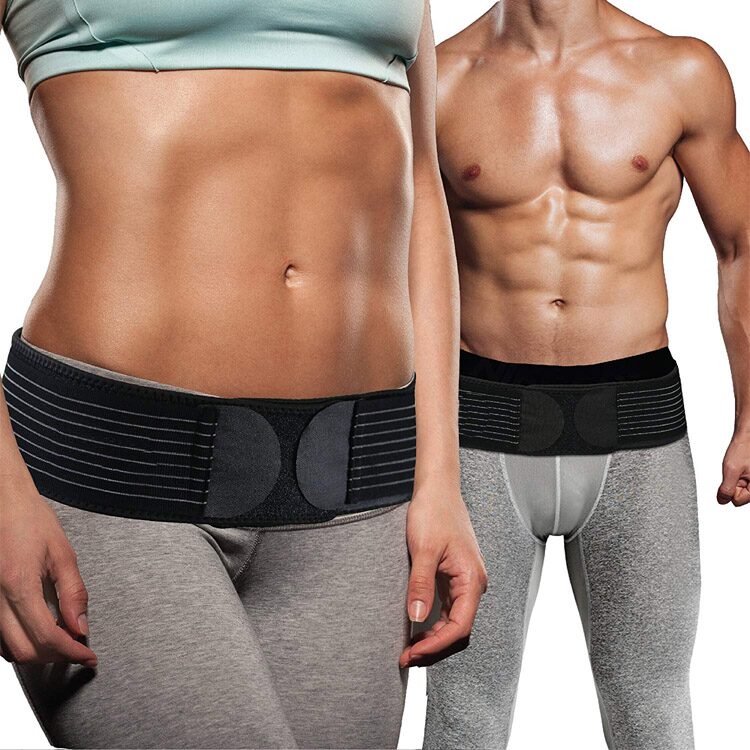
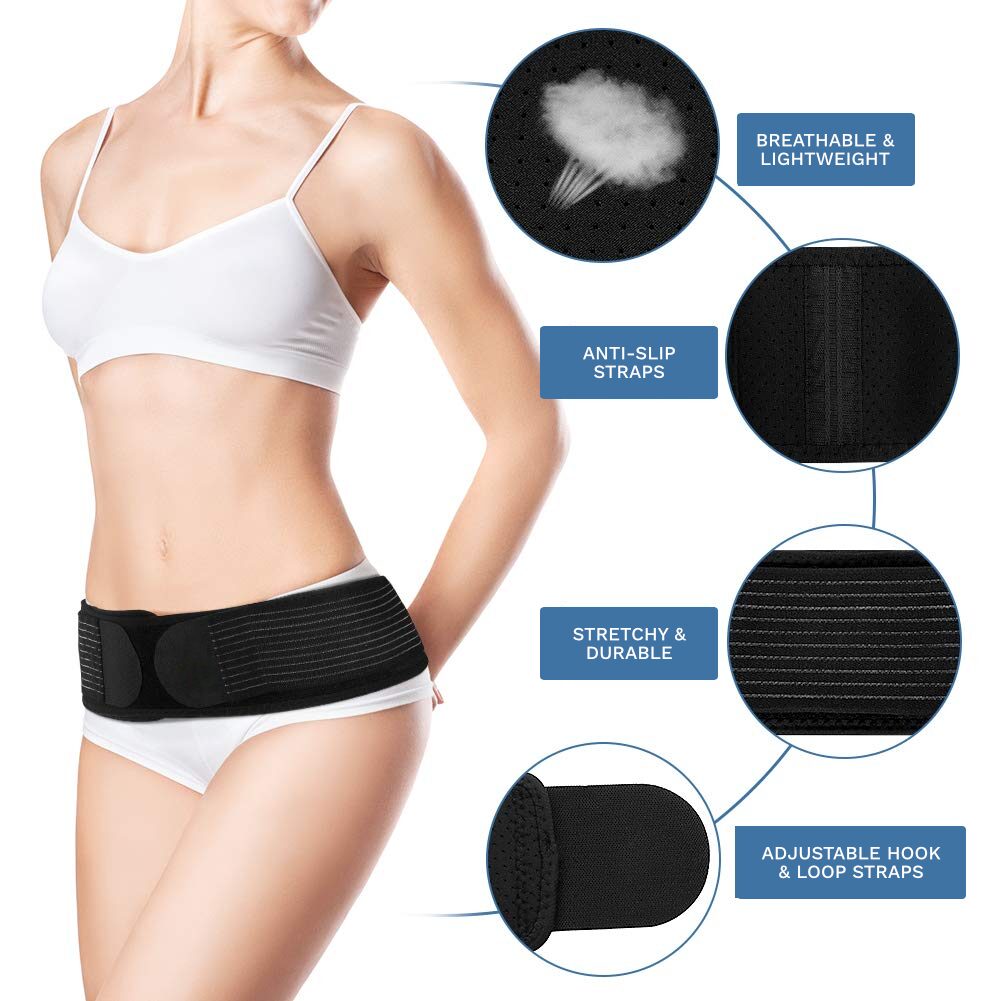
This sacroiliac belt from BackReviver is designed to fit a wide range of body types. It stretches up to 96cm and uses elasticated material so that it can contour to the shape of the pelvis. Choosing the size that best matches your pelvic or hip measurement (taken around the top of the hips) helps the belt sit in the right place and apply support over the sacroiliac region where it is needed.
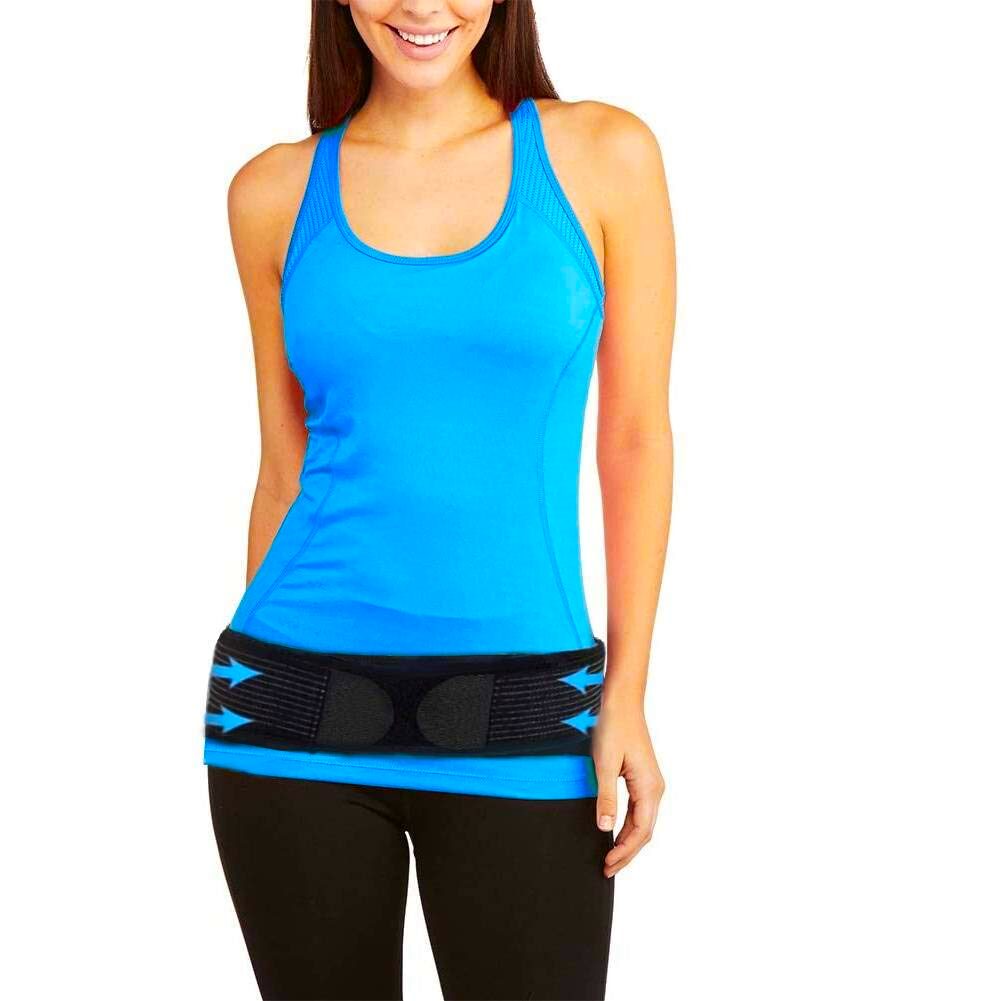
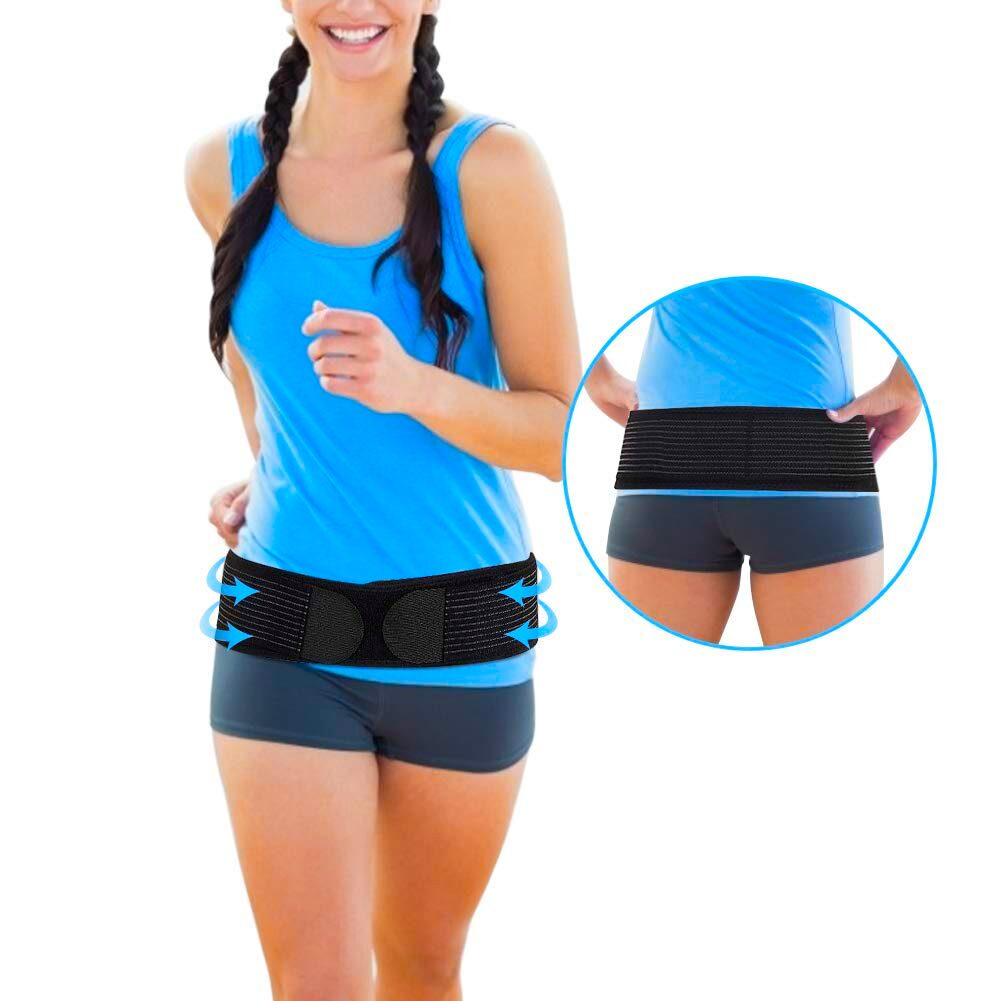
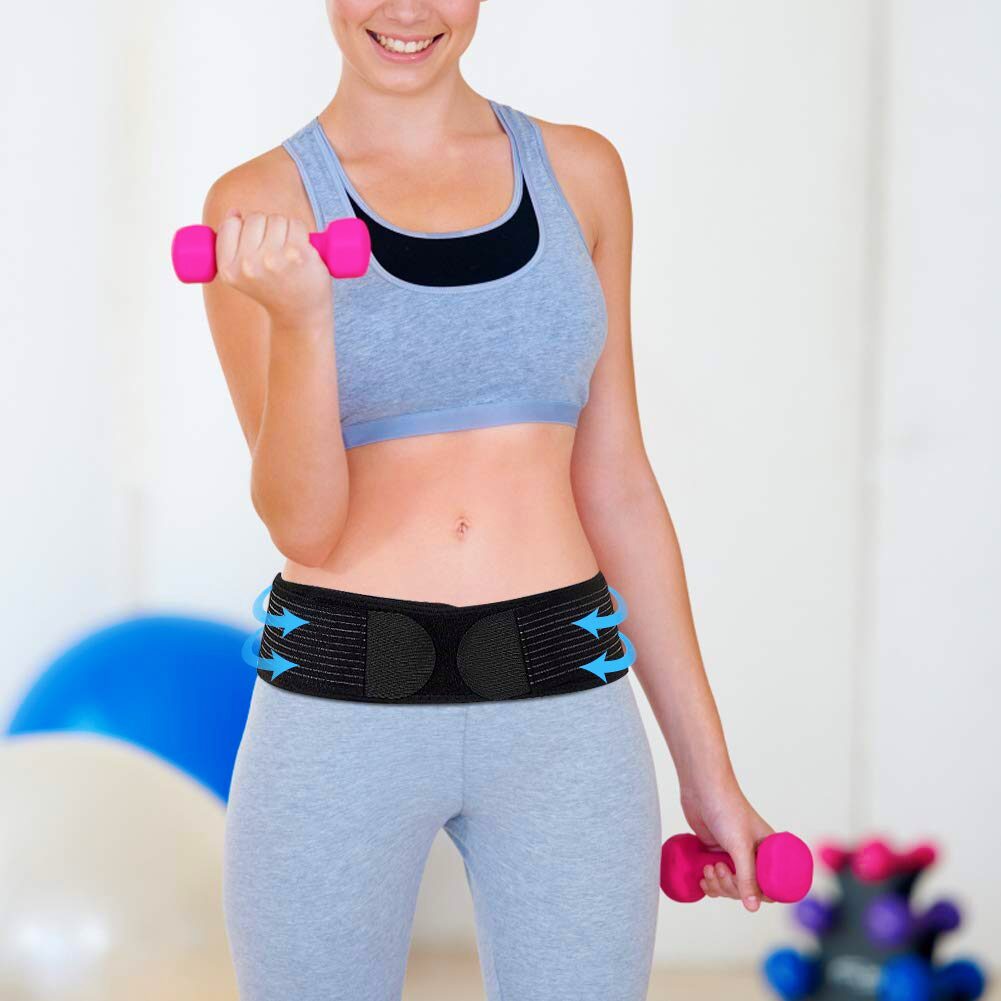
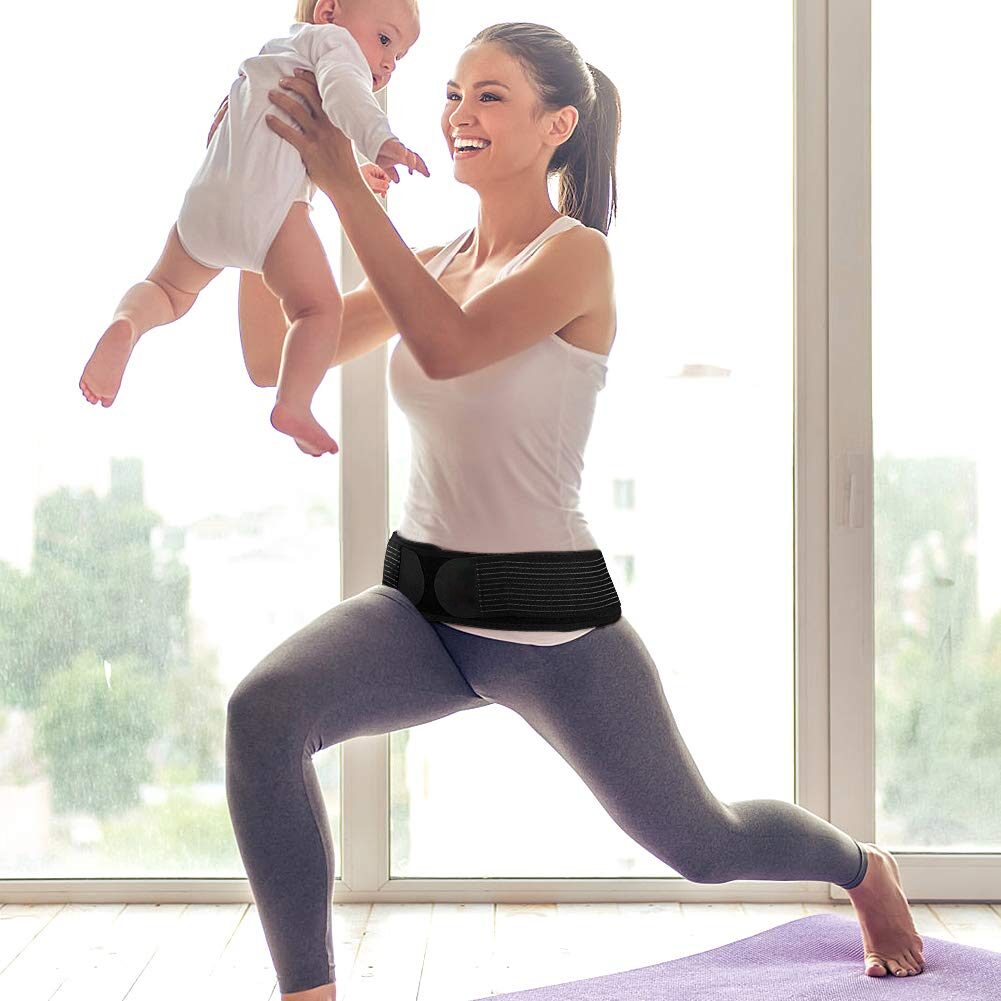
The belt is worn low around the pelvis, not high around the waist. It should sit roughly level with the bony points you can feel on either side of the hips, so that the compression is centred over the sacroiliac joints at the back. The low‑sitting design reflects how clinicians aim to support the sacroiliac region when they recommend a belt, focusing support where the joints are most often sensitive.
The strap arrangement works in two steps:
- Wrap the main belt around the pelvis and secure it at the front with the fastening strip. This gives a snug, even level of support around the pelvis.
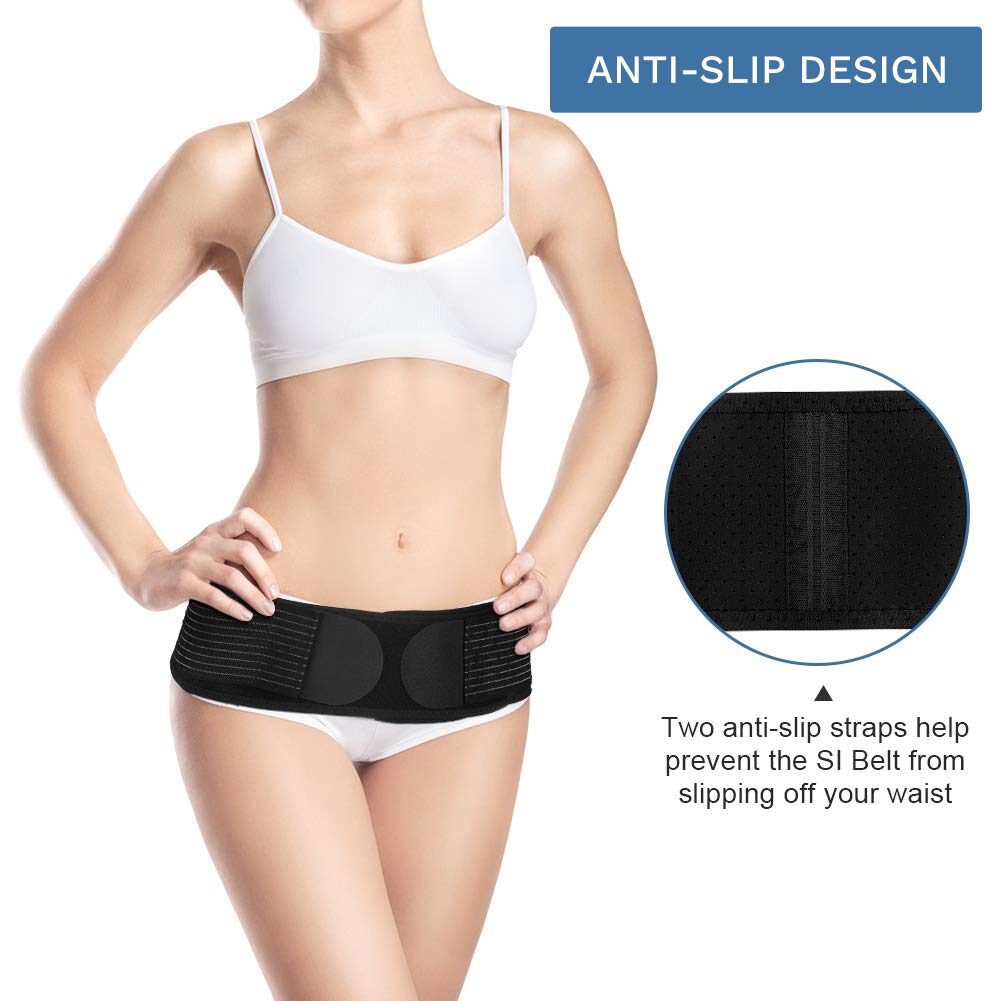
- Then use the two additional straps, one on each side. Once the main belt is in place, pull these side straps forwards and attach them at the front. Pulling them more firmly increases the compression over the sacroiliac region, so you can increase or ease off the support when you need to.
BackReviver has designed the belt with this main‑wrap‑plus‑side‑straps approach so that you can set a comfortable, snug setting for most of the day, then briefly tighten the side straps when you know you will be on your feet more or doing heavier tasks. Many people prefer to keep the belt gently snug most of the time, then add extra tension only when needed. The low‑sitting, adjustable design is also the type of support that physiotherapists and other clinicians often recommend when sacroiliac‑type problems have been picked up on assessment.
The inner surface has a gentle grip to help the belt stay in place over the pelvis without riding up or rolling during normal movement, as long as you follow the fitting instructions and check the position on your own pelvis.
How this belt supports your pelvis when you move
By sitting low around the pelvis and gently drawing the hip bones inwards, this sacroiliac belt helps to hold the sacroiliac joints more securely when you move. This can reduce the small shearing and gapping movements between the sacrum and the hip bones that often trigger pain when you shift weight from one leg to the other, step up onto a stair or kerb, or turn while standing.
Reducing these small but painful movements eases the strain on irritated ligaments at the back of the pelvis. When the belt shares some of the work usually done by these ligaments, they are not pulled and stretched with every step to the same degree, which gives them a better chance to settle.
By keeping the pelvis in a more controlled position during standing and walking, the belt also gives the muscles around the hips and lower back a steadier base to work from. Instead of constantly bracing to hold the area together, they can focus more on guiding smoother movement. Many people find that this extra stability and reduced joint irritation makes tasks such as getting up from a chair or standing for longer periods feel more manageable when the belt is worn.
Using your sacroiliac belt day‑to‑day
Putting the belt on and adjusting it
Once you are familiar with it, putting the belt on only takes a moment. In three simple steps:
- Position it low around the pelvis so that it lies roughly level with the bony points on the sides of the hips, covering the sacroiliac region at the back.
- Wrap the main part of the belt around and secure it at the front so that it feels snug but does not restrict breathing or dig into the skin.
- Bring the two side straps forwards from each side and attach them at the front. Adjust how firmly you pull these straps to increase or decrease the level of compression over the pelvis.
The belt should feel secure without causing tingling, numbness, or sharp discomfort. If you notice any of these, the straps are likely too tight or the belt may be slightly too high or low. Small changes in height and tension can make a noticeable difference – even moving it up or down a couple of centimetres can change how it feels – so it is worth taking a little time to find a position and tightness that feel both comfortable and supportive.
It is worth practising putting it on a few times at home so it feels quick and routine when you need it. The front fastening and side straps are designed to make it straightforward to put on and easy to adjust through the day without needing to remove clothing.
When it’s worth wearing the belt – and when to give it a rest
People often choose to wear a sacroiliac belt during the parts of the day when their symptoms tend to be worst. For many, this means the same sorts of activities described earlier as common triggers for sacroiliac‑type pain, such as:
- standing still for long periods,
- walking further than usual,
- tasks that involve frequent stepping, bending, or lifting.
If your pain tends to build when you are upright and moving, the belt is most likely to help during those times. A simple way to see how helpful it is for you is to start by wearing it for the one or two activities that usually cause you the most discomfort, then see whether they feel a little easier to cope with. You might find a pattern that suits you, for example using it for shopping trips or longer walks, but not for every short movement round the house.
Some people also use it during certain types of travel or longer sitting periods, for example on a long journey. Others find that having the belt fully tightened while sitting is uncomfortable and prefer to loosen or remove it when seated, then tighten it again when they stand up and move around. It is sensible to notice how your symptoms respond and adjust or loosen the belt for sitting if needed.
It is usually best not to rely on the belt all the time. Muscles around the pelvis and lower back still need to be strengthened and trained to support the joints, often through exercises suggested by a physiotherapist or other clinician. Using the belt as extra help during times when you are on your feet more, while also working on exercises and movement habits, gives a better balance between support now and muscle strength in the longer term.
If you are unsure how long or how often to wear the belt, a physiotherapist or other clinician can give advice tailored to you.
What to expect from using the belt
When the sacroiliac joints are held more securely and the ligaments and muscles around them are not being repeatedly overstretched, many people notice that pain during certain activities becomes less intense. For example, you may find you can stand a little longer before aching builds up, or walk further before you need to stop.
There is often a period at the start where you are working out the best position and level of tightness. That is completely normal. Some movements may feel easier quite quickly. Improvements in how comfortable the area feels day to day may build over several weeks as irritated tissues have time to settle and as strength improves through exercise. Some people notice a change the first time they stand up with the belt on; others see a steadier, week‑by‑week improvement.
A sacroiliac belt is not there to remove all pain or cure the underlying condition. Its role is to help make everyday tasks more manageable and to support you in keeping active and doing rehabilitation exercises. If you notice no meaningful change in symptoms after a few weeks of using the belt during the main aggravating activities, or if pain becomes worse, it is important to seek further advice.
Comfort and care in daily use
Comfortable enough for regular wear
This sacroiliac belt is made from lightweight, breathable materials designed for regular wear. The fabric helps draw moisture away from the skin, which can keep the area drier and more comfortable, particularly in warmer weather or when you are more active. That can make a real difference if you are likely to wear the belt under clothes for several hours at a time.
The slim design with smooth edges allows the belt to sit close to the body and under clothing without creating bulky lines. Its moderate width is intended to spread pressure comfortably across the pelvis so it does not dig into the top of the hips or waistband area, and the inner surface is soft enough to be worn over a thin layer of clothing or, if comfortable for you, directly against the skin.
Built to last and easy to look after
The belt uses reinforced stitching and robust materials so that it can cope with regular tightening and movement without quickly losing its shape or support. This is important if you expect to tighten and loosen it several times a day.
It is straightforward to clean. Following the care instructions will help keep the belt fresh, look after the fastenings and fabric, and support good skin hygiene when it is worn frequently.
Safety and when to seek further help
This sacroiliac belt is designed for adults. It should not be used during pregnancy. Compression around this area at that time can be unsafe. During pregnancy and the period shortly afterwards, any support for the pelvis should be chosen and supervised by a healthcare professional.
Certain symptoms mean you should seek urgent medical advice, rather than trying to manage things with a belt alone. These include:
- new, severe, or rapidly worsening pain in the back or pelvis, especially after a significant fall or accident,
- loss of control over bladder or bowel function, or numbness around the groin area,
- fever or feeling generally unwell in combination with back or pelvic pain, which can sometimes signal infection or another serious problem,
- increasing weakness, numbness, or tingling in one or both legs.
If any of these occur, contact a GP, NHS 111, or emergency services as appropriate without delay.
If you notice that pain becomes worse when using the belt, that new numbness or tingling appears, or that there are skin problems such as persistent redness, soreness, or broken skin under the belt, stop using it and speak to a healthcare professional.
A sacroiliac belt can be a useful part of managing sacroiliac‑related pain, but it does not replace a proper assessment or a personalised treatment plan. If symptoms are not improving over time, or if there is uncertainty about the diagnosis, further review with a GP, physiotherapist, or relevant specialist is recommended.
The information here is general guidance only and is not a personal diagnosis or prescription.
Bringing it together and next steps
Sacroiliac joint problems can cause persistent pain around the back of the pelvis, buttocks, and hips, particularly when you are standing, walking, using stairs, or changing position after rest. This is often linked to irritation of the joints and the ligaments that help hold the pelvis together, which can be stressed by repeated one‑leg loading and small, painful movements between the sacrum and hip bones.
A sacroiliac belt is designed to deal with this extra movement and strain by gently compressing the pelvis, limiting small painful movements at the sacroiliac joints, and sharing some of the load normally carried by strained ligaments and hard‑working muscles. This sacroiliac belt from BackReviver uses a main wrap and side straps so that people whose symptoms have been assessed as sacroiliac‑related can set a comfortable base fit and then adjust the level of support during the tasks that tend to set their pain off.
For adults who are not currently pregnant and whose pain matches the sacroiliac‑type features described above, this sacroiliac belt may be a helpful addition to the treatment plan agreed with a clinician, alongside exercise and sensible changes to how long you spend on your feet in one go. If you recognise your symptoms in this description, and a clinician has confirmed that your sacroiliac joints are involved, this BackReviver belt is a sensible option to consider. If you are unsure whether it is suitable for you, or you have more complex symptoms, it is worth discussing it with a GP, physiotherapist, or other qualified clinician before use.



Reviews
There are no reviews yet.