


Roll over image to zoom in
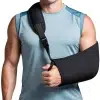
Rotator Cuff Sling
£9.99inc VAT
- Arm sling for adults recovering from shoulder, upper arm, and elbow injuries—suitable for both men and women
- Works for either left or right arm—the same sling fits both sides
- One size fits all with fully adjustable straps that let you modify position as healing progresses
- Supports rotator cuff tears, shoulder dislocations, labral tears, tendonitis, AC joint separations, collarbone fractures, upper arm fractures, tennis elbow, and post-surgical recovery
- Holds your arm in a protected position where torn tendons, ligaments, and capsule can form scar tissue without constant mechanical stress
- Padded shoulder strap spreads your arm’s 4-5kg weight over a broader area—prevents the sharp, digging-in pain that makes you want to take it off after a few hours
- Adjustable buckle lets you raise or lower your forearm to encourage fluid drainage early on, then modify position as you begin rehabilitation exercises
- Breathable fabric reduces heat build-up and moisture accumulation during 12-14 hour daily wear—keeps skin drier and reduces risk of irritation and breakdown
- Thumb loop anchors your hand and prevents your forearm from sliding forward when you lean or move—maintains correct elbow angle throughout the day
- Reinforced stitching at stress points prevents seams from separating under repeated use—critical where the cradle attaches to the strap and where the strap connects to the buckle
- Typically worn continuously for 4-6 weeks during initial healing, then progressively reduced as your GP or physiotherapist guides you through rehabilitation
- Check circulation and skin condition regularly—loosen or remove if you notice numbness, tingling, colour changes, or persistent pressure marks
- Use as part of a treatment plan guided by your GP, physiotherapist, or surgeon—not a substitute for professional medical advice
- 30-day money-back guarantee—if the sling doesn’t meet your needs, contact us for a full refund or replacement
How This Sling Helps
When your shoulder, upper arm, or elbow is injured, it still has to carry your arm’s weight—around 4-5kg—all day, every day. Every reach, every lift, every small adjustment creates tension that can prevent healing or make the injury worse. This sling takes that weight off by supporting your forearm and holding your arm in a protected position where torn tendons, strained ligaments, and inflamed joints can settle without being stretched or compressed repeatedly.
This sling is designed for extended wear during the initial healing phase of shoulder, arm, and elbow injuries. It’s suitable for either your left or right arm—the same sling works for both sides. The adjustable strap passes over your opposite (uninjured) shoulder, so if your right arm is injured, the strap goes over your left shoulder, and vice versa.
The design features address the practical challenges of wearing a sling for 12-14 hours daily over several weeks: a padded shoulder strap, adjustable buckle, breathable fabric, thumb loop, and reinforced stitching. Comfort matters because discomfort means you won’t wear it properly, and that undermines healing. This page explains how immobilization supports recovery, which injuries benefit, how to use the sling correctly, and what to watch for during the healing process.
Who This Sling Helps
This sling is designed for adults recovering from shoulder, upper arm, and elbow injuries where immobilization supports healing. It’s suitable for:
Shoulder Injuries
- Rotator cuff tears (partial or complete)
- Shoulder dislocations and subluxations
- Labral tears (including SLAP tears)
- Shoulder tendonitis and subacromial pain
- Acromioclavicular (AC) joint separations
- Frozen shoulder (adhesive capsulitis) during acute inflammatory phase
- Post-operative recovery following rotator cuff repair, labral repair, or shoulder stabilisation surgery
Elbow and Arm Injuries
- Tennis elbow (lateral epicondylitis) and golfer’s elbow (medial epicondylitis)
- Elbow sprains and strains
- Biceps tendon tears or tendonitis
- Forearm fractures
- Post-operative recovery following elbow surgery
Post-Trauma and Post-Surgical
- Collarbone (clavicle) fractures
- Upper arm (humerus) fractures
- Soft tissue injuries requiring immobilization
- Recovery following any shoulder, arm, or elbow surgery where your surgeon has advised sling use
The sling is suitable for either your left or right arm—the same design works for both sides.
This sling is not appropriate for:
- Hand or wrist injuries requiring specific wrist support (a wrist brace or splint is more suitable)
- Conditions requiring your arm to be held away from your body (abduction positioning—your surgeon will specify if this applies)
- Situations where your medical team has advised against immobilization
How Immobilization Supports Healing
Immobilization works by removing the mechanical forces that disrupt early tissue repair. When you tear a tendon, sprain a ligament, or fracture a bone, your body begins forming scar tissue to connect the torn edges. In the first 4-6 weeks, this repair tissue is weak—it’s made of collagen fibres that haven’t yet aligned and strengthened. Movement, tension, and weight can pull these fibres apart or prevent them from aligning properly, delaying healing or leaving it permanently weak.
Holding your arm in a relaxed position without tension is what allows healing to proceed. For shoulder injuries, this typically means your arm rests across your chest with your elbow bent at roughly 90 degrees. This position takes tension off the rotator cuff tendons and the ligaments that hold the joint stable. For elbow injuries, supporting your forearm removes the constant pull of gravity that would otherwise load the tendons attaching to the bony bumps on either side of your elbow.
Immobilization also reduces inflammation. When tissues are repeatedly stretched or compressed, swelling builds up faster than your body can drain it away. This creates a cycle where inflammation causes pain, pain limits movement, but any movement that does occur aggravates inflammation further. Breaking this cycle by preventing the movements that drive inflammation allows swelling to settle over 2-4 weeks as your body clears the swelling and damaged tissue and begins repairing damaged structures.
The sling doesn’t heal the injury—your body does that. What the sling does is create the conditions your body needs to heal without constant disruption. This is why the duration of sling use matters. Too short, and repair tissue hasn’t strengthened enough to withstand normal loads. Too long, and you develop stiffness, muscle wasting, and joints that become stuck in one position that prolong recovery. Your GP, physiotherapist, or surgeon will guide the timeline based on your specific injury and how you’re healing.
Key Features
Padded Shoulder Strap
A narrow strap without padding digs in after a few hours. Your arm weighs around 4-5kg, and that load presses into your skin and restricts blood flow where the strap crosses your shoulder. By mid-afternoon, you’ll feel a sharp, localised ache that makes you want to take the sling off—even though your injury still needs support.
Padding spreads that weight over a broader area, reducing pressure per square centimetre. This makes 12-14 hour daily wear tolerable. The padded section sits across the meaty part of your opposite shoulder—the thick muscle between your neck and shoulder point—where your body can spread the weight without creating pressure points over bone or pinching nerves and blood vessels near your neck.
Adjustable Buckle
Your arm needs to sit at different heights as healing progresses. In the first few weeks, keeping your forearm level with or slightly higher than your elbow helps swelling drain away. As inflammation eases and you begin gentle movement exercises, you might lower your arm slightly to allow more natural positioning during activities.
The adjustable buckle lets you modify this without needing multiple slings. Loosen the strap to lower your arm, tighten it to raise your forearm higher. It also works for different body sizes and clothing thickness—you’ll need a longer strap length when wearing a thick winter coat than when wearing a t-shirt.
Breathable Fabric
Your forearm rests in the cradle for most of the day. Synthetic fabrics trap heat and moisture, making your skin soft and more likely to break down, and more likely to get infected.
Breathable fabric allows air circulation and wicks moisture away from your skin. This keeps the contact surface drier and reduces the risk of skin irritation, rashes, and sore spots that can develop during weeks of continuous wear.
Wash the sling at least weekly during extended use—more often if you’re sweating heavily or if the fabric becomes soiled. Hand wash in warm water with mild detergent, rinse thoroughly, and air dry. Detergent residue left in the fabric can irritate skin during prolonged contact.
Thumb Loop for Security
Without an anchor point, your hand and wrist slide forward in the cradle when you lean forward or move your body. This shifts your forearm’s weight distribution and can create pressure points at your wrist or leave your hand hanging unsupported beyond the edge of the cradle.
The thumb loop prevents this. Your thumb passes through the loop, anchoring your hand in position so your forearm stays supported along its full length. This maintains the correct elbow angle throughout the day, even when you’re moving around, bending forward, or shifting position.
Reinforced Stitching at Stress Points
Your arm’s weight pulls constantly on two points: where the cradle attaches to the strap, and where the strap connects to the buckle. These junction points take your arm’s weight hundreds of times daily as you move, sit, stand, and adjust your position.
Reinforced stitching at these stress points prevents the seams from separating under repeated use. Normal stitching can fray or pull apart after weeks of constant use, particularly if you’re carrying additional weight—a heavy coat, a bag on your uninjured side that shifts your centre of gravity.
Before each use, check the stitching at these junction points. Look for loose threads, fraying, or separation. If stitching is failing, the sling may not safely support your arm’s weight, and sudden failure could allow your arm to drop, potentially re-injuring healing tissues.
How to Wear Your Sling
Initial Fitting
Put the sling on while standing or sitting upright. Your physiotherapist or a family member can help with the first few attempts until you’re familiar with the process. The same sling works for either your left or right arm—the strap simply passes over your opposite (uninjured) shoulder.
- Slide your injured arm into the cradle, supporting your forearm along its full length from elbow to wrist.
- Place your thumb through the thumb loop to anchor your hand and prevent your forearm from sliding forward.
- Bring the strap over your opposite (uninjured) shoulder, across your back, and attach it to the cradle using the buckle or fastening mechanism. If your right arm is injured, the strap goes over your left shoulder. If your left arm is injured, the strap goes over your right shoulder.
- Adjust the strap length so your forearm sits horizontal across your chest with your elbow bent at roughly 90 degrees. Your hand should rest near the opposite shoulder.
- Check that the padded section sits across the meaty part of your opposite shoulder, not cutting into the side of your neck or sitting too far toward your shoulder blade.
Position Check
Your elbow should be supported and held close to your body, not hanging away from your ribs. Your forearm should be fully supported along its length—if your wrist or hand hangs unsupported beyond the edge of the cradle, the sling is too small or needs adjusting.
Your hand should be level with or slightly higher than your elbow. If your hand drops below elbow level, tighten the strap. If your hand is significantly higher than your elbow, loosen the strap slightly.
The strap should feel snug but not tight. You should be able to slide two fingers between the strap and your shoulder. If it’s digging in or causing discomfort, adjust the position or add extra padding.
Removing the Sling
Support your injured arm with your other hand before unfastening the sling. Don’t let your arm drop suddenly—the weight pulling on healing structures can cause pain and potentially disrupt repairs.
Unfasten the buckle and gently slide the strap off your shoulder. Support your forearm as you remove it from the cradle. Keep your elbow close to your body and avoid sudden movements.
Adjustable to Your Recovery
In the first few weeks, you’ll typically wear the sling continuously except when washing, dressing, or performing prescribed exercises. Your forearm sits level or slightly elevated to encourage fluid drainage and reduce swelling.
As healing progresses—usually around the 3-6 week mark—your GP or physiotherapist will guide you to begin removing the sling for short periods during low-demand activities. You might start by removing it while sitting and resting, then progress to wearing it only during activities that load the injured structures: lifting, reaching, carrying weight.
The adjustable buckle accommodates these changes. You can modify the strap length to allow slightly more arm movement during rehabilitation exercises while still providing support during higher-demand tasks. This progressive reduction in sling use is essential—prolonged immobilization beyond the necessary healing period leads to stiffness, muscle wasting, and delayed return to normal function.
Sizing and Fit
This sling is suitable for either your left or right arm—the same sling works for both sides. The adjustable strap passes over your opposite (uninjured) shoulder, so if your right arm is injured, the strap goes over your left shoulder, and vice versa.
One size fits all through the adjustable strap mechanism. The strap accommodates different body sizes and shoulder widths, and the cradle supports your full forearm comfortably.
Care and Maintenance
Wash the sling regularly—at least once a week during extended use, more frequently if you’re sweating heavily or if the fabric becomes soiled. Hand wash in warm water with mild detergent. Avoid harsh chemicals, bleach, or fabric softeners, which can degrade the fabric and padding.
Rinse thoroughly to remove all detergent residue. Detergent left in the fabric can irritate skin during prolonged contact.
Air dry flat or hang to dry. Don’t tumble dry or place on direct heat sources (radiators, heaters), which can damage the padding and cause the fabric to shrink or warp.
Check the sling before each use. Look for fraying, particularly at the stitching where the cradle attaches to the strap and where the strap connects to the buckle. Check that the buckle mechanism holds securely and doesn’t slip when loaded. If you notice damage, stop using the sling and replace it—a failing sling can’t safely support your arm’s weight.
Store the sling in a clean, dry place when not in use. Avoid damp environments where mould or mildew can develop in the padding.
Safety
Circulation Checks
While you’re wearing the sling, check your hand and fingers every few hours. You’re looking for:
- Colour: Your fingers should be the same colour as your uninjured hand. Pale, white, or blue-tinged fingers suggest restricted blood flow.
- Temperature: Your fingers should feel warm to touch. Cold fingers suggest poor circulation.
- Sensation: You should have normal feeling in your fingers. Numbness, tingling, or pins and needles suggest nerve compression or restricted blood flow.
- Movement: You should be able to make a fist and straighten your fingers fully. Difficulty moving your fingers or weakness suggests nerve compression.
If you notice any of these signs, loosen the sling immediately. If symptoms don’t resolve within 10-15 minutes of loosening the sling, remove it completely and speak to your GP or physiotherapist the same day.
Skin Checks
Check your skin where the sling contacts your body—your shoulder, neck, forearm, and hand—at least twice daily. Look for:
- Red pressure marks that don’t fade within 15-20 minutes of removing the sling
- Broken skin, blisters, or raw areas
- Rash or irritation
Minor redness that fades quickly is normal. Persistent marks, broken skin, or developing sores indicate excessive pressure or friction. Adjust the sling position, add padding to pressure points, or reduce wearing time. If skin breakdown occurs, stop using the sling until the area heals and speak to your GP or physiotherapist about adjustments.
When to Seek Medical Advice
Contact your GP or physiotherapist if:
- Pain increases significantly despite wearing the sling as advised
- Swelling increases or spreads beyond the injured area
- You develop fever or feel generally unwell (may indicate infection)
- Numbness, tingling, or weakness develops in your hand or fingers and doesn’t resolve after loosening or removing the sling
- You notice persistent circulation problems (cold, pale, or blue fingers)
- Skin breakdown or pressure sores develop
- You’re unsure whether you should continue wearing the sling or when to start removing it
Attend A&E or call 999 if:
- You experience sudden, severe chest pain or difficulty breathing (may indicate serious complications)
- Your arm becomes suddenly pale, cold, and pulseless (may indicate arterial blockage—a medical emergency)
- You develop sudden, severe swelling with skin that’s hot, red, and extremely tender (may indicate infection or other serious complications)
This Sling Does Not Treat Blood Clots
If you develop calf pain, swelling, warmth, or redness in your leg—particularly if accompanied by chest pain or shortness of breath—seek immediate medical attention. These symptoms may indicate deep vein thrombosis (DVT) or pulmonary embolism (PE), serious conditions requiring urgent medical treatment. This sling does not prevent or treat blood clots.
Prolonged immobilization increases DVT risk. Your GP or surgeon will assess your risk and may recommend additional measures (compression stockings, blood-thinning medication, regular movement of your uninjured limbs) if appropriate.
Common Shoulder, Arm, and Elbow Injuries
This section explains the most common injuries where immobilization supports healing. Each accordion covers the injury mechanism, typical symptoms, and how the sling helps during recovery.
Your Guarantee
If the sling doesn’t meet your needs within the first 30 days, contact us for a full refund or replacement—no questions asked. Your recovery matters, and if this product isn’t supporting it effectively, we’ll make it right.
Important Disclaimer
This sling is designed to support your recovery when used as part of a treatment plan guided by qualified healthcare professionals. It isn’t a substitute for professional medical advice, diagnosis, or treatment.
Always follow the guidance of your GP, physiotherapist, or surgeon regarding how long to wear the sling, when to remove it, and when to begin rehabilitation exercises. Wearing a sling for too long without appropriate rehabilitation can lead to stiffness, muscle wasting, and prolonged recovery.
If you haven’t been assessed by a GP, physiotherapist, or surgeon, don’t self-diagnose or self-treat. Shoulder, arm, and elbow pain can have many causes, some of which require different treatments or urgent medical attention. Seek professional assessment before using this product.
The information on this page is for educational purposes and reflects general clinical principles. It isn’t tailored to your situation and shouldn’t replace personalised advice from your GP, physiotherapist, or surgeon.
Supporting Your Recovery
This sling holds your arm in a protected position where healing can happen without constant mechanical stress. It’s built for comfort during extended wear—padded, adjustable, and durable enough to withstand daily use over weeks or months.
Use it as your GP, physiotherapist, or surgeon advises. They’ll guide you on how long to wear it, when to start taking it off, and when to begin rehab exercises. Most shoulder, arm, and elbow injuries heal well with the right support and progressive rehab, allowing you to return to normal activities.
If you’re unsure whether this sling suits your injury, how long you’ll need it, or when to move to the next stage of recovery, speak to your GP or physiotherapist. They can give you personalised guidance based on your specific situation.
1 Review For This Product
Fast & Secure Checkout Through Paypal
Pay with Paypal the secure payment gateway that accepts all credit and debit cards. Paypal is free and secure and no credit or bank information is ever stored or shared with us.
Fast Dispatch
Enjoy your items soon with quick dispatch via Royal Mail. Expect to have your items between 1-3 working days for domestic orders. 7-10 Working days for international orders.
Return Policy – 30 Day Money Back Guarantee
In the unlikely event, you are unhappy with your purchase you can return it within 30 days for a refund. Please contact us via the form on the contact us page to start your return.
To return an item please send it to: Nuova Health UK, 81 Highfield Lane, Waverley, Rotherham, S60 8AL. Please include a note with your order id so we know who to refund. Please retain your postage receipt as proof of postage. All that we ask is that the item is in the original packaging and unused.
by Morag Poole
Purchased this sling as a spare to the one I got from the hospital after my rotator cuff surgery. I’m really glad I did as this sling offers exceptional support. As soon as you let the sling carry the weight of your arm, the Velcro holds firm and stays secure much better than the hospital one. Money was well spent!!!