
Posture corrector for women
£9.99£14.99 (-33%)inc VAT
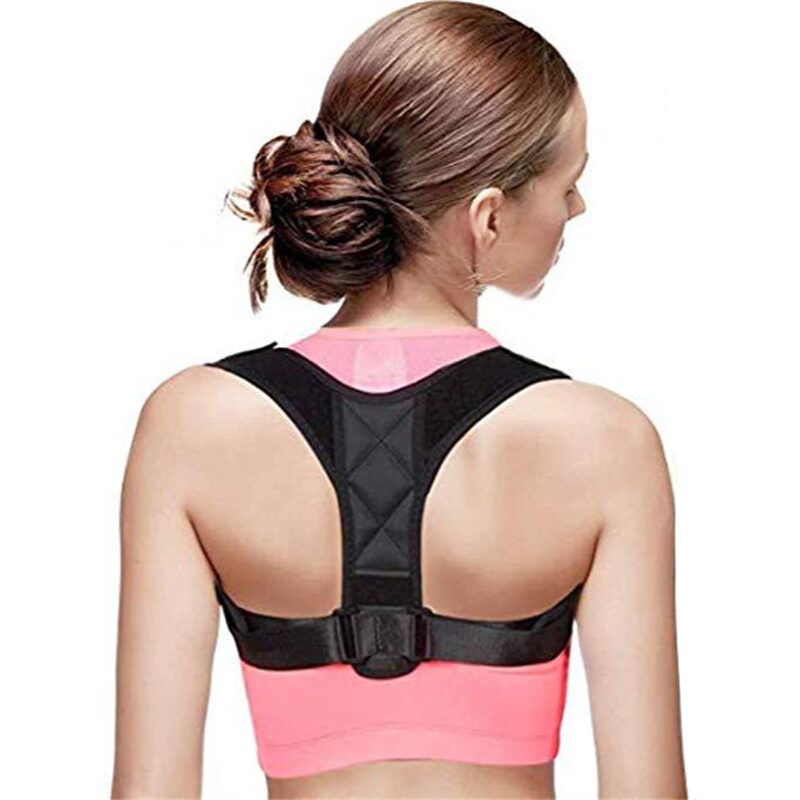
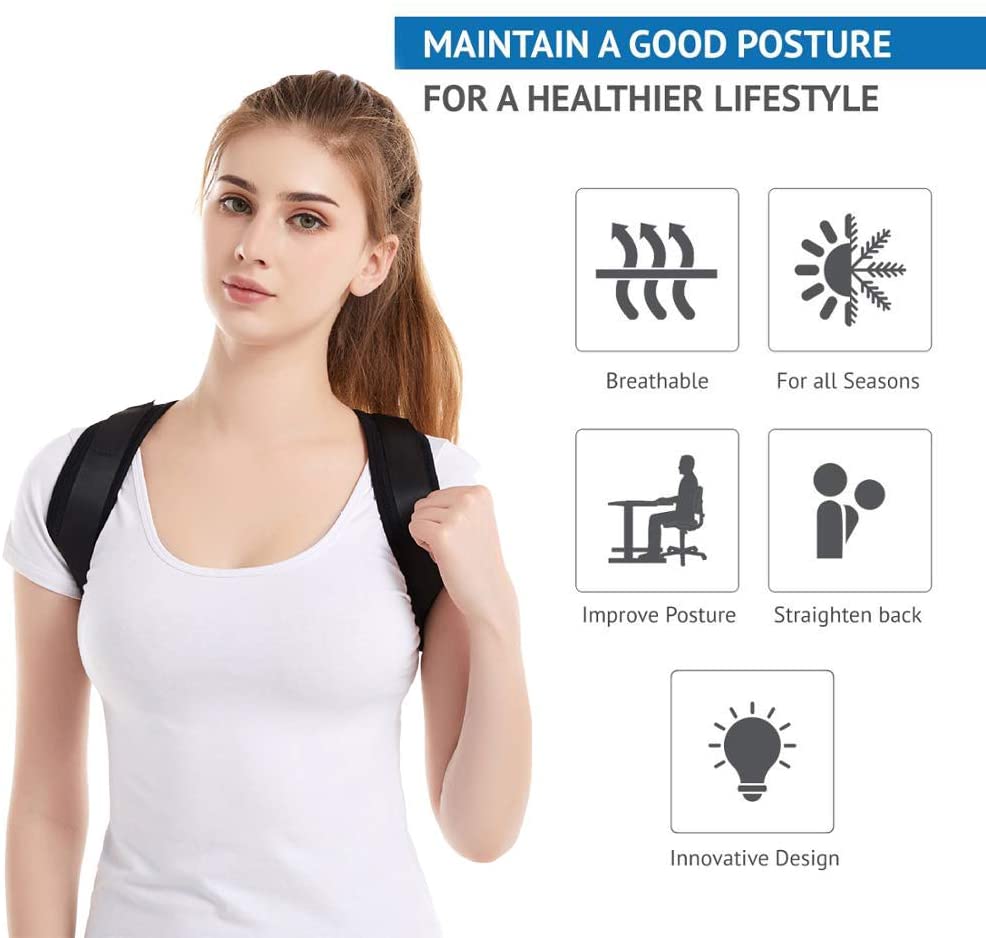
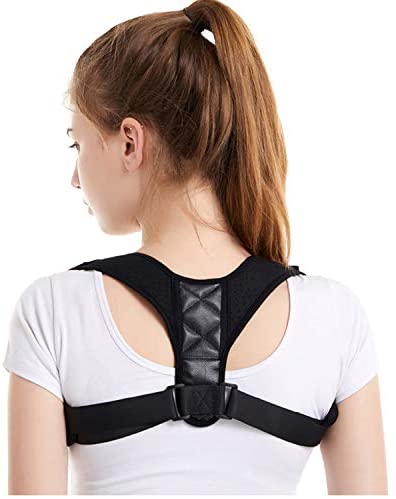
- What it is: A lightweight, adjustable upper-back posture corrector with a Y-shaped back panel and padded shoulder straps designed to draw your shoulders back and retrain weak postural muscles.
- Who it’s for: Women experiencing rounded shoulders, forward head posture, upper-back aching, neck tension, bra strap discomfort, or postural fatigue from desk work, household tasks, or childcare.
- Key design features: Y-panel sits between shoulder blades for stability; dual adjustment system (buckles for length, Velcro for securing); straps sit around the bust, not across it, to reduce pressure.
- What it does: Provides gentle backward pull on your shoulders, re-engages weak upper-back muscles (rhomboids, mid-trapezius), and gives your nervous system a postural reference point to maintain alignment independently.
- How to use: Start with 15–30 minutes and build up gradually as your muscles adapt. Wear during high-risk activities (desk work, household tasks, driving, standing at a kitchen counter or standing desk).
- Not a rigid brace: Allows natural movement while encouraging upright posture. You can move, bend, and reach comfortably.
- Progressive retraining: Designed as a training tool, not a permanent support. Over weeks and months, you’ll need it less often as your body learns to maintain alignment on its own.
- Bust accommodation: Fully adjustable straps accommodate a wide range of bust sizes. Straps sit around the bust, not across it, reducing pressure and discomfort.
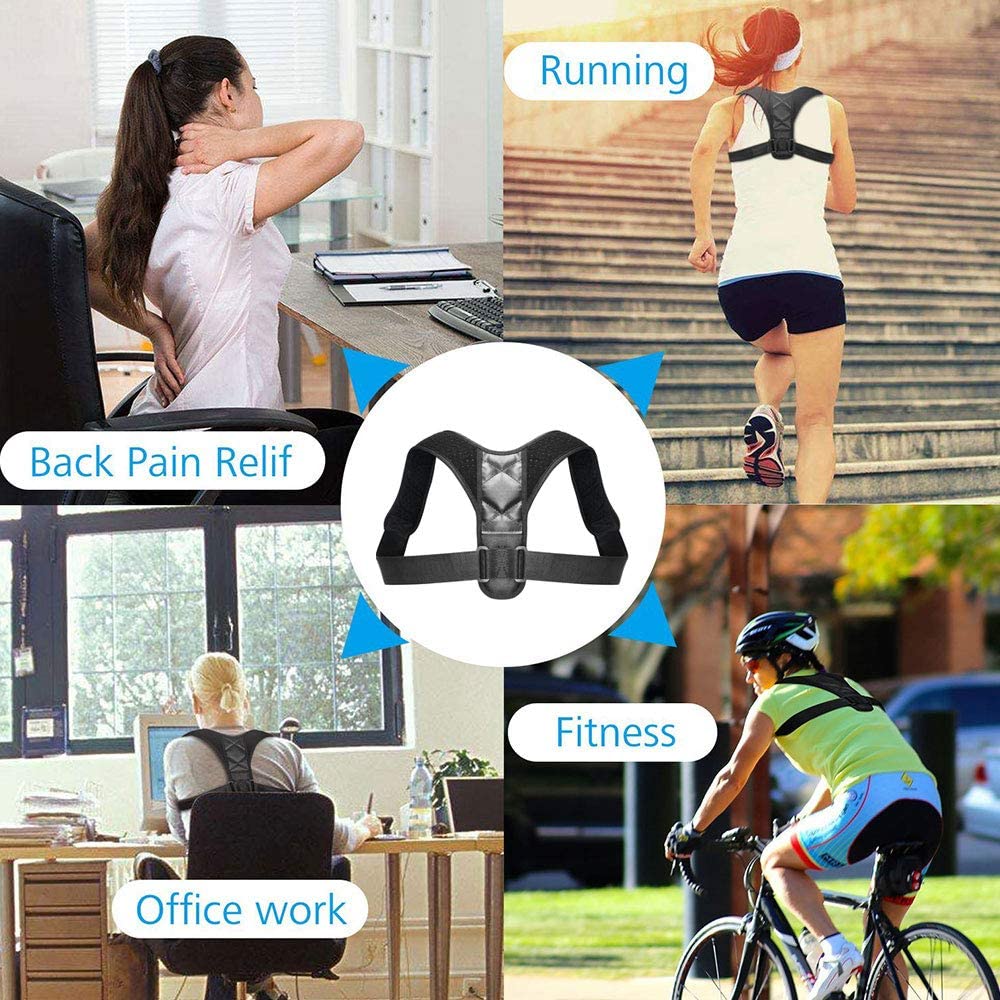
- Suitable for most activities: Can be worn during running, jumping, HIIT, sports, and resistance training. Remove only for heavy overhead lifting or activities requiring full unrestricted shoulder range (swimming, gymnastics).
- One size fits most: Adjustable to fit a wide range of body shapes, shoulder widths, and torso lengths.
- Safety: Do not wear during sleep (straps could shift and wrap around your neck). Remove if you experience discomfort, pain, or unusual symptoms. Do not use if you have acute injury, recent spinal surgery, or broken skin without consulting a GP or physiotherapist first.
- What to expect: Most people notice reduced upper-back aching and easier upright posture within 1–2 weeks. Visible improvements (shoulders further back, less rounded upper back) typically develop by 3–4 weeks.
- 30-day money-back guarantee: Try it risk-free. If it doesn’t feel comfortable, doesn’t fit properly, or doesn’t meet your expectations, return it for a full refund—no questions asked.
Why Posture Matters
Your posture isn’t just about how you look. It’s about how your body distributes load, how efficiently your muscles work, and how much strain your joints and soft tissues endure throughout the day.
When your shoulders round forward and your upper back weakens, the muscles between your shoulder blades are overstretched and underused. Your neck works harder to hold your head up. Your chest muscles tighten and shorten. The joints in your upper back stiffen. Over time, this creates a cycle of aching, fatigue, and compensatory strain that affects your neck, shoulders, and upper back.
You may notice bra straps digging in more, tension headaches becoming more frequent, or a constant dull ache between your shoulder blades that worsens as the day goes on. You may feel like you’re constantly fighting to sit up straight, only to find yourself slumping forward again within minutes.
This isn’t a character flaw or a lack of willpower. It’s a mechanical problem. Your body has adapted to sustained postures and repetitive movements that favour forward shoulder positioning—desk work, screen use, household tasks, childcare, driving. The muscles that should hold you upright have weakened, and the muscles that pull you forward have tightened. Your nervous system has recalibrated—this forward position has become your new “normal.”
The BackReviver Upper-Back Posture Corrector addresses this cycle. It provides the postural framework while your muscles build the strength, endurance, and awareness to maintain alignment independently. It’s not a passive support that holds you in place. It’s a training tool that retrains your body to hold itself upright.
How It Works
The corrector works through three mechanisms: mechanical support, proprioceptive feedback, and progressive muscle retraining.
Mechanical Support
The Y-shaped back panel sits between your shoulder blades and provides gentle, consistent tension that draws them together and stabilises them against your ribcage. This counters the forward drift and re-engages the rhomboids and mid-trapezius—the muscles that hold you upright.
The padded straps loop over your shoulders and create a light backward pull that counters tight chest muscles and encourages an open-chest position. The straps sit around your bust, not across it, reducing pressure and discomfort, particularly for women with larger bust sizes.
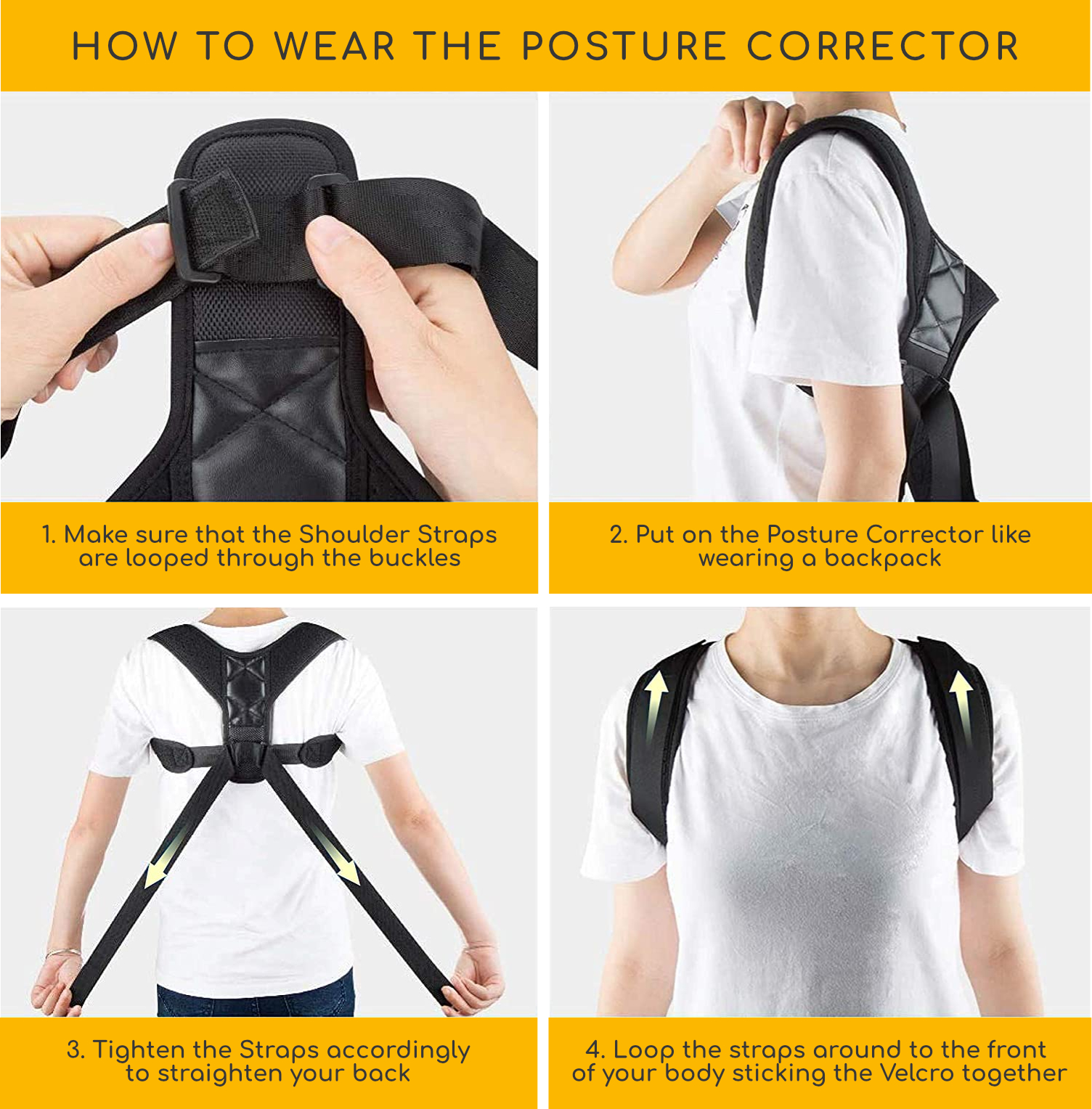
The dual adjustment system—buckles on each arm strap for length, Velcro ends for securing—allows precise fitting to your unique proportions. You can adjust the tension to suit your comfort and the stage of your retraining.
Proprioceptive Feedback
Proprioception is your body’s awareness of where it is in space. The corrector provides a constant, gentle reminder of where your shoulders should be. This isn’t about forcing you into an unnatural position. It’s about giving your nervous system a reference point.
Over time, your brain recalibrates. You start noticing when your shoulders drift forward—even without the corrector. You catch yourself slouching and correct it naturally, without thinking. That’s when you know it’s working. The external reminder is becoming an internal habit.
Progressive Muscle Retraining
The corrector doesn’t do the work for you. It provides the postural framework while your muscles build the strength and endurance to maintain alignment on their own. You’re not passively held in position—you’re actively supported while your body learns to hold itself upright.
The muscles between your shoulder blades—rhomboids, mid-trapezius, lower trapezius—have been underused, possibly for years. The corrector wakes them up. The first few times you wear it, you’ll feel them working. They may fatigue quickly. That’s progress. They’re engaging, building endurance, and learning to hold you upright.
Over weeks and months of consistent use, these muscles adapt. They get stronger. They build endurance. Your chest muscles lengthen. The joints in your upper back regain mobility. Your nervous system recalibrates—upright posture becomes your new default. You’ll need the corrector less often as your body maintains alignment independently. The goal is independence, not dependency.
Who It’s For
This corrector is designed for women who experience postural strain, upper-back aching, or forward shoulder positioning from sustained sitting, desk work, screen use, household tasks, childcare, or other activities that favour forward postures.
It may help if you:
- Notice your shoulders rounding forward throughout the day, particularly during desk work, driving, or household tasks
- Experience upper-back aching or fatigue between your shoulder blades, especially after prolonged sitting or standing
- Feel neck tension, stiffness, or tension headaches that worsen as the day goes on
- Find bra straps digging in more than they used to, or notice discomfort where the straps sit on your shoulders
- Feel like you’re constantly fighting to sit up straight, only to find yourself slumping forward again within minutes
- Want to retrain your postural muscles and build the strength and awareness to maintain upright posture independently
This corrector is designed specifically for women, with strap placement and proportions tailored to female body shapes. The fully adjustable straps accommodate a wide range of bust sizes, shoulder widths, and torso lengths. However, men with average or smaller builds may also find it comfortable and supportive.
What Makes This Different
Many posture correctors are rigid, uncomfortable, or designed to be worn passively. This corrector is different. It’s designed as a training tool, not a permanent support. It provides the postural framework while your muscles build the strength, endurance, and awareness to maintain alignment independently.
Women-first design: The strap placement and proportions are tailored to female body shapes. The straps sit around the bust, not across it, reducing pressure and discomfort, particularly for women with larger bust sizes. The dual adjustment system allows precise fitting to accommodate different bust sizes, shoulder widths, and torso lengths.
Lightweight and discreet: The corrector is designed to be worn under clothing. It sits flat under most tops, tunics, or cardigans. Under very tight or thin fabrics, the straps and Y-panel may be slightly visible, but most people find it unnoticeable under everyday clothing.
Allows natural movement: This isn’t a rigid brace. You can move, bend, reach, and perform everyday activities comfortably. The corrector provides gentle support and proprioceptive feedback, not immobilisation.
Progressive retraining: You start with short wear times and build up gradually as your muscles adapt. Over weeks and months, you’ll need it less often as your body learns to maintain alignment on its own.
Addresses the root cause: This corrector doesn’t just pull your shoulders back temporarily. It retrains the muscles that hold you upright, lengthens tight chest muscles, and restores mobility to stiff upper-back joints. It addresses the underlying mechanical problem, not just the visible symptom.
Common Postural Problems This Corrector Addresses
This corrector is designed to help with three common postural problems. Below, we explain each one, how it develops, and how the corrector may help as part of a broader approach to postural health.
Rounded Shoulders (Protracted Shoulders)
What It Is
Rounded shoulders—also called protracted shoulders or shoulder protraction—occur when your shoulder blades drift forward and away from your spine, pulling your shoulders forward with them. Your upper back rounds, your chest collapses inward, and your head shifts forward to compensate.
This isn’t a structural deformity in most cases. It’s a postural adaptation—your body has learned to hold itself in this position because the muscles that should pull your shoulders back have weakened, and the muscles that pull them forward have tightened and shortened.
How It Develops
Rounded shoulders develop gradually, often over years, as a result of sustained postures and repetitive movements that favour forward shoulder positioning.
Everyday postures and activities:
- Prolonged sitting—desk work, computer use, driving—your shoulders drift forward, your chest muscles tighten, and your upper-back muscles switch off
- Screen use—looking down at phones, tablets, or laptops pulls your head and shoulders forward
- Repetitive forward-reaching tasks—household chores (washing dishes, ironing, cooking), childcare (feeding, bathing, carrying your baby), or work tasks that involve reaching forward repeatedly
- Sedentary lifestyle—lack of movement and exercise allows postural muscles to weaken and joints to stiffen
- Stress and fatigue—physical and emotional stress cause muscle tension and postural collapse
Body-specific factors:
- Bra strap discomfort—when your upper back weakens and your shoulders round forward, more load shifts onto your bra straps and the muscles at the top of your shoulders, creating a cycle of discomfort and further postural compensation
- Breast weight—larger bust size can pull your shoulders forward, especially if your upper-back muscles aren’t strong enough to counterbalance the load
- Hormonal changes—perimenopause and menopause can increase ligament laxity, making joints more mobile and postural control more challenging
Over time, the muscles adapt. The chest muscles (pectorals) shorten and tighten. The upper-back muscles (rhomboids, mid-trapezius) lengthen and weaken. The nervous system recalibrates—this forward position becomes your new “normal.” The joints in your upper back stiffen in this rounded position, making it harder to straighten up even when you try.
Why It Matters
Rounded shoulders aren’t just cosmetic. They create a cascade of mechanical and functional problems:
- Upper-back aching and fatigue—the muscles between your shoulder blades are overstretched and underused, causing chronic aching and fatigue
- Neck strain and tension headaches—your neck works harder to hold your head up, and the muscles at the base of your skull become overworked and tight
- Shoulder discomfort and bra strap pain—more load shifts onto the top of your shoulders, causing discomfort where bra straps sit
- Restricted breathing—your ribcage can’t expand fully, reducing oxygen intake and leaving you feeling fatigued or breathless
- Reduced confidence and presence—you look and feel smaller, less open, less capable
- Increased risk of injury—weak, imbalanced posture increases strain on joints and soft tissues during everyday activities
Left unchecked, the pattern worsens. What starts as mild aching becomes chronic stiffness. What feels like temporary fatigue becomes permanent weakness. The earlier you intervene, the easier it is to reverse.
How the Corrector May Help
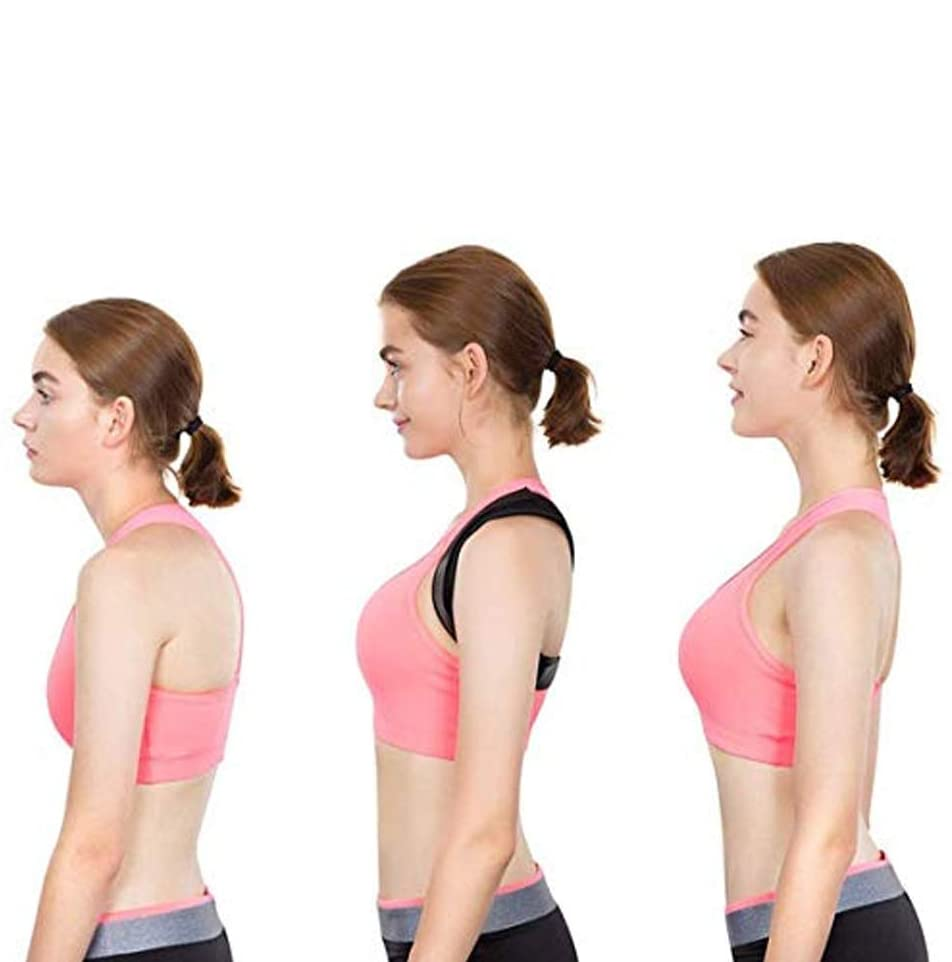
The corrector addresses rounded shoulders by drawing your shoulder blades back and stabilising them against your ribcage. This counters the forward drift that’s become your default and re-engages the rhomboids and mid-trapezius—the muscles that have been switched off, possibly for years.
The backward pull on your shoulders counters tight chest muscles and gives your nervous system a clear reference point for where neutral alignment should be. Over time, you’ll start catching yourself slouching and correcting it naturally—even without the corrector. That’s the proprioceptive retraining at work.
The corrector is most effective when used as part of a broader approach: regular movement breaks, stretching tight chest muscles, strengthening weak upper-back muscles, and addressing the underlying habits and postures that caused the problem in the first place.
Forward Head Posture
What It Is
Forward head posture occurs when your head shifts forward of your shoulders, so your ears are no longer aligned over your shoulders when viewed from the side. Your neck extends forward and upward to hold your head up, and the natural curve of your neck flattens or reverses.
This isn’t a structural deformity in most cases. It’s a postural adaptation—your body has learned to hold your head in this position because the muscles that should hold it upright have weakened, and the muscles that pull it forward have tightened.
How It Develops
Forward head posture develops gradually, often alongside rounded shoulders, as a result of sustained postures that favour forward head positioning:
- Screen use—looking down at phones, tablets, or laptops for extended periods pulls your head forward and down
- Desk work—sitting at a computer with your screen too low or too far away encourages your head to drift forward
- Driving—prolonged driving with your seat too far back or your head tilted forward to see the road
- Reading or close work—holding books, tablets, or craft projects too low forces your head forward and down
- Childcare—feeding, bathing, or caring for your baby with your head tilted forward for extended periods
- Rounded shoulders—when your shoulders round forward, your head shifts forward to compensate and maintain your line of sight
Over time, the muscles adapt. The muscles at the front of your neck (sternocleidomastoid, scalenes) tighten and shorten. The muscles at the back of your neck (deep neck flexors, upper trapezius) weaken or become overworked and tight. The joints in your neck stiffen in this forward position, making it harder to pull your head back even when you try.
Why It Matters
Forward head posture creates significant mechanical strain. Your head weighs roughly 4.5–5.5 kg (10–12 lbs). For every 2.5 cm (1 inch) your head shifts forward, the effective load on your neck doubles. If your head is 7.5 cm (3 inches) forward, your neck is supporting the equivalent of 18–23 kg (40–50 lbs).
This creates a cascade of problems:
- Neck aching and stiffness—the muscles at the base of your skull and the back of your neck become overworked, tight, and fatigued
- Tension headaches—tight neck muscles refer pain to the base of your skull, temples, and forehead
- Upper-back aching—the increased load on your neck transfers down into your upper back, causing chronic aching and fatigue
- Reduced neck mobility—stiff joints and tight muscles make it harder to turn your head, look up, or look down comfortably
- Jaw tension and TMJ problems—forward head posture alters jaw mechanics and can contribute to jaw clenching, grinding, and temporomandibular joint (TMJ) dysfunction
- Breathing difficulties—the forward head position compresses your airway and restricts your ribcage, reducing oxygen intake
Left unchecked, the pattern worsens. The joints stiffen. The muscles weaken further. What starts as mild aching becomes chronic pain. The earlier you intervene, the easier it is to reverse.
How the Corrector May Help
The corrector addresses forward head posture indirectly by correcting the underlying shoulder and upper-back posture that drives it.
Forward head posture rarely exists in isolation—it’s almost always accompanied by rounded shoulders. When your shoulders round forward, your head shifts forward to compensate and maintain your line of sight. By drawing your shoulders back and restoring upper-back alignment, the corrector reduces the forward pull on your neck and allows your head to return to a more neutral position over your shoulders.
The Y-shaped back panel stabilises your shoulder blades and re-engages the muscles between them. The padded straps create a light backward pull on your shoulders, countering tight chest muscles and encouraging an open-chest position. This restores the postural foundation that supports neutral head alignment.
The corrector also provides proprioceptive feedback—your body’s awareness of where it is in space. The gentle tension reminds your nervous system where your shoulders and head should be. Over time, your brain recalibrates, and you start noticing when your head drifts forward—even without the corrector.
The corrector is most effective when used as part of a broader approach: regular movement breaks, stretching tight chest and neck muscles, strengthening weak upper-back and deep neck muscles, and addressing the underlying habits and postures (screen height, desk setup, driving position) that caused the problem in the first place.
If your forward head posture is severe, longstanding, or accompanied by significant neck pain, numbness, tingling, or other symptoms, consult a physiotherapist or GP before using any postural support. Some neck conditions require professional assessment and treatment.
Upper-Back Pain (Thoracic Spine Pain)
What It Is
Upper-back pain—also called thoracic spine pain or mid-back pain—refers to aching, stiffness, or discomfort in the area between your shoulder blades and along your upper spine. It can feel like a dull, constant ache, sharp stabbing pain, or burning sensation. It may worsen with prolonged sitting, standing, or certain movements, and it often improves with movement or stretching.
In most cases, upper-back pain is mechanical—it’s caused by postural strain, muscle imbalance, joint stiffness, or overuse. It’s not usually a sign of serious structural damage, but it can significantly affect your quality of life, comfort, and ability to perform everyday activities.
How It Develops
Upper-back pain develops when the muscles, joints, and soft tissues in your upper back are placed under sustained or repetitive strain:
- Prolonged sitting with poor posture—desk work, computer use, driving—your shoulders round forward, your upper back rounds, and the muscles between your shoulder blades are overstretched and underused
- Repetitive forward-reaching tasks—household chores (washing dishes, ironing, cooking), childcare (feeding, bathing, carrying your baby), or work tasks that involve reaching forward repeatedly
- Weak upper-back muscles—the rhomboids, mid-trapezius, and lower trapezius—the muscles that stabilise your shoulder blades and extend your upper back—are weak or underactive, leaving your upper back unsupported
- Tight chest muscles—the pectorals (chest muscles) are tight and shortened, pulling your shoulders forward and placing constant strain on your upper back
- Bra strap discomfort and shoulder strain—when your upper back weakens and your shoulders round forward, more load shifts onto your bra straps and the muscles at the top of your shoulders, creating a cycle of discomfort and compensatory strain
- Breast weight—larger bust size can pull your shoulders forward and place additional strain on your upper back, especially if your postural muscles aren’t strong enough to counterbalance the load
- Stiff thoracic spine—the joints in your upper back lose mobility from prolonged sitting or lack of movement, causing stiffness and aching
- Stress and muscle tension—physical and emotional stress cause muscle guarding and tension, particularly in the upper back and shoulders
- Hormonal changes—perimenopause and menopause can increase ligament laxity and joint instability, affecting postural control and increasing strain on the upper back
- One-sided activities—carrying bags on one shoulder, holding a phone between your ear and shoulder, or repetitive one-sided movements create asymmetry and strain
Over time, the muscles fatigue. The joints stiffen. The nervous system becomes sensitised to the strain, and the pain becomes chronic. What starts as mild aching after a long day becomes constant discomfort that affects your sleep, mood, and ability to function.
Why It Matters
Upper-back pain isn’t just uncomfortable—it affects your entire body and quality of life:
- Reduced mobility and function—stiffness and aching make it harder to reach, lift, carry, or perform everyday tasks comfortably
- Neck and shoulder pain—upper-back strain often spreads to your neck and shoulders, causing tension headaches and shoulder discomfort
- Breathing difficulties—a stiff, rounded upper back restricts your ribcage, reducing oxygen intake and leaving you feeling fatigued or breathless
- Sleep disruption—pain and discomfort make it harder to find a comfortable sleeping position, disrupting sleep quality and recovery
- Reduced confidence and mood—chronic pain affects your mood, energy, and sense of capability
- Increased risk of worsening—left unchecked, the pattern worsens—muscles weaken further, joints stiffen more, and pain becomes more persistent
The earlier you intervene, the easier it is to reverse the pattern and restore comfort, mobility, and function.
How the Corrector May Help
The corrector addresses upper-back pain by correcting the underlying postural imbalances and muscle weaknesses that cause it.
Reduces postural strain: The Y-shaped back panel draws your shoulder blades together and stabilises them against your ribcage, reducing the overstretching and strain on the muscles between your shoulder blades. The padded straps create a light backward pull on your shoulders, countering tight chest muscles and encouraging an open-chest position. This restores the postural alignment that allows your upper back to function efficiently and comfortably.
Re-engages weak muscles: The corrector provides the postural framework while your upper-back muscles (rhomboids, mid-trapezius, lower trapezius) build the strength and endurance to maintain alignment on their own. These muscles have been underused, possibly for years. The corrector wakes them up and trains them to hold you upright, reducing the strain on overworked muscles and joints.
Improves joint mobility: By encouraging upright posture and regular movement, the corrector helps restore mobility to stiff thoracic spine joints. Movement is medicine for stiff joints—the more you move in good alignment, the more mobility you regain.
Provides proprioceptive feedback: The gentle tension reminds your nervous system where your shoulders and upper back should be. Over time, your brain recalibrates, and you start noticing when your posture drifts—even without the corrector. This awareness is key to breaking the cycle of postural strain.
Supports you during high-risk activities: The corrector provides support and awareness during activities where you’re most likely to slouch and strain your upper back—working at a desk, washing dishes or folding laundry, driving, or standing at a kitchen counter or standing desk. This reduces the cumulative strain that builds up throughout the day.
The corrector is most effective when used as part of a broader approach: regular movement breaks, stretching tight chest muscles, strengthening weak upper-back muscles, improving your desk setup and daily postures, and addressing the underlying habits that caused the problem in the first place.
If your upper-back pain is severe, worsening, or accompanied by other symptoms (numbness, tingling, weakness, chest pain, difficulty breathing), consult your GP or physiotherapist before using any postural support. Not all upper-back pain is postural, and some conditions require professional assessment and treatment.
Who Should (and Shouldn’t) Use This
This corrector is designed for postural support and muscle retraining in healthy adults. It is not a medical device and is not intended to treat, diagnose, or cure any medical condition.
Do Not Use If:
- You have an acute injury, recent spinal fracture, or have had spinal surgery (unless explicitly cleared by your GP, orthopaedic consultant, or physiotherapist)
- You have a diagnosed structural spinal condition (severe kyphosis, scoliosis, disc herniation, spinal stenosis) without consulting a physiotherapist or GP first
- You are pregnant or in the early postpartum period (first 6–8 weeks) without consulting your GP or midwife—your body is still recovering and your posture is changing
- You experience sharp pain, numbness, tingling, or weakness while wearing it—remove immediately and seek advice
- You have broken skin, open wounds, or significant skin irritation in the areas where the brace sits
- You have a known allergy to neoprene or similar synthetic materials
Seek Professional Advice Before Use If:
- You have a diagnosed spinal condition (mild-to-moderate scoliosis, kyphosis, disc degeneration)—your clinician can advise whether this type of support is appropriate
- You have osteoporosis or low bone density—your clinician can advise whether postural support is safe and how to use it alongside other treatments
- You have a history of shoulder dislocation, rotator cuff injury, or other shoulder problems—the backward pull may aggravate certain shoulder conditions
- You have circulatory problems, nerve damage, or reduced skin sensation—you may not notice if the corrector is too tight or causing pressure points
- You have chronic pain or symptoms that are worsening—new or worsening pain, numbness, tingling, or weakness should always be assessed by a GP or physiotherapist before using any support
- You experience hormonal changes that affect ligament laxity (perimenopause, menopause, certain medications)—your joints may be more mobile or unstable, and postural support should be used cautiously
When to Remove:
- During sleep: Never wear this corrector while sleeping. Your body needs to move freely and change position throughout the night. The straps could shift during sleep and wrap around your neck, creating a strangulation risk. Wearing it during sleep can also restrict natural movement, cause discomfort, and disrupt sleep quality. Your spine naturally straightens and decompresses during sleep, so there’s no postural benefit to wearing it overnight. Always remove it before bed.
- During heavy overhead lifting: Overhead presses, snatches, jerks with significant load—remove the corrector to allow full shoulder mobility and natural spinal mechanics. Squats, deadlifts, bench press, and rows are fine with the corrector on.
- During activities requiring full unrestricted shoulder range of motion: Swimming, gymnastics, overhead sports with full extension (volleyball spikes, tennis serves)—the corrector may restrict the extreme ranges needed for these movements.
- If you experience discomfort, pain, or any unusual symptoms: Remove immediately and consult a healthcare professional if symptoms persist.
Safe Use Guidelines:
- Start with short wear times (15–30 minutes) and build up gradually as your muscles adapt
- Adjust the straps for a snug but comfortable fit—you should feel gentle support, not restriction or pain
- Check your skin regularly for redness, irritation, or pressure marks—if these develop, loosen the straps or reduce wear time
- Never wear it so tight that it restricts breathing, causes pain, or creates numbness or tingling
- If you’re unsure whether it’s appropriate for you, consult a physiotherapist or GP before use
What to Expect
First Few Wears: Awareness and Activation
The first few times you wear it, you’ll notice your shoulders immediately. The gentle backward pull feels unfamiliar—not uncomfortable, just different. Your upper-back muscles may feel fatigued after short sessions. That’s progress—they’re waking up.
These muscles have been underused, possibly for years. The fatigue means they’re engaging. Start with short sessions and build up as your body adapts.
You may also notice you’re breathing more deeply. The open-chest position allows your ribcage to expand fully. Some people report feeling more alert or energised, likely from improved oxygen intake and circulation.
Week 1–2: Reduced Aching and Easier Alignment
Within a week or two of consistent use, most people notice reduced upper-back aching and find it easier to maintain upright posture—even when not wearing the corrector. The muscles between your shoulder blades are building endurance. Your nervous system is learning what neutral alignment feels like.
You start catching yourself slouching and correcting it naturally, without thinking. The corrector has given your body a reference point, and your nervous system is learning to maintain it independently.
Neck and shoulder tension often eases during this phase. The reduced forward pull on your neck allows the overworked muscles at the base of your skull to relax. Headaches—if they were posture-related—may reduce in frequency or intensity.
If you’ve been experiencing bra strap discomfort, you may notice the straps dig in less as your shoulders move back and your upper back supports more of the load.
Week 3–4: Visible Improvements and Less Conscious Effort
By three to four weeks, visible improvements develop. Your shoulders sit further back. Your upper back looks less rounded. Clothes hang more evenly. You stand taller without thinking about it.
Maintaining good posture requires less conscious effort. Your muscles have adapted. The chest muscles have lengthened. The joints in your upper back have regained mobility. Your body has recalibrated what “normal” feels like, and upright posture is becoming your new default.
You may find you can wear the corrector for longer periods without fatigue—60–90 minutes or more—or that you need it less often as your body maintains alignment independently.
Ongoing: Gradual Reduction in Wear Time
Over the following weeks and months, you’ll likely need the corrector less often. Your muscles have built the strength and endurance to maintain alignment on their own. You may wear it only during high-risk times—working at a desk, washing dishes or folding laundry, driving, or standing at a kitchen counter or standing desk—or as a periodic reminder when you notice your posture slipping.
Progress isn’t always linear. You may have days where your posture feels worse, especially during stress, fatigue, hormonal changes, or illness. The corrector is there to support you through those times and help you get back on track.
Sizing, Care & Guarantee
Sizing & Fit
One size fits most, with fully adjustable straps to accommodate a wide range of body shapes, bust sizes, shoulder widths, and torso lengths. The dual adjustment system (buckles for length, Velcro for securing) allows precise fitting to your unique proportions.
How to adjust for best fit:
- Put the corrector on over a thin layer of clothing (vest, T-shirt) to prevent chafing during initial wears
- Position the Y-panel centrally between your shoulder blades
- Loop the straps over your shoulders and under your arms—the straps should sit around your bust, not across it
- Adjust the buckles on each arm strap (like a backpack) to control length and fit
- Pull the straps forward to tighten, then secure the Velcro ends to the upper shoulders of the brace
- Check that you feel gentle backward pull on your shoulders—snug but not restrictive
- Check that the straps aren’t digging into your skin, shoulders, or bust area—loosen slightly if needed
- Stand and move naturally—the corrector should stay in place without shifting or riding up
Bust accommodation: The straps are designed to sit around the bust rather than across it, reducing pressure and discomfort. If you have a larger bust and find the straps are creating pressure points, try adjusting the buckles to lengthen the straps slightly, or reposition the straps so they sit more comfortably on your shoulders. The corrector should feel supportive, not restrictive.
Fitting support: If you’re unsure about fit or adjustment, contact our customer care team. We can provide personalised fitting advice and troubleshooting to ensure you get the best support and comfort.
Care & Maintenance
Hand-wash only in cool or lukewarm water with mild detergent. Gently squeeze out excess water—do not wring or twist. Air-dry flat away from direct heat or sunlight. Never machine-wash, tumble-dry, dry-clean, or iron—heat and agitation will damage the neoprene and reduce the corrector’s effectiveness.
Storage: Store flat or loosely rolled in a cool, dry place. Avoid folding or creasing the Y-panel, as this can weaken the material over time.
Lifespan: With proper care, the corrector should maintain its support and elasticity for 6–12 months of regular use. Replace it if the straps lose elasticity, the neoprene becomes thin or damaged, or the buckles or Velcro no longer hold securely.
30-Day Money-Back Guarantee
Try the BackReviver Upper-Back Posture Corrector risk-free for 30 days. If it doesn’t feel comfortable, doesn’t fit properly, or doesn’t meet your expectations, return it for a full refund—no questions asked.
We want you to feel confident in your purchase. If you have any concerns about fit, comfort, or suitability, contact our customer care team before returning. We’re here to help you get the best result, whether that’s adjusting the fit, troubleshooting discomfort, or processing a return.
Frequently Asked Questions
How long should I wear it each day?
Start with 15–30 minutes and build up gradually as your muscles adapt. Most people work up to 60–90 minutes or longer during activities where they need support—working at a desk, household tasks, driving, or standing for extended periods.
There’s no fixed rule. Listen to your body. If your upper-back muscles feel fatigued, that’s normal—they’re working. If you experience discomfort, pain, or any unusual symptoms, remove the corrector and reduce wear time or adjust the fit.
You’re building strength and awareness, not creating dependency. Over time, you’ll need it less often as your body learns to maintain alignment independently.
Can I wear it under clothing?
Yes. The corrector is designed to be discreet and lightweight, sitting flat under most clothing. It works best under looser tops, tunics, or cardigans. Under very tight or thin fabrics, the straps and Y-panel may be slightly visible, but most people find it unnoticeable under everyday clothing.
For initial wears, put it on over a thin vest or T-shirt to prevent chafing while your skin adjusts. Once you’re comfortable, you can wear it directly against your skin if you prefer.
Will it restrict my movement?
No. The corrector provides gentle support and proprioceptive feedback, not rigid immobilisation. You can move, bend, reach, and perform everyday activities comfortably. It’s designed to allow natural movement while encouraging upright posture.
For activities requiring full unrestricted shoulder range of motion (swimming, gymnastics, overhead sports with full extension), remove the corrector to allow unrestricted movement.
Can I wear it during exercise?
Yes. The corrector is suitable for most activities, including running, jumping, HIIT, contact sports, and resistance training. It can help maintain alignment and awareness during these activities.
Remove it for heavy overhead lifting (overhead presses, snatches, jerks with significant load) or activities requiring full unrestricted shoulder range of motion (swimming, gymnastics, overhead sports with full extension). The corrector may restrict the extreme ranges needed for these movements. Squats, deadlifts, bench press, and rows are fine with the corrector on.
How do I know if it’s fitted correctly?
You should feel gentle backward pull on your shoulders—snug but not restrictive. The Y-panel should sit centrally between your shoulder blades. The straps should loop over your shoulders and under your arms, sitting around your bust (not across it), without digging into your skin or creating pressure points.
You should be able to breathe comfortably, move naturally, and maintain the position without pain or discomfort. If the corrector feels too tight, causes pain, restricts breathing, or creates numbness or tingling, loosen the straps immediately.
If you’re unsure, contact our customer care team for personalised fitting advice.
Will it work if I have a larger bust?
Yes. The straps are designed to sit around the bust rather than across it, and the dual adjustment system (buckles for length, Velcro for securing) allows you to customise the fit to accommodate different bust sizes.
If you find the straps are creating pressure points, try adjusting the buckles to lengthen the straps slightly, or reposition the straps so they sit more comfortably on your shoulders. The corrector should feel supportive, not restrictive.
If you’re unsure about fit or need troubleshooting, contact our customer care team. We can provide personalised advice to ensure you get the best support and comfort.
Can I wear it during pregnancy or postpartum?
During pregnancy: Do not use without consulting your GP or midwife first. Your body is changing rapidly, your posture is shifting to accommodate your growing baby, and your ligaments are more lax due to hormonal changes. Postural support may not be appropriate or safe during pregnancy.
Early postpartum (first 6–8 weeks): Do not use without consulting your GP or midwife. Your body is still recovering, your ligaments are still lax, and your posture is still adjusting. Wait until you’ve been cleared for normal activity before using any postural support.
Later postpartum (after 6–8 weeks, cleared by your GP or midwife): The corrector can help address postural strain from feeding, carrying, and caring for your baby. Start with short wear times (15–30 minutes) and build up gradually. If you experience any discomfort, pain, or unusual symptoms, remove the corrector and consult your GP or physiotherapist.
Can I wear it if I have bra strap discomfort?
Yes—this is one of the common reasons women use this corrector. Bra strap discomfort often develops when your shoulders round forward and your upper back weakens, shifting more of the load onto the straps and the muscles at the top of your shoulders.
The corrector draws your shoulders back and retrains your upper-back muscles to support more of the load, reducing the strain on your shoulders and the pressure from bra straps. Many women notice the straps dig in less within a week or two of consistent use.
The corrector straps sit around your bust (not across it), so they won’t interfere with your bra or create additional pressure points.
Will it help with neck pain or headaches?
It may help if your neck pain or headaches are posture-related. When your shoulders round forward, your neck works harder to hold your head up, and the muscles at the base of your skull become overworked and tight. This can cause neck aching, stiffness, and tension headaches.
By drawing your shoulders back and restoring upper-back alignment, the corrector reduces the forward pull on your neck, allowing those overworked muscles to relax. Many people notice reduced neck tension and fewer headaches within a week or two of consistent use.
If your neck pain or headaches are severe, worsening, or accompanied by other symptoms (numbness, tingling, weakness, dizziness), consult your GP or physiotherapist before using any postural support. Not all neck pain is postural, and some conditions require professional assessment and treatment.
Can men use this corrector?
This corrector is designed specifically for women, with strap placement and proportions tailored to female body shapes. However, the fully adjustable straps (buckles for length, Velcro for securing) mean some men with average or smaller builds may find it comfortable and supportive.
Men with broader shoulders, larger chest measurements, or different torso proportions may find the fit less comfortable or the straps too short. BackReviver offers other posture correctors in their range that may be better suited to larger or broader builds. Contact our customer care team for guidance on the best option.
How do I clean it?
Hand-wash only in cool or lukewarm water with mild detergent. Gently squeeze out excess water—do not wring or twist. Air-dry flat away from direct heat or sunlight. Never machine-wash, tumble-dry, dry-clean, or iron—heat and agitation will damage the neoprene and reduce the corrector’s effectiveness.
How long will it last?
With proper care, the corrector should maintain its support and elasticity for 6–12 months of regular use. Replace it if the straps lose elasticity, the neoprene becomes thin or damaged, or the buckles or Velcro no longer hold securely.
What if it doesn’t fit or doesn’t work for me?
You have 30 days to try it risk-free. If it doesn’t feel comfortable, doesn’t fit properly, or doesn’t meet your expectations, return it for a full refund—no questions asked.
Before returning, contact our customer care team. We can provide fitting advice, troubleshooting, or guidance on adjusting the corrector to get the best result. If it’s still not right, we’ll process your return quickly and without hassle.
Can I wear it while sleeping?
No. Never wear this corrector while sleeping. Your body needs to move freely and change position throughout the night. The straps could shift during sleep and wrap around your neck, creating a strangulation risk. Wearing it during sleep can also restrict natural movement, cause discomfort, and disrupt sleep quality. Your spine naturally straightens and decompresses during sleep, so there’s no postural benefit to wearing it overnight. Always remove it before bed.
Will I become dependent on it?
No. This corrector is designed as a training tool, not a permanent support. It provides the postural framework while your muscles build the strength, endurance, and awareness to maintain alignment independently.
Over weeks and months of consistent use, your body learns to hold itself upright without the external reminder. You’ll need the corrector less often as your muscles adapt and your nervous system recalibrates. The goal is independence, not dependency.
You can continue to wear it as needed for support during high-risk activities or as a periodic reminder when you notice your posture slipping, but you won’t be reliant on it.
What if I have a diagnosed spinal condition?
If you have a diagnosed structural spinal condition (scoliosis, kyphosis, disc herniation, spinal stenosis, osteoporosis, or any other spinal diagnosis), consult your GP or physiotherapist before using this corrector. They can advise whether this type of support is appropriate for your condition and how to use it safely alongside other treatments.
This corrector is designed for postural support and muscle retraining in healthy adults. It is not a medical device and is not intended to treat, diagnose, or cure any medical condition.
Can I use it if I’m going through menopause or perimenopause?
Yes, but use it cautiously if you’re experiencing hormonal changes that affect ligament laxity. During perimenopause and menopause, declining oestrogen levels can make ligaments more lax and joints more mobile or unstable. This can affect how your body responds to postural support.
Start with short wear times (15–30 minutes) and build up gradually. Adjust the straps for a snug but comfortable fit—not too tight. If you experience any discomfort, pain, or unusual symptoms, remove the corrector and consult your GP or physiotherapist.
If you have osteoporosis or low bone density (common during and after menopause), consult your GP or physiotherapist before using any postural support.
Final Thoughts
Your posture affects how you feel, how you move, and how you show up in the world. When your shoulders round forward and your upper back weakens, you don’t just look smaller—you feel smaller. You move with less confidence. You tire more easily. You ache more often.
The BackReviver Upper-Back Posture Corrector gives your body the framework to break that cycle. It doesn’t force you into an unnatural position. It guides you back toward alignment, retrains the muscles that hold you upright, and helps you maintain that alignment independently.
This isn’t a quick fix—it’s designed to retrain your body gradually. You’re building strength, awareness, and new postural habits. That takes time, consistency, and patience. But the results are worth it—you stand taller, move with less effort, and feel more like yourself.
You don’t have to live with rounded shoulders, bra strap discomfort, or constant upper-back aching. This corrector gives your body the framework to break that cycle—gently, progressively, and on your terms.
Try it risk-free for 30 days. If it doesn’t feel right, return it for a full refund—no questions asked. If you have any questions about fit, suitability, or how to use the corrector, contact our customer care team. We’re here to help you get the best result.
Disclaimer
The information on this page is general guidance only. It is not a substitute for individual medical advice, diagnosis, or treatment. If you have a diagnosed medical condition, are experiencing new or worsening symptoms, or are unsure whether this corrector is appropriate for you, speak to a GP, physiotherapist, or another appropriate clinician for personalised advice. No guaranteed outcomes are promised. Individual results may vary.
Fast & Secure Checkout Through Paypal
Pay with Paypal the secure payment gateway that accepts all credit and debit cards. Paypal is free and secure and no credit or bank information is ever stored or shared with us.
Fast Dispatch
Enjoy your items soon with quick dispatch via Royal Mail. Expect to have your items between 1-3 working days for domestic orders. 7-10 Working days for international orders.
Return Policy – 30 Day Money Back Guarantee
In the unlikely event, you are unhappy with your purchase you can return it within 30 days for a refund. Please contact us via the form on the contact us page to start your return.
To return an item please send it to: Nuova Health UK, 81 Highfield Lane, Waverley, Rotherham, S60 8AL. Please include a note with your order id so we know who to refund. Please retain your postage receipt as proof of postage. All that we ask is that the item is in the original packaging and unused.
Reviews
There are no reviews yet.