
Roll over image to zoom in
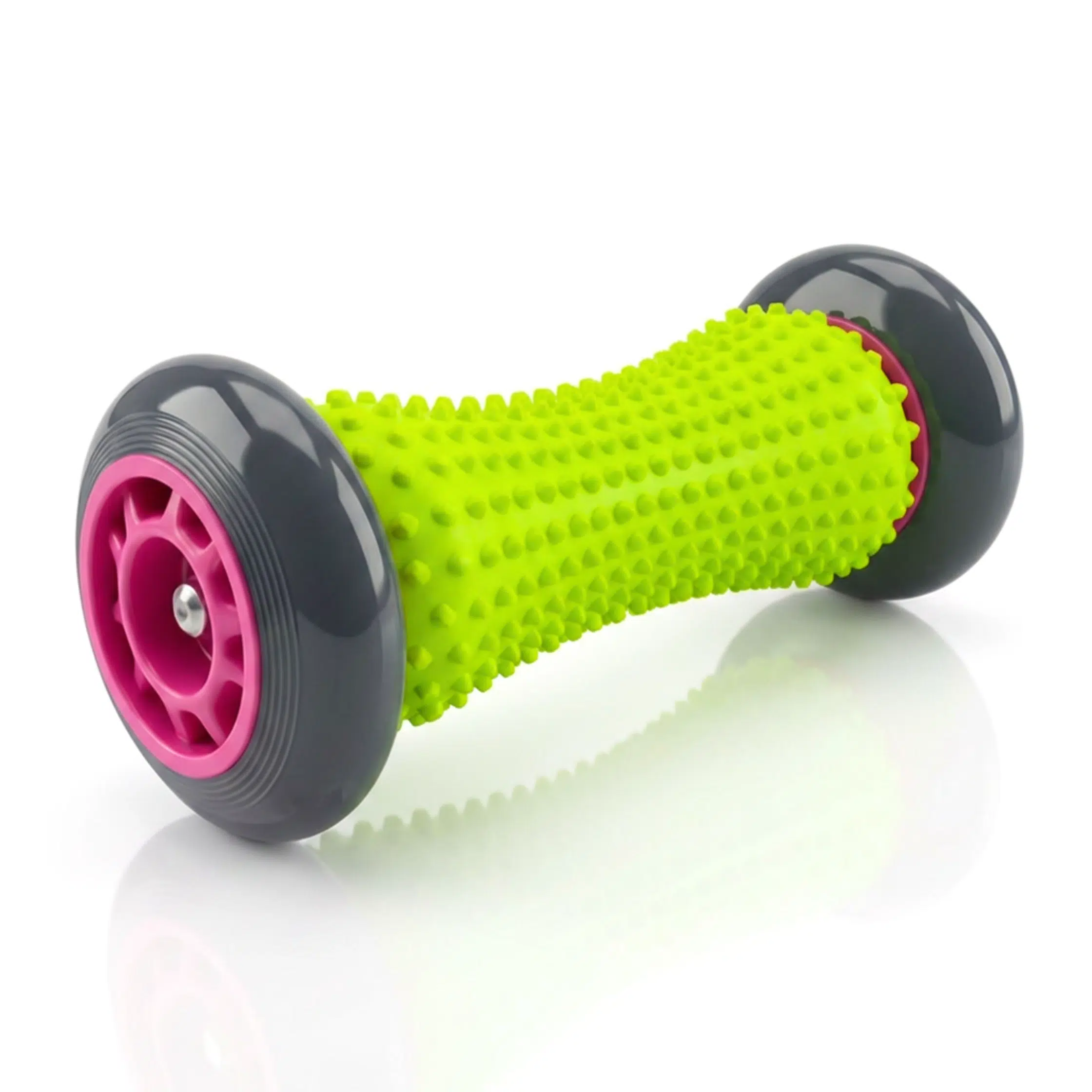
Plantar Fasciitis Foot Massage Roller
£9.99inc VAT
- Spiky massage roller designed for plantar fasciitis and heel pain relief
- Helps ease sharp morning heel pain and stiffness after rest
- Raised nodes deliver consistent pressure across the entire arch as you roll
- Node height optimised to reach the fascia effectively without excessive pressure or discomfort
- Improves blood flow to the plantar fascia, supporting natural tissue repair
- Releases tension and tight spots in the fascia through myofascial release
- Particularly effective when used first thing in the morning before standing
- Durable construction with easy-to-clean materials
- Compact and portable – use at home, at work, or while travelling
- Suitable for daily use as part of plantar fasciitis management
- Also helps with diabetic neuropathy, arthritis, metatarsalgia (ball of foot pain), myofascial pain syndrome, and Achilles tendinitis
- Ideal for people with flat feet, fallen arches, or high arches who are more susceptible to foot pain
- Can be used on other areas including hands, forearms, shoulders, back, calves, and hamstrings to release tight muscles
- Most people notice reduced morning pain within 1-2 weeks of consistent daily rolling
- Check with a GP or podiatrist before use if you have diabetes with reduced foot sensation, circulation problems, or a history of foot injuries
- Not suitable for acute injuries, open wounds, or unexplained swelling
What is plantar fasciitis?
That sharp, stabbing pain in your heel when you take your first steps in the morning? That’s often plantar fasciitis – and if you’ve been dealing with it for weeks or months, you’ll know how it can turn simple daily activities into painful ordeals.
The plantar fascia is a thick band of tissue running along the bottom of your foot, from your heel bone to the base of your toes. It supports your arch and absorbs shock with every step. Plantar fasciitis develops when this tissue becomes inflamed, usually from repeated small tears near where it attaches to the heel.
These tiny injuries happen when the fascia is stretched beyond what it can handle, over and over again. High-impact activities, prolonged standing, unsupportive footwear, or structural factors like flat feet or high arches can all place excessive strain on it. Over time, damage accumulates faster than your body can repair it. The result: inflammation, pain, and stiffness – especially noticeable first thing in the morning or after you’ve been sitting for a while.
Why recovery takes weeks, not days
Recovery from plantar fasciitis is frustratingly slow. We’re talking weeks to months, sometimes longer. Two things make healing difficult.
First, the plantar fascia has a limited blood supply compared to muscle. Blood delivers the oxygen and nutrients that support repair, so less circulation means slower healing.
Second, you can’t fully rest your foot. This is why plantar fasciitis feels so stubborn – you’re trying to heal something you can’t fully rest. Every time you walk, stand, or move, the fascia is working. If it’s already damaged, ongoing use can cause re-injury before it’s had a chance to properly heal.
What causes plantar fasciitis?
Understanding what triggered your plantar fasciitis can help you address the root cause alongside symptom management. Common triggers include improper footwear, foot structure (flat feet or high arches), high-impact activities, prolonged standing, increased body weight, age-related changes, tight calf muscles, and sudden activity increases. Expand the sections below for detailed explanations.
How rolling addresses both barriers to healing
A spiky foot roller helps tackle the two main barriers to healing: limited circulation and continual use. The raised nodes deliver consistent pressure across the entire arch as you roll, ensuring the fascia is engaged throughout the movement without gaps.
The node height is optimised to reach the fascia effectively without requiring excessive pressure. You don’t need to press down hard to get the benefit – the nodes are designed to do the work for you, delivering firm, targeted pressure that feels slightly uncomfortable on tight spots but never sharp or intolerable.
Improved circulation and healing
When you apply pressure to the fascia, you temporarily compress the small blood vessels (capillaries) in that area. When you release the pressure and roll away, those vessels dilate and fresh blood rushes back in – a bit like releasing a squeezed sponge under water. This cycle of pressure and release encourages local circulation, helping deliver oxygen and nutrients while clearing inflammatory waste products.
Better local circulation supports the repair process. The fascia can access the resources it needs to heal damaged fibres, and inflammation – which contributes to pain and stiffness – can start to settle.
Myofascial release and tension reduction
When fascia is inflamed or damaged, the tissue can become dehydrated and fibres can cross-link in disorganised patterns – like tangled string. These areas of restriction are sometimes called adhesions. They form when inflamed fascia develops cross-links between its normally parallel collagen fibres, or when it sticks to the layers of tissue above and below it. Healthy fascia should glide smoothly over the muscles and fat pad beneath it. When adhesions form, that gliding is restricted – the fascia pulls and tugs rather than sliding freely. This creates tension hotspots, usually near the heel where the fascia attaches.
Sustained pressure from the spiky nodes helps rehydrate the tissue and encourages fibres to realign along their natural lines of tension. This restores the fascia’s ability to glide and stretch, rather than pulling rigidly at the heel. The result is reduced tension, improved flexibility, and less pain during movement.
Morning use and overnight tightening
Overnight, your foot rests in a slightly pointed position (plantarflexion). The fascia adapts by shortening to match this relaxed length. When you stand in the morning, your foot moves into the opposite position – toes up, heel down – which abruptly stretches the fascia from its shortened state. That sudden stretch at the heel insertion is what causes the sharp pain.
Rolling before you stand helps lengthen the fascia gradually, preparing it for the load it’s about to take. You’re essentially warming up the tissue, improving its flexibility and reducing the shock of that first step. Most people find that rolling for just a few minutes first thing in the morning significantly reduces or even eliminates that initial sharp pain.
Rolling as part of your recovery approach
Rolling helps manage symptoms by improving circulation and releasing tension, but it doesn’t change foot structure or address all the factors that may have triggered your plantar fasciitis. For lasting improvement, you’ll likely need to combine rolling with other approaches that tackle the underlying cause.
Supportive footwear and insoles: If flat feet, high arches, or worn-out shoes contributed to your plantar fasciitis, rolling alone won’t fix the problem. Arch support insoles help distribute load more evenly across your foot, so no single area (especially the heel) takes excessive force with each step. This reduces strain on the fascia and supports long-term recovery. Look for insoles with firm arch support that matches your foot type – cushioned insoles for high arches, structured support for flat feet.
Calf stretching: If tight calves or Achilles are contributing to your heel pain, regular calf stretching can reduce pull on the heel and take strain off the fascia. Rolling addresses tension from the bottom up; calf stretching addresses it from the top down. Used together, they tackle the problem from both ends.
Night splints: A night splint holds your foot in a gently stretched position overnight, preventing the fascia from shortening while you sleep. This can significantly reduce morning pain. Night splints are particularly helpful if morning pain is your main problem and rolling alone isn’t giving you enough relief.
Activity modification: If sudden activity increase or prolonged standing triggered your plantar fasciitis, managing your activity levels while your foot heals is essential. This doesn’t mean complete rest – it means scaling back to what’s comfortable, then increasing gradually. Breaking activities into smaller chunks with rest in between (rather than pushing through until pain forces you to stop) helps keep your fascia working without overloading it.
Recovery timeline: what’s normal and what needs attention
Recovery from plantar fasciitis isn’t linear. You won’t see steady, predictable improvement every day. Some days will feel better than others, and occasional flare-ups are normal even when you’re doing everything right.
First 1-2 weeks: Most people notice reduced morning pain within the first week or two of consistent daily rolling. The sharp, stabbing sensation when you first stand tends to ease, and you may find you can walk more comfortably in the first few minutes after getting up. This early improvement is usually down to reduced tension and better flexibility in the fascia, rather than full tissue healing.
Weeks 2-6: Pain during the day – after sitting for a while, or during prolonged standing or walking – should start to settle. You might notice you can stand or walk for longer before discomfort sets in. Improvement during this phase suggests the underlying inflammation is reducing and the fascia is starting to repair.
Beyond 6 weeks: For many people, symptoms continue to improve gradually over 2-3 months. Some cases take longer, particularly if the condition has been present for months before treatment started, or if structural factors (flat feet, high arches, tight calves) haven’t been addressed alongside rolling.
Flare-ups are normal. A flare-up after a good week can feel discouraging, but it doesn’t mean you’re back to square one. Flare-ups usually happen after you’ve done more activity than usual, worn unsupportive shoes, or skipped rolling for a few days. They’re a sign the fascia is still vulnerable, not that rolling isn’t working. Ease back on activity for a day or two, return to consistent rolling, and symptoms typically settle again within a few days.
What improvement looks like: Focus on the overall trend over weeks, not day-to-day fluctuations. Are your best days better than they were a month ago? Are your worst days less severe? Can you do more before pain sets in? These are the markers that matter.
Getting the most from your roller: technique and timing
When to roll: First thing in the morning, before you stand, is the most important time. Rolling prepares the fascia for load and significantly reduces that sharp first-step pain. You can also roll during the day – after sitting for a while, or in the evening to release accumulated tension. Many people find rolling 2-3 times per day gives the best results, but even once daily (in the morning) makes a noticeable difference.
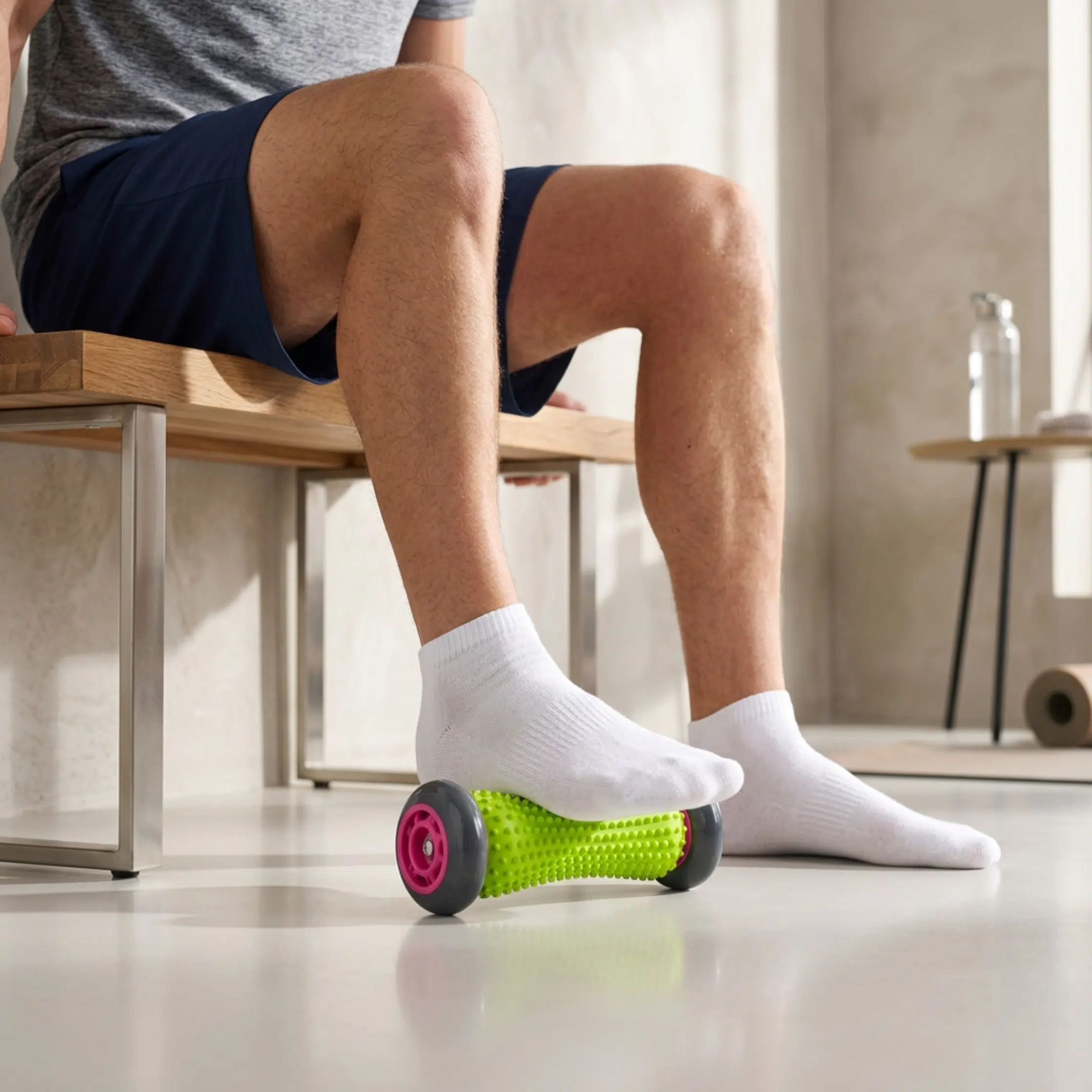
How to roll: Sit in a chair with the roller on the floor beneath your affected foot. Place your foot on the roller and apply gentle pressure by pressing down. Roll slowly from your heel toward the ball of your foot, then back again. Focus on the arch and the area just in front of the heel – this is where the fascia is usually tightest.
When you find a particularly tight or tender spot, pause and hold pressure there for 10-20 seconds. You should feel the tension start to release. The sensation should be firm and slightly uncomfortable on tight areas, but never sharp or intolerable. If it feels too painful, reduce the pressure by keeping more weight on your other foot.
How long: 2-3 minutes per foot is usually enough. You don’t need to roll for long periods – short, consistent sessions are more effective than occasional long ones.
How much pressure: Enough to feel the nodes engaging with the tissue, but not so much that you’re wincing or holding your breath. The node design is optimised to deliver effective pressure without you needing to press down hard. Let the design do the work.
Consistency matters more than intensity. Rolling gently every day is far more effective than rolling aggressively once or twice a week. Your fascia responds to regular, repeated stimulation – this is what encourages circulation, releases tension, and supports healing.
Common questions
If rolling feels too painful: Reduce pressure by keeping more weight on your other foot. The sensation should be firm and slightly uncomfortable on tight spots, but never sharp or intolerable. If it remains too painful even with light pressure, your fascia may be acutely inflamed – ease off for a day or two and try again with very gentle pressure.
If you don’t feel much: You might need slightly more pressure, or your fascia might not be particularly tight. Focus on the arch and the area just in front of the heel – if these areas feel relatively comfortable, that’s actually a good sign. Not everyone has significant tightness or adhesions.
If your foot feels tender after rolling: Some tenderness in the first few sessions is normal as the tissue adapts. If it persists beyond 24 hours or worsens, ease off the pressure and duration. You may be rolling too aggressively or for too long.
If you’re not sure you’re doing it right: If you can feel the nodes engaging with the arch and heel area, and the sensation is firm but tolerable, you’re doing it correctly. There’s no single “perfect” technique – the key is consistent, gentle pressure across the fascia.
When to see a professional: red flags and routine checks
Most cases of plantar fasciitis improve with consistent self-management (rolling, supportive footwear, activity modification), but some situations need professional assessment.
See someone this week if you have:
- Severe pain that’s getting worse despite treatment
- Numbness, tingling, or loss of sensation in your foot
- Unexplained swelling, redness, or warmth in your heel or foot
- Pain that’s spreading to your ankle, knee, hip, or lower back
- Difficulty bearing weight or walking normally
Book an appointment if:
- You’ve been rolling consistently for 3-4 weeks with no improvement
- Pain is affecting how you walk or causing you to limp
- You’re unsure whether rolling is safe for you
- You need help identifying and addressing underlying causes (foot structure, gait issues, footwear)
Check with a GP or podiatrist before using a roller if you have:
- Diabetes with reduced foot sensation (neuropathy)
- Circulation problems or peripheral vascular disease
- A history of foot fractures, stress fractures, or bone conditions
- Active infection, open wounds, or unexplained swelling in your foot
- Recent foot or ankle surgery
A physiotherapist or podiatrist can assess your foot structure, gait, and footwear, and recommend specific exercises or orthotics tailored to your needs. If conservative treatment (rolling, insoles, stretching, activity modification) hasn’t worked after several months, they can discuss other options such as corticosteroid injections, shockwave therapy, or (rarely) surgery.
Your next steps: practical decision guidance
If morning pain is your main problem: Start with rolling first thing every morning before you stand. If morning pain persists despite consistent rolling for 2-3 weeks, consider adding a night splint to prevent overnight shortening of the fascia.
If pain returns during the day despite rolling: This suggests your foot structure or footwear may need attention. Add arch support insoles to your everyday shoes, and check whether your current footwear is worn out or unsupportive. Replace shoes that have lost their cushioning or structure.
If you have flat feet or high arches: Rolling will help manage symptoms, but you’ll likely need arch support insoles for lasting improvement. Insoles address the structural cause; rolling addresses the tension and inflammation that result from it.
If you have tight calves or Achilles: Combine rolling with daily calf stretching (both straight-leg and bent-knee stretches). This tackles the problem from both ends – reducing tension in the fascia itself and reducing pull from above.
If you’ve tried rolling consistently for 3-4 weeks with no improvement: See a physiotherapist or podiatrist for assessment. They can identify factors you may have missed (gait issues, footwear problems, muscle weakness) and recommend targeted treatment.
How rolling fits with structural causes
Rolling doesn’t change your foot structure – if you have flat feet or high arches, they’ll stay that way. But it addresses the consequence of those structures: chronic tension and reduced circulation in the fascia. Whether your fascia is overstretched from flat feet, overloaded from high arches, or pulled tight by restricted calves, rolling helps release that accumulated tension and improve local blood flow.
This won’t fix the underlying cause, but it helps manage the inflammation and tightness that cause pain. For lasting improvement, you’ll likely need to combine rolling with approaches that address the structural issue – arch support for flat feet, cushioning for high arches, calf stretching for tight calves. Rolling is symptom management that works alongside structural solutions, not a replacement for them.
Other uses for your spiky roller
While this roller is designed specifically for plantar fasciitis and foot pain, the same principles of myofascial release and improved circulation apply to other areas of the body. You can use it on:
- Hands and forearms: Helpful for people who do repetitive hand work (typing, manual labour, crafts) and experience tension or discomfort in the forearms or hands.
- Shoulders and upper back: Rolling against a wall can help release tension in the upper trapezius and shoulder blade area, particularly if you spend long hours at a desk.
- Calves: Rolling the calf muscles can help release tightness that contributes to plantar fasciitis, and is useful for anyone who runs, cycles, or stands for long periods.
- Hamstrings: Sitting on the roller and rolling along the back of your thigh can help release tight hamstrings.
The technique is the same: apply firm but tolerable pressure, roll slowly, and pause on tight spots for 10-20 seconds. The raised nodes deliver consistent pressure across whatever area you’re working on.
Related conditions this roller may help
The roller is primarily designed for plantar fasciitis, but the same mechanisms – improved circulation, myofascial release, and tension reduction – can help with several related foot conditions:
Metatarsalgia (ball of foot pain): Pain and inflammation in the ball of the foot, often caused by excessive pressure on the metatarsal heads. Rolling can help release tension in the fascia and improve circulation to the area.
Achilles tendinitis: Inflammation of the Achilles tendon, often linked to tight calves and repetitive strain. Rolling the calf muscles (not the tendon itself) can help reduce tension and take strain off the Achilles.
Myofascial pain syndrome: Chronic pain caused by trigger points (tight knots) in muscles and fascia. Rolling can help release these trigger points and reduce referred pain.
Diabetic neuropathy (with caution): Some people with diabetic neuropathy experience foot pain and reduced circulation. Rolling can help improve local blood flow, but you must check with your GP or podiatrist first if you have reduced sensation in your feet – you may not be able to feel if you’re applying too much pressure.
Arthritis in the foot: Osteoarthritis or rheumatoid arthritis affecting the foot joints can cause stiffness and pain. Rolling won’t change the joint damage, but it can help maintain flexibility in surrounding soft tissue and improve comfort. Use gentle pressure and avoid rolling directly over inflamed or swollen joints.
If you have any of these conditions, the same guidance applies: start gently, use consistent pressure, and stop if pain worsens. If you’re unsure whether rolling is appropriate for your situation, check with a healthcare professional before use.
Important information
This product is designed to support self-management of plantar fasciitis and related foot pain. It is not a substitute for professional medical advice, diagnosis, or treatment. If you have severe or worsening symptoms, unexplained swelling, numbness, or any concerns about your foot health, consult a GP, physiotherapist, or podiatrist.
Do not use this roller on acute injuries, open wounds, infected areas, or areas of unexplained swelling. If you have diabetes with reduced foot sensation, circulation problems, or a history of foot fractures, check with a healthcare professional before use.
Results vary between individuals. Most people notice reduced morning pain within 1-2 weeks of consistent daily use, but some cases take longer, particularly if structural factors or other underlying causes haven’t been addressed. Consistency is essential – rolling once or twice won’t produce lasting results.
Fast & Secure Checkout Through Paypal
Pay with Paypal the secure payment gateway that accepts all credit and debit cards. Paypal is free and secure and no credit or bank information is ever stored or shared with us.
Fast Dispatch
Enjoy your items soon with quick dispatch via Royal Mail. Expect to have your items between 1-3 working days for domestic orders. 7-10 Working days for international orders.
Return Policy – 30 Day Money Back Guarantee
In the unlikely event, you are unhappy with your purchase you can return it within 30 days for a refund. Please contact us via the form on the contact us page to start your return.
To return an item please send it to: Nuova Health UK, 81 Highfield Lane, Waverley, Rotherham, S60 8AL. Please include a note with your order id so we know who to refund. Please retain your postage receipt as proof of postage. All that we ask is that the item is in the original packaging and unused.
Reviews
There are no reviews yet.