




Hand & Wrist Support Splint Immobilizer Brace
£13.99inc VAT
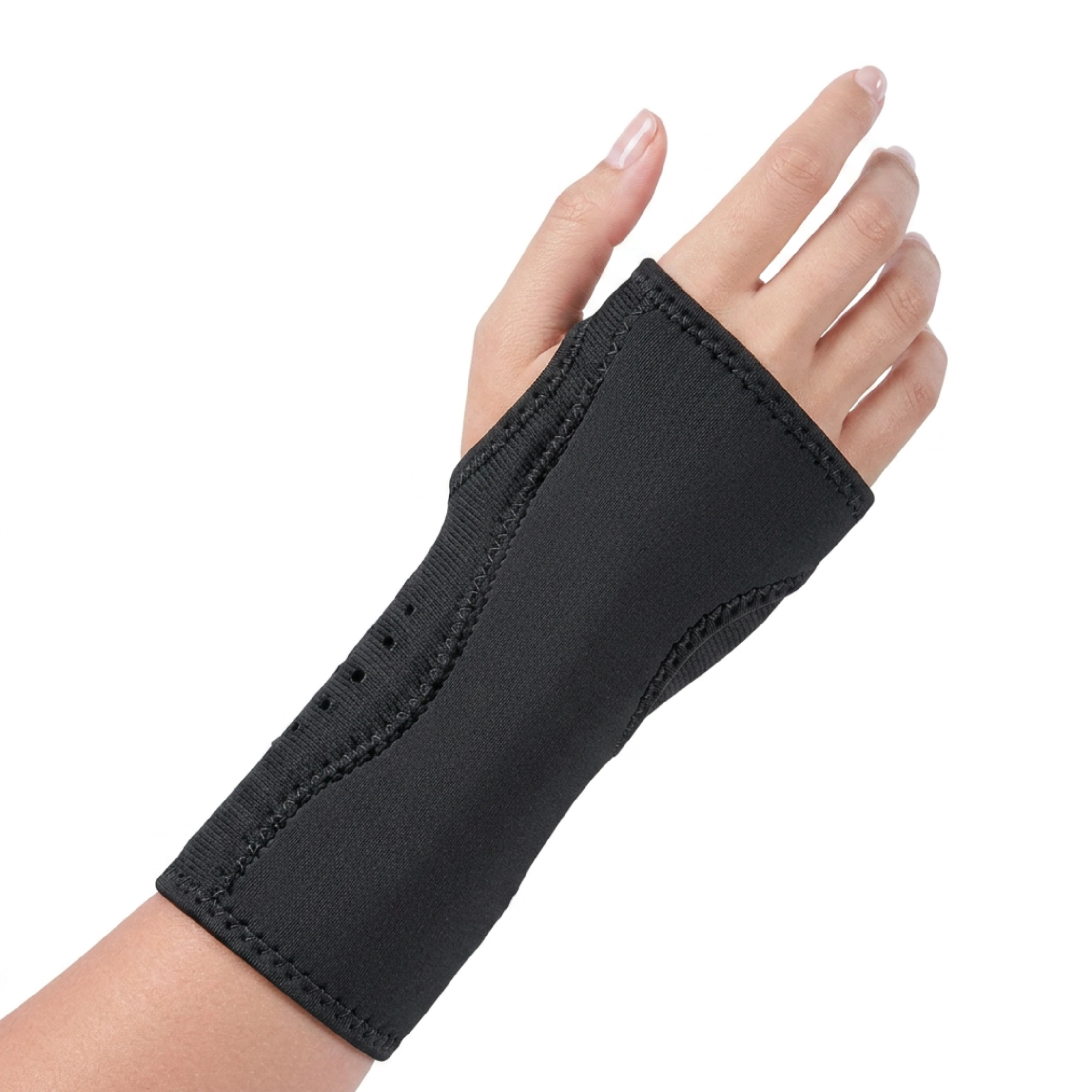
- 1x Hand & Wrist Support Splint – a resting brace designed to relieve aches and pain from hand and wrist injuries and support your recovery
- Suitable for both men and women
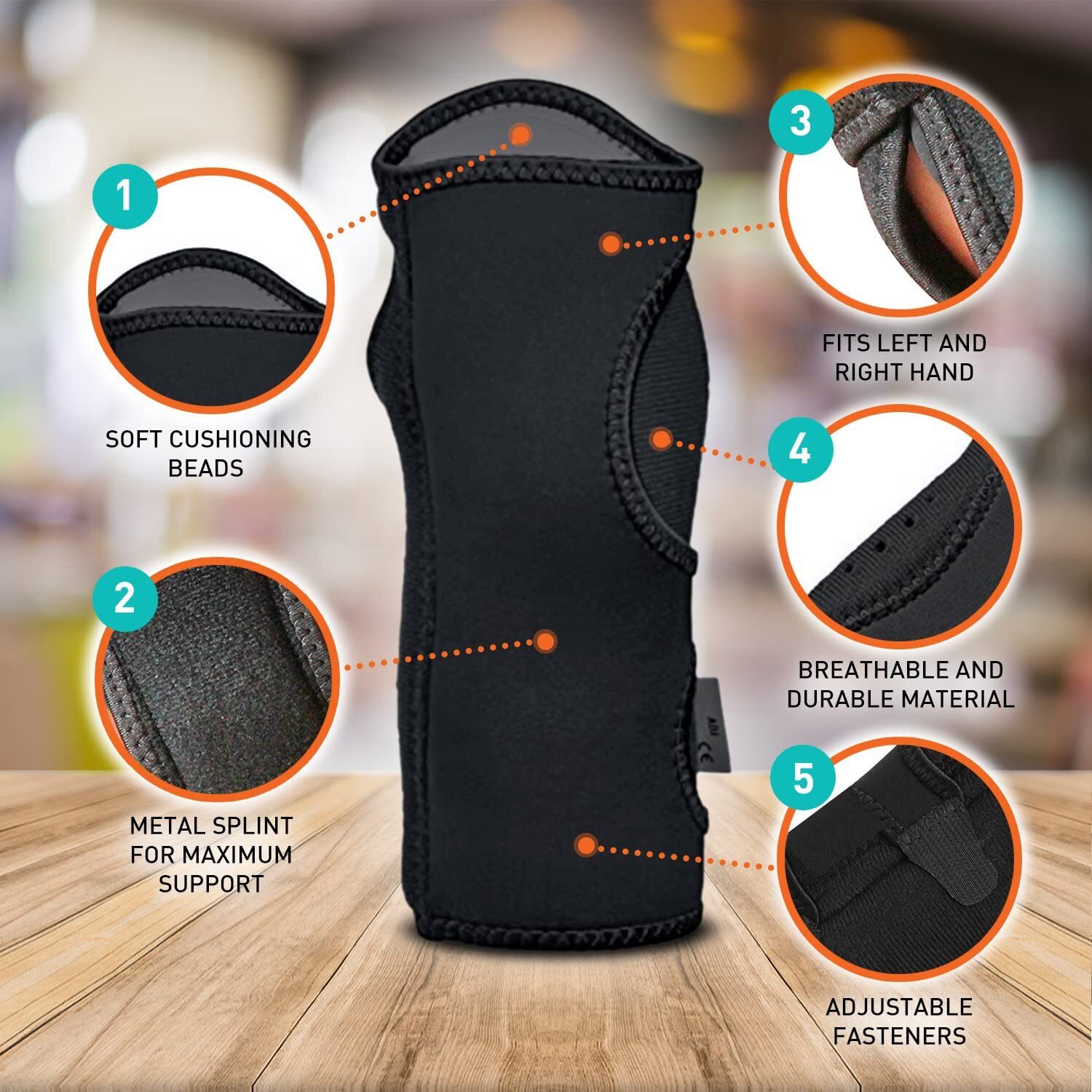
- One size fits all – fits the left or right hand, with 3 fully adjustable secure Velcro straps that hold the wrist support firmly in place, allowing you to quickly adjust the fit, support and compression to what feels best for you
- Soothing compression helps to ease aches and pains and supports the natural healing of injured muscles, tendons and ligaments
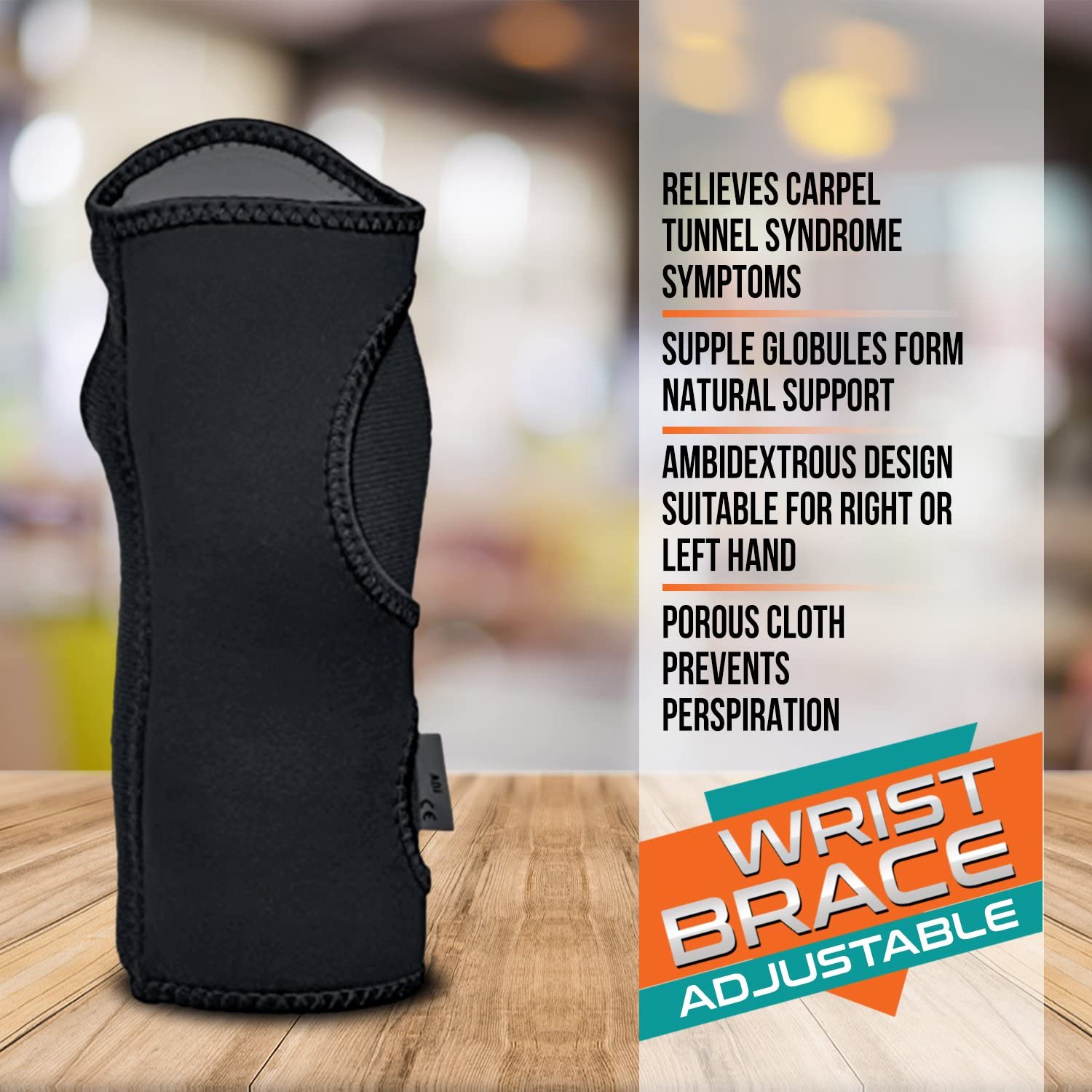
- Ideal for those suffering from injuries and conditions such as carpal tunnel syndrome, arthritis, tendonitis, sprains, strains and post-fracture stiffness
- Made from soft, skin-friendly, lightweight and durable Neoprene material
- Breathable ventilation holes allow your skin to breathe, and the moisture-wicking Neoprene helps draw sweat away from your skin, keeping you dry and comfortable
- Designed for wearing whilst sleeping or resting – features a pillow of soft cushioning beads that supports your palm for extra comfort
- The removable metal aluminium splint holds your wrist and hand in a straight, supported position, providing support and protection to your wrist, hand and palm
- Open finger and thumb design keeps your hand free for everyday small tasks
- Not for acute fractures, severe progressive nerve symptoms, or open wounds – stop use if symptoms worsen and speak to a healthcare professional
Wrist pain can be a constant, nagging problem. It might make typing uncomfortable, make simple tasks like gripping a saucepan feel like more effort than they should, or flare up when you finally sit down to rest. You may have tried resting it, changing how you use your hand, or just hoping it would settle by itself.
This type of pain is common, and it’s not something you have to put up with. But before you reach for any support, it helps to understand what’s going on, why rest often makes wrist pain worse, and what a resting splint actually does. So why does rest make it worse, and how can a resting splint help?
The Problem: Wrist Pain That Flares Up When You Rest
During the day, you adapt without thinking about it. You shift position, change how you hold things, or rest your wrist for a bit. You might not even notice how carefully you’re moving until the pain eases off.
When you stop moving – whether you’re sitting down to watch television, reading a book, or settling down to sleep – that conscious control disappears. Your muscles relax, and your hand often drifts into a curled, bent position without you noticing. That can be exactly the wrong position for an already irritated wrist.
So after a period of rest, you might notice numbness or tingling in your fingers. Or it might be a dull ache along the wrist or palm, stiffness that makes it hard to flex your hand, or soreness that seems worse than before you sat down.
None of this means you’re doing anything wrong. It means your wrist is spending time in a position that puts extra pressure on tissues that are already irritated.
Why Rest Can Make Wrist Pain Worse
Your wrist is a small but complex joint. It’s made up of several small bones, along with ligaments, tendons, and nerves, all running through a relatively tight space. Those structures need to move smoothly against one another every time you move your hand.
When something is irritated – whether it’s a nerve, tendon, or the joint itself – the area around those structures becomes tighter and more sensitive. Bending your wrist, especially downward or into a curled position, narrows the available room even further and can pull or press on the very tissues that are trying to recover.
Here’s what that means in practice for the common problems you might be dealing with.
Carpal Tunnel-Type Symptoms
A common pattern is waking up – or coming out of a long rest – with your thumb, index finger, and middle finger feeling numb or tingly. Sometimes it feels like your fingers are “asleep”, and you need to shake your hand to get the feeling back. You might also notice that your grip feels weaker, or that small objects seem to slip out of your hand more often.
The nerve involved here is called the median nerve. It runs from your forearm through a narrow channel in your wrist called the carpal tunnel, and then out into your hand. That channel is not much bigger than the nerve itself. When your wrist is bent – especially downwards, the way it often falls when your hand is relaxed – the bones and tendons inside the tunnel press against the nerve. That pressure is what creates the tingling, numbness, and aching.
During the day, you might be able to avoid the most uncomfortable positions. But when you rest, your hand can stay bent for long periods. That’s why carpal tunnel-type symptoms are often worse first thing in the morning or after an extended sit-down. A resting splint holds your wrist in a straight, aligned position, which gives the nerve plenty of room and stops the compression from building up in the first place.
Tendonitis and Overuse
Tendons are the strong, cord-like structures that connect muscles to bones. They glide through tunnels and across joints every time you move your wrist or fingers. When you repeat the same movement over and over – typing, using a mouse, gripping tools, carrying bags – the tendons and the protective coverings around them can become irritated and swollen.
This is often called tendonitis. The discomfort tends to build with activity. You might notice a dull ache along the wrist or the base of the thumb, sometimes with a sharp twinge when you grip something firmly. It can also feel worse after you’ve been still for a while, because the tissues stiffen up.
During rest, the problem is that a curled wrist keeps those already irritated tendons gently stretched. Instead of relaxing, they stay under tension for long periods. A splint that keeps the wrist straight allows the tendons to rest in a relaxed, shortened position, which gives them a much better chance to settle.
Arthritis
Arthritis is not a single condition. In the wrist and hand, the two most common forms are osteoarthritis and rheumatoid arthritis, and they behave in different ways.
Osteoarthritis is essentially wear and tear. The smooth cartilage on the ends of the bones gradually thins, so the joint surfaces have less cushioning. Movement can become stiff and uncomfortable, especially after rest. You may notice aching in the wrist or the base of the thumb, and it can be difficult to fully straighten or bend the joint.
Rheumatoid arthritis is an autoimmune condition. The body’s immune system mistakenly attacks the lining of the joint, causing inflammation and swelling. This often affects both hands, and can make the wrist feel hot, stiff, and painful, particularly in the morning.
In both types, resting with your wrist bent puts uneven pressure on the joint surfaces. Over a long period, that can leave you feeling sore and stiff. By holding the wrist in a supported, aligned position, a splint helps keep the joint surfaces aligned and reduces the stress on inflamed tissue.
Sprains and Strains
A sprain means a ligament has been stretched or torn. A strain means a muscle or tendon has been overstretched or damaged. Both can happen after a fall, a sudden twist, or an awkward movement – anything that forces the wrist beyond its normal range.
After the initial injury, the tissues are vulnerable. They need time and stability to repair. But when you rest, you can’t always control what your hand does. Tucking your hand under your pillow, resting it on an armrest, or simply letting it go limp can pull on damaged fibres, which slows healing and keeps the area painful.
A resting splint gives the wrist a stable, supported position while you sleep or sit still. It doesn’t make the healing happen faster, but it does stop the repeated stretching and bending that can undo the progress your body makes. If you’ve had a recent wrist injury, it’s always worth having it assessed first to rule out a fracture or a more serious ligament tear before relying on a splint.
Why a Resting Splint Is Worth Considering
A resting splint has a simple job: to hold your wrist in a comfortable, straight position while you’re still. This stops your hand from curling up and putting pressure on already sensitive areas.
As covered above, a bent wrist is what creates the problem – it narrows the space around the nerve and keeps irritated tendons under tension. By keeping your wrist in line with your forearm, the splint prevents that strain from happening in the first place. The tissues get a proper break, and you’re less likely to wake up or stand up with that familiar ache.
A splint isn’t a cure. It won’t stop inflammation, repair a damaged tendon, or reverse arthritis. What it does is create the right conditions for your body to do its own repair work. For many people, that’s enough to make a meaningful difference to how they feel when they get up and start moving again.
How This Hand and Wrist Support Splint Is Designed to Help
This is a resting hand and wrist splint, designed for use while you sleep or sit still for prolonged periods. It’s ambidextrous, so you can wear it on either your left or right hand, and it comes in one adjustable size that fits most adults.
Every part of the splint is designed to be worn comfortably during rest. Here’s how it works.
Removable Aluminium Support Bar
The splint has a slim aluminium bar that runs along the palm side of your hand and wrist. This is the part that does the main structural work. It holds your wrist close to straight, stops it from dropping into a bent position, and limits the kind of sideways movements that can force the wrist out of line and irritate nerves, tendons, and joints.
The bar sits on the palm side because that’s the side that compresses when your hand curls. By supporting from underneath, it keeps your wrist from collapsing into the flexed position that causes pressure and tension. The result is a firm but comfortable hold that doesn’t feel like a full cast.
The bar is removable, which makes cleaning much easier. It can also be gently reshaped. If the angle doesn’t quite match your hand, you can carefully bend the bar for a more personalised fit. For most people, the original shape works well.
Bead-Filled Palm Section
The palm area is padded with a soft pillow of beads. This isn’t just for comfort – it has a specific job. When your hand rests on a mattress, armrest, or cushion, the natural curve of your palm can create pressure points. The bead-filled section supports the palm and the bases of your fingers and thumb, spreading the weight of your hand more evenly.
This is especially useful if you have tender areas along the palm, which is common with carpal tunnel-type symptoms, arthritis, or after a strain. The padding helps take the pressure off those sore spots while you rest. It also gives your fingers and thumb a soft resting place, so you’re less likely to get up with a stiff, cramped hand.
Three Adjustable Velcro Straps
The splint has three Velcro straps: one around the forearm, one across the wrist, and one across the hand or palm area. These straps are there for a practical reason.
A splint that’s too loose will slide around and won’t hold your wrist in the right position. A splint that’s too tight can feel uncomfortable and restrict circulation. The three straps let you fine-tune the fit so that it feels secure without digging in.
The forearm strap anchors the splint in place. The wrist strap is the one that controls the angle of your wrist. The hand strap keeps the padded palm section snug and stops the splint from shifting as you move. Because the straps are independent, you can adjust the forearm and hand straps a little looser and keep the wrist strap more secure, or vice versa, depending on where you need most support.
Breathable Neoprene with Ventilation Holes
Wearing any kind of support while you rest can raise concerns about heat and sweat. This splint is made from a soft, flexible material called Neoprene, with ventilation holes along the body. Those holes allow air to circulate, which helps heat escape.
The Neoprene is also moisture-wicking. That means it pulls sweat away from your skin rather than trapping it. You’re less likely to end up with a damp, sticky hand, and the splint stays fresher over repeated use. The smooth inner lining adds another layer of comfort, reducing friction against your skin.
Open Fingers and Thumb
One of the things that makes this splint comfortable to wear is its open design. Your fingers stay completely free, so you can still bend and move them. There’s a thumb opening on each side, allowing you to choose the side that matches the hand you’re supporting.
This isn’t just about comfort – it’s about practicality. If you need to adjust your pillow, turn a page, or reach for a glass of water, your fingers and thumb are still functional enough to manage those small tasks. The splint restricts the harmful bending at the wrist, but it doesn’t take away normal hand movement.
One Adjustable Size for Most Adults
You don’t need to work through a complicated sizing chart. This splint is designed to fit most adult hands and wrists. The slightly stretchy body, combined with the three adjustable straps, means you can adapt it to your own shape. Whether you have a smaller or larger hand, you should be able to get a secure, comfortable fit.
Because it’s ambidextrous, you can also use it on your left wrist one day and your right wrist the next. That makes it a practical, straightforward option if you have symptoms on both sides.
Low-Bulk, Rest-Friendly Design
A splint is only useful if you can actually relax in it. This one is slim and low-profile. The smooth inner lining sits comfortably against your skin, and the open finger area means it’s less likely to catch on your bedding or clothing. You’re less likely to feel like you’re wrestling with a piece of equipment.
The low-bulk design also means it’s easy to wear under a loose sleeve or pyjama top, which is helpful if you prefer to keep your arm covered while you rest.
Who May Find This Splint Helpful
This splint is designed for adults who are dealing with wrist or hand discomfort that’s worse during rest or sleep. It’s not a heavy-duty brace for lifting or sports. It’s a resting splint, and it works best when you use it as intended.
-
- Carpal tunnel-type symptoms – waking or coming out of rest with tingling, numbness, or aching in your thumb, index, or middle fingers. May reduce that “asleep” feeling.
-
- Tendonitis or overuse irritation – if your wrist hurts after repetitive activities, resting in a supported position helps the irritated tendons settle.
-
- A mild sprain or strain – after a healthcare professional has confirmed there’s no fracture, the splint provides stability while the ligaments or tendons heal.
-
- Post-fracture stiffness – once a fracture has healed enough to leave the cast, a resting splint offers gentle support during rehabilitation.
-
- Osteoarthritis or rheumatoid arthritis – a supported, aligned position eases stress on inflamed joints and can help with stiffness after rest.
Who Should Be Cautious Before Using This Splint
This splint isn’t right for everyone. Before you use it, it’s worth checking that it’s appropriate for your situation.
Talk to a healthcare professional first if any of the following apply:
-
- You suspect a broken bone or have an acute fracture. This splint isn’t a replacement for a cast or proper medical treatment. A fracture needs to be assessed and managed properly.
-
- You have severe or progressive nerve symptoms. If numbness or weakness is getting noticeably worse, or if you have significant loss of function, don’t rely on a splint alone. Seek advice.
-
- You have an open wound, a skin infection, or a rash on your hand or wrist. Wearing a Neoprene splint over broken skin can trap moisture and make things worse.
-
- You have symptoms that get worse when you wear the splint. If it increases your pain, causes more tingling, or creates new numbness, stop using it and consult a professional.
-
- You have a health condition that affects blood flow or sensation in your hands. If you have reduced circulation or altered feeling in your fingers, or if you’re unsure whether compression is appropriate for you, check with a GP or pharmacist before using a splint.
That doesn’t mean you shouldn’t use the splint – it’s about making sure you choose the right support for your specific situation.
How to Wear the Splint for Best Results
Getting the fit right is the single most important step. A well-fitted splint should feel secure and supportive without being uncomfortable.
Start by loosening all three straps fully before you put it on. Find the thumb opening – there’s one on each side, so choose the side that matches the hand you’re wearing it on. Slide your hand into the splint, with your palm resting against the bead-filled pad. The aluminium bar should sit on the palm side, running along the underside of your hand and wrist. Make sure your thumb sits comfortably in the opening, and that the base of your thumb is resting on the padded area.
Fasten the forearm strap first. This holds the splint in place along your arm and stops it from sliding up or down. Next, fasten the wrist strap – this is the one that controls the angle of your wrist. Aim to keep your wrist straight, in line with your forearm, not bent up, down, or to either side. Finally, fasten the hand or palm strap. It should feel snug across your hand, but not tight enough to restrict movement in your fingers.
Try sliding one finger under each strap. If it fits comfortably, the tension is about right. If you can’t get a finger underneath, loosen the strap slightly. If you can easily slide two or three fingers underneath, tighten it a little. You should feel “held”, not squeezed. If your fingers start to tingle, turn pale, or feel numb, the splint is too tight. Loosen the straps and try again.
What to Expect Over the First Few Days and Weeks
If you’ve never worn a wrist splint before, it may feel a little strange at first. That’s normal. You’re changing the position your hand has been getting used to.
It’s best to start gradually. For the first few days, wear the splint for an hour or two at a time while you’re sitting still. If it feels too unusual, take it off. This helps your body get used to the sensation. Over the next few days, try wearing it for longer periods, or through the night if that’s where you notice the most discomfort. If you wake up and need to take it off, that’s okay. Wearing it consistently matters more than getting the fit perfect every time.
Some people notice an improvement after just a few days. For others, it takes two to three weeks before the stiffness or tingling starts to ease. It’s also normal not to feel a dramatic change right away. The splint prevents a problem rather than actively treating one. By stopping your wrist from spending long periods in a cramped position, it gives your body a fair chance to recover. That recovery can take time.
If you’re also trying to change daytime habits – like taking regular breaks from typing or using lighter grips on tools – you’re giving your wrist a better chance for the irritated tissues to recover.
When to Speak to a Healthcare Professional
A resting splint is a supportive aid, not a substitute for professional diagnosis or treatment. There are times when you should stop using it and get advice.
Speak to your GP or a physiotherapist if your pain gets worse after wearing the splint, if you develop new numbness, tingling, or weakness, if your hand or fingers become pale, cold, or unusually swollen, or if you notice a rash, blistering, or persistent skin irritation from the splint. You should also seek advice if your symptoms haven’t improved after around three weeks of consistent use.
If you notice new or unexplained symptoms that don’t settle, it’s always better to have them checked than to push through and hope they go away.
How to Care for Your Splint
Looking after the splint properly will keep it working well and help it last. Remove the aluminium support bar before cleaning. Hand wash the fabric in cold or lukewarm water using a mild soap. Don’t use bleach, fabric softeners, or strong detergents. Rinse thoroughly and gently squeeze out the excess water. Don’t wring or twist the splint. Allow it to air dry flat, away from direct heat or sunlight. Don’t put it in a tumble dryer. Once it’s completely dry, reinsert the aluminium bar.
If you’re wearing the splint regularly, washing it every week or two will help keep it fresh and reduce the risk of skin irritation.
Frequently Asked Questions
How tight should the straps be?
The straps should be snug enough that the splint stays in place, but not so tight that they restrict circulation. Try sliding one finger under each strap. If it fits comfortably, the tension is about right. If your fingers tingle or feel numb, loosen the straps immediately.
Can I wear this splint under clothing?
Yes. The splint is low-profile, so it can fit comfortably under a loose sleeve or pyjama top. Because your fingers and thumb are open, it’s less bulky than a full glove-style splint. Just be aware that the Velcro straps can catch on soft fabrics, so you might prefer to wear it over a thin long-sleeved top.
Can I wear it during the day?
Yes. This splint is for resting and quiet periods. You can wear it whenever you’re sitting still and your wrist is likely to drift into an awkward position – for example, while watching television, reading, working at a desk, or sitting on a long journey. It’s not designed for typing, heavy lifting, sports, or manual work. If you need support during those activities, you may need a different type of brace, and it’s worth asking a healthcare professional for advice.
Can I wear it while driving?
No. Do not wear this splint while driving. It limits wrist movement, which you need for steering and controlling the vehicle. It could also slow your reactions in an emergency. Always remove it before getting behind the wheel.
How long until I notice a difference?
Everyone is different. Some people notice a difference in a few days. Others need a few weeks of consistent use before they see a meaningful change. If you haven’t noticed any improvement after that, or if your symptoms are getting worse, speak to a professional.
Can I adjust the aluminium bar?
Yes, the bar can be gently reshaped. Remove it from the splint and carefully bend it to match the contour of your hand and wrist if needed. Don’t bend it back and forth repeatedly, as this can weaken the metal. If you’re unsure, leave it in its original shape – it works well for most people.
Is it really one size fits most?
This splint has one adjustable size designed to fit most adult hands and wrists. The stretchy body and three straps give a good range of fit. However, if you have a particularly small or large hand, or a very thick wrist, it may not fit as well. If you have any doubt, check the measurements before ordering.
How do I clean the splint?
Remove the aluminium bar first. Hand wash the fabric in cold or lukewarm water with mild soap, rinse thoroughly, and air dry flat. Don’t use a tumble dryer, bleach, or fabric softeners. Wait until it’s completely dry before putting the bar back in.
What should I do if it makes my pain worse?
Stop using it. If the splint increases your pain, causes new numbness, or triggers any other discomfort, remove it. Before trying again, check the fit and loosen the straps if needed. If the problem continues, or if your symptoms are getting worse, stop and speak to a healthcare professional before using it again.
Can I wear it on both hands?
Yes. The splint is ambidextrous, so you can use it on one hand one day and the other hand the next. However, don’t wear it on both hands at the same time if that makes it difficult for you to move safely or get up during the night. Your safety always comes first.
Will it stop my hand from moving completely?
No. It limits unhealthy bending at the wrist, but it doesn’t lock your hand in place. Your fingers and thumb remain free, and you can still move your wrist a little. This is a resting splint, not a cast.
The Bottom Line
Hand and wrist pain can be exhausting, especially when it flares up every time you try to sit down and rest. The good news is that a small change in how you position your wrist during those quiet periods can sometimes make a real difference.
This hand and wrist support splint is designed to do one thing well: hold your wrist in a supported, straight position while you rest. It won’t erase years of wear and tear overnight, and it can’t make every ache disappear instantly – but by giving your wrist a proper chance to settle, it can help reduce the stiffness, tingling, and aching that make each day harder than it needs to be.
If this sounds familiar, this splint is worth trying. Use it consistently during rest periods, give it a few weeks, and listen to what your body tells you. If it helps, great. If it doesn’t, or if you’re unsure whether it’s right for your situation, speak to a GP or physiotherapist.
A simple, supportive change while you rest might be all your wrist needs to start settling.
Important Health Information
The information on this page is general guidance and is not intended to replace individual medical advice, diagnosis, or treatment. If you are unsure whether this product is suitable for you, or if you have new, unexplained, or more complex symptoms, please speak to a GP, physiotherapist, or another appropriate healthcare professional for personalised advice. Everyone responds differently, so results aren’t guaranteed.
Fast & Secure Checkout Through Paypal
Pay with Paypal the secure payment gateway that accepts all credit and debit cards. Paypal is free and secure and no credit or bank information is ever stored or shared with us.
Fast Dispatch
Enjoy your items soon with quick dispatch via Royal Mail. Expect to have your items between 1-3 working days for domestic orders. 7-10 Working days for international orders.
Return Policy – 30 Day Money Back Guarantee
In the unlikely event, you are unhappy with your purchase you can return it within 30 days for a refund. Please contact us via the form on the contact us page to start your return.
To return an item please send it to: Nuova Health UK, 81 Highfield Lane, Waverley, Rotherham, S60 8AL. Please include a note with your order id so we know who to refund. Please retain your postage receipt as proof of postage. All that we ask is that the item is in the original packaging and unused.
Reviews
There are no reviews yet.