
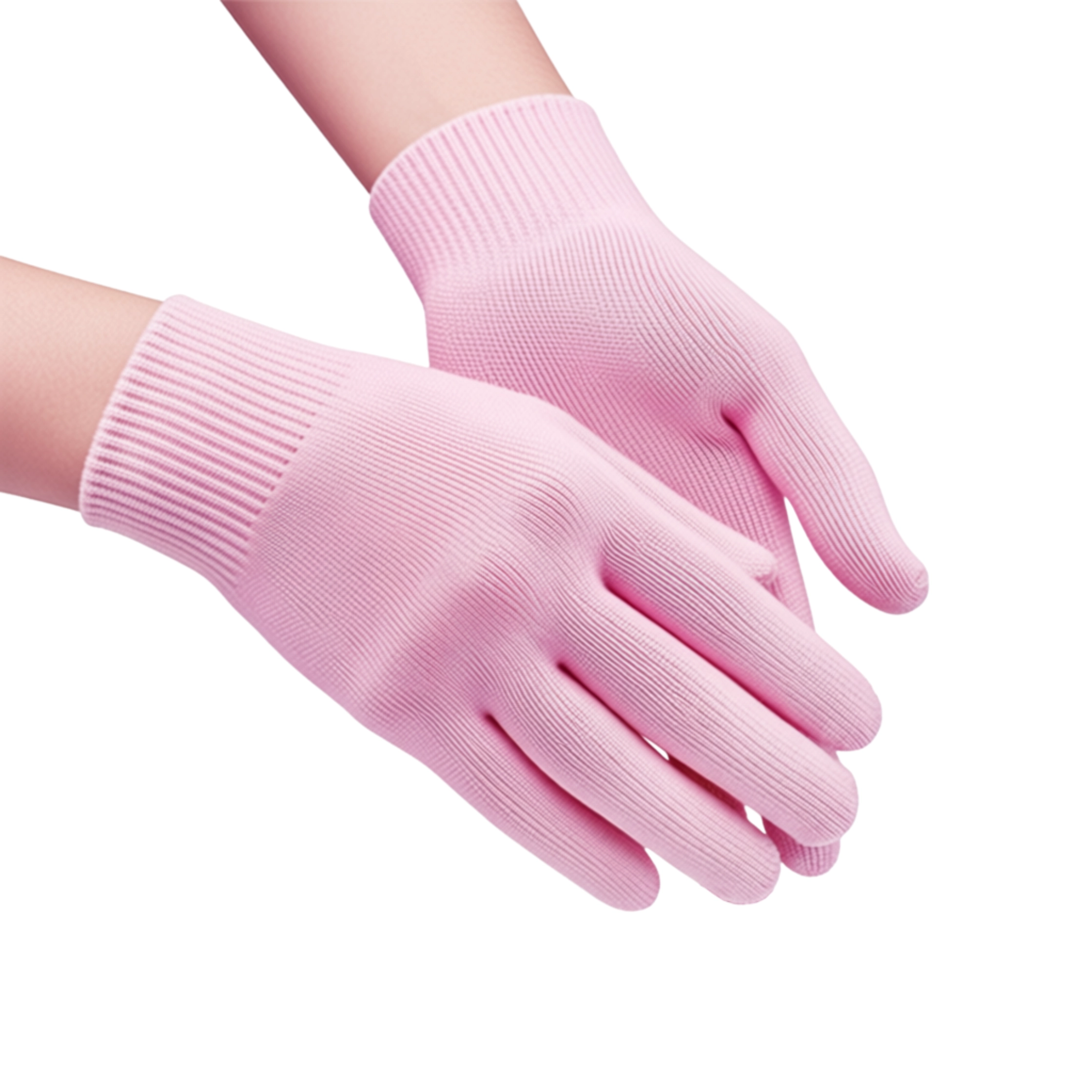
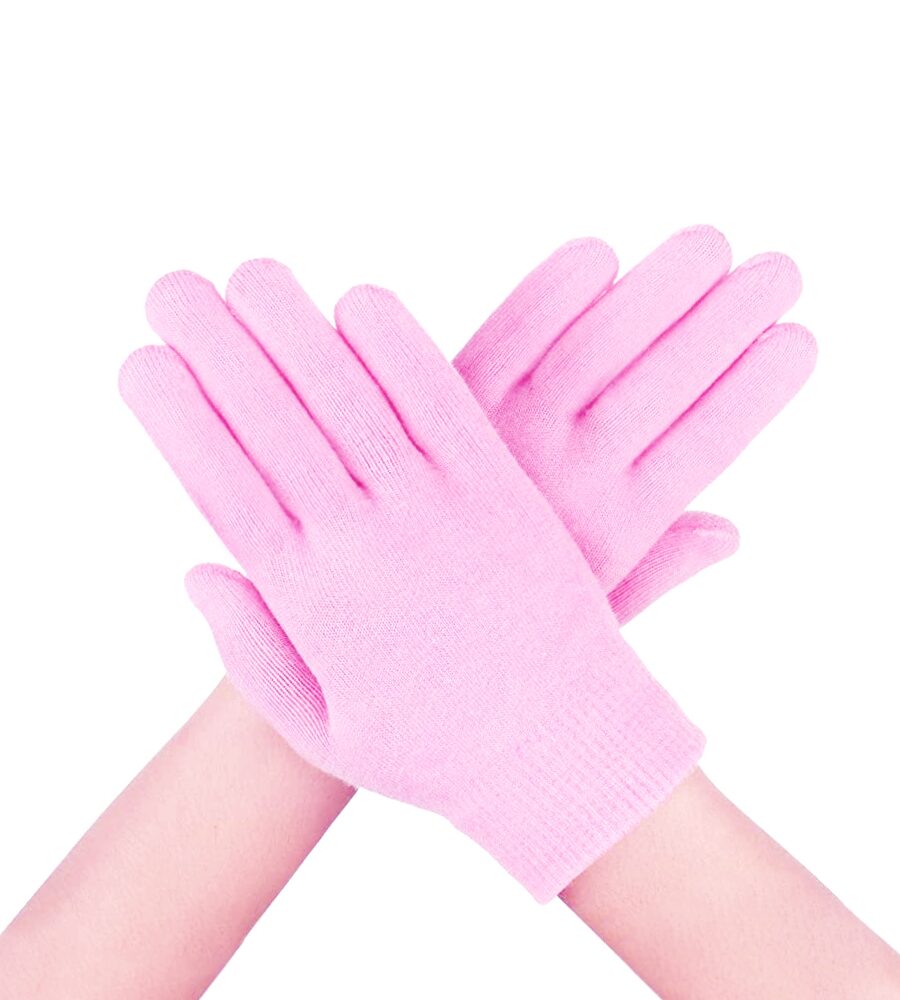
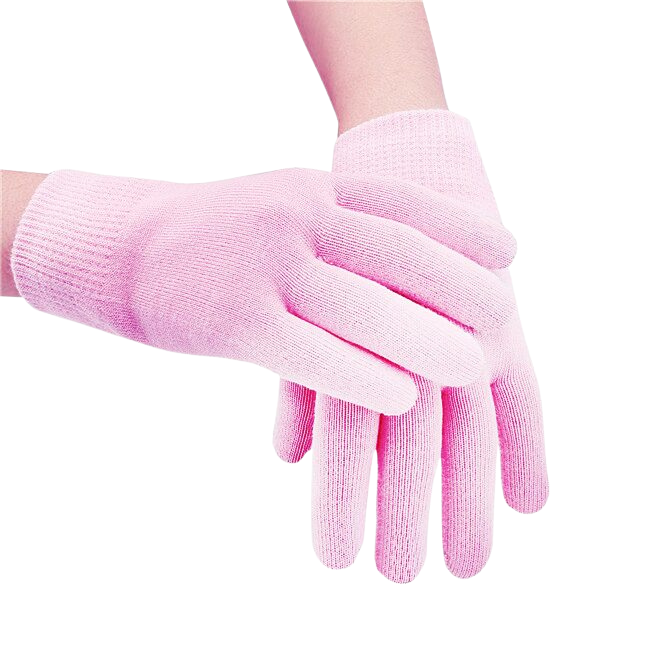
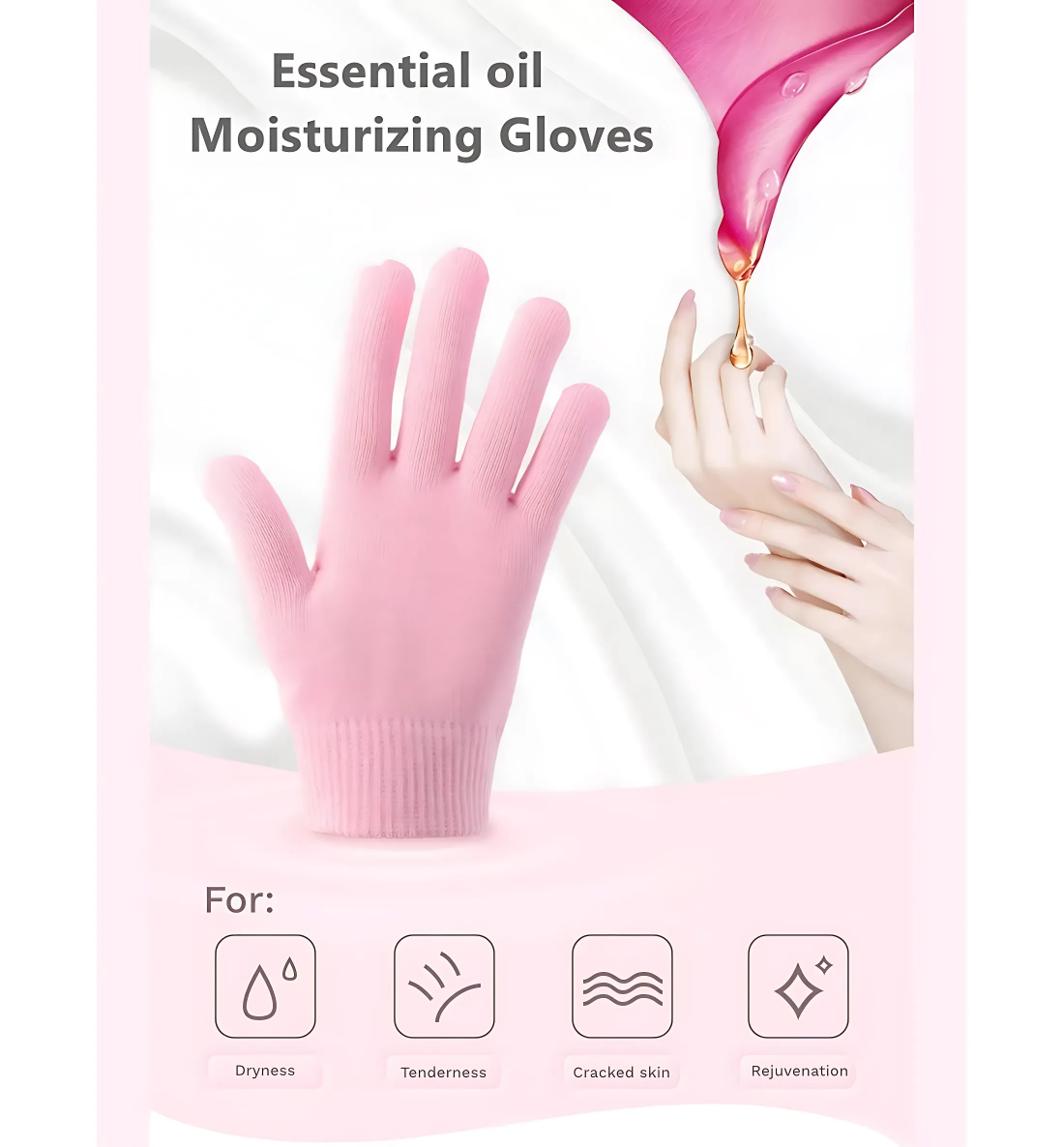
Hydrating Gel Moisturizer gloves for dry chapped hands
£7.99inc VAT
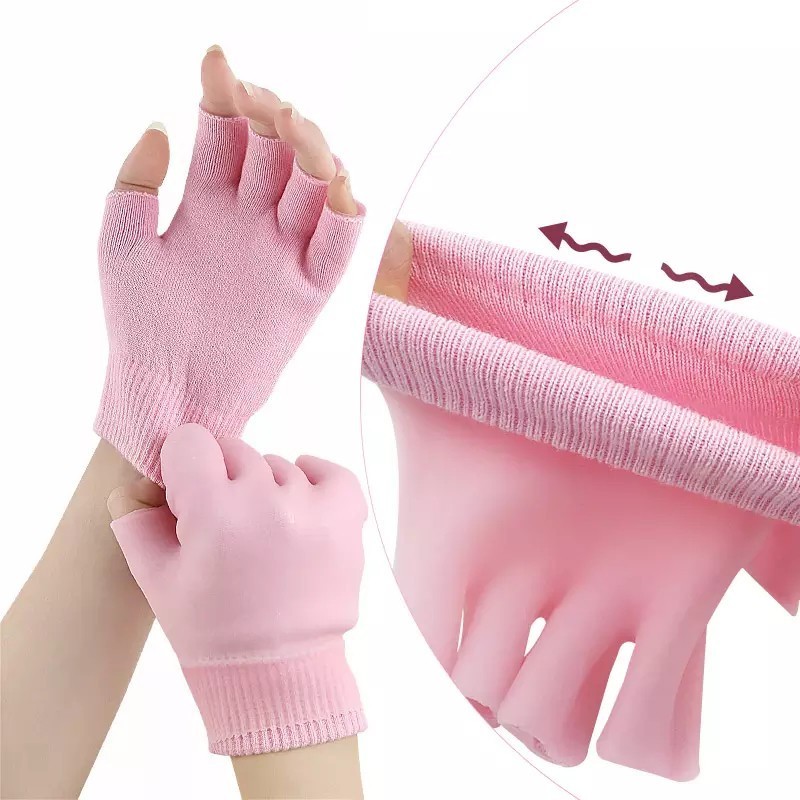
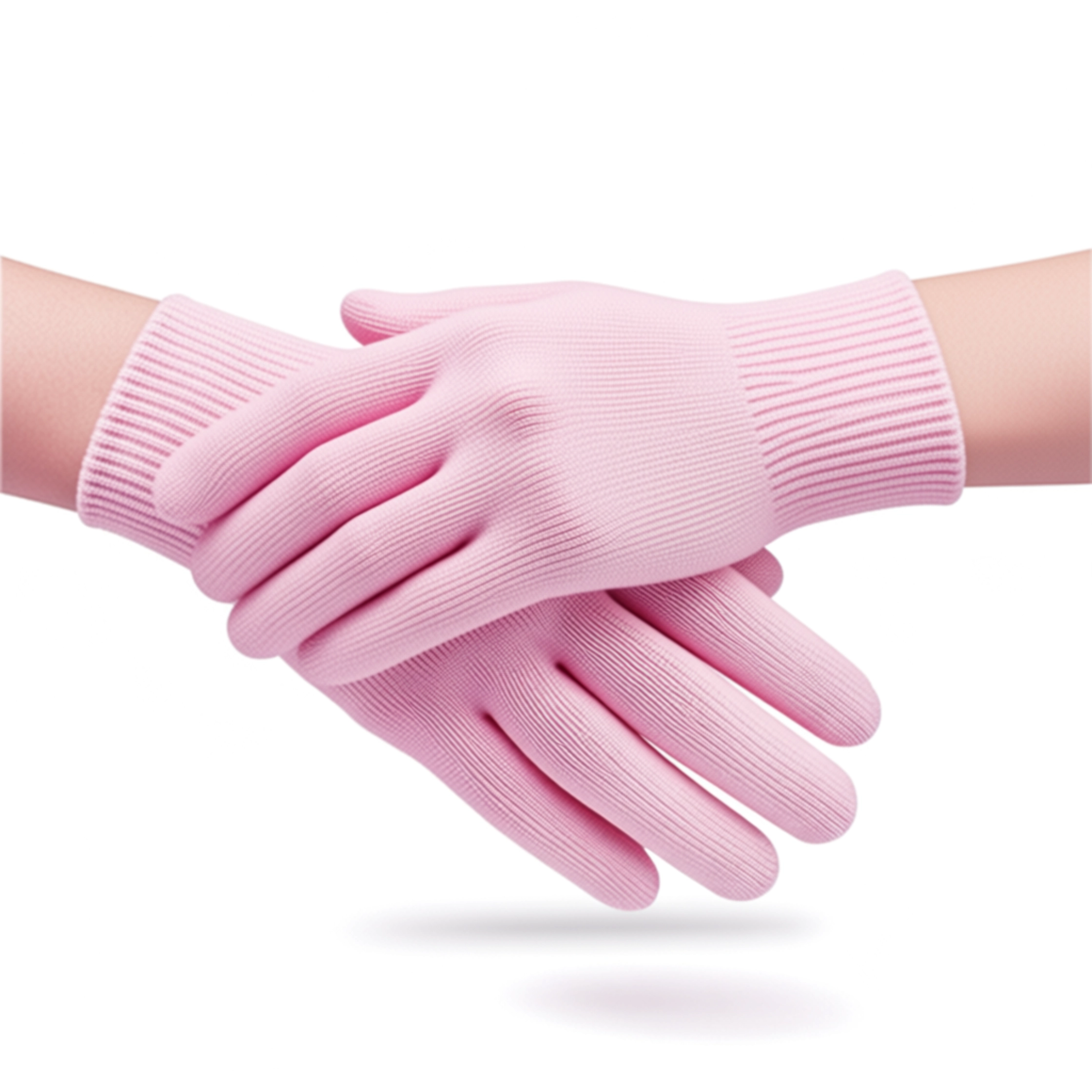
- Reusable hydrating gel gloves with a silicone gel lining infused with rose essential oil and a breathable cotton-spandex outer layer.
- Designed for people whose hands are dry, cracked, itchy, or inflamed—whether from frequent handwashing, eczema, cold weather, or manual work.
- The gel lining creates a seal that stops your moisturiser from evaporating or rubbing off, holding it against your skin for hours.
- The cooling gel effect from the silicone soothes irritation, reduces discomfort, and calms inflamed or itchy skin.
- Rose essential oil in the gel adds extra hydration and softens rough, flaky patches as it releases gradually.
- Works with any hand cream or moisturiser you already use—no need to buy special products.
- One-size stretch fit designed to accommodate most hand sizes comfortably, with elastic cuffs that keep the gloves secure at the wrist.
- Wear them overnight for the longest treatment window, or for two to three hours in the evening if you prefer.
- Helps manage hand eczema by reducing the itch-scratch cycle and supporting prescribed treatments like emollients or steroid creams.
- Softens calluses, cushions blisters, and seals cracks so they can heal without being constantly disrupted.
- Wash by hand in lukewarm water after each use and air dry—the gloves last for several months of regular use.
- Do a patch test before first use: wear one glove for 30 minutes and check for any redness, itching, or irritation.
- Full 30-day money-back guarantee if the gloves don’t work for you.
When Your Hands Feel Raw, Tight, and Impossible to Soothe
You’ve tried hand cream, then thicker hand cream. You’ve slathered it on before bed, and by morning your knuckles are cracked again, your fingertips feel papery, and that tight, itchy sensation is back within an hour.
If you wash your hands frequently—whether for work, hygiene routines, or because you’re caring for someone—you’re caught in a cycle that’s hard to escape. Every wash strips a little more moisture. Every time you reach for soap, you’re undoing the repair your skin was trying to make overnight. And if it’s winter, or you’re in and out of heated buildings, the air itself is working against you.
You might notice your hands look older than they should. The skin on your knuckles goes white when you bend your fingers. You’re conscious of shaking hands with people. You avoid certain fabrics because they catch on the rough patches. And nothing lasts longer than an hour.
It’s about comfort. About not wincing when you zip up a coat or open a door. About your hands feeling normal again, instead of being one more problem to manage.
Why Hand Skin Breaks Down Faster Than You Can Repair It
Your hands are built to be tough, but that comes at a cost.
The skin on your palms and the backs of your hands has far fewer sebaceous glands than the skin on your face or arms. These glands produce sebum, the oily substance that forms a protective barrier and locks moisture into the deeper layers of skin. Without enough of it, your hands are naturally more vulnerable to drying out.
When you wash your hands, soap molecules latch onto oils and dirt and carry them away. That’s what soap does. But it doesn’t distinguish between dirt and the protective oils your skin needs. It strips both.
And if you’re washing your hands 10, 15, 20 times a day—because you work in healthcare, food prep, childcare, or simply because you’re cautious about hygiene—you’re removing that protective layer faster than your skin can rebuild it.
Once that barrier is compromised, water escapes from the deeper layers of your skin faster. This process is called transepidermal water loss, and it accelerates in low-humidity environments. Cold air outside holds less moisture. Heated air inside has been stripped of humidity by radiators and central heating. Both pull water from your skin.
Your hands lose hydration from the inside out, and the surface becomes dry, tight, and eventually cracked.
When skin cracks, it’s not just uncomfortable—the protective layer has broken down. The outermost layer, the stratum corneum, is made of dead skin cells held together by lipids (fats). It’s like brickwork: the cells are the bricks, the lipids are the mortar. When the mortar dries out and crumbles, the bricks separate. Cracks form.
Once the skin is cracked, it’s even more vulnerable to irritation, infection, and further moisture loss.
Your body tries to repair this damage, but the repair process is slow. It takes time for new skin cells to migrate up from the deeper layers, and it takes even longer for the lipid barrier to rebuild. If you’re washing your hands again before that repair is complete—which you almost always are—you’re caught in a cycle.
Damage accumulates faster than your skin can heal.
This is why hand cream alone often isn’t enough. You apply it, it sits on the surface, and within an hour it’s absorbed, evaporated, or washed off. The active ingredients—humectants like glycerin that pull water into the skin, emollients that smooth the surface, occlusives that seal moisture in—don’t get enough time to work. They need sustained contact with your skin to make a real difference.
Why Occlusive Therapy Works When Creams Alone Don’t
The principle behind effective hand repair is simple: give the skin what it needs, then stop it from losing it again.
That second part is where most routines fall short.
When you apply a moisturiser and then cover your hands with a barrier, you create an environment where moisture can’t escape. This is called occlusive therapy, and it’s one of the most effective ways to accelerate skin repair. The covering—whether it’s a glove, a wrap, or a dressing—traps the water and active ingredients against your skin, forcing them to penetrate deeper and stay active longer.
Without that covering, the moisturiser begins to evaporate almost immediately. Air movement, temperature, and low humidity all speed up that evaporation. Even if you’re sitting still, you’re losing the benefit.
But when your hands are enclosed, the microenvironment around your skin stays humid. The stratum corneum—that outermost layer of tightly packed dead cells we looked at earlier—absorbs more water when it’s surrounded by moisture. It swells slightly and becomes more pliable. Cracks soften. Rough patches smooth out. The lipid barrier has time to rebuild without being disrupted.
This is why dermatologists often recommend “soak and seal” routines for people with eczema or severe dryness: apply a thick moisturiser to damp skin, then cover it immediately to lock everything in. The same logic applies here.
The glove isn’t just a protective layer—it’s an active part of the treatment. It holds the moisture against your skin and prevents the environment from undoing your work.
But not all coverings are equal.
A standard cotton glove will absorb some of the moisturiser and wick moisture away from your skin. The fibres pull the product into the fabric, and by morning you’re left with damp gloves and only marginally better hands. A plastic glove will trap heat and make your hands sweat, which feels uncomfortable and can actually irritate sensitive skin. The trapped moisture becomes clammy rather than therapeutic, and the lack of breathability makes them difficult to wear for more than an hour.
What you need is something that creates a sealed, breathable environment while also delivering its own soothing effect.
That’s where a gel-lined glove comes in.
The inner silicone gel layer sits directly against your skin, creating a smooth, non-porous barrier that doesn’t absorb your moisturiser. It holds the active ingredients in place while also keeping your hands feeling cool and soothed. The cooling gel effect from the silicone helps calm irritation and reduces discomfort—it’s the same principle behind holding a cold compress against a burn or a swollen joint. The cold reduces the sensation of heat and discomfort by dampening the nerve signals that carry itch and pain.
You can amplify this effect by placing the gloves in the fridge for 10–15 minutes before wearing them. The chilled gel delivers a more intense cooling effect, which is particularly helpful if you’re dealing with eczema flare-ups, blisters, or hands that feel hot and tight after a long day of washing.
The outer fabric layer—95% cotton for breathability and softness, 5% spandex for stretch—keeps the glove in place, wicks away excess heat, and makes the whole thing comfortable enough to wear for extended periods. That balance—sealed but breathable—makes them comfortable enough to wear for hours at a time, or even overnight.
You’re not just protecting your hands. You’re creating the conditions for real repair.
Who These Gloves Are For
These gloves are for people whose hands are caught in a cycle that ordinary hand cream can’t break.
If You Wash Your Hands Frequently
You work in healthcare, food service, cleaning, childcare, or any role where hygiene is non-negotiable. You’re washing your hands 15, 20, sometimes 30 times a day. By mid-afternoon, your knuckles are already tight. By evening, they’re starting to crack. You reapply hand cream after every wash, but it’s gone within minutes—rubbed off on gloves, absorbed into paper towels, or simply evaporated.
The problem isn’t that you’re not moisturising. The problem is that you’re never giving your skin the uninterrupted time it needs to rebuild. These gloves give your moisturiser the protected window it needs to actually penetrate and repair, rather than just sitting on the surface until the next wash strips it away.
If Winter Leaves Your Hands Cracked and Painful Every Year
You know the pattern. October arrives, the heating goes on, and within a fortnight your hands are dry. By December they’re cracked. By January you’re avoiding shaking hands with people because you’re embarrassed by how rough they look. You reapply cream throughout the day, but the air—both outside and inside—is so dry that it pulls moisture from your skin faster than you can replace it.
Wearing these gloves overnight—or even for a few hours in the evening—creates a protected window where your skin can recover without being exposed to that moisture-sapping environment. You’re giving your hands a break from the constant assault of low humidity.
If You Have Eczema
You’ll recognise the pattern: your hands flare up, they itch, you scratch, the skin breaks, it gets worse. The itch-scratch cycle is hard to interrupt, especially at night when you’re less conscious of what your hands are doing. You wake up to find you’ve scratched through the night, and the flare-up that was starting to settle is now angry and raw again.
These gloves act as a physical barrier that stops you from scratching while also delivering the soothing, cooling relief that reduces the urge to scratch in the first place. The sealed environment also helps any medicated creams or emollients your GP has prescribed work more effectively—more of the active ingredient penetrates, and none of it rubs off onto your sheets.
If You Have Calluses, Blisters, or Rough Patches from Manual Work
Your hands are tough because they have to be. You use tools, you lift, you grip, you work with your hands all day. The calluses are useful—they protect the skin underneath—but they can become uncomfortable when they get too thick, crack, or start to catch on things. Blisters show up after a long day of repetitive tasks, and once the skin tears, you’re left with a raw, painful spot that takes ages to heal because you’re using your hands constantly.
The gloves soften that thickened skin over time, making it more pliable and less likely to crack. The gel lining cushions any tender spots while they heal, and the sealed environment promotes faster healing for blisters and abrasions.
If Your Hands Are Simply Dry, Itchy, and Sensitive
Your hands don’t fit neatly into a diagnosis. They’re just uncomfortable. They feel dry, tight, and itchy. They’re sensitive to temperature changes, certain fabrics, or products you used to tolerate fine. The skin looks dull and feels rough, but there’s no obvious rash or cracking—yet.
This is the best time to intervene, before cracks form, before inflammation sets in, before you’re dealing with pain instead of just discomfort. The gloves give your skin the intensive hydration it needs to rebuild that barrier before things get worse. Regular use—two or three times a week—keeps your hands in good condition and prevents the slide into more serious dryness.
What These Gloves Will Do for You
These gloves give your moisturiser the time and environment it needs to actually repair your skin. You’ll wake up with softer, more comfortable hands—not just for an hour, but throughout the day. The cooling gel soothes irritation and itch. The occlusive seal stops moisture from escaping. And because they’re reusable, they keep working night after night, breaking the cycle of damage and temporary relief.
How These Gloves Work to Repair and Protect
These hydrating gel gloves combine three layers of action into one simple routine: your moisturiser, the gel lining, and the fabric enclosure.
When you apply your usual hand cream and slip the gloves on, the silicone gel lining immediately creates a seal against your skin. That seal stops the moisturiser from evaporating or rubbing off. Instead of losing half the product to the air or your bedsheets within the first hour, it stays exactly where you need it—pressed against the dry, damaged areas of your hands.
The gel itself is infused with rose essential oil, which adds a second layer of hydration. As your hands warm the gel, the oil releases slowly and blends with the moisturiser you’ve already applied. This creates a richer, more sustained treatment than cream alone could deliver.
The rose oil also leaves a subtle, clean scent—not overpowering, just enough to feel pleasant rather than medicinal. Most people find it calming, and it fades as you wear the gloves.
The gel lining does something else that’s immediately noticeable: it keeps your hands feeling cool. The cooling gel effect from the silicone helps soothe irritation and reduces discomfort. If your skin is inflamed, itchy, or irritated, that cooling sensation brings instant relief.
The outer layer is a cotton-spandex blend—95% cotton for breathability and softness, 5% spandex for stretch. This combination keeps the gloves snug without feeling restrictive. They stay in place while you sleep or move around the house, but they don’t cut off circulation or leave marks on your wrists.
The fabric also wicks away any excess heat, so your hands don’t feel clammy or sweaty inside the gloves. That balance—sealed but breathable—makes them comfortable enough to wear for hours at a time.
Because the gloves are reusable, you’re not throwing away a treatment after one use. You wash them, let them dry, and use them again. The gel lining doesn’t degrade with washing, and the fabric holds its shape. This makes them a practical, long-term solution.
What Makes the Gel Lining Different from Standard Fabric Gloves
If you’ve tried cotton gloves before, you’ll know they help—but they also absorb a lot of the moisturiser you’ve just applied. By morning, the gloves feel damp and your hands feel only marginally better.
That’s because cotton is absorbent by nature. It pulls moisture away from your skin and holds it in the fibres. The product you applied ends up in the glove, not in your skin. Most of the benefit is lost.
Silicone gel doesn’t absorb anything. It forms a smooth, non-porous layer between your skin and the fabric. The moisturiser you apply stays on your hands. The gel also has a slight tackiness that helps it grip your skin gently, so it doesn’t slide around or bunch up while you’re wearing it. This means the treatment stays evenly distributed across your palms, fingers, and the backs of your hands.
The rose essential oil infused in the gel adds a therapeutic element that plain silicone wouldn’t provide. Rose oil has emollient properties—it softens skin and smooths rough, flaky patches. It also has a mild astringent effect, which tones and tightens skin that’s become loose or papery from repeated drying and cracking.
Because it’s embedded in the gel rather than just applied to the surface, it releases gradually over the time you’re wearing the gloves. You’re getting a slow, continuous release rather than a brief effect that fades. This sustained delivery means the therapeutic benefit builds over the hours you’re wearing the gloves, rather than peaking in the first 20 minutes and then dropping off.
The cooling effect of the gel is another key difference. Standard fabric gloves can actually trap heat, especially if your hands are already inflamed. That trapped heat can make itching worse and make you more aware of any discomfort. The gel lining actively counters that. It draws heat away from your skin, which calms irritation and makes the gloves feel soothing rather than restrictive.
The One-Size Stretch Fit and What That Means in Practice
These gloves are designed as one size fits all, with a stretch fit that adapts to different hand shapes and sizes. The 5% spandex content in the fabric gives the gloves enough elasticity to comfortably fit both smaller and larger hands without feeling too tight or too loose.
This fits most hand sizes comfortably. The gloves sit snugly and stay in place, maintaining contact between the gel lining and your skin without constricting or leaving pressure marks. The stretch also means they accommodate swollen hands—if you’re dealing with fluid retention, arthritis, or inflammation, the gloves will still fit comfortably.
If you have particularly large hands or very long fingers, the fit will be snugger, but the fabric will still stretch to fit you comfortably. The spandex content allows the fabric to extend without losing its shape or becoming uncomfortably tight. If you have smaller hands, the gloves may feel slightly roomy, but the elastic cuffs keep them secure at the wrist so they won’t slip off during the night.
The key is that the gel lining stays in contact with your skin. As long as that contact is maintained, the gloves will work as intended. The stretch fit is designed to make that happen across a wide range of hand sizes without needing multiple sizing options, which keeps things simple and removes the guesswork from ordering.
How to Use Them for Best Results
Before First Use, Do a Patch Test
Apply a small amount of your usual moisturiser to the inside of your wrist or forearm, put one glove on that hand only, and wear it for 30 minutes. Remove the glove and check your skin. If you see redness, itching, swelling, or any irritation, don’t use the gloves.
Some people react to silicone gel, rose oil, or the fabric blend, even if they’ve never had a problem with similar products before. A patch test catches that before you’ve worn them for hours.
If the patch test is fine, you’re ready to go.
The Routine
The routine is simple, but timing and consistency matter.
Start with clean, dry hands. If your hands are damp, pat them dry gently—you want the moisturiser to sit on dry skin so it can penetrate properly, rather than sitting on a layer of water that will evaporate.
Apply your usual hand cream or moisturiser generously. Cover your palms, the backs of your hands, between your fingers, around your nails, and over your knuckles. If you have a medicated cream or ointment prescribed for eczema or dermatitis, use that instead—or layer it under a regular moisturiser for extra occlusion.
Slip the gloves on immediately while the moisturiser is still on the surface of your skin. Smooth the fabric down so the gel lining sits flush against your hands with no air gaps or bunching. The gloves should feel snug but comfortable.
Wear them for at least two hours. Overnight is ideal because it gives the treatment the longest uninterrupted window to work. If you can’t wear them overnight—maybe they feel too warm or uncomfortable for sleeping—wear them in the evening while you’re reading, watching TV, or winding down. Even two to three hours can make a noticeable difference.
If your hands are particularly sore, inflamed, or itchy, you can place the gloves in the fridge for 10–15 minutes before putting them on. The chilled gel will feel immediately soothing and help calm any burning or prickling sensations. This is particularly helpful during eczema flare-ups or if your hands feel hot and tight after a long day.
Washing the Gloves After Each Use
After each use, wash the gloves in lukewarm water with a mild detergent. Let them air dry completely before storing them. The gel lining will stay intact and effective through multiple washes, and the fabric won’t lose its stretch or shape. We’ll cover the full cleaning routine in detail later on this page.
How to Use These Gloves for Your Specific Situation
The basic routine is the same for everyone: apply moisturiser, slip the gloves on, wear them for at least two hours. But depending on what your hands are dealing with, here’s how the gloves address your specific situation and any small adjustments that make them work even better.
If You Have Eczema on Your Hands
Hand eczema—sometimes called hand dermatitis—is an inflammatory skin condition where your immune system overreacts to triggers, causing red, inflamed patches that itch intensely, crack easily, and sometimes weep (leak clear fluid) or blister.
It’s more common in people who already have atopic conditions like asthma or hay fever, or a family history of eczema. But it can develop in anyone, at any age, especially if your skin barrier is already weakened.
Eczema follows a pattern of flare-ups and calmer periods. Flares are often triggered by the same things that cause general hand dryness—water, soap, cleaning products, cold weather, friction—but the immune response is more aggressive. Your skin doesn’t just dry out; it becomes inflamed, and that inflammation drives the intense itch.
It’s one of the most stubborn forms of eczema because your hands are constantly exposed to those triggers. You can’t avoid washing your hands. You can’t avoid temperature changes or friction. The cycle is hard to break.
The itch is the hardest part to manage. It’s relentless, and scratching brings temporary relief followed by more inflammation, more damage, and often infection if the skin breaks. At night, when you’re less aware of what your hands are doing, you can wake up to find you’ve scratched through the night.
How the Gloves Interrupt the Eczema Cycle
These gloves interrupt that cycle in two ways.
First, they act as a physical barrier. You can’t scratch through the fabric and gel lining, so even if the itch wakes you, your nails can’t reach the skin. This can prevent a flare-up from worsening overnight. The barrier is particularly important during sleep, when unconscious scratching can undo days of careful treatment.
Second, the cooling effect we covered earlier reduces the sensation of itching. Itch and temperature are processed by overlapping nerve pathways in your skin—when you cool the skin, you dampen the itch signal. It’s why cold water or a cold compress feels so relieving when eczema flares. The gel delivers that cooling effect continuously while you’re wearing the gloves, and if you chill them in the fridge first, the relief is even more immediate.
Supporting Your Prescribed Treatments
The sealed environment also supports any treatments your GP has prescribed. Topical steroids—anti-inflammatory creams or ointments—need sustained contact with inflamed skin to reduce the immune response that’s driving the eczema. The occlusive environment we discussed earlier means more of the active ingredient penetrates into the deeper layers of skin where the inflammation is happening. You get better results from the same amount of cream.
If you’re using emollients—thick, greasy moisturisers designed to rebuild the skin barrier—the gloves stop them from rubbing off onto your sheets or clothes. Emollients work best when they’re left on the skin for hours, but they’re greasy and uncomfortable to wear uncovered. The gloves keep the emollient in place and make the treatment comfortable.
When Not to Use the Gloves
One thing to watch: if your eczema is weeping or actively infected, check with your GP before using occlusive treatments. In some cases, sealing moisture against broken, infected skin can make things worse. But for dry, itchy, non-infected eczema, occlusive therapy is one of the most effective approaches available.
If Your Hands Are Chapped and Cracked
Chapped hands are what happens when the skin’s moisture barrier has been compromised for long enough that the surface layer starts to break down. You’ll see it first as tightness and roughness, then as visible cracks—usually along the knuckles, fingertips, or the webbing between your fingers.
They hurt. They catch on fabric. They bleed if they’re deep enough. And they’re slow to heal because every time you move your hands, you’re pulling the edges of the crack apart again.
Why Cracks Are So Hard to Fix with Cream Alone
The reason chapped skin is so hard to fix with cream alone is that the cracks create channels for moisture to escape. Even if you apply a thick layer of moisturiser, it seeps into the cracks and evaporates from the exposed deeper layers of skin. The crack itself becomes a weak point in your skin’s defence, constantly losing moisture and preventing the edges from knitting back together.
You’re also constantly reopening the crack with normal hand movements. Every time you bend your fingers, grip something, or flex your hand, you’re pulling the edges of the crack apart. The skin is trying to heal, but it’s being mechanically disrupted before it can make progress.
How the Gloves Seal and Repair Cracks
The gloves solve this by sealing the cracks and holding moisture against them long enough for the skin to soften and knit back together. The sealed environment we discussed earlier allows the damaged tissue to absorb water, swell slightly, and become more flexible. The edges of the crack can move closer together. The skin’s natural repair process—where new cells migrate up from the basal layer and the lipid barrier rebuilds—can happen without being constantly disrupted.
The gel lining also cushions the cracks, which reduces the pain when you move your hands. If certain movements pull on a crack and sting, the gloves give you a bit of relief while the skin heals. That cushioning effect is particularly noticeable on knuckle cracks, where the skin is constantly being stretched and compressed as you move your fingers.
What to Expect: Timeline for Crack Healing
For deep cracks, you might need to use the gloves every night for a week or more before you see them fully close. Shallow cracks and rough patches usually improve within three to four nights. The key is consistency—if you stop too soon, the cracks can reopen as soon as your hands are exposed to water and soap again. Think of it as giving the repair process enough uninterrupted time to complete, rather than constantly resetting it back to the beginning.
If You Have Calluses or Thickened Skin
Calluses form when your skin is subjected to repeated friction or pressure. Your body responds by thickening the outer layer—building up extra dead skin cells to protect the living tissue underneath. It’s a useful adaptation if you’re doing manual work, but it can become uncomfortable when the callused skin gets too thick, cracks, or starts to catch on things.
Thick, callused skin is also much harder to moisturise. The tightly packed dead cells don’t absorb water or emollients easily, so even if you apply cream, it sits on the surface and doesn’t penetrate. The callus stays hard and dry.
How Sustained Moisture Softens Calluses
The gloves work on calluses by forcing sustained moisture into that thickened layer. When you wear the gloves for several hours, the tightly packed cells in the callus gradually absorb water and become more pliable. Over time—a week or two of regular use—the callus becomes less hard and more comfortable, and you can gently exfoliate it with a pumice stone or file, or it simply becomes less noticeable as the outer layers shed naturally.
The softening happens because the sealed environment keeps the callused tissue hydrated for long enough that the bonds between the dead cells start to loosen. The callus becomes more flexible, which makes it more comfortable and less likely to crack under pressure.
What the Gloves Won’t Do for Calluses
The gloves won’t remove calluses overnight, and they’re not a substitute for addressing the underlying cause. If your work or hobbies are creating the friction, the callus will keep reforming—that’s your body’s protective response. But the gloves do make callused skin more comfortable and easier to manage, and they prevent the callus from cracking—which is when calluses become painful rather than just uncomfortable.
Now let’s cover a few more specific scenarios and when to seek medical advice.
If You Have Blisters
Blisters form when friction or heat causes the layers of your skin to separate, and fluid fills the gap. On your hands, blisters usually show up after repetitive tasks—gardening, using tools, gripping something for too long—or after a burn.
You’re usually told to leave blisters alone and let them heal on their own. The fluid inside is sterile, and the overlying skin acts as a natural dressing. But blisters on your hands are difficult to protect because you’re using them constantly. The blister rubs against things, the skin tears, and you’re left with a raw, painful wound that takes much longer to heal.
Protecting Intact Blisters
If you have an intact blister, the gloves protect it from further friction while the fluid reabsorbs and the skin underneath repairs. The gel lining cushions the blister and reduces the pressure on it when you move your hands. This matters most overnight, when you might otherwise roll onto your hands or rub them against bedding without realising.
Healing Burst Blisters
If the blister has already burst, the gloves create a moist environment that promotes faster healing. Wounds heal better when they’re kept slightly moist rather than allowed to dry out and scab over. The sealed environment keeps the wound bed hydrated, which allows new skin cells to migrate across the surface more easily. It’s why modern wound dressings keep wounds slightly moist rather than letting them dry out—moist wounds heal faster and with less scarring.
The cooling effect of the gel also helps if the blister is painful or feels hot. You can chill the gloves in the fridge before wearing them to get extra relief.
When Not to Use the Gloves on Blisters
One caution: if a blister looks infected—if it’s filled with cloudy or yellow fluid, if the surrounding skin is red and hot, or if you’re seeing red streaks spreading from the blister—don’t cover it with the gloves. See your GP. Infected blisters need proper medical treatment, and sealing them under an occlusive layer can make the infection worse.
If Your Skin Is Dry, Itchy, and Sensitive
Sometimes your hands are just uncomfortable without fitting neatly into a diagnosis. They feel dry, tight, and itchy. They’re sensitive to temperature changes, certain fabrics, or products you used to tolerate fine. The skin looks dull and feels rough, but there’s no obvious rash or cracking.
This kind of generalised dryness and sensitivity usually means your skin barrier is weakened but not broken—this is the best time to intervene, before cracks form, before inflammation sets in, before you’re dealing with pain instead of just discomfort.
Using the Gloves Preventively
The gloves give your skin the intensive hydration it needs to rebuild that barrier before things get worse. Regular use—two or three times a week—keeps your hands in good condition before they break down, rather than waiting until they’re painful. You’re supporting your skin’s natural repair processes before they become overwhelmed.
If your hands are itchy, the cooling gel lining brings relief without you needing to scratch. Scratching damages the skin further and worsens sensitivity. Reducing the itch helps break that pattern early, before you’ve created visible damage.
If your hands are sensitive to products, the gloves let you use a very simple, fragrance-free moisturiser and still get excellent results. You don’t need a complicated routine or expensive creams. The occlusive effect amplifies what you’re already using, which means you can keep your routine minimal and reduce the risk of reacting to multiple ingredients.
When to See Your GP or a Dermatologist
These gloves are a tool for managing dry, damaged, or irritated skin, but they’re not a substitute for medical advice when something more serious is happening.
See your GP if your hands are cracked and bleeding, and the cracks aren’t healing after a week of consistent moisturising and occlusive treatment. Deep, non-healing cracks may indicate an underlying condition that needs specific treatment.
See your GP if you have signs of infection: increasing redness, warmth, swelling, pus, or red streaks spreading from a wound or crack. Infected skin needs antibiotics, not just moisturiser.
See your GP if you have a rash that’s spreading, weeping, or getting worse despite treatment. This could be contact dermatitis (an allergic reaction to something you’re touching), a fungal infection, or a flare-up of eczema or psoriasis that needs prescription medication.
See your GP if your hands are so itchy that it’s disrupting your sleep or daily life, even after using emollients and occlusive therapy. Persistent, severe itch can be a sign of an underlying condition that needs investigation.
See a dermatologist if you’ve been treating hand eczema or dermatitis with over-the-counter products and occlusive therapy for several weeks and you’re not seeing improvement. You may need prescription-strength topical steroids or other specialist treatments.
See a dermatologist if you’re developing thickened, scaly patches on your hands that don’t respond to moisturising. This could be psoriasis, which requires a different treatment approach than simple dryness.
The gloves are designed to support your skin’s natural repair process and make your existing moisturising routine more effective. They’re not a medical device, and they’re not a cure for skin conditions. If your hands aren’t improving with home care, or if you’re unsure what’s causing the problem, get it checked. Skin conditions are easier to treat when they’re caught early.
Cleaning and Caring for the Gloves
These gloves are reusable, which means looking after them properly will keep them effective for months of regular use.
After each use, wash them in lukewarm water with a mild, fragrance-free detergent or hand soap. Avoid anything harsh or heavily scented—strong detergents can degrade the gel lining over time and leave residues that might irritate your skin the next time you wear them.
Turn the gloves inside out so the gel lining is exposed, and gently work the soap through the fabric and over the gel surface. Rinse thoroughly under running water until all the soap is gone. You don’t want any detergent left behind, as it can interfere with the gel’s texture and reduce its cooling effect.
Don’t wring or twist the gloves aggressively. The gel lining is durable, but rough handling can cause it to separate from the fabric over time. Instead, gently squeeze out excess water, then lay the gloves flat on a clean towel or hang them to air dry.
Avoid putting them in the washing machine or tumble dryer. The heat and agitation can damage both the gel lining and the elasticity of the fabric. Air drying is gentler and keeps the gloves in better condition for longer.
Once they’re completely dry, store them in a cool, dry place away from direct sunlight. Heat and UV exposure can degrade the silicone gel and cause the fabric to lose its stretch.
If you notice the gel lining starting to feel sticky or tacky in an unpleasant way, or if it’s leaving residue on your hands, replace the gloves. This usually happens after several months of regular use, depending on how often you wash them and how you store them.
What to Expect in the First Few Days
The first time you wear the gloves, you’ll notice the cooling sensation immediately. If your hands are inflamed or irritated, that coolness feels soothing. If your hands are just dry, it feels refreshing rather than cold.
You might also notice a faint rose scent when you first put the gloves on. It’s subtle—not perfume-like or overpowering—and it fades as you wear them. Some people find it pleasant and calming; others barely notice it. Either way, it’s not strong enough to be a problem if you’re sensitive to scents.
After the first night of wearing the gloves, your hands will feel softer and more hydrated. The tightness you’ve been living with eases. Rough patches feel smoother. If you had visible cracks, they’ll look less angry and raw.
By the third or fourth night, you should see more significant improvement. Cracks start to close. The skin on your knuckles doesn’t go white when you bend your fingers. Your hands feel more comfortable throughout the day, not just immediately after you’ve applied cream.
If your hands are severely dry or damaged, it might take a full week of nightly use before you see the results you’re hoping for. That’s normal. You’re reversing weeks or months of accumulated damage, and skin repair takes time. The gloves speed up that process, but they can’t undo everything overnight.
Use them consistently. If your hands are severely dry or cracked, aim to wear the gloves every night for the first week. This gives your skin the sustained treatment window it needs to start rebuilding the barrier and closing visible cracks.
Once your hands have recovered—when the tightness has eased, the cracks have closed, and your hands feel comfortable throughout the day—you can drop down to two or three times a week for maintenance. Some people find they only need to use them when their hands start to feel dry again, perhaps during a cold snap in winter or after a week of more frequent handwashing.
You’ll find your own rhythm based on what your hands need and how quickly they respond.
Common Questions
Can I wear these gloves during the day?
Yes. While most people wear them overnight, you can wear them any time you’re resting—watching TV, reading, or relaxing in the evening. Even two to three hours will make a noticeable difference. If you work from home and can wear them while you’re at your desk, that works too.
Do I need to use a specific type of hand cream?
No. The gloves work with whatever moisturiser you’re already using. If your hands are very dry or cracked, a thicker cream or ointment with occlusives like petrolatum, shea butter, or lanolin will give better results than a light lotion. But the gloves amplify whatever you apply, so you don’t need to buy anything special unless your current cream isn’t working.
Can I use these gloves if I have a skin condition like eczema or psoriasis?
Yes, for eczema. The gloves can help manage hand eczema by creating an occlusive environment that supports your prescribed treatments and reduces the itch-scratch cycle. For psoriasis, the gloves can soften thickened skin and help moisturisers penetrate better, but psoriasis often needs specific medical treatment. If you’re unsure, check with your GP or dermatologist before using them.
How often should I use them?
It depends on how damaged your hands are. If they’re severely dry, cracked, or inflamed, use the gloves every night for the first week. Once your hands have recovered, drop down to two or three times a week for maintenance, or use them whenever your hands start to feel dry again. You’ll find your own rhythm based on what your hands need.
Will the gloves fit my hands?
The gloves are one-size with a stretch fit designed to accommodate most hand sizes. The 5% spandex content gives them enough elasticity to fit comfortably whether you have smaller or larger hands. If you have particularly large hands or very long fingers, the fit will be snugger, but the fabric will still stretch to fit you. If you have smaller hands, the gloves may feel slightly roomy, but the elastic cuffs keep them secure at the wrist.
Can I sleep in them?
Yes. Most people wear them overnight because it gives the treatment the longest uninterrupted window to work. If you find them too warm or uncomfortable for sleeping, wear them for two to three hours in the evening instead. You’ll still get the benefit.
The gloves feel too warm. What should I do?
Some people find that wearing gloves overnight makes their hands feel too warm, especially if they’re naturally warm sleepers or the room is heated.
Try wearing the gloves for two to three hours in the evening before bed, rather than overnight. You’ll still get the occlusive benefit and the cooling effect of the gel without having to sleep in them.
You can also chill the gloves in the fridge for 10–15 minutes before putting them on. The cooled gel will feel more comfortable and extends the cooling effect for the first hour or so.
If your hands tend to sweat inside the gloves, make sure you’re not applying too much moisturiser. A generous layer is good, but if it’s pooling in your palms, that excess moisture has nowhere to go and can make your hands feel clammy. Apply enough to cover your hands thoroughly, but not so much that it’s sliding around when you move your fingers.
I’ve been using the gloves for a week and I’m not seeing results. Why?
If you’ve been using the gloves consistently and your hands aren’t improving, check a few things:
Are you applying enough moisturiser? The gloves amplify what you’re using, but if you’re only applying a thin layer, there’s not much to amplify. Be generous. Cover every part of your hands, including between your fingers and around your nails.
Is the moisturiser appropriate for the level of dryness? If your hands are severely dry or cracked, a light lotion won’t be enough. You need something thicker—an ointment or a heavy-duty hand cream with occlusives like petrolatum, lanolin, or shea butter.
Are you wearing the gloves long enough? Two hours is the minimum for noticeable benefit. If you’re only wearing them for 30 minutes, you’re not giving the treatment enough time to work.
Are you still exposing your hands to harsh conditions during the day? If you’re washing your hands 20 times a day and not reapplying moisturiser between washes, the gloves can only do so much. They’re a repair tool, not a shield. You still need to protect your hands during the day—wear protective gloves for wet work if possible, reapply hand cream after washing, and avoid harsh soaps when you can.
If you’ve checked all of those things and your hands still aren’t improving, it’s time to see your GP. You might be dealing with a condition that needs medical treatment rather than just intensive moisturising.
How long will the gloves last?
With proper care—washing them gently in lukewarm water after each use and air drying them—the gloves should last for several months of regular use. The gel lining is durable and won’t degrade with normal washing. If you notice the gel starting to feel unpleasantly sticky or leaving residue on your hands, it’s time to replace them.
Can I put them in the washing machine?
No. The heat and agitation can damage both the gel lining and the elasticity of the fabric. Wash them by hand in lukewarm water with a mild detergent, rinse thoroughly, and air dry. Don’t wring or twist them—gently squeeze out excess water and lay them flat or hang them to dry.
Do the gloves have a scent?
Yes, a subtle rose scent from the rose essential oil infused in the gel lining. It’s not strong or perfume-like—most people find it pleasant and calming, and it fades as you wear the gloves. If you’re very sensitive to scents, you may notice it when you first put them on, but it’s not overpowering.
Can I use these if I have open wounds or cuts on my hands?
If you have small cuts or minor abrasions, the gloves are fine to use and can actually help them heal by keeping the area moist. But if you have deep cuts, open wounds, or signs of infection (redness, warmth, pus, red streaks), don’t use the gloves. See your GP. Infected or seriously damaged skin needs medical treatment, and sealing it under an occlusive layer can make things worse.
What if the gloves don’t work for me?
The gloves come with a full 30-day money-back guarantee. If you try them and they don’t deliver the results you were hoping for—whether that’s because they don’t fit comfortably, they don’t suit your routine, or your hands simply don’t respond—you can return them for a refund. No questions asked.
Why These Gloves Make Sense as Part of Your Routine
Your hands work harder than any other part of your body. They’re in water, soap, cold air, friction—constantly. And unlike the skin on your face or body, which you can protect with clothing or avoid exposing to harsh conditions, your hands are always out there, always vulnerable.
Standard hand cream helps, but it’s a temporary fix. It sits on the surface, it evaporates, it rubs off. You’re reapplying it multiple times a day and still waking up with dry, tight hands.
These gloves change that equation. They take the moisturiser you’re already using and make it work harder and longer. They create the conditions your skin needs to actually repair itself, rather than just masking the damage for an hour or two.
They’re not complicated. You don’t need to learn a new routine or buy a cupboard full of products. You just apply your usual cream, put the gloves on, and let them do the work while you sleep or relax.
And because they’re reusable, they’re a one-time purchase that keeps delivering results for months. You’re not buying a tube of cream that runs out in three weeks. You’re investing in a tool that supports your hands over the long term.
Try them for 30 days, risk-free. If they don’t change how your hands feel, send them back for a full refund. But if they do—and for most people, they do—you’ll wonder why you waited so long.
Your hands deserve better than a cycle of damage and temporary relief. They deserve a routine that actually works.
Important Information
The information on this page is general guidance about hand care and the use of hydrating gel gloves. It is not a substitute for individual medical advice, diagnosis, or treatment.
If you have concerns about your skin, new or unexplained symptoms that do not settle, or a condition that is not improving with home care, speak to your GP, dermatologist, or another appropriate clinician for personalised advice.
No guaranteed outcomes are promised. Results vary depending on the severity of your condition, how consistently you use the gloves, and other factors affecting your skin health.
Fast & Secure Checkout Through Paypal
Pay with Paypal the secure payment gateway that accepts all credit and debit cards. Paypal is free and secure and no credit or bank information is ever stored or shared with us.
Fast Dispatch
Enjoy your items soon with quick dispatch via Royal Mail. Expect to have your items between 1-3 working days for domestic orders. 7-10 Working days for international orders.
Return Policy – 30 Day Money Back Guarantee
In the unlikely event, you are unhappy with your purchase you can return it within 30 days for a refund. Please contact us via the form on the contact us page to start your return.
To return an item please send it to: Nuova Health UK, 81 Highfield Lane, Waverley, Rotherham, S60 8AL. Please include a note with your order id so we know who to refund. Please retain your postage receipt as proof of postage. All that we ask is that the item is in the original packaging and unused.
Reviews
There are no reviews yet.