
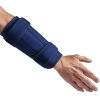
Forearm Brace

£10.99inc VAT

In stock

  • Long NuovaHealth forearm brace designed to support forearm, wrist and some elbow‑related problems by limiting painful bending and twisting and providing firm, even compression.
  • One size fits most adults (brace length approx. 23 cm), suitable for left or right arm, with two adjustable hook‑and‑loop straps to hold it securely in place.
  • Rigid dual splints on both sides help steady the wrist, forearm, and, when positioned higher, the elbow, protecting sore or healing tissues during work, sport, daily activities, and post‑cast or post‑operative phases.
  • Commonly used to help manage forearm and wrist sprains and strains, longer‑term tendon and joint problems (including patterns often called tennis elbow and golfer’s elbow), and nerve‑related issues around the wrist and elbow such as Carpal Tunnel Syndrome and Ulnar Tunnel Syndrome.
  • Provides firm, comfortable compression to help control mild swelling, support soft tissues, and give a stable, “held” feeling that can make everyday tasks and rehabilitation exercises more manageable.
  • Made from lightweight, padded, skin‑friendly and breathable materials with moisture‑wicking properties, so it can be worn for several hours at a time at work, during training, or overnight, as advised.
  • Can be positioned closer to the wrist, centred on the forearm, nearer the elbow, or spanning the elbow (when recommended by a clinician) to target support where you need it most.
  • Backed by NuovaHealth’s 30‑day money‑back guarantee.

Please note there is no guarantee of specific results and that the results can vary for this product.

EAN: 5061006073882 SKU: 63420 Categories: , , Tags: , , , Brand:

Forearm Pain: What’s Going On, And When A Brace Can Help

Forearm pain can make simple tasks feel harder than they should and, over time, that can be understandably frustrating. Whether you are opening a jar, typing on a keyboard, or playing a racket sport, that persistent ache or sharp tug can turn them into a struggle.

There are several common reasons this area becomes sore – from overuse and sprains or strains to tendonitis, carpal tunnel syndrome, or arthritis. If you recognise that mix of aching, sharp tugs with certain movements, or night‑time numbness, this page is designed to help you understand what may be going on and how our forearm brace can fit into your treatment.

Most forearm, wrist, and some elbow problems fall into three broad groups: repeated use over time that strains muscles and tendons, a single injury affecting bone, ligaments or other soft tissues, and underlying joint or nerve issues that make the area more sensitive.

Different structures trigger different types of pain. Understanding what is happening inside the arm helps to explain why it hurts, and why support from a brace can sometimes make everyday life easier.

How Forearm Pain Tends To Feel Day To Day

People often describe:

  • A dull ache or tightness along the front or back of the forearm that builds as the day goes on.
  • Sharp pain near the elbow or wrist when gripping, lifting, or turning the palm up or down.
  • Discomfort or fatigue during repeated tasks such as typing, using a mouse or tools, or sports that rely on gripping.
  • Stiffness or aching after rest that eases a little when you first move, then builds again with heavier use.
  • Tingling, numbness, or burning in the thumb, fingers, or along the little‑finger side of the hand, especially at night or when the arm is bent.

In very broad terms, different kinds of pain often point to different structures:

  • Deep, local ache and stiffness often point towards joint and cartilage involvement.
  • Pulling or tight pain with movement usually points more to muscles and tendons.
  • Tingling, electric‑like pain, numbness, or weakness often suggest nerve irritation or compression.

Inside The Forearm: Bones, Joints, Muscles, Tendons, Ligaments And Nerves

The forearm has two main bones: the radius and the ulna, which run from the elbow to the wrist. At the elbow they meet the upper arm bone; at the wrist they meet the small wrist bones. Joints between the radius and ulna themselves (radioulnar joints) allow the forearm to rotate so the palm can face up or down.

You use these joints for three main types of movement:

  • Bending and straightening at the elbow.
  • Bending the wrist up and down and a little side to side.
  • Turning the forearm so the palm faces down (pronation) or up (supination).

Around the bones is a thick layer of muscle:

  • On the front and inner side are the flexor and pronator muscles (for example flexor carpi radialis, flexor carpi ulnaris, flexor digitorum superficialis). They bend the wrist and fingers and turn the forearm inwards.
  • On the back and outer side are the extensor and supinator muscles (for example extensor carpi radialis, extensor digitorum, brachioradialis). They lift the wrist and fingers and help turn the forearm outwards.

A tendon is the tough, fibrous tissue that links muscle to bone and transmits the pull of the muscle to move a joint. Many forearm tendons run towards the wrist and into the hand, both on the palm side (flexors) and on the back (extensors). Near the elbow, several tendons group together into:

  • A common extensor tendon on the outer (lateral) elbow.
  • A common flexor tendon on the inner (medial) elbow.

A ligament is a strong band that links bone to bone and helps steady joints. Ligaments around the elbow, forearm, and wrist stop joints moving too far and keep them aligned when you load them.

Three main nerves pass through the forearm:

  • The median nerve runs through a tight passage at the front of the wrist (the carpal tunnel) into the thumb, index, middle, and part of the ring finger.
  • The ulnar nerve runs behind the inner elbow (the “funny bone”), then through a canal on the little‑finger side of the wrist into the little finger and part of the ring finger.
  • The radial nerve runs along the back and outer side of the forearm, helping to lift the wrist and fingers and supplying part of the back of the hand.

These nerves travel through tight tunnels and around bony edges. Swelling of tendons or joint linings, or holding the wrist or elbow bent for long periods, can reduce the space around the nerves and increase pressure on them.

Blood vessels run alongside the nerves, bringing oxygen and nutrients. All these structures are contained within a strong wrapping called fascia. Because this fascia does not stretch very much, any extra fluid or bleeding inside the forearm or wrist can quickly raise pressure and irritate nerves, muscles, and tendons.

Why Strain, Overuse And Injury Lead To Ongoing Pain

Forearm pain usually appears when the tissues are doing more work than they can comfortably cope with and recover from.

Repeated use

Many jobs, sports, and hobbies involve frequent gripping and wrist movement. The flexor and extensor muscles have to contract again and again, and their tendons transmit that pull to the bones. Each spell of work places small stresses on these tissues. With enough rest between spells, they repair and adapt. If the overall demand – how hard, how often, and for how long – is greater than the repair time, small areas of tendon fibre damage and irritation build faster than the body can mend them.

Early on, this can cause temporary tendon inflammation. If the overload continues, the tendon’s internal structure can change. The neatly aligned collagen fibres can become more disorganised and the tendon can thicken (tendinopathy). In that state, even everyday tasks can bring on ache and tightness more quickly than they used to.

Sudden overload

A fall onto an outstretched hand, a direct blow to the forearm, or catching something unexpectedly heavy can place large forces through the radius and ulna, the elbow and wrist joints, and the ligaments and soft tissues around them. This may cause:

  • Sprains – overstretching or tearing of ligaments that support joints such as the wrist or elbow.
  • Strains – damage to muscle fibres or their tendons.
  • Fractures – breaks in one or both forearm bones.

These injuries usually cause sharp pain at the time, followed by swelling and often bruising. Moving the wrist, forearm, or elbow can become very painful or impossible. The body reacts with inflammation and increased fluid in the area, and the muscles may tighten to guard it.

Twisting and rotation

Tasks that rely on turning the forearm – using particular tools, opening or closing stiff handles, swinging a racket or club – load the radioulnar joints and the pronator and supinator muscles and tendons. Repeated or forceful rotation can:

  • Stress the joints between the radius and ulna.
  • Place pulling forces on the common extensor tendon at the outer elbow and common flexor tendon at the inner elbow.
  • Irritate ligaments that steady the forearm and wrist.

Over time, this can contribute to problems such as tennis elbow and golfer’s elbow.

Inflammation, swelling and nerve irritation

Inflammation brings extra fluid into an area. Within the tight compartments and tunnels of the forearm and wrist, this can raise pressure, compress nearby nerves in narrow passages such as the carpal tunnel, Guyon’s canal, or cubital tunnel, and reduce blood flow to local tissues.

Why pain keeps coming back

Once tissues and nerves have been irritated, the pain sensors and nerves can become more sensitive. Movements and loads that were previously comfortable can now trigger discomfort more quickly. Because you use your forearm for so many everyday tasks, it is very hard to avoid loading it. Everyday activities like carrying a bag, turning a handle, or steering a car can repeatedly load the same irritated structures.

Previous injuries can leave muscles weaker and slower to respond, joints stiffer, and nerves more reactive. If work, sport, or hobbies continue to place the same demands on the area with no change in technique, volume, or support, it is common for symptoms to flare again and again. That is why forearm problems can feel as though they never quite settle if nothing about your day‑to‑day use or support changes.

Because the forearm takes a lot of force and is used so often, irritated tissues often benefit from both changes in how they are loaded and from structured support. Reducing the extremes of movement that tend to trigger symptoms, easing repeated strain on sore structures, and providing firm but comfortable compression can all help. A well‑fitted forearm brace is one way to give that kind of support, and our long forearm brace has been designed for that role.


When To Seek Professional Advice Before Using A Forearm Brace

Before thinking about any brace, it is important to be sure that the problem is suitable for this kind of support.

Some situations need urgent medical help, rather than a forearm brace. You should get urgent medical help before using any brace if:

  • You have sudden, severe pain in the forearm, wrist, or elbow after a fall, accident, or direct blow.
  • The arm looks deformed or unusually bent.
  • There is rapid, marked swelling and bruising.
  • You notice sudden, significant numbness, tingling, or weakness in your hand or fingers.
  • Your hand or forearm becomes very pale, blue, very red, or much colder or hotter than the other side.
  • You have very severe, worsening pain with a tight, “solid” feeling in the forearm, pain when you try to gently stretch your fingers, and changes in hand colour or temperature.

These patterns can indicate fractures, major soft‑tissue injuries, serious nerve or blood vessel problems, or conditions such as compartment syndrome. In these situations, a soft or semi‑rigid forearm brace is not an appropriate first treatment.

If pain has been present for more than a few weeks, is affecting your daily life, or is accompanied by milder tingling, stiffness, or weakness, a GP or physiotherapist can assess the area, rule out serious causes, and advise on treatment.

Once any serious problems have been dealt with and a clinician has confirmed that the bones and soft tissues are stable enough, a forearm brace can be one of the tools used later in recovery to support healing and make day‑to‑day activity more comfortable.


Is Our Forearm Brace Right For You – And How It Fits Into Your Day

Typical Situations Where Our Brace May Help

Our NuovaHealth forearm brace is designed for adults with forearm, wrist, or elbow‑related symptoms where extra support and movement control may be helpful. It is:

  • One size, designed to fit most adult arms.
  • Suitable for either left or right arm.
  • Long enough to cover most of the forearm, so you can choose where along the arm it sits.

Our brace is especially likely to help if any of the following feel familiar:

  • You have forearm or wrist pain linked to repeated gripping and wrist use at work, during sport, or with certain hobbies.
  • You are in the later stages of recovery after a fracture or significant soft‑tissue injury and have been told a rigid cast or splint is no longer needed.
  • You experience tendon or joint flare‑ups around the forearm or elbow, such as conditions often called tennis elbow and golfer’s elbow.
  • You have nerve‑related symptoms around the wrist or elbow that are made worse by certain hand, wrist, or elbow positions.
  • You know that specific tasks – such as longer desk sessions, particular manual tasks, or some training sessions – reliably bring on your symptoms and you want extra support during those times.

Once the brace is in the right place and the straps are fastened, it should stay in that position rather than sliding up and down. If you want to support a different part of the arm, you take the brace off, reposition it, and then fasten it again.

Using Our Brace At Work And During Repetitive Tasks

Forearm pain linked to work is often tied to tasks that involve repeated gripping, lifting, or precise hand control. Long periods of keyboard and mouse use, frequent tool use, or handling items repeatedly can all place ongoing demands on the forearm muscles and tendons.

You might choose to wear our brace during the longest or most demanding blocks of your working day – for example several hours of typing or tool use – and then remove it for lighter tasks or breaks. When the brace covers the lower forearm and wrist, it can:

  • Help keep your wrist nearer a comfortable in‑between position – not fully bent forwards or fully back – reducing extreme angles that pull on tendons and ligaments.
  • Support the forearm muscles so each contraction happens through a slightly smaller movement range, which can lower the strain on their tendons with each repetition.
  • Provide firm compression and a supported feeling, which many people find makes longer tasks more manageable.

It usually works best alongside simple changes such as:

  • Breaking work into shorter blocks with brief rests.
  • Varying how you position your hands, wrists, and forearms.
  • Gradually building strength and endurance in the forearm muscles.

Using Our Brace For Sport And Higher‑Demand Activities

Sports and exercise can place high loads on the forearm, especially those involving repeated or heavy gripping and wrist movement, such as racket sports or using weights or gym equipment where you hold a bar or handle for multiple sets.

Positioning our brace over the forearm and, where appropriate, nearer the elbow can:

  • Limit deep and rapid wrist movements and some twisting of the forearm when the brace covers the lower forearm and wrist.
  • Support the flexor and extensor muscle groups along the forearm, so that the tendon attachments at the elbow do not have to cope with such high strain each time you grip or lift.
  • Soften sudden twists and jolts that would otherwise be taken directly by sore muscles, tendons, or joints.

You can wear the brace for sessions or drills that you know tend to set symptoms off, and remove it afterwards. It should sit alongside your training and strengthening plan, not replace it. As control and strength improve, you can steadily shorten the time you wear the brace in sport or reserve it for the most demanding sessions.

Using Our Brace Overnight Or During Flare‑Ups

Night‑time can be difficult if you have forearm, wrist, or nerve‑related problems. Sleeping with the wrist or elbow bent for long periods, or lying on the arm, can narrow nerve tunnels and increase tension on sensitive tissues. Waking with tingling or numb fingers, or with a heavy, aching forearm, is common in some conditions.

Wearing our brace overnight can help keep the forearm – and, if the brace is positioned closer to the wrist, the wrist itself – in a comfortable in‑between position rather than fully bent or fully straight. If the brace is placed to cover both sides of the elbow region, it can also limit how much you bend the elbow in your sleep.

These steadier positions can:

  • Reduce pressure on nerves that are easily irritated by bent joints.
  • Cut down the number of times you drift into angles that usually disturb your sleep.
  • Give tendons and joints a quieter, more settled position overnight.

Controlling strain during the day can also help night‑time symptoms, as tissues that have not been repeatedly overloaded are less likely to be painful at rest. During short flare‑ups – for instance after a particularly heavy day – wearing the brace more regularly for a few days can help things settle. As discomfort improves, you can reduce brace time gradually rather than stopping all at once.

Using Our Brace After Injury As Part Of Protection And Compression

After a recent injury to the forearm, wrist, or elbow, early care usually focuses on protecting the area from further harm, resting or modifying activity, and using ice and elevation to help with pain and swelling.

In more significant injuries, such as fractures or major ligament damage, a rigid cast, splint, or other specific support may be needed first. That decision should be made by the clinicians treating you.

Once they confirm that bones or soft tissues have healed enough to move more freely and no longer need a full cast or rigid splint, our forearm brace can often take over part of the protective role. At that stage it can:

  • Guard healing tissues from sudden, large movements and bumps while you begin to use the arm again for light tasks.
  • Provide ongoing compression to help keep any remaining swelling under control.
  • Allow a limited but useful range of movement so joints and muscles begin to work again without being exposed to full strain.

For you, that may mean enough movement for washing, dressing, and the gentle exercises your clinician has given you, but not enough to pull hard on a healing area.

Whatever your situation, it is important that the timing and duration of brace use after injury follow advice from your treating team and sit alongside appropriate exercises. Our brace is a useful step between a rigid cast and no support, not a replacement for your rehabilitation plan.

When Our Brace May Not Be Enough On Its Own

A brace like ours can be very helpful, but it is rarely the whole answer on its own. In most cases, long‑term improvement depends on:

  • Adjusting the tasks, loads, and postures that have irritated the area.
  • Following a programme of stretching and strengthening to build what your forearm can comfortably cope with.
  • Addressing any wider health factors that affect healing.

Our brace is not suitable to place directly over open wounds or obvious skin infection, because pressure over infected or broken skin can make things worse. It should not be used as the main initial treatment for a suspected fresh fracture or major injury that has not been checked. People with significant circulation problems in the arm, a history of serious vascular disease or clots in the limb, or severe nerve conditions should speak to a clinician before using a firm, compressive brace.

If, even after using the brace sensibly and adjusting your activity, your symptoms are still severe, getting worse, or causing real difficulty in your daily life, it is important to seek further assessment from a GP, physiotherapist, or other clinician.


How Our Forearm Brace Works

Firm Compression With Two Adjustable Straps

Our brace is made to give the arm a firm, even support. To put it on, you:

  • Lay it flat under the part of the arm you want to support, with the splints lying along the sides.
  • Wrap the material around and fasten the two hook‑and‑loop straps, one towards each end.

Once in place, the compression:

  • Helps control mild swelling by applying gentle pressure to the soft tissues.
  • Gives a steady, supported feeling, which can make the arm feel more secure.
  • Helps you feel how your wrist and forearm are positioned without having to look, which can make it easier to avoid slipping into the wrist positions that usually cause you pain.

The two straps wrap fully around your arm and can each be tightened or loosened to adjust how firm the compression feels and how securely the brace sits. The brace should feel snug and secure, but not painful. As a simple check: your hand and fingers should stay warm, with normal colour and sensation. If they start to tingle, go numb, or look unusually pale or blue, the straps are too tight and should be loosened or the brace removed.

The inside of our brace uses a porous, moisture‑wicking cloth to draw sweat away from the skin. This, together with the breathable outer, helps reduce dampness and friction and lowers the risk of rubbing and chafing when the brace is worn for longer stretches. Our brace has smooth, rounded edges to help prevent rubbing, and the padding and edge finishing mean there are no sharp points to dig into your skin when you rest your arm on a surface.

Rigid Dual Splints To Control Painful Movement

Our NuovaHealth forearm brace contains two slim metal splints that run along its length on both sides. They are not removable. When the brace is wrapped around the arm and the straps are fastened, these splints form a firm frame along the part of the arm they cover.

What this does depends on where you position our brace:

  • Closer to the wrist, over the lower forearm and wrist
    • The side splints help keep your wrist nearer the middle of its movement range and resist deep bending forwards or backwards.
    • They reduce sudden or large turning of the forearm, which can otherwise irritate the radioulnar joints and attached tendons.
    • They support the tendons crossing the wrist, reducing sharp strain on these structures during gripping and lifting.
  • Centred on the middle of the forearm
    • The splints support the shafts of the radius and ulna, encouraging them to move more together and reducing independent bending or twisting.
    • The forearm muscle–tendon units work through a more controlled range, which lowers rapid changes in tension through the injured or irritated area.
  • Closer to the elbow, over the upper forearm below the elbow
    • The splints back up the upper parts of the extensor and flexor/pronator muscles, near where they join the common extensor and flexor tendons at the elbow.
    • They reduce how far and how quickly you move into positions that put the greatest strain through these tendon origins, which is particularly relevant for conditions often called tennis elbow and golfer’s elbow.
  • Spanning the elbow region
    • When our brace covers part of the lower upper arm and part of the upper forearm, it can significantly limit elbow bending and straightening as well as forearm rotation.
    • This can be useful for certain elbow‑related problems or after some operations when a clinician has advised keeping the elbow in a narrower range for a period.
    • Holding the elbow completely rigid for long periods is not usually desirable, so this position should be used as directed and for a limited time.

By reducing the extremes and speed of the movements that most often trigger pain – deep wrist bending, forceful twisting, repeated high‑load elbow bending – the splints lower the strain on sore or healing tissues. Once you have chosen the position and fastened the straps, our brace is intended to stay in that place until you choose to take it off and reposition it.

Padded, Breathable Construction For Longer Wear

For a brace to be useful, it has to be comfortable enough to wear at the times when support would help. Our design uses soft padding between the rigid splints and your skin to:

  • Spread out the pressure from the splints and straps, so one small area is less likely to become sore.
  • Cushion the arm against the small bumps and knocks that are hard to avoid in daily life.
  • Prevent harder edges from digging into the skin when you rest the arm on a surface.

The porous inner cloth and breathable outer help keep the skin under the brace drier and cooler. This makes it more comfortable to wear our brace for several hours at work, during training, or overnight if needed, and can help reduce skin irritation for most people.

Positioning Our Brace To Target Sore Areas

Because our brace is long enough to cover most of the forearm, you can choose where along the arm it sits, depending on where your symptoms are:

  • Centred on the forearm
    • Covers much of the area between wrist and elbow.
    • Useful for: general forearm muscle and tendon overuse, mid‑forearm sprains and strains, and diffuse aching from repeated gripping or lifting.
  • Closer to the wrist
    • Covers more of the lower forearm and wrist, with less coverage towards the elbow.
    • Useful for: wrist sprains and ligament injuries, some wrist‑centred tendon problems, and nerve compression patterns affected by wrist position.
  • Closer to the elbow (without fully spanning it)
    • Covers more of the upper forearm.
    • Useful for: problems at or near the common extensor and flexor tendon origins, such as tennis elbow and golfer’s elbow, and some elbow‑region pain.
  • Spanning the elbow
    • Covers part of the lower upper arm and part of the upper forearm.
    • Useful for: certain elbow‑region injuries or post‑operative phases where limiting elbow flexion and forearm rotation has been specifically advised.
    • This more restrictive position is usually for short‑term, clinician‑directed use.

You decide on the position with guidance from your clinician if needed, wrap the brace around that part of the arm, and then fasten the straps. Once fastened, it should stay in that position rather than being slid around, which helps keep the splints in the right place and reduces rubbing.

Design Informed By Clinical Principles

When clinicians look for a brace to support forearm, wrist, or some elbow‑related problems, they typically want:

  • Enough length to influence the area that is under strain, not just a narrow strip.
  • Rigid elements to limit the movements that most commonly aggravate symptoms.
  • Adjustable, firm compression to help manage swelling and give a supported feel.
  • Materials that are comfortable enough to wear when it really matters.

Our NuovaHealth forearm brace has been developed with those points in mind, drawing on physiotherapist input to balance control and comfort. The dual splints on both sides of the forearm and the longer design mean it can help control not only the wrist but also forearm and elbow movement when needed. It is not a cure on its own or a substitute for a proper assessment, but it does include the features many clinicians look for when choosing forearm support.


Safety, Important Information, And When To Seek Help

Our brace is designed for adults. It provides external support and compression but is not a replacement for medical assessment or treatment.

When you first use it, movements may feel different as the splints guide the limb and the compression supports the tissues. It should feel snug and reassuring, rather than tight or uncomfortable. Your hand and fingers should remain warm, with normal colour and sensation.

You should stop using our brace and seek advice from a GP, physiotherapist, or other suitable clinician if:

  • Your pain or swelling becomes significantly worse while wearing the brace or shortly after taking it off.
  • You develop new or increasing numbness, tingling, or weakness in your hand or fingers with the brace on.
  • The skin under or around the brace becomes very sore, blistered, broken, or looks infected.
  • Your hand becomes unusually cold, very red, or changes colour compared to the other side while the brace is on.

Do not apply our brace directly over open wounds or obvious signs of infection, because pressure over infected or broken skin can make things worse. In some situations it may be worn over suitable padded dressings, but only on the advice of a clinician who has assessed the area. It should not be used as the first response to a suspected fresh fracture, major injury, or very severe, tightening pain with colour or temperature change in the hand or forearm; these patterns need urgent medical attention.

If you have known significant circulation problems in the arm, a history of serious vascular disease or clots affecting the limb, or severe nerve conditions, speak to a healthcare professional before using a firm, compressive brace. If you are pregnant, or have other conditions that may affect your circulation or soft tissues, it is also sensible to check with a clinician first.

It is normal to be more aware of the brace when you first start using it, but it should not be painful or cause numbness or tingling. If discomfort persists, you should adjust how you are wearing it or speak with a clinician.

Everything here is general information to help you understand our brace and the forearm‑related problems it is often used for. It is not a personal diagnosis or prescription. No brace can guarantee complete relief or prevent all injuries. If you are unsure whether our brace is right for your particular condition or stage of recovery, or if your symptoms are severe or changing, please speak with a healthcare professional.


Conditions & Injuries Our Forearm Brace May Help With

If you already know your diagnosis, you may find it helpful to read the condition‑specific section below that matches your problem. Each overview explains how that condition behaves and how our brace can fit into its management.

For Carpal Tunnel Syndrome

Carpal Tunnel Syndrome

If your thumb, index, and middle fingers often tingle or go numb, especially at night or when you hold something for a while, and you find yourself shaking your hand to get feeling back, Carpal Tunnel Syndrome (CTS) may be involved.

The carpal tunnel is a narrow passage at the front of the wrist. The floor and sides are formed by the small wrist bones, and the roof is a strong band of tissue called the transverse carpal ligament. The median nerve and the flexor tendons that bend your fingers and thumb all run together through this tight space.

In a healthy wrist, there is just enough room for those tendons to glide and for the median nerve to carry signals properly. The nerve supplies feeling to the thumb, index, middle, and part of the ring finger, and it controls some of the small muscles at the base of the thumb that help you pinch, grip, and turn objects.

CTS is more likely in people who:

  • Use their hands a lot with the wrist bent (for example in some office‑based, assembly, or manual jobs).
  • Have inflammatory conditions that thicken tendon linings or joint tissue.
  • Have diabetes or other conditions that affect nerves.
  • Are in late pregnancy when fluid retention is common.

In all these situations, there is simply more tissue or fluid inside the tunnel and not much spare space for the nerve.

Typical features include:

  • Tingling, numbness, or burning in the thumb, index, and middle fingers (usually not the little finger).
  • Symptoms that are worse at night or when the wrist is bent for a long time.
  • A habit of shaking or rubbing the hand to get relief.
  • Gradually increasing difficulty with small, fiddly tasks.

Inside the tunnel, repeated loading of the finger flexor tendons and prolonged bent wrist positions can cause the tendon sheaths to swell. Because the bones and ligament forming the tunnel do not stretch much, any extra bulk raises pressure. The median nerve is squeezed, its blood supply is affected, and the signals it carries become less reliable. At first this may cause occasional tingling and numbness, especially at night. If the same way of using the hand and wrist continues, symptoms can last longer and may be present more of the time. In more advanced cases, the muscles at the base of the thumb can weaken and thin, making pinching and gripping harder.

This is why persistent CTS symptoms should not be ignored. The longer the median nerve is exposed to raised pressure, the greater the risk that some changes will be slower or harder to reverse. Other problems, such as nerve issues in the neck or further up the arm, can produce similar symptoms, so proper assessment is important.

The key mechanical problems in CTS are:

  • The tunnel is tight with little room to spare.
  • Bending the wrist forwards or backwards narrows it further.
  • Forceful and repeated gripping makes the tendons within the tunnel bulkier and increases tension.

Because bending the wrist and thickening of the tendons inside the tunnel both raise pressure on the nerve, anything that keeps your wrist nearer straight and reduces those repeated squeezes can make a real difference. That is where our brace can help. The aim is not to ‘squeeze’ the tunnel tighter, but to keep your wrist in a neutral, supported position so the median nerve is under less mechanical stress during sleep and everyday tasks.

If you wear our NuovaHealth forearm brace so it covers the lower forearm and wrist:

  • The side splints help hold your wrist in a more comfortable in‑between position, not fully bent forwards or backwards. That is especially useful at night, when you are not consciously controlling your wrist angle.
  • The firm, even compression and structured shell of the brace make small, unintended wrist movements during light tasks less likely, so the tunnel is not constantly being narrowed and opened again.
  • Supporting the forearm close to the wrist means that when you bend your fingers to hold something lightly, the wrist stays steadier and the tendons through the tunnel are under a bit less strain.

In practice, many people find they wake less often with tingling, and can use the hand for longer at work or in daily tasks before symptoms build. Our brace does not cure CTS, but it can reduce repeated “squeezing” episodes on the median nerve while you adjust wrist posture, work set‑up, and, if needed, follow other treatments.

You should see a GP or physiotherapist if:

  • Symptoms have been present for several weeks and are not improving.
  • They regularly wake you at night.
  • You notice increasing weakness in the hand, or thinning of the thumb muscles.

A brace like ours is often one of the early measures clinicians suggest, particularly for night‑time use and during tasks that clearly set symptoms off, but it should be part of a full plan rather than the only measure.

For Forearm Tendonitis

Forearm Tendonitis

If you have a sore spot along your forearm that flares when you grip or lift, then eases with rest but keeps coming back, forearm tendonitis may be involved.

Forearm tendonitis involves inflammation or irritation of the tendons that connect the forearm muscles to the bones in your wrist, hand, or along the arm. In the forearm, flexor tendons run along the palm side and help you bend the wrist and fingers; extensor tendons run along the back and help you lift them.

Tendonitis usually appears when a tendon is repeatedly loaded a bit more than it can comfortably repair between bouts of activity. Small areas of fibre damage and irritation develop. This is more likely if you:

  • Grip, lift, or twist with your hands a lot at work or in sport.
  • Have recently increased your activity level or changed what you do with your hands without building up slowly.
  • Work or train with your wrist held in less favourable positions, such as gripping hard with it bent.

At first, you might just notice a localised tender spot along a tendon or at its attachment after a busy day. Over time, pain may turn up earlier in a task or with lighter loads. Mornings or first movement after rest can feel stiff, and the area can be sore when you press on it.

Inside the tendon, repeated overload causes tiny tears in the collagen fibres and local inflammation. If this continues over many weeks or months, the tendon’s internal structure can change. The fibres become less neatly aligned and the tendon can thicken and lose some of its natural “springiness”. This longer‑term state, often called tendinopathy, is more stubborn; the tendon can be slow to settle and more easily irritated by normal activities.

If forearm tendonitis is recognised early and activity is adjusted, tendons can often recover and become more tolerant again. Leaving it to continue without changes can lead to longer‑lasting pain, reduced strength, and a greater tendency for the same area to flare with modest use. Other problems such as nerve irritation or referred pain from the neck can produce similar symptoms to tendonitis, so if you are unsure, it is sensible to have it assessed.

The problem in tendonitis is not that the tendon is “weak” in general, but that it is being stressed too often or too strongly, particularly at certain angles. So the goal is not to stop you using the arm, but to stop the tendon being pulled hardest at the angles it dislikes while you build its strength back up. Our brace is designed to help you do that.

If you wear our long forearm brace over the part of the forearm where the affected tendon runs:

  • The rigid splints and snug fit limit how far and how quickly the wrist and forearm can move into the positions that most load the tendon. For example, if the extensor tendons on the back of the forearm are sore, the brace can help stop the wrist lifting up too far under load.
  • Supporting the underlying muscles means they do not have to move through such a large range with each repetition, which can blunt the sharpest pulls on the tendon.
  • Combined movements that are most likely to flare the tendon – such as strong gripping with a bent wrist or rapid twisting while lifting – are moderated by the brace’s structure.

For you, that may mean gripping, lifting, or turning with less sharp, localised pain in the tendon, and fewer flare‑ups during the day. It becomes easier to keep using the arm within limits, while you work with a clinician (if needed) on:

  • Reducing or pacing the tasks that tend to bring your pain on.
  • Following exercises to rebuild tendon strength and load tolerance.
  • Improving wrist and forearm position for the key things you do.

Our brace does not replace those steps. Its role is to reduce the strain on a sore tendon during demanding spells, so that everyday use and rehabilitation are more manageable and less likely to undo the progress you are making.

For Forearm Sprains & Strains

Forearm Sprains & Strains

If you felt a sudden pull or jab somewhere along your forearm – between the wrist and elbow – after a twist, awkward catch, or knock, and now that segment is sore to move or press, you may be dealing with a forearm sprain or strain rather than a wrist‑only injury.

A sprain affects ligaments – the strong bands that connect bone to bone and steady joints. A strain affects muscles or their tendons – the tissues that connect muscle to bone and transmit force. In the forearm, the main structures involved are:

  • Ligaments and the interosseous membrane between the radius and ulna (the long forearm bones).
  • Muscles and tendons running along the forearm itself.

These injuries often occur when:

  • The forearm is rotated forcefully – such as when an object twists in your hand or when you change grip quickly under load.
  • A fall or blow jars the forearm without obviously spraining the wrist.
  • You lift or catch something heavy in a way that makes you feel the strain more in the middle of the forearm than at the joints.

At the time, you usually feel a sharp pain in one local area. Over the next hours or days, that spot may swell, bruise, and remain sore. Pressing on certain points along the forearm hurts, and movements that pull on the injured structure – like turning your palm up or down, or bending the wrist while the forearm is loaded – can reproduce the discomfort, even if the wrist joint feels relatively stable.

In an acute sprain, ligaments or the interosseous membrane may be stretched or have small tears. In a strain, muscle or tendon fibres are overstretched or torn on a small scale. The body responds with inflammation and a repair process, laying down new tissue. If you rest completely for too long, those tissues can become weaker and stiffer. If you push straight back into demanding use, you risk re‑injuring the area before the new tissue has matured.

If these injuries are not managed well, you may be left with an area that is:

  • Persistently sore or tight with use.
  • More easily re‑injured with similar twists or loads.
  • Compensated for by other joints or muscles, potentially shifting strain elsewhere.

Because forearm pain can also be due to tendonitis, nerve issues, or problems starting in the neck or shoulder, it makes sense to have persistent or severe symptoms assessed so you know exactly what is going on.

In forearm sprains and strains, the main problem is that a specific section of tissue in your forearm is now sensitive to certain directions and combinations of movement, especially twisting and loaded bending.

This is where our long forearm brace, with rigid splints on both sides, can be particularly useful. If you centre our brace over the injured area:

  • The splints make it harder to twist the forearm fully, so the radius and ulna move more as a unit and the stressed ligaments or membrane between them are not pulled as far.
  • Deep wrist bending while the forearm is loaded is reduced, which helps protect any strained muscles and tendons in the region.
  • The firm compression supports the soft tissues and can help any lingering swelling settle, giving a more secure feeling when you start to move again.

That means you can begin to use the arm for lighter tasks – washing, dressing, preparing food, carrying smaller items – without repeatedly overstretching the injured fibres. It also allows you to start early rehabilitation exercises, such as gentle rotation and strengthening, within a controlled range.

Forearm sprains and strains are usually managed with:

  • A brief period of relative rest and pain and swelling management in the early phase.
  • Gradual reintroduction of movement and then strengthening, led or advised by a clinician where needed.
  • A staged return to heavier work or sport.

Our brace does not take away the need for that process. Its value is in helping you move and use the arm in a safer, more controlled way during recovery, rather than having to choose between a completely rigid arm or an unprotected one.

For Ulnar Tunnel Syndrome

Ulnar Tunnel Syndrome

If you have tingling or numbness in the little finger and part of the ring finger, and you notice it more when you lean on the heel of your palm on the little‑finger side, the ulnar nerve at the wrist may be under pressure in a space called Guyon’s canal.

The ulnar nerve runs down the inner side of the arm, behind the inner elbow, then along the wrist into the hand. At the wrist, on the little‑finger side, it passes through Guyon’s canal – a short tunnel formed by wrist bones and ligaments at the base of the palm. Inside this confined passage, the nerve splits into branches that supply sensation to the little finger and part of the ring finger, and help control some of the small muscles used in grip and fine hand movements.

Ulnar Tunnel Syndrome is more likely in people who:

  • Spend long periods leaning through the heel of the hand on the little‑finger side, such as some cyclists resting heavily on handlebars or people using certain supports at elbow height.
  • Use vibrating tools that drive repeated force into the base of the palm.
  • Have arthritis or previous injuries near the wrist that alter the structures around the canal.
  • Develop small cysts or similar masses that take up space in the canal.

In all of these, there is less room for the nerve in Guyon’s canal or more external pressure on it.

Typical symptoms include:

  • Tingling, numbness, or burning in the little finger and the ulnar side of the ring finger.
  • Symptoms that worsen when you press on the heel of the palm.
  • A feeling of weakness or clumsiness when you try to use the ring and little fingers for fine tasks.

If the problem continues, some of the small muscles in the hand may thin and finger posture can change.

Mechanically, Ulnar Tunnel Syndrome is about local compression of the ulnar nerve at the wrist – a squeeze on the nerve in a tight space at the base of the palm. Thickened ligaments, swollen tissues, bony changes, or cysts can all crowd the canal. Because the canal walls are firm, anything extra inside presses on the nerve, reducing its blood supply and altering its function.

If this is picked up early and pressure on the area is reduced – for example by changing hand positions, improving padding, or adjusting equipment – symptoms can often settle. If the nerve stays compressed for a long time, numbness, weakness, and muscle wasting can be slower to improve, even if later treatment is given. Since similar symptoms can come from ulnar nerve compression higher up at the elbow or from the neck, an assessment is important to identify the true source.

A brace on its own cannot provide padding on the palm – you still need suitable handlebar tape, gloves, or supports for that – but it can help with wrist and forearm position, which influences how load travels through the hand.

When you wear our long brace close to the wrist:

  • The splints help keep the wrist nearer a neutral, in‑between position, making it harder to drop into deep flexion, extension, or bending towards the little‑finger side (ulnar deviation). Those extreme positions can tighten the tissues around Guyon’s canal and focus pressure on it.
  • Supporting the forearm means that when you lean or grip, the wrist is less likely to collapse inwards so that the little‑finger side of the palm takes most of the weight.
  • The compression around the wrist and lower forearm can assist with mild swelling in nearby tissues that might add to nerve pressure.

For example, a cyclist who tends to lean heavily onto the little‑finger side of the palm may, with our brace in place and good handlebar padding, find the wrist stays more level and the base of the palm is less “dug into” the bar. Someone using a tool that causes their wrist to tilt repeatedly could find that the brace makes that tilt harder to reach and hold.

Managing Ulnar Tunnel Syndrome usually includes:

  • Reducing prolonged pressure on the little‑finger side of the palm.
  • Improving grips, padding, and support.
  • Sometimes exercises, splinting, or other treatments recommended by a clinician.

Our brace sits alongside these steps as an extra way to keep your wrist and forearm in positions that are friendlier to the nerve and to share load more evenly up the arm. It does not replace the need to change how you lean or grip. If symptoms are persistent, worsening, or accompanied by weakness or muscle thinning, it is important to see a clinician to confirm the diagnosis and discuss further options.

For Wrist Sprains And Ligament Injuries

Wrist Sprains And Ligament Injuries

If you fell on an outstretched hand or twisted your wrist awkwardly, and now have pain and swelling around the wrist joint with some movements feeling unstable or painful, the ligaments that normally hold that joint steady may have been sprained.

These wrist ligaments connect the radius and ulna (forearm bones) to the small wrist bones and link the wrist bones to each other. They keep the radiocarpal and mid‑carpal joints aligned and stop them moving too far when you grip, lift, or bear weight through the hand.

Wrist sprains typically follow:

  • A fall where the wrist is forced backwards or forwards.
  • A strong twist or wrench of the wrist while catching or carrying something.
  • An impact in sport that bends the wrist into an unusual position.

Immediately after the injury, there is often pain and swelling around the wrist, and sometimes bruising. Pressing over certain ligament areas hurts, and moving the wrist into specific directions – or trying to push up using the hand – can feel painful and unsteady. These features are different from pain that sits higher up the forearm, which tends to point more towards a forearm sprain or strain than a wrist‑only problem.

In a mild sprain, ligament fibres are stretched beyond their normal range but largely intact. In more significant sprains, some fibres tear, and the ligament provides less firm support. The body responds with inflammation and extra fluid, making the area sore and stiff.

If these ligament injuries are not looked after:

  • The ligaments may not regain their previous tightness.
  • The joint can move a bit more than it should, leading to a sense of “wobble” or giving way.
  • Over time, joint surfaces may be loaded unevenly, which can contribute to earlier wear.

Because some wrist fractures can look like sprains and some ligament injuries can be complex, it is important to have moderate or severe wrist injuries properly assessed, particularly if there is obvious deformity, major swelling, or marked loss of movement.

Once serious injuries have been ruled out or treated, and your clinician has said it is safe to move into a functional brace – one that allows some movement while still protecting the joint – a long, semi‑rigid support like ours can help that transition.

When you wear our NuovaHealth forearm brace so it includes the lower forearm and wrist:

  • The rigid splints support the wrist from both sides and help hold it in a more in‑between position, not fully bent forwards or backwards. Those deep bend positions place the greatest stretch on many wrist ligaments.
  • The structured body and compression of the brace reduce small, uncontrolled joint movements between the forearm bones and wrist bones as you go about daily tasks. The wrist feels more “held”, which can improve comfort and confidence.
  • Side‑to‑side angling of the wrist is also limited, reducing stress on ligaments that steady the wrist from the thumb and little‑finger sides.

Compared with a soft elastic bandage or a simple strap, our longer brace with dual splints offers firmer control over how the wrist moves, particularly when you are lifting, pushing up, or bearing some weight through the hand. That is why clinicians often recommend this style of support in the functional stage after a sprain, once rigid immobilisation is no longer needed.

Using our brace as advised – for example:

  • During work tasks that involve gripping or pushing.
  • When doing DIY or sport drills that load the wrist.
  • While carrying out the early rehabilitation exercises your clinician has set –

can help protect healing ligaments while you rebuild strength and range of motion. It does not remove the need for those exercises, but it makes it easier and safer to perform them and to use the wrist in day‑to‑day life without repeatedly overstressing the injured structures. That way, you are protecting the joint at the times it is under most pressure.

For Arthritis

Arthritis

If your wrist, forearm joints, or elbow often feel stiff and achy, especially first thing in the morning or after heavier use, arthritis may be contributing to what you are feeling.

Arthritis describes conditions where joints become inflamed and their structures are gradually damaged. In the forearm region, this commonly affects the main wrist joint between the radius and the wrist bones, the joints between the radius and ulna, and the elbow joint where the upper arm bone meets the forearm bones.

In a healthy joint, the ends of the bones are covered by smooth cartilage. This cartilage allows the bones to slide over one another with little friction and spreads the forces of movement and weight‑bearing. In osteoarthritis, this cartilage becomes thinner and can break down. In inflammatory arthritis, such as rheumatoid arthritis, the joint lining becomes inflamed and can damage cartilage and sometimes bone.

As cartilage wears or is damaged:

  • Areas of bone under the cartilage can become exposed.
  • The joint space narrows.
  • Extra bone (osteophytes) may form at the joint edges.
  • Swelling and thickening of the joint lining can occur.

People with arthritis in the wrist, forearm joints, or elbow often describe:

  • A steady ache in and around the joint.
  • Stiffness after rest (especially first thing in the morning) that eases a little as they start to move.
  • Pain that increases with tasks that load the joint – such as lifting, twisting, or leaning through the hands.
  • Occasional grinding or roughness with certain movements.

During flare‑ups, the joint may feel warmer, more swollen, and more tender.

If joint loading is not adjusted, pain and stiffness may gradually increase. Changes in how the bones sit and move can lead to altered limb alignment and more uneven pressure on particular areas of cartilage, which can speed up wear in those spots.

The main mechanical issues in arthritis are:

  • Rougher joint surfaces that do not glide smoothly.
  • Less even spreading of load across the joint.
  • Soft tissues around the joint (capsule, ligaments, muscles) that become irritable when stretched or jolted.

A brace can help by supporting and guiding joints so they work within a smaller, steadier range – not fully bent or fully straight – especially when you know they will be under more demand.

When you position our long brace along the forearm:

  • The rigid splints help guide the wrist and forearm joints through a more predictable arc, which can reduce sudden, sharp changes in joint position that cause jarring.
  • Deep wrist flexion or extension can be limited when the brace is worn closer to the wrist, easing pressure on thinned cartilage at the ends of the radius and wrist bones.
  • For elbows, placing the brace higher allows you to restrict fully straightening or fully bending the joint if those positions are particularly uncomfortable.

The firm, even compression also supports the soft tissues around the joints, which can produce a feeling of stability and help keep mild swelling under control.

In practice, people with arthritis often reserve our brace for:

  • Activities that they know tend to trigger pain, such as lifting heavier items, doing DIY, gardening, or certain work tasks.
  • Periods when symptoms flare and the joint feels more tender and unstable.
  • Longer days when they expect to be using the arms more than usual.

Using our brace for the tasks you know tend to bring on your joint pain can reduce sharp spikes of discomfort, make key activities more manageable, and help protect arthritic joints from unnecessary strain while you follow the wider plan agreed with your doctor or physiotherapist.

Arthritis is usually managed with:

  • Medication, where appropriate, to control pain and inflammation.
  • Exercises to maintain or improve range of motion and muscle strength.
  • Attention to general health and body weight to reduce joint strain.
  • Occasionally injections or surgery, depending on the type and severity.

Our brace cannot reverse arthritis or replace those treatments. Its role is to change how forces pass through the joint during certain tasks and flare‑ups, complementing the other parts of your care. If you notice new redness, warmth, or fever, or sudden changes in joint shape or function, you should seek medical advice promptly, as these may point to an acute flare or another problem that needs looking at.

For Repetitive Forearm Strain From Sport, Work Or Daily Tasks

Repetitive Forearm Strain From Sport, Work Or Daily Tasks

If your forearm tends to feel fine at the start of a week or training block, then tight, tired, or achy after several days of similar tasks, and then improves again after a quieter period, that often reflects repetitive strain – a build‑up of small stresses rather than one big tear.

Rather than there being one clear injury, the problem here is that the muscles and tendons of the forearm are repeatedly being asked to work a bit more, or a bit longer, than they can comfortably recover from.

The main tissues involved are:

  • The flexor and pronator muscles and tendons on the front and inner side of the forearm, which bend the wrist and fingers and turn the forearm inwards.
  • The extensor and supinator muscles and tendons on the back and outer side, which lift the wrist and fingers and help turn the forearm outwards.

These muscle–tendon units are active during most gripping, turning, and stabilising tasks. If you allow enough lighter days or breaks, small amounts of tissue stress are repaired and the system adapts. If you do not, small areas of irritation build up instead.

This sort of strain is common in people whose week includes:

  • Sports that demand frequent or prolonged gripping, such as tennis or squash, or using weights where you hold a bar or handle for multiple sets.
  • Jobs that involve many hours at a keyboard and mouse or repeated use of hand tools.
  • Hobbies that require concentrated hand use over long sessions, such as some DIY or instrument playing.

You may notice a dull ache or tight feeling in the forearm towards the end of busy days, a sense that the arm tires sooner than it used to, and symptoms that tend to ease during weekends or holidays only to return once you resume the same level of activity.

When you consistently ask your forearm to do more than it can comfortably handle, and do not allow enough time or variation for recovery, the muscles and tendons:

  • Do not fully repair between bouts.
  • Become more easily irritated by loads that once felt easy.
  • May begin to show small areas of structural change similar to those seen in tendonitis.

If nothing changes, this can shift from an occasional annoyance to a regular, earlier‑onset pain or tightness, and may eventually make you cut back on work, sport, or hobbies.

The underlying issue here is not simply “doing a lot”, but how that work is spread and the positions your wrist and forearm are in while you do it. Our brace cannot change your schedule, but it can influence the positions and ranges of movement used for the hardest parts of your day.

If you wear our long forearm brace centred on the forearm, or a little closer to the wrist:

  • The splints make it harder for the wrist to repeatedly drop into deep flexion or extension when you are distracted or tired, and they reduce the amount of twist in each movement. That keeps the wrist closer to a more joint‑friendly in‑between angle while you are gripping or turning.
  • Supporting the forearm muscles means they work through a slightly smaller movement range on each repetition, reducing the highest pull on their tendons where they attach near the wrist and elbow.
  • The compression gives a steadier feel and prompts you to be more aware of how your wrist and forearm are positioned, which can help you avoid drifting into awkward postures when you are busy.

For you, that may mean that by the end of a heavy day at work or a harder training session, the forearm feels less tight and less sore than it would without the brace. It does not remove all stress, but it helps you avoid some of the positions that usually make symptoms worse.

Repetitive forearm strain is best improved by:

  • Adjusting how much and how often you do the tasks that drive your symptoms.
  • Looking at technique, posture, and equipment in your sport or at work.
  • Following a strengthening and conditioning plan for the forearm muscles and tendons.

Our brace does not replace that broader plan. Its value is in making the busiest, most demanding parts of your day – where you know your arm is usually working hardest – more manageable while you put those changes into place and gradually build up your capacity. If your symptoms have been present for several weeks or more, are clearly limiting what you can do, or you are not sure whether it is simply overuse or something more specific, it is wise to have it assessed by a GP or physiotherapist.

For Post-Cast And Post-Operative Support

Post‑Cast And Post‑Operative Support

When a cast or rigid splint is removed after a fracture or operation, it is very common to feel a mix of relief and anxiety. The arm may look thinner, feel stiff and weak, and you may be understandably worried about knocking it or “undoing” the repair.

After weeks in a cast or rigid splint around the forearm, wrist, or elbow:

  • The bone at the injury or surgical site is healing and remodelling, but it is not yet as strong as it will eventually be.
  • Muscles, tendons, and ligaments that have not moved much are weaker and less flexible.
  • Joints are often stiff and can feel sore when first moved.

Keeping the wrist, forearm, and elbow held rigid at this stage is not helpful; joints can stiffen further and muscles can waste more. On the other hand, jumping straight into full, unprotected use can overload healing tissues. That is why clinicians usually plan a gradual, or graded, return to movement and function – starting with small, gentle movements in safe directions, then slowly building up how far and how strongly you move, and adding more demanding tasks in stages.

In this phase you may notice:

  • Stiffness and discomfort when first trying to bend or straighten the wrist, forearm, or elbow.
  • Forearm muscles tiring quickly with tasks that used to be easy.
  • Worry about catching the arm, being knocked, or doing something that might damage what has just healed.

A functional brace is often a useful step between a rigid cast and no support.

Our NuovaHealth forearm brace is designed for exactly that role. Because it is long enough to cover most of the forearm and has rigid splints on both sides, it can be positioned to support and limit movement in the area that still needs protection, while allowing some motion to return.

For example:

  • After a wrist or lower forearm problem, you can place the brace so it includes the lower forearm and wrist. The splints then help stop you bending the wrist fully forwards or backwards, which could otherwise stress healing bones, ligaments, or repairs, but still let you move gently within a safer, in‑between range.
  • After a mid‑forearm fracture or soft‑tissue injury, centring the brace on the forearm supports the radius and ulna and reduces twisting and bending through the healing zone, while allowing the elbow and wrist to move more freely.
  • After some elbow‑region surgeries or injuries, wearing the brace higher so it covers the upper forearm and part of the lower upper arm, or even spans the elbow if your clinician recommends it, can limit how far and how quickly you bend and straighten the elbow and rotate the forearm.

In each case, the adjustable straps and firm compression help keep the brace in place and provide a steady, supported feeling around the area. Many people find this makes them more confident using the arm for early daily tasks – such as washing, dressing, simple food preparation, or light housework – and more willing to start their prescribed exercises.

Our brace does not mean you can skip your rehab plan or rush back to heavy work or sport. It is there to:

  • Reduce the sharpness of movements that would otherwise feel too risky.
  • Allow you to practise and build up movement and strength in a controlled way.
  • Reduce the chance of sudden, large, uncontrolled motions through the healing area.

Your surgeon or physiotherapist is best placed to say:

  • When it is safe to move from a rigid cast or splint into this kind of functional brace.
  • Where along the arm the brace should sit for your particular injury or operation.
  • How long to use the brace and how to reduce its use as strength and control improve.

If, while using our brace in this phase, you notice increasing pain, swelling, redness, warmth, or major loss of movement, or you feel generally unwell, you should seek medical advice promptly, as these may indicate a complication that needs attention.


Bringing It All Together: When It’s Reasonable To Try Our Brace

Forearm, wrist, and elbow pain often develop when the structures in this busy area are asked to cope with more than they can comfortably handle – whether that is through repeated use, a single injury, or longer‑term joint or nerve problems. Because the forearm is involved in so many movements, these issues can be slow to settle unless the way the area is supported and used is changed.

Our long NuovaHealth forearm brace is designed to help by giving firm, adjustable compression and using rigid dual splints to limit the deep bending and twisting that most often trigger symptoms. Depending on where you position it, it can support the wrist, forearm, or elbow region, and help reduce strain on sore or healing tissues so that everyday tasks and rehabilitation exercises feel more manageable.

So when is it reasonable to try our brace? That is often the key question. If your symptoms and situations match the kinds of problems described above, and serious issues have been ruled out, it is sensible to use our brace during the times of day when you know your arm is working hardest – such as longer work spells, heavier tasks, or key training sessions – and see how much easier your usual tasks feel, while keeping your GP or physiotherapist involved if you have any doubts or if symptoms are severe or changing.

Average Rating

5.00

01
( 1 Review )
5 Star
100%
4 Star
0%
3 Star
0%
2 Star
0%
1 Star
0%
Add a review

Your email address will not be published. Required fields are marked *

1 Review For This Product

  1. 01

    by Debbie McFarlane

    I already wrote a review on this brace and mentioned i was struggling to get it on, on my own however i have now managed it so feel i can write a better review. It’s very good does stop me bending my forearm, which causes so much pain. So based on the effectiveness of this brace i am very happy with it. It’s also very good quality too and i would definitely recommend.

Fast & Secure Checkout Through Paypal

Pay with Paypal the secure payment gateway that accepts all credit and debit cards. Paypal is free and secure and no credit or bank information is ever stored or shared with us.

Fast Dispatch

Enjoy your items soon with quick dispatch via Royal Mail First Class. Expect to have your items between 1-3 days for domestic orders. 7-10 Working days for international orders.

Return Policy – 30 Day Money Back Guarantee

We are so confident that you will just love our product that we offer a full 30 day money back guarantee. In the unlikely event, you are unhappy with your purchase you can simply return it within 30 days for a refund. Please contact us via the form on the contact us page to start your return.

To return an item please send it to: Nuova Health UK, 81 Highfield Lane, Waverley, Rotherham, S60 8AL. Please include a note with your order id so we know who to refund. Please retain your postage receipt as proof of postage. All that we ask is that the item is in the original packaging and unused.
Main Menu