
FootReviver Drop Foot Brace V2
£11.99inc VAT
- Struggling with drop foot? Support your step with the FootReviver drop foot brace
If your toes keep catching the floor, you have to lift your knee higher than usual, or you feel nervous about tripping on small changes in surface, you may be dealing with drop foot. FootReviver’s drop foot brace is designed with input from foot‑health and biomechanics specialists to help you walk more safely and confidently by supporting the foot and ankle exactly where they need it most. - Designed specifically for drop foot and weak foot lift
This brace is made for people who find it hard to lift the front of the foot properly when walking. By helping hold the foot closer to a right angle with the lower leg, it supports the movement needed for the toes to clear the ground. That can reduce toe drag, trips and the need for an exaggerated “high‑stepping” pattern just to stay safe. - Semi‑rigid ¾ length footplate for steadier, smoother steps
Under the foot, a semi‑rigid plate runs under around three‑quarters of the length of the foot. It is firm enough to give real support but still allows some natural flex. This helps stop the front of the foot suddenly dropping down and gives the foot a more stable platform as it rolls from heel to forefoot. Everyday walking can feel more controlled and less like the whole foot is slapping down at once. - Posterior ankle support without a bulky rigid shell
The brace supports the back of the ankle and lower leg to limit uncontrolled downward pointing of the foot. This helps keep the toes from falling too far or too quickly during the swing phase of walking. Unlike many hospital‑style braces, it is slim, lightweight and shaped to sit close to the leg, providing meaningful support without feeling like a heavy, rigid shell around the ankle. - X‑shaped strap system that lifts and secures the forefoot
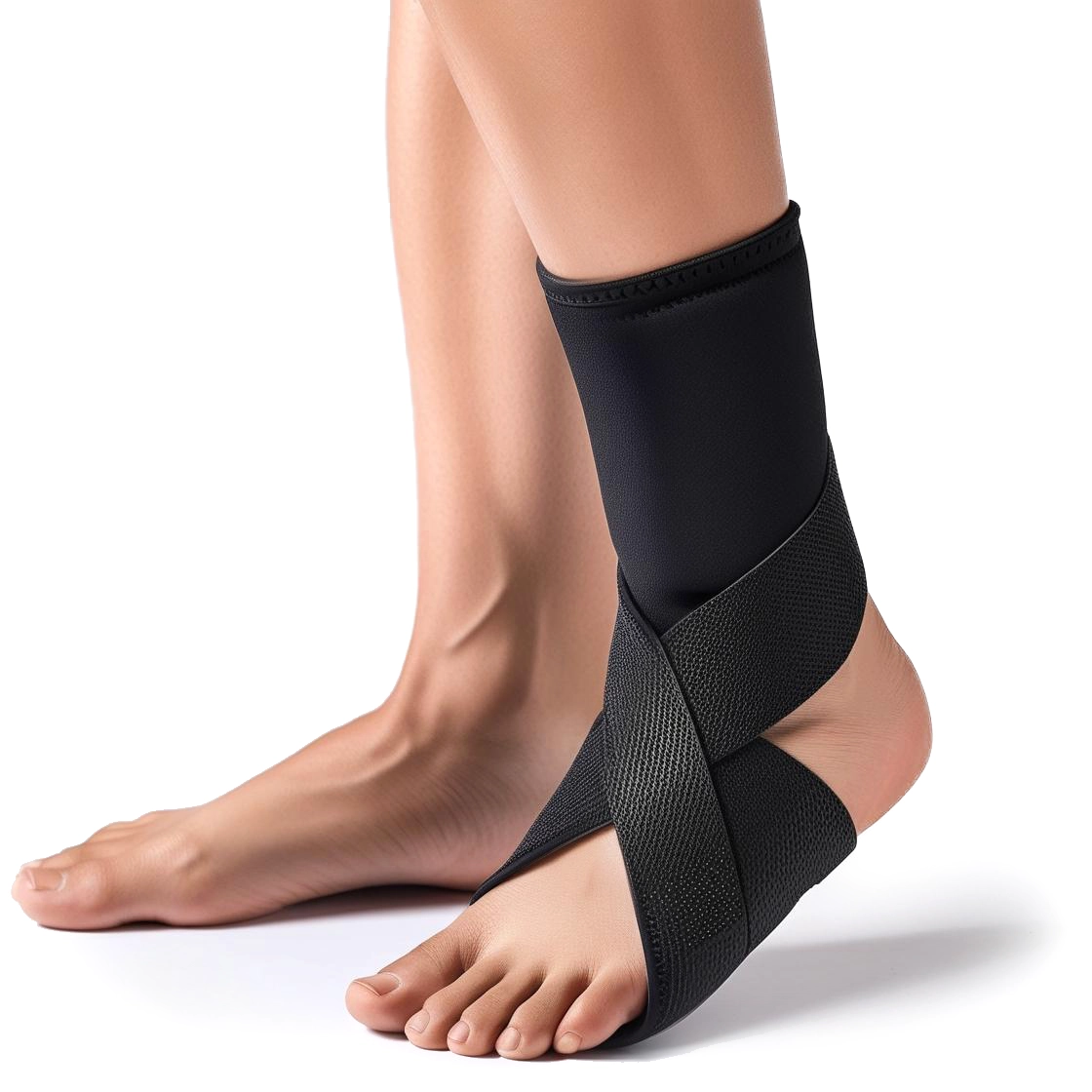
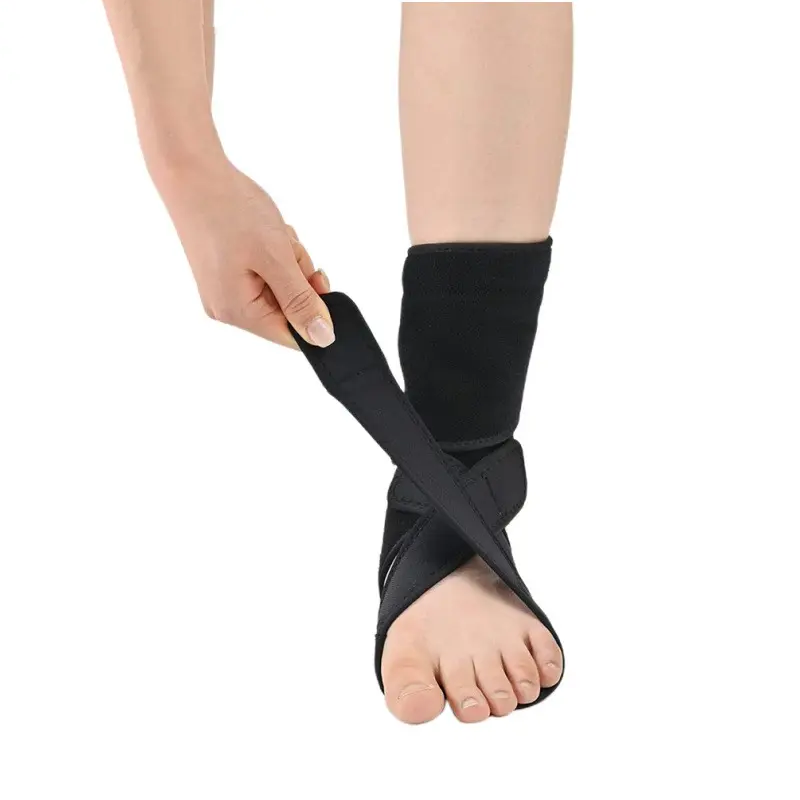
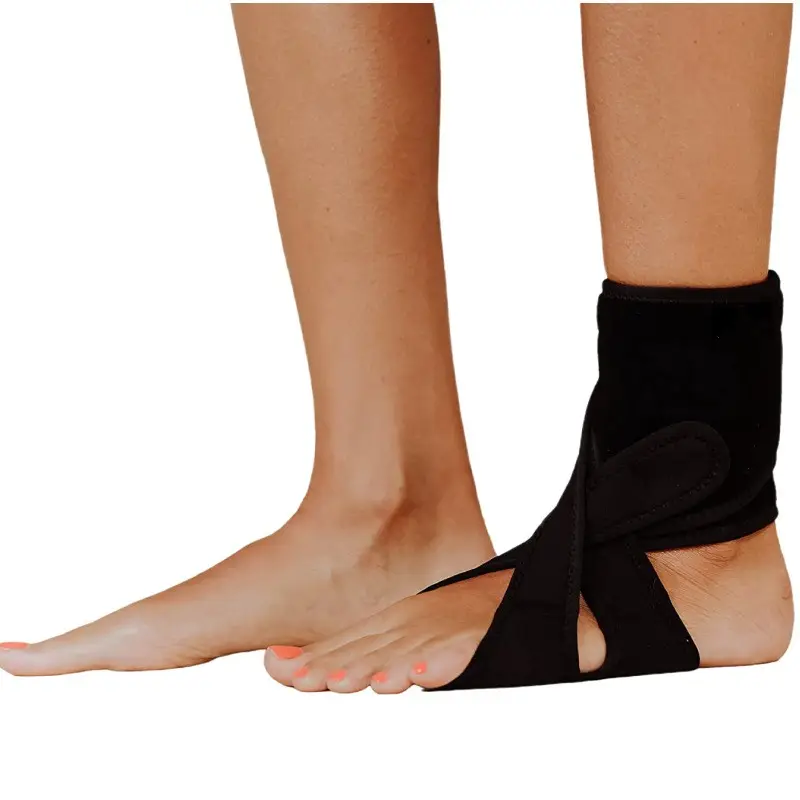
Straps start near the arch on each side of the foot and cross over the top in an “X” before fastening to the ankle section. This route holds the foot firmly on the semi‑rigid footplate and adds a gentle upward pull on the front of the foot towards the lower leg. That extra lift is particularly helpful in drop foot, where the front of the foot tends to drop too far or too soon. - Comfortable, breathable materials for longer wear
Soft, breathable fabrics and carefully placed cushioning help reduce rubbing, sweat build‑up and irritation. Shock‑absorbing elements cushion small impacts as the foot lands and rolls forwards. The materials are chosen so you can wear the brace for longer when you need to, without being bothered by heat, dampness or pressure points. - Slim profile that can be worn in many everyday shoes
The low‑bulk design is intended so the brace can often be worn inside supportive trainers or other closed‑in footwear. The plate is thin enough to sit inside the shoe without taking up all the space, and the upper sections avoid large protruding parts. In practice, many people can use the brace with footwear they already own, rather than needing specialist shoes. - Versatile day‑and‑night support
FootReviver’s brace can be worn with or without shoes, depending on what you need and on the guidance you’ve been given. Many people use it during the day for walking and standing, and some may also wear it indoors or at night if recommended, to help keep the foot in a better position while resting. - Gentle compression to support comfort and control
A snug, supportive fit applies light, even pressure around the ankle and lower leg. This can help the area feel more stable and supported, and can ease the sense of heaviness that sometimes comes with weakness or mild swelling. - 30‑day money‑back guarantee for reassurance
The brace comes with a 30‑day money‑back guarantee, so you can try it at home with your usual footwear and routine. If it does not feel right for you, it can be returned within that period for a refund. This gives you time to see how it feels in everyday life.
Are you having trouble lifting the front of your foot, leading to stumbles or near‑misses? Do you notice your toes dragging on carpets or uneven ground unless you concentrate on every step? Have you started lifting your knee higher than normal just to stop your foot catching? These are all common signs of drop foot.
Drop foot can make walking feel like a constant calculation – how high to lift the leg, whether the toes will clear a small step, whether a change in surface will catch you out. But understanding what is actually happening when your foot drops, and why supporting the foot and ankle can help, is the first step towards choosing the right brace. Here’s a closer look at what drop foot is and how a well‑designed support can make a real difference.
What is drop foot and why does it happen?
Drop foot, sometimes called foot drop, is a term you may not have heard before, but the experience is often very familiar. It describes difficulty lifting the front part of the foot, so the toes don’t clear the ground as they should. To understand why this happens and what can be done, it helps to look at how the foot and ankle are meant to work together as you walk.
Why a drop foot brace helps
A brace, sometimes called an AFO, is a specialised support you wear around your lower leg and foot. It does two things at once. It holds your foot closer to a right angle with your lower leg, so the front of the foot is less likely to drop and catch the ground. It also supports your foot and ankle firmly from below and behind, so the foot doesn’t drop or wobble as you move.
A drop foot brace works with your walking rather than against it. It keeps the toes from dropping too far as the leg swings forward, so they’re less likely to scrape the ground. Then, as you land, it helps you put weight through your heel gradually, so the whole foot doesn’t crash down at once. And as you roll through the step, it supports the arch and the front of the foot to help the foot move forward smoothly. So the brace isn’t just holding your foot still – it’s guiding each stage of the step into a safer rhythm.
The benefit isn’t that it cures the underlying nerve or muscle problem – it doesn’t. Instead, it changes the way you walk. The toes are less likely to catch, you don’t need to lift your knee or hip as high, and each step can feel more predictable. For many people, that reduces the fear of tripping and makes it possible to stay active with more confidence.
A brace is rarely the only thing you need. It works best when combined with a wider plan. That might include specific exercises from a physiotherapist to strengthen the muscles that lift the foot, supportive footwear with a stable heel and enough room for your toes, and sometimes insoles or orthotics that address the way your foot rolls. Your healthcare team can advise on the right mix. But for the daily task of avoiding toe drag and staying steady, a well‑designed brace can be one of the most practical tools available.
How the FootReviver brace is designed to help
FootReviver’s drop foot brace has been developed with input from specialists in foot health and how the body moves. Rather than simply wrapping the ankle, it combines a firm but flexible plate under the foot, support at the back of the ankle and lower leg, and straps that cross over your foot in an X to help control the foot through each step.
Control: how it holds the foot through a step
The key part of the FootReviver brace is a firm but flexible plate that sits under roughly three‑quarters of your foot. It’s firm enough to provide real support, but not so rigid that it feels like standing on a hard block. By supporting your heel, arch and most of the front part of your foot, the plate helps stop pressure from concentrating in one spot as your foot lands and rolls forward. For someone with drop foot, this makes an immediate difference. Instead of the front of your foot dropping suddenly when it hits the ground, the plate keeps your foot from tipping or collapsing, so it can roll forward more smoothly. Because the plate is firm but flexible, it resists the downward movement of the ball of the foot, so that area doesn’t take the full shock of a sudden slap when the foot drops faster than intended.
Working alongside the plate is a support at the back of the ankle and lower leg. Its job is to limit how far and how quickly your foot can point downwards in relation to your shin. It doesn’t lock the ankle – you still have natural movement – but it limits the extremes, particularly that uncontrolled “flop” that leads to toe drag. The support sits over the Achilles tendon and lower calf, where it stops the foot from pointing down too far. So when your leg is swinging forward, the foot can’t drop as far, and your toes are already in a better position to clear the ground. Together, the plate below and the support behind hold the foot in a safer position for longer through each step.
The final piece is a pair of straps that cross over your foot in an X. The straps start near the arch on each side of your foot, wrap up over the top, and secure onto the ankle section of the brace. They do two important jobs. First, they hold your foot firmly down onto the plate, stopping it from sliding or twisting as your leg swings through. That firm contact also lets the plate do its job of spreading pressure; if your foot lifts off the plate, the support is lost. Second, the angle of the straps creates a gentle upward pull on the front of your foot towards your shin – giving extra help to the movement that normally lifts the toes in walking. This works in a similar way to the muscle that runs down the front of your shin. The straps don’t replace that muscle, but they assist it, so it doesn’t have to work as hard through each step. By changing where the strap ends attach around the ankle, you can alter both the tension and the angle of that lift.
Comfort: what it feels like to wear
A brace is only useful if you actually wear it, so comfort matters as much as support. The FootReviver brace is slim and lightweight, without the heavy, rigid feel that puts many people off traditional designs. The materials are breathable and soft against your skin, so you’re less likely to get hot or irritated during longer wear. Padding sits around bony areas – the top of the foot and the front of the ankle – while the brace still fits close enough to be effective. Cushioning in the sole absorbs some of the impact from each step, which is especially helpful if you tend to land heavily because your foot drops unexpectedly. That can make a real difference on harder surfaces like pavements and tiled floors.
The brace is adjustable. The straps around your foot and ankle let you set how snugly it fits, how much upward lift you feel at the front, and how firmly your ankle is held. The lower‑leg section can also be adjusted so it sits comfortably without digging in. That’s useful if your leg swells a little later in the day. The brace also provides gentle compression around the ankle and lower leg, which many people find gives a feeling of steadiness and helps the area feel less heavy or unsteady. To be clear, this isn’t a medical‑grade compression garment – it’s a snug, supportive fit rather than a tight therapeutic wrap.
The look is discreet, too. The brace sits close to the leg without large, obvious outer sections, so under looser trousers it’s often barely noticeable. That can make it much easier to wear out of the house without feeling that the brace is the first thing people notice.
Everyday practicality: fitting into your routine
For support to be useful, it has to fit around your everyday routine. The FootReviver brace has a slim design that can often be worn inside everyday supportive shoes. The footplate is thin enough to fit inside a trainer or other ordinary shoes without taking up all the available space, and the upper parts are shaped to avoid sharp edges that press against the shoe. You don’t necessarily need special wide or orthopaedic shoes.
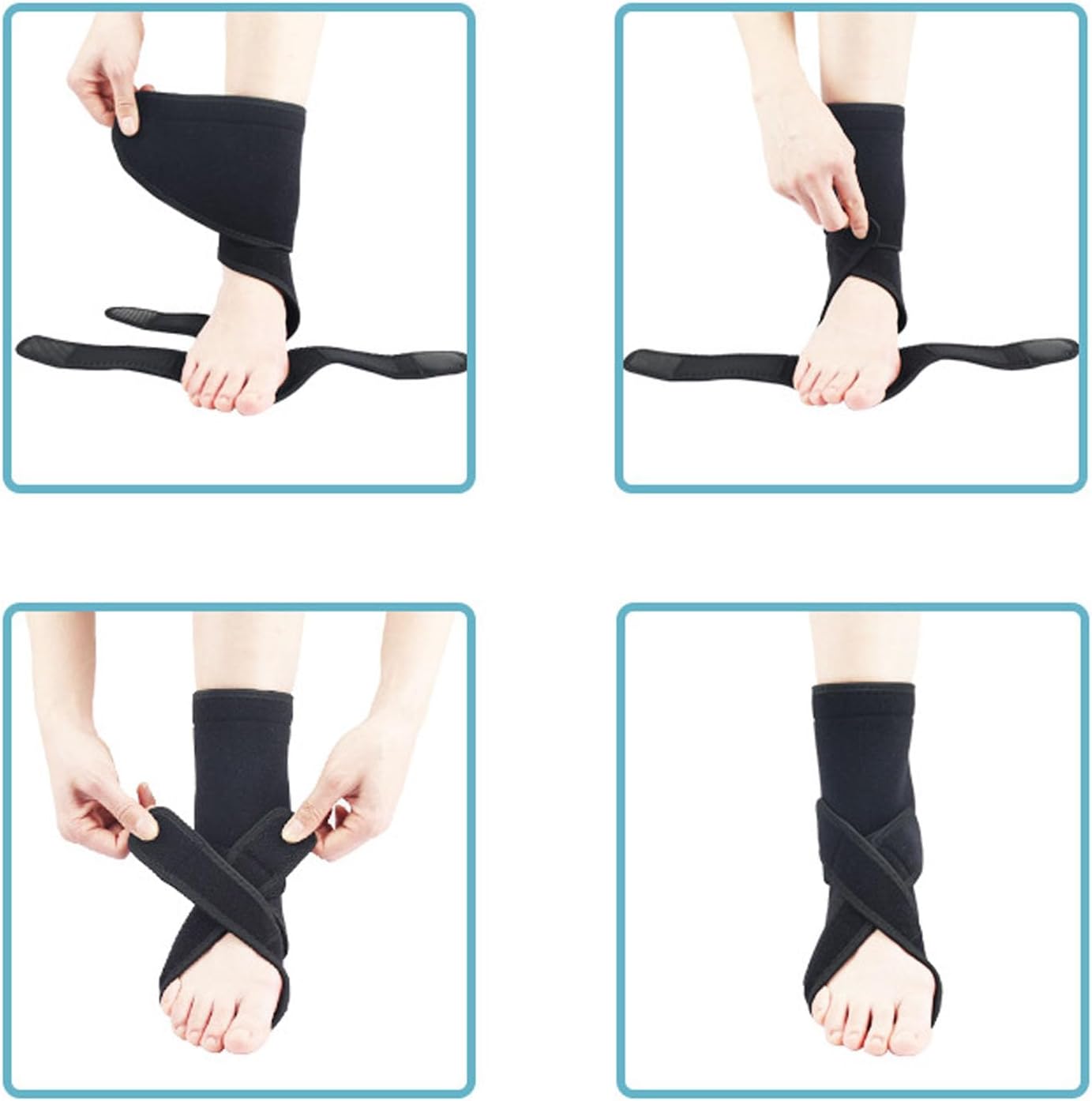
It’s also designed to be straightforward to put on and take off. The opening lets you place your foot onto the plate without awkward manoeuvres, and the strap layout follows a simple pattern so the sequence is easy to learn. Adjusting the straps doesn’t require a lot of force, which is helpful if you have reduced hand strength or need help from someone else.
The materials are chosen to stand up to regular, everyday use. The plate holds its shape rather than flattening quickly, and the straps and fastenings are made to resist fraying and keep their grip with regular wear. You can use the brace during the day when you’re walking, or at night if a clinician has advised keeping your foot in a better resting position – whatever suits your routine and your treatment plan.
Using the brace and what to expect
When you first use the FootReviver brace, give yourself a little time to get used to the feeling. Put it on over a thin sock or directly against the skin, depending on your preference and the advice you’ve been given. Slide your foot onto the footplate so your heel sits comfortably, then bring the straps over the top of your foot in their X shape and adjust them until the brace feels snug but not tight. There shouldn’t be any painful pressure points, and your toes should have enough room to move.
First wears: Expect it to feel unusual for the first 20 to 30 minutes. That’s normal – your foot and leg are not used to being held in a different position. Start by wearing it for short periods at home, doing simple activities like making a cup of tea or walking from room to room, before relying on it for a longer outdoor walk. This gives your skin, muscles and balance time to adapt.
Getting the fit right: The brace should feel firm but not painful. If you feel any sharp pressure points, stop and re‑adjust the straps. The tension should be enough to hold your foot securely onto the plate, but not so tight that it cuts off your circulation or leaves deep marks. It’s worth checking the fit again after about ten minutes of walking, because the shape of your foot changes slightly as it takes your weight, and you may need to loosen or tighten the straps a little.
What to expect over the first few weeks: Some improvements can happen quickly. Toe drag may reduce from the first wear, because the brace is physically holding your toes up. But the way you walk is a habit. If you’ve been lifting your knee higher for months or years to clear the foot, your body has become used to that movement, and unlearning it takes time. The brace makes it possible to walk more normally – it doesn’t instantly make walking feel normal. Be patient with yourself. Many people notice the biggest change not in the first few steps, but in how much less tired their leg feels by the end of the day. That’s because the brace is doing some of the work that your weakened muscles would otherwise have to do, so they aren’t working as hard or as often during a walk.
When to wear it: Wear the brace inside supportive, ordinary shoes when you’re up and about. The aim is to help you clear your toes more easily during a step, so you’ll likely notice the biggest difference on surfaces where you used to catch your toes – carpet edges, thresholds, uneven paths. Some people wear it every day, all day. Others only need it when they’re going to be on their feet for a long time or walking on trickier ground. If a clinician has also advised using it at night to keep your foot in a better resting position, follow that guidance as well. There’s no single rule – it depends on your situation.
What it won’t do: A brace reduces toe drag and gives your foot more control, but it does not restore full strength to weakened muscles or reverse the underlying cause. If you’re also doing exercises with a physiotherapist, keep going – the brace works alongside your wider plan, not instead of it. The two work together: the brace helps you walk more safely today, while the exercises aim to improve your strength and control over time.
Safety and when to seek help
Drop foot is a symptom with many possible causes, and a brace is only one part of managing it. Before using any brace, it’s sensible to have your situation assessed by a GP, physiotherapist or podiatrist. They can identify what’s driving the weakness and advise whether a brace is appropriate for you.
A check‑up for suspected drop foot usually starts with a chat about your symptoms and a physical check. The clinician will often watch you walk, looking for toe drag, how high you lift your knee and hip, and how your foot lands. They may test the strength of the muscles that lift the foot and toes, check feeling along the leg and foot, and examine joint movement and stability. In some cases, further tests may be arranged, such as electrical tests that measure how quickly signals travel along nerves or how muscles respond to stimulation. You may be offered a scan if there’s concern about compression or injury in the spine, leg or around the knee. The aim is not just to confirm that drop foot is present, but to understand what’s causing it so you get the right plan.
While you’re wearing the brace, always take extra care on stairs, steps, kerbs and uneven or slippery surfaces. The brace may reduce toe drag, but it does not remove the risk of trips and falls. Hold on to handrails where available, take your time, and avoid rushing.
If you notice any of the following, remove the brace and speak to a healthcare professional:
- Increased pain anywhere in the leg or foot
- New or worsening numbness, tingling or burning sensations
- Changes in the colour of your foot or toes
- Skin irritation, rubbing, or pressure marks that don’t settle within a day or two
Do not use the brace over broken skin, signs of infection or significant swelling without medical advice. If your symptoms are new, getting suddenly worse, or accompanied by back or hip pain, it’s worth checking with a GP or physiotherapist sooner rather than later. A well‑fitted brace should not cause a significant increase in pain. If it does, something isn’t right.
Conclusion and next step
Drop foot can turn simple walking into a constant chore – but it doesn’t have to feel that way. By supporting the foot and ankle, the FootReviver brace is designed to reduce toe drag, steady each step and take some of the effort out of walking. It’s a practical, lightweight option that fits into everyday shoes and daily routines, giving you more confidence to keep moving.
If you’ve been advised that a brace is suitable for you, and you recognise the signs described on this page, the FootReviver drop foot brace is worth trying. It comes with a 30‑day money‑back guarantee, so you can wear it around the house, test it with your usual footwear, and see for yourself whether it helps before deciding if it’s right for you.
Fast & Secure Checkout Through Paypal
Pay with Paypal the secure payment gateway that accepts all credit and debit cards. Paypal is free and secure and no credit or bank information is ever stored or shared with us.
Fast Dispatch
Enjoy your items soon with quick dispatch via Royal Mail. Expect to have your items between 1-3 working days for domestic orders. 7-10 Working days for international orders.
Return Policy – 30 Day Money Back Guarantee
In the unlikely event, you are unhappy with your purchase you can return it within 30 days for a refund. Please contact us via the form on the contact us page to start your return.
To return an item please send it to: Nuova Health UK, 81 Highfield Lane, Waverley, Rotherham, S60 8AL. Please include a note with your order id so we know who to refund. Please retain your postage receipt as proof of postage. All that we ask is that the item is in the original packaging and unused.
Reviews
There are no reviews yet.