That stabbing heel pain when you get out of bed. The heaviness in your legs by mid-afternoon. The way you’re avoiding walks you used to enjoy because you know your feet won’t cope. If flat feet are limiting what you can do, you’re not imagining it—and you’re not stuck with it. Flat feet change how your entire body handles weight. Without that natural arch curve, your foot can’t absorb shock properly. Weight shifts inward, your ankle rolls excessively—a movement called overpronation—and the thick band of tissue running from heel to toes (the plantar fascia) stretches beyond what’s comfortable. Walk like this day after day, and the strain travels upward. Tendons overwork. Joints compensate. What starts as end-of-day tiredness becomes persistent heel pain, shin splints, or knee discomfort that limits how far you can walk or how long you can stand.
Your body adapts well at first, but that adaptation comes at a price. Calf and shin muscles work harder to stabilise what the arch should be managing. The Achilles tendon—the thick cord at the back of your ankle—twists slightly with each step. Your knees and hips adjust their angles to keep you upright, and those small shifts accumulate. You might notice uneven wear on the inside edges of your shoes, a dull ache in your arches after standing, or stiffness in your lower back that seems unrelated to your feet. Everything’s linked. Flat feet create a mechanical chain reaction, and tackling this early matters for long-term mobility and comfort.
When Arch Support Makes Sense
If you’re dealing with persistent arch or heel pain, fatigue that sets in quickly when you’re on your feet, or discomfort that travels up into your knees or lower back, proper arch support is your next move. Most pharmacy insoles just add padding—they feel softer underfoot for a few days, then flatten and stop helping. Gel insoles cushion the heel but don’t address the arch collapse that’s driving the problem. Flat feet need support that lifts and stabilises the arch, redistributes pressure more evenly across the sole, and helps your foot return to a more neutral position during movement.
This matters most if you spend long hours standing—healthcare workers on ward rounds, retail staff on shop floors, teachers moving between classrooms—or if you’re active and noticing that running or walking aggravates foot or leg pain. Consider this if you’ve already developed plantar fasciitis (inflammation of the thick band under the arch), overpronation-related shin splints (pain along the inner shin from repetitive impact stress), or early signs of joint strain in the knees or hips. FootReviver insoles work by restoring some of the arch’s natural function, which reduces the compensatory load on surrounding structures. They won’t cure flat feet, but they’re a practical tool that can make daily movement more comfortable and help prevent further strain.
Who FootReviver Insoles Are For
FootReviver insoles are designed for people who need more than cushioning—people whose flat feet are causing persistent pain, fatigue, or mobility limitations that affect daily life. If you’ve tried pharmacy insoles and found they don’t help beyond the first week, or if you’re noticing that pain in your feet is now affecting your knees, hips, or lower back, structured arch support is the practical next step.
These work particularly well for healthcare workers, retail staff, teachers, or anyone spending long hours on their feet where fatigue and discomfort build throughout the day. They’re also suited to runners and walkers dealing with overpronation-related injuries—shin splints, plantar fasciitis, or knee pain that worsens with mileage. If you’re an older adult noticing that standing or walking has become more uncomfortable as arches have weakened over time, or if you’re dealing with early-stage arthritis in your feet or ankles, the combination of structured support and impact absorption can help you maintain mobility and independence.
FootReviver sits between basic pharmacy insoles (which compress quickly and offer minimal support) and custom orthotics (which require professional fitting and can cost hundreds of pounds). If you need more support than a gel insert provides but aren’t ready for—or don’t need—custom orthotics, FootReviver offers structured, durable arch support at a fraction of the cost.
FootReviver insoles are built around a structured support system that targets the specific mechanical challenges flat feet create. Instead of just cushioning, the design focuses on structural support, impact management, and stability—three things working together to improve alignment and reduce strain. The combination of a firm shell, contoured foam, and reinforced heel cup is why physiotherapists often recommend these over pharmacy gel insoles—gel cushions the heel but doesn’t address the arch collapse that’s driving the problem.
Structural Support and Stability
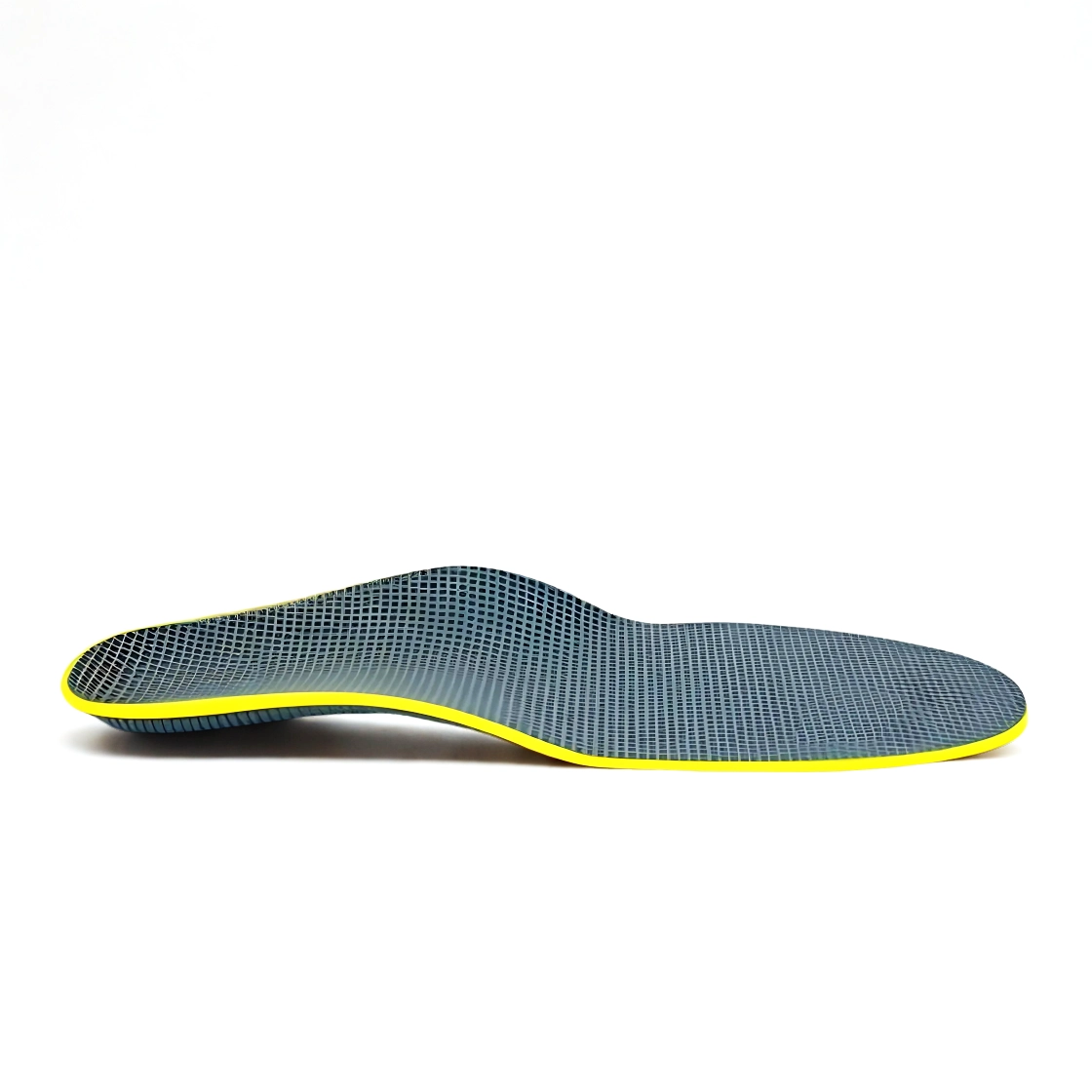
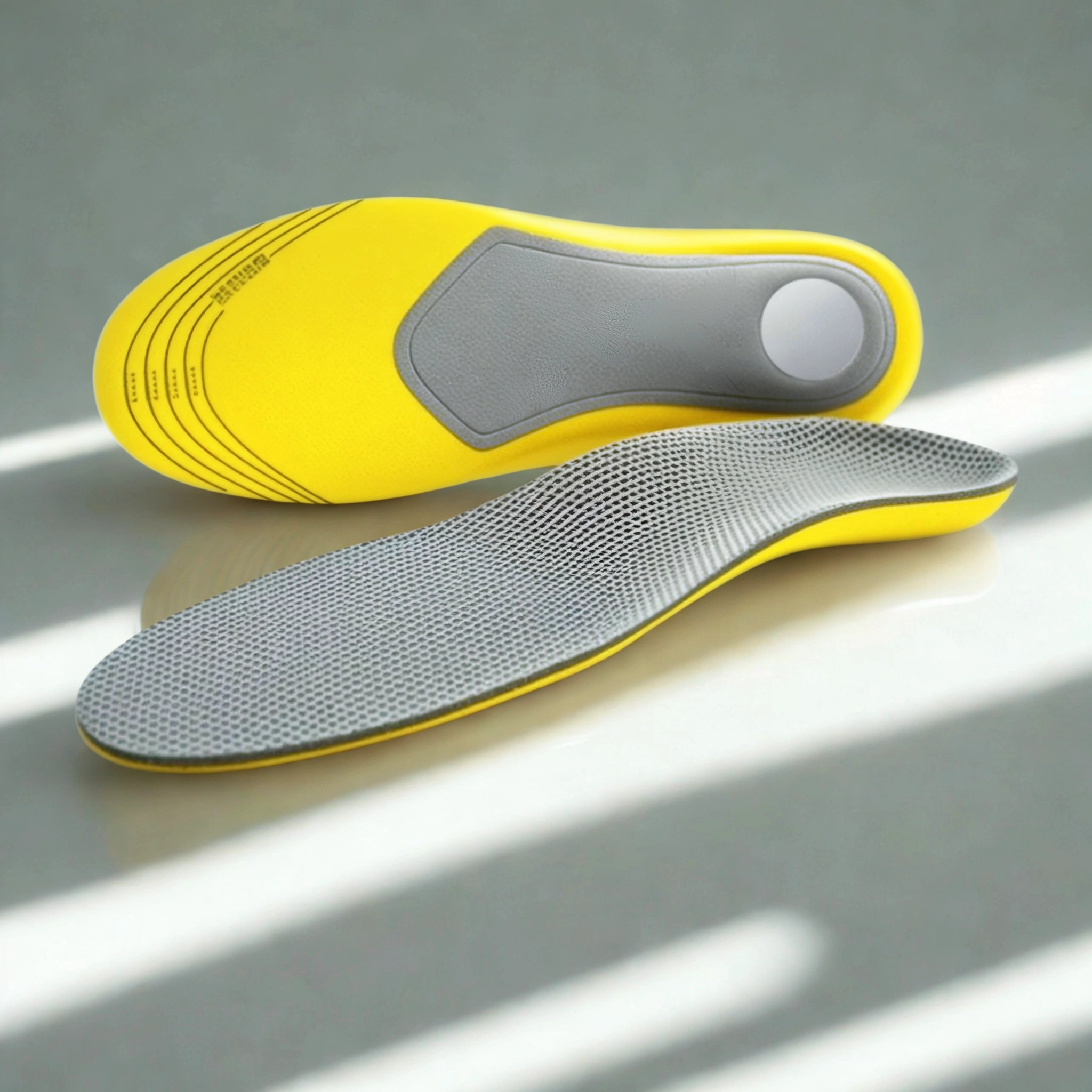
At the core sits a firm 3/4-length shell running from heel through arch, stopping before the forefoot. Unlike full-length rigid orthotics that restrict natural toe movement, or flimsy gel insoles that flatten within weeks, this design balances structured support where you need it with flexibility where you don’t. The shell gives the base structure needed to support collapsed arches without making the entire insole rigid. A foam layer sits on top—flat across most of the insole, but moulded around the arch and heel to cradle these high-stress areas.
The contoured arch support lifts the midfoot and helps your foot sit straighter. It’s not a hard, uncomfortable shove—it’s shaped support that spreads weight across the entire sole rather than concentrating pressure on the heel and ball of the foot. Lift the arch, and the plantar fascia doesn’t pull tight with every step. This cuts down the constant strain that leads to micro-tears and inflammation, especially where it attaches to your heel—the spot where plantar fasciitis pain is often worst. If you’re on your feet all day, this can be the difference between ending your shift tired but okay and finishing with stabbing heel pain that makes even getting to your car painful.
The foam around the arch is firmer where you need support, but softer at the edges for comfort. This keeps your foot’s natural curve during movement, cutting down the inward roll that flat feet tend to do. When your foot rolls in too far (overpronation), your ankle tilts inward, your knee twists inward to match, and your hip tilts your pelvis to balance. Walk like this repeatedly, and you strain the muscles and ligaments that stabilise these joints. By supporting the arch and discouraging overpronation, the insole helps keep your ankle, knee, and hip in better alignment, which reduces the compensatory stress travelling up through your leg.
A deep, reinforced heel cup locks the back of your foot in place, with slight perimeter reinforcement around the heel and arch that prevents excessive side-to-side movement and helps stabilise the ankle joint. The edge of the cup is rounded and kept at a height designed to support the heel without digging into the ankle bones or rubbing the sides. This is useful during activities that involve quick direction changes or uneven surfaces, where ankle instability increases the risk of sprains. Proper heel alignment also supports the Achilles tendon, reducing the twisting and stretching that flat feet can cause.
Beneath the heel cup sits a cushioned heel pad that absorbs impact during heel strike—the moment your heel hits the ground—and protects the attachment point where the plantar fascia anchors to the heel bone. This pad cradles the natural fat pad under your heel, holding it in place so it can do its job of cushioning the heel bone. When you walk, your heel strikes the ground first, and without adequate cushioning, that impact travels directly into the plantar fascia attachment and the heel bone itself, aggravating inflammation and contributing to plantar fasciitis and heel spurs. The heel pad absorbs a portion of that impact, reducing the jarring sensation and helping inflamed tissues cope better throughout the day.
An anti-slip base keeps your foot steady inside the shoe, eliminating the friction and slippage that can lead to blisters or hot spots. Whether you’re walking all day or going for a run, stable contact between foot and insole improves comfort and control.
Walking and standing generate repetitive impact, and flat feet absorb that force less efficiently than feet with a healthy arch. FootReviver includes a two-layer cushioning system—a softer upper layer that moulds slightly to the contours of your foot for immediate comfort, and a firmer layer underneath that absorbs and disperses impact as your heel and forefoot meet the ground. Together, they cushion every step, especially on hard floors and pavements. When you’re standing in a queue, waiting at a bus stop, or spending a long shift on a hard floor, each small impact adds up. Without adequate shock absorption, the plantar fascia, Achilles tendon, and the small joints in the midfoot are repeatedly jarred, which accelerates inflammation and tissue fatigue. The cushioning system absorbs a portion of that impact, reducing the cumulative load on these structures and helping them cope better throughout the day.
The forefoot area—where the firm shell ends—is softer and more flexible, allowing natural movement during push-off (the moment your toes leave the ground as you step forward). The foam in this area adapts and compresses as you walk, gently adjusting to the natural spread of the metatarsal heads—the bony prominences at the ball of your foot. This helps share pressure more evenly across the front of your foot, which can be helpful if there’s tenderness or soreness under the ball of your foot.
Breathability and Durability
The top cover is made from a breathable material with small perforations to help move moisture away from the skin. An active carbon layer helps reduce odour and keep shoes fresher, which also lowers the risk of rubbing from damp socks or hot spots.
The firm shell under the arch and heel is made from a durable material that resists compression—the kind of material used in clinical-grade orthotics—so the support you feel on day one is still there after months of standing and walking on hard surfaces. Cheaper foam insoles flatten within weeks and stop providing meaningful support; FootReviver’s structured design is built to last. The arch support and heel cup maintain their shape through regular use, which means the alignment correction and pressure redistribution remain consistent over time.
Each insole has a guideline printed on the underside for trimming to size. By using the original insole from your shoe as a template, you can cut the new insole to match the length and forefoot shape needed. The design works with typical UK closed-toe footwear—from work shoes and safety boots to trainers—once the factory insole is removed.
The balance of structure and cushioning makes these insoles suitable for everyday walking, long shifts on your feet, and many forms of light to moderate exercise. They’re not specialist racing orthotics, but for most day-to-day and recreational activities they provide the consistent support that many people find helps reduce fatigue and discomfort over time.
Conditions These Insoles May Help Manage
FootReviver insoles are designed primarily for flat feet, but the structural support and alignment correction they provide can be relevant across a range of related conditions. The accordion below explores how arch support and stability affect specific problems. Each section explains what’s happening in your body, why flat feet often make it worse, and how insoles can help address the underlying mechanics.
Flat Feet
What Happens When Arches Collapse
Flat feet—clinically termed pes planus—occur when the medial longitudinal arch (the curve along the inner edge of your foot) sits low or collapses entirely, allowing most or all of the sole to contact the ground. Some people are born with flat arches; others develop them as tendons weaken, weight increases, or repetitive stress takes its toll. There’s a tendon running along the inside of your ankle—the posterior tibial tendon—that helps support the arch. When it stretches or degenerates, the arch loses its scaffolding and flattens further.
Without that natural curve, your foot can’t absorb shock efficiently. The plantar fascia stretches excessively with each step. Your ankle tends to roll inward, which throws off alignment all the way up your leg. Knees rotate slightly inward, hips compensate, and your lower back adjusts to keep your body balanced. Muscles in your calves and shins work overtime to stabilise what the arch should be managing, leading to fatigue, cramping, and eventually pain.
You might feel a dull ache along the inside of your ankle or under the arch itself, especially after you’ve been standing for a while. Some people notice swelling around the ankle by the end of the day, or find it difficult to stand on tiptoes. Shoes may wear unevenly on the inner edges. The discomfort often builds gradually rather than striking suddenly—your feet feel heavy and tired after what used to be manageable amounts of walking or standing, and that tiredness doesn’t fully lift even after you’ve rested.
How FootReviver Restores Arch Function
FootReviver’s contoured support lifts the midfoot and redistributes pressure evenly, reducing the excessive stretch on the plantar fascia and taking strain off the posterior tibial tendon. The heel cup stabilises your ankle, discouraging overpronation and realigning the connected system of joints and muscles from foot to spine. If you stand for long periods at work, this means finishing the day with less aching in your arches and calves. Over weeks of use, many people notice they can stand or walk longer before fatigue sets in—the kind of improvement that makes a real difference to daily life. Not a substitute for strengthening exercises (such as toe curls, arch lifts, or calf stretches), but a practical foundation that makes daily movement more comfortable and helps prevent further damage.
Overpronation
Why Your Foot Rolls Inward Excessively
Overpronation occurs when your foot rolls too far inward during the sequence of movements from heel strike to toe-off. A small amount of inward roll is normal and helps your foot absorb shock, but when it becomes excessive, it disrupts the natural distribution of force. The arch collapses with each step, the plantar fascia stretches beyond its comfortable range, and the tibialis posterior tendon (which runs along the inside of your shin and stabilises the arch) works overtime. Your ankle, knee, and hip rotate inward to compensate, and over time this misalignment can lead to a cascade of problems: arch pain, heel pain, shin splints, knee discomfort, and even lower back strain.
You might notice that your shoes wear down quickly on the inner edges, or feel a dull ache along the inside of your ankle or shin after walking or running. The discomfort often builds gradually—starting as mild fatigue that eases with rest, then progressing to persistent pain that limits how far you can walk or how long you can stand. Overpronation is particularly common in people with flat feet, but it can also develop due to weak hip or core muscles, tight calves, or footwear that lacks support.
How FootReviver Corrects Alignment
The structured support maintains a more neutral foot position throughout your walking cycle, taking pressure off the plantar fascia and tibialis posterior tendon. The arch support limits how far your foot can roll inward—it acts as a physical barrier that prevents the arch from collapsing fully, which keeps your ankle more upright and reduces the twisting forces on your knee and hip. The heel cup and slight perimeter reinforcement prevent excessive side-to-side movement at the rearfoot, which further stabilises your ankle. The cushioning absorbs impact, protecting joints from repetitive stress. This is why runners dealing with overpronation-related injuries often notice they can increase mileage without the shin or knee pain that previously stopped them. Most effective when paired with appropriate footwear (shoes with a firm heel counter and good torsional stability) and, where needed, hip and calf strengthening exercises.
High Arches
When Your Arch Sits Too High
High arches—pes cavus—create the opposite problem to flat feet, but the result is similar: uneven pressure distribution and reduced shock absorption. When the arch is excessively raised, your heel and ball of foot bear most of your body’s weight, with very little contact along the midfoot. This concentrates force on a smaller surface area, increasing stress on the plantar fascia, metatarsal bones (the long bones in your forefoot), and Achilles tendon. Over time, this can lead to plantar fasciitis, metatarsalgia (pain in the ball of your foot), hammertoes (where your toes curl under due to muscle imbalance), or frequent ankle sprains due to instability.
High arches are often congenital, but they can also develop due to neurological conditions, muscle imbalances, or injuries. You might notice calluses forming under the ball of your foot or heel—areas where pressure is concentrated—or feel sharp pain after walking or standing for a while. There’s often a tendency to roll outward (supinate) when walking or running, which places extra strain on the outer edge of your foot and the lateral ankle ligaments.
How FootReviver Redistributes Pressure
Though designed with flat feet in mind, FootReviver’s contoured structure can benefit high arches by providing a comfortable contact point for the midfoot that otherwise touches very little of the insole surface. Rather than lifting a collapsed arch, the support fills the gap beneath a high arch, which helps redistribute pressure away from the overloaded heel and forefoot. The forefoot cushioning becomes particularly important—it absorbs the concentrated impact on the metatarsal heads during push-off, spreading force more evenly across all five bones rather than allowing it to concentrate on one or two. The heel cup stabilises the rearfoot and can help reduce the outward roll that high arches are prone to. If you have high arches, check that the arch height feels supportive rather than intrusive—everyone’s foot shape is slightly different, and what works well for one person may need adjustment for another.
Supination (Underpronation)
When Your Foot Rolls Outward
Supination—also called underpronation—happens when your foot rolls outward during movement, placing excessive weight on the outer edge. While some outward roll is part of normal walking, too much supination reduces your foot’s ability to absorb shock and can strain the muscles, tendons, and ligaments along the outside of your foot and ankle. The plantar fascia, Achilles tendon, and lateral ankle ligaments (the bands that stabilise the outer ankle) all come under increased stress, and over time this can lead to heel pain, ankle instability, stress fractures, or chronic inflammation.
Interestingly, people with flat feet can sometimes develop compensatory supination—your body’s attempt to stabilise a collapsed arch by shifting weight outward. You might feel sharp or aching pain along the outer foot or ankle, particularly after walking or running on uneven ground, or notice swelling along the Achilles tendon. Calluses often form on the outer edge of the sole where pressure is concentrated.
How FootReviver Restores Balance
For people with flat feet who supinate as compensation, restoring arch support is key—lifting the collapsed arch reduces the need for your body to shift weight outward. FootReviver’s contoured design cradles the midfoot, redistributes pressure more evenly, and cushions the heel to protect the Achilles tendon. When the arch is supported, your foot no longer has to rely on the outer edge for stability, which reduces the strain on the lateral ankle ligaments and the outer muscles of your foot and calf. Proper arch support allows your foot to roll inward normally (a small, controlled inward roll that absorbs shock), which means it doesn’t have to overcorrect by rolling excessively outward. By realigning your ankle and improving shock absorption, the insoles help reduce strain on lateral structures and prevent compensatory patterns that lead to chronic pain. If supination is your primary concern, ensure the arch support feels comfortable rather than intrusive, and consider pairing with ankle and hip strengthening exercises to improve overall stability.
Plantar Fasciitis
When Those First Steps Hurt Most
The hallmark of plantar fasciitis is sharp, stabbing heel pain with the first few steps in the morning or after sitting for a while. The plantar fascia stiffens when you rest, and that initial stretch as you stand triggers the pain. It may ease as you move around and the tissue warms up, but it often returns after prolonged standing, walking, or exercise. Some people also feel a dull ache along the arch. This pattern—worst after rest, easing with movement, returning with activity—reflects the underlying inflammation and micro-tearing at the heel attachment point where the fascia anchors to the heel bone.
Why Flat Feet Make It Worse
In flat feet, the fascia is overstretched from the start—the distance between heel and toes is effectively longer because the arch has collapsed—so it never gets a chance to work within its comfortable range. It’s constantly under tension, which accelerates wear and tear at the weakest point: where it attaches to your heel bone. Overpronation further misaligns your foot, increasing tension along the inside edge of the fascia and the heel attachment point. Each step compounds the problem—the fascia stretches, tiny fibres tear, inflammation develops, and the tissue tries to repair itself overnight. When you stand in the morning, that newly repaired (but still fragile) tissue is stretched again, causing the sharp pain that’s characteristic of plantar fasciitis.
How FootReviver Targets the Root Cause
By lifting the midfoot, the arch support effectively shortens the distance between heel and toes, which reduces the tension on the fascia and allows inflamed tissue to settle. The fascia doesn’t have to stretch as far with each step, which reduces the repetitive micro-trauma at the heel attachment and gives the tissue a chance to heal. The heel cup and cushioned heel pad work together to protect the attachment point—the cup stabilises your heel and prevents excessive movement that would further irritate the fascia, while the pad absorbs the impact at heel strike that would otherwise travel directly into the inflamed area. If you stand for long periods at work, this combination can be the difference between finishing the day with manageable discomfort and ending the shift with sharp heel pain that makes even walking to your car difficult. Many people notice the morning pain becomes less severe within the first few weeks—not gone entirely, but noticeably better. Most effective when paired with calf stretching (tight calves pull on the Achilles tendon, which in turn increases tension on the plantar fascia) and gradual return to activity. If symptoms persist despite these measures, speak to a physiotherapist or podiatrist.
Heel Spurs
When Calcium Builds Up at Your Heel
Heel spurs are small, bony growths that develop on the underside of the heel bone, usually where the plantar fascia attaches. They form gradually in response to repeated stress and inflammation—essentially, your body deposits calcium as part of an attempted repair process. Not everyone with a heel spur experiences pain (some people have them without knowing), but when symptoms do occur, they typically feel like a sharp, stabbing sensation in your heel, especially with the first steps in the morning or after sitting for a while.
Why Flat Feet Drive Spur Formation
Heel spurs are closely linked to plantar fasciitis, and flat feet are a major contributing factor. Over months or years, the constant pulling of the overstretched fascia triggers an inflammatory response at the attachment site. Your body attempts to stabilise the area by laying down calcium deposits—a process called calcification. The spur itself is often not the direct source of pain—it’s the inflamed soft tissues around it (the fascia, the fat pad under your heel, the small nerves that run through the area) that cause the sharp, stabbing sensation you feel when you stand or walk. The Achilles tendon can also become tight and contribute to the problem, especially in people with flat feet who overpronate. When the Achilles is tight, it pulls the heel bone upward and backward, which increases the tension on the plantar fascia at the front of your heel, accelerating the inflammatory process that leads to spur formation.
How FootReviver Reduces Tension and Protects Your Heel
By lifting the midfoot, the arch support effectively shortens the distance between heel and toes, which reduces the pull on the fascia at its attachment point and allows inflamed tissues to settle. This addresses the root cause of spur formation—the chronic tension that triggers calcification. The cushioned heel pad beneath the heel cup provides targeted protection for the spur and surrounding tissues—it absorbs the impact at heel strike that would otherwise travel directly into the inflamed area, reducing the jarring sensation and helping inflamed tissues cope better throughout the day. The heel cup stabilises the rearfoot and reduces overpronation, which further reduces the uneven tension on the fascia. Not a cure for existing spurs (once formed, the calcium deposit remains unless surgically removed), but can significantly reduce pain and help prevent further damage, especially when combined with calf and fascia stretching.
Metatarsalgia (Ball-of-Foot Pain)
When Weight Shifts Forward
Metatarsalgia is pain and inflammation in the ball of your foot, specifically around the metatarsal heads—the bony prominences where the long bones of the midfoot meet your toes. This area absorbs significant pressure during walking and running, and when that pressure becomes excessive or unevenly distributed, the result is a sharp, burning, or aching discomfort that worsens with activity. It often feels like standing on a pebble or a fold in your sock. You might notice numbness or tingling in your toes, especially if a nerve is being compressed—a condition called Morton’s neuroma can develop when the nerve running between the metatarsal heads becomes irritated and thickened.
Why Flat Feet Overload Your Forefoot
Instead of spreading load smoothly from heel to midfoot to forefoot, flat feet concentrate pressure on two areas: your heel and the ball of your foot. The midfoot—where the arch should be—barely touches the ground, so it contributes almost nothing to load-bearing. Your metatarsal heads absorb far more force than they’re designed for. The second and third metatarsals (the middle bones in your forefoot) are particularly vulnerable because they’re longer and more exposed when the arch is absent. Overpronation makes it worse—as your foot rolls inward, the first metatarsal (under your big toe) lifts slightly, shifting even more load onto the second and third. Over time, this repetitive overload inflames the soft tissues around the metatarsal heads, irritates the nerves running between them, and can lead to Morton’s neuroma.
How FootReviver Redistributes Pressure
By restoring the midfoot’s load-bearing role, the arch support reduces the forward shift of pressure. When the arch is lifted, the midfoot makes proper contact with the ground again, which means your metatarsal heads no longer have to absorb the entire forefoot load on their own. You’re not just cushioning the painful area—you’re addressing why it’s overloaded in the first place. The forefoot cushioning then fine-tunes this—the softer foam compresses and adapts to the natural spread of the metatarsal heads during push-off, distributing force more evenly across all five bones rather than concentrating it on one or two. If you walk on hard pavements regularly, this combination reduces the burning sensation that builds up in the ball of your foot after prolonged walking, and helps prevent the nerve irritation that leads to Morton’s neuroma.
Achilles Tendinitis
When the Heel Cord Becomes Inflamed
Achilles tendinitis is an overuse injury affecting the thick band of tissue that connects your calf muscles to your heel bone. Pain typically starts as a mild ache just above your heel, worsening with activity. You might notice stiffness first thing in the morning or after sitting for a while—the tendon tightens when you rest, and that initial stretch as you stand or start walking can feel sharp or grabbing. Swelling or tenderness when touching the tendon are common.
Why Flat Feet Create Twisting Forces
The Achilles tendon is designed to pull your heel straight upward, like a vertical cable—your calf muscles contract, the tendon transmits that force to your heel bone, and you rise onto your toes or push off during walking. In flat feet, your heel tilts inward as the arch collapses, which means the tendon is forced to pull at an angle rather than straight up. This creates a twisting motion—the tendon rotates slightly with each step as it tries to accommodate the misaligned heel. The fibres of the tendon are designed to handle vertical loading, not rotational stress, so this twisting creates forces where the fibres slide against each other rather than pulling in unison—which accelerates micro-tearing and inflammation. Your calf muscles also pull unevenly, with the inner head working harder to compensate for the inward tilt, which further strains the tendon’s attachment to your heel bone.
How FootReviver Realigns Your Heel and Reduces Twisting
The arch support and heel cup work together to keep your heel upright during walking, which stops the tendon twisting. When the arch is lifted, your ankle stays more neutral, so the Achilles pulls in a straight line—the way it’s designed to work. You’re eliminating the rotational stress that causes the fibres to slide against each other. The cushioned heel pad is particularly important here—it absorbs the impact at heel strike that would otherwise travel directly up the Achilles tendon into your calf muscles. When you walk, your heel strikes the ground first, and that impact creates a sudden pulling force on the Achilles (as the tendon resists the forward momentum of your body). Without adequate cushioning, that repetitive jarring aggravates inflammation and slows healing. The heel pad absorbs a portion of that impact, reducing the cumulative load on the tendon and helping it cope better throughout the day. Most effective when combined with rest, calf and Achilles stretching (gentle stretches that lengthen the tendon and calf muscles without overstretching), and gradual return to activity. If heel pain persists, speak to a physiotherapist or podiatrist—chronic Achilles problems can become difficult to resolve if left untreated.
Ankle Instability
When Your Ankle Gives Way
Ankle instability is the recurring sensation that your ankle is about to give way, often accompanied by pain, swelling, or a feeling of looseness in the joint. It typically develops after repeated ankle sprains or due to structural weaknesses in your foot and ankle. You might notice that your ankle “rolls” unexpectedly when you step off a curb, walk across rough ground, or turn quickly, and that sensation of instability can make you hesitant to walk confidently or engage in activities you used to enjoy.
Why Flat Feet Destabilise Your Ankle
The posterior tibial tendon (which supports the arch), the deltoid ligament (on the inside of your ankle), and the talus bone (the main bone of your ankle joint) all work to stabilise your ankle. When your foot rolls inward excessively with each step, these structures are stretched beyond their comfortable range. The deltoid ligament, in particular, is designed to prevent excessive inward tilting—but in flat feet, it’s constantly under tension, trying to limit the overpronation that the collapsed arch allows. Over time, the ligament becomes lax (stretched and weakened), and the sensory receptors in the ligaments and tendons that tell your brain where your ankle is in space become less effective. This means you’re slower to react when your ankle starts to roll, which increases the risk of sprains. Each sprain further weakens the ligaments, creating a cycle of instability that makes subsequent sprains more likely.
How FootReviver Restores Stability
The arch support and heel cup work together to reduce the inward tilt of your ankle, taking strain off the deltoid ligament and posterior tibial tendon. When the arch is lifted, your ankle stays more upright during walking, which reduces the repetitive stretching of the inner ankle structures and allows them to function within their comfortable range. The heel cup and slight perimeter reinforcement prevent excessive side-to-side movement at the rearfoot—this limits the initial roll that triggers the “giving way” sensation. If you walk on uneven pavements or cross rough ground regularly, this heel stability reduces the jarring sensation that comes from your ankle rolling unexpectedly, and over weeks of use, it helps reduce the chronic strain on your ankle ligaments that leads to instability and recurrent sprains. The cushioning absorbs impact, protecting your ankle from repetitive stress that contributes to ligament laxity. Not a substitute for strengthening exercises (particularly for ankle and hip muscles, which help stabilise the entire lower limb), but provides a practical foundation that can reduce instability and prevent further injury.
Shin Splints
When Running or Jumping Triggers Shin Pain
Shin splints—medically termed medial tibial stress syndrome—cause pain along the inner edge of your shinbone, typically during or after repetitive impact activities like running, dancing, or jumping. The pain starts as a dull ache that may ease with rest in early stages, but as the condition progresses it becomes sharper and persists even when you’re not active. You might notice the pain building gradually during a run—starting as a mild discomfort that you can push through, then intensifying to the point where you have to stop. Swelling or tenderness to touch may develop along the inner shin.
Why Flat Feet Overload Your Shin
There’s a muscle running along the inside of your shin—the tibialis posterior—that’s supposed to control how your arch lowers during walking and running. It contracts as your foot hits the ground, slowing the arch’s descent to absorb shock smoothly. In flat feet, the arch is already collapsed, so the muscle has to work much harder to prevent further collapse and stabilise your foot. This strains the connective tissues attaching the muscle to your shinbone. The muscle pulls on the periosteum (a thin layer of tissue that covers the bone) with each step, causing inflammation and pain. Overpronation further misaligns your lower leg, worsening pressure on your shinbone—the bone twists slightly with each step as your foot rolls inward, and that twisting motion pulls on the periosteum and the muscle attachments, accelerating tissue damage. Without proper arch support, each impact transfers undue force up your leg, and the muscles and tendons surrounding your shin become overworked and inflamed.
How FootReviver Stabilises Foot Mechanics
The arch support reduces the workload on the tibialis posterior by taking over the job of holding the arch up. When the arch is supported mechanically, the tibialis posterior doesn’t have to contract as forcefully to control your foot’s movement, which reduces the repetitive strain on the muscle and its attachment to your shinbone. The heel cup stabilises the rearfoot and reduces overpronation, which eliminates the twisting motion in your shinbone that pulls on the periosteum. The cushioning absorbs repetitive impact, protecting inflamed tissues. If you run regularly, this improved alignment reduces the aching in your shins that builds up over the course of a run, and over weeks of use, it helps prevent the development of stress fractures and allows you to return to activity more confidently. Most effective when paired with rest (reducing mileage or intensity until symptoms settle), calf and shin stretching, and gradual return to activity (building up distance and intensity slowly rather than jumping back to your previous level). If shin pain persists or worsens, speak to a physiotherapist—chronic shin splints can indicate underlying issues that need targeted treatment.
Knee and Hip Strains
When Pain Travels Up from Your Feet
Knee and hip strains involve soft tissue damage—muscles, tendons, or ligaments—around these joints, often caused by overuse, sudden twists, or improper alignment. You might feel dull or sharp pain around your knee (often just below the kneecap or along the outside) or hip (typically at the front or on the outside where the hip muscles attach), swelling or stiffness after activity, difficulty bending or bearing weight, and instability when standing or climbing stairs. The pain often builds gradually—starting as mild discomfort that you can ignore, then progressing to persistent pain that limits your ability to walk, exercise, or even sit comfortably.
How Flat Feet Disrupt Your Entire Lower Limb
When your ankle rolls inward, your shinbone rotates inward as well. Your knee is caught between the inward-rotating shinbone below and your thigh bone above, which creates a position where your knee moves toward the midline of your body, and your kneecap is pulled slightly outward from its normal tracking groove. This abnormal tracking increases friction between your kneecap and your thigh bone, leading to pain around or behind your kneecap. The thick band of tissue running down the outside of your thigh becomes tight and irritated where it crosses the outside of your knee, leading to a sharp, burning pain that’s particularly noticeable when running or climbing stairs. Your hip compensates by tilting your pelvis—typically, your pelvis drops slightly on the side of the collapsed arch, which forces the muscles on the outside of your hip (which stabilise your pelvis) to work overtime. The muscles at the front of your hip (which lift your leg) and your gluteal muscles (which stabilise your pelvis) become overworked and fatigued. Over time, these compensatory patterns create muscle imbalances—some muscles become tight and overactive, others become weak and underactive—which increases the risk of strains and tears.
How FootReviver Addresses the Root Cause
The arch support reduces overpronation, which in turn reduces the inward rotation of your shinbone and the abnormal knee position. When the arch is supported, your ankle stays more neutral during walking, which means your shinbone doesn’t rotate inward as much, and your knee doesn’t have to compensate. This improves how your kneecap tracks (it stays centred in its groove) and reduces the friction that causes pain around or behind your kneecap. It also reduces the tension on the thick band of tissue running down the outside of your thigh, which eases the burning pain on the outside of your knee. The heel cup stabilises the rearfoot, which further reduces the rotational forces travelling up your leg. At your hip, improved foot alignment means your pelvis stays more level, which reduces the compensatory work the hip muscles have to do. If you climb stairs repeatedly throughout the day, this improved alignment reduces the twisting forces on your knee and the strain on your hip muscles, and over weeks of use, it helps reduce the chronic inflammation that leads to long-term joint damage. Not a substitute for strengthening exercises (particularly for hips, glutes, and core), but provides a practical foundation that can reduce pain and help prevent long-term joint damage.
Lower Back Pain (Alignment-Related)
When Foot Mechanics Affect Your Spine
Lower back pain linked to alignment issues occurs when your spine, pelvis, or surrounding muscles experience strain due to improper posture or mechanical imbalances. You might feel a persistent dull ache in your lower back (often across the belt line or just above your pelvis), sharp pain during bending or lifting, and stiffness after sitting or lying down. Symptoms often worsen with prolonged activity, poor footwear, or standing on hard surfaces.
How Flat Feet Disrupt Spinal Alignment
When your foot rolls inward, your shinbone rotates inward, your knee follows, and your thigh bone rotates inward as well. This inward rotation at your hip causes your pelvis to tilt—typically, it tilts forward, which increases the curve in your lower back. Your lower spine has to adjust to keep your upper body balanced over your pelvis, which means the small stabilising muscles deep in your back and the larger muscles running along either side of your spine have to work harder to maintain posture and prevent your spine from collapsing forward. The joint that connects your spine to your pelvis experiences abnormal forces as your pelvis tilts, which can cause inflammation and pain in your lower back and buttocks. Over time, this repetitive strain accelerates wear on the vertebrae in your lower back and the cushioning pads between them, and the muscles become chronically tight and painful.
How FootReviver Realigns the Foundation
The arch support stabilises your foot and reduces overpronation, which in turn reduces the inward rotation at your ankle, knee, and hip. When the arch is supported, the entire connected system of joints from foot to spine stays more neutral, which means your pelvis doesn’t have to tilt as much to compensate. This reduces the excessive curve in your lower back and allows your lower spine to sit in a more neutral position. The cushioning improves shock absorption—when you walk, each heel strike sends a shockwave up through your ankle, knee, hip, and spine. Without adequate shock absorption at your foot, that impact travels directly into your lower back, aggravating inflammation and accelerating wear on the cushioning pads between your vertebrae. The arch support and cushioning absorb a portion of that impact, reducing the cumulative load on your lower back. If you stand for long periods at work, this improved alignment reduces the aching and stiffness in your lower back that builds up over the course of a shift. Most effective when combined with core and hip strengthening exercises, appropriate footwear, and attention to posture during daily activities. If lower back pain persists, speak to a physiotherapist or GP—chronic pain can indicate underlying issues that need more targeted treatment.
Chronic Fatigue in Feet and Legs
When Your Feet and Legs Feel Exhausted
Chronic fatigue in your feet and lower legs is a persistent sense of exhaustion, aching, or weakness that worsens with prolonged standing or walking. It’s not the same as general tiredness—it’s a specific, localised fatigue that makes even routine activities feel effortful. Your feet might feel heavy by mid-afternoon, your calves might ache after standing for what used to be manageable periods, and you might find yourself needing to sit down more often than you used to.
Why Flat Feet Cause Sustained Muscle Overload
The structures that normally share the load—plantar fascia, Achilles tendon, calf muscles, tibialis posterior—have to work overtime to compensate. These muscles and tendons are designed for dynamic, intermittent contraction (short bursts of effort followed by rest). In flat feet, they’re forced into sustained, low-level contraction—constantly firing to prevent further collapse and maintain stability. This is metabolically exhausting. The tibialis posterior, for example, should activate briefly during the stance phase of walking to control arch lowering, then relax. In flat feet, it never fully relaxes—it’s always “on”, trying to hold the arch up. This sustained contraction depletes oxygen and energy stores in the muscle, leading to the deep, persistent tiredness that rest doesn’t fully relieve. The muscle fibres accumulate waste products faster than they can be cleared, which contributes to the aching sensation. The strain doesn’t stop at your foot—overpronation forces your gluteal muscles (which stabilise your pelvis), your quadriceps (which control your knee), and your hip flexors (which lift your leg during walking) to compensate for instability, and they experience the same sustained overload.
How FootReviver Reduces Muscle Overload
The arch support takes over the job the tibialis posterior and plantar fascia have been struggling with—it holds the arch up mechanically, so these structures can return to their normal, intermittent firing pattern. When the arch is supported, the tibialis posterior activates briefly during walking, then relaxes—the way it’s designed to work. This reduces metabolic demand and allows the muscle to recover between steps. The heel cup stabilises the rearfoot, which reduces the compensatory work your calf muscles and hip stabilisers have to do. If you stand for long shifts, this means finishing the day with manageable tiredness rather than the deep exhaustion that makes even walking to your car feel effortful, and over weeks of use, it helps restore the stamina and mobility that flat feet often compromise.
Mild Arthritis in Foot and Lower Limb
When Joints Start to Wear
Mild arthritis in your foot and lower limbs refers to early-stage joint inflammation, often causing pain, stiffness, and reduced mobility. In your foot, it commonly affects the ankle, midfoot (particularly where the talus and navicular bones meet), or your big toe joint. Cartilage—the smooth, cushioning tissue between bones—wears down over time, leading to friction, discomfort, and inflammation.
Pain often starts as a dull ache after activity—you might notice your ankle or midfoot feeling stiff and sore after a long walk, or your big toe joint aching after standing for a while. The discomfort progresses to sharp pain during movement as the cartilage wears further and the bones begin to rub together more directly. Stiffness—especially after rest or first thing in the morning—reduces flexibility. You might find it difficult to bend your ankle fully when climbing stairs, or notice that your big toe doesn’t bend as easily as it used to when you push off during walking. Swelling around joints may occur, and some people notice a grinding or clicking sensation when walking (caused by the roughened cartilage surfaces moving against each other).
How Flat Feet Accelerate Joint Wear
The talus—your ankle bone—which sits at the top of your ankle joint and bears the weight of your entire body, is particularly vulnerable. In a healthy foot, the talus sits in a neutral position, and the weight-bearing surfaces of your ankle joint are evenly loaded. When the arch collapses, the talus tilts inward, which changes the angle at which it articulates with the bones of your lower leg. Instead of the weight being distributed evenly across the entire joint surface, it concentrates on the inner edge. This creates uneven cartilage wear—the inner edge of the joint experiences excessive friction and compression, while the outer edge is relatively unloaded. Over time, the cartilage on the inner edge breaks down faster, exposing the underlying bone and triggering inflammation. The navicular bone (in your midfoot) experiences similar abnormal loading—it’s designed to transfer force from the talus to your forefoot, but when the arch collapses, it bears excessive weight and the joint surfaces grind together abnormally.
How FootReviver Protects Joints
The arch support restores more neutral joint alignment, which reduces the abnormal contact angles that accelerate cartilage wear. When the arch is lifted, the talus sits in a more upright position, which improves the alignment of your ankle joint and distributes weight more evenly across the entire joint surface rather than concentrating it on the inner edge. You’re not just cushioning the joint—you’re changing the way force is transmitted through it. The heel cup stabilises the rearfoot, which further improves ankle alignment and reduces the twisting forces that contribute to cartilage damage. If you walk regularly, this improved alignment reduces the aching and stiffness in your ankle and midfoot that builds up throughout the day, and over weeks of use, it helps slow the progression of cartilage wear and preserve joint function. Early intervention is key—proper footwear adjustments, combined with appropriate exercise (low-impact activities like swimming or cycling that maintain joint mobility without excessive loading) and weight management where relevant, can make a significant difference in managing symptoms and protecting long-term joint health.
Diabetic Foot Considerations
Why Small Problems Become Serious
If you have diabetes, foot health isn’t just about comfort—it’s about preventing complications that can escalate quickly. High blood sugar levels over time damage nerves (neuropathy) and reduce blood flow to your feet (peripheral arterial disease). Neuropathy means you may not feel pain, pressure, or temperature changes, so minor injuries—blisters, cuts, pressure sores—can go unnoticed. Poor circulation means those injuries heal slowly and are prone to infection.
How Flat Feet Create Pressure Points
Your heel and the bony prominences at the base of your big toe and little toe bear excessive load. In someone without diabetes, this would cause discomfort that prompts them to shift position or rest—a protective mechanism. In someone with neuropathy, that pain signal is absent, so they continue walking on an area that’s being damaged without realising it. The skin responds to repetitive pressure by thickening (forming calluses), but beneath that callus, the deeper tissues are breaking down. Eventually, the skin breaks, and an ulcer forms—an open sore that doesn’t heal. Poor circulation means your body struggles to deliver the oxygen and nutrients needed for healing, and infections take hold quickly.
How FootReviver Protects High-Risk Areas
The arch support redistributes load evenly across the sole, reducing concentrated pressure on your heel and the bony prominences at the base of your toes. When the arch is supported, weight spreads more evenly across your entire foot—reducing the peak pressure on any single area and helping prevent the repetitive stress that leads to callus formation and skin breakdown. The cushioning absorbs impact and reduces the sliding forces that occur when your foot moves inside the shoe—forces that contribute to skin breakdown. If you have diabetes and walk regularly, this pressure redistribution helps prevent the development of calluses and ulcers—and you feel it as less end-of-day soreness in those high-risk areas. This isn’t a substitute for regular foot checks (you should inspect your feet daily for any signs of injury, redness, or swelling), proper blood sugar management, and appropriate footwear (shoes with a wide toe box, no internal seams that can rub, and a cushioned sole), but it’s a proactive tool that can significantly reduce ulcer risk. If you have diabetes and flat feet, speak to a podiatrist or diabetes specialist about the best approach to foot care—early intervention makes all the difference.
Getting the Fit Right
Getting the most from FootReviver insoles depends on proper fit, gradual adaptation, and pairing them with appropriate footwear. This section covers the practical steps to ensure comfort and effectiveness.
Sizing and Fit
FootReviver insoles are designed to fit UK shoe sizes and can be trimmed for a precise fit. Start by removing your existing insoles from your shoes—most shoes have a removable sockliner that lifts out easily. Place the FootReviver insole inside the shoe and check the fit. If the insole is slightly too long, use the sizing guide printed on the base to trim it to match your shoe size. Cut carefully along the marked line, and check the fit again before wearing. The insole should sit flat inside the shoe without bunching or curling at the edges, and your heel should rest comfortably in the heel cup without sliding forward or to the side.
The arch support should feel present but not intrusive—you should notice a gentle lift under the midfoot, but it shouldn’t feel like it’s pushing uncomfortably into your arch. If the arch feels too high or too firm initially, this is normal—your foot may need time to adapt to the new support, especially if you’ve been walking with collapsed arches for years. If discomfort persists after the break-in period, the insoles may not be the right fit for your foot shape, and you may need to consider a different arch height or style.
Break-In Period
Your feet need time to adjust to structured arch support, especially if you’ve been walking with flat feet for a long time. Start by wearing the insoles for short periods—an hour or two on the first day—and gradually increase the duration over a week or two. You might notice mild discomfort or fatigue in your arches, calves, or shins during the first few days as your muscles and tendons adapt to the new alignment. This is normal and usually settles within a week. If pain worsens or becomes sharp, remove the insoles and give your feet a rest, then try again the next day with a shorter wearing period.
By the end of the second week, you should be able to wear the insoles comfortably for a full day. If discomfort persists beyond this point, or if you experience sharp pain, numbness, or tingling, stop using the insoles and speak to a podiatrist or physiotherapist—this may indicate that the arch height or support level isn’t appropriate for your foot type.
FootReviver insoles work best in shoes with a firm heel counter (the back part of the shoe that cups your heel), adequate depth (enough room to accommodate the insole without cramping your toes), and a removable sockliner. Trainers, walking shoes, work boots, and many casual shoes are suitable. Avoid using them in shoes that are already very tight, as the added volume of the insole can compress your foot and cause discomfort. Shoes with a flexible, unsupportive sole may not provide enough structure to work effectively with the insoles—the insole needs a stable platform beneath it to function properly.
High heels, ballet flats, and very narrow dress shoes are generally not suitable, as they lack the depth and structure needed to accommodate the insole and support proper alignment. If you need support in these types of shoes, consider a lower-profile insole designed specifically for dress footwear, though be aware that these typically offer less arch support and cushioning than a full-length insole like FootReviver.
Long-Term Use and Replacement
Insoles compress and wear down over time, especially if you’re using them daily or for high-impact activities. Check the condition of your insoles every few months—look for visible flattening of the arch support, compression of the cushioning layers, or cracks and tears in the material. If the insole no longer feels supportive, or if you notice that your symptoms are returning despite consistent use, it’s likely time to replace them. Most insoles last between six and twelve months with regular use, though this can vary depending on your activity level, body weight, and the surfaces you walk on.
To extend the life of your insoles, remove them from your shoes occasionally to air out, and wipe them clean with a damp cloth if they become soiled. Avoid machine washing or exposing them to direct heat (such as radiators or tumble dryers), as this can damage the materials and reduce their effectiveness.
When to Seek Professional Advice
Arch support insoles are a practical tool for managing flat feet and related conditions, but they’re not appropriate for every situation. Speak to a GP, physiotherapist, or podiatrist if you experience any of the following:
- Severe or worsening pain that doesn’t improve with rest, insoles, or over-the-counter pain relief, or pain that’s sharp, constant, or interfering with sleep.
- Sudden swelling, redness, or warmth in your foot, ankle, or lower leg, especially if accompanied by fever—this may indicate infection or a more serious inflammatory condition.
- Numbness, tingling, or weakness in your foot or toes, especially if it’s getting worse or affecting your ability to walk safely—this may indicate nerve compression or damage.
- Visible deformity or a sudden change in foot shape, such as a collapsed arch that develops rapidly, a lump or bump that wasn’t there before, or toes that are curling or overlapping.
- Difficulty bearing weight or walking, especially if this comes on suddenly or after an injury.
- Symptoms that persist despite using insoles, appropriate footwear, and activity modification for several weeks—this may indicate that a more targeted intervention (such as custom orthotics, physiotherapy, or medical treatment) is needed.
If you have diabetes, peripheral neuropathy (nerve damage), or circulatory problems, regular foot checks with a podiatrist or diabetes specialist are essential, as even minor issues can escalate quickly in these conditions.
Who These May Not Suit
While FootReviver insoles are designed to help a wide range of people with flat feet, they may not be appropriate for everyone. These insoles may not be suitable if you have:
- Severe foot deformities that require custom-made orthotics prescribed and fitted by a podiatrist or orthotist.
- Acute injuries such as fresh ankle sprains, fractures, or severe tendon tears—these need medical assessment and treatment before insoles are introduced.
- Rigid flat feet (where the arch remains flat even when not bearing weight) or certain neurological conditions—these may require specialist assessment to determine the most appropriate support.
- Very high or very rigid arches that don’t tolerate structured arch support—if the insole feels intrusive or causes pain that doesn’t settle after the break-in period, it may not be the right fit for your foot shape.
If you’re unsure whether insoles are appropriate for your situation, speak to a podiatrist or physiotherapist before use.
Understanding where FootReviver sits in the broader landscape of foot support options helps you make an informed choice about what’s right for your needs.
Pharmacy Gel Insoles
Basic gel or foam insoles available in pharmacies and supermarkets focus primarily on cushioning. They add a layer of softness underfoot, which can feel comfortable initially, but they compress quickly—often within a few weeks of regular use—and provide minimal structural support. The gel cushions your heel but doesn’t address the arch collapse that’s driving problems like plantar fasciitis, overpronation, or knee pain. If you’ve tried these and found they help for a short time then stop working, it’s because they’re not designed to correct alignment—they’re designed for temporary comfort.
FootReviver Structured Insoles
FootReviver insoles sit in the middle ground—structured arch support with a firm shell that maintains its shape over months of use, combined with targeted cushioning where it’s needed most. They’re designed to address the mechanical problems flat feet create: lifting the arch, stabilising the heel, redistributing pressure, and improving alignment from foot to spine. They’re available immediately without the need for professional fitting, making them a practical option for people who need more than cushioning but don’t require—or aren’t ready for—custom orthotics.
Custom Orthotics
Custom orthotics are prescribed and fitted by a podiatrist or orthotist, typically costing £200–£400 or more. They’re made from a mould or scan of your foot, so they’re tailored to your exact foot shape and the specific biomechanical issues you’re dealing with. Custom orthotics are the gold standard for severe foot deformities, complex alignment problems, or conditions that haven’t responded to over-the-counter options. However, they require professional assessment, take time to manufacture, and represent a significant financial investment. For many people with flat feet and related problems, structured over-the-counter insoles like FootReviver provide sufficient support without the cost and complexity of custom orthotics.
Which Option Is Right for You?
If you’re dealing with mild, occasional discomfort and just need a bit of extra cushioning, basic pharmacy insoles may be adequate. If you have persistent pain, fatigue, or alignment-related problems—knee pain, shin splints, plantar fasciitis—and you’ve found that basic insoles don’t help, FootReviver offers structured support that addresses the root cause. If you have severe deformities, complex biomechanical issues, or symptoms that haven’t improved with over-the-counter options, custom orthotics prescribed by a podiatrist are the appropriate next step.
Conclusion
Flat feet create a mechanical chain reaction that affects far more than just your arches. When your foot loses its natural curve, your entire lower body compensates—ankles roll inward, knees twist, hips tilt, and your lower back adjusts to keep you upright. Over time, this compensation leads to fatigue, pain, and a higher risk of injury. FootReviver insoles are designed to address the root cause by restoring arch support, stabilising your heel, and redistributing pressure more evenly across the sole. This isn’t about masking symptoms—it’s about changing the mechanics that drive them.
Whether you’re dealing with persistent heel pain, tired legs at the end of the day, or discomfort that’s starting to limit how far you can walk or how long you can stand, structured arch support is a practical, evidence-informed step. Combined with appropriate footwear, gradual activity progression, and strengthening exercises where needed, insoles can help you move more comfortably, reduce strain on vulnerable structures, and protect long-term joint health. If symptoms persist or worsen despite these measures, speak to a physiotherapist or podiatrist—early intervention makes a real difference.
Disclaimer
The information on this page is general guidance based on common patterns and clinical understanding of flat feet and related conditions. It is not a substitute for individual medical advice, diagnosis, or treatment. If you’re unsure whether these insoles are appropriate for your situation, or if you have persistent, worsening, or unexplained symptoms, speak to a GP, physiotherapist, or podiatrist for personalised advice. No guaranteed outcomes are promised—individual results vary depending on the nature and severity of the condition, overall health, activity level, and how consistently the insoles are used alongside other appropriate measures.

by Tommy
I bought these to help with my heel pain and so far so good! They have made my shoes a whole lot more comfortable to wear and after a long day on my feet I no longer get anywhere near as bad pain as I used to get. Mind you they were a little fiddly to cut to the right size and fit inside my shoes but once they are in they are great!
by David Evans
If you have flat feet then these are a must buy 😀 Iv have had so many problems with my flat feet over the years and used to suffer from almost constant foot pain and injury but putting these inside my shoes has helped massively! Now I don’t get anywhere near the amount of problems with my feet as I used too plus they have also helped stop my shins and knees hurting as well 🙂
by Joshy
I do a lot of walking and climbing but because I have flat feet I often get foot and heel pain but wearing these has made a huge improvement!!
by James
They are really well made, good rigid support and they have sorted out my foot pain! I have literally no complaints what so ever with these insoles and would definitely recommend them 🙂
by Sammy
You cannot go wrong with a pair of these insoles inside your shoes! They are by far the best insoles I have worn and I have tried so many different brands in the past to try to fix my foot pain but only these seem to work 🙂
by Carl
Started to get really bad cramp and pain in one of my feet, I then went to the doctors and turns out I have flat feet. My doctor suggested I buy a pair of orthotic insoles to ease strain or my arches and stop my feet from cramping up. My doctor didn’t actually tell me what pair to buy so it was trial and error to find the right pair for my feet. After trying numerous brands such as superfeet, scholl etc which didn’t work I ended up buying these after a friend recommended them to me and I’m so glad that he did because they have helped so much! They are a bit hard to wear at first but once your feet get used to the arch support there is no going back. Iv had literally no problems whatsoever with my feet hurting since I started wearing these insoles everyday in my shoes. These insoles definitely get 5+ stars from me
by Tom
What I liked about these insoles…
-Gives your feet lots of rigid arch support that actually does its job unlike other insoles that I have worn in the past
-I used to have over pronation but since wearing these insoles this has improved a lot
-No longer get anywhere near as bad pain or aches in my feet as I used to since wearing these.
-Has a good deep heel cup that keeps your heels stable and stops pressure building up underneath your heels so you can stand for as long as you want without having to worry about getting heel pain.
– A lot cheaper and a lot better than other insoles that you can buy online
What I didn’t like about these insoles…
-Doesn’t really have much in the way of metatarsal support
-Have to cut them to the right size
-Took a while to be delivered
In conclusion, the positives definitely outweigh the negatives and I would highly recommend buying them if you have flat feet and get foot pain and aches because for me these were the only insoles that actually helped all others I tried were just placebos and did nothing.
by Marcus
I’ve got flat feet and do a lot of running, ended up getting plantar fasciitis and couldn’t run for ages. To stop my self from getting it again I bought these. Was a little bit of a hassle cutting them to the right size and fitting them inside my shoes but once they’re in they are just the best. Since I started wearing these inserts in my shoe iv had zero problems with my feet. They do make my shoes feel a lot more comfortable to run even if I’m running on the hard concrete pavements etc which would normally destroy my feet. My current pair has lasted me a good 6 months until they finally wore out, I’m buying some new ones as we speak 😀
by Dom
Because I’ve got really flat feet I always get foot pain and aches even If I’m not really doing anything and just standing around for too long. One of my friends recommended I buy these insoles to stop them from hurting. I have tried insoles in the past but they just didn’t work but because these weren’t that expensive I thought it was worth a try. I am really glad I did as my feet have never felt better. The arch support definitely works and now I can stand for as long as I want without getting any aches or pains whatsoever. Honestly, if you have flat feet like me then seriously you should buy these! you won’t regret it and just wish you bought them sooner 🙂
by Martin Hill
I don’t normally write reviews for anything EVER! but felt I had to write one for these insoles as they have helped get rid of my really bad foot pain which I have had for months. These insoles give just the right amount of support to your feet and really helps to reduce pressure and strain off your arches when you walk, so, if you got plantar fasciitis like I had then this really helps your feet recover. They are also super lightweight and don’t feel bulky in your shoes this is a major plus for me because before buying these I bought some other insoles which just made my shoes feel heavy and bulky. The only thing I didn’t like about these insoles is the fact that if they don’t fit inside your shoes perfectly you have to cut them down to size this can be a bit fiddly and if you mess up you could ruin your insoles. But once you have them fitted they are the best.
by Gary Smith
I highly recommend buying these if you have plantar fasciitis 🙂 I started to get really bad foot pain after going out running one day, so I went to see my doc who told me I had plantar fasciitis and should start wearing some support in my shoes. One of my friends told me about these insoles and they are the best for plantar fasciitis so decided to buy them and I am so glad I did. Wearing these insoles inside my shoes have helped massively at easing my plantar fasciitis, within 3 weeks my plantar fasciitis has totally cleared up and my feet feel great. I won’t go out without these inside my shoes now!
by Michelle Jones
Finally a pair of insoles that aren’t rock hard! They feel like air but ar the same time you can feel the support underneath your arches 😊 I will definitely be buying a few more pairs