

Finger Splint Brace for Broken Fingers
£8.99inc VAT
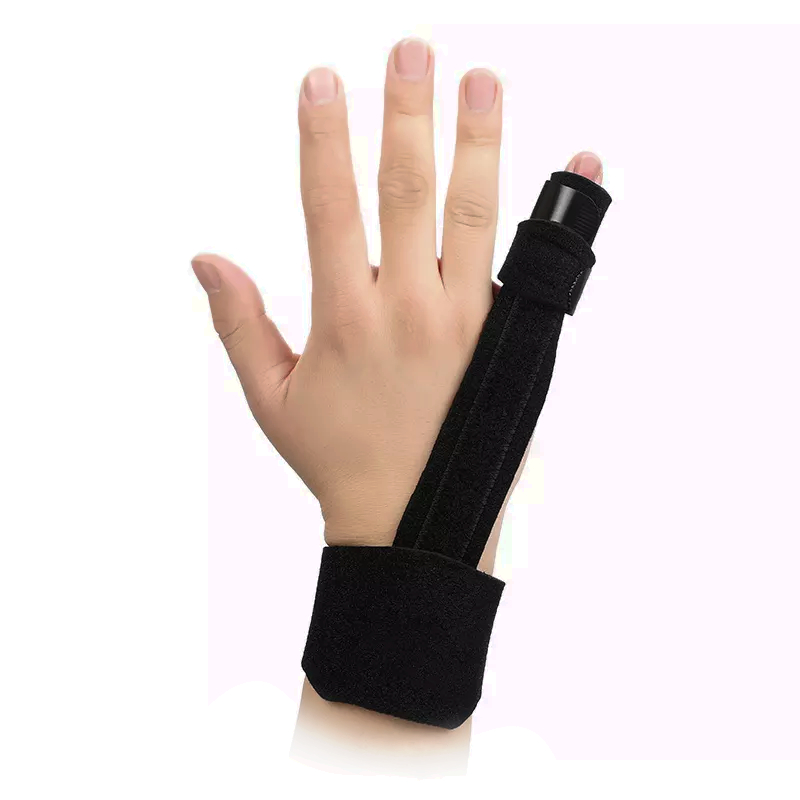
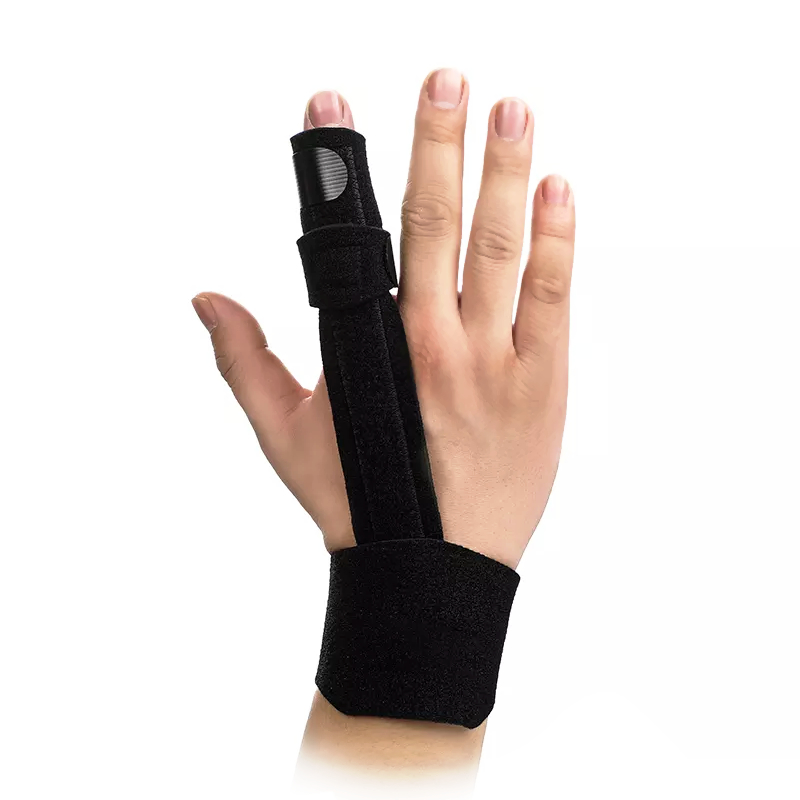
- Rigid aluminium stay runs from wrist to fingertip, holding your injured finger straight and preventing bending at all three joints
- Designed for stable finger fractures, mallet finger, trigger finger, sprained knuckles, tendonitis, arthritis flare-ups, and post-cast support
- Not suitable for thumbs – this splint is designed for the four fingers only
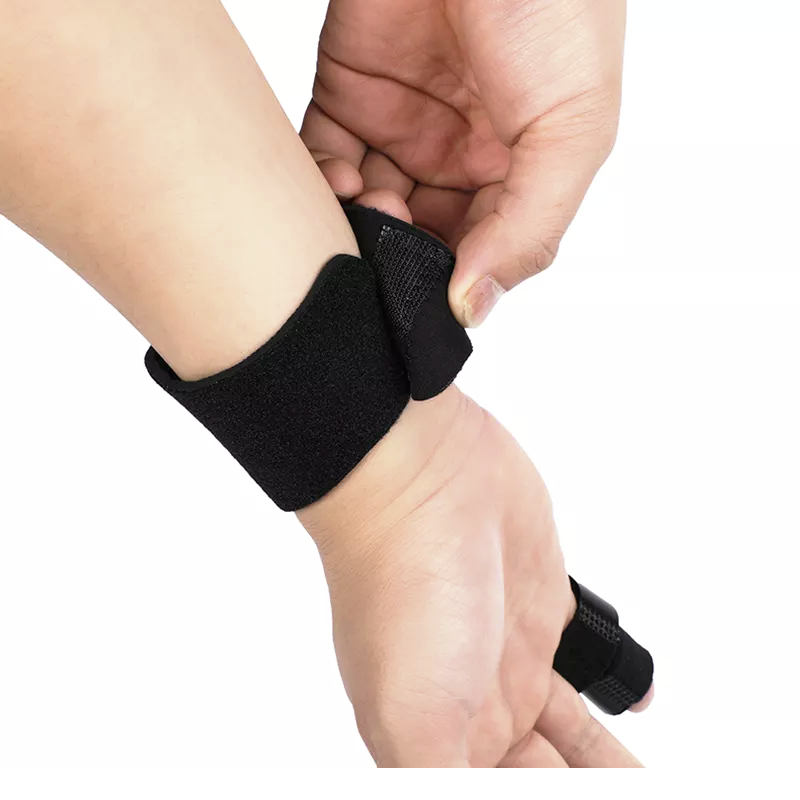
- Two adjustable Velcro straps (one at wrist, one at fingertip) secure the splint firmly and let you adjust compression as swelling changes
- High-quality neoprene-style padding with smooth, flat seams positioned away from pressure points to prevent irritation during extended wear
- Rounded edges around the splint prevent digging and rubbing against your skin
- Reinforced stitching at the wrist anchor and fingertip loop—the high-stress points that take the most strain during weeks of continuous use
- Breathable, moisture-wicking material helps keep your hand dry and comfortable, reducing the risk of skin softening and breakdown
- Protects healing bone, tendons, and ligaments from the bending, twisting, and accidental knocks that disrupt recovery
- Keeps your other fingers free so you can type, hold objects, get dressed, and manage light tasks
- Wear continuously during the first few weeks for acute injuries; wear intermittently for chronic conditions or during flare-ups
- Especially useful overnight to prevent unconscious movements that can re-injure your finger while you sleep
- One-size-fits-all design with adjustable straps to accommodate different finger sizes and hand shapes – works on either left or right hand
- ⚠️ Finger injuries and immobilisation can increase the risk of blood clots – seek urgent medical attention if you experience unexplained arm swelling, chest pain, shortness of breath, or sudden leg swelling
- Check circulation regularly – your fingertip should stay warm and pink; loosen straps immediately if it turns pale, blue, or feels cold
- Speak to your GP or physiotherapist before using if you haven’t had an X-ray, if your finger looks severely misaligned, or if you have numbness or circulation problems
- Most stable fractures heal in three to six weeks; soft-tissue injuries like mallet finger often need six to eight weeks of continuous splinting
- 30-day money-back guarantee – try it risk-free and return in original condition with packaging if it doesn’t suit your injury
When You Break a Finger, Everything Becomes Awkward
Your hand feels clumsy. Simple tasks—typing, holding a phone, fastening buttons—suddenly take twice as long and hurt. And beneath the frustration sits a harder question: Is this healing properly? Will my finger end up stiff or crooked?
This isn’t in your head. Finger injuries do have a reputation for healing badly if they’re not supported properly. Stiffness, persistent aching, fingers that won’t straighten fully—these aren’t rare. They happen when healing tissue is allowed to move and shift before it’s strong enough.
The difference between smooth recovery and lasting problems comes down to keeping your finger properly supported while the damaged structures repair. Without stable support, even small movements—bending to grip something, knocking your hand against a door frame—disrupt the healing process and set you back weeks.
The RevitaFit Finger Splint Straightener Brace holds your injured finger straight from wrist to fingertip, protecting the healing tissue while keeping you functional. It’s designed to meet the clinical requirements physiotherapists emphasise for finger fracture support: rigid immobilisation, even pressure distribution, and extended-wear comfort. The aluminium stay distributes pressure across a wider surface area, the padding is high-quality neoprene-style material built to last through weeks of continuous wear, and the breathable, moisture-wicking design helps prevent the moisture build-up and pressure sores that rigid supports can cause.
Why Keeping Your Finger Still Matters for Proper Healing
When a finger bone breaks, or when tendons and ligaments are damaged, the injured structures need time and stability to repair properly. Here’s what’s actually happening inside your finger—and why movement disrupts it.
What’s Happening at Tissue Level
A broken finger bone needs the two fractured ends to stay pressed together so new bone can bridge the gap. In the first few days after injury, your body forms a soft clot of blood and inflammatory cells around the break. Over the next week or two, this clot is gradually replaced by soft callus—a mesh of collagen and early bone cells that begins to knit the two ends together.
That early callus is weaker than wet paper. It can hold the bone ends in rough alignment, but it has very little resistance to bending, twisting, or shearing forces.
If your finger bends or twists during this phase, the soft callus stretches, tears, or shifts out of position. Think of it like trying to glue two pieces of wood together while someone keeps pulling them apart. Each time, your body scraps the damaged repair and starts over. The inflammatory response flares back up, pain increases, and the timeline for solid healing is pushed back. If this keeps happening over weeks, the bone ends may eventually knit together—but often in a crooked or misaligned position.
Tendons and ligaments have the same problem. Tendons are tough cords that connect muscle to bone, allowing your fingers to bend and straighten. Ligaments are short, strong bands that hold the small bones of your finger in proper alignment at each joint.
Mallet finger is a perfect example. The tendon that pulls your fingertip straight tears or detaches. The fingertip droops because the tendon can’t pull it up anymore. Every time your finger bends—gripping something, knocking it, curling your hand in your sleep—those torn ends get pulled apart. The scar tissue trying to bridge the gap stretches into a weak, disorganised strand.
Ligament injuries follow the same principle. When a ligament is sprained, the fibres are partially torn and inflamed. If the joint keeps moving through its full range—especially into positions that stretch the injured ligament—the healing fibres are re-injured before they can strengthen. Over time, this leaves the joint feeling unstable or prone to giving way.
What Goes Wrong Without Proper Support
Without proper support, things go wrong in predictable ways.
Malunion—when a broken bone heals crooked. Once it’s set wrong, fixing it means breaking it again—surgically, with pins or plates.
Tendons can heal too long. The tendon may eventually reconnect, but it’s too stretched to pull the finger straight effectively. You’re left with a permanent droop or reduced strength.
Joint stiffness develops when scar tissue forms in a disorganised way around joints and tendons. Your finger feels tight and won’t straighten all the way, even after the initial injury has healed. Regaining full movement can take months of physiotherapy, and in some cases, full range never returns.
Chronic pain can persist if the injury site doesn’t settle properly. Ongoing micro-motion keeps inflammation active, and poorly aligned structures can irritate surrounding nerves and soft tissue.
Post-traumatic osteoarthritis is a longer-term risk. When joint surfaces are damaged and don’t heal in proper alignment, the cartilage wears unevenly. Over years, this leads to pain, stiffness, and progressive joint deterioration.
Why Splinting Is Standard Care
Orthopaedic guidance consistently emphasises that stable support during the first few weeks of healing allows injured structures to repair without interruption. For stable finger fractures confirmed by X-ray, and for soft-tissue injuries like mallet finger or severe tendon strain, keeping the finger straight and protected is the foundation of proper recovery.
A well-designed splint does three things. It prevents bending and twisting at the injury site, so the fractured bone ends or torn tendon ends stay pressed together while new tissue forms. It protects the finger from accidental knocks and impacts—the kind of sudden jarring that can undo days of healing in a split second. And it holds the structures in the optimal position for tissue repair: straight and neutral, with no stretch or compression on the damaged area.
When the injured finger is held straight from wrist to fingertip, the bones are aligned end-to-end, the tendons rest at their natural length without being pulled or slackened, and the ligaments sit in a neutral position without being stretched.
Who This Splint Helps—and When to Seek Advice First
The RevitaFit Finger Splint Straightener Brace provides straight-line support for a range of finger injuries and conditions. Here’s when it works—and how.
Stable Finger Fractures
A stable fracture means the bone broke cleanly and the ends are still roughly lined up. The main job is to keep those ends pressed together while new bone forms. The rigid aluminium stay runs from your wrist to your fingertip, preventing all three finger joints from bending. The bone ends can’t shift when you move your hand, grip something, or accidentally knock your finger.
Over the next three to six weeks, the soft callus matures into strong, organised bone.
Mallet Finger
Mallet finger: the tendon that straightens your fingertip tears or pulls off the bone. Usually from a sudden impact—a ball hitting the tip, jamming your finger against something hard. The fingertip droops because the tendon can’t pull it straight anymore.
Every time the tip bends—gripping something, knocking it, curling your hand in your sleep—the torn tendon ends get pulled apart. By holding the tip joint straight for six to eight weeks, this splint keeps the tendon ends close together so scar tissue can form an organised, functional bridge. Most people recover full or near-full function without surgery.
Trigger Finger
Trigger finger occurs when a tendon in your finger becomes inflamed and thickened, and it catches or locks as it tries to glide through a narrow tunnel in your palm—like a rope catching on a pulley. The catching happens most often when you bend and straighten your finger repeatedly, which pulls the inflamed tendon back and forth through the tunnel and keeps the irritation active.
By holding your finger straight, this splint rests the tendon in a neutral position where it’s not being pulled through the inflamed tunnel. Many people find the catching and locking reduce or stop altogether after a few weeks of rest.
Sprained Knuckles and Ligament Strain
When you jam your finger or twist it awkwardly, the ligaments that hold the small bones in alignment at each joint can be partially torn or overstretched. The joint feels unstable, swollen, and painful—especially when you try to bend or straighten it fully.
If you keep using the finger normally, the damaged ligament fibres are repeatedly stretched before they can heal. By holding the finger straight, this splint protects the injured ligament from being stretched into its painful end range. Most sprains settle within two to four weeks with proper rest and support.
Tendonitis and Overuse Inflammation
Repetitive gripping, typing, or manual work can inflame the tendons that run along your finger, causing pain, stiffness, and sometimes swelling. The inflammation is triggered by repeated micro-trauma—small tears in the tendon fibres that don’t have time to heal before the next bout of activity.
Resting the tendon by holding your finger straight reduces the mechanical load and gives the inflamed tissue time to settle. This splint is particularly useful if you need to continue light activities during recovery—it protects the inflamed tendon from the full range of bending and gripping movements that would otherwise keep the inflammation active.
Arthritis Flare-Ups
Both osteoarthritis and rheumatoid arthritis can affect the small joints in your fingers, causing pain, stiffness, and swelling. Arthritic joints are often most painful at their end range—when you bend or straighten your finger as far as it will go, the worn cartilage and inflamed joint lining are compressed or stretched, and you feel a sharp jolt of pain.
By limiting how far your finger can bend, this splint keeps the joint away from that painful end range during everyday tasks. Many people with arthritis use the splint intermittently—during flare-ups, during activities that strain the joint, or overnight if the finger curls and stiffens during sleep.
Post-Stroke Finger Curling
After a stroke, increased muscle tone—called spasticity—can cause your fingers to curl tightly into your palm. This makes it difficult to open your hand, and over time, the tendons and ligaments can shorten and stiffen in that curled position.
Gentle straightening support, worn for part of the day or overnight, helps maintain the finger’s length and flexibility. This splint holds the finger in a neutral, straight position, preventing the soft tissues from shortening further.
Post-Cast Support
When you’ve had a finger in a rigid cast for several weeks and the bone has healed enough to remove the cast, your finger is often still weak, stiff, and vulnerable. Transitioning straight back to full use can risk re-injury or setbacks.
This splint provides a middle step—less restrictive than a cast, but still protective enough to support the healing bone and soft tissues during the final weeks of recovery.
When to Seek Professional Advice First
This splint isn’t suitable for every situation. Speak with your GP, visit A&E, or consult a physiotherapist before using this splint if:
- You haven’t had an X-ray yet and you’re unsure whether your finger is broken or how severe the injury is
- Your finger looks severely misaligned or deformed
- You have an open wound or broken skin over the injury site
- You’re experiencing numbness, tingling, or circulation problems (pale, blue, or cold fingers)
- Multiple fingers are injured
- The injury is to your thumb (this splint is designed for fingers only—for thumb injuries, a dedicated thumb brace is more appropriate)
- You’re considering this for a child (growing bones need specialist assessment)
- You’ve recently had surgery on your finger or hand (follow your surgeon’s specific guidance)
If you’re unsure whether this splint is right for your situation, check with a healthcare professional first.
Sizing and Fit
The RevitaFit Finger Splint Straightener Brace is a true one-size-fits-all design with adjustable straps to accommodate different finger sizes and hand shapes.
Which hand? Left or right—the splint works on both. Simply position the aluminium stay along the injured finger (palm side or back of hand, whichever is most comfortable) and secure with the two straps.
Which fingers? The splint fits any finger except your thumb. It’s designed for the four fingers (index, middle, ring, and little finger). The thumb has a completely different structure and range of movement, and it requires a dedicated thumb brace. If you have a thumb injury, this splint won’t provide the right kind of support.
How the stay positions: The aluminium stay runs along one side of your finger—flat against the palm side or back of your hand, not the left or right edges. You position it flat against the top or bottom surface of your finger, and the two straps (one at your wrist, one at your fingertip) hold it securely in place. The stay doesn’t wrap around your finger—it provides straight-line support from one side only.
How to adjust for fit: The two Velcro straps let you dial in the exact level of snugness and support you need. Start with the wrist strap to anchor the splint firmly—wrap it around your wrist and press the Velcro down so the splint feels secure but not tight. Then adjust the fingertip strap, wrapping it around the end of your finger to hold the splint snugly against your fingertip.
You should feel stable support without tightness. The splint should hold your finger straight and prevent it from bending, but it should never cause numbness, tingling, or colour changes in your finger. If your fingertip starts to feel cold, turns pale or blue, or if you experience persistent pins and needles, loosen the straps immediately.
If you’re between sizes or unsure: Because the design is adjustable, most adults find it accommodates their finger comfortably. The wrist strap adjusts to fit a wide range of wrist circumferences, and the fingertip strap can be tightened or loosened to suit shorter or longer fingers.
How This Splint Supports Proper Healing
Proper healing depends on keeping your injured finger stable, straight, and protected. This splint does three things: keeps your finger straight, stops it bending, and shields it from knocks.
Stops Movement and Shields from Impact
A rigid aluminium stay runs from your wrist all the way to your fingertip. You can position it palm-side or on the back of your hand—whichever feels better. The stay runs along one side only—palm or back—not around your finger.
Because the aluminium is rigid and won’t bend, your finger can’t bend or twist at any of the three joints: the tip joint, the middle knuckle, and the base knuckle. Normally, each joint lets your finger curl and straighten through a wide range. When any of these joints moves, the bones shift against each other, the tendons slide and stretch, and the ligaments are pulled taut or slackened.
If there’s a fracture anywhere along your finger, every time a joint near it bends, the two fractured ends shift slightly. That tiny movement tears the soft callus and triggers fresh inflammation. By holding all three joints straight, the stay keeps the bone ends pressed together so new bone can bridge the gap without interruption.
In mallet finger, the fingertip droops because the tendon can’t pull it straight anymore. Every time the tip bends further—when you grip something, knock your finger, or curl your hand in your sleep—the torn tendon ends get pulled apart. The splint holds the tip joint straight, keeping the tendon ends close together so scar tissue can form an organised bridge. Over six to eight weeks, that scar tissue matures and strengthens, and the tendon regains its ability to hold the fingertip straight.
For trigger finger, the problem is different: a tendon in your finger becomes inflamed and thickened, and it catches or locks as it tries to glide through a narrow tunnel in your palm. The catching happens most often when you bend and straighten your finger repeatedly. By holding your finger straight, the splint rests the tendon in a neutral position where it’s not being pulled back and forth through the inflamed tunnel. The inflammation settles, and many people find the catching and locking reduce or stop altogether after a few weeks of rest.
The rigid aluminium stay also acts as a shield. If you accidentally bump your hand against a door frame, reach into a bag and catch your finger on something, or knock your hand on a surface while you’re moving around, the splint absorbs the impact and prevents sudden bending or jarring at the injury site. This matters most in the first few weeks after injury, when the healing tissue is still fragile. A single hard knock can undo days of healing—tearing newly formed callus, re-stretching a healing tendon, or re-spraining a ligament that was just starting to settle. The stay shields your finger from movement and impacts—the two things most likely to set you back.
For people with arthritis, the protection works slightly differently. Arthritic joints are often painful when bent or straightened as far as they will go—the worn cartilage and inflamed joint lining are compressed or stretched, and you feel a sharp jolt of pain. By limiting how far your finger can bend, the splint keeps the joint away from that painful end range during everyday tasks. When you grip a pen, hold a phone, or carry shopping, the splint prevents the joint from being pushed into the positions that trigger the sharpest pain.
Two straps secure the splint in place. One strap wraps around your wrist, anchoring the splint firmly so it doesn’t shift during movement. The other wraps around your fingertip, holding the end of the splint snugly against your finger. When you reach for a mug, type on a keyboard, or carry a bag, the wrist strap prevents the splint from sliding down your hand, and the fingertip strap stops the end of the splint from lifting away from your finger. The bone ends stay pressed together, the tendons rest in a neutral position, and the injury site is protected from the micro-motion that would otherwise disrupt healing.
Supports the Whole Finger, Not Just the Tip
Because the aluminium stay runs the full length from wrist to fingertip, this splint supports your entire finger. Whether your injury is at the fingertip, the middle knuckle, or the base of the finger, the splint holds the whole finger straight and stable.
Designed for Long-Term Wear Without Skin Breakdown
Most finger injuries need weeks of continuous support. That means you need a splint you can actually stand wearing all day. This splint is designed for long-term wear. Every feature solves a specific problem that comes with wearing something for weeks.
The padding spreads the load. Rigid supports press into your skin—especially over bony spots like your knuckles and wrist. That pressure squeezes the tiny blood vessels feeding your skin. If the pressure stays constant for more than an hour or two, blood flow drops and skin cells start to suffer. Over a day, your skin gets red and sore. Over several days, it can break down into open sores.
High-quality neoprene-style padding cushions your finger and spreads the pressure, so no single spot takes all the load. Blood keeps flowing, and your skin stays healthy even after weeks of wear. The padding also absorbs some of the micro-movements and vibrations that occur during everyday activities—typing, walking, carrying objects—which would otherwise transmit directly through the rigid stay and create friction against your skin.
You’ll notice the seams sit away from pressure points. When seams sit directly over bony areas or high-pressure zones, they can dig in and create friction points that rub your skin raw over time. Smooth, flat seams positioned away from these areas reduce the risk of chafing and discomfort during continuous wear.
Rounded edges mean no digging or rubbing. Sharp or squared-off edges can press into your skin and create pressure points, especially when you’re moving your hand or resting it on a surface. The rounded edges distribute contact more evenly and feel more comfortable against your skin during extended wear.
Reinforced stitching at the wrist anchor and fingertip loop ensures the splint maintains its shape and support. These points take the most strain during weeks of continuous use—where the straps pull and where the splint experiences the most mechanical stress during daily wear. Double-stitched seams at these points prevent the fabric from tearing or the straps from pulling away.
Breathable, moisture-wicking material helps keep your hand dry and comfortable. The fabric actively draws sweat away from your skin and allows it to evaporate, reducing the risk of skin softening and breakdown that happens when skin stays damp. Hands naturally perspire, especially when wrapped in any kind of support. If moisture can’t escape, it pools against your skin, raising the local humidity and temperature. The outer layer of your skin absorbs water, swells, and becomes fragile. Softened skin is pale, wrinkled, and prone to tearing or developing fungal infections.
The moisture-wicking design doesn’t eliminate perspiration—any wrapped area will be warmer and slightly more humid than bare skin—but it allows enough air exchange to keep moisture levels manageable.
The lightweight design reduces fatigue. When a support is heavy, your hand and forearm muscles have to work constantly to hold it up. That low-level effort becomes tiring over the course of a day, and it can contribute to aching and stiffness in your forearm and wrist. By keeping the splint light, the design minimises this fatigue. The low profile also means the splint doesn’t interfere with your natural resting postures—you can rest your hand on a desk, armrest, or your lap without the splint feeling awkward or getting in the way.
The shape of the splint is contoured to follow the natural lines of your finger and hand, avoiding the pressure points that occur when flat, rigid supports are strapped to curved body parts. Because the aluminium stay runs along one side only—not wrapping around your finger—it doesn’t create squeezing pressure all the way around that could compress the digital arteries and nerves running along the sides of your finger.
Easy-adjust Velcro straps mean you can put the splint on and take it off with one hand, even when your injured finger is stiff or sore. There are no fiddly buckles, clips, or complicated fastenings—just wrap, press, and adjust. You can fine-tune the fit throughout the day as swelling changes or as you transition between rest and activity.
In the morning, your finger may be stiffer and slightly more swollen after a night of rest. By mid-afternoon, after you’ve been moving around, the swelling often reduces and the splint may feel slightly looser. Being able to adjust the straps quickly means you can maintain the right level of support without having to remove the splint completely and start again. This matters because every time you remove the splint unnecessarily, you expose the injury site to the risk of accidental movement or impact.
The Velcro straps also let you control the level of compression around your finger and wrist. In the early days after injury, when swelling is often at its worst, you can start with lighter tension. As the swelling reduces and your finger becomes less tender, you can gradually increase the snugness to provide firmer support.
Adjustable compression reduces fluid build-up around the injury—that’s what causes the throbbing, pressure-like pain. It also supports healthy circulation by keeping swelling under control so oxygen and nutrients can reach the injured tissue. When swelling is excessive, it can compress the small blood vessels that supply your finger, reducing blood flow and slowing healing.
Practical for Daily Life
A splint that locks your whole hand up isn’t practical. You still need to work, eat, dress yourself, and handle everyday tasks. This splint protects your injured finger while keeping the rest of your hand functional.
Your other three fingers stay free. Because only the injured finger is splinted, you can still grip, type, and handle objects with your remaining fingers. When you type, the splint keeps your injured finger straight while the others reach the keys. When you’re holding a mug or a phone, your uninjured fingers do most of the gripping work, and the splinted finger rests against the object in a straight position, providing some stability without needing to curl or bend.
Night-time wear is especially useful. Unconscious movements can otherwise bend or knock the injured finger. You might roll onto your hand or curl your fingers into a fist without knowing. Each of these movements can re-injure healing tissue. By wearing the splint at night, you protect your finger from these unconscious stresses, and many people find they wake with less stiffness and pain as a result.
The neutral colour and slim design mean the splint blends in with most clothing and settings. You can wear it at home, at work, or out and about without it being overly obvious. The reinforced stitching and rigid aluminium stay are built to maintain their shape and support through weeks of daily wear, and the Velcro straps continue to grip securely even after dozens of adjustments.
How to Use and What to Expect
Getting the most from this splint means understanding when to wear it, how to adjust it properly, and what normal recovery should feel like.
When to Wear the Splint
For acute injuries—broken fingers, mallet finger, fresh sprains—continuous wear day and night is essential during the first few weeks. Keeping your finger supported around the clock gives the injured structures the best chance to heal without interruption.
The reason for continuous wear is straightforward: healing tissue is fragile, and even small movements can disrupt it. In the first two to three weeks after a fracture, the soft callus forming between the bone ends has very little strength. If you remove the splint to “give your finger a rest” and then accidentally bend it while reaching for something or getting dressed, you can tear that soft callus and trigger fresh inflammation. The same applies to torn tendons—if the tendon ends are allowed to separate repeatedly, the scar tissue that’s trying to bridge the gap forms in a stretched, disorganised way.
For chronic conditions—arthritis flare-ups, tendonitis, trigger finger—you may wear the splint intermittently: during activities that strain your finger, during flare-ups when pain and stiffness worsen, or overnight if you find your finger curls or stiffens while you sleep.
If you have arthritis in your finger joints and you know that a day of heavy keyboard work or gripping tasks will leave your finger aching and swollen by evening, you can wear the splint during those tasks to limit how far the joint bends and reduce the mechanical stress on the worn cartilage. By keeping the joint away from its most painful end range, you reduce the sharp jolts of pain that come with full bending or straightening.
Night-time wear is critical for acute injuries because it prevents unconscious movements that can bend or knock your injured finger while you sleep. Many people curl their fingers into a loose fist during sleep, or they roll over and trap their hand under their body or pillow. Each of these movements can push your injured finger into positions that stretch healing tendons, shift fractured bone ends, or compress inflamed joints. By wearing the splint at night, you protect your finger from these unconscious stresses.
Your doctor or physiotherapist will give you specific guidance based on your injury, but as a general rule: if your finger is still painful, swollen, or unstable, keep wearing the splint. As healing progresses, you may transition to wearing it only during activity or at times when your finger feels vulnerable.
How to Adjust the Splint Properly
Positioning: Decide whether you want the aluminium stay on the palm side or the back of your hand. For most fractures and mallet finger, palm-side placement works well because it prevents the finger from curling inward—the natural resting position of the hand. When the stay sits along your palm, it blocks the bending movement at all three finger joints.
For some people, back-of-hand placement feels more comfortable during certain tasks. If you spend a lot of time resting your hand flat on a desk, having the rigid stay on the back means you’re not pressing the stay into the desk surface, which can feel awkward or uncomfortable. Try both positions and see what works best—most people find palm-side placement works best for fractures and mallet finger. The mechanical support is the same either way.
Securing the straps: Start with the wrist strap. Wrap it snugly around your wrist to anchor the splint firmly—it should feel secure but not tight enough to restrict circulation. You should be able to slide one finger under the strap, but it shouldn’t feel loose or able to shift around easily. A well-anchored wrist strap prevents the splint from sliding down your hand when you move.
Then adjust the fingertip strap, wrapping it around the end of your finger to hold the splint in place. This strap stops the end of the splint from lifting away from your fingertip, which would allow the tip joint to bend. The goal is stable support, not compression that cuts off blood flow. The strap should feel snug and secure, but your fingertip should stay warm and pink.
Adjusting compression: In the early days after injury, when swelling is often at its worst, start with lighter tension on both straps. Your finger is likely to be tender, and excessive compression can increase discomfort and restrict circulation. As the swelling reduces and your finger becomes less tender—usually over the first week or two—you can gradually increase the snugness to provide firmer support.
The splint should feel snug and supportive, but never tight enough to cause numbness, tingling, or colour changes in your finger. If you notice any of these signs, loosen the straps immediately.
Check your circulation regularly: Your fingertip should stay warm and pink. Press gently on your fingernail—it should blanch (turning pale briefly), then return to pink within a second or two. This is called capillary refill, and it’s a simple way to check that blood is flowing properly to your fingertip.
If your fingertip turns pale, blue, or feels cold, or if you experience persistent numbness or tingling, stop and loosen the straps immediately. These are signs that the splint is too tight and circulation is being restricted. If the colour and sensation don’t return quickly after loosening the straps, remove the splint and seek medical advice.
What’s Normal During Recovery
A firm, supportive feeling is normal, especially in the first few days. You’re holding your finger in a straight position it may not be used to, and the compression is reducing swelling. This should feel like firm support, not pain. The sensation is similar to wearing a new pair of supportive shoes—there’s a feeling of being held and supported that takes a little getting used to, but it shouldn’t hurt.
Mild warmth from the compression and the neoprene-style material is also normal. The splint is designed to be breathable, but some warmth is expected—it’s a sign that circulation is active and your body is responding to the support. Your hand may feel slightly warmer than usual, especially if you’re wearing the splint continuously, but it shouldn’t feel hot or burning.
Gradual pain reduction over days and weeks is what you should expect. The sharp, acute pain of the initial injury should ease within the first week or two, transitioning to a duller ache that continues to improve. Healing isn’t instant, but you should notice steady progress. By the end of the first week, the constant throbbing and sharp jolts should be less frequent. By the end of the second or third week, you should be able to use your hand for light tasks without significant pain, as long as the splint is in place.
Some stiffness when you remove the splint is common, especially if you’ve been wearing it continuously. Your finger has been resting in one position for days or weeks, so the joints and tendons may feel tight or reluctant to bend at first. This is normal—it doesn’t mean your finger is “stuck” or permanently stiff. Gentle movement, as advised by your physiotherapist, helps restore flexibility once the injury has healed enough to allow it.
What’s Not Normal
Pain that gets worse instead of better after the first few days suggests something isn’t right. The injury may be more severe than initially thought, the splint may not be providing adequate support, or there may be an underlying complication such as infection or nerve involvement. If your pain is getting worse after the first few days, or if it’s not improving at all after a week or two, seek medical advice.
Numbness or persistent tingling that doesn’t resolve when you loosen the straps is a warning sign. This could indicate nerve compression—either from the splint being too tight, or from swelling inside the tissues pressing on the nerves that run alongside the bones and tendons in your finger. Nerves are sensitive to pressure, and prolonged compression can cause temporary or, in rare cases, lasting damage. If numbness or tingling doesn’t go away when you loosen the straps, call your GP.
Fingers turning pale, blue, or feeling cold means circulation is compromised. Loosen the splint immediately and seek medical advice if the colour doesn’t return quickly. Prolonged loss of circulation can damage the tissues in your fingertip.
Skin irritation that doesn’t resolve when you adjust the fit or take a short break from wearing the splint may indicate an issue with moisture build-up or friction. Try wearing a thin cotton liner underneath the splint to reduce direct contact with your skin, and make sure you’re removing the splint briefly each day (if your injury allows) to let your skin breathe and dry. If irritation persists or worsens, consult your GP or pharmacist.
Swelling that increases significantly rather than gradually reducing suggests the injury isn’t settling as expected, or there may be an underlying complication such as infection or a more severe fracture pattern that needs different management. Some swelling is normal in the first few days, but it should peak within 48 to 72 hours and then gradually reduce. If swelling is still increasing after three or four days, seek medical advice.
⚠️ Signs of a possible blood clot: Unexplained swelling in your arm (not just your finger), chest pain, shortness of breath, or sudden leg swelling may indicate a blood clot. This is rare but serious. Finger injuries and immobilisation can slightly increase blood clot risk, especially if you’re less mobile than usual or have other risk factors. Seek urgent medical attention immediately if you experience any of these symptoms.
How Long Recovery Usually Takes
Most stable finger fractures heal in three to six weeks. You’ll typically wear the splint full-time during the first few weeks, then transition to wearing it only during activity as your finger strengthens and the bone knits. The exact timeline depends on the location and type of fracture, your age, and your overall health, but as a rough guide: by week three, the soft callus has usually matured enough to provide some stability, and by week six, the bone is usually strong enough to tolerate light use without the splint.
Your doctor or physiotherapist will guide you on when it’s safe to reduce wear or stop altogether. Don’t rush to stop wearing the splint just because the pain has eased—healing continues beneath the surface.
Soft-tissue injuries—mallet finger, tendon strains, ligament sprains—often follow a similar timeline, though some may require longer support, up to eight weeks in certain cases. Mallet finger, in particular, often needs six to eight weeks of continuous splinting to allow the torn tendon to heal properly. If you remove the splint too early, the tendon may re-stretch and the fingertip droop can return.
Chronic conditions—arthritis, trigger finger—don’t follow a fixed timeline. You may use the splint intermittently for months or longer, wearing it during flare-ups or activities that aggravate your symptoms. The goal isn’t to “cure” the underlying condition, but to manage symptoms and reduce the frequency and severity of flare-ups by protecting the joint or tendon during high-stress periods.
Follow your healthcare professional’s specific guidance for your injury. Don’t rush to stop wearing the splint just because the pain has eased—healing continues beneath the surface, and premature return to full activity can set you back.
When to Seek Help
This splint supports healing, but it doesn’t replace professional assessment. Here’s when you need to seek medical advice.
See Your GP or Visit A&E If:
- Pain gets worse instead of better over the first week or two
- Your finger or hand becomes numb or tingles persistently, even after loosening the splint
- Your finger or hand turns pale, blue, or feels cold—this suggests circulation problems that need urgent attention
- Swelling increases significantly rather than gradually reducing
- You develop a fever or the area around the injury feels hot—this could indicate infection
- You experience unexplained swelling in your arm, chest pain, shortness of breath, or sudden leg swelling—these may be signs of a blood clot and require immediate assessment
- You notice any new or unexplained symptoms that concern you
Routine Follow-Up
If you haven’t had an X-ray yet, get one to confirm the fracture type and rule out complications. Not all finger injuries need an X-ray, but if there’s any doubt about whether the bone is broken or how severe the damage is, imaging provides clarity.
If healing seems slow or you’re unsure about progress after two to three weeks, check in with your GP or a physiotherapist. They can assess whether the splint is working as it should or whether you need a different approach.
If you’re experiencing ongoing stiffness after the injury has healed, a physiotherapist can guide you through exercises to restore flexibility and strength safely.
This splint is a tool to support your recovery, but your body and your injury are unique. If you have any concerns about how your finger is healing, don’t hesitate to seek advice.
Risk-Free Trial
Try the RevitaFit Finger Splint Straightener Brace risk-free for 30 days. Wear it for a few days and see if it provides the stability and comfort you need. If you’re not satisfied, you can return it in its original condition with packaging for a full refund—no questions asked.
This gives you the chance to test whether the splint works for your specific injury and hand shape without committing fully upfront. You can adjust the straps, try it during your usual daily tasks, wear it overnight, and see whether it delivers the support and protection your finger needs to heal properly.
If it doesn’t feel right—if the fit isn’t comfortable, if the level of support doesn’t suit your injury, or if you simply find it’s not what you expected—you can return it within 30 days for a full refund, as long as the splint is in its original condition and you’ve kept the packaging.
Give Your Finger the Best Chance to Heal Properly
A broken or injured finger doesn’t have to derail your daily life or leave you with lasting stiffness and pain. With proper support during the first few weeks of healing, most finger injuries recover well—bone ends knit cleanly, tendons regain their strength, and joints retain their mobility.
This splint gives you that stability without locking you up. The rigid aluminium stay holds your entire finger straight from wrist to fingertip, protecting the injury site from the bending, twisting, and accidental knocks that disrupt healing. When a fractured bone is held in stable alignment, the soft callus that forms between the two ends can mature into strong, organised bone without being torn or shifted out of position. When a torn tendon is kept at its natural resting length, the scar tissue that bridges the gap forms in an organised, functional way rather than stretching into a weak, lengthened strand. When an inflamed joint is held away from its painful end range, the irritated tissues are given the chance to settle rather than being repeatedly compressed and stretched through movements that keep inflammation active.
At the same time, the high-quality neoprene-style padding, smooth flat seams, rounded edges, and adjustable Velcro straps make the splint practical to wear all day—and all night if needed—while your other fingers stay free to handle everyday tasks. You can type at a keyboard, hold a mug, get dressed, and manage light household activities without feeling helpless or completely restricted.
Whether you’re recovering from a stable fracture, managing mallet finger or trigger finger, or supporting your hand through an arthritis flare-up, this splint offers the support and protection your finger needs to heal properly.
Before you buy, check the sizing guidance above to confirm the splint will work for your finger (remember, it’s not suitable for thumbs). And if you’re unsure whether this splint is right for your specific injury—especially if you haven’t had an X-ray yet or if your symptoms are severe—speak with your GP or physiotherapist first.
Ready to give your finger the support it needs? The 30-day guarantee means no risk.
This splint is designed to meet the clinical requirements physiotherapists emphasise for finger fracture support. The aluminium stay distributes pressure across a wider surface area. The padding is high-quality neoprene-style material with smooth, flat seams and rounded edges. And the stitching is reinforced at the wrist anchor and fingertip loop—the points that take the most strain during weeks of continuous use. It’s built to last through weeks of continuous wear—because that’s what proper healing takes.
Care and Maintenance
To keep your splint clean, hygienic, and effective throughout weeks of daily wear, follow these simple care guidelines.
Daily Care
Remove the splint briefly each day (if your injury allows) to let your skin breathe and to check for any signs of irritation, redness, or pressure marks. This also gives you a chance to wipe down the inside of the splint with a damp cloth to remove sweat and skin oils that can build up over time.
If you’re wearing the splint continuously for an acute injury and your clinician has advised you not to remove it, you can still keep it fresh by wiping the outer surface with a clean, damp cloth and allowing it to air-dry while you’re resting.
Washing the Splint
Hand-wash the splint every few days or when visibly soiled in cool or lukewarm water with a mild soap or detergent. Avoid hot water, which can damage the neoprene-style material and weaken the Velcro straps over time. Gently work the soap through the fabric, paying attention to areas that sit directly against your skin.
Rinse thoroughly to remove all soap residue—leftover detergent can irritate your skin when you put the splint back on. Squeeze out excess water gently; do not wring or twist the splint, as this can distort the shape and damage the aluminium stay.
Air-dry the splint flat or hanging in a well-ventilated area, away from direct heat sources like radiators or tumble dryers. High heat can warp the aluminium stay, shrink the fabric, and reduce the grip of the Velcro straps. The splint should be completely dry before you wear it again to prevent moisture build-up against your skin.
Velcro Care
Over time, the Velcro straps can collect lint, hair, and fabric fibres, which reduces their grip. To keep them working properly, pick out any debris with your fingers or use a fine-toothed comb to gently brush the hook side of the Velcro. Do this regularly—every few days if you’re wearing the splint continuously—to maintain a secure hold.
Checking the Aluminium Stay
Inspect the aluminium stay regularly to make sure it hasn’t bent or warped. If the stay is no longer straight, it won’t provide the stable, straight-line support your finger needs to heal properly. A bent stay can also create pressure points that dig into your skin or allow your finger to bend slightly at the injury site.
If the stay becomes bent, you may be able to gently reshape it by hand, but if it’s significantly damaged or won’t hold its shape, the splint should be replaced. A compromised stay undermines the entire purpose of the splint and can delay your recovery.
When to Replace
Replace the splint if the aluminium stay is permanently bent or damaged, if the Velcro straps no longer grip securely even after cleaning, or if the fabric becomes torn or excessively worn. A splint that no longer provides stable, straight support is not doing its job.
Frequently Asked Questions
Can I use this splint for a thumb injury?
No. This splint is designed for the four fingers (index, middle, ring, and little finger) only. The thumb has a completely different structure and range of movement, and it requires a dedicated thumb brace that wraps around the base of the thumb and supports the thumb joint properly. If you have a thumb injury, you’ll need a thumb-specific support.
Can I wear the splint in the shower or bath?
No. The splint is not waterproof, and prolonged exposure to water can damage the neoprene-style material, weaken the Velcro straps, and cause the aluminium stay to corrode over time. Remove the splint before showering or bathing. If you need to keep your finger protected and dry while washing, you can wrap your hand in a waterproof bag or cover, but it’s usually easier to remove the splint briefly and reapply it once your hand is dry.
Can I wear splints on multiple fingers at the same time?
No. This splint is designed to support one finger at a time. The wrist strap anchors the splint, and wearing multiple splints simultaneously would create conflicting anchor points and wouldn’t work properly. If you need to support multiple fingers at once, NuovaHealth offers a different finger splint design without a wrist strap that can be worn on several fingers simultaneously.
Should I wear the splint at night?
For most acute injuries—broken fingers, mallet finger, fresh sprains—yes, wearing the splint at night is strongly recommended. Night-time wear prevents unconscious movements that can bend or knock your injured finger while you sleep. Many people curl their fingers into a loose fist during sleep, or they roll over and trap their hand under their body or pillow. By wearing the splint at night, you protect your finger from these unconscious stresses, and many people find they wake with less stiffness and pain as a result.
For chronic conditions like arthritis or trigger finger, night-time wear is optional and depends on your symptoms. If you find your finger curls or stiffens overnight and feels worse in the morning, wearing the splint at night may help. If your symptoms are manageable without it, you can choose to wear it only during the day or during activities that strain your finger.
Can I drive while wearing the splint?
Only if you can safely control the vehicle. If the splint limits your grip on the wheel or your ability to react quickly, don’t drive. It’s your responsibility to ensure you’re in full control of the vehicle at all times.
If you’re unsure, speak to your GP or physiotherapist, and check with your car insurance provider. Some policies require you to notify them of any injury or medical condition that may affect your ability to drive safely.
Can I work while wearing the splint?
For most desk-based or light manual work, yes. The splint protects your injured finger while leaving your other fingers free to type, write, hold a phone, and handle light objects. Many people continue working throughout their recovery, wearing the splint during the day and adjusting their tasks to avoid heavy gripping, lifting, or activities that put strain on the injured finger.
If your job involves heavy manual work, repetitive gripping, or tasks that require full use of all your fingers, you may need to take time off or request modified duties until your finger has healed enough to tolerate those demands. Speak to your employer and your GP or physiotherapist about what’s safe and appropriate for your specific injury and job role.
Can I exercise while wearing the splint?
This depends on the type of exercise and the severity of your injury. Low-impact activities that don’t involve gripping or putting weight through your hands—such as walking, cycling on a stationary bike, or using a treadmill—are usually fine, as long as you’re careful not to knock or jar your injured finger.
Avoid activities that involve gripping (weightlifting, rowing, racquet sports), impact (boxing, martial arts), or risk of falling onto your hands (contact sports, climbing). These activities can re-injure your finger or disrupt the healing process, even with the splint in place.
Always check with your GP or physiotherapist before returning to exercise. They can advise you on what’s safe based on your specific injury and stage of healing.
Do I need an X-ray before using this splint?
If you suspect your finger is broken, or if you’re unsure how severe the injury is, it’s sensible to get an X-ray first. Not all finger injuries need an X-ray, but imaging provides clarity and helps rule out complications such as displaced fractures (where the bone ends are not aligned), fractures involving the joint surfaces, or multiple fractures that may need different management.
If your GP or A&E doctor has confirmed you have a stable fracture or a soft-tissue injury that’s suitable for splinting, this splint can provide the support and protection you need. If you haven’t had an X-ray and you’re unsure, check with a healthcare professional first.
The splint feels tight as swelling increases—what should I do?
Stop and loosen the Velcro straps immediately. Swelling is common in the first few days after injury, and as the swelling increases, the splint can feel tighter. The straps are adjustable precisely for this reason—you can loosen them to accommodate the swelling, then gradually tighten them again as the swelling reduces over the following days and weeks.
Check your circulation regularly. Your fingertip should stay warm and pink. If it turns pale, blue, or feels cold, or if you experience persistent numbness or tingling, loosen the straps further and seek medical advice if the symptoms don’t resolve quickly.
Can I use this splint alongside other treatments?
Yes. This splint provides mechanical support and protection, and it works well alongside other treatments your GP or physiotherapist may recommend, such as ice therapy in the first few days to reduce swelling, gentle elevation of your hand to encourage fluid drainage, pain relief (paracetamol or ibuprofen, if appropriate for you), and physiotherapy exercises once your finger has healed enough to start moving again.
Always follow your clinician’s specific guidance on how to combine treatments safely and effectively for your injury.
Disclaimer
The information on this page is general guidance based on common patterns of finger injury and recovery. It is not a substitute for individual medical advice, diagnosis, or treatment. Every injury is different, and what works well for one person may not be appropriate for another.
If you’re unsure whether this splint is right for your situation, or if you have new or unexplained symptoms that are not settling, speak to your GP, physiotherapist, or another appropriate healthcare professional for personalised advice. They can assess your specific injury, confirm the diagnosis, and guide you on the most appropriate treatment and timeline for your recovery.
No guaranteed outcomes are promised. While proper support during the critical early weeks of healing helps most stable finger injuries recover well, individual results depend on many factors including the severity of the injury, your age, overall health, and how closely you follow clinical guidance.
This splint does not treat or prevent blood clots. Finger injuries and immobilisation can increase the risk of blood clots, particularly if you have other risk factors or reduced mobility. If you experience unexplained arm swelling, chest pain, shortness of breath, or sudden leg swelling, seek urgent medical attention immediately.
Final Summary
The RevitaFit Finger Splint Straightener Brace is a straightforward, effective tool for supporting finger healing. It holds your injured finger straight from wrist to fingertip, protecting the healing bone, tendons, and ligaments from the movements and impacts that disrupt recovery. The rigid aluminium stay prevents bending at all three finger joints, the high-quality neoprene-style padding with smooth, flat seams and rounded edges makes it comfortable enough to wear all day and night, and the adjustable Velcro straps let you fine-tune the fit as swelling changes.
Whether you’re recovering from a stable fracture, managing mallet finger or trigger finger, or supporting your hand through an arthritis flare-up, this splint offers the support and protection your finger needs to heal properly—without leaving you completely helpless. Your other fingers stay free, so you can still type, hold a mug, get dressed, and manage light household tasks while your injured finger is protected.
If you’re unsure whether this splint is right for your injury, speak to your GP or physiotherapist first. They can confirm the diagnosis, advise on the most appropriate treatment, and guide you on how long you’ll need to wear the splint. And if you’re ready to give your finger the support it needs, the 30-day money-back guarantee means you can try it without risk.
Fast & Secure Checkout Through Paypal
Pay with Paypal the secure payment gateway that accepts all credit and debit cards. Paypal is free and secure and no credit or bank information is ever stored or shared with us.
Fast Dispatch
Enjoy your items soon with quick dispatch via Royal Mail. Expect to have your items between 1-3 working days for domestic orders. 7-10 Working days for international orders.
Return Policy – 30 Day Money Back Guarantee
In the unlikely event, you are unhappy with your purchase you can return it within 30 days for a refund. Please contact us via the form on the contact us page to start your return.
To return an item please send it to: Nuova Health UK, 81 Highfield Lane, Waverley, Rotherham, S60 8AL. Please include a note with your order id so we know who to refund. Please retain your postage receipt as proof of postage. All that we ask is that the item is in the original packaging and unused.

Reviews
There are no reviews yet.