

Dislocated Thumb Support Brace
£12.99£16.99 (-24%)inc VAT
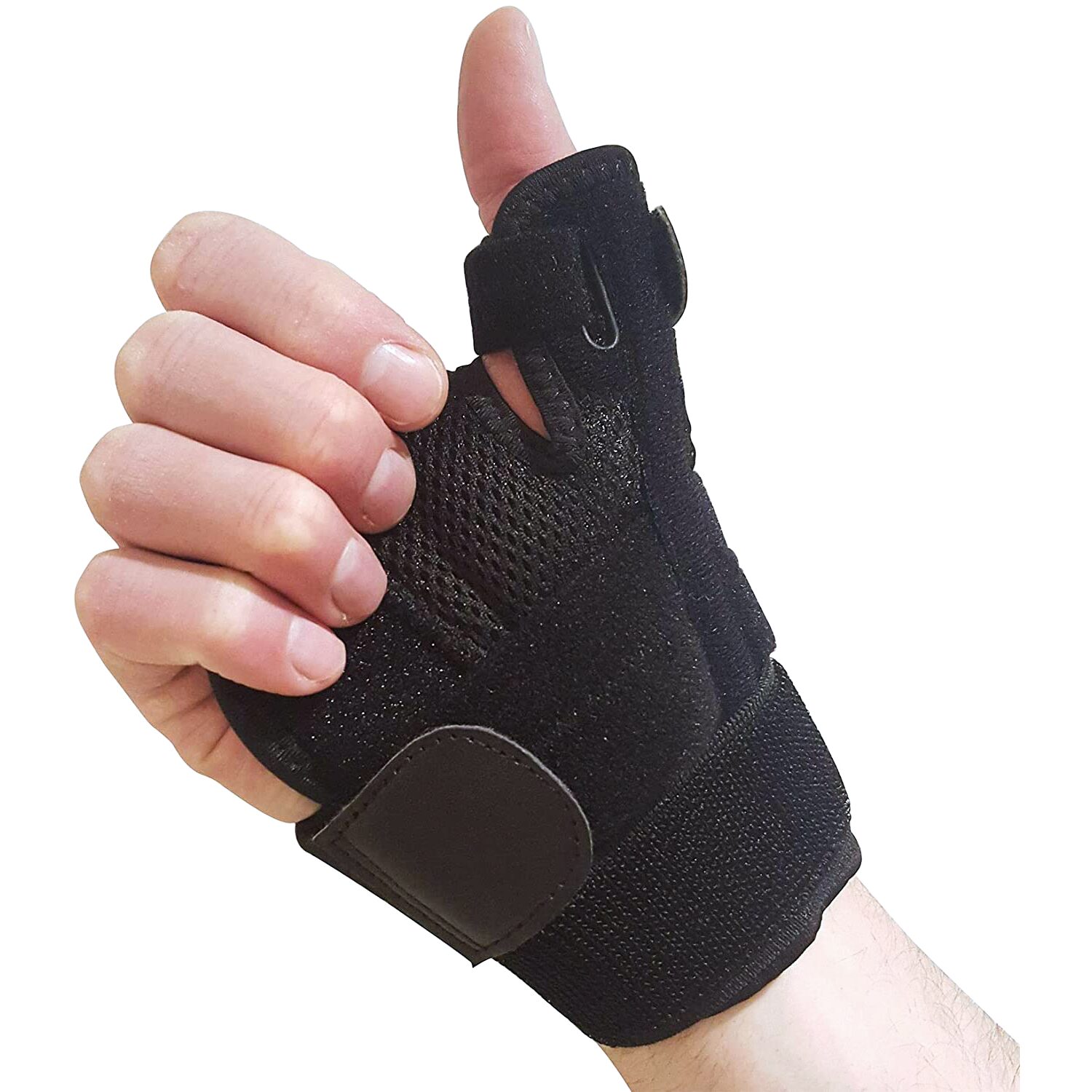
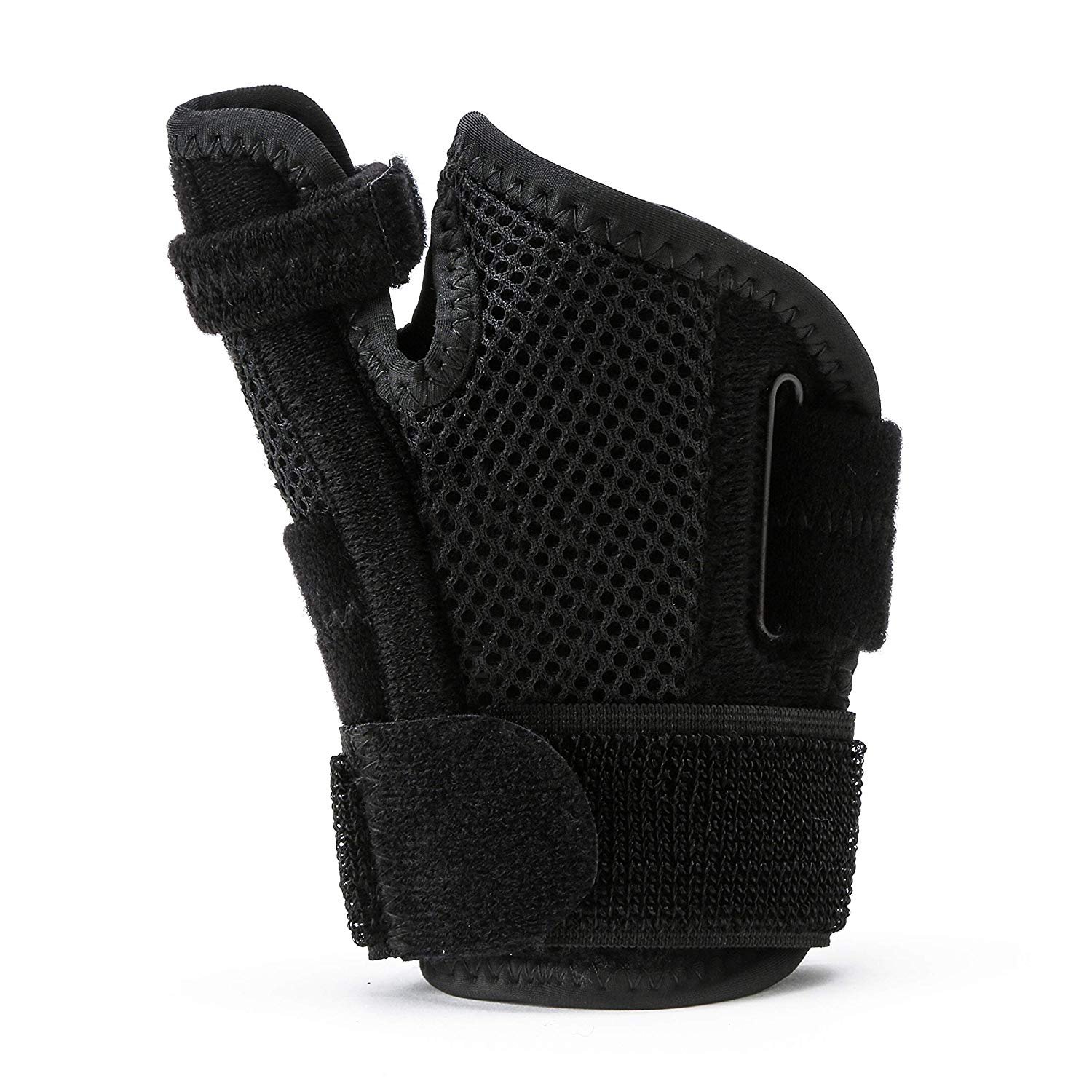
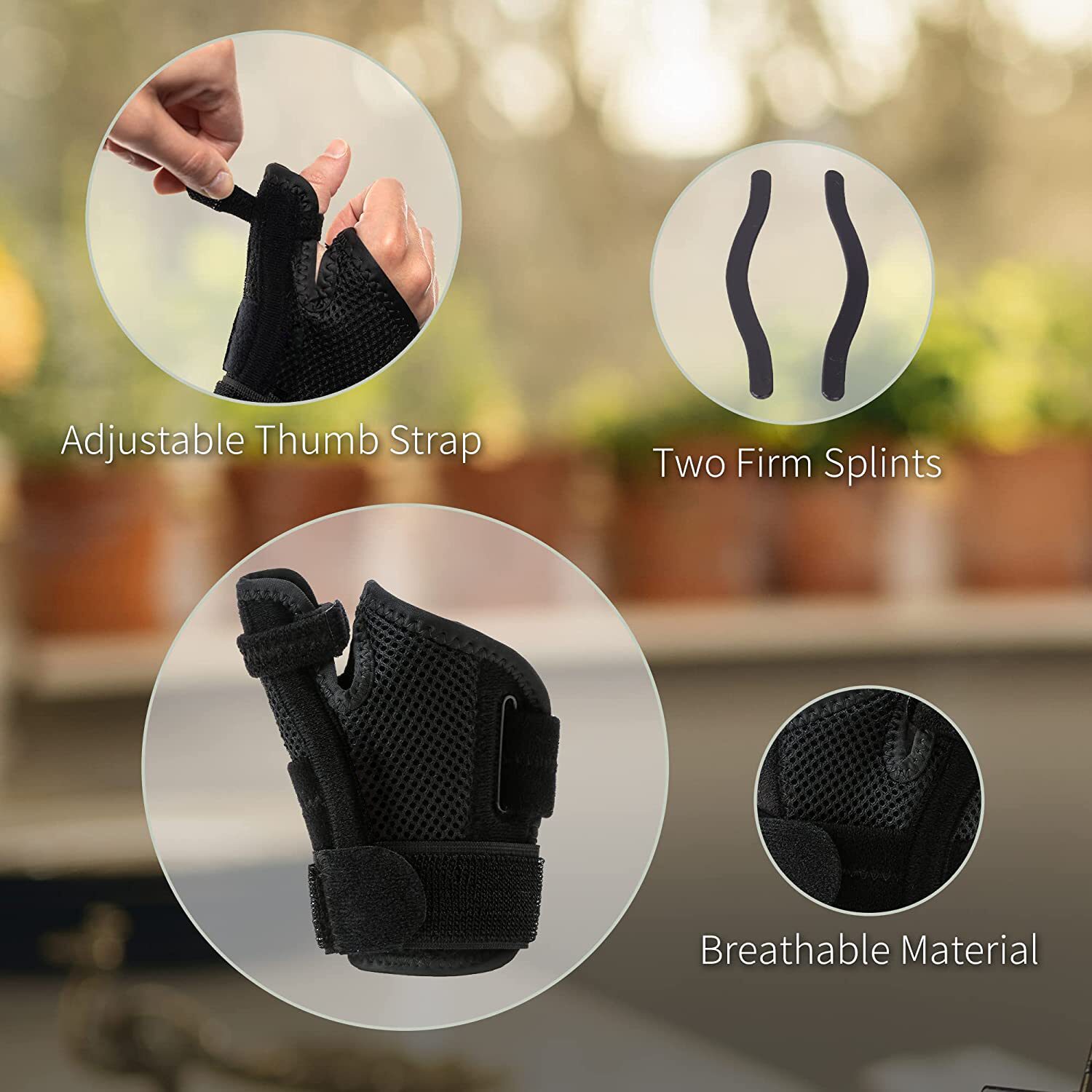
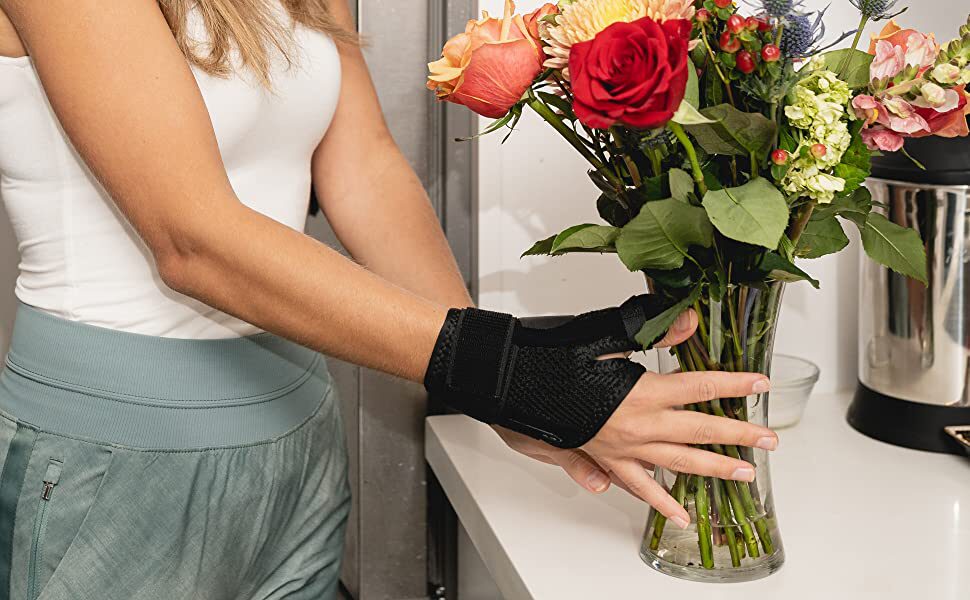
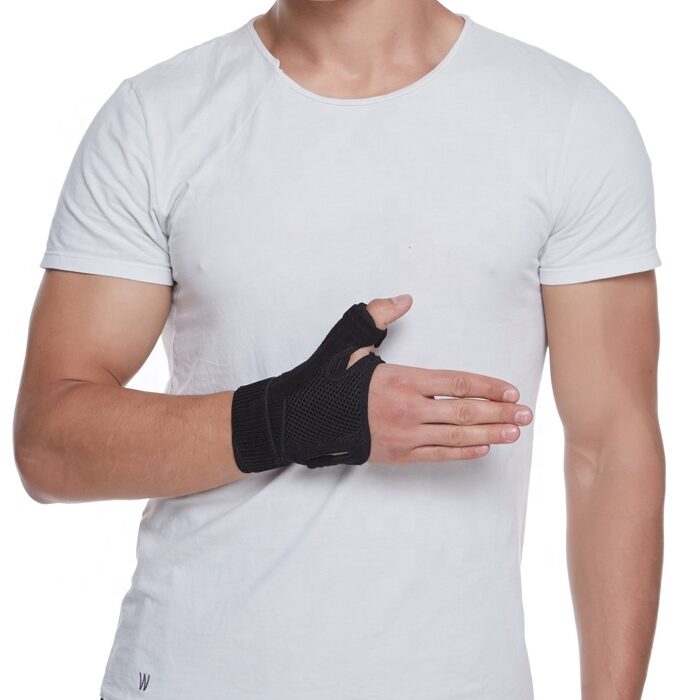
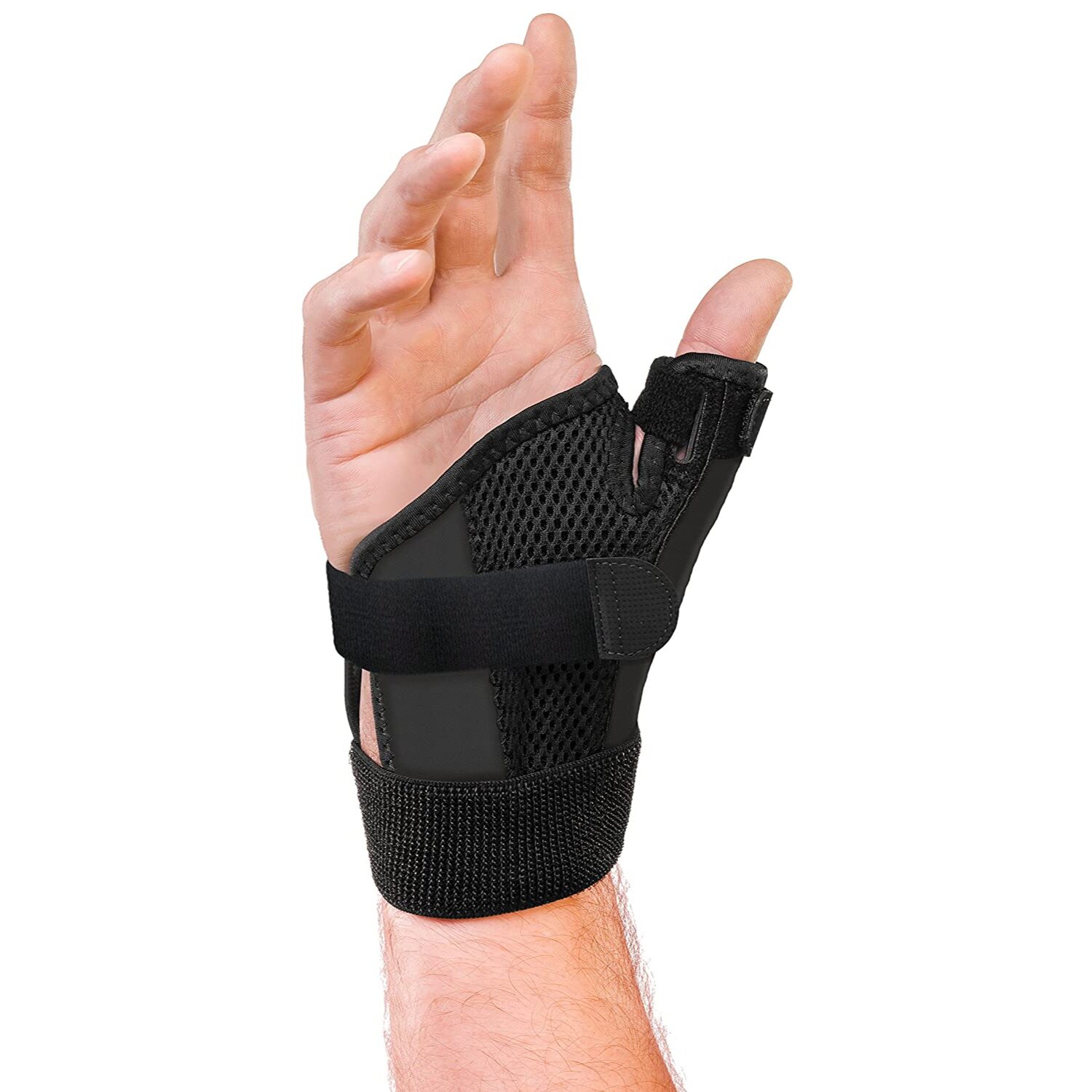
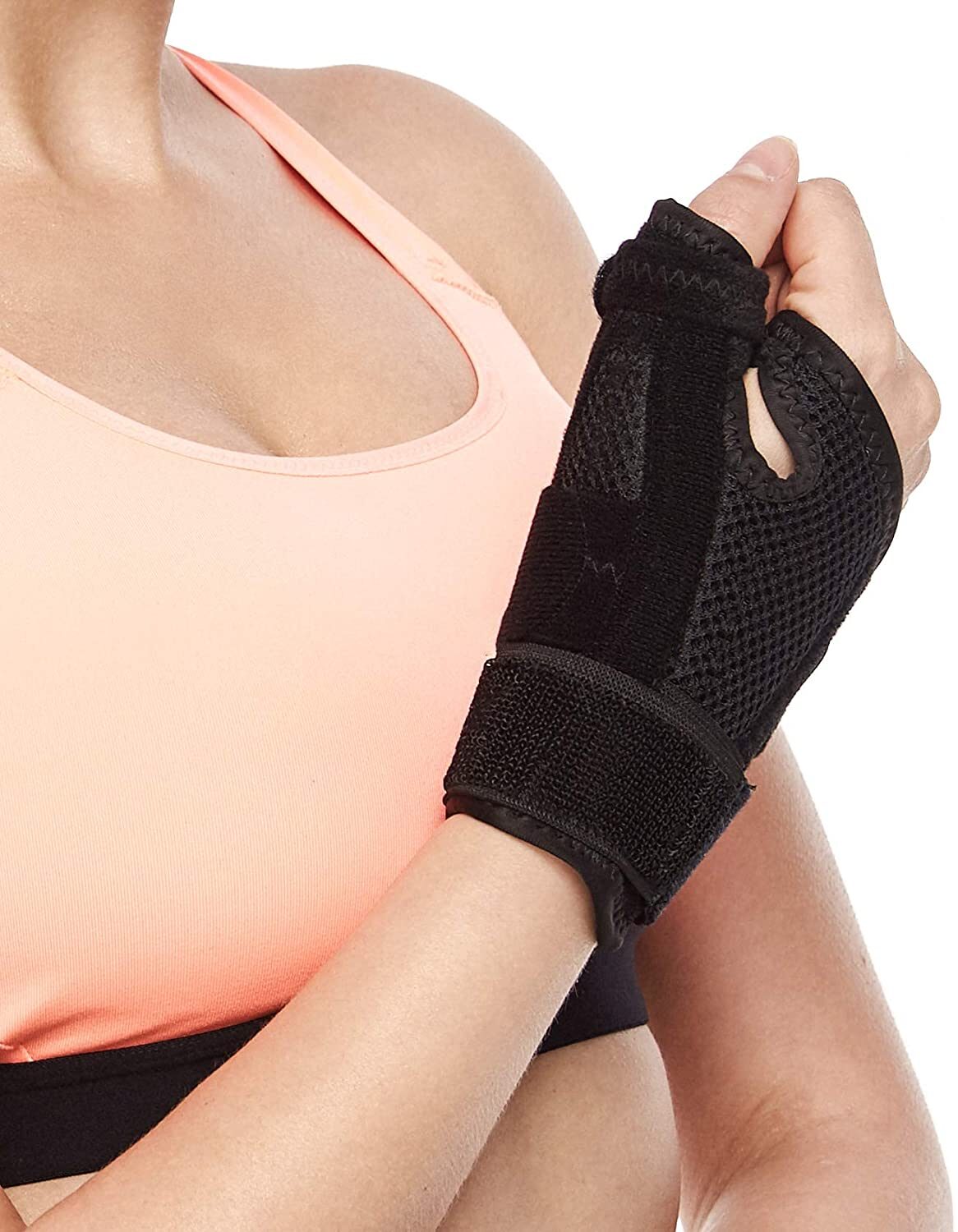
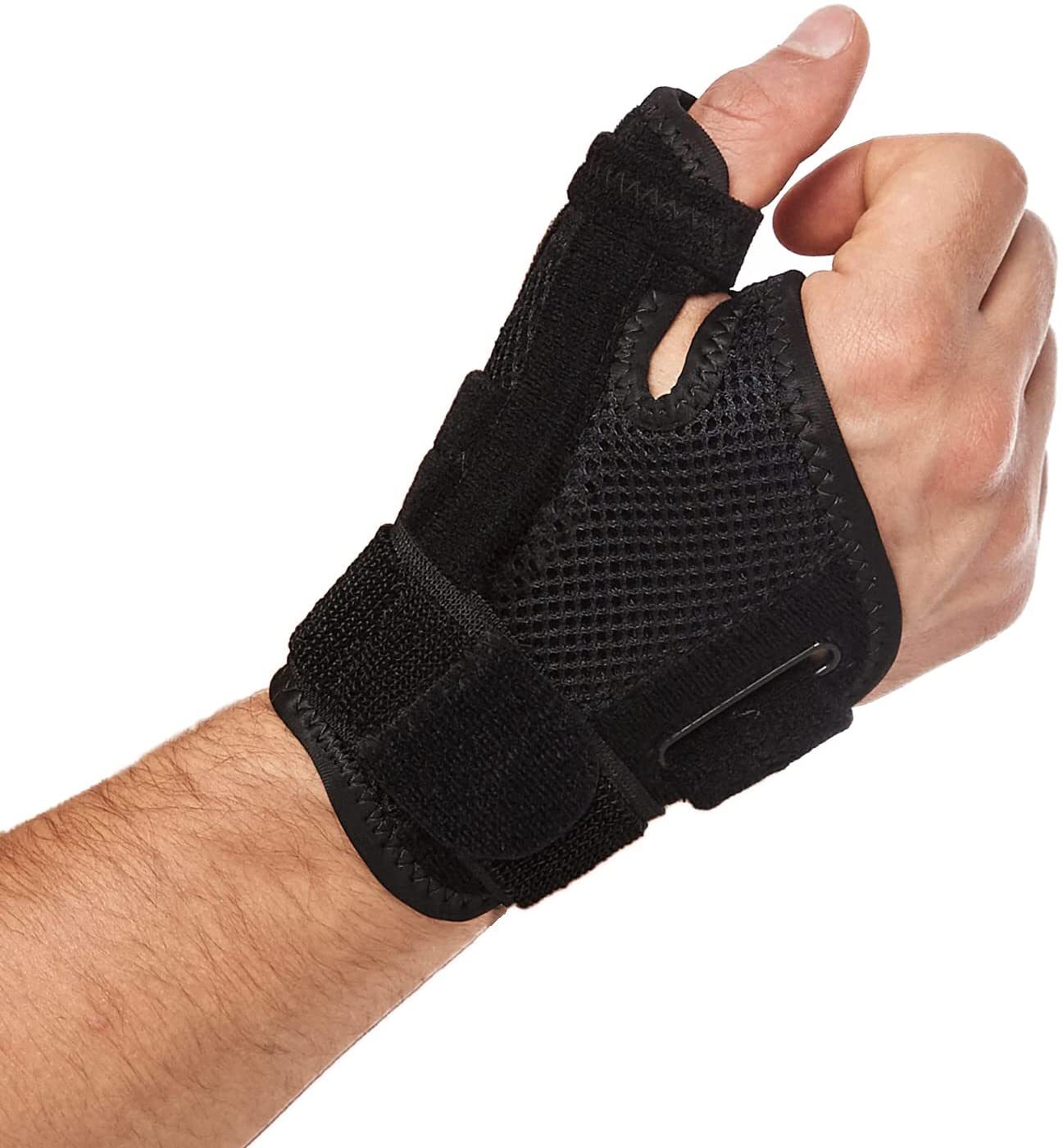
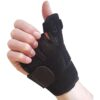
- A thumb and wrist support brace with a built-in metal splint, in a thumb spica shape that leaves your fingers free
- Built for the weeks after a thumb injury, when the thumb needs to be kept steady while it heals
- For dislocations, fractures, sprains and strains, and for carpal tunnel syndrome where steadier positioning helps
- May also help some people with thumb-base arthritis or wrist strain
- The fixed metal splint runs the length of the thumb, holding it short of the end of its range where a healing ligament is easiest to stretch
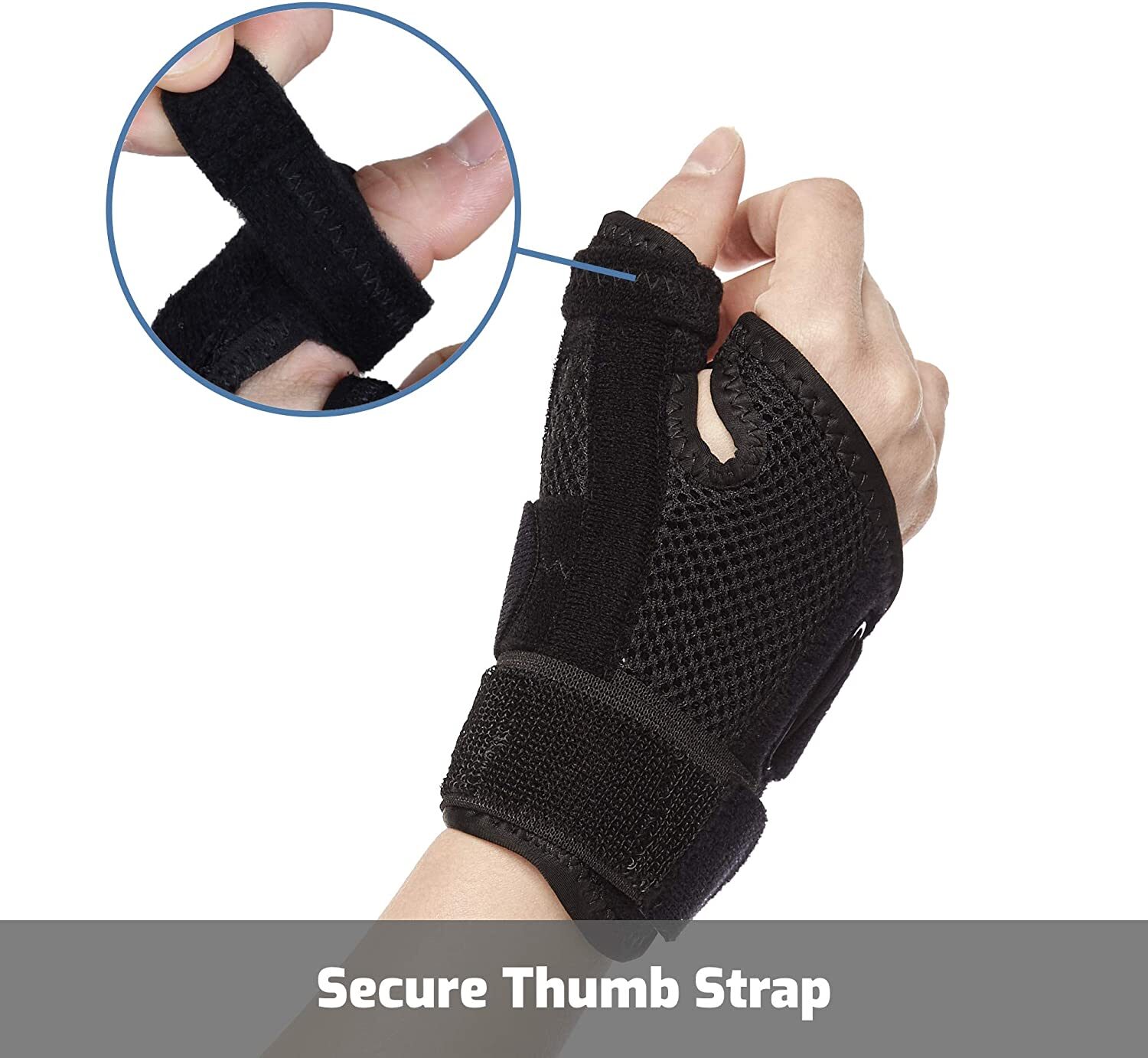
- Adjustable elasticated straps around the thumb, palm and wrist stop the brace pivoting or sliding
- Gentle compression from the straps helps limit fluid pooling around the injured joint
- Soft padding cushions the base of the thumb, the tenderest point for most thumb injuries
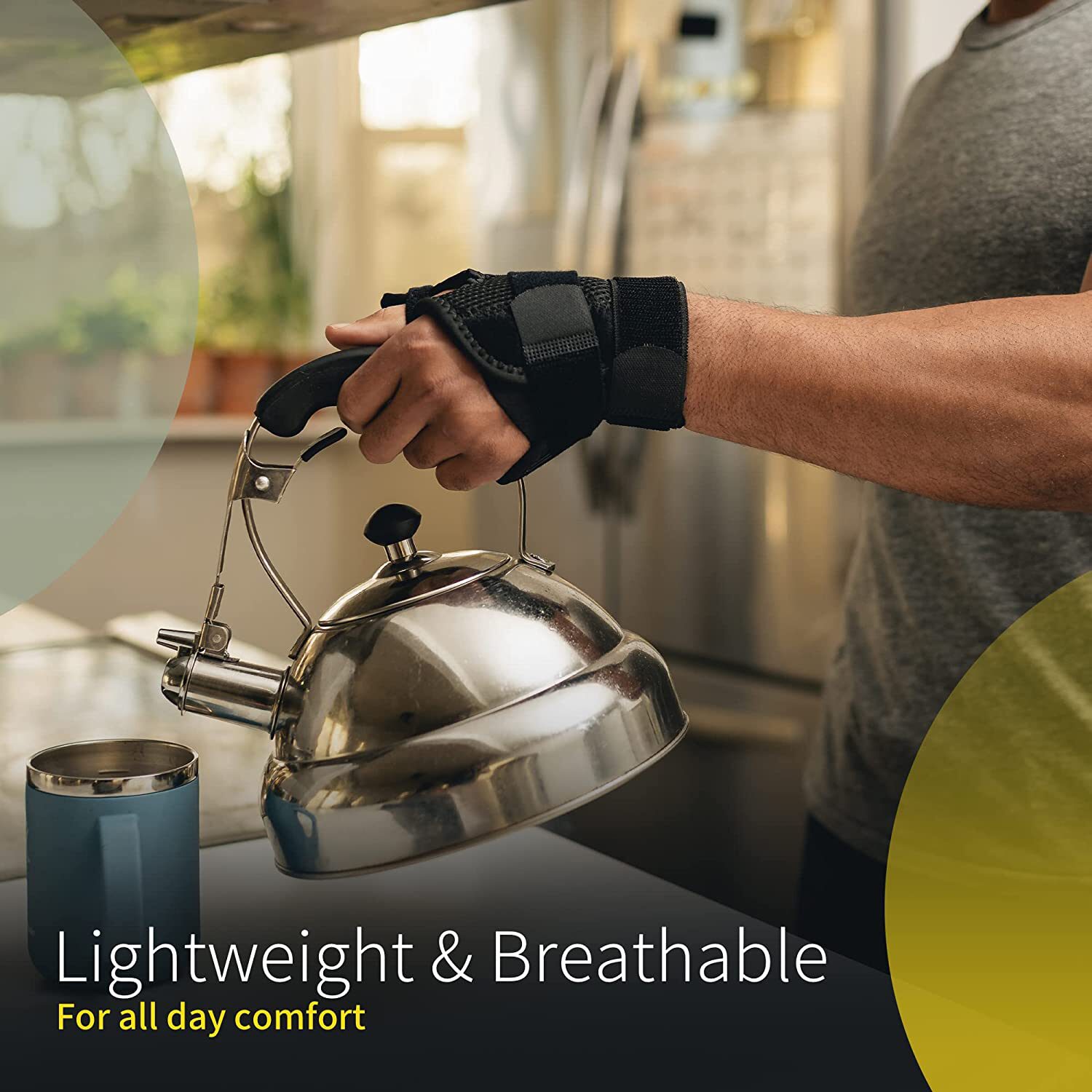
- Breathable fabric and ventilation holes help keep the hand drier during longer wear
- One adjustable size, suitable for most adults, for the left or right hand
- Works alongside the P.R.I.C.E. recovery approach (Protection, Rest, Ice, Compression, Elevation)
- Wear time depends on your injury and your clinician’s advice; in the early stage, that may mean most of the day
- Check your fingers for warmth, colour and sensation each time you put the brace on, and loosen the straps if anything feels numb, tingly or cold
- This brace doesn’t treat or prevent blood clots, and it shouldn’t be relied on for that
Thumb Support Brace for a Dislocated Thumb: Support, Protection and Comfort While Your Thumb Heals
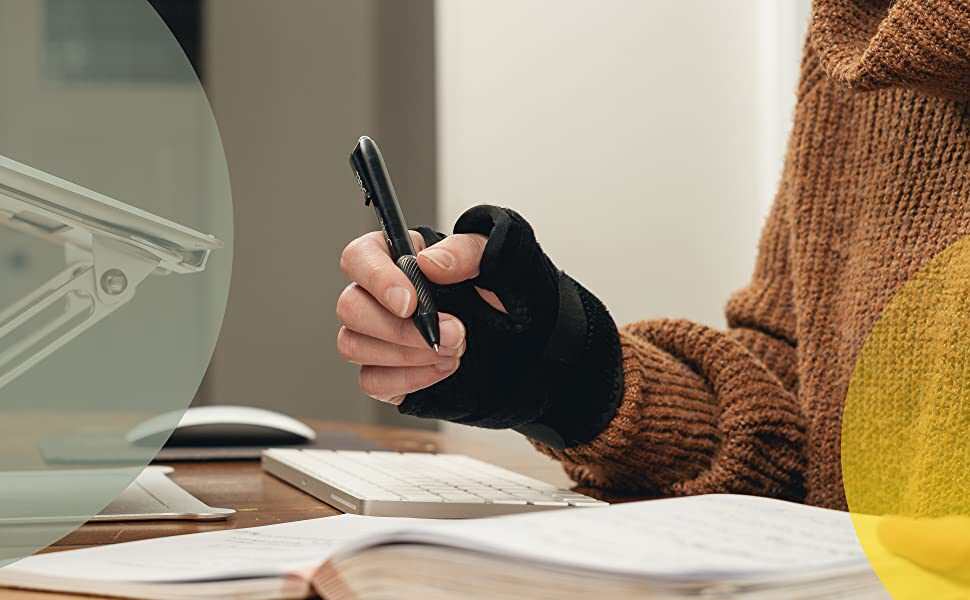
A dislocated thumb changes how you use your whole hand. Gripping a mug, turning a key, holding a pen, fastening a button, pulling a zip — all of it becomes slow, awkward and painful. That’s because the thumb does far more work than most people realise. Take it out of action and your hand loses a large part of its grip and almost all of its fine control.
This brace from NuovaHealth is built for the weeks that follow a thumb injury. It supports the thumb and the wrist, holds the thumb in a steadier position, and applies gentle compression to help ease pain and swelling. A fixed metal splint runs along the thumb to give firm, steady support. Adjustable elasticated straps with secure fastenings wrap around the thumb, palm and wrist, so you can set the level of hold to suit you. The padding is soft, the materials are lightweight and breathable, and the ventilation holes and moisture-wicking fabric help keep your hand drier and more comfortable during longer periods of wear. It comes in one adjustable size, suitable for most adults, for men and women, and it fits either the left or right hand.
It’s designed to be worn alongside the P.R.I.C.E. recovery approach, and it suits the common thumb and wrist injuries where steadier positioning is useful, from a dislocated thumb or fracture to a sprain, strain or carpal tunnel syndrome. It may also help with thumb-base arthritis and wrist strain. It’s a support tool, not a cure, and it works best as part of a plan you’ve discussed with your GP, physiotherapist or hand therapist.
What a Dislocated Thumb Actually Involves
A dislocation happens when the bones that meet at a thumb joint are forced out of their normal line. The thumb has two joints that are commonly involved. The first sits at the base of the thumb, where the thumb bone meets the bones of the wrist. The second sits roughly halfway down the thumb, where the two thumb bones meet.
Those two joints do different jobs, which is why an injury to either one interferes with the hand in its own particular way. The base joint carries the load when you pinch and grip. It’s the pivot that lets you press your thumb against your fingertips and hold on: turning a key, holding a pen, lifting a kettle. The middle joint is the one that bends as your thumb opens and closes, and it steadies the thumb while you use it. Both are small joints that rely heavily on soft tissue for stability, and both can be pushed out of place by a fall onto an outstretched hand, a twisting force, or a blow during sport.
Around each of those joints sits a set of ligaments and a capsule. Ligaments are tough, fibrous bands that connect one bone to another and hold the joint together. The capsule is a sleeve of tissue that wraps around the whole joint, sealing it and adding another layer of stability. When a thumb dislocates, the bones separate and those structures take the strain. The ligaments stretch, and sometimes tear. The capsule stretches too. That’s why a thumb that’s been put back into place can still feel sore, weak and unreliable for weeks afterwards. The bones are lined up again, but the tissue that holds them there is still healing.
To understand why this matters so much, it helps to know what the thumb actually does. Unlike your other fingers, the thumb sits at an angle to the hand and can swing across the palm to meet the fingertips. That movement is called opposition, and it’s what allows you to pinch. Pinching is the foundation of almost every precise hand task: picking up a coin, holding a needle, turning a small screw, gripping a pen, lifting a kettle. Your other fingers can curl around an object, but without a working thumb, they can’t lock onto it properly. So when the thumb is injured, the weakness spreads through everything your hand does.
There’s a longer-term reason to take a thumb dislocation seriously, too. If the ligaments around the joint heal loosely, the joint can stay unstable. An unstable thumb base gives way under load, aches after use, and can develop wear over the years. Protecting the joint properly in the early weeks gives those ligaments the best chance of healing at the right length and tension. That’s the job this brace helps with.
Why Thumb Injuries Behave the Way They Do
When you injure your thumb, the body responds with inflammation. Inflammation isn’t a fault in the system — it’s the first stage of repair. Blood vessels widen and become more permeable so that immune cells and repair materials can reach the damaged tissue. That process brings heat, redness, swelling and pain. It’s efficient, but it’s also uncomfortable, and it’s meant to be short-lived. The trouble starts when the injured area keeps being used as though nothing has happened.
Swelling is the main reason a healing thumb feels stiff. Fluid collects in and around the joint, and that extra fluid physically restricts how far the joint can move. It also increases pressure on the surrounding tissue, which adds to the pain. If swelling is allowed to build, the thumb can stiffen up quickly, and stiffness is often slower to resolve than the original injury.
Movement is the other half of the problem. The thumb is in near-constant use. Even when you think you’re resting, you’re probably still gripping, pinching and twisting: opening a door, holding a phone, pulling on a sock. Each of those actions loads the healing ligaments. Load them gently and they’re guided into repairing in the right direction. Load them hard, or repeatedly, and the healing tissue gets stretched and irritated before it’s had time to strengthen. This is why simply pushing on through the pain rarely works out well. The thumb keeps getting pulled back into the same irritated state, and recovery drags on longer than it needed to.
So the aim during recovery isn’t total stillness. A joint that’s completely immobilised for a long time becomes stiff, and the muscles around it weaken, which makes the return to normal use harder. The aim is protected movement: enough support to stop the movements that cause pain and further damage, while still allowing you to use your hand for light, necessary tasks. That balance is difficult to strike on your own, which is where a splinted brace helps.
Circulation plays a part too. Healing tissue needs a steady supply of oxygen and nutrients, carried in the blood, and it needs waste products to be carried away. Some of that drainage happens through the lymphatic system — a network of vessels that collects excess fluid from the tissues and returns it to the bloodstream. When swelling is heavy, that drainage slows down, and so does the delivery of everything the repair process needs.
Signs You Might Notice After a Thumb Injury
The signs vary with how badly the thumb is injured and which structures are involved, but most people notice the same few things. Pain is usually the first, often sharp at the moment of injury and then settling into a deep ache. It tends to be worse when you pinch, grip or twist, and it can flare after a period of use.
Swelling commonly builds over the thumb and into the web of skin between the thumb and the index finger. Bruising may appear within a day or two, sometimes spreading into the palm or up towards the wrist. The joint often feels tender to press. Many people describe a sense of the thumb not being secure, as though it might give way under a firm grip. Grip strength usually drops, and the hand can tire much faster than it used to.
Stiffness is common first thing in the morning or after the hand has been still for a while, and the reason is straightforward. When the hand isn’t moving, fluid settles around the joint and the tissue tightens up. A few minutes of gentle use usually eases it, which is why the stiffness is worst before you’ve started rather than after. That’s also why the thumb often feels sorest after a long spell of driving or sitting at a desk, when it’s been held in one position without much movement.
These symptoms are the body signalling that the thumb needs care, not evidence that something has gone wrong. They’re a normal part of the healing process, and they’re also the feedback that tells you when you’re doing too much.
Why a Thumb Support Brace Makes Sense
A healing thumb needs protection without being kept completely still, and a splinted brace is built around that balance. A simple elastic wrap can add compression, but it can’t stop the thumb from bending or straightening. A rigid or semi-rigid splint can. The difference comes down to how small the movements are: the ones that most irritate a healing thumb joint are the constant bending and straightening that happens almost without thinking.
A healing ligament is at its most vulnerable when the joint is taken to the end of its range. That’s where the original injury happened, and it’s where the healing tissue is easiest to stretch again. The ligament hasn’t yet regained its normal length and strength, so it reaches its limit sooner than it did before the injury, and it becomes sore earlier than it used to. Holding the thumb in a steady, neutral position keeps it out of that vulnerable end of the range for most of the day. Neutral here means the thumb isn’t bent forward, isn’t stretched back and isn’t pulled across the palm. It’s simply held in the position where the joint sits most naturally and the surrounding tissue is under the least tension. That gives the ligaments the best conditions to heal without being repeatedly stretched.
There’s also a practical benefit that’s easy to overlook: confidence. When a joint feels unstable, you instinctively guard it, and guarding makes your hand tense and tiring to use. A brace that holds the thumb securely removes some of that uncertainty. You’re less likely to flinch mid-task, and more likely to use your hand normally but carefully.
The wider set of steps a splinted brace fits within is called P.R.I.C.E. — Protection, Rest, Ice, Compression and Elevation. It’s a widely used set of first steps for soft tissue injuries. Protection means keeping the injured area from further strain. Rest means giving it a genuine break from the loads that irritate it. Ice is used early on to ease pain and limit swelling. Compression applies a gentle, even pressure around the area to help control swelling and support circulation. Elevation means raising the hand above the level of your heart when you can, so that fluid drains away from the injury rather than collecting around it.
A splinted brace covers two of those five steps. Protection comes from the splint and straps limiting how much the thumb can move. Compression comes from the elasticated straps sitting snugly around the thumb and wrist. It doesn’t replace the other steps, and it doesn’t replace assessment by a clinician. Treat it as one practical piece of a wider plan, not the whole of it.
A brace can’t repair a torn ligament or knit a fracture. What it can do is hold the injured thumb still enough for your body to carry out that repair in the right conditions.
How This Brace Is Designed to Help
A fixed metal splint in a thumb spica shape
The brace is built in a thumb spica style. That simply means it wraps around the thumb and the wrist while leaving your fingers free. It’s a common shape for thumb supports because it steadies the thumb without taking away your ability to use the rest of your hand.
Running along the length of the thumb inside the brace is a fixed metal splint. Because it’s built in rather than removable, it can’t shift or be left out by mistake. The support is there every time you put the brace on. The splint runs the full length of the thumb rather than stopping at the base, which lets it steady both joints at once.
When you grip a mug or lift a pan, the thumb is held short of the point in its range where a healing ligament is easiest to stretch. The tissue isn’t being pulled at the same place it was damaged. The splint also helps protect the joint from knocks and from sudden loading during everyday tasks.
The overall level of hold is moderate to firm, and it’s adjustable. Tighten the straps and the support becomes firmer, which is useful in the early days when the thumb is sore and vulnerable. Loosen them slightly and the brace feels less restrictive, which suits the later stages when you’re beginning to use your hand more. That ability to adjust the support up or down is what makes the same brace useful across the whole recovery, rather than only the first week or two.
Adjustable straps for a secure, personalised fit
Three elasticated straps with secure fastenings wrap around the thumb, the palm and the wrist. Working across those three points keeps the brace stable instead of pivoting or sliding. A brace that shifts around rubs against the skin, adds irritation, and stops providing the support it was meant to give. The moment it needs to hold firm is when you twist something under load: turning a stiff key, lifting a full pan, pulling a stuck zip. Those actions put a sudden pull through the thumb, and a brace that’s shifted out of position by then isn’t holding anything.
The elastic also means the fit adapts to your hand rather than the other way round. Hands vary a great deal in width, palm length and thumb size, which is why an adjustable design makes more sense than fixed sizing. You can set each strap to the tension that gives you support without pressure, and adjust it as swelling changes. Swelling often reduces over the first week or two, so a fit that was right on day one may need tightening later.
The straps also pass around the wrist, which extends the support beyond the thumb itself. That holds the whole base of the hand in a steadier position, so the brace isn’t supporting the injured joint in isolation.
Compression, swelling and comfort
The straps also provide gentle compression around the thumb, palm and wrist. That steady pressure helps keep fluid from pooling around the injured joint, which is one of the reasons a swollen thumb feels so stiff and heavy. It also supports the veins in returning blood from the hand back towards the heart, which can help when an injury has left the circulation in the area sluggish. The difference tends to show up most after a spell of driving, typing or holding a phone, when the hand has been still and hanging low and fluid has had the chance to gather.
The key word is gentle. Compression that’s too firm restricts circulation rather than helping it, and that’s why the straps are adjustable. You’re aiming for a snug, steady hold rather than a tight one: firm enough to feel supported, with enough give that your hand still feels comfortable after an hour or two. Readjust if the hold starts to feel heavy as the day goes on.
Soft, breathable materials for longer wear
A brace only helps if you actually keep it on, and that’s harder than it sounds when a support is hot, heavy or scratchy. The materials here are soft, lightweight and breathable, with a padded construction that cushions the thumb and wrist against the splint and the straps. The padding is most useful over the base of the thumb, which takes the most pressure from a strap and is usually the tenderest part of an injured thumb. Having cushioning there is what makes longer spells of wear tolerable rather than something you want to take off after twenty minutes.
There are ventilation holes built into the brace to let air move around the hand, and the fabric has moisture-wicking properties, which means it draws sweat away from your skin rather than holding it against you. The result is a hand that stays drier, cooler and less irritated during longer periods of wear. That makes the brace practical for all-day use, for exercise and for sport, where a hot, sweaty support would quickly become uncomfortable.
One adjustable size, either hand
The brace is made in one adjustable size, to fit most adults comfortably, for both men and women. The design is symmetrical, so it works on the left hand or the right hand without needing a different version. If your hands are unusually large or unusually small, check that the straps give you a secure fit without having to over-tighten them. A brace should feel supportive, not pinching.
How to Fit and Wear the Brace
Start by sliding your thumb into the brace, with the splint running along the length of the thumb rather than across it. The splint sits in one fixed position inside the brace, so let it settle where it naturally lies and make sure the brace isn’t twisted around your hand. Your fingers should be free and unobstructed.
Next, bring the straps around the thumb, the palm and the wrist and fasten them one at a time. Work from the thumb outwards. Once everything is fastened, check the fit before you carry on with your day. The brace should feel snug and steady, with no slack and no sliding, but it shouldn’t feel tight or pressing. You should be able to slide a fingertip under each strap without much effort.
Then check your fingers. They should feel warm, with normal colour and normal sensation. If they feel numb, tingle, turn pale or turn cold, the straps are too tight. Loosen them and check again. This is the one check worth repeating every time you put the brace on, and any time you’ve tightened it.
How long you wear the brace depends on your injury and on what your clinician has advised. In the early stage, that may mean most of the day. As the thumb settles, many people find they only need it for activities that load the thumb, such as gripping, lifting, twisting, driving or sport, and can leave it off for quieter periods. Follow the guidance you’ve been given rather than a fixed rule, because a dislocation, a fracture and a mild strain all recover on different timelines.
Take the brace off at least once a day to check your skin and let your hand breathe. If an activity hurts, stop and rest. The brace is there to support your recovery, not to let you push through pain.
What to Expect During Recovery
The first few days are usually about comfort. With the thumb supported, the ache often feels more manageable and the hand feels more secure. Swelling may begin to reduce, particularly if you’re also resting and elevating the hand as advised. You may find the thumb feels stiffer rather than looser at this stage, and that’s normal. The brace is limiting movement, and some stiffness follows.
Over the following weeks, the picture usually improves gradually. Pain on light tasks eases. You may notice you can grip and pinch a little more easily, and that the thumb tires less quickly. Some weeks feel better than others, and that’s normal. A good day is often followed by one where the thumb aches again, particularly if you’ve done more than usual. That’s not a sign the brace has stopped working or that healing has reversed.
Weakness is worth expecting and not worrying about. The muscles around the thumb lose some strength when they’re used less, so a thumb that’s been supported for a few weeks will feel less capable even once the pain has settled. That strength returns as you gradually resume normal use and, where your clinician recommends it, specific exercises. Stiffness often resolves in the same way: steadily, with gentle and progressive movement rather than forcing.
What you shouldn’t expect is the brace doing the healing for you. It creates the right conditions; your body does the repair. It helps to have a realistic sense of how long that takes, because thumb injuries are rarely quick. A mild sprain can settle in a few weeks. A dislocation or a fracture commonly needs considerably longer, and the return of full strength and confidence takes longer still. Being prepared for that makes the slow weeks far less frustrating, and it makes it easier to resist testing the thumb before it’s ready.
Looking After Your Skin and the Brace
Check your hand and thumb each time you remove the brace. Look for red patches, sore spots, marks from the straps or any area that feels unusually tender. If you find one, leave the brace off until the skin has settled, then refit it and check that the strap tension is even rather than concentrated in one place. Keeping your hand clean and thoroughly dry before you put the brace back on helps prevent irritation.
The brace can be hand-washed. Use cool water and a mild soap, rinse it well, and gently press out the excess water rather than wringing it. Let it air dry away from direct heat, and make sure it’s completely dry before you wear it again. Avoid washing machines, tumble dryers and hot water, as these can damage the fabric and the elastic in the straps.
Give the brace a quick look over now and then. Check that the straps still fasten securely, the elastic still holds its shape, and the splint hasn’t bent or worked loose. A brace that’s lost its tension or its shape will no longer give you the support it was meant to provide.
Understanding Your Specific Injury
Most thumb and wrist injuries share the same basic recovery principles, but each one behaves differently in practice. A dislocation, a fracture and a sprain won’t ask the same things of you, and they won’t heal on the same timeline.
Dislocated thumb
The days straight after a dislocation are mostly about protection. The joint has been put back into place, but the ligaments and capsule around it are still injured, and they won’t tolerate being stretched again. This is when the brace is worn most of the day to keep the thumb steady, so the healing tissue isn’t repeatedly pulled, and to shield the joint from the small knocks that are almost impossible to avoid otherwise.
As the soreness eases, the focus shifts. The thumb will feel stiff and the grip weak, and the temptation is to test it. Resist that for as long as your clinician advises. Firm gripping and twisting are the movements to be most careful with, because they load the healing ligament hardest. Many people find the brace most useful at this stage for specific tasks rather than all day: driving, lifting, or anything that puts a sudden pull through the thumb. Full strength commonly takes several months to return, and that’s normal.
Thumb fracture or break
A fracture usually hurts more than a sprain and lasts longer. The thumb swells, bruises heavily, and may be too painful to move at all. Some breaks are small cracks; others are complete breaks. Only a clinician can tell the difference, which is why any suspected fracture needs proper assessment before you decide what to do next.
If your clinician is happy for the thumb to be supported rather than treated another way, a splinted brace can form part of that plan. The fixed metal splint holds the thumb still and in line, which limits the movement that would disturb a healing bone, while the straps let you adjust the fit as swelling changes over the first couple of weeks. Fractures typically need to be protected for longer than sprains, so be guided by your clinician on how long to wear the brace and when to start using the thumb more normally. Don’t remove it early because the pain has eased. A bone that’s no longer painful isn’t necessarily a bone that’s finished healing.
Thumb sprain
Thumb sprains tend to happen in a single moment, and they usually leave you with a clear memory of how it happened. The most common cause is a fall onto the hand, or a sport where you’re gripping something that suddenly moves: a racket, a handlebar, a ball. The thumb is forced sideways, and the ligament on the inner side of the base joint, the one that resists that movement, takes the strain.
The tell-tale sign is pain on specific movements. Pinching, gripping and pushing the thumb away from the hand tend to hurt most, and the joint can feel loose if the ligament is significantly torn. Swelling and bruising usually follow within a day or two.
A sprain needs protection during the phase when the ligament is repairing. A brace that holds the thumb in neutral reduces the pull on the healing ligament while still letting you use your hand for lighter tasks. It also helps prevent the everyday knocks that would otherwise set you back. Mild sprains settle reasonably quickly; more significant ones can take considerably longer, so give it the time it needs rather than testing it too early.
Thumb strain
A strain is a different injury to a sprain, even though the two words are often used interchangeably. A strain involves a muscle or tendon rather than a ligament. Tendons are the strong cords that attach muscle to bone, and around the thumb they’re constantly at work.
Strains tend to build up rather than arrive suddenly. They’re common after periods of repetitive gripping, lifting or using tools, and they produce an ache that worsens with use and eases with rest. The thumb may feel tired and weak rather than unstable, and there’s usually less swelling than with a sprain.
Because strains are caused by accumulated load, the recovery approach is slightly different. Resting the thumb from the aggravating activity is the main step, and support helps you get through the tasks you can’t avoid. The compression and steady positioning a brace provides can ease the ache during the working day, and the padding helps if the base of the thumb is tender. Once the ache has settled, gradually rebuilding tolerance counts for more than continuing to rest.
Carpal tunnel syndrome
Carpal tunnel syndrome affects the hand and wrist rather than the thumb joint itself, but it belongs here because the position of the thumb and wrist affects it. The condition happens when a nerve becomes compressed as it passes through a narrow passage at the front of the wrist, called the carpal tunnel. That nerve supplies sensation to the thumb, index finger, middle finger and part of the ring finger.
The usual symptoms are numbness, tingling or a burning feeling in those fingers, often worst at night or first thing in the morning. Some people find they have to shake the hand to get the feeling back. Grip can feel weak and objects may be dropped. Symptoms usually build gradually rather than appearing overnight, and they can be linked to repetitive hand activity, though not always.
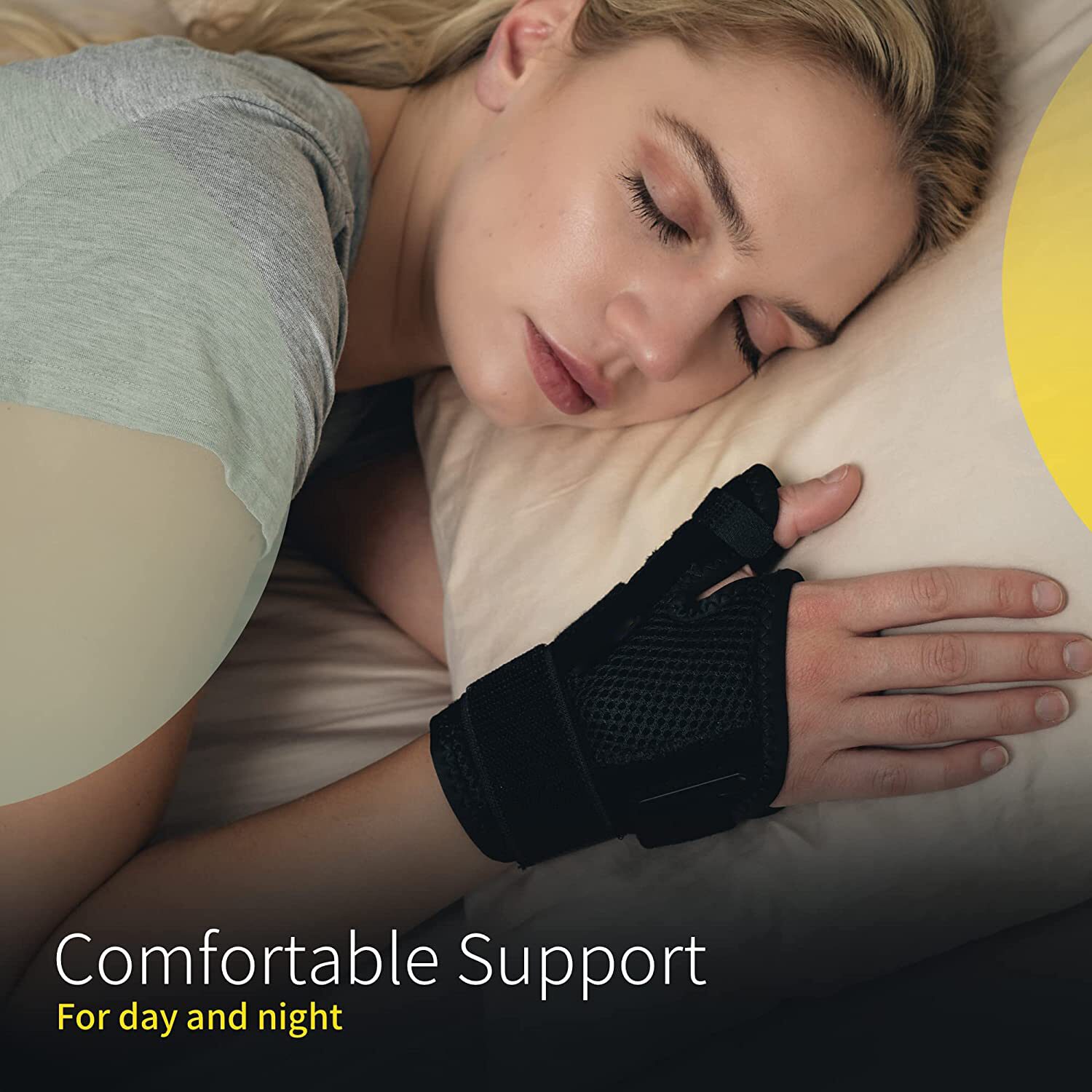
Keeping the wrist and thumb in a steady, neutral position may reduce the pressure inside that tunnel for some people, which is why splinting is often suggested. This brace supports both the thumb and the wrist, so it can be useful if your clinician has recommended a neutral position during the day or overnight. A brace can’t reverse the underlying cause, and carpal tunnel syndrome needs proper assessment. Use it as part of the plan you’ve been given, not as a substitute for one.
Thumb-base arthritis
If the base of your thumb has started to ache after the kind of task it used to shrug off, arthritis is one of the possibilities worth having looked at. The joint where the thumb meets the wrist is the one that lets you pinch and grip, and it’s one of the most heavily used joints in the hand. Over time, the smooth cartilage covering the ends of the bones can thin, and the joint becomes painful and stiff.
The changes usually come on gradually. Pinch-and-grip tasks hurt first: opening jars, turning keys, wringing cloths, holding a pan. The base of the thumb may ache after use and feel tender to press. As it progresses, the joint can lose some of its range and the thumb can drift into a less useful position.
A brace can’t reverse cartilage wear, and it’s important to be honest about that. What it can do, in some cases, is support the joint in a steadier position during the activities that provoke pain, which may make those tasks more manageable. The firm splint limits the movement that loads the joint most, and the compression can ease the ache afterwards. Many people with thumb-base arthritis find a support most useful for specific tasks and for flare-ups rather than all day, every day. If you have this condition, it’s worth checking with your clinician whether a brace suits your situation before relying on it.
Wrist strain
Wrist strain is easy to overlook alongside a thumb injury, because the two are closely linked. The wrist and the thumb move together, and a thumb that’s being protected often means the wrist is working harder to compensate.
A wrist strain affects the muscles or tendons around the wrist rather than the joint itself. It typically produces an ache that worsens with use, sometimes with mild swelling and tenderness. It can follow a single incident or, more often, build up over time through repetitive movement or awkward positioning the wrist was never designed to hold for long spells.
Because this brace wraps around the wrist as well as the thumb, it steadies both areas together, which can reduce the strain that comes from the wrist compensating for a guarded thumb. As with arthritis, this is a use where a brace may help some people. If wrist pain persists or worsens, it’s worth having it assessed so the cause can be identified properly.
Safety and When to Seek Help
This brace is a support, not a medical treatment, and it shouldn’t be used instead of getting an injury properly assessed. If you have a diagnosed dislocation, fracture, sprain, strain or carpal tunnel syndrome, follow the advice you’ve been given by your GP, physiotherapist or hand therapist.
Take the brace off and speak to a clinician if you notice numbness or tingling in your fingers, fingers that turn cold or change colour, pain that’s getting worse rather than settling, swelling that keeps increasing, or any new or unexplained symptoms. Some of these can simply mean the straps are too tight, so loosen them and see whether things settle — but if they don’t, get advice.
Don’t wear the brace over broken, cut or infected skin. If you have a skin condition affecting your hand or wrist, or a health condition that affects your circulation, check with a clinician before using the brace so they can advise you on safe wear.
This brace doesn’t treat or prevent blood clots, and it shouldn’t be relied on for that. If you have a history of blood clots, or you’re at risk of them, speak to a clinician before using it.
Next Steps
Recovering from a thumb injury comes down to three things: protecting the thumb while it heals, keeping the joint from stiffening up, and giving it time. The balance between movement and rest is easy to get wrong. Too much movement irritates healing tissue. Too little leaves you stiff and weak.
A splinted, adjustable brace gives you a way to manage that balance day to day. It steadies the thumb and wrist, cushions the joint, applies gentle compression and lets you get on with the lighter parts of your day. Use it as part of the plan you’ve discussed with your clinician, check the fit and your skin regularly, and adjust the straps as your thumb changes over the coming weeks.
If you’re unsure whether a brace suits your injury, or your symptoms are new, unexplained or more complex than a straightforward injury, it’s worth speaking to a GP, physiotherapist or hand therapist first.
30-Day Money-Back Guarantee
This brace comes with a full 30-day money-back guarantee, so you can try it and see how it fits into your recovery. If it isn’t right for you, you can return it within 30 days for a refund.
Disclaimer
The information on this page is general guidance and isn’t a substitute for individual medical advice, diagnosis or treatment. If you’re unsure about your injury, or your symptoms are new, more complex or not settling, speak to a GP, physiotherapist or hand therapist for personalised advice. No specific outcome is guaranteed from using this brace.
Fast & Secure Checkout Through Paypal
Pay with Paypal the secure payment gateway that accepts all credit and debit cards. Paypal is free and secure and no credit or bank information is ever stored or shared with us.
Fast Dispatch
Enjoy your items soon with quick dispatch via Royal Mail. Expect to have your items between 1-3 working days for domestic orders. 7-10 Working days for international orders.
Return Policy – 30 Day Money Back Guarantee
In the unlikely event, you are unhappy with your purchase you can return it within 30 days for a refund. Please contact us via the form on the contact us page to start your return.
To return an item please send it to: Nuova Health UK, 81 Highfield Lane, Waverley, Rotherham, S60 8AL. Please include a note with your order id so we know who to refund. Please retain your postage receipt as proof of postage. All that we ask is that the item is in the original packaging and unused.
Reviews
There are no reviews yet.