
Copper compression gloves

£10.99inc VAT

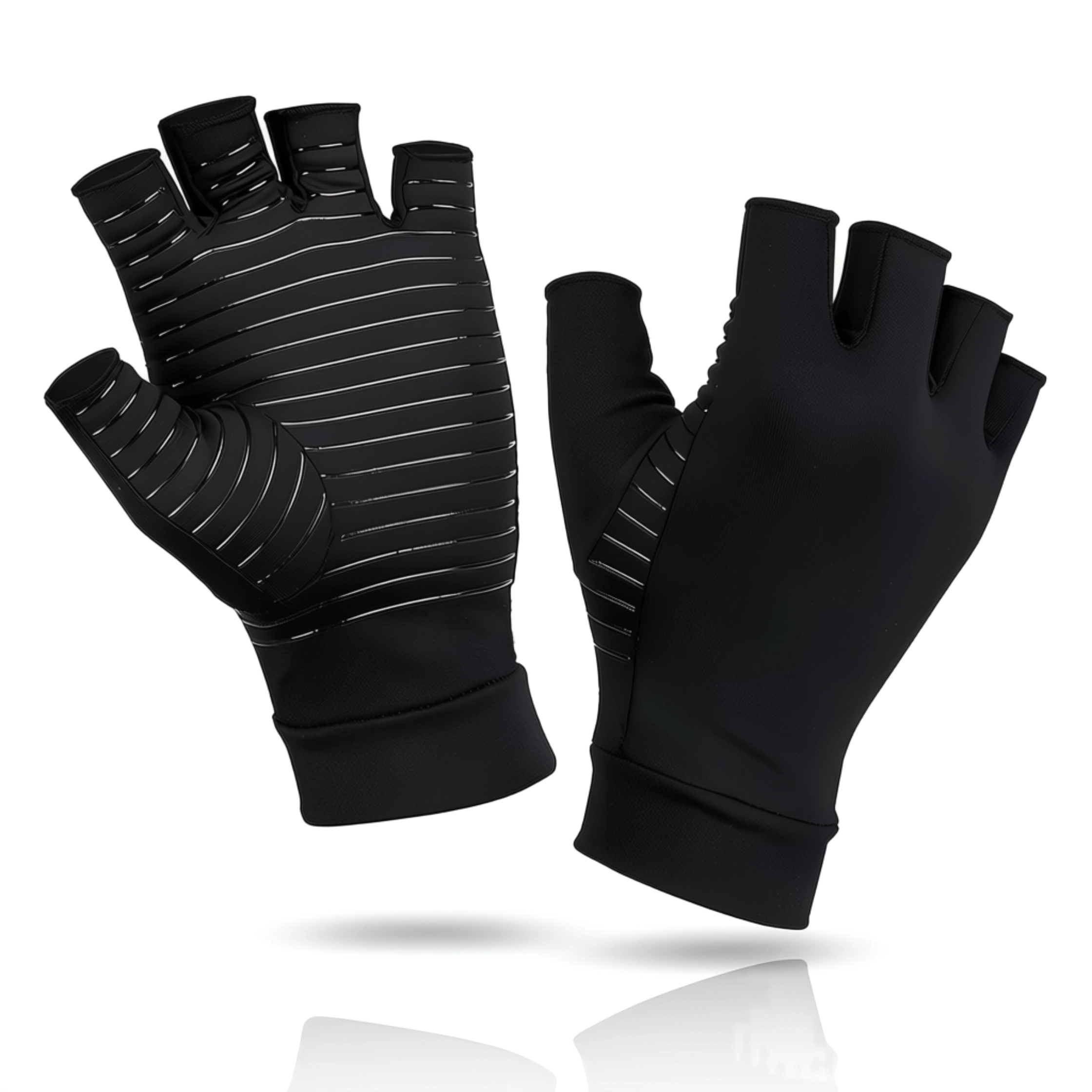
  • One pair of half-finger compression gloves, in a size range that fits men and women
  • Designed for hands that ache, stiffen, swell or feel cold — whether from everyday wear and tear or a diagnosed hand condition
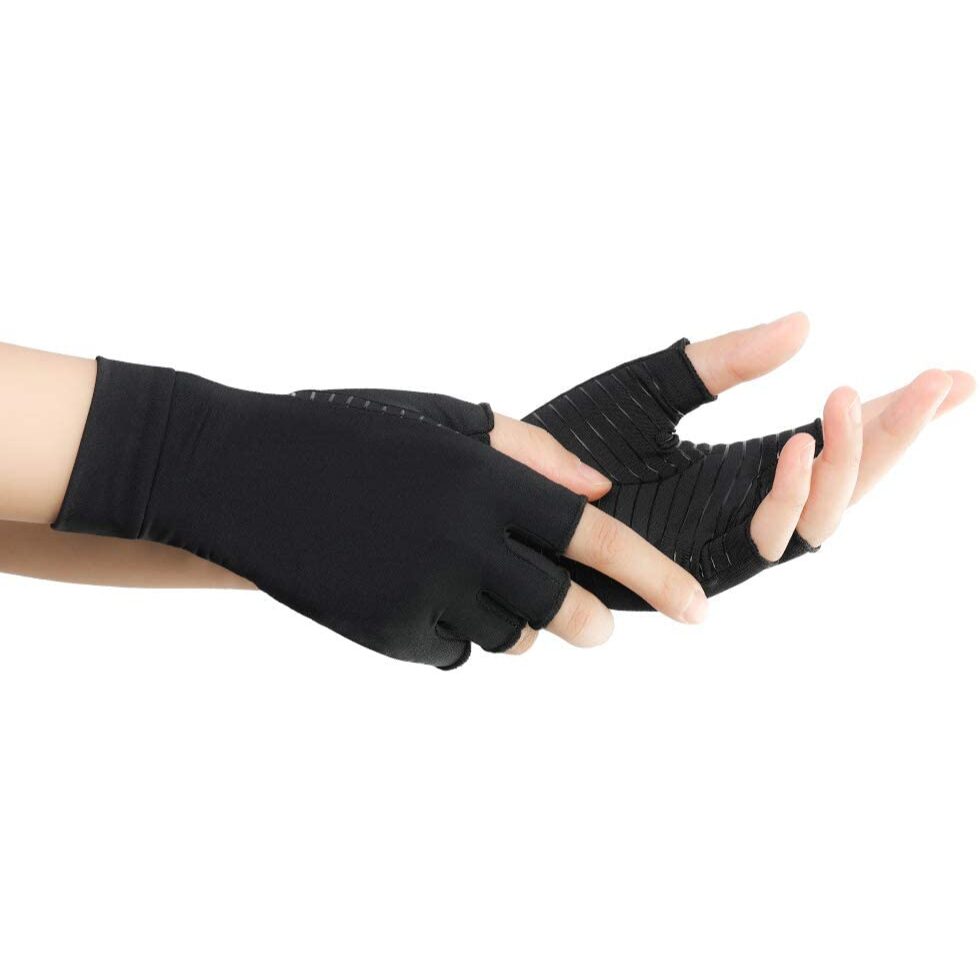
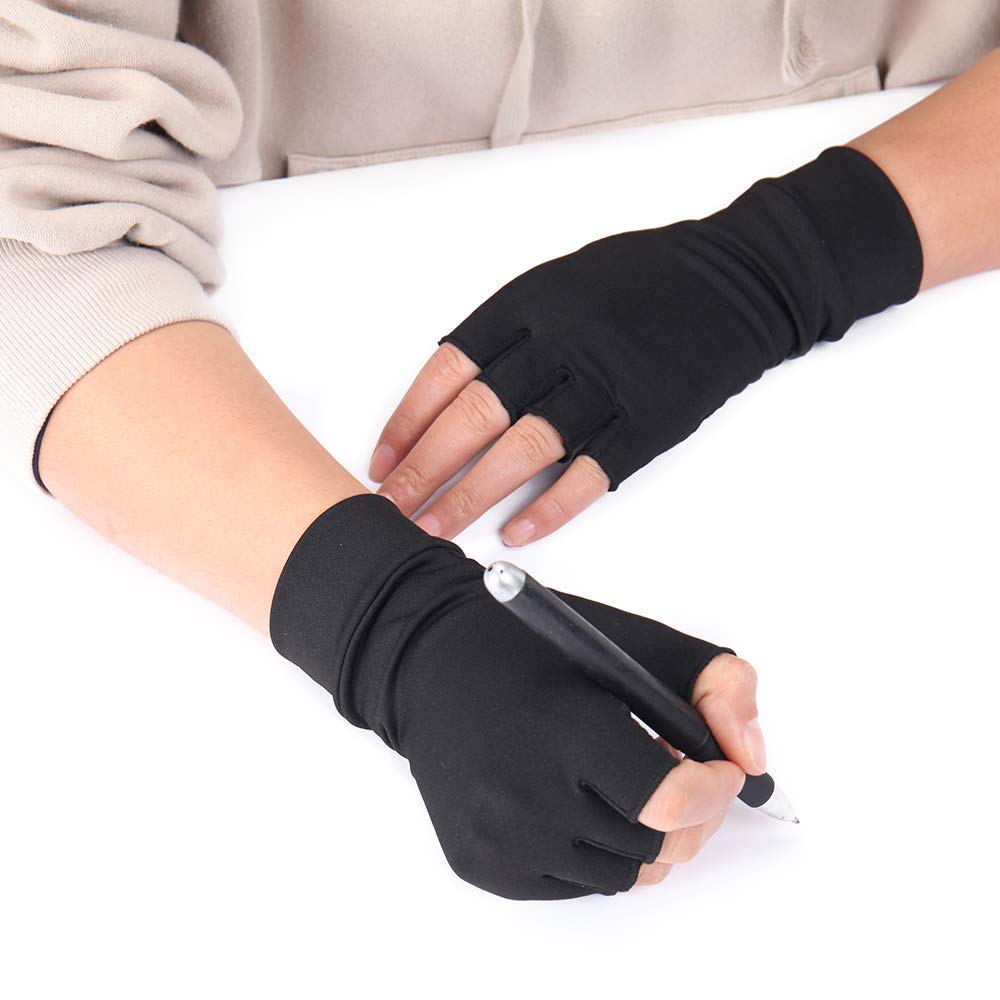
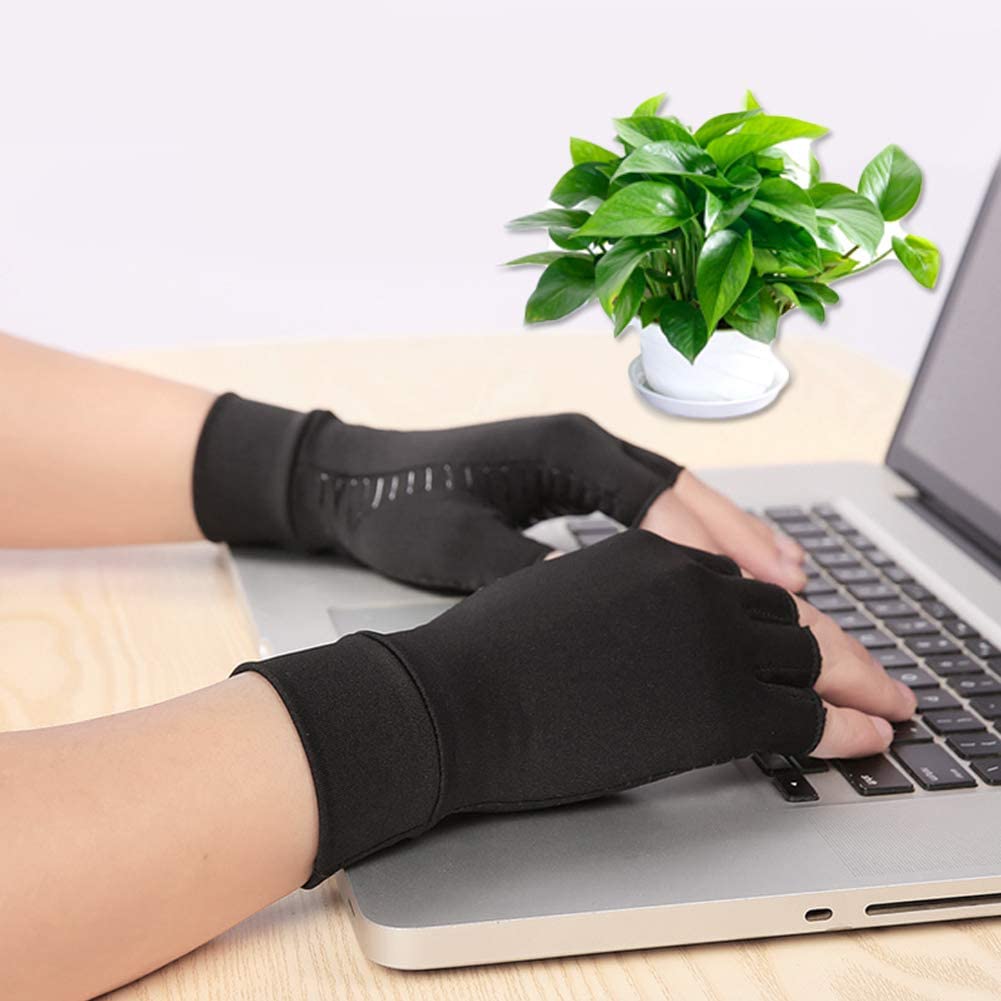
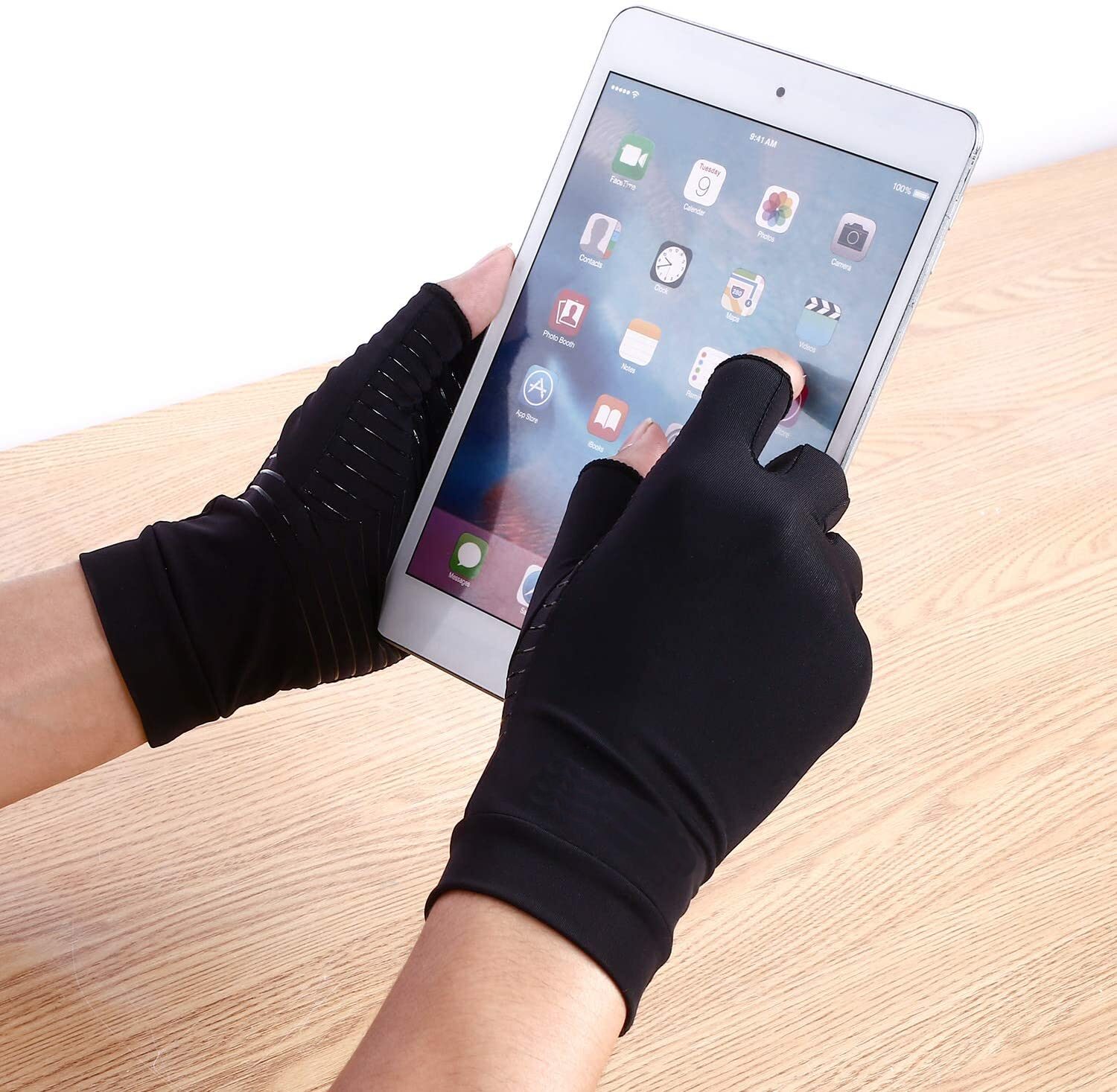
  • Half-finger cut, so your fingertips stay free for buttons, keys, coins, screens and other fiddly tasks
  • Gentle, even compression across the whole hand, spread widely rather than pressing on one joint
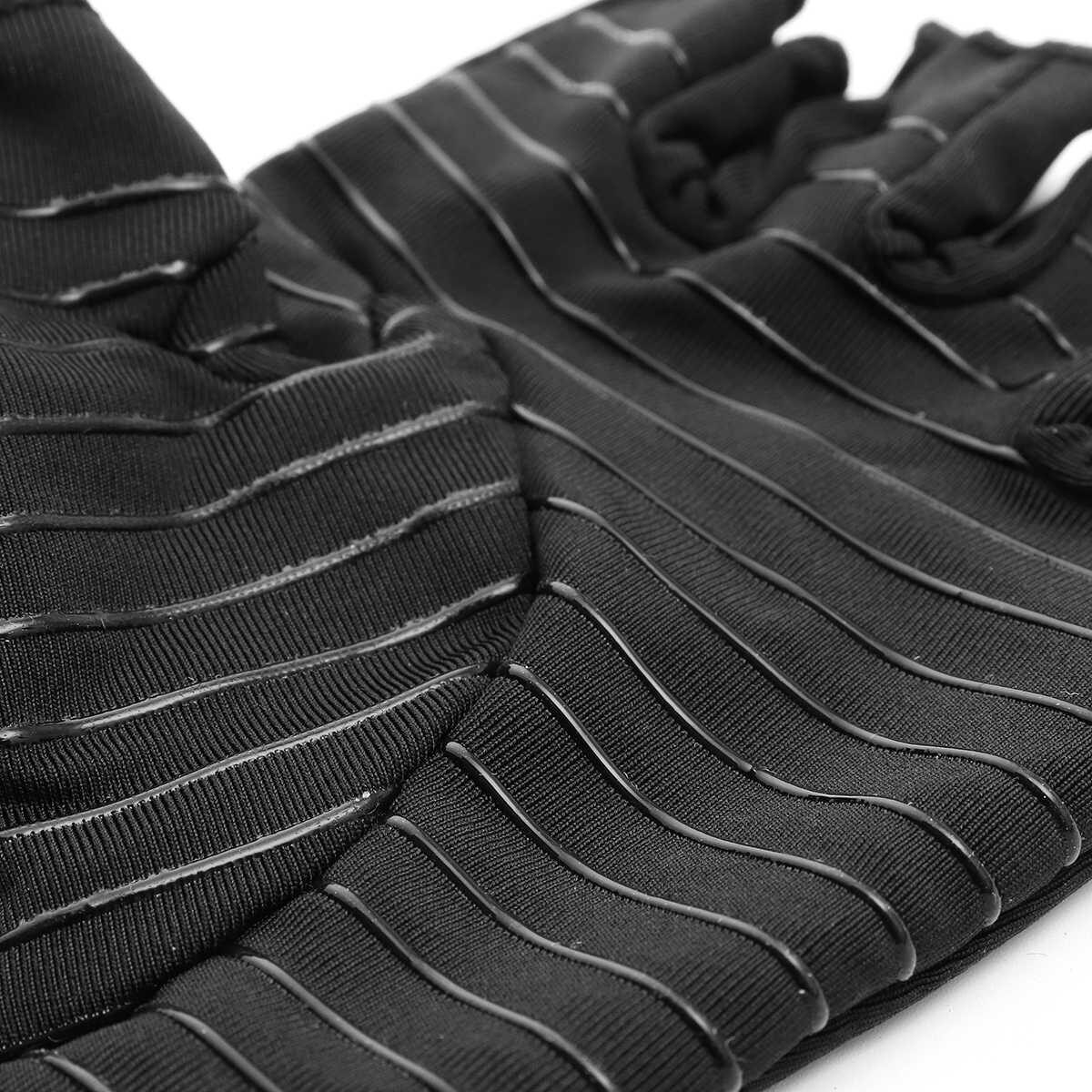
  • Silicone strips on the palm side of the fingers, thumb and palm give you a firmer grip, so you don’t have to squeeze as hard
  • Seams sit flat, with nothing to press into the hand or rub against the skin
  • Soft, durable copper-infused fibres that stretch to fit and spring back, so the compression stays consistent wear after wear
  • Breathable and moisture wicking, to help keep your hands dry during long wear
  • Non-bulky, and slim enough to wear under your usual winter gloves for extra warmth
  • Copper has antibacterial properties, which help reduce bacteria on the skin and lower the chance of infection reaching any small breaks
  • Holds the hand in a relaxed, supported position, so you can carry on using it through the day rather than resting it
  • Three sizes, measured around the hand just below the thumb: Small 13–17cm, Medium 17–20cm, Large 20–24cm. If you’re between sizes, go larger
  • Start with a couple of hours at a time and build up. Take them off if they leave deep marks, numbness or tingling — that’s a sign the fit is too tight
  • Check with a GP first if you have broken skin or a skin condition on your hands
  • Full 30-day money back guarantee if you are not 100% satisfied

Please note there is no guarantee of specific results and that the results can vary for this product.

Clear

Copper Compression Gloves — half-finger support for hands that ache, stiffen and swell

Your hands do a great deal in a day. They open jars, carry bags, grip a rail, type on a keyboard, fasten a button, hold a mug, and take your weight when you push up from a chair. So when they start to ache, stiffen or swell, almost everything you do is affected. Jobs you once did without thinking now take longer, and it’s easier to put them off until another day.

These copper compression gloves are a simple, practical answer to that. They’re a pair of half-finger gloves made from soft, durable copper-infused fibres that stretch to fit and spring back. They’re sized around the hand rather than by gender, so one range covers both. They wrap your hands in gentle, targeted compression and hold warmth against the skin. Because the fingertips are open, you keep your sense of touch for the fiddly things, and the glove supports the hand in a comfortable position without getting in the way of what you’re doing. They’re slim enough to wear under your usual winter gloves.


What you may be noticing in your hands

Hand pain rarely follows a single, clear pattern. It usually builds gradually, and over time it interferes with more of your day than you would expect.

You might notice a dull ache through the palm or behind the knuckles. It could be worst first thing, when your fingers feel thick and slow to bend, loosening only once you’ve been up and about for a while. Or it might build through the day, so that by evening your hands feel tired and heavy. When the stiffness appears is often the most useful detail of all. Ache that eases within fifteen or twenty minutes of getting up behaves quite differently from stiffness that takes an hour or more to loosen, and that difference is one of the first things a clinician will ask you about.

The stiffness comes and goes. Your hands feel tight, and your fingers don’t move as freely as they used to. Sometimes a few minutes of gentle activity — washing up, getting dressed — is enough to release it. Sometimes it takes far longer, and it returns if you sit still for a long spell.

Swelling behaves much the same way. Your hands look puffy, the skin feels stretched, and a ring that used to slide on now takes soap and effort. Swollen hands often feel hot as well, and they feel full and heavy. It tends to be worst after a long spell of sitting or standing with your arms down, and easier after a night lying flat.

Grip changes too. You might find yourself struggling with things that were never a problem: a jar lid, a bottle top, a stiff tap, a tin, or a key that won’t turn in the lock. You may notice you’re dropping small items, or gripping things harder than you mean to as a way of compensating. Your hands tire much faster, so a period of activity that used to pass without notice leaves them aching for the rest of the day. Weakness usually arrives alongside the pain or the numbness rather than on its own, so it’s worth keeping track if it appears.

What you can feel may change as well. Your fingers may tingle, buzz or go numb, especially at night or when you hold your hand in one position for a while. You might get a burning or prickling feeling, or notice your hands feel cold even when the rest of you is warm. In the cold, your fingers may change colour — pale, then bluish, then red and hot as they warm back up.

It changes your day, too. You start planning around your hands. It becomes easier to ask someone else to open things, or to put off jobs that need a firm grip. Hobbies you used to enjoy get set aside, because the ache afterwards doesn’t seem worth it. That’s a genuine loss of day-to-day function, and it deserves to be taken seriously.

None of this is something you simply have to put up with — and it isn’t only about the joints. Hand symptoms follow from the structure of the hand, and understanding that makes it clearer where a compression glove can help and where it can’t.


Why hands behave this way

The hand contains numerous structures within a very small, densely packed space: twenty-seven bones in each hand, dozens of joints, tendons running through narrow tunnels, ligaments holding the joints in line, a bundle of nerves and a fine mesh of small blood vessels. All of it sits within an area about the size of your palm, covered by skin and connective tissue that lies close to the structures underneath.

Most hand problems share the same underlying constraint: those structures have almost no space between them. Bones, joints, tendons, ligaments, nerves and blood vessels lie directly against one another, separated by only a thin layer of tissue, and making a fist presses them all together. So when something swells, the extra fluid has nowhere to go. Pressure inside the hand rises sharply, and the nerves and small blood vessels running between the structures feel it first. It’s why a hand can feel so full and tight so quickly, and why the same amount of swelling would cause far less trouble somewhere roomier, such as the thigh.

On top of that, your hands are in almost constant use. You’re asking already-irritated tissue to work dozens of times an hour, with very little chance to recover.

Hand problems begin in a small number of structures, and which one is involved shapes where you feel it and how it responds to use.

Start with the joints. Cartilage covers the ends of the bones and lets them slide smoothly over each other. When it thins or roughens, the joint loses that glide and the bone underneath takes more of the load. When the joint lining itself becomes inflamed instead, the joint fills with fluid and swells. Both show up as pain and stiffness, but they differ in cause, in timing and in how they respond to rest.

Nerves are another source. They run through fixed channels in the hand and need clearance around them to work properly. Where a nerve passes through a narrow channel — at the wrist, for instance — it can be squeezed, which alters sensation in the fingers. Nerves can also be damaged directly, which dulls sensation rather than squeezing it.

Circulation plays its part too. The vessels in your hands are small and sit close to the surface, so they narrow sharply in the cold, and blood flow to the fingertips drops away. Poor circulation also slows the delivery of oxygen and nutrients to tissue that’s trying to repair itself.

Soft tissues can be involved as well. Tendons and ligaments can be overworked, stretched or torn, and they heal slowly because they depend on a blood supply to rebuild.

Fluid can also collect in the tissues — oedema, or fluid retention, where the body holds more water than it should in one place. Hands sit furthest from the heart on the circulatory route, which makes them one of the first places that fluid builds up.

Then there’s the nervous system itself. In some conditions the joints and tissues are structurally normal, but the nervous system processes pain signals differently. Signals it would normally disregard are passed up to the brain and amplified along the way, so sensations that wouldn’t usually hurt register as pain.

Different structures, different causes — yet the same underlying constraint runs through nearly all of it. Hands hold a great deal in very little space, and they are almost never given a rest. There’s little room for swelling and few opportunities to recover. That’s why symptoms so often linger, and why anything that supports the hand while you carry on using it deserves closer consideration.


Why compression gloves make sense

A compression glove isn’t a cure. What it does is apply light pressure, hold warmth and support the hand while you carry on using it.

Pressure provides most of the benefit. Compression applies a soft, steady squeeze across the whole hand rather than pressing hard on one spot. That supports the tissues underneath and raises the pressure in the fluid between the tissues, which encourages excess fluid to move back into the small veins and lymph channels instead of sitting where it has collected. It’s one reason a swollen hand often feels lighter in a compression glove: the fullness eases, and the hand feels less tight.

Warmth helps as well. Hands lose heat quickly, especially in a cool climate. Keeping the hand warm encourages the blood vessels near the surface to open rather than narrow, which improves blood flow through the hand. That matters most for anyone whose fingers narrow sharply in the cold, but it helps more generally too — a warm hand is more comfortable to use and less likely to feel stiff.

Steady contact against the skin also plays a part. Skin is dense with pressure sensors, and light, constant touch gives your brain a continuous stream of information about where your hand is and what it’s doing. Better feedback usually means more controlled, more confident movement and less over-gripping.

The glove’s support also matters. It keeps the hand in a relaxed, neutral position rather than letting the fingers curl or the wrist bend while you work. That means less of the repeated strain that builds when an unsupported hand takes the full load, and more confidence in what you’re doing with it.

Together, these change how the hand feels and how well it tolerates use — which is why a glove like this is a sensible, low-effort starting point for hands that ache, stiffen and swell.


How these copper compression gloves are designed to help

These gloves are half-finger, and that shapes how they work in two ways. Full-finger gloves keep the fingertips enclosed. That’s fine for warmth, but it makes a lot of everyday tasks awkward. The fingertips hold the densest concentration of touch sensors, so covering them cuts off most of the information your brain uses to judge grip force and texture. With the fingertips open, you keep that feedback for keys, buttons, coins, screens and food preparation — anything that needs precision. It also means less heat is trapped at the ends of your fingers, so the glove stays comfortable for longer.

The fibres feel soft and smooth against the skin and are tough enough to stand up to daily use. They stretch to fit the hand and, crucially, spring back. That spring back is what makes the compression work. A fabric that stretched and stayed stretched would gradually stop compressing anything, whereas one that returns to its shape applies the same pressure from the moment you put the glove on until you take it off. It’s also what lets the glove follow the contours of your hand and hold that pressure evenly, rather than pulling tight across one knuckle and sitting loose across another.

The compression itself is gentle and spread across the whole hand rather than concentrated on one joint. That’s deliberate, because the hand has very little space between its structures. Pressure focused on one spot becomes uncomfortable; pressure spread evenly is easier to wear for long stretches. When you grip something hard — a jar lid, a full shopping bag, a heavy pan — the load normally concentrates through the base-of-thumb joint and the middle knuckles. Even, all-round pressure from the glove spreads some of that load across more of the hand, so a firm grip doesn’t push quite as much force through the base of the thumb and the middle knuckles.

Silicone strips run along the palm side of the fingers, across the thumb and over the palm. They sit precisely where your hand transfers force to whatever you’re holding. Without them, a snug fabric glove can make it harder to hold onto a glass, a pan handle or a handrail. With them, you get a textured surface with something to grip against, so you don’t need to squeeze as tightly to keep hold of an object — which is exactly what you want when gripping firmly is the thing that hurts. It also means the glove stays useful for carrying, rather than having to come off whenever your hands are occupied.

The seams sit flat against the hand, so there’s nothing to press into the skin or snag on a dry patch during a long wear. That keeps the pressure even across the hand instead of building up along one line, and it keeps the glove comfortable over the joints, where the skin is thinnest.

The fabric draws moisture away from the skin rather than holding it against you. Hands produce a surprising amount of moisture, particularly during physical activity and in warm conditions. A glove that traps that moisture turns clammy within an hour and begins to shift against the skin, which undermines both comfort and grip. Keeping the hand dry keeps the glove in position while you use it.

Because it’s non-bulky, the glove sits slim against the hand and works under your usual winter gloves when the weather turns cold — so you’re not choosing between support and warmth.

The copper-infused fibres also have antibacterial properties, which help reduce bacteria on the surface of the hand and lower the chance of infection getting into any small grazes or breaks in the skin.


The conditions these gloves may help with

Hands can hurt for quite different reasons, and knowing which of the conditions below looks closest to your own symptoms helps you judge what a glove like this can and can’t do. Each one behaves differently — where the soreness tends to sit, when it tends to flare, and how it changes with activity. Here’s what each involves, and where this design can help.

Osteoarthritis and the hands

Osteoarthritis in the hands follows a distinctive pattern. The first few minutes of the day are the worst — the fingers feel thick and slow to bend, and it takes a while before they’ll move properly. Once you get going, they loosen up, and the stiffness usually fades within twenty minutes or so. Then it’s the use that builds the ache back up, so grip things heavily in the morning and your afternoon will be sore.

This is a wear process. The smooth cartilage that covers the ends of the bones gradually thins and roughens, so the joint surfaces don’t slide over each other as smoothly as they used to. The bone underneath takes more of the load, and the joint fills with fluid and swells. The muscles around it tighten in a guarding reflex, which adds to the feeling of tension in the hand.

Where it tends to sit: the joints nearest the fingertips, the middle joints of the fingers, and the base of the thumb. The joint at the base of the thumb takes more strain than any other in the hand. It’s where the thumb meets the wrist, and the two bones meet in a shallow, curved shape that lets the thumb move in several directions. Almost every pinch or grip loads it — opening a jar, turning a key, wringing out a cloth, holding a pen. When the cartilage there thins, the joint can’t cushion that force as well, which is why the base of the thumb is often the most painful site in a hand affected by osteoarthritis.

What you might notice day to day: aching after use, stiffness that eases as you warm up, and sometimes a grinding or crackling sensation when you move the joint. Knuckles can look a little larger than they once did. Cold, damp weather commonly makes the aching worse.

How it changes with activity: gentle, regular use tends to help. Long spells of stillness make it worse, which is why mornings and the period after a long sit are the hardest. Heavy gripping or repetitive pinching flares it up, and sometimes the ache lingers well after you’ve stopped.

Where these gloves come in: gentle pressure across the whole hand supports the joints through movement without locking anything in place, and spreading pressure across the hand means less load concentrates through the sore base-of-thumb joint when you grip. On the stiffness side, warmth helps the joint surfaces move more freely after a long spell of stillness. The fluid inside a joint thickens and becomes more gel-like when the joint has been still for a while, which is why a hand can feel so stiff after a night’s sleep or a long sit. Movement thins that fluid back out and helps the joint move more freely, and warmth helps it thin more quickly. That’s part of the reason the hands feel their worst first thing in the morning. Because the fingertips are open, you can keep doing the fiddly tasks that need feel as well as grip.

If your hands are stiff for a long time each morning, or the aching is becoming more frequent, have them assessed rather than assuming it’s just age.

Rheumatoid arthritis and the hands

Rheumatoid arthritis behaves differently from osteoarthritis. The two are often treated as a single condition, but they differ in both cause and behaviour.

This isn’t wear and tear. In rheumatoid arthritis, the immune system mistakenly damages the synovium — the thin lining inside the joint capsule that normally produces a small amount of lubricating fluid. When that lining is inflamed, it produces far more fluid than the joint needs, and the joint fills up. The swelling presses on the joint capsule and the surrounding tissue, which is why the hands feel swollen and warm rather than simply stiff, and why the fullness itself is uncomfortable.

One of the usual signs is that it affects both hands, often fairly symmetrically, and the morning stiffness lasts longer than the fifteen or twenty minutes typical of osteoarthritis. It can run for an hour or more. Flares come and go, and during a flare the hands can feel considerably worse than they do in between.

Where it tends to sit: the knuckles where the fingers meet the palm, and the wrists. Symmetry is often the distinguishing feature — if one hand is affected, the other usually is too.

What you might notice: hands that are hot to touch, swollen knuckles and wrists, a heavy, full feeling, and reduced grip strength during flares. Fatigue often comes with it. The pain is usually worst in the morning and eases as the day goes on, which is the reverse of the wear-and-tear pattern.

How it changes with activity: gentle use usually helps the stiffness, but the joints stay sore through the day, and an active flare can aggravate the joints noticeably for some time.

What the gloves add here: the even pressure across the hand eases the sensation of fullness without pressing hard on any single inflamed joint — which is the part that matters when a flare makes the joints sore to touch. The warmth settles the hands as well — when a joint is inflamed, the muscles around it tense up as a protective reflex, and warmth tends to reduce that guarding. These gloves work best as part of a daily routine alongside whatever treatment your rheumatologist or specialist has arranged, not instead of it.

If your hands are swelling noticeably, or the symptoms are changing, raise it with your GP or specialist rather than managing it at home.

Raynaud's disease and cold hands

If your fingers go white in the cold, then blue, then red and hot as they come back, this is likely to look familiar. That colour change is distinctive, and it is the key feature to look for.

Raynaud’s is a circulation problem rather than a joint problem. The small blood vessels in the fingers narrow excessively in response to cold or to emotional stress, so blood flow to the fingertips drops away. The fingers lose their colour and their warmth. When the vessels finally open again, the returning blood makes them red, hot and often painful. The colour change usually runs from the fingertips backwards, and it can affect one finger or all of them.

Where it’s usually felt: the tips of the fingers first, then working backwards towards the palm. The thumbs are often less affected.

What triggers it: cold weather, holding a cold drink, walking into an air-conditioned room, or a stressful moment. Attacks usually last a few minutes to half an hour. What you might notice afterwards: numbness, tingling and a heavy, clumsy feeling in the fingers, which can take a while to settle even once the colour has returned.

How it changes with activity: it’s less about what you’re doing with your hands and more about the temperature they’re at. Cold air and cold surfaces set it off; keeping the hands warm prevents most episodes.

Where a glove helps most: keeping the skin of the hand warm reduces the reflex narrowing of those small vessels, so colour and feeling usually come back more quickly after a cold spell. The half-finger design means your fingertips stay exposed so you don’t lose fine touch, while the palm and the back of the hand — where the larger vessels supplying the fingers run — stay covered and warm. They’re often most useful indoors during the colder months, and worn underneath a heavier pair when you go outside.

If your fingers are changing colour often, or the episodes are becoming longer or more painful, speak to your GP.

Oedema and swollen hands

Oedema is the medical word for fluid collecting in the tissues, and in the hands it has a very characteristic feel — puffy, heavy, and tight.

It follows a predictable pattern through the day. Hands are usually at their most comfortable first thing in the morning, after a night lying flat, and swell as the day goes on. The build-up is usually worse if you’ve been sitting or standing with your arms hanging down for a long stretch, because that’s when gravity is pulling fluid down towards the hands. Heat makes it worse. So does being still, because movement normally helps push fluid back out of the tissues and towards the veins and lymph channels that drain it away. If you’ve been sitting at a desk for hours, or standing in a long queue, that’s often when you notice it most.

Where it shows first: across the back of the hand and around the knuckles — a ring that won’t slide over, skin that feels stretched and shiny, and a hand that feels heavier than usual. Pressing gently into the puffiness may leave a small dent that takes a moment to fill back in.

What it feels like: not usually painful, but heavy and full, and often a little warm. The hand can feel clumsy because the extra fluid makes it harder to close the fingers properly.

How it changes with activity: gentle movement helps it drain, but firm gripping doesn’t, and heat makes it worse rather than better.

How the support works here: gentle external pressure raises the pressure in the fluid between the tissues, which encourages the extra fluid to move back into the drainage channels rather than sitting where it has pooled. The support also helps the hand feel less weighed down. Wearing the gloves through the afternoon — the part of the day when swelling usually builds — means the pressure is there while the fluid is accumulating, rather than only after the fact.

If swelling comes on suddenly, or affects only one hand and appeared over hours, get it checked promptly.

Neuropathy and altered sensation

Neuropathy isn’t really a pain problem, at least not at first. It’s a sensation problem, and that’s what makes it so hard to work around.

The nerves supplying the hands are damaged or conducting signals poorly, so they carry fewer signals back to the brain. This changes what the hand feels. You may notice tingling or a buzzing sensation. You may get burning, or a feeling like your fingers are wrapped in cotton wool. Many people notice numbness — not a total loss of feeling, but a dulling of it, so that picking up a coin or doing up a button becomes surprisingly difficult.

Where it starts: usually at the fingertips, working its way back towards the palm, and it usually affects both hands.

What you might notice: a loss of temperature sense first, so you don’t register how hot a mug is. Then a dulling of touch, then difficulty with fine movement. That loss of feeling affects other things in turn. Grip force is normally adjusted by feedback from the fingertips: you feel how hard you’re squeezing and you correct it. When that feedback drops away, you grip harder to compensate, which tires the hand, and you’re more likely to drop things or miss small injuries you’d normally notice.

How it changes with activity: it isn’t usually tied to use in the way joint pain is. It is either constant or gradually progressive, and often worse at night.

The most common cause is diabetes, though there are other causes too, and always have persistent altered sensation properly assessed rather than assumed.

What a glove adds here: the steady contact of fabric against the skin adds sensory input from the pressure receptors in the skin, which gives a dulled hand a clearer sense of where it is and what it’s touching. On cold days, the glove helps keep the hand comfortable, and a warm hand generally feels less numb than a cold one. The silicone strips help here as well — they give you a more secure hold on a mug, a pan handle or a shopping bag, so you don’t have to squeeze as hard to keep control of it.

Diabetes and the hands

Diabetes affects the hands in a few ways, and it’s worth knowing which of them you might be dealing with, because they behave quite differently from each other.

The most common is nerve change. High blood sugar over time damages the small nerves, starting furthest from the spine, which is why the hands and feet are usually affected earliest. What you notice is a dulling of sensation — numbness, tingling, burning, or simply fingers that don’t register temperature and texture the way they used to. Over time that makes everyday tasks harder and small injuries easier to miss.

Diabetes also makes carpal tunnel syndrome considerably more likely, so you’re more likely to get night-time tingling and hand weakness. The nerve is more vulnerable to pressure, and the tissues around the tunnel in the wrist are more likely to swell. If you’re waking at night with tingling in the thumb, index and middle fingers, that’s the one to mention to your GP.

Skin changes are common as well. Hands can become dry, and dry skin cracks more easily, particularly in cold weather. A crack in dry skin is a route for infection, and the antibacterial properties of the copper-infused fibres help lower that risk on hands with less reliable sensation.

Where they fit in: the compression and warmth help with the general discomfort that comes with nerve change, and the silicone grippers give you a firmer hold on things when your sense of touch isn’t as reliable as it used to be.

Because reduced sensation in the hands can mean injuries go unnoticed, check your hands regularly and mention any changes to your GP or the clinician looking after your diabetes.

Fibromyalgia and hand pain

Fibromyalgia is one of the more misunderstood conditions, and hand pain is a common part of it.

The key thing to understand is that this isn’t a joint problem. If your hands were examined, the joints would look essentially normal. What has changed is the way the nervous system processes pain signals. Sensations that wouldn’t normally register as painful do, and they register more strongly, because the nervous system is passing on pain signals that would normally be disregarded.

That’s why what you feel and what a clinician can see often don’t match. Hands can feel swollen, hot and deeply painful while looking entirely ordinary. Grip can feel weak even when the muscles are fine. Many people describe a burning or aching quality that moves around, and hand symptoms usually come alongside the widespread pain and fatigue that come with the condition.

Where you feel it: it isn’t localised. It moves around, and it doesn’t follow the line of a single joint or nerve.

When it tends to flare: symptoms come and go, and flares are often linked to stress, poor sleep, periods of overactivity on days when symptoms are milder, or changes in the weather. The hands are often worst in the evening or overnight.

How it changes with activity: pushing through a flare usually makes it worse rather than better, which is why pacing (spreading your activity more evenly through the day rather than doing it all at once) matters more here than it does with some of the other conditions. Doing a bit, then resting, then doing a bit more tends to work better than trying to get everything done in one go.

What this pair adds: the light, even pressure is gentle enough to feel comfortable even when the hand is highly sensitive to touch, which is why gentle compression often suits fibromyalgia better than a firm splint. And when a flare comes, the steady warmth against the skin gives the hand a soothing, settling sensation, which many people find makes the achy, heavy feeling less intrusive. They’re often most useful on the days your hands feel at their worst, rather than every day out of habit — which fits the way the condition comes and goes.

They won’t change the underlying condition, but they can make the hands feel calmer and better supported through a bad spell. If hand pain is new to you alongside a fibromyalgia diagnosis, or your symptoms have changed, mention it to your GP rather than assuming it fits the existing picture.

Tendonitis in the hand and wrist

Tendonitis usually starts at a moment you can identify. It rarely comes on without a reason — it follows a period of doing more than usual. A weekend of gardening, a long stretch of DIY, a new hobby, a heavy week at the keyboard, or a repetitive task at work.

Tendons are the tough cords that connect muscle to bone, and in the hand they run through narrow tunnels called sheaths so they can slide smoothly as you bend and straighten your fingers. They’re built to take load, but they don’t respond well to sudden increases in demand, because tendon tissue adapts more slowly than the muscle it attaches to. Put more load through a tendon than it can handle at the time, and the tissue becomes inflamed and sore.

Where the soreness concentrates: along the back of the hand, at the base of the thumb, or on the inside of the wrist. Tenderness is usually well localised — you can point to the spot.

What you might notice: pain that’s clearly linked to a movement rather than present all the time. Gripping, lifting or twisting brings it on. The area may be tender to press, and there’s often a dull ache afterwards that lingers longer than the sharp pain itself.

How it changes with activity: resting the hand helps, and using it hard makes it worse. That combination — pain on use, relief with rest — is the clearest indication that the tendon is the source.

Where the support helps: tendon repair depends on blood flow bringing the right materials to the injured tissue, and keeping the hand warm is one way of encouraging that flow. Light compression supports the tendon while it’s being used, and spreads load across more of the hand rather than concentrating it through the irritated tendon when you grip. And because the glove supports the whole hand rather than one spot, you can keep using your hand for lighter tasks while the tendon settles — which is usually better for it than complete rest.

If the pain is severe, or it isn’t improving after a couple of weeks of sensible rest, have it looked at.

Carpal tunnel syndrome

Carpal tunnel syndrome has a clear and consistent set of signs, and it’s usually the night-time ones that stand out first.

The carpal tunnel is a narrow passage formed by the bones of the wrist and a band of ligament across the front of it. The median nerve runs through that passage alongside the tendons that bend your fingers. It supplies feeling to the thumb, index and middle fingers, and part of the ring finger. The tunnel is narrow to begin with, and the nerve and tendons fill it closely. If the space narrows, or the contents swell, the nerve gets squeezed against the ligament.

Where the symptoms appear: tingling, numbness or a pins-and-needles feeling in the thumb, index and middle fingers. Not the little finger — that’s supplied by a different nerve, and if the little finger is affected it’s usually something else.

When it tends to appear: often worst at night, and it frequently wakes people up. You may find yourself shaking your hand to get the feeling back. Symptoms can also come on when you hold your wrist bent for a long time — driving, reading, or holding a phone — because bending the wrist back narrows the tunnel further and raises the pressure on the nerve inside it.

What you might notice: weakness in the hand, or dropping things. That tends to come later, once the nerve has been under pressure for a while.

How these gloves help here: the gentle, even compression and the sense of support around the hand and wrist help with the general discomfort, and the glove keeps the wrist closer to neutral while you use the hand, rather than letting it bend back. Overnight wear often helps most — the hand stays insulated rather than getting cold and stiff in the small hours, which often eases the tingling enough to sleep through.

Night-time symptoms that consistently wake you are the part that usually needs proper assessment, so speak to your GP or a physiotherapist.

Sprains and strains in the hand

Most of the conditions here build up gradually. A sprain or strain is different: it usually starts at a specific moment, and you know when it happened.

A sprain is an injury to a ligament — the tissue that connects bone to bone and holds a joint in line. A strain is an injury to a muscle or tendon. In the hand, the two are usually described together, and in practice the experience is similar: something was stretched beyond what it could take, and now it hurts.

It usually happens in one of three ways. A fall onto an outstretched hand. A sudden wrench, like catching a heavy bag as it slips. The third is a repeated strain over days rather than a single moment, which is more common than people expect.

Where the injury sits: over the specific ligament or tendon that was stretched, usually around a knuckle, the base of the thumb, or the wrist.

What you’ll notice: pain that came on at the time of the injury or shortly after, swelling that builds over the first day or two, tenderness over a specific spot, and difficulty gripping or bending the hand normally. A mild injury might just feel sore and stiff for a week or so. A more significant one can take considerably longer, and the hand often stays weak for a while after the pain has gone.

How it changes with activity: it’s clearly worse when you load the injured tissue, and better when you don’t. In the early stage, most movements hurt; as it settles, the pain narrows down to specific movements.

Where these gloves fit into recovery: once the initial swelling has started to settle, light compression around the hand helps limit how much extra fluid collects in the surrounding tissue, and support around the injured area reduces how far the damaged tissue gets stretched during normal activity. That support also makes it easier to use the hand gently rather than holding it completely still — and gentle, regular use helps the injured tissue build back its tolerance for normal load, which is what it needs to recover properly. These gloves are most useful at that stage, when you’re getting back to using the hand but it’s still tender.

Any injury with marked swelling, obvious deformity, or an inability to use the hand at all needs medical assessment rather than a support.


How to use them, and what to expect

Getting the size right

The fit is what decides how well a compression glove works. Too loose and you lose the compression. Too tight and you’ll be taking it off within the hour. Measure around the hand, just under the thumb, and check that measurement against the guide:

    • Small: 13–17cm around the hand, just below the thumb
    • Medium: 17–20cm around the hand, just below the thumb
    • Large: 20–24cm around the hand, just below the thumb

You’re aiming for a snug fit that feels supportive rather than tight. If you’re sitting right on the boundary between two sizes, the larger of the two is usually the more comfortable and more sensible choice.

Putting them on

A snug glove should be eased on gently — work it up over the fingers and palm rather than yanking at the fabric. If it feels like you’re fighting it, that’s a sign the size may be too small.

There’s no single correct routine. Wear them whenever they help most — through the working day, in the evening when your hands have had enough, or overnight. Start with a couple of hours at a time, so your skin gets used to the contact and you can tell whether the fit is right, then build up from there. If your hands feel better for wearing them, wear them more. If they feel worse, take them off and rethink the fit.

The fit check

When you take the gloves off, your skin should look normal — no deep ridges, no red marks that take a while to fade, no numbness, no tingling, and no change in the colour of your fingertips. Any of those is a sign the gloves are too tight, and a larger size is likely to serve you much better. Take them off if your hands feel hot, itchy or uncomfortable, and give the skin a break.

If you have any broken skin, a wound, or a skin condition on your hands, check with your GP before wearing them, and follow your GP’s advice.

The warmth and gentle pressure in these gloves support circulation day to day, but they aren’t a treatment for blood clots and shouldn’t be relied on for that. If you have a known clot risk, or notice a sudden change in colour, temperature or swelling in one hand, it’s best to seek clinical advice straight away.

What to expect

These aren’t a cure, and they won’t repair joint damage or reverse nerve changes. What they do is make your hands feel better supported and more comfortable while everything else carries on. That has a practical effect: a hand that hurts less is a hand you use more, and a hand that’s used gently and regularly tends to hold onto its movement better than one you’re protecting all the time.

In the first few days, what most people notice is simple: warmth, and a feeling that the hand is being gently held. That steady pressure is there from the moment you put them on. It can take a few wears to get used to the sensation of something snug against the skin, and that’s normal.

Over the first week or two, the changes that matter most usually appear. The everyday ache becomes less noticeable. Morning stiffness loosens up sooner. Gripping feels steadier, because the silicone strips give you something to hold against and you don’t need to squeeze as hard. Tasks that had become awkward start to feel manageable again.

The important thing is that these gloves work alongside everything else you’re doing — the warmth, the gentle movement, pacing (spreading your activity more evenly through the day rather than doing it all at once), and any treatment your clinician has arranged. They’re a support, not a substitute.


When to seek help

These gloves can ease how your hands feel day to day, but they can’t tell you what’s causing the problem. There are times when your hand needs proper assessment before you try anything supportive.

If your hand pain is new and you don’t know why it’s there, if it’s severe, or if it’s getting worse rather than better, it’s sensible to speak to a GP or a physiotherapist. The same applies if you’ve had a hand injury and it isn’t settling as you’d expect, or if you can’t use your hand normally.

There are also some changes that need checking sooner rather than later. Sudden severe pain, new or unexplained swelling, a change in colour or temperature in one hand, or numbness or weakness that is spreading or getting worse are all reasons to seek clinical advice. So is any new or unexplained symptom that doesn’t settle.

If you’ve already been given a diagnosis, your GP, physiotherapist or specialist is the right person to ask about it. They know your history and can advise on what’s appropriate for you.

If you’re not sure whether a compression glove suits your hands, ask at your next appointment.


Where to go from here

When your hands hurt, the natural reaction is to use them less — but a hand you don’t use tends to stiffen and weaken over time. Supporting your hands while you keep using them is a much better position to be in than resting them completely and hoping they improve.

These copper compression gloves are a simple way to do that. They support the whole hand through gentle, even pressure and warmth, keep your fingertips free for the things that need feel as well as grip, and give you a surface you can grip against, so you don’t have to squeeze harder than you’d like. They’re comfortable enough to wear for hours and discreet enough to wear under your usual gloves.

Measure around your hand just under the thumb, choose the size that matches, and give them a proper try over the course of a few weeks. If your hands feel calmer, better supported and easier to use, that’s a good sign they suit you. If they don’t make that difference, there’s a full 30-day money back guarantee.


Disclaimer

The information on this page is general guidance for adults in the UK. It isn’t a substitute for individual medical advice, diagnosis or treatment, and no specific outcome is guaranteed. If you’re unsure whether compression gloves are right for your hands, or if your symptoms are new, severe, getting worse, or more complex than the situations described here, speak to your GP, a physiotherapist, or another appropriate clinician for personalised advice.

Be the first to review “Copper compression gloves”

Your email address will not be published. Required fields are marked *

Reviews

There are no reviews yet.

Fast & Secure Checkout Through Paypal

Pay with Paypal the secure payment gateway that accepts all credit and debit cards. Paypal is free and secure and no credit or bank information is ever stored or shared with us.

Fast Dispatch

Enjoy your items soon with quick dispatch via Royal Mail. Expect to have your items between 1-3 working days for domestic orders. 7-10 Working days for international orders.

Return Policy – 30 Day Money Back Guarantee

In the unlikely event, you are unhappy with your purchase you can return it within 30 days for a refund. Please contact us via the form on the contact us page to start your return.

To return an item please send it to: Nuova Health UK, 81 Highfield Lane, Waverley, Rotherham, S60 8AL. Please include a note with your order id so we know who to refund. Please retain your postage receipt as proof of postage. All that we ask is that the item is in the original packaging and unused.
Main Menu

predict image showing Copper compression gloves for Arthritis pain relief

Copper compression gloves

£10.99inc VAT

Add to cart