

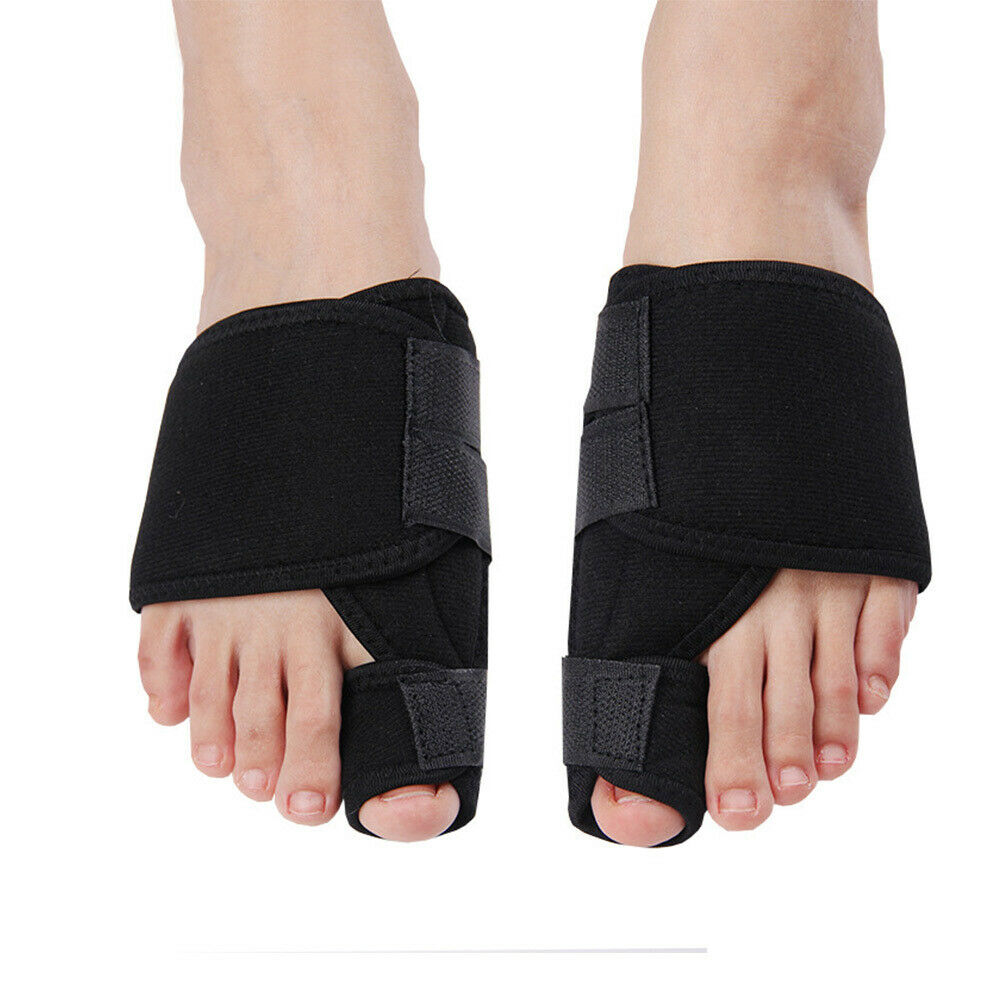

Bunion Big Toe Splint Straightener Corrector for Hallux Valgus
£10.99inc VAT
- Pair of NuovaHealth night‑time bunion big toe splints – one for the left foot and one for the right
- Made for adults with mild to moderate, flexible Hallux Valgus bunions that ache at the end of the day
- Holds the big toe in a straighter, steadier line while you rest, without forcing it into a painful angle
- Cushions the bunion bump to cut down rubbing from bedding and reduce pressure on sore, knobbly areas
- Supports the front of the foot so evening throbbing, night‑time twinges and stiff first steps are easier to manage
- Contoured aluminium rail pre‑shaped to follow the inside edge of the foot and big toe for firm but comfortable guidance
- Soft Velcro toe strap keeps the big toe against the rail and gently eases it away from the second toe
- Padded neoprene wrap and smooth seam placement chosen to protect sensitive bunions and reduce digging‑in at the sides
- Adjustable forefoot straps so you can set a snug, supportive fit across narrow or broad feet
- Light compression around the bunion and ball of the foot to calm that “puffy” or bruised feeling after long days on hard floors
- Breathable, moisture‑wicking outer fabric to help keep skin cooler and drier during several hours of evening or night‑time wear
- Best used at home in the evenings and overnight – not designed for long walks, exercise or tight footwear
- Start with 1–2 hours at gentle tension, then gradually build wear time as comfort allows
- Seek advice first if you have diabetes, reduced feeling, or circulation problems in your feet; this splint does not prevent or treat blood clots
NuovaHealth bunion big toe splint straightener for Hallux Valgus
Gentle, night‑time bunion splints designed to support and guide your big toe into a straighter, more natural line, ease pressure on your bunion, and provide steady support across the front of your foot.
If you finish most days with a sore, throbbing bunion and a big toe that never quite feels straight, this splint is designed to give that area a calmer, better‑supported rest when you’re off your feet. This NuovaHealth bunion big toe splint straightener and Hallux Valgus corrector is made for people living with bunions and forefoot discomfort who want a simple way to give their feet structured support in the evenings and at night. It combines a contoured aluminium splint, a padded neoprene wrap, a soft toe strap, adjustable forefoot straps, and breathable, moisture‑wicking fabric to help keep your feet supported, cooler and more comfortable for longer wear.
You receive a pair – one for the left foot and one for the right.
Who this bunion splint suits – and how to gauge your bunion
This NuovaHealth bunion big toe splint straightener corrector is designed mainly for people who recognise some of the following:
- You have a visible bunion (Hallux Valgus) with discomfort, tenderness, or aching around the big toe joint on the inner side of the foot.
- By the end of the day, especially after long periods standing or walking on hard floors, you feel throbbing or burning around the bunion and the ball of the foot.
- Narrow or tighter shoes rub over the bunion, or it’s getting harder to find footwear that doesn’t press on the bump.
- Your big toe is drifting towards the smaller toes, but you can still gently move it straighter with your hand without forcing it.
- You’d like evening or night‑time support to ease bunion‑related strain and give the front of your foot a more settled, held feeling.
- You’re recovering from bunion surgery and have been advised to use this type of splint by your surgeon or podiatrist.
It also helps to have a rough sense of how far your bunion has progressed:
Mild
The big toe is only slightly angled towards the smaller toes. The bump is visible but relatively small. The joint usually moves fairly freely and tends to feel stiff or achy after longer or busier days. With some care, shoes can still be found that fit, especially wider styles with softer uppers.
Moderate
The big toe clearly leans towards the smaller toes. The bump is obvious and often rubs in standard shoes, especially along the inner edge. Aching by the end of the day is common, with night discomfort after long spells on firm ground. Toes may start to look crowded and feel as if they press on each other.
Severe
The big toe is significantly angled, sometimes crossing over or under the second toe. The bump is very prominent and shoe fitting is a real challenge, with many shoes pressing on the joint. Pain may be more persistent, the joint can feel very stiff or difficult to move, and smaller toes are often pushed out of position or develop hard skin where they take extra load.
This NuovaHealth splint is particularly suited to mild and moderate bunions where the big toe joint is still reasonably flexible – a situation sometimes called a mobile bunion, where you can still gently guide the toe a little straighter without forcing it. In those cases, the capsule and ligaments around the joint still have some room to adapt. Spending time with the toe held in a slightly straighter resting position is usually more comfortable and can influence how the joint tends to sit when you’re off your feet. It’s also easier to find a level of correction that feels supportive rather than forced.
If your bunion is very severe and rigid, with the big toe crossing strongly over or under its neighbour and very limited movement at the joint, this splint is less likely to change the visible shape of the toe. In that situation its main role is to cushion the bump, guide the toe as far as is comfortably available, and support the front of the foot so symptoms are easier to manage. In that case, it’s a good idea to speak to a clinician about the best overall way to manage things.
What’s going on at your big toe when you have a bunion
A bunion is a bony, often tender bump on the inside of the foot at the base of the big toe, where the long bone in the foot meets the first bone of the toe. The medical term “Hallux Valgus” simply means that the big toe (hallux) angles outwards towards the smaller toes instead of pointing broadly forwards in line with the long bone behind it.
The bump you see and feel isn’t just extra bone. It reflects changes in how the big toe joint sits and behaves:
- As the big toe drifts towards the smaller toes, the joint at its base becomes more angled.
- The inner part of the joint and the end of the long bone start to stick out further from the side of the foot.
- The tough sleeve around the joint (the capsule – the thick tissue that wraps around and supports the joint) and nearby soft tissues can thicken and harden in response to ongoing rubbing and pressure from shoes and firm surfaces.
Over time this creates a more obvious, sometimes hard bump on the inside of the foot. Inside the joint, the smooth lining on the joint surfaces (cartilage) no longer lines up as well. Instead of sharing the load evenly, some areas take more pressure than they’re designed for. That uneven loading can contribute to stiffness and aching and, in some people, a sense of grinding or catching when they move the joint. That’s often what people notice when they bend the toe after a long day.
This thickened joint capsule, together with any small extra bits of bone and patches of hard skin, is what often makes the bunion look and feel more knobbly or lumpy over time. That explains why the bump can seem to grow and feel more prominent, even if you haven’t had a sudden injury.
In a more neutral foot, the big toe sits broadly in line with the long bone behind it and shares push‑off forces more evenly. With Hallux Valgus, the toe leans across towards the smaller toes, so the inner side of the joint and the skin over the bump have to cope with more sideways pressure and rubbing.
Why bunions slowly develop over the years
Most bunions develop slowly over many years. They usually come from several factors working together rather than a single cause.
Foot shape and arch height
Some feet are more likely to form bunions because of how they’re built:
- A naturally flatter foot or lower arch can send more of your body weight through the inner side of the foot and the big toe joint with each step. The inner edge of the joint and its capsule are under more constant strain, encouraging the joint to drift outwards.
- A higher arch can focus pressure in certain parts of the front of the foot and make the big toe joint work harder when you push off, which can irritate the joint surfaces and soft tissues.
- More flexible joints and softer tissues allow the big toe to drift more easily if it’s repeatedly pushed or squeezed, because the ligaments and capsule stretch more readily and then struggle to pull the toe back in line.
Having relatives with bunions doesn’t guarantee you’ll develop them, but it does suggest your feet may share similar tendencies, such as shape, arch height, or joint flexibility.
How your foot rolls when you walk
As you move from heel to toe, your body weight can travel more through the inner or outer edge of the foot:
- If you roll in more on the inner side, more weight travels along the inside border towards the big toe joint. This increases sideways forces across the joint, encouraging the big toe to angle towards the smaller toes and stretching the inner capsule.
- If you roll out more towards the outer border, the big toe may still be affected. It can be forced to work from a less comfortable position when you push off, or twist slightly as it tries to stabilise you, irritating the joint and soft tissues.
Most people don’t notice these differences in how they walk, but over years of walking on pavements and other firm surfaces, those small variations can add up at the big toe joint.
Shoes
Footwear can either give your toes room to move naturally or squeeze them into positions that increase strain:
- Tight, narrow or pointed shoes press the big toe towards the smaller toes, pushing the joint into a more angled position and rubbing over the bunion area.
- High heels tip more body weight forwards onto the ball of the foot and big toe joint, increasing pressure on the joint surfaces and soft tissues.
- Shoes that are slightly too short or too shallow can make the toes bend or curl, which often pushes the big toe inwards and crowds the smaller toes.
One pair of tight shoes won’t create a bunion. But if a foot that’s already a little prone to drifting is repeatedly squeezed by narrow or high‑heeled shoes over many years, the big toe is more likely to deviate, the joint position gradually changes, and the bunion is more likely to form or worsen. The ligaments and capsule on the inner side of the joint stretch and the bones adapt to the angled position.
Daily demands on your feet and hard floors
Daily demands on your feet play a part too:
- Long days standing or walking keep steady pressure through the front of the foot and big toe joint, without much recovery time.
- Time spent on hard floors like concrete, tiles or wood means the forces of each step are spread less and felt more sharply in the ball of the foot and around the bunion.
- Tasks that repeatedly load the front of the foot, such as climbing stairs or rising onto the toes, require repeated bending through the big toe joint. When the joint is already a bit sore and sitting at an angle, these repeated bends can aggravate it.
What these factors have in common is repeated pressure and bending through the front of the foot and big toe joint, especially on firm ground, keeping the joint under strain for long periods.
How this build‑up affects your bunion
Over months and years, the combination of:
- a foot shape that’s more likely to drift,
- a way of walking that adds stress to the big toe joint,
- footwear that doesn’t give the toes enough room, and
- regular high loads on the feet,
gradually encourages the big toe to lean further towards the smaller toes and the bunion to become more obvious. As the joint spends more time angled, the capsule and ligaments on the inner side stretch, the soft tissues over the bump thicken, and parts of the joint surface take more pressure than they’re designed for.
As the bunion grows, it often becomes harder to find comfortable shoes. Many people end up choosing footwear that still rubs a little because it’s the only option that will go on. That ongoing rubbing and pressure can feed back into the same cycle of irritation and drift, which is why the bump may seem to creep larger over the years.
How bunions feel day to day – and how the rest of your foot joins in
People with bunions often notice:
- A dull ache or sharp twinges around the big toe joint, especially along the inner side and top, by the end of the day.
- Throbbing, burning, or hot discomfort around the bunion and the front of the foot when they finally sit or lie down after a long spell on their feet.
- Redness, tenderness or thickened skin where shoes rub on the bump.
- A feeling that the toes are increasingly crowded together, particularly between the big and second toes.
- Difficulty or pain when pushing off through the big toe, for example on stairs or when walking briskly.
Aching often builds gradually as time on your feet increases. Sharper twinges are more likely when you push off more strongly or catch the toe in a more bent position. For many people, that is why the first few steps after you get up, or the moment you finally sit down at the end of the day, can feel particularly sharp or throbbing.
As the big toe drifts and the bunion grows, the rest of the front of the foot often has to adapt:
- Crowded toes – the big toe can press against, under or over the second toe, encouraging other toes to curl slightly over time. This can make standing for long periods or wearing shallower shoes uncomfortable and can increase rubbing between toes or against footwear.
- Ball‑of‑foot soreness – more load can shift onto the area under the smaller toes, especially the second and third. This can cause aching or a sore, bruised feeling in the ball of the foot, particularly after walking on firm pavements or standing at a counter for a long time. The undersides of the long bones behind the toes and the soft tissue pad under them take more pressure than they’re used to.
- Hard skin – patches of hard skin or callus can develop under parts of the front of the foot that are taking extra pressure, or on the tops and sides of toes and over the bunion itself. This can add to the lumpy look and can become sore when pressed.
- Nerve irritation between toes – in some people, the crowding and extra pressure between the toes can irritate a small nerve that runs between two of the long bones. When toes are squeezed together, this nerve can be pinched, giving occasional burning, tingling, or a “stone in my shoe” feeling between two toes when walking or standing.
Local wear‑and‑tear changes in the big toe joint can also develop. Thinning cartilage and small bony spurs can make the joint stiffer or more painful at the end of its bend, make it harder to bend the toe properly when walking upstairs or pushing off quickly, and increase overall discomfort around the bunion, even with modest activity.
Put together, the drifting big toe, extra pressure under the ball of the foot, and irritation in the joint explain why you may feel pain not just at the bunion itself, but also under and between the smaller toes. That is why it can feel as if the whole front of your foot is complaining, not just the bump on the inner side.
How bunions change your walking – and why rest support matters
When you walk, your foot usually:
- Touches down on the heel.
- Rolls forwards over the arch into the ball of the foot.
- Pushes off through the toes, with the big toe acting as a key stabiliser and firm lever.
With a bunion, the big toe is no longer pointing straight ahead in line with the long bone of the foot. The joint at its base may feel sore or stiff, especially when it’s bent fully during push‑off. Shoes may press on the bunion, making a normal push‑off uncomfortable and encouraging you to twist or shorten your step to avoid the sore spot.
To reduce discomfort, many people unconsciously change how they move. For example, you might:
- Roll more onto the outer side of the foot to avoid pressure directly over the bunion, which increases load under the smaller toes.
- Or roll more through the inner border of the foot if that feels as though it gives the bunion more support against the inside of the shoe, which can keep pressure on the bump and inner joint line.
- Take shorter steps to avoid bending the big toe as much, so the joint isn’t pushed to its most painful angle, but at the cost of taking more steps overall.
Over time, these changes can lead to extra strain under the ball of the foot, particularly under the smaller toes, with a bruised or burning feeling after walking on hard floors. Some people also notice more general aching higher up the leg, for example around the calf or front of the shin, from repeated small compensations. You may not notice yourself changing how you walk, but your feet and legs often tell you about it by the end of the day.
Because the big toe and front of the foot are involved in every step, they rarely get a real break from this altered loading. Even walking gently around the home still puts some strain through the joint and soft tissues. That means the area only spends time in a more neutral, less stressed position if you deliberately support it differently while you rest. Giving the joint several hours in a supported, more comfortable position is where a bunion splint can make a difference.
How this NuovaHealth bunion splint works on your big toe and front of foot
This type of bunion splint is used to:
- Support the big toe joint in a straighter, more natural line when you’re not in shoes, so the capsule and soft tissues spend time under less sideways pull.
- Gently guide the big toe away from the smaller toes instead of letting it drift inwards, easing crowding between the toes.
- Reduce pressure and rubbing over the bunion by changing how the inner edge of the joint meets bedding or very roomy footwear.
- Settle the front of the foot into a more comfortable, supported position during rest, so the ball of the foot and soft tissues under the smaller toes enjoy time with less strain.
Earlier, we looked at how a drifting big toe and constant pressure can leave the joint sore and the front of the foot tired by the end of the day. This NuovaHealth bunion big toe splint straightener corrector responds to that pattern using a shaped metal splint, a soft toe strap, a cushioned wrap and adjustable straps. The design choices are made to give firm enough guidance without hard edges on sensitive points, and to stay comfortable over several hours of evening or night‑time wear.
Contoured aluminium splint shaped for bunion support
Along the inner side of the front of the foot and big toe there is a slim aluminium strip. In this NuovaHealth design, it is pre‑shaped to follow the typical curve of the inside of an adult foot and big toe, so it sits close to the bones without a sharp edge digging into the bump.
It helps hold the big toe in a straighter line, gently opposing some of the inward drift towards the smaller toes when you’re at rest. The strip acts like a rail, so the toe feels guided rather than left to collapse inwards. That can reduce the sense of the big toe pressing into or under its neighbour when you’re lying in bed. By limiting how far the big toe can roll inwards at rest, the splint reduces constant stretch on the inner joint capsule and pressure on the skin over the bunion.
The aluminium has a little bit of flex, but it isn’t designed to be bent aggressively into extreme positions. It’s shaped to provide a sensible level of support for typical bunion alignment. Forcing or over‑bending the strip can create sharp pressure points on the skin, push the joint into a painful angle, or damage the metal, making the splint uncomfortable or less effective.
Soft Velcro toe strap to keep the toe against the rail
A separate soft strap wraps around the big toe and fastens back onto the splint. It holds the toe gently against the aluminium rail so it stays in contact with the support rather than slipping away when you move in bed.
The strap helps control sideways movement at the base of the toe while you rest, limiting inward drift and twisting at the joint. It also spreads pressure over a wider padded area at the base of the toe instead of a thin edge.
The toe strap should sit around the base of the toe, not across the nail. When it’s adjusted to a snug but not tight fit, it keeps the toe aligned with the splint and can lessen the feeling of the big toe pushing into the second toe when you’re lying down. If the toe strap is pulled too tightly, it can cause discomfort, numbness or colour change in the toe, so gentle tension is important.
Padded neoprene wrap and NuovaHealth strap layout
The main body of the splint is a padded neoprene wrap that encloses the inner side of the front of the foot and the base of the big toe in a soft, cushioned layer. It:
- Spreads pressure more evenly over the bunion area and nearby soft tissues instead of focusing on a single sore spot.
- Reduces rubbing and friction from bedding or loose clothing, which is especially helpful if the skin has already been irritated by shoes.
- Allows the metal strip to sit close to the foot without touching the skin directly.
Adjustable straps cross over the top of the foot and secure the wrap in place. In this NuovaHealth design, they are cut long enough to cater for broader forefeet and can be angled to sit clear of the most sensitive part of the bump. They let you:
- Fine‑tune how snugly the splint fits your foot, important because foot shape and width vary.
- Keep the splint from twisting or sliding as you move in bed or take a few careful steps.
- Choose the level of gentle compression across the front of the foot that feels supportive but not restrictive.
If the straps are pulled too tightly, they can press on the skin, reduce blood flow or irritate nerves. Aim for a firm but comfortable fit: supported, but with no pain, pins and needles, or worrying colour change in the toes. As a simple check, you should be able to slide a fingertip under the strap over the top of the foot without forcing it.
Light compression around the big toe and ball of the foot
Together, the wrap and straps provide light compression around:
- The base of the big toe, especially along the inner side where the bunion forms.
- The ball of the foot behind the toes.
This gentle compression:
- Helps reduce a feeling of fullness or puffiness across the front of the foot after long periods on your feet, by limiting how much the soft tissues can expand and giving them a more contained feel.
- Gives a firmer, more held feeling at the front of the foot, which many people find soothing when they lie down after a demanding day.
- Supports the soft tissues around the big toe joint and ball of the foot during rest, so that when you next stand up the area may feel less tender or bruised with the first few steps.
The compression from this bunion big toe splint straightener is light and aimed at comfort and support. It isn’t a replacement for medical compression garments where those are needed, and it does not prevent or treat blood clots.
Breathable, moisture‑wicking fabric chosen for long wear
The outer materials include lightweight polyester and nylon chosen to help:
- Allow air to circulate around the foot so heat builds up more slowly.
- Draw sweat away from the skin into the fabric where it can evaporate more easily.
Because bunion splints are often worn for several hours at a time, especially overnight, fabric that helps keep the area cooler and drier can reduce clamminess and friction, make it more comfortable to wear the splints for longer, and help minimise irritation over the bunion or any hard skin. In this NuovaHealth splint, the seams are positioned away from the peak of the bunion so they are less likely to rub on the sorest point.
Taken together, these design choices mean this NuovaHealth splint can hold your big toe and the front of your foot in a more natural, supported position while you rest, without hard points over the bunion and with materials chosen for longer, comfortable wear.
Comfort, fit and sizing – getting the splint to feel right
These splints are designed to be practical and comfortable for regular use:
- One size with adjustable fit – the wrap, toe strap and forefoot straps are intended to fit most adult UK foot sizes. You control how snug they sit by adjusting the Velcro closures, so the splint lies smoothly along the inner side of the foot without gaping or digging in. If your feet are particularly small, large or very wide, you may need a little extra care with strap adjustment and comfort.
- Left and right splints included – you receive one splint shaped for the left foot and one for the right, so each foot is supported in the correct direction, with the metal strip along the inner edge and the toe strap around the big toe.
- Soft padding and smooth seams – the neoprene body cushions the bunion and front of the foot. Seams are placed away from the most sensitive points around the bump, and edges are rounded to reduce digging in when you move or rest the side of your foot on the mattress.
- Barefoot or thin socks – these splints are mainly intended to be worn on bare feet or over a thin sock. This allows the alignment support to act more directly on the big toe and keeps bulk down if you briefly put your foot to the floor. Thicker socks can reduce how well the splint can guide the toe and may create extra pressure inside any footwear.
Because tight footwear can irritate bunions and contribute to their development, these splints are best used without narrow or compressive shoes. If you choose to wear them inside footwear for short periods, only do so with very roomy shoes that don’t add extra tightness or rubbing over the bunion, toes or straps.
It’s common for one foot to be more affected. Some people use both splints; others focus on the more painful side. It is perfectly reasonable to do that and adjust your use as you see how each foot responds.
What you may notice when you use this bunion splint regularly
Used regularly at a comfortable tension, this bunion big toe splint straightener corrector can change how your feet feel in the evenings and overnight.
Many people notice that:
- The throbbing or burning around the bunion is less intense when the joint has spent time held in a straighter, steadier position, rather than being left to fall into its most angled posture.
- The big toe feels less as though it’s pushing into or under the second toe when the splint is on, because the rail and toe strap are gently guiding it away and the wrap is supporting the front of the foot.
- It’s easier to get comfortable in bed without the bunion rubbing on the mattress or being pulled into an awkward angle by bed covers, as the padding and straps keep the inner edge of the foot cushioned and aligned.
- The front of the foot feels more supported while sitting or lying, particularly after long days on hard floors or pavements, because the soft tissues under the ball of the foot are gently contained instead of spreading outwards.
If you use the splint regularly and it’s well tolerated, these changes often add up to:
- Evenings where bunion pain is less dominant when you finally sit down.
- Less night‑time discomfort waking you, and fewer sharp twinges when you turn over in bed.
- A less stiff, less sore feeling in the bunion and ball of the foot when you first stand up, with early steps feeling easier than they did before you started using the splint.
In mild to moderate bunions where the joint is still reasonably flexible, spending more time in a supported, straighter resting position can also influence how the toe tends to sit when you’re off your feet. Any visible change is usually modest and most noticeable when sitting or lying down rather than when you’re fully weight‑bearing.
In more severe or long‑standing deformities, where the joint is much stiffer and the bones and capsule have adapted to the angled position, the splint is unlikely to alter appearance. In that situation its main role is to cushion the bump, guide the toe as far as is comfortably available, and support the front of the foot so symptoms are easier to manage.
If you’ve used the splint most evenings for several weeks at a comfortable tension and haven’t noticed any change at all in comfort or symptoms, it’s worth discussing that with a clinician to review whether this is the right option for you.
How and when to use your bunion splint at home
This splint is designed mainly for use at home, during rest and sleep.
When to wear it
It’s most suitable for:
- Evenings, once you’re out of daytime footwear.
- Periods of rest, such as reading or watching television.
- Night‑time, if you find it comfortable enough to sleep in, giving the joint several hours of supported rest.
It isn’t intended for use inside tight, narrow or rigid shoes. Any footwear worn over the splint must be very roomy and allow your toes and bunion area to sit without extra pressure from the shoe or straps.
Short, gentle walking around the house on flat floors – for example to the bathroom or kitchen – is usually reasonable if you feel safe and stable. The splint isn’t designed for long walks, exercise, or more demanding tasks such as carrying heavy loads or doing vigorous housework. If you feel unsteady, remove it before walking.
How to put it on
Putting the splint on becomes routine quite quickly:
- Lay the splint out flat, with the padded neoprene open, the aluminium strip along one side, and the toe strap undone.
- Place your foot on the splint so that the inner side of the front of your foot rests along the padded section and the aluminium strip runs along the inner side of your foot and big toe, where the bunion sits.
- Gently guide your big toe so it lies along the metal support in a comfortable, slightly straighter position than it would naturally adopt. You should feel a gentle guiding force, not a strong pull.
- Wrap the soft Velcro strap around the base of your big toe and fasten it back onto the splint. Aim for snug but not tight. The toe should stay in contact with the rail when you move your foot, without pain or marked colour change. Keep the strap at the base of the toe, not across the nail.
- Fold the neoprene body around the front of your foot, bringing it up and over the top so it lies smoothly without creases.
- Secure the Velcro straps over the top of your foot firmly enough that the splint feels stable and doesn’t wobble or slide, but not so tightly that you feel pain, strong pressure marks, pins and needles, or colour change in your toes. You should be able to slide a fingertip under the strap at the top of the foot without forcing it.
It’s usually best to start with a gentler strap tension and only increase slightly once you’re confident what feels comfortable and supportive for you. If you notice numbness, unusual tingling or your toes looking very pale or blue, loosen or remove the splint and adjust the straps, including the toe strap.
Especially at first, it’s sensible to check the skin around the bunion and the base of the big toe after removing the splint, to make sure there are no sore spots or areas of marked redness.
Building up wear time
If you’re new to bunion splints, give your feet time to adjust.
Start by wearing the splint for 1–2 hours in the evening while you’re sitting or lying down. If that’s comfortable, you can gradually increase the time over several days, aiming for longer spells or night‑time use if you sleep well with it on.
A mild sense of stretching or pulling around the bunion and base of the big toe is common at first as the joint and soft tissues get used to sitting in a slightly different position. That should feel like a gentle, steady stretch rather than a sharp jab. Sharp, localised pain or discomfort that lingers after you remove the splint isn’t expected and is a sign to ease the tension or seek advice.
It’s better to use the splint regularly at a level of correction you can comfortably tolerate than to pull everything very tight for a short period and then stop because it hurts. The benefits come from giving the joint and front of the foot repeated periods of supported rest, not from forcing the toe as straight as possible in one go.
Safety, cautions and when to get advice
This bunion splint is generally a conservative, non‑invasive way to support the big toe joint, but there are times when you should be more cautious.
Speak to a clinician before use if you:
- Have diabetes, particularly if you have reduced feeling or known foot complications.
- Have circulation problems affecting your feet or lower legs.
- Have significant loss of sensation in your feet from any cause.
- Have open wounds, ulcers, or skin infections over or near the bunion or where the splint would sit.
- Have had a recent serious foot injury or major foot surgery and have not been specifically advised to use this type of support.
In these situations, skin and deeper tissues may be more vulnerable, and you may not feel early warning signs of pressure or rubbing as clearly.
This splint is not designed to prevent or treat blood clots. Injury or surgery to the leg and foot can increase the risk of blood clots, which needs separate medical assessment and treatment. The splint gives local support around the front of the foot and big toe, not the deeper veins. If you’ve been told you’re at higher risk of blood clots, or have concerns about this, speak to your GP or the team looking after you.
Stop using the splint and seek advice from a GP, physiotherapist or podiatrist if:
- You develop new, strong pain in the foot while wearing it that doesn’t ease soon after you take it off.
- Your toes or front of the foot become very cold, pale, red, or blue/purple, especially if this doesn’t quickly improve when you loosen or remove the splint.
- You notice numbness, pins and needles, or loss of feeling that doesn’t settle soon after removing it.
- The bunion area becomes increasingly swollen, hot or very tender, particularly if this is new or clearly worsening.
- Your foot shape or symptoms are steadily getting worse despite using the splint as directed.
If you experience sudden or worrying changes in your foot or general health, or new and unexplained symptoms that do not settle, seek medical advice promptly.
Looking after your bunion splint
With simple care, your splints can stay comfortable and effective for longer.
Cleaning
- Hand wash in lukewarm water with a mild detergent.
- Rinse thoroughly to remove all soap, as residue can irritate the skin.
- Gently squeeze out excess water without twisting or wringing, which can distort the padding or metal strip.
Drying
- Lay flat or hang to air dry at room temperature.
- Keep away from direct heat sources such as radiators or heaters, which can damage the neoprene, warp the metal or weaken the adhesive on the straps.
General care
- Fasten the Velcro straps when not in use to stop them catching on other fabrics and to protect the hook‑and‑loop surfaces.
- Check the padding, toe strap and straps regularly for signs of wear. Replace the splint if:
- The padding becomes very thin, cracked or misshapen so it no longer cushions the bunion.
- The splint no longer stays in place securely because the straps have lost grip or the wrap is badly stretched.
- The metal strip is damaged, broken or bent out of shape and can’t be comfortably corrected with gentle adjustment.
- Check the padding, toe strap and straps regularly for signs of wear. Replace the splint if:
A distorted or badly worn splint may put pressure in the wrong places or fail to guide the toe effectively.
30‑day money‑back promise on your NuovaHealth bunion splint
These NuovaHealth bunion big toe splint straightener correctors come with a 30‑day money‑back promise, so you can try them at home and see how they feel on your own feet.
If, within 30 days of purchase, you find that they’re not comfortable for you, or they don’t feel like the right type of support for your bunions and front of foot, you can return them within this period, provided they’re in their original, undamaged condition and in line with the retailer’s returns policy.
This gives you a chance to fit them into your usual evening and night‑time routine and judge for yourself how they affect your bunion and front of foot comfort, without feeling locked in if they’re not right for you.
Is this bunion splint a good option for you?
Bunions (Hallux Valgus) can leave your big toe joint and the front of your foot under constant pressure. The big toe drifts, the joint changes shape, and each day on your feet adds a bit more strain, especially if your shoes are tight across the front. It can be draining when the bunion is the first thing you feel when you stand up and the last thing you notice at night.
If you’re living with a mild to moderate bunion where the joint still moves reasonably well, and your main pattern is aching and throbbing by the end of the day, night‑time discomfort, and stiff first steps in the morning, this type of splint is worth serious consideration. This NuovaHealth design holds your big toe in a more natural line while you rest, cushions the bump, and supports the front of the foot so the joint spends less time in its most irritated positions.
Used most evenings at a comfortable tension, many people find that evening aching, night‑time throbbing and first‑step stiffness are easier to live with, and the bunion feels less front‑of‑mind. It isn’t a cure for bunions, and you’ll usually get the best results if you combine this splint with wider‑fitting shoes and any exercises or advice you’ve already been given by a clinician. But as a non‑invasive, adjustable option you can use at home, backed by a 30‑day money‑back promise, it offers a straightforward way to see how much difference supported rest at night can make for your feet.
If that pattern sounds like yours, the next step is to check the fit guidance above, think about when you could comfortably wear the splint in your evening or night‑time routine, and consider trying this NuovaHealth splint for a few weeks to see how your bunion and front of foot respond. If your symptoms are more complex, changing quickly, or steadily worsening, it’s sensible to discuss your situation with a GP, physiotherapist or podiatrist before you decide.
Disclaimer
The information on this page is general guidance about bunions and the use of this type of NuovaHealth splint. It is not a substitute for individual medical assessment, diagnosis or treatment. If you are unsure whether this product is suitable for you, or you have more complex or new symptoms, speak to a GP, physiotherapist, podiatrist or another appropriate health professional for personalised advice. No specific outcome can be guaranteed, as responses to support and treatment vary from person to person.
1 Review For This Product
Fast & Secure Checkout Through Paypal
Pay with Paypal the secure payment gateway that accepts all credit and debit cards. Paypal is free and secure and no credit or bank information is ever stored or shared with us.
Fast Dispatch
Enjoy your items soon with quick dispatch via Royal Mail. Expect to have your items between 1-3 working days for domestic orders. 7-10 Working days for international orders.
Return Policy – 30 Day Money Back Guarantee
In the unlikely event, you are unhappy with your purchase you can return it within 30 days for a refund. Please contact us via the form on the contact us page to start your return.
To return an item please send it to: Nuova Health UK, 81 Highfield Lane, Waverley, Rotherham, S60 8AL. Please include a note with your order id so we know who to refund. Please retain your postage receipt as proof of postage. All that we ask is that the item is in the original packaging and unused.
by Patricia
OKAY, WHERE HAS THIS BEEN ALL MY LIFE?!! I’m a high heel lover, and my feet needed some serious help to combat my bunion woes. These correctors are non-intrusive, comfy, and easy to wear with any pair of shoes. They’ve also been a serious help in preventing blisters from those pesky bunions rubbing against my shoes. I’ve noticed a significant reduction in my bunions already. Hats off to whoever designed these!